Wedding ‘Die-In’ Against Afghanistan Massacres

Wedding ‘Die-In’ Against Afghanistan Massacres: It was a cool and damp morning when I got on my bike to cycle the 19 or so miles to Northwood station on Wednesday 27th May 2009, my route though the outer western suburbs of London. I locked my bike at the Metropolitan line station and joined around 30 protesters, including two couples dressed as bride and groom waiting for the start of the march, watched by rather more police.

Wedding 'Die-In' Against Afghanistan Massacres

Two years earlier, on 27th May 2009, US forces had bombed a wedding party at Haji Nabu in Afghanistan killing 47 civilians; this was just one of a number of wedding parties massacred by NATO or US forces who killed thousands of civilians in Afghanistan – and three weeks before the protest another attack in Farah province had killed around 120 people, mainly women and children. Gatherings of civilians for any reason were too often misinterpreted as a threat to the occupying forces.

Wedding 'Die-In' Against Afghanistan Massacres

‘HMS Warrior’, the land-based Permanent Joint Headquarters in Northwood in London is the command centre for British and NATO forces in Afghanistan, and Voices in the Wilderness UK, Justice Not Vengeance and London and Oxford Catholic Workers had planned a ‘die-in’ as an act of non-violent civil disobedience at its main entrance.

Wedding 'Die-In' Against Afghanistan Massacres
John McDonnell MP speaks before the start of the march

Negotiations with police took place and eventually the police allowed the marchers to proceed along the roads towards the military base. The marchers were stopped several times on the way and had to threaten to block the road with a die-in if they were not allowed to proceed.

Wedding 'Die-In' Against Afghanistan Massacres

Around 200 metres from the main gate the road was firmly blocked by a line of police and the organisers decided to hold the die-in on the road there. Around half the protesters lay down on the road. Fortunately the organisers had come with a supply of black bin bags to put on the wet surface, but it was still cold and uncomfortable, and the rain, although light, was steady.

The rest of the protesters stayed on the wide verge and began reading out the names of civilians killed in Afghanistan. Among those taking part in the protest were Maya Evans and Milan Rai who were arrested in 2005 for reading out the names of Iraqis and British soldiers killed in the Iraq War, opposite the Cenotaph in Whitehall. For this Rai became the first person to be convicted under SOCPA for organising an unauthorised demonstration in the vicinity of Parliament. Also at the protest was Hillingdon MP John McDonnell.

Hertfordshire police had previously given the protesters a warning under Section 14 of the Public Order Act. They gave a further warning once people had ‘died’ on the roadway, but stood watching. After around 15 minutes, a second officer gave a warning that unless people cleared the road they would be moved, and said that they had 5 minutes to decide.

Twenty minutes later a final warning was issued, and then groups of police moved to each protester on the road in turn. Each was told they were committing an offence and that unless they moved they would be carried to the side of the road, and that if they attempted to move back on to the road they would be arrested.

At this point some protesters got up an moved, but most waited for the police to remove them. Most went limp and were fairly carefully lifted and deposited on the verge with a warning they would be arrested should they return to the road. I saw one man being arrested and taken away when he did so and was later told that there were five other arrests.

When the road was clear the press was also threatened with arrest and could only cover the event from the side of the road. Previously we had been allowed to cover the event without much interference, as I commented “For once I was only told to get out of the way when I was really in the way. There were some FIT officers from the Met present – let’s hope they take some intelligence back to their force about how to police protest.”

The protesters had only intended for the die-in to last an hour, and it was three-quarters of an hour before the road was finally cleared. After a short delay the police allowed the remaining protesters to march back down the road to the station. It was still raining as I unlocked my bike and rode home.


Red Cross, School Cuts and Dead Cyclists

Red Cross, School Cuts and Dead Cyclists: Six years ago on Friday 26th May 2017 I phototographed a vigil outside the Red Cross HQ, the Fair Funding for All Schools’ ‘School Assembly Day’ in Walthamstow and a protest against the hege toll of deaths due to air pollution and lack of proper cycling infrastructure.


Red Cross act for Palestinian Hunger Strikers – Moorgate

Red Cross, School Cuts and Dead Cyclists

Human rights group Inminds were holding a vigil at UK Mission of the International Committee of the Red Cross (ICRC) in Moorgate, London, demanding the organisation end its complicity with Israel’s violation of the rights of Palestinian prisoners.

Red Cross, School Cuts and Dead Cyclists

The vigil with flags, banners and some live music came as a hunger strike by Palestinian prisoners in Israeli jails were on the 40th day of a hunger strike and Israel was making preparations to force-feed them.

Red Cross, School Cuts and Dead Cyclists

Inminds also called on the ICRC to restore the twice-monthly family visits and uphold the Geneva Conventions relating to the treatment of prisoners. They chalked the outline on the pavement of one of the underground cells in which some Palestinian child prisoners have been held for many days in solitary confinement, adding a soft toy to the chalked outline of a child.

Red Cross, School Cuts and Dead Cyclists

Although quite a large proportion of those who saw the vigil read the display and came to sign the petition, the ICRC headquarters building is on a back street and not widely visible.

Red Cross act for Hunger Strikers


E17 Protest Against School Cuts – Walthamstow Town Square

Students, parents and teachers from 17 schools in London E17 marched to a rally in Walthamstow Town Square in protest against the cuts in school funding on Fair Funding for All Schools’ ‘School Assembly Day’.

City areas like Walthamstow will be disproportionately affected by the cuts and schools in the borough will lose over £25m from their annual budgets with the loss of around 672 teachers. On average schools will lose £672 per pupil, with some expecting cuts of over a thousand pounds per pupil.

I left the crowded square as people were listening to a long series of speeches from teachers, parents, educationalists, local politicians and education experts.

E17 Protest Against School Cuts


Cyclists Tory HQ die-in against traffic pollution – Westminster

Stop Killing Cyclists were holding a protest vigil and die in outside the Tory Party HQ a short distance from Parliament against the huge number of avoidable deaths from air pollution and the failure to encourage cycling since the Tories came to power in 2010. They had carried out a similar protest outside the Labour party HQ the previous week over their failure to take action when in power.

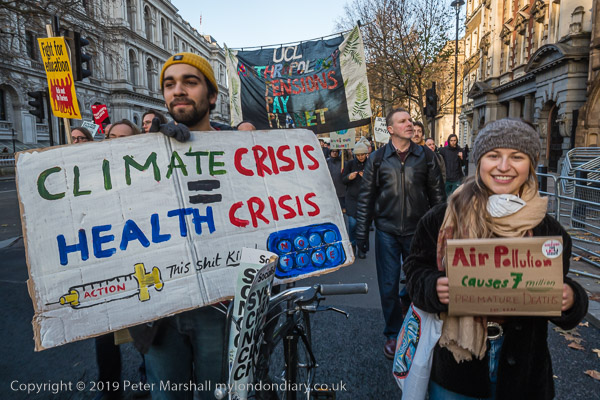
Statistics suggest that over the seven years of Tory government around 280,000 people have died prematurely due to the effects of air pollution, largely due to traffic on our streets. The campaigners called for a ban on diesel vehicles in city centres within 5 years, and on all fossil-fuel powered vehicles within 10 years, for all non-zero emission private cars to be banned from cities on days where pollution levels are predicted to rise above EU safety levels, and for regular car-free days in major cities following the example of Paris.

Cyclists particularly suffer from the effects of traffic pollution as they are exercising on city roads, breathing in the dust and fumes. As well as illegally high levels of gaseous pollution from exhausts, including nitrogen oxides, there are also dangerous levels of particulates from tyres and brakes. The carbon emissions from petrol and diesel vehicles also contribute massively to the global rise in temperature.

People also die early from a lack of exercise, and estimates suggest that proper provision for cycling in cities and elsewhere could have cut these deaths by 168,000 over the period of Tory rule. As well as deaths, more people cycling and cleaner air would also greatly reduce the stress on the NHS from respiratory and related illnesses. A report by the Royal College of Physicians in 2016 estimated that currently treatment for transport pollution related conditions costs the NHS £20 billion a year, around a sixth of the total NHS budget.

Many people are put off from cycling as they do not feel safe in the heavy traffic on many city roads and the protest called for an increase in providing safe routes including separate protected cycle routes. The point out that Holland spend £24 per head on cycling, twelve times as much as the UK. The UN has called for an increase to spend 20% of the transport budget by 2025, which would be roughly £3 billion per year.

Spending on cycling infrastructure benefits everyone across the country whether or not they cycle, and would reduce pollution on city streets to greatly improve life for all who live and work here. It would particularly be of benefit for child health, giving them more exercise but also in reducing the dangerous effects of pollution. Children are less tall and pollution levels are higher the closer you are to road level.

Cyclists Tory HQ die-in against pollution


National Day of Action against Universal Credit 2018

National Day of Action against Universal Credit 2018
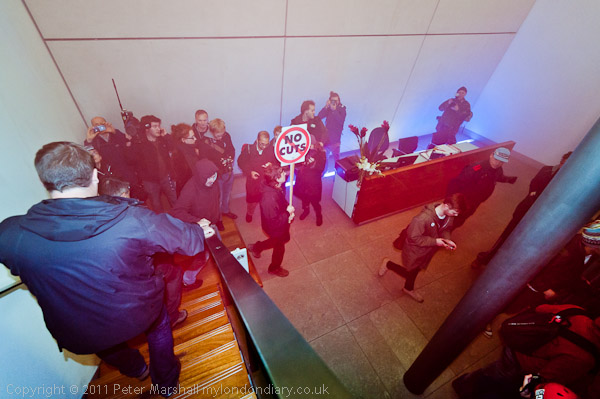
Campaigners spell out ‘stopuniversalcredit’ in the Tate Modern Turbine Hall; the ‘#’ was delaying security

Thursday 24th May 2018 was the Unite National Day of Action against Universal Credit and I photographed two of the events in London for this, a protest by a group of campaigners from Camden Unite Community at Tate Modern and a rally outside Parliament which was followed by a march to protest outside the Department of Work and Pensions. The pictures come from these events.

National Day of Action against Universal Credit 2018

Back in 2010 when the idea of Universal Credit was announced by Iain Duncan Smith it was true that the UK’s benefits system was something of a muddle, and the aim of producing a simpler system which brought six existing benefits together was probably laudable. But its implementation has been a disaster for many.

National Day of Action against Universal Credit 2018

Those six benefits had each been introduced to deal with particular needs, and though not perfect they more or less worked. Trying to fit everything into a single system has proved to be far more difficult, and many of the decisions made about how the system might work failed to take into account the circumstances in which those on low incomes actually live and the lack of supporting resources the wealthier take for granted, such as friends and family with money and bank accounts with savings.

National Day of Action against Universal Credit 2018

When announced, Iain Duncan Smith promised it would make the social security system fairer to claimants and taxpayers, but as it came into being it became clear that the main objective was to cut the cost to taxpayers and to provide what is effectively a handout to companies and organisations which employ workers on low rates of pay.

The plans for introducing UC hugely underestimated the complexities of the system, particularly as it applies to the the most precarious of workers, many of whom are now employed on zero hours contracts with no guaranteed weekly hours of work. There were huge problems with computer systems partly because of the complexity but also because of a failure to understand the problems and to properly specify what was needed.

The real motivation behind UC was made clear in 2015 when George Osborne announced a future £3.2 billion a year cut to the overall Universal Credit budget, reducing work allowances and reducing and limiting the per-child element of support. These cuts were later partly reversed by Philip Hammond.

The transition from the legacy benefits to UC has been extremely hard for many, particularly as some have had a period of up to 13 weeks before receiving their first payment under UC. Food banks have been put under great strain because of this and benefit sanctions. 60% of tenants put onto UC have been forced into arrears on their rents and many have faced eviction.Some have become desperate enough to take their own lives.

Wikipedia quotes a report that in 2018 a million working “homeowners now getting tax credits will have less with the new system and lose on average £43 a week. 600,000 working single parents will lose on average £16 per week and roughly 750,000 households on disability benefits will lose on average £75 per week. Nearly 2 in 5 households receiving benefits will be on average worse off by £52 per week.”

Universal Credit has become a mess and various small changes the successive governments have been forced into making have hardly improved it. There are some measures which could be taken to improve the situation. Large increases in the minimum wage with the aim of moving to a situation where those in work would be adequately paid and not need UC would help. Changes in employment law including the replacement of zero hours contracts by a fair flexible contract system would also make a contribution. But almost certainly the best solution would be to move to a universal basic wage.

Thursday 24th May was the Unite National Day of Action against Universal Credit and I photographed two of the events in London for this, a protest by a group of campaigners from Camden Unite Community at Tate Modern and a rally outside Parliament which was followed by a march to protest outside the Department of Work and Pensions.

More details on the protests on Thursday 24th May 2018 by campaigners at Tate Modern, the rally outside Parliament and march to protest outside the DWP on My London Diary.

Universal Credit rally & march
Universal Credit protest at Tate Modern

Jobs, Services & Education, Police Violence & More

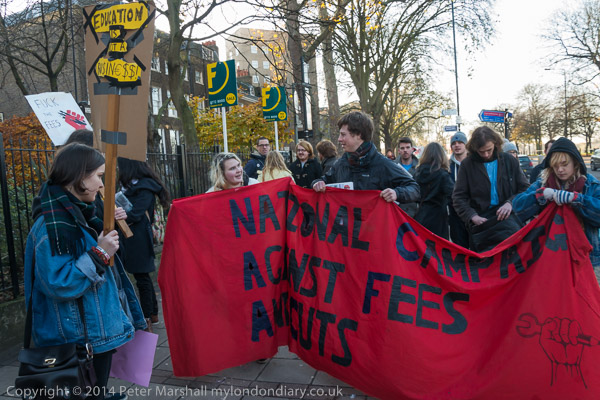
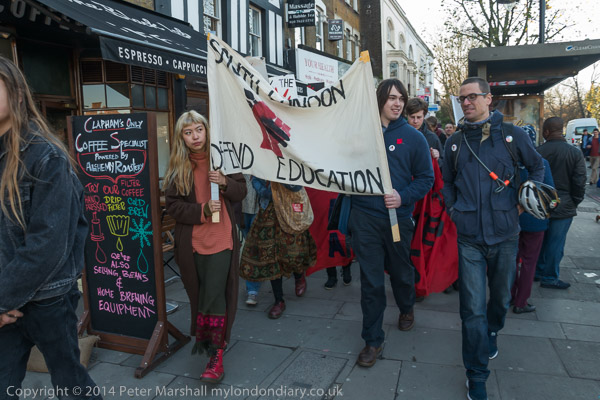
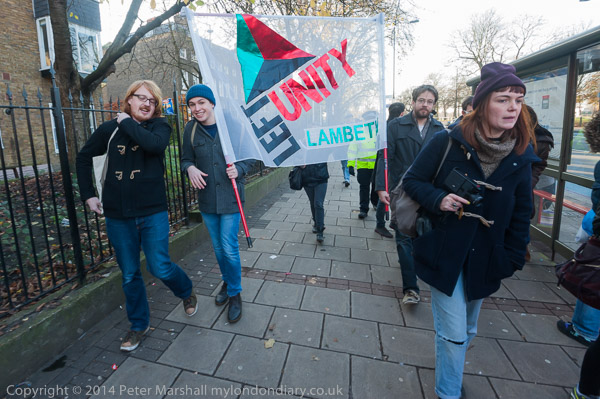
Jobs, Services & Education, Police Violence & More: My work on Saturday May 23rd 2009 began with a march in North London before coming down to a couple of protests at Downing Street and then a march from Trafalgar Square to New Scotland Yard against police violence.
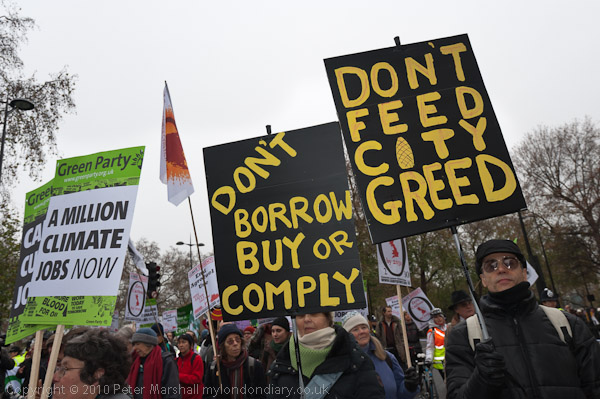

March to Defend Jobs, Services and Education – Highbury Fields to Archway

Jobs, Services & Education, Police Violence & More

Around 1500 jobs had been lost recently in North London, including around 550 mainly support workers from London Metropolitan University, 500 civil servants from Archway tower and more at City University, where adult education is under threat.
Jobs, Services & Education, Police Violence & More

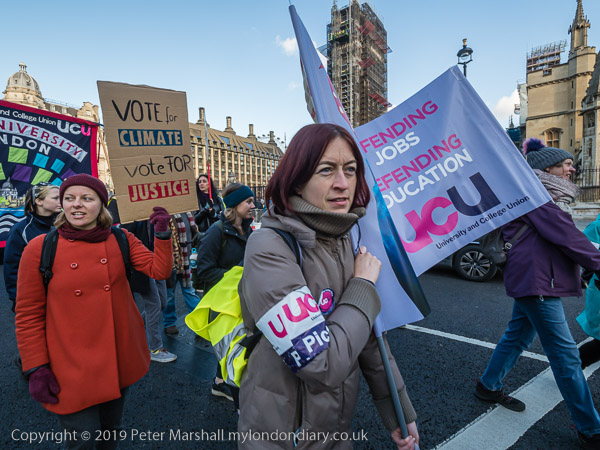
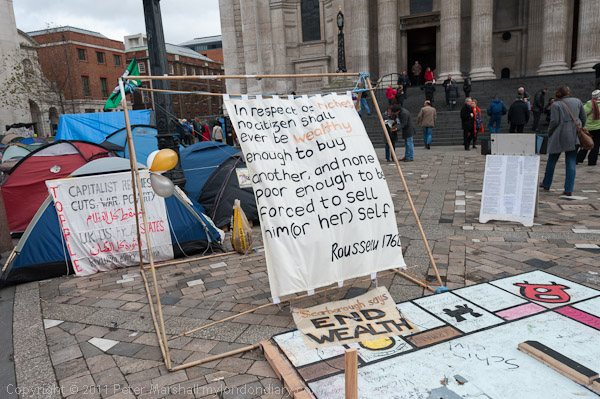
Trade unionists from the Islington National Union of Teachers, the Public & Commercial Services Union, London Metropolitan University Unison and the University and College Union and other local groups including GiK-DER Refugee Workers Cultural Association were marching from Highbury Fields to a rally at Archway in protest against these job cuts.
Jobs, Services & Education, Police Violence & More

The cuts in education threaten courses and also the provisions including nurseries that enable many mature students who missed out on education to study and get qualifications later in life.

Jobs, Services & Education, Police Violence & More

Speakers at the rally after the march included those from the UCU, CWU, London Metropolitan University, PCS, Islington Trades Council and local Labour MP Jeremy Corbyn.
More at March to Defend Jobs, Services & Education.


Southern Yemenis Demonstrate For a Separate State – Downing St


The state of Yemen has a long and complex history dating back to ancient times which is dealt with at some length on Wikipedia.

In the 19th century Britain attacked and occupied Aden and the surrounding region with the rest of the country being under the Ottoman Empire. In the 1960s a civil war in the north and a revolt against British rule in the south led to the foundation of two independent states, the Yemen Arab Republic in the north and the People’s Democractic Republic of Yemen in the south, who went to war with each other in 1972. After a ceasefire brokered by the Arab League and a further civil war the two countries were merged in 1990.

This London protest followed protests in Aden a week earlier on the 15th anniversary of an unsuccessful attempt by the southern Yemen leader Ali Salem al-Beidh to end the union with the north, which led to the 1994 civil war, lost by the South.
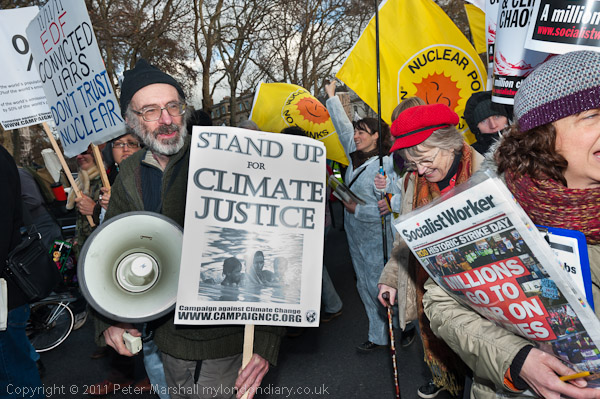
The protest was organised by Southern Yemenis from the Southern Democratic Assembly (TAJ), based in London who want an end to the union and accuse the Yemeni government of grabbing land and property and human rights abuses. They called for an end to the union with the north.
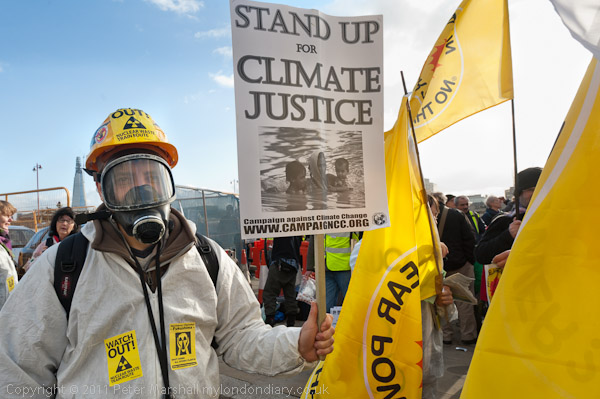
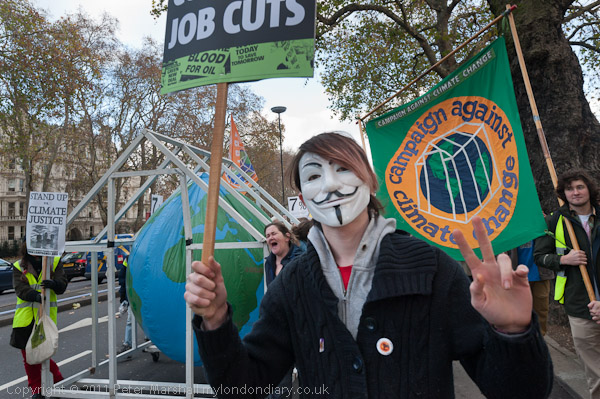
More at Southern Yemenis Demonstrate.


Rev Billy Performs at Downing St – Downing St

The Reverend Billy and his ‘Life After Shopping’ Gospel choir from New York were in London on their 2009 UK Shopocalypse Tour and gave a brief performance in front of the gates of Downing St.
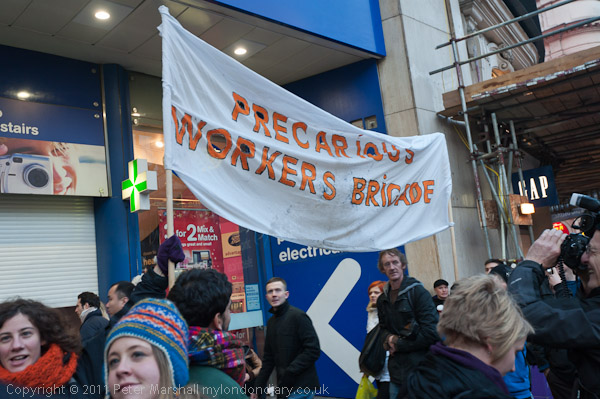
Police were not impressed and obviously had no idea of who the Reverend was as in response to his questions the officer concerned was diagnosed by Billy as having a “shopping problem.”

The Church of Life After Shopping believes that we need to “back away from the product” and resist the way that advertising and the media persuade us to live only thorough consuming corporate products, and get down to experiencing life directly.

Excessive consumption is clearly at the root of climate change and the demand for incessant economic growth is clearly a long term impossibility in a finite planet. We need to be planning for a fairer sharing of resources between rich and majority worlds and an economy based on sustainability rather than growth – which will clearly mean lower levels of wasteful consumption and a concentration on necessities rather than luxuries.

As Billy made clear, following the G20 summit and the pathetic waste and greed shown in the continuing parliamentary allowances scandal, our government and MPs are clearly in need of the Life After Shopping Gospel.

Rev Billy Performs at Downing St


National Demonstration against Police Violence – Trafalgar Square to New Scotland Yard.

The United Campaign Against Police Violence was set up following the G20 demonstration in London when Ian Tomlinson, a man not taking part in the demonstration, was assaulted by police and died. Many protesters and some press were also attacked by police during the protest.
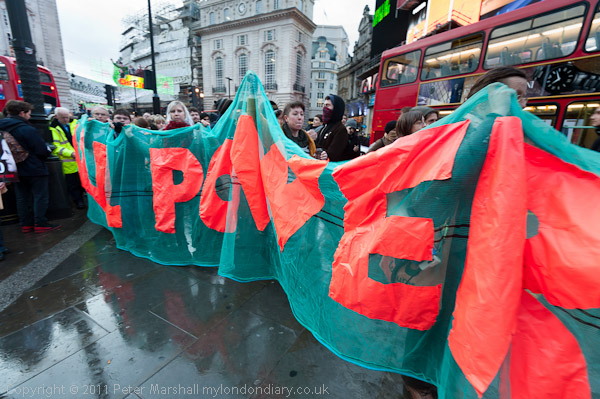
It brought together trade unionists and activists involved in organising the G20 Meltdown demonstration as well as campaigners against deaths in police custody particularly those in the United Families & Friends Campaign, UFFC, including the families of two men who died in Brixton Police Station, Ricky Bishop and Sean Rigg.

The protest was led by a coffin with a brass plate “FOR ALL OUR LOVED ONES WHO DIED IN POLICE CUSTODY”, and included a giant red figure representing one of the four Horsemen of the Apocalypse – who led the four marches that converged on the Bank of England in the G20 demonstration. Prominent in the march and rally were Professor Chris Knight and Sean Rigg’s two sisters, Marcia and Samantha and the Rev Billy added his voice through a giant megaphone.

At the rally outside New Scotland Yard on Victoria Street there were speeches and a minute of silence for those who had died before the release of black balloons to represent the dead.

The police had until almost the end of the event acted on their best behaviour, arranging for the safe movement of the protest and joking with press and talking calmly with the protesters. The protesters were clearly angry about police violence but the protest was restrained and orderly

But as the rally was about to draw to a close in front of the police headquarters a police van drove up and a woman officer interrupted proceedings to read a statement telling everyone their presence was illegal. It seemed inexplicable other than as a deliberate attempt to try to provoke a violent reaction from the peaceful crowd, but the organisers managed to quieten things down and the rally continued.

More at Demonstration against Police Violence.

Die-In At The Elephant

Die-In At The Elephant: In the early evening of Wednesday 21st May 2014, several hundred cyclists came to the Elephant and Castle, one of South London’s major transport junctions, following the death 8 days earlier there of a cyclist, 47 year-old Abdelkhars Lahyani, killed when he was run over by a heavy goods vehicle. The HGV driver was arrested on suspicion of causing death by careless driving.

Die-In At The Elephant

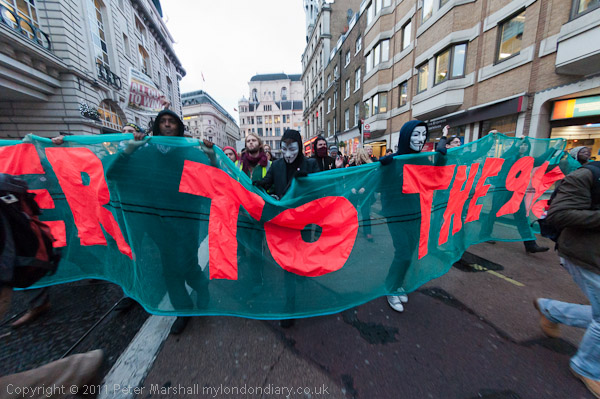
Road design in London and elsewhere in the UK has always been about design for the movement of cars and lorries, with little regard given to the safe movement of cyclists and pedestrians, and campaigner Donnachadh McCarthy described this death as “a designed-in killing” rather than an accident.
Die-In At The Elephant

The traffic system at the Elephant & Castle, one of south London’s busiest and more complex junctions, had been redesigned a few years ago at a cost of £3 million, but the changes made had not made proper provision for cyclists.

Die-In At The Elephant
A cycle lane to nowhere – a dead end for cyclists

The junction is in the London Borough of Southwark, and their transport plan had argued against safe routes which would segregate cyclists from traffic. It stated that including them in traffic is useful to slow traffic flows; it may, but at the expense of regarding them as expendable, using vulnerable and unprotected human beings as some kind of traffic bollards.
Die-In At The Elephant

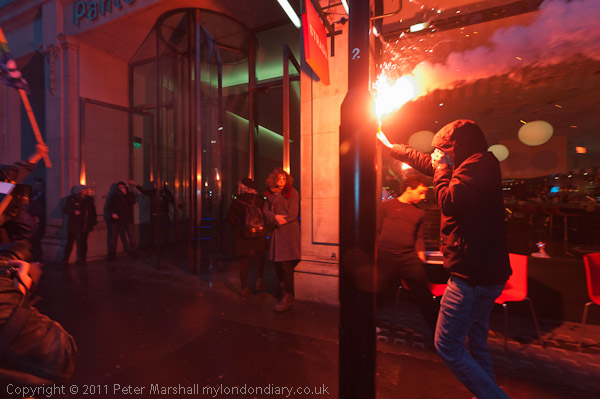
The protesters marked out in chalk a “bypass lane” across the wide area of pavement close to the Strata Building at the junction with Newington Butts where the killing had taken place which would provide a segregated safe route for cyclists.

Die-In At The Elephant

This chalked lane was soon filled with chalked messages about cycle safety and the protesters laid down their bikes on both sides of it before staging a die-in, leaving the lane with its chalking as a ‘sacred space’ in memory of the killed cyclist.

Afterwards there was a rally where the names of the 14 cyclists killed in London in 2013 and the six so far in 2014, after which poems by Seamus Heaney written about his feelings when his younger brother was killed in a road accident. Another speech was read out, written by a cyclist still in hospital with serious injuries after having been driven over by an HGV on a City road on the same day as Lahyani, and there were other speakers.
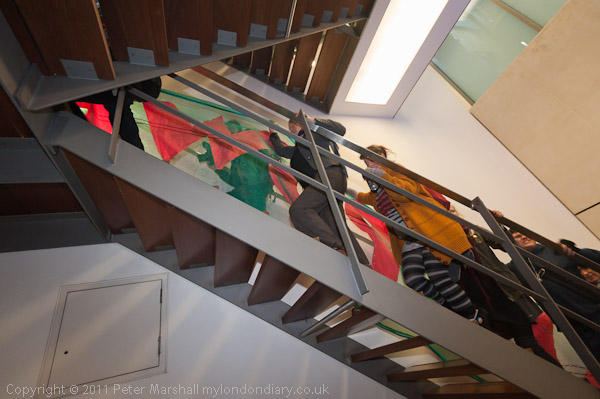
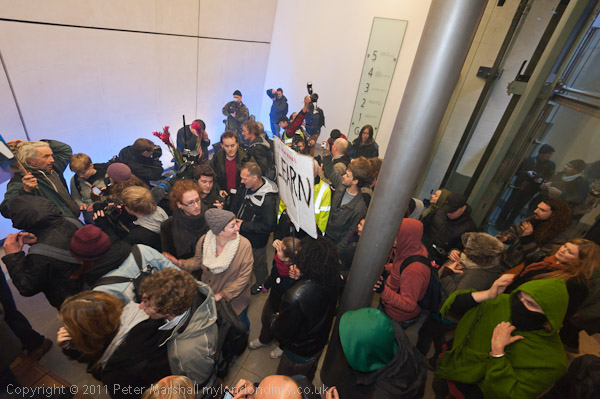
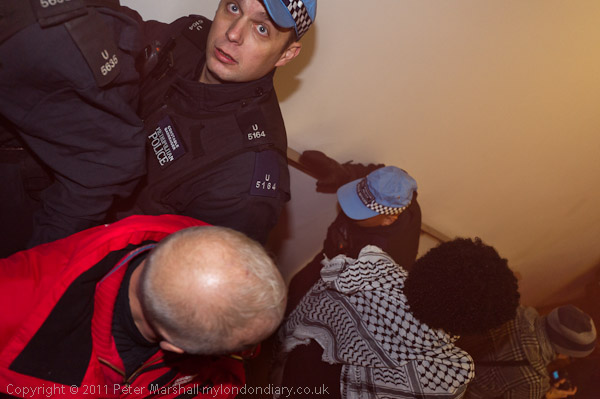
The final speech was by Donnachadh McCarthy, who set out very clearly the failures that were leading to the deaths of cyclists, and also thanked the police for their cooperation in the event. At the end of his speech he talked about the great advantages of cycling for personal health and for the environment: “Cycling is a gift: cleaner planet; safer lives.” But only if we make our cities safe to cycle in. As he pointed out as well as the roughly 60 cyclists and 300 pedestrians killed in London traffic accidents since the last election, an estimated 13,000 had died before their time because of traffic pollution.

My London Diary – May 2014

The junction in 2023 remains a dangerous place for cyclists, and no improvements appear to have been made here or elsewhere at the Elephant. It has bicycle symbols painted between the two lanes leading up to and advance waiting box at the traffic lights, though much of the paint had been worn by traffic when I last looked. Past the lights are some more road markings for bikes, but these can only be reached by cycling in the traffic.

More about the protest, speakers etc and many more photographs at Cyclists protest Death at the Elephant

Starving Palestine and a Mad Emitters Tea Party

Starving Palestine and a Mad Emitters Tea Party: London Saturday 20th May 2006


Stop Starving Palestine! – March for Palestine

Starving Palestine and a Mad Emitters Tea Party

After Hamas, a Sunni-Islamic militant nationalist political movement won a majority of seats in the 2006 Palestinian Legislative Council elections, Israel had imposed an economic blockade and both the US and EU withdrew their support.

Starving Palestine and a Mad Emitters Tea Party

This led to more than two-thirds of the people in the country being below the poverty line, lacking basic necessities such as sugar, oil, milk, and even bread is rationed. A ban on the import of vital medicines threatened many lives.

Starving Palestine and a Mad Emitters Tea Party

Around 20,000 people came to the Stop Starving Palestine! march organised by the Palestine Solidarity Campaign and supported by many other organisations including peace groups, the Muslim Association Of Britain and leading trade unions.

Starving Palestine and a Mad Emitters Tea Party

Among the speakers were Green Party MEP Caroline Lucas, Labour MP Jeremy Corbyn, Baroness Jenny Tonge of the Lib Dems and Manuel Hassassian, the Palestine Liberation Organisation representative to the UK (appointed by the Palestinian President as Ambassador but not recognised by the UK.)

As usual there were many Jewish protesters among the marchers, most noticeable of whom were Neturei Karta orthodox Jews who had walked from Stamford Hill on the Sabbath to attest to their support for Palestinians and their opposition to Zionism.

I left the event as the rally in Trafalgar Square began to go to Grosvenor Square.

More somewhere down the page at My London Diary – May 2006.


Bush in Wonderland, a Mad Emitters Tea Party – US Embassy

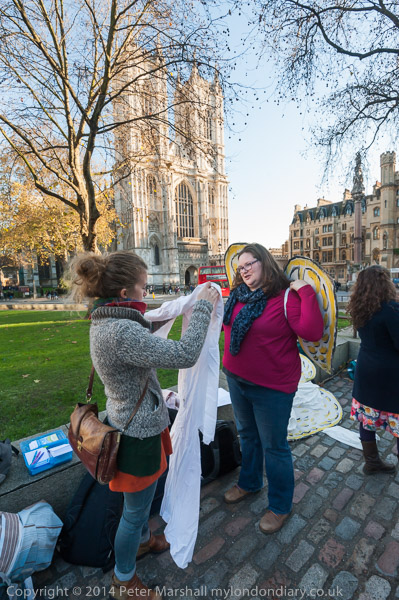
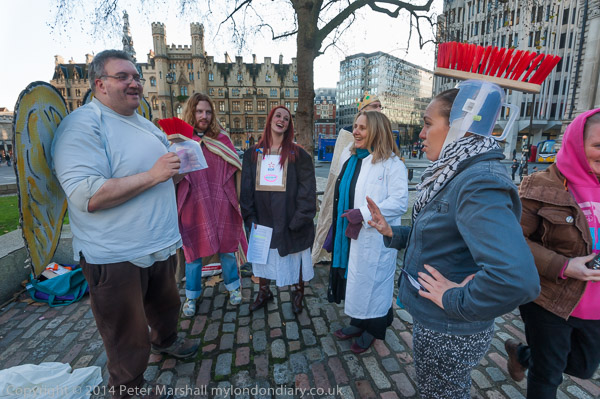
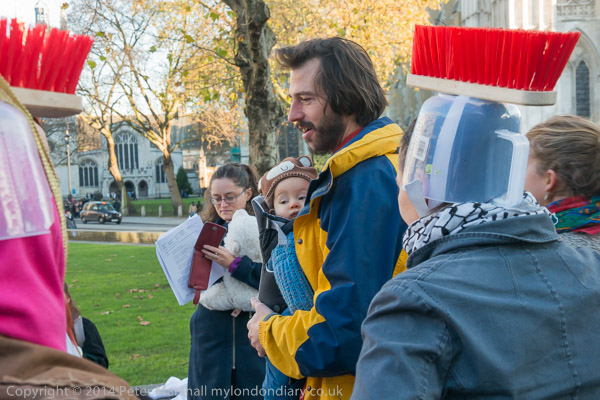
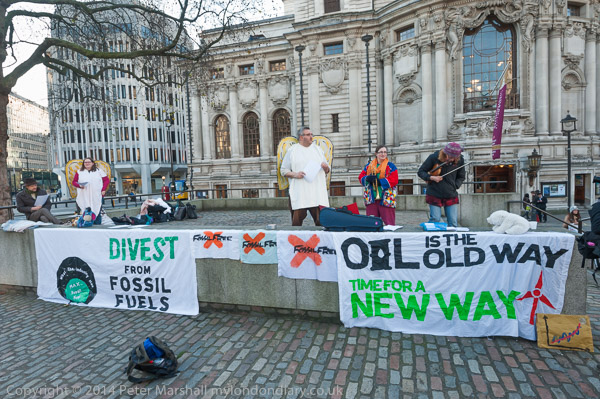
Campaign Against Climate Change had organised “bush in wonderland, a mad emitters tea party” held outside the heavily barricaded front of the US embassy in Grosvenor Square. The party was a part of an ongoing series of protests including a weekly climate vigil outside the embassy taking place since the breakdown of The Hague Climate Talks in November 2000.

There was a picnic table with sandwiches, cakes and tea, music from the eco warriors and guests with some appropriate lyrics, as well as samba from rhythms of resistance, and fancy dress. balloons, banners and a short speech by a White Rabbit called Phil reminded us of the need for protests like these.

The USA continues not only to pollute on a massive scale, but increasingly acts to sabotage international efforts to take any effective action on climate change.”

Protests such as this, publications by groups of leading scientists and COP talks after COP talks have done a little to move things on, but the climate situation has worsened and actions taken by governments so far are woefully inadequate.

The USA improved its rhetoric under Obama but didn’t do much and it went backwards under Trump. Biden has also failed to make the real changes needed – and like most politicians is still living in Wonderland rather than the real world.

Politicans are still pursuinging economic polices based on infinite growth under capitalism and we need to move to a new economics which recognises that we live on a planet with finite resources both physical and in the natural world and we need to move to living within sustainable limits.

More somewhere down the page at My London Diary – May 2006.


BP Greenwashing & Benefits Cuts

BP Greenwashing & Benefits Cuts – Thursday 19th May 2016 – Seven years ago today.


Greenpeace ‘Sinking Cities’ banners at BM/BP show – British Museum

BP Greenwashing & Benefits Cuts

There are some protests which are advertised well in advance and other actions which are kept highly secret with only a small group taking part being in the know. And the action on the opening day of the BP sposored exhibition Sinking Cities at the British Museum was definitely one of the latter.

I heard about it only as I was on my way up to London for another event close by, and detoured slightly to cover it. I live on the edge of London, just inside the M25 and can’t usually respond to ‘breaking news’ as it takes me too long to get there.

BP Greenwashing & Benefits Cuts

Clearly the BP sponsorship of ‘Sinking Cities’ was going to be controversial as there has been a long campaign, particularly by ‘BP or Not BP’ to get the British Museum to end the deal which has allowed BP to ‘greenwash’ their polluting and climate destroying activities, which have significantly contributed to global warming and so to recent floods in cities across the globe.

Greenpeace had come with very professionally produced large banners for ‘Sinking Cities’, naming some of the places which have been flooded recently by global warming induced climate change and had managed to come inside and hang this down the columns across the front of the museum’s Main entrance. At first glance they really looked as if they were a part of the Museum’s own publicity.

BP Greenwashing & Benefits Cuts

It really was impressive, and the Museum had been caught on the hop, reacting in panic they closed the whole museum for the day, dissapointing many who had come. This seemed unnecessary as the museum could simply have closed this front entrance to deal with the climbers and remove the banners. The climbers on the columns were obviously experienced and operating safely and apparently without damage to the museum structure.

It served as rather a good advertising stunt for the show, but of course was rather embarrassing for the sponsors BP which is why the Museum felt it necessary to remove them. Most other major arts organisations in London including the Tate Museums, the Royal Opera House and the National Portrait Gallery had dropped BP as a sponsor following pressure by protests such as these and pressure from artists, musicians and staff who work in them.

‘Sinking Cities’ banners at BM/BP show


No More Deaths from Benefit Cuts – Tottenham Court Rd

BP Greenwashing & Benefits Cuts

I had come to London that morning as delegates at the TUC disabled workers conference led by activists from Disabled People Against Cuts (DPAC), Mental Health Resistance Network (MHRN) and Winvisible (Women with visible and invisible disabilities) were to hold a lunchtime protest which I had been invited to photograph.

They came out and marched, led by people in wheelchairs from Congress House to Tottenham Court Road calling for an end to government benefit cuts which have led to the deaths of many disabled people – including 2 DPAC members the previous day.

Two long banners gave the message ‘NO MORE DEATHS FROM BENEFIT CUTS’ and on arriving at Tottenham Court Road they held these across the road stopping traffic in both directions.

Another banner was full of the names of some of those known to have died because of sanctions and cuts in benefits, among them David Clapson, a diabetic ex-soldier who died penniless, alone and starving after being sanctioned. He didn’t even have enough money to keep the refrigerator to store his insulin running.

Another banner asked the question ‘IS THIS HOW 2 TREAT Disabled People?’. The protesters held a short and noisy rally, getting considerably support from many around including many workers also on their lunch breaks. There were a few short speeches before it was time for the protesters to march back for the afternoon session at Congress House, with a police officer arriving just as they were about to leave. As usual he is confused to find that no-one is in charge.

When the Tories got into power, at first in coalition in 2010, they determined they would save money by cutting benefits thinking the disabled would be an easy target. Groups such as DPAC and the others at this event have shown them how wrong they were. These people rely on benefits to live and to have a decent life and have organised and reacted to try to retain them against the government’s attacks.

More at No More Deaths from Benefit Cuts.

Journey to Justice – Drop the Debt 2008

Journey to Justice - Drop the Debt 2008

Sunday 18th May 2008, 15 years ago today, was an unusual day for me in two ways. Firstly that I went to Birmingham rather than London, but mainly that I went not primarily as a photographer, but as one of thousands of protesters, though that did not stop me taking photographs as you can see.

Journey to Justice - Drop the Debt 2008

Recent developments in Artificial Intelligence are arousing considerable debate among photographers, partly about redundancy with AI generated imagery already replacing photographers in some areas of marketing and advertising work, but more importantly about authenticity now that you can generate seemingly photographic images of anything whether it actually happened or not.

Journey to Justice - Drop the Debt 2008

Of course it has always been possible to make photographs which are misleading and dishonest, either at the point of exposure or later in the darkroom or more recently and trivially easy on a computer. There have been many historical examples and more recent controversies about faking or altering photographs, especially in some photojournalistic environments.

Journey to Justice - Drop the Debt 2008

Of course in some areas of photography clearly anything goes. We don’t expect a work of art to be a literal interpretation, but when we come to news or photojournalism we expect things to be true to the event or occasion. And the only guarantee of that is the integrity of the reporter.

Journey to Justice - Drop the Debt 2008

Of course as I wrote at the start of my piece on ‘Journey to Justice – Drop the Debt’, “You can’t take photographs without a point of view. Literally and metaphorically so – the rationale for making the picture determines the technical aspects of actually making the exposure. Where you stand isn’t just a matter of where you put your feet.”

I hope that my photographs make my position clear, as do the texts that I write to go with them, though on My London Diary and here I express my opinions as well as stating what appear to me to be the facts which accompany my images sent to the agencies I’ve worked with. I also don’t have to stick within the character limits they impose, typically limiting me to around a 100 words or less. Enough for the who, what, where and when but seldom much about the why, seldom enabling any real analysis of the events.

As my vintage website shows I’d been in Birmingham in May 1998 with some 70,000 others, forming a human chain around the centre of Birmingham, UK where the leaders of the eight richest nations in the G8 were holding a conference.

We were then part of a campaign by Jubilee 2000 to persuade the G8 countries to ‘break the chain of debt‘. Third-world countries were given massive loans in the 1970’s and are now crippled by the repayments, which now mean that a massive amount of money comes from the poor to the rich in repayments.

The noise we made back then made the world leaders come out from their conference room and listen, but then they went back inside and continued with business as usual. As I wrote in 2008, “Our actions in May 1998 had set the ball rolling, but as yet it has only gone one fifth of the way, and 80% of debts remain. All governments, including our own, have been guilty of making many promises that they have not kept on debt relief and aid.

Things overall have changed little since then, although some countries in the global south have become rather more desperate and more vocal particularly as the effects of climate change increasingly hit them.

I wrote at some length about the day and the protest on My London Diary in 2008 and I won’t repeat that here, but hope some at least will click the link to read it.

At the end of that piece I wrote about the problem for those who didn’t have a long ladder in photographing what was an attempt to form and photograph the world’s largest human pie chart. I can’t find the official photograph on the web and I think it may have been little if any better than mine.

2008 Journey to Justice – Drop the Debt
1998 Jubilee 2000 – Birmingham


Nakba, South Africa, Fair Votes & Iran

Nakba, South Africa, Fair Votes & Iran: Events I covered in London on 15th May 2023 and one I just missed.


Nakba Protest For Free Palestine – Downing St

Nakba, South Africa, Fair Votes & Iran

May 15 is Nakba Day, remembering the 1948 disaster when Palestinians were expelled from their land and calling for an end to Israeli occupation and breaches of international law.

Nakba, South Africa, Fair Votes & Iran

Over 400 Palestinian villages were destroyed and the 1948 partition of Palestine to create the state of Israel created around 700,000 Palestinian refugees, many of whom or their descendants are still in refugee camps. Protests take place on or around May 15 every year around the world calling for justice for Palestine.

Nakba, South Africa, Fair Votes & Iran

The biggest in London is on the nearest weekend to the 15th, and the 2023 London march organised by Palestine Solidarity Campaign together with Stop the War Coalition, Palestinian Forum in Britain, Friends of Al-Aqsa, Muslim Association of Britain and Campaign for Nuclear Disarmament was last Saturday, May 13th, marching from the BBC.

Nakba, South Africa, Fair Votes & Iran

Organisations supporting this rally included Artists’ Union England, BFAWU, CWU, The MU, NEU, PCS, RMT, TSSA, UCU, UNISON and Unite the Union. In most recent years I’ve photographed these protests, but this year the rail strike meant I was unable to do so.

Back on 15th May 2010 the Nakba protest was a static one opposite Downing Street. Last Saturday the march to the rally began at the BBC, deliberately chosen to yet again expose the failure of our major broadcaster to report on protests in the UK, particularly those calling for freedom for Palestine.

It may not be written down anywhere in the BBC, but the broadcaster definitely has a policy of playing down or usually totally ignoring protests in the UK, at least unless it can condemn any acts of violence of criminal damage by protesters. Occasionally any involving major celebrities may also get a mention, though they may need to get arrested for the BBC to notice. You have more chance of your protest getting a mention if it occurs in another country, preferably one with a regime our government disapproves, than under their noses in London.

Other UK media tend to follow the example of the BBC and if you want to know about protests that are happening in the UK you need to follow foreign media such as Al Jazeera or RT, or read left wing publications in print or online. There you may even find out what the protests were about.

Among the protesters were many Jews opposed to the actions of the State of Israel who form a major part of most if not all left wing and anarchist groups. Most obvious were those from the ultra-orthodox ‘Neturei Karta’ who are totally opposed to Zionism and the idea of a Jewish political state. They say the Torah prohibits the use of human force to establish a Jewish state before the coming of the Messiah, and support the right of the Palestinians to their land, which should be returned to them. The say Jews should live in peace and harmony with their Muslim neighbours in Palestine as their ancestors did for many centuries.

Nakba Protest For Free Palestine


South African Right March in London – Trafalgar Square

I arrived in Trafalgar Square too late to see a march by expatriate right-wingers, part of a campaign to persuade football supporters not to go to South Africa for the the World Cup. They say the country is too violent with around 18,000 murders a year.

Unfortunately that high rate is fairly typical among many countries in the global south and lower than in many of them. Perhaps the main difference between South Africa and the others is the large white population who also suffer from the violence and murders.

The march organisers had earlier regretted that police had prohibited any marchers carrying flags or banners of the extreme right Afrikaner Weerstandsbeweging (AWB) or other white nationalist groups. The extreme racist AWB protest at the ‘Boer Genocide’ and is committed to setting up an independent Volkstaat on parts of South Africa with extreme apartheid policies.

Although there were only a handful of people in red shirts who had taken part in the march I was able to photograph some of the crosses, posters and banners they had left behind in front of South Africa House before police removed them.

South African Right March in London


Purple Protest Demands Fair Votes – Old Palace Yard

More than a thousand people, mainly wearing purple, had come to Westminster to demand a fair voting system, feeling cheated by the recent election results which failed to produce a government reflecting how people voted.

The 2010 election had clearly failed to reflect the votes cast, particularly for the Lib-Dems who got almost a quarter of the votes but less than one tenth of the seats. Perhaps even more importantly it showed that over a third of the population had so little confidence in our political system that they didn’t bother to cast there vote.

These results had left to a movement springing up rapidly through the Internet, using Twitter, Facebook, You Tube and other social networking sites, and it also attracted the backing of existing electoral campaigning groups such as the Electoral Reform Society, Unlock Democracy (incorporating Charter 88), 38 Degrees and Power2010.

Most of us have experience of elections taking place using the single transferable vote system with give much greater fairness. The Lib-Dems had demanded a UK-wide referendum on the Parliamentary voting system for taking part in the coalition governement, but the proposals were dismissed as more an attempt to defuse the issue than to deal with it. The vague proposal was in any case decisively rejected, though only 42% of the electorate bothered to vote.

This year has seen another attack on the fairness of our elections with the introduction of the need for photo-ID to cast a vote. I don’t know how many were put off from trying to vote by this requirement, but apparently 1.2% of those who turned up to polling stations were not allowed to vote.

Purple Protest Demands Fair Votes


Protest Against Executions in Iran

Around a hundred people demonstrated in Trafalgar Square and then marched for a rally opposite the Iran Embassy following the execution last Sunday of 5 political activists, the latest of many such death sentences.

In the previous year millions in Iran had protested for greater freedom in Iran, with the protests making headlines around the world after the fatal shooting of Neda Agha-Soltan in June 2009. Thousands have been arrested, tortured to make untrue confessions and then condemned in unfair trials and many have been executed.

The death of Jina Mahsa Amini after being arrested by the religious morality police for allegedly not wearing the hijab in accordance with government standards in September 2022 has led to a series of protests in Iran and around the world on an even more widespread scale than those in 2009-10, 2007 and 2019. Again the protests in Iran have been brutally repressed with at least 476 people killed by the end of 2022, and many arrested and tortured and a number of protesters hanged.

The protest on 15 May 2010 came after the executions of five political activists – four men and a woman – on Sunday 9 May; Farzad Kamangar, Ali Heydarian, Farhad Vakili, Mehdi Eslamian and Shirin Alam-Houli.

The protests in London around the world in 2022-3 have been on a larger scale than in 2010, with large and continuing protests with the slogan ‘Woman Life Freedom’.

Protest Against Executions in Iran


Shut down Yarl’s Wood Immigration Prison – 2017

On Saturday 13th May 2017 I put my Brompton folding bike on the train and made my way to Bedford Station via St Pancras. I was on my way the the 11th protest outside the immigration detention centre at Yarl’s Wood in the campaign led by Movement for Justice to shut down this and other immigration prisons.

Shut down Yarl's Wood Immigration Prison

This was the first time I’d taken a bike to get to Yarl’s Wood, although I’d been to most of the previous protests they had organised there. Before I’d ridden from the station on a coach organised by the event organisers which hadn’t always been ideal, meaning I sometimes arrived late – especially once when the driver got lost – and had to leave when the coach was leaving, sometimes before the end of the protest and sometimes when I would have liked to leave earlier. On the bike I was free to arrive when I wanted and leave when I liked.

Shut down Yarl's Wood Immigration Prison

Yarl’s Wood is sited in an area remote for the southern parts of England, on the site of a former wartime airfield, probably chosen as somewhere people could be locked away out of sight and out of mind, on the hills around 5 miles north of Bedford. Motorists would take the A6 to Milton Ernest, the closest village, and then a mile or more uphill to the meeting point outside the Twinwoods Business Park. But I took a slightly more sensible cycle route, mainly along side roads or cycle paths, with just a short section beside the A6 into the village.

Shut down Yarl's Wood Immigration Prison

Most of the route was uphill, climbing slowly towards the hills, then wasting the energy I’d expended in climbing with short downhill sections. But the final section from Milton Ernest was uphill all the way, long and steep, though I didn’t need to worry about traffic on it as the police had helpfully closed the road.

Shut down Yarl's Wood Immigration Prison

My Brompton has a 3-speed hub gear and isn’t really good on hills, with the lowest of the three still being rather high when things get steep, but I managed to struggle up without having to get off and walk, though I was tired and seriously panting by the time I reached the top.

There I locked the bike to a fence and joined the thousand or so protesters who had travelled from around the country in a long line of coaches parked along the road. There were speeches and chanting for some time as we waited for others to arrive.

Shut down Yarl's Wood Immigration Prison

The gates of the business centre were locked and protesters are prevented from taking the shortest route to the prison (there is also a more direct private road from the south closed to the public.) But a public footpath runs beside the 20ft fence around it. To reach it the campaigners first march a few hundred yards along the road, then turn down one footpath to reach a bridleway before going a few hundred yards along this to the path leading to the prison.

Its not a great distance, a little over three-quarters of a mile, but much of the way is on paths often muddy and full of puddles, and the Brompton is not happy off-road. I ended up pushing it much of the time, occasionally carrying it along with my camera bag, though some of the protesters did give me a hand so I could take some photographs.

Outside the prison the protesters marched into a field on the north side where a small hill rises to give a limited view over the solid lower half of the 20 foot metal prison fence. Their shouts and noise were greeted by those inside the centre who had managed to get to the windows on that side.

The prison windows have very limited opening, but enough for some of the women inside to get their arms through and wave, often holding items of clothing, or sheets of A4 paper with messages calling for freedom and for justice. Our view of them from the hill was only through the wire mesh of the upper 10 feet of the 20 foot fence which made taking pictures difficult.

From most places we could only see the two upper floors of the building, but at the very highest point the upper part of some ground floor windows was also visible. These rooms are used to house families being detained and although Yarl’s Wood was mainly used to detain women there were a few men here as well.

Most of the protesters stood up on the hill holding banners and placards but others were at the bottom, some banging or kicking the metal fence which resonates to make a terrific racket. Others wrote slogans on the fence, though these were only visible to us outside. People climbed up on ladders or other people’s shoulders or used long poles to hold banners, posters and placards in front of the upper mesh where the detainees could see them.

Movement for Justice had brought a public address system and there were speeches, mainly from former detainees, including several women who had been held at Yarl’s Wood. One who spoke was Mabel Gawanas who had been recently released a after a few days short of 3 years inside. A few detainees were also able to speak from inside over mobile phones, amplified by the PA system.

The protests at Yarl’s Wood have been important in gaining publicity for the terrible way in which the UK treats asylum seekers, particularly women who are locked up in this ‘racist, sexist hell-hole’ which has been exposed by various reports. They have an enormous morale-boosting affect on the prisoners who feel isolated and forgotten inside.

But the government’s response has been to re-purpose Yarl’s Wood as a short-term holding facility for men arriving in the UK by boat in December 2021 and to set up a new immigration detention centre for women in an even more remote location in County Durham, where it is much harder for the women to organise and argue their cases. Almost certainly a part of this decision was to try to avoid further protests such as this one.

More recently the Home Office has started indefinitely detaining women at Yarl’s Wood again, although the numbers are much smaller. No official announcement was made of this reversion.

Much more at Shut down Yarl’s Wood Prison on My London Diary.