Students Protest Fees & Cuts – 2010

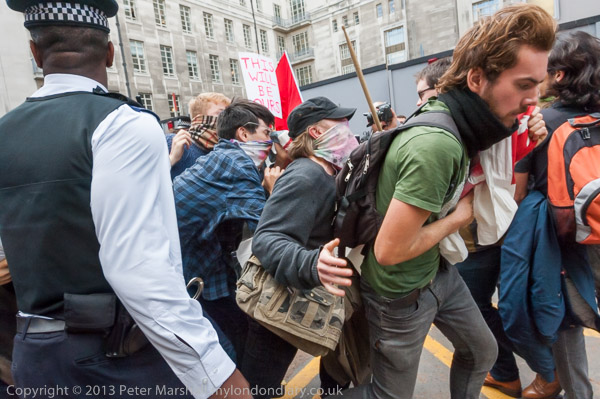
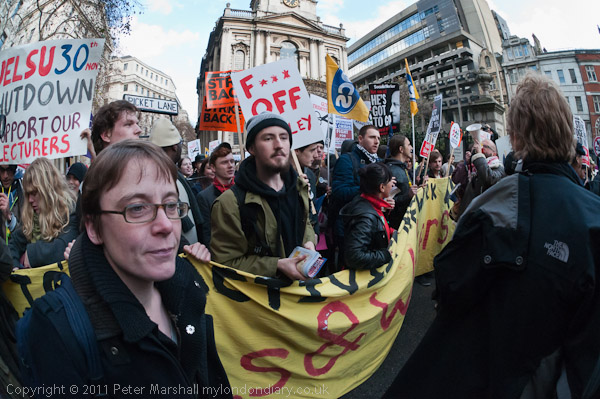
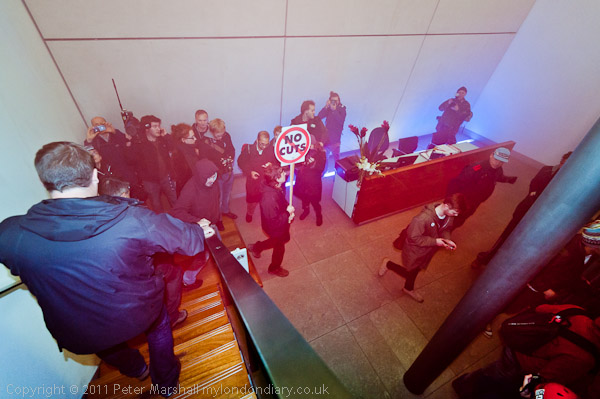
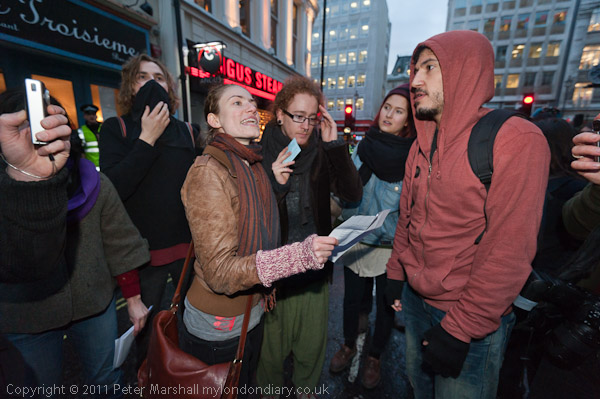
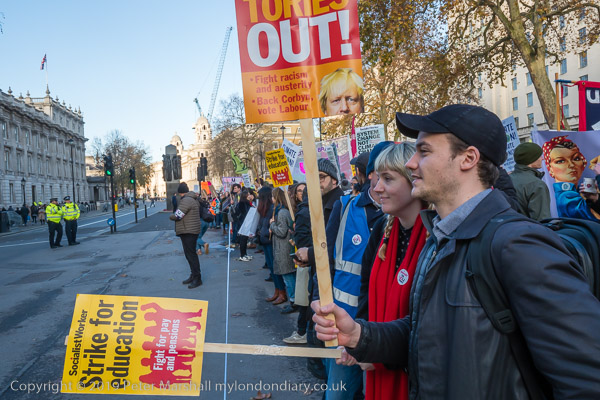
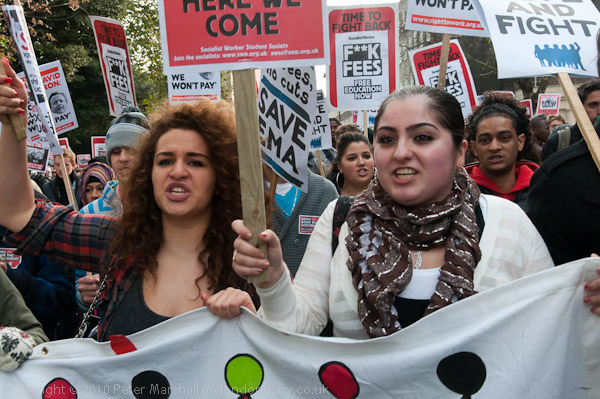
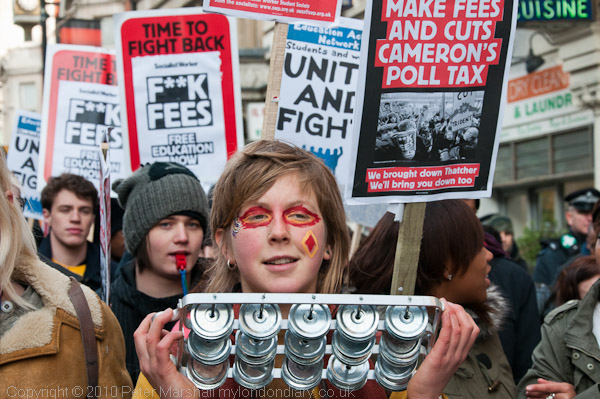
Students Protest Fees & Cuts: On Wednesday 24th November 2010 several thousand students set out to march from the University of London Union in Malet St through Whitehall and then on to the Lib-Dem HQ in Cowley St.
Students Protest Fees & Cuts

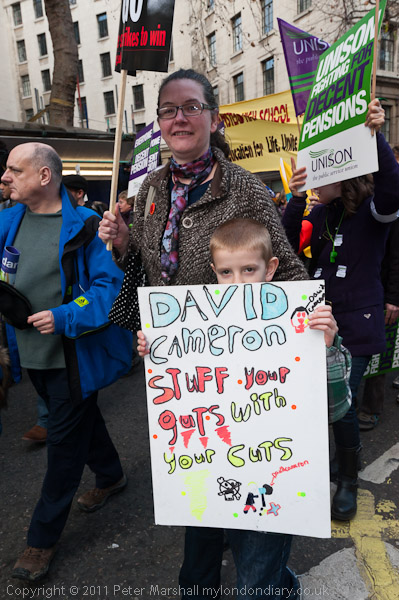
The protest was called by the National Campaign Against Fees and Cuts and Revolution and was a part of a national day of action after the Browne Review of Higher Education Funding had advocated a huge increase in tuition fees, allowing them to rise from £3,290 to £9000 a year – £27,000 for a three year course. The increase was approved by Parliament in December 2010.
Students Protest Fees & Cuts

Living costs were also increasing and by 2010 a typical student in London needed around £5000 each year. With the increase in fees that meant those students who relied on loans would end their three year course owing over £40,000.
Students Protest Fees & Cuts

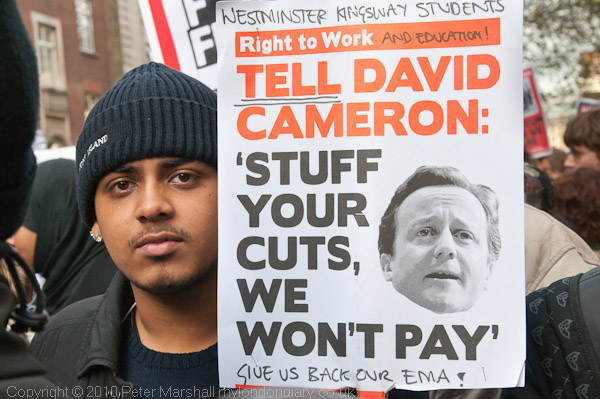
The government had also anoounced the previous month that the Educational Maintenance Allowances for 16-18 year old students in full-time education from low income homes were to be scrapped. Many youger students from schools and colleges had come to the protest along with those in higher education.

Students Protest Fees & Cuts

Universities were also being hit by the coalition government cuts in funding for arts and humanities courses. Many departments were being shut down, greatly reducing the opportunities for students.

Students Protest Fees & Cuts

So there were many things for students (and anyone concerned about education) to be angry about, but the march had begun peacefully and most of those taking part were not out for trouble.
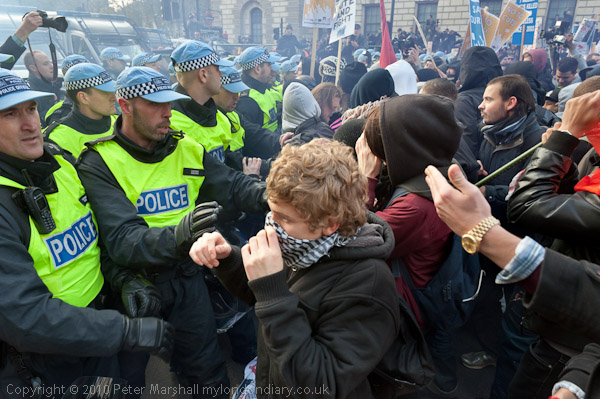
The students intended to march to Trafalgar Square and then down Whitehall past Downing Street and on through Parliament Square to the Liberal-Democrat headquarters in Cowley Street, a short distance to the south.
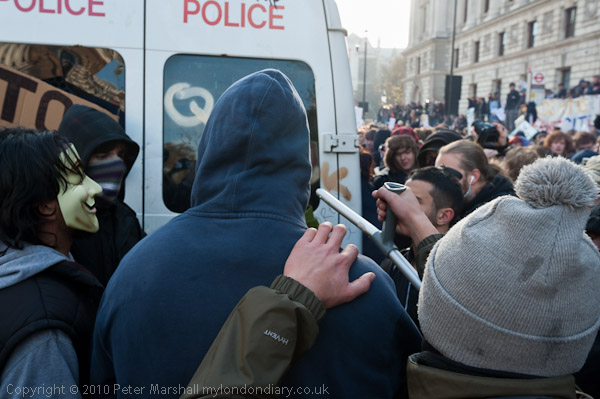
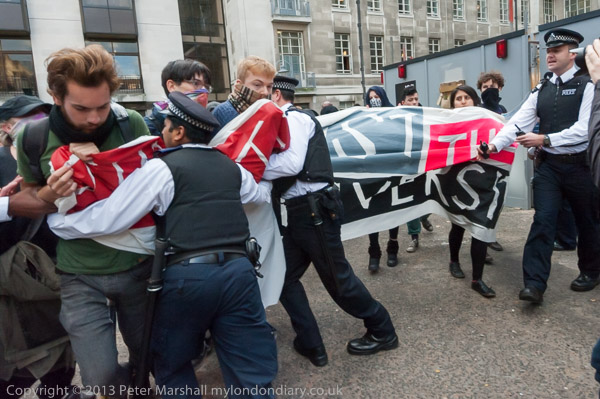
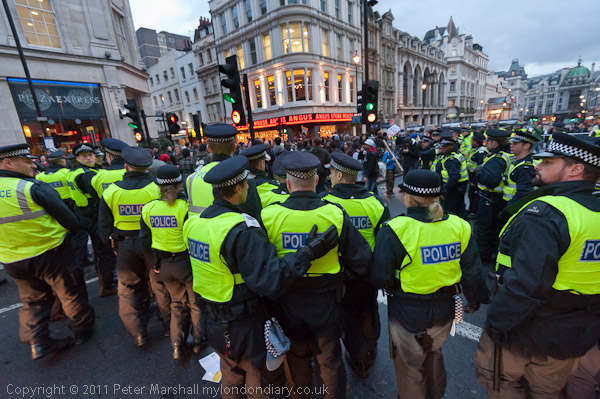
But it soon became clear that the Metropolitan Police had other ideas and were out to confront the students and stop the march. When the marchers turned into Aldwych a line of police stopped them continuing.
The students then surged down towards Temple Station and marched west along the Embankment, then up a side street onto Strand and on to Trafalgar Square. On Whitehall and met another group of students who had started their march at Trafalgar Square but had been stopped by police just before reaching Parliament Square.

“There were now perhaps 5000 students milling around in a small area, some chanting slogans (rather than the rather ordinary ones about education and cuts many favoured “Tory Scum, Here we come” and a long drawn out ‘David Camero-o-on’, answered by the crowd with ‘F**k off back to Eton’) but most just standing around waiting for something to happen. “
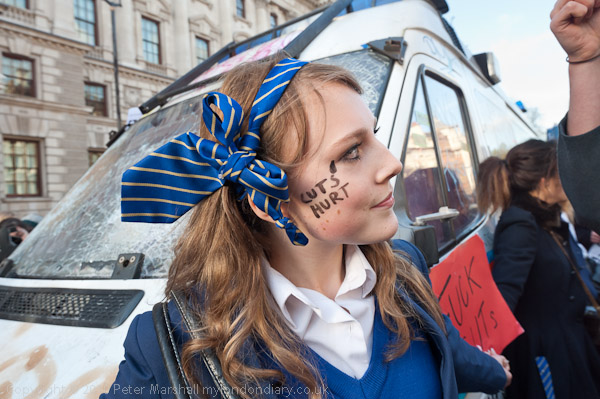
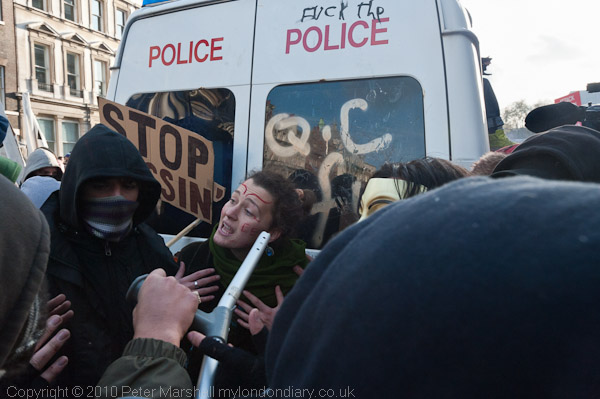
“Police had thoughtfully left an old police van as a plaything for the protesters outside the treasury. Perhaps because the tread on its tyres was so worn it would have been a traffic offence to move it – and it looked very unlikely to pass an MOT.”
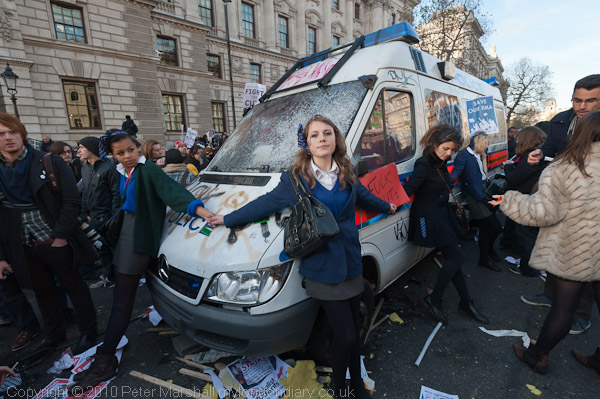
“The stewards told the protesters it was obviously a plant, and certainly the press I talked to were convinced. This didn’t stop a few masked guys attacking it (and I was threatened with having my camera smashed for photographing them doing so) despite a number of students who tried to prevent them, some linking hands and forming a chain round it. It was possibly the same small group who earlier had smashed the glass on the bus stop across the road.

A few protesters managed to burst through the police lines, but most of those there “were probably well-behaved students on their first demonstration, and although the police line was breached a number of times most of them just stood around wondering what to do rather than following them.”
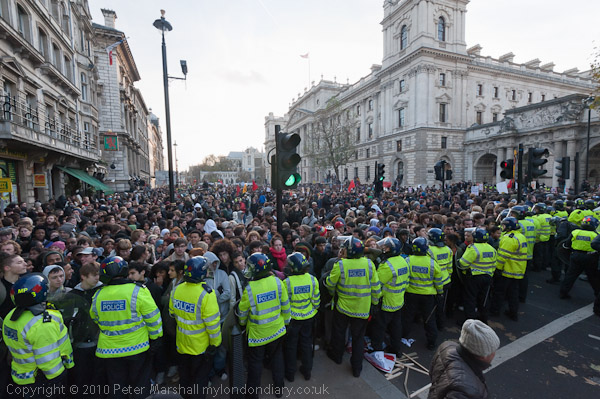
On My London Diary I try to describe the confused and dangerous situation that developed as police began threatening protesters and some making rather indiscriminate use of their batons. I was shocked at the police tactics which appeared designed to create public disorder by kettling – and a small minority of the students rose to the bait. The great majority of the students had come for a peaceful march and rally and to exercise their democratic right to protest, but the police, almost certainly under political pressure, had decided not to allow that.
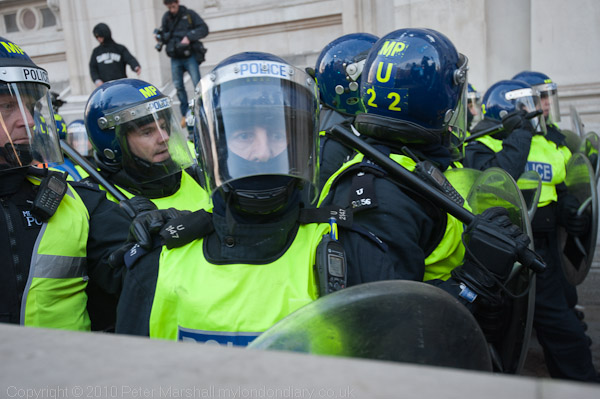
Eventually I’d had enough and it seemed that the protesters would be kettled for some hours, and I decided to leave in order to file my pictures and story.

Students Protest Fees & Cuts


FlickrFacebookMy London DiaryHull PhotosLea ValleyParis
London’s Industrial HeritageLondon Photos

All photographs on this page are copyright © Peter Marshall.
Contact me to buy prints or licence to reproduce.
IWGB Protests to the Princess – 2017

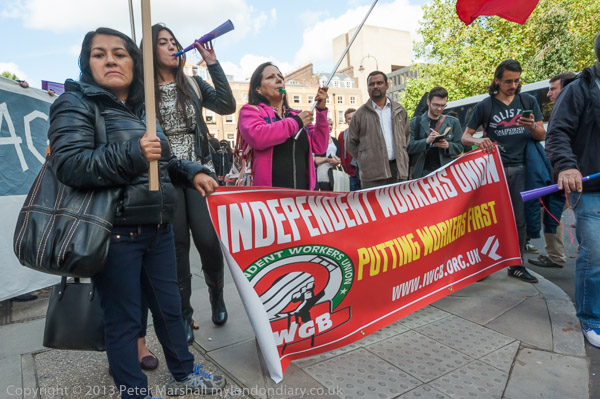
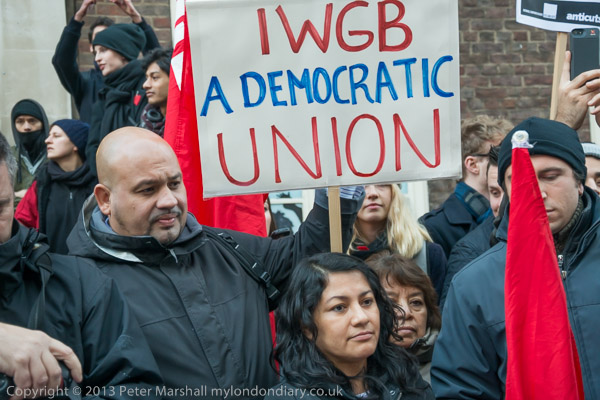
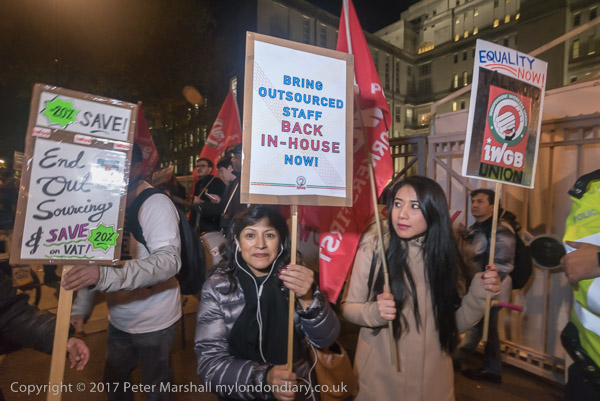
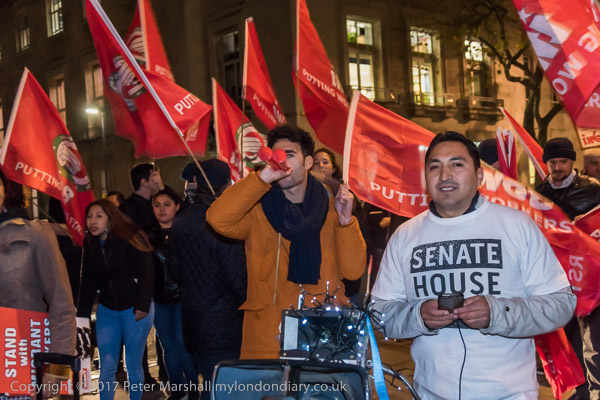
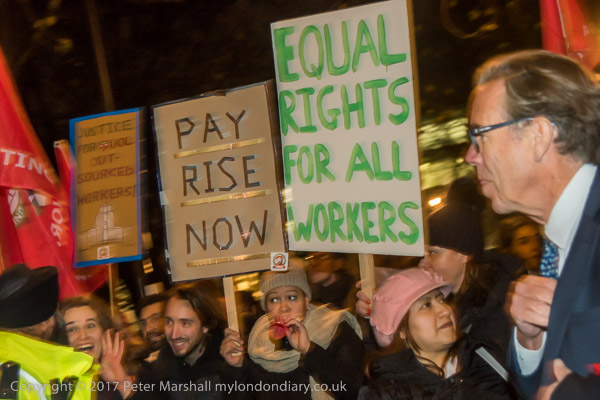
IWGB Protests to the Princess: The Independent Workers Union of Great Britain and supporters protested outside Senate House while University of London Chancellor Princess Anne was visiting on Foundation Day. They called for all workers in the university to be directly employed by the university and IWGB members in the security staff had held one of a series of one-day strikes.

IWGB Protests to the Princess

Although many of those who were attending the event with the princess had to walk in past a noisy protest, she was brought in by another entrance, and although they marched around when they heard this was happening they missed seeing her. But she will certainly have heard the protest.

IWGB Protests to the Princess

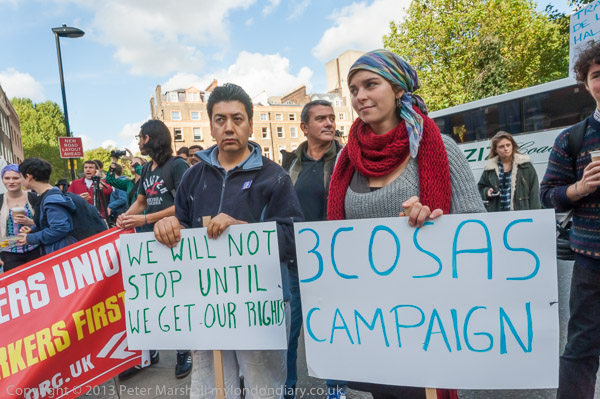
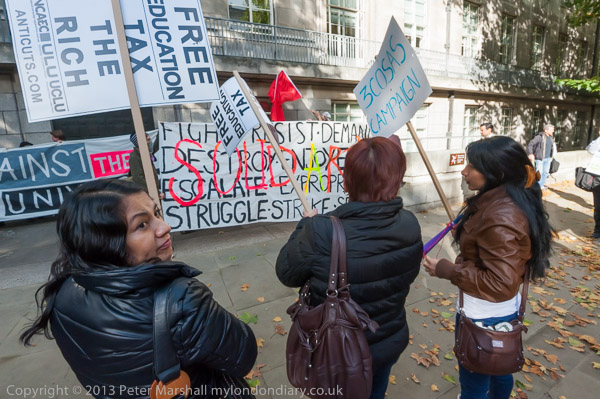
The protest was one in a long series by outsourced low paid staff at the University to gain the same conditions of employment as directly employed staff in what was known as the ‘tres cosas campaign’ – sick pay, pensions, holidays. They wanted to end the University outsourcing their jobs in the University to private companies who employ staff on far worse conditions and pay than those they employ directly.

IWGB Protests to the Princess

The protesters say the use of outside contractors to employ staff is discriminatory as outsourced workers including security, cleaning and catering staff are predominantly migrant and BME workers and it results in them being on far worse terms and conditions than other staff and also subjected to harassment and bullying.

IWGB Protests to the Princess

A fairly large crowd had come for the protest to support the out-sourced workers. Among them were students from the University of London, including students from the LSE who were campaigning for their cleaners to be properly treated and brought in house. They also included members of other trade unions including the UCU London Region, strikers from the Picturehouse cinemas and McStrike fast food workers demanding a living wage.

There were also speakers from other IWGB sector branches and Sandy Nicholl from SOAS Unison who has led a ten year fight there against out-sourcing. A samba band made sure the protest was heard both outside and inside the building so the princess will have been very aware of what was happening.

In 2020 the IWGB web site recorded that “After almost 10-years of fighting with the IWGB to be brought in-house, cleaners, porters, and security guards at University of London won their ‘tres cosas’ campaign in a historic victory. Workers fought tirelessly to achieve their demands, which were aided by the Senate House Boycott movement and the support of many students and staff across University of London.” I’m pleased to have been able in my small way to have helped the union to achieve this result.

But the IWGB went on to state “Although the University of London still refuses to recognise us, we continue to be the majority union at the university, representing all workers – from cleaners to professional services staff.” Under current unfair employment law employers can continue to recognise the larger and less effective trade unions rather than those who the workers chose as they are more effective in getting results such as the IWGB.

More text and pictures about the evening’s protest at IWGB protest London Uni outsourcing.


FlickrFacebookMy London DiaryHull PhotosLea ValleyParis
London’s Industrial HeritageLondon Photos

All photographs on this page are copyright © Peter Marshall.
Contact me to buy prints or licence to reproduce.

Students march for free education – 2017

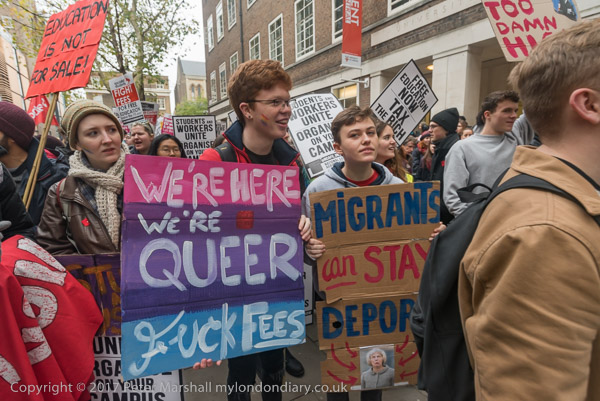
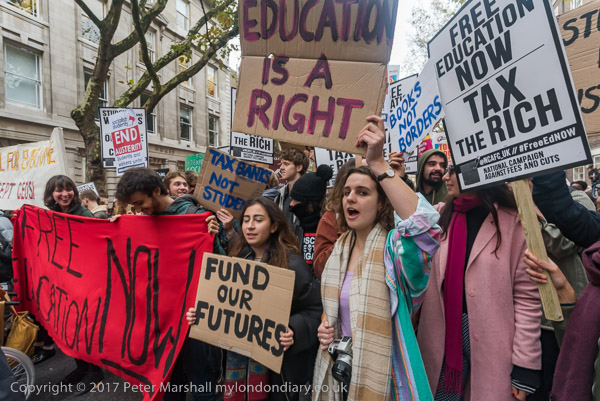
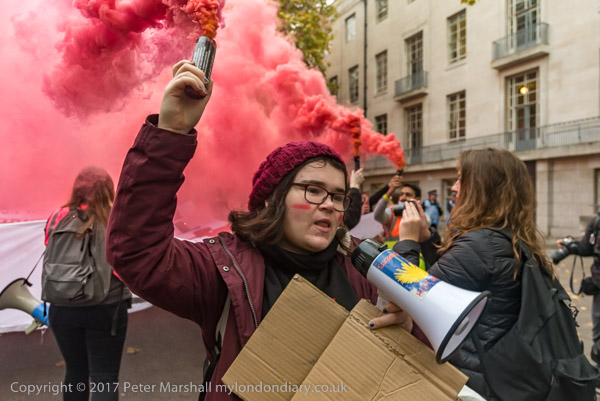
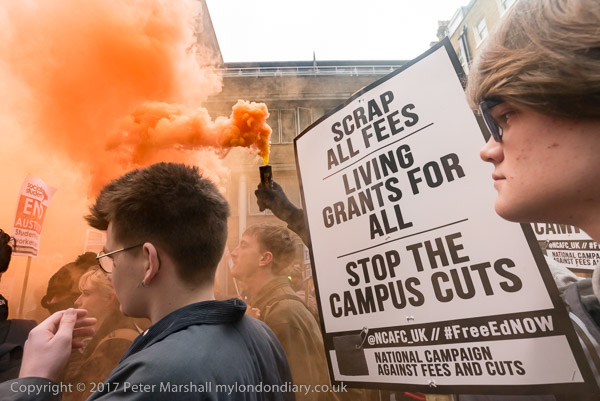
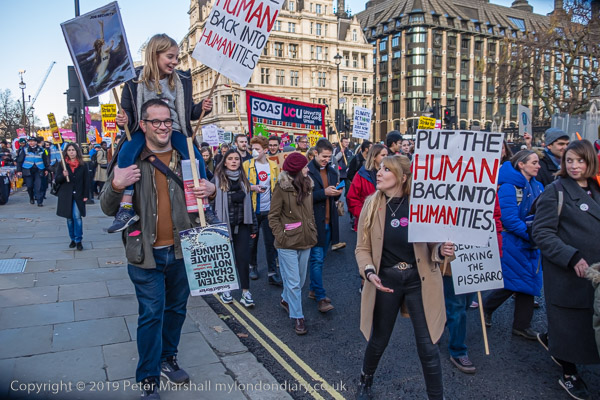
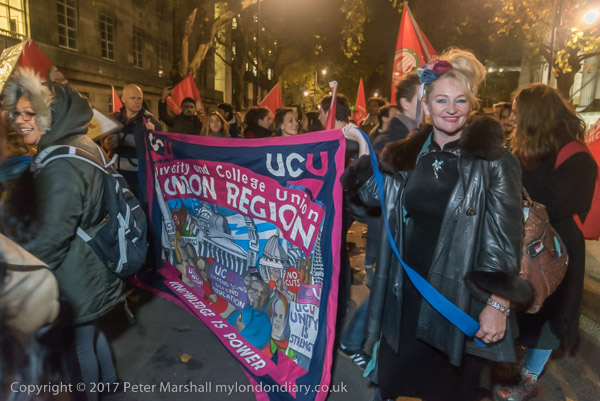
Students march for free education: Several thousand students marched from Malet Street to Parliament on Wednesday 15th November 2017 calling for an end to all tuition fees, for living grants for all and an end to all government cuts.

Students march for free education - 2017

Around 60% of 18 year-olds now continue their education in either universities or FE colleges, with just under 40% at university – though rather more women than men. This figure has increased massively since the 1960s when only around 4% of us went to university.

Students march for free education - 2017

But back then we paid no fees and there were means-tested maintenance grants which gave those of us whose parents were on low incomes enough to live on during term-time though parents who could afford it were expected to make a contribution.

Students march for free education - 2017

Many of us needed to find jobs in the long Summer Vacation or over Christmas when many students were needed by the Post Office to deal with the huge volume of Christmas cards, but universities generally prohibited working in term-time – and those students that needed to because their parents didn’t cough up with their contribution had to keep their work a secret.

Students march for free education - 2017

My full grant was I think £300 a year which had to cover rent, meals, travel, books etc over the 30 weeks at university – equivalent, allowing for inflation to around £5,300 now, though I think it would be impossible to survive on that now. The maximum student loan for living expenses for 2024/5 for those living apart from their parents is now £10,227 – or £13,348 for those in London.

Students now also have to pay tuition fees for which they can also get loans up to the full amount – currently £9,250 but with a recently announced increase to £9,535 for the 2025-26 academic year.

So for a normal 3 year degree course those taking out the full loans possible will end up owing around £60,000. I ended my course with a degree and around £7 in the bank.

Of course student loans are not like other loans, and students only start repayment when there income exceeds a certain threshold – currently around £25,000, though this depends on when students took out their loan. And after 30 or 40 years (again depending on this) any remaining loan is wiped out. But still the amounts are daunting.

Because these are loans, the government is still essentially paying out the cost of tuition and maintenance for current students. But they hope eventually to get some of the money back – again the forecast of how depends on the scheme in place when students took out their loan.

I’ve been unable to find a figure for the amount of repayment the student loans company is currently receiving, but I think it is fairly low compared with the amount they are giving out in new loans. The total debt owed is expected to rise to around £25 billion.

With this background its perhaps not surprising that students now – and in 2017 when I took the pictures here that students are angry about the cost of their education and that several thousands took part in the student march organised by the National Campaign Against Fees and Cuts despite it not being supported by the National Union of Students.

But this was not their only concern. They also marched to condemn the increasing marketisation of the education system that is resulting in cuts across university campuses and a dramatic reduction in further education provision across the country. They also say that the Teaching Excellence Framework which was supposed to ‘drive up standards in teaching’ has instead intensified the exploitation and casualisation of university staff as a part of the marketisation agenda.

Many more pictures at Students march for free education,


FlickrFacebookMy London DiaryHull PhotosLea ValleyParis
London’s Industrial HeritageLondon Photos

All photographs on this page are copyright © Peter Marshall.
Contact me to buy prints or licence to reproduce.

Racist Borders Agency & University Protest Ban 2013

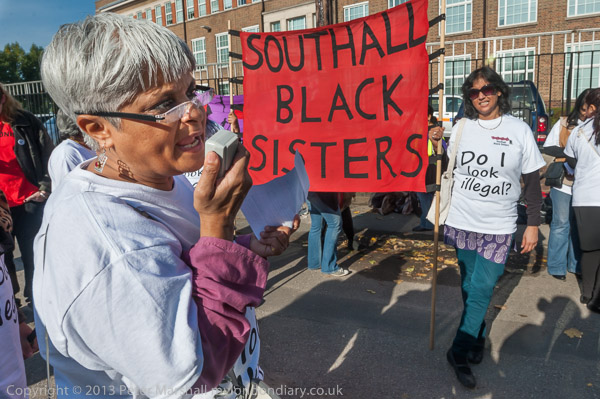
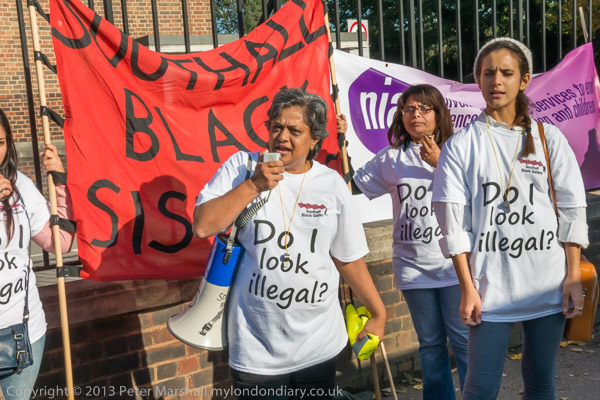
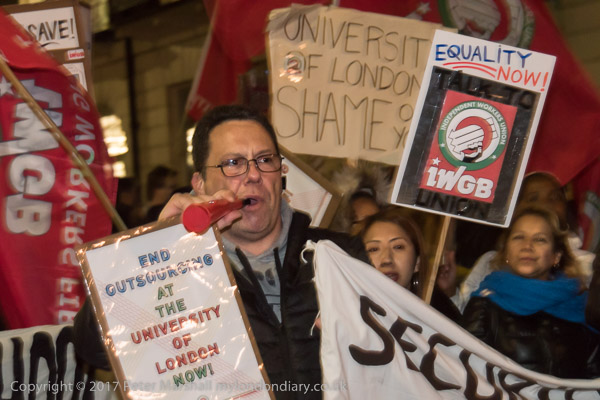
Racist Borders Agency & University Protest Ban: On Thursday October 24th 2013 I photographed a protest against the racist actions of the UK Borders Agency outside the Home Office Reporting Centre in Hounslow, West London before travelling into central London where supporters of the campaign calling for proper sickpay, holidays and pensions for all workers at the University of London defied a ban on protests by the University authorities.


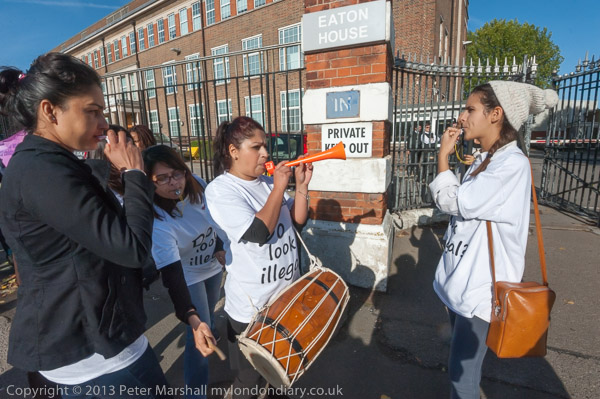
Southall Black Sisters Protest Racist UKBA – Eaton House, Hounslow

Racist Borders Agency & University Protest Ban

The racial profiling of the UK Borders Agency in their spot checks at rail and underground stations in areas such as Southall, Slough, Brent and East London cause great anxiety in our minority communities, many of whom are British citizens born in this country.

Home Secretary Theresa May had in 2012 announced that her aim “was to create here in Britain a really hostile environment for illegal migration”, and set out to do so by a series of measures, some illegal and all morally reprehensible.

Racist Borders Agency & University Protest Ban

After a successful legal challenge to the Home Office use of slogans on advertising vans, the UKBA had, according to Southall Black Sisters had “shifted the ’Go Home’ message to reporting centres in Glasgow, Croydon and Hounslow.” And so they had decided to hold this protest at the Hounslow centre inviting others to join with them “in demonstrating against the Government’s anti-immigration campaigns.

Racist Borders Agency & University Protest Ban

They said “We will not tolerate underhand tactics used to instil fear and divide us. Let us return to the streets and make our voices heard. We need to fight for our rights.”

Racist Borders Agency & University Protest Ban

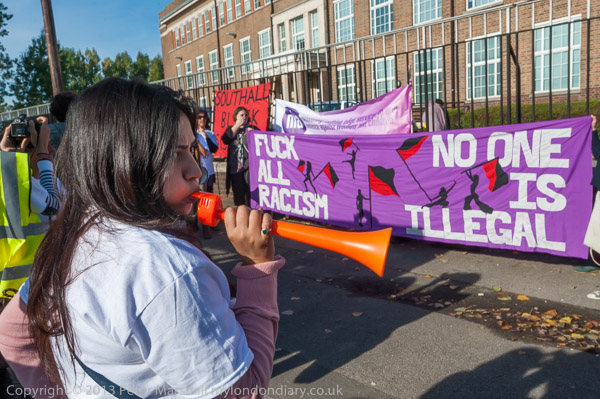
Most of the 30 or so people who made their way to the centre, housed in the former offices of a pharmaceutical company on the edge of London, opposite Hounslow Heath, poorly served by public transport (perhaps deliberately remote to make life more difficult for migrants and asylum seekers who have to report there) were from Southall Black Sisters, but there were a few from other groups with a banner with the message ‘F**K ALL RACISM – NO ONE IS ILLEGAL’.

A few police had turned up to watch, and one officer complained about the language used by one of the women present. She complained strongly that she had been responding to a racist remark by a passer-by, and asked why the officer had not responded to that. He replied that he had not heard the remark, but had heard her reply, and was surrounded by a group of women blowing whistles and horns and banging drums for a couple of minutes before being rescued by Pragna Patel, Director of Southall Black Sisters, who told the group they should get on with their demonstration.

The protest was still continuing when I left after about an hour to get one of the infrequent buses to the centre of Hounslow to catch the tube.

You can read a more detailed account of the event and more pictures at Southall Black Sisters Protest Racist UKBA


3 Cosas Defy London University Protest Ban – Senate House, University of London

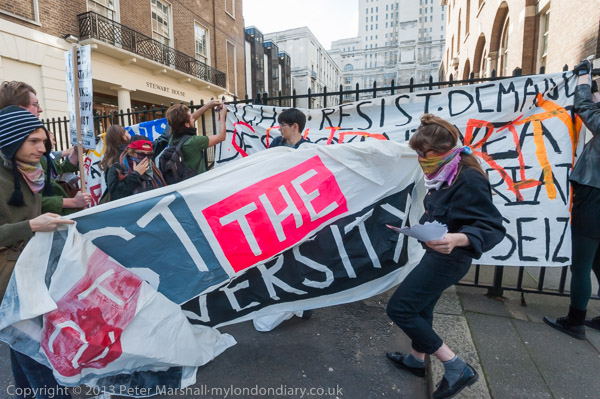
Supporters of the ‘3 Cosas’ campaign for sick pay, holidays and pensions for all workers at the University of London and others today defied University management ban of protests by holding a noisy protest in and around Senate House.

The ban was seen by students and staff at the University, including cleaners as an attempt to prevent free speech and freedom of assembly at the university and the threat to bring in the police to prevent further protests as one which recalls the actions of authoritarian regimes overseas, rightly condemned across academia and the rest of society. The university was threatening to bring charges of trespass against any protesters.

The protest was called by the 3 Cosas campaign (Spanish for ‘3 things), University of London Union (ULU) and the IWGB (Independent Workers of Great Britain) which represents many of the cleaners in the university, and was supported by others including members of Unison and the UCU.

They began with a noisy protest outside the gates on the east of the site, before going around to continue their protest at the south entrance to Senate House, opposite the queues waiting to enter the north entrance of the British Museum before going on the the locked West Gates.

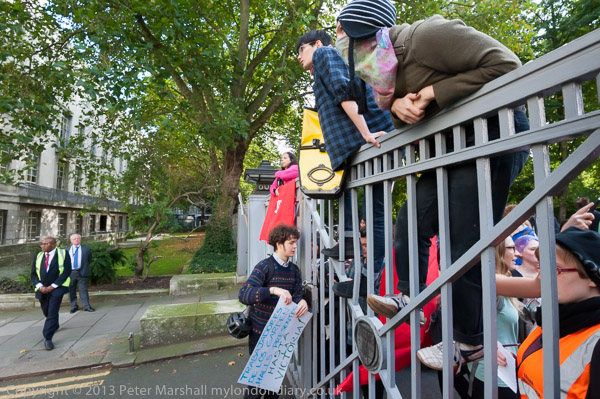
From outside we could see a few protesters already being ejected from the lobby under Senate House. Some people climbed over the gates to join them, but most of us found an easier way through an open gate and across a lawn, and soon the protest was taking place outside the now locked gates to the lobby at the bottom of Senate House.

After a while the protesters moved out to the area in front of SOAS and I thought the protest was over. But a group with the IWGB banner had other ideas, rushing down the narrow path into the Senate House East car park, and the rest of us followed.

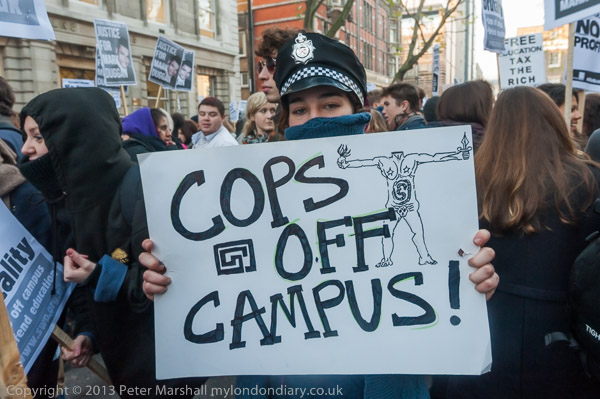
At Senate House they were met by two police and management representatives who told them they were not allowed to protest. The only result of this was to add the slogan ‘Cops Off Campus!‘ to that of ‘Sick Pay, Holidays, Pensions, Now!’ and the protest continued, getting rather louder as more police arrived.

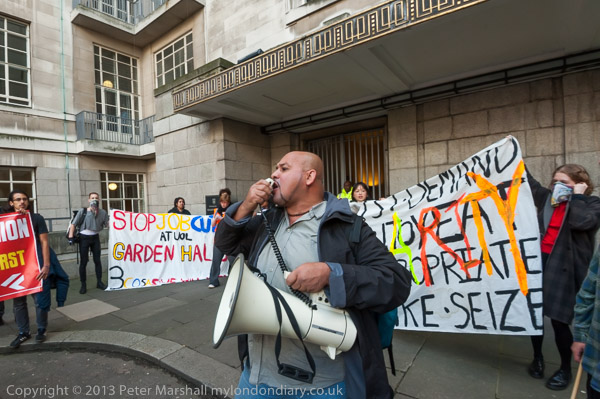
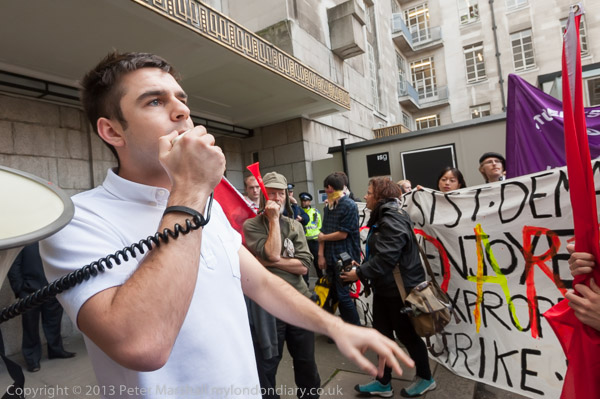
ULU Vice President Daniel Cooper used a megaphone to question why the protest was being filmed from a first floor window and then talked about the shame that the University was bringing on itself by its refusal to insist on decent conditions of employment for all workers in the university, for attempting a ban on freedom of speech and assembly in the university and for bringing police onto the campus against staff and students of the university.

More police arrived and made an ineffectual attempt to kettle the protesters, who simply walked through gaps in the police line. The police regrouped and tried to stop them leaving in a narrower area, but by now some officers were trying to stop them while others were shouting to their colleagues to let them leave. At last realising that their presence was only inflaming the situation and prolonging the protest and marched away. The protesters held a short rally in front of the SOAS building before dispersing.

More at 3 Cosas Defy London Uni Protest Ban.


FlickrFacebookMy London DiaryHull PhotosLea ValleyParis
London’s Industrial HeritageLondon Photos

All photographs on this page are copyright © Peter Marshall.
Contact me to buy prints or licence to reproduce.


Saffron Revolution & Slave Trade Abolition – 2007

Saffron Revolution & Slave Trade Abolition: On Saturday 6th October 2007 I photographed a protest against the brutal repression of the Saffron Revolution protest in Myanmar (Burma) and a celebration of the 200th anniversary of the abolition of the slave trade,


Global Day of Action for Burma – Westminster

There was considerable support in the UK and UK media for the Burmese people who were taking part in non-violent protests against the military dictatorship there after it decided to remove subsidies on fuel, exacerbating a cost-of-living crisis in the country.

The protests were led by thousands of along with students and political activists and were often referred to as the Saffron Revolution.

The protests had begun in August 2007 and in late September after protests involving many thousands in various cities the government began a huge crackdown using military force to stop the protests and imposing curfews and prohibiting gatherings of more than five people.

Monasteries were raided, thousands of arrests were made and some protesters were killed. Wikipedia gives a great deal of detail, and on 1st October it was reported that around 4,000 monks were being detained at a disused race course, disrobed and shackled.

The official death toll over the period of the protests was 13, but the independent media organisation Democratic Voice of Burma based outside the country produced a list of 138 names of those killed.

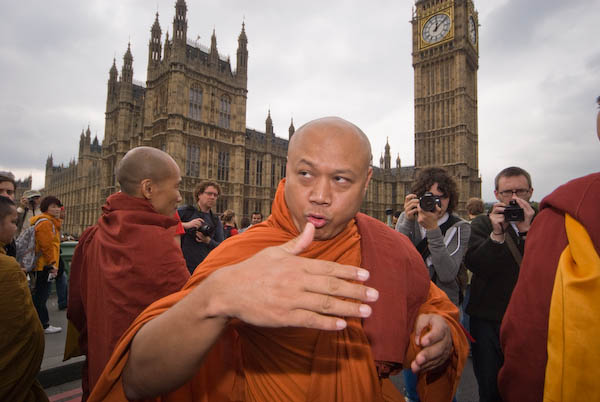
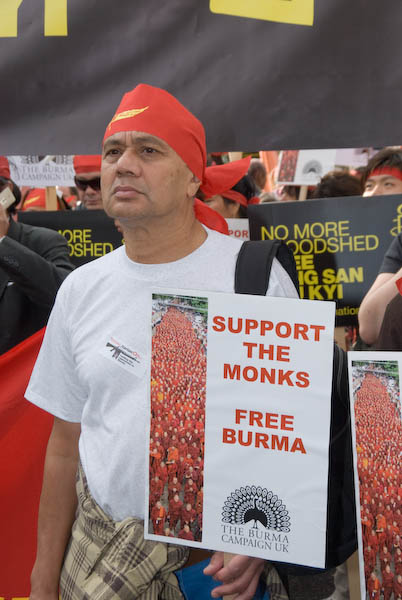
The march began at Tate Britain on Millbank, proceeded over Lambeth Bridge and then returned to Westminster over Westminster Bridge. Many of the roughly 10,000 marchers wore red headbands and a small group of monks were allowed to tie strips of cloth onto the gates of Downing Street before the march continued to a rally in Trafalgar Square, where I left them.

More at London Burma March.


Slave Trade Abolition Bicentenary Walk

In 1787, Thomas Clarkson, Granville Sharp and ten other anti-slavery campaigners founded The Society for the Abolition of the Slave Trade. Nine of the twelve founders were Quakers, including the wealthy banker Samuel Hoare Jr which prevented their having much involvement in parliament.

Perhaps because of this the society became the first modern campaigning movement, working to educate the British public about the cruel abuses of the slave trade through publication of books, prints, posters and pamplets, organising lecture tours, including that by former slave and author Olaudah Equiano and by boycotting of goods produced by slaves.

The Quakers had organised petitions against slavery and presented these regularly to Parliament, and in 1787 William Wilberforce, MP for Hull was persuaded to join the movement, presenting the first Bill to abolish the slave trade in 1791 which was heavily defeated.

Further Bills followed on an almost annual basis, and finally in 1807 the Abolition of the Slave Trade Act was passed, with a majority of 283 votes to 16 on its second reading in the House of Commons. A similar act was passed by the USA in the same year taking effect at the start of 1808.

Despite this it took another thirty years for slavery in the British Empire (except those parts ruled by the East India Company) to be abolished in 1838. And when this was done the freed slaves received no compensation but massive amounts were paid to the former slave owners, a total of around £20 million, around 40% of the national budget and allowing for inflation around £2, 800 million today. Fact checking by USA Today confirms that the UK Government only just finished paying its debts to the slave owners in 2015.

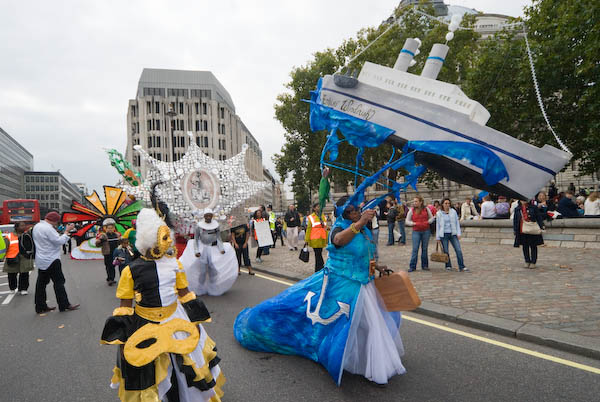
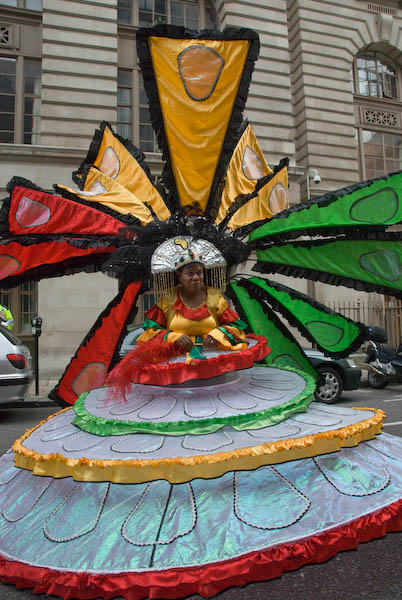
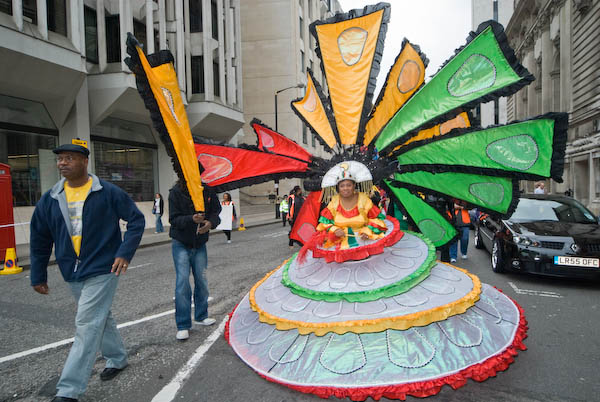
The Slave Trade Abolition Walk organised by Yaa Asantewaa & Carnival Village was only one of a number of events commemorating the abolition of the slave trade taking place in 2007, but was I think the most colourful. Yaa Asantewaa was named after the famous Queen Mother of Ejisu in the Ashanti Empire who led the Ashanti Kings in the War of the Golden Stool against British colonial rule in 1900 and was exiled to the Seychelles where she died in 1921.

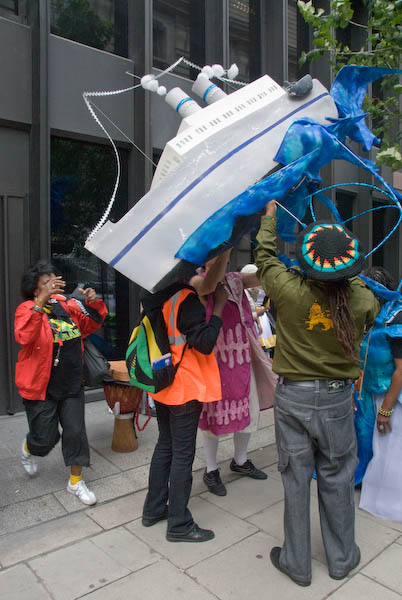
Among the costumes was one winner from Notting Hill, and a rather fine ‘Empire Windrush’ depicting the ship which brought the first large contingent of migrant workers from the Caribbean to England in 1948. They had been recruited to fill the gap in UK workers needed to restore the British economy after the war and came to a country where they met much racist discrimination, which more recently became government policy under the Windrush scandal, still continuing.

As of course is slavery. ‘Modern slavery’ is no less slavery than the slavery that was at the core of the British Empire and which provided the wealth that once made Britain ‘Great’.

Slave Trade Abolition Bicentenary Walk


FlickrFacebookMy London DiaryHull PhotosLea ValleyParis
London’s Industrial HeritageLondon Photos

All photographs on this page are copyright © Peter Marshall.
Contact me to buy prints or licence to reproduce.


Rev Paul Nicholson & More – 2014

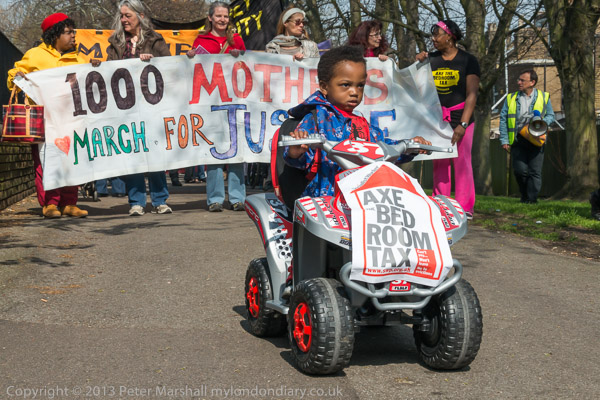
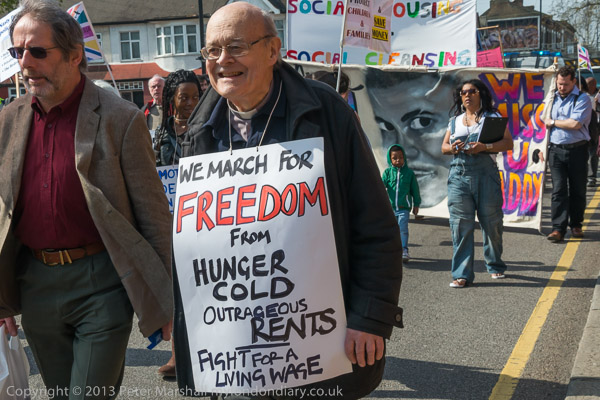
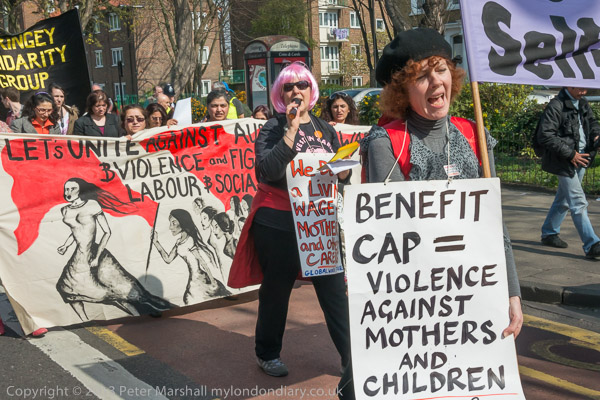
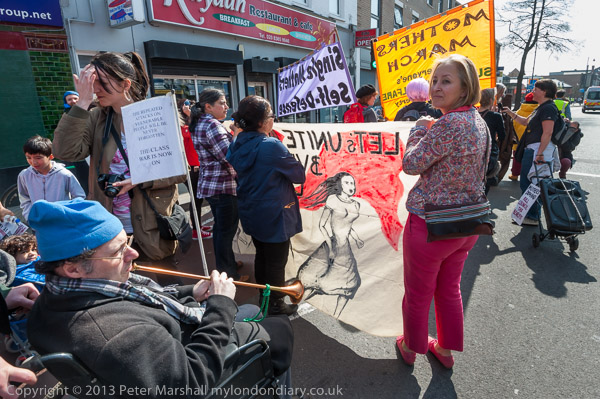
Rev Paul Nicholson & More: Many of us particularly in London have fond memories of the Rev Paul Nicolson (1932-2020), a redoubtable campaigner for the poorer members of our community. He appears somehow to have passed Wikipedia by but you can read more about his life from many online sources. On Saturday 29th March 2014 I photographed the Thousand Mothers March in Tottenham he and Taxpayers Against Poverty organised demanding demanding living incomes, decent truly affordable homes for all and rejecting the bedroom tax, the housing benefit cap, unfair taxes, hunger and cold homes.

Rev Paul Nicholson & More

Huff Post tells us Nicolson worked in the champagne trade from 1965 until he made a dramatic career change in 1967 and was ordained by the Church of England as a Minster in Secular Employment. This meant he had to find a job in the real world and he got a job at the ICI HQ in Millbank as a personnel officer. In 1975 he took one of the first Employment Trununals challenging ICIs redundancy procedures and was later involved in supporting other trade unionists elsewhere. In 1979 he ventured into politics becoming an Independent councillor where he then lived in North Herts.

Rev Paul Nicholson & More

After a long fight against the Poll Tax in 1997 he founded the charity Zacchaeus 2000 Trust (Z2K), based in London, a group who were were deeply concerned about the impact of the Thatcher Government’s ‘poll tax’ – a fixed payment from every adult, regardless of their income or circumstances. Z2K became a registerd charity in 2005 and Nicolson left it in 2012 withdrawing to found Taxpayers Against Poverty (TAP) to avoid the restrictions on political campaigning by charities.

Rev Paul Nicholson & More

Perhaps his most important action was to commission Minimum Income Standards research from the Family Budget Unity in 1999, which formed the basis of the London Living Wage, with Mayor Ken Livingstone setting up the Greater London Authority Living Wage Unit in 2005.

Rev Paul Nicholson & More

What would have been an ever greater achievement would have been the adoption by the authorities of the Memorandum to the Prime Minister on Unaffordable Housing he commissioned by Professor Peter Ambrose in 2005. New Labour read it but did nothing, continuing to concentrate on unaffordable housing. Had Corbyn been allowed to win by the Labour Party in 2017 we would have seen changes in the right direction – but policies like there were why thy fought hard to prevent his election.

Of course I’ve not mentioned the best-known fact about Nicolson. It was while he was living in Turville near High Wycombe that he allowed the BBC to take over his church to film The Vicar of Dibley. Dawn French was playing Grealdine Grainger as the Vicar, but the real vicar was Paul Nicolson, though I think he kept away from the cameras.

He retired and settle in Tottenham, becoming welll known for his campaigning in the area – and for a number of arrests and trials. He had called this march and its demands were neatly summarise on the placard hanging from a string around his neck: ‘We march for Freedom from Hunger, Cold, Outrageous Rents – Fight for a Living Wage’.

You can read a short article on him in the Guardian which contains around 30 of his letters which were published by the newspaper as well as links to many more. He truly was a great campaigner.

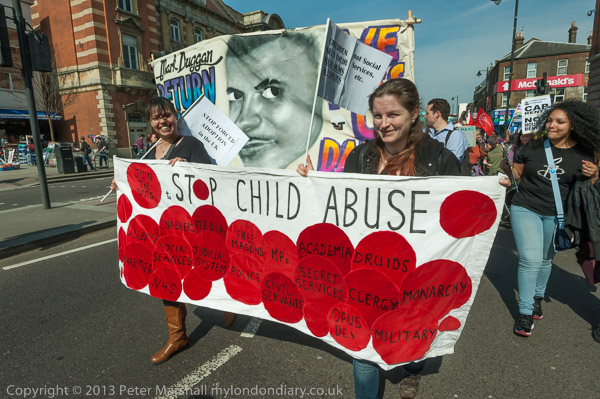
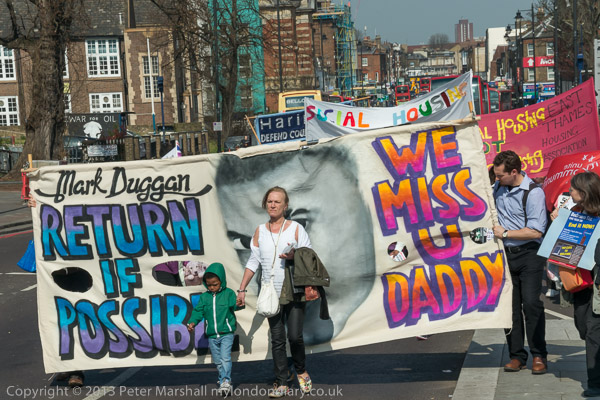
I left the march as it passed Tottenham Police Station with Carole Duggan walking in front of a large banner with the face of Mark Duggan, her nephew, murdered by police in Tottenham in 2011.

More about the march and many more pictures at Mothers march for justice.


I was on my way to two further protests that day which you can read about on My London Diary:

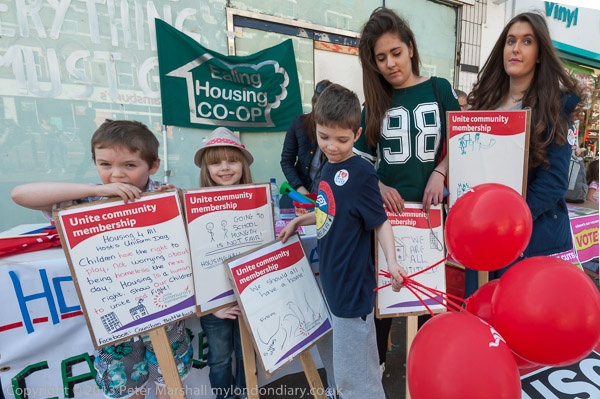
At Kilburn Square was a Kilburn Uniform Day protest where the Counihan Battlebus Housing For All campaign, along with the TUSC Against Cuts and TUSC were calling for rents to be capped and for everyone to have a home.

Kilburn Uniform Day

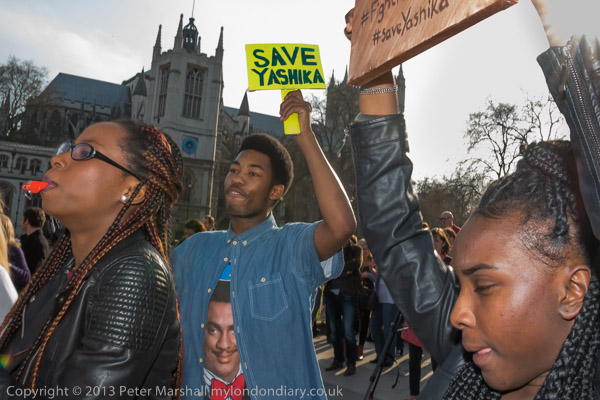
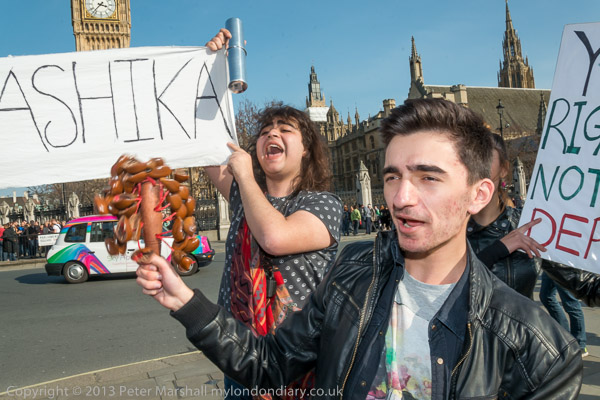
And in Parliament Square, staff and students from Oasis Academy Hadley in Ponders End were protesting against the Home Office plans to deport fellow A-Level Student Yashika Bageerathi to Mauritius.
She came here with her mother and two younger siblings in 2012 after physical abuse from a relative and claimed asylum in 2012. The application has been rejected and the whole family are under threat of deportation.

Yashika is now 19 and the Home Office decided they could deport her on her own and she had been in Yarl’s Wood immigration removal centre since March 19th. She and her fellow students want her to be allowed to stay – at least until she has taken her exams this summer. The #FightForYashica petition had attracted over 171,000 signatures.

Attempts by the Home Office to deport Yashika failed before this protest when pressure from campaigners led to British Airways refusing to take here. Ahe had been booked into an Air mAURITIUS flight for the day following this protest, but an avalanche of tweets led to them refusing to take her.

Finally she was deported on her own in April 2014 and fortunately was helped there to take her A-levels, receiving the grades she needed to go on to university and end her brief period in the public eye.

Fellow Students Fight for Yashika.


FlickrFacebookMy London DiaryHull PhotosLea ValleyParis
London’s Industrial HeritageLondon Photos

All photographs on this page are copyright © Peter Marshall.
Contact me to buy prints or licence to reproduce.

Cops Off Campus National Student Protest – 2013

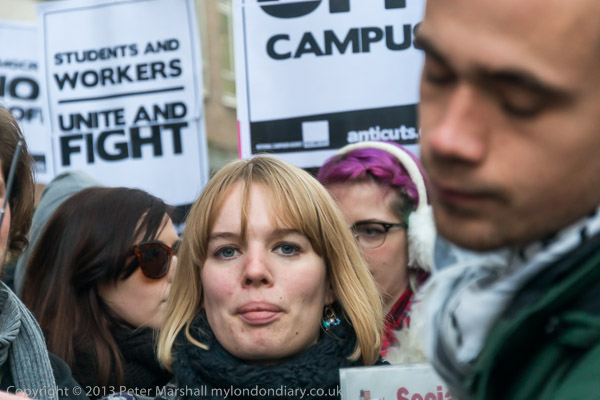
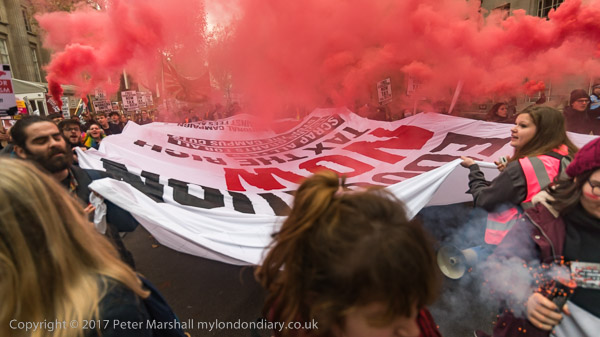
Cops Off Campus National Student Protest – Ten years ago today on Wednesday 11th December 2013 I was at the University of London for a large national student protest over the use of police against student protests on campus at several universities around the country.

Cops Off Campus National Student Protest

At Sussex University the management had called the police onto the campus or gone to the courts to prevent or oppose student protests or harass students. A number of students had been arrested.

Cops Off Campus National Student Protest

In London police had been called to protests over the closing down by management of the University of London Union and the 3 Cosas campaign supported by students for a living wage and decent conditions of employment – sick pay, holiday pay and pensions – for the low paid workers on campus. The cleaners union, the IWGB, had come to support the students at this protest.

Cops Off Campus National Student Protest

The previous week in London there had been a large police presence harassing and arresting students at an emergency protest over police brutality in their eviction of students from the Senate House that Wednesday, with a total of over 40 arrests on that day and the following day.

Cops Off Campus National Student Protest

When I had arrived for that protest, there were police vans parked in all the side streets around and later the police made several failed attempts to kettle the large group of students at the protest despite it being intended as an entirely peaceful and orderly march around some of the various sites of the university in the area.

The police actions on that occasion seemed totally unnecessary and it was hard not to see them as a deliberate attempt to provoke a violent response, but the students kept their heads, moved rapidly and outwitted them. My account of the protest at ‘Cops Off Campus’ Protest Police Brutality‘ ended with the sentence: “It did seem an incredible and pointless waste of public money, and it resulted in more inconvenience to the public than if the event had not been policed at all.”

I don’t for a moment imagine the police had been influenced by my account, though I do know from occasional comments made to me by officers at various protests that some of them at least followed me. I’m sure that they had come to the same obvious conclusion independently, and for the protest on 11th December there was not an officer in sight in the whole area.

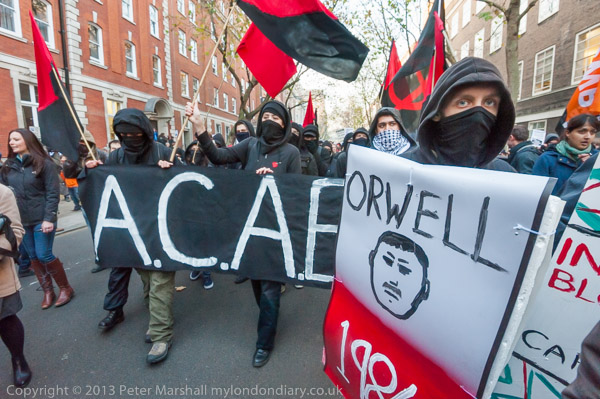
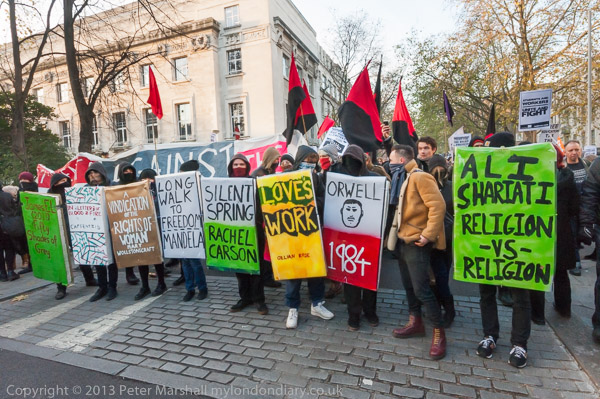
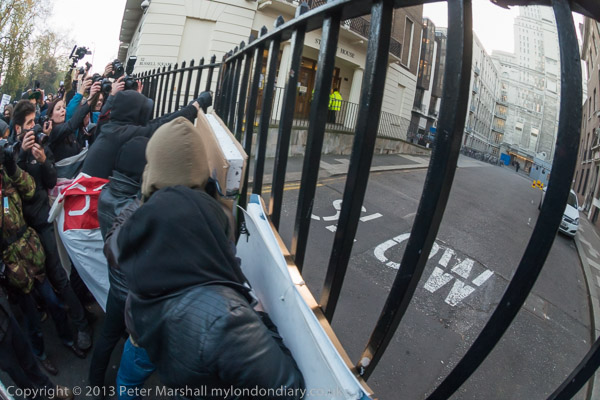
There were speeched outside the University of London Union before the march moved off, at its front a ‘Book Bloc’ carrying large backed polystyrene foam shields with book titles, including George Orwell’s ‘1984’, particularly appropriate as the Senate House is said to have inspired Orwell’s ‘Ministry of Truth’, and alongside it were Mandela’s Long Walk to Freedom, Mary Woolstonecraft’s ‘A Vindication of the Rights of Women’, E P Thompson’s ‘The Making of the English Working Class’ and other classics.

When the march came to the gates to Senate House from Russell Square they found that these gates, normally open, had been locked and chained to prevent them entering, despite most of those present being members of the university. They are stout metal gates but the chains could not for long resist the bodies pushing against them and they gave way and the crowd surged into the car park.

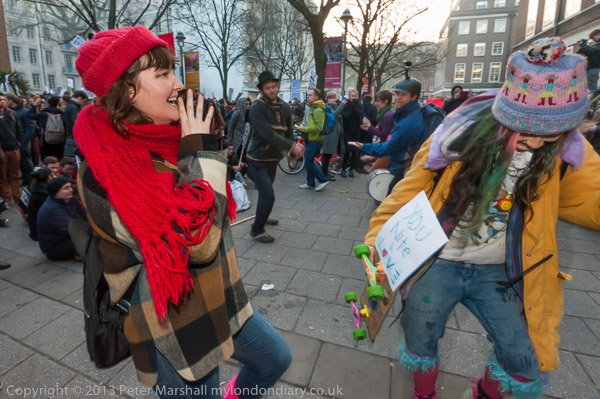
After a few minutes the marchers made their way back to Russell Square and continued to march around the area, eventually coming to a halt outside SOAS, where the samba band was playing and they sat down, stood around or danced.

Later some went on to protest outside the law courts where the inquest on Mark Duggan, shot by police in 2011, was ending and then to Whitehall, but I left as I was getting tired and needed to file my pictures.

More at Cops Off Campus National Student Protest.


TUC Pensions March & Corporate Greed – 2011

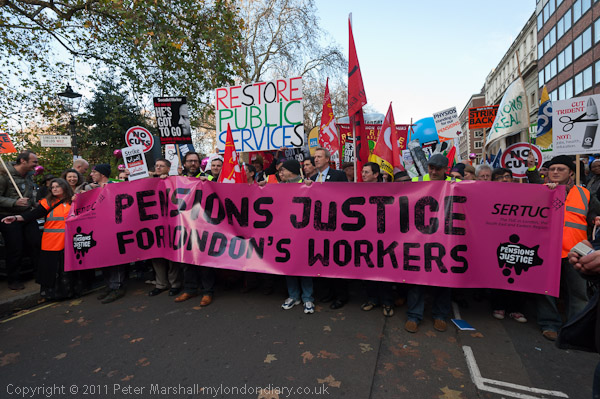
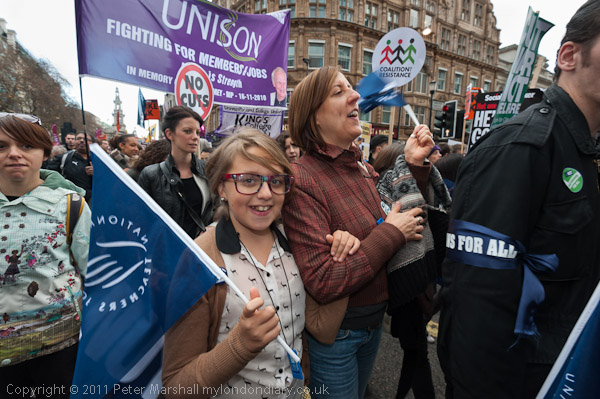
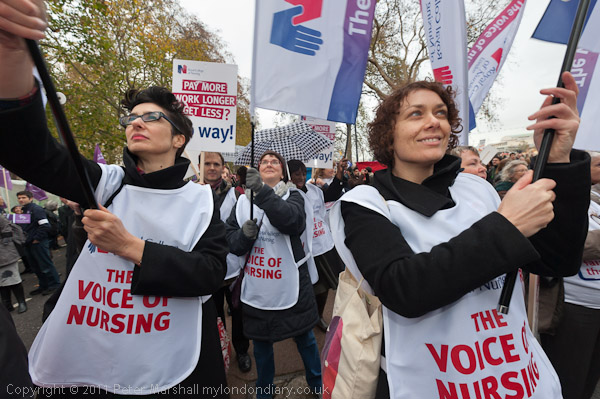
TUC Pensions March & Corporate Greed – On Wednesday 30th November 2011 public sector workers across the country held a one-day strike against government plans to cut public service pensions with pickets at thousands of workplaces and rallies and marches in towns and cities across the country as well as a South East TUC organised march in Central London which I photographed. Later in the afternoon I went with Occupy London protesters who occupied the offices of the highest paid CEO in the UK to protest against corporate greed.


TUC Nov 30 March – Lincolns Inn Fields to Westminster

TUC Pensions March & Corporate Greed

It’s always hard to estimate the numbers on very large marches such as this one but it was very large and when I arrived at Lincoln’s Inn Fields the large space already seemed pretty crowded an hour before the march was due to start. Many people gave up trying to get in waited to join the march on Kingsway.

TUC Pensions March & Corporate Greed

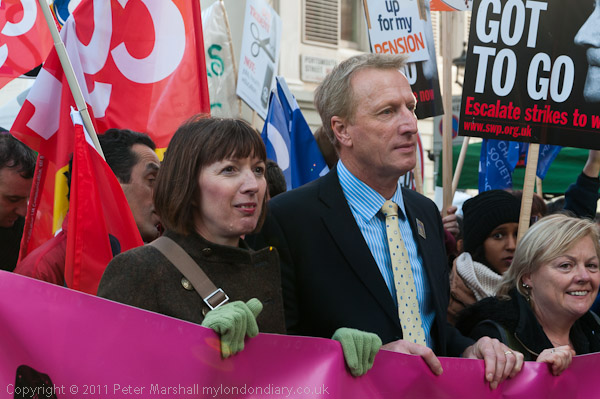
At the front of the march were Frances O’Grady, Deputy General Secretary of the TUC, NASUWT president John Rimmer (below) and other trade unionists. Many other groups had come with banners.

TUC Pensions March & Corporate Greed

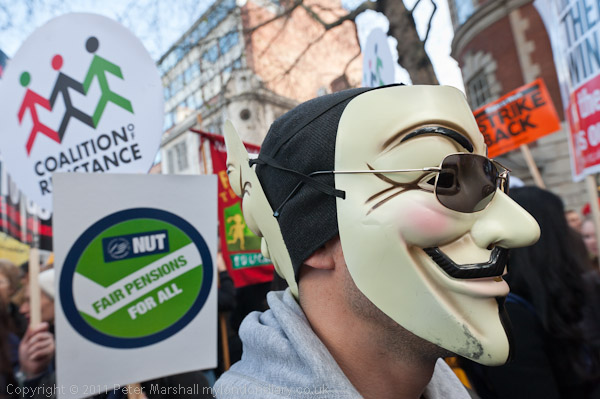
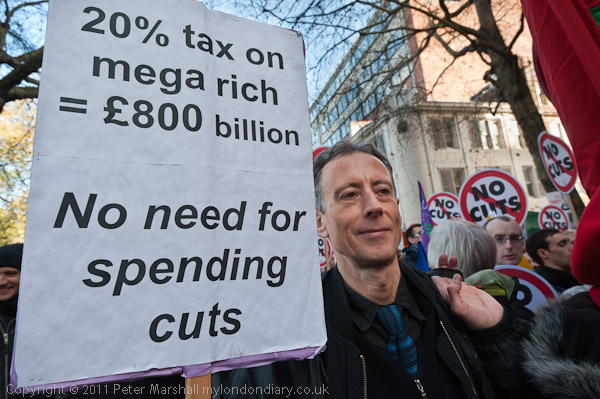
There were many placards suggesting ways to avoid the cuts, including by taxing the mega-rich and cutting the pointless and wasteful expenditure on Trident rather than job’s health and education.

TUC Pensions March & Corporate Greed
Peter Tatchell

Some of the students on the march felt it was going to slow and began to march in front of the main banner.

Police stopped them and held up the whole of the march at Aldwych but then didn’t seem to know what to do. Eventually they just let things go ahead.

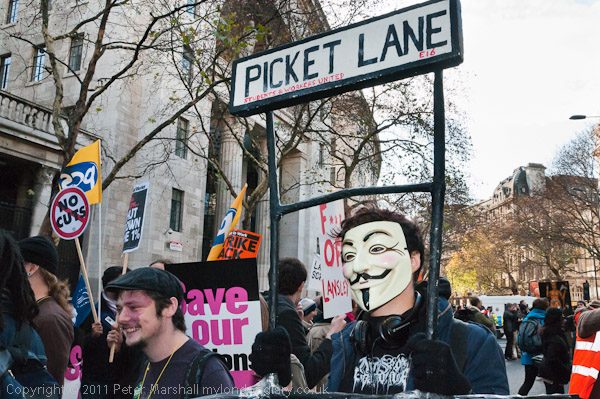
I took a lot of pictures of the Education Activist Network who were the liveliest part of the protest but there were plenty of others to photograph too with many interesting hand-made posters.

I stopped for quite a while to photograph marchers as they went past.

and they were still coming in large numbers an hour after the front of the march had passed me.

I was still on the Embankment with marchers when the rally had begun closer to Parliament and people were still rolling in. I think there were probably between 20 and 30,000 taking part, but it was hard to know and I think many who had been on picket lines early in the morning had left before the rally began. I left too to meet with people from Occupy London.

More pictures on My London Diary at TUC Nov 30 March.


Occupy London Expose Corporate Greed – Piccadilly Circus & Panton House

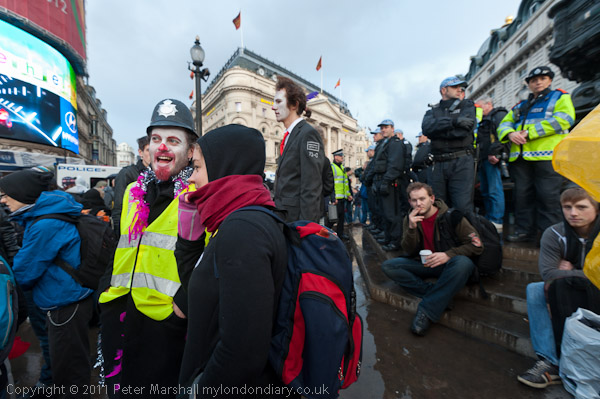
Occupy London had called people to meet at Piccadilly Circus at 3pm but had not indicated what would be happening next. I arrived to find around a hundred protesters there along with quite a few Greek football supporters and a large number of police standing around watching them.

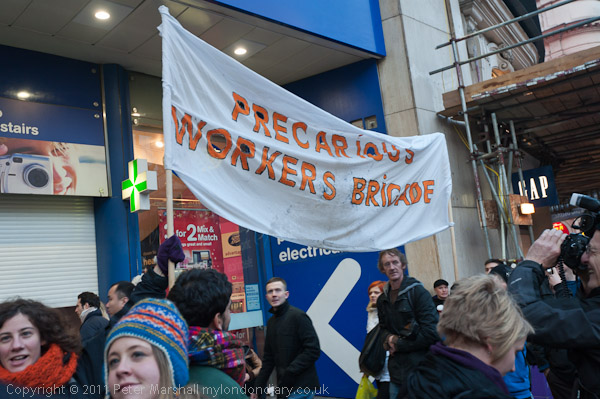
We stood in the intermittent rain for around half an hour waiting for something to happen. At 3.30pm around 30 people rushed across the road to stand outside a branch of Boots with the ‘Precarious Workers Brigade’ banner, but made no attempt to enter the store which quickly lowered its metal shutters.

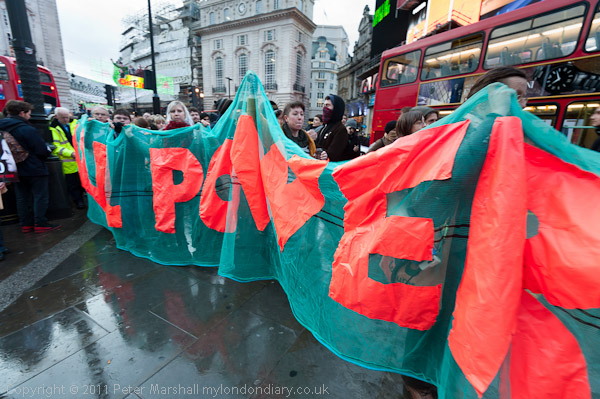
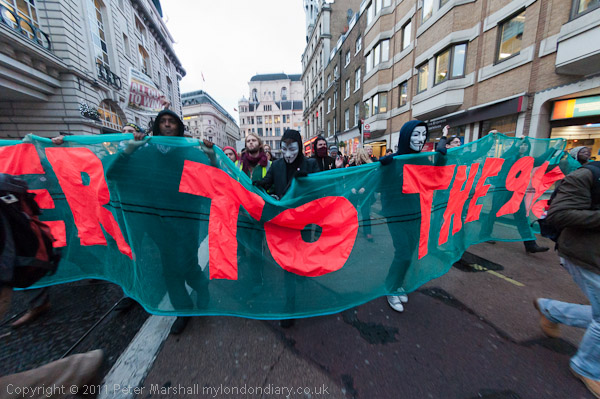
Police rushed across the street to surround them, but soon became clear that this had merely been a diversion, as others close to Eros unfolded their long main ‘All Power to the 99%’ banner and rushed down Haymarket with it catching the police by surprise and leaving them behind.

I was running ahead of them, taking pictures over my shoulder and managing to keep ahead, but the police were well behind as we reached Panton St.

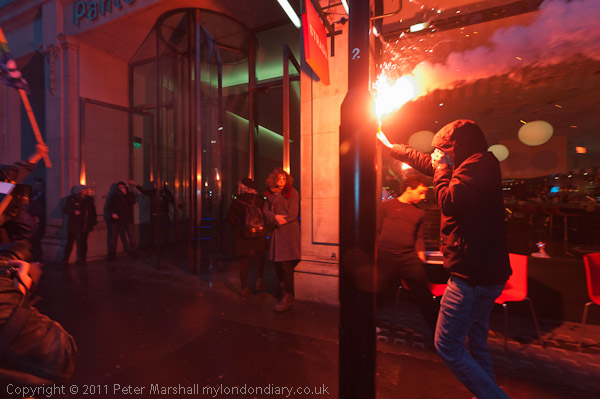
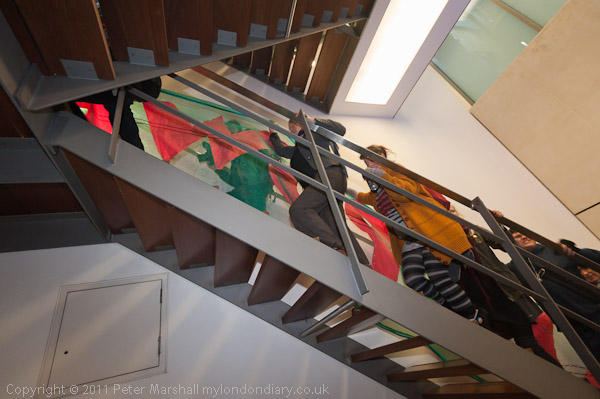
Here the protesters set off a bright orange flare, turned down Panton Street and rushed into Panton House. I followed the group with the main banner inside, but stupidly stopped in the foyer to take pictures through the glass frontage of the flares outside.

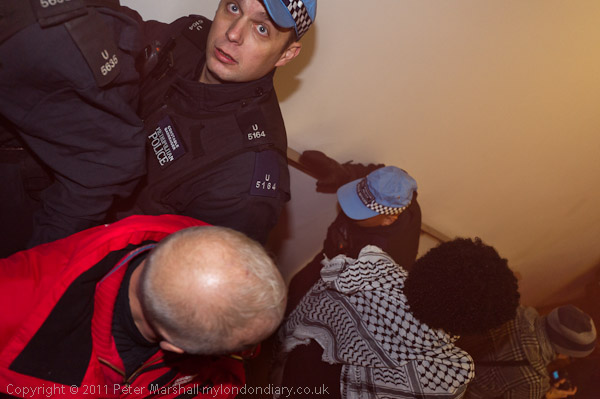
I was a little behind as the protesters ran up the stairs and rather out of breath after running along the street. By the time I reached the third or fourth landing I had decided to give up and pressed the button for a lift. Police arrived just as the lift came and one officer grabbed me stopping me from getting in.

Police told us all to go downstairs, but around 20 of the protesters and a few press had reached the roof. I made my way down, though it was difficult as more police rushing up pushed those of us going down out of the way.

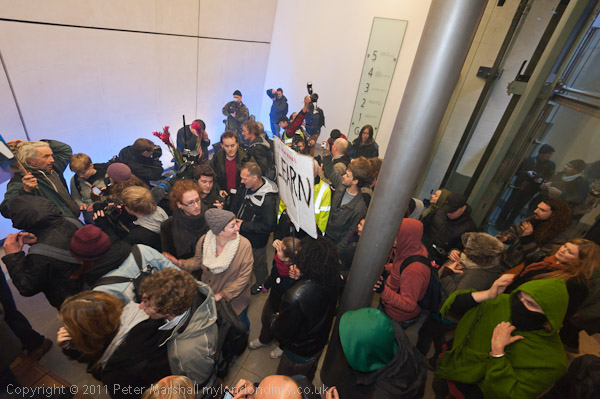
The police had now surrounded the entrance, preventing any more people entering, but were allowing us to go out. I was pleased to get out because the air inside had been thick with the orange smoke and I had been choking slightly, Smoke flares aren’t intended for indoor use.

A little back on Haymarket by the side of the building protesters outside were taking part in a mike chat group chant to inform passers-by what was going on. From this I learnt that Panton House contains the London offices of the mining company Xstrata, whose CEO Mick Davies they say is the highest paid CEO in the UK, and “is a prime example of the greedy 1% lining their own pockets while denying workers pensions.”

Police began to surround them and I quickly moved away as they kettled the protesters, and also to get a better view of what was happening on the roof. TI had missed seeing the ‘All Power to the 99%’ banner being let down over Haymarket earlier but saw them trying to do so again but being dragged away from the edge. More police vans were now arriving and I decided there would be little else I could see and left.

More at Occupy London Expose Corporate Greed.


Climate, Pay & Pensions – 2019

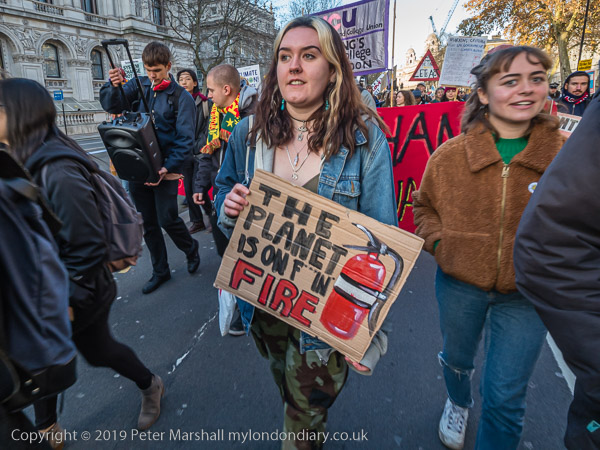
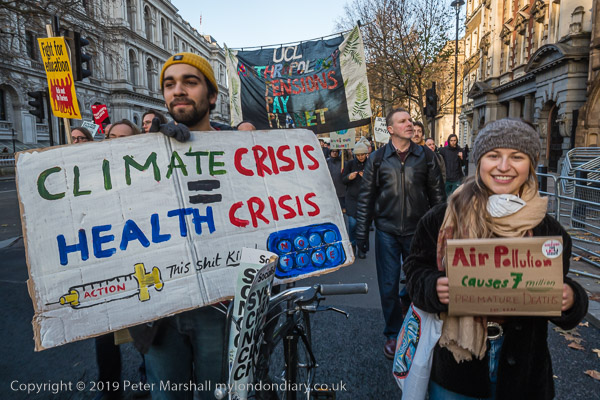
Climate, Pay & Pensions – Friday 29th November 2019 was ‘Black Friday’ for some but for others it was ‘Buy Nothing Day’ and Climate Strike students were on the march, while separately University lecturers and others in the UCU along with students and other supporters were marching to Parliament in support of their 8 day strike over pensions, pay and conditions.


Youth Climate Strike March

Climate, Pay & Pensions

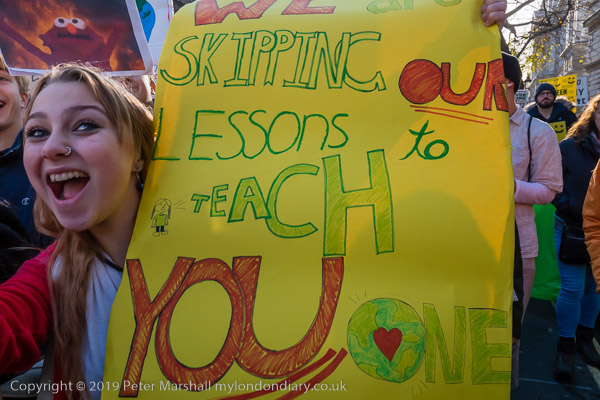
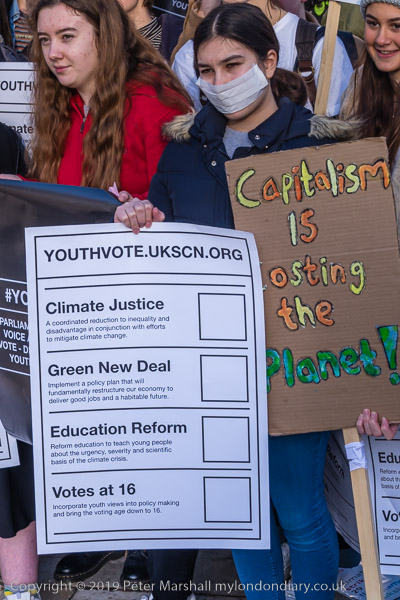
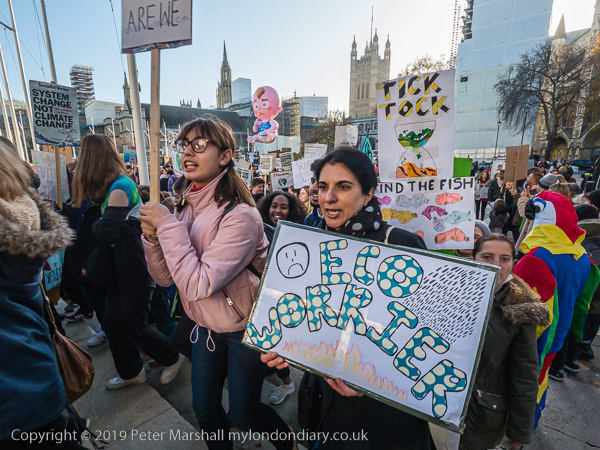
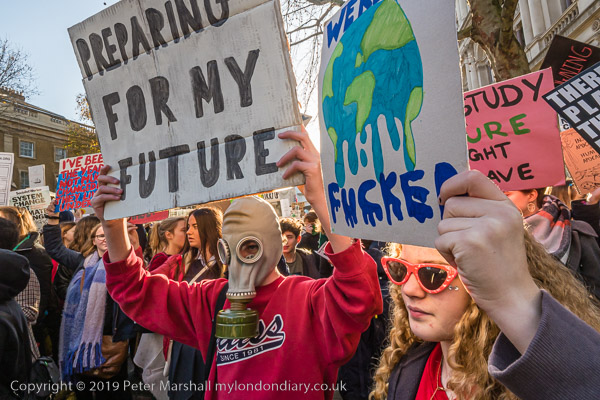
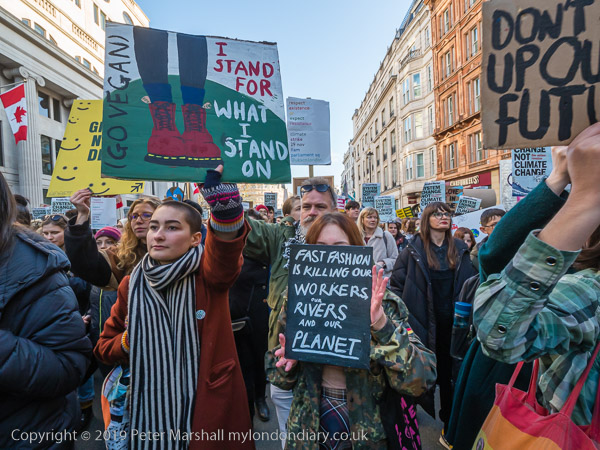
Over a thousand mainly school students met in Parliament Square to demand the government and other governments world-wide take urgent action to avoid the worst consequences of climate change.

Climate, Pay & Pensions

They demanded a Green New Deal to save their future and for the school curriculum to make clear the urgent need for changes in attitudes and action.

Climate, Pay & Pensions

Of course their protest fell on deaf ears in the Tory government, and although it did seem for some time that the Labour opposition was beginning to think seriously about the environmental crisis, as it seems more likely they might get into power their climate polices for a https://www.labourgnd.uk/gnd-explained Green New Deal are rapidly being abandoned and it now seems they are “unlikely to meet its £28bn green pledge at all.”

Climate, Pay & Pensions

Well over a thousand marched up Whitehall and on through Trafalgar Square to Regent Street, intending to go to Oxford Street on ‘Buy Nothing Day’, but police stopped them on Regent Street and diverted them into Mayfair and eventually back to Whitehall and Parliament Square.

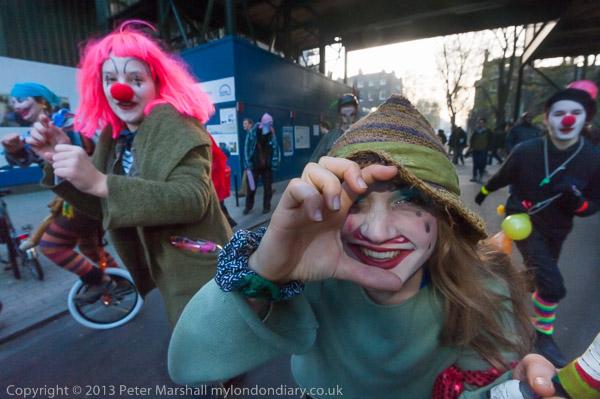
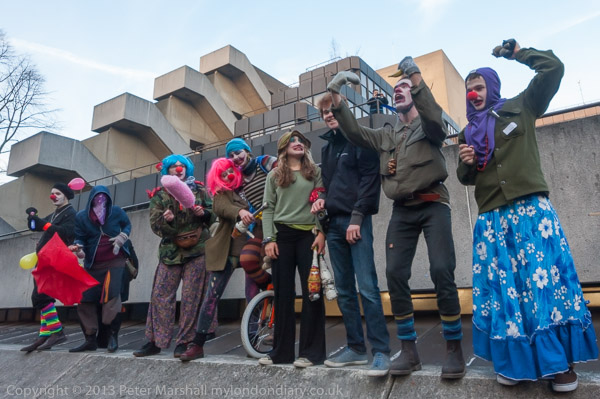
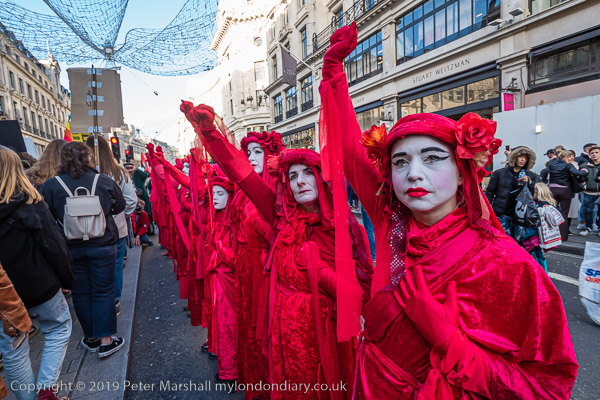
Earlier they had been met by a group of XR’s ‘Red Brigade’ mimes who had come to salute the student march.

Many more pictures at Youth Climate Strike March.


UCU March for Planet, Pay and Pensions

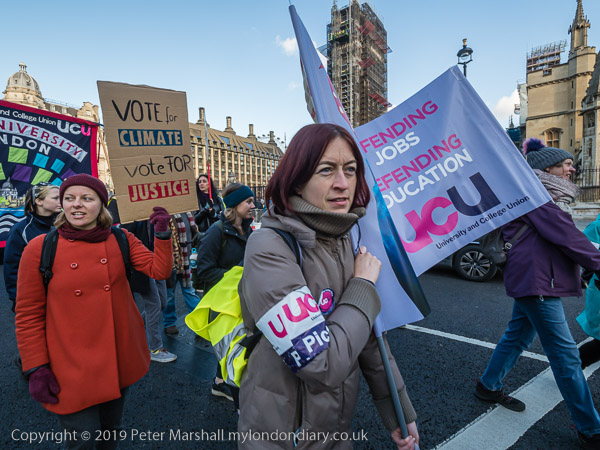
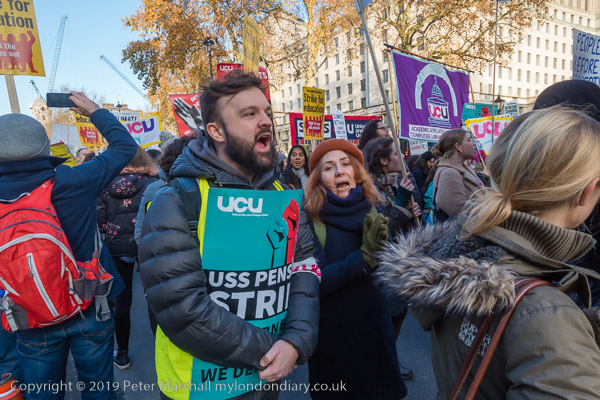
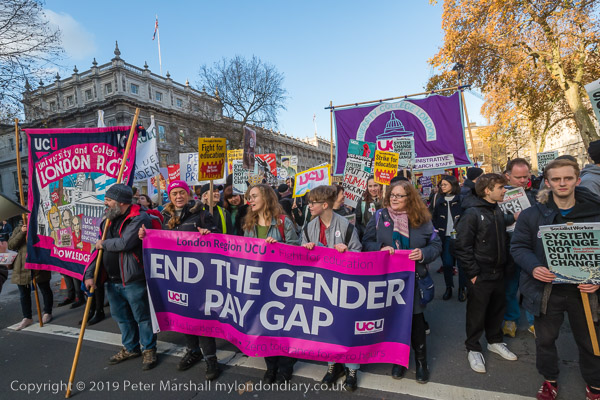
The UCU march from London University was on the 4th day of their 8 day strike over pensions, pay and conditions and in solidarity with the Youth Climate Strike also taking place in London the same day.

Some had been on the picket lines since the early morning before the march began in Malet Street.

I saw the march as I came back from Regent Street where I had left the student march as I came on to the North Terrace of Trafalgar Square, and ran down to catch up with the front of the march on Whitehall, close to Downing St.

The march stopped there for some time, lining the road opposite the entrance to Downing St and shouting towards it, before moving on towards Parliament.

As well as their call for proper working conditions and better pay many of the marchers also came calling for changes in what is taught and with posters and placards about climate change. Some had already marched to support the students.

They then marched on to Parliament Square, where I left them as they moved towards a rally.

More pictures UCU March for Planet, Pay and Pensions.


Kick Boris out of Uxbridge – 2019

Kick Boris out of Uxbridge – When Boris Johnson was coming to the end of his wrecking spell as Mayor of London he decided he wanted to confer the same benefit on the country and the first step in that was to become an MP again. So in the 2015 election he was elected as the member for Uxbridge and South Ruislip, a safe Tory seat on the edge of West London.

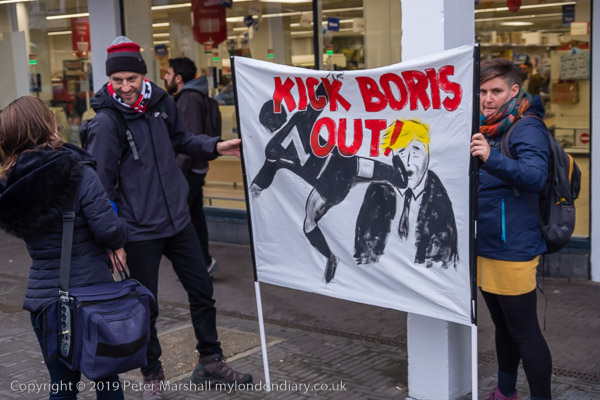
Anarchists came to join the FCKBoris protest on Saturday 16th November 2019

He got roughly the same percentage of votes – just over 50% – there in 2017, but the Labour candidate managed to cut his majority considerably, and there were hopes in 2019 that this trend might continue. Unfortunately it didn’t and Johnson increased his percentage of the vote by 1.8% while the Labour vote went down by a little more.

Kick Boris out of Uxbridge

After Johnson’s resignation the by election there in 2023 was a close run thing, with the Tory vote down 7.5% and Labour’s up by 5.6% and the Tory candidate just scraping in with a majority of 495. Most commentators saw the result as being caused by the unpopularity of London Mayor Sadiq Khan’s ULEZ low emission zone extension which was to include the area later in the year overcoming the incredible unpopularity of the Tory government.

Kick Boris out of Uxbridge

But in 2019, many felt Labour had a chance in what had for many years been a safe Tory seat with a solid blue vote of around 50%. And among them were a group who called themselves FCKBoris who came to campaign there against him on Saturday 16th November 2019.

Kick Boris out of Uxbridge

I went there to photograph them and others went to protest with them. Uxbridge is only around 7 miles from where I live, but it isn’t a place I often visit, not least because public transport on the edges of London isn’t too hot. There are no direct links and my fastest route is on a bicycle. But I was feeling lazy and instead took three buses, with waits at each change. Two years later we now have a sightly faster service, at least in theory.

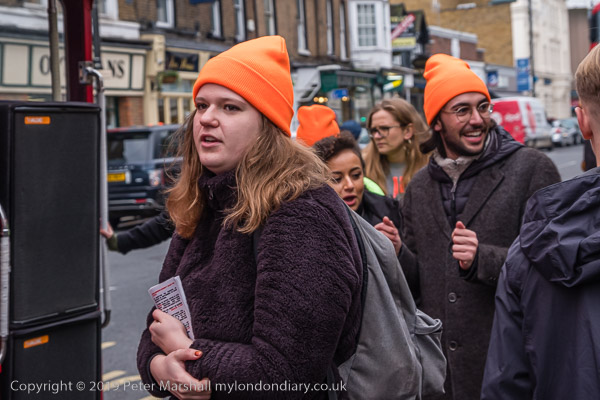
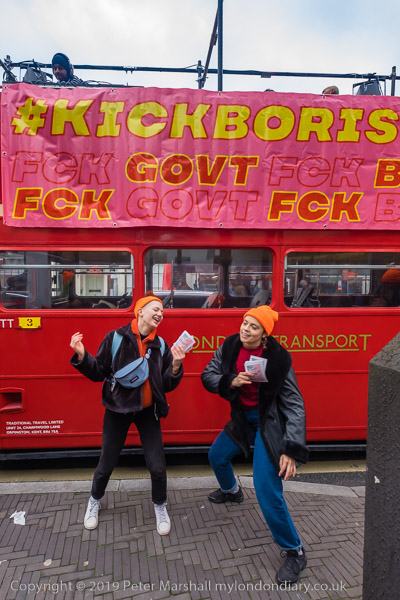
Arriving in Uxbridge I came across a fairly small group of people wearing orange woolly hats and handing out fliers with the message ‘Boris Doesn’t Want You to Vote…’ and telling people who were not registered how to get themselves on the electoral roll.

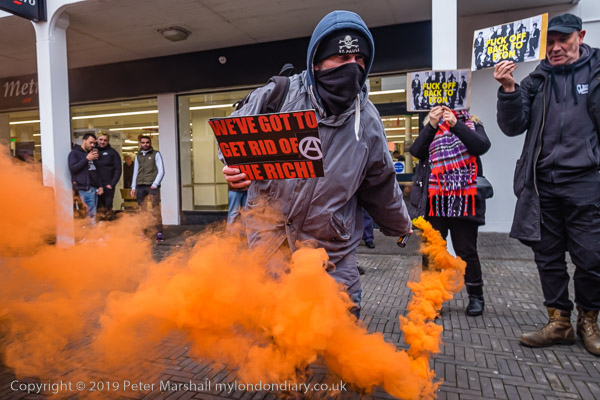
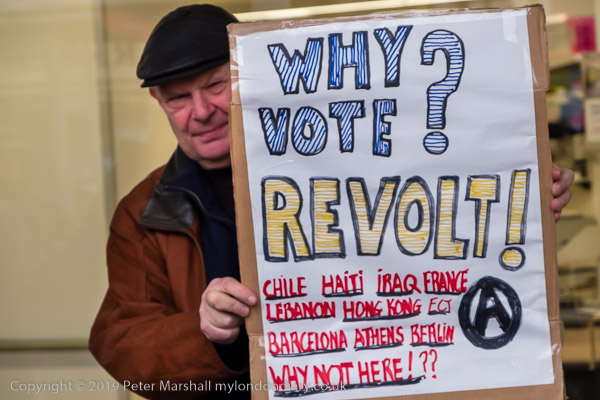
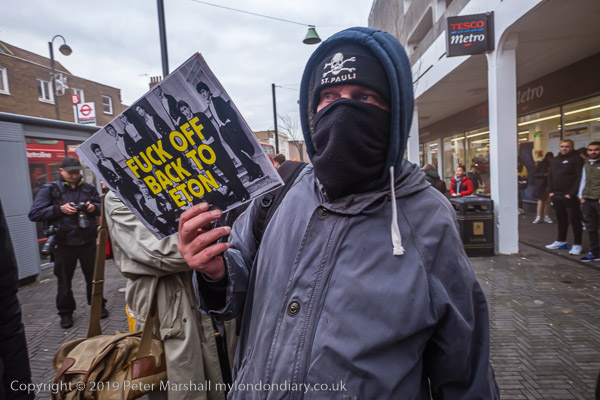
A few of London’s anarchists had travelled out from London to join them, bringing posters encouraging people not to vote but instead to revolt and some with photographs of the Bullingdon Club and the message ‘FUCK OFF BACK TO ETON’ – Johnson’s old school only a few miles away.

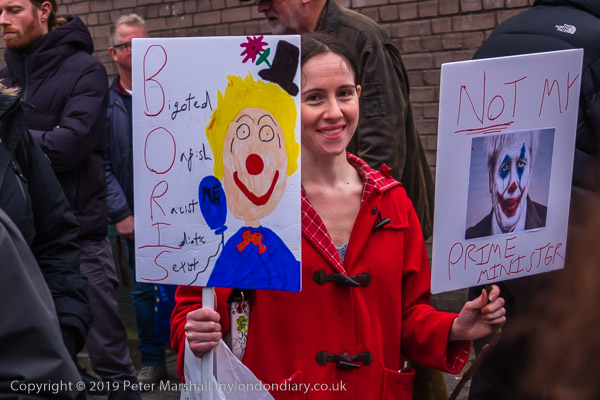
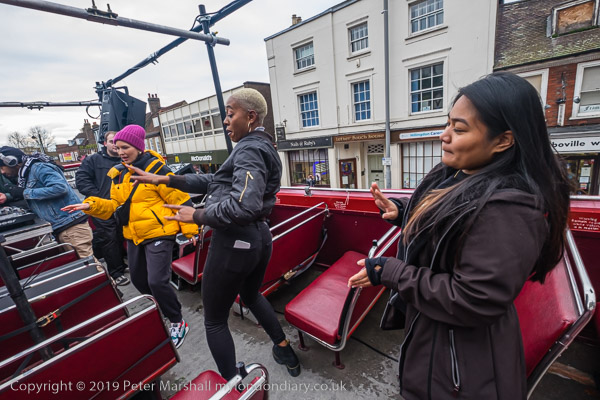
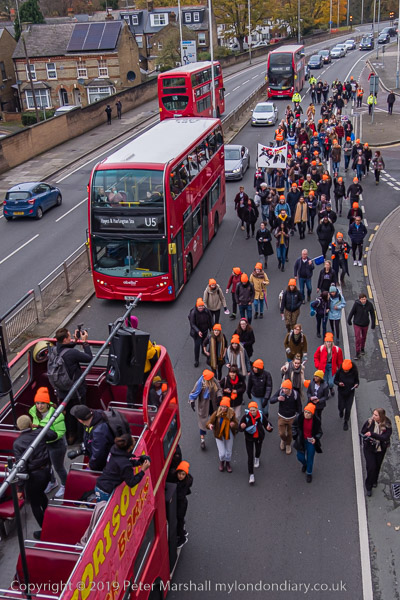
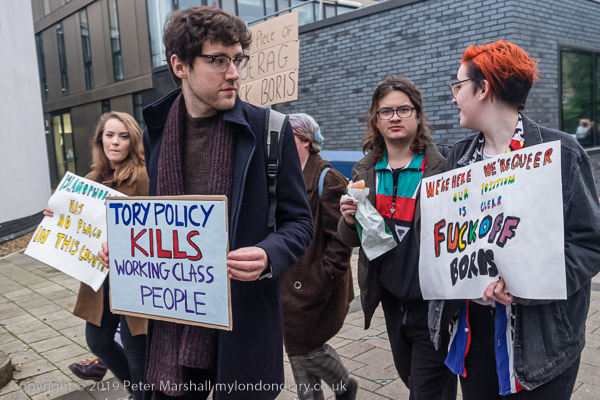
There were just a few other placards and banners, and also an open-top bus wth a large banner with the message #KICKBORISOUT from which a hefty sound system pumped out a rhythm that kept many of the campaigners dancing both on the street and on the top of the bus where I joined them briefly.

But the effectiveness of the bus was greatly reduced by the pedestrianisation of much of the town centre with an impenetrable one-way system and soon a police officer came along to tell the driver very politely that he couldn’t park where he was. And soon the bus and protesters set off slowly to march to Brunel University, accompanied by a handful of police.

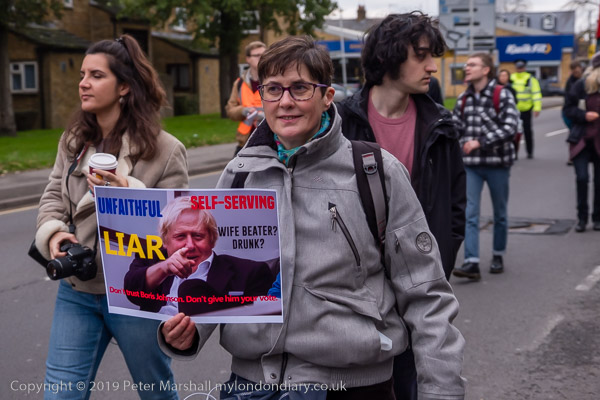
And it was perhaps the university and its students which was the main focus of the campaign with the message directed more at them. Although students can register to vote both at home and where they live during the universtiy term, relativley few generally bother to do so. So much of the messages of this protest were aime at them, though there were some posters which might have had a more general appeal, such as one describing Johnson as “UNFAITHFUL, LIAR, SELF-SERVING, WIFE BEATER? DRUNK?” and saying ‘Don’t trust Boris Johnson. Don’t give him your vote‘.

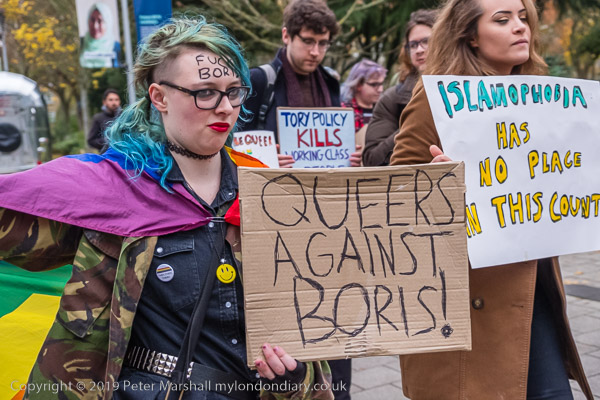
They were joined at Brunel by a few more protesters with posters including one wearing a rainbow flag and carrying a ‘Queers Against Boris’ poster and with FUCK BORIS written on her forehead,

But otherwise once on the campus it seemed pretty deserted and people didn’t know what to do. Finally they formed up again behind the bus which drove off back towards the centre of the town. But I decided I’d walked enough and sat down at a bus stop for a long wait for a bus to Heathrow where I could wait again for a bus home.

Probably the campaign had very little influence on the result of the election on 12th December, where the Tory campaign was almost entirely on their promise to “Get Brexit Done”. Johnson’s majority here was 7,210 and he went on to make the worst of all possible deals we are now suffering from, largely because of a Tory conviction that bluster and intransigence is the best form of negotiation.
More at Kick Boris out of Uxbridge.