1986 Complete – Page 2

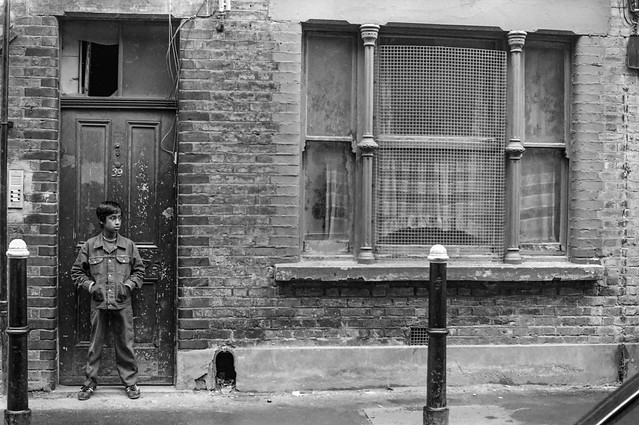
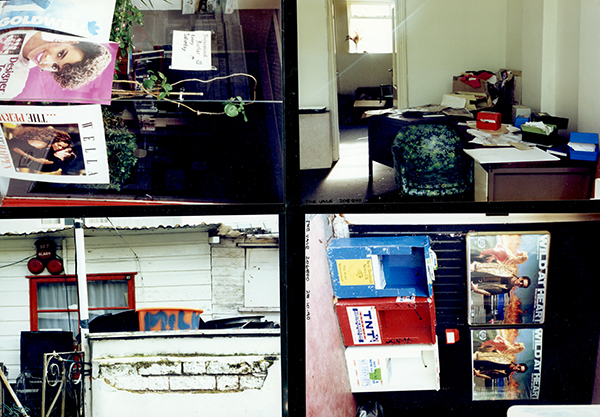
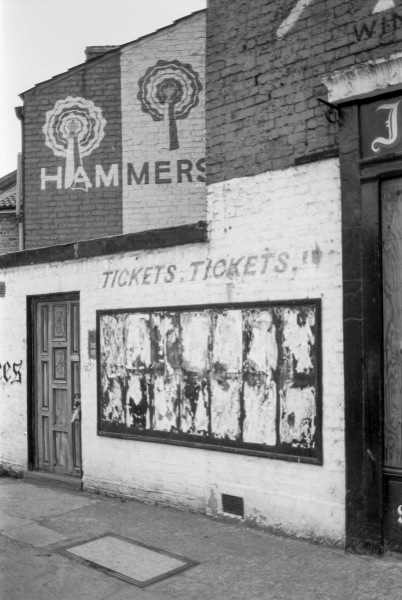
Varden St, Whitechapel, Tower Hamlets 86-5d-11_2400

Images in this post are embedded from Flickr where you can view them at a large size by clicking on the image. You will need to use your browser back button to return to this post. Or you can right-click and select ‘Open link in new tab’.

My album 1986 London Photographs is now complete on Flickr, and this is the second of a short series of posts pointing out a few of my favourite images from the year.

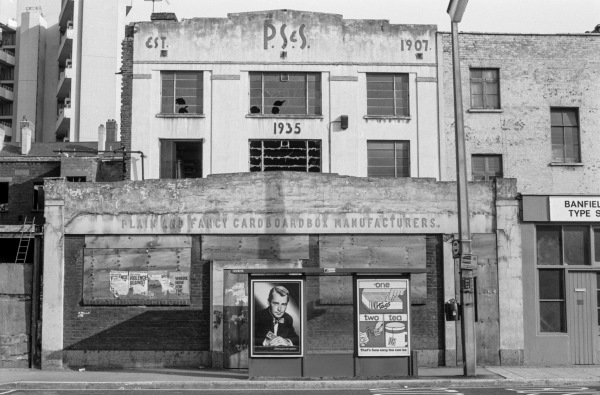
Fashion St, Spitalfields, Tower Hamlets 86-4r-16_2400

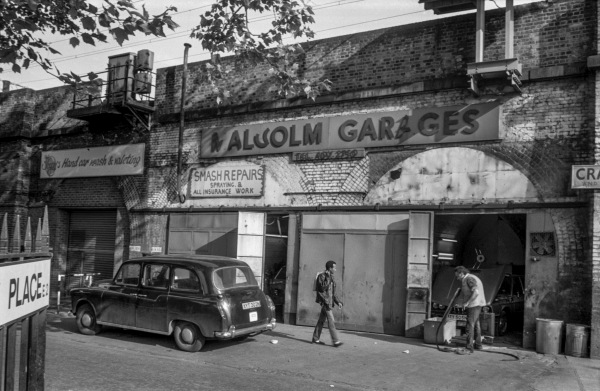
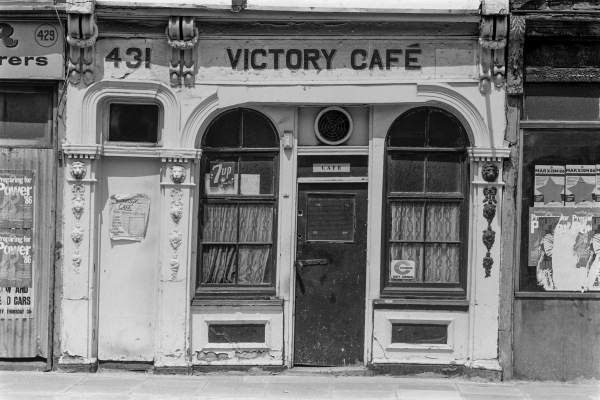
Several things come out strongly to me as I look through these pictures, mostly taken around Brick Lane and other areas of Whitechapel. One of the major themes that has run through much of my photography is the writing on the wall, whether graffiti or signs and posters. Language is such an important aspect of our social interactions and its inclusion in these images makes them into a record of how people lived and thought.

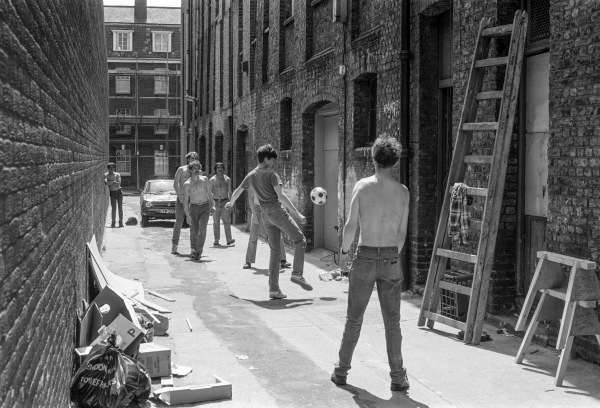
Brick Lane, Spitalfields, Tower Hamlets 86-5a-01_2400

In 1984 London was rapidly becoming the multicultural city we now know, though of course it had been so on a lesser scale for many years if not centuries. Spitalfields where some of these pictures were made had long been a home for new communities moving to London and there was still abundant evidence of its Jewish population as well as the Bangladeshis who had by then largely replaced them.

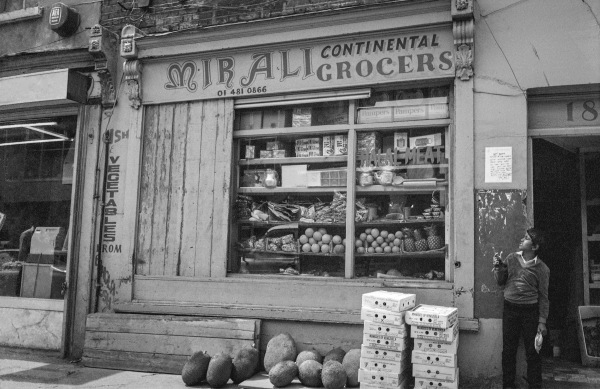
Commercial Rd, Whitechapel, Tower Hamlets 86-5c-64_2400

Housing, then as now, was an important issue in London in particular, and some of these pictures reflect this and other issues such as racism. Although I think some of these pictures are well-composed and even attractive compositionally, I’ve always considered the formal aspects – line, shape, tone, texture, form etc to be the means to communicate a message rather than an end in themselves. I aimed to make photography that had something to say and said it well rather than to produce well composed, attractive or even striking or popular images.

Limehouse, Tower Hamlets 86-5h-66_2400

There are another 95 pictures on the second page of the album, all with a location, taken from the usually rather incomplete information I recorded on the contact sheets. I’ve tried to check these before posting, but corrections and other comments are always welcome. I’m happy for these pictures – with suitable attribution – to be shared on social media, but they remain copyright and any commercial or editorial use requires a licence from me.


All photographs on this and my other sites, unless otherwise stated, are taken by and copyright of Peter Marshall, and are available for reproduction or can be bought as prints.

There are no adverts on this site and it receives no sponsorship, and I like to keep it that way. But it does take a considerable amount of my time and thought, and if you enjoy reading it, please share on social media.
And small donations via Paypal – perhaps the cost of a beer – would be appreciated.


Tags: 
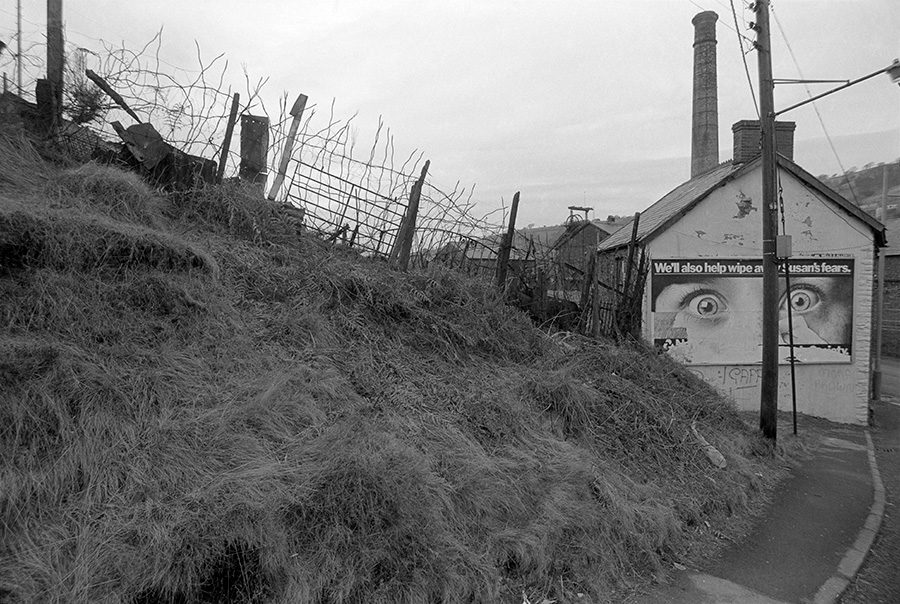
Land Of My Fathers

Well, not quite, but our family do have strong Welsh connections. The only grandparent I ever knew was a small woman dressed in black who sat in a corner of the parlour beside the coal fire, with its permanent kettle on the hob, and if she spoke at all it was at least with a strong Welsh accent, though she had a quiet voice and I was never certain it was in English.

She had a name, Eliza, though she died before I knew her as anything other than Gran’ma, and was born in Llansantffraed, Radnorshire in 1865 where her family farmed. Llan-Santfraid Yn Elvael is a few miles from Builth Wells, one of quite a few places named after St Ffraid the Nun, better known outside Wales as St Brigit, including another in Radnorshire, Llansantffraid Cwmmwd Deuddwr (aka Cwmtoyddwr.) Her family farmed at Llan-gyfrwys, or Llangoveris, not far from Hundred House and every Christmas my father or uncle would go up to Paddington Station to collect a bird sent up for the family table, a duck or a goose, which around 20 of us, my aunts, uncle, father, mother and cousins would sit around the table to eat, though I insisted on eating only the chipolatas, not liking the rather greasy birds.

As a young woman she had been sent up to London to work in a family business, a Welsh dairy near Mount Pleasant, on the Gray’s Inn Road, and I imagine Fredrick Marshall, a young tradesman around her age who had moved into London from Cheshunt came into the shop as a customer, and they were married at Highgate Road, later moving to set up home in Hounslow were he set up a small cart-making business and she running a small shop and bearing five girls and two boys, one my father.

One of those girls married a Welsh man who I think she met when she was sent to Wales to look after an elderly relative there, and they had a home at Aberedw, a few miles south of Builth where her husband was a river warden on the Wye. I spent several summers in their house as a small child, probably when my mother was in hospital and I think we often ate salmon.

Back then we travelled to Aberedw by train (the line closed at the end of 1962) and there were several possible routes, though trains were infrequent on all. Trains from Hereford or Cardiff I think took us to Three Cocks Junction where we changed for Aberedw. When I last went to Aberedw by train in the late 1950s you had to tell the guard when boarding that you wanted to alight there, and to catch the train from there you stood on the platform and waved frantically at the driver.

The most exciting route was to come up through the valleys from Cardiff through Merthyr Tydfil (though I don’t remember the details, and I think there was probably another change involved) but the scenery with mountains, colleries and factories was rather more impressive than the lusher fields of Hay and Hereford.

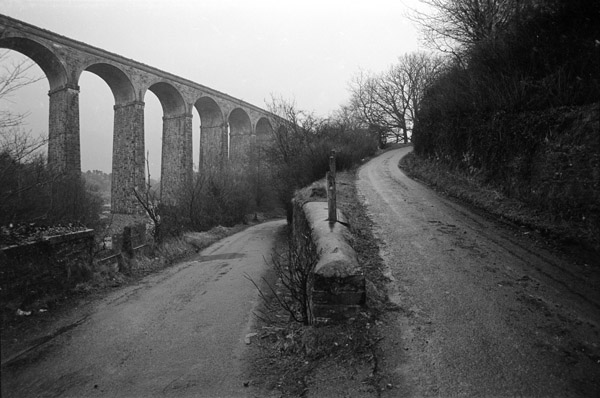
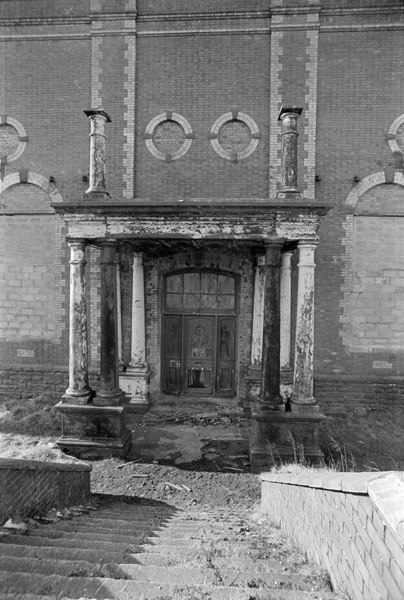
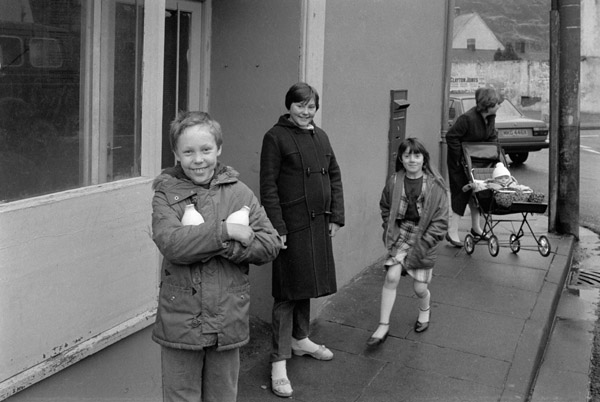
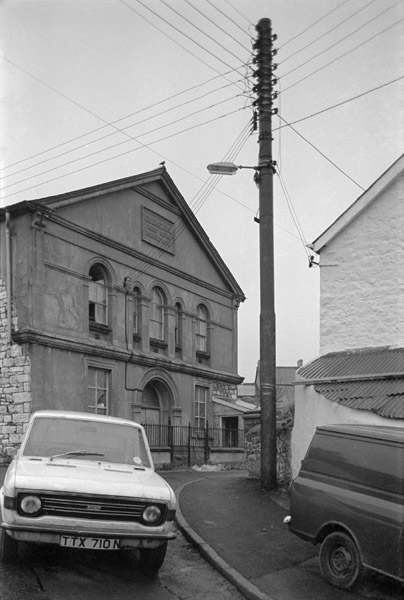
I can’t now exactly remember how my trip to Merthyr came about, but I think I probably managed to persuade several friends from a small group of photographers that it would be a great place to go at that time, within a day or two of the announcement by the National Coal Board of the closure of more than 20 pits that led to the Miners’ Strike. It was clear that this was the end of an era for industry in South Wales, and was a part of Thatcher’s plan to end manufacturing and turn the UK into a service economy – which I had been documenting with a series of pictures of closed factories around London.

I think I was the only one of the four who didn’t have a car, but the four of us drove down I think together in Terry King, who had organised a couple of nights at a guest house and read up a little on the area.

I’ve just put a album with many of the pictures I took on this trip onto Flickr, where you can browse all of them at high resolution. Most are from Trehafod around the Lewis Merthyr colliery and from Cwmaman, as well as Dowlais and Cefn Coed. As always I’m happy for images to be shared on social media but retain copyright, and a licence is needed for any commercial or editorial use.

Wales 1984 – Views from the valleys

After taking these pictures I made some attempt to get funding to return and do more work in the area, but without success.


All photographs on this and my other sites, unless otherwise stated, are taken by and copyright of Peter Marshall, and are available for reproduction or can be bought as prints.

There are no adverts on this site and it receives no sponsorship, and I like to keep it that way. But it does take a considerable amount of my time and thought, and if you enjoy reading it, please share on social media.
And small donations via Paypal – perhaps the cost of a beer – would be appreciated.


1986 Complete – Page 1

Images in this post are embedded from Flickr where you can view them at a large size by clicking on the image. You will need to use your browser back button to return to this post. Or you can right-click and select ‘Open link in new tab’.

Commercial St, Tower Hamlets 86-2d-51_2400

My album 1986 London Photographs is now complete on Flickr, and this is the first of a short series of posts pointing out a few of my favourite images from the year.

Of course the 1370 pictures in the album are not all I took that year, but perhaps about a quarter or a fifth. Quite a lot more than I would have selected or shown back in 1986, but the content has aged well, even if sometimes the actual physical negatives have deteriorated. Images that might have seemed a little mundane when I first saw them on the contact sheets have often gained considerably in interest as historical records.

There is a little redundancy in those 1370, and I’ve sometimes included several pictures of the same subject, where I’ve tried different ways to approach it. But the great majority of subjects were treated to only a single frame.

Crosby Row, Southwark 86-4f-11_2400

Many of those not included still have interest and value as historical records, but preparing them to go on line is tedious and time-consuming, particular as some need quite extensive digital retouching after the ‘scanning’ stage – mostly done by photographing the negatives with a Nikon D810 and Nikon 60mm macro lens. Some of my negatives were damaged by minute insects in search of gelatine, leaving their track as they chewed their way across them and depositing their frass and occasional body parts and complete restoration isn’t always possible.

Reuter, Royal Exchange, City 86-4l-66_2400

I’ve also been having problems in getting even lighting at the negative edges. This isn’t a problem with mounted slides, where the image is cropped, but I want the whole image, and possibly the problem is with light diffusing from the clear film edges. But it does mean every frame needs correction in Photoshop – rather like the little bit of edge-burning we used to do under the enlarger.

Courtenay Square, Kennington, Lambeth 86-4q-45_2400

I was working on a number of themes at the time and as well as recording buildings that interested me was particularly interest in sculptures, shopfronts, shop window displays and trees in the city. The first page of pictures on Flickr (100 images) includes work mainly from Southwark, the City of London and Spitalfields.

Brick Lane area, Spitalfields, Tower Hamlets 86-4p-55_2400

I took very few pictures of people at this time, partly because I was rather shy, but more that I had been affected by some feelings being strongly expressed by some at the time about privacy and arguments that it was wrong to photograph people without first seeking their permission. I was never convinced by these, but they were off-putting, and I was sometimes shouted at when taking pictures. Perhaps more importantly I wanted to direct attention to the things being photographed, and was aware that people almost always steal the frame.

There are another 95 pictures on the first page of the album, all with a location, taken from the usually rather incomplete information I recorded on the contact sheets. I’ve tried to check these before posting, but corrections and other comments are always welcome. I’m happy for these pictures – with suitable attribution – to be shared on social media, but they remain copyright and any commercial or editorial use requires a licence from me.


All photographs on this and my other sites, unless otherwise stated, are taken by and copyright of Peter Marshall, and are available for reproduction or can be bought as prints.

There are no adverts on this site and it receives no sponsorship, and I like to keep it that way. But it does take a considerable amount of my time and thought, and if you enjoy reading it, please share on social media.
And small donations via Paypal – perhaps the cost of a beer – would be appreciated.


July 1986 on Flickr

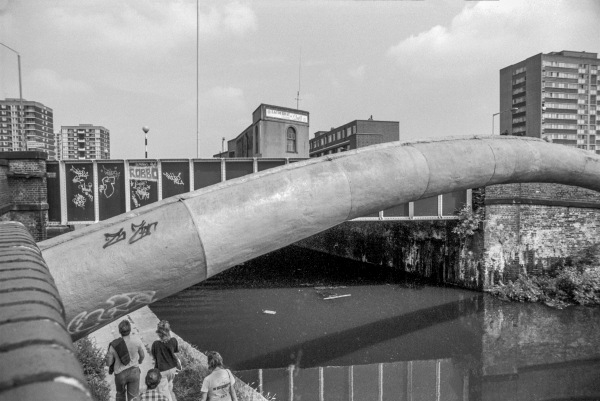
Pipe Bridge, Regent’s Canal, Baring St, Islington

I had more time to take pictures in July as my teaching came to an end for the summer vacation around halfway through the month. This meant I could go up to London on some weekdays, though I still had two small boys to look after on days my wife was working. That usually meant staying at home, but sometimes I took them both out with me to London.

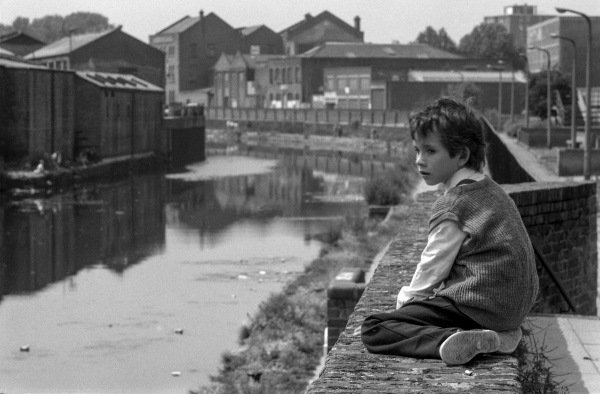
Regent’s Canal

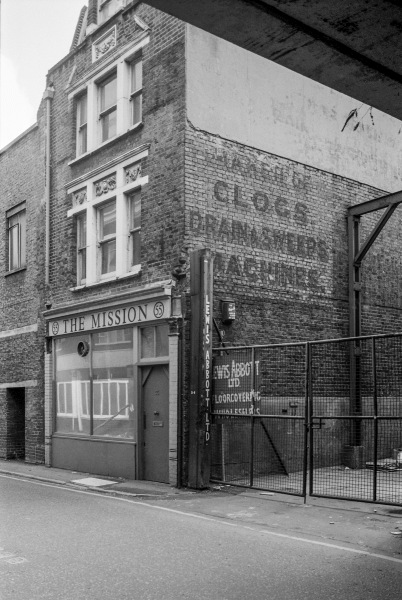
I spent some time in Shadwell and Bethnal Green, but also further north in Shoreditch, Hoxton and Dalston, occasionally wandering into Islington. Though I obviously photographed on foot, I had to travel from my home outside London and then around London to the starting point for my walks, and the One Day Capitalcard, valid on all public transport in London after 9.30am made this much simpler after its introduction in June 1986 – the one-day Travelcard launched in 1984 had been for bus and tube only.

The Mission, Holywell Lane, Shoreditch, Hackney

Towards the end of the month I moved my focus to the City of London, even easier for transport then as the Waterloo and City line was still run by British Rail and my ‘London Terminals’ ticket was valid all the way to Bank.

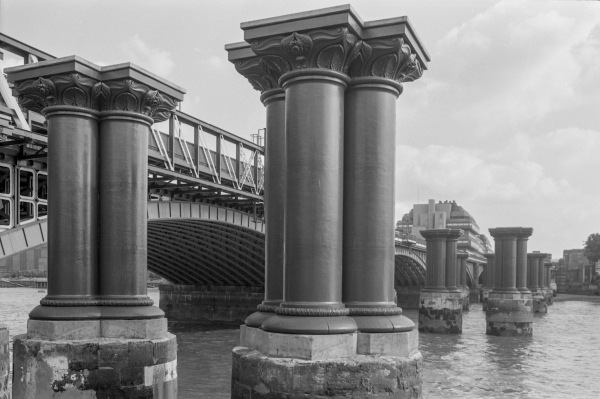
Blackfriars Rail Bridges

When I began photographing London there were two railway bridges across the River Thames at Blackfriars, but all that remained of one of these by 1986 were the pillars that had supported it. And while these were rather a fine set of pillars they were (and remain) a rather curious river feature, presumably left in position simply to save the cost of removing them.

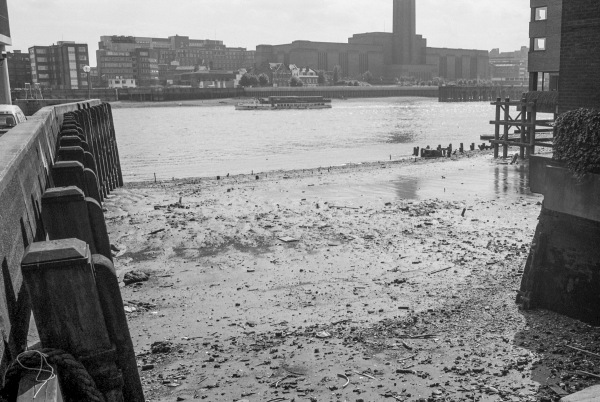
Queenhithe and the River Thames

Queenhithe, a small inlet on the City side of the river has a long history. The Romans built a quay here, and buried deep down in the wet mud some of the timbers they put here survive, as do remains of the dock contructed when Alfred the Great, King of Wessex re-established the City of London aroudn 886 AD. It got the name Queenhithe (a hythe is a small harbour) when Henry I gave the right to levy dues on goods landed there to his wife Matilda around the time of their marriage in 1100. Queenhithe was still a major harbour for the city hundreds of years later and remained in use, with lighters bringing skins for the fur trade which was based a short distance to the north until the Second World War.

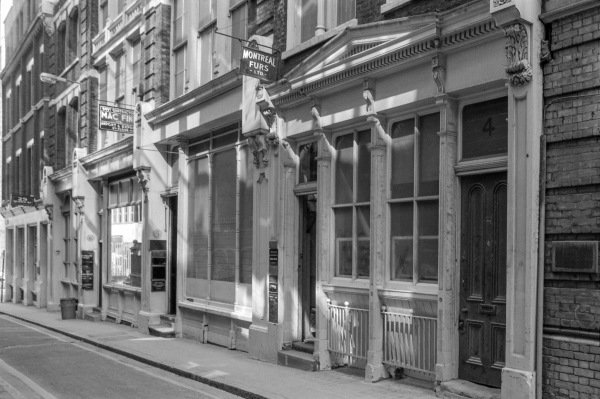
Fur shops in Great St Thomas Apostle

Around 300 of the black and white pictures I took in July 1986 are now online:
Peter Marshall: 1986 London Photographs on Flickr.
July’s pictures start here.

The images are copyright but may be shared on non-commercial personal social media. A licence is required for any corporate, commercial or editorial use.


All photographs on this and my other sites, unless otherwise stated, are taken by and copyright of Peter Marshall, and are available for reproduction or can be bought as prints.

There are no adverts on this site and it receives no sponsorship, and I like to keep it that way. But it does take a considerable amount of my time and thought, and if you enjoy reading it, please share on social media.
And small donations via Paypal – perhaps the cost of a beer – would be appreciated.


Scanning London

TQ1985

A few months back I was lying prone inside a giant metal tube on a flat bed which moved me slowly backwards as successive slices across my body were scanned for the purposes of research, and the CT scan reminded me of a project on London which I began in the 1980s.

Nowadays we are all familiar with the idea of geotagging and some cameras can add geotags to the Exif date as you photograph, while gadgets can be fixed onto other cameras to add the data. Smartphones do the same, as they always track you position. The web site https://www.geograph.org.uk Geograph was set up in 2005 to “collect geographically representative photographs and information for every square kilometre of Great Britain and Ireland” and so far 13,114 contributors have submitted 6,397,064 images covering 280,384 of the 1km grid squares, still leaving around 15% should you wish to strike new ground.

TQ2083

I’ve occasionally added geotags to my own landscape pictures in Lightroom, using a free little phone app by one of my sons, ‘Easy GPS Logger’ which records GPS location and time data to a file. You load this into LR along with the pictures, match up any one of them with a particular place on a map and LR then uses the file to add the information to the other pictures. There are only two problems – remembering to turn on the logger at the start of your walk, and secondly to turn it off when you finish!

TQ1982

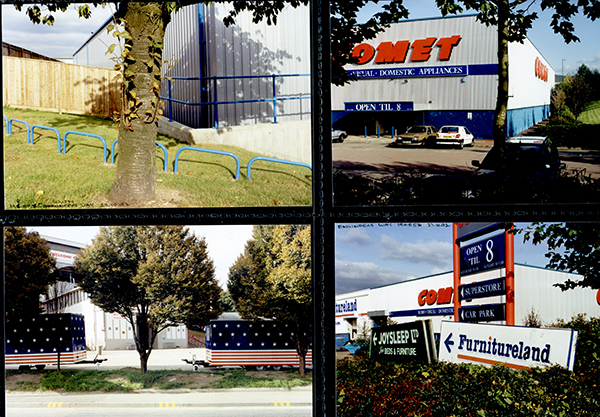
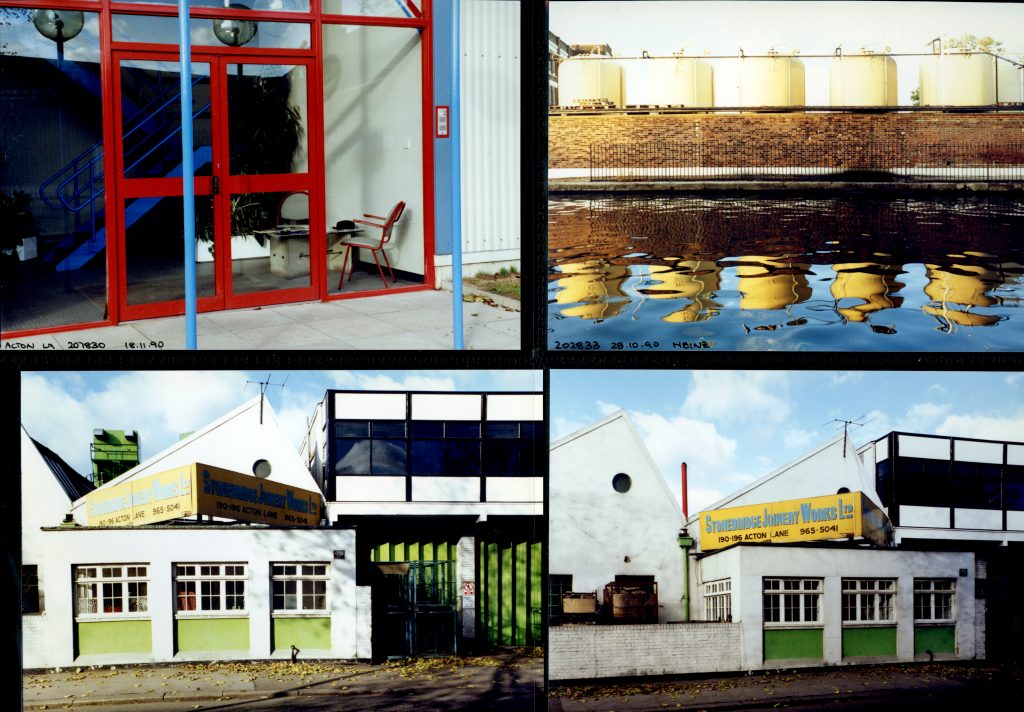
Back in 1986, the only way to add location data to your photographs was by hand, using a map to find the grid reference. Of course you had to know where you were to do so. I had the idea of doing a series of South to North cross-sections of London based on the Eastings and Northings of the National Grid using colour negative film.

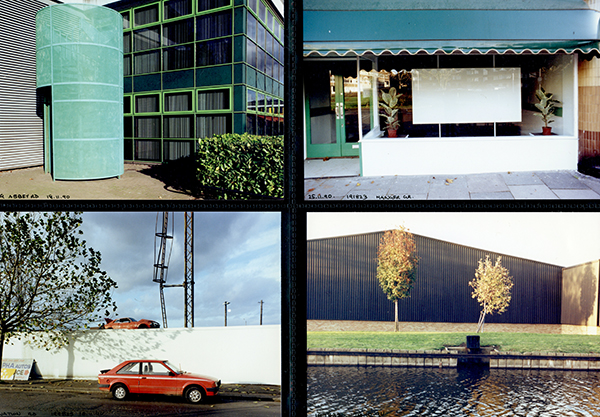
Rather than attempting a series of south-north walks, I simply took a camera with colour negative film on more normal walks while I was photographing London in black and white, then sent the films for processing and printing 6×4″ enprints. When these came back from processing I’d sort out those I wanted to keep and use a map to find the grid references and add these and the date with a technical pen along the lower edge of the print. The date meant (at least in theory) I could find the negatives in my files.

TQ1683

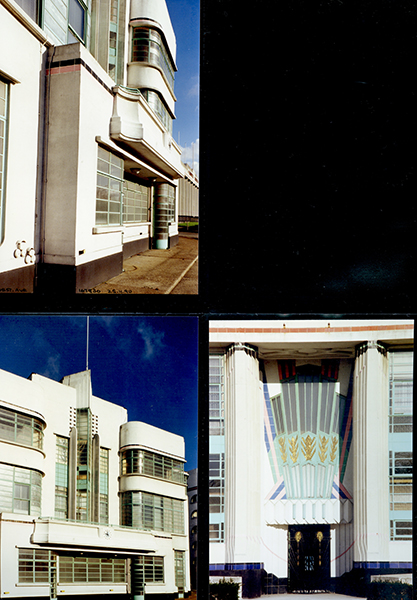
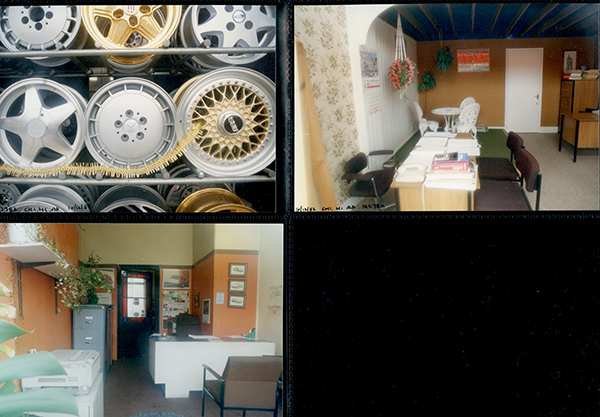
At first I glued the prints onto card sheets to file them under the grid reference in a set of A4 files, but this soon became tedious and I bought filing sheets which held 8 prints, four on each side. Each of the kilometre grid squares had its own filing sheet, and some soon had several, with the series expanding to fill around a dozen A4 files. Each file holds around 50 double-sided sheets and so could hold around 400 prints, though many sheets are not full, so the project probably has around 3,000 or 4,000 prints.

TQ1978

Of course what was more important were the scenes I chose to photograph. I carried in my wallet a reminder of things I was interested in photographing (an idea picked up from reading a list made by Walker Evans), in a small zipped pocket together with a folded £20 note for emergencies. Of course colour was important, not just for itself, but as an illustration of how and why colour was used, and I had a great interest in representations of people and things, in ethnic differences and in the evolution and fashion of colour.

I can’t remember exactly when I ended the project, though it certainly continued well into the 1990s. But at some point I stopped sending colour negative film to be processed and began developing it myself, and producing enprints wasn’t really an option. Instead I made 8×10″ contact prints and worked from these, producing very many fewer but larger prints.

TQ2080

Over the years I’ve probably published or shown only around a hundred of these pictures, the largest group from 1986-90 in the book dummy and web site ‘Café Ideal, Cool Blondes, and Paradise

As with my black and white images of London, this is a body of work which I think has a great deal of historical interest as well as some photographic interest and it would be good to see it in some permanent museum or similar collection rather than simply gathering dust on my shelves.


There are no adverts on this site and it receives no sponsorship, and I like to keep it that way. But it does take a considerable amount of my time and thought, and if you enjoy reading it, please share on social media.
And small donations via Paypal – perhaps the cost of a beer – would be appreciated.

June 1986

I had a busy month in June 1986. Of course there was the teaching, though by that time of year my A Level students were busy sitting exams, which took some of the pressure off for me, though there were the practical exams. And of course exam invigilation, a time of extreme boredom.

At home there will have been strawberries to pick and other little jobs around house and garden, as well as two young boys to help looking after. And sometimes I would take one or both of them out for long walks with me, as I went out taking pictures at the weekends, mainly in that month in Tower Hamlets, occasionally straying into Hackney.

During that month I made over 500 exposures on black and white film, seldom taking more than one exposure of each scene, and perhaps half that number in colour. It was around this time that I started seriously to produce some kind of comprehensive document of the fabric of London which I had been photographing in a less concentrated and asystematic fashion since 1973.

What had previously been largely dérives from a particular starting point now became carefully planned, with research in books on the city and poring over maps. Where previously it might have been the delightful whimsy of Geoffrey Fletcher that lead me to picturesque corners, this was now replaced by the duller encylopaedic prose of writers such as Harold Clunn, whose 1951 ‘The Face of London’ revised his earlier work to take account of wartime losses and attempted to be a complete guide to Greater London from his fifty years of perambulations.

Of course I seldom stuck to those carefully made plans, often being diverted by the lure of the streets, but I did begin making notebooks of where I walked, noting down street names and important details, marking up where I had walked on street maps (many of which have now fallen to pieces.)

After developing the films I would as usual make contact sheets, but I would then mark these up with Indian ink in a Rotring pen (and small writing I now often need a loupe to read) with street names and map references. In later years the A-Z came with the National Grid superimposed and my contacts included grid references too.

Of course, nothing is perfect, and sometimes I got street names wrong, and my writing and abbreviations are not always legible. I’ve now put around 140 of the pictures from June 1986 into my Flickr album ‘1986 London Photographs‘, almost all of them with at least a street name to identify the location. It took a few days to make and retouch the digital files, and once I had done that, over a day’s work to confirm the locations where possible using Google Street View. Some areas of course changed completely between 1986 and the earliest information from Street View – usually 2008, making it impossible in a few cases to be completely sure of where images were taken.

All of the images on Flickr have a longest side of 2400 pixels, four times the size of those in this post (- and landscape images only display at 75% unless you double click to open them.) Although I’m happy for people to share them and use them with proper attribution on personal blogs and non-commercial personal web sites, in student essays etc, they remain copyright, and a licence from me is required for any commercial or editorial use.

You can view the complete album 1986 London Photographs, but June’s pictures start here. Pictures for later in 1986 will follow shortly.


Feb 2020: My London Diary

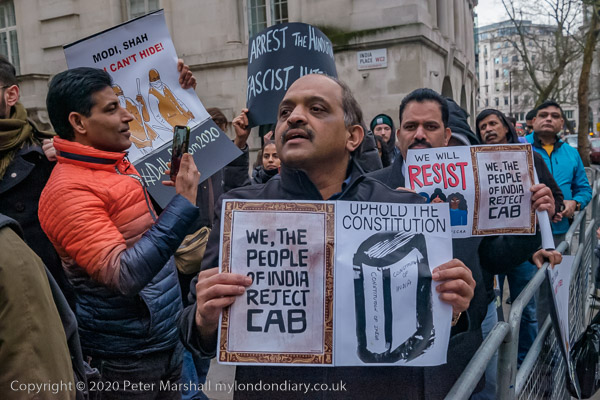
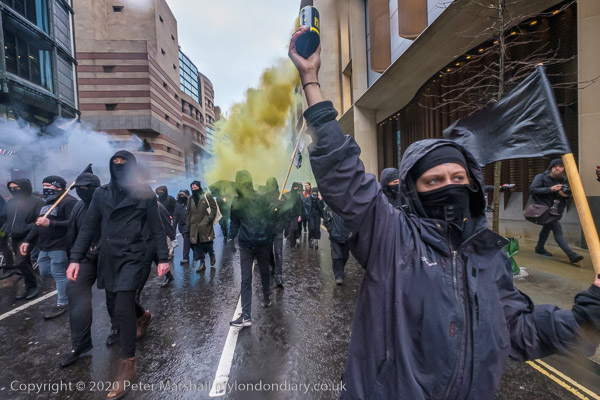
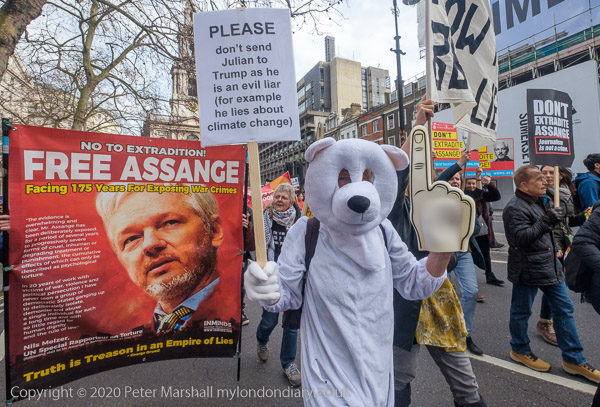
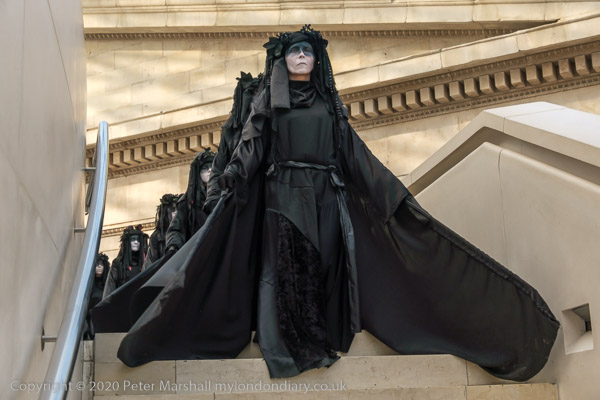
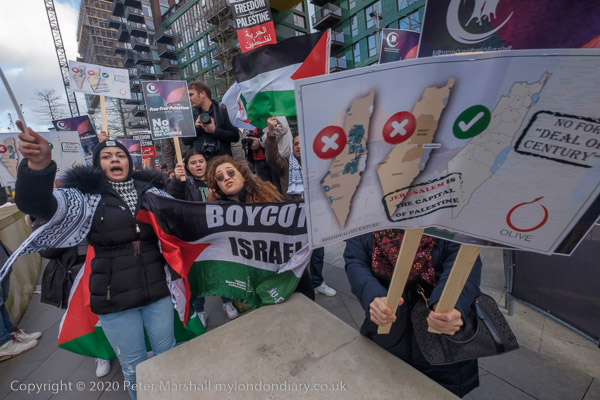
February’s event are now completed on ‘My London Diary‘ thanks to a few days I’ve taken off going out to take more photographs. It’s getting harder for me to go out and take pictures at night or in bad weather and I’m also getting a little pickier about what I cover. This month’s list is around half as long as some others.

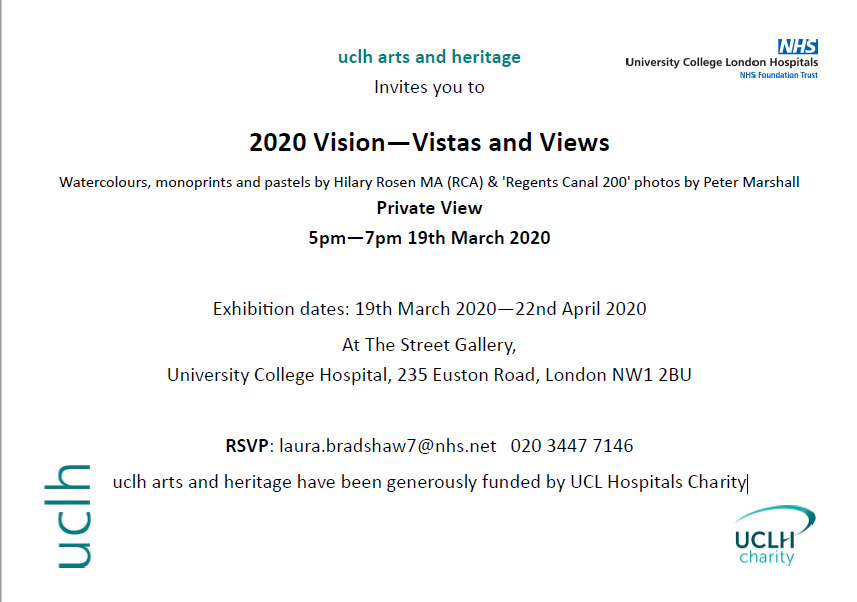
I’ve also been busy with some other things – getting a small show of work ready for next month (here’s the invite) and putting quite a few more of my old pictures at a decent size on Flickr.

feb 2020

Against the Anti-Muslim pogrom in Delhi
Earth Strike target Glencore

Green Anti-Capitalists Rally Against Capital
University teachers march for Education
City Inter-Livery Pancake Race
Enough is Enough XR march

Don’t Extradite Assange
St Georges’s Hospital Security Guards
Wandle Wander
Youth Strike for Climate
Bermondsey Walk

BP Must Fall!
End Jamaican Charter Flight deportations
Tamils Sri Lanka Independence Day protest
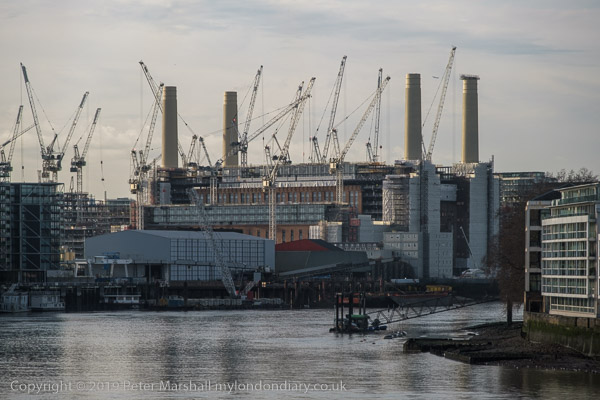
Battersea, Chelsea and Kensington
No To Jamaica Deportation Flights
Nine Elms

Palestinians against Trump’s Deal

London Images


All photographs on this and my other sites, unless otherwise stated, are taken by and copyright of Peter Marshall, and are available for reproduction or can be bought as prints.

There are no adverts on this site and it receives no sponsorship, and I like to keep it that way. But it does take a considerable amount of my time and thought, and if you enjoy reading it, please share on social media.
And small donations via Paypal – perhaps the cost of a beer – would be appreciated.


You are invited…CANCELLED

Unfortunately we have had to cancel the private view, but we still expect the show to take place as scheduled – and you can come along any time from 19th March to 22 April to view it.

Perhaps not the best time to be having an opening, as the whole country could well be in lock-down by then. But I hope there will be no problems in going ahead with this. The hospital main entrance is just across the top of Tottenham Court Road from Warren St station; turn right immediately you enter for the show, which you will have seen through the windows as you walk along to the entrance.

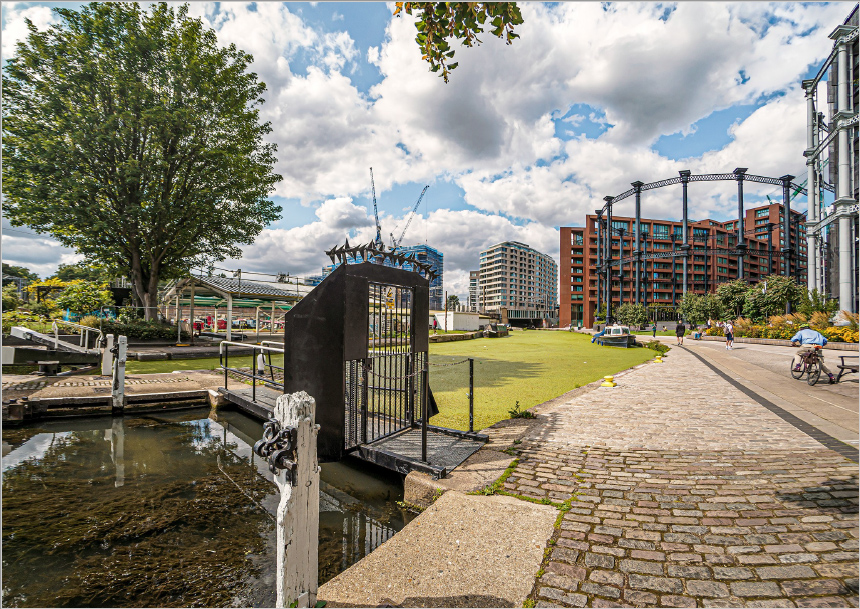
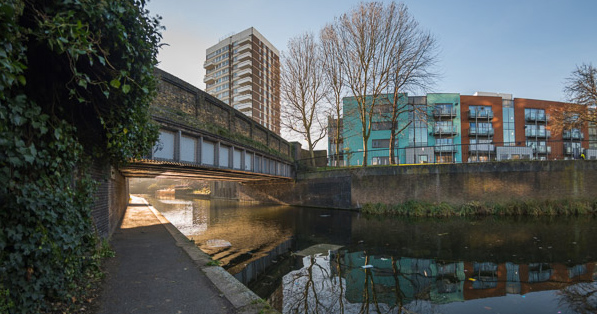
My contribution is 12 panoramic images taken on a number of walks along the Regent’s Canal over the past year as a small celebration of the 200th anniversary of its opening.

If you can come, please RSVP to help planning for snacks and wine etc. But anyone can just turn up at the event – or go and see the show any time until 22nd April.

If you would like to print out the invitation you can download a PDF.

Regents Canal 200

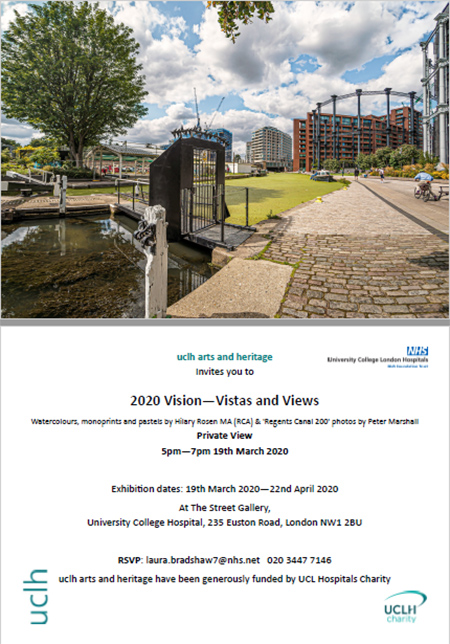
If you are in London next month you are invited to the private view of the exhibition ‘2020 Vision – Vistas and Views’ at The Street Gallery, University College Hospital, 235 Euston Road, London, NW1 2BU. The gallery is along an area at the front of the hospital – turn right immediately you go through the main entrance – and will be on show until 22nd April 2020.

As well as paintings by Hilary Rosen the show includes a dozen pictures from a project I’ve been working on when I’ve had time over the past year, ‘Regents Canal 200‘.

The Regent’s Canal, which runs from Little Venice on the Paddington Arm of the Grand Union Canal to Limehouse Dock was completed and opened in 1820, 200 years ago this year. There are other, more official, celebrations later in the year but I began this project in complete ignorance of these.

I’ve photographed the Regent’s Canal occasionally over the years since the late 1970s, and have hundreds or probably thousands of pictures from it, both in black and white and colour. But since space is limited in the gallery I will only be showing a small selection of the several hundred colour panoramas I’ve made over the past year.

Please RSVP to Laura Bradshaw – laura.bradshaw7@nhs.net 020 3447 7146 – though you will be welcome anyway, and Hilary and I will be pleased to see you there. If you want to print out a copy of the invitation you can open it as a PDF.


December 2019 My London Diary

December is always a fairly light month for protests, but I did even fewer than usual last month. Partly this was because of the lousy weather – I don’t like working in the dark and in the rain and only cover those events that for some reason particularly interest me. Then there was an election, which I made a decision not to cover, and with a result that, though I wasn’t surprised, still left me seriously depressed for a few days.

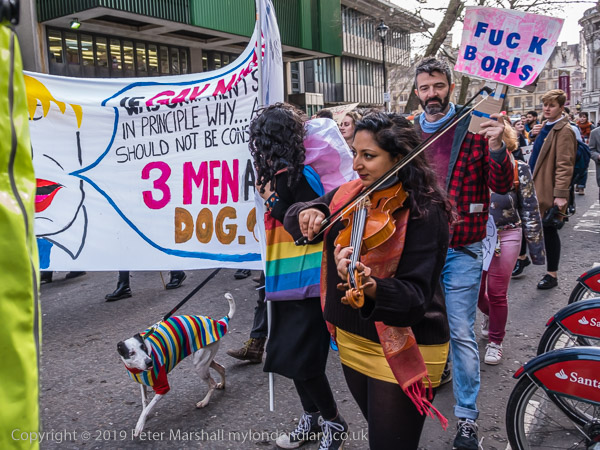
But there were good things too last month. I did enjoy Christmas, and a trip up to Matlock, and a fourth grandchild was born as the election results were being announced. And some protests, like the wedding of three men and a dog were fun to be at.

December 2019

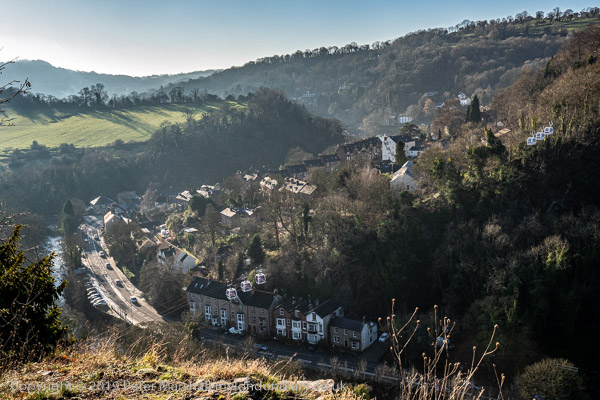
Matlock & Matlock Bath
Wimbledon to Richmond walk
Staines to Runnymede walk
40th UN International Migrants Day
Earth Strike South London
‘6000 Sardines’ London protest

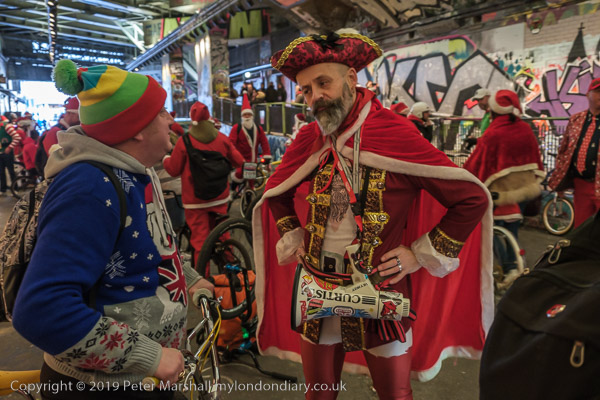
Santas BMX Life Charity Ride

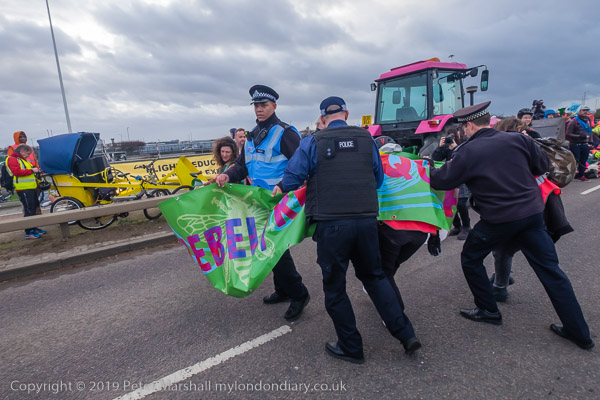
Bikes against Bulldozers Heathrow lie-in
Three Men and a Dog Wedding
DPAC ‘Bye Bye Boris’ Uxbridge trial
Trump/NATO march to Buckingham Palace
No to Trump, No to NATO rally


London Images


All photographs on this and my other sites, unless otherwise stated, are taken by and copyright of Peter Marshall, and are available for reproduction or can be bought as prints.

There are no adverts on this site and it receives no sponsorship, and I like to keep it that way. But it does take a considerable amount of my time and thought, and if you enjoy reading it, please share on social media.
And small donations via Paypal – perhaps the cost of a beer – would be appreciated.