Deptford to Rotherhithe October 1988 – the continuation and end of my photographic walk in October 1988. The previous post on this was Liquor, Motors, Furniture, Packing & Timber.
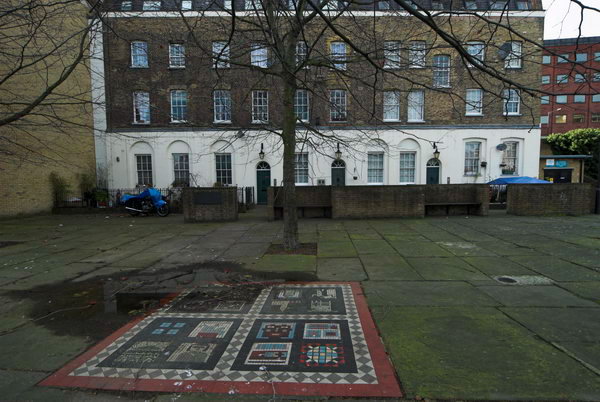
I turned around on Grinstead Road and made this picture as I returned to Evelyn Street. Directly ahead on the other side of Evelyn St was the car auction site shown in a previous post, and towering above that two of the towers on the Pepys Estate. On my right was the grim factory wall of the former galvanised iron and zinc Ida works, at the back of Neptune Wharf on the now filled-in Surrey Canal
Clare Villas, Evelyn St, Deptford, Lewisham, 1988
Clare Villas at 114-116 Evelyn Street and the neighbouring semi-detached pair Oak Villas whose doorway is at the left of the picture show us that there were then some wealthy local residents. These houses back on to Deptford Park and probably date from when this land was market gardens around the time this was bought by the London County Council in 1884. I think one of the two pairs was a little earlier than this date; Pevsner mentions both Clare Villas and Oak Villas, dating the latter to 1881.
Another picture of Clare Villas. I walked further along Evelyn Street stooping to take a couple of pictures of a large block on the corner with Bestwood Street, with six rounded columns going up between its four storeys of windows with a vaguely deco feel, I think where MacDonalds now is, which I seem to have forgotten to digitise, along with an interestingly angled four-storey building with balconies on the north side of the junction, also not digitised.
I often saw this block of two storey properties with their neatly trimmed hedges from the top floor of a bus, but this time I was on foot and stopped to make a couple of pictures, of whcih this, with its row of striped posts is more successful. Though I think it looked better from the higher viewpoint of the bus. This is a council development from the 1930s.
Scorer’s Corner has conveniently placed road signs among its wealth of text to tell us that this is the corner of Plough Way and Lower Road. The buildings on Lower Road were demolished before 2008 and the site remained empty until replaced by a rather boring development in 2015-6. This includes the site of the Dreadnought pub at right, first recorded in 1849, although its mock Tudor frontage is rather later.
The buildings along Plough Way at left are still standing, though the Prince of Wales pub, there since at least 1861 closed and became a betting shop around 2012.
The Crystal Ball, Rotherhithe New Rd, Rotherhithe, Southwark, 198888-10i-15
The Crystal Ball frontage at 30 Rotherhithe New Road survived until around 2011 although I think the shop probably closed rather earlier. The building was then converted into residential use.
The Crystal Ball, Rotherhithe New Rd, Rotherhithe, Southwark, 1988 88-10i-16
It name ‘The Crystal Ball’ was inspired by the pub next door, the Crystal Tavern, first recorded here on the corner of Rotherhithe Old Road in 1852 but the current building, a fine example of a late Victorian pub, is dated 1895. Although it still has the pub sign (altered to read ‘Christ All Tavern’) and the Courage cockerel you can see in part at top left of this picture, it has since 1996 been home to the Christian Arise & Shine Evangelistic Association as their London Outreach Centre.
I think this walk ended here, at Surrey Quays Station, though it was then a rather longer an inconvenient journey for me by Underground back to Waterloo, requiring changes at Whitechapel from the East London Line to the District, then at Embankment onto the Northern Line one stop to Waterloo. The extension of the Jubilee Line to Stratford, opened at the start of 2000 made journeys to Rotherhithe considerably more convenient.
April 23rd 303 was not a good day for George from Cappadocia. Diocletian, then the senior Roman Emperor had previously purged the Roman Army of Christians but had not really otherwise bothered too much about them, but he was persuaded by fellow emperor Galerius to take a harder line, and after consulting the oracle of Apollo began a general persecution across the empire on February 23, 303, which continued for the next 10 years or so.
For some reason George had escaped the previous army purge was was still serving as a member of Emperor Diocletian’s personal bodyguards. Tradition has it that he refused to recant his faith and was sentenced to death, being beheaded at Nicomedia on 23rd April. Rather different versions of his life (and death) grew up in the Greek and Latin churches. But certainly many Christians were killed by the Romans and George certainly represents one of many brave men who died rather than recant, most probably in the earlier years of Diocletian’s reign.
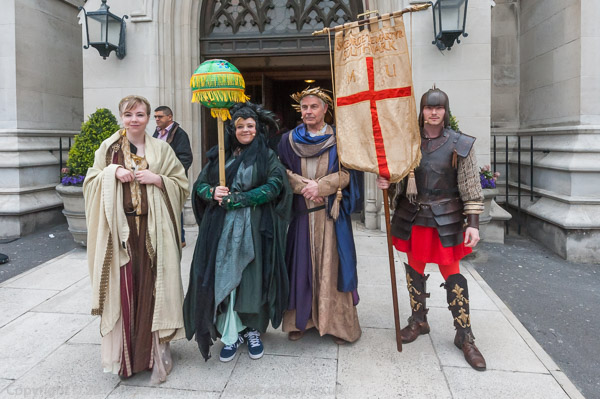
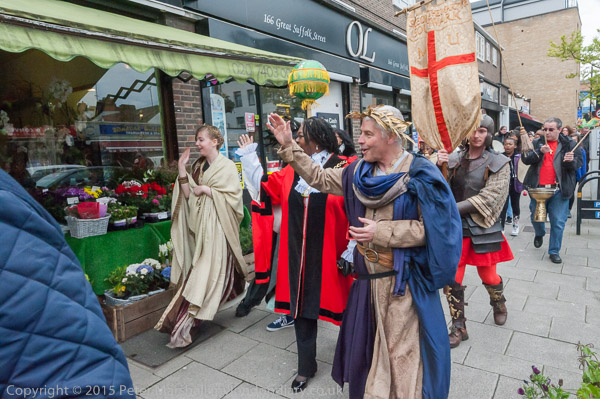
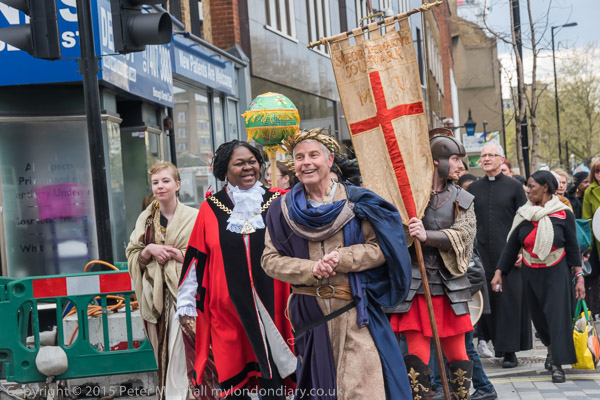
St George, Emperor Diocletian, the priestess or haruspex and the emperor’s daughter
Legends built up around him, few of which like that of the dragon (an 11th century addition) will have been true. It’s unlikely that he was subjected to more than twenty separate tortures over the course of seven years or that his martyrdom led to “40,900 pagans were converted to Christianity, including the empress Alexandra.” You can read more about him on Wikipedia.
His martydom began to be celebrated in Lydda in Palestine where he was thought to have died, and pilgrims came there and later to Cappadocia where he is thought to have come from. He was made a saint by Pope Gelasius I in 494, who said his was one of those “whose names are justly reverenced among men, but whose actions are known only to God“.
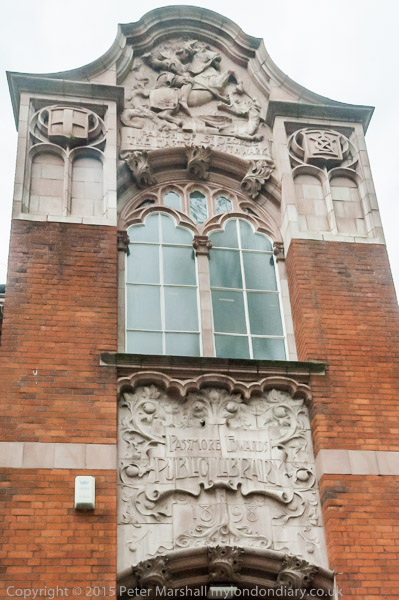
St George fights the dragon on the Passmore Edwards Public Library, long closed
His fame spread across Christendom, though it was only in the ninth century that the first church was dedicated to him in England – and not until 1152 that he displaced Edward the Confessor as the patron saint of England, although he had become a part of some English battle cries in the Hundred Years War (1337-1453) and among the Crusaders, when many went from England to fight against the Muslims in Palestine between 1095 and 1291.
St Georges Day was made a major feast here in 1415 and 1421, a holiday where church attendance was compulsory and other festivities took place. Later its celebration declined, particularly after the union with Scotland, and had more or less died out by the 20th century.
In recent years there has been something of a revival, spurred on in part by the increasing festivals of other communities, sometimes supported by local councils. There has been an increasing emphasis too on our national teams, particularly the English Football and Rugby teams, with minor fixtures being promoted through the mass media in a way that in earlier years was reserved for the major sporting events – the Grand National, the FA Cup FInal and the Boat Race.
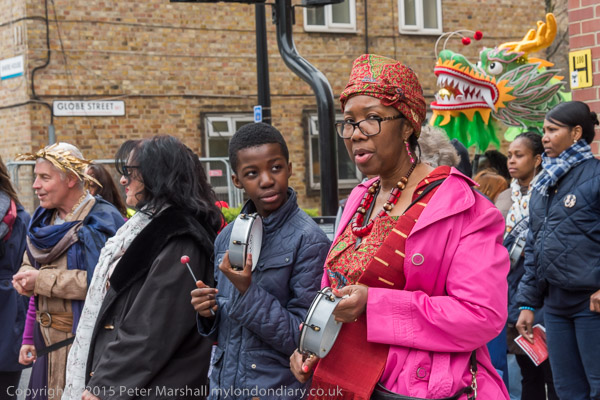
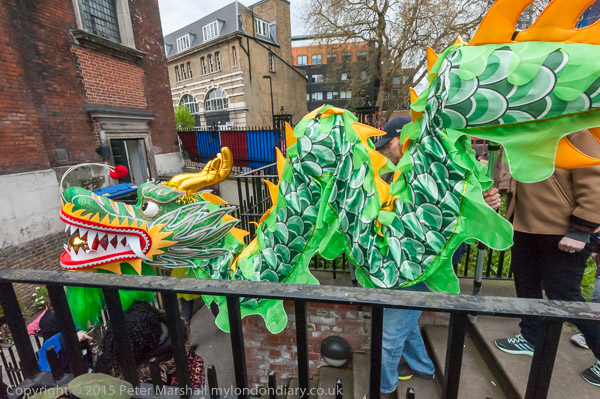
London’s dragons are mainly Chinese
The St George’s Flag had become something seldom seen outside football matches, except in the hands of small racist right-wing groups who called themselves patriots. Unfortunately recent years have seen a growth in these, and some have organised celebrations of St George’s Day, but there has also been a growth in less political events, with even English Heritage encouraging celebrations. Radio 3 has celebrated it, and both Conservatives and the Labour Party have campaigned for it – with Labour calling for it to become a public in both 2017 and 2019 manifestos.
The pictures here are from 23rd April 2016, I started the day photographing a couple of protests over the sale of illegal ‘blood diamonds’ from Sierra Leone at Selfridges in Oxford Street and Tiffany in Sloane Square before going on take pictures about St George’s Day, beginning around lunchtime in Trafalgar Square, where despite the support of mayor Boris Johnson little was happening. I went to the Roman Catholic St George’s Cathedral in Southwark, calling in briefly at the peace garden in the Imperial War Museum across the road as I waited for people to arrive for the St George in Southwark Procession.
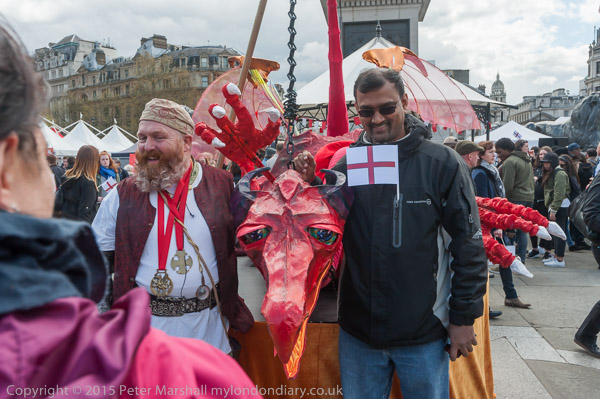
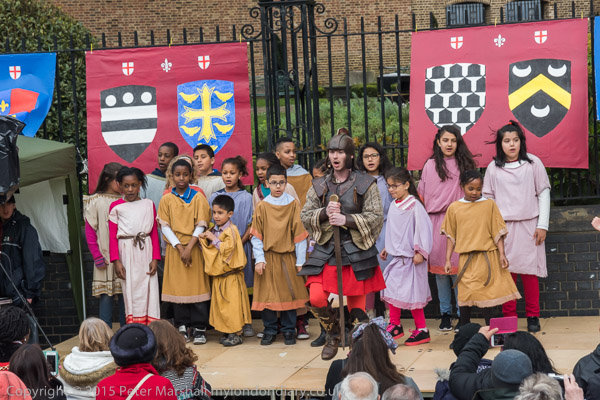
This, led by led by St George, a Roman Emperor, the Mayor of Southwark and others and with a dragon at its rear made its way from the St George’s RC Cathedral to the Church of England St George the Martyr in Borough High Street.
I’d not been inside this before and went in with those taking part for a short address before we came out and the procession formed up. It wound its way through the back streets of Southwark and I was pleased as we went past the Priory on Webber Street to be able to tell the mayor something about Bert Hardy who had recently got a blue plaque there. I’d only met Hardy a couple of times, but one of my friends had worked at Grove Hardy as a printer.
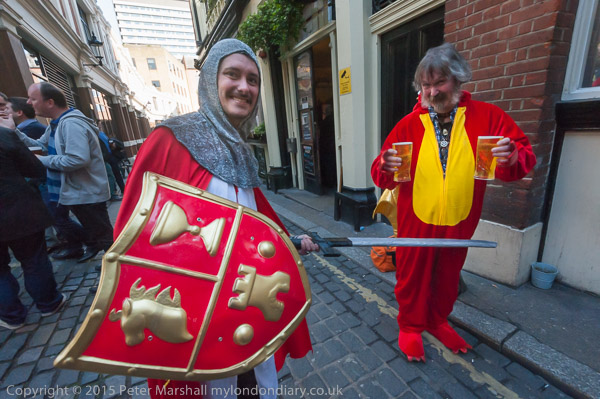
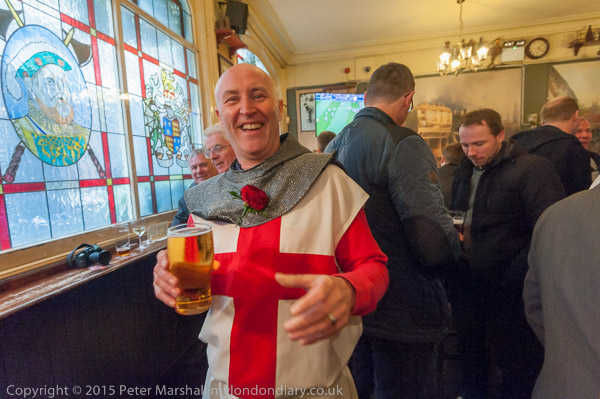
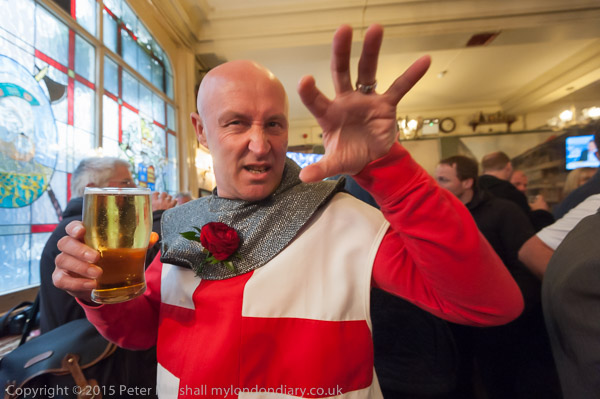
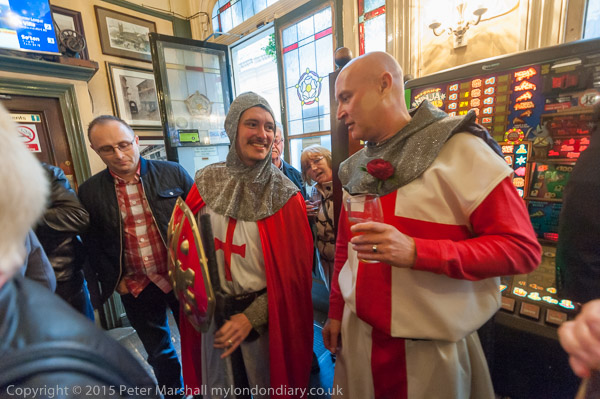
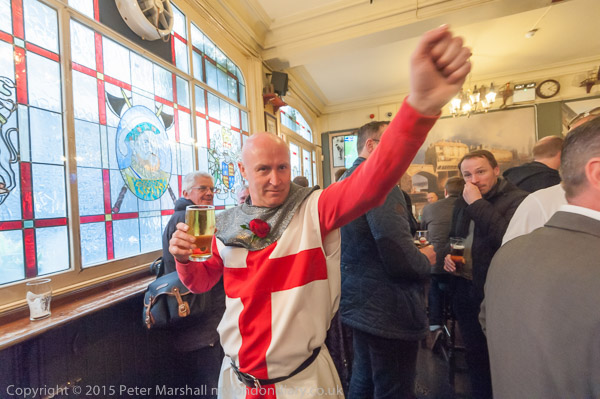
The procession ended with a play in the yard beside St George the Martyr, but I left before it finished. Earlier I’d agreed to meet a couple of photographer friends at the start of the procession, but I think they had got lost on the way there, but I’d now arranged to find them on London Bridge. There seemed to be little going on at the George Inn on Borough High St, but at the King’s Head we walked into the bar and were seated by the window when St George walked in with a few mates. It obviously wasn’t the first pub they had visited. After he had got a pint I went and asked if I could take a few pictures, and he began posing, though moving rather too much in the low light.
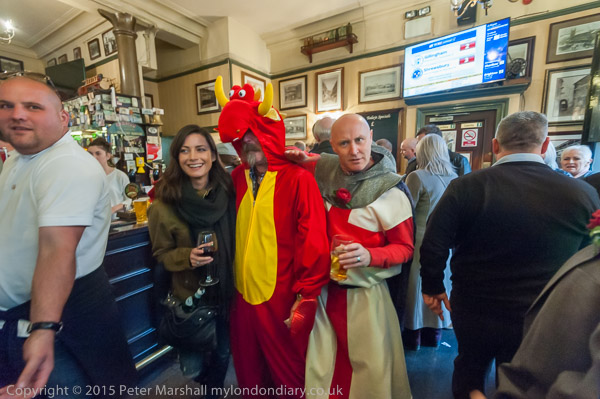
After I had taken his picture a rather friendly dragon came up to the bar, followed by a second St George, and I photographed the two St Georges together. And as we left the bar, there in the street was the second of them with his dragon friend – and I took a few more frames.
The Elephant, Sewol and Brexiteers Saturday 13th April 2019 in London, three years ago seems very distant to me now.
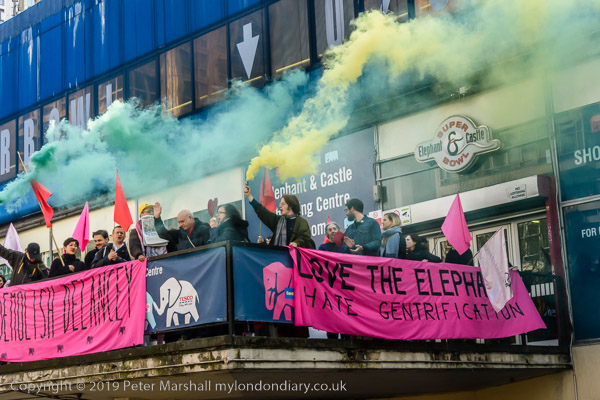
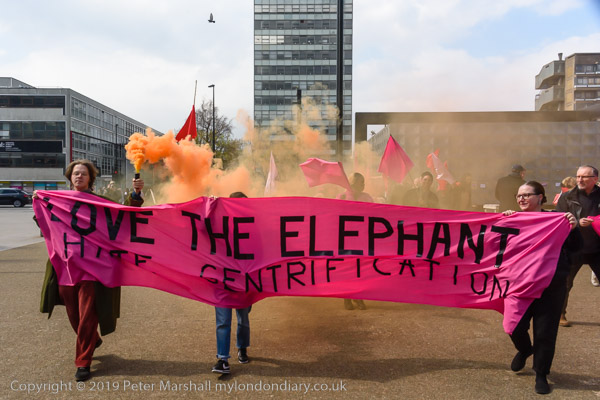
Love the Elephant, Elephant & Castle, London
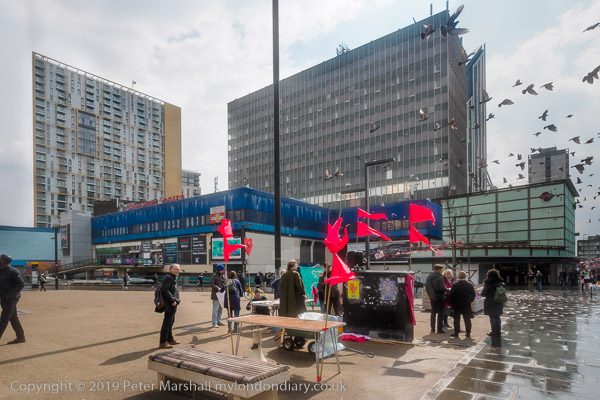
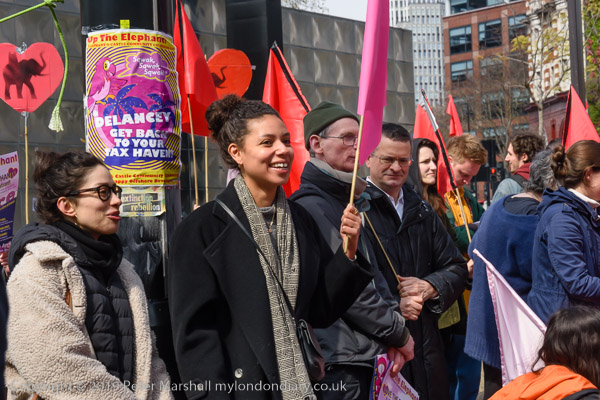
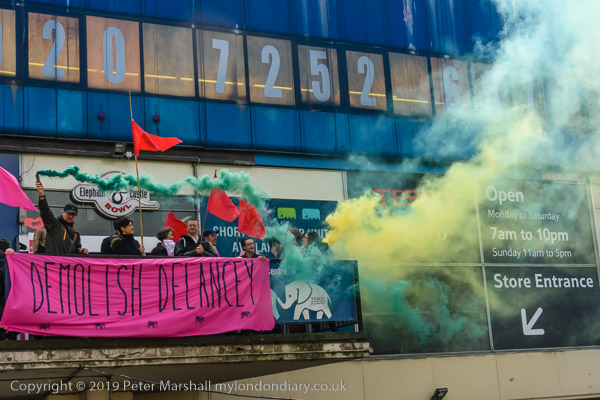
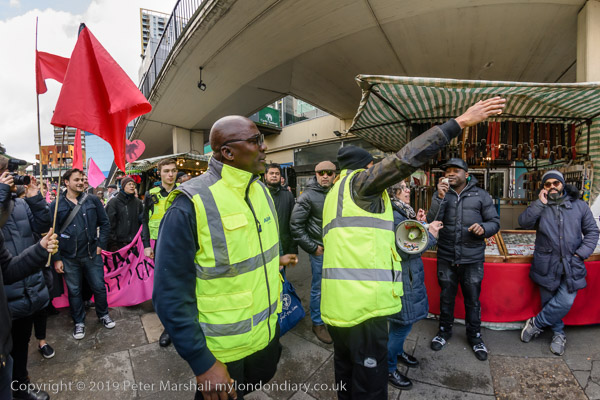
The main event I covered on the day was at the Elephant & Castle shopping centre in south London, where local people and supporters were calling on Southwark Council and developers Delancey to improve the plans for the redevelopment of the area.
The campaigners main banner had the message ‘LOVE THE ELEPHANT – HATE GENTRIFICATION’ and this is an area that epitomises the changes that have been taking place in many of London’s poorer areas for many years now. Traditionally working class South London, this area has been at the centre of major demolitions of large council estates and their replacement largely by expensive high rise blocks at market rents with a nominal amount of so-called ‘affordable’ and miniscule amounts of truly social housing.
Immediately to the east of the shopping centre had been the award-winning Heygate Estate, completed in 1974, once popular for its light and spacious flats, but long subjected to a process of managed decline by Southwark Council who even employed PR consultants to emphasise a negative view of the estate, together putting together what the estate’s architect Tim Tinker described in 2013 as a “farrago of half-truths and lies put together by people who should have known better.” The council deliberately used parts of it in the latter years to house people with mental health and other problems, and as temporary accommodation. I photographed the estate on several occasions, most recently on a tour by residents opposed to the redevelopment of both the Heygate and the neighbouring Aylesbury Esate in 2012, Walking the Rip-Off.
The Heygate estate had a mixture of properties with large blocks of flats on its edges and contained 1,214 homes, all initially social housing, though many were later purchased by residents who became leaseholders. It’s replacement, Elephant Park is far less well planned but according to Wikipedia will “provide 2,704 new homes, of which 82 will be social rented. The demolition cost approximately £15 million, with an additional £44m spent on emptying the estate and a further £21.5 million spent on progressing its redevelopment.” The council sold the estate to the developers at a huge loss for £50m.
Many of the flats on Elephant Park were sold overseas as investment properties, the continuing increases in London property prices making these a very attractive holding. The new estate will also provide housing for those on high salaries in London, with a railway station and two underground lines providing excellent transport links for professionals working elsewhere in the city. Those who previously lived and owned properties on the Heygate have had to move much further from the centre of the city, some many miles away.
The Elephant & Castle Shopping Centre, was opened in 1965 on the site of the 1898 Elephant & Castle Estate which had been badly damaged by wartime bombing, and was the first purpose-built shopping centre in the UK and certainly one of the first in Europe. Many of its 115 shops were then owned by local traders.
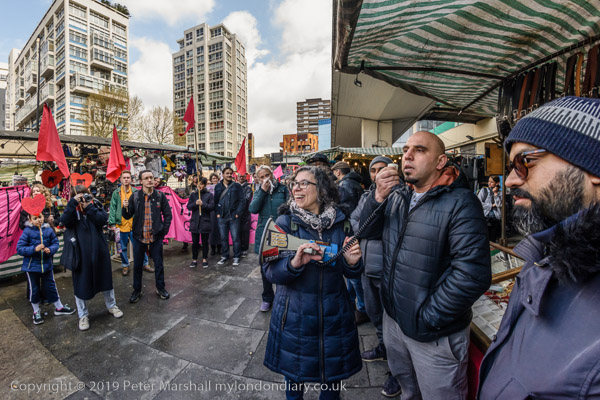
A market trader speaks about the poor deal they are getting
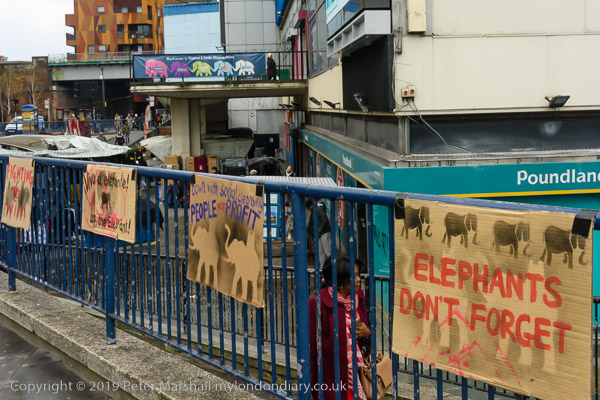
The rally and procession by Southwark Notes, Latin Elephant and Up the Elephant at the Elephant & Castle called on Southwark Council and the developers Delancey to develop the Elephant for the existing population and users, rather than as social cleansing to attract new, wealthier residents and shoppers. They would like to see a development that retains the existing character of the area which has become very much a centre for South London’s Latin community many of whom live in the surrounding area. It became the most diverse and cosmopolitan shopping centre in London, with also other amenities such as a bowling alley and bingo hall, serving the population of the area.
Security officers order the campaigners out of the market area
They say the development should include more social housing and call for fairer treatment of the market traders, who should be provided with ‘like for like’ new spaces at affordable rents and be given adequate financial compensation for the disruption in business the development will cause.
A long series of protests in which locals were joined by students from the London College of Communication whose new building forms a part of the redevelopment did lead to some minor improvements to the scheme by the developers, but the shopping centre closed in September 2020 and demolition went ahead and was complete around a year later. The new development will include high-rent shops, almost certainly mainly parts of major chains, expensive restaurants and bars and plenty of luxury flats, along with a small amount of “affordable” housing.
Sewol Ferry Disaster 5 years on – Trafalgar Square
The good transport links that make the Elephant so attractive to developers also took me rapidly into the centre of London as the procession of protest there came to and end, although events there were continuing all afternoon – only four stops taking 6 minutes on the Bakerloo Line to Charing Cross.
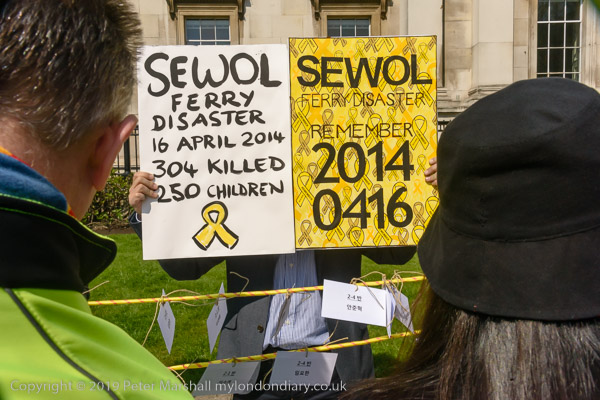
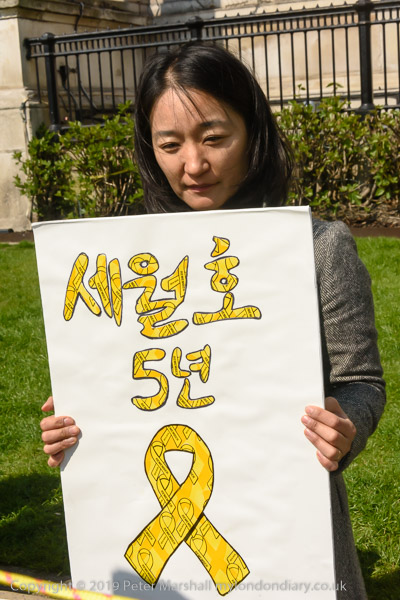
I’ve photographed the small monthly vigils by campaigners in remembrance of the victims and in support of their families of the 304 people who died in the Sewol Ferry Disaster of 16 April 2014 on a number of occasions, though its always difficult to find anything new to say, either in words or pictures.
But this was a special event, the fifth anniversary of the disaster, and the 60th 60th monthly vigil. Campaigners continue to call for a full inquiry, the recovery of all bodies of victims, punishment for those responsible and new laws to prevent another similar disaster. They tie cards on lines with the class and name of the 250 high school children who were drowned after being told to ‘stay put below deck’.
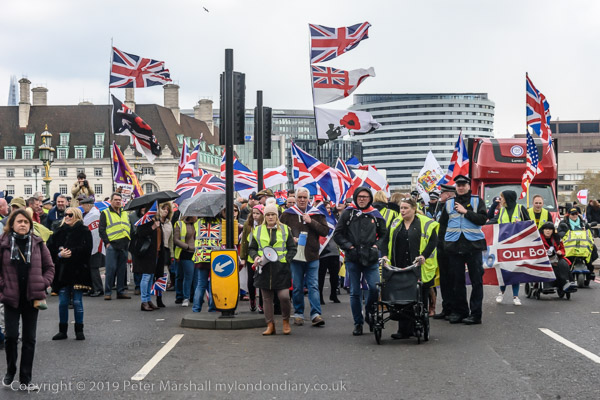
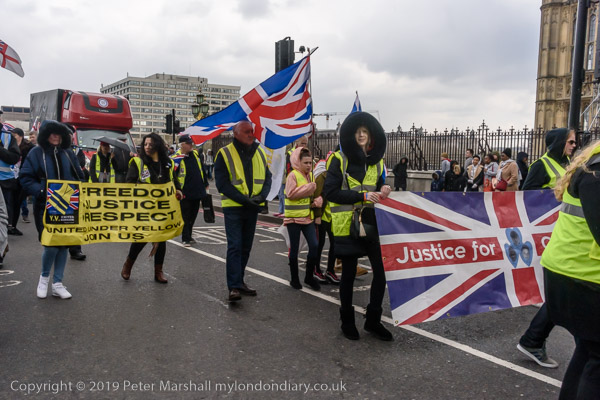
Brexiteers march at Westminster – Westminster Bridge
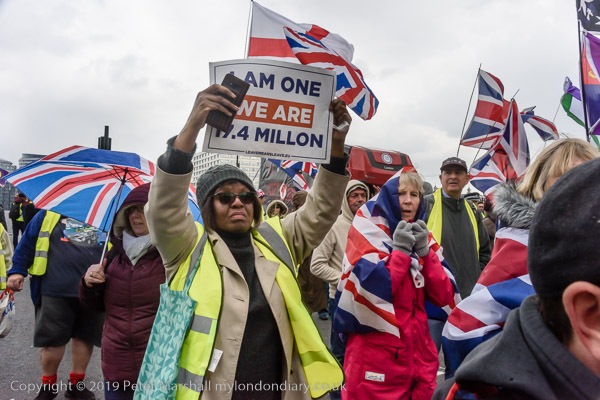
Brexiteers were continuing to march weekly around London holding Union Jacks, St George’s flags and placards and many wearing yellow high-viz jackets because although there had been a small majority in favour of leaving Europe in the 2016 referendum, Parliament had not found a way to get a majority to pass the legislation needed. It was this indecision that led to a resounding victory for Boris Johnson in the 2019 election in December, though unfortunately his ‘oven-ready’ agreement has turned out to be extremely half-baked and most of the things dismissed by Brexiteers as scaremongering have turned out to be true, while the promises made by the Leave campaign have so far largely failed to materialise and most seem unlikely ever to do so.
Johnson’s deal – important parts of which he seems not to have understood, particularly over the Irish border arrangements has left us in the worst of all possible worlds, though it has made some of his wealthy friends – including some cabinet members – considerably wealthier and protected them from the threat of European legislation that would have outlawed some of their tax avoidance. Back in 2019 I commented “We were sold the impossible, and things were made worse by a government that thought it could play poker when what was needed was a serious attempt at finding a solution to the problems that both the UK and Europe face.”
The protesters were also protesting with flags and banners supporting members of the armed forces against their trial for killings in Northern Ireland and for the Islamophobic campaign ‘Our Boys’ which seeks to have a drunk driver of Hindu origin who killed three young men prosecuted as a terrorist.
Class War, Murdoch and Cross Bones – three rather different events around London on Saturday 28th March.
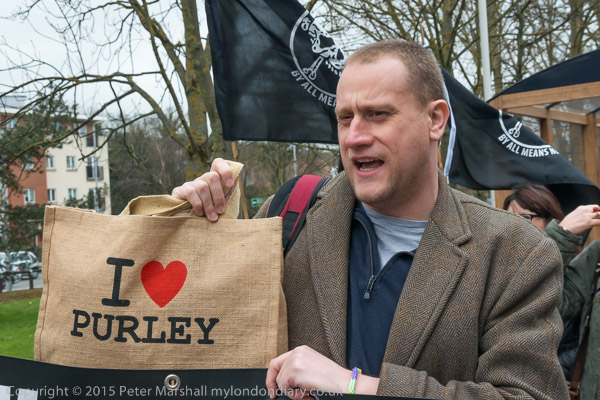
Jon Bigger Class War South Croydon – Purley, London
Jon Bigger
Class War had decided to stand candidates in the 2015 General Election, and among those who volunteered to stand was Jon Bigger, now Dr John Bigger and the publisher of The Journal of Anarchy “a repository of work from published articles to blog posts, videos and podcasts.”
Croydon South was probably not the most fertile ground for anarchism which was perhaps largely why it was chosen as one of the handful of seats for the party to fight. On the southern fringe of London it remains spiritually in deepest true-blue Surrey, one of the Conservatives’ safest seats in London. Though there was also a particular distaste for the Tory candidate Chris Philp who had called for benefit claimants to be forced to undertake unpaid community work, as well as calling for Purley to get a grammar school.
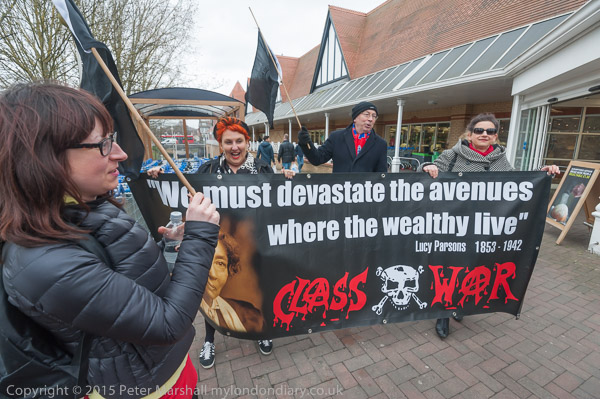
It wasn’t a very successful visit as although we went to what was considered to be the centre of Purley there were very few people about, and Bigger’s campaign speech was delivered to the small group of Class War supporters and one rather confused elderly gentleman at the Conservative Party Office. We found only a few more outside a nearby supermarket, where most customers seemed to be in two much of a hurry to get back into large cars to hear anything political.
As I wrote:
“Probably all of Purley was by this time slaughtered at home in front of the TV as the sun was definitely over the yard arm. Wherever they were it wasn’t where we were on Brighton Road, except for a few desperate souls at the bus stops on each side of the road trying to escape. But Class War made the best of it, handing out their election flyer to the police posse still devotedly following their progress (though mainly sitting in their van enjoying the overtime), the occasional local youth and elderly demented.” Perhaps some of them were among the 65 who voted for Jonathan Bigger, but somehow 31,448 came out of the woods to vote for the Tory.
Murdoch on Trial – Guilty as charged – News International, London Bridge
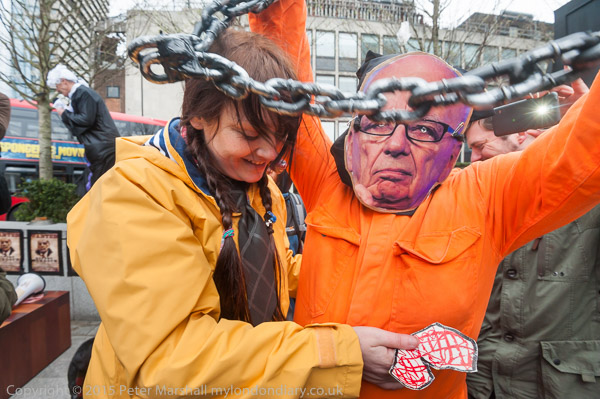
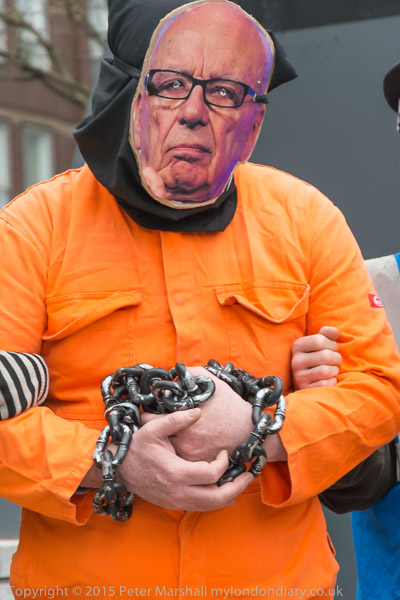
I arrived rather late back from Purley for the People’s Trial of Rupert Murdoch being conducted by activists on the sixth day of Occupy Rupert Murdoch week outside the News International building at London Bridge, just in time to hear the last witnesses before the jury gave its guilty verdict and Judge Donnachadh McCarthy pronounced the sentence.
But though the sentence was to remove his power base and treat him with love there seemed little chance of it being carried out for real, and his organisation continues to spread its disinformation and messages of hate.
Max Keiser then spoke about the economic fraud and the basis of our economic system, with London at its centre, the world’s largest tax haven. The system, which allows the rich to borrow on the basis that they have borrowed before is rather like the Emperor’s New Clothes, and it began to fail in 2008. Whether the StartCOIN scratch cards he handed out with free money on them (“The currency of the revolution”) will prove more stable I can’t say as I lost mine.
I was told that more would happen later, but I was getting tired and decided to leave, missing the rush to occupy News International at around 7pm. As I wrote, “The rush past security proved successful and the occupiers managed to stay in the building for around 20 hours, although there was surprisingly little coverage in even the non-Murdoch news media. Those 5 billionaires obviously stick together and the BBC always seeks to marginalise any UK protest. Probably there was some important news about a minor celebrity hiccoughing.”
Cross Bones Open Day – Cross Bones Graveyard, Redcross Way
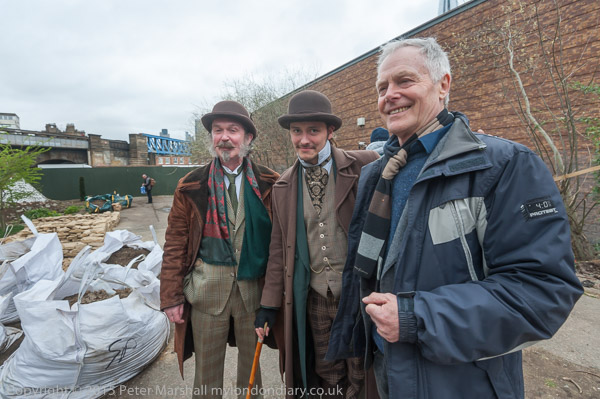
Two well-dressed men with Southwark poet and playwright John Constable in the Crossbones Graveyard
I’d seen one of the men on the left of the picture earlier opposite News International and talked briefly with him and he had told me he was waiting for a friend to go to the Open Day at the Cross Bones Graveyard and I decide to call in their on my way home. Here’s what I wrote in 2015, along with some pictures.
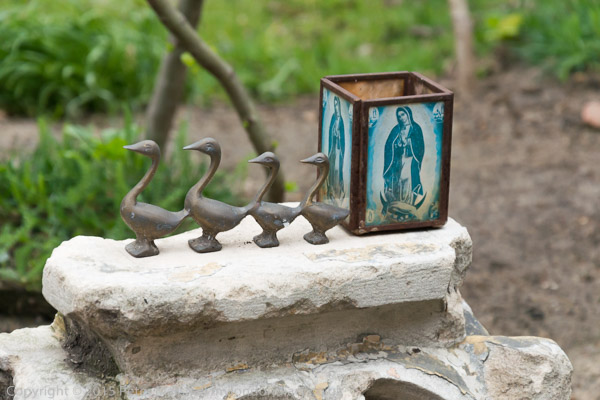
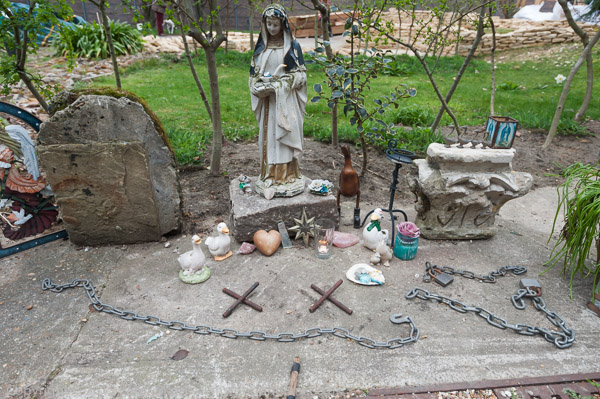
I’d been to the graveyard before, the first time years ago when I’d wandered in and the whole site was in a complete mess, with loads of rubbish and rubble. I’d read about its use for hundreds of years as a place where outcasts, particularly the ‘Winchester Geese’, prostitutes who were licenced to carry out their trade on the south bank on the Thames, in Bankside surrounding Winchester Palace, formalised by the Lord Bishop of Winchester in 1142, and providing a considerable income for the clergy through taxes and fines for several hundreds of years thereafter.
These ‘single women’ and their children, along with paupers and miscreants were buried in this patch of ground until some time before it was formally closed in 1853 as too overcrowded to continue. Plans to build over it were stopped in the 1880s by the e Disused Burial Grounds Act 1884, and it remained largely unused and forgotten until disturbed by the Jubilee Line extension in 1990, when the Museum of London made some excavations. Their survey of the site suggested that up to 15,000 had been buried there, half of them children.
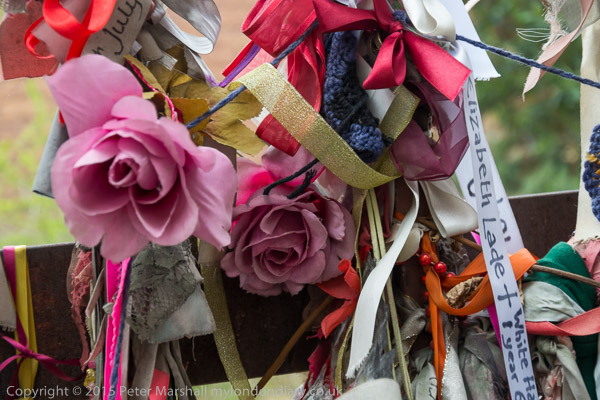
I’d walked past it earlier and assumed like some other areas of waste ground that it was a bombsite, but then became aware that ribbons and other tokens were being tied to the railings. Later I read about the site in various places.
Apart from the mysterious phantom gardener, the other figure responsible for increasing interest in Crossbones was local writer John Constable who revived the story of Cross Bones through his cycle of poems and mystery plays, ‘The Southwark Mysteries’. Various events began to be organised around Crossbones, and although I never got to them, the ribbons on the fences multiplied.
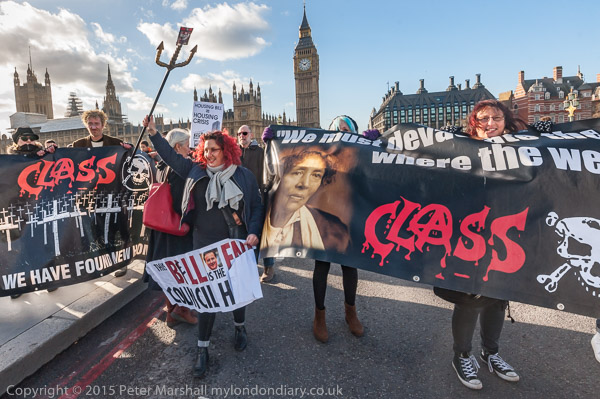
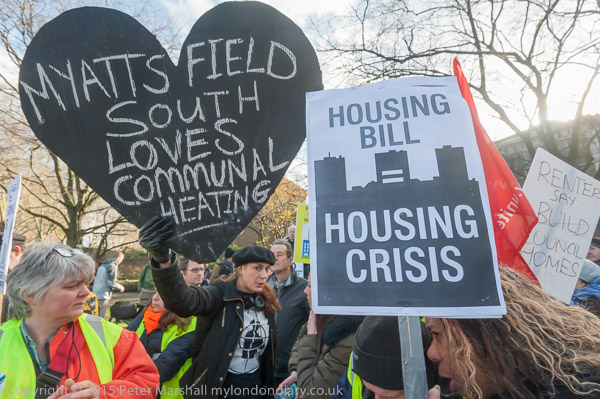
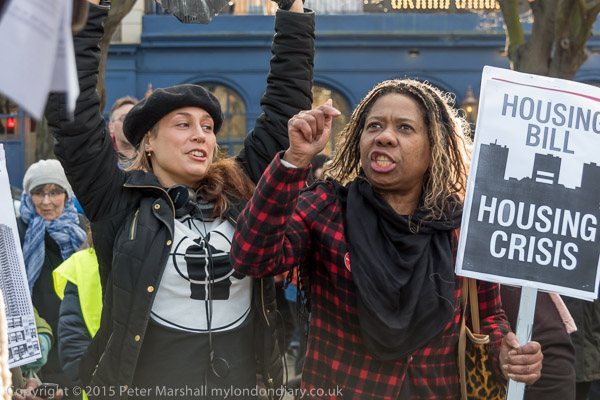
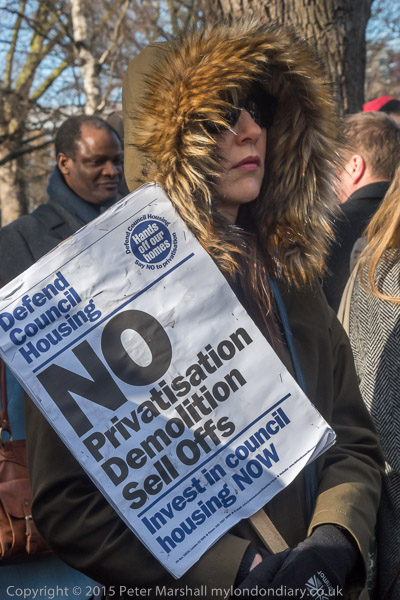
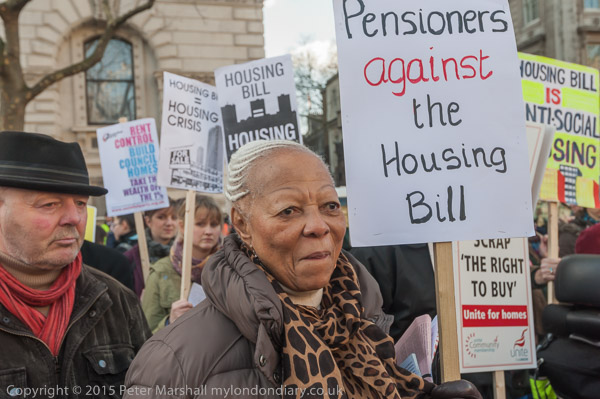
The March Against Housing & Planning Bill on January 30th 2016 was organised by activists from South London, particulary from the London boroughs of Lambeth and Southwark.
These include many who are fighting against the demolition of social housing that is taking place across London, including in Lambeth and Southwark. Council tenants and leaseholders on council estates are fighting to save their homes – and fighting against Lambeth and Southwark councils who together with private developers and estate agent advisers are bent on demolishing the estates and replacing them with new estates which are largely for private rent or sale at London’s inflated market prices.
Southwark Council in particular carried out an expenisive PR exercise to demonise the Heygate Estate at the Elephant & Castle, having failed to carry out necessary maintenance and flooded the estate with people with various social problems over a number of years. The whole disastrous history has been documented in depth on the Southwark 35% site. A prize-winning estate with 1,214 homes built in 1974 to provide social housing for around 3,000 people was deliberately run-down and demolished. It’s replacement, Elephant Park has less than 100 social housing units. Many of its new flats are simply investments for overseas owners.
Southwark sold the Heygate to developers for one third of its previous valuation, and spent more on the scheme than it received. A study by Global architect firm Gensler concluded that the £35m spent by Southwark in rehousing the estate residents was exactly the same as it would have cost to refurbish the estate up to modern standards – and would have avoided the huge carbon footprint of demolishing and rebuilding.
A well as Heygate, Southwark Council’s main target has been the Aylesbury Estate, where Tony Blair chose to launch the Labour regeneration policy which has enabled corrupt councils to destroy much of what remained of social housing. For many council officers and some councillors it has enabled them to move into highly paid jobs with developers as a reward for their services. Lambeth has also been pursuing similar policies (along with other boroughs in London) and in particular with the Central Hill estate close to Crystal Palace.
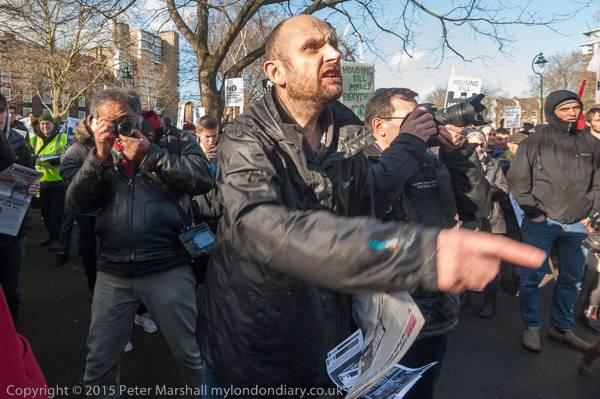
An angry heckler – their argument continued after the speech by Livingstone
The protest against the Housing & Planning Bill in 2016 was also attended by people from both Lambeth and Southwark Council, and when Southwark Council Cabinet Member for Housing Richard Livingstone stepped up to the microphone to speak at the rally before the march some trouble was inevitable. Among those loudly heckling him was another of the speakers, Simon Elmer of Architects for Social Housing.
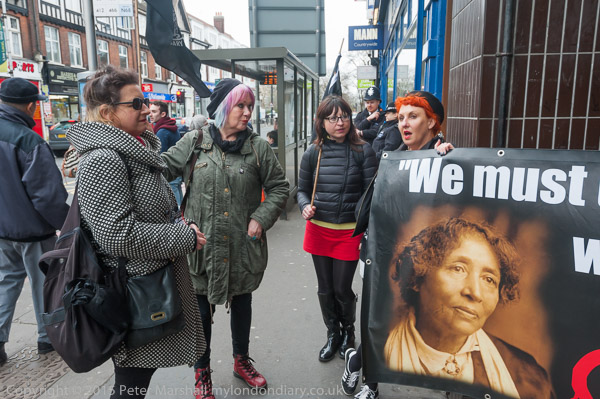
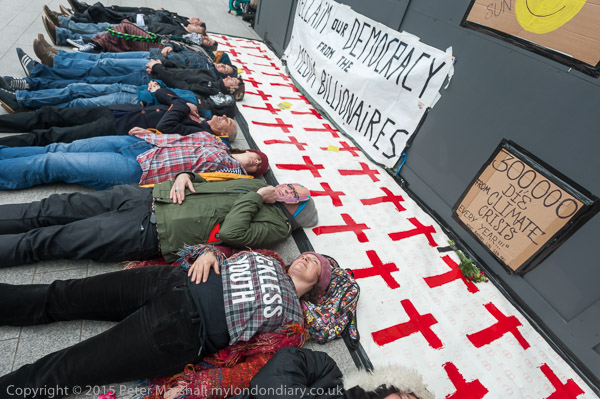
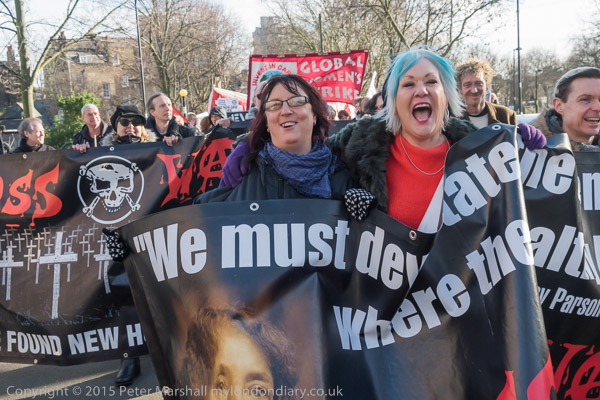
Class War have also been active in support of social housing in South London in particular and livened up the march by dancing along the street with banners singing the ‘Lambeth Walk’. One banner carried the words of a leading US Anarchist Lucy Parsons (1853-1942), “We must devastate the avenues where the wealthy live” and another had a field of crosses with the message “We have found new homes for the rich“.
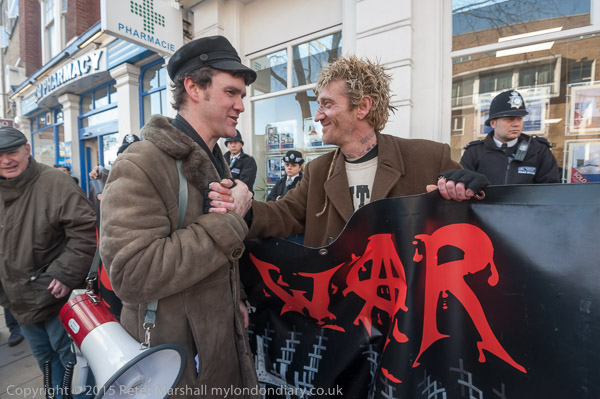
Class War supporters rushed across the street for a short impromtu protest in front of a large branch of one of the leading estate agents driving the gentrification of London and advising councils and government on housing policies, but soon rejoined the main march of around 2,000 people heading for Westminster Bridge and Downing St.
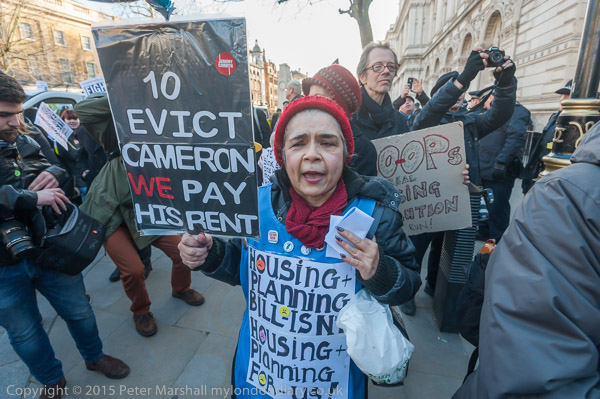
At Downing St there was another protest outside the gates. Police had formed a line across Whitehall and directed the march to the opposite side of the street opposite Downing St. The march followed them across but then many simply walked back across the street to mass in front of the gates for a rally led by Fight Racism! Fight Imperialism! who have been active in supporting the Focus E15 Mothers in their campaign against the housing failures of Newham Council.
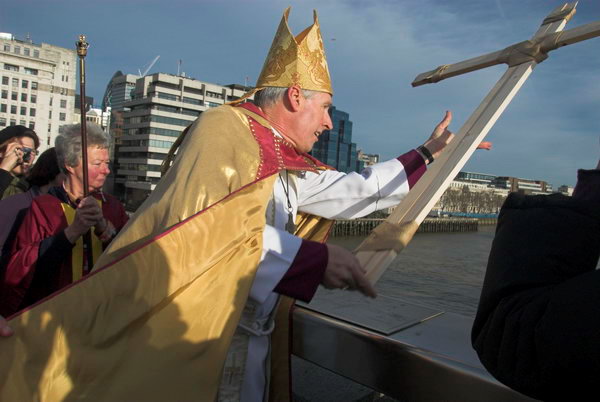
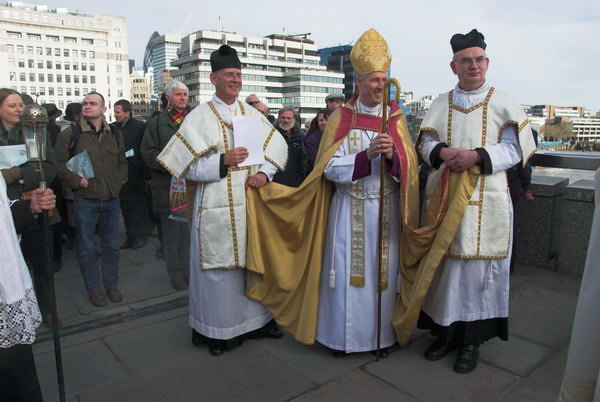
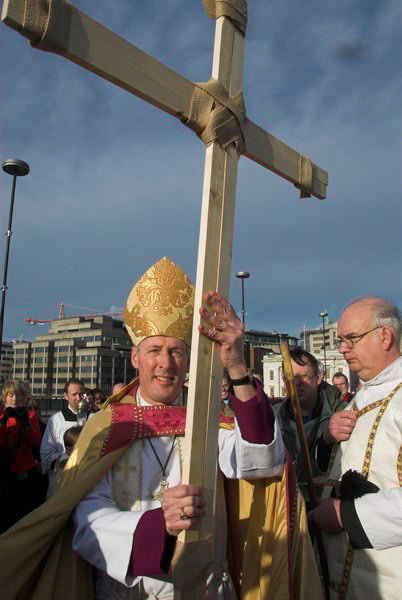
The Bishop of Woolwich throws a wooden cross into the River Thames to bless the waters.
Sunday 14th January 2007 was a pleasant day for me. The weather was good, a bright winter day and I was up in London to photograph a very positive event, the Blessing of the River Thames, with plenty of time too for me to wander around one of my favourite areas of the city, south of the river in Southwark.
In the first ten years of this millennium I photographed a wide range of religious events that take place on the streets of London, particularly by Sikhs, Hindus and Muslims. But there seem to be rather fewer Christian festivals that are celebrated in public, though I think there have been more in recent years, with more public events in particular each year on Good Friday.
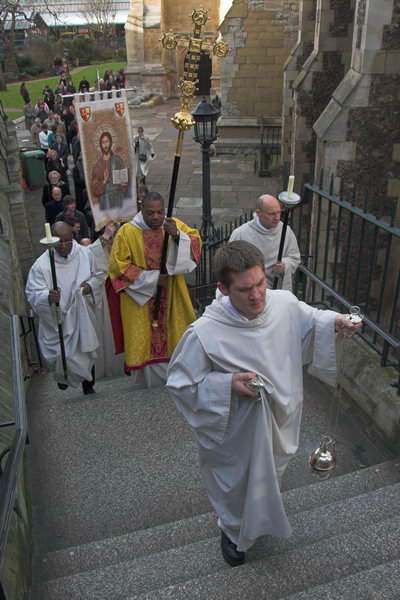
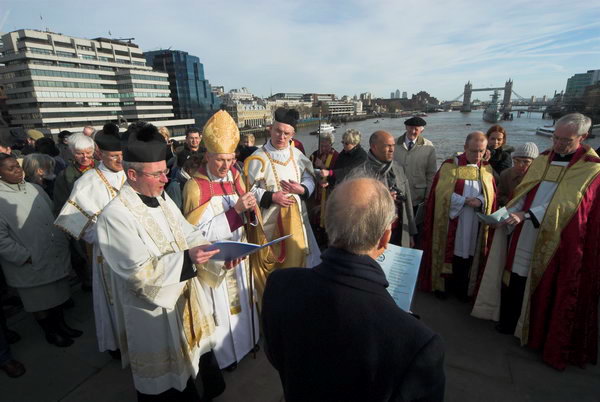
The procession comes from Southwark Cathedral
But the Blessing of the Thames is a recent addition, begun in 2004 by Father Philip Warner when he was appointed to the City of London church of St Magnus The Martyr, inspired by similar ceremonies he had experienced in the Orthodox Church in Serbia.
And is met by those from St Magnus at the centre of the bridge
St Magnus The Martyr was Sir Christopher Wren’s most expensive parish church and the traveller’s route into the City of London across the medieval London Bridge, in use from 1209 to 1831 led directly through its entrance porch under its tower after the church was rebuilt around 1676. Until 1729 when Putney got a bridge it was the only way across the river except by boat downstream of Kingston Bridge.
The church is one of the most interesting in London and well worth a visit, and among its treasures includes a very large modern model of the Old London Bridge. This was completed by ex-policeman David T Aggett in 1987, a year after his heart transplant, and found a willing home here after the Museum of London turned it down. A member and past Steward of the Worshipful Company of Plumbers, Aggett died a year ago at the age of 91.
You can find out more about the various editions of London Bridge from various bloggers including Laura Porter on Londontopia. Close to the south end of the bridge (which had a chapel on it dedicated to St Thomas which was the official start of pilgrimages to Canterbury) was the Church of St Saviour and St Mary Overie, until the dissolution in 1538 part of Southwark Priory and since 1905 Southwark Cathedral.
Processions from both churches met at the centre of the new London Bridge completed in 1972 for a brief service with prayers for all those who work on the river and in particular for those killed close to this point in the 1989 sinking of the marchioness close by, which climaxed with the Bishop of Woolwich throwing a wooden cross into the River Thames to bless the waters.
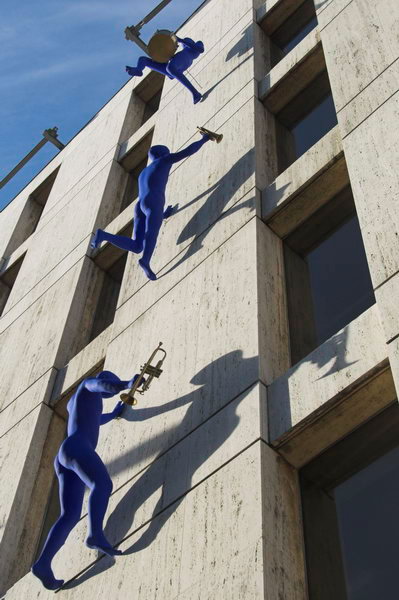
Ofra Zimballsta, Climbers, 1996-8, Borough High St
I’d come up earlier to take a walk around Southwark and Bermondsey and photograph some of the buildings, both old and new, in the area. Back in the 1990s when Desk Top Publishing was in its infancy I had written and published a walk leaflet (now a free download though a little out of date) on West Bermondsey which sold several hundred copies, and it was interesting to visit a part of this again.
#
When first produced, this walk was printed on a dot-matrix printer, though later copies were made on a black and white laser – an HP Laserjet 1100 still in use over 20 years later on my wife’s computer running Ubuntu.
I think I asked 20p for the leaflet, and using cheap third-party laser toners on cheap thin card it cost only a couple of pence to produce, though printing on dot-matrix was slow the laser speeded up things considerably – once the page was in printer memory it rattled off copies fairly quickly.
In 2007 there were few photographers at the Blessing of the River, but blogging was growing fast and more and more people were using camera phones. The following year I wasn’t able to get such good pictures as there were too many people jumping in front of me and obscuring my view. Photographers do sometimes get in each other’s way, but we do try to respect others, something which doesn’t even seem to occur to the newcomers.
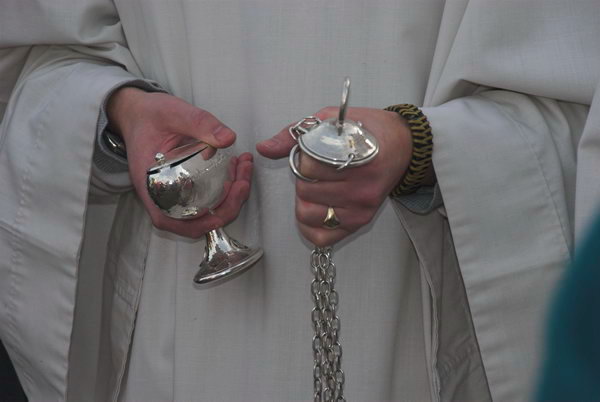
But rather than go for a walk I did go with those celebrating the event and have lunch in the crypt of St Magnus, after which I took a few pictures inside the church, then rather thick with incense.
COP26 was in some respects a great disappointment, or rather would have been had we expected very much to arise out of it. But there were some advances, and just a slight glimmer of hope that it may prompt a little more progress in our efforts to save our future on the planet. But that it happened at all and in the way it did is very much down to the efforts of people on the street to raise awareness of the realities of climate change.
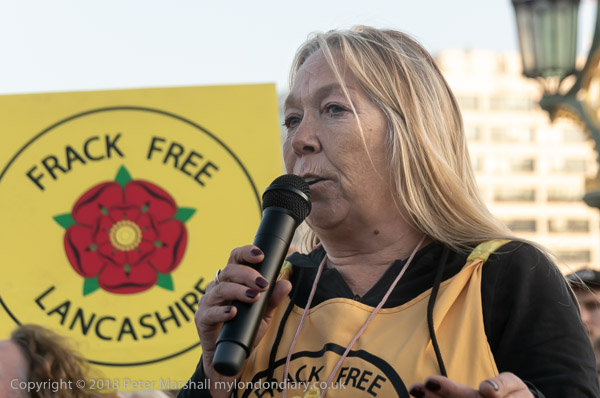
Without groups that have been campaigning for years we would have no hope at all, and whatever people think about some of the policies of Extinction Rebellion, it has been one of the more effective movements in bringing the message to the attention of the media, politicians and the public.
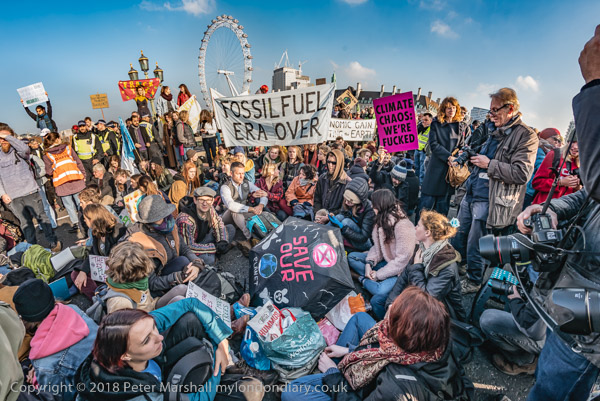
Even in the unfortunately toned down words of the COP26 final resolution, the message from the banner in the assembly at the top of this post is now clear: ‘FOSSIL FUEL ERA OVER’ though it still remains to be seen if it can be brought to an end fast enough for us to survive.
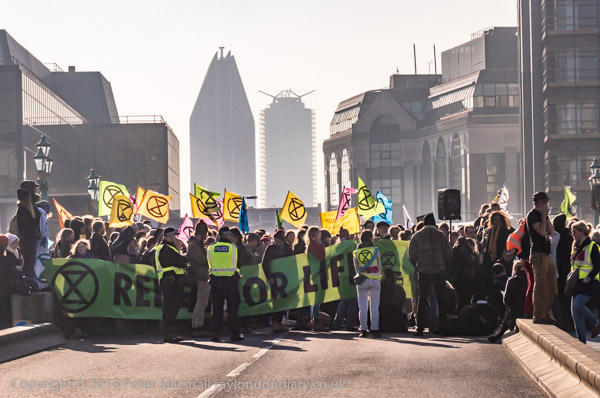
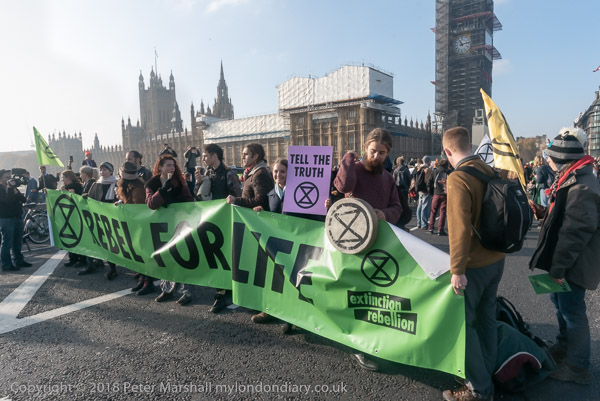
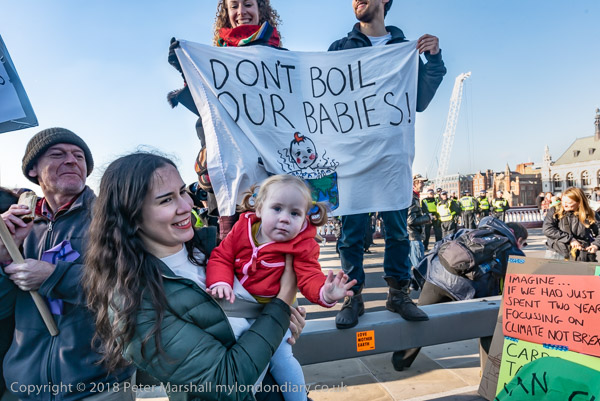
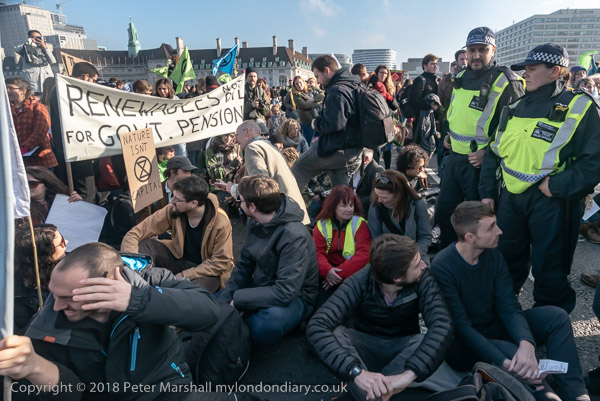
On Saturday 17th November 2018, Extinction Rebellion rebels managed to block five of the bridges in central London: Lambeth, Westminster, Waterloo, Blackfriars and Southwark. It was an ambitious project that brought much of London’s traffic to a standstill and gauranteed extensive media coverage. You can march 50,000 through London and it won’t merit a mention on the BBC unless windows are broken or police injured – but this was something that could not be ignored, and despite the interests of the billionaire media owners, at least some journalists began asking the right questions and writing the right answers.
I tried to photograph events on as many of the bridges as possible, though with no buses able to run in central London this involved rather a lot of walking. In the end I failed to make it to Lambeth Bridge, where some of the more robust actions by police against the protesters took place.
Here’s my description of XR from one of the three posts I made about them that day:
Extinction Rebellion is a non-violent rebellion against the British government for its criminal inaction in the face of the climate change catastrophe and ecological collapse which is currently on course to make human life extinct. They demand the government tell the truth about the climate emergency, reverse their inconsistent policies and work to communicate and educate everyone, that they bring in legally binding policies to reduce carbon emissions to net zero by 2025 and reduce our consumption of all resources, with a national Citizen’s Assembly to oversee the changes and create a real democracy.
More protests will be needed around the world to make politicians do what needs to be done – and I was photographing Extinction Rebellion in London last Saturday when they protested in the annual Lord Mayor’s Show.
My day was made busier as there was another unrelated event taking place that I also wanted to photograph, a Unity against Fascism and Racism march from the BBC to a rally in Whitehall calling for unity against the rising threat of Islamophobia and Antisemitism by far-right groups in the UK, with a level of support for fascism not seen since the 1930s. I missed the start but spent around half an hour taking pictures as it came down Regent St.
More on all these and more pictures on My London Diary:
My last walk in May 1988 ended around the City Road which I walked down to catch the ‘drain’ back to Waterloo. In 1988 Bank Station on the Waterloo and City line still was a part of British Rail, and was one of the ‘London Termini’ for which my ticket from the suburbs was valid. Until it was transferred to London Underground in 1994 it provided a cheap route for me into to centre of the City.
Wesley statue, Wesley’s Chapel, City Rd, Islington, 1988 88-6a-64
Wesley’s Chapel and Leysian Mission at 49 City Road calls itself the Mother Church of World Methodism. Wesley employed the surveyor of the City of London, George Dance the Younger as his architect and the builder was a member of his congregation; the church is Grade I listed despite considerable alterations in the Victorian era and later. When built it was Church of England Church, as Methodism only became a separate church after his death.
The best bit about the Grade II listed statue of Wesley, created in 1891 by Adams Acton is probably the plinth and the wording below the statue ‘THE WORLD IS MY PARISH’. I particularly liked the shadow of the lantern above the entrance on the door below.
Finsbury Barracks, Honourable Artillery Company, City Rd, Islington, 1988 88-6a-65
This Grade II listed ‘castle’ on City Road was designed by Joseph A Jennings in 1857 as a barracks for the Royal London Militia. It later became the home for City of London Territorial Army and Volunteer Reserve, and since 1961 has been part of the Honourable Artillery Company estate.
When I was very young I had a very secondhand and battered toy fort for my toy soldiers, and either it was based on this building or this building had been based on it.
Lakeside Terrace, Barbican, City, 1988 88-6a-56
I think there had just been a shower of rain – and perhaps I had walked into the Barbican to shelter from it and perhaps view the exhibitions in its free spaces. Though I did go also to the major photographic shows that were held there, often taking students to see them. But this walk was in the Whitsun half-term.
But the terrace is clearly wet and there are no people sitting on the many chairs, although a few perch on the low brick walls. At right is the City of London School for Girls.
London Bridge, Southwark, 1988 88-6a-36
My rail ticket could also take me to London Bridge, and my first walk in June on Saturday 8th began there. I went to London Bridge but didn’t cross it, instead staying on the south bank, and taking this slightly curious picture in which the River Thames appears only as a thin rectangle underneath the white rectangle of Adelaide House. When completed in 1925 this now Grade II listed building was the City’s tallest office block, 43 metres – 141 ft – high.
London Bridge, Southwark, 1988 88-6a-33
Looking up into the office block at 1 London Bridge Street it’s hard to distinguish reflection from reality as I’m sure architects John S. Bonnington Partnership intended. Completed two years earlier in 1986 it was still a rather startling building.
London Bridge, Southwark, 1988 88-6a-24
The steps to the riverside walkway go through the corner of 1 London Bridge and over them are some buildings from the Victorian era on the opposite side of Borough High St and the pinnacles of Southwark Cathedral. I seem to have chosen another rainy day for a walk.
Tooley St, Abbots Lane, Southwark, 1988 88-6b-61
I walked east not on the riverside walk, but along Tooley St and photographed this building on the corner of Abbots Lane, a street that has now more or less disappeared and is simply a vehicle entrance to PricewaterhouseCoopers buildin in More London. This former Fire Brigade Headquarters built in 1879, architect George Vulliamy, was for many years the model for other fire stations and the headquarters of the Metropolitan Fire Brigade and its training centre for firefighters. It now houses the Brigade Bar and Kitchen, opened in September 2011 by Chef Founder Simon Boyle, a social enterprise which together with the Beyond Food Foundation gives apprenticeships to people who have been at risk of or have experienced homelessness.
It had been the great fire of Tooley Street in 1861 that led to the formation of the Metropolitan Fire Brigade in 1862, the greatest fire in London since 1666. Many of the riverside warehouses went up in flames over two days and the man in charge of the firefighters, Mr James Braidwood, was killed when a building collapsed. There have been many fires in Tooley St since, and in 1971 Wilson’s Wharf was the site of the ‘Second Great Fire of Tooley St’, with 50 pumps fighting the fire that started in an unoccupied refrigerated warehouse. The area destroyed is now the site of Southwark Crown Court.
These were fairly typical of the tall warehouse buildings that line much of Tooley Street. I’m unable to identify the exact locations of these buildings which don’t quite seem to match any of those left standing. The negative has been badly damaged at bottom right and since it only affects the roadway and a car I’ve not bothered to try to repair it.
The picture shows the large amount of building work that was taking place along this section of the bank by Higgs and Hill and McAlpine. It seems too that barges were being used to take away some of the rubble.
Tower Bridge, Control Room, Tower Hamlets, Southwark, 1988 88-6b-64
I have never understood why quite so many levers were needed to raise two sections of roadway to open the bridge for river traffic. There seem to be two handles to turn around at the end furtherst from my camera and a superfluity of dials at top left.
I think I crossed Tower Bridge and made my way to Tower Gateway for the DLR. The station had opened the previous August and my walk continued from Crossharbour on the Isle of Dogs – in another post. Before the opening of the Jubilee Line this was probably the quickest route there.
Years ago much of my photography was of public events other than protests, partly because there seemed to be fewer protests, or perhaps it was simply harder to find out about when and where they were taking place.
Although social media existed, back in 2005 few groups that were organising protests had began to make much use of it. There were some groups that had web sites on which they published information, and a few wider organisations, particularly Indymedia that had some listings but finding information was still largely a matter of reading printed newsletters and flyposted posters along with lengthy sessions on the web, going through a long list of web sites and searching – and back in 2005 Google had just begun to be the hugely dominant search engine.
But I was also more interested in cultural events, both traditional English events and those that had been brought to us by our migrant communities. And in London many events involved people from all across our now very varied communities, whether their roots were in this country or abroad.
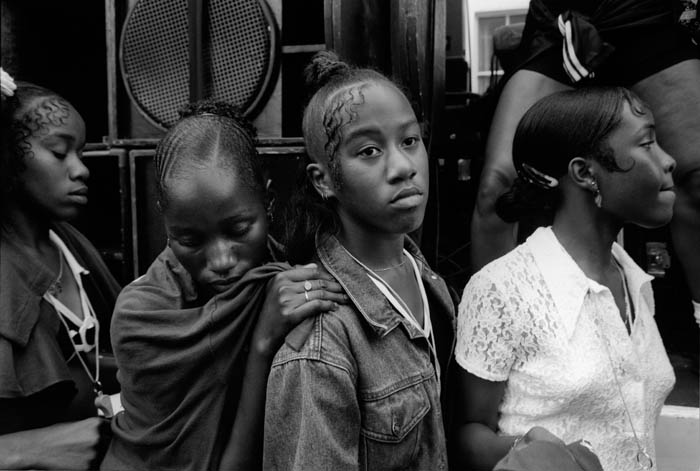
Cultural events change more slowly than political events, and many, particularly religious events tend to follow a set pattern and become less interesting to photograph for me. Though I might still enjoy going, for example, to Notting Hill Carnival after perhaps a dozen times I found I had little new to say. Though it was a knee injury that prevented me from getting there in 2005. I dragged myself painfully to the station, but fell down in agony on the steps and decided it wasn’t a year for dancing and began the painful journey home.
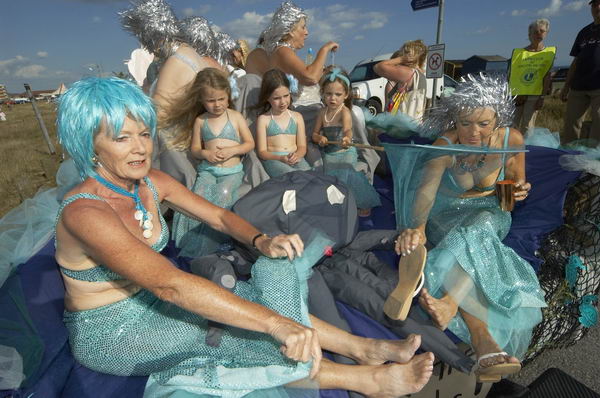
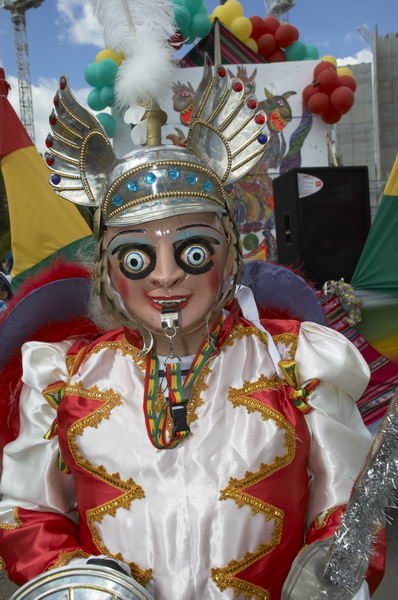
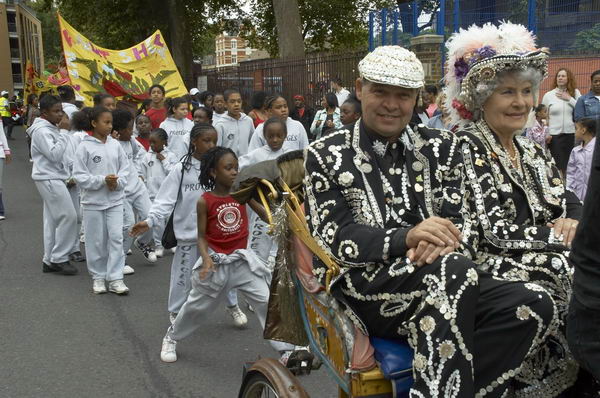
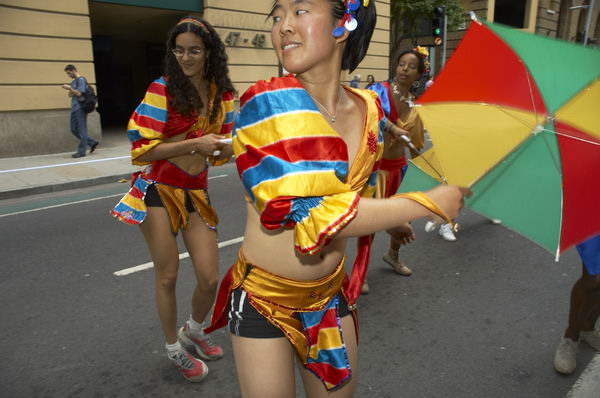
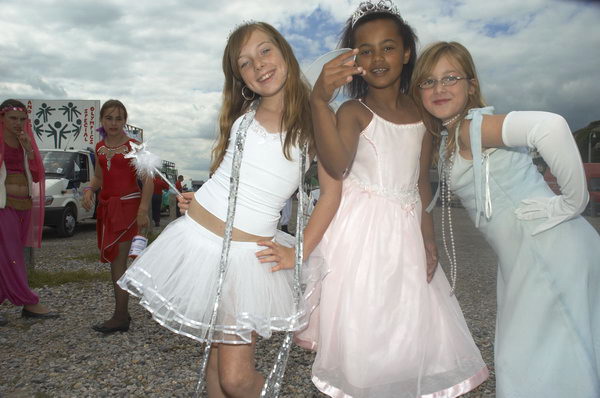
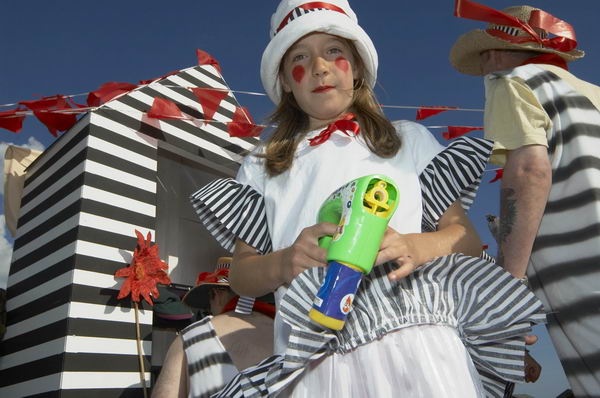
Earlier in the month I’d accompanied fellow photographers to a couple of more traditional English carnivals in Hayling Island and in Hastings, as well as photographing the Shoreditch Festival Parade and the Latino Carnaval del Pueblo in Southwark. The pictures in this post come from those events. That month I also found time to visit Brian Haw and to cover another protest in Parliament Square over new protest laws and one calling for a tax on foreign currency exchange transactions.
Back in 2005, My London Diary was in a slightly less developed state. My comments were still all in lowercase and there are no links to individual events. And although all the pictures on-line are digital colour I also took some pictures in medium format on black and white film.
In 2008 I took part in a show with 3 other photographers, English Carnival, and the web site from this remains on-line. My pictures are a black and white set from Notting Hill in 1990-2001, but those by the others – Paul Baldesare, Dave Trainer and Bob Watkins – are from traditional English events, and include several taken at events I was also photographing.
All photographs on this and my other sites, unless otherwise stated, are taken by and copyright of Peter Marshall, and are available for reproduction or can be bought as prints.
The details of the life and death of St George (as you can read in Wikipedia) are recorded in accounts dating back to around 1600 years ago, though details vary and the Pope in 494 CE who officially made him a saint called him one of those “whose names are justly reverenced among men, but whose actions are known only to God.“
According to the early texts, George was born in Cappadocia, now a part of Turkey, where his father came from, but his mother was a Palestinian Christian. Cappadocians were generally historically regarded as Syrians, though St George’s family are usually said to be of Greek descent. St George became, like his father, a Roman soldier, becoming a member of the elite Praetorian Guard, and was beheaded in the eastern capital of the Roman Empire on 23 April 303CE, 1718 years ago, during Emperor Diocletian’s purge of Christians who refused to recant the faith.
His behaviour and suffering apparently convinced one prominent Roman woman, Empress Alexandra of Rome, possibly the Emperor’s wife – to become a Christian – and to share his fate. The purge failed to have its intended result, and around 21 years after George’s execution, Christianity became the preferred religion in the Roman Empire under Emperor Constantine.
George’s body was buried in Lydda in Palestine and Christians there soon became to regard him as a martyr. Some legends say that his martyrdom resulted in the conversion of not just the Emperors’s wife but 40,900 other pagans.
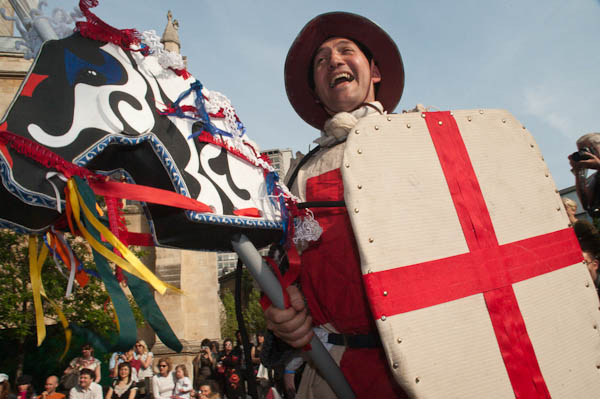
The dragon came along considerably later, only appearing in legends around 700 years after his death, apparently terrorising the city of Silene in Libya, which there is no evidence that St George ever visited. The dragon in my picture above, from a St George’s Day procession in Southwark, seems to have come from Chinatown. But dragons can fly.
The traditional patron saint of England was the last king of Wessex, Edward the Confessor who died in 1066, and it was only in 1552 that as a part of the English Reformation that St George officially became the only saint recognised in England, although along with various other countries English armies adopted him during the crusades and in our battles with the French in the Hundred Years War from 1337-1453. Surprisingly we didn’t drop St George although we lost rather badly.
St George’s Day remains an official feast celebrated by the Church of England, usually, though not always, on April 23, as Easter sometimes interferes. Rather more is made of it by some other countries and churches.
The St George’s cross, widely used by football supporters and right-wing extremists in England, comes from the 10th century in the city of Genoa in Italy, becoming used in England in 1348 when Edward III founded the Order of the Garter and made St George its patron saint. It has never been officially adopted as the national flag, though now widely used as such. It is of course a component of many other flags, including the UK’s national flag.
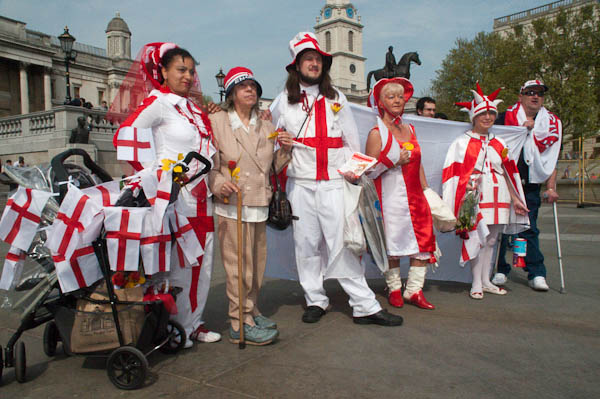
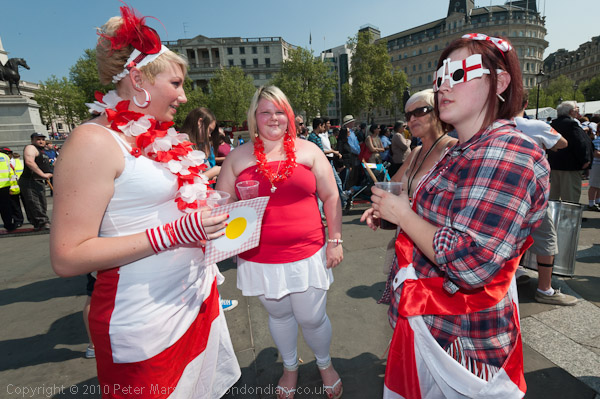
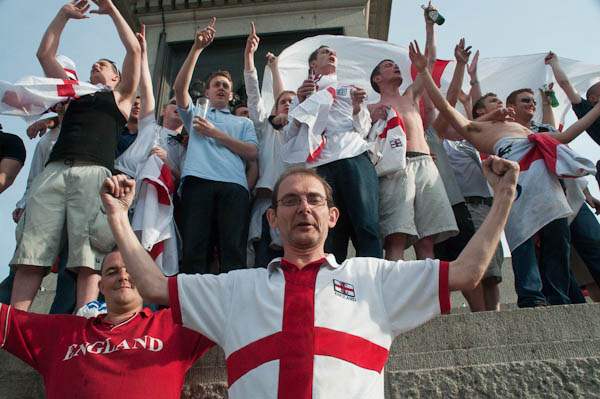
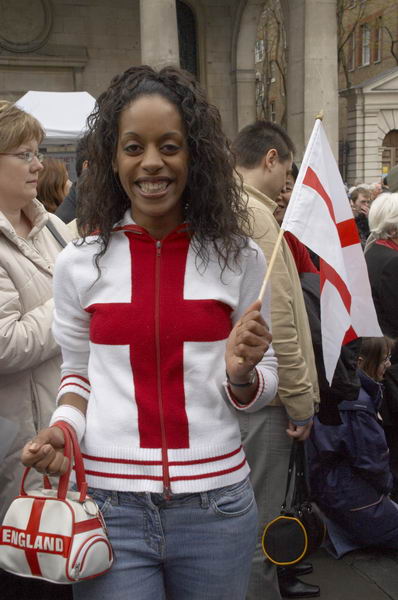
Over the years I’ve photographed many different celebrations of St George’s Day in and around London, and the pictures come from a few of these in 2005, 2009, 2011 and 2016.
All photographs on this and my other sites, unless otherwise stated, are taken by and copyright of Peter Marshall, and are available for reproduction or can be bought as prints.