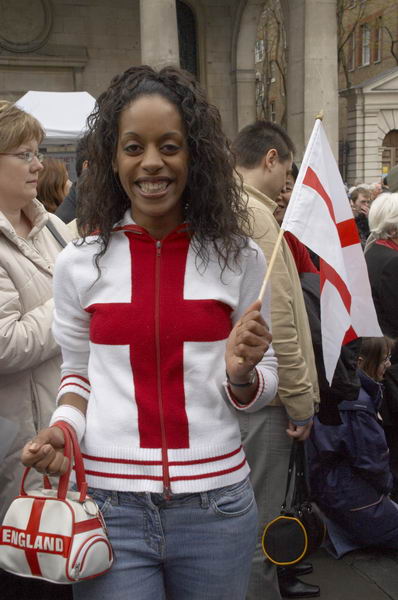
Cyprus Property, a Windmill and a Regatta: On Sunday July 9th 2006, after photographing a protest over property disputes in Cyprus I went to the Brixton Windmill Festival and then on to Kingston Regatta and walked to Hampton Court. I wrote at some length on My London Diary and you can read it below with more normal capitalisation and the odd other correction.
Cyprus Property March
Park Lane
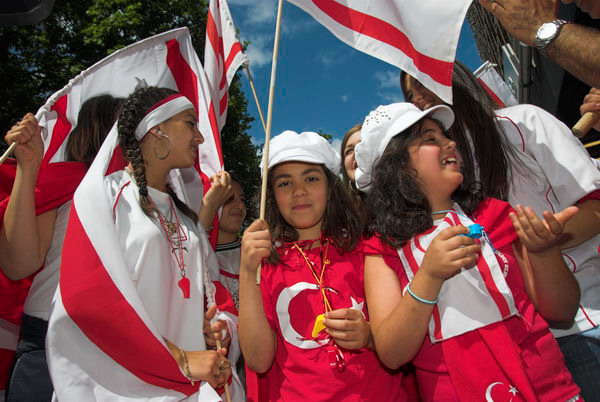
Turkish and Greek Cypriots lived together on Cyprus for many years.Three years after the island became independent in 1960, fighting started and the Turkish Cypriots were thrown out of their official positions. There were many killed in the fighting in the following years, and in 1974 both Greek and Turkish troops became involved.
Since then the island has been effectively divided into two, with the Turkish Cypriots in Northern Cyprus. Many Turkish and Greek Cypriots had to leave their homes and move to the other side of the de facto border, taking over properties vacated by those moving in the opposite direction.

Recently the situation has become more complex, with Cyprus being admitted to the EU in 2004, despite its split status. The UN had set up a re-unification plan that was approved by the Turkish population, but rejected by the Greeks. Entry to the EU has however meant that Greek property claims are now being taken up in Southern Cyprus and can then be enforced in other EU countries, including the UK.
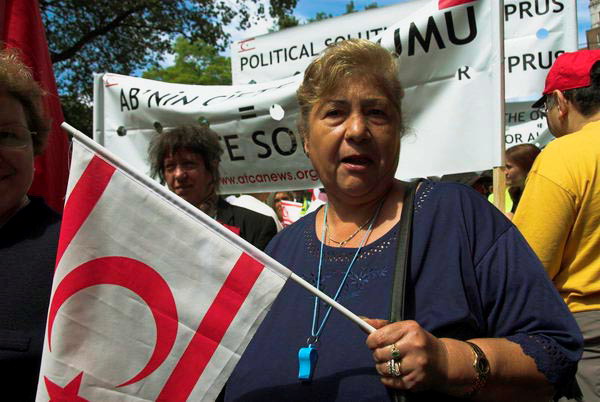
One such case concerns the Orams, an English couple who bought land and built a villa on it in Northern Cyprus. They bought the land from a Turkish Cypriot who had received it in exchange for property he had to leave in southern Cyprus in 1974. The land had belonged to a Greek Cypriot who took the matter to a court in southern Cyprus recently, obtaining an order against them that they should demolish the house and pay damages (which the Orams are appealing against.) Although the judgement cannot be enforced in northern Cyprus, as this is still under Turkish control, the lawyers are trying to enforce it in the UK courts against the UK assets of the Orams.
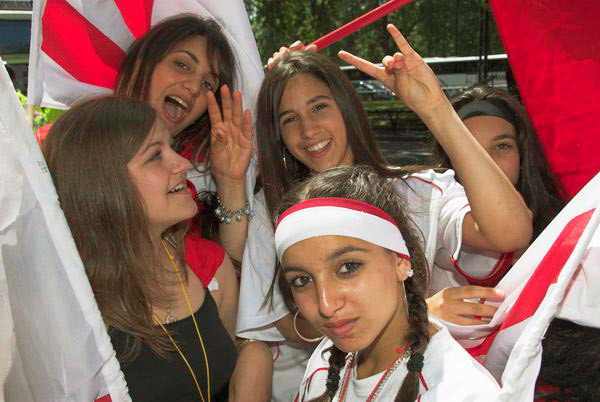
Settlement of the property issues requires Greek and Turkish Cypriots to come together produce a plan for peace in the divided country. It would then be possible for a suitable property commission – such as that already set up under the advice of the EU in northern Cyprus – to work through all the cases.
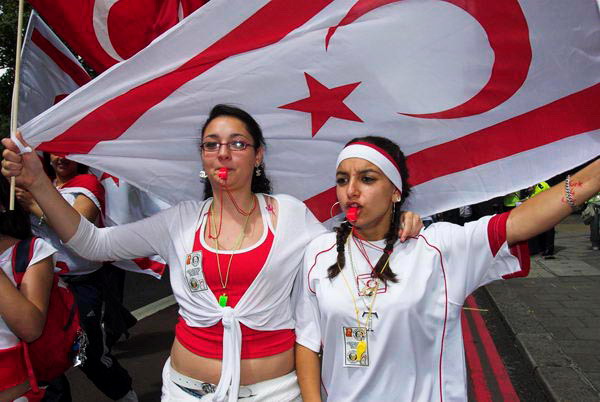
The marchers were asking for the support of the British government in refusing to accept the decision of the Cyprus court on ‘public policy’ grounds, and to make further attempts to establish a proper peace plan that would allow proper resolution of property and other disputes in the island.
[Following a series cases with appeals to the the High Court, the European Court of Justice, and back to the UK Appeal Court, the Orams lost their case and apparently abandoned their property in Cyprus in 2010. Property issues in Cyprus remain in a mess but are reported to be moving very slowly towards an amnesty in 2026.]
More pictures on My London Diary.
Brixton Windmill Festival, 2006
Blenheim Gardens, Brixton
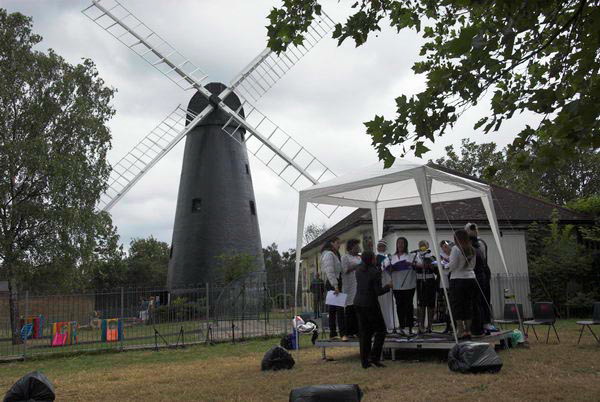
The Brixton Windmill Festival wasn’t music at the well-known pub, but at the real windmill 50 yards further on, built by a Mr Ashby many years ago to take advantage of its hilltop site to get the energy to grind his corn.
When I first visited around 30 years ago it had been recently restored by the GLC and I climbed up the rather rickety ladder holding the small occupant of the pushchair I had taken with me for a view of the surroundings. Since then it has been vandalised and partly restored, and though it’s still an impressive site, you are only allowed upstairs on very special occasions (and probably after signing a a form in triplicate saying you take your life entirely into your own hands.)
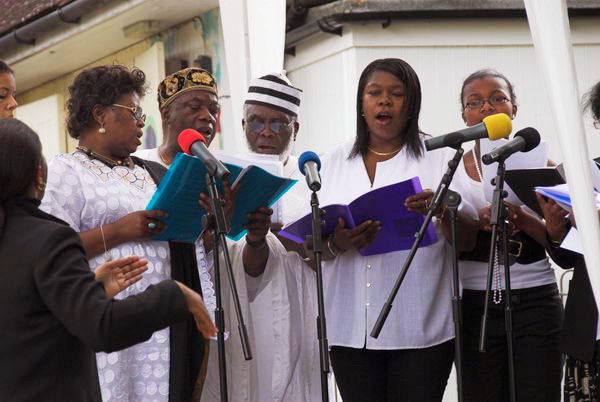
But it is still a useful site, a green patch in which to sit or stroll, some swings for kids, a cup of tea, and a reminder of past ages. There was some music at the festival, a group of local singers while I was there, as well as stalls from a number of local organisations, including the local history society, the credit union and also the police and others. I hope a few more people came after I left.
Kingston Regatta and Hampton Court
Kingston-upon-Thames
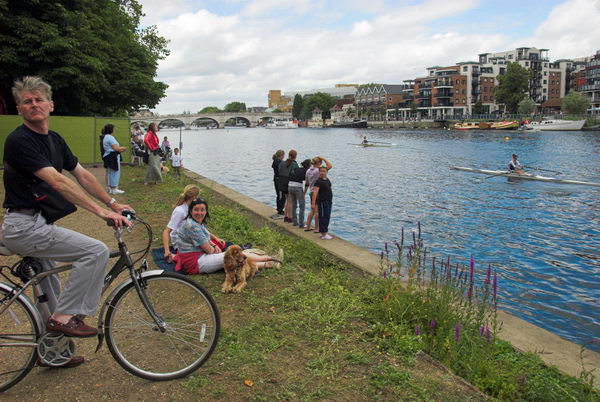
It was a pleasant afternoon for a walk by the Thames, and although the shopping streets of the town were hot and bothered as usual, once out on the bridge it was a different world. the river itself was rather busier than usual, with over half its width buoyed off for the regatta, with pairs and trios of boats being stroked lustily downstream chased by umpires in powered catamarans.
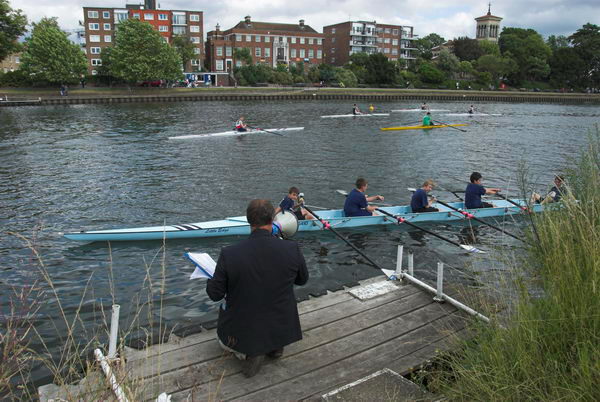
I walked past the regatta enclosure and stood a few minutes watching by the bank before continuing along the riverside path. The start and marshalling area were a little more interesting as the officials tried to sort out the various teams, heats and finals. There were quite a few grammar, not to mention Eton and a few other posh schools, but not a single comprehensive or secondary mod while I was in earshot.
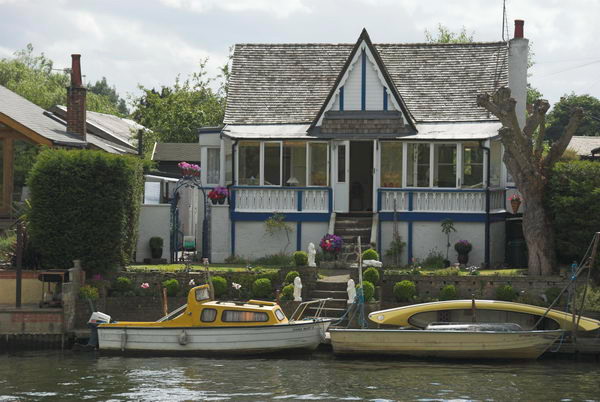
It turned out to be a rather longer walk to Hampton Court than I’d imagined (for once I’d not bothered with a map) and I was tired [and late] when I got to the river exit from the flower show.

There were a few people carrying rather straggly looking plants and a couple of photographers already lying in wait to photograph them, but I couldn’t really work up a great deal of interest. so I walked on and caught the bus home.
[I’d been keen to go to Kingston as I was hoping to get more local pictures for the show ‘Another London’ with Mike Seaborne and Paul Baldesare which was to be in Kingston Museum at the start of 2007. You can still see all the pictures by all three of us on-line at the Another London web site, including one from the Regatta.]
More pictures on My London Diary
Flickr – Facebook – My London Diary – Hull Photos – Lea Valley – Paris
London’s Industrial Heritage – London Photos
All photographs on this page are copyright © Peter Marshall.
Contact me to buy prints or licence to reproduce.