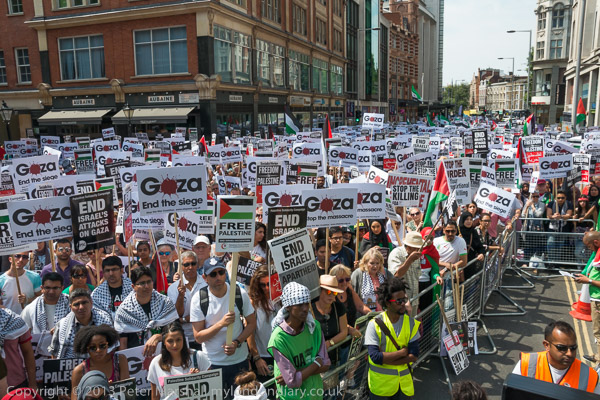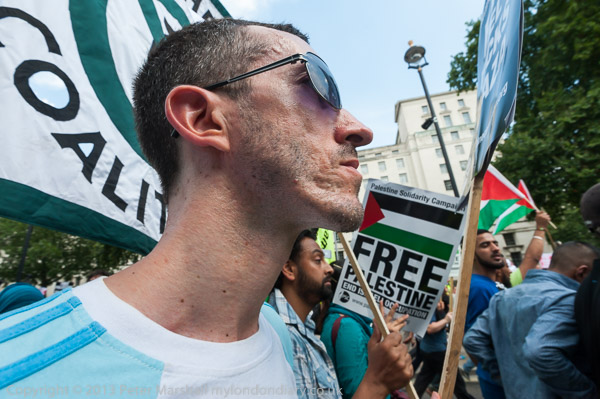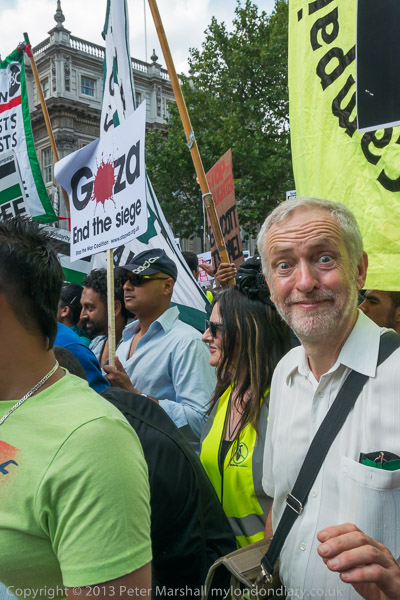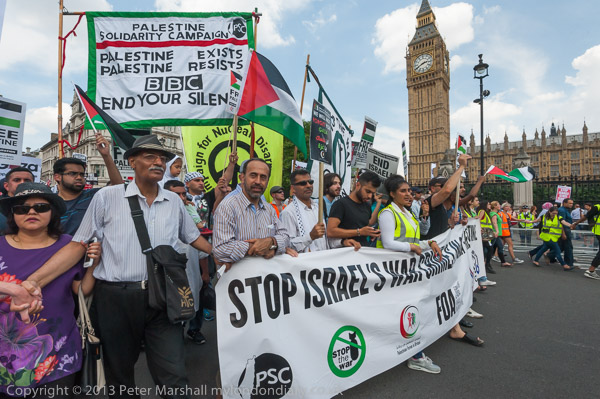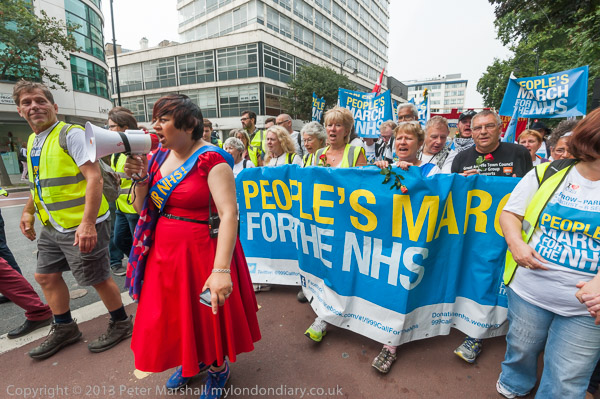
End Workfare & more – 3rd March 2012

Workfare is a controversial policy first begun in the UK in the 1990s by the Conservative government of John Major, although it developed from earlier schemes which put active pressure on claimants to seek work. Under various different programmes and names workfare continued under New Labour, but it was under the Tory-led coalition in 2011-2 that it came into widespread use.

Workfare is used to describe schemes where in order to receive unemployment benefit people have to undertake unpaid work, either in the commercial or public sector or for charities. In 2011 the coalition government announced that those who had failed to find jobs after being unemployed for some time would have to work unpaid for 30 hours a week for six months, setting up a number of schemes to this end.

THe proponents of ‘workfare’ say that those forced to take part in these schemes benefit from the experience or working and that it will prepare them for paid work and that the experience will make it easier for them to find employment. They say it isn’t unfair to ask people to do something in exchange for the benefits they receive.

Academic studies by the DWP of international workfare schemes had shown that these claims were unsound. There was little evidence that workfare increased the chances of finding work, and that it might even reduce this, firstly because if people were on workfare they had less time to look for jobs, but also because workfare placements seldom provided the kind of skills and experience that potential employers were looking for.

Trade unions and others point out that every person on workfare actually cuts out a job that would otherwise be carried out by a paid employee – so there are fewer jobs for those seeking employment. Workfare is largely a subsidy to employers, supplying them with free labour – essentially a form of slave labour. Workfare schemes – whether in the private sector or public or charity work – fail to provide any of the employment status and protection that employees or workers receive.

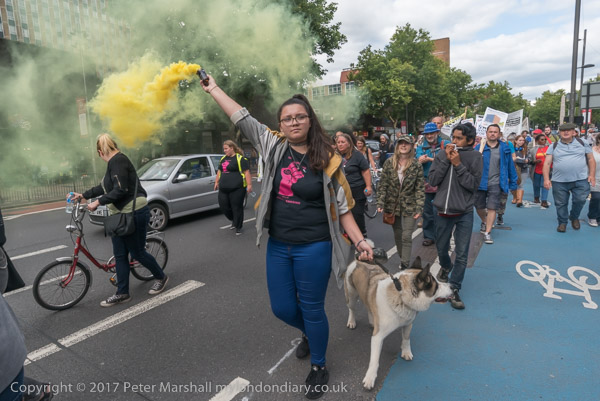
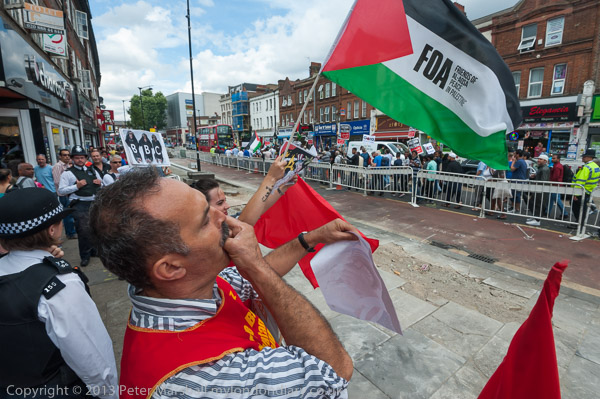
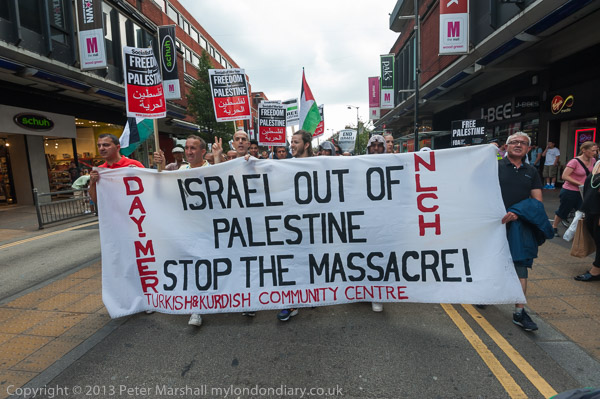
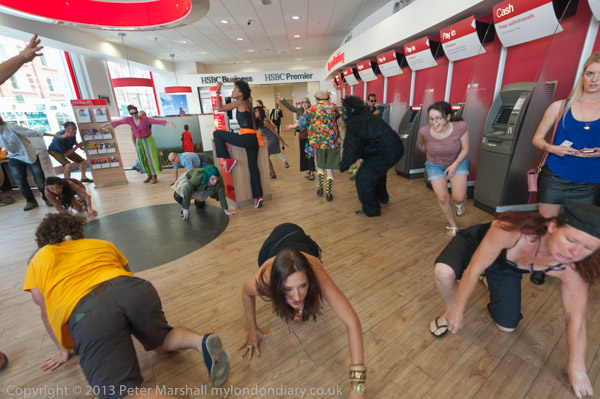
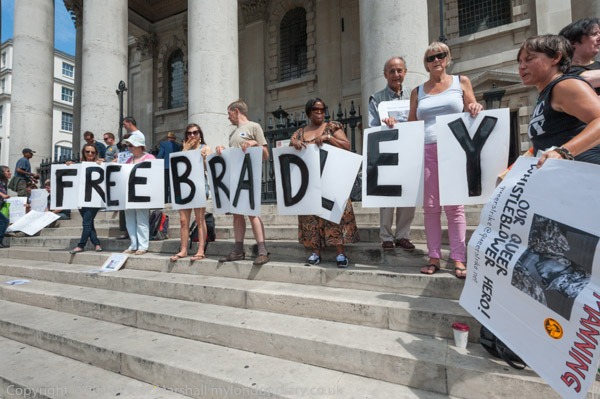
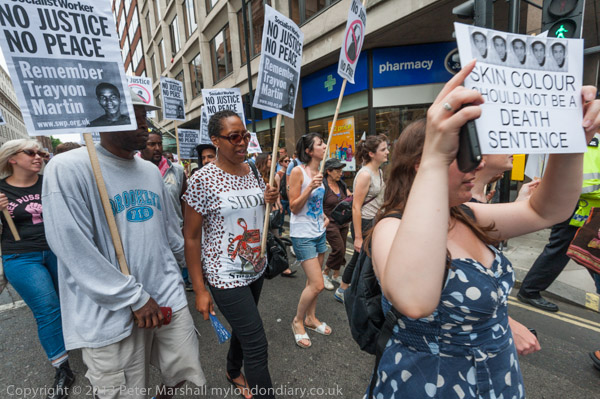
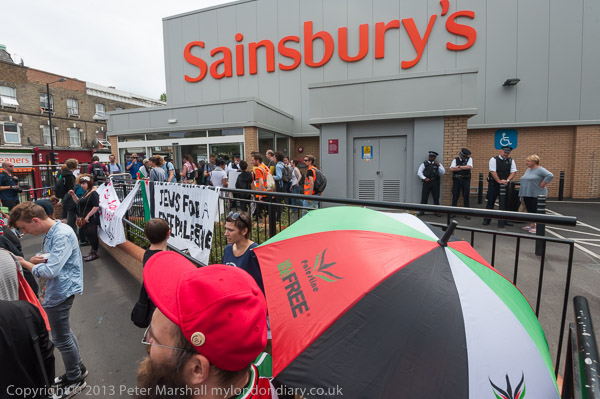
Strong negative reactions to these schemes – such as those demonstrated by the Boycott Welfare protest in Oxford St, London I photographed on Saturday 3rd March 2012 – led to many companies withdrawing from the scheme, and others ending talks with the government about taking part in it. According to Wikipedia, the campaign group ‘Boycott Welfare’ ‘very successful in making companies and charities pull out of “workfare”.’ By August 2016, “more than 50 organisations have ended their involvement in workfare, because of negative publicity.”

But workfare still continues, and as Boycott Welfare write on their web site, “Workfare forms a key tool of ‘compliance’ with the regime of Universal Credit, and is enforced via sanctions.” As well as Universal Credit, workfare also continues under the government’s Sector-Based Work Academies, Work and Health Programme and Youth Obligation schemes.


Also on the same day I photographed other events. Firstly the Million Women Rise March, a women-only march through the centre of London against domestic abuse, rape and commercial sexual exploitation and for the prevention of abuse and support and protection for women. I was shocked to learn from a member of one of the more active women campaigning groups that has been the among the leaders in previous celebrations around International Women’s Day and had taken part in previous years that they had been told they were not welcome on the march, though I think they have taken part in more recent years.

I left that march as it went down Oxford St on its way to a rally at Trafalgar Square and took the tube to St Paul’s where Greeks were protesting in solidarity with students and workers in Greece against the austerity measures being imposed as a part of the Eurozone rescue package for the country. They had planned to protest at the Occupy London camp, but that had been cleared a few days previously, but some of the occupiers had returned to hold a general meeting on the St Paul’s Cathedral steps.

More on these events from Saturday 3rd March on My London Diary:
Greeks Protest At St Paul’s
Million Women Rise March
Boycott Workfare – Oxford St


All photographs on this and my other sites, unless otherwise stated, are taken by and copyright of Peter Marshall, and are available for reproduction or can be bought as prints.
2 March 2002: Stop the War, Hands off Iraq

Back in 2002, protests were still in black and white – or rather I was still using film for my photographs and the library I was putting pictures into was still only taking colour pictures as transparencies – something I had given up taking seventeen years earlier as I found colour negative far better to work with.

For the huge Stop The War protest on March 2nd, 2002 against the war in Afghanistan and the forthcoming invasion of Iraq I was actually working with three cameras, one with black and white film, a second with colour negative and the third a panoramic camera also loaded with colour negative film. Although I contact printed the developed films from all three, it was only selected images from the black and white work that was printed and went to the library.

Some day I hope to get around to printing some selected images from the seven or eight colour films I exposed on that day, but at the time I had no particular incentive to do so. It was difficult for me to use colour even on the web site, as my flatbed scanner at that time was a monochrome only scanner – and all the pictures on My London Diary from this event are black and white scans from the black and white prints I made to send to the library.

There are a few colour pictures from this era on my web sites, mainly those taken on a pocket-sized 2Mp digital camera I had begun to use as a notebook a year or two earlier, but the images were generally unsuitable for publication. Prints from them at much more than postcard size were poor quality.

Around this time I did get my first film scanner, but it was very slow to use and the quality wasn’t great. And at the end of 2002 I began using my first DSLR, the 6Mp Nikon D100, and soon began submitting digital images to agencies that would handle digital work.

Newspaper reports at the time rather followed the police in giving figures of 10-15,000 people at the protest, though I think the true number was at least twice this. As I reported, “people were still leaving hyde park at the start of the march when trafalgar square was full to overflowing two and a half hours later.” It takes more than 15,000 to fill Trafalgar Square and the tailback over the 2 mile route adds considerably to that number.

As I wrote back then:

police estimates of the number were risible as usual – and can only reflect an attempt to marginalise the significant body of opinion opposed to the war or a complete mathematical inability on behalf of the police.

In my comments I also quote Tony Benn telling us photographers at the start of the march that it wasn’t worth us taking his picture, “it won’t get in the papers unless i go and kick a policeman” and he was quite right. They didn’t report his speech either, in which he said that for the first time in his life he though the situation was so desperate that he was advocating non-violent resistance, calling for everyone to stop work for an hour at the moment the bombing begins. “Stop the buses. Stop the trains. Stop the schools. It’s all very well going to Downing Street, I’ve spent half my life at Downing Street, in, outside Downing Street. It has to be more than that, its got to be something we take up in every town and village.” This he said would get the debate going. His speech received a huge reception from the crowd.

It was hardly a very radical suggestion – and after the bombing started it would have been too late. But had ‘Stop The War’ called for similar action before the parliamentary debate – and not just another A to B march planned months in advance – it might have made a difference. The message that this was simply a war for control of oil resources and would be a disaster for the region was getting through – and there were regular protests in towns and villages across the nation, including in the true-blue town where I live, and more radical actions could have prevented the UK joining in the US action.

More at http://mylondondiary.co.uk/2002/03/mar.htm


All photographs on this and my other sites, unless otherwise stated, are taken by and copyright of Peter Marshall, and are available for reproduction or can be bought as prints.

The Spice of Life

Perhaps the hardest thing I’ve found about the last eleven months has been the lack of variety. I’ve been fortunate to probably avoid the virus – I was quite ill early in March 2020 but my symptoms didn’t match those then thought to typify Covid-19, though they did match some of those being reported by Covid sufferers – and none of my family or close friends have died from it.

But days mainly spent at home in front of a computer screen have followed days mainly spent at home in front of a computer screen relentlessly, though I have tried to get out for walks or bike rides most days. As someone of an age and medical condition that makes me vulnerable I decided not to travel up to London on public transport, although as a journalist I count as a key worker and could have done so. Apart from usually solitary exercise (occasionally a walk with my wife on Sundays) I’ve made a couple of trips out for pub meals with family or friends when these were allowed, and a few short journeys for medical and dental appointments – including most recently my first Covid vaccination.

There’s Zoom of course, and I hate it, though taking part in a few regular events. It’s a little better on my desktop computer which hasn’t got a camera, but on the notebook or tablet I find it disconcerting to see myself in close-up (and sometimes move out of frame and sit in a more comfortable chair watching the screen from a distance.) It’s perhaps more seeing the others, mainly in head and shoulders close-up that makes me uncomfortable with Zoom; in real life we would be sitting around at a sensible distance, seeing each other at full length and as a part of the overall scene, looking away when we want to at other things. Not those relentless talking or muted full-face heads.

Tuesday 24th February 2009 wasn’t a typical day, and that’s really the point. Few days then were typical. I caught the train to Waterloo and took a bus across to Aldwych, a short journey but faster than walking. A short walk then took me to the Royal Courts of Justice where protesters were supporting the application for judicial review by Palestinian human rights group Al-Haq challenging the government’s failure to fulfil its obligations with respect to Israel’s activities in Palestine.

It was Shrove Tuesday, and from the Royal Courts another bus took me on one of my favourite central London bus journey, up Fleet St and Ludgate Hill to Bank, from where I hurried to Guildhall Yard to the Worshipful Company of Poulters Pancake Races. It perhaps wasn’t one of my better attempts to photograph the event, perhaps because I tried too hard to show the actual running and tossing of pancakes.

I couldn’t stay for the finals of the pancake race but hurried down to Mansion House for the District and Circle Line to Westminster to meet postal workers as they came out of a rally at Methodist Central Hall to protest at government plans to part-privatise the postal service and then proceeded to a short protest in front of Parliament.

There was nothing in my diary for the next few hours, so I took the opportunity to jump onto the Jubilee Line to Stratford and then walk towards the Olympic site for one of my occasional reports on what was happening in the area – which I had been photographing since the 1980s.

I made my way through the Bow Back Rivers, photographing the new lock gates at City Mill Lock. The Olympic site was sealed off to the public by the ‘blue fence’ but I was able to walk along the elevated path on the Northern Outfall Sewer to take a panoramic view of the stadium under construction. It was rather a dull day and not ideal for such wide views with such a large expanse of grey sky.

I took the Central Line back to Oxford Circus for the March of the Corporate Undead, advertised as a “Zombie Shopping Spree” along Oxford Street from Oxford Circus to Marble Arch, complete with coffins, a dead ‘banker’, posters, various members of the undead and a rather good band.

I left the zombies at Marble Arch where they were hanging an effigy of a banker and hurried to my final appointment, a London Bloggers Meetup. The evening’s meeting was being sponsored by Bacardi who were supplying free drinks, including blue and green Breezers which I thought would have been rather suitable for the zombies, but fortunately there was also free beer. I probably took a few pictures, but haven’t published them.

All just a little more interesting than staring at a screen, though there was rather a lot of that to do when I finally got home.

March of the Corporate Undead
Olympic Site Report
London Olympic site pans
Keep the Post Public
Poulters Pancake Race
Al-Haq Sue UK Government


All photographs on this and my other sites, unless otherwise stated, are taken by and copyright of Peter Marshall, and are available for reproduction or can be bought as prints.

Kyoto & One In Love – 2005

The texts from two posts from My London Diary for Saturday 12 Feb 2005, sixteen years ago. I’ve had to change the formatting a little to fit this site, but otherwise the text is identical. There are more pictures from each event on My London Diary.

Campaign against Climate Change Kyoto Climate March

London, 12 Feb, 2005

When i talked about the dangers of increasing co2 emission and the need to cut down use of fossil fuels 35 years ago, i was a crank. now everyone except the usa oil lobby and their political poodles recognises that climate change is for real. even blair has recognised it as the most vital issue facing us, threatening the future of the planet, although actually taking effective action still is a step too far for him. however he did call for a conference to examine the problem, which told him and us that we had perhaps ten years to take action before it would be to late.

Caroline Lucas

kyoto is history now thanks to the US boycott, (although it comes into effect this week), but it should have been the first inadequate step on the road to action. every journey has to start somehow, and even a half-hearted step is better than none, and would have led the way to others. what got in its way was texan oil interests, whose political face is george w bush.

i’ve photographed most of the campaign against climate change’s kyoto marches over the past few years. this one was probably the largest, and certainly excited more media interest, truly a sign that the issue has become news.

starting in lincoln’s inn fields, the march stopped first outside the uk offices of exxonmobil, on the corner of kingsway, for a brief declaration, then for a longer demonstration outside the australian high commission in aldwych (with guest appearances by ‘john howard’ and an australian ‘grim reaper’ with cork decorated hat), before making its way past trafalgar square and picadilly circus to the us embassy.


O-I-L One in Love

Reclaim Love, Eros, Picadilly Circus, London, London, 12 Feb, 2005

i left them in picadilly and returned to eros, where o-i-l, one in love, were organising a small gathering to “reclaim love” and “send love and healing to all the beings in the world” on the eve of valentine’s day. it’s something we could all do with, and it was good to see people enjoying themselves around the statue of eros, in what is usually one of the most depressing spots on london’s tourist circuit.

there was the samba band again, rhythms of resistance, (hi guys) and dancing and people generally being happy and friendly and free reclaim love t shirts and apart from the occasional showers it was harmless fun. rather to my surprise, the police either didn’t notice it or decided to ignore it, an unusually sensible strategy.


More pictures of both events on My London Diary.

This year there can be no street party at Eros in Piccadilly Circus, but Venus CuMara invites you to celebrate the 20th anniversary of Operation Infinite Love, Global Annual Love and Peace Meditation/street party by joining her on her Youtube ‘love stream / live stream/ life stream’ Global Love Meditation at 3.33 pm on St Valentine’s Day, Sunday 14th February 2021.

“MAY ALL THE BEINGS IN ALL THE WORLDS BE HAPPY AND AT PEACE”


All photographs on this and my other sites, unless otherwise stated, are taken by and copyright of Peter Marshall, and are available for reproduction or can be bought as prints.

A Busy Monday

Kashmiris call for independence

Monday 11th of February 2019 was an unusually busy day for me covering protests in London, with several unrelated events taking place across Central London.

My day began outside in Marsham St, where groups outraged at the callous hostile environment introduced by Theresa May as Home Secretary from 2010 to 2016 and carried on by her successors Amber Rudd and Sajid Javid (and of course from later in 2019 by the despicable Priti Patel) held a mock trial of the the Home Office.

The Home Office were represented by a figure in Tory blue

The Home Office runs a violent, racist, colonial, and broken asylum, detention and deportation regime which treats refugees and asylum seekers as criminals, judged guilty without trial and often faced with impossible hurdles as they attempt to prove their innocence and claim their rights. It puts pressure on police and the CPS to launch false prosecutions – such as that of the Stanstead 15 who peacefully resisted an asylum flight and were charged and convicted under quite clearly ludicrous and inapplicable terrorism laws – and whose conviction was recently quashed on appeal.

Two years ago I wrote:

There were testimonies from individuals, groups and campaigns about suffering under the vicious system of rigged justice, indefinite detention, ill-treatment and arbitrary arrest and deportation. Two judges watched from their bench and those attending were members of the jury; I left before the verdict, but it was never in doubt.

People’s Trial of the Home Office

I left early to cover a protest at India House in Aldwych by the Jammu Kashmir Liberation Front calling for freedom, there on this day as it was the 35th anniversary of the hanging by India of Maqbool Bhat Shaheed in 1984. The population of Jammu and Kashmir is around 12.5 million, and India has over 800,000 troops in Kashmir, who shoot to kill, torture, rape and burn homes with impunity, killing over 100,000 Kashmiris since 1988. More recently India has even tightened its control over Kashmir, getting rid of the constitutional limited autonomy of the area, politically integrating it with India although this seems unlikely to lessen the continuing fight of the Kashmiri people for independence.

Later I photographed a protest by a second group of Kashmiris, the Jammu Kashmir National Awami Party UK, calling for the remains of Maqbool Bhat Shaheed to be released and for independence for Kashmir.

In late afternoon, private hire drivers came to London Bridge in their cars to protest against the decision by Transport for London (TfL) to make them pay the London congestion charge. London’s traditional Licenced Taxis – ‘black cabs’ – will remain exempt in what clearly seems unfair discrimination.

Minicab drivers have been organised by the International Workers Union of Great Britain (IWGB) into the United Private Hire Drivers (UPHD) which includes the British Bangladesh Minicab Drivers Association, the Minicab Drivers Association and the Somali All Private Hire Drivers, SAPHD. Most private hire drivers are from Black, Asian and minority ethnic groups while black cab drivers are almost entirely white and the UPHD claim that TfL’s decision is a case of race discrimination.

London’s Licensed Taxi system dates back to the era of horse-drawn vehicles (Hackney Carriages) and seems largely inappropriate now in the age of smart phones and sat navs. ‘Plying for hire’ creates both congestion and pollution on our overcrowded city streets, and is now unnecessary when cars can be summoned by phone, and good route-planning software with real-time traffic information out-performs the archaic ‘knowledge’ routes.

The drivers parked on London Bridge and blocked both carriageways, then locked their vehicles to march along the bridge and hold a rally, then marched to hold a noisy protest outside City Hall. From there some went to Tower Bridge to block that, but were persuaded by the UPHD stewards to leave and return to their vehicles.

UPHD drivers protest unfair congestion charge
Kashmir Awami Party call for Freedom
Kashmiris call for freedom
People’s Trial of the Home Office


All photographs on this and my other sites, unless otherwise stated, are taken by and copyright of Peter Marshall, and are available for reproduction or can be bought as prints.

Save the NHS – 3 Feb 2018


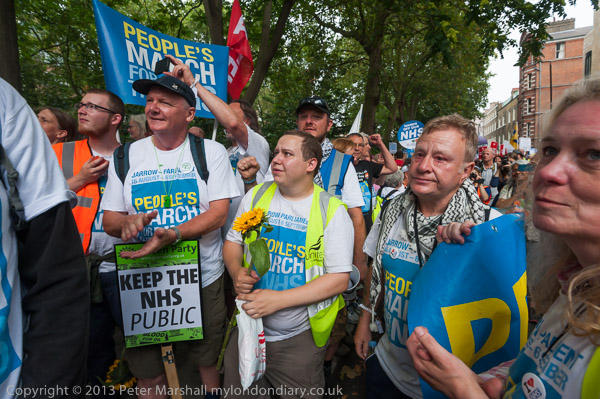
We didn’t have Covid in 2018, but the Tory Government was busy laying the groundwork that would lead to our current 100,000 deaths and counting as a part of their longer term intention to privatise the NHS. It looks likely that the total excess deaths due to the virus will rise to over 200,000 before the outbreak is tamed to a fairly small continuing trickle, mainly then killing those who refuse vaccination.

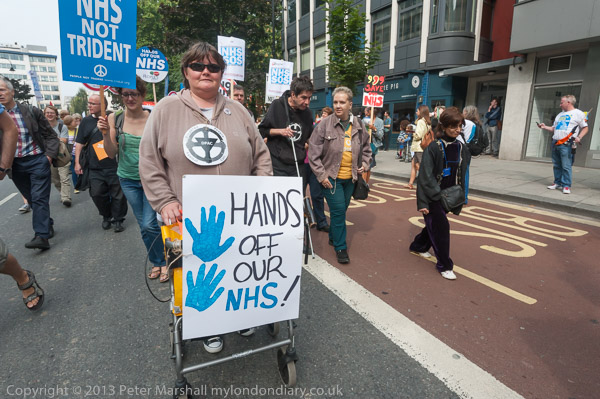
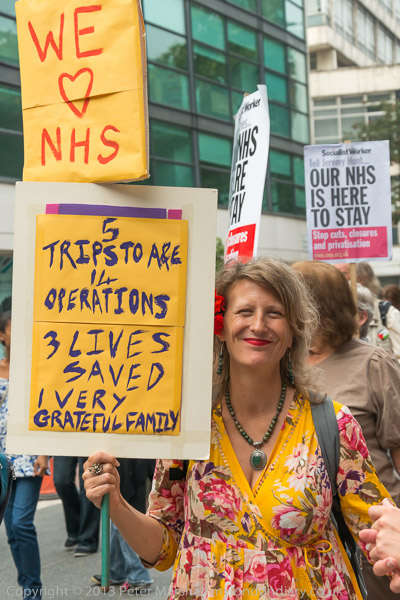
Tens of thousands marched in support of the NHS through London on 3 February to a rally at Downing St calling on the Government to stop blaming patients, nurses, doctors, immigrants, flu and the elderly for the crisis in the health service and to fund it properly and bring it back into public hands from the waste and demands of private profit.

Despite warnings from many in the health sector of the dangers which would arise from any major pandemic, the government ignored many of the warnings and recommendations of the 2016 Exercise Cygnus, which had simulated a flu pandemic causing as many as 400,000 excess deaths, as well as the experience from other countries around the world in dealing with epidemics.

Over a long period, under Tories and New Labour, the increasing outsourcing of services has damaged the efficiency of the NHS and created dangerously low standards of hygiene, while expensive PFI building contracts have left many hospital trusts with impossible long-term debt repayments. Cutting the number of beds was a way to ease the financial problems, but left hospitals unable to meet the extra demands of normal winters, let along Covid.

Cutting bursaries for nurse training exacerbated the shortage of nursing staff, and over the longer term we have failed to provide training places for sufficient doctors, relying increasingly on those trained abroad, both from the EU and also from countries with greater need of doctors than the UK. And changes to pay and conditions, particularly for junior doctors have led to more UK trained doctors and nurses finding work in other countries.

Back in 2018 I pointed out:

Many in the Conservative Party have financial interests in healthcare companies and their policies are clearly designed to carry out a creeping privatisation of the NHS, setting up various devices including STPs and ACSs (Sustainability and transformation partnerships and accountable care systems) which obligate the tendering of NHS services to private healthcare providers, and large areas of NHS services now provided by companies such as Virgin Healthcare.

Fix the NHS Crisis Now

The march on 3 Feb 2018 began in Gower St, which was packed with people making it hard to walk down as I arrived around an hour before it was due to start. I made my way to the front in time for the start and walked with it for a short way before stopping to photograph marchers as they walked past me on Shaftesbury Avenue. They were still filing past – an estimated 50,000 of them – when I had to rush away to Downing St to photograph the rally there. More were still arriving when I left.

Three years later the need to fix the NHS and to stop the increasing privatisation is even greater. Many of those now in government, including my own MP are advocated moving away from a system free at the point of use to a private insurance-based healthcare system similar to that in the USA – where many now are unable to afford insurance or find that more serious conditions are not covered by it. Were I now living in the USA, it is unlikely that the prescriptions that I now get free for my long-term condition would be covered by insurance and they would be costing me over £1000 per month. Many with Covid would also find they were not covered by insurance and would have no way of covering the huge costs of hospitalisation should there condition become serious. We need to keep our NHS and to stop privatisation – and if necessary increase our tax and national insurance payments to fund it.

More at Fix the NHS Crisis Now


All photographs on this and my other sites, unless otherwise stated, are taken by and copyright of Peter Marshall, and are available for reproduction or can be bought as prints.

Against the Housing Bill – 30/01/2016

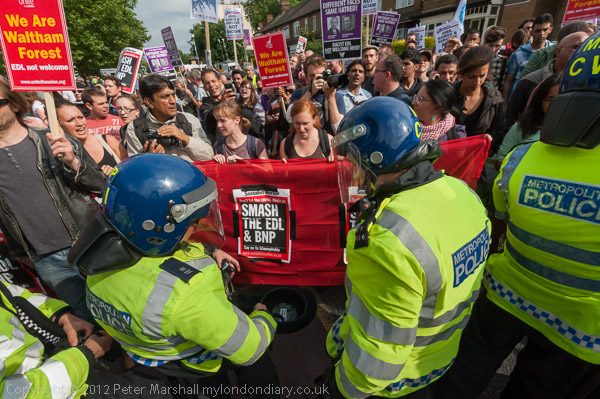
Five years ago, on Saturday 30th January, Lambeth Housing Activists organised a rally and march from the Imperial War Museum to Downing St to protest against the Housing and Planning Bill, which was to have a particularly large impact in London and greatly worsen the already acute housing crisis here.

Rather unusually, the activists were joined for the march by some local councillors including Southwark Council Cabinet Member for Housing Richard Livingstone. Southwark, a Labour dominated council, has attracted a great deal of criticism over the demolition of council estates in the borough, including the scandal of the Heygate estate at the Elephant & Castle, and many on the protest were residents of estates currently being demolished – such as the Aylesbury estate – or under threat of demolition. Southwark and other Labour-run councils in London have made huge reductions in council housing through their so-called regeneration of estates, with many former residents being forced to move away from inner London and into much higher rent private or housing association properties, often with very poor security of tenure.

There were a number of speakers at the rally, including the then Green Party Leader Natalie Bennett and housing researchers and activists, who were listened to attentively and warmly applauded, both for their condemnation of the Bill and also of the social cleansing effect of the estate demolitions being carried out by councils. It was hardly surprising that when Richard Livingtone came to the microphone he was greeted by boos and loud heckling and a heated argument with one of the activists.

Eventually the rally broke up and the march began, starting by walking through the streets of Lambeth before turning around to make its way through Westminster. Class War and friends decided to liven things up a little, first by dancing along the street singing the ‘Lambeth Walk’ and then by rushing across the pavement towards a branch of of large estate agents and protesting outside it for some minutes before moving on.

Earlier at the rally Simon Elmer of Architects for Social Housing had given a closely researched and caustic assessment of the role of Labour Councils and housing policies which have been largely dictated by estate agents. Class War had brought a number of more controverisal banners related to housing, among them one with a picture of a military cemetery with its field of crosses stretching into the distance and the message ‘We have found new homes of for the rich’ and the Lucy Parsons banner with its quotation “We must devastate the avenues where the wealthy live”.

Police had rushed to protect the estate agents, but Class War made no attempt to enter or damage the property, and soon moved off. There was what seemed to be some entirely pointless harassment of protesters by police – including the so-called liaison officers – throughout the march, but I saw no arrests.

At Downing St police formed a line to lead the marchers to the opposite side of the road, and the activists followed their direction then simply walked across Whitehall behind the police line and posed for pictures in front of the gates and spilling out to block the north-bound carriageway. Police attempted to persuade them to move and eventually people drifted away and I left too.

More at Housing and Planning Bill March.


All photographs on this and my other sites, unless otherwise stated, are taken by and copyright of Peter Marshall, and are available for reproduction or can be bought as prints.

Ten Years Ago – 2011

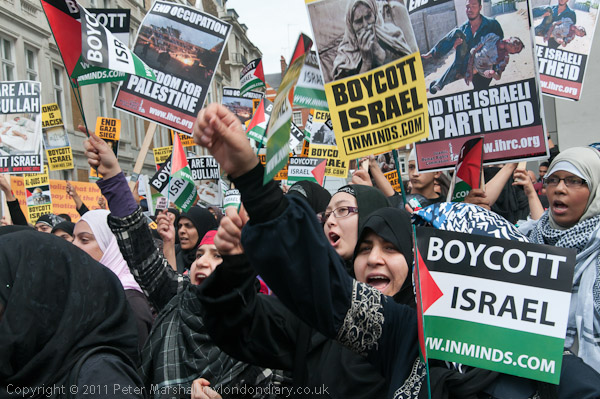
On Saturday 29th January 2011 several hundred people, “many of them Egyptians living in the UK from differing political & ideological backgrounds held a peaceful but noisy protest

to show our solidarity & support of our fellow Egyptians in our beloved country, who decided on making Tuesday 25/01/2011 a day of protests & demonstrations in Egypt against the unfair, tyrant, oppressive & corrupt Egyptian regime that has been ruling our country for decades.”

Protest flyer quoted on ‘My London Diary’

The ‘Arab Spring’ of protests had begun in Tunisia after street-trade Mohamed Bouazizi’s set himself on fire and died on 17 December 2010 leading to protests and the overthowing of the government on 14 January 2011. In January there were protests in Oman, Yemen, Syria, Morocco and in Egypt, where on 25 January thousands flocked to Tahrir Square in Cairo to demand the resignation of President Hosni Mubarak.

Hopes were then running high that the peaceful protests which had been met with suppression and brutality by the regime would succeed in achieving their “justified goal of a democratic, free & civil nation capable of ensuring a dignified, honourable & non-discriminatory life for all Egyptians.” But now we know that despite their early success things have not turned out well in the longer term.

A second group came to join the protest outside the Egyptian Embassy, but Hizb Ut-Tahrir Britain who were calling in on their way to protest outside the Hilton Hotel in Park Lane against “two years Fascist Rule” by the Hasina Government in Bangladesh were told very firmly that the embassy protest – like the Egyptian revolution – was to be entirely non-sectarian and that they were not welcome, and had to protest a hundred yards or so down the street. Theirs, unlike that at the embassy, was a strictly segegrated protest, with the women kept at a distance and few even holding flags.

Hizb Ut-Tahrir is an Islamist group calling for the establishment of a Muslim caliphate, and in 2012, the Freedom and Justice Party, the political arm of the Muslim Brotherhood which shares similar aims won elections to become the largest group in the Egyptian parliament and their candidate Mohammed Morsi was elected as president. The following year there were protests against Morsi who after widepread unrest was deposed by a military coup in July 2013, led by General Abdul Fatah al-Sisi who became president. He remains in charge of an authoritarian miltary regime using “imprisonment, torture, extrajudicial killings, home demolitions, forced disappearances and sexual violence against its critics” and running rigged elections.

A rather larger protest was taking place further east in London with thousands of students, teachers, parents and others marching peacefully in the latest demonstration to defend education and the public sector. The demonstration, backed by the National Campaign Against Fees and Cuts was one of two national marches today, with another taking place in Manchester.

The protest was carefully policed following some incidents, particularly at the Conservative HQ on Millbank at a previous march in November 2010, but the police appeared for once to be trying to avoid provocation, and their were few incidents on the actual march, though I think later a smaller group of protesters went on to protest on Oxford St where there were some clashes with police and most of the fairly small number of arrests were made.

As always with such a large protest with around 5-10,000 people stretched out over half a mile or more of streets, its hard to know when and where any incidents are likely to occur, though some are more predictable. Obviously there were going to be some fireworks at Downing St – and in particular on this event the lighting of quite a few smoke flares, so I was there when this took place.

But I’ve also always wanted to document events as a whole, rather than concentrate on the more photogenic and controversial aspects. So I often – if not usually – find myself for much of the time away from most of the other photographers covering protests for the press, though still trying to cover the key aspects.

In November I’d missed much of the action outside the Tory HQ, arriving rather late on, but this time I’d anticipated correctly that the police would be making sure that it was very well protected against any possible trouble. As in November I spent quite a lot of time photographing protesters as they went through Parliament Square, and by the time the last of them arrived at the end of the march at Tate Britain the rally there had ended. It was a convenient location for me, just a short walk across Vauxhall Bridge to catch my train home.

More at:
No Fees, No Cuts! Student March
Solidarity with the Egyptian Revolution
Hizb ut-Tahrir Turned Away


All photographs on this and my other sites, unless otherwise stated, are taken by and copyright of Peter Marshall, and are available for reproduction or can be bought as prints.

1st December 2018

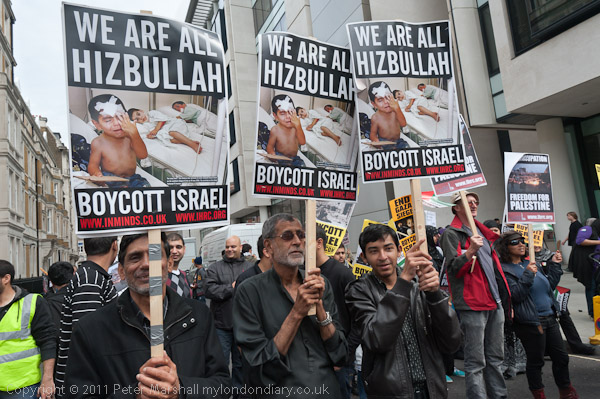
Two years ago, the first day in December had been declared Stop Universal Credit day of action by Unite Community and small groups around the country were holding protests and handing out leaflets in busy town centres about the many failures and great hardship caused by this poorly though out and badly administered benefit. They called for an end to the long wait before claimants receive money, for applications to be allowed at job centres as well as online, for better help when the system fails people, for direct payments to landlords to avoid rent arrears and evictions and an end to benefit sanctions for all claimants.

Universal Credit was intended to simplify the benefits system, but it failed to take into account the huge range and complexity of situations ordinary people face, and assumed that claimants would have the same kind of support that the middle-class and wealthy take for granted from families, friends and resources. And its failures were compounded by making it a vehicle for cutting costs. As I commented in 2018:

“UC has created incredible hardship, pushing many into extreme poverty and destitution, making them reliant on food banks and street food distributions, greatly increasing the number of homeless and rough sleepers. Thanks to Tory policies, more than 120,000-plus homeless children in Britain will spend Christmas in hostels and B&Bs, many without the means or facilities to provide a Christmas meal.

Some have said that UC is a part of a “state euthanasia” system for the poor, with academic estimates that it and other benefit cuts and sanctions since the 2010 elections having caused 110,000 early deaths, including many suicides. A cross party committee has called for its rollout to be halted until improvements are made, but the government has dismissed virtually all criticism of the system, making only insignificant changes.”

http://mylondondiary.co.uk/2018/12/dec.htm#universal

I took a detour on my journey into London to photograph the protest outside Camden Town station, where protesters were also pointing out that Universal Credit “hands more financial power to male claimants making it a misogynist’s dream, forcing women in violent relationships into greater dependency on their violent male partners.”


The major protest taking place in London was a march and rally organised by the Campaign against Climate Change. Together for Climate Justice began with a rally outside the Polish Embassy, in advance of the following week’s UN climate talks in Katowice, Poland.

Despite the impending global disaster, little real action is being taken by countries around the world and we still seem committed to a course leading inevitably to mass extinction. Behind the failure to act is the intensive lobbying of companies exploiting fossil fuels who have spent many billions in sowing doubt about the scientific consensus of global warming, and continue to produce vast quantities of coal and oil and explore for further resources, increasingly in the more ecologically sensitive areas of the Earth.

At the rally a wide range of speakers expressed their concerns that the talks in Poland are being sponsored by leading firms in Poland’s fossil fuel industry. And at the rally opposite Downing St where Frack Free United were to hand in their petition at the end of the march, a speaker from the Global South reminded us of the urgency of the situation; people there are already dying because of climate change.

Before the march we were all taught to say a few slogans in Polish, including ‘Razem dla klimatu‘ (Together for the Climate) which appeared on a number of placards, and the rather less pronounceable Polish for ‘Time to limit to 1.5’, as well as for ‘Climate, jobs, justice!’.


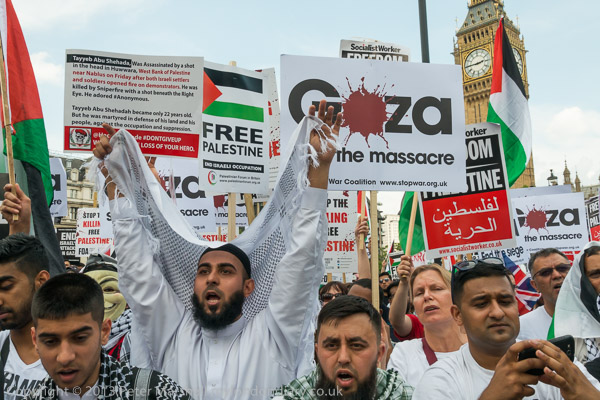
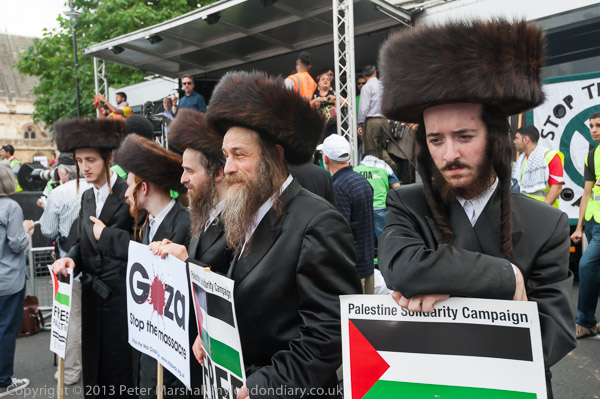
Finally I made my way to Broadcasting House, where The Palestine Solidarity Campaign and others were calling on the BBC to withdraw from the 2019 Eurovision Song Contest hosted by Israel, to avoid being complicit in Israel’s ongoing violations of Palestinian human rights.

Campaigners say the contest ‘artwashes’ Israel’s human rights record, including the killing of at least 205 Palestinians by Israeli forces in the besieged Gaza Strip since protests began at the end of March, and the passing of the Jewish nation state law which formalises an apartheid system in Israeli law.

A small group of Zionists had come to oppose the protest, but made it clear that they did not want me to photograph them. Some lifted the Israeli flags they were holding to hide their faces when I pointed my camera in their direct or turned away.


More at:

BBC Boycott Eurovision Israel 2019
Together for Climate Justice
Stop Universal Credit day of action


All photographs on this and my other sites, unless otherwise stated, are taken by and copyright of Peter Marshall, and are available for reproduction or can be bought as prints.

London Protests: 17 November 2018

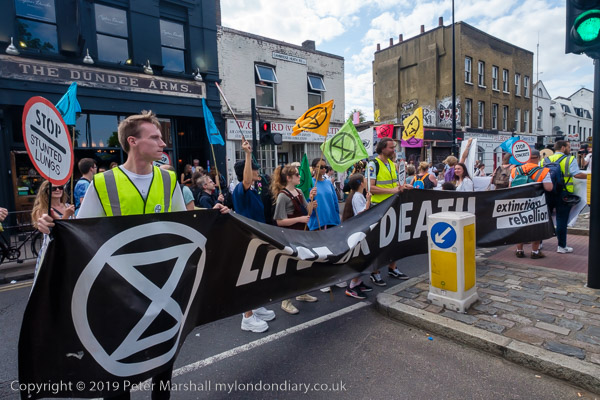
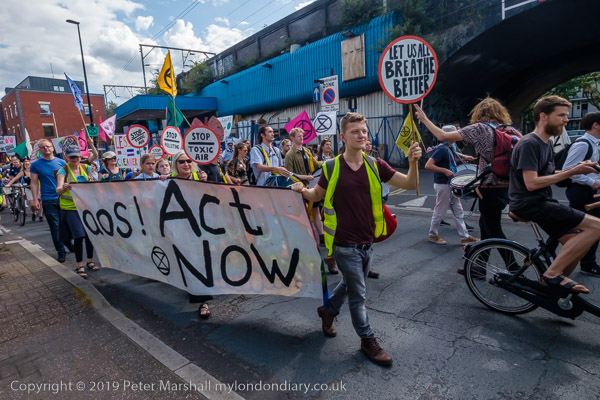
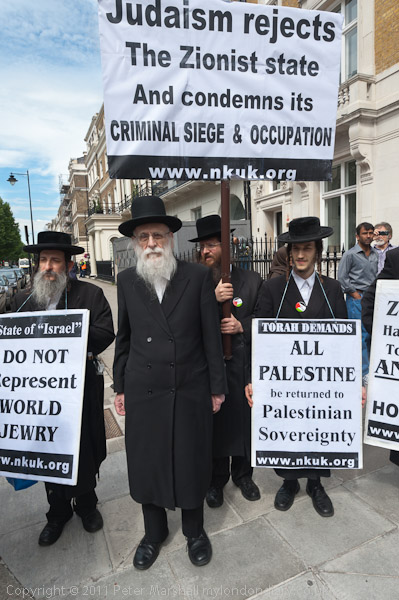
Saturday November 17th 2018 saw the start of Extinction Rebellion’s beidge blocade in central London, bringing the city to a standstill by blocking Lambeth, Westminster, Waterloo, Blackfriars and Southwark bridges. I joined them for the first couple of hours on Westminster Bridge.
From there I went to pay brief visits to three of the other four bridges that XR had blocked, choosing those downstream which were relatively easy to reach on foot.

I didn’t go to Lambeth Bridge, upstream from Westminster, as I ran out of time before another event I wanted to cover. It would have meant too long a walk as the nearest tube station is some distance away and there were no buses able to run. Later I found that it was at Lambeth that the police had been more active in making arrests and attempting to clear the bridge.

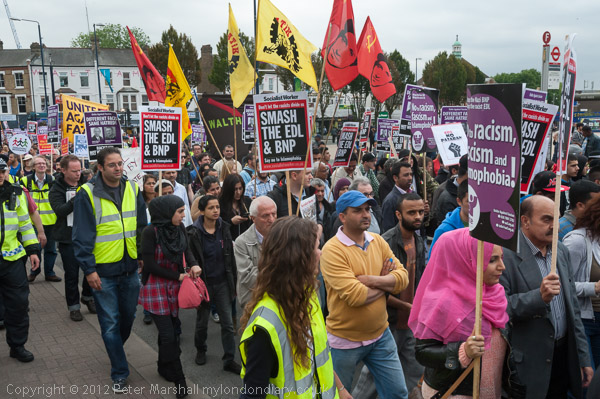
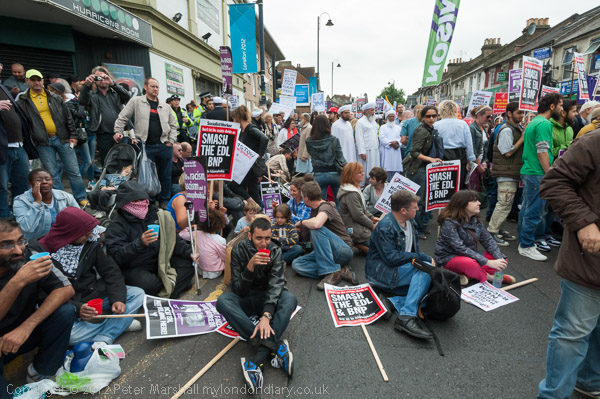
I arrived too late for the start of the march organised by Stand Up To Racism, co-sponsored by Unite Against Fascism and Love Music Hate Racism, and supported by many other groups and individuals including Diane Abbott MP and John McDonnell MP against the against the rising threat of Islamophobia and Antisemitism by far-right groups in the UK.

It was a large march and had gathered outside the BBC in Portland Place because the organisers wanted to point to the failure of the BBC to recognise the threat of these extremist groups with a level of support for fascism not seen since the 1930s.

The BBC does appear to have a policy limiting reporting on issues such as this, and of ignoring or minimising protests in the UK against failures of government. When they have reported, they have often talked of ‘hundreds’ of protesters when a more objective view would have said ‘thousands’ or perhaps even ‘tens of thousands.’ They do a far better job in reporting protests in foreign cities than in London.

Half an hour after I began taking pictures the marchers were still walking past me, but I thought that it was nearing the end and I left, not to go to the rally in Whitehall but to return to Westminster Bridge for the Exctinction Rebellion protest where there were speakers from around the country and around the world, some of whom travelled to speak on several of the five blocked bridges. After the speeches there was a Citizen’s Assembly but by then I was tired and left to go home, edit and file my pictures – more hours of work.

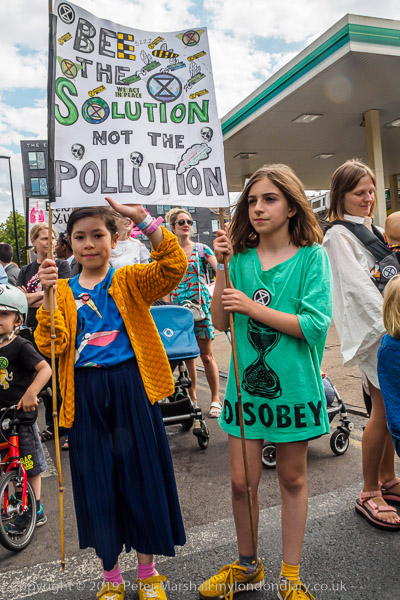
Protests by XR have done a little to shake the complacency of our government and others around the world and move them to action to avoid the rapidly approaching climate disaster, but it remains a case of too little, too late. Certainly so for many countries in the global South already suffering dire consequences, but probably also for us in the wealthier countries. Covid-19 has shown that governments can take drastic actions, (if ours cost many thousands of lives by making decisions too late and avoiding basic precautions) but it will need a similar upending of priorities and changes in our way of life to avoid the worst effects of climate change – and there can be no vaccine to end climate change.

More about the events and more pictures on My London Diary:

Extinction Rebellion Bridge blockade starts
Extinction Rebellion: Southwark, Blackfriars, Waterloo
Unity Against Fascism and Racism
Extinction Rebellion form Citizens’ Assembly


All photographs on this and my other sites, unless otherwise stated, are taken by and copyright of Peter Marshall, and are available for reproduction or can be bought as prints.