Palestinian Land Day – 2019

Palestinian Land Day remembers the day in 1976 when unarmed protesters were killed when marches in Arab towns against the confiscation of land were confronted by Israeli army and police. Six unarmed Palestinians were killed around a hundred wounded and hundreds arrested. Most of the information here on Land Day is from Wikipedia.

Palestinian Land Day - 2019

The numbers involved now seem so small compared to the over 32,000 murdered in Gaza in recent months but it was a significant event as the marches were the first since 1948 in which Palestinians had organised nationally together against Israeli policies with these marches and a national strike.

Palestinian Land Day - 2019

The protests were against plans to confiscate Arab land and to expand Jewish settlements in Galilee were a part of an increasing seizure of Arab land.

Palestinian Land Day - 2019

In response to the planned strike and marches there had been a much increased police and military presence in the area, with armoured vehicles and tanks being driven “along the unpaved roads of various villages of the Galilee“. Some of these military convoys were attacked by youths with stones and even, according to Israeli government sources, Molotov cocktails.

Palestinian Land Day - 2019

The Israeli government had declared the strikes and all demonstrations illegal and some Palestinian leaders had voted against supporting them, but these actions seem only to have hardened the resolve of the Palestinians.

Palestinian Land Day - 2019

According to the Wikipedia article, quoting an academic source, the events led to “a new sense of national pride, together with anger toward the state and police and sorrow over the dead protesters, developed among the Arab community in Israel.” And in 1988, Land Day was announced as “a Palestinian-Israeli civil national day of commemoration and a day of identification with Palestinians of the West Bank and Gaza, to be marked by yearly demonstrations and general strikes.

The Freedom, justice & equality for Palestinians protest in London close to the Israeli Embassy in Kensington on Land Day, 30th March 2019 came a year after the 2018 Land Day Protest in Gaza, also known as The Great March of Return. On that day in Gaza, 30,0000 Palestinians took part in a largely peaceful march some distance from the border fence. But Israeli snipers in safe positions opened fire on those who approached the fence, some to burn tyres or through objects at the fence. 17 Palestinians were killed, including five Hamas members, and more than 1,400 injured.

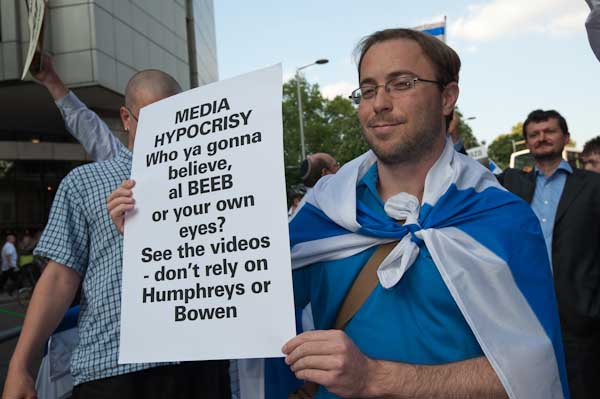
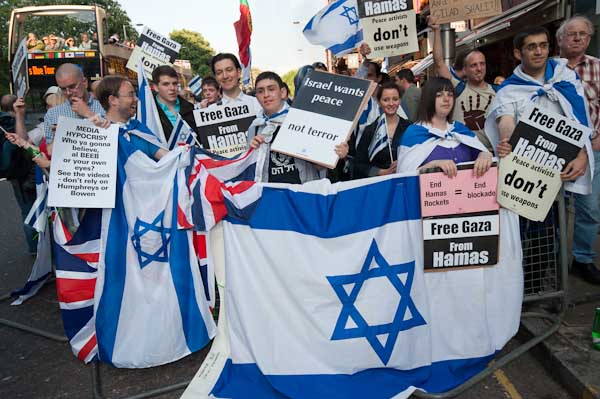
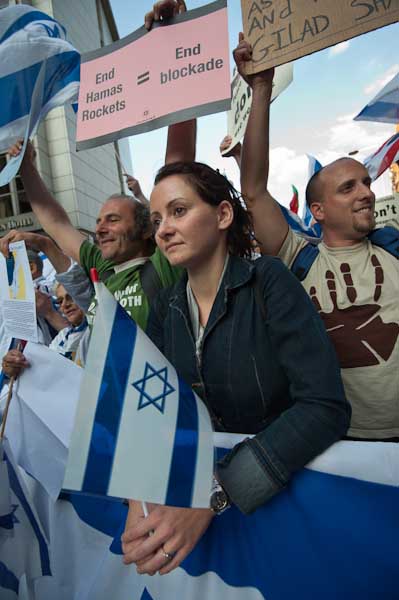
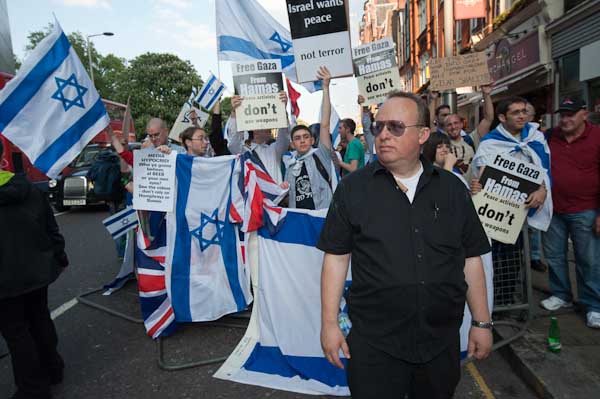
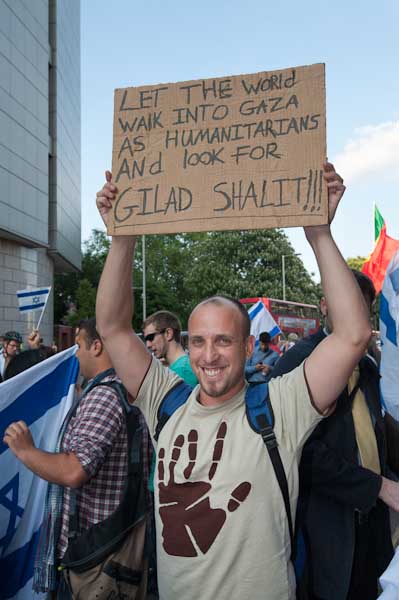
A small group of Zionists had come to oppose the protest

Smaller marches in Gaza continued at weekly intervals and by Land Day 2019 a total of over 250 mainly unarmed protesters had been killed and thousands injured.

It’s hard to look back on history to Land Day (and beyond) and not see how Zionist right wing policies have failed both Israel and Palestine and are continuing to fall all those in the area. Balfour is often blamed for kicking the situation off, but had his “it being clearly understood that nothing shall be done which may prejudice the civil and religious rights of existing non-Jewish communities in Palestine” ever been taken seriously we would not be where we are now.

A line of police protects the Zionist pen

The Oslo Accords were another start to a possible peace process, but again firmly opposed by the right-wing Zionist parties – and Israeli prime minister Yitshak Rabin was assassinated for signing them. Leaders opposed to the accords – Ariel Sharon and current Israeli Prime Minister Benjamin Netanyahu came to power.

This man shouts repeatedly ‘There are no Palestinians in Gaza!’

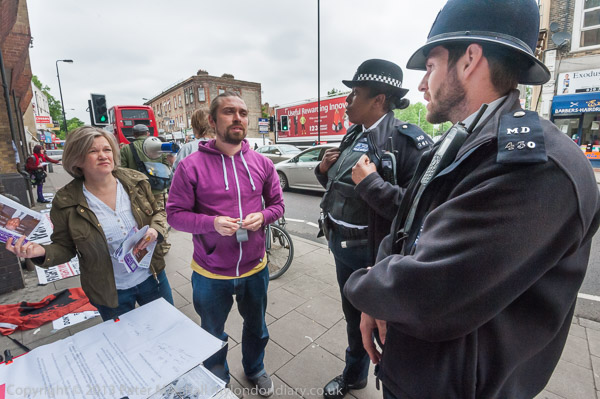
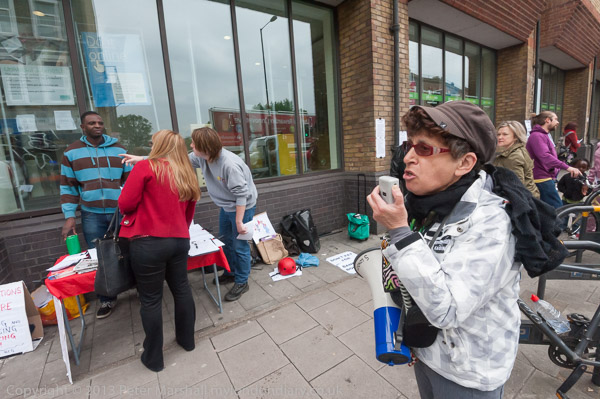
On Land Day 2019, a group of Zionist extremists had come along to the Palestinian protest to try and shout down those speaking. Police kept them a short distance away and with a relatively powerful public address system their efforts were largely inaudible.

Some of the Palestinians took a large Palestine flag and hid the group behind it until police persuaded them back and other protesters moved in to argue with and shout at them. Police tried to move the Palestinians away with little success while I was present

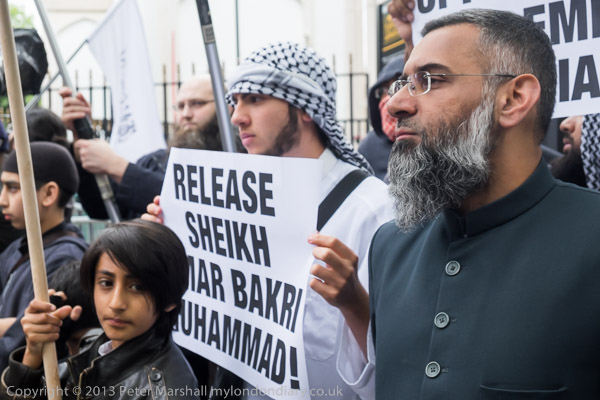
Taking part in the Palestinian protest were as usual many Jews, including the ultra-orthodox Neturei Karta who see Zionism as diametrically opposed to Judiasm.

Freedom, justice & equality for Palestinians.


FlickrFacebookMy London DiaryHull PhotosLea ValleyParis
London’s Industrial HeritageLondon Photos

All photographs on this page are copyright © Peter Marshall.
Contact me to buy prints or licence to reproduce.
Rev Paul Nicholson & More – 2014

Rev Paul Nicholson & More: Many of us particularly in London have fond memories of the Rev Paul Nicolson (1932-2020), a redoubtable campaigner for the poorer members of our community. He appears somehow to have passed Wikipedia by but you can read more about his life from many online sources. On Saturday 29th March 2014 I photographed the Thousand Mothers March in Tottenham he and Taxpayers Against Poverty organised demanding demanding living incomes, decent truly affordable homes for all and rejecting the bedroom tax, the housing benefit cap, unfair taxes, hunger and cold homes.

Rev Paul Nicholson & More

Huff Post tells us Nicolson worked in the champagne trade from 1965 until he made a dramatic career change in 1967 and was ordained by the Church of England as a Minster in Secular Employment. This meant he had to find a job in the real world and he got a job at the ICI HQ in Millbank as a personnel officer. In 1975 he took one of the first Employment Trununals challenging ICIs redundancy procedures and was later involved in supporting other trade unionists elsewhere. In 1979 he ventured into politics becoming an Independent councillor where he then lived in North Herts.

Rev Paul Nicholson & More

After a long fight against the Poll Tax in 1997 he founded the charity Zacchaeus 2000 Trust (Z2K), based in London, a group who were were deeply concerned about the impact of the Thatcher Government’s ‘poll tax’ – a fixed payment from every adult, regardless of their income or circumstances. Z2K became a registerd charity in 2005 and Nicolson left it in 2012 withdrawing to found Taxpayers Against Poverty (TAP) to avoid the restrictions on political campaigning by charities.

Rev Paul Nicholson & More

Perhaps his most important action was to commission Minimum Income Standards research from the Family Budget Unity in 1999, which formed the basis of the London Living Wage, with Mayor Ken Livingstone setting up the Greater London Authority Living Wage Unit in 2005.

Rev Paul Nicholson & More

What would have been an ever greater achievement would have been the adoption by the authorities of the Memorandum to the Prime Minister on Unaffordable Housing he commissioned by Professor Peter Ambrose in 2005. New Labour read it but did nothing, continuing to concentrate on unaffordable housing. Had Corbyn been allowed to win by the Labour Party in 2017 we would have seen changes in the right direction – but policies like there were why thy fought hard to prevent his election.

Of course I’ve not mentioned the best-known fact about Nicolson. It was while he was living in Turville near High Wycombe that he allowed the BBC to take over his church to film The Vicar of Dibley. Dawn French was playing Grealdine Grainger as the Vicar, but the real vicar was Paul Nicolson, though I think he kept away from the cameras.

He retired and settle in Tottenham, becoming welll known for his campaigning in the area – and for a number of arrests and trials. He had called this march and its demands were neatly summarise on the placard hanging from a string around his neck: ‘We march for Freedom from Hunger, Cold, Outrageous Rents – Fight for a Living Wage’.

You can read a short article on him in the Guardian which contains around 30 of his letters which were published by the newspaper as well as links to many more. He truly was a great campaigner.

I left the march as it passed Tottenham Police Station with Carole Duggan walking in front of a large banner with the face of Mark Duggan, her nephew, murdered by police in Tottenham in 2011.

More about the march and many more pictures at Mothers march for justice.


I was on my way to two further protests that day which you can read about on My London Diary:

At Kilburn Square was a Kilburn Uniform Day protest where the Counihan Battlebus Housing For All campaign, along with the TUSC Against Cuts and TUSC were calling for rents to be capped and for everyone to have a home.

Kilburn Uniform Day

And in Parliament Square, staff and students from Oasis Academy Hadley in Ponders End were protesting against the Home Office plans to deport fellow A-Level Student Yashika Bageerathi to Mauritius.
She came here with her mother and two younger siblings in 2012 after physical abuse from a relative and claimed asylum in 2012. The application has been rejected and the whole family are under threat of deportation.

Yashika is now 19 and the Home Office decided they could deport her on her own and she had been in Yarl’s Wood immigration removal centre since March 19th. She and her fellow students want her to be allowed to stay – at least until she has taken her exams this summer. The #FightForYashica petition had attracted over 171,000 signatures.

Attempts by the Home Office to deport Yashika failed before this protest when pressure from campaigners led to British Airways refusing to take here. Ahe had been booked into an Air mAURITIUS flight for the day following this protest, but an avalanche of tweets led to them refusing to take her.

Finally she was deported on her own in April 2014 and fortunately was helped there to take her A-levels, receiving the grades she needed to go on to university and end her brief period in the public eye.

Fellow Students Fight for Yashika.


FlickrFacebookMy London DiaryHull PhotosLea ValleyParis
London’s Industrial HeritageLondon Photos

All photographs on this page are copyright © Peter Marshall.
Contact me to buy prints or licence to reproduce.

Colindale and West Hendon Estate 2017

Colindale and West Hendon Estate: I’d actually gone to Colindale on Tuesday 28th March 2017 to attend the public inquiry into the second phase of the demolition of the West Hendon estate which was beginning at the RAF Museum there.

Colindale and West Hendon Estate 2017
New buildings on York Memorial Park and the West Hendon Estate across the Welsh Harp

But the proceedings there were tedious and while such things are important unless you are personally involved it soon becomes hard to remain involved. Nothing I heard in the short time I stayed would not have better been submitted as documents and probably had been. And it was a nice day outside.

Colindale and West Hendon Estate 2017
RAF Museum

I left and paid a short visit to the rest of the RAF Museum before going to photograph Grahame Park across the road from the museum, a large council estate built by the GLC and Barnet Council on the rest of the old Hendon Aerodrome site in the 60s and 70s, the first residents moving there in 1971.

Colindale and West Hendon Estate 2017
Grahame Park Estate

By the time I first visited to photograph the estate in 1994, some changes had been made, removing connecting walkways to split the flats into smaller units and replacing some flat roofs with pitched roofs. A more dramatic phased regeneration began in 2003 and considerable building work was still taking place in 2017.

Colindale and West Hendon Estate 2017

The regeneration will greatly increase the number of homes on the estate, and the new properties are more energy efficient, but the original number of council rented properties of almost 1800 will be reduced to around 300. Around 900 of the new properties were to be at so-called “affordable rents” and the remaining 1800 for sale or rent at market prices.

A few hundred existing residents with secure tenancies will be rehoused, but most of the estate residents do not qualify for rehousing, including some who had lived here for over 15 years. They will need to find private rented properties elsewhere in a typical example of social cleansing by Barnet Council, in league with developer and social landlord Genesis Housing Association.

As is the case in other regeneration projects on council estates around London this results in a huge transfer of land from public to private ownership and fails to meet the housing needs of poorer residents, many of whom are forced to move further from jobs, friends and families.

Colindale Ave

I walked from the estate to Colindale Station through another large area of building work, mainly of expensive private housing in large blocks of flats with an area action plan for of expensive private housing in large blocks of flats. Of course we need new housing but should be concentrating on providing it a reasonable cost for those most in need – which means social housing. Not building homes that will take up to 46% of tenants incomes in London, well above the “30 per cent of income” affordability threshold set by the ONS.

WestHendon Estate

I could have walked from Grahame Park to the West Hendon Estate about a mile and a half away but couldn’t see a decent route on the map, so took the tube to Hendon Central and caught a bus from there. The West Hendon Estate owes its genesis to a large bomb on 13th February 1941 which destroyed or rendered uninhabitable 366 houses, damaging a further 400 in the area, killing 75 people and severely injuring another 145. Over 1500 people were made homeless.

York Park there became York Memorial Park, a green open common designated as “a War Memorial in perpetuity” as a mark of respect to all who lost their lives. In the 1960s the remaining houses in the area were replaced by the West Hendon estate, comprising of 680 one-bedroom flats, two-bedroom maisonettes and three-bedroom council houses, along with open space, a community centre and a play area.

Barnet Council handed the memorial park – at least £12 million of public land – over to developers Barratt and they built a 29 storey tower block on the park – “perpetuity” becoming shorter than living memory. The West Hendon estate is being demolished in phases and being replaced by Hendon Waterside, largely expensive flats with views across the Welsh Harp. There will be an increase in the number of homes to 2,171 but many will go to overseas buyers and will be kept empty as investments whose value is expected to rise steeply. And somewhere at the back of the estate will probably be a little social housing – but only a small fraction of the original 680.

Few of the residents will qualify for rehousing but with higher rents and less security of tenure. Most will lose their homes and be ‘socially cleansed’, forced to move out of the area and away from friends, jobs, schools etc. Housing isn’t just a crisis but a shamefull twentyfirst century scandal.

More pictures on My London Diary:
West Hendon Estate
Colindale


FlickrFacebookMy London DiaryHull PhotosLea ValleyParis
London’s Industrial HeritageLondon Photos

All photographs on this page are copyright © Peter Marshall.
Contact me to buy prints or licence to reproduce.

Riverside Brentford – 2016

Riverside Brentford – Saturday 26th March 2016

Riverside Brentford - 2016

As a child I grew up in Middlesex, by then a rather truncated county on the north and west of London, though once it had included the cities of London and Westminster and many of London’s Metropolitan boroughs north of the Thames and west of the River Lea. Brentford, a couple of miles from where I was born, was the nearest thing the county had to a county town, though it had few if any of the normal attributes of one, with no town-hall or other public building.

Riverside Brentford - 2016

Often on Bank Holidays our father would take us on a 237 bus from Hounslow to Kew Bridge Station, the route going through Brentford High Street where it was often held up as we gazed through the top deck windows at the sites. Under the railway bridge leading to Brentford Docks where we might see a steam hauled goods train, over the canal bridge where the locks and dock area were normally busy with barges,past the Beehive on the corner of Half Acre with its tower topped by a giant beehive and on through the noisy, smelly gas works to Kew Bridge.

Riverside Brentford - 2016

We walked across Kew Bridge and then turned down the side of Kew Green to the gate of Kew Gardens, where a penny – an old penny, 240 to the pound led us into the extensive gardens where we could wander all day. This was before the days of garden centres and my father would always have a small pair of scissors in his pocket to take the odd cutting or pick up a seed or two on our walks.

Riverside Brentford - 2016

Later, in the early and mid 1950’s I would ride my bicycle around much of Middlesex and Surrey – and that included Brentford, but I think it was only much later when I became a photographer that I really explored the area and found out what an important communication link it had been. Brentford is where the inland waterways system with the busy Grand Union Canal joined the River Thames, just a few miles upriver from the great Port of London.

In 1978 three of my photographs from Brentford were published in Creative Camera Collection: No. 5, a prestigious collection of contemporary photography published by Coo Press, the publishers of the monthly magazine Creative Camera and edited by Colin Osman and Peter Turner. It wasn’t the first time my work had been published but was great to be on the pages with some very well known photographers, including one who much later became a friend, John Benton-Harris.

Brentford has changed greatly since then, with much of the riverside now lined with expensive flats rather than commerce and industry. The gasworks site became a riverside park and an arts centre, where I took part in and helped organise a number of exhibitions. But there is still enough of the old Brentford untouched, though less each time I go there.

I first returned in the 1990s, when I was teaching a few miles down the road, bringing students to see shows there and to wander around the area taking pictures. Later I came back for walks on my own or with friends, such as this one on Saturday 26th March 2016 with my elder son. Brentford hadn’t been my first choice by railway engineering works that week end made travelling out further to the east of London impossible.

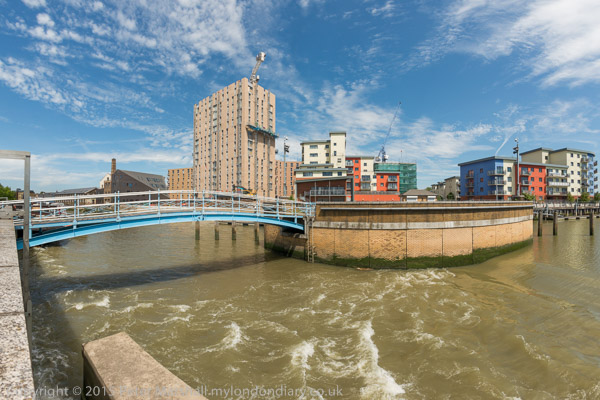
As well as making ‘normal’ pictures with lenses giving a horizontal angle of view of between 10 and 84 degrees (focal lengths 20 to 200mm) there were some pictures where I felt an even wider view was needed and I made some panoramss with a roughly 145 degree angle of view. The pictures above and below illustrate the difference.

We didn’t end our walk in Brentford, but continued on past Syon House to Isleworth where we ate our sandwiches in a relatively sheltered square before following the Duke of Northumberland’s River through Mogden Sewage Works to Kneller Park and then Whitton Station for the train home. You can see a much wider range of pictures online on My London Diary at these three links:
Syon, Isleworth & Mogden
Riverside Brentford Panoramas
Riverside Brentford


FlickrFacebookMy London DiaryHull PhotosLea ValleyParis
London’s Industrial HeritageLondon Photos

All photographs on this page are copyright © Peter Marshall.
Contact me to buy prints or licence to reproduce.
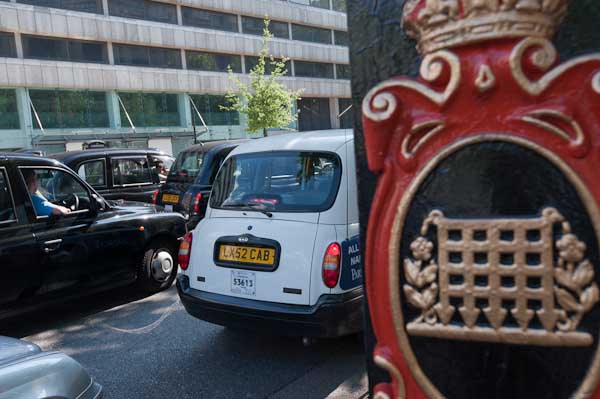

Hands Off Our Schools 2016

Hands Off Our Schools – For around 30 years I was a full-time teacher and a part-time photographer, then spent a few years as a photographer and writer and part-time teacher before giving up the teaching completely. Most of the time I liked teaching – and even went on doing some after they stopped paying me – but at times it was extremely taxing.

Hands Off Our Schools

All of my teaching, apart from a few photography workshops, was within our public education system, beginning in one of the largest comprehensive schools in the country, then moving on to a sixth form and community college where I taught students from 16 to 90 years old.

Hands Off Our Schools

Over the thirty-odd years I taught a wide range of subjects and levels, though my main interest was in photography, and our A-Level results – thanks to some great colleagues – were probably the best in the country. Starting with science and chemistry I soon branched out into photography and later into various computer-related courses, including setting up a Cisco Network Academy as well as several administrative roles. O Levels, A Levels, AS Levels, CSE, City and Guilds, RSA, CEE, BTEC and probably a few more I’ve forgotten, as well as non-exam course including the dreaded PSE which had me teaching about sex, drugs and more, though not rock’n’roll.

Hands Off Our Schools

Schools and teaching changed dramatically over the years of my career. When I began teaching was a profession, but by the time I left we were largely just cogs in the machine administered by punitive inspections and governed from the Ministry of Education. In my early career I worked long hours during term-time, preparing lessons and marking work as well as the actual class contact time but all of it – often more than 60 hours a week – was directed at the students I was teaching. By the time I left most teachers were slaving long hours to meet the dictates of Ofsted and the National Curriculum as well as teaching students.

Hands Off Our Schools

Of course we had inspection in the old day, but it was conducted with a very different intention and by Her Majesty’s Inspectors who all knew the education system and were colleagues whose role was largely to make helpful suggestions for improvement. Ofsted brought in inspectors with tick boxes and often no knowledge of education other than as students in earlier life whose job was to catch teachers out, often for trivial things. Rather than to help and improve, their role was to penalise.

I had also been the NUT Rep where I worked for many years and am still a Retired Member of the union (now the NEU) so I had a particular interest in a protest by the NUT and ATL on Wednesday 23rd March when they met in the yard in front of Westminster Cathedral to march past the Education Ministry and make their views clear to Education Minister Nicky Morgan.

The teachers were marching against government plans to convert all schools to academies. There is no evidence that academies improve the educational results of children and the plans remove all democratic controls from education as well as side-lining parents.

Many of the protesters stopped outside the Department for Education to shout and to call for Nicky Morgan to resign before marching off for a rally in the nearby Emmanuel Hall on Marsham St. I didn’t join them there as I had other things to do that day.

More pictures at Hands Off Our Schools.


FlickrFacebookMy London DiaryHull PhotosLea ValleyParis
London’s Industrial HeritageLondon Photos

All photographs on this page are copyright © Peter Marshall.
Contact me to buy prints or licence to reproduce.
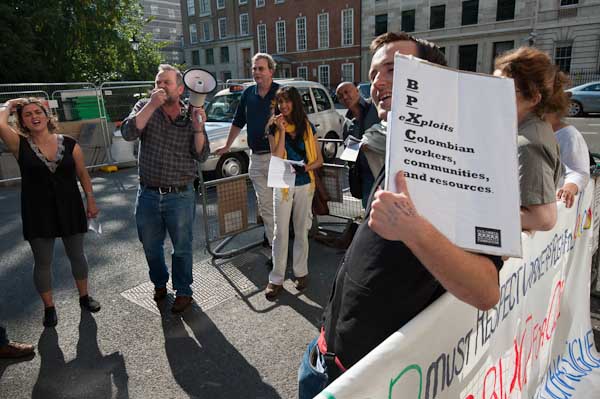

Invasion of Iraq Protest 2003

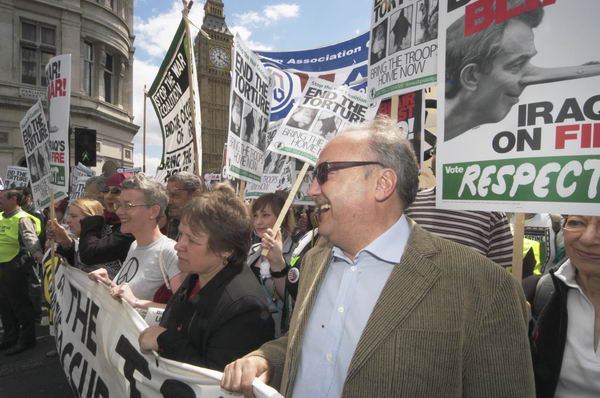
Invasion of Iraq Protest 2003 – On 22nd March 2003 several hundred thousand people marched through London against the invasion of Iraq which had begun four days earlier on on 19th March 2003.

Invasion of Iraq Protest 2003

I’d missed the huge worldwide protests the previous month, when on the weekend of 15-16th February according to the BBC, always conservative (I think a euphemism for deliberately lying) on protest numbers reported that a million people had marched in London on the Saturday among between six and ten million in 60 countries around the world.

Invasion of Iraq Protest 2003
George Galloway

I’d come out of hospital the previous day, February 14th, and was still very weak following a minor heart operation that had gone slightly wrong. So I could only wave to my wife and elder son as they set off to the station to join the other 1.5 or 2 million marchers.

Invasion of Iraq Protest 2003

I think it was March 6th that my doctor signed me off as fit to work, though I was still not back to normal, but I covered my first protest after the op two days later, cutting down the weight of my camera bag as much as I could to two cameras and five lenses – all primes.

Invasion of Iraq Protest 2003
Peter Tatchell

I’d spent some of my time recovering getting used to the Nikon D100 I had bought just a few weeks before going into hospital. It was the first digital camera I’d owned capable of professional results, and the first with interchangeable lenses, though I only then owned one in a Nikon fitting I’d bought with the camera, a 24-85mm.

As well as taking colour pictures on the D100, I was also taking black and white film using a rangefinder camera, probably a Konica Hexar RF, the kind of camera Leica should have produced but never did. It featured automatic film advance and rewind and had accurate auto-exposure and has been described as “the most powerful M mount camera there is.” And very much cheaper than a Leica. The nine pictures from the day I sent to the library I was then using were all black and white 8×10″ prints from the pictures made with the Hexar RF, as in 2003 they were still not taking digital files.

Here you can see some of the digital images I took on 22nd March 2003 with that single zoom lens. It was the first zoom lens I had used for over 25 years, having been rather disappointed with a telephoto zoom I bought soon after I got my Olympus OM1. The image quality on the Nikon zoom – about the cheapest lens in their range and light and relatively small – was fine if not quite up to the Leica lenses on the Hexar, but it gave some distortion – barrel at 24mm and pincushion at 85mm.

But the Nikon D100 was a DX format camera, and on this the widest angle of view marked as 24mm actually was equivalent to 35mm on my film camera. Hardly wide-angle at all, and on film I was often working with 15mm or 21mm lenses.

The digital images are shown here as I put them on-line in 2003, and I think I would get the colour rather better now. And of course digital cameras have improved tremendously since then, with much better dynamic range, and the software for processing digital images is also far better. Also with download speeds generally much lower in 2003 they were put on line at a much poorer jpeg quality so they would download faster – and also spread over a number of pages with perhaps just half a dozen images on each page.

The marchers met on the Embankment and marched to a rally in Hyde Park. I think I only used the D100 before and on the march and photographed the rally entirely in black and white. Probably this was a decision I made, but it could have been because the battery ran out. But I think I had decided just to use it to photograph people on the march.

We now know that Blair lied to take us to war and made use of the fake “dodgy dossier” to swing the vote in Parliament. There were no “Weapons of Mass Destruction” in Iraq – and the UN had found none because there was nothing to find. But the US had been gearing up to attack over the past year and were not going to let the facts put them off, and Blair was their lap dog.

You can read more about the Invasion of Iraq on Wikipedia. While the US had prepared for war, they had made little or no preparation for what was to follow after President George W Bush declared the “end of major combat operations” on May 1st. Iraq was still in a mess when the US troops finally withdrew in 2011 and remains so today. It was as I wrote in 2003, the wrong war at the wrong time – and by 2023 over 60% of US citizens were prepared to state that the U.S did not make the right decision by invading Iraq.

More on the March 2003 page of My London Diary where you can also find pictures of another protest against the war on Saturday 29th March calling for more balanced coverage by the BBC.


FlickrFacebookMy London DiaryHull PhotosLea ValleyParis
London’s Industrial HeritageLondon Photos

All photographs on this page are copyright © Peter Marshall.
Contact me to buy prints or licence to reproduce.


Bermondsey Equinox 2015

Bermondsey Equinox: Spring, or rather Astronomical Spring, officially starts today, 20th March, though meteorologists see things differently and start it on March 1st and the weather has its own ideas. Botanists too make up their own minds by looking at plants.

Bermondsey Equinox

Today is the Spring Equinox, which I always assumed meant equal lengths of day and night, but checking the tables I find that today we get 24 minutes more day than night.

Bermondsey Equinox

The actual definition of the Equinox is apparently the moment when the Sun is directly above the equator and the Earth’s rotational axis passes through from being tilted towards the southern hemisphere to the north. So it really is just a moment, this year at 3.06 am UTC 20th March. Most years it falls on 20th March, but in 2007 it was on the 21st in the UK, and this year will be on the 19th across the USA.

Bermondsey Equinox

But watch out for Druids, particularly should you be near Tower Hill, where in some previous years I’ve photographed their celebrations which begin at noon, I think Greenwich Mean Time.

Bermondsey Equinox

It’s an interesting event to watch, and doubtless important for those taking part, and also good to photograph at least once or twice, but when you’ve done it a few times difficult to find anything new to say.

So I won’t be there today. And I won’t write about it here, as last year I posted Druid Order – Spring Equinox at Tower Hill and you can still read all about it there as well on the various other posts here and on My London Diary.

Back in 2015 I didn’t go to Tower Hill but was instead on the opposite side of the River Thames in Bermondsey, out for a walk around one of my favourite areas of London with a few photographer friends.

As I wrote then, it was “really just an excuse to meet up, go to a couple of pubs and then end up with a meal” and though it was a fine afternoon I don’t think any of us took many pictures. I’d photographed the area fairly extensively in previous years and had even written a leaflet with a walk for part of it.

The leaflet came about back in the dark ages of computing, when Desk Top Publishing had more or less just been invented and I was teaching an evening class in the use of Aldus Pagemaker, bought up by Adobe in 1994 who then killed it and brought out Indesign, more powerful but far more difficult to use. West Bermondsey – The leather area was an industrial archaeology walk which I made use of to illustrate some of my lessons.

Over the next few years I printed hundreds of copies on my Epson Dot-Matrix printer – which accounts for the crude illustrations – and sold them at 20p a time – hardly a money spinner but it covered my costs. They were bought and given out by local historian Stephen Humphrey (1952-2017), chief archivist at Southwark’s Local Studies Library for 30 years on his local history walks and sold at the Bermondsey festival. I met Stephen who wrote a number of publications on the history of the area a few times – and had visited him in the Library when researching the leaflet, which also relied on information from a walk led by Tim Smith for the Greater London Industrial Archaeology Society where it is one of a very long list of interesting walks in London.

The area has changed considerably since I wrote it, but most of what is mentioned remains despite considerable gentrification. You can find several hundreds of my older images of Bermondsey in colour and black and white on Flickr – including those used in illustrating the leaflet in much better reproduction.

There are a few more images from my 2015 walk on My London Diary at Bermondsey Walk.


FlickrFacebookMy London DiaryHull PhotosLea ValleyParis
London’s Industrial HeritageLondon Photos

All photographs on this page are copyright © Peter Marshall.
Contact me to buy prints or licence to reproduce.


Dolce & Gabbana, Sanctions & Poor Doors 2015

Dolce & Gabbana, Sanctions & Poor Doors Thursday 19th March 2015 -protests at a Mayfair fashion store, the Department of Work and Pensions and another of Class War’s long series of protests at One Commercial St, Aldgate.


Dolce & Gabbana Boycott – Old Bond St

Dolce & Gabbana, Sanctions & Poor Doors

Domenico Dolce and his business partner Stefano Gabbana are apparently well known fashion designers and have a range of over 200 shops in plush areas of cities in 41 countries dedicated exclusively to selling their overpriced clothing. In London I think they have one in Sloane Square as well as the Mayfair store this protest took place outside.

Dolce & Gabbana, Sanctions & Poor Doors

For some reason our media treats anything to do with fashion as important news, and there were more photographers and TV crews packing the narrow pavement than protesters when I arrived making covering the protest difficult, particularly for those of us who prefer to work at close range.

Dolce & Gabbana, Sanctions & Poor Doors

The Peter Tatchell Foundation and the Out and Proud Diamond Group had called the protest in support of the international boycott over homophobic statements by the two designers. Almost certainly a much higher proportion of the shop’s customers are gay than in the general population and Dolce & Gabbana have profited massively from sales to the gay community over the years.

More about the protest at Dolce & Gabbana Boycott.


Unite protest against Benefit Sanctions – Caxton House, Westminster

Dolce & Gabbana, Sanctions & Poor Doors
Gill Thompson, whose brother died after being sanctioned holds her 211,822 signature petition

Unite here and at Job Centres around the country were having a day of action against punitive benefit sanctions on over 2m people which had led to increased poverty, misery and even death. They say the are a ‘grotesque cruelty’ and are often imposed for trivial reasons.

People have been sanctioned because postal delays meant they never got notification of an appointment they missed, or because they were 5 minutes late as a bus was cancelled. Often job centre staff are under pressure to issue sanctions and may be penalised if they do not sanction enough of their clients.

At the protest was Gill Thompson, whose brother, David Clapson, a diabetic ex-soldier, died after being sanctioned. She had brought her 211,822 signature petition calling for an inquiry into benefit sanctions to the protest to present to the DWP.

Among others who spoke was Rev Paul Nicholson of Taxpayers Against Poverty.

More pictures Unite protest against Benefit Sanctions.


Poor Doors Protest Blocks Rich Door – One Commercial St, Aldgate

When Class War read a newspaper article about the separate entrances for rich residents and those in social housing in a new block at One Commercial Street in July 2014 they were disgusted and decided to launch a series of weekly protests outside the block every Thursday evening.

I missed the first of these but you can find reports of almost all of the rest of them, at least 29 in all, on My London Diary. For an overview you can read John Bigger’s article on Freedom in which he gives an insider’s view and assesses the impact of these protests, and the ‘zine’ I published Class War: Rich Door, Poor Door with over 200 photographs from 29 protests is still available. But though this is reasonably priced, postage costs roughly double this – so you really need to buy half a dozen copies or more and give or sell some to your friends. Be warned the print quality in what Blurb calls a MAGAZINE is pretty low.

The protest on 19th March was a lively one and the management at One Commercial Street had locked the rich door and were I think telling the rich residents of that section to enter and leave instead through the hotel at the Commercial Street side of the building. Class War held up banners and posters and some stuck stickers onto the glass of door and large windows. Someone lit a red smoke flare and threw it onto the pavement. There was a lot of loud chanting and some short speeches.

Some younger anarchists present took plastic barriers from the works taking place on the pavement and piled them in front of the locked door. Others took them onto the busy Whitechapel High Street and blocked the traffic.

A man and a woman who had been watching suddenly grabbed one of those present, threw him to the floor and handcuffed him, holding up their warrant cards to show they were plain clothes police. I didn’t recognise the man they arrested who was not one of the regular Class War protesters, and as usual they refused to answer questions about why he was being arrested. But their arrest effectively blocked the only lane of the road which the protesters had not already blocked.

More uniformed police arrived and dragged the arrested man away to a police van, removed the barriers and protesters from the road and the protest continued with Class War holding up flaming torches in front of the rich door.

There were a few more short speeches and then the protesters left as usual after about an hour, leaving their posters attached to the glass on the front of the building by Class War stickers.

More at Poor Doors blocks Rich Door.


FlickrFacebookMy London DiaryHull PhotosLea ValleyParis
London’s Industrial HeritageLondon Photos

All photographs on this page are copyright © Peter Marshall.
Contact me to buy prints or licence to reproduce.
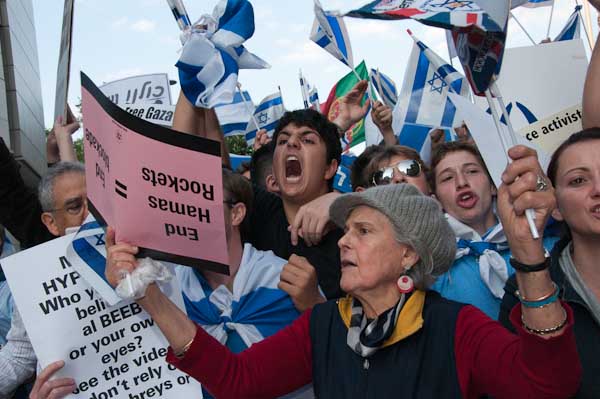

Brent St Patrick’s Day Parade – Willesden Green 2007

Brent St Patrick’s Day Parade – Willesden Green

Brent St Patrick's Day Parade

In 2007 St Patrick’s Day, 17th March, fell on a Saturday and the parade in Willesden Green held on the day itself was well attended. I found it rather more interesting than the big London celebration with a march from Hyde Park to Trafalgar Square the following day, though I met some of the same peopleand groups again there.

Brent St Patrick's Day Parade

It had been a busy day for me, starting with a protest about problems for young doctors in the NHS whose managers had managed to make a complete mess of their workforce planning with thousands of junior doctors likely to find themselves without a place to continue their careers in the coming August, and there being no consultant posts for thousands of registrars in 2010-11. Among the speakers was the then Leader of the Opposition, David Cameron who I found hard to photograph. More on this on My London Diary, with pictures starting here.

Brent St Patrick's Day Parade

Next up was a protest four years after the invasion of Iraq, where 655,000 had by then died. My comment in 2007: “It is always easy to be right in hindsight, but the majority of the British people were right at the time of the invasion, and the government held its telescope firmly to its blind eye of mis-interpreted, faulty and partly invented intelligence. unfortunately both Britain and even more Iraq will suffer for Blair’s shameful mistake for many years to come.” And they are still suffering. It was a small protest in Trafalgar Square, mainly by Iraqis and there are just a few pictures here.

Brent St Patrick's Day Parade

Also in Trafalgar Square, close to Canada House was a protest against the annual slaughter of seal cubs in Canada, clubbed to death in a way that “is certainly inhumane and a public relations disaster, with blood staining the ice and clubbed animals at times being skinned while still conscious.”

But then I took the underground to Willesden Green, where “a much happier event was taking place … the borough of Brent was celebrating St Patrick’s day with a parade and cultural activities.” Mainly but not exclusively Irish, but with many from Brent’s other communities taking part and watching.

It’s great to photograph the people out on the street to celebrate, and wanting to have their pictures taken, and there was plenty to photograph, including of course St Patrick himself leading the procession, along with the mayor, Kensal Green councillor Bertha Joseph, in her second term as mayor.

She was brent’s first African Caribbean mayor in 1998. but of course the real stars of the event were the people of all ages who were taking part and having a fine time.”

After the parade there was time for the culture – in the form of a pint of Guinness in a real Irish bar, after which I went to watch the band ‘Neck’ performing, and the people dancing to their music.

It was a fine event, the band clearly setting out not just to play but to entertain the audience and doing so in great style.

More pictures of Brent St Patrick’s Day Parade begin here, and you can also view those I took on the following day at London Celebrates St Patrick’s Day.


FlickrFacebookMy London DiaryHull PhotosLea ValleyParis
London’s Industrial HeritageLondon Photos

All photographs on this page are copyright © Peter Marshall.
Contact me to buy prints or licence to reproduce.
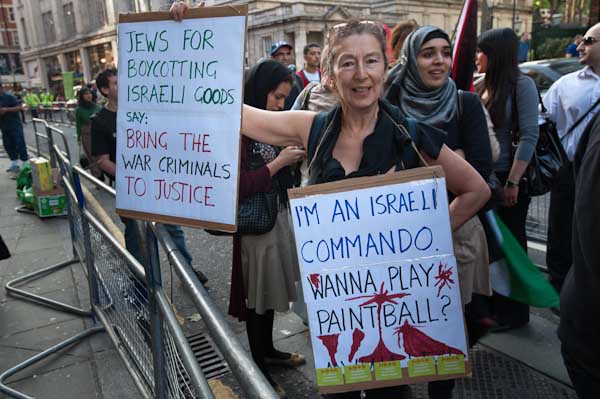

Whittington, Syria and St Patrick – 2013

Whittington, Syria and St Patrick – Saturday 16th March 2013 saw me travelling around London to cover three events, starting at a march against hospital cuts, then a march supporting the Syrian revoltuion on its second anniversary and finally an Irish parade on the day before St Patrick’s Day.


Whittington Hospital March Against Cuts – Highbury & Islington

Whittington, Syria and St Patrick

Dick Whittington, more formally Sir Richard Whittington (c1354 – 1423) was four times Lord Mayor of London and did a lot for the medieval city, including financing drainage systems in its poorer areas and setting up a hospital ward for unmarried mothers and leaving his considerable fortune to set up a charity which still 600 years later helps those in need.

Whittington, Syria and St Patrick

He made his fortune as a mercer, importing luxury fabrics such as silk and velvet and exporting English woollen cloth and later as a money lender to wealthy noblemen and kings. It isn’t clear if he ever had a cat, but the legend about him fleeing London with one and turning back when he heard Bow Bells from Highgate Hill first made it to print in 1612.

Whittington, Syria and St Patrick

The Whittington Stone was placed at the foot of Highgate Hill in 1821, though earlier it had been the base of a cross there; it only gained a cat on top in 1964. But Whittington’s name is remembered in a number of pubs across the country, including The Whittington & Cat on Highgate Hill, which closed in 2014. Islington Council and local residents fought to keep it, and prevented its demolition in 2012 by declaring it to be an asset of community value, but it became a flooring shop.

Whittington, Syria and St Patrick

More importantly Whittington’s name became that of the major hospital formed when earlier hospitals on three nearby sites were amalgamated when the National Health Service was formed in 1948.

Three years before this march, huge local oppositin had forced the cancellation of plans to end Accident and Emergency, Paediatrics, Maternity and Intensive Care at the Whittington Hospital, but now it was threatened again by a new hospital trust with plans to reduce maternity services, close wards, provide fewer beds for the elderly, cut 570 jobs privatise some services and sell off around a third of the site, closing all onsite accommodation for nursing staff.

I met several thousand protesters close to Highbury & Islington Station where they were preparing to march to a rally outside the hospital. Among those marching were local MPs, Green Party Leader Natalie Bennett, Bruce Kent and various celebrity supporters of the campaign, as well as the truly remarkable Hetty Bower, born in 1905, who became a pacifist at the time of the ‘Great War’, and took part in the 1926 General Strike.
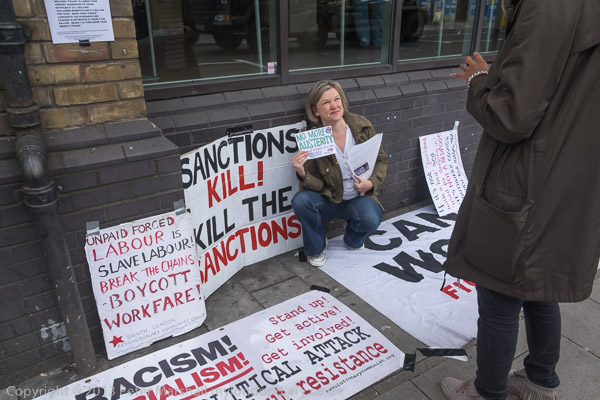
You can read more about the event and see my pictures of many of the marchers on My London Diary. I left the march shortly after it started to go to my next event.
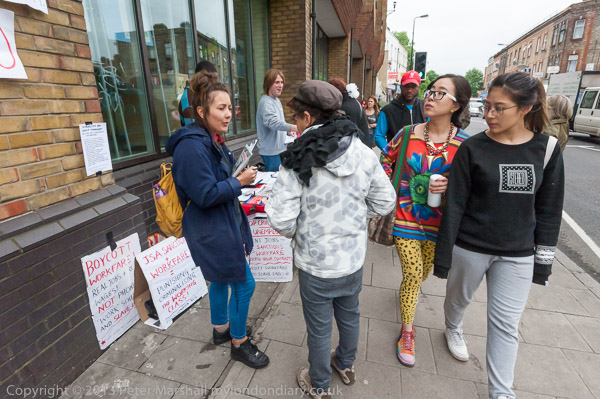
Whittington Hospital March Against Cuts.


Syria – Two Years Fight for Freedom

I arrived outside the Syrian Embassy in Belgrave Square while the rally before the march was taking place with members of the Syrian Community in Britain speaking.

Most of the speeches and chanting were not in English, and the Free Syria campaign appears to have little support from the British left who might have been expected to support their freedom fight. There were a few protests at the start, but often confused and mainly opposing any involvement in Syria by British forces.

The Syrian revolution against the Assad regime had also received little actual support from the UK Government and US support seemed halfhearted. When Assad began using chemical weapons against the Syrian rebel held areas there was strong condemnation but no action and any threats soon melted away once Russia became involved in supporting Assad.

One of the placards carried by marchers included a question which now seems particularly relevant in view of what has been happening in Gaza: ‘Hey World, How Many Kids Should Be Killed Before You Do Something?’

I walked with the marchers on their way to Downing Street as far as the Hyde Park underpass where it looked impressive as it made its way under the Hyde Park underpass, fairly densely packed and with flags waving it spread wide across the road, stretching back into Wilton Place over 200 yards away. Then left for Willesden Green.

Syria – Two Years Fight for Freedom


St Patrick’s Parade Brent – Willesden Green

For several years I had enjoyed the Brent St Patrick’s Day parade, sometimes going together with friends including John Benton-Harris who had photographed St Patrick’s Day here and across the USA as well as in Ireland over many years. The parade in Brent, usually on the day itself, had always seemed rather more authentically Irish than the larger London parade held on the nearest Sunday since Ken Livingstone introduced it in 2002 and I made some pictures.

Brent Council had a fine record of supporting cultural events celebrating its various communities including the Irish, but with government cuts since 2010 no longer had the funds to do so.

This year too, the main London event was taking place the following day, St Patrick’s Day itself, so the Brent event was on the day before. So the crowds were rather thinner than in previous years, and the poor weather may have put some off too.
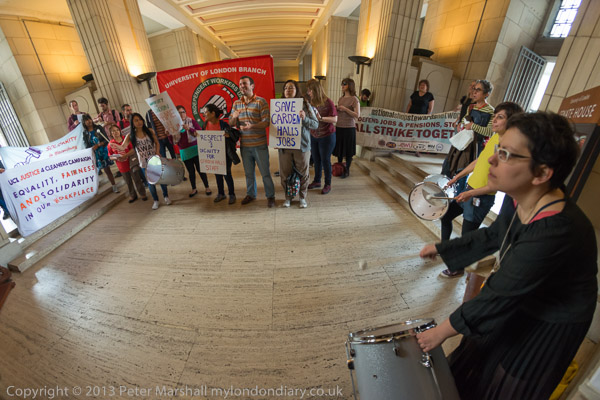
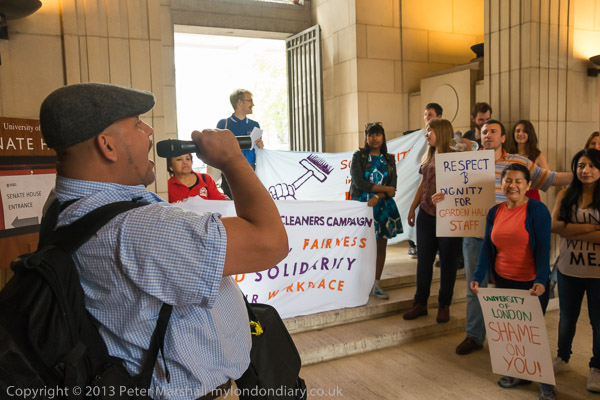
More pictures at St Patrick’s Parade Brent.


FlickrFacebookMy London DiaryHull PhotosLea ValleyParis
London’s Industrial HeritageLondon Photos

All photographs on this page are copyright © Peter Marshall.
Contact me to buy prints or licence to reproduce.