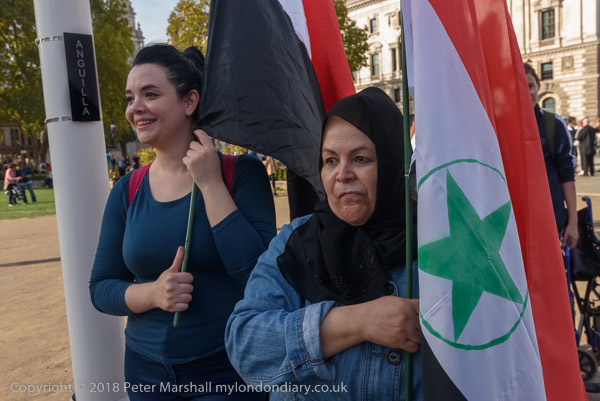
Iraq Oil Grab, Freedom, Rosary Crusade & More

My day in London on Saturday 11th October 2008 – 14 years ago


100 Days to stop Bush & Cheney’s Iraq Oil Grab! Shell Centre

Iraq Oil Grab, Freedom, Rosary Crusade & More

The ‘Hands of Iraqi Oil’ coalition including Corporate Watch, Iraq Occupation Focus, Jubilee Iraq, PLATFORM, Voices UK, and War on Want and supported by the Stop the War Coalition protested at the Shell Centre against plans to had over most of Iraq’s oil reserves to foreign companies, particularly Shell and BP.

Iraq Oil Grab, Freedom, Rosary Crusade & More

From 1961 on the Iraqi government took increasing control of the oil industry in Iraq, finally nationalising it it 1970. Before the 2003 invasion of Iraq it provided 95% of the government’s revenues.

Iraq Oil Grab, Freedom, Rosary Crusade & More

Any lingering doubts about the true reason behind the US-led invasion were dispelled by the grab for the country’s key national resource, a move strongly supported by expert consultants supplied by the UK and US who previously worked at a high level for companies like Shell and BP who drafted the bill for the giveaway which is opposed by Iraqi trade unions and oil experts.
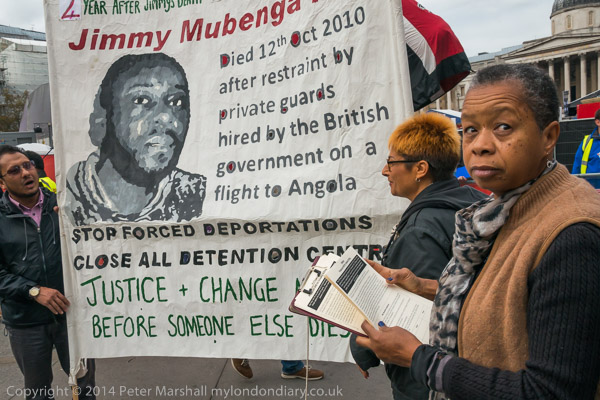
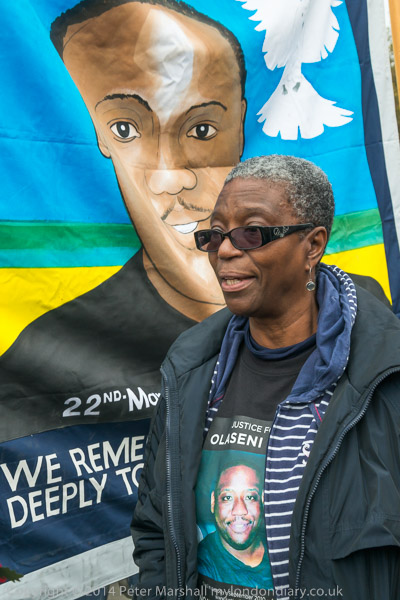
The protest took place at the start of the final 100 days of George W Bush’s administration and began at Shell’s UK headquarters on the South Bank before the samba band, ‘oil workers’ and other demonstrators with a huge and grotesque US Vice President Dick Chaney set off to make their way to BP’s HQ in St James’s Square and on to the US Embassy. But I needed to go to another protest.

Bush & Cheney’s Iraq Oil Grab


Freedom not Fear 2008 – New Scotland Yard, Victoria St

Freedom not fear 2008 events were taking place in over 20 countries to demonstrate against excessive surveillance by governments and businesses, organised by a broad movement of campaigners and organisations.

In the UK the main event was at New Scotland Yard in London, opposed to the restriction of the right to demonstrate under SOCPA, the intimidatory use of photography by police FIT squads, the proposed introduction of ID cards, the increasing centralisation of personal data held by government, including the DNA database held by police, the incredible growth in surveillance cameras, ‘terrorist’ legislation and other measures which have affected our individual freedom and human rights.

Although police handed out notifications under the SOCPA legislation warning them that protesting in the zone around Westminster they were in was illegal, neither the police nor the demonstrators seemed to be taking this very seriously in the 45 minutes or so I was there or when I briefly returned an hour later.
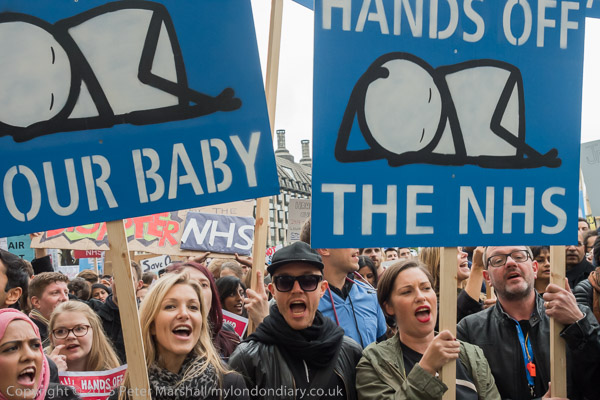
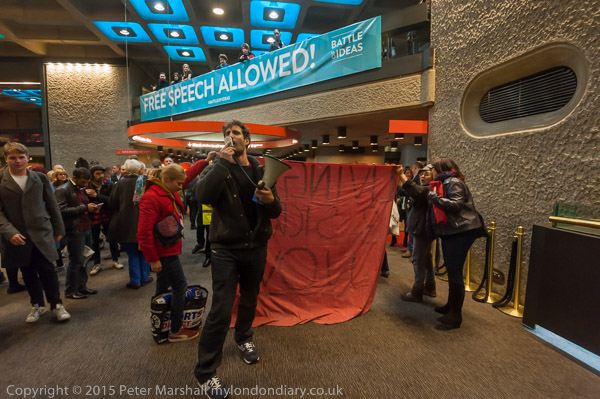
Freedom not Fear 2008


Rosary Crusade of Reparation – Westminster Cathedral

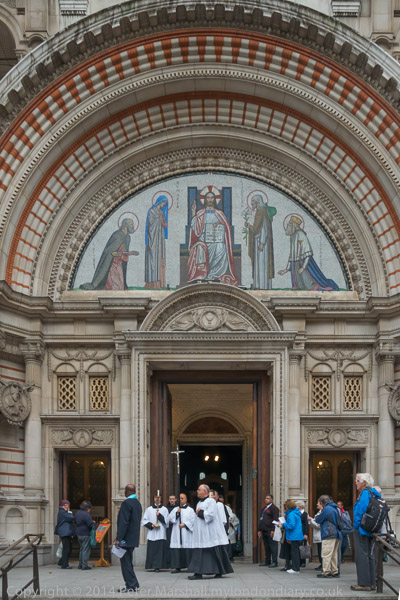
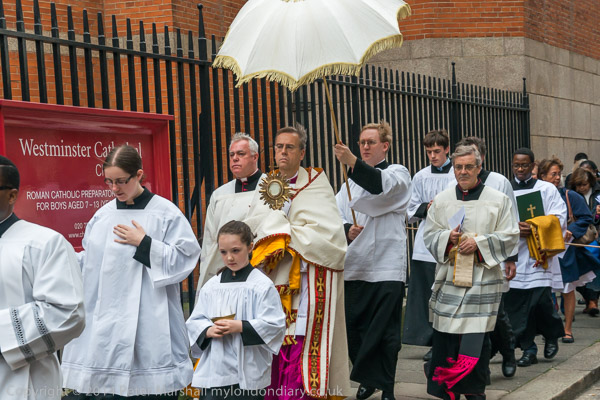
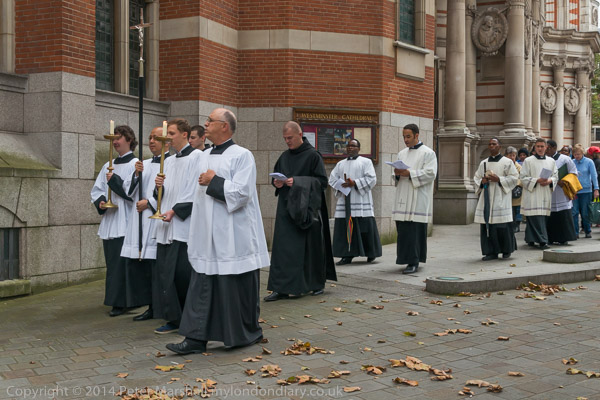
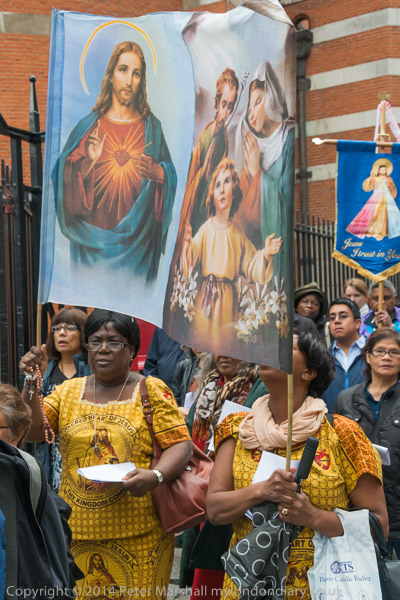
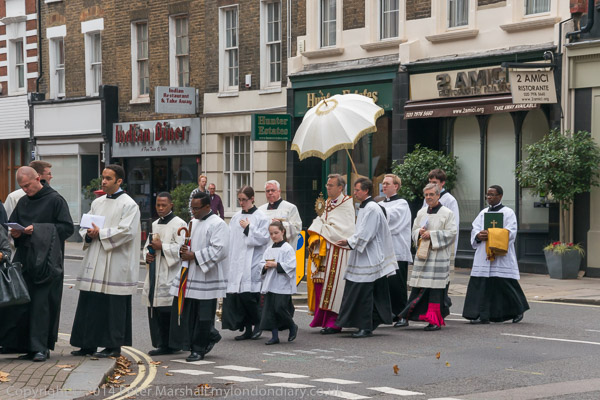
Half a mile or so up the road people were gathering outside the Roman Catholic Westminster Cathedral for the Rosary Crusade of Reparation, one of the larger walks of public witness by Catholics in London.

The Rosary campaign was begun in Austria in 1947 by Franciscan Fr Petrus Pavlicek who prayed for his country to be freed from its communist occupiers and it attracted half a million supporters. The first annual parade with the statue of Our Lady of Fatima wasin 1948 in Vienna on the feast of the Name of Mary, Sept 12. This feast celebrated the defeat in 1683 of Turkish invaders surrounding Vienna by Christian armies who had prayed to the Blessed Virgin.

The London procession takes place on the nearest Saturday to the anniversary of the final appearance of Our Lady at Fatima in October 1917, close to the end of the First World War. Those present saw the sun dancing around in the sky, and she promised peace and an end to war if men showed contrition for their sins and changed their lives.

This was the 25th annual procession in London, starting from Westminster Cathedral and making its way to a service at Brompton Oratory. The statue of Our Lady of Fatima was carried by the Catholic Police Guild and two thousand or more Catholics walked behind saying Rosary and singing hymns devoted to Mary.

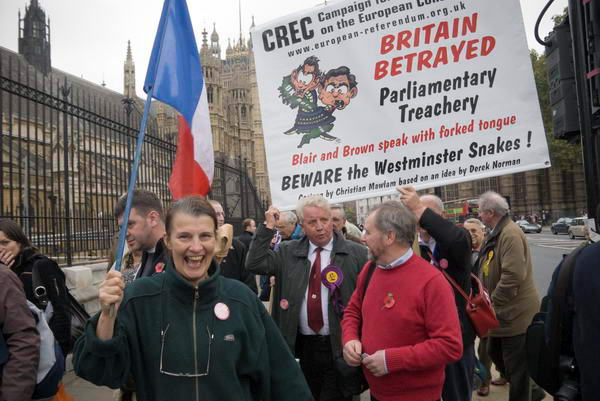
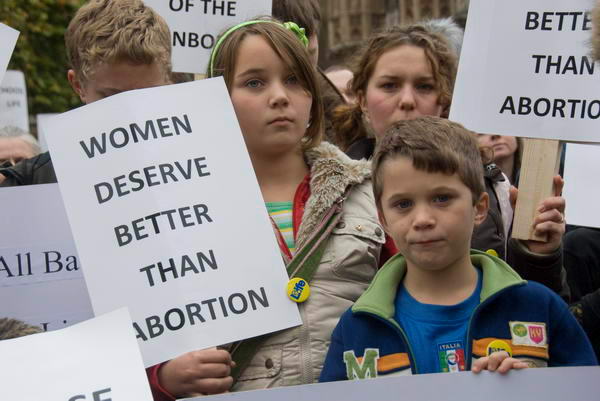
This year’s procession had as its special theme atonement for the Human Fertilisation and Embryology Bill then passing through Parliament.

Rosary Crusade of Reparation


Parliament Square

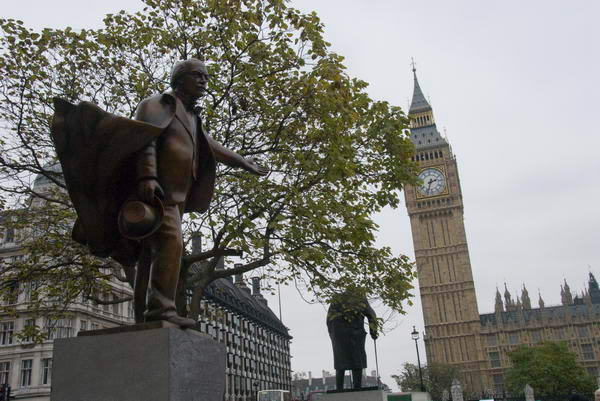
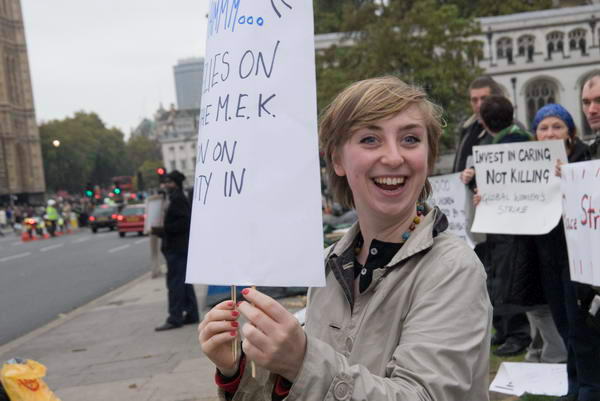
I left the procession as it started off and walked back past New Scotland Yard to Parliament Square, where several protests were taking place. Tamils were calling for an end to genocide in Sri Lanka and for an independent state of Tamil Eelam in the north and east of Sri Lanka.

In the centre of the square was a small protest by London Against Detention demanding an end to the detention of asylum seekers and the closure of immigration detention centres.

And Ben and Ben of ‘Still Human Still Here” were approaching the end of their two week protest in Parliament Square over the scandalous treatment of asylum seekers who are being forced into abject poverty in an attempt to drive them out of the country. They spent two weeks in a tent in the square living on the emergency rations that the Red Cross will supply to these inhumanely treated asylum seekers.

Brian Haw was then still in the square, then in his seventh year of long-term protest. As usual I went to talk to him, and was there when a man came up to laugh at him and insult him. He smelt strongly of alcohol, was talking nonsense and acting unpredictably. One of Brian’s supporters stood between him and Brian who was filming him. I put down my bag as I took photographs in case I needed to step in and help, but fortunately he eventually moved away.

Danny was lying on the grass and called out to me as I walked past after talking to Brian. He told me he had been on hunger strike for two weeks demanding a proper investigation into his case. He claims to have been abused by police and social services following an incident in which as a seven year old child in Llanelli he was implicated in the death of a baby brother but I found it hard to make much sense of his allegations.

While I had been talking to Danny I’d seen a group of people on the street opposite carrying placards go up Parliament Street and I’d later caught up with them at the top of Whitehall. I found they were Obama supporters hoping to find and persuade Americans here to register and vote in the election.

Parliament Square


Iran, Palestine, Hong Kong, UK Strikers & City Views

Solidarity protests on Friday 10th October 2014 and some extreme wide angle views in the City of London.


Solidarity for Care UK Strikers – Care UK, Southwark

Iran, Palestine, Hong Kong, UK Strikers & City Views
Protesters outside the offices in Great Guildford St

The protest by members from the National Shops Stewards Network, Trade Unionist and Socialist Coalition and Southwark Unison was one of many around the country in a nation-wide day of solidarity with Doncaster Care UK workers who had been on strike for 81 days after huge cuts in pay and services were made by a private equity company who have taken over this part of the NHS.

Iran, Palestine, Hong Kong, UK Strikers & City Views

Care UK is now owned by Bridgepoint, which also owns businesses including Fat Face and Pret a Manger. The workers are on strike not just over cuts in their own wages, but also against the changes in how Care UK is allowed to operate by the new bosses. What was formerly a values-based health service able to address the needs of those with learning disorders in their own community has been radically altered to providing minimum standards of service at the lowest possible cost to get the greatest profits for Bridgepoint, and for the company they will be sold on to once the private equity company has slimmed services and pay to the bone.

Solidarity for Care UK Strikers


Free Ghoncheh Ghavami – SOAS action

Iran, Palestine, Hong Kong, UK Strikers & City Views

The current unrest in Iran following the death of Mahsa Amini after her arrest by the morality police’ for allegedly wearing her hijab improperly, so that some of her hair was visible is unprecedented, but women there have been oppressed by religious police since the 1979 Islamic Revolution.

An Iranian woman who cannot go back to Iran

In 2014 former SOAS Law student Ghoncheh Ghavami was arrested and detained with other women for going to try to watch a volleyball match in Tehran. At the time of the protest outside SOAS University of London she had been held for 104 days and had been on hunger strike for 10 days. The protesters included a number of Iranian students one of whom told the protest she could not return to Iran as the TV coverage of a volleyball game in Rome had shown her reacting to a score.

The rally was supported by staff and the SOAS staff unions UCU and Unison, as well as by the SOAS Student Union, and some students took part in a day’s hunger strike in solidarity and there was a candlelight vigil. Ghavami was released on bail on 23 November 2014 and later sentenced to a year in jail and a two-year travel ban for “propaganda against the regime”.

Free Ghoncheh Ghavami – SOAS action


City Panoramas

I had an hour or two to spare before the next protest I was to cover and spent some of this walking around the city and making some extreme wide-angle photographs.

Although these pictures have a normal aspect ratio, they have a horizontal angle of view of over 145 degrees and a vertical angle of around 90 degrees, only possible by using a lens which does not give the more normal ‘rectilinear’ perspective but represents the scene with some curvature.

City Panoramas


Palestine protest at Hewlett Packard – Wood St

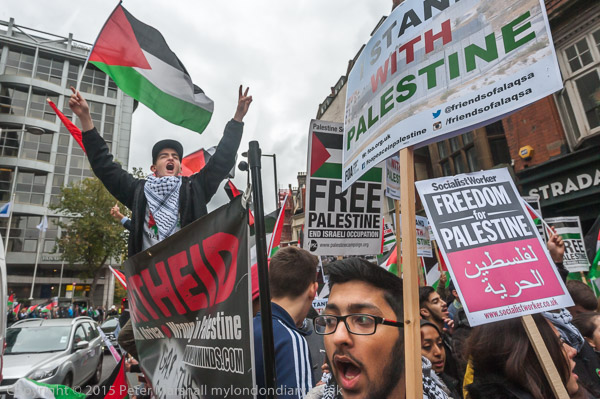
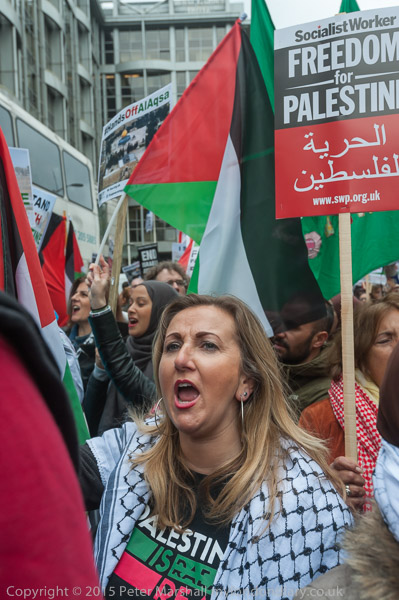
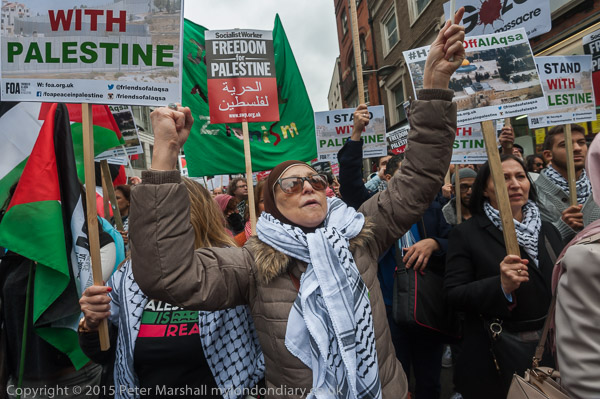
The Palestinian Prisoners Campaign continued their campaign against Hewlett-Packard, which boasts of ‘a massive presence’ in Israel and are the IT backbone for the Israeli war machine with a picket outside their London offices.

Police watched the protest across the street from HP’s offices carefully and umbrellas in the colours of the Palestinian flag and large banners made the protest very visible. Speeches and posters taped on the pavement gave details of HP’s involvement in the oppression and imprisonment of Palestinians which were also stated on the leaflets the protesters handed out.

Palestine protest at Hewlett Packard


Solidarity with the Umbrella Revolution – Chinese Embassy

Umbrellas were also on display at the protest around the doorway of the Chinese Embassy on Portland Place organised by the National Campaign Against Fees and Cuts in solidarity with the ‘umbrella revolution’ of the students and workers of Hong Kong in their fight for democracy.

Most of the umbrellas were on posters and placards, though some protesters carried small yellow paper umbrellas and there were just a few full-size ones too.

Police tried to move the protesters to the other side of the road, but they refused to move. They called for the immediate release of all the arrested, an end to the suppression of peaceful assembly, replacing the “fake universal suffrage” formula with the genuine political reform workers have been demanding, and the resignation of Chief Executive Leung Chun Ying.

Solidarity with the Umbrella Revolution


Sex Workers, Gurkhas, Cannabis & Shaker

Wednesday 9th October 2013 was another day of varied protests in London.


Police & Developers Evict Soho Working Girls – Greek St, Soho

Sex Workers, Gurkhas, Cannabis & Shaker

Although the immediate cause of this protest was the eviction of sex workers from flats in Romilly Street where they were operating within our laws restricting prostitution, the evictions were not at base about the activities of the women concerned but a result of property developers seeing enormous profits to be made by emptying properties in the area and redeveloping them.

Soho is particularly at risk from hugely profitable development as hotels and luxury flats because of its reputation and unique ambiance, which has largely derived in the past from its association with such risqué activities as strip clubs and models offering personal services as well as its restaurants and shops offering foreign delicacies unknown in the UK outside its boundaries.

Of course times have changed, and much of Soho is now Chinatown, but still its old reputation and some of those old activities remain, though many are fast disappearing. And while the tourists flock in, much of what attracts them is no longer there.

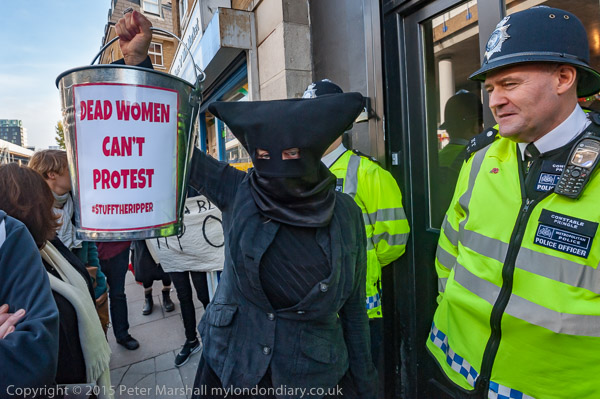
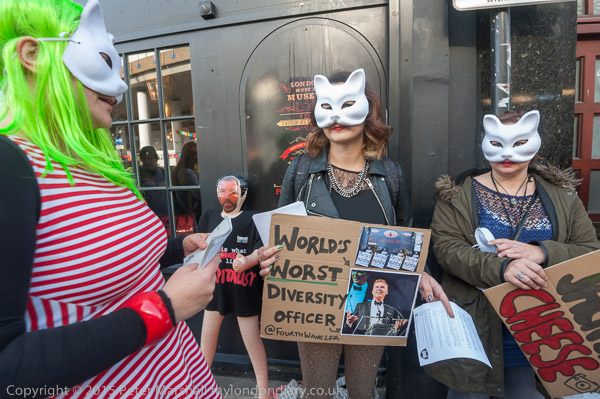
Sex remains a powerful attraction, and it was noticeable that there was far more media attention to this protest than most. Most of the masked women taking part in the protest were supporters of the ‘working girls’ from groups including the organisers of the event, Women Against Rape and the English Collective of Prostitutes (ECP) who I knew from other protests.

The police who issued notices to the property owners alleging that the properties were brothels are widely seen as working on behalf of the prospective developers, and owners Soho Estates whose managing director came out to speak at the event also have a financial interest. They could have stood up to the police intimidation and investigated the situation so they could assure the police that the activities in the flats were within the law, but failed to do so.

A speaker from the Soho Society told the protest that the activities of the women were one of the oldest traditions of the area, and were causing no problems with their neighbours and the many other trades of the area. Previous similar evictions have attracted local petitions signed by thousands and the ECP press release stated “Many express fears that gentrification is behind attempts to close these flats and that if sex workers are forced out it will lead the way for other small and unique businesses and bars to be drowned out by major construction, chain stores and corporations.”

More at Police & Developers Evict Soho Working Girls.


Gurkha Veterans Demand Justice – Old Palace Yard, Westminster

Sex Workers, Gurkhas, Cannabis & Shaker

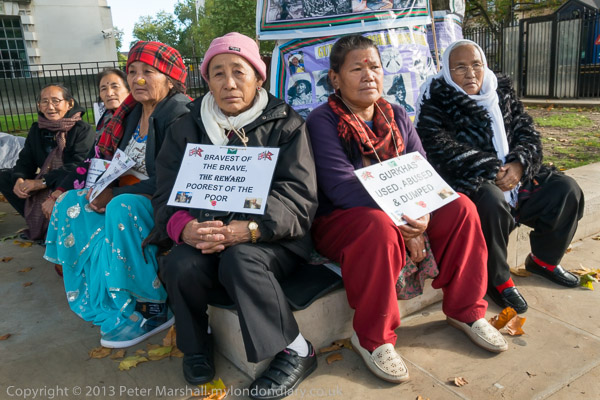
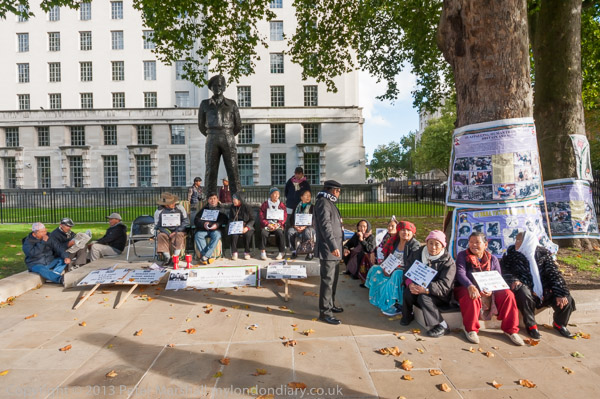
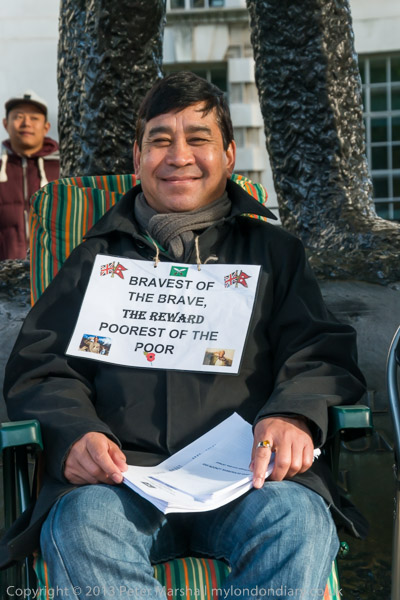
Elderly Gurkha veterans living in the UK did not benefit from earlier campaigns for fair treatment and most living here are in extreme poverty.

This was one of a number of protests every Wednesday and Thursday opposite the Houses of Parliament inviting the government to hold talks with them and if there was no progress by later in October they said they would begin a programme of nonviolent resistance (Satyagraha) with hunger strikes, beginning with a “13 days relay hunger strike in the name of the 13 Ghurka VCs which would then be followed by a fast-unto-death” if there was no progress.

Gurkha Veterans Demand Justice


Vigil for Shaker Aamer – Parliament Square

I paid a short visit to the campaigners from the Save Shaker Aamer Campaign who earlier in the year been holding a lunchtime protest on the pavement in Parliament Square facing the Houses of Parliament, standing out in their orange jumpsuits and black hoods on every day parliament was in session.

Shaker Aamer, a British resident still then held at Guantánamo was one of the first to be sent there after having been handed over the the US authorities for a cash reward. Although there was no evidence against him he had suffered years of torture in which the UK intelligence services had been implicated. Despite being cleared for release in 2007 and again in 2010 he was still being held, probably because his testimony when released would cause severe embarrassment to both US and UK intelligence agencies.

This protest was the start of a new series of regular weekly vigils seeking to draw attention to the failures of both President Obama and David Cameron, as well as demanding a full Parliamentary debate about Shaker’s case.

Vigil for Shaker Aamer


Cannabis Hypocrisy Protest – Westminster

An MS sufferer at the event

Campaigners had come to College Green, close to the Houses of Parliament to call for reform of the laws about cannabis, in particular to allow its medical use for MS sufferers. Legal medical cannabis is mainly available here to MS sufferers who can afford to pay its very high price.

Unsurprisingly it was a rather laid back protest, beginning rather late and not really getting started the whole 90 minutes I was there before giving up and going home as they were still waiting for the megaphone or PA system to arrive.

By the time I left there were quite a few people sitting around on the grass smoking. As I commented in a caption, the photographs don’t show what they were smoking, but the smell was unmistakable, and after I while I began to feel just a little unusual. Perhaps the two police officers who strolled over to take a look had no sense of smell or perhaps they simply felt that there was little point in taking any action.

Years ago I had to give lessons against drug use to 16-18 year olds as a part of a ‘personal and social education’ programme, and was aware that many of them had rather more experience in the area than me. But the materials from the Home Office that I relied on made clear that cannabis was considerably less harmful than alcohol or tobacco. Addiction to anything is a bad thing, but so too is the criminalisation that results from our current drug laws, which also fuel an illegal and highly profitable drug business. Appropriate reform, which would certainly include easier access for medicinal use, is long overdue.

Cannabis Hypocrisy Protest


Stand Up To Lambeth, Brixton Arches, Trafalgar Square & Iran

Saturday 8th October 2016 in London


Stand Up to Lambeth Council – Windrush Square, Brixton

Stand Up To Lambeth, Brixton Arches, Trafalgar Square & Iran
Rapper Potent Whisper with the Andrew Cooper’s four Lambeth villains

Lambeth is on some measures one of the most unequal boroughs in the whole of England, with some areas of high deprivation and others with well above average incomes. It is ethnically diverse, with almost two thirds not describing themselves as White British and schoolchildren coming from homes in which 150 languages other than English are the first language. There are large Portuguese, Spanish and Somali speaking communities and almost a quarter of the population identify as Black.

Lambeth Council is run by Labour who have almost 60 councillors, with just three Lib-Dems and two Green Party councillors (there were 3 Conservatives and no Lib-Dems in 2016.) It is dominated by right-wing Labour councillors and has many links with property developers, estate agents and others, and seems determined to follow policies which are not in the interests of the people of Lambeth, closing libraries, ending many vital services and getting rid of council estates and the people who live there.

Lambeth works with Savills, are a leading agency in social cleansing

Activists in the borough accuse the Labour council of financial waste and “destroying our communities, racial and social inequality” and “stealing the people of Lambeth’s future.” The borough’s motto is ‘Spectemur Agendo’, Let us be judged by our acts, and many in Lambeth have judged the council and found it guilty of selling out its people.

Police come to protect a Lambeth Labour stall supporting the council

The protest was planned to be ‘family friendly’, a ‘big, pink, determined’ event to ‘Stand Up To Lambeth Council’ and oppose its “destruction of services, homes, jobs and the rights of residents.” As well as speeches there was a small brass band. But the protesters were clearly angry and a Lambeth Labour stall in the square needed police protection after it refused to take part in the protest or move. There were Labour members taking part in the protest, but Lambeth Momentum later appeared to deny supporting it, hoping to avoid the kind of purges that have been highlighted in the recent truly shocking Al Jazeera ‘Labour Files’ documentaries.

Council business is largely decided by a small inner cabinet, and the four major villains were represented at the event by a large four-headed monster made by Andrew Cooper with the faces of Lambeth Labour leader Lib Peck, Cabinet Member for Housing Cllr Matthew Bennett, Cabinet Member for Regeneration, Business and Culture Jack Hopkins and Sue Foster, Strategic Director, Neighbourhoods and Growth.

Eventually the march set off for Clapham Common, though it came to a partial halt almost immediately for a protest outside Lambeth Town Hall opposite Windrush Square, before setting off slowly towards Clapham.

I walked with the march roughly halfway to Clapham Common before turning around and going back to Brixton to catch the Victoria Line to central London.

More on My London Diary:
Stand Up to Lambeth March
Stand Up to Lambeth Council


Brixton Arches & More – Windrush Square, Brixton

Save Brixton Arches

Both on my way to the protest and during the march along Acre Lane I took a few pictures of Brixton. One of the actions of Lambeth Council has been to cooperate with Network Rail to force out traders from the railway arches in the centre of Brixton.

Network Rail intend to refurbish the arches and will then re-let them at three or more times the current rents, which will mean the distinctive local businesses being replaced by chains which can be found on every high street across the country. The campaign to keep the businesses there received huge support in the area, but the council wasn’t listening.

I rushed a few yards away from the march to photograph the mural Big Splash, painted in 1985 by Christine Thomas and still looking well (details here), though I doubt if anything like this ever existed on Brixton’s river, the Effra.


Trafalgar Square

I’d left the Lambeth protest to come back to photograph a protest that was supposed to be happening in Trafalgar Square which quite a few people had said on Facebook they would be attending. But nobody had turned up, and I had time to wander around the square.

One of the four 18ft square square bas-reliefs on the base of the column was of particular interest as the picture showing Nelson’s death includes one clearly black face. These panels were supposed to be made with brass from captured French cannon, but one led to a court case with the makers being jailed for having added some much cheaper iron and it had to be completed by others. The builders of the column also got away with fraud, as when it was restored in 2006 it was found to be 16 ft shorter than it should have been.

Red Devils MC, Holland

There were problems with the lions too, as they were first commissioned to be sculpted in granite, but the sculptor had a disagreement with the architect and abandoned the job. took years for them to be re-commissioned in bronze from Sir Edwin Landseer and Baron Marochetti and they were only added in 1867. And like most large projects while the costs were intended to be covered by private finance (or rather public subscription) the government had to step in and cover much of the cost.

Trafalgar Square


Iranian vigil on Anniversary of 1988 Massacre – Trafalgar Square

I’d stayed in Trafalgar Square to photograph a vigil by the Iranian People’s Fadaee Guerrillas in London and the Democratic Anti-imperialist Organisations of Iranians in Britain on the 27th anniversary of the massacre of an estimated 18,000 political prisoners held in Iranian jails by the Iranian regime following its defeat in the Iraq/Iran war in the Summer of 1988.

The 3 months of killing by the Iranian regime of communists, progressives, patriotic activists and intellectuals of all ages ended at the beginning of October 1988 but details only began to emerge years later. The protest also called for the release of the many political prisoners still held in Iran and called for a society there were all would be free and equal.

Iranian vigil on Anniversary of Massacre


Migrant Rights, XR, Prefabs or Football Lads?

Most days when I come to write a post for >Re-PHOTO I start by searching for what photographs I took on the same day in previous years. My London Diary has almost 20 years of work online, so usually there is something from at least one year to chose, though if I don’t find that interesting enough I’ll instead write a post continuing the series on my walks in the 1980s.

But often I have the opposite problem, with events from several years to chose between, and I can sit for ages trying to decide which to write about. And for October 7th I simply can’t make up my mind. So for today I’ll show you the options and you can chose which if any you want to find out more about. I’ll present them briefly in date order.


March for Migrant Rights – London, Saturday 7 Oct, 2006

Migrant Rights, XR, Prefabs or Football Lads?

The march for migrant rights was a little unusual in taking place entirely south of the river, from the Imperial War Museum in Lambeth to Tanner Street Park in Bermondsey. The day was the third International Day Of Action On Migrant Rights, and there were events in various cities across Europe and in Africa.

It was a reasonably large march, involving groups including ‘Barbed Wire Britain’, ‘No-Borders’, ‘No One Is Illegal, the ‘Latin American Workers Assocation’ and other national groups of migrant workers, as well as some trade union branches. But the streets along which it marched were largely empty.

The marchers demanded an amnesty for migrants living in the UK, the right for migrants to work, the closure of detention centres, and for social justice and secure work conditions for all. They called for the UK to sign up to the Un International Convention On The Protection Of The Rights Of All Migrant Workers.

More at March for Migrant Rights.


Excalibur Estate – Downham, Catford. Thursday 7 Oct 2010

I put my bike on the train to Waterloo and cycled to Downham to photograph the Excalibur estate is the only substantial example remaining of a number of pre-fab estates constructed as the Second World War ended for returning soldiers and their family. Erected by prisoners of war it was only intended as temporary housing, expected to last 10 years.

The prefabs were well-made with fitted kitchens, refrigerators, built-in cupboards and heated towel rails, but Lewisham council has allowed them to deteriorate, having decided years ago it wanted to demolish the whole estate.

I made my visit – the second or thrid time I’d photographed the estate – after hearing that following a small majority of residents voting for a regeneration plan the council was transferring the estate to a housing association to carry this out. Some residents were keeping up a fight to save the estate and had managed to get a small group of six prefabs Grade II listing.

In a longer article on >Re:PHOTO I suggested that people who wanted to see the estate should go down and visit it without delay. Twelve years later you still have time to do so, and can also see the new housing on the northern part of the estate. Some of the remaining properties are now empty, but others are still occupied, though I think most of the tidy gardens in my 2010 pictures are rather less well-kept.

More at Excalibur Estate.


Elephants & Rhinos, Football Lads Alliance & Stand Up To Racism – Saturday 7th October 2017

My working day started in Parliament Square where as a part of the Global March for Elephants and Rhinos (GMFER) taking place around the world people stood in a half hour long silent protest holding mock elephant tusks or rhino horns. The speeches after this were continuing when I left for Park Lane.

A crowd of perhaps 5,000 were at the Football Lads Alliance Rally, with speakers from an open-top bus protesting against the recent terror attacks in the UK and Europe, remembering the victims and calling on government to take decisive action against the extremist threat, including locking up all terrorist suspects and deporting those of foreign origin.

It was at times an angry crowd, with many responding to the clearly racist and Islamophobic remarks from some speakers, with suggesters that many thousands of Muslims were Islamist extremists and should be locked up, and there was a huge angry outcry when the name of Diane Abbott was mentioned, with a loud shout from behind me that she should be raped. I recognised some who I’d photographed on EDL marches and made clear they thought I should not be there.

Eventually the march set off and made its way along Piccadilly in silence but by the time it reached Trafalgar Square it had become very noisy. It was joined there by a group of a couple of hundred Gurkhas, many wearing their medals, who led the march for a few yards at the top of Whitehall.

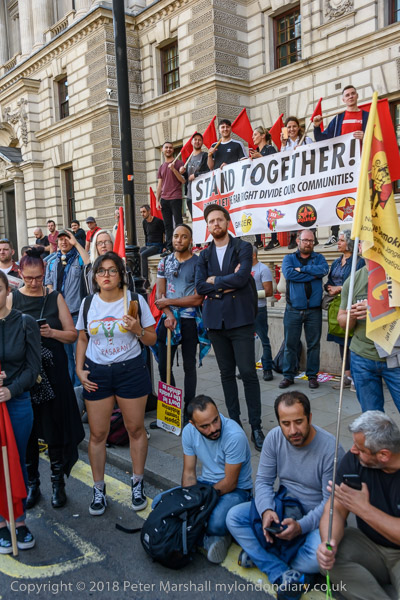
The march organisers and fans then overtook them to take the march down Whitehall. Opposite Downing Street it went past a group of supporters of Stand Up to Racism who were calling for everyone to Stand together and say ‘No to racism & Islamophobia, Football for All’.

Some stood on the edge of the pavement to hand out leaflets to the marchers through a loose line of police. Although some of the marchers took the leaflet with its heading ‘Some questions for the leaders of the FLA‘ there were many angry shouted insults and threats. Some marchers tried to hold back others who tried to attack the people handing out leaflets and eventually a large block of police had to come in and push angry FLA marchers away and down towards Westminster Bridge.

By this time I’d had enough of the FLA and their threats and didn’t bother to try to photograph them laying the football club wreaths on Westminster Bridge, but sat down in Parliament Square to have a rather late lunch.

Stand Up To Racism and the FLA
Football Lads Alliance March
Football Lads Alliance Rally
Silent Vigil for Elephants and Rhinos


Extinction Rebellion – And A Wedding

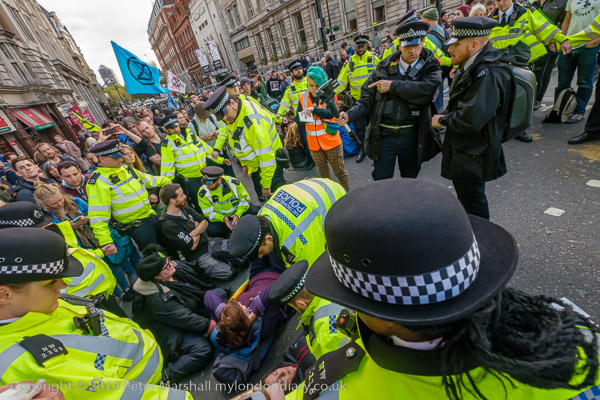
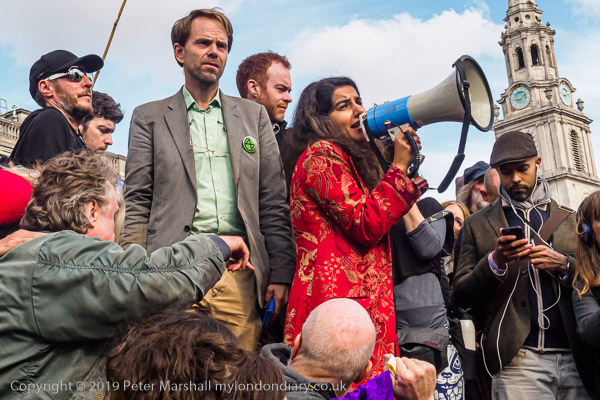
Extinction Rebellion began their International Rebellion by occupying eleven locations at government ministries, Downing St, The Mall, Westminster and Lambeth bridges, bringing traffic to a halt.

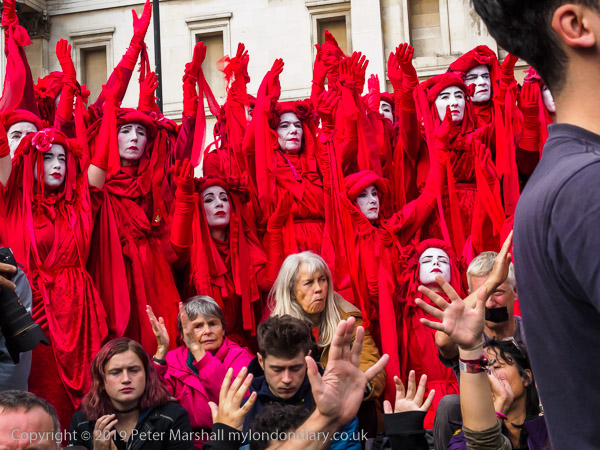
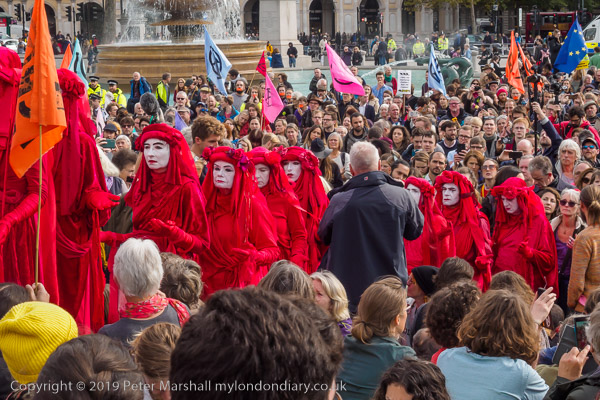
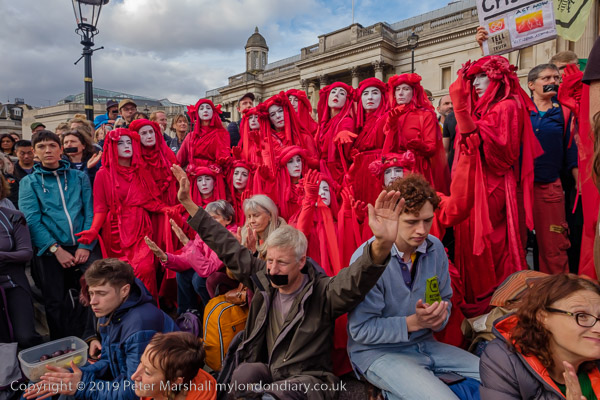
I made my way to most of these sites and took pictures, including some of the Red Rebels on Westminster Bridge. Getting around London was difficult, with the police blocking some roads including Lambeth Bridge adding to the traffic chaos and making me walk much further than I wanted. It was generally a colourful protest and I saw few arrests.

On Westminster Bridge I recorded the wedding of XR rebels Tamsin and Melissa in the middle of the protest. I’m not a wedding photographer but this was a little different.

XR Rebels marry on Westminster Bridge
Extinction Rebellion occupy Westminster


Cleaners, Bow Creek and Stirling Prize

Thursday 6th October 2016 was another of those varied days I love. I began with a lunchtime protest against victimisation and nepotism by cleaners, then went for a walk by Bow Creek before finally photographing a protest outside RIBA where the annual Stirling Prize presentation was taking place.


Cleaners demand ‘End Nepotism’ – 155 Moorgate

The Independent Workers Union CAIWU occupied the lobby of Mace’s headquarters building in Moorgate at lunchtime protesting noisily against cleaning contractor Dall Cleaning Services. I met the cleaners and supporters outside Moorgate station where they got out posters and a banner before marching quietly to pay an unannounced visit to Mace’s headquarters building where they walked into the lobby and started making a lot of noise.

They called for the reinstatement of two cleaners who they say were dismissed illegally without proper notice or other procedures being followed. They say that the cleaners have been dismissed simply to give jobs to members of the family of a Dall Cleaning Services supervisor.

After around 15 minutes a police officer arrived, but it was too noisy to hear what he was saying and the protest continued. He stood a little to the side and called for reinforcements, and as these arrived the protesters walked out to join those who had stayed outside and the protest continued on the pavement for another 20 minutes.

Police came to tell the protesters they were making a lot of noise, and were told that was the idea – they came here to do so and shame Mace and Dall Cleaning Services.

Eventually another officer who had been present at several previous CAIWU protests arrived and was told they would soon be stopping.

And after a couple more minutes, Alberto ended the protest with the usual warning “We’ll be back – and that’s a fact”.

More at Cleaners demand ‘End Nepotism’.


Limehouse, Bow Creek & Silvertown, London

I had the afternoon to fill before the next protest and it was a fine day so I decided it was time to take another trip to Bow Creek. I took the DLR from Bank to West India Dock to start my walk, and took the opportunity and a fairly clean train window to take a few pictures on my way there.

City Island is not quite an island

I walked over the Lower Lea Crossing, which provided a view of work which was now rapidly going ahead on ‘City Island’, where a loop in Bow Creek goes around what was previously the site of Pura Foods. This development had stalled with the financial crash in 2008 but was now in full swing.

From there I walked on along the elevated Silvertown Way, giving views of the surrounding area, before taking the DLR back to Canning Town, again taking advantage of a fairly clean train window on the ride.

Rather to my surprise, at Canning Town I found that the exist to the riverside walk was finally open. I think the walk here beside Bow Creek was constructed in the 1990s and I’d been waiting for around 20 years for this exit from the station to open and give access to it. I didn’t have as much time left as I would have liked but did make a few pictures.

For years there have been plans to create a walk from the path beside the Lea Navigation at Bromley-by-Bow to the Thames at Trinity Buoy Wharf, and the section as far as Cody Dock had opened a few years earlier – with the ridiculous name of ‘The Fatwalk’. It hasn’t really got any further yet, though at least it has been renamed as the ‘Leaway’.

More pictures – both panoramic and otherwise at Limehouse, Bow Creek & Silvertown.


ASH protest Stirling Prize – RIBA, Portland Place

Many of the protesters wore masks showing RIBA President Elect Ben Derbyshire

Architects for Social Housing (ASH) led a protest outside the Stirling Prize awards ceremony pointing out that one of the short-listed projects, Trafalgar Place, was built on the demolished Heygate Estate, which was ‘stolen from the people’ with hundreds of social housing tenants and leaseholders being evicted and the site sold at one tenth of its value to the developers.

 ‘Architecture is Always Political!’, a quote from Richard Rogers

Together with other housing protesters than held their own awards ceremony on the pavement in front of the RIBA building, awarding the ‘O J Simpson Award for getting away with murder’ to drMM Architects for this project, the first phase of Lendlease’s £1.5 billion Elephant & Castle redevelopment. This will replace 1214 social housing homes with few or no affordable homes.

There were no other contestants for the Ben Derbyshire Foot In Mouth Award than RIBA President Elect Ben Derbyshire but there was a vote to select which of five of his totally ridiculous statements by him about social housing should be the winner.

Among those at the protest were residents opposing the demolition of the Aylesbury estate, close to the Heygate, where Southwark Council are also demolishing social housing properties rather than carry out relatively low cost Aylesbury estate,that was voted for by the residents and could continue the useful life of these properties for many years.

Simon Elmer of ASH holds up the award for the ‘O J Simpson Award for getting away with murder’ awarded to drMM Architects and developers Lend Lease for Trafalgar Place

Estate demolition has a huge social and environmental cost and schemes like these in the borough of Southwark result in huge losses of social housing. But they provide expensive properties often sold largely to investors who will never live in them and large profits to the developers. Councils hope to share in these profits, but on the Heygate made huge losses, though some individuals involved have gained highly lucrative jobs.

More at ASH protest Stirling Prize.


One Law For the Rich

One Law For the Rich

On Saturday 5th October 2013 protesters marched from the Old Bailey to the Royal Courts of Justice in a protest against proposed cuts to Legal Aid. They accused Justice Secretary Chris Grayling of perverting the course of justice by these cuts and held a trial blocking the Strand outside the courts which found him guilty.

One Law For the Rich

Grayling’s cuts mean that justice has become largely only available to the very rich, with one law for the rich and another for the poor.

One Law For the Rich

Legal Aid enabled people without personal fortunes to fight unjust arrests, to challenge incorrect decisions by councils and much more. It was never a perfect system, but did at least provide some justice for those without huge incomes, which has now in many cases disappeared.

To claim legal aid you must pass two tests. The first is one of the ‘Interests of Justice‘, which largely restricts legal aid to those with charges against them which could result in their being sent to prison.

The second test is a means test. If you are on benefits such as income support you are likely to qualify, but if you or your partner have a joint income of over £21,000 you are unlikely to qualify. And if you are single the income limit is just over half that. These limits are considerably less than earnings of people in full-time employment on the current minimum wage.

The English legal system has developed through years of tradition and restrictive practices into a highly inefficient and expensive level with only the wealthiest able to afford many of the more highly qualified and experienced to argue their case. It has long been highly stacked against all those unable to afford the most expensive lawyers, though there have always been some distinguished figures ready to fight for some underdogs, at times without payment, as a matter of principle.

But there are still great areas where only the very wealthy can afford the law, and only the very rich are able to defend the case. Journalists may find themselves gagged, small businesses may be forced to desist because they do not have the resources to fight, even though they may have an excellent case. Our laws, largely enacted to protect the rights of the ruling class, have always favoured the interests of the wealthy.

The march gathered outside the Old Bailey, but it soon became clear that we were heading for the Royal Courts of Justice, though perhaps it was this slight subterfuge that enabled some protesters, headed by wheelchair users from DPAC (Disabled People Against Cuts) to block the road in front of the Royal Courts of Justice shortly before the main march arrived to join them.

Police quickly arrived to try to persuade the protesters to clear the road, but they were not moving, and after a few minutes began a mock trial of Chris Grayling, present as a man in a mask of his face with a dock around his waist.

The evidence was presented and witnesses cross-examined by wigged protesters before the larger than usual jury of protesters was invited to give its verdict. Unanimously they found Grayling guilty and the time came for his sentence was pronounced. There seemed to be no agreement about a suitably severe punishment, with most of those suggested no longer being available under UK law. The prisoner was led away (though unfortunately only to the pub opposite rather than prison) and the protest continued noisily, still blocking the road.

Police had been harassing protesters throughout, trying to get them to clear the road, and threatening arrest, though I think most people just moved to another part of the protest to avoid this. They had managed to clear one carriageway, but were still blocking this with a police van. Eventually DPAC came to a decision that the protest had been successful and it was time to bring it to an end. They told the police they would stay for another five minutes, and at the end of this did so triumphantly.

More about the protest and many more pictures at UK Uncut Road Block for Legal Aid.


Cable Street, Fish Island & Hackney Wick

Cable Street, Fish Island & Hackney Wick

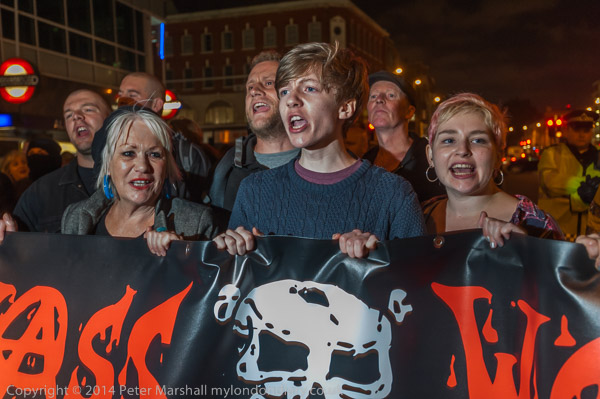
On Sunday 2 October 2011 a march and rally celebrated the 75th anniversary of the Battle of Cable St, when when Mosley’s fascists were prevented from marching into London’s largely Jewish East End.

Cable Street, Fish Island & Hackney Wick

Over a thousand trade unionists and anti-fascists came to march along Cable St remembering the day, including the then TUC Deputy General Secretary Frances O’Grady, and the marchers were led by Max Levitas who had been at the battle in 1936, then aged 21, and remained active as an anti-fascist until his death in 2018, including serving for a total of 15 years as a Communist coucillor in Stepney.

Cable Street, Fish Island & Hackney Wick

At the rally close to the fine Cable Street mural we were reminded that official bodies including the Board of Deputies of British Jews had advised people to stay away from Mosley’s march and that the local opposition was organised largely by the Communist Party of Great Britain, led by Phil Piratin, who nine ears later became Communist MP for Mile End. As well as large number of local people, both Jews and others, thousands of others opposed to fascism flocked in to defend the area.

An estimated 1-300,000 people gathered at all the roads leading into the East End, determined to stop the march on October 4th by 3,000 uniformed fascists. The fascists waited outside the Royal Mint while 7,000 Metropolitan Police, including their entire mounted section and an autogiro (a primitive form of helicopter with an unpowered rotor) overhead, attempted to clear a route for them.

When the anti-fascists heard the police were trying to force a route along Cable Street, Irish dockers, Jewish tailors and other anti-fascists built three barricades across the street with thousands arriving to stop the police clearing the street. Eventually Mosley abandoned the march and took his supporters back towards Hyde Park.

There were around 175 people injured, men, women and police and around 150 arrests. Most were charged with obstructing the police and received fines, typically of £5, but some thought to be ringleaders were sentenced to three months hard labour.

The event raised public awareness of the British Union of Fascists and led to the passage of the 1936 Public Order Act which prohibited the wearing of political uniforms in public except for ceremonial occasions, outlawed paramilitary organisations, banned offensive weapons at public meetings and gave power to the police to impose conditions on marches and arrest unruly counter-demonstrators. It also allowed the Home Secretary to ban protests in a area where serious disorder was likely and made it an offence to use “insulting words likely to cause a breach of the peace” in public speeches.

Mosley continued to have many supporters in the East End after the battle, and Bethnal Green was one of his strongholds. There were gangs of fascist youths in Mile End who assaulted Jews on the street and smashed the windows of Jewish homes and shops.

Hettie Bower (left)

Levitas was not the only veteran of the 1936 battle at the event, and there were other veteran antifacists taking part too. The oldest was was 106 year old Hetty Bower, still looking extremely well, and walking with the aid of a stick. Rather younger at 94, Beattie Orwell was still looking very sprightly and had been at the battle at the age of 19.

There were also banners from the Spanish Civil War which was also taking place 75 years ago, as well as those from many trade unions and political groups including those representing the newer communities of the area, with local activists reminding those present of the continuing need to fight against fascism and racism, and in particular the need to oppose the English Defence League, who just a few weeks earlier had attempted to march into Tower Hamlets but had been stopped by a popular mobilisation.

A short distance away in Grace Alley Wilton’s Music Hall, the oldest surviving Grand Music Hall in the world, was hosting a four day programme of events commemorating Cable St with various performances, book launches, exhibitions and stalls, street theatre and music along the alley outside.

Battle of Cable St – 75 Years.


Fish Island, Olympic Views & Hackney Wick

Olympic Stadium from Forman’s roof

I left Cable Street and took a bus to Bethnal Green, then walked along the Roman Road and and on across the motorway to Fish Island, on my way to visit the gallery space on the top floor of Forman’s, salmon smokers and one of the few local businesses that seems to have done well out of the Olympics.

Footbridge across the Hertford Union Canal to Hackney Wick

They had been moved from a factory more or less where the Olympic Stadium was being built to new modern premises on the opposite bank of the Lea navigation, designed and painted salmon pink to look like a lump of salmon and appropriately in the area known from its street names as Fish Island. As well as the smoking plant it also houses a restaurant and a large art space, with views over the Olympic site both from the front of the gallery and the adjoining roof terrace.

Shoreditch High St

After viewing the exhibition and taking some photographs there I walked from Fish Island over the footbridge to Hackney Wick, visiting a lively street market there and then walking along the Lea Navigation towpath to the Westway and back into Hackney Wick for a bus back though the City and on the Waterloo.

More pictures at Fish Island, Olympic Views & Hackney Wick.


Luxury Cars, Poverty Wages

Luxury Cars, Poverty Wages

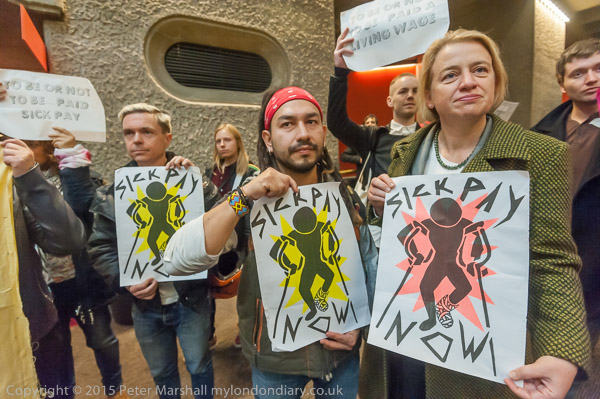
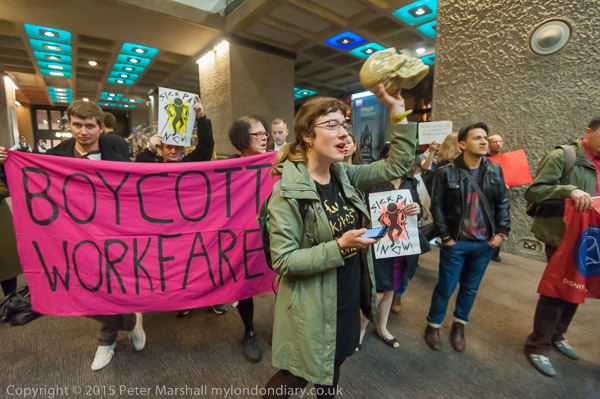
Five years ago on 30th September 2017 United Voices of the World, a grassroots trade union for low paid, migrant and precarious workers, protested in South Kensington against luxury car dealers H R Owen who had suspended their two cleaners without pay for asking to be paid a living wage.

Luxury Cars, Poverty Wages

The UVW has many members among London’s low paid minority ethnic communities, particularly Spanish speakers, and has led successful campaigns to get them better treatment at work and to be paid the London Living Wage.

Luxury Cars, Poverty Wages

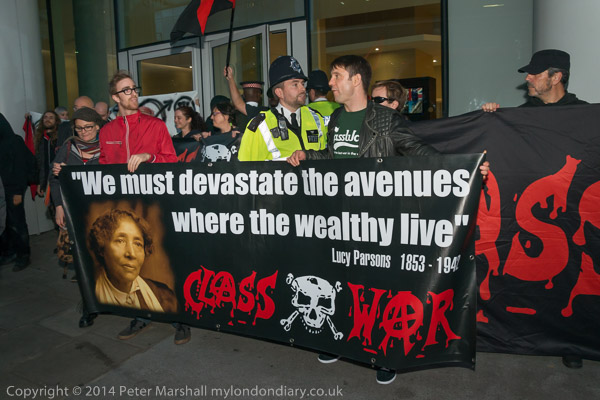
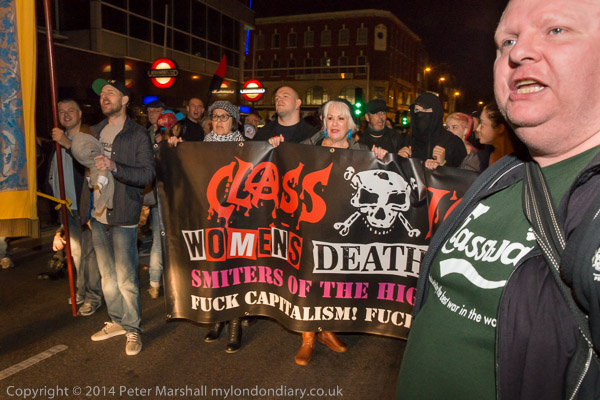
In this and other protests they have been supported by other groups, particularly Class War and the Revolutionary Communist Group and there were a number from these and other unions at the protest.

Angelica Valencia

The Ferrari showrooms have only two cleaners, Angelica Valencia and Freddy Lopez, and they were then employed at the minimum wage by cleaning company Templewood, who the UVW also say have made unlawful deductions from their wages and are in breach of the minimum wage legislation.

Freddy Lopez, speaking in Spanish, with Claudia ready to translate

Almost a hundred supporters met outside South Kensington Station in the late afternoon and then marched to the Ferrari showroom. On their way they paused briefly to protest at H R Owen’s Lamborghini showrooms and then the entrance to their offices.

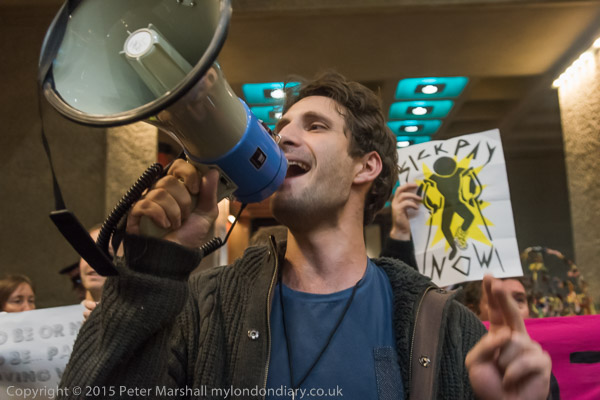
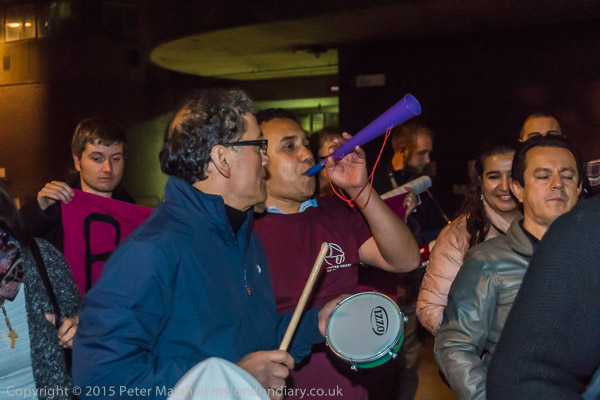
They stopped outside the showrooms on the Old Brompton Road for a long and noisy protest, with speeches, chanting, drumming and ending with dancing on the roadway.

Ian Bone of Class War waves his stick at a branch of Foxtons

Loud peaceful protests such as this attract a great deal of local attention to the disputes and shame employers into meeting the demands of low paid and badly treated workers. They are effective in persuading the owners of businesses to lean on outsourcing companies to treat their staff better.

Although outsourcing companies are only concerned with exploiting their workers for greater profits, businesses such as H R Owen are very much aware of the negative publicity from the exploitation on their premises being made public.

The success of protests like this, particularly against some of the leading companies in the City of London, by the UVW and other active grass roots unions is doubtless one of the reasons that led the government to enact the Police, Crime, Sentencing and Courts Act 2022 which gave the police powers to act against noisy protests. It remains to be seen how the police, and the Met in particular, will make use of these.

Jane Nicholl makes her opinion clear

The amount of money involved in paying decent wages to the two cleaners is clearly miniscule compared the the price of the cars being sold in the showrooms. The web site tells me that in 2022 the Ferrari range is priced between £166,296 – £263,098.

Class War had brought some ‘DO NOT ENTER CRIME SCENE’ tape and some of the supporters of the cleaners had come carrying mops which they waved at the people inside the showroom.

Victor of the UVW speaks with his usual passion

As the poster states, both of the cleaners voted for strike action in the workplace ballot, giving this a 100% vote. Most if not all the strikes by the UVW have had very high levels of support among workers. The poster also points out that H R Owen are making £400 million a year but the strikers were only paid £7.50 an hour. Paying them a living wage would have a totally insignificant impact on company profits but make a huge difference to the cleaners.

Police talked to the protesters and tried to keep traffic flowing along the road, though there was very little of it and little disruption was caused. But Class War did hold up a few cars for a minute or two with their banner.

The peaceful protest ended with music and dancing – and some more speeches. On their web site, the UVW state:

“In a David vs Goliath battle, UVW members Freddy and Angelica, friends from Ecuador, took on luxury car dealership HR Owen and beat the odds; overcoming intimidation and suspensions, they won the London Living Wage. Their victory was a testament to the power of UVW’s worker-led direct actions.”

https://www.uvwunion.org.uk/en/campaigns/hr-owen-ferrari-dealership/

You can see many more pictures of the successful protest at Cleaners at luxury car dealers HR Owen.


Nanas Ask Queen To Stop Fracking

One of many senseless and potentially very dangerous decisions by the new UK government has been to give the go-ahead to companies to explore sites around the UK for possible fracking. It makes no sense as it will have no short-term impact on energy supply and takes us entirely in the wrong direction so far as our stated aim towards net-zero carbon emissions. And it would almost certainly result in considerable earthquake damage.

On Tuesday 27th September 2016, Lancashire’s famous anti-fracking Nanas – the Nanas from Nanashire – came to Buckingham Palace in a protest with tiaras and tabards as well as tea and scones to present a detailed report by Anna Szolucha on ‘The Human Dimension of Shale Gas Developments, and to call on Her Majesty as the most powerful grandmother in the land to stop fracking for the sake of future generations.

Of course they were not allowed into the palace but protested on the Queen Victoria Memorial fountain opposite the front of the palace, where police made clear to them that they were not allowed to display their banners. They were accompanied there by Green Party co-leader Jonathan Bartley. The Nanas came to petition the Queen as they say they have exhausted all other democratic openings.

Some, including leading campaigner Tina Louise Rothery put on tiaras for the protest, and after most of the police had left some did get out their banners and display them briefly before getting down to the serious business with tea and scones.

As well as banners they had come with umbrellas and posters, which had not been proscribed by the police. Though perhaps these were too small to be read by the Queen, though being a horse-racing owner she doubtless has a very good pair of binoculars and was possibly peering out through the curtains from one of the seventy or more windows across the front of the palace.

I stayed around for an hour or two talking with the protesters and photographing. Apparently shortly after I left a man arrived and tried to serve a court order on Tina Louise Rothery who is being pursued over a huge legal bill claim against her by fracking company Cuadrilla who took a case against her for “for camping in a field, doing no damage and exercising a right to protest peacefully“.

She was the only named defendant in the case which appears to have been taken in an attempt to prevent further protests, grossly inflating the costs of a called eviction carried out when the protesters had already left. She has consistently refused to cooperate with the court over payment, saying that the costs are totally illegitimate, and if Cuadrilla persist risked being sent to prison for contempt of court.

The Nanas kept up their protest in front of the palace for around 24 hours before going back to Lancashire. Perhaps King Charles will have greater sympathy with the aims of their protest.

More pictures at Nanas call on Queen to stop Fracking.