London Summer Festivals 2004

London Summer Festivals : Sunday 11th July 2004 seemed to be a day of festivals in London and I spent some time at three of them, walking between Trafalgar Square, Denmark Street and St Paul’s Covent Garden and taking a few pictures on the way.

London Summer Festivals

Back then I was still working with the rather primitive Nikon D100 DSLR, with probably the dullest and smallest viewfinder of any camera I’ve used (though I have used deveral with no viewfinder at all.)

London Summer Festivals

But although it only gave 6.1Mp files, (3012X2008 pixels) and the DX sensor was only half the size of a 35mm frame these were of remarkable quality and could be extrapolated to make decent large prints – one taken on another day was blown up to 2.3m wide for a public exhibition.

London Summer Festivals

Nikon at the time and for some years were saying that the DX format was all that was needed for its cameras, and the later decision to move to ‘full-frame’ was driven by marketing – keeping up with Canon – rather than technical considerations.

London Summer Festivals

Of course like most other photographers followd sheep-wise to move to full-frame when these new cameras came out, though most of the time when working with telephoto lenses I switched down to DX format for the greater equivalent focal length this gave.

At first the DX format with its 1.5x focal length multiplier meant I was working without any real wide angle lens. The 24-85mm worked as a 36-127 lens, But by July 2004 I had acquired the remarkable Sigma 12-24mm lens, “the world’s first ultra-wide-angle zoom for DSLRs with full-frame sensors” – 18-36mm equivalent on DX, solving that issue. And since on DX it was not using the corners of the frame it was a better performer than on full-frame.

I put the pictures in this post on the web in 2004, when most of us were still accessing the internet on dial-up modems and even the fastest connections were only 512kbs. To get web pages to load at a sensible speed the jpg image files had to be drastically cut in size to around 50-70kb. Now I would upload the same files the same size at two or three times the size to get visibly better quality.

Here- with some corrections is the text I wrote about the day in 2004:

Sunday I walked into Trafalgar Square to find it full of young Indian girls carrying ornamental jars and dancing with them, rehearsing for the Trafalgar Shores event that afternoon.

I left and went up to Denmark St for a set by 50hz, electrifying the first Tin Pan Alley Festival, organised with Shelter. Great Indie Rock and supporting charity without running.
more pictures

Then on to a garden party in St Pauls Covent Garden, which was sprinkled with celebrities, actors (female) and others I’ve not heard of and didn’t recognise. And a picture I didn’t post in 2004

Back in Trafalgar Square the girls had donned traditional garb and were now recognisably the Saraswati Dance Academy in a colourful South Asian show. After this we were treated to some water puppetry from the Vietnamese National Puppetry Theatre (not very photogenic and hard to photograph) so i went back to catch Billy Thompson playing Grapelli to Tim Robinson’s Django with rhythm support from Dukato. Finally back in the square I watched the superb Irie! Caribbean Dance Fusion from Deptford/New Cross, London. Then home for a slightly dark and chilly alfresco dinner with family.
more pictures

My London Diary

FlickrFacebookMy London DiaryHull PhotosLea ValleyParis
London’s Industrial HeritageLondon Photos

All photographs on this page are copyright © Peter Marshall.
Contact me to buy prints or licence to reproduce.


Highgate Hill Murugan Chariot Festival – 2010

Highgate Hill Murugan Chariot Festival: Back in the first decade of this century my work covered a wider range of cultural events than now, including many religious events on the streets of London. The 2010 election which put into power a Tory-led government dedicated to making the poor poorer and themselves and their friends richer changed that for me, leading to 14 years dominated by covering protests – something which had only been one strand of my work before. I’m currently not sure if our recent election will change my work which for the last months has been completely dominated by Palestine.

Highgate Hill Murugan Chariot Festival

I didn’t entirely stop photographing religious festivals and on Sunday 10th July 2011 went to Highgate where the annual Highgate Hill Murugan Chariot Festival was taking place.

Highgate Hill Murugan Chariot Festival

Here I’ll copy what I wrote about it in 2011 with a few of the many pictures I made at the event. You can see more pictures on My London Diary.

Highgate Hill Murugan Chariot Festival

Murugan is a popular Hindu God in Tamil areas and the patronal god of the Tamil homeland Tamil Nadu. As God of war Murugan with six heads has a divine lance and other weapons and rides a peacock.

Highgate Hill Murugan Chariot Festival

In the Chariot Festival people make offerings to Murugan of baskets of fruits, particularly coconuts, which are blessed and returned.

Men on one side and women on the other pull on the long ropes to take the chariot around the neighbourhood, while a conch shell gives an audible warning of its movement; other women carry kavadi (burdens) offered to Murugan, chanting and carrying of pots, possibly of coconut milk on their heads.

Some men roll half-naked along the ground behind the chariot holding coconuts. People sweep the road to make their progress less painful, and others anoint them with sacred ashes.

Highgate Hill Murugan Temple is one of the oldest and most famous in the UK, but the celebrations here seemed to be a little more restrained than those I’ve photographed at some other London Murugan temples.

Perhaps surprisingly, in Sri Lanka Murugan is also revered by Sinhalese Buddhists.

On the ‘History‘ page of the Highgatehill Murugan Temple web site you can read how the Hindu association of Great Britain was founded in London on 23rd October 1966, and in 1977 was able to buy a spacious freehold property at 200A, Archway Road, Highgate Hill. Here they built the Temple which includes a library, two Concert Halls, a prayer hall and a Priest’s flat which was opened in 1979, with a three storey Temple added a few years later. It was the first Sri Llankan Hindu Temple in the UK.

More Pictures: Highgate Hill Murugan Chariot Festival


FlickrFacebookMy London DiaryHull PhotosLea ValleyParis
London’s Industrial HeritageLondon Photos

All photographs on this page are copyright © Peter Marshall.
Contact me to buy prints or licence to reproduce.


Die Stamping, GPO, Ancient House, Churchyard, Leaves & Market

Die Stamping, GPO, Ancient House, Churchyard, Leaves & Market: I can’t now recall why I had only time for a relatively short walk in Walthamstow on Saturday 16th September 1989 but it was an interesting one. I think possibly I was unhappy with a picture I had take earlier and had returned to have another attempt.

Essex Die Stamping Co, Church Path, Walthamstow,  Waltham Forest, 1989 89-9b-31
Essex Die Stamping Co, Church Path, Walthamstow, Waltham Forest, 1989 89-9b-31

From Walthamstow Central Station I crossed Hoe St and walked down St Mary Road, which leads to Church Path, and the Essex Die Stamping Co Ltd who were also steel engravers was on this path. The company had moved out to Harlow when I made this picture and the property had already been sold. It is now residential.

Column, Vestry House Museum, Vestry Rd, Walthamstow,  Waltham Forest, 1989 89-9b-23
Column, Vestry House Museum, Vestry Rd, Walthamstow, Waltham Forest, 1989 89-9b-23

At the end of Church Path is Vestry Road and the Vestry House Museum in a Grade II listed building built as the parish workhouse in 1730. Before opening as a local history museum in 1931 it had served as a police station, an armoury, a building merchant’s store, and a private home. Among its exhibits is “the Bremer Car, the first British motor car with an internal combustion engine, which was built by Frederick Bremer (1872–1941) in a workshop at the back of his family home in Connaught Road, Walthamstow.” The museum is currently being renovated and should reopen in 2026.

The short fluted column and capital outside the museum was one of the many which adorned the frontage of Sir Robert Smirke’s fine neo-classical General Post Office HQ in St Martin-le-Grand, built in 19826-9 and demolished in 1912. It was then bought by stone mason Frank Mortimer who presented it to Walthamstow Council. They put it in Lloyd Park, but moved it outside the museum in 1954.

House, 2, Church lane, Orford Rd,  Walthamstow,  Waltham Forest,1989 89-9b-25
House, 2, Church Lane, Orford Rd, Walthamstow, Waltham Forest,1989 89-9b-25

The Ancient House at 2,4,6 and 8, Church Lane was Grade II listed in 1951, early on in the pioneer survey which followed the Town and Country Planning Acts of 1944 and 1947. The listing text indicates it began as a single fifteenth century hall house but has since been converted into separate dwellings with the hall also divided into normal height floors. It was extensively “restored in 1934 by Mr Robert Fuller under the supervision ofMr CJ Brewin, architect, as a memorial to W G Fuller, head of the Fuller’s firm of builders. “

Monument, St Mary's Churchyard, Church End Path,  Walthamstow,  Waltham Forest, 1989 89-9c-51
Monument, St Mary’s Churchyard, Church End Path, Walthamstow, Waltham Forest, 1989 89-9c-51

An atmospheric view of the corner of St Mary’s Churchyard. Beyond the path (although not showing their best side) are the almshouses “ERECTED and ENDOWED FOR EVER By Mrs MARY SQUIRES Widow for the Use of Six Decayed Tradesmens Widow of this Parish and no other” in 1795. You can read more about them in an article by Karen Averby Story of Squires Almshouses built in 1795 in Walthamstow, East London.

Porch, 52-4, Church Hill, Walthamstow, Waltham Forest, 1989 89-9c-55

Although St Mary’s Church is well worth a visit I didn’t photograph it (or take a proper picture of the almshouses.) When I visited the National Building Record in Saville Row I often had to wait in the library where I could pull files for various areas off the shelves and look through the pictures they contained. Most were stuffed full of pictures of old churches, many taken by clergymen who apparently had time on their hands and were often keen amateur photographers. So I felt little need to photograph old churches.

Instead I took the footpath through the churchyard to Church Hill whre I found this porch across the entrance to two houses with delightful leaf ironwork.

Chic, 212, Walthamstow Market, High St, Walthamstow, Waltham Forest, 1989 89-9c-56

Before catching the Underground from Walthamstow Central I had time for a short wander along Walthamstow Market which claims to be a mile long but isn’t, though at around a kilometre it is still the second longest outdoor market in Europe.

Walthamstow Market, High St, Walthamstow, Waltham Forest, 1989 89-9c-43

The market began in 1885 and operates five days a week with around 500 market stalls as well as shops on both sides of the street. It is still worth a visit but I think has gone down considerably since 1989, though the four pictures I took on this occasion (three on-line) do not show it at its best.

You can browse a few more pictures I took on this walk on Flickr from any of those here, as well as many more of my pictures – over 30,000 from London.


FlickrFacebookMy London DiaryHull PhotosLea ValleyParis
London’s Industrial HeritageLondon Photos

All photographs on this page are copyright © Peter Marshall.
Contact me to buy prints or licence to reproduce.


Michelin, Dove, Co-op, Clothing, Jesus, Eves & Eels – 1989

This is the final section of my walk on Sunday September 3rd 1989 which had begun in Stratford, from which some images appeared in my web site and self-published book ‘1989’, ISBN: 978-1-909363-01-4, still available. The pictures here are in the order I took them, and almost all of these final images are in the book so you can read my deliberately disjointed thoughts that made up the text on the book pages here. Although this was the end of this walk I returned to the area for another walk a few days later.


Michelin, Dove, Co-op, Clothing, Jesus, Eves & Eels
Railway Bridge, Coopers Lane, High Rd, Leyton, Waltham Forest, 1989 89-9b-52

Michelin, Dove, Co-op, Clothing, Jesus, Eves & Eels
Dove Cafe, 390, High Road, Leyton, Waltham Forest, 1989 89-9b-54

Michelin, Dove, Co-op, Clothing, Jesus, Eves & Eels
Andy & Co, Catering Equipment, 376-80, High Rd, Leyton, Waltham Forest, 1989 89-9b-55

Michelin, Dove, Co-op, Clothing, Jesus, Eves & Eels
Good As New Clothes, High Rd, Leyton, Waltham Forest, 1989 89-9b-41

Jesus is Alive, Leyton Rd, Stratford, Newham, 1989 89-9b-43

178-80 High Rd, Leytonstone, Waltham Forest, 1989 89-9b-44

Here you can see the buildling where I took a photograph in a earlier post of Eves, a ‘STRICTLY LADIES ONLY HEALTH CLINIC’. The road on the corner at the left of the picture is Eve Rd. As you can read the building was also BeCKS Driving Lessons, BRITAINS LARGEST PRIVATELY OWNED DRIVING SCHOOL FOR CAR & H,,G,V.’.

There are some clues as to the origin of this building, including the intertwined initials J and S but I have been unable to find out more. Currently it is a bookmakers.

Noted Eel & Pie House, West St, 481, High Rd, Leytonstone, Waltham Forest, 1989 89-9b-45

Finally I photographed the Noted Eel & Pie House, still present at the start of West Street although the Potato Dealers and Farm Produce shop at left is now an off-licence.
The shop sign for the Eel & Pie House has changed and now spreads across three bays and all those white tiles have been replaced by green and the shopfront also now has a large eel at right.

You can read the history of the shop, with some pictures on their web site. It began with the great grandfather of the current owners who was the skipper of an eel barge sailing out of Heeg, a fishing village in the Netherlands. Eels were exported to London from there until 1938. Around 1894 his youngest son came London at the age of nine to live with a family who owned a pie shop and learn the trade, opening a pie shop in Hoxton with a cousin just before the outbreak of The Great War. He married the daughter of another pie shop owner and in 1926 with a loan from his father-in-law set up his own shop under his father-in-law’s name, E Newton, on Bow Road.

The shop name was changed soon after the outbreak of the Second World War when the Home Office insisted his name as a “friendly alien” had to be on the shop front. It became the “Noted Eel & Pie House” with his name, “H HAK” in the smallest font permitted in the bottom right corner as he worried customers might think it German.

In 1976 when two of his sons were then running the business the shop was compulsory purchased by the council and the business opened in Leytonstone in 1978. I suspect the sign in my picture may have come with them as it doesn’t quite fit and there is a name painted over at bottom right.

This was the final frame exposed on this walk. But I was soon to return to take more pictures in the London Borough of Waltham Forest.


FlickrFacebookMy London DiaryHull PhotosLea ValleyParis
London’s Industrial HeritageLondon Photos

All photographs on this page are copyright © Peter Marshall.
Contact me to buy prints or licence to reproduce.


Mecca, Statues, Bakers, Ladders, Timber… 1989

Mecca, Statues, Bakers Ladders, Timber… Continuing my walk on Sunday September 3rd 1989 which had begun in Stratford, from which some images appeared in my web site and self-published book ‘1989’, ISBN: 978-1-909363-01-4, still available. The pictures here are in the order I took them. For those images which were in the book I’ll show the book pages here.

Mecca, Bingo Hall, 468, Hoe St, Walthamstow, Waltham Forest, 1989 89-9a-11

Back at the Bakers Arms after a little stroll on Leyton Flats I found this closed Mecca Leisure Bingo Hall on Hoe Street, its ground floor frontage covered with flyposting. Cinema Treasures says it opened as The Scala Cinema in 1913, was renamed the Plaza Cinema in 1931 and then closed, reopening in 1933. After its next name change in 1961 to The Cameo Cinema in 1961 it kept going for two years before becoming a Mecca Bingo Club. Left derelict for 18 years after this closed in 1986, it was taken over by a church in 2004, Grade II listed in 2006 and now looks much better. The listing text calls it the Former Empress Cinema and notes its still existing elaborate interior plasterwork.

Mecca, Statues, Bakers Ladders, Timber
Child mannequins, shop window, Hoe St, Walthamstow, Waltham Forest, 1989 89-9a-12

London Master Bakers, Benevolent Institution, Lea Bridge Rd, Leyton, 1989 89-9a-13 1989 89-9a-13
London Master Bakers, Benevolent Institution, 551, Lea Bridge Rd, Leyton, 1989 89-9a-13 1989 89-9a-13

The London Master Bakers’ Pension Society (now the Bakers’ Benevolent Society) was founded in 1832 and in 1854 decided to build almshouses. The foundation stone for the first was laid in 1857 and the first block of 18 were finished by 1861 and the rest by 1866, providing homes for elderly poor bakers and their widows.

In the late 1960s the site was purchased, probably as a part of a GLC road-widening scheme and the Bakers moved out to new villas in Epping. The almshouses were saved from further threats to demolish them by Grade II listing in 1971 and were purchased by Waltham Forest Council for use as 1-bed flats.

Mecca, Statues, Bakers Ladders, Timber
Drew, Clark & Co, Ladders, Lea Bridge Rd, Leyton, Waltham Forest, 1989 89-9b-61

This is now Clow Group Ltd, Diamond Ladder Factory, still in this shop on the corner of Shortlands Rd.

Bakers Arms Tyre & Brake Co, 545, Lea Bridge Rd, Leyton,  Waltham Forest, 1989 89-9b-62
Bakers Arms Tyre & Brake Co, 545, Lea Bridge Rd, Leyton, Waltham Forest, 1989 89-9b-62

Rather to my surprise this corner of Russel Road and Lea Bridge Road still looks remarkably similar although the names have changed and the central buildings have been rebuilt, I think with a slightly wider pavement. But it still sells tyres and cars and there is still a shed on the corner, though no longer named the DUCK INN, and the buildings down Russell Road still look much the same.

Mecca, Statues, Bakers Ladders, Timber
Statues, Capworth St, Leyton, Waltham Forest, 1989 89-9b-64

House, 27, Capworth St, Leyton,  Waltham Forest, 1989 89-9b-66
House, 27, Capworth St, Leyton, Waltham Forest, 1989 89-9b-66

This house was demolished to build a modern office for the Capworth Panel & Timber Co Ltd, which was dissolved in 2012. As well as the main house all of the sheds and buidings at right also went.

The house had obviously seen grander days, and I wonder it it had originally had a carriage entrance at left where the brickwork does not quite match and the window and door are clearly much more modern, perhaps having been added at the same time as the first floor windows were given a makeover probably in the 1930s or 50s.

I still had time to continue my wandering around the area and take a few more pictures and will post a final set from this walk shortly.


FlickrFacebookMy London DiaryHull PhotosLea ValleyParis
London’s Industrial HeritageLondon Photos

All photographs on this page are copyright © Peter Marshall.
Contact me to buy prints or licence to reproduce.
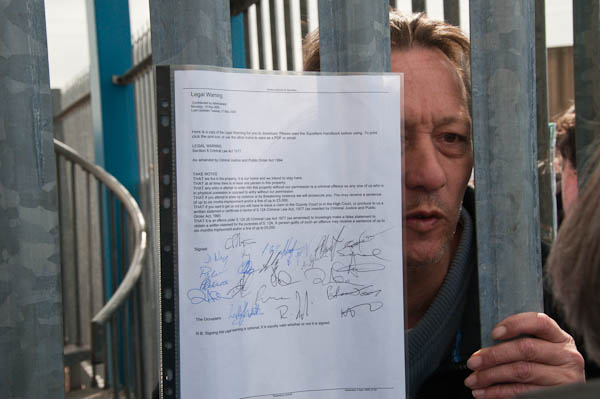

London Pride & Climate Change Rally – 2007

London Pride & Climate Change Rally; My working day on Saturday 30th June 2007 began at a rather damp Baker Street where people were meeting for the London Pride Parade and I was able to wander freely and take photographs. I left before the parade moved off and went to Parliament Square where a rally reminded Gordon Brown – then prime minister for 3 days – that climate change remains the major challenge facing the world – and the new government.


London Pride Parade – Baker Street

London Pride & Climate Change Rally

There seemed to be only two things that distinguished the 2007 Pride from the previous year’s event. One was the weather and so many of the pictures are of people holding umbrellas.

London Pride & Climate Change Rally

The second was a large group in the self-styled ‘Bird Parade‘, the ‘Bird Club‘ with their messages including ‘Aren’t Birds Brilliant‘ and ‘Femme Invisibility – So last Year‘.

London Pride & Climate Change Rally

There were quite a few overhanging shop fronts and other places that people could shelter under but taking pictures mainly involved me staind in the rain and getting rather wet.

London Pride & Climate Change Rally

I’m not afraid of rain but cameras and lenses need to kept dry. I really needed an assistant with an umbrella but I was working on my own. Its difficult to hold an umbrella and a camera and while I’ve tried various special plastic camera protectors none really solve the problem.

The cameras I use are reasonably water resistant and given he occasional wipe with a cloth and keeping them under my jacket when not in use are fine. But lenses need to have a glass front element to let the light in, and this acts as a powerful magnet for raindrops. Long lenses can have lens hoods which protect them, but when like me you work with wide and ultra-wide lenses they are totally ineffectual, except for allowing me to walk around with a chamois leather balled up into them. But of course I have to hold this clear to frame, focus and take the image, and those raindrops too often manage to sneak their way in that second or so.

I’ve shared too often my thoughts on the presence of corporates and military groups in Pride to bother to say more.

But at least there were some, like Peter Tatchell determined to retain it as a protest, with his wedding cake placard and poster ‘END THE BAN ON GAY MARRIAGE’.

Many more photographs beginning here


Climate Change Rally – Parliament Square

It was still raining for the rally in Parliament Square and my favourite mermaid seemed to be in her natural habitat unless I carefully kept wiping the lens front.

But there was some shelter under the trees and rather fewer people had managed to attend the protest called at short notice by the Campaign Against Climate Change.

Under Blair’s government UK carbon emissions had risen by 2%, but it was now clear to scientists around the world that we needed to drastically cut them. Blair had resigned as New Labour leader on 24 June 2007 and Gordon Brown had become Prime Minister only three days before this protest on 27 June 2007.

Back in 2007 it was clear that climate change remained the major challenge facing the world – and the new government. But in 2008 we had the financial crash and Gordon Brown was diverted into saving the bankers and successive governments since have failed to make the kind of radical changes that are needed to save the planet.

In 2007 I wrote “if you ain’t got a planet, you ain’t in business is the simple message, though some of the speakers had some rather more complex graphs and charts. Blair and Brown were only there in effigy, but we did have a rather more convincing mermaid to warn about the dangers of rising sea levels.” Of course sea levels are only one aspect of the problem with our increasing climate instability and other effects of global heating. The need to take action is even more important for our next government – and for all governments around the world.

more pictures


FlickrFacebookMy London DiaryHull PhotosLea ValleyParis
London’s Industrial HeritageLondon Photos

All photographs on this page are copyright © Peter Marshall.
Contact me to buy prints or licence to reproduce.


A Walk in London 20 Years Ago

A Walk in London 20 Years Ago; On June 28th 2004 I had an important meeting at one on London’s major cultural institutions. It was a fine day, so I took an early train and then wandered towards the meeting taking pictures.

A Walk in London 20 Years Ago

My walk began at London Bridge Station and I walked towards the River Thames through ‘More London’ a large area to the south-west of Tower Bridge owned and redeveloped by the Kuwaiti sovereign wealth fund’s St Martins Property Group with buildings designed by Foster and Partners architects.

A Walk in London 20 Years Ago

In 2004 this was a recent development and in 2007 it was one of six on the shortlist for the Carbuncle Cup architecture prize, an annual competition by Building Design for “the ugliest building in the United Kingdom completed in the last 12 months“. But it, two other new London developments as well as a Holiday Inn in Aberdeenshire and a high-rise residential tower in Birmingham all lost out to student accomodatiion for Leicester University.

A Walk in London 20 Years Ago

A Walk in London 20 Years Ago

I walked across Tower Bridge and continued into the East End, taking another picture of the Grade II* listed Wilton’s Music Hall entrance in Grace’s Row. In 2004 this was beginning to once again produce a varied range of shows and was internally considerably restored from 2012-5, though I think the doorway still looks much the same.

The music hall was largely destroyed by fire in 1877, but rebuilt and opened as a Methodist mission, The Mahogany Bar. This was an important resource for the local community until it closed in 1956. The building was saved from demolition by a determined campaign supported by Sir John Betjeman, Peter Sellers, Spike Milligan and others and in 1971 was given Grade II* listing and bought by the GLC.

In Dock St, Wapping I photographed the window of a fish and chip shop, The Codfather. I think this is now an estate agents, although there are many other Codfathers around the country.

Emanuel Swedenborg (1688-1772), Swedish inventor, thinker, scientist and mystic lived in this area – then Prince’s Square – and was buried in the churchyard of the Swedish Church here. He had stayed in London for 4 years as a young man and returned here aged 57 where he had a vision of meeting the Lord who appointed him to write to reveal the spiritual meaning of the Bible. He abandoned his other work and over the next ten years wrote his 8 volumes of Arcana Cœlestia.

From 1747 until his death he spent his time in Stockholm, the Netherlands and London, publishing this and another 14 spiritual works in the latter two to avoid censorship by the Swedish Empire. He returned for the last time to London in the Summer of 1771 and suffered a stroke in December. In February 1772 he wrote asking John Wesley to visit him, and when Wesley replied he could not do so for six months he told him that would be too late as he was going to die on March 29th. And he did.

New Road took me north.

Tower House at 81 Fieldgate Street was a superior doss house which provided those staying there with decency and privacy. Jack London stayed there soon after its opening, in 1902 when researching his ‘People of the Abyss‘ and Maxim Litvinov and Joseph Stalin spent some time there when attendeing The London Congress of the Russian Social-Democratic Labour Party – but Stalin soon moved out into private lodgings at 77 Jubilee Road.

It was the fifth of the Rowton Houses to be built in London as “poor men’s hotels” and opened in 1902. It was the first to be lit by electricity. George Orwell described it as the ‘best of all common lodging houses with excellent bathrooms’, though he found some of its rules irksome, particularly that you could not enter your room before 7pm.

Renamed Tower House in 1961 it was acquired by the GLC for Tower Hamlets Council in 1983. Various schemes to adapt in fell though and it was still derelict in 2004. A private developer converted it into luxury flats in 2005-8.

The time for my meeting was approaching and I was having to hurry back into the City, and took only a few more pictures though rather more than I put online back in 2004. This view is of the Alban Highwalk leading off south from Alban Gate, and the tower of St Alban Wood Street as well as the City of London Police building clearly visible.

I think my meeting went well, but a couple of years later I had a great disappointment when the project was cancelled at the last minute.

There are just a few more pictures at More London and more.


FlickrFacebookMy London DiaryHull PhotosLea ValleyParis
London’s Industrial HeritageLondon Photos

All photographs on this page are copyright © Peter Marshall.
Contact me to buy prints or licence to reproduce.
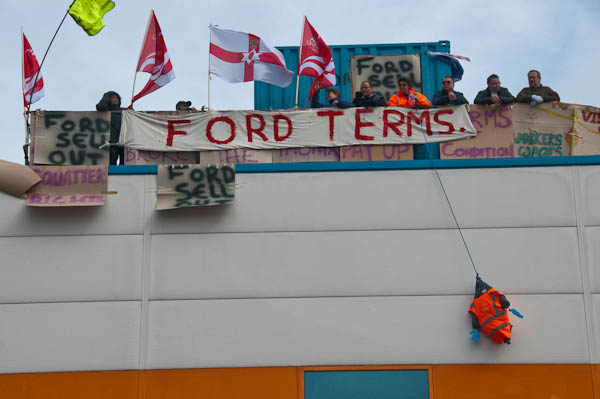

Stratford, Shoreditch & Racist Immigration Laws – 2009

Stratford, Shoreditch & Racist Immigration Laws: On Saturdy 27th June 2009 I took a few pictures from a high viewpoint arooss Stratford , then photographed graffiti in the streets of Shoreditch before going to a protest against the UK’s racist immigration laws a Communications House, close to the Old Street roundabout.


Olympic Update II – Stratford, London.

Stratford, Shoreditch & Racist Immigration Laws

There is a little of a mystery for me over these pictures as I don’t state the location I took them from, simply state I was in Stratford for a meeting on Saturday and took the opportunity to take a few pictures of the Olympic site from a high viewpoint.

Stratford, Shoreditch & Racist Immigration Laws

I no longer have my 2009 diaries and cannot remember any such meeting which from the views I think must have been on one of the upper floors on top of the shopping centre. I possibly made my way onto the roof area after the meeting.

Stratford, Shoreditch & Racist Immigration Laws

The lighting and weather were not at their best but they do show some of the buildings on the Olympic site as well as Westfield under construction and Stratford Station.

Olympic Update II


Shoreditch

Stratford, Shoreditch & Racist Immigration Laws

My train to Liverpool Street arrived in time to allow me to make a leisurely and rather indirect walk to Old Street for the protest there.

Back in the early 1980a, Shoreditch was a run-down area of warehouses and small workshops which were closing down and being taken over by artists for cheap studios, including some who were forced to move out of Butler’s Wharf which in the 70’s had become the largest artists’ colony in England. Over half moved out following the firein late 1979, but the 60 remaining were all given notice to quit in January 1980. Some formed a new community in the Chisenhale centre in Tower Hamlets, but quite a few found cheap premises in Shoreditch.

The artists preserved much of the area’s properties and made it a much more attractive place to live. For most of them this meant the rents grew rapidly to far more than they could afford and they had to move to more outlying areas. But Shoreditch had become a trendy place with clubs and nightlife and the new graffiti – much inspired by New York street art began to cover almost every available wall.

Shoreditch


Support Migrants – Fight Racist Immigration Laws – Old St

The Campaign Against Immigration Controls had organised the protest outside the Immigration Reporting Centre Communications House where many refugees are processed before they were taken to detention centres and deportation.

After the SOAS management and employers ISS had colluded with the Home Office over a dawn raid on their cleaning workers on 12 June 2009 in reprisal for their successful campaign for a living wage and trade union recognition, it was here that the SOAS 9 were brought before their deportation.

The first speaker at the protest was Laureine Tcuapo who had fled to Britain to escape repeated rape and abuse from a relative in the Cameroon police force. On Friday 12 June at 7am, immigration police kicked down the door of her Newcastle house and took her and her two young children forcibly to Yarl’s Wood Immigration Prison, intending to deport here to Cameroon. Action by Tyneside Community Action for Refugees and No Borders North East managed to prevent her deportation and get her release from Yarls Wood on 25th June but she is still under threat of deportation.

The protest also supported the continuing hunger strikers in Yarls Wood over the inhumane conditions there. In a press release from TCAR Tcuapo stated “Families were separated; people were being beaten up by guards. It just felt to all the asylum seekers that we were less than animals… I still think about my time in Yarlswood. It was very traumatising. I can’t even imagine how things are at the moment for people inside. They’re counting on us because inside, they have no rights.

We also heard directly from some women in Yarls Wood who were able to use mobile phones to speak at the protest. Much of what is still happening at places such as Yarls Wood has been condemned by official inspections and is clearly against the laws of this country as well as EU Human Rights legislation and attention needs to be drawn to it. Our treatment of migrants, especially asylum seekers offends against justice and humanity.

More at Support Migrants – Fight Racist Laws


FlickrFacebookMy London DiaryHull PhotosLea ValleyParis
London’s Industrial HeritageLondon Photos

All photographs on this page are copyright © Peter Marshall.
Contact me to buy prints or licence to reproduce.
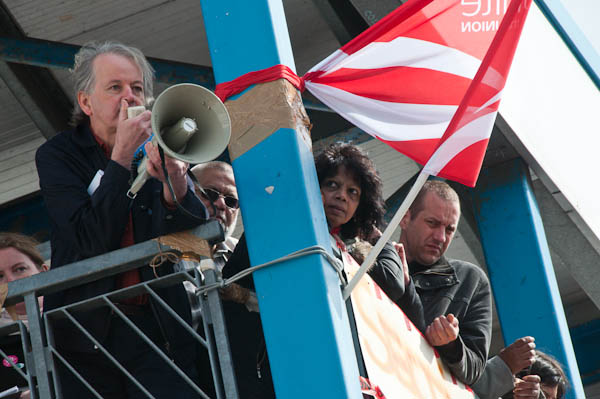

Cable Car, Victoria Dock, Olympic Site & Torture 2013

Cable Car, Victoria Dock, Olympic Site & Torture: I was coming to London to photograph the ‘Say No to Torture‘ protest on the evening of Wednesday 26th June, but as it was a nice day and I came up a few hours earlier to take a ride on London’s cable car and then to take a few pictures around Victoria Dock and Silvertown before making quick visit to the Greenway to see what progress was being made in opening up the former Olympic site.


Emirates ‘Airline’ – Arab Dangleway – North Greenwich – Victoria Dock.

Cable Car, Victoria Dock, Olympic Site & Torture

Now known officially since 2022 as the IFS Cloud Cable Car, the dangleway was never a viable transport system, with longer journey time and costing more than alternative routes on almost every conceivable journey.

Cable Car, Victoria Dock, Olympic Site & Torture

It doesn’t quite connect up with the rest of Transport for London’s system, the south terminal being a short and slightly confusing walk from North Greenwich Jubilee and bus station, and another fairly short walk on the North bank to Royal Victoria DLR. Completed in June 2012 its cost of £60m made it the most expensive cable car system ever built.

Cable Car, Victoria Dock, Olympic Site & Torture

As I noted “it should be promoted as one of London’s cheaper and more interesting tourist attractions” giving great views along the River Thames, although the journey is a relatively short on at 7-10 minutes. with London in the distance, Canary Wharf and the Olympic site a little closer and Bow Creek, Silvertown and the Dome both nearly underneath.

Cable Car, Victoria Dock, Olympic Site & Torture

To my surprise, 11 years later the service is still running and TfL say that with the sponsorship deals it actually makes a profit.

Emirates ‘Airline’ – Arab Dangleway


Victoria Dock and Silvertown

I think the more interesting parts of the Thames shoreline here are not yet publicly accessible, but you can – at least most of the time – walk along by Royal Victoria Dock and across the high level bridge for some more interesting views. The area and bridge get closed off when they are flogging illegal arms at the Excel Centre fairs (if you represent a despotic government you’ll have a ticket to that anyway.)

Most of the pictures here were taken from that high level walkway across the dock, but I think I walked on to the stations on the DLR line to Woolwich (then only to North Woolwich) which are elevated and also give some interesting views.

Victoria Dock and Silvertown


Stratford Greenway Olympic Revisit – Stratford Marsh

I took the DLR to Canning Town, changed to the JUbilee to Stratford then back to the DLR for the short ride to Puddling Mill Lane, and walked up onto the Greenway, where I’d photogaphed many times in the past.

Progress in releasing the Olympic site to the public appeared to be very slow and there sre still routes closed off in 2024.

Stratford Greenway Olympic Revisit


Say No To Torture – Trafalgar Square

It was the ‘International Day in Support of Victims of Torture‘, the anniversary of the UN Convention Against Torture on 26 June 1987, and the London Guantanamo Campaign had organised a protest in Trafalgar Square.

The London Guantanamo Campaign had been active in calling for the closure of Guantanamo and other torture prisons including Bagram in Afghanistan since 2006. In particular the protest was to draw attention to Shaker Aamer, one of the 166 prisoners still held in Guantanamo. A London resident he was captured by bandits in Afghanistan where he was working for a medical charity and sold to the American forces, who tortured him – with the cooperation of the British Secret Service in Bagram, before illegally rendering him to Guantanamo where he continues to be tortured despite having been cleared for release.

In 2013 he was in very poor health having been – along with the majority of the other prisoners there – on hunger strike for 141 days. It was not until 30 October 2015 that he was finally released to the UK.

The US response to the hunger strike had been regular beatings, keeping those taking part in solitary confinement in bare cells and to use forcible feeding, strapping them into a special chair and forcing a feeding tube up a nostril and down into their stomach. The procedure is extremely painful and both this and the sensory deprivation of solitary confinement in bare cells also constitute torture under the UN definitions.

Many of those taking part wore orange Guanatanamo-style jump suits and black hoods and they held up banners an placards saying ‘No To Torture‘ in 30 languages. Some of those taking part were regular protesters with the ‘Save Shaker Aamer Campaign‘ which has been holding daily lunchtime vigils opposite the House of Commons to put pressure on the UK government to release him. Many think his continued imprisonment is because his testimony would embarrass both the UK and US security services who were clearly involved in his torture.

Others were also protesting against torture, with Balochs in Pakistan being subject to arrests and other human rights violations including torture by the Pakistan authorities for campaigning for independence. The protesters held pictures of a number of Baloch activists who have simply disappeared, believed to be held or possibly killed by Pakistani forces.

And protesters also drew attention to the US treatment of award-winning British poet and translator Talha Ahsan who suffers from Aspergers syndrome. He was extradited from the UK and was currently awaiting trial in solitary confinement in a high-security state prison in Connecticut because of alleged association with an Islamic web site and publishing house said to have links with terrorism. He was eventually released after 8 years following a plea bargain in December 2013 when time already served in the UK and US prisons was ‘time already served.’

Say No To Torture.


FlickrFacebookMy London DiaryHull PhotosLea ValleyParis
London’s Industrial HeritageLondon Photos

All photographs on this page are copyright © Peter Marshall.
Contact me to buy prints or licence to reproduce.
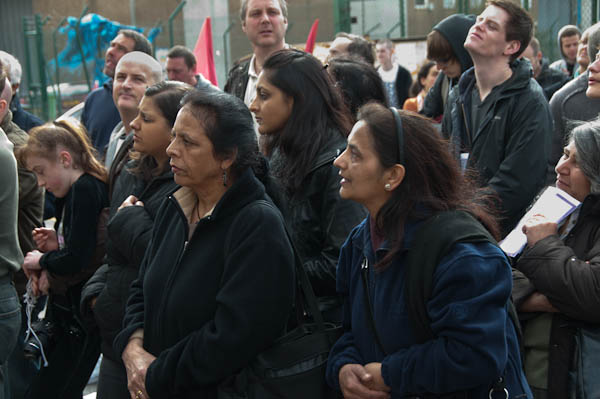

Pride and Migrant Rights & Anti-Racist Pride 2016

Pride and Migrant Rights & Anti-Racist Pride: Saturday 25th June was I think the last time that Pride was an open event where people who wanted to take part in Pride as a protest could just turn up and join in.

Pride and Migrant Rights & Anti-Racist Pride

When I first photographed Pride in 1993 it was much smaller and very definitely a protest. Over the years it has become a parade with many corporate groups taking part and dominating the event attracting huge audiences to watch it on the route through the West End.

Pride and Migrant Rights & Anti-Racist Pride

And now to be in the parade you need a wristband, free for LGBT+ Community Groups but cotsing between £7.50 and £35 for others – and the media centre is insistent we call it Pride in London rather than ‘London Pride’ or ‘gay pride’, hashtag #PrideInLondon.

Pride and Migrant Rights & Anti-Racist Pride

I can’t remember if I had bothered to get official accreditation for the event in 2016, I certainly did some years and suspect by 2016 it was needed to be able to walk around and take photographs as people were preparing for the parade. And they wanted to be photographed.

Pride and Migrant Rights & Anti-Racist Pride

In my pictures I concentrated on those who I felt were continuing the tradition of Pride as a protest, including many I had photographed at other protests. But there were others I couldn’t ignore.

I left the official area where the parade was setting up with its corporate floats and walked down Oxford Street to where people were meeting for a Migrant Rights and Anti-Racist Pride march to join the main parade.

Movement for Justice who had organised this were joined by other protesters including London in Solidarity with Istanbul LGBTI Pride protesting the banning of Istanbul Pride, Lesbians and Gays Support the Migrants and other protesters who feel the official event has been taken over by corporate sponsors such as Barclays and BAE systems and is a parade rather than a protest, no longer representing its roots.

They marched up Oxford Street and Regent Street past the front of the main parade and went to its rear where they joined other protest groups relegated to the extreme end of the Pride parade. They tried to do this again the following year but were prevented by Pride stewards and ended up maching ahead of the main procession past cheering crowds along the main route.

There are many more pictures on My London Diary
Pride London 2016
Migrant Rights & Anti-Racist Pride


FlickrFacebookMy London DiaryHull PhotosLea ValleyParis
London’s Industrial HeritageLondon Photos

All photographs on this page are copyright © Peter Marshall.
Contact me to buy prints or licence to reproduce.