Reclaim Brixton 2015

Brixton has been in the news again recently, with various analyses published on the 40th anniversary of the 1981 Brixton uprising (aka Brixton riots) which began on 10th April. Official reports put the 3 days of unrest which caused £7.5m of damage and left almost three hundred police (and an impossible to estimate number of the local community) injured down to poor housing, unemployment, and police harassment.
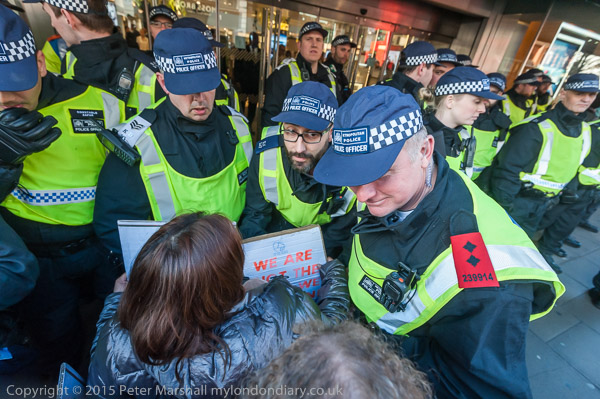
It was largely the actions of the police that led to the events. Their failure to effectively investigate the arson attack on a party in New Cross which killed 13 young black people in January 1981 scandalised much of the nation and the racist reaction of the mass media to a protest march about this raised tension, exacerbated by the police arrests of the march organisers who were charged with riot – and later acquitted. But the final straw was when police at the beginning of April began ‘Operation Swamp 81’ with large numbers of officers coming into Brixton and stopping an searching almost a thousand people – almost entirely African-Caribbean – under the ‘Sus law’, the 1824 Vagrancy Act which allowed police to stop and search anyone they believed was acting suspiciously.
Little changed after the official reports came out, and it was only 19 years later, following another scandalous police failure to properly investigate the murder of Stephen Lawrence in April 1993 that the Macpherson report found that the Metropolitan Police was institutionally racist. Although some changes have been made, there are still plenty of signs that this continues to be deeply embedded in the ethos of the force.
The publication of ‘The report of the Commission on Race and Ethnic Disparities’ on 31st March this year (2021) came at perhaps a particularly insensitive time for a report that is widely seen as a whitewash by a commission set up to reflect particular views. Set up in opposition to the protests by the Black Lives Matter movement over the death of George Floyd (and three weeks before the trial of his killer ended in three guilty verdicts) it evoked fury from many experts in the field as well as the millions who still experience discrimination.
More recently is has been condemned in remarkably forthright terms by the independent experts of the Special Procedures of the United Nations Human Rights Council who state “In 2021, it is stunning to read a report on race and ethnicity that repackages racist tropes and stereotypes into fact, twisting data and misapplying statistics and studies into conclusory findings and ad hominem attacks on people of African descent” and call on the British government to categorically reject its findings.
Brixton has changed since 1981 and some of those changes are very much for the worse for the local population. There were further riots, and there have been deaths at the hands of police – such as those of Ricky Bishop in 2001 and Sean Rigg in 2008 – but the main threat facing the local communities is gentrification as Brixton is changing from a working class area home particularly to migrant communities to a trendy up-market suburb. Its a change which is in part inspired by the vibrant communities which it is displacing, but also driven by the excellent transport links the area enjoys.
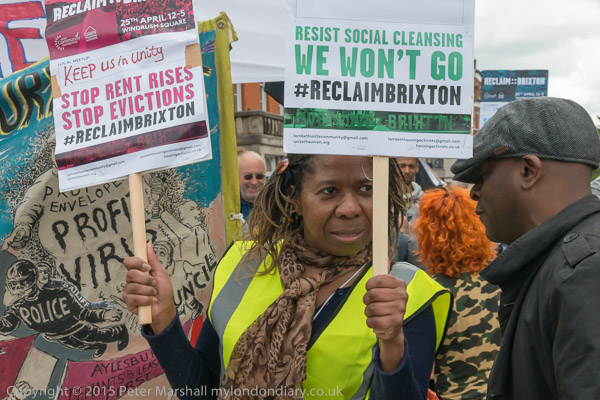
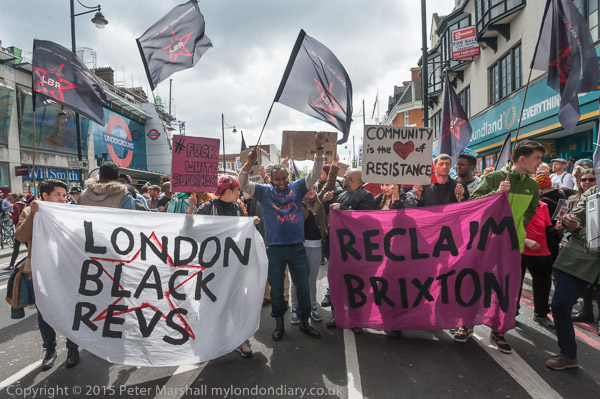
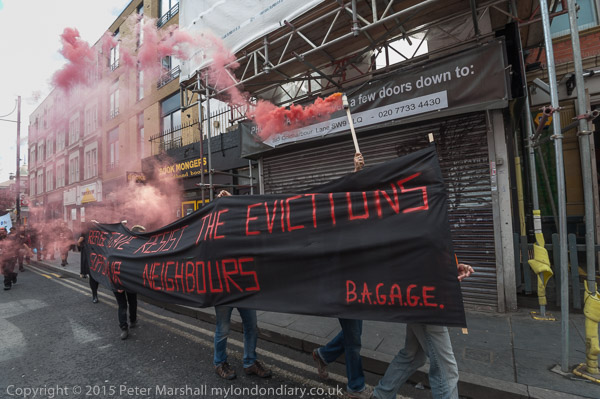
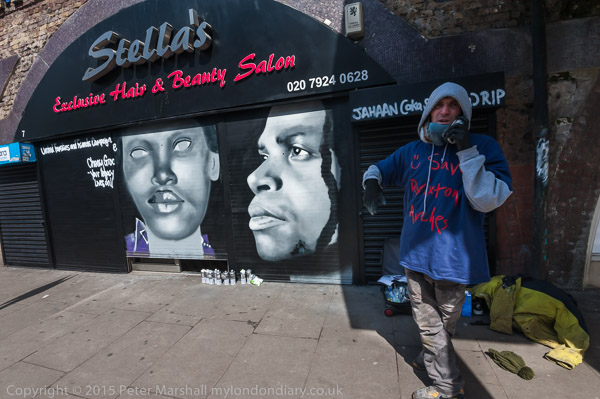
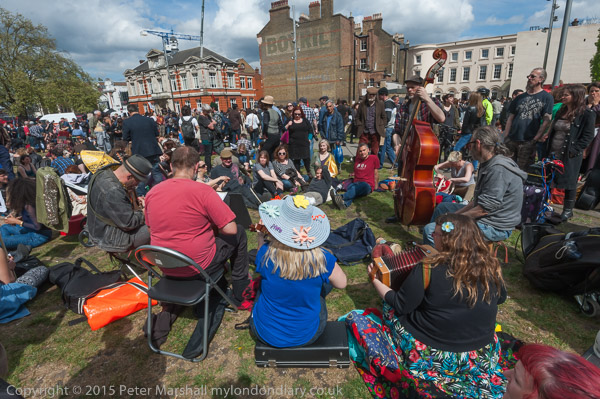
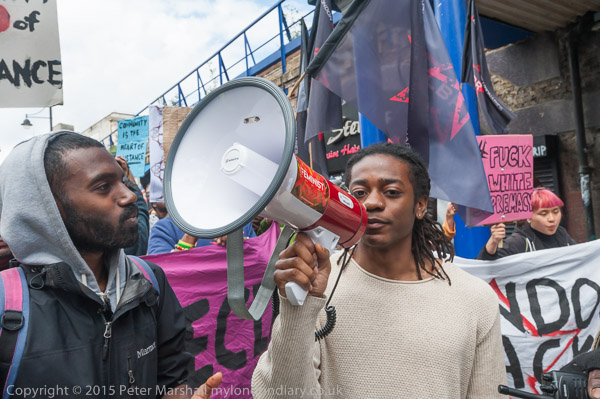
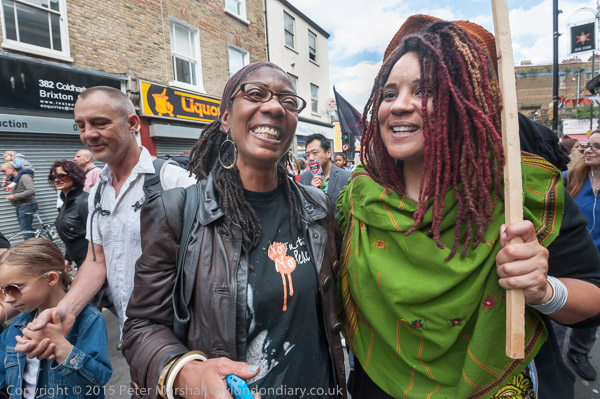
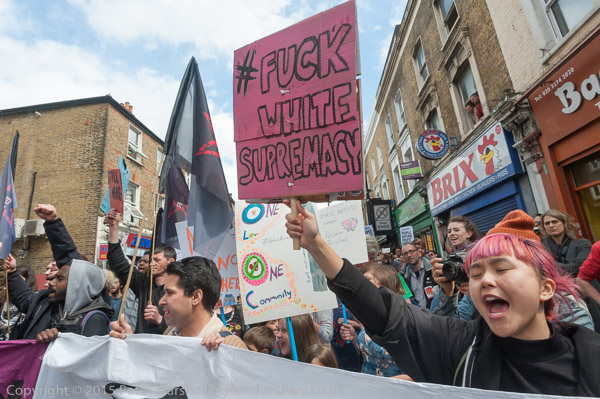
25 April 2015 saw Reclaim Brixton, a day long protest against gentrification which saw several thousands gathering at various events in what is still so far as I’m aware the largest protest of its kind. One major blow to local people has been the decision by Network Rail, backed by Lambeth Council to redevelop the railway arches in the centre of the town, home for many years to some of Brixton’s best loved – and cheapest – businesses. The current tenants, one of which came here in 1932 – are being evicted and after renovation the rents will be triple and their places largely taken by the same chains and franchises that we see in so many other high streets.
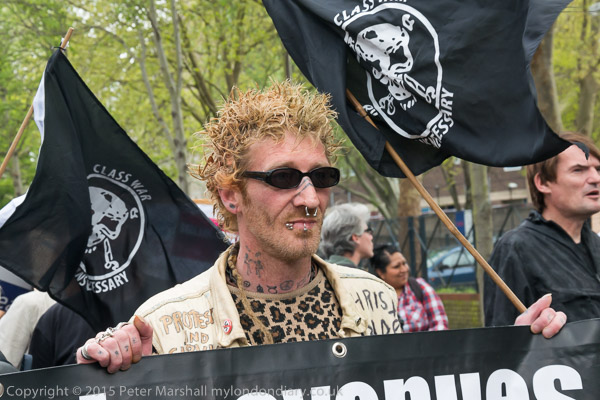
Soon after I left Brixton – in what seemed like a quiet period and I thought things had probably ended, activists took direct action against some of the major players they hold responsible for gentrification, breaking a large window Soon after I left Brixton – in what seemed like a quiet period and I thought things had probably ended, activists took direct action against some of the major players they hold responsible for gentrification, breaking a large window at Foxton’s estate agents, going into Brixton Village with their banners and briefly occupying Lambeth Town Hall.
More at:
London Black Revs ‘Reclaim Brixton ‘march
Reclaim Brixton celebrates Brixton
Take Back Brixton against gentrification
Brixton Arches tenants protest eviction

North Kensington 1988 (1)

I continued my personal exploration of London in January 1988 with some extended walks around the north of Kensington. It was an area I was largely unfamiliar with, though I had walked just outside its northern edge on the towpath of the Grand Union in Kensal Town – and had been to a few meetings and workshops in a studio in that area.

In the following years I would come every August to carnival and photograph it on Ladbroke Grove – and you can see many of those pictures in the album ‘Notting Hill Carnival – the 1990s’, but in 1988 my version of Notting Hill was still coloured by the memories of the press reports of the Notting Hill riots 30 years earlier – and the continuing misrepresentation of the carnival in the media as a hotbed of violence.

St Mark's Rd, North Kensington, Kensington & Chelsea, 1988  88-2c-65-positive_2400
St Mark’s Rd, North Kensington, Kensington & Chelsea, 1988

These pictures come from the area north of the Westway, the most destructive of all road projects in Greater London, laying waste a wide swathe through the area when it was constructed in 1964-1970. Part of a plan for ‘Ringway 1′, the London Motorway Box’ conceived in the 1950s when the car was seen as the future, and the development seen as so obviously beneficial that the GLC didn’t even bother to present evidence to justify the case for it and the huge expense involved.

St Mark's Rd, North Kensington, Kensington & Chelsea, 1988  88-2c-62-positive_2400
St Mark’s Rd, North Kensington, Kensington & Chelsea, 1988

But it was the social destruction caused by the Westway that awakened many to the huge impact of road-building and the end of the massive road building plans for a number of concentric ring motorways in London that had come from the drawing boards of our post-war planners. The only ring that was completed was of course the M25, mostly passing through rural land on the outskirts of the city, providing perhaps the most accurate boundary to London.

Ladbroke Grove, North Kensington, Kensington & Chelsea, 1988  88-2c-46-positive_2400
Ladbroke Grove, North Kensington, Kensington & Chelsea, 1988

I find it hard to look down on this wide expanse of largely empty street and recognise it as Ladbroke Grove, that place where I’ve so often stood since inside crowds of people standing and watching and dancing along behind the carnival floats.

Paul House, Ladbroke Grove, North Kensington, Kensington & Chelsea, 1988  88-2c-45-positive_2400
Paul House, Ladbroke Grove, North Kensington, Kensington & Chelsea, 1988

Back in 1988 most blocks of council flats were still entirely open to the public, with no security doors or entry systems, and even the few that had these, the doors were largely wedged open by residents to make access easier. I was able to walk in and walk up to take views from the stairways and balconies – as in this picture and that above of the street.

Saint Michael, North Kensington, Ladbroke Grove, Kensington & Chelsea, 1988  88-2c-44-positive_2400
Saint Michael, North Kensington, Ladbroke Grove, Kensington & Chelsea, 1988

Saint Michael and All Angels, the Anglican Parish Church here on Ladbroke Grove is Grade II listed, as the listing text states was built in 1871 to the designs of J and JS Edmeston in a Rhineland Romanesque style though in London stock brick with terracotta, red Mansfield and Forest of Dean stone dressings, and clay roof tiles.

St Charles Square, Ladbroke Grove, North Kensington,  88-2c-43-positive_2400
St Charles Square, Ladbroke Grove, North Kensington, 1988

Sean’s poorly written tag also appears on the previous picture which shows the same building taken a yard or two further from the corner of Ladbroke Grove. The house is a substantial one facing onto Ladbroke Grove, the main thoroughfare in the area, and these steps are up to a second front door for its sizeable rear extension. The main house has five floors including a basement (which explains the steps) and an attic. The next house on Ladbroke Grove, behind me as I took this picture, has a blue plaque for Hablot Knight Browne, better known as ‘Phiz’, whose illustrations enlivened the novels of Charles Dickens and who lived here from 1874-80.

Ladbroke Grove, Notting Hill, Kensington & Chelsea, 1988  88-2c-41-positive_2400
Ladbroke Grove, Notting Hill, Kensington & Chelsea, 1988

There was something of a brooding, menacing atmosphere of these house-fronts on Ladbroke Grove, with shuttered lower windows and bushes and trees in the narrow space in front of the basement. The house looks much more open now as the last tree here was taken down around ten years ago and the whole row of houses is in much better condition. These houses which were pretty run-down back in 1988 are now almost all flats, perhaps eight to a house, and a nearby basement flat sold for over £1million in 2017.

All these pictures are from my album 1988 London Photos. Clicking on any will take you to a larger version in the album which you can the explore.


All photographs on this and my other sites, unless otherwise stated, are taken by and copyright of Peter Marshall, and are available for reproduction or can be bought as prints.


St George

The details of the life and death of St George (as you can read in Wikipedia) are recorded in accounts dating back to around 1600 years ago, though details vary and the Pope in 494 CE who officially made him a saint called him one of those “whose names are justly reverenced among men, but whose actions are known only to God.

According to the early texts, George was born in Cappadocia, now a part of Turkey, where his father came from, but his mother was a Palestinian Christian. Cappadocians were generally historically regarded as Syrians, though St George’s family are usually said to be of Greek descent. St George became, like his father, a Roman soldier, becoming a member of the elite Praetorian Guard, and was beheaded in the eastern capital of the Roman Empire on 23 April 303CE, 1718 years ago, during Emperor Diocletian’s purge of Christians who refused to recant the faith.

His behaviour and suffering apparently convinced one prominent Roman woman, Empress Alexandra of Rome, possibly the Emperor’s wife – to become a Christian – and to share his fate. The purge failed to have its intended result, and around 21 years after George’s execution, Christianity became the preferred religion in the Roman Empire under Emperor Constantine.

George’s body was buried in Lydda in Palestine and Christians there soon became to regard him as a martyr. Some legends say that his martyrdom resulted in the conversion of not just the Emperors’s wife but 40,900 other pagans.

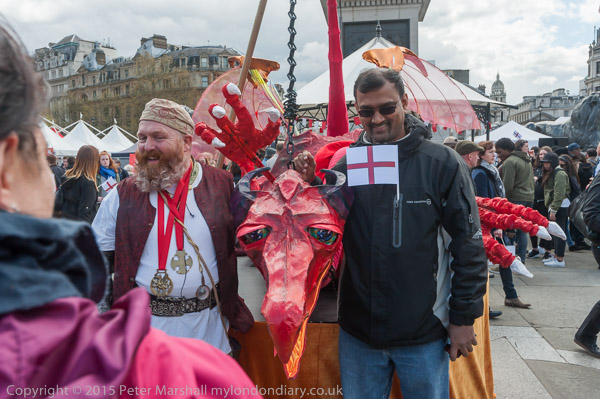
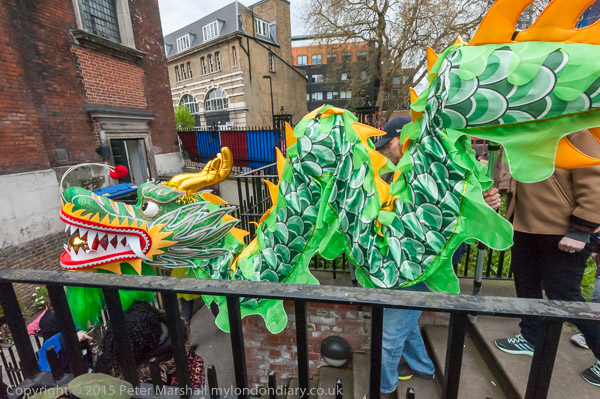
The dragon came along considerably later, only appearing in legends around 700 years after his death, apparently terrorising the city of Silene in Libya, which there is no evidence that St George ever visited. The dragon in my picture above, from a St George’s Day procession in Southwark, seems to have come from Chinatown. But dragons can fly.

The traditional patron saint of England was the last king of Wessex, Edward the Confessor who died in 1066, and it was only in 1552 that as a part of the English Reformation that St George officially became the only saint recognised in England, although along with various other countries English armies adopted him during the crusades and in our battles with the French in the Hundred Years War from 1337-1453. Surprisingly we didn’t drop St George although we lost rather badly.

St George’s Day remains an official feast celebrated by the Church of England, usually, though not always, on April 23, as Easter sometimes interferes. Rather more is made of it by some other countries and churches.

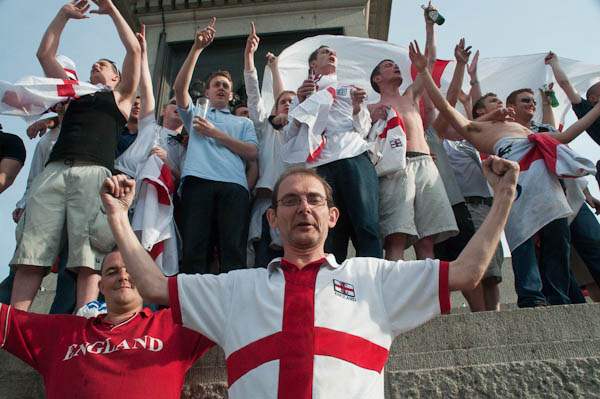
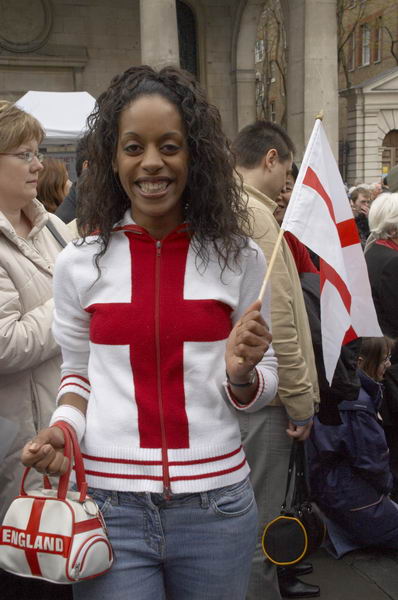
The St George’s cross, widely used by football supporters and right-wing extremists in England, comes from the 10th century in the city of Genoa in Italy, becoming used in England in 1348 when Edward III founded the Order of the Garter and made St George its patron saint. It has never been officially adopted as the national flag, though now widely used as such. It is of course a component of many other flags, including the UK’s national flag.

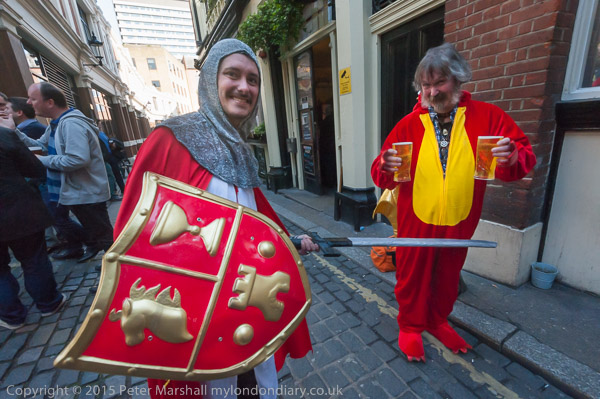
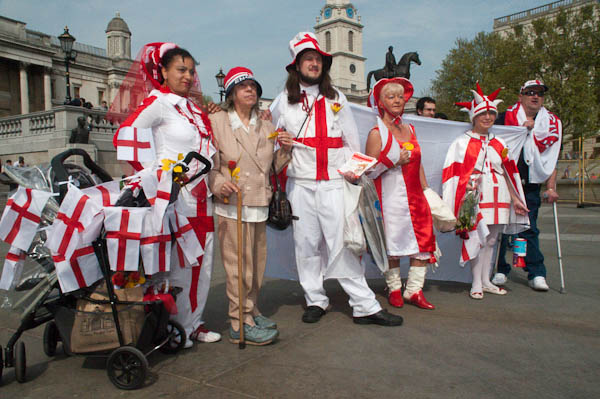
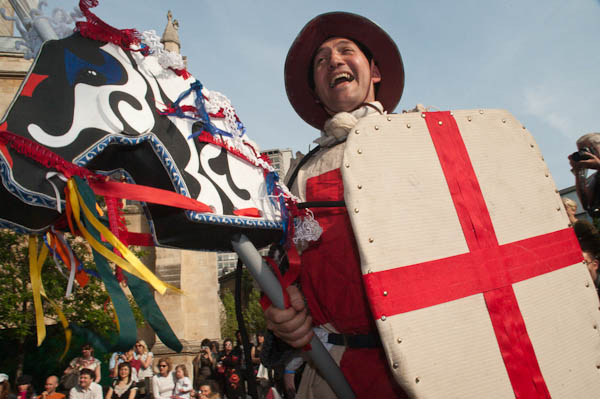
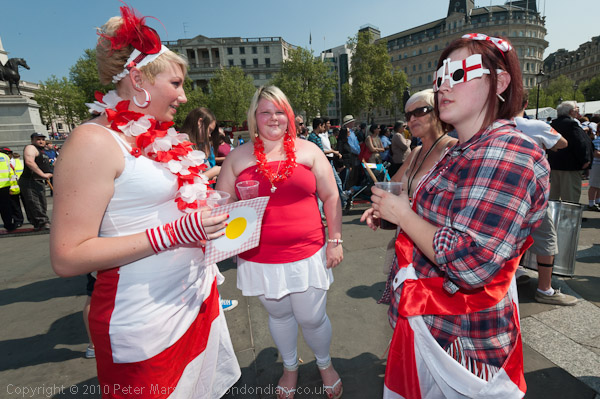
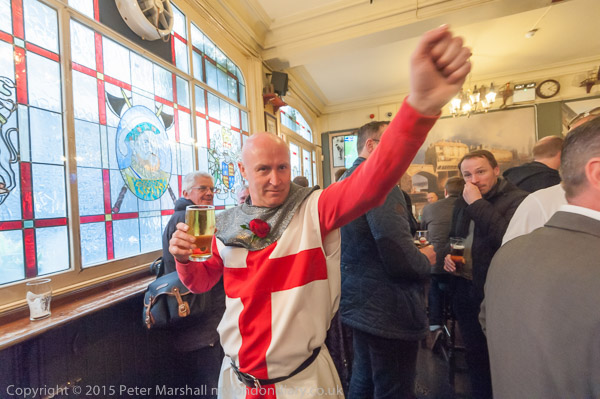
Over the years I’ve photographed many different celebrations of St George’s Day in and around London, and the pictures come from a few of these in 2005, 2009, 2011 and 2016.

2005 St George’s Day
2009 St George & the Dragon
2009 England Supporters,Trafalgar Square
2009 The George Inn, Southwark
2009 The Lions part: St George & the Dragon
2009 St George’s Day – Trafalgar Square
2011 St George’s Day in London
2016 St George in Southwark Procession
2916 St Georges Day in London


All photographs on this and my other sites, unless otherwise stated, are taken by and copyright of Peter Marshall, and are available for reproduction or can be bought as prints.


Scientists Call For Research-Based Policies

Recent events have brought scientists much more into centre stage, and politicians now claim to be “following the science” although this often means simply picking and choosing those bits from the wide range of scientific advice that suits their particular agenda.

Science isn’t monolithic, and its predictions are generally in terms of probabilities rather than certainties. Different disciplines may bring rather different emphases to aspects of complex problems and sometimes we need a wider view than that of a particular specialism – and even some common sense.

It seems clear that at the beginning of the Covid outbreak our government placed to much confidence in the advice of some mathematical modellers and failed to follow that based on medical experience in dealing with earlier pandemics on wearing masks and tightly controlling international travel that kept infection rates near zero in some countries. And that they had dismissed the evidence of earlier exercises in pandemic control and failed to follow the conclusion that we needed stockpiles of protective equipment.

Simple mathematical predictions close to the start of 2020 – like those I made metaphorically on the back of an envelope from then available data – suggested that by leaving the progress of the virus essentially unchecked we might expect around 400,000 deaths. It was perhaps calculations such as these that led to a massive programme of ordering vaccines.

Our various lockdown control measures – too little and too late – and gradual improvements in the care of those infected have so far managed to keep the numbers down to a little under half that initial estimate, though another wave may take us rather closer, particularly if variants prove more resistant to current vaccines.

A couple of days ago I was invited to complete an online opinion survey about the political challenges facing our government. One question asked me to pick one from a list as the major political challenge facing the UK government. I read through the list, which began with something about immigration and was shocked to find after reading the 10 choices I had to pick ‘Other’ and type in ‘Climate Change’.

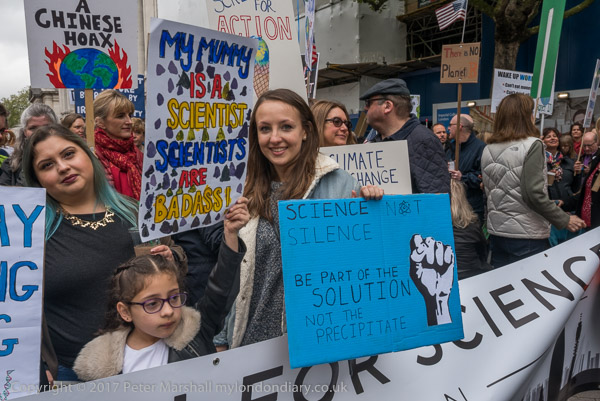
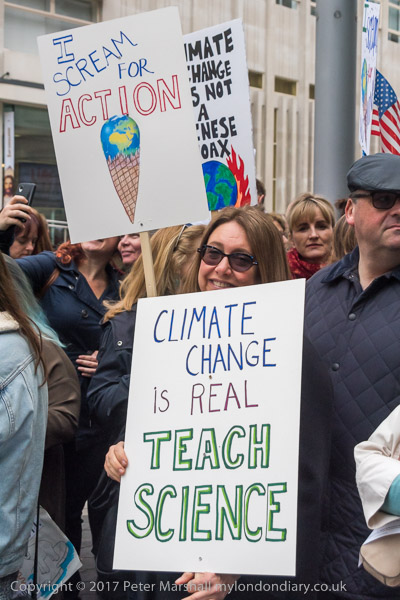
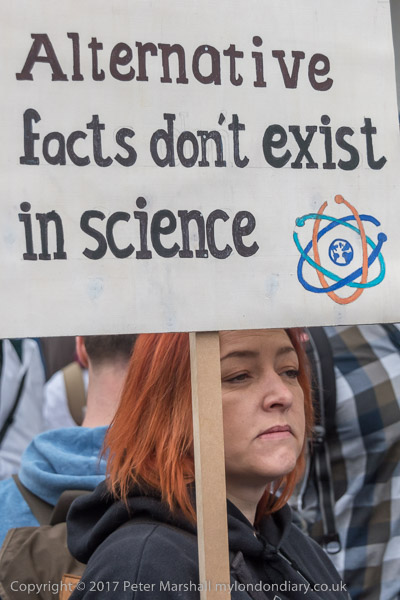
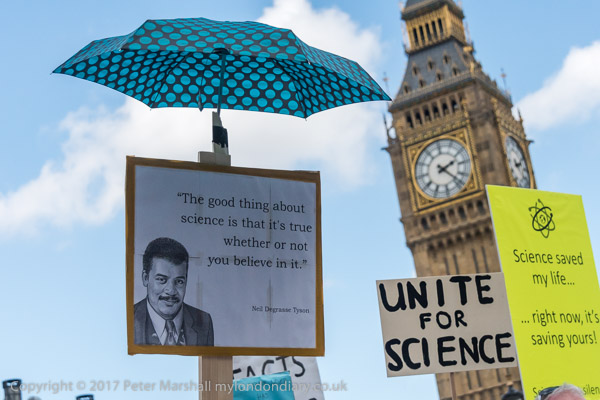
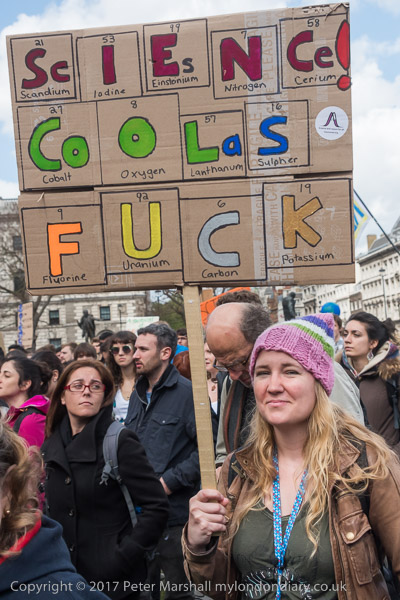
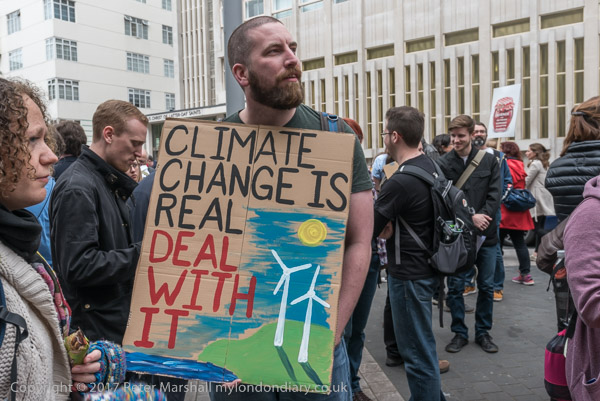
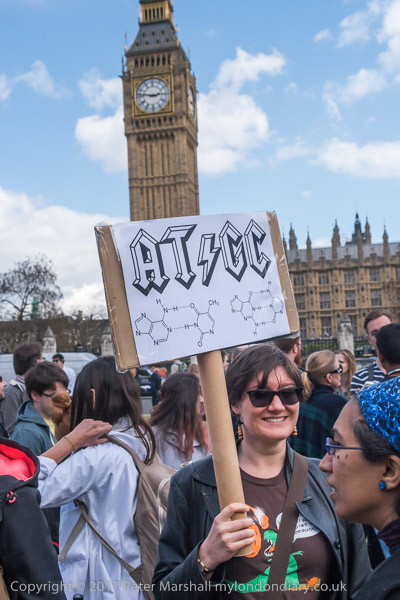
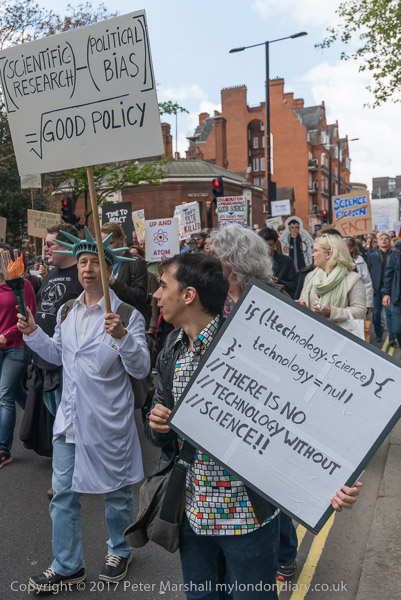
It was climate change that essentially prompted the protest by scientists on April 22nd 2017 to march through London from the Science Museum to a rally at Parliament. They came to celebrate the vital role that science plays in our lives and to call for an end to the fake news and fake science such as climate denial by politicians such as Trump which will prove disastrous.

The march drew attention to the need for international cooperation to combat the existential challenge of man-made global warming – and warned of the danger to this from Brexit and isolationism around the world.

It was an unusual event in many respects. As I pointed out on My London Diary and elsewhere:

“It was a considerably more nerdy protest than most, and some of the posters and placards were difficult event for someone like me with a couple of science degrees in my past to understand. Many scientists do seem to have a problem in communicating with the rest of us and write slogans like ‘Do I have large P-value? Cos I feel Insignificant’ or ‘dT=α.ln(C1/C0)’.”

My London Diary

As well as covering the march and rally by scientists I also photographed campaigners calling for the reform of our secretive Family courts, Poice and Social Services which cover up their failures and corruption by gagging orders, and a protest outside the Consular department of the Russian Embassy to show solidarity with LGBT people in Chechnya, where over a hundred men suspected of being homosexual have been rounded up an put into camps and tortured, with three thought to have been killed. You can see more about these events and the scientists’ protest on the links below.

Reform Family Courts
LGBT rights abuses in Chechnya
Scientists Rally for Science
Scientists march for Science


All photographs on this and my other sites, unless otherwise stated, are taken by and copyright of Peter Marshall, and are available for reproduction or can be bought as prints.


Property Vultures Self Awards

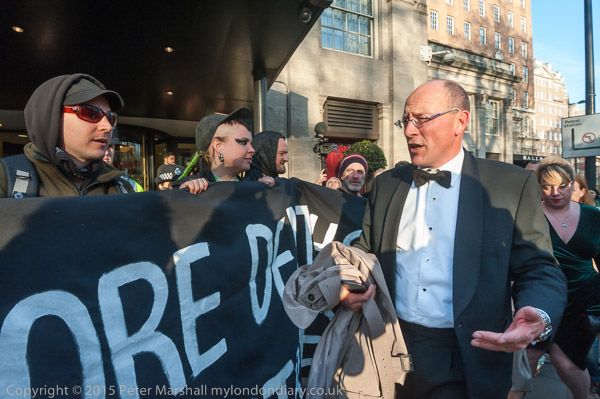
Outside the Housing Awards event at Grosvenor House Hotel on Park Lane

We suffer from a housing benefits system that actually benefits landlords rather than tenants and a housing policy that is led by the advice of estate agents and developers.

Combined with governments dedicated to austerity and cuts this has led to a record level of evictions, doubling of rough sleeping in London and the worst shortage of truly affordable housing in history, while property developers cash in by building luxury flats for largely overseas investors who have made profits from rapidly rising market prices for flats which are often left empty for all or most of the year.

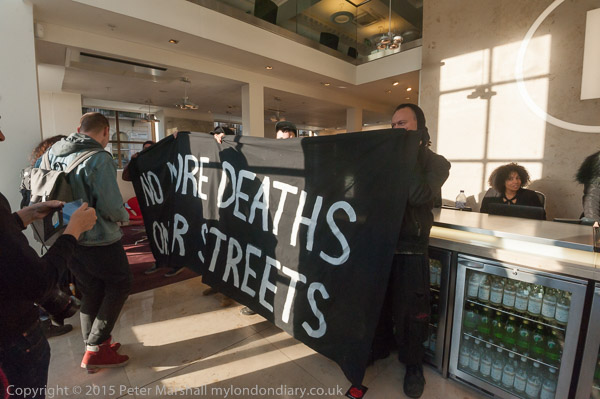
Protesters pay a brief visit to Foxtons on Park Lane

The attack on social housing was largely begun by Margaret Thatcher, who forced councils to sell off housing stock under her ‘right to buy’ scheme, and stopped councils from using the funds to replace them. Many or most of these properties were later sold to private landlords and became ‘buy to let’ properties at high market rents.

Housing Action Trusts, set up under the 1988 Housing Act took many council estates out of council control, eventually handing them on to housing associations, many of which have become hard to distinguish from commercial landlords.

New Labour ratcheted up the crisis with their emphasis on estate regeneration – whether the tenants wanted it or not. Though possibly begun with good intentions it became a tool used by many councils to demolish social housing and replace it by mixed developments in cooperation with private developers or housing associations which often contain only small amounts of genuinely social housing at ‘council rents’ (though with much less security of tenure) along with various shared ownership and so-called ‘affordable’ rent schemes and a large proportion of properties at market prices.

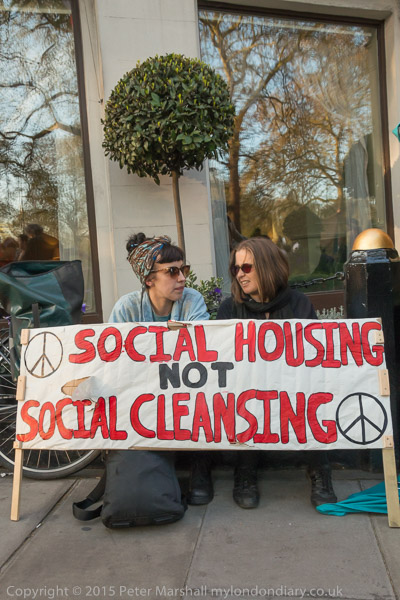
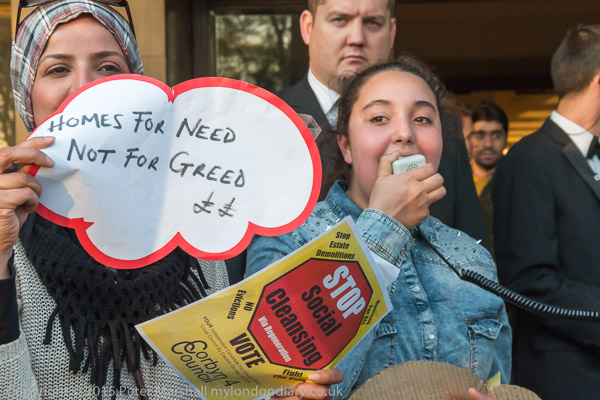
Often the original tenants and leaseholders of such regenerated estates have been ‘socially cleansed’, forced to move out of the area to lower cost fringe areas. Over 50,000 families have been forced to move out of London, where many more properties remain empty, thanks to housing policies that serve greed rather than need.

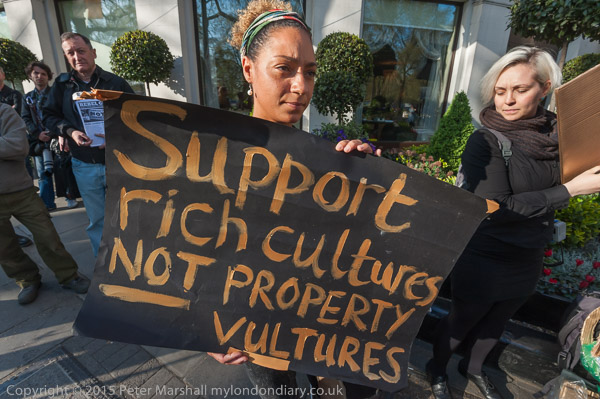
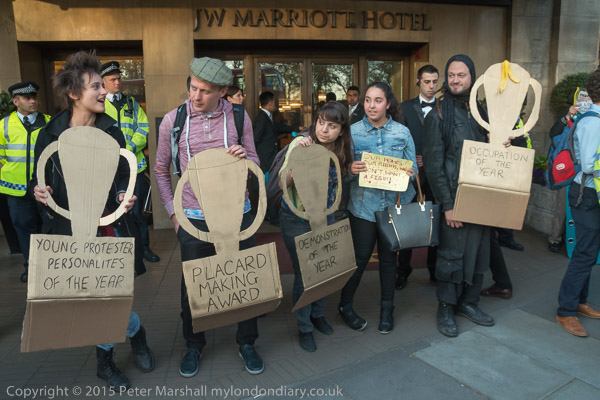
Protesters held their own award ceremony outside the hotel

I’m not a fan of awards ceremonies, industry events to pat each other on the back and make effusive speeches. Too often the awards go to the wrong people, but in the case of property developers there are perhaps only wrong people involved. But the protesters held their own, with large cardboard cups going for the Placard Making Award, Demonstration of the Year, Occupation of the Year and Young Protester Personalities of the Year.

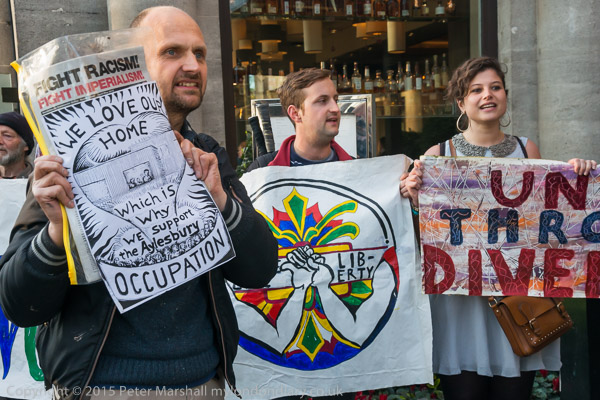
Those who turned up to protest outside the plush hotel where the awards event was taking place included many who have been affected by the greed of developers and are fighting against the demolition of their estate or their eviction so that property owners can replace them by wealthier occupiers at market rents.
More pictures on My London Diary: Property Awards at Mayfair Hotel

More Battersea 1988

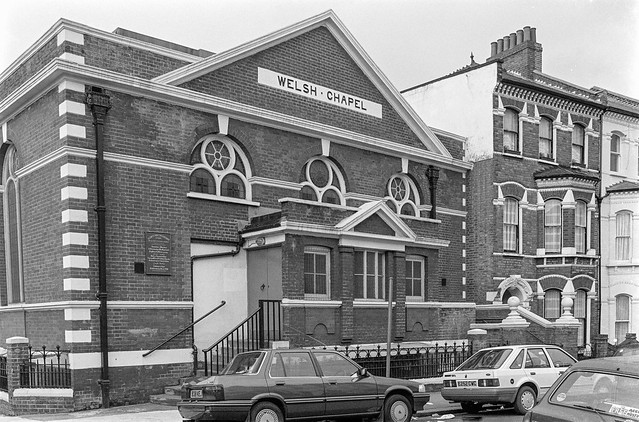
Welsh Chapel, Beauchamp Rd, Battersea, Wandsworth, 1988 88-2d-56-positive_2400
Welsh Chapel, Beauchamp Rd, Battersea, Wandsworth, 1988

The only one of my four grandparents I ever knew was a small lady dressed always in black, who seldom moved far from the fire and range in the back room of their house. I don’t remember her ever saying much, though I think she was still very much in charge in the house where she lived with my three maiden aunts, where our Sunday afternoons were strictly observed with only quiet activities and good books allowed, though I think we children sometimes escaped to the wilder parts of the large garden where we were out of sight. She was a Baptist, though the church she and the aunts were members of was a few miles further out of London, though having been born in Llansaintfred, Radnor she would have been home at the Welsh Chapel. Eliza Ann Davies came up to London to work in a Welsh Diary on the Kings Cross Road owned by an uncle, and it was there that she met my grandfather, Frederick Marshall, a young wheelwright and blacksmith, came into the shop some time in the late 1880s and they were married in 1890. I never met him as he was killed in a road accident 12 years before I was born.

Lavender Hill, Battersea, Wandsworth, 1988 88-2d-54-positive_2400
Lavender Hill, Battersea, Wandsworth, 1988

This impressive range of shops can still be seen on Lavender Hill, just to the east of Clapham Junction station – the pub glimpsed in the distance is The Falcon on the corner of Falcon Rd. But while the Falcon is still in business, every single shop has I think changed hands since I took this in 1988. I took a few other pictures on the main shopping streets, including St John’s Hill and St John’s Road some of which I’ve posted in the Flickr album these pictures come from.

St John's Rd, Battersea Rise, Battersea, Wandsworth, 1988 88-2d-35-positive_2400
St John’s Rd, Battersea Rise, Battersea, Wandsworth, 1988

The corner of St John’s Rd and Battersea Rise still looks much the same, and the Northcote Arms is still there, though with some new signage. Rhino sports has gone and in its place you can now get acupuncture and other health and beauty treatments. The place of Angel shoes has been taken by a hairdressers, its hanging sign gone, though the iron bracket from which it hung is still in place. And pedestrians are no longer fenced in at the junction.

Aliwal Rd, Battersea, Wandsworth, 1988 88-2d-33-positive_2400
Aliwal Rd, Battersea, Wandsworth, 1988

Many quite ordinary houses such as these were finished with interesting detail as on these houses in Aliwal Road. It was I suppose then a relatively inexpensive way to add a touch of class, or perhaps a builder’s edpression of pride in his work.

Broomwood Rd, Battersea, Wandsworth, 1988 88-2d-15-positive_2400
Broomwood Rd, Battersea, Wandsworth, 1988

65 Broomwood Road is no longer a dentists, and has lost all those signs, as well as the details of its glazing, but the door and the side panels remain as well as the decoration above. It is at the end of a short row of similar houses on the street,

Webbs Rd, Shelgate Rd, Battersea, Wandsworth, 1988 88-2d-13-positive_2400
Webbs Rd, Shelgate Rd, Battersea, Wandsworth, 1988


Like many corner shops in London, Sacha Wines on the corner of Webbs Rd and Shelgate Rd has now been converted for residential use and customers have to go elsehwere for ‘Food, Wines, Beers, Spirits’ etc. Most of these photos were probably taken as I wandered towards Webbs Rd, not for Sacha Wines, but for the Wandsworth Photo-Co-op.

Bellson & Co,  Battersea Rise, Battersea, Wandsworth, 1988 88-2d-26-positive_2400
Bellson & Co, Battersea Rise, Battersea, Wandsworth, 1988

You can still fine the ball on top of a pillar on Battersea Rise, a few yards up on the south side from Northcote Road, but it takes a little imagination to recognise the scene in my 1988 photograph. The shopfront has gone and 73a is now a house, while Bellson & Co has added an extra floor, though still retaining the bay windows and porch. The changes have been made in a way that integrates pretty seamlessly and without that ball (the pillar is now exposed brick) I would have found it hard to convince myself that this was indeed the same place.

Clicking on any of the pictures in this post will take you to a larger version in my album 1988 London Photos.

Police surround Berta Cáceres

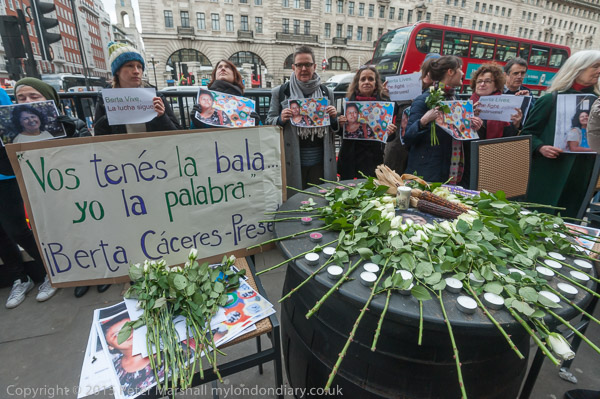
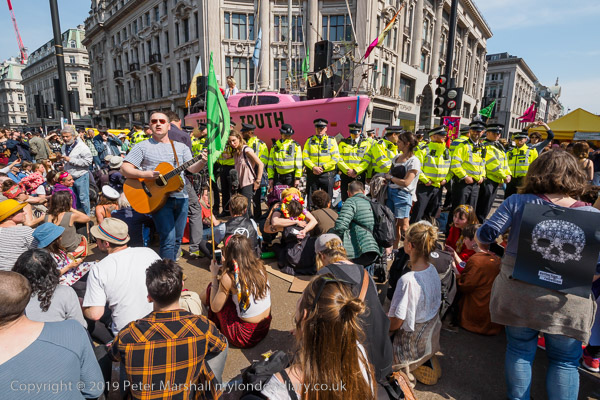
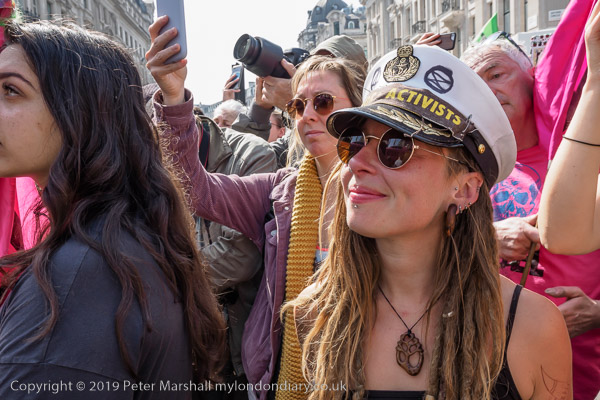
The pink yacht that Extinction Rebellion had brought to Oxford Circus was named after Honduran environmental activist Berta Cáceres. On March 7th 2016 year I had photographed a vigil in her memory outside the Honduran Embassy in London. The leader of the Civic Council of Popular and Indigenous Organisations of Honduras (COPINH) who had been awarded the Goldman Environmental Prize for her work against the Agua Zarca Hydroelectric Project in Río Blanco, funded by the World Bank and the Dutch government, she was murdered in her home on March 3. She had previously received death threats from the Honduran National Police.

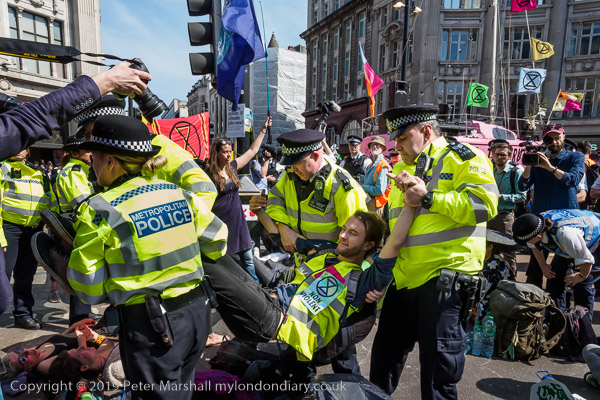
The Met didn’t actually arrest the pink yacht, which had been at the centre of the circus since Monday, but on Friday 19th April 2019 surrounded it and arrested any of those who had been protecting it in the centre of the road junction who refused to move away, including a number who had been locked on to the boat.

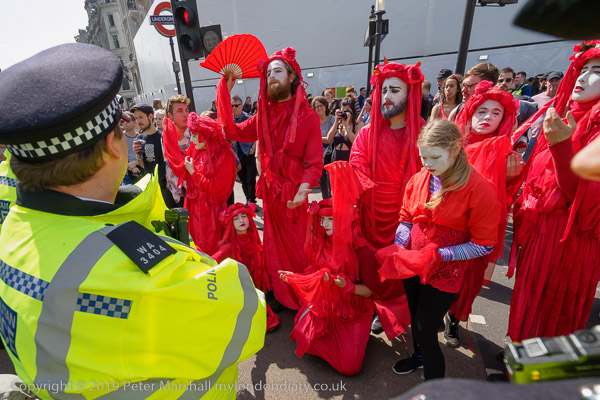
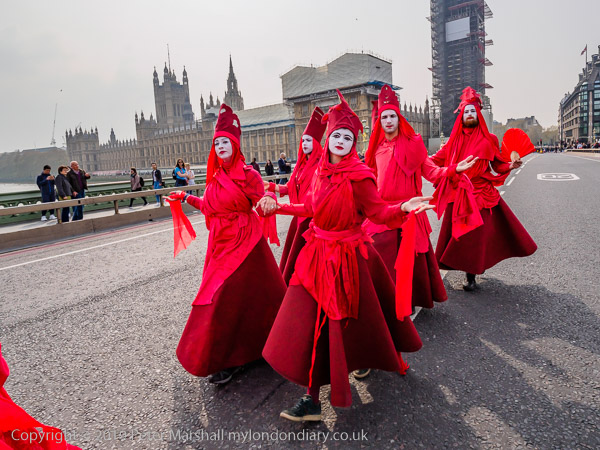
A larger police cordon surrounded the whole of the road junction, and people inside it were instructed to leave or face arrest. XR’s ‘Red Rebel Brigade’ made their way around the outside of this cordon, while others sang and danced inside.

The numbers inside slowly fell as police allowed people to leave but stopped anyone – including a man who told them he was the owner of the yacht – from entering. He made an effort to persuade the crowd to break the cordon, but was held back by friends and the crowd followed the XR principle of non-violence against the police and sat still, watching as the police made arrests or slow drifting away to Marble Arch or other areas still occupied by protesters.

Slowly and deliberately the police cleared the protesters, carrying away many to the waiting police vans. I stayed for several hours taking pictures before deciding it was time to leave.

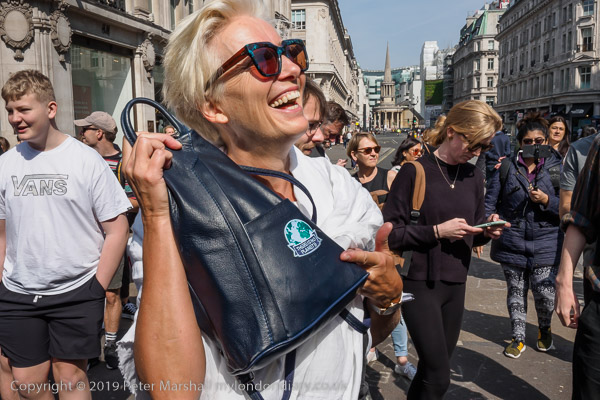
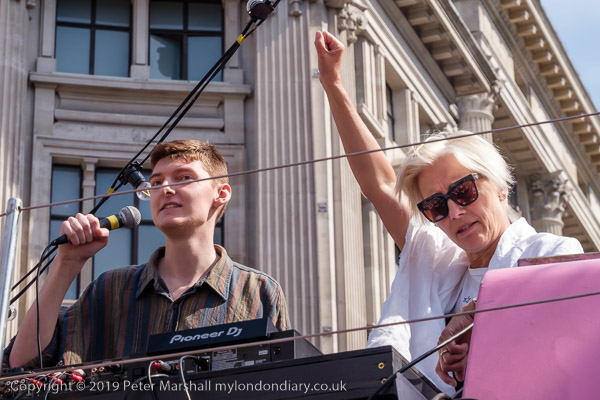
Earlier that day I had been at the Oxford Circus ‘Sea of Protest’ for the start of the day’s activities to show ‘Love For The Earth’ on the 5th day of the occupation, and had photographed Dame Emma Thompson arriving and speaking at the event.

She received a warm welcome from Extinction Rebellion supporters but some snide comments from the press about having come from the USA by plane to speak at the event. She could hardly have swum and although I’d rather we had a system that didn’t worship celebrities, given the world as it is, I welcome them using their fame to support the fight against global extinction and other essential causes.

I left a few minutes after she had finished speaking and was still being besieged by photographers and journalists, answering their questions from the deck of Berta Cáceres. There had been another event I’d wanted to photograph scheduled for Trafalgar Square, but no sign of it when I arrived, so I returned to Oxford Circus. In the short time I’d been away, Emma Thompson had left and police had moved in to surround the yacht and begin the process of clearing the junction. By the evening the yacht had been towed away.

Police clear XR from Oxford Circus
Emma Thompson speaks at XR


All photographs on this and my other sites, unless otherwise stated, are taken by and copyright of Peter Marshall, and are available for reproduction or can be bought as prints.


Armenian Genocide, TTIP, Football and Cyclists in Tweed

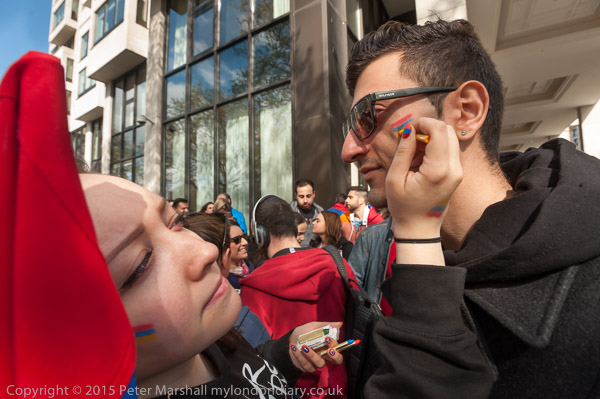
On Saturday 18th April 2015, Armenians marked the 100th anniversary of the start of the Armenian Genocide in Turkey in which 1.5 million were killed between 1915 and 1923. Turkey still refuse to accept the mass killings as genocide and the UK has not recognised the killing of this huge number of Armenians as genocide. The term was first published in 1943 by Polish lawyer Raphael Lemkin in his book ‘Axis Rule in Occupied Europe‘. After he had read about the killing of Armenians in Turkey and found that there was no law under which Talat Pasha, the grand vizier of the Ottoman Empire could be charged he invented and defined the term ‘genocide.

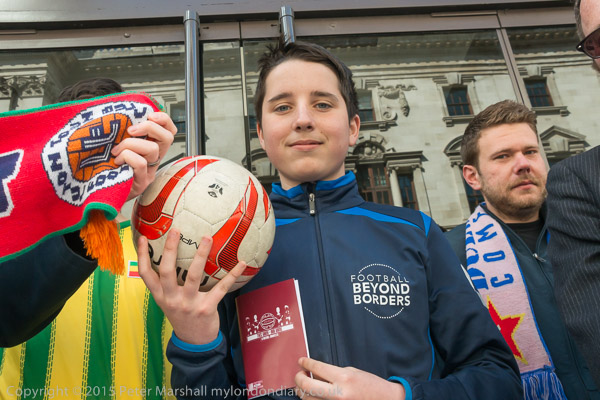
I left shortly before their march began to catch up with the Football Action Network who were taking copies of their manifesto to the Labour, Tory and Lib-Dem offices in Westminster. They were moving fast and there was no sign of them at Labour HQ; I ran on to the Tory HQ to find they had left, and finally caught up with them at the Lib Demo offices near Parliament Square. There I found supporters with scarves from Bolton, Luton Town and Dulwich Hamlet from Football Beyond Borders holding a couple of banners and passports with their demands, including a Football Reform Bill, a living wage for all staff, fair ticket prices, safe standing, and reforms to clubs & the Football Association.

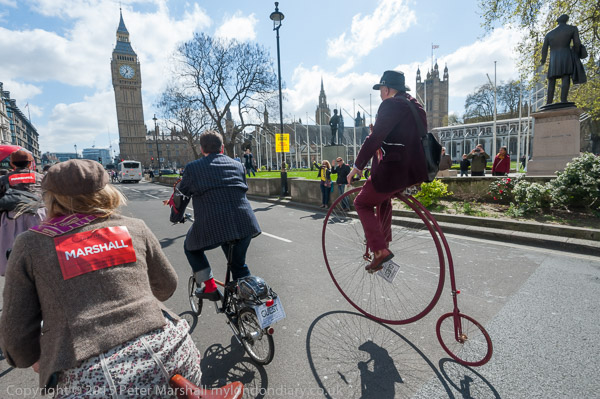
The next even came to me, as a group of cyclists on the Tweed Cycle Ride stopped at the traffic lights on the road opposite, and I ran to meet them, then ran along with them through Parliament Square when the lights changed to green. he Tweed Run raises money for the London Cycling Campaign and describes itself as “a jaunty bike ride around London in our sartorial best“. The vintage-themed ride stops for tea and a picnic and ends with “a bit of a jolly knees-up.” Not really my kind of thing.

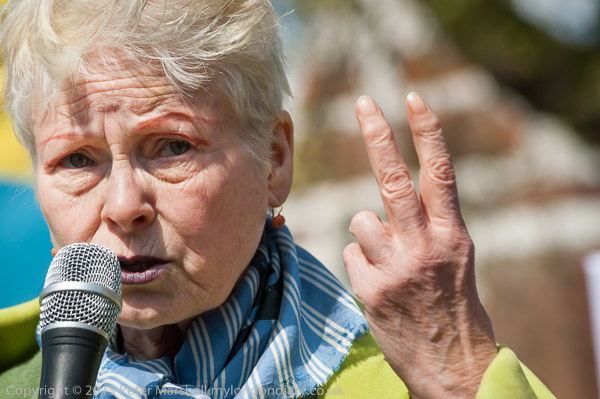
I caught the tube to Shepherds Bush and a rally on the Green against TTIP, the Transatlantic Trade and Investment Partnership being secretly negotiated by governments and corporations which poses a threat to democracy and all public services. The huge public outcry across the EU against this and in particular the Investor-state dispute settlement (ISDS) already incorporated in some other treaties which allows companies to sue countries for ‘discriminatory practices’ including efforts to combat global heating is possibly why these talks were eventually abandoned in 2016, though our EU referendum may also have helped. After speeches the rally split into groups for discussion.

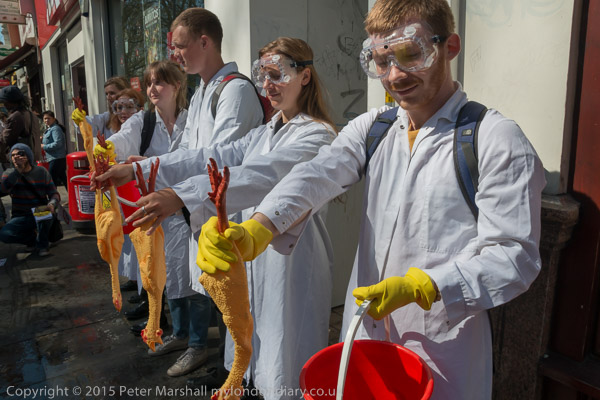
After the rally, white-coated War on Want campaigners moved across the road to a branch of Kentucky Fried Chicken for a performance with buckets and rubber chickens protesting against TTIP which would force us to admit US agricultural products produced by practices considered unsafe here – such as chlorine-dipped chickens, hormone stuffed beef etc. The need for these methods is driven by US intensive farming methods which have lower standards for safety and animal welfare than are acceptable here – and although TTIP ended without a treaty, our post-Brexit trade agreement with the US seems almost certain to include similar hazards.

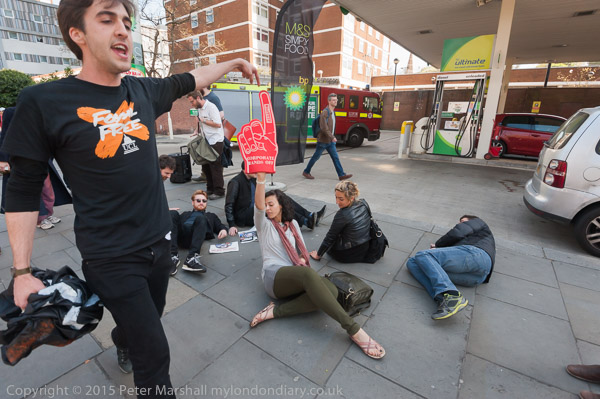
Next I moved with protesters to the BP garage on the opposite side of Shepherds Bush Green, where activists staged a die-in as TTIP would force countries to use dirty fuels including coal, tar oil and arctic oil and seriously delay cutting carbon emissions and the move to renewable energy.

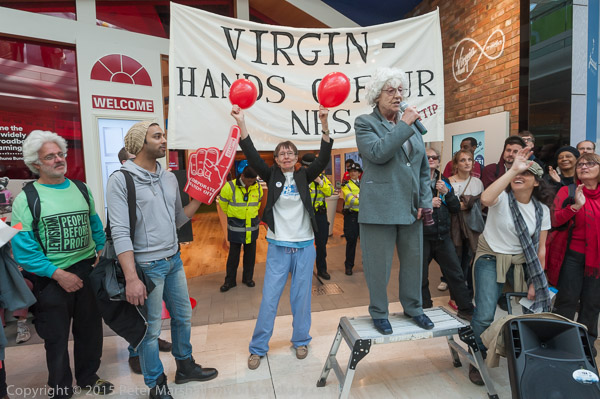
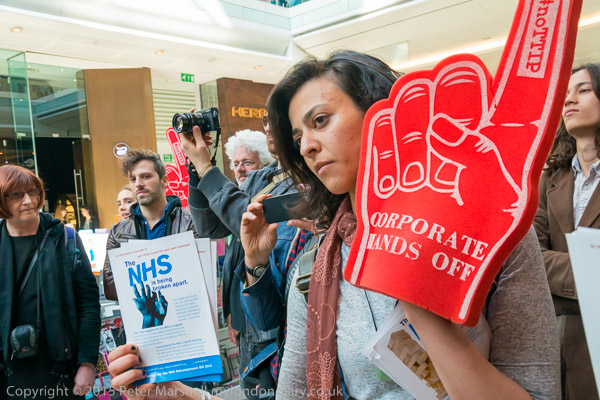
Finally, a group of protesters walked into the Westfield centre to stage a street theatre performance outside Virgin Media to illustrate the danger that TTIP poses to our NHS, allowing corporations to force the privatisation of all public services. Like other large shopping centres Westfield is a private place where protests and photography are not permitted, but police and security stood back and watched the event, and though security attempted to stop some videographers I kept a lower profile and was not approached.

Virgin Media is actually no longer a part of the Virgin empire, though it still pays Branson to use the name. Virgin Care now runs a large part of the NHS which is rapidly being privatised by the Conservative government. According to The Observer, because of a complex structure of holding companies with links to other parts of the Virgin empire with its roots in the British Virgin Islands, the company is “unlikely to pay any tax in the UK in the foreseeable future.”

Westfield ‘Save our NHS’ protest
BP die-in against Climate Change
KFC protest over TTIP
Stop TTIP rally
Tweed Cycle Ride
Football Action Network Manifesto
Centenary of Armenian Genocide

XR, Drax and Knives

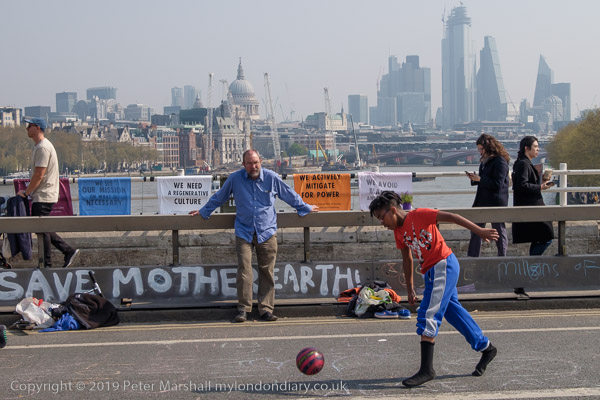
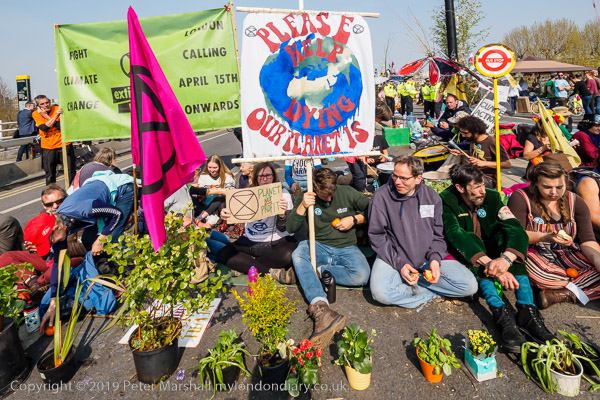
Extinction Rebellion‘s occupation of Central London was in its third day on Wednesday 17th April bringing traffic in the area to a standstill. And as there were no buses through the middle of London and those in the area around only moving at snail’s pace through near gridlock, the only way to move around was on foot or by tube. I chose to walk from Waterloo to Grocer’s Hall although the Waterloo and City line would have got me there in a fraction of the time so I could walk through XR’s ‘Garden Bridge’ still in place on Waterloo Bridge.

There were workshops and events taking place on the bridge, and only bicycles and people walking could cross. And although there was a strong police presence, while I was there they were simply standing around and watching, although I was told by the protesters there had been arrests earlier in the day, and there were people locked on below the lorry which was being used as a stage to make this more difficult to move.

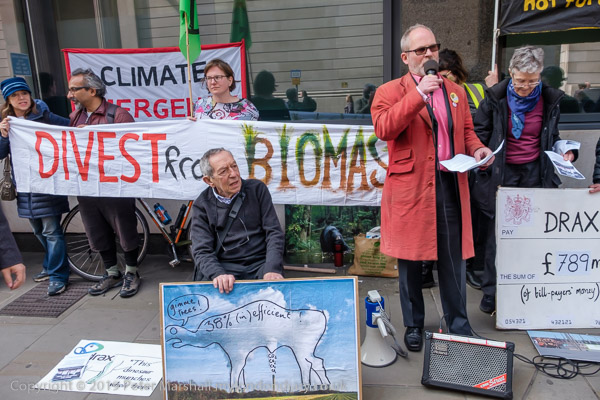
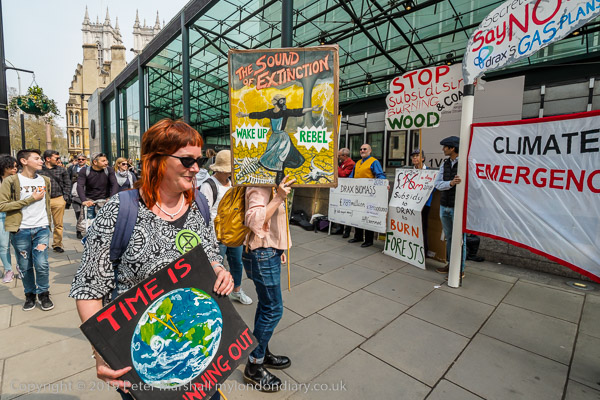
Axe Drax protesters against Drax, a huge power station in Yorkshire, were as usual protesting outside the Drax AGM taking place in Grocer’s Hall in the City of London against both the incredible output of greenhouse gases it produces and the environmental damage both from the coal it burns, imported from open-cast mines which are destroying the environment and communities abroad and the wood, largely from destroying American forests by environmentally disastrous clear-felling. Drax burns more wood than the total UK production each year, and in 2018 this produced over 13 million tonnes of CO2. But nonsensical rules on environmental subsidies means that in 2018 Drax got £789 million in subsidies taken from surcharges in our electricity bills for this massive climate changing pollution. And Drax was planning to increase its pollution by building the largest gas powered generating station in the UK.

I took the tube from Bank to go back to Westminster where XR were still blocking Parliament Square and the roads around, with activities going on in and around the square and tents filling much of Broad Sanctuary.

The Axe Drax protesters had moved from the Draz AGM and were holding a protest at the Dept for Business, Energy & Industrial Strategy demanding an end to environmental subsidies for massive pollution which make Drax and its huge pollution viable. These subsidies should be used as they were intended to promote genuinely renewable low-pollution energy energy sources such as solar, geothermal, wind and wave power rather than, as at Drax, increasing global heating. A few from XR had come along to support them.

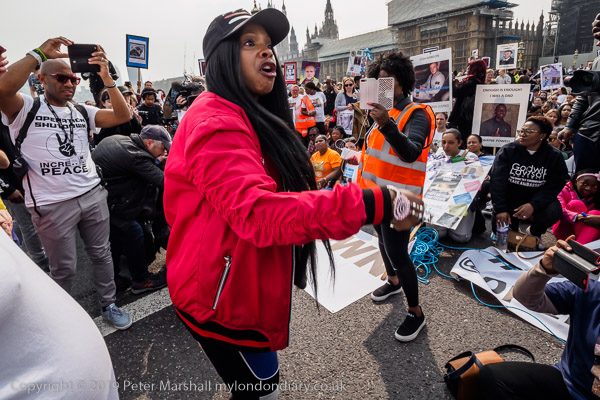
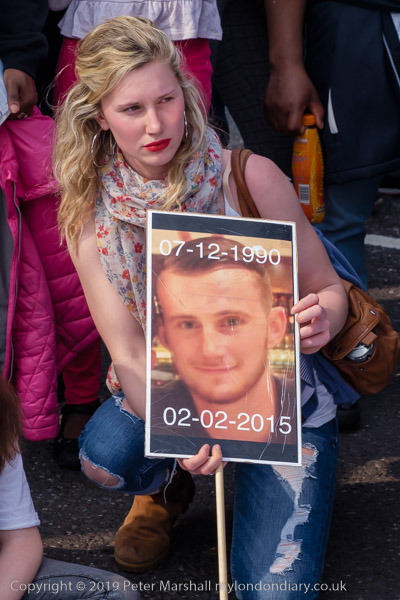
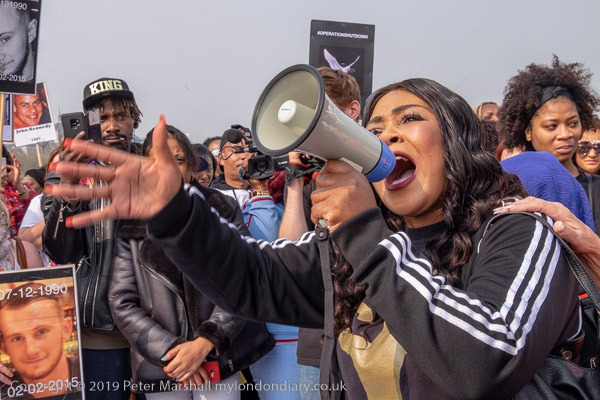
Finally in a completely unconnected protest I joined the campaigners from Operation Shutdown, a consortium of “mums, dad’s and other bereaved family members and loved ones” supported by other campaigners, who had come to Downing Street calling for the community to unite and demanded more urgent action by the government to halt the growing epidemic of knife crime.

It would be hard not to feel their pain, but to demand stiffer penalties for knife and gun crime is not the answer, as we know this has not worked and simply results in the criminalisation of more in the community. But they also call for other measures some of which would certainly help in cutting these killings, mainly of teenagers and young males.


They want really determined and coordinated putting into action of the recently announced public health approach to knife crime. This has to include an end to cuts to local services including youth work and their restoration to pre-austerity levels, more adequate safeguarding, a coordinated approach to trafficking and grooming and abuse of children and young people and a proper sharing of information and accountability.

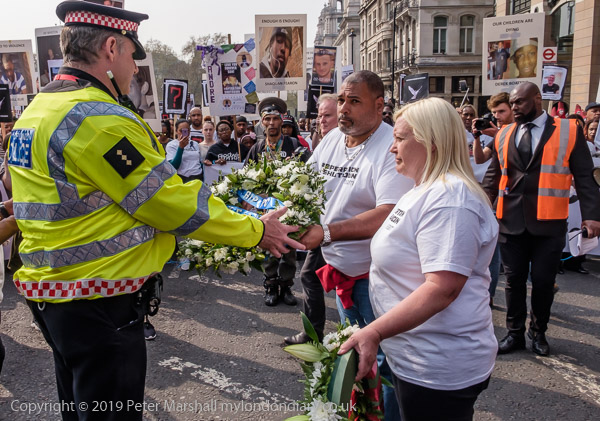
After the speeches the protesters marched the short distance to Bridge Street where they presented two wreaths to the police and held a silence in memory of PC Keith Palmer, killed at Parliament by terrorists.

They then moved on to Westminster Bridge where they sat down for another lengthy rally with more speeches by relatives of those who have been killed.

Knife crime Operation Shutdown
Drax Protest at BEIS
XR around Parliament Square
Drax wood burning must end
XR Waterloo ‘Garden Bridge’ continues


All photographs on this and my other sites, unless otherwise stated, are taken by and copyright of Peter Marshall, and are available for reproduction or can be bought as prints.


Saturday 16th April 2016

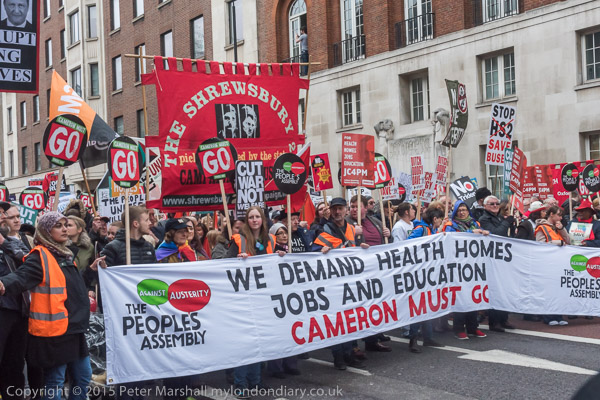
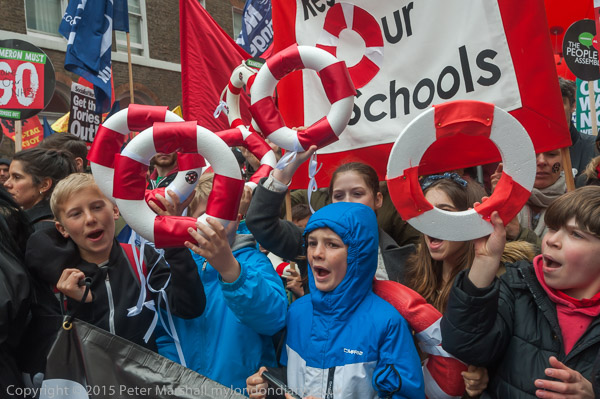
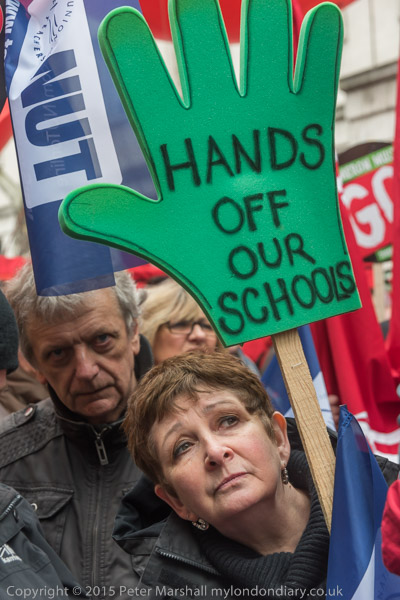
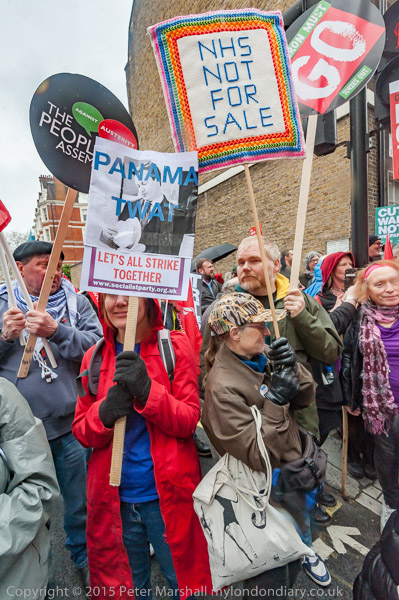
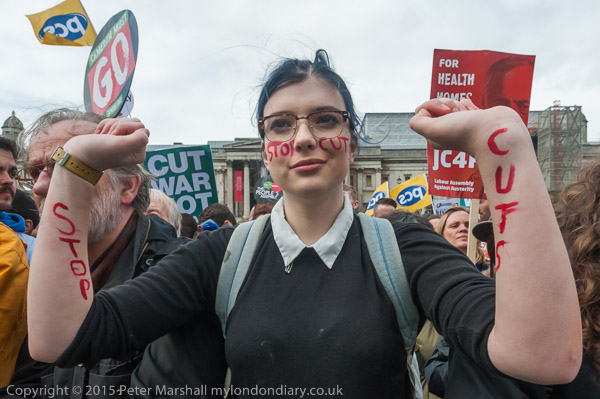
There was a lot happening in London on Saturday 16th April 2016, and I managed to catch some of it. The largest march was organised by the Peoples Assembly Against Austerity. It demanded an end to privatisation of the NHS, secure homes for all, rent control and an end to attacks on social housing, an end to insecure jobs and the scrapping of the Trade Union Bill, tuition fees and the marketisation of education.

It was a large march and by the time I arrived people were fairly tightly packed on around 500 metres of Gower St waiting for the march to start, and it took me some time to make my way through to the gazebo where speeches were being made before the start of the the march – though I found plenty to photograph as I moved through the crowd.

Finally I made my way to the front of the march and photographed some of the main banners lined up there, but police held up the start of the march and I had to leave before it moved off.

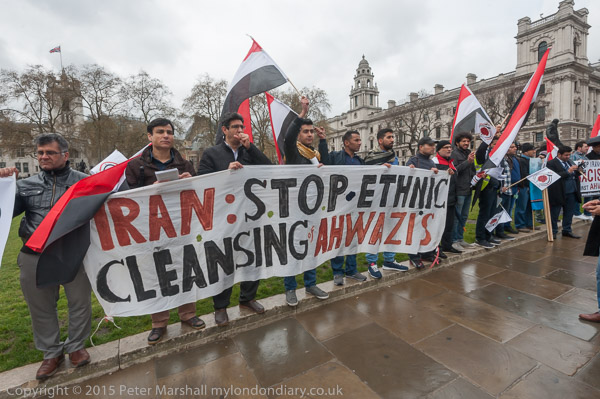
I was disappointed in Whitehall as there was no sign of an event I had been expecting to take place there – or perhaps I was too late. But in Parliament Square I met Ahwazi Arabs from the Ahwazi Arab People’s Democratic Popular Front and the Democratic Solidarity Party of Alahwaz who have demonstrated London in solidarity with anti-government protests in Iran every April since 2005, on the anniversary of the peaceful Ahwazi intifada in which many were killed and hundreds arrested by the Iranian regime.

The Ahwaz region, an autonomous Arab state, was occupied by Iran in 1925 iand they incorporated it into the country in 1935 largely to allow the British Anglo-Iranian Oil Company (BP since 1954) to exploit its rich oil reserves. Since then Iran has pursued a campaign to eliminate Ahwazi culture and change the ethnic makeup of the region by encouraging Persian settlers. BP dominated Iranian oil until Iran nationalised it in 1951, and again became an important force there after the CIA (and MI6) engineered coup in 1953 and the company is still the major partner supplied by the National Iranian Oil Company.

I walked back up Whitehall to Trafalgar Square, by which time the Peoples Assembly marchers were arriving for a rally.

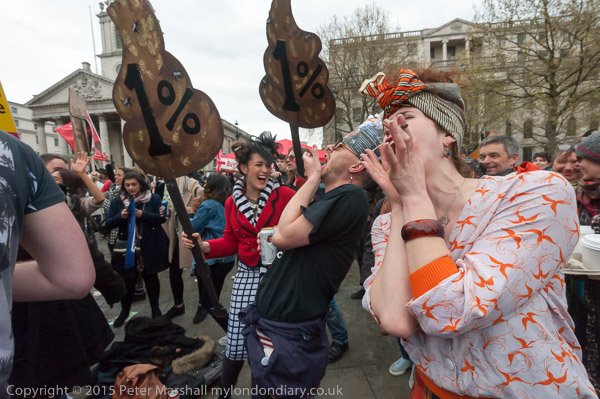
Things were visually rather more interesting on the North Terrace, where people were dancing to the ‘dig it sound system’, which carried a message from Tom Paine: “The World is my country – All people are my brethren – To do good is my religion”.

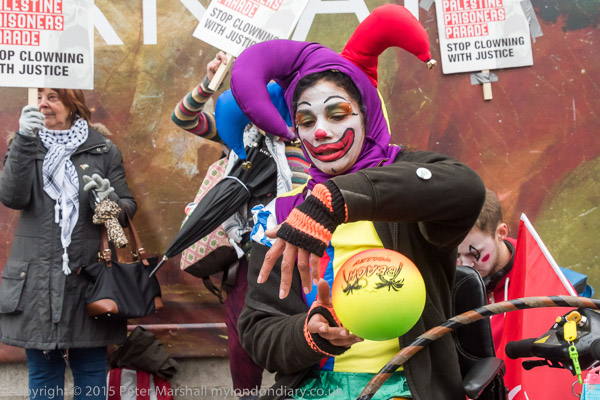
And in one corner the Palestine Prisoners Parade were attracting attention with juggling, hula hoops and speeches to the often arbitrary detention without proper trial suffered by many Palestinians held in Israeli jails. Many of them are on rolling detention orders, released and immediately re-arrested and put back in prison.

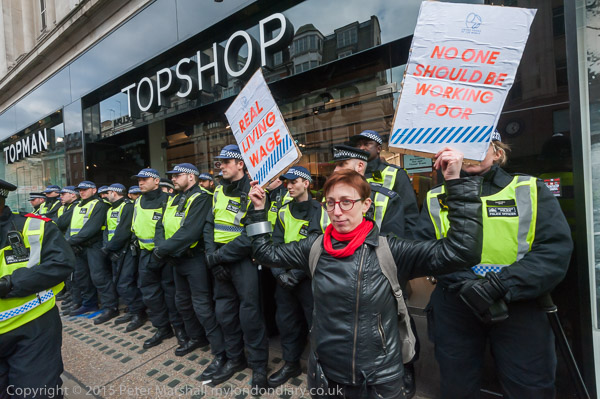
As the rally came to an end the United Voices of the World trade union began a protest a short distance away on the Strand, supported by Class War and others, demanding the reinstatement of 2 workers suspended by cleaning contractor Britannia for calling for the London Living Wage of £9.40 an hour for all those working at Topshop. The UVW say Brittania is systematically victimising, bullying and threatening cleaners and Topshop refuse to intervene.

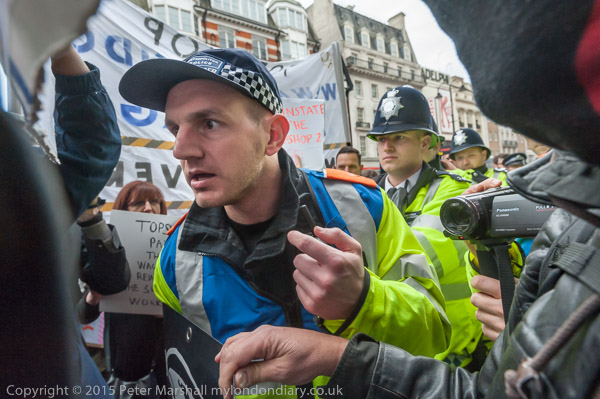
The fairly small crowd held a noisy protest outside the shop entrance, with was blocked by security men, and a large group of police arrived and began to try to move the protesters, and began pushing them around. The protesters didn’t retaliate but simply moved back; some holding up placards in front of the police cameraman who was filming the event were threatened with arrest.

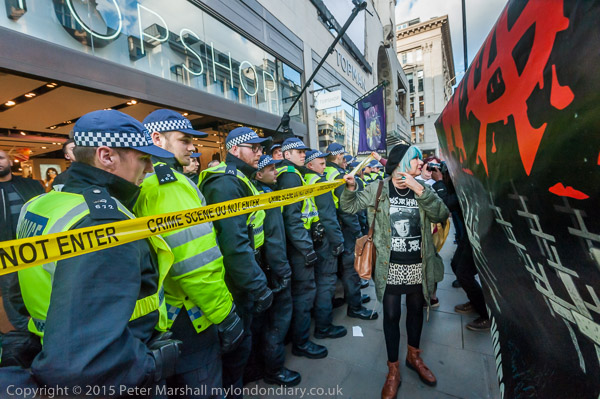
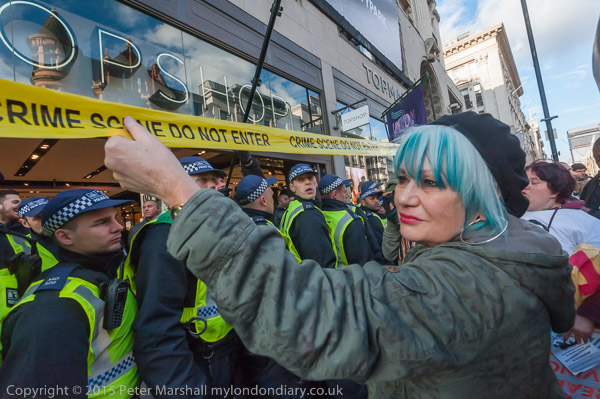
Eventually the protesters marched away, walking back along the North Terrace of Trafalgar Square where they picked up a few more supporters and then on to Top Shop at Oxford Circus for another protest and stand-off with the police.

After a fairly short protest there the protesters marched on to John Lewis, where the UVW have a long-standing dispute calling for the cleaners to be treated equally with others who work there. As they approached the store some police became more violent and one woman was thrown bodily to the ground several yards away.

Other police and protesters went to help her and the protesters called for – and eventually got – an apology for the inappropriate use of force. Things calmed down and the protest continued, but as it moved off after several speeches with many leaving for home the police picked on two individuals and began searching them and threatening arrest and the situation became more tense, with police threatening both protesters and press.

More on My London Diary
UVW Topshop & John Lewis Protest
UVW Topshop 2 protest – Strand
Palestine Prisoners Parade
Dancing for Homes, Health, Jobs, Education
Homes, Health, Jobs, Education Rally
Ahwazi protest against Iranian repression
March for Homes, Health, Jobs, Education