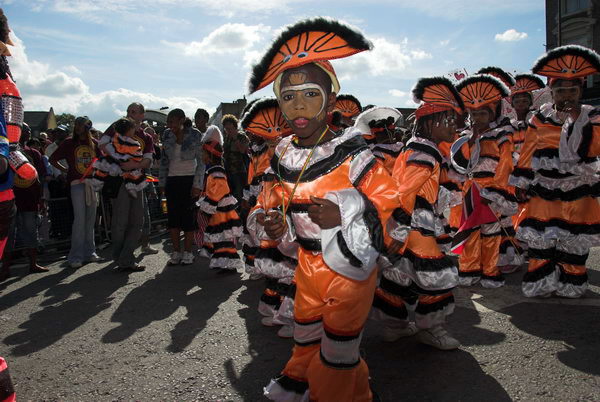
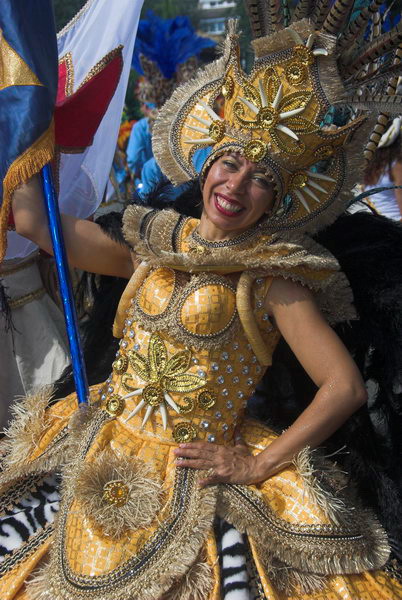
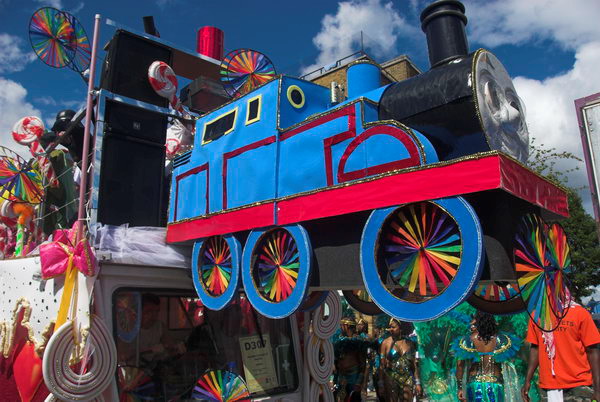
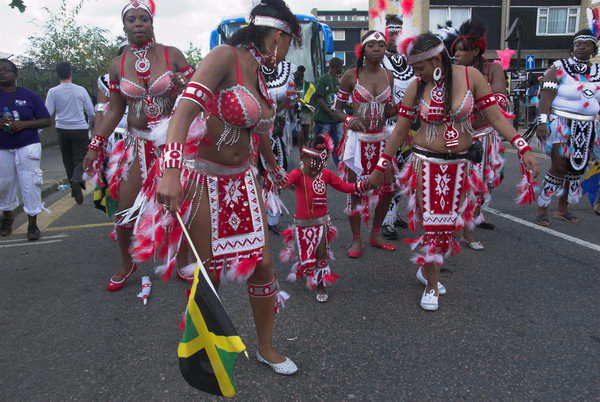
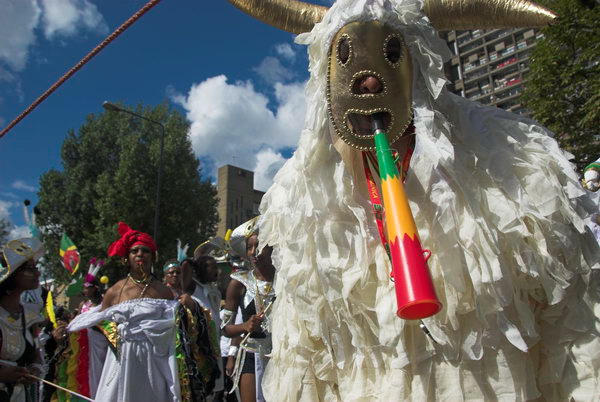
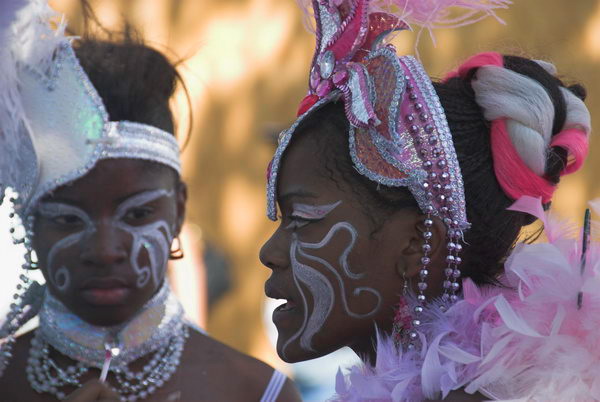
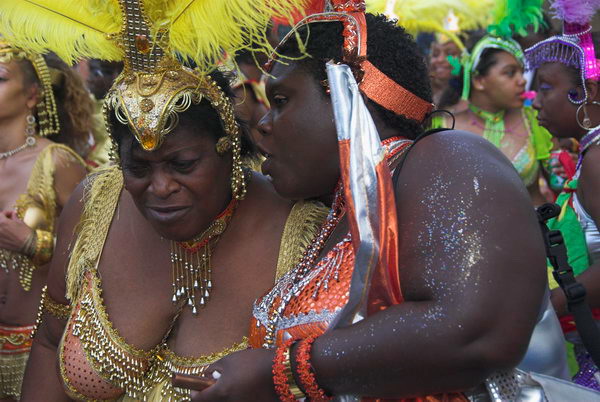
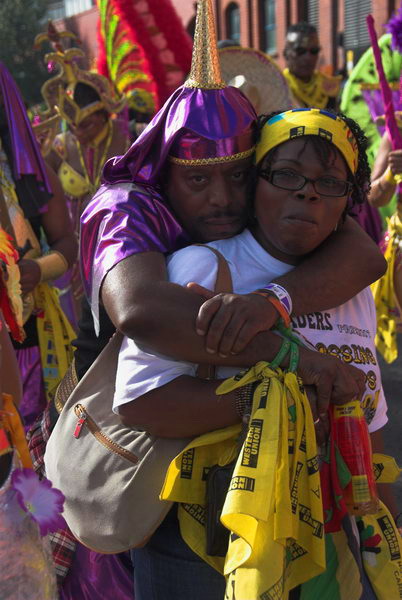
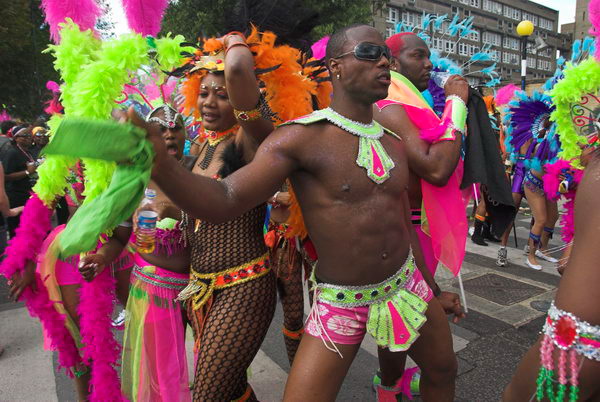
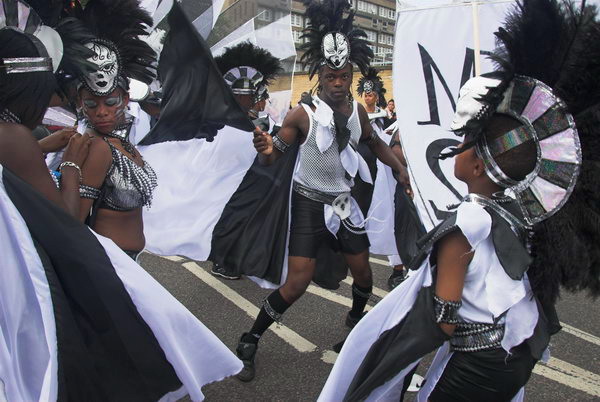
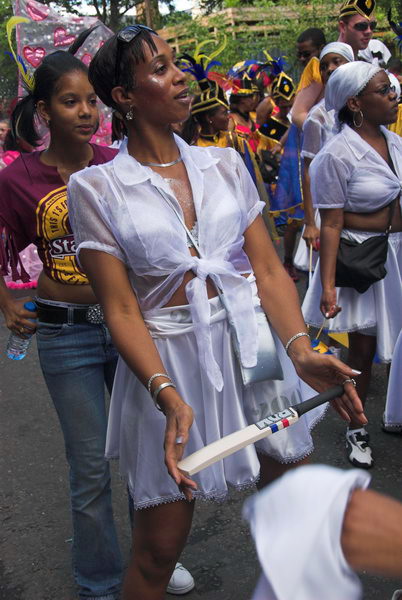
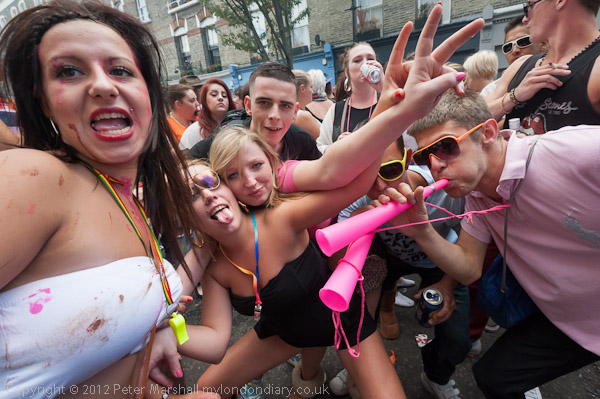
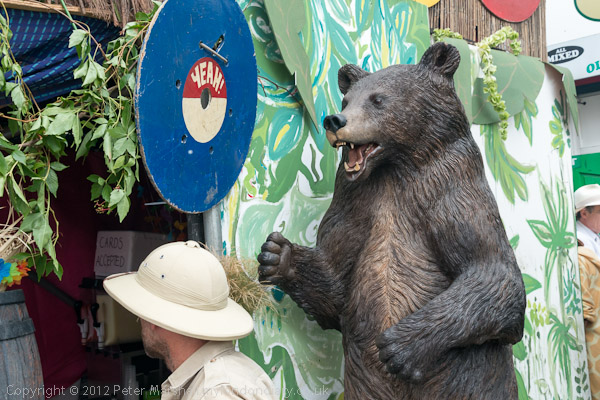
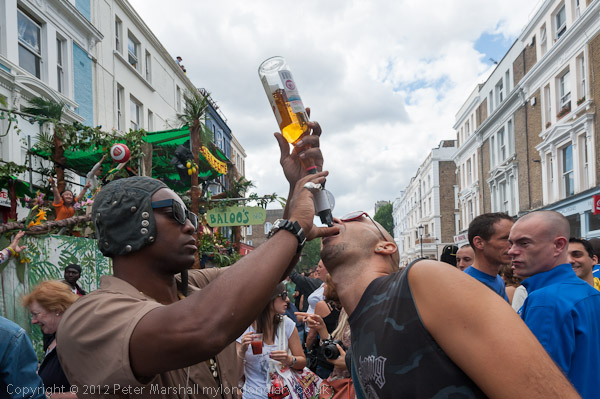
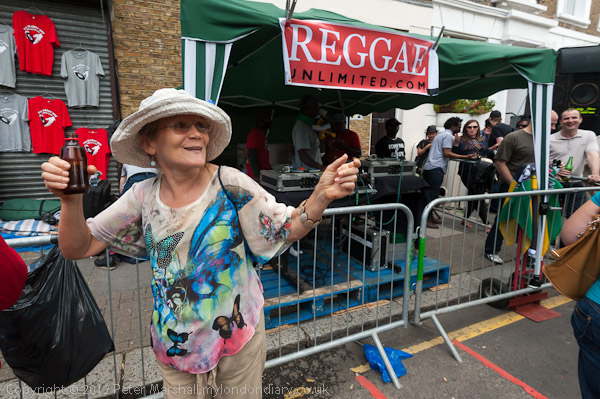
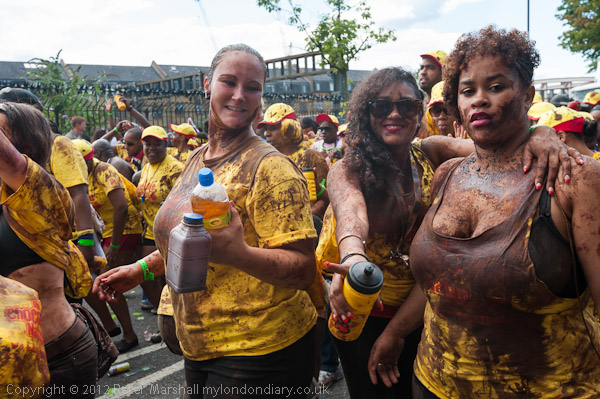
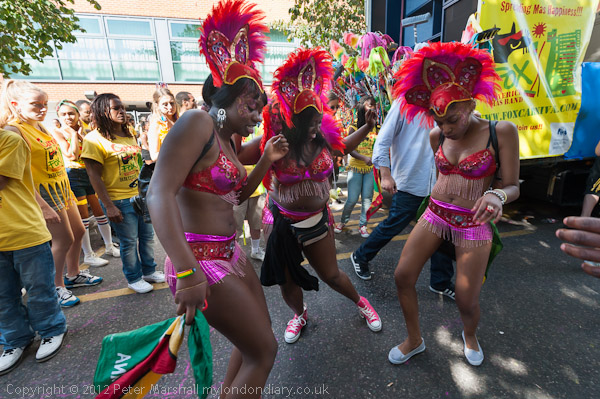
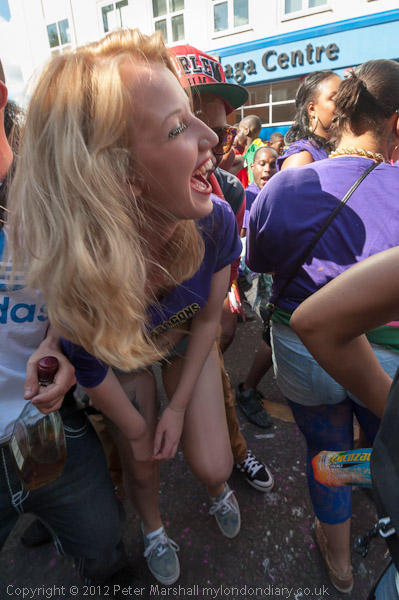
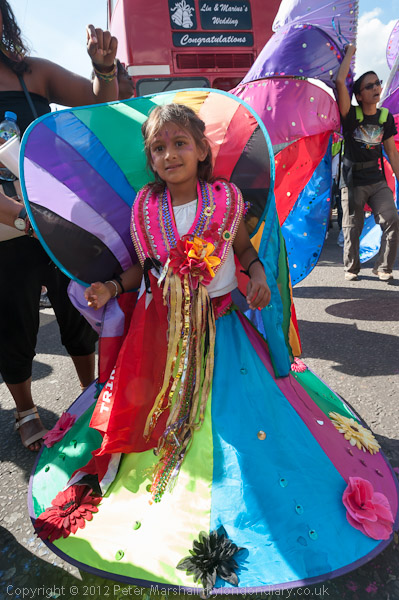
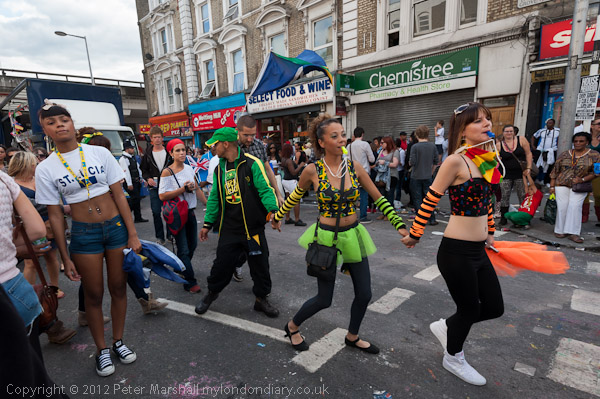
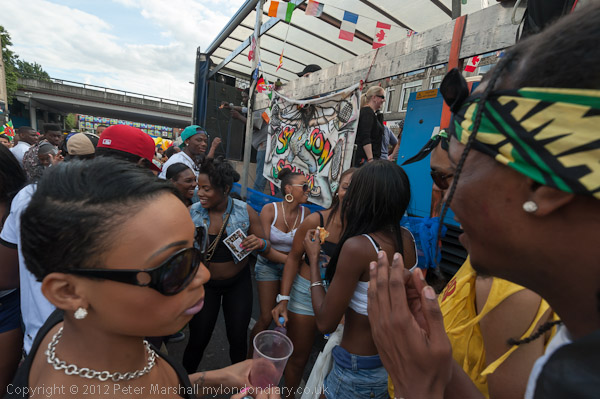
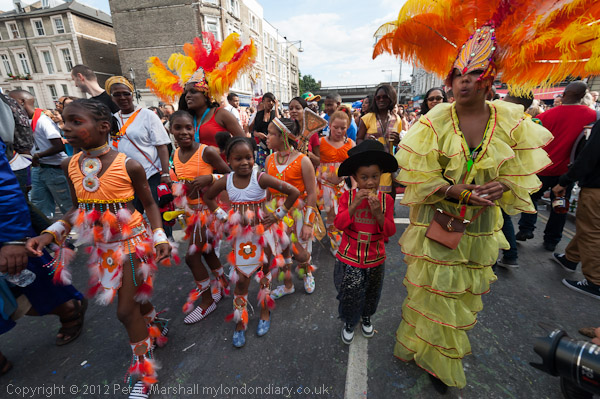
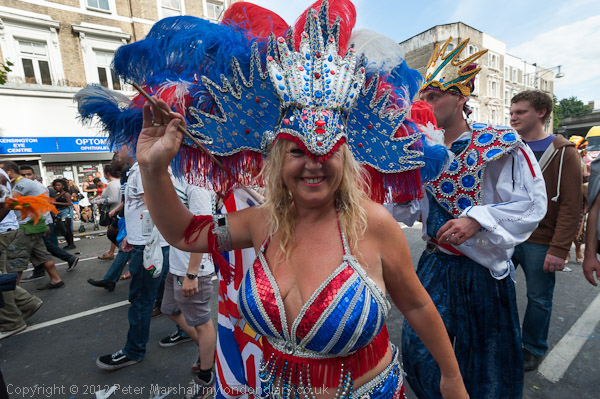
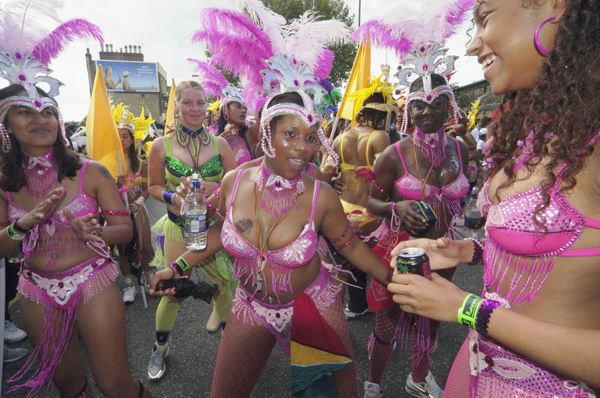
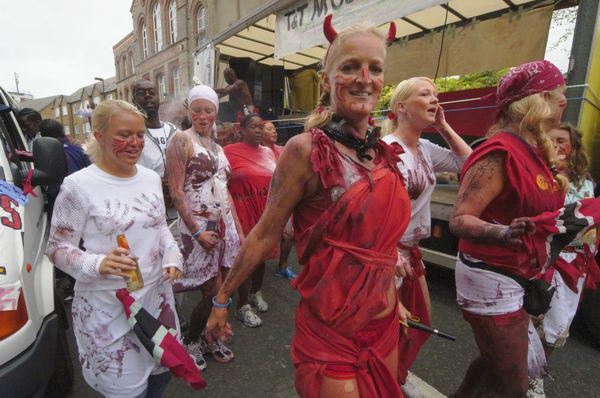
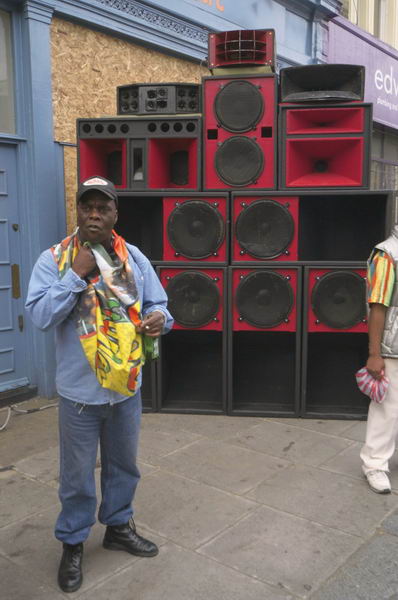
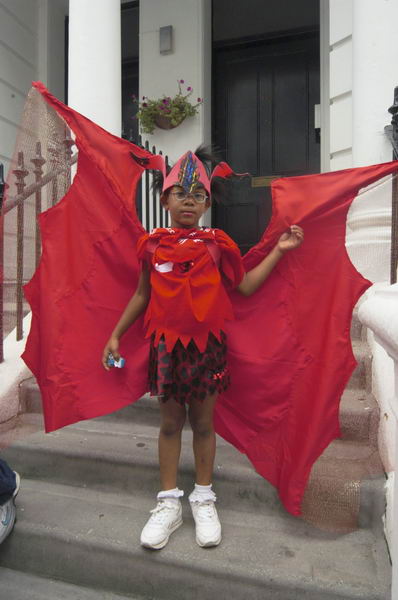
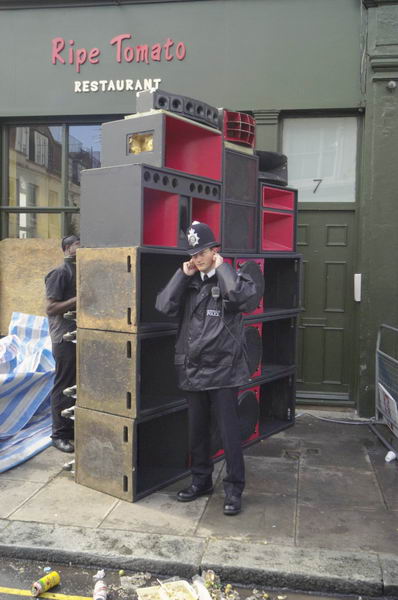
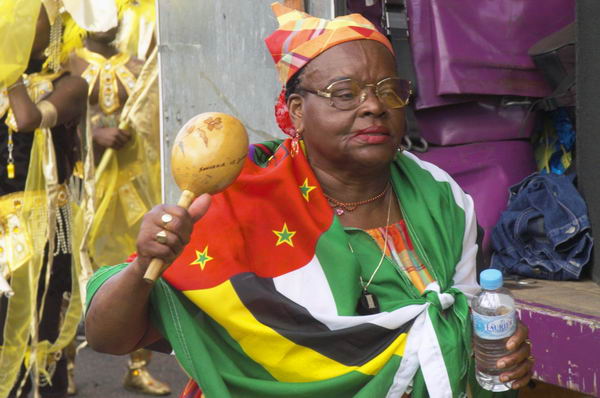
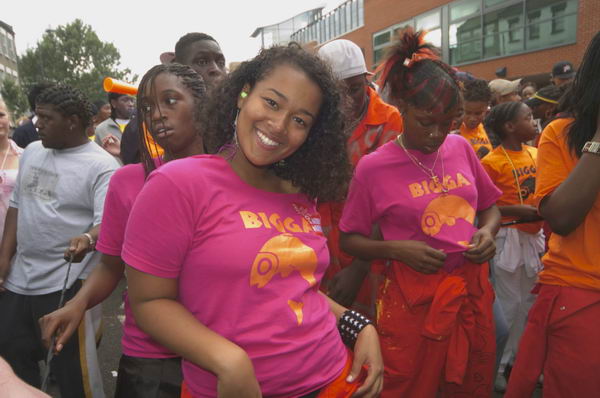
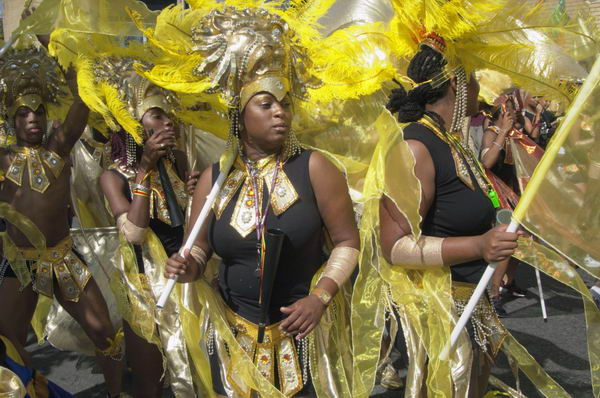
Notting Hill Carnival – On Sunday 27th August 2006 I went to Childrens’ Day of the Notting Hill Carnival, returning on Monday 28th for the main Carnival Day.
By then I’d photographed carnival over more than a dozen years and was getting to feel I had little more to say about the event, though I was still enjoying the atmosphere. I’d had to miss the 2005 event and this year was determined to do my best.
Looking at the pictures I think I concentrated more on the actual parade than in previous years, though I think the black and white images probably show more of those of us following the performers. Below I’ll include – with the usual corrections – what I wrote about the two days back in 2006.
“The big event of August is always Notting Hill Carnival, and I was there both on the Sunday afternoon for Children’s Day and for the main event on the Monday, shooting both black and white film and colour digital (though when I’ll get round to processing the film is anyone’s guess.) [By 2006 I had largely abandoned film and I think a few months later I finally decided rather than process it myself to send it to a lab.]
“Perhaps it’s because I’m getting older, but I didn’t get the same buzz from this year’s event as in previous years, though most of the same things seemed to be around.
“Perhaps there lies the problem; most of them did seem to be the same, two years on from when I last photographed the event.
“Last year I tried to go, dragging myself to the station with a knee injury, but the pain was too much to continue. This year my knee held out, though I was glad to sink into a seat on the Underground at Latimer Road at the end of the day.”
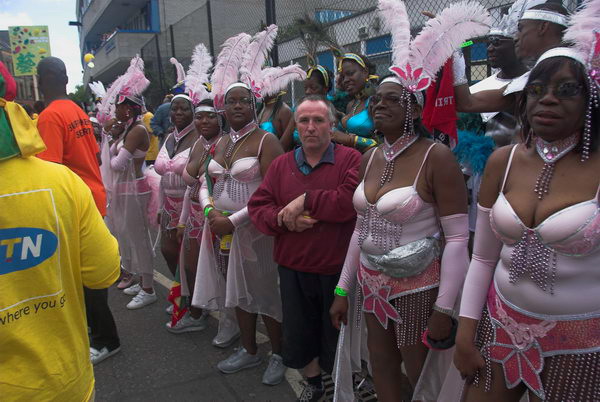
There are many photographers at Carnival, and only a few of these pictures have ever got published. Among those that have is the one apparently showing a well-known football manager (who I didn’t recognise and whose name I’ve forgotten) in a line of women in costume.
Notting Hill Carnival – Children’s Day: Lurid and largely untrue media reports had put me off from attending carnival until 1990, but after I had gone and seen for myself the two days at August Bank Holiday each year became one of my unmissable events of the year.
Each year from then on I went to photograph the revels, trying to capture the spirit of the event in my pictures, and I had some success, with publications and some small exhibitions of the work.
I saw and experience little of the criminality reports of which still often dominate press coverage, with many still trying to get carnival banned or to emasculate it as a static event in Hyde Park or something similar. Opposition to carnival, a great community event, seems at least in part driven by the same kind of racist and classist attitudes that led to Grenfell. I only once in over 20 years came close to it when I caught a pickpocket with his hand in one of my trouser pockets in a densely packed crowd. I grabbed it and pulled it out, to find it clutching an empty wallet – not mine.
Of course I took some sensible precautions, taking only the equipment I needed and keeping a close eye and hold on it. I used a small bag which in crowded areas at least was always around my neck and in front of me rather than on my shoulder, and left my wallet and credit cards at home, carrying enough cash for travel, food and drink in a zipped pocket.
Most of what mayhem there was – and given the huge number of people in the area there was relatively little of it – took place later in the day, after a day of dancing and drinking and after I had gone home, always before the light began to fade.
While I was there the streets were full of people having a good time and happy to be photographed while they were doing so. Mostly they were Londoners, and particularly black Londoners, though some people came from far away for the event. When we were in St Denis at the north of Paris one year I photographed posters advertising trips for the event.
The only real problem I had over the years was with my ears. At carnival you don’t just hear the music, you feel it as the tarmac on the streets vibrates and your internal organs jump around to the beat. For several days afterwards my ears would hurt , my hearing would be dull and my head would still be ringing. Some years when carnival came late in the month I was back teaching within a couple of days and it was hard.
Professional media crews covering the event mainly wear ear protectors, and I did try using earplugs, but found it unsatisfactory. They stopped me experiencing carnival fully and made communication with those I was photographing difficult. It was like eating wearing boxing gloves. So I just put up with being deafened and taking a day or to for recovery.
But by 2012 things were different for me. As I wrote then: “But either I’m getting too old for it, or perhaps carnival is changing, and this year I found it a little difficult. So I went on the Sunday, stayed around three hours and didn’t really want to return for the big day. So I didn’t.“
And this was the last time I went to Carnival. The next year I was away from London and in years since then I’ve thought about it, but not gone. I feel I’ve taken enough pictures of it.
You can see more of the pictures from the 1990s in two albums – Notting Hill Carnivals and Panoramas on Flickr though I’ve still to add some from later years. Many of those from this century are on My London Diary, including many more from 2012 at Notting Hill – Children’s Day.
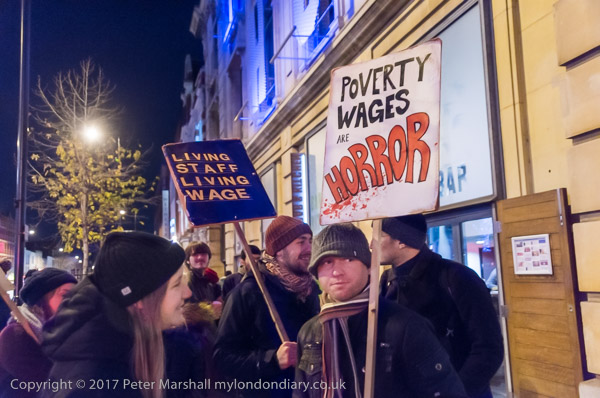
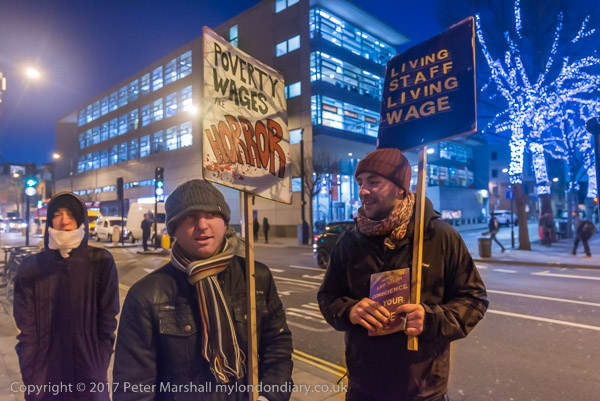
Strikes for a Living Wage & Grenfell – Thursday 14th December 2017 was six months on from the tragic fire at Grenfell Tower in North Kensington, and as on every 14th of the month since there was a silent walk to remember the victims and call for justice. But earlier in the evening I photographed two groups of workers striking for a living wage.
Star Wars Strike Picket Picturehouse – Hackney
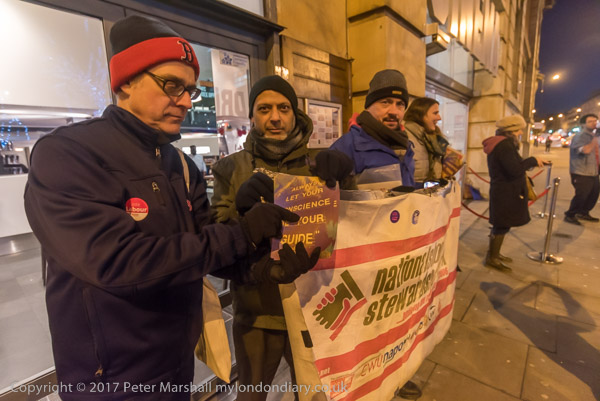
On the day that the ‘Star Wars’ film, ‘Last of the Jedi’ opened at Picturehouse Hackney, workers at the chain held a strike calling for them to be paid the London Living Wage. Workers and supporters demonstrated in solidarity on the pavement outside the cinema as it opened.
Picturehouse is a part of the multinational company Cineworld and has refused to recognise the trade union which the workers belong to, BECTU, instead claiming they are represented by a company run staff forum. As well as a fight for pay this is also for union recognition.
Members voted to dissolve the staff forum in 2019 and is no longer a recognised trade union. Although there have been some pay increases some workers around the start of this year were still only paid £9.80 an hour, over £2 short of the London Living Wage.
City cleaners strike at LHH for Living Wage – Gracechurch St, City
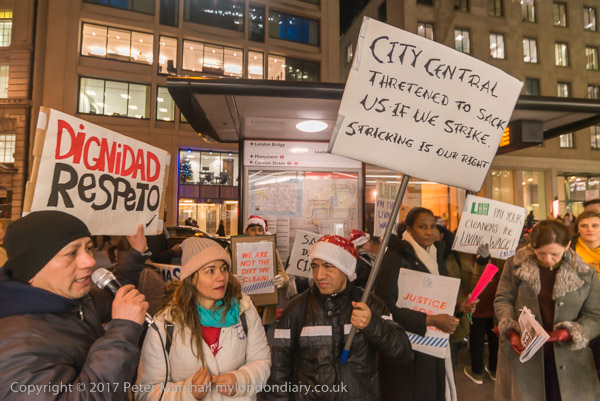
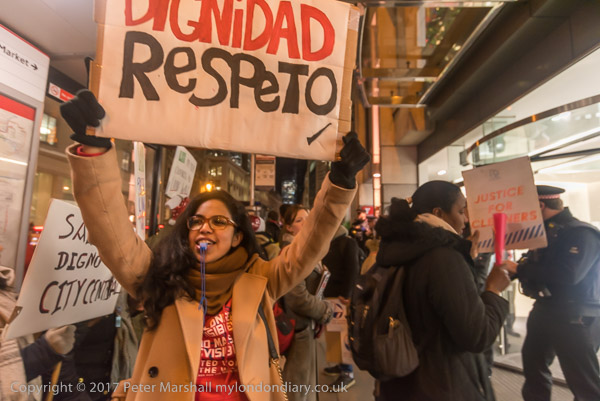
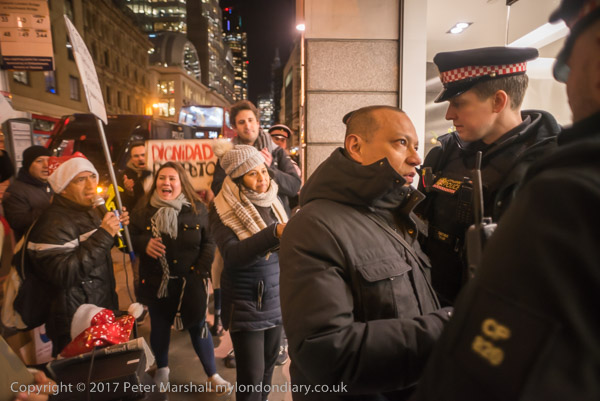
United Voices of the World union and supporters protested noisily outside the offices of Lee Hecht Harrison (LHH), a large company in the heart of London’s financial district with a £2 million profit and a 32% increase in revenue this year.
The cleaners of their offices are not employed by LHH and the cleaning was outsourced to City Central Cleaning & Support Services Limited who had rejected their demand for a living wage and unlawfully threatened them with dismissal if they strike.
The cleaners were being paid the national minimum wage of £7.50 an hour, far less than the London Living wage of £10.20 per hour independently assessed as the minimum needed to live on in London.
After an hour of noisy protest by supporters outside the offices the cleaners were cheered as they went in to start their cleaning shift.
Following this protest, in late January 2018 LHH announced they would be re-tendering their cleaning contract to guarantee that within the month the cleaning staff are paid the London Living Wage of £10.20 per hour. It was the first victory of the year for the UVW.
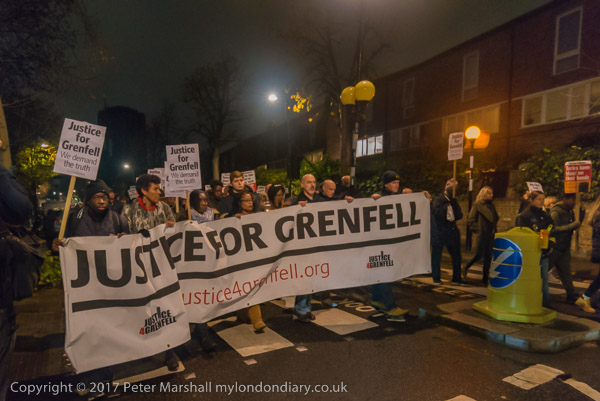
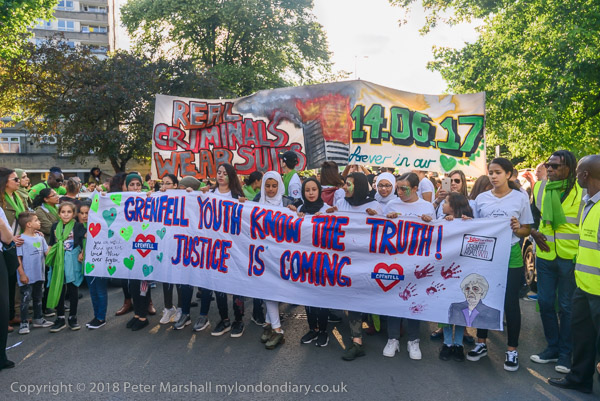
I was late arriving at Notting Hill Methodist and the silent march was starting early, with people already in line behind the banner on the road at the side of the church. It marked 6 months since the terrible fire, and six months in which nothing had been done to prosecute those who were clearly responsible for the conditions that led to the 72 deaths. Six years on nothing has changed.
At the front were grieving relatives, some who had escaped from the flames and local clergy, and police and march stewards were ensuring that photographers and others kept a respectful distance.
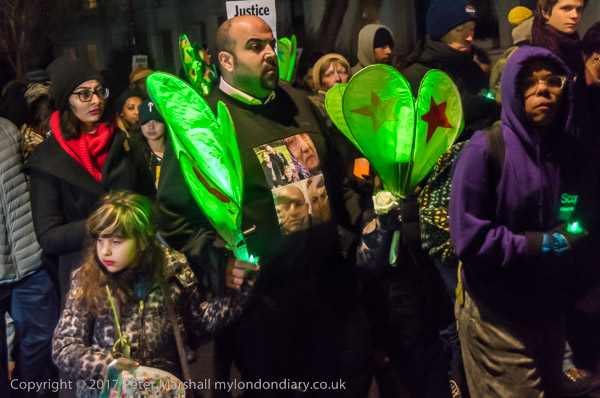
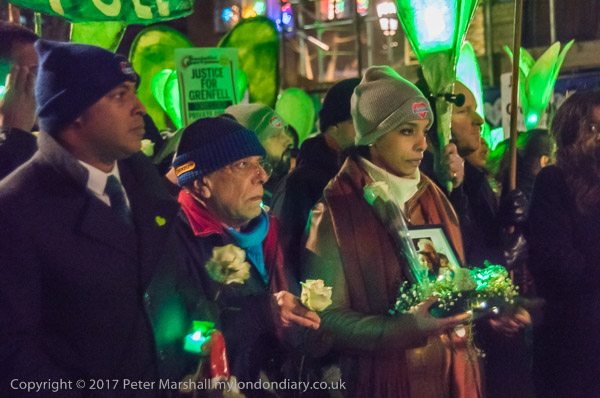
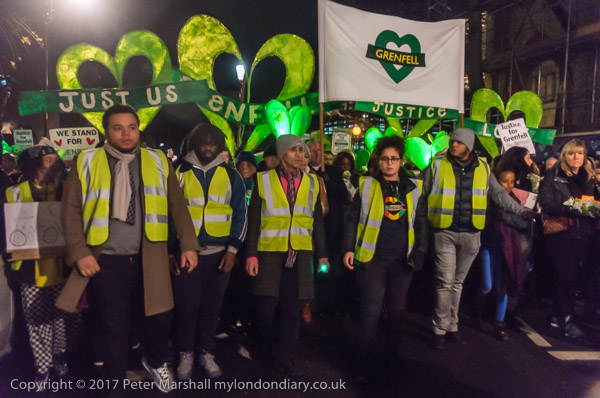
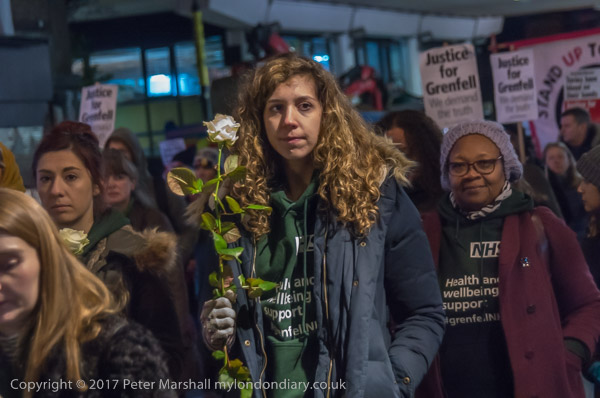
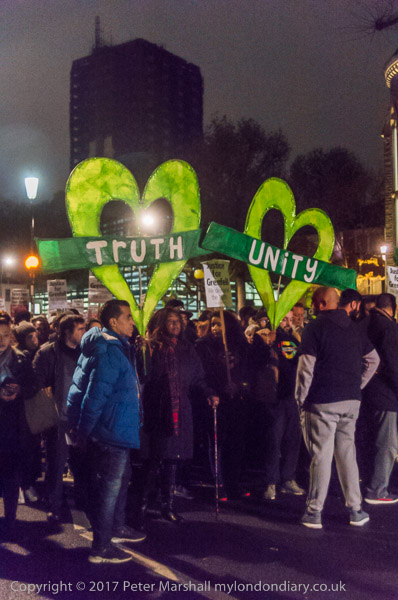
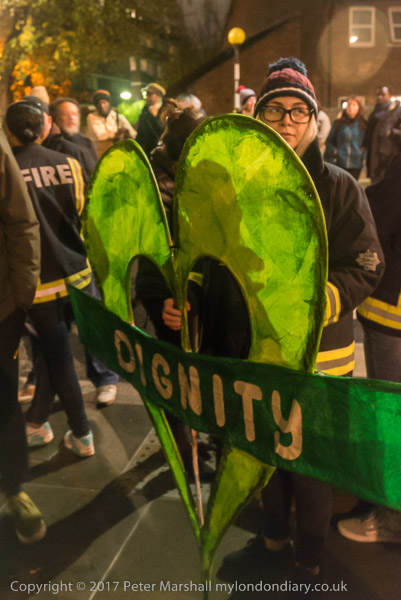
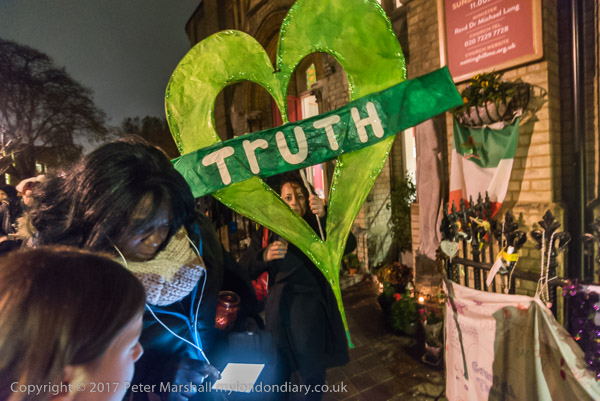
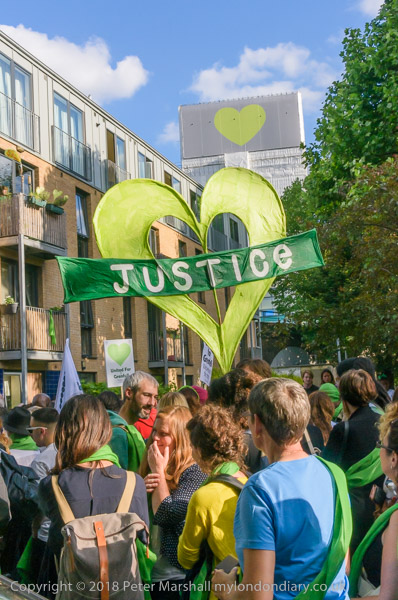
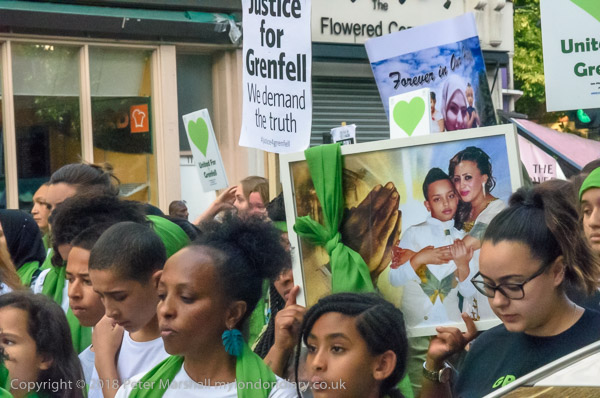
When the march moved off it was led by a line of stewards. Many of the relatives held white roses and photographs of some of those who died and behind them were others carrying large green heart-shapes for Grenfell with single word messages such as ‘JUST US’ , ‘GRENFELL’ and ‘JUSTICE’.
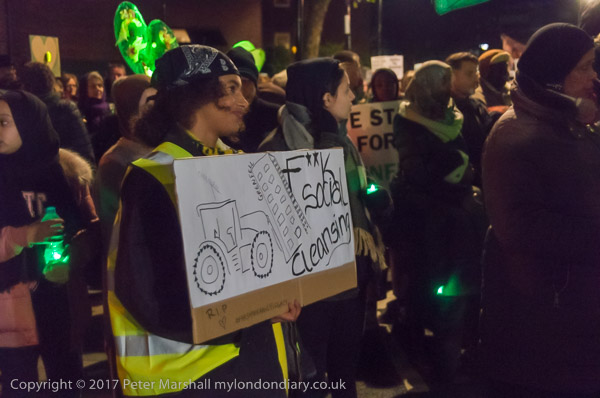
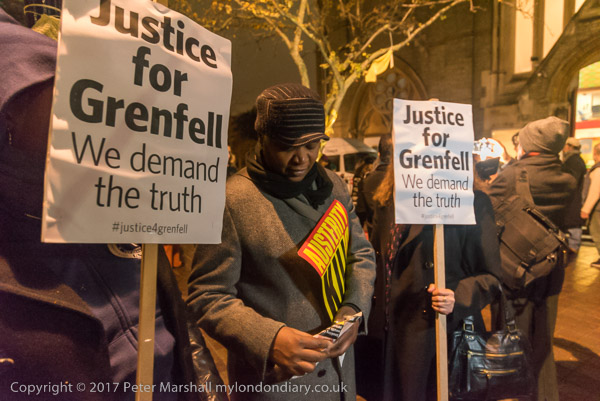
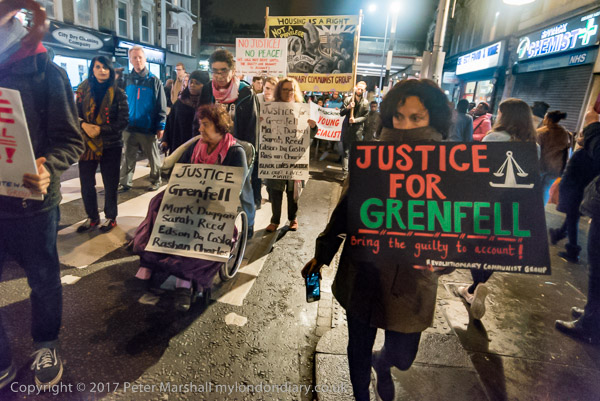
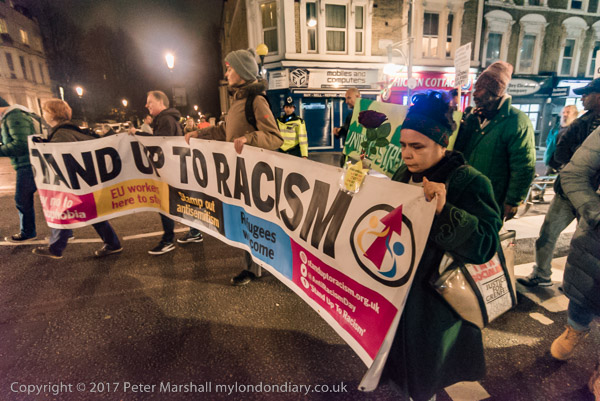
Many taking part walked with green battery-powered candles and further back in the march there were many placards demanding the truth about Grenfell. One banner read ‘Fight For Justice’ and the community will not get it unless they keep on fighting. They have kept on fighting, but it seems less and less likely that the long-running inquiry will deliver any real justice.
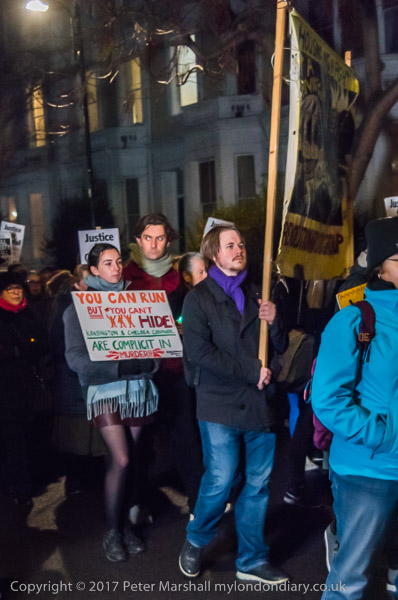
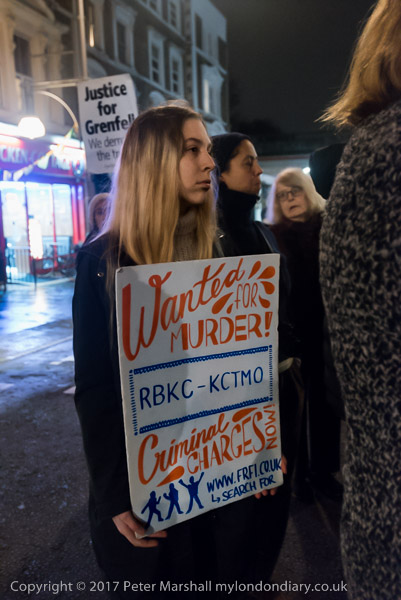
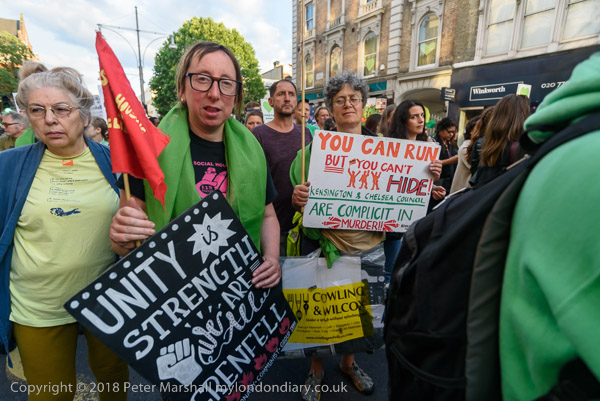
Further back on the march were some more angry posters, including one which read ‘You can run BUT you can’t hide – Kensington & Chelsea Council ARE COMPLICIT IN MURDER’.
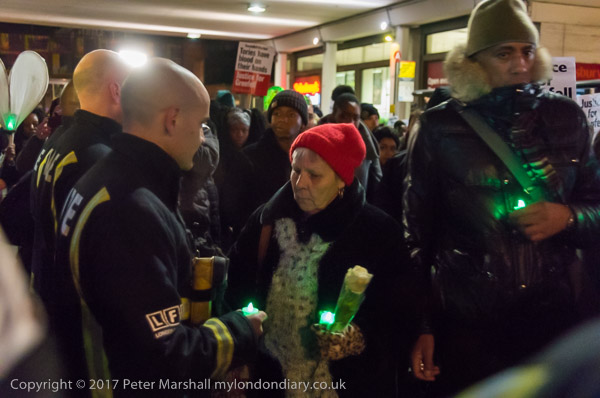
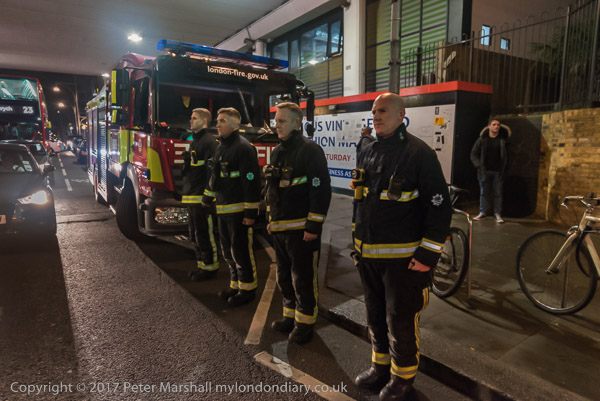
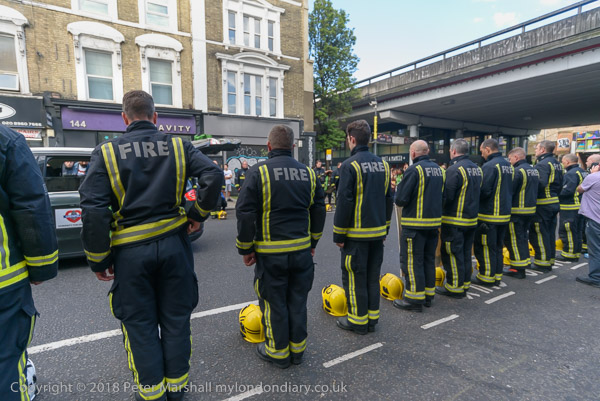
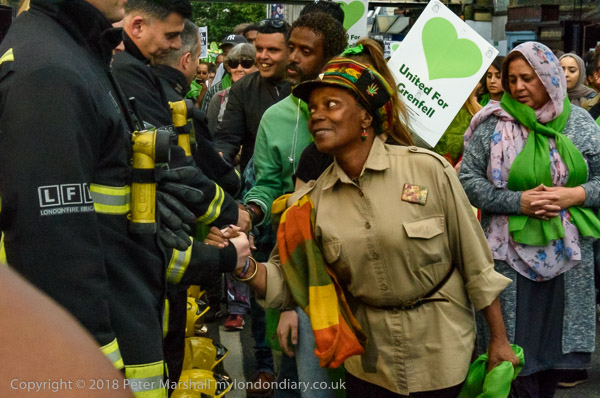
By Ladbroke Grove station firefighters were lined up as a guard of honour for the marchers, many of whom stopped to thank them for their bravery and persistence which saved many lives, some embracing them. I stayed on Ladbroke Grove to photograph as the rest of the march went past.
The march seemed much more moving than the service I’d watched on livestream earlier in the day. I was actually here with the several thousand on the march, and close to where the totally avoidable tragedy took place. There are many more pictures from the march on My London Diary at Grenfell Silent Walk – 6 months on.
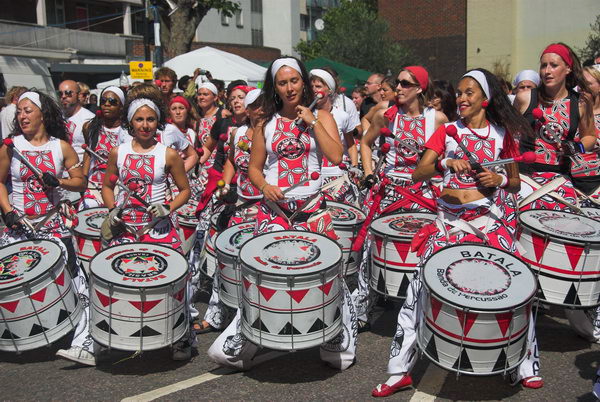
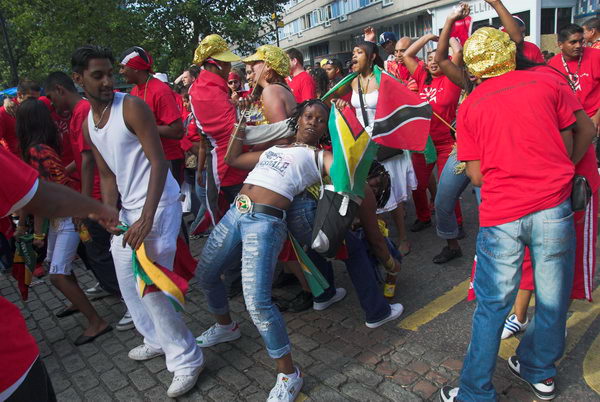
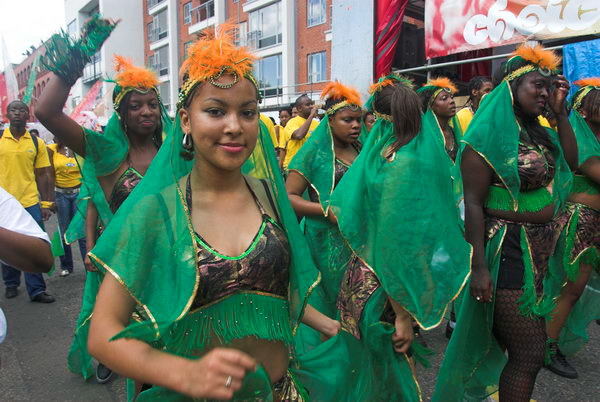
Notting Hill Carnival 2006: On Monday 28th Aug 2006 I went to photograph Notting Hill Carnival, working with both black and white film and digital colour. In most of my carnival pictures I’ve concentrated on the people attending the event rather than the costumes and I did so on this occasion with the black and white, but for the colour I decided to mainly photograph those taking part in the carnival as the pictures here show.
Rather unusually my August 2006 page only starts on Friday 25th, when I went to Greenhithe & Swanscombe Marsh. I’d been away from London most of the month, holidaying with friends in Kent, visiting Paris and staying with family in Beeston and decided it wasn’t appropriate to post pictures from these locations on My London Diary.
In 2006 I went on both Sunday 17th, the Children’s Day and the main carnival event on the Monday, but the pictures here are all from the Monday. You can see those from Children’s Day on a link from the August Page of My London Diary.
I’ve always had a fairly elastic definition of London, and it stretched some way out along the River Thames both upstream and down, and also taking in the London Loop, a section of which I walked with family the following day.
Sunday had been a busy day too. Notting Hill only really gets going after lunch, so I had time to go to East Ham in the morning for the Sri Mahalakshmi Temple Chariot Festival and then call in at Bromley-by-Bow and walk to Stratford and photograph again the Bow Back Rivers before going to Children’s Day.
So I think I was probably fairly tired by the time Monday came around, having done rather a lot of cycling and walking over the past three days, as well as taking a great many pictures.
As I pointed out, it was “two years on from when I last photographed the event.” The previous year I had “tried to go, dragging myself to the station with a knee injury, but the pain was too much to continue. This year my knee held out, though I was glad to sink into a seat on the Underground at Latimer Road at the end of the day.“
I also wrote “when I’ll get round to processing the film is anyone’s guess” and the answer was not for a very long time – and then I sent it away for processing rather than do it myself. By 2006 I had almost completely committed to digital for its many advantages and this was one of my final flings with film. The “more pictures soon” with which the piece ends was an aspiration never fulfilled online and I’ve yet to print any of the black and white pictures.
Perhaps the reason for this – and why I probably won’t get to Carnival this afternoon – is “because I’m getting older … I didn’t get the same buzz from this year’s event as in previous years, though most of the same things seemed to be around. perhaps there lies the problem; most of them did seem to be the same.”
But Notting Hill Carnival is still one of London’s great spectacles – and a great fashion show on the street. If you’ve never been it’s very much worth attending.
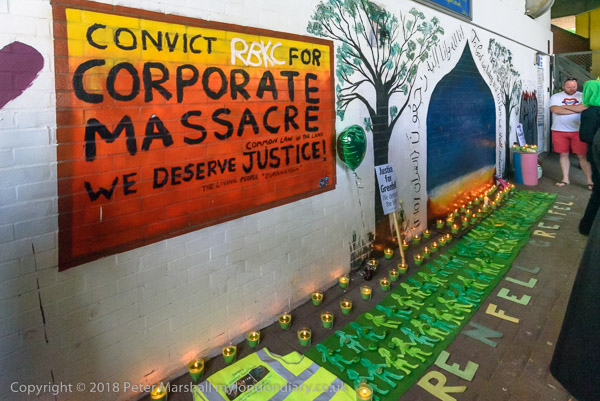
On the 14th of each month my thoughts turn at least for a short while to 14th June 2017 when a fire broke out in the 24 storey block in North Kensington. Instead of being confined to a single flat as the original design intended, flammable cladding wrongly applied on the outside of the building led to a rapid spread which engulfed the tower, killing 72 of those inside.
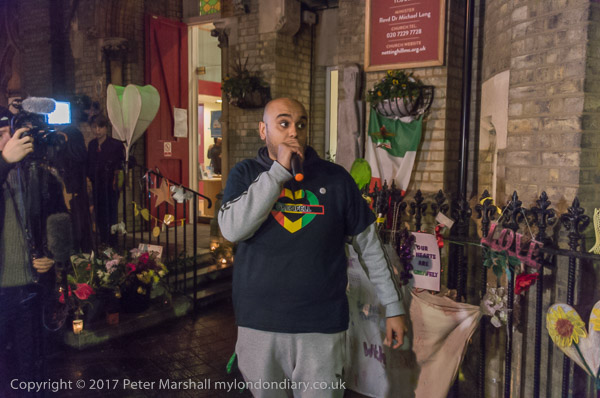
March organiser Zeyad Cred
The public inquiry into the tragedy ended a few days ago, with the lead counsel Richard Millett KC stating that the risks that led to the fire were well known by many of the organisations involved and should have been known by all. He said the inquiry should decide with confidence that all 72 deaths were avoidable, and criticised the many organisations which had been more concerned with trying to evade any legal responsibility for the fire and blame others rather than assist the inquiry.
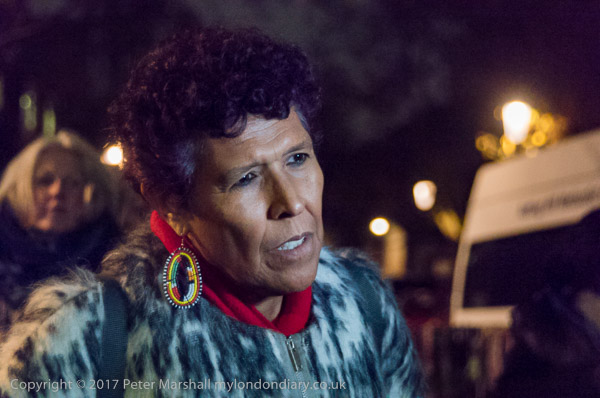
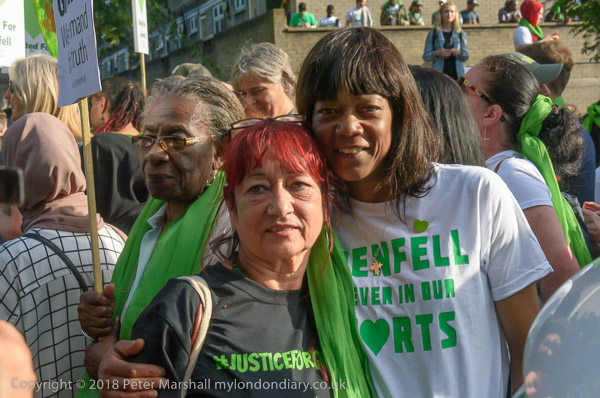
Moyra Samuels, a teacher at a school close to Grenfell Tower and a leading member of Justice4Grenfell
The BBC report lists some of those responsible, with a diagram of the web of blame, including the companies who manufactured the cladding, those who designed their installation and fitted them, the fire safety consultants, the local council and the government who had set up a broken building safety system.
Behind the marchers the burnt out shell of Grenfell
A report from Sky, Grenfell survivors insulted as long-running inquiry comes to close, looks at the effects on some of the residents and their views and including that of barrister for the bereaved and survivors Imran Khan KC, who points out that 85% of those who died were from minority ethnic communities and raises the question of the “institutional or structural or systemic racism” that lay behind the treatment of the tower before the tragedy and of the survivors.
Grenfell United issued a long statement via Twitter in response to the closing statements from the inquiry. In it they point out that none of the recommendations of the first phase of the inquiry has yet been implemented. They say that the government had ignored previous warnings about the dangers caused by deregulation and that Government Ministers were still advocating for deregulation.
They criticise the London Fire Brigade also because the critical recommendations from the Lakanal House fire in 2009 were then incompletely put in place – and they should have lifted the ‘stay put’ advice once it was clear the fire was uncontrollable.
The Royal Borough of Kensington & Chelsea they say “treated us like second class citizens. They refused to invest in Grenfell Tower for 30 years, and when they did they wrapped it in petrol.” The also blame them for colluding with their landlord who bullied them, “ignored our fire safety concerns and treated our lives like a game of monopoly.“
Their statement also describes briefly the failures of Kingspan, Arconic and Celotex and points out that as yet there have been no consequences. They say the justice system protects the powerful and prevents justice. “From Aberfan, to Hillsborough, justice has been denied and Grenfell is no different.“
They hope the final inquiry report will bring real change and that the Metropolitan Police and CPS will bring “the necessary criminal charges … and prove to us that there is not a two tier justice system.”
On Tuesday 14th of November 2017 I joined the large crowd which met at Notting Hill Methodist Church for the monthly slow and silent walk to demand justice and remember those killed in the tragic fire. At the front of the march were large green hearts calling for Truth, Unity and Justice and many others carried placards calling for justice and truth.
Matt Wrack
Among those marching were a group of firefighters including FBU General Secretary Matt Wrack, and more firefighters stood by the side of the road beside there fire engine close to Ladbroke Grove station. Whatever the criticism of the fire brigade, the firefighters who came to Grenfell showed great bravery and worked to exhaustion to rescue many of the survivors unable to make their way out unaided.
The march went on to the Maxilla Centre, but that was a occasion for the local community and not for the press, and I stayed on Ladbroke Grove taking pictures until the end of the procession had passed me, then made my way home.
If you live in or near London there is a fairly good chance that you will be among the millions on the streets of Notting Hill today, although people sometimes come long distances for London’ and possibly Europe’s biggest festival. Many years ago I remember being a little surprised to see a poster advertising the event in St Denis on a visit to Paris, though post-Brexit it may be a little more difficult to travel here.
Although I’ve lived in the London area for most of the years carnival has been running, it was only around 1990 that I first went and experienced it. I’d probably been put off by the bad press it usually got, with the media making much of the crimes and battles with the police that occasionally took place.
But given the number of people attending and the relatively high level of policing the number of arrests at least in recent years is relatively low – and as a Huffington Post investigation into police figures shows, fairly similar to Glastonbury taking into account the number of people attending. In 2019 the number of arrests was dominated by those for drug offences, two thirds of the total, and relatively few for violent incidents, some of which were almost certainly simply reactions to heavy-handed policing. 23 years after the Macpherson report our police are still institutionally racist and certainly Cressida Dick did little to change that – we can only hope Sir Mark Rowley will do a better job, but my hopes are not high.
I’m not sure how many days I’ve spent at carnival over the years, but it is probably around 30, and I’ve yet to see any violence. Of course I’ve been offered drugs, though probably rather less frequently than in some other streets in London, and there was an almost omnipresent reek in any of the crouds announcing that what some were smoking wasn’t just tobacco. And although personally I kept to Red Stripe, I think by the end of some days I was experiencing something of a high from secondary inhalation.
I did one year encounter a rather incompetent pick-pocket. In 2004 I was standing still with some difficulty in a tightly packed crowd moving to the beat of a giant sound system and trying to take pictures when I suddenly became aware of a hand in my left trouser pocket. It wasn’t mine and I grabbed the wrist with both hands and slowly pulled it out to find it holding a wallet. But that wasn’t mine either and it was empty.
The main after-effect of carnival was always on my ears, which sometimes took several days to recover and for me to lose a ringing sound. In years when the bank holiday came of the 31st of August, this often meant I was back at work the following day, and it was difficult when I couldn’t hear properly. Sound at Notting Hill is phenomenal in places, with the ground and every organ inside your boddy vibrating, you feel it rather than hear it.
Of course there were some years I was away from London for various reasons – often because it wasn’t me who booked the holiday. In 2005 I was suffering badly from a knee injury but was still determined to go. I got ready and slowly limped my way to the station, where I had to climb a footbridge. A few steps up I collapsed in pain, pulled myself up and then came to my senses and realised I wasn’t going to be dancing on Ladbroke Grove that year, sat down and rested for a while before making my slow way home.
But I’ve not now been since 2012. I went on the Sunday, Children’s Day, stayed around three hours taking pictures and didn’t really want to return for the big day. So I didn’t. I’m not sure if its that I’ve changed – getting old – or if carnival has. But since then I’ve often been away from London but even when I’ve been here I’ve decided to go on a quiet country walk with family instead. So I don’t think I’ll be there today, but I might change my mind.
The pictures in this post were all taken in 2004, when I went on both Childrens Day which was the 29th August and the Carnival proper on the 30th, taking my son – then in his twenties – with me on Sunday. He didn’t want to go back the following day.
Remember Grenfell – Demand Justice -Five years today on from the terrible tragedy at Grenfell Tower, still none of those whose criminal acts led to it has been brought to justice. The inquiry stutters on, filling in some of the details but pushing hopes of any action further and further into the long grass. So far its only result has been to unfairly pillory the London Fire Brigade who faced an unprecedented situation for which they were ill-equipped with heroism.
On the first anniversary of the disaster I went to the Massive Silent Walk for Grenfell Anniversary that began close to the tower and joined the marchers, taking photographs but also expressing my own shock and sympathy for the victims and disgust at the failure of the local and national government and our legal system both in making the fire almost inevitable and in failing to support the victims.
I’m sorry I’m not able to attend today’s march in North Kensington, but some months ago I agreed to give a talk tonight, failing at the time to recognise the significance of the date. So I’ll wear my green scarf on Zoom as I talk about rather happier things. But little has changed over the years and what I wrote back in 2018 still holds true, with little real changes and rather than repeat myself I’ll quote it here.
“The blackened and scarred bulk of Grenfell Tower has now been hidden by white sheeting, at its top a grey panel with a large green Grenfell heart and the message ‘Grenfell – Forever In Our Hearts’. Some felt it should have been left standing uncovered – particularly as the disaster was caused by covering up the building to make it look nicer for the academy at its base. Without that covering the fire would have been a minor incident with no loss of life.”
“The academy in front of the tower was also built without proper regard for access for fire engines to fight the fire when it happened. To make things worse, Boris Johnson had cut the fire service drastically and they no longer had the equipment to fight the fire in the upper stories – it had to come from Surrey – and successive governments had removed regulations and cut safety inspections (they called it ‘red tape) which would have prevented the inferno.”
“The blackened and scarred bulk of Grenfell Tower has now been hidden by white sheeting, at its top a grey panel with a large green Grenfell heart and the message ‘Grenfell – Forever In Our Hearts’. Some felt it should have been left standing uncovered – particularly as the disaster was caused by covering up the building to make it look nicer for the academy at its base. Without that covering the fire would have been a minor incident with no loss of life.”
“The academy in front of the tower was also built without proper regard for access for fire engines to fight the fire when it happened. To make things worse, Boris Johnson (as London Mayor) had cut the fire service drastically and they no longer had the equipment to fight the fire in the upper stories – it had to come from Surrey – and successive governments had removed regulations and cut safety inspections (they called it ‘red tape) which would have prevented the inferno.”
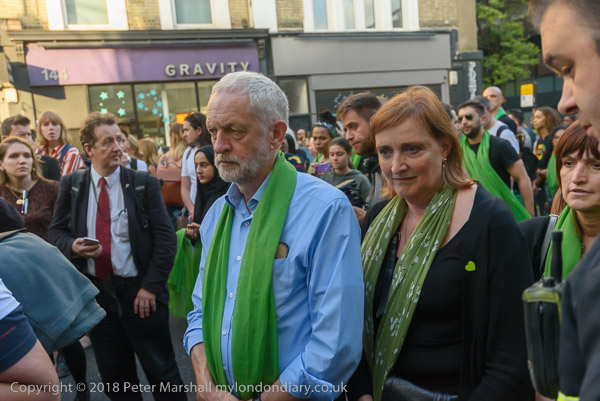
“Firefighters lined both sides of Ladbroke Grove as a guard of honour for the march and were kissed and hugged by many. Labour leader Jeremy Corbyn, Shadow Home Secretary Diane Abbott and local Labour MP Emma Dent Coad and some Labour London Assembly members were among those who took part in the silent walk, which ended in a local park. I left the march before it arrived there as it had been made clear the press were not welcome there.”
“People stop to shake hands and thank the fire-fighters. Some embrace them. While some papers and middle-class commentators try to shift blame onto the firefighters, the community has no doubt that they are heroes who did far more than could be expected, some going back five times into the burning building. They didn’t clad it with highly combustible material, ignore obvious safety issues pointed out by residents, engage ‘experts’ to avoid proper fire inspections.”
Jeremy Corbyn and local MP Emma Dent Coad wait their turn to shake the hands of the firefighters
There were several reasons I used to like going to this area of North Kensington to make photographs, one of which was that when people asked me where I had been I could tell them I’d been to the North Pole, which was just down past the end of Barlby Rd on North Pole Rd. Sadly the North Pole was bought by a property company in 2012 who turned the upper floors into flats and soon closed the pub which became a Tesco Express around 2015.
The Pall Mall Deposit and Forwarding Co became a limited company in 1899, with premises just off Regent St, and built this large storage facility to the design of W G Hunt in 1911 (the often given date of 1901 is most probably a much-quoted typo.) Furniture storage was quite big business at the time as a large proportion of the more affluent lived in rented houses, often moving frequently. The building extends some way back from Barlby Road and has been a rather trendy centre for offices, studios etc, selling itself as close to Portobello Road.
Ladbroke Hall, Clement-Talbot Motor Works, Barlby Rd, North Kensington, Kensington & Chelsea, 1988
Barlby Road was also the location of the first purpose built English car factory, the Clement-Talbot Motor Works built from 1903-11, architect William T Walker. According to Cherry and Pevsner (London 3 : North West) this reinforced concrete building used the Hennebique system, but for the office building fronting the road this was well-disguised by “a festive Wrennaisance front”.
Kensal House, Ladbroke Grove, North Kensington, Kensington & Chelsea
North of the Great Western mainline, which bisects the area, is its greatest architectural gem, Kensal House, built in 1936 by Maxwell Fry leading a small group of like-minded architects. Even in the rather run-down state I photographed it, the ensemble is impressive. It’s and impressive modernist building and rather more functional than some, and the low cost flats included what were for the time some very up-to-date features.
Kensal House, Ladbroke Grove, North Kensington, Kensington & Chelsea
The site was developed by the Gas Light & Coke Company who owned the site and the adjoining gas works to provide housing for their employees – 54 three-bedroom and 14 two-bed flats- and virtually everything – down to the irons – was gas powered. Of course gas lighting was still very common – and in my youth there were still many older people who preferred its more gentle light. But as built there was no electricity in these gas company flats.
Kensal House, Ladbroke Grove, North Kensington, Kensington & Chelsea
As well as two large blocks of flats the site also contained a nursery, with a curved frontage that ran around the former site of a gas holder. One of those who worked with Fry on the designs was social reformer Elizabeth Denby who had also worked with him at the Peckham Health Centre.
Kensal House, Ladbroke Grove, North Kensington, Kensington & Chelsea
The gas works have gone, with Sainsbury’s and Argos in their place, but the railway remains. Some of these flats must have been great places for train spotters, but the Kings and Castles thundering past might have upset the sleep in those days of single glazing and poor sound insulation. And gas works did produce some fairly noxious odours and pollution, though if they provided your living that probably seemed less of a problem.
Kensal Green Basin, Grand Union Canal, Paddington Branch, North Kensington, Kensington & Chelsea, 1988
You can still see Kensal Green Basin when you go to get your shopping at Sainsbury’s on Canal Way, though it is largely well hidden behing bushes around the car park and seems an missed opportunity – as do many of the planning decisions in this area. A large and ugly canalside building now straddles its entrance from the canal. Further along Canal Way there are still a couple of gas holders at the west end of the gas works site.
At left is the Grade II listed St Charles’ Hospital in Exmoor St, built in 1881 as the St Marylebone Union Infirmary. Surprisingly it is still in medical use, providing mental health services and as a community health centre. Part of the building are rather more attractive than this view suggests. John Nodes and Sons Ltd provided a very handily based funeral service.
Barlby Rd, North Kensington, Kensington & Chelsea, 1988
Finally back to Barlby Rd, and a terrace of houses still present close to Ladbroke Grove. On the left you can still see one of the gas holders of the Kensington Gas Works, and to the right of the block the Great Western Mainline and one of the blocks of Kensal House.
As usual there are a few more pictures from my walks around the area in 1988 in the album, and clicking on any of the pictures here should take you to a larger version in the album from which you can move through it to see all those I have put online.
All photographs on this and my other sites, unless otherwise stated, are taken by and copyright of Peter Marshall, and are available for reproduction or can be bought as prints.
I continued my personal exploration of London in January 1988 with some extended walks around the north of Kensington. It was an area I was largely unfamiliar with, though I had walked just outside its northern edge on the towpath of the Grand Union in Kensal Town – and had been to a few meetings and workshops in a studio in that area.
In the following years I would come every August to carnival and photograph it on Ladbroke Grove – and you can see many of those pictures in the album ‘Notting Hill Carnival – the 1990s’, but in 1988 my version of Notting Hill was still coloured by the memories of the press reports of the Notting Hill riots 30 years earlier – and the continuing misrepresentation of the carnival in the media as a hotbed of violence.
St Mark’s Rd, North Kensington, Kensington & Chelsea, 1988
These pictures come from the area north of the Westway, the most destructive of all road projects in Greater London, laying waste a wide swathe through the area when it was constructed in 1964-1970. Part of a plan for ‘Ringway 1′, the London Motorway Box’ conceived in the 1950s when the car was seen as the future, and the development seen as so obviously beneficial that the GLC didn’t even bother to present evidence to justify the case for it and the huge expense involved.
St Mark’s Rd, North Kensington, Kensington & Chelsea, 1988
But it was the social destruction caused by the Westway that awakened many to the huge impact of road-building and the end of the massive road building plans for a number of concentric ring motorways in London that had come from the drawing boards of our post-war planners. The only ring that was completed was of course the M25, mostly passing through rural land on the outskirts of the city, providing perhaps the most accurate boundary to London.
Ladbroke Grove, North Kensington, Kensington & Chelsea, 1988
I find it hard to look down on this wide expanse of largely empty street and recognise it as Ladbroke Grove, that place where I’ve so often stood since inside crowds of people standing and watching and dancing along behind the carnival floats.
Paul House, Ladbroke Grove, North Kensington, Kensington & Chelsea, 1988
Back in 1988 most blocks of council flats were still entirely open to the public, with no security doors or entry systems, and even the few that had these, the doors were largely wedged open by residents to make access easier. I was able to walk in and walk up to take views from the stairways and balconies – as in this picture and that above of the street.
Saint Michael, North Kensington, Ladbroke Grove, Kensington & Chelsea, 1988
Saint Michael and All Angels, the Anglican Parish Church here on Ladbroke Grove is Grade II listed, as the listing text states was built in 1871 to the designs of J and JS Edmeston in a Rhineland Romanesque style though in London stock brick with terracotta, red Mansfield and Forest of Dean stone dressings, and clay roof tiles.
St Charles Square, Ladbroke Grove, North Kensington, 1988
Sean’s poorly written tag also appears on the previous picture which shows the same building taken a yard or two further from the corner of Ladbroke Grove. The house is a substantial one facing onto Ladbroke Grove, the main thoroughfare in the area, and these steps are up to a second front door for its sizeable rear extension. The main house has five floors including a basement (which explains the steps) and an attic. The next house on Ladbroke Grove, behind me as I took this picture, has a blue plaque for Hablot Knight Browne, better known as ‘Phiz’, whose illustrations enlivened the novels of Charles Dickens and who lived here from 1874-80.
Ladbroke Grove, Notting Hill, Kensington & Chelsea, 1988
There was something of a brooding, menacing atmosphere of these house-fronts on Ladbroke Grove, with shuttered lower windows and bushes and trees in the narrow space in front of the basement. The house looks much more open now as the last tree here was taken down around ten years ago and the whole row of houses is in much better condition. These houses which were pretty run-down back in 1988 are now almost all flats, perhaps eight to a house, and a nearby basement flat sold for over £1million in 2017.
All these pictures are from my album 1988 London Photos. Clicking on any will take you to a larger version in the album which you can the explore.
All photographs on this and my other sites, unless otherwise stated, are taken by and copyright of Peter Marshall, and are available for reproduction or can be bought as prints.
Here are a few more from Ladbroke Grove in 1997, I think all from the first day of the event, the Children’s Day on the Sunday.
I think all of these pictures were taken with a 28mm or 35mm lens, probably on a Minolta CLE (the improved successor to the Leica CL) using Fuji Super G 400 colour negative film.
I did take more photographs of the children, but while the costumes may be cute and sometimes very colourful (though not in this example) they generally lack the exhuberance of older revellers and I found them of less interest. There are more of the children in the album on Flickr.
I took several pictures of this young woman holding a child as she danced beside one of the floats pumping out fairly deafening music, and this one I think shows her and the child both enjoying the moment.
But the second frame puts her better into the whole siuation, part of the crowd moving down the street with the lorry.
All these pictures were taken within a few minutes of each other, and I made many more during the two days of carnival – and will post more another day. As usual you can see any of them larger in the album by clicking on them – and can then continue to view more if you wish.
All photographs on this and my other sites, unless otherwise stated, are taken by and copyright of Peter Marshall, and are available for reproduction or can be bought as prints.