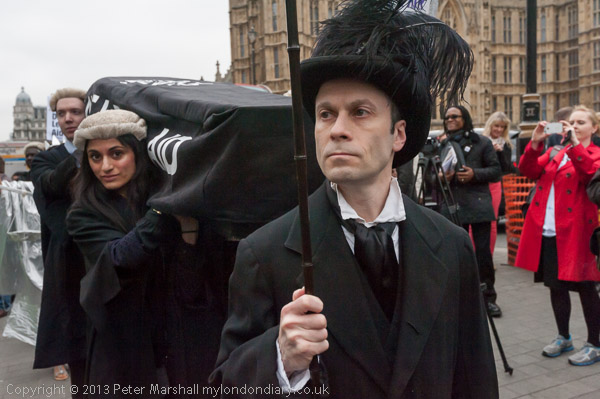
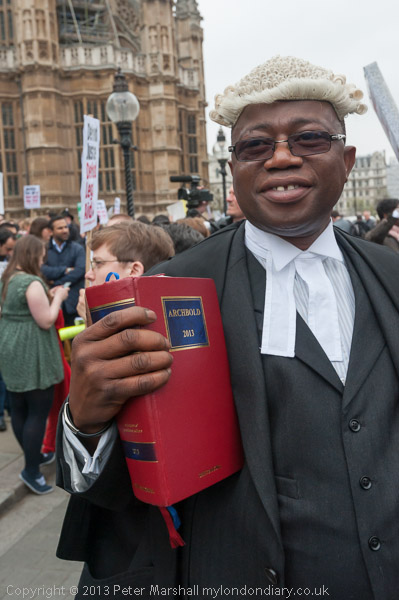
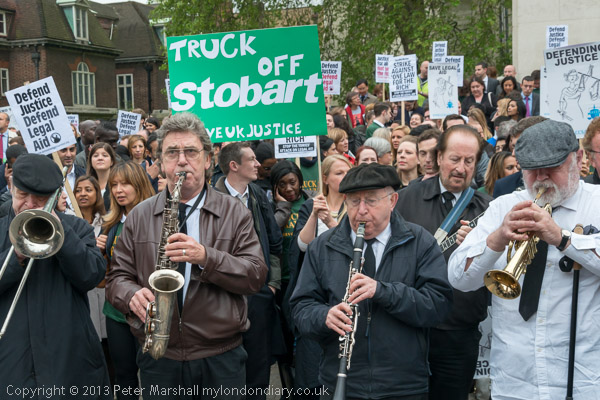
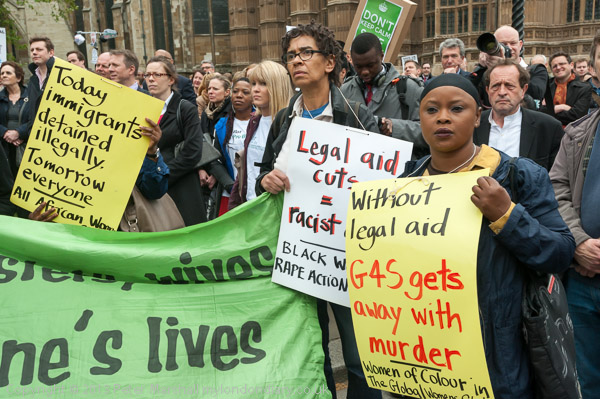
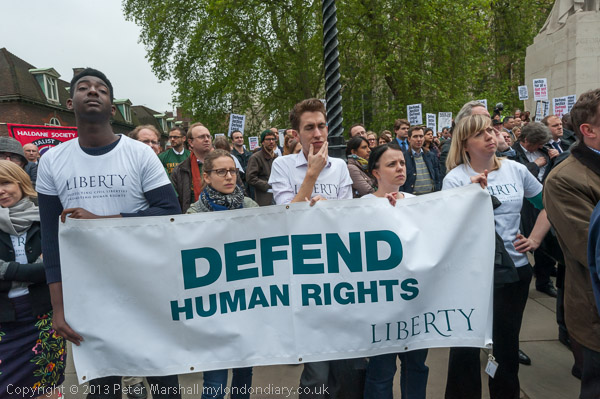
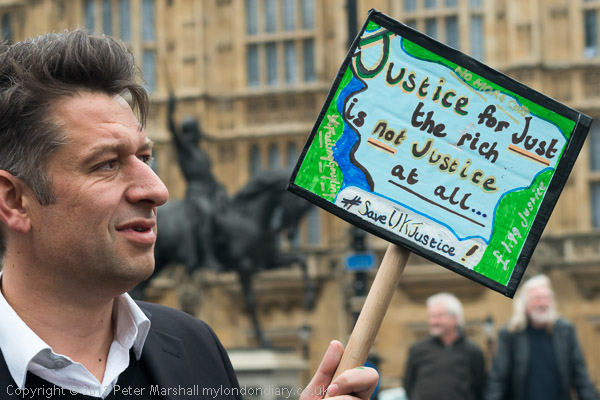
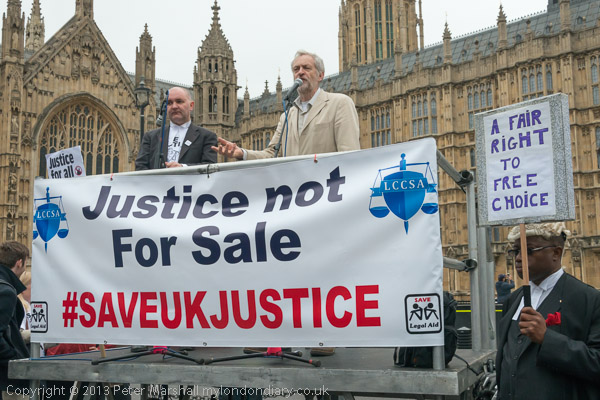
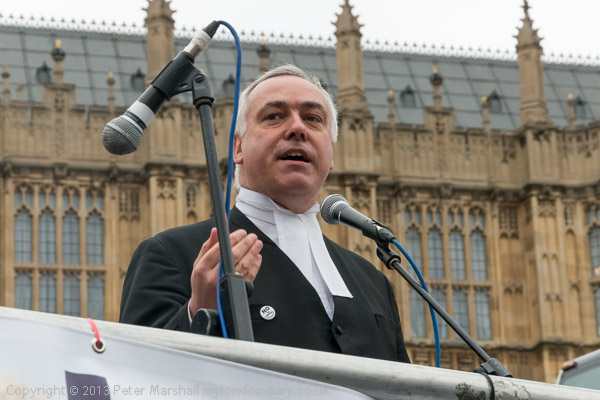
Lawyers Funeral for Legal Aid: On Wednesday 22nd May 2013 the London Criminal Courts Solicitors’ Association organised a protest with a mock funeral, rally and mock trial outside Parliament against government plans to severely restrict legal aid.
The Legal Aid, Sentencing and Punishment of Offenders Act 2012 (LASPO) had already cut huge areas out of legal aid, including many family, employment, housing and debt problems. This was a cost-saving exercise which greatly reduced access to justice for the great majority of people.
The Scales of Justice
The government were now proposing to end the right of legal aid clients to chose their solicitor with the work going to the cheapest bid under ‘price-competitive tendering’. As well as bankrupting many smaller law first this would open up “provision of legal aid to large non-legal companies, including Eddie Stobart and Tesco, and remove the ability of those in need of legal aid to chose appropriate specialists in the legal area involved.”
The event began with a parade by a marching jazz band leading a coffin with the meassage ‘RIP LEGAL AID’ carried by black-clad pallbearers wearing legal wigs, with the Scales of Justice in attendance.
‘A New Scale of Justice Mr Grayling?’ – Tesco and Eddie Stobart
Then came the speeches – very many of them, but at least there was a time-keeper ensuring they kept to a 5 minute limit – and some were quite amusing.
Among the speakers were politicians including Sadiq Khan, Jeremy Corbyn, and Green Party leader Natalie Bennett, senior legal figures and some who had benefited from legal aid, including Gerry Conlan, one of the Guildford 40, a member of the family of Jean Charles De Menezes, Susan Matthews, mother of Alfie Meadows and Breda Power, the daughter of Billy Power, one of the Birmingham 6.
Others included Clive Stafford Smith, the founder of Reprieve, Blur drummer Dave Rowntree (a qualified solicitor) and QC Helena Kennedy. There are pictures of most of the speakers on My London Diary
After all the speeches there was a summing up by leading barrister John Cooper QC after which the whole assembly delivered its verdict on Grayling, ‘guilty as charged’.
Christian Aid Sponsored Walk – London Churches: Soon after we moved to our present address in 1974, Linda took over as Christian Aid organiser for the area, only retiring from this in recent months. Over the years she has gone on a number of sponsored walks for them and some related organisations as well as organising some in our area.
I’ve often walked with her on these, as well as sometimes sponsoring her, largely to keep her company, but sometimes to make sure she didn’t get lost despite the clear maps given to walkers and the large numbers of people following the walks. But also because the routes took you to and past some interesting places and sometimes into churches or areas of them seldom open to the public.
Although I have had a great interest in architecture I’ve never had a great interest in photographing church interiors, partly because they have been so much photographed by others, and the photographs I made on these walks were very much pictures on my days off. Often I carried very little equipment, though Sunday 20 May, 2007 was something of an exception as together with my Nikon D200 I had Nikon wide and telephoto zooms and a fisheye.
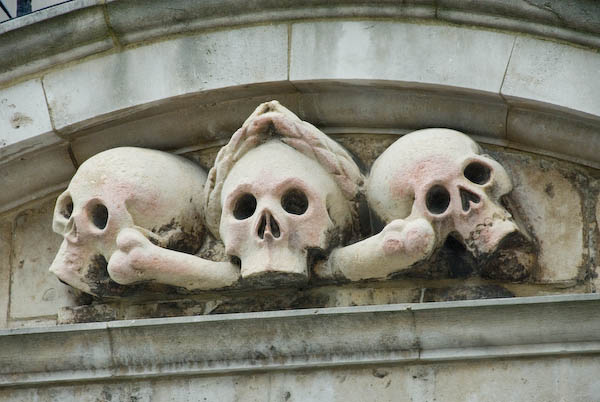
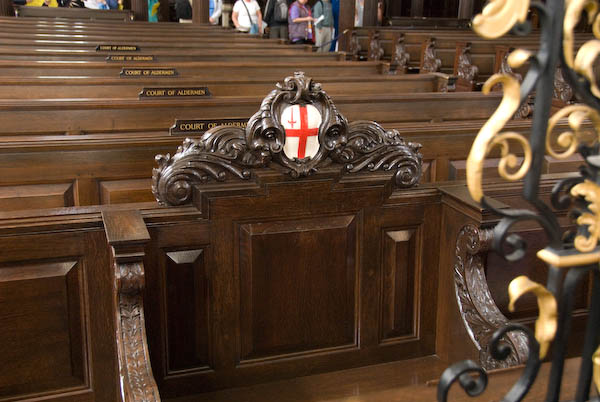
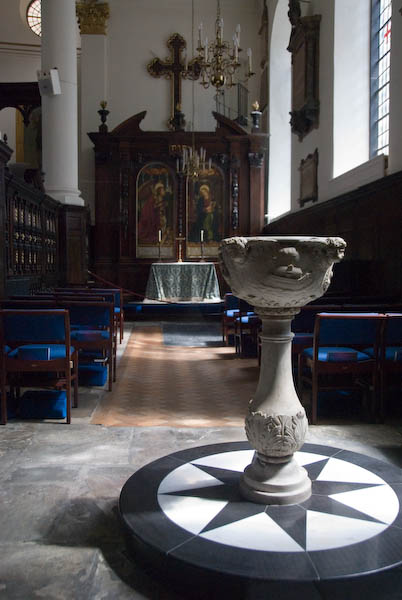
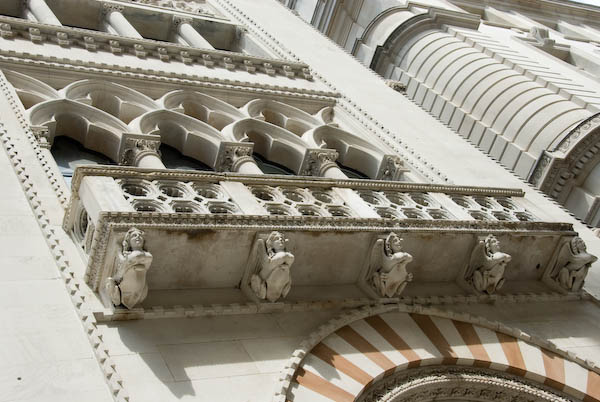
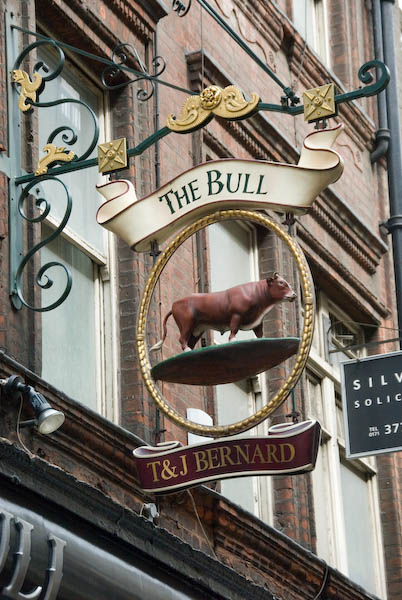
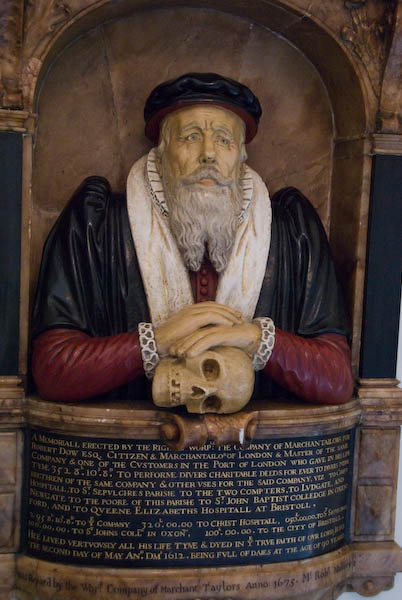
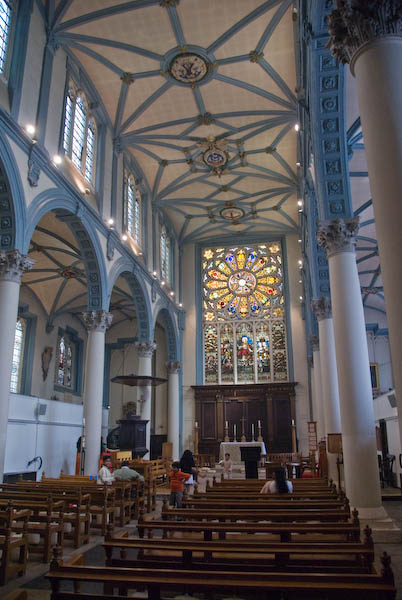
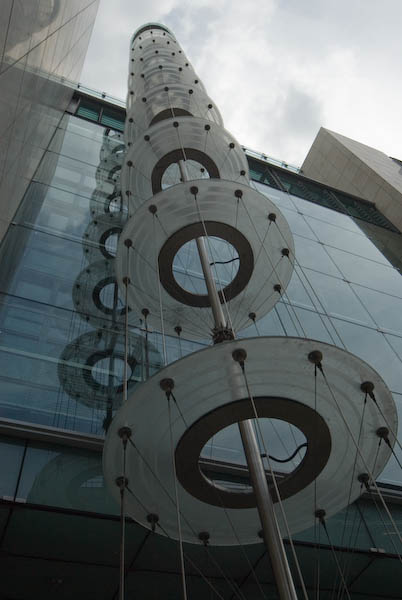
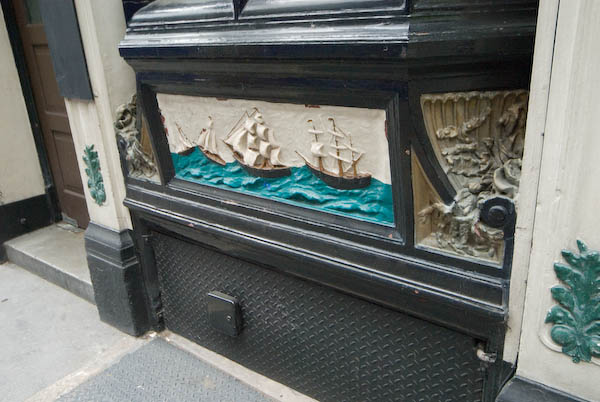
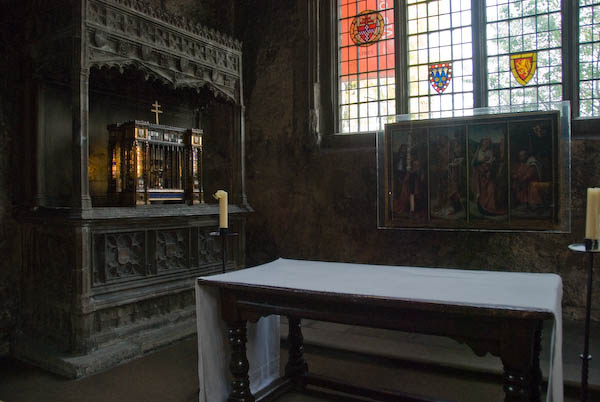
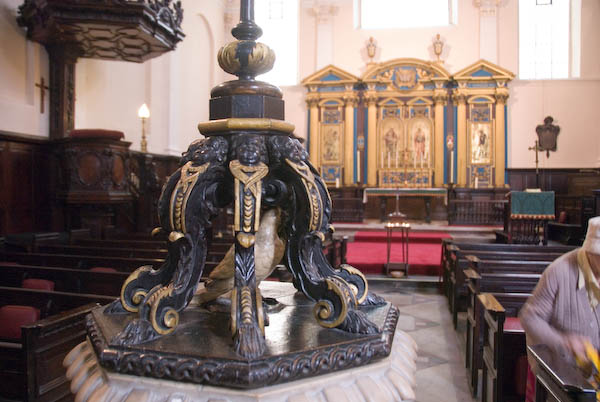
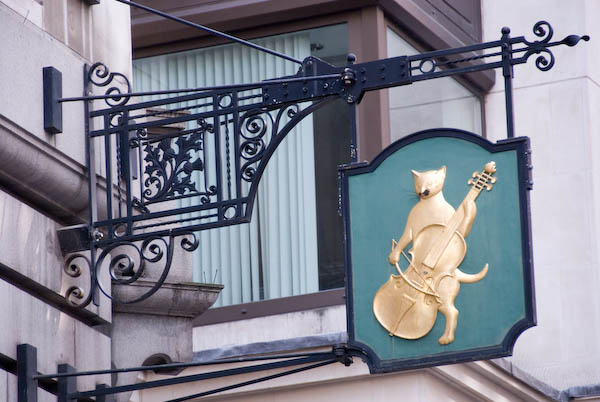
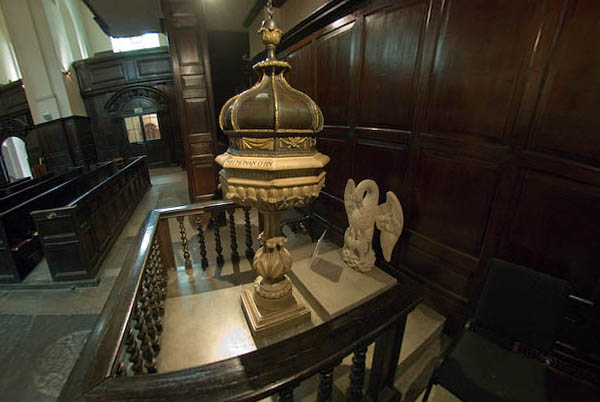
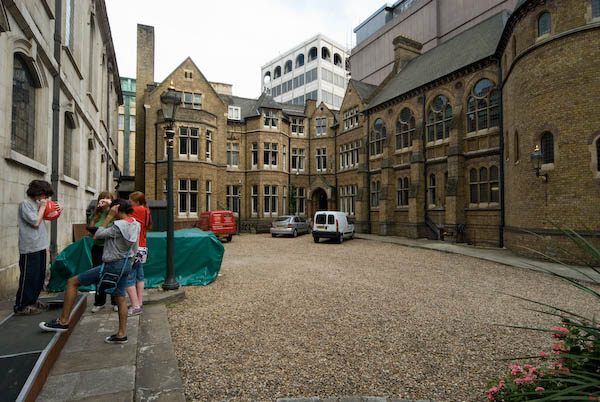
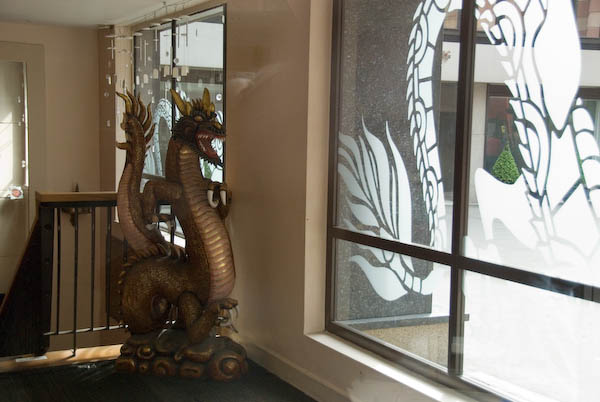
On My London Diary you can see over a hundred pictures I made on the walk, some of very well known and much photographed parts of the City of London, others less so. There are captions identifying most on those pages, but here I’ll post them without them – and just a couple of clues to the more difficult.
The plaque marks where Dositey Obradovich, first Serbian Minister of Education lived in London in 1784The bird a pelican, though to me it looked like a swan.
If you can name all these I’ve posted above, you must surely be a certified London Green Badge Guide – and I think anything over half shows a fairly intimate knowledge of the City. I think all the answers are in my post on My London Diary at Christian Aid walk – London churches.
And finally, one I can’t remember where I found it – perhaps someone can tell me in a comment.
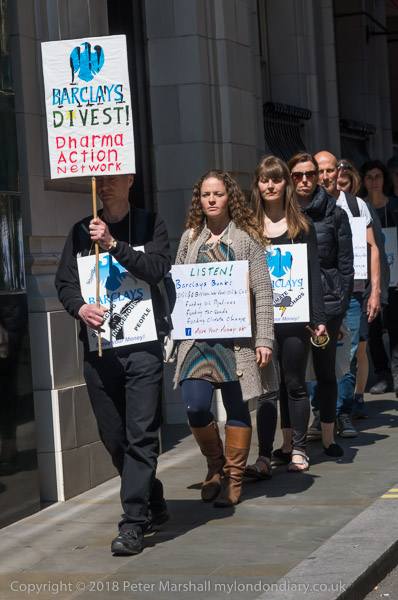
Barclays & Solidarity with Gaza: On Saturday 19th May 2018 I photographed a monthly vigil calling on Barclays Bank to end its funding for climate chaos and then went on to another branch of Barclays on Tottenham Court Road for the start of a rolling pictures against businesses along Oxford Street against other businesses which are major supporters of the Israeli state.
Barclays Stop Funding Climate Chaos
Piccadilly Circus
I met the Dharma Action Network for Climate Engagement (DANCE) in Golden Square Soho and walked with them as they processed to the Piccadilly Circus branch of Barclays Bank in a monthly vigil to call on the bank to Stop Funding Climate Chaos.
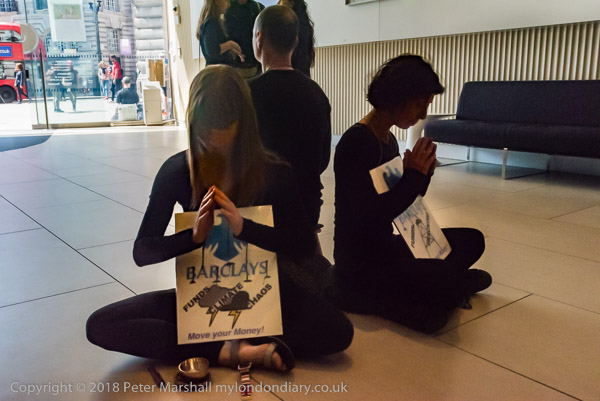
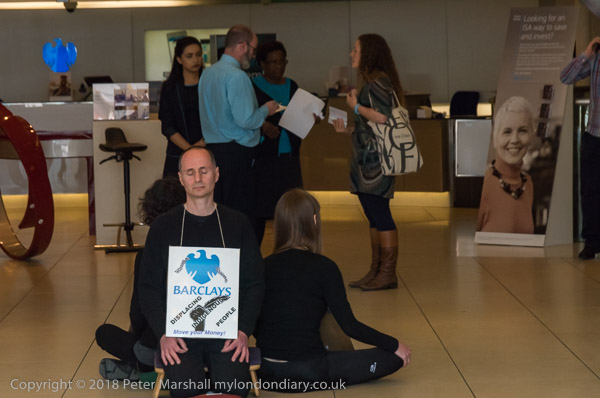
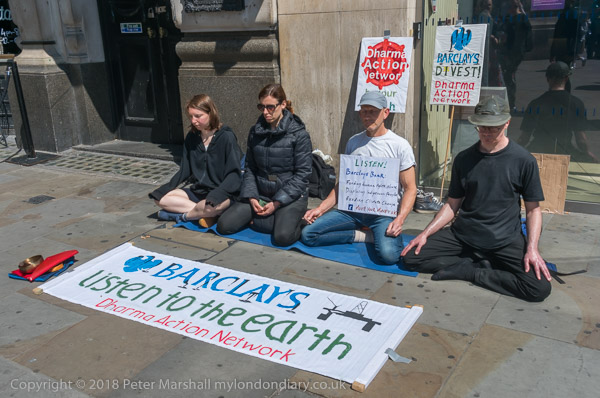
Three of the group then sat down to meditate in the centre of the floor of the bank with their placards, and another from the group told bank staff what they were intending to do, while others meditated on the pavement outside the bank and some of the group handed out leaflets.
The called on Barclays to ‘Listen to the Earth!’ and stop investing huge amounts – $12billion in the previous 3 years – into coal, oil and gas exploration which will lead to global warming, melting ice caps, bleaching coral reefs, causing forest fires and more intense storms.
They also pointed out the human rights abuses connected with their investments in Colombian coal mines and more and urged Barclays to switch their investments into renewables.
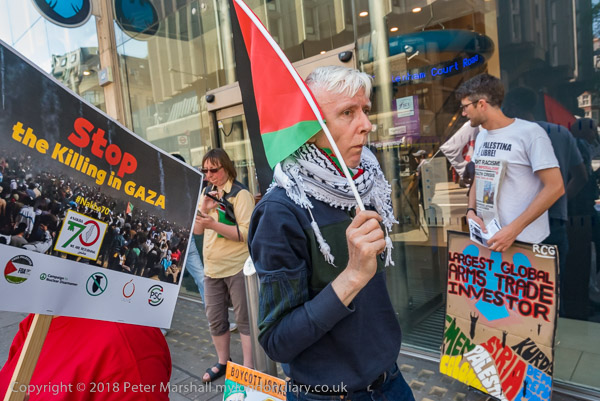
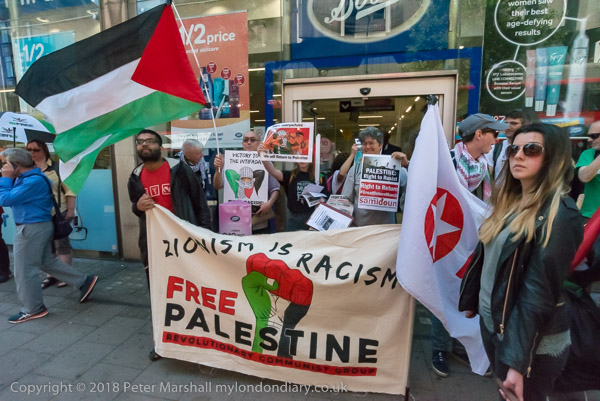
I left DANCE protesting at the Piccadilly Barclays and went to Tottenham Court Road, where the Revolutionary Communist Group had set up a street stall outside the Barclays close to Oxford Street.
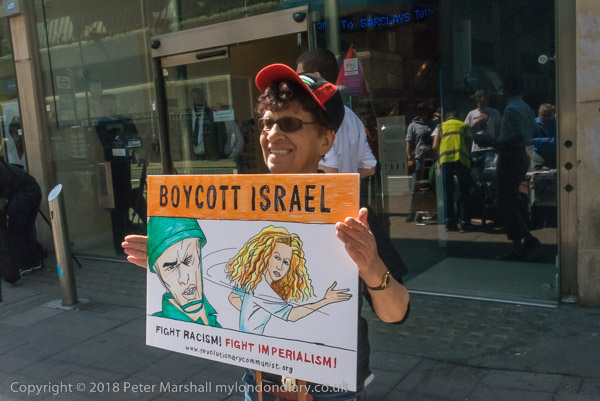
‘Boycott Israel’ poster showing Ahed Tamimi slapping an Israeli soldier
A few days earlier the world had been shocked by the news of Israeli army snipers shooting unarmed protesters in Gaza, killing 58 and seriously wtargetounding over 2700.
Most were several hundred yards from the separation wall, posing no threat to Israel and many were shot in the back or legs as they ran away. Among those deliberately targeted by the snipers were medics treating the wounded and clearly identified journalists wearing distinctive blue press vests.
The snipers were thought to have been using special ammunition made in the UK which expands inside the body to cause greater damage.
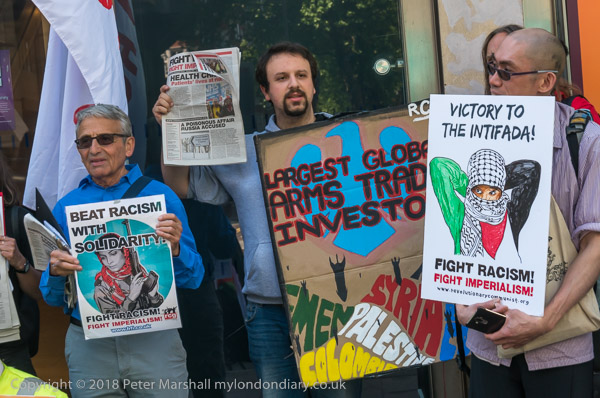
After a short protest outside Barclays with a speech explaining how it supports the Israeli government and handing out leaflets, the group moved on to make similar short protests outside other major supporters of the Israeli state on Oxford St including Carphone Warehouse, Boots, ZARA and H&M, calling for shoppers to boycott them and to take part in the global BDS campaign of Boycott, Divestment and Sanctions.
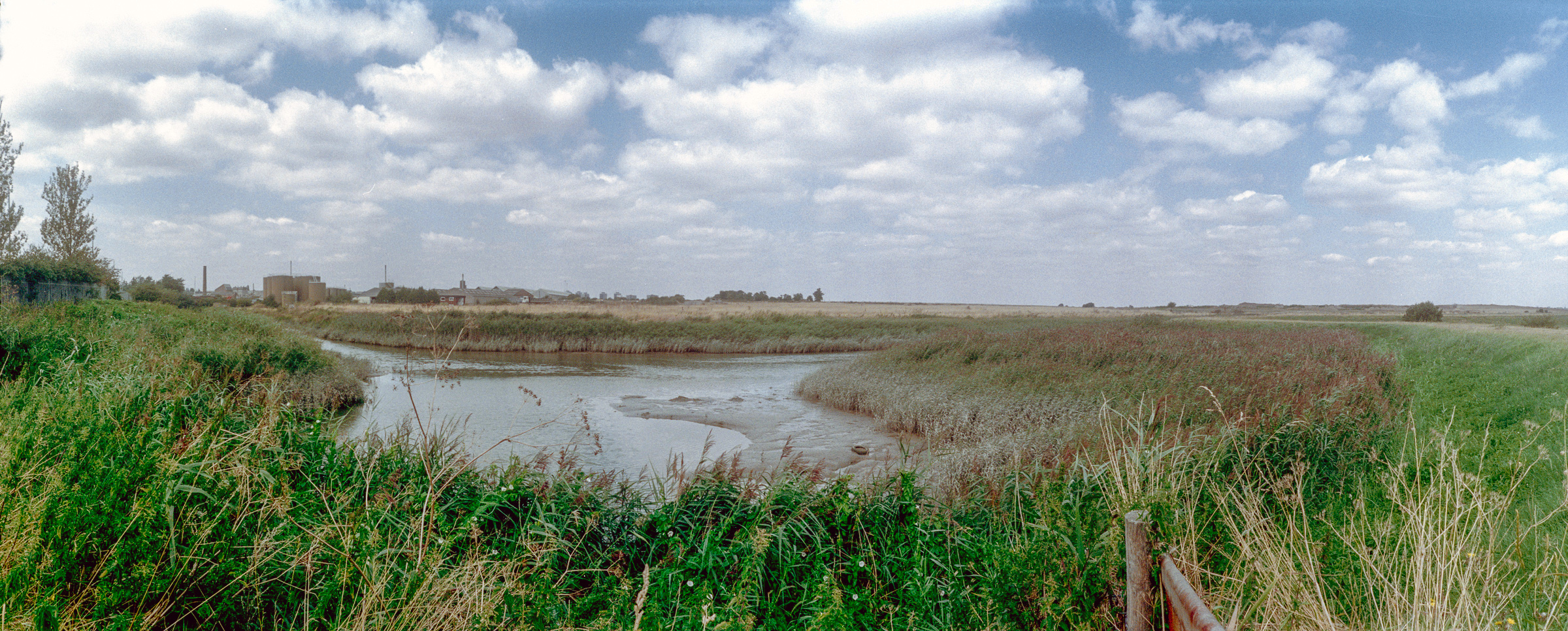
The Cray Riverway is a 10 mile long path which follow the River Cray from Foots Cray Meadows to the junction with the the River Darent and along side this to the River Thames and then into Erith. Back in 1994 I walked along most or all of it, paying several visits to the area as I was a photographer rather than a walker and liked to wander rather than stride out.
River Cray, Barnes Cray, Bexley, 1994, 94-904-53
I think I took two different swing-lens cameras on these walks, both a Japanese and a Russian model which produces very similar results in terms of angle of view (just a little over a third of the entire view around me) and quality. I used both on a sturdy Manfrotto tripod, mainly working from my eye level, and using a nine-inch carpenters’ spirit level to try to level the camera both from side to side and front to back as I found the built-in levelling insufficiently accurate (and I didn’t always get it quite right even with the larger level.)
River Cray, Barnes Cray, Bexley, 1994, 94-904-41
In 1994 I was processing my own colour negative film and I think at times the negatives suffered a little either from my inaccuracies or from chemical issues, and I find it hard to get the colour of some images exactly as I would like them. The rest of these pictures are from Flickr, but one I’ve worked on the one above again since I uploaded it there.
Footpath, River Cray, Barnes Cray, Bexley, 1994, 94-904-42
I’ve already featured some of these images on earlier posts, but here I’ll include a few different images.
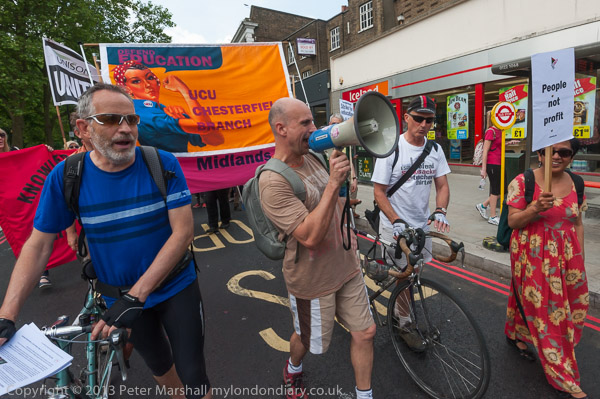
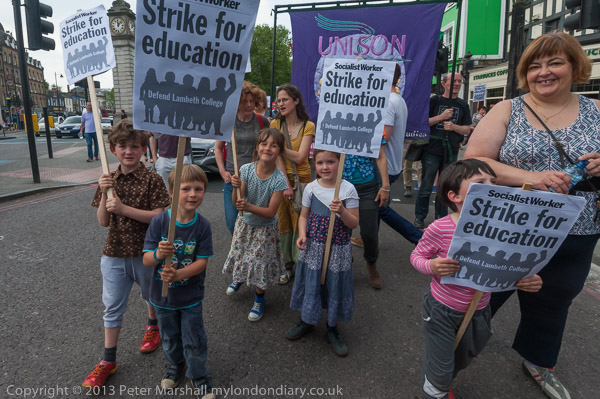
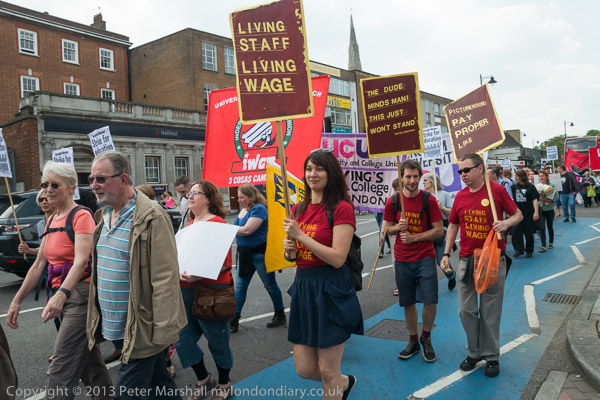
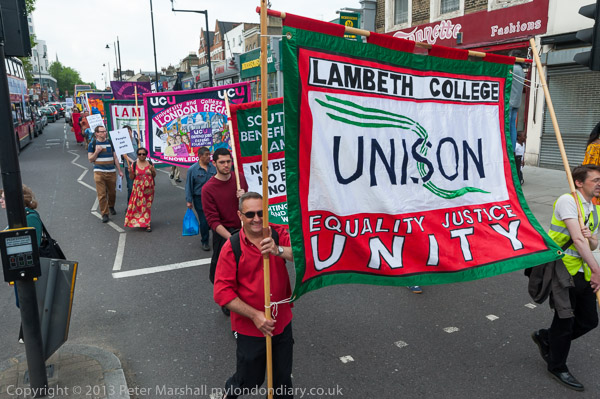
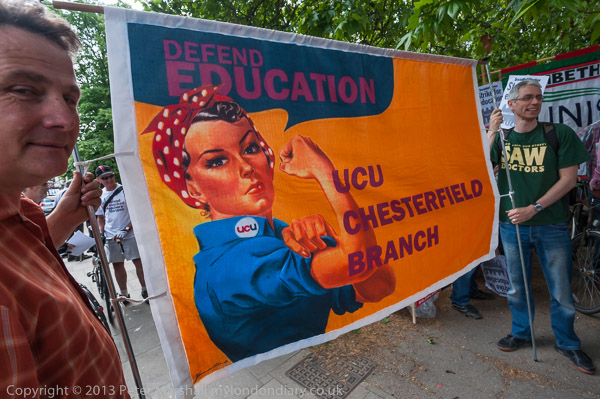
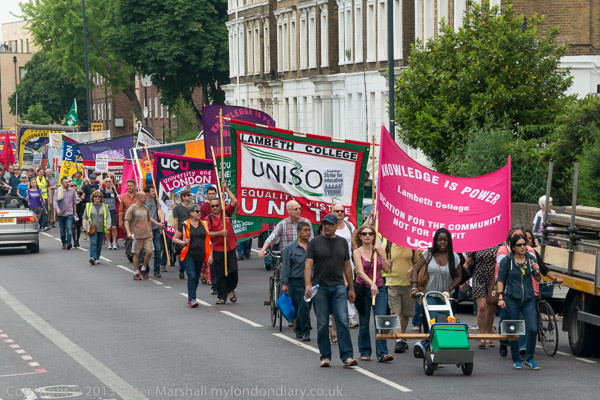
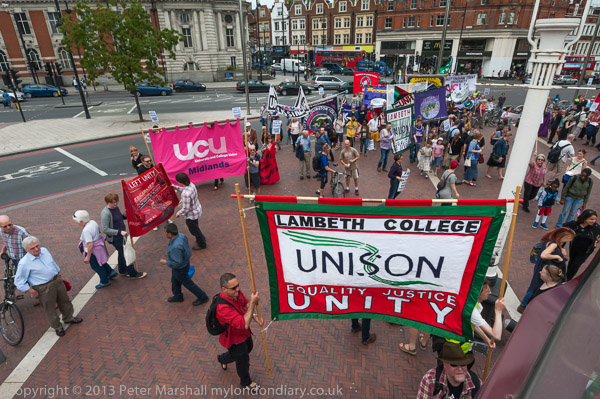
Lambeth College March for Further Education: Lambeth college workers and supporters from around the country marched to a rally in Brixton on Saturday 17th May 2014 against plans to ‘restructure’ the college, selling off most of it Brixton campus to allow a so-called ‘free school’ to be set off, and attacking the pay and conditions of the academic and service staff.
People came from FE colleges across the country to join the Lambeth college marchers
As well as cutting the pay to staff, increasing their working hours and cutting holiday and sickness benefits, the management were also setting out to break the power of both the lecturers union UCU and Unison which represents service workers at the college.
Lambeth College management had recently spent tens of thousands of pounds to get an injunction against the UCU after a 95% vote for a strike in a ballot with a 70% turnout. A re-ballot was expected to result in even greater support for a strike.
Brixton Ritzy Cinema strikers support the march
Unison appeared to be slightly less supportive of its members who had called unanimously for an indefinite strike at meetings, forcing them to have a time-wasting and bureaucratic ballot about whether they wanted a ballot, rather than an immediate strike ballot.
The planned Trinity free school was not needed in Brixton which according to the council already had a variety of good schools with space and although the proposal was for a “non-selective school with a Catholic ethos“, was not supported by the Catholic diocese who feel it would have a negative impact on existing Catholic secondaries in the area. It appeared to be aiming to promote right-wing and anti-science views on evolution.
The UCU recognised that the dispute at Lambeth was not just a local issue but one of national significance; if Lambeth could get away with doing this, other colleges would follow their lead. Representatives from colleges across London and the Midlands and further had come with banners to support the protest.
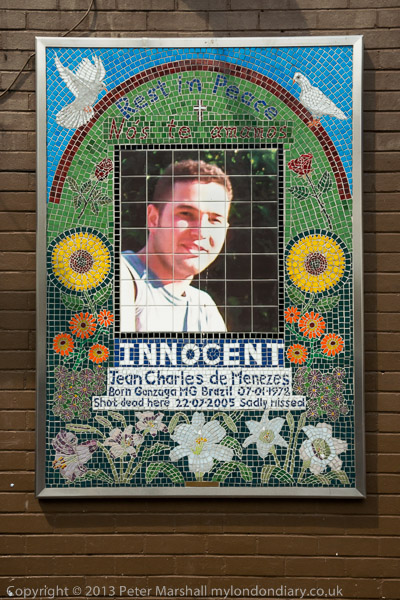
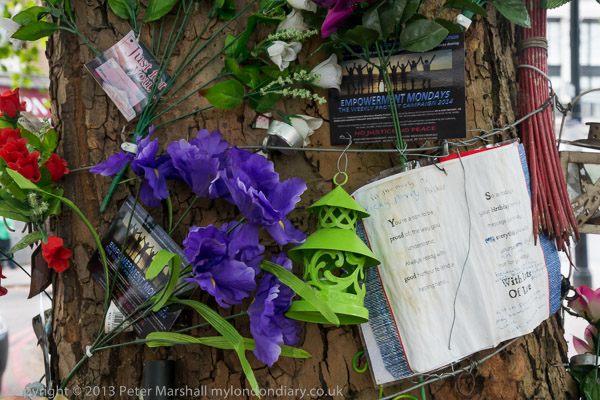
The march went past Stockwell station where Jean Charles de Menezes was murdered by policw in 2005And past the tree of remembrance at Brixton Police Station for Ricky Bishop, Sean Rigg and others killed there
It was also widely seen as an attack on trade unions, and among speakers at the rally in Brixton were Ian Hodson, the general secretary of the Baker’s union BFAWU and Labour MP John McDonnell.
Lambeth College became a part of the London South Bank University Group on 31 January 2019 as part of South Bank Colleges established by LSBU to operate further education provision (16-19 yrs) in the area.
Wikipedia comments: “While the dispute was not fully resolved, it prompted a dialogue about staff concerns and led to investments in the college’s facilities, including a redevelopment of the Brixton campus, the construction of the new Nine Elms campus, and, now, a re-build of the Clapham campus (planning permission granted in February 2024).”
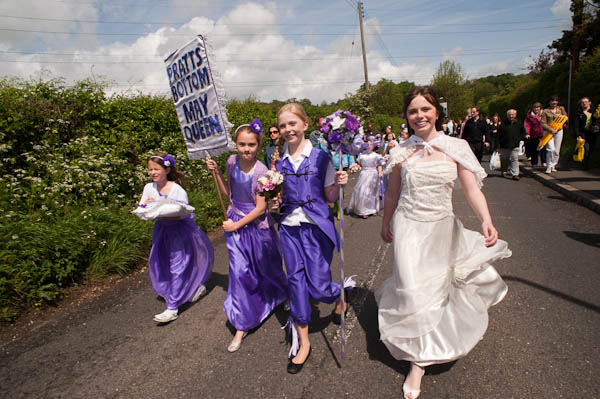
Pratt’s Bottom & Walton on the Hill: On Saturday 16th May 2009 I photographed two May Queen events on the outskirts of London, at Pratt’s Bottom in Kent and Walton on the Hill in Surrey. The two places are around 10 miles apart as the crow flies, and I had gone with a couple of friends, one driving a car, and we managed to make the journey between the two rather more quickly than the roughly two and a half hours it would have taken by public transport.
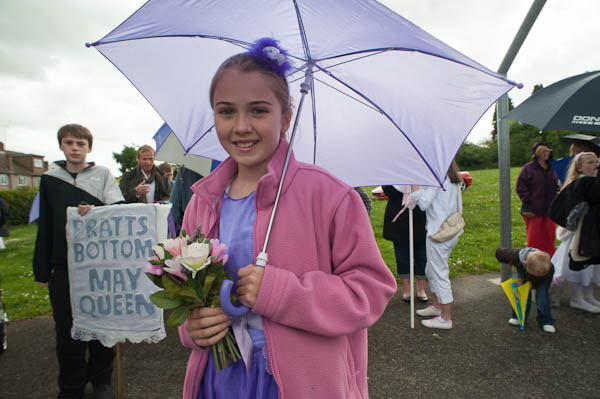
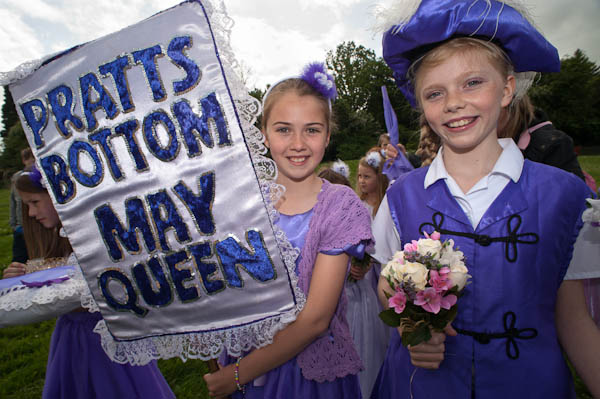
Pratts Bottom May Queen
Pratts Bottom, Bromley
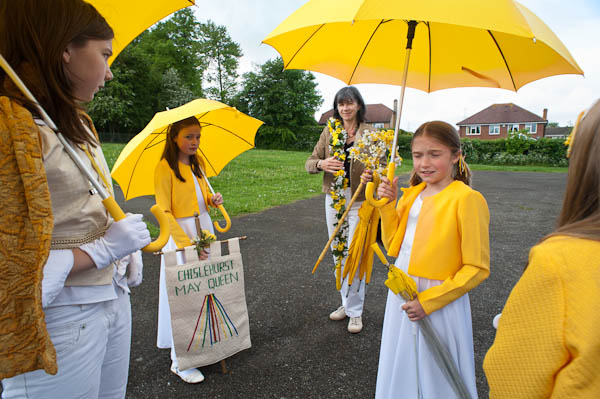
Chislehurst May Queen group wait for the start of procession at Pratt’s Bottom
Pratts Bottom is just inside the boundary of the London Borough of Bromley, though it seems very much out in the country, and Kent begins just a few yards away. On my first visit there, walking from the station at Knockholt I had wandered along a short stretch of the main road actually in that county. You can see my account and pictures from that 2008 event at Pratts Bottom Village Fete.
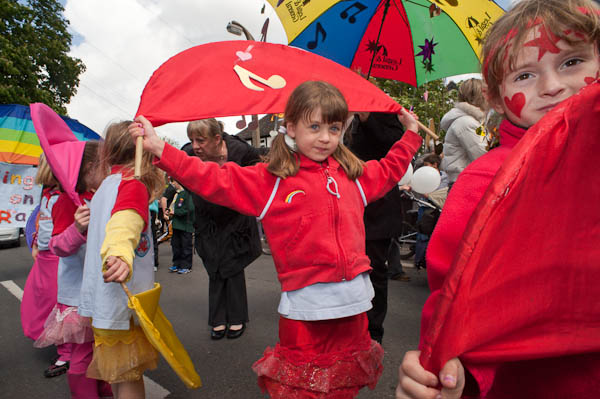
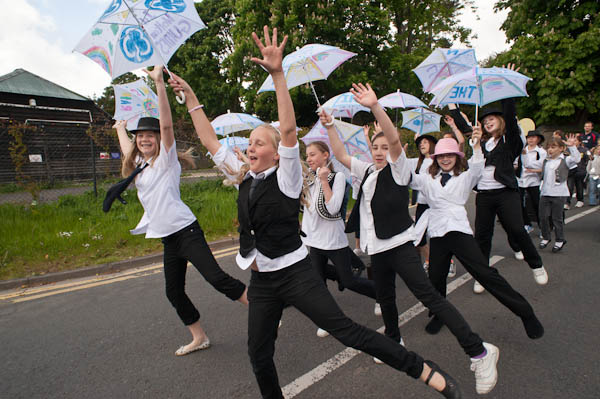
Both in 2008 and in 2009 the weather for the Village Fête was pretty dismal, and you can see umbrellas in many of the pictures – with May Queen groups having them in their realm colours.
Pratts Bottom (most locals seemed to spell it without the apostrophe on my map) has its own May Queen group, and the event included other May Queen groups from Green Street Green, Orpington and Pett’s Wood.
Fortunately the rain stopped and the sun came out for the procession up Rushmore Hill to the village green where the fête was taking place. The procession was led by a cadet marching band and Miss Bromley. The band at the front set off at a cracking pace that left some of the younger members of the May Queen realms struggling to keep up – and making life a little difficult for photographers.
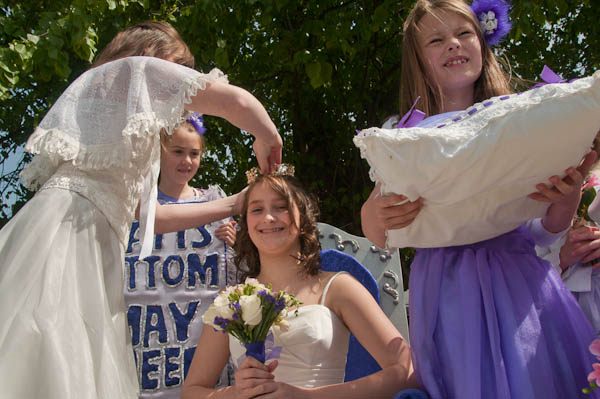
Thr Pratts Bottom May Queen is crowned
On the village green there was a brief ceremony in which the 2009 Pratt’s Bottom May Queen was crowned by the last year’s queen, and Miss Bromley officially opened the fete. Then we walked down to the car to drive to another May Fayre.
This was another event with a May Queen that I had photographed previously – this time in 2007, but not part of the London May Queen events.
The May Pageant here was started (or ‘revived’) forty years ago in 1969 and while many such local carnival events had faded away by the end of the twentieth century this one was still enjoying wide popular support, with crowds on the street.
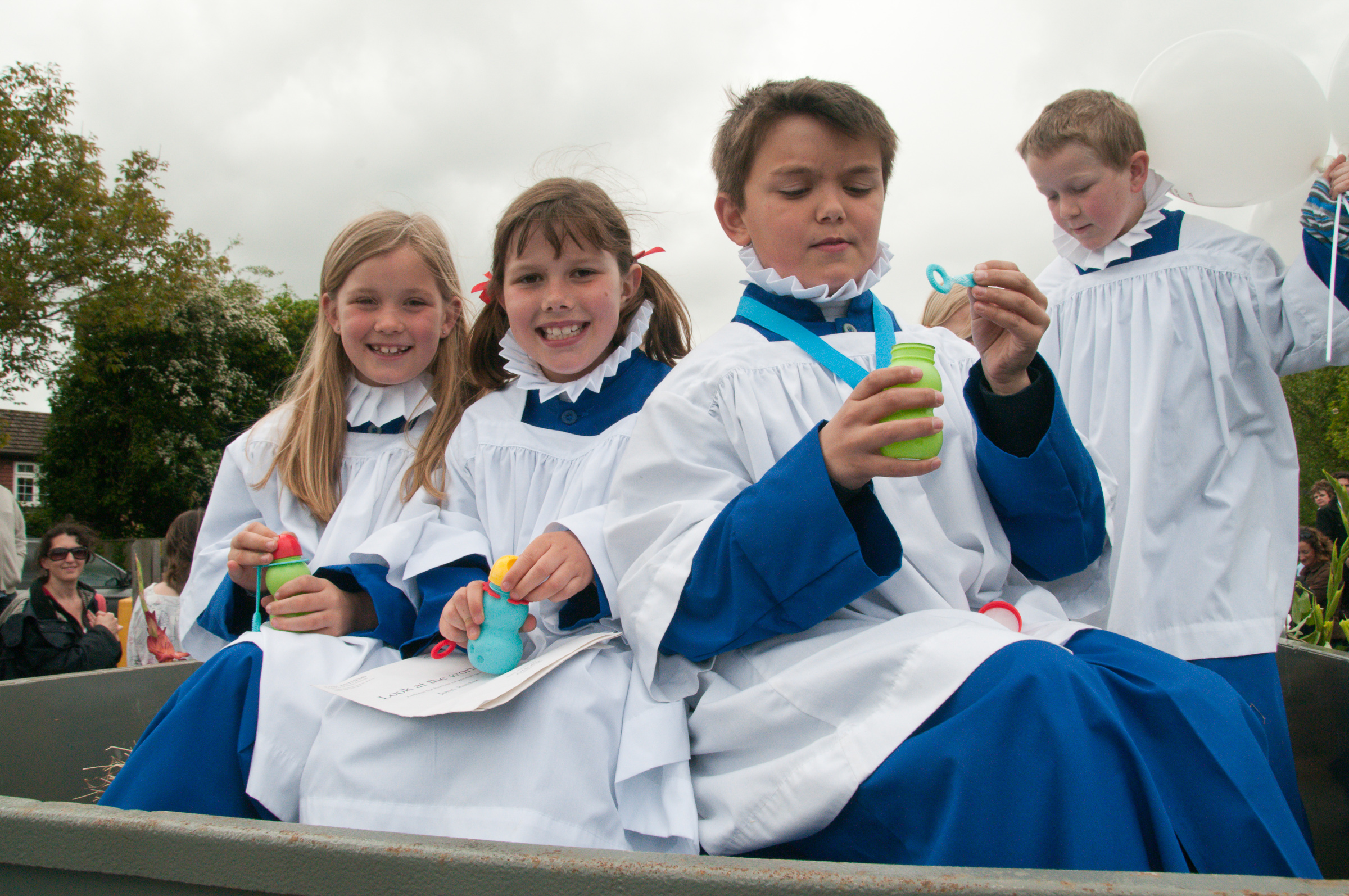
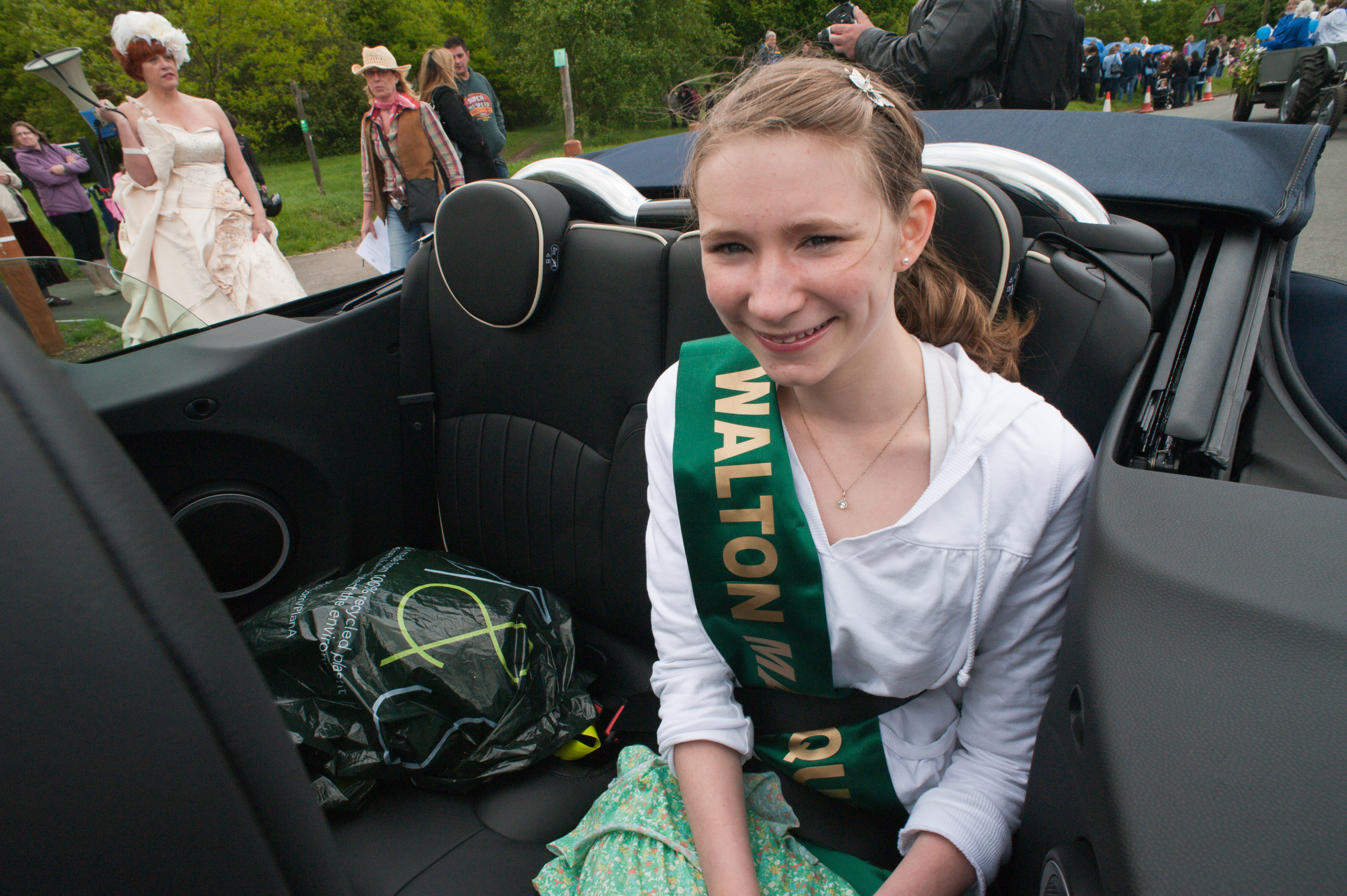
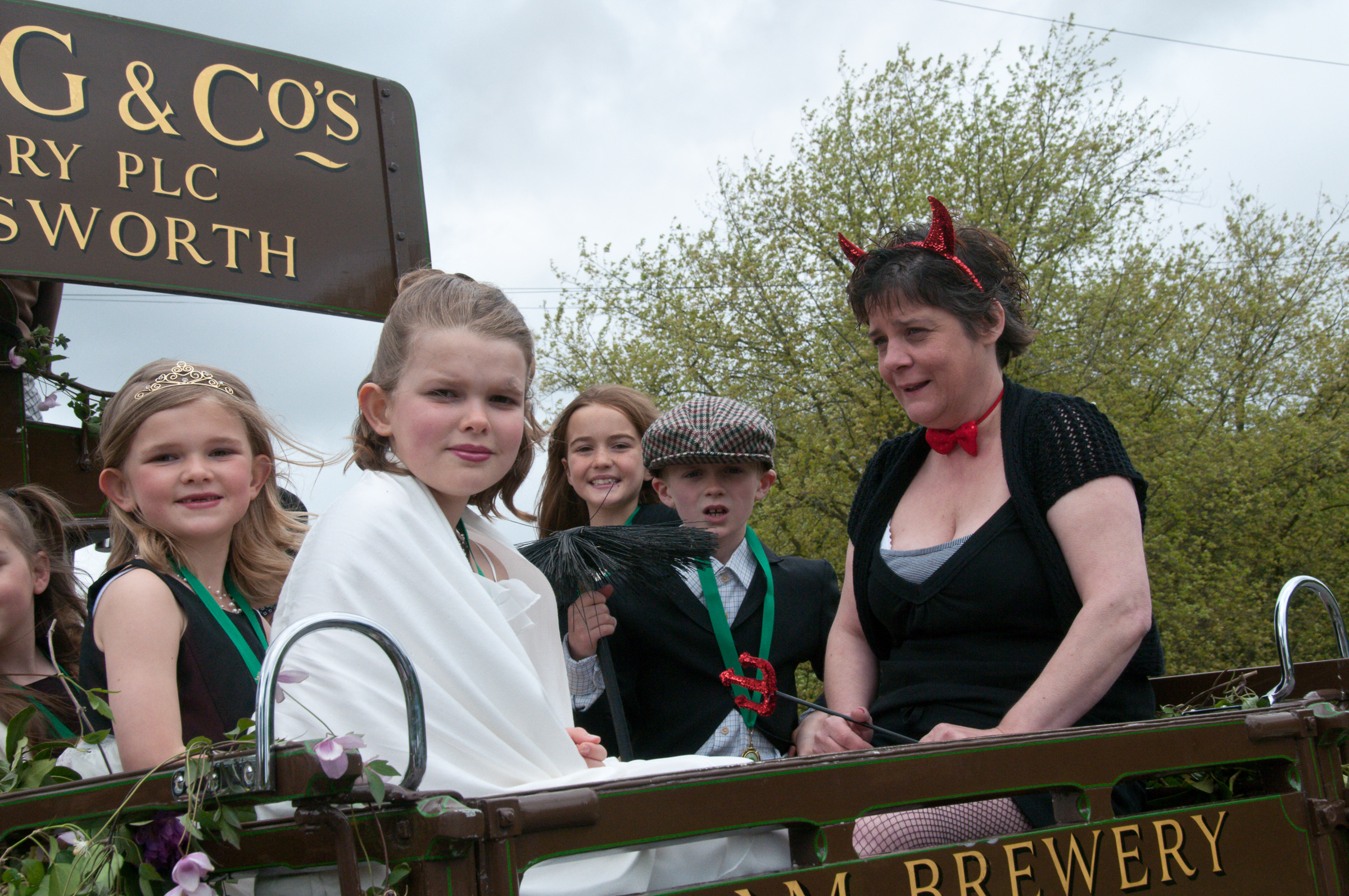
It’s a community event with the Vicar and her church choir sitting on hay bales in a cart pulled by a tractor, various school and nursery groups, youth groups and more, including a May Queen in a car and her rather mixed entourage in a Young’s brewery dray.
The May Queen in an open carAndher retinue in a brewery drayTeddy Bears Picnic
And as the procession reached the fairground I stopped taking pictures and sat down to have a drink before going home. For some reason I didn’t include the pictures here of the May Queen and her friends in the post on My London Diary but there are many more pictures from the event at Walton on the Hill May Pageant.
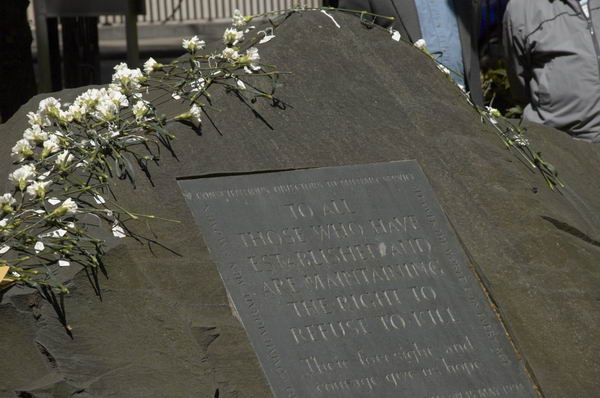
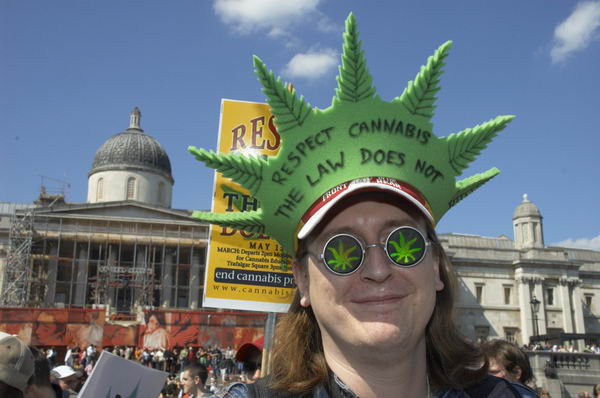
Conscientious Objectors, Cannabis Education & Bengali New Year: Three unrelated events on 15th May 2005 in London. May 15th has been observed in Europe as Conscientious Objectors’ Day since 1982 and became International in 1985 when it was adopted by War Resisters’ International. A ceremony is held every year on the day in Tavistock Square at the site of the massive slate Conscientious Objectors’ Commemorative Stone which has the inscriptions:
TO COMMEMORATE MEN & WOMEN
CONSCIENTIOUS OBJECTORS TO MILITARY SERVICE
ALL OVER THE WORLD & IN EVERY AGE

TO ALL THOSE WHO HAVE
ESTABLISHED AND
ARE MAINTAINING
THE RIGHT TO
REFUSE TO KILL

Their foresight and
courage give us hope

THIS STONE WAS DEDICATED ON 15 MAY 1994
INTERNATIONAL CONSCIENTIOUS OBJECTORS' DAY
I left before the end of the ceremony and hurried to Russell Square for the start of the annual march calling for the legalisation of cannabis, walking with this to Trafalgar Square and then taking the tube to go to Brick Lane for the Bengali New Year Festival. Below is what I wrote in 2005.
The Right to Refuse to Kill – International Conscientious Objectors Day
Tavistock Square
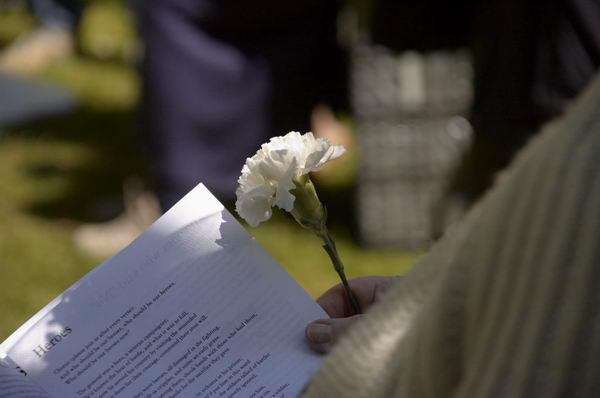
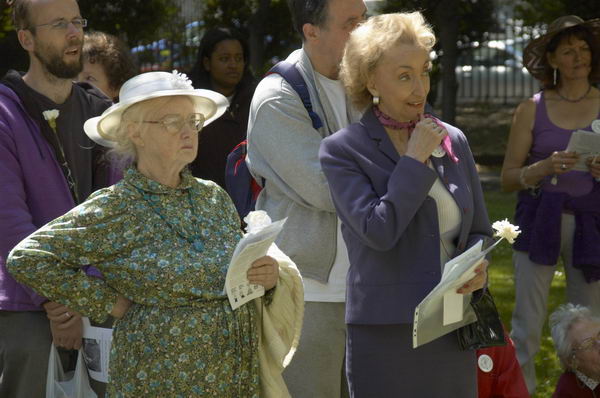
May 15th was International Conscientious Objectors’ Day, and the ‘right to refuse to kill’ group of people from the Peace Pledge Union, Conscience, The Unitarian Peace Fellowship, Christian CND, The Anglican Pacifist Fellowship, Pax Christi, The Women’s International League For Peace And Freedom And Dances Of Universal Peace had organised a ceremony at the Commemorative stone in Tavistock Square. After a brief introduction by Tony Kempster of the Anglican Pacifist Fellowship, Sue Gilmurray sang her song ‘Heroes’ and then Angela Sinclair who was a conscientious objector in the Second World War told her story and spoke about the right not to take part in war.
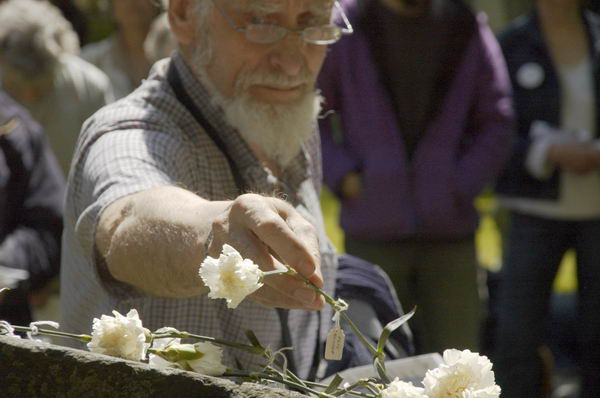
After a speaker from Amnesty and another from Conscience, the names of almost seventy conscientious objectors, many of who had died for their beliefs, were read out. The organisers had given out white flowers labelled with their names, and as each name was read, the person holding their flower came and placed it on the stone. After a one minute silence the commemoration continued with another song and then dancing, but I had to leave at this point.
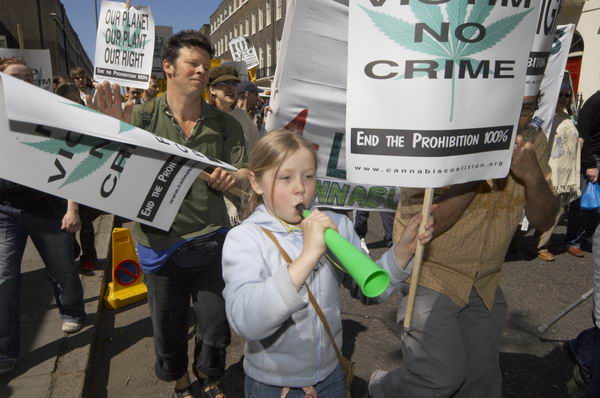
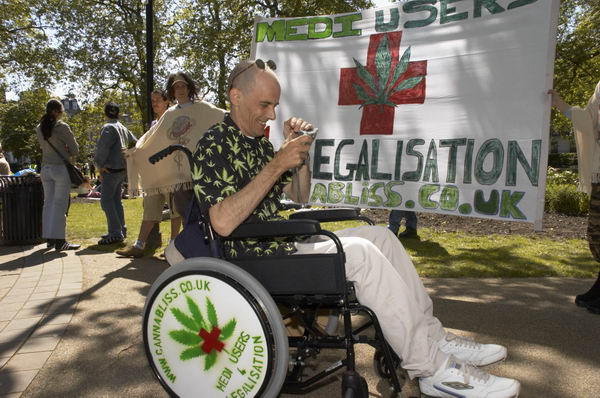
The annual march to demand the legalisation of cannabis had to be postponed and moved to a central London location after Lambeth council had refused to allow it to use Brockwell Park. Probably for this reason, the numbers seemed well down on previous years.
The last year had seen both an increasing recognition of the value of cannabis in relieving pain for some conditions, and also in revealing the mental health problems it causes some users. Despite these, the existing anti-drugs policies are more and more discredited, leading to increasing crime and addiction, and also greatly increasing the probability of cannabis users moving on to more dangerous and addictive drugs.
Cannabis needs to be taken out of the hands of drug dealers, and into some form of legalised supply chain which would cut out the drug dealers, allow better supervision of the product and create a total separation between cannabis and other more dangerous substances.
It would also allow the creation of a tax revenue, some of which could be spent on the rehabilitation of drug users.
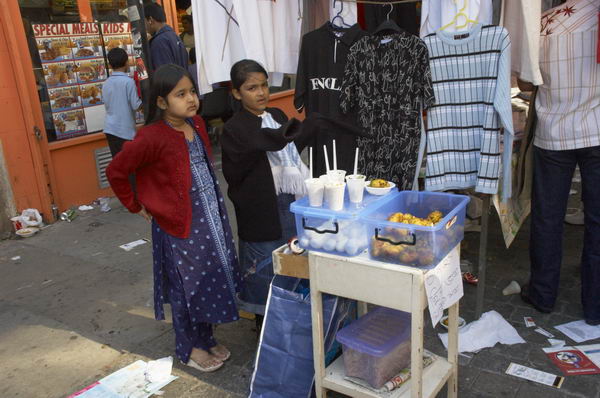
I went with the march to Trafalgar Square and stayed to listen to a couple of the speakers, but soon lost interest and got on the District Line to go up to Brick Lane for the Bengali New Year Festival.
When I got there it was just too crowded; after walking around for a few minutes I gave up and came home.
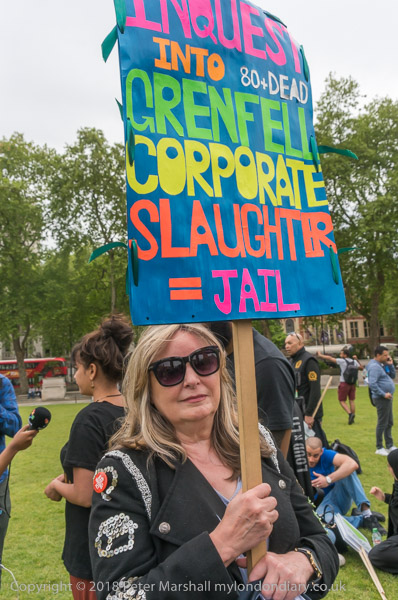
Grenfell Protest Calls for Justice: On Monday 14th May 2018 Parliament were debating a petition with over 150,00 signatures calling for a panel of decision making experts to sit alongside Sir Martin Moore-Bick in the Grenfell Tower Public Inquiry.
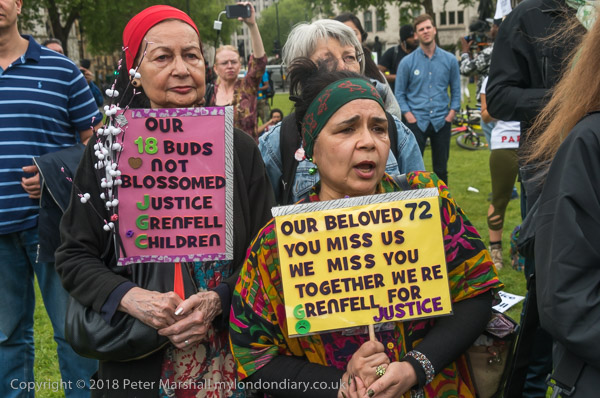
A woman who worked in the Grenfell nursery and her mother with placards
PM Theresa May had 3 days earlier announced there would be two experts appointed for the second stage of the inquiry, but the Grenfell community wanted experts to be included in the first part and were questioning who the experts would be and how they were to be chosen.
‘When One Neglects Towers, One Will in the End Neglect People’
The protesters also wanted a promise that the recommendations of the inquiry would be accepted and implemented in full and that those responsible for creating the terrible fire risk to be brought to justice.
Unfortunately the inquiry had been set up to enable the guilty to evade justice. Despite the mass of clear evidence against those responsible it enabled the police to state they had to let it run its course before they could examine its evidence and decide if there should be prosecutions. And the inquiry had no power to start criminal proceeding and would not investigate the very issues of a “social, economic and political nature” that were central to why it happened.
Clarrie Mendy of Humanity For Grenfell, whose cousin Mary Mendy and her daughter Khadija Saye died in the fire,
As well as the Tories wanting to protect their own, particularly in the Kensington and Chelsea Council, Labour, including then Labour leader Jeremy Corbyn colluded in this deliberate pushing of Grenfell into the long grass, although he also called for further efforts to establish a process to investigate those “broader failings” which Sir Martin Moore-Bick was determined to avoid.
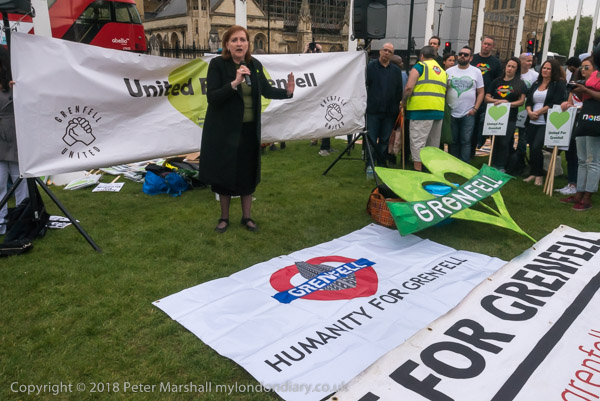
Despite this, as well as many speakers from local Grenfell organisations, there wer also prominent Labour Party speakers at the event – Shadow Secretary of State for Justice and Shadow Lord Chancellor Richard Burgon, Shadow Home Secretary Diane Abbot and then Labour MP for Kensington Emma Dent Coad.
The Revolutionary Communist Group have supported the campaign to get the truth about Grenfell
SNP MP Joanna Cherry also spoke, but the event organisers refused to let a more radical speaker from the Revolutionary Communist Group go to the microphone. But the RCG, who had been active in organising protests over Grenfell as well as taking part in the monthly silent walks, had as usual brought their own public address system for their speaker.
Last year after a short, inept and very partial failed “consultation” with Grenfell survivors and bereaved families, then Deputy Prime Minister Angela Rayner announced that Grenfell Tower would be “brought to the ground” and a memorial set up in its place.
Then Labour MP for Kensington Emma Dent Coadwho lost the seat in 2019
Also taking place outside the Houses of Parliament on Monday 14th May 2018 was a protest by the Bangladeshi Nationalist Party UK calling for the release of their party leader, Begum Khaleda Zia, jailed in February for five years for embezzlement of international funds donated to Zia Orphanage Trust.
Her arrest and conviction was widely seen as a political attack by her rival Sheikh Hasina Wazed, leader of the Awami League; the two women dominated politics in Bangladesh for many years. Khaleda Zia died in December 2025 a month after Sheik Hasina who had been forced to resign in 2024 was sentenced to 21 years’ imprisonment. More about this protest at BNP say release Khaleda Zia.
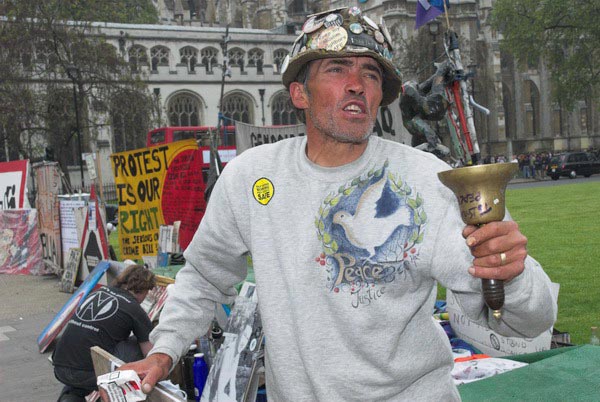
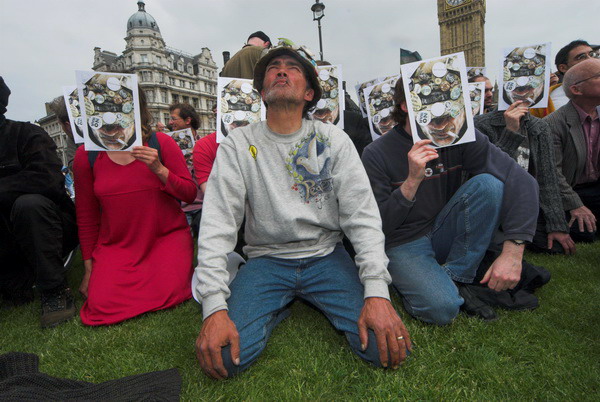
Brian, Bears, Morris and May Queens: On Saturday 13th May 2006 I went to Parliament Square where I photographed resident peace protester Brian Haw and Morris Dancers, going on to more dancers performing in Trafalgar Square as a part of a Westminster Day of Dance. From there the Underground took me out to Hanger Lane from where I walked to Brentham to photograph the 100th anniversary of the first Brentham May Queen crowning.
Brian Haw at Parliament Square
Brian and the Bears
Brian Haw lost the appeal by the government over his protest in Parliament Square, the court deciding that the Serious Organised Crimes And Police Act did apply to his protest after all, despite it having started around 4 years before the act came into force. It seems to be a decision that reflects more on the ability of the government to apply pressure rather than one that suggests an independent judiciary.
At the moment, Brian is still there, his protest now regulated by the police, but it seems rather likely that at some moment the feel convenient they will decide to terminate it. On Saturday morning I went to have a short word with him and take some more pictures, particularly of some of the bears who are with him.
His protest from the start has been about the killing of children, at first by the effects of sanctions, then by the war, and the teddy bear symbolises this (I think of one of the most poignant images from the Second World War, by Cecil Beaton, of a child in a hospital bed with a teddy bear.) I hope to be back to see Brian tomorrow, with a few friends, if he is still there. [He was, and depite constant harassment remained there until ill-health forced him to leave in 2011, dying in a German hospital six mohnths later.]
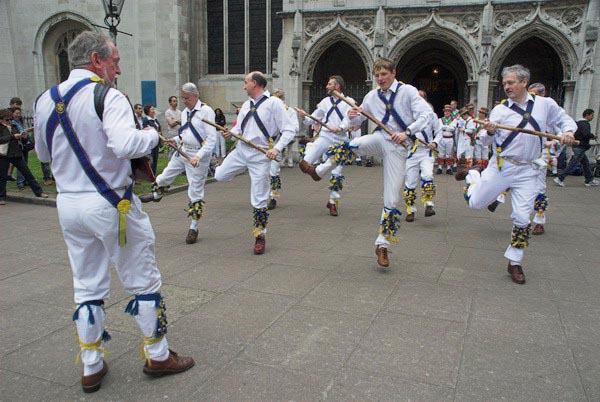
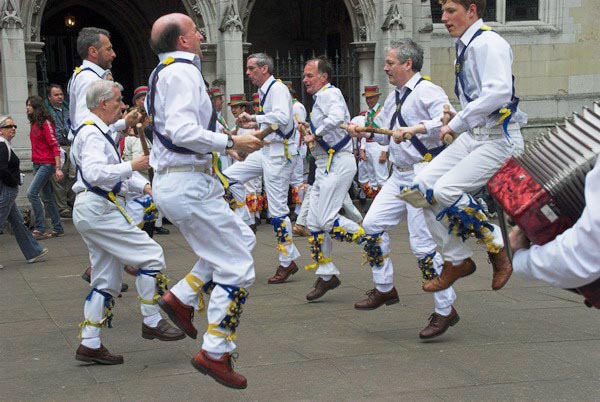
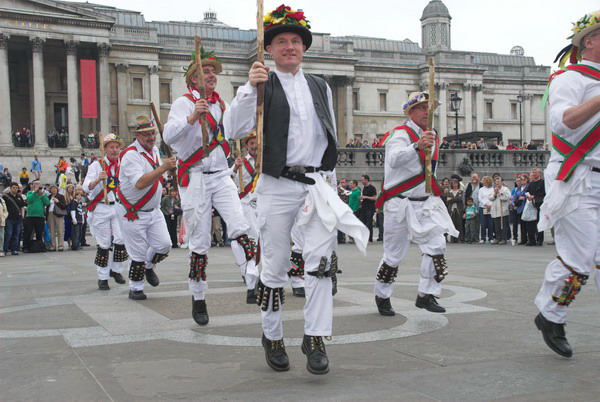
For several years there has been a dance festival in Westminster in May, with teams of Morris Dancers from around the country. I caught up with them briefly dancing in front of St Margaret’s Church next to Westminster Abbey, then a little later in Trafalgar Square.
Although i’ve never had a great desire to take up Morris myself, it certainly is one of our English traditions, going back at least 500 years – the first written record of it is in 1448.
It was still alive in many villages in the nineteenth century and a revival started in the early twentieth century particularly through the work of Cecil Sharp, who collected over 170 different dances around the country and started the English Folk Dance Society in 1911. Sharp and Mary Neal published books of dances, and in the 1920s and 30s, country dancing became a part of most young school children’s week. How I hated it in the 1950s!
It is perhaps that enforced participation that led to Morris Dancing being thought of as something false and lacking in credibility. In a curious anomaly, our Arts Councils refuse to support English ethnic dances while (quite rightly) giving aid to foster dance and related activities among minority ethnic groups. Despite this, Morris Dancing has continued to grow both in the UK and now increasingly abroad, particularly in Canada and the USA.
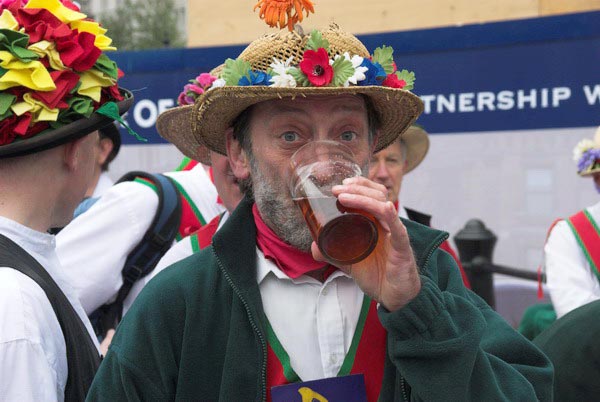
All the teams in Trafalgar Square were men, although there are also many women dancers. One of the things that comes out in my pictures is that the dance is at times a very athletic event. Many of the traditional dances use swords or staves and have a link to martial arts. Morris also has a strong link to another English tradition, the ale house.
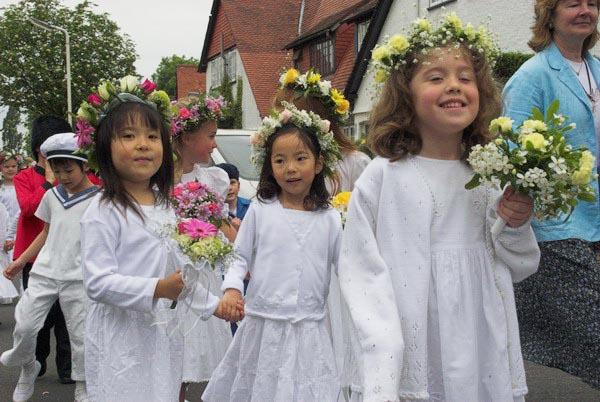
May continued for me with another May Queen. Last year (2005) I had photographed the oldest continuing May Queen event at least in the London area, the Merrie England and London May Queen Fayre at Hayes, Kent, held continuously since 1913. This year I went instead to Brentham, where a May Fayre with maypole dancing was held in 1906, and its centenary was held this year.
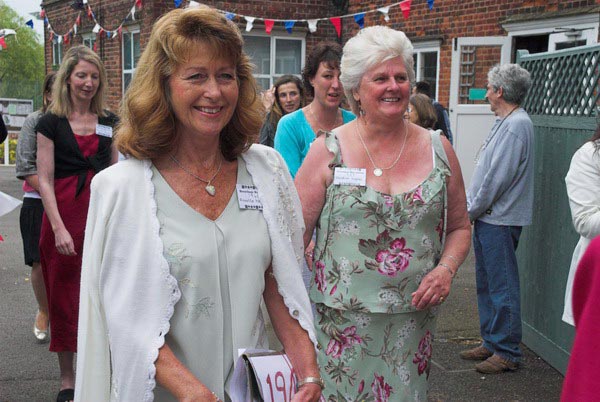
For this event, the organisers had managed to find and invite along many former May Queens, including some from the 1950s. Some had come long distances to be there, including one now living in America.
Brentham was one of the earliest “garden village” estates, built by ‘Ealing Tenants’ a co-partnership housing scheme started in 1901 and largely completed by 1915. The road layout was designed by Raymond Unwin and Barry Parker, and it was in many ways a model for other and better known garden villages.
The Brentham May Queen is less formalised that the south London events, with little or no long speeches and ceremonies (unlike Hayes it was not set up by a Dulwich schoolmaster.)
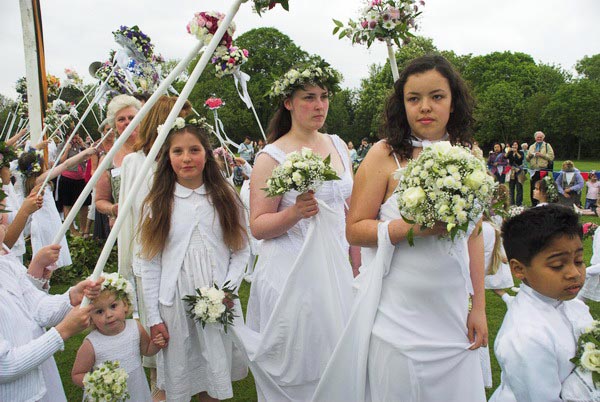
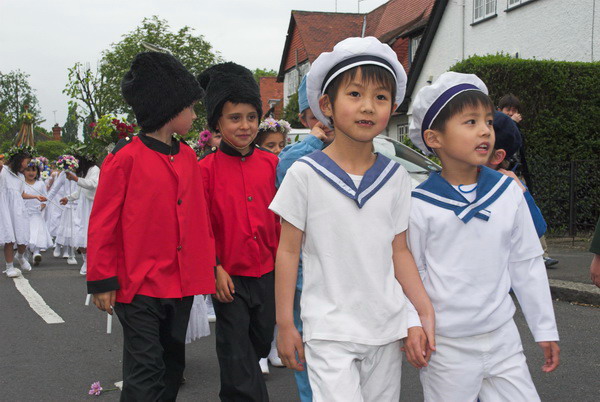
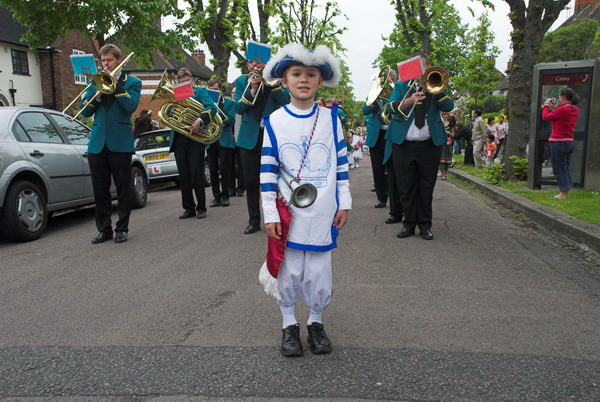
As well as the May Queen Elect and previous May Queens, each with a small group of attendants, there is also a herald who leads the parade (aided today by a brass band) Brittania, Sailor and Soldier, and, leading the large group of around 150 young girls dressed in white with flowers, a Jack In The Green, covered with leaves, with just bare legs and sandals visible.
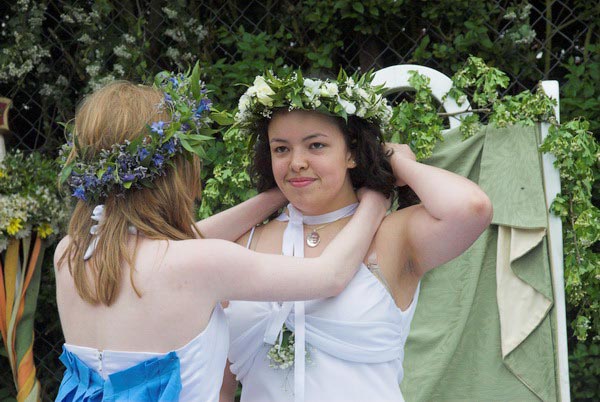
The crowning of the 2006 Brentham May Queen
After the parade around the area, there was a short ceremony in one of the fields by the River Brent in which last year’s May Queen crowned the new queen, and a very short speech. Following this were country dances and dancing round the maypole, but I left before this began.
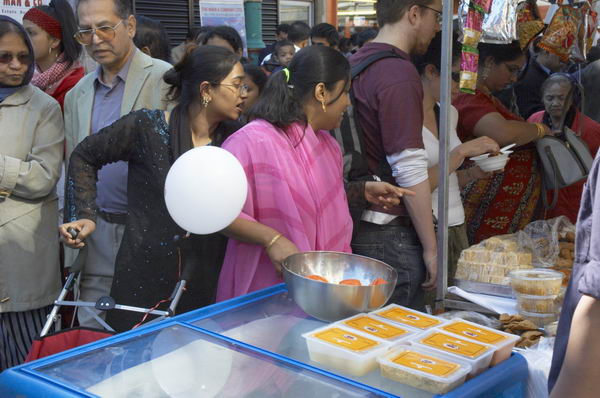
Baisakhi Mela, Bengali New Year: Back in May 1998 I went to the celebrations of the New Year taking place in a crowded Brick Lane and photographed the people on the streets, mainly in black and white and a few in colour.
I’ve recently digitised the more interesting of these pictures and have posted 35 black and white and a few colour pictures on Flickr.
Of course I was then working with film. I can’t remember exactly which two cameras I was using that day, but I think most likely one would have been my favourite Minolta CLE with a 28mm lens. Minolta had previously worked with Leica to produce the Leica CL, a more compact Leica using Leica M lenses, but for some reason two companies had parted company for the improved version of this, which came out under Minolta’s name. Perhaps its improved metering made it seem too modern for Leica.
The Minolta 28mm M-fit lens was a fine performer, actually out-performing its Leica equivalent. Sadly I had to bin it years later as fungus growth within it had damaged some of the internal glass beyond repair when I had hoped to use it with an appropriate adaptor on a Fuji digital camera.
Konica were another company that produced a modernised rangefinder Leica, the Hexar RF using their version of the Leica M-mount which accepted all Leica lenses. The viewfinder was perhaps not quite as bright as a Leica, but was better for 28mm lenses, and it not only had a good autoexposure system but also motorised wind-on of film and rewind. But that only came out a in 1999 after these pictures were made, when it became my ‘Leica’ of choice.
Probably the black and white images were made with an earlier Konica camera, the Hexar F, a 35mm fixed-lens, fixed focal length autofocus camera. Film loading, advance and rewind was motorised and automatic. It wasn’t promoted much in the UK, and I had to order mine from the USA, I think in 1993. The 35mm lens was superb, but I did have some self-made probelms with this camera, mainly due to my fingers. It was all too easy for them to wander over the exposure senor on the front of the body, causing extreme over-exposure, and I often managed to get greasy fingerprints on the front of the lens which had no lens hood.
Brick Lane was full of sound for the Baisakhi Mela, but both the Minolta CLE and the Hexar F were quiet in operation and the Hexar even had a ‘silent’ mode that made it hard for even me to know if I had taken a picture – so I seldom used it. Many of those in these pictures would have been immersed in the event and so unaware that I was taking their photographs, though others were and were clearly happy to be photographed.
The picture above is the first black and white picture from the Mela in the album, and clicking on it will take you to Flickr where you can then go through all 35 black and white pictures.