Gaza March in London 3rd Feb 2024

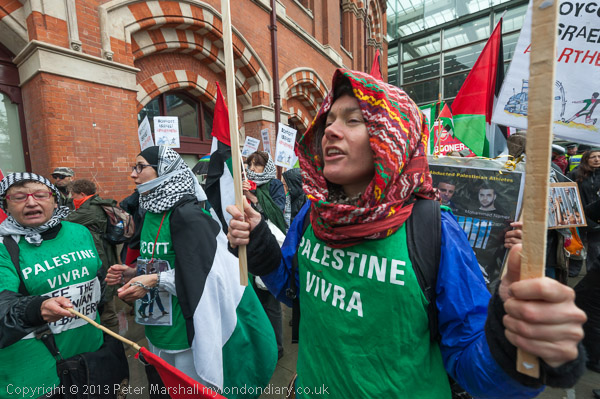
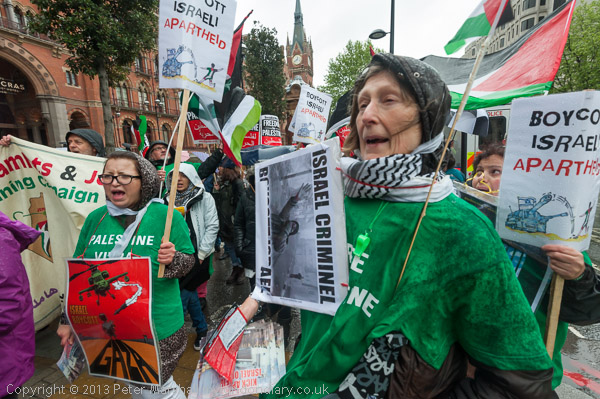
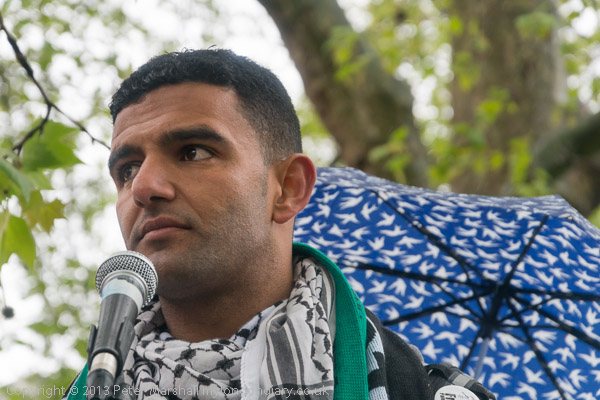
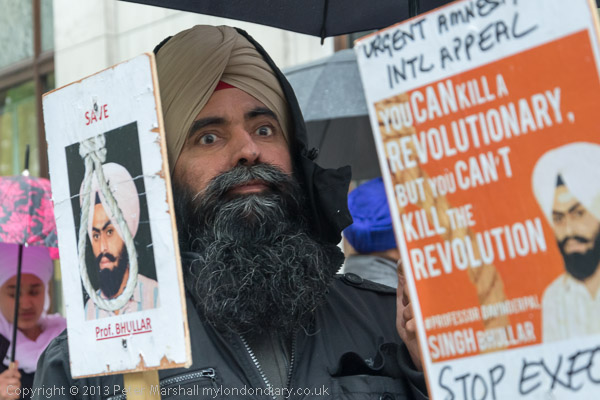
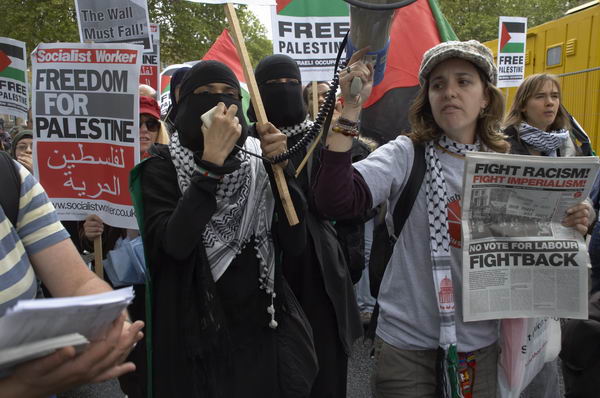
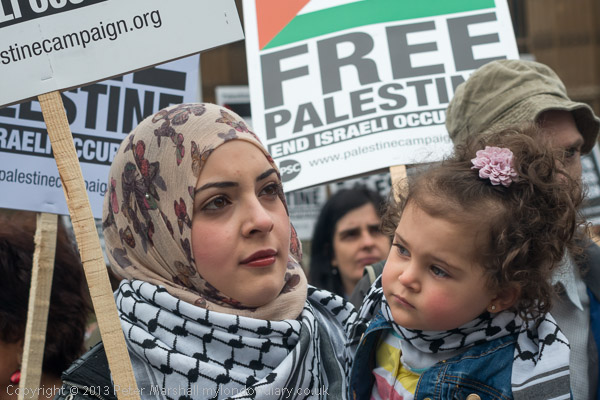
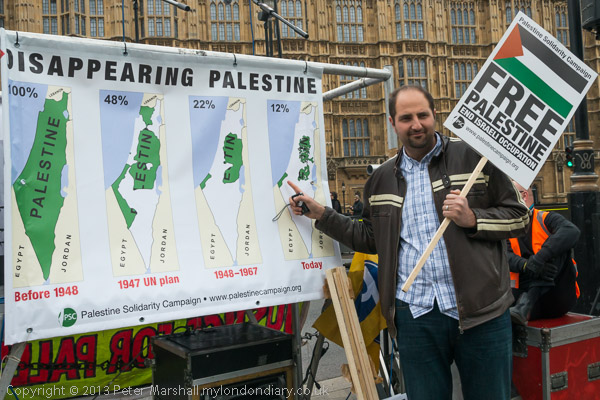
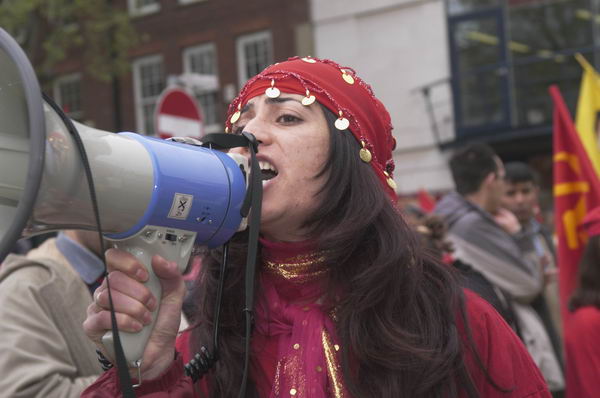
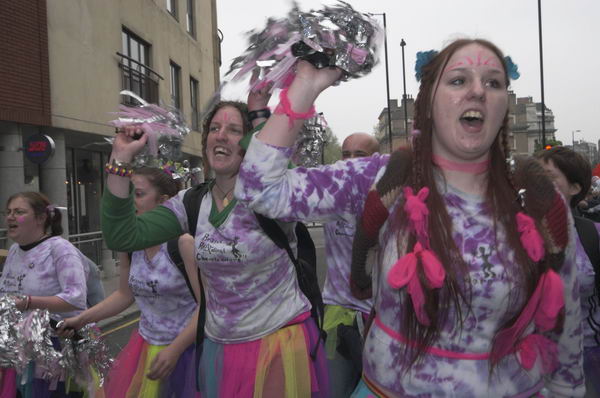
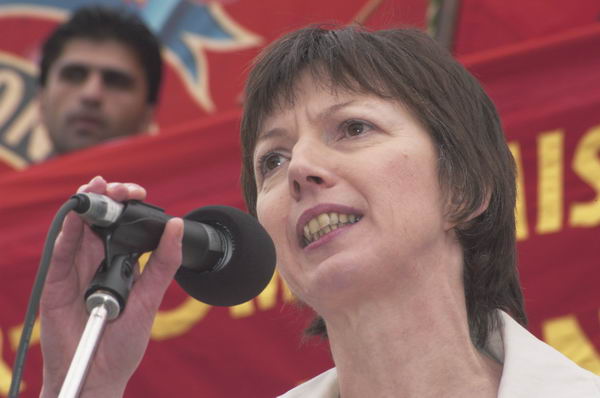
Gaza March in London – Another huge march through central London called for an immediate ceasefire and for an end to the Israeli genocide against Palestinians.

Gaza March in London
London, UK. 3 Feb 2024

I didn’t hear any news reports of the march, and over the past few days other events have largely pushed reporting over the continuing genocide to the edges of coverage.

Gaza March in London
London, UK. 3 Feb 2024.

If anything the deliberate targeting of civilians in Gaza appears to have increased since the ICJ ruling calling on Israel to do all it can to prevent genocide in the area.

Gaza March in London
London, UK. 3 Feb 2024.

Israel is still keeping international journalists out of Gaza and feeding the world’s press with misleading information. The BBC have some good reporters but they cannot work in Gaza. They have had interviews with some families and doctors in Gaza – some now killed. Papers such as The Guardian also carry reports from people in Gaza – such as Mondays Gaza diary part 44: ‘The angel of death is roaming the skies, nonstop’. But to get real information about what is actually happening on the ground you need to also go to alternative news sources.

Gaza March in London
London, UK. 3 Feb 2024.

One of those is Double Down News, who say “Far too many Journalists sit comfortably trapped in their own bubble of privilege and power, talking to each other and the so-called political class, rather than serving the people they’re meant to inform.” They aim to “prioritise people, ideas, evidence and community above all.” DDN carries no advertising but is supported by over fourteen thousand of subscribers who give what they can afford rather than being owned by governments or billionaires. And you can be one and become a part of the community equally with the others.

London, UK. 3 Feb 2024.

One of their latest videos is ‘Israel’s AI Killing Machine‘ by Palestinian-American lawyer and activist Lara Elborno which exposes by how Israel is using modern technology to target civilians across Gaza. Like other videos on the platform it provides a chilling insight missing in the mass media.

London, UK. 3 Feb 2024.

Before writing this a few days ago I read Al Jazeera’s Israel War on Gaza coverage, with its list of key events on day 123 published on Tuesday 6th February. Under the Humanitarian crisis in Gaza it begins its report with “At least 27,478 people have been killed and 66,835 wounded in Israeli attacks on Gaza since October 7.

London, UK. 3 Feb 2024.

It goes on to give other significant news on the humanitarian crisis, before news on Regional tensions and diplomacy and on what is happening in the Occupied West Bank. Al Jazeera was the first independent news channel in the Arab world and is funded by the Qatari state.

London, UK. 3 Feb 2024.

All pictures here are from the march in London on Saturday 3rd February 2024 which was I think uneventful. It was certainly large and several streets around the BBC were densely crowded before the start. I photographed the start and then slowly went down Regent Street with the marchers, stopping a number of times to photograph them as they walked past me.

London, UK. 3 Feb 2024. ‘Sunak’ and dead babies.

At Piccadilly Circus I decide to wait until the end of the march arrived there, and it was a long wait. It was almost two hours after the start of the march before the end arrived, and most of that time the streets were crowded across both carriageways with slowly moving people.

London, UK. 3 Feb 2024. London Mothers and Children Say Stop Killing Babies.

It was too late to be worth trying to get to the rally on Whitehall and so I began my journey home. I uploaded 35 images to Alamy but later put these and around 35 more into an online album Ceasefire Now – Stop The Genocide In Gaza.


FlickrFacebookMy London DiaryHull PhotosLea ValleyParis
London’s Industrial HeritageLondon Photos

All photographs on this page are copyright © Peter Marshall.
Contact me to buy prints or licence to reproduce.


More Support to Gaza – 27th January 2024

More Support to Gaza: Local actions took place across the country last weekend calling for an end to the genocide in Gaza and for an immediate ceasefire and freedom and a just peace in Palestine.

More Support to Gaza - 27th January 2024
Barclay’s Peckham branch

Most of the protests last Saturday were directed against local branches of Barclays Bank, demanding they stop bankrolling Israel’s attacks on Palestinians and calling customers to boycott the bank. Barclays has investments in weapons companies BAE Systems, Boeing, Elbit Systems, Raytheon all producing weapons and systems used in Gaza and Caterpiller whose bulldozers are used to demolish Palestinian homes, schools and civilian infrastructure.

More Support to Gaza - 27th January 2024
Barclay’s Peckham branch

The protests came the day after the International Court of Justice (ICJ) at The Hague, the UN’s top court, had ruled that there was a plausible case against Israel under the 1948 Genocide Convention, and that the Palestinian population in Gaza was at real risk of irreparable damage.

More Support to Gaza - 27th January 2024
Barclay’s Peckham branch

The ICJ stopped short of ordering an Israeli ceasefire and instead directed Israel to take every measure possible to avoid genocide while also ensuring humanitarian aid. The six provisional measures the court voted on to protect Palestinians from “irreparable” damage were all passed by overwhelming votes by the 17 judges, with even an Israeli judge supporting two of them, while a Ugandan judge voted against them all (although the Ugandan government issued a statement backing the ICJ).

More Support to Gaza - 27th January 2024
Barclay’s Whitechapel branch

Media reports here in the UK have generally been rather lacking in detail and have underplayed the ICJ judgement. You can read it on the ICJ web site in full or as their lengthy unofficial summary. The court demanded that Israel must:

  • take all measures in its power to prevent all acts against Palestinians in Gaza violating the Genocide Convention;
  • ensure its military does not commit any acts of genocide;
  • punish all incitements to commit genocide;
  • take immediate and effective steps to provide basic services and humanitarian assistance in Gaza;
  • take effective measures to preserve evidence related to allegations of genocide;
  • report to the ICJ within one month on actions it has taken over these orders.

The ICJ has no powers to enforce its decisions and statements from Israeli government and military have been defiant, while the UK and USA governments seem determined to continue their support for genocide and to continue giving support to Israel, including supplying weapons

Edmonton Green march to a rally at Silver St

The ICJ decision came after South Africa brought the case, but protesters around the world have been clear that this is genocide. And in December the Lemkin Institute for Genocide Prevention, continuing the work of Raphael Lemkin, the Polish lawyer of Jewish descent who coined the term genocide and campaigned to establish the Genocide Convention, issued a statement explaining “the reasons why we believe the Israel-Palestine situation constitutes an instance of genocide.”

Edmonton Green march to a rally at Silver St

The killing in Gaza continues, with over 26,000 Palestinians now known to be killed including over 10,000 children. More than 8,000 are missing, probably most of them buried under the rubble, and over 65,000 are severely injured.

Edmonton Green march to a rally at Silver St

A BBC report states that more than half of all buildings in Gaza have been destroyed or damaged by the Israeli assault. There are also said to be almost 20,000 children in Gaza who have been orphaned or separated from their families. Other reports suggest that around three-quarters of Hamas fighters are men who became orphans, and so the current attacks are likely to be a powerful recruiting ground for future militants against Israel.

Edmonton Green march to a rally at Silver St

The whole Israeli policy over the years has been counter-productive. Peace in the region requires a thriving Palestine, not an area subjected to military occupation, under an apartheid system and subjected to destructive attacks – and certainly will not be achieved by genocide.

Edmonton Green march to a rally at Silver St

It’s very hard to see how any positive outcome can emerge now for Israel and Palestine, but perhaps the ICJ ruling is a small glimmer of hope – as years ago was Oslo. But hope then was soon defeated by Israel’s determination not to accept peace.

Edmonton Green march to a rally at Silver St

Last Saturday made my way around London on National Rail, Overground, Underground and Elizabeth Line to visit several pickets outside Barclays branches and then to Edmonton Green.

Edmonton Green march to a rally at Silver St

I arrived at Edmonton Green just in time for the march organised by the Enfield branch of the Palestine Solidarity Campaign to a rally at Silver Street. They demanded Israel ends its genocidal attack on Gaza, calling for an immediate ceasefire and an urgent programme of humanitarian aid to end famine and provide shelter, medicine and water. They praised South Africa for taking Israel to court for genocide and called for a just peace with freedom for Palestine.

At the start of the rally at Silver St

The pictures here come from protests outside Barclays branches on Rye Lane, Peckham and Whitechapel High Street and from the Edmonton march. You can see more pictures online at Barclays Told Stop Banking On Genocide and Enfield for Gaza Ceasefire, End to Occupation.


FlickrFacebookMy London DiaryHull PhotosLea ValleyParis
London’s Industrial HeritageLondon Photos

All photographs on this page are copyright © Peter Marshall.
Contact me to buy prints or licence to reproduce.

EDL Saved by Police in Slough – 2014

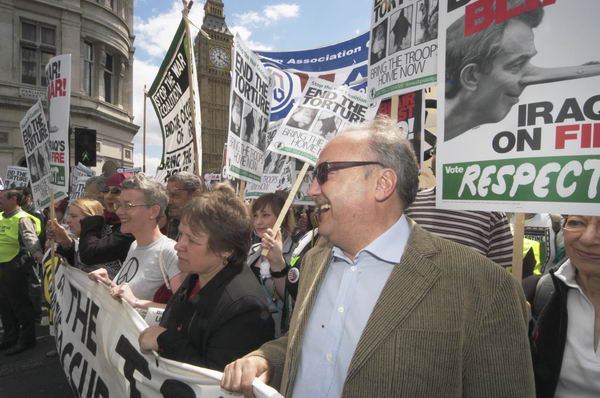
EDL Saved by Police in Slough: Ten years ago today around two hundred EDL supporters had come from around the country to march to a rally in the centre of Slough on Saturday 1st February 2014, sparked by plans to convert a failed social club on the outskirts of Slough to be used as a mosque and Islamic centre.

EDL Saved by Police in Slough

Their protest was opposed by a much larger counter-protests by black clad anti-fascist groups, the UAF and trade unionists, a large group of local mainly Asian youths and other local residents. Police had to clear a route for the EDL march with charges by police horses and with riot police with raised batons, and also protect them from having to run for their lives from angry counter-protesters to allow their rally to proceed. A large police presence seperated them from a rally by the UAF and trade unionists a short distance away.

EDL Saved by Police in Slough

Langley Village Club on Cheviot Road, Langley ceased trading in 2013 and was bought by Dawat-e-Islami who gained planning permission to convert it into an Islamic community and teaching centre and place of worship, Faizon-E-Madina.

EDL Saved by Police in Slough

Langley is on the eastern outskirts of Slough just north of the M4 and A4 and the small medieval village became a major manufacturing ventre, at first for building the Hawker Hurricane and other fighters during and after the war including the Hawker Hunter. When Hawker Siddeley left in 1959 the entire site was taken over by the Ford Motor Company who had been making parts for commercial vehicles there since 1949. The club was a part of the large estates that grew up here in the 1960s and 70s to house the workers in these and other factories around Slough and at Heathrow.

EDL Saved by Police in Slough

Some local residents had objected to the change of use, in particular fearing it might generate large volumes of traffic, although it is a relatively small building and the planning permission imposed a limit of 300 people at events there. The area now has a fairly high number of Muslims living within walking distance of the centre and the charity argued that the 35 parking places on site were sufficient, though the planning committee was not convinced.

The opposition to the plans by the EDL were not largely about parking but Islamophobia. EDL leaflets talked about “the disturbing proliferation of poorly regulated mosques” and linked the protest with its actions to highlight the activities of “vile grooming gangs“; they alleged that residents living around other mosques have been “driven to anger, tears and despair” because of the mosques, and suggested that the centre will “antagonise, perhaps even terrorise, local residents.”

They also claimed that Dawat-e-Islami “overtly supported the assassination of Pakistani politician Salmaan Taseer by Mumtaz Qadri, a member of the organisation who disagreed with Taseer’s opposition to Pakistan’s blasphemy law.”

They raised other local issues too, including the setting up of a Muslim faith-based school under the Free Schools programme which opened in September 2015 as Eden Girl’s School. Many others -including probably most of those who came to protest against the EDl would agree with there opposition to this, some opposed to all faith-based schools and those who oppose the whole divisive approach of ‘Free Schools’, agreeing as I do with the teacher’s union NUT (now NEU) that “We believe it is wrong that state funding should be given to small groups of individuals to run schools that are unaccountable to their local communities.”

I don’t visit Slough often, although I live only a few miles away – though it takes a while on the bus. I arrived a couple of hours before the EDL rally was due to start and was able to photograph and talk with the EDL about their protest for some time before a few of them objected to my presence.

The pictures on My London Dairy at EDL Saved by Police in Slough and my account there give a very full account of what happened and I won’t repeat it here. Slough is one of the UK’s most ethnically diverse towns and its industries have brought people to it from across the country and around the world since the 1920s. The population of the borough is now over 150,000 and the various communities seem largely to live together with few problems.

According to Wikipedia, “the 2011 census showed that 41.2% of Slough’s population identified as Christian, 23.3% as Muslim, 10.6% as Sikh, 6.2% as Hindu, 0.5% as Buddhist, 0.1% as Jewish, 0.3% as having other religions” and Slough has the highest proportion of Sikh residents of any town in the country and “the highest percentage of Muslim and Hindu residents in the South East region.”

Much more about what happened along with many more pictures at EDL Saved by Police in Slough.


FlickrFacebookMy London DiaryHull PhotosLea ValleyParis
London’s Industrial HeritageLondon Photos

All photographs on this page are copyright © Peter Marshall.
Contact me to buy prints or licence to reproduce.


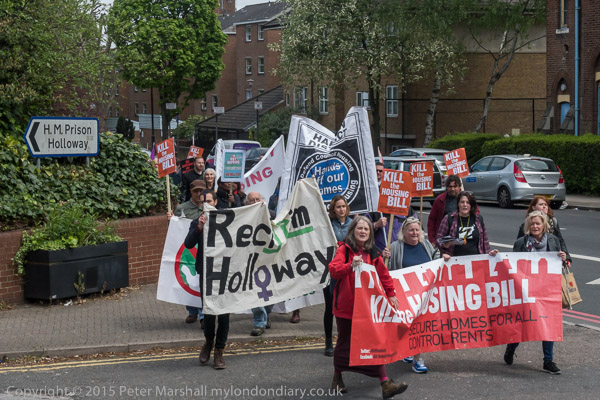
March For Homes – 2015

March For Homes: St Leonard’s Church to City Hall

Defend Council Housing, South London People’s Assembly and Unite Housing Workers Branch had called for a march to draw attention to the crisis in housing, particularly in London where council housing lists are huge and many councils are failing to meet their legal requirements to rehouse homeless families.

March For Homes

These requirements generally do not extend to single homeless people and in London alone over 6,500 people had slept rough at some time in the previous year with around one in twelve of 16-24 year-olds having been homeless at some point. Government figures comprehensively and deliberately underestimate the numbers.

March For Homes

It isn’t really a housing crisis, but a crisis of affordable housing. There are more than enough empty properties to house the homeless, but those who need housing are unable to afford the high rents or house prices being asked.

March For Homes

There has been a huge surge in building high-rise properties in London, with whole areas like Battersea and Nine Elms as well as elsewhere across inner and outer London being increasingly filled with them, but almost all are high-price properties, many sold overseas before the buildings are completed not as homes but as investments. Others are low specification student housing and also do nothing for the housing crisis.

March For Homes

What is needed is a crash programme of housing at social rents for family units of all sizes. Developers have become adept at evading what laws there are about providing social housing in new developments, fiddling the books to claim they cannot make sufficient profits which ridiculously lets them off the hook.

Much of the UK problems over housing go back to the Thatcher administration which both sold off council housing piecemeal under ‘right to buy’ but also stopped councils replacing what they had lost.

In earlier years both Tory and Labour councils had built generally high quality low cost housing though of course there were some examples of poor planning (often when councils were forced to cut costs) and shoddy work as well as unfortunate government encouragement of high-rise system building, which many of us were campaigning against in the 60’s and 70s.

But perhaps even more importantly under Tory administrations council housing became something just for what they regarded as ‘feckless’ and the ‘dregs of society’, those unable to fend for themselves. We got this ridiculous concept of the ‘housing ladder’ and very much it is a ladder that expresses “pull up the ladder, Jack. We’re alright“.

Municipal housing can provide housing for all at low cost and provided a rational approaching to providing decent housing for all, getting away from the poor conditions and high cost of private rented housing at much lower cost than owner occupation.

The March for Homes on Saturday 31st January was actually two marches, one from the Elephant in South London and the other from East London which I photographed at Shoreditch, calling for more social housing and an end to estate demolition and evictions. On My London Diary at March for Homes: Shoreditch Rally I published a very long list of some of the various groups which supported the march, as well as some of the speakers at the rally there. Eventually the march set off on its way towards City Hall, making its way towards Tower Bridge.

Class War left the march briefly to protest as it went past One Commercial St, where they had been holding a long series of weekly ‘Poor Doors’ protests against the separate door down a side alley for the social housing tenants in the block. They had briefly suspended the protests a few weeks early when new owner for the building had offered talks about the situation, but these had broken down.

Approaching the Tower of London the protest was joined by Russell Brand riding a bicycle. He had earlier lent support to a number of housing campaigns by residents in estates threatened by evictions.

By the time the march was going across Tower Bridge Class War had rejoined it, and their banners were in the lead.

The march was met on the other side of Tower Bridge by the South London March for Homes, a similar sized protest called by Defend Council Housing and South London People’s Assembly which had started at the Elephant, marching past the former Heygate Estate. The two marches merged to walk on to Potters Fields for the rally outside City Hall.

We had been marching most of the day in light rain, and this got rather heavier for the rally outside City Hall. Together with a large crowd being jammed into a fairly small space it made photography of the rally difficult.

While the rally was still continuing some of the protesters began to leave Potters Fields to protest more actively, led by Class War and other anarchit groups and accompanied by the samba band Rhythms of Revolution.

They moved onto Tooley Street and blocked it for a few minutes, then decided to move off, with police reinforcements who had arrived than taking over their role of blocking the road as the protesters moved off eastwards.

I watched them go, and later heard that after a brief protest at One Tower Bridge, a new development mainly for the over-rich next to Tower Bridge they had taken a long walk to join occupiers on Southwark’s Aylesbury Estate.

But I was cold, wet and tired, and my cameras too, having been exposed to the weather for several hours were becoming temperamental and I waited for a bus to start my journey home.

Much more on My London Diary:
March for Homes: After the Rally
March for Homes: City Hall Rally
March for Homes: Poor Doors
March for Homes: Shoreditch to City Hall
March for Homes: Shoreditch Rally


FlickrFacebookMy London DiaryHull PhotosLea ValleyParis
London’s Industrial HeritageLondon Photos

All photographs on this page are copyright © Peter Marshall.
Contact me to buy prints or licence to reproduce.


Education Cuts & Egyptian Revolution – 2011

Education Cuts & Egyptian Revolution: People were protesting on the streets of London on Saturday 29th January 2011 in solidarity with demonstrations in Egypt at the Egyptian Embassy. Elsewhere students, teachers, parents and others took part in a large peaceful march against increases in student fees and cuts in education and public services.


Solidarity with the Egyptian Revolution – Egyptian Embassy, South St. Mayfair

Education Cuts & Egyptian Revolution

Around 200 people, mainly Egyptians living in the UK had come to the street outside the embassy for peaceful but noisy protest “to show our solidarity & support of our fellow Egyptians in our beloved country, who decided on making Tuesday 25/01/2011 a day of protests & demonstrations in Egypt against the unfair, tyrant, oppressive & corrupt Egyptian regime that has been ruling our country for decades.

Education Cuts & Egyptian Revolution

The protest had brought together Egyptians from differing political & ideological backgrounds, inviting “inviting all supporters of human rights & civic democracy to come & support us in delivering our message to the Egyptian regime.”

Education Cuts & Egyptian Revolution

Their stated goal was to achieve “a democratic, free & civil nation capable of ensuring a dignified, honourable & non-discriminatory life for all Egyptians.

Education Cuts & Egyptian Revolution

Although the Arab uprising in Egypt in 2011 achieved some of its aims, including the end of the 30 year dictatorship of President Hosni Mubarak, it was followed by a struggle with the Muslim Brotherhood gaining power and Mohamed Morsi being elected as president in June 2012 only to be overthrown a few months later and the countrycpoming under the military regime led by Abdel Fattah el-Sissi since 2014.

In an interview with German news organisation DW ten years after the upraising an Egyptian activist commented “The counterrevolution has pushed the country into a state that is even more oppressive than before the 2011 revolution. The uprising has taken a terrible turn and has led to a tremendous regression.”

The protesters aimed to bring together people from across a wide range of political viewpoints, they refused to allow Hizb Ut-Tahrir protesters to join them, as they are opposed to human rights and democracy.

More pictures Solidarity with the Egyptian Revolution


Hizb ut-Tahrir Turned Away – South Audley St

Hizb Ut-Tahrir Britain, an Islamist group calling for the establishment of a Muslim caliphate, marched to the Egyptian Embassy to take part in the protest there but were turned away.

When they arrived they were met by Egyptians taking part in the protest and told very firmly that the embassy protest – like the Egyptian revolution – was to be entirely non-sectarian and that they were not welcome there.

Instead they had to hold their own separate demonstration around a hundred yards away around the corner along South Audley St, where they were spread out along the pavement between South Street and Hill Street.

As always at their events, everyone was dressed in black and the men and women were segregated. The men filled most of the pavement along South Audley St, with just a few women at one end, with most of them around the corner eastwards on South Street, away from the loundspeakers and the embassy.

As I commented it seemed a clear demonstration of the lack of equality they would like to impose. None of the speeches while I was there was in English, but I was able to gather that they were calling for Egypt to come under the rule of an Islamic Khalifah (caliphate), the “real change” which they see as the answer to everything.

It was a call diametrically opposed to the aims of the Egyptian revolution, which aimed to get rid of the oppressive regime and make Egypt a free and democratic nation, a secular state where there is no discrimination based on gender, religion or political views. The last thing they wanted was to replace one repressive regime by another, though depressingly that was what the future held for their country.

Hizb ut-Tahrir Turned Away


No Fees, No Cuts! Student March

The National Campaign Against Fees and Cuts had organised two large national protests in London and Manchester to defend education and the public sector. They took place a little over two months after another large student march had ended with a small group walking into the Tory HQ at Millbank and occupying it.

On that occasion the police had tried to carry out a brutal eviction and were met with an angry response, with the protesters smashing large plate glass windows to allow others to enter, though few did. A number of protesters and press were injured by police (and a few police injured too), though most of those at the scene simply watched from outside in the courtyard and were appalled when a stupid idiot threw an empty fire extinguisher from the roof and began to chant against him. Fortunately no-one was killed. But the event made the headlines of those media organisations which generally turn their blind eye to protests, though the reports didn’t much engage with the reasons for the protest or report fairly on all that had happened.

Police seemed to have learnt some lessons from their mistakes on that occasion and made much greater efforts to communicate sensibly with the protesters and not to kettle them or push them around. As I wrote “Despite the number of protesters in anarchist dress with facemasks, most students are not out to cause trouble.”

The march had begun with a short rally in Malet Street and I met it as the front was making its way out of Russell Square walking with it and taking pictures of the marchers and of short protests at Topshop and Vodaphone shops in Strand against their tax avoidance. Police lined the front of the shops and soon persuaded the protesters to move on.

Things livened up a little outside Downing Street were the march paused for some angry shouting and several people let of smoke flares before moving on. Many stopped for a while in Parliament Square, with some dancing to a samba band, but after a while everyone moved off to where the march was to end outside Tate Britain on Millbank.

Unlike in the previous November there was a large group of police lined across the entire frontage of the Millbank tower complex – bolting the stable door as I think it unlikely that there would have been any trouble.

The only sign of any conflict between police and protesters I saw did come outside here, when there was a brief sit-down after police tried to drive two vans full of reinforcements through the crowd. Sensibly the police simply brought in a line of officers to allow the vans to drive along the pavement rather than try to force people to move.

By the time I arrived outside Tate Britain with the tail of the march they rally there had ended and I decided it was time to leave, though some of those on the protest were planning to continue elsewhere – including going to the Egyptian Embassy where I had been earlier. Later at home I read reports on-line that half a dozen people had been arrested in minor incidents.


FlickrFacebookMy London DiaryHull PhotosLea ValleyParis
London’s Industrial HeritageLondon Photos

All photographs on this page are copyright © Peter Marshall.
Contact me to buy prints or licence to reproduce.


London Gaza Marches & End Guantanamo – 20 Jan 2024

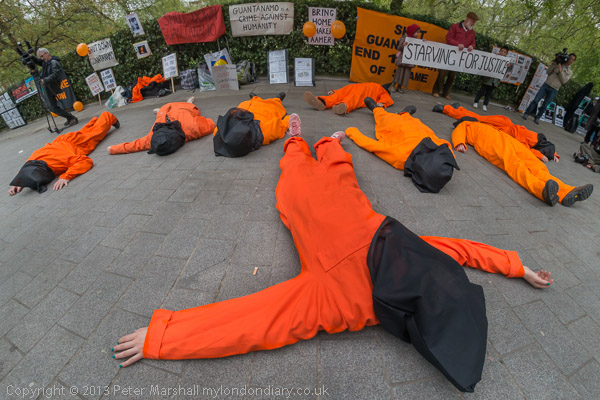
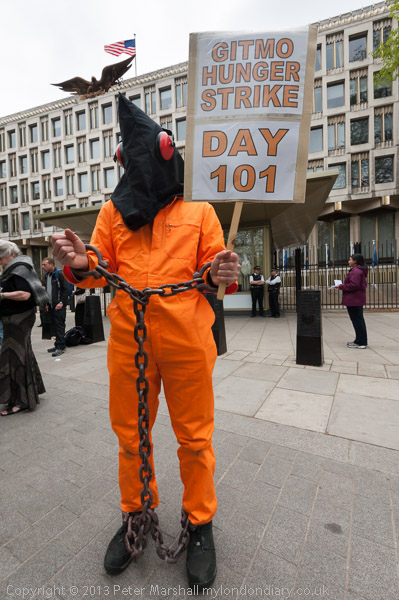
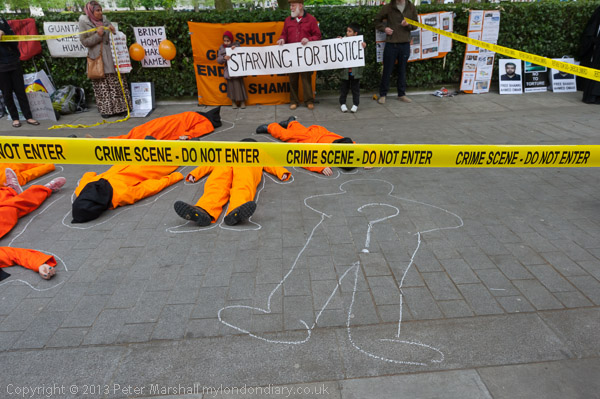
London Gaza Marches and End Guantanamo: Last Saturday, 20th January 2024 the main protest against the ongoing genocide by Israel against Gaza was taking place in Birmingham, but there were half a dozen local events around London, and I decided to photographed some of these, as well as a protest calling for the closure of Guantanamo, 22 years after the first prisoners were taken there to be tortured.

Rail engineering works made it much slower than normal for me to get up to London and back and I abandoned plans to go to some of the events and I was only able to pay a fleeting visit to the Camden march because this was meeting at Kentish Town tube station which has been closed since last Summer for extensive refurbishment.


Gaza Ceasefire March, Camden, London, UK

London Gaza Marches and End Guantanamo
London, UK. 20 Dec 2024. A woman holds a blood-stained bundle representing a dead child. Protesters met at Kentish Town to march to a rally outside Camden Council offices on a day of local actions for Palestine as rage grows over the ever-increasing death toll. Genocidal Israeli attacks have killed over 22,000, mainly women and children, with many bodies still hidden over the rubble. Almost the entire medical capacity has been destroyed with many medical staff killed or arrested and hospitals bombed and almost the entire population of Gaza displaced and in danger of famine and disease. Peter Marshall

I took the tube to Camden Town and just missed a bus going up to Kentish Town. The stop had an electronic display that told me I would have to wait 6 minutes for the next and I decided to walk. It turned out to be a little further than I had remembered – almost a mile and the bus would have been rather quicker. People at Kentish Town were waiting for others to arrive before they started and also expected some to join them on the over two mile route to the rally.

London Gaza Marches and End Guantanamo

I had expected the march to have left, and to meet it coming down the road, but it had not yet moved off. After a few minutes of taking pictures I realised I would be too late back in central London unless I left, and caught a bus to Mornington Crescent and the tube to Charing Cross. Camden Town tube is always crowded with tourists and it takes a long time to get down to the platforms.

More pictures: Gaza Ceasefire March, Camden


Close Guantanamo – 22 Years of Injustice Must End

London Gaza Marches and End Guantanamo
London, UK. 20 Jan 2024. Members of the UK Guantanamo Network walked from Parlament past Downing Street in single file wearing orange jumpsuits 22 years after the arrival of the first prisoners at the illegal US camp to a rally in Trafalgar Square. They highlight the abuse, torture, lack of human rights, force-feeding and indefinite detention there and call for its closure. 30 Prisoners are still held there. Peter Marshall

I came out of Charing Cross Station and met the group of marchers wearing orange Guantanamo-style jumpsuits just coming up to the traffic crossing at the top of Whitehall. The protest was organised by the UK Guantanamo Network which includes Amnesty International, Freedom From Torture, Guantanamo Justice Campaign, Close Guantanamo and the London Guantanamo Campaign. They had met in Old Palace Yard opposite the House of Lords and changed into the jump suits there before proceeding in single file around Parliament Square and up Parliament Street and Whitehall to Downing Street and were now coming up Whitehall for a long rally in Trafalgar Square.

London Gaza Marches and End Guantanamo

They demand US President Biden should act rapidly to close Guantanamo, where a total of over 800 prisoners were illegally tortured over they years, the great majority of them having no connection at all with terrorism. Most have since been allowed to return home or to safe countries, but 30 remain held there, although half of them have been cleared for release. “The Guantanamo network calls for Guantanamo to be closed and for an end to depriving people of their legal and human rights, and an end to indefinite detention and torture.”

I left after taking pictures before the rally began as I was already late for the start of the final event I wanted to photograph in Tower Hamlets.

More pictures at Close Guantanamo – 22 Years of Injustice Must End


Gaza Ceasefire March, Tower Hamlets, London, UK

London, UK. 20 Dec 2024. Front of the march. Over a thousand marched from Whitechapel to a rally at Mile End on a day of local actions for Palestine as rage grows over the ever-increasing death toll. Genocidal Israeli attacks have killed over 22,000, mainly women and children, with many bodies still hidden over the rubble. Almost the entire medical capacity has been destroyed with many medical staff killed or arrested and hospitals bombed and almost the entire population of Gaza displaced and in danger of famine and disease. Peter Marshall

I sat on the District Line going east trying to guess where the Tower Hamlets march might have got to as I was too late for the start. Marchers had met in Altab Ali Park in Whitechapel, close to Aldgate East Station but was marching through Whitehchapel and Stepney to Mile End. I looked at the time and took a guess about when they would have started to march and how far they would have got, and decided to leave the train at Stepney Green station.

Fortunately my guess had proved correct and as I looked down the Mile End Road towards Whitechapel I could see the front of the march in the distance and walked down to meet and photograph it. I walked with the marchers going back and forth and taking pictures over the last mile or so. When we got close to the Green Bridge which takes Mile End Park across the busy road. I left it a little late and had to run up the steps to be able to photograph the front of the march and its long tail behind as it came up to the bridge.

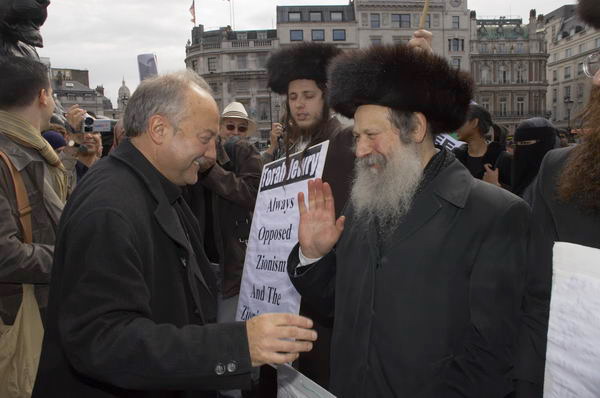
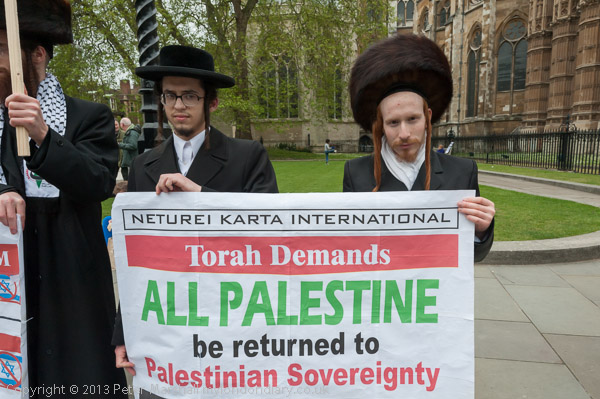
Then I came down and walked with them the final short stretch to the large area of Mile End Park where the rally was being held. I’d photographed the ultra-Orthodox, Neturei Karta anti-Zionist Jews earlier as they were taking part in the march and took some more pictures when a group of them stood on the wall at the entrance to the park.

I took some photographs as the rally started and heard the first of the speakers. The rally was interrupted by a speaker from Movement for Justice using their own megaphones. He complained that they had been refused permission to speak at the event. Stewards argued that he was disrupting the meeting. As I left there were some discussions taking place over whether he might be allowed to make an announcement to the rally. But I was tired and had a long journey home, so I left.

More pictures: Gaza Ceasefire March & Rally


FlickrFacebookMy London DiaryHull PhotosLea ValleyParis
London’s Industrial HeritageLondon Photos

All photographs on this page are copyright © Peter Marshall.
Contact me to buy prints or licence to reproduce.


BBC Bans Gaza Appeal – 2009

BBC Bans Gaza Appeal: On Saturday 24th January 2009 marchers gathered outside the BBC in Portland Place to draw attention to the biased reporting of the Israeli attack which had begun on 27 December 2008 and had ended with a ceasefire by Israel on 18th January.

BBC Bans Gaza Appeal

The attack, known by Israel as Operation Cast Lead but in Arabic as the Gaza Massacre had killed around 1300 Palestinians and 13 Israelis and had destroyed over 46,000 homes in Israel. It had begun with air attacks but was followed on January 3rd by a ground attack.

BBC Bans Gaza Appeal

The protest called for for an end to the Israeli blockade of Gaze and for the UK to stop its arms sales to Israel, and for a free Palestine and demanded Israli war criminals to be brought to justice. It also castigated the BBC which although claiming to be impartial had accepted and broadcast much Israeli propaganda during the war while not giving a proper hearing to the views and aspirations of the Palestinians.

BBC Bans Gaza Appeal

After the war, the United Nations Fact Finding Mission and human rights organisations criticised Israel for the large number of civilian casualties and having a deliberate policy of disproportionate force aimed at the civilian population. Among the war crimes that they found evidence for was the use of children and other civilians as ‘human shields’ forcing them “blindfolded, handcuffed and at gunpoint to enter houses ahead of Israeli soldiers during military operations.”

BBC Bans Gaza Appeal

International media were denied access to the war zone by Israel in defiance of a ruling by the Israeli Supreme Court and many details only emerged later and the media in Gaza itself came under military attack. The Israeli foreign minister “instructed senior ministry officials to open an aggressive and diplomatic international public relations campaign to gain support for Israel Defense Forces operations in the Gaza Strip” and the BBC was among those news organisations who lapped up their offerings.

As the ceasefire was announced, humanitarian organisations around the world launched campaigns to bring much-needed humanitarian aid to Gaza. In the UK, the the Disasters Emergency Committee (DEC) which includes Oxfam, Save the Children and the Red Cross launched a nation-wide appeal, but the BBC (and Sky) refused to broadcast it although it went out on ITV, Channel 4 and Channel Five.

It was a decision which clearly made the BBC management’s pro-Israel position crystal clear to the nation and was widely seen, including by many BBC journalists as a failure by the BBC to uphold its reputation for impartiality.

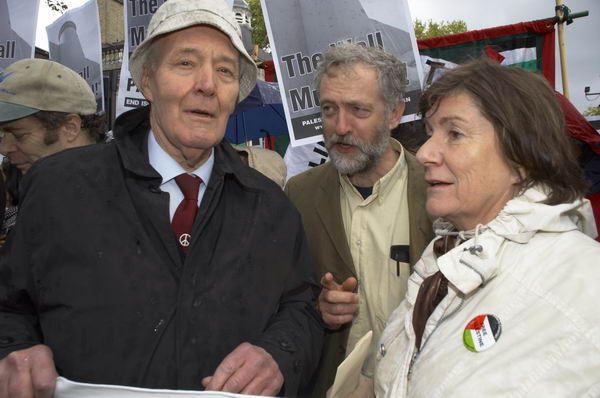
Which is perhaps why Tony Benn was invited onto the Today programme that morning to talk about the decision – and he came on and read the appeal for them. At the start of the protest I photographed him before and after he went in with a deputation to deliver a letter of protest to the BBC – police stopped me going in with him. Among those who also spoke outside the BBC was Jeremy Corbyn.

Pro-Israel press bias continued with the Press Association, who reported this press conference as the protest, giving the number present as 400. Even the police gave a figure of 5,000 – as usual roughly half of the actual number.

The protest was largely peaceful, though some had brought shoes to throw at Broadcasting House, but policing outside there was rather heavy-handed. When police made a few arrests when the march approached Piccadilly Circus the march halted and threatened to stay blocking traffic until the arrests stopped. They did and the march moved on to its final rally in Trafalgar Square.

More on My London Diary at Gaza: Protest March from the BBC.


FlickrFacebookMy London DiaryHull PhotosLea ValleyParis
London’s Industrial HeritageLondon Photos

All photographs on this page are copyright © Peter Marshall.
Contact me to buy prints or licence to reproduce.


Freedom Protests in London – 2010

Freedom Protests in London: Two protests on Saturday 23rd January, 2010 were against the increasing powers which have been given to police and misused by them to control and harass lawful actions on the street.


I’m A Photographer Not A Terrorist – Tragalgar Square

Freedom Protests in London

Around 1,500 photographers and supporters turned up to the I’m A Photographer Not A Terrorist rally in Trafalgar Square to protest at the increasing harassment of people taking photographs by police, and in particular their abuse of powers under the Terrorism Act.

Freedom Protests in London

I think those there included virtually every photographer who works in London as well as many amateurs. Almost all of us who work on the streets have been approached by police, questioned and then subjected to a search, usually under Section 44 of the Terrorism Act 2000 (S44.)

Freedom Protests in London

As I commented in 2010:

These stop and searches appear to have continued unabated despite a Home Office Circular in September that made it clear they should not be used to target photographers. Searches can also be carried out under Section 43 of the act, but for this officers must have reasonable grounds to suspect someone of being a terrorist. S44 stops can only be carried out in “authorised areas”, which although intended by Parliament to apply in very restricted areas for short lengths of time have been used by police – for example – to permanently to cover central London and some other areas.

I’m a Photographer Not a Terrorist

Freedom Protests in London

The Press Card that we carry has the text “The Association of Chief Police Officers of England Wales and Northern Ireland and the Association of Chief Police Officers in Scotland recognise the holder of this card as a bona-fide newsgatherer.” But despite this, one of my colleagues was the subject of roughly 30 searches in 2009.

Personally although I’ve been approached and asked why why I’m taking pictures on a number of occasions I’ve only been been subjected to a S44 stop once. Being a still photographer I tend to work fast and keep on the move and I think videographers who stay around longer have suffered more. But certainly there was a lack of cooperation from the police and I was often finding my Press Card being unrecognised by offiers. Others told me that they didn’t regard those issued through the NUJ, one of the recognised gatekeepers to the system, as being valid. And most months if not most weeks I would be threatened with arrest when taking pictures.

Perhaps the most distressing aspect of this protest was listening to a BBC News reporter, standing in the middle of a crowd of experienced journalists and giving a report in which he gave the number attending the protest as “three hundred“. It drew immediate shouts of protest from those of us standing around him and was certainly “not a good advertisement for the competence or impartiality of the BBC who appear to have a policy of playing down dissent.” It’s a policy which still seems to govern the BBC reporting of protests in the UK which are either simply ignored or very much played down.

Among the protesters was a small “Vigilance Committee with a man on stilts wearing a number of CCTV cameras accompanied by a male and female vigilance officer, who picked on individuals and questioned them, taking their fingerprints before finding them guilty and sentencing them to a choice of six years hard labour or contributing to the Vigilance Committee.”

Also present were three Sisters of Perpetual Indulgence, but police and ‘heritage wardens’ largely kept away. Although this had been planned as an illegal protest taking place without the permission from the Mayor required by the bylaws, the authority had put in an application for it without any reference to the protesters.

More pictures at I’m a Photographer Not a Terrorist.


Life Is Too Short to be Controlled – St Pancras to Piccadilly Circus,

Later in the day protesters met at St Pancras for the ‘Life Is Too Short to be Controlled’ protest against the increasing control over our lives through increased police powers to stop and search, increased surveillance and controls on freedom of movement.

The protest, organised by ‘London NoBorders’ began outside St Pancras Station where the Border Authority detains migrants arriving by Eurostar and marched to Piccadilly Circus, beneath which Westminster’s CCTV HQ keeps a constant watch on the streets of London, the “City of CCTV”. Across the city there were then over 500,000 CCTV cameras watching us, installed by councils, public bodies, companies and individuals and on a typical day the average person in London will be recorded by 300 of them.

Police kept a relatively discrete watch on the event, with police vans parked out of site and even when the group marched along the busy Euston Road, holding up traffic for a few minutes not a single officer appeared. The march was well-ordered “and when an ambulance answering an emergency came along, the whole march cleared the road for it with remarkable speed. At Russell Square, one taxi driver decided to try to force his way through the marchers, but was soon stopped, with several people sitting on the bonnet of his vehicle.”

At Piccadilly Circus there was a short token road block before the protesters moved to the pavement around Eros for more speeches and some dancing. A Police Community Support Officer appeared briefly after someone climbed up and taped a Palestinian flag to Eros’s bow and tried to identify who had done this. The statue is rather fragile and could have been damaged. He soon gave up and went away and was replaced a few minutes later by a single police officer who was embarrassed by being greeted with hugs, and moved back a few yards to watch.

“Not me officer, someone borrowed my scarf”

The police had monitored the progress of the protest as it marched through London, both from some distance on the streets and also on CCTV. It had been peaceful and had caused only very minor disturbance. Few protests do, and the kind of heavy policing sometimes employed often means police cause more disruption that the protest, as well as sometimes provoking a response from protesters who would otherwise have protested peacefully.

More at Life Is Too Short to be Controlled.


FlickrFacebookMy London DiaryHull PhotosLea ValleyParis
London’s Industrial HeritageLondon Photos

All photographs on this page are copyright © Peter Marshall.
Contact me to buy prints or licence to reproduce.


Ed Davey Privatises the Royal Mail – 2011

Ed Davey Privatises the Royal Mail: 2011 is a year Liberal Leader Ed Davey would like to forget, particularly now that the scandal around the persecution of postmasters wrongly convicted because the Post Office and Fujitsu refused to admit the Horizon software had serious faults, long exposed by Private Eye and Computer Weekly, has now emerged into public view.

Ed Davey Privatises the Royal Mail

In 2011 Lib-Dem MP Edward Davey, MP for Kingston & Surbiton as was heading the Tory/Lib-Dem coalition’s plans to sell off our postal services as Minister for Employment Relations, Consumer and Postal Affairs. Before becoming an MP he had worked as a management consultant in Sweden, Taiwan, Belgium, South Africa and elsewhere, who specialising in postal services.

Ed Davey Privatises the Royal Mail

His then boss, Business Secretary Vince Cable, was the Lib-Dem MP for the neighbouring constituency of Richmond & Twickenham, so the plans to sell off the publicly owned Royal Mail came from Lib-Dems in this small area of West London.

Ed Davey Privatises the Royal Mail

So Kingston was the obvious place for the national ‘Keep the Post Public’ protest on Saturday 22nd January 2011 and over a thousand came from across the nation for a rally and march there.

Ed Davey Privatises the Royal Mail

Kingston-on-Thames was also relevant for the royal connections incorporate in its name. Kingston is a Royal Borough and the town where many of the earliest Kings of England were crowned, and the march passed within a few yards of the Coronation stone in front of Kingston Guildhall before ending by the River Thames.

And although the Queen herself was unable to come and defend her Royal Mail, a fairly convincing royal look-alike came suitably dressed to give a royal address against selling off her Royal Mail.

Also there to speak were a number of trade union leaders including CWU general secretary Billy Hayes, Dave Ward of the CWU Postal department, Jim Kirwan, CWU London regional secretary, Christine Quigley of London Labour Youth and Christine Blower, the NUT General Secretary. Others speaking included the local Labour candidate and a school student who got huge applause for telling the rally how they had organised and occupied their local school against government cuts and fees increases.

Speakers pointed out that privatisation would result in price rises and the abandonment of the universal service which requires the Royal Mail to deliver and collect to all of the 28 million UK addresses six days a week at the same cost. And we have since seen this happen although not officially; we now get deliveries of mail on perhaps four or five days in a typical week and the collections have become far more erratic.

The cost of a First Class Stamp was then 41p. Presumably as a sweetener for buyers of the privatised company there was already to be a 5p rise in a few months time. If prices had risen simply according to the Bank of England’s inflation calculator, the stamp should now cost 58p but the actual cost now is over double that at £1.25 – a huge increase. And although using a First Class stamp was supposed to mean next-day delivery, First Class letters now regularly take 2 or 3 days or more to arrive.

There were fears that the privatisation would have negative effects on Post Offices, which had been separated from the Royal Mail delivery service since the 1969 Post Office Act, but there were still strong business connections. So far this has not led to many post office branch closures, although many branches are now part of larger stores such as W H Smith. It remains to be seen what effect the closure of many of this company’s high street outlets as it moves towards a focus on travel will have.

In 2011 I wrote “An ICM poll in 2009 found that 78% of us believed selling Royal Mail would be a bad deal for the taxpayer and 82% thought prices would go up.” And it’s clear that we were right. I (and the coalition government) also thought that “the Royal Mail represents rich pickings for the rich supporters of the government“. Its operating profits since 2013 have been over £400 million in every year except 2020 and in 2022 were £758 million. We are paying through the nose for a reduced service. That’s privatisation for you.

More about the march and pictures of the speakers and marchers on My London Diary at Keep Royal Mail Public.


FlickrFacebookMy London DiaryHull PhotosLea ValleyParis
London’s Industrial HeritageLondon Photos

All photographs on this page are copyright © Peter Marshall.
Contact me to buy prints or licence to reproduce.


Peckham & Stockwell Protests – 2017

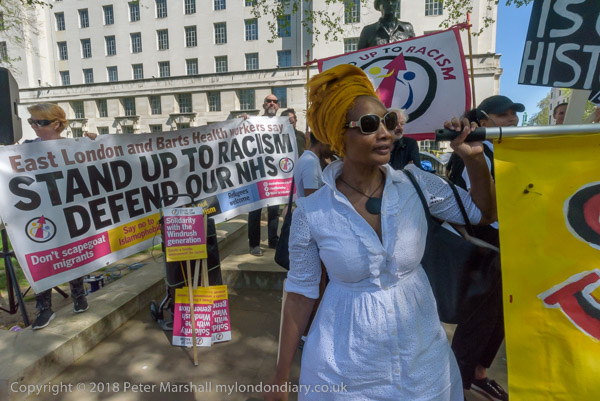
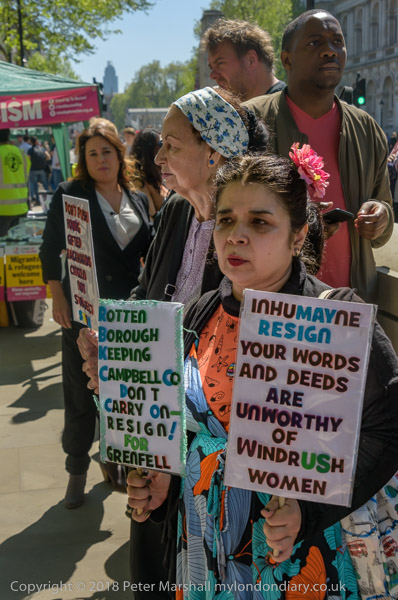
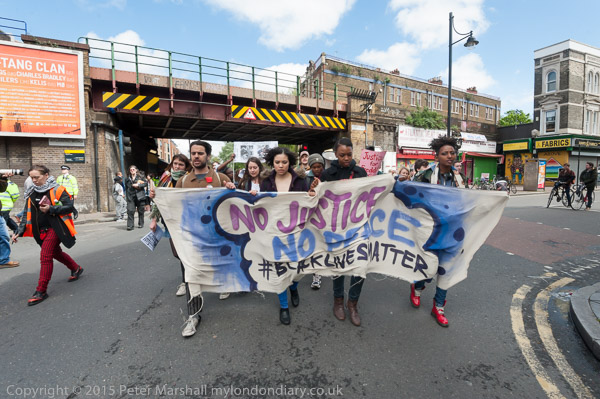
Peckham & Stockwell Protests – on Saturday 21st January 2017 I spent the day in South London, photographing protests in Peckham and Stockwell.


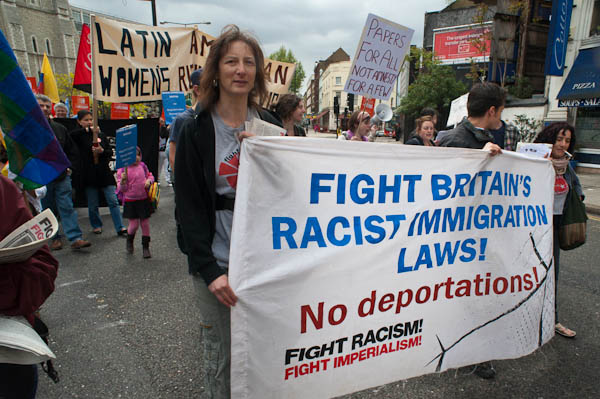
Peckham welcomes march against deportations

Peckham & Stockwell Protests - 2017

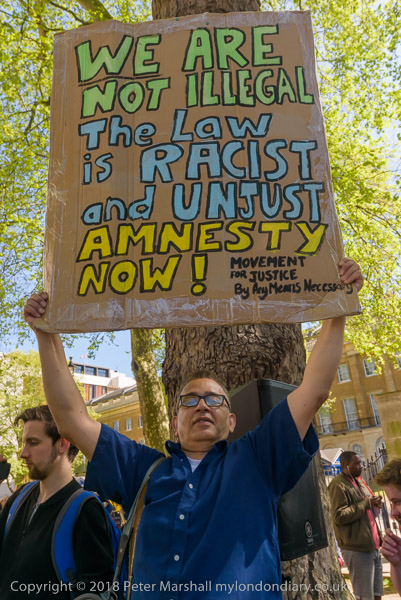
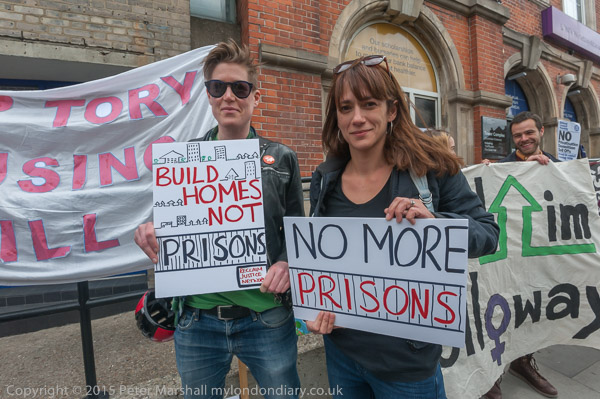
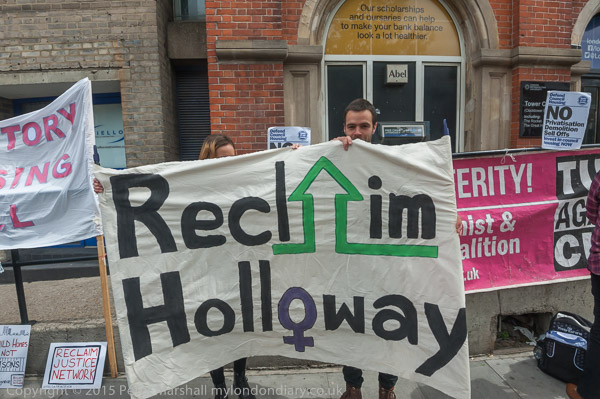
Immigration raids in south London had target long-established African, Asian and Caribbean communities, dividing families, deporting people who have built lives in the UK with parents, partners and children here. Protesters compared the deportation flights which followed with slave ships, with deportees shackled with a guard on each side in a cruel and divisive act of racist discrimination.
Peckham & Stockwell Protests - 2017

The Home Office had carried out many of these forced deportations unlawfully, and the High Court had decided that their use of the ‘detained fast track’ procedure from 2005-2014 was unlawful and went beyond their legal powers. Had we as individuals had acted illegally for so long and so persistently there would be little doubt that we would now be in prison.

Peckham & Stockwell Protests - 2017

But the government gets away scot-free. The 10,000 or so asylum seekers deported under the old system could in theory ask for the decision made on their cases to be set aside and lodge a new appeal, although very few are likely to be in a position to do so.
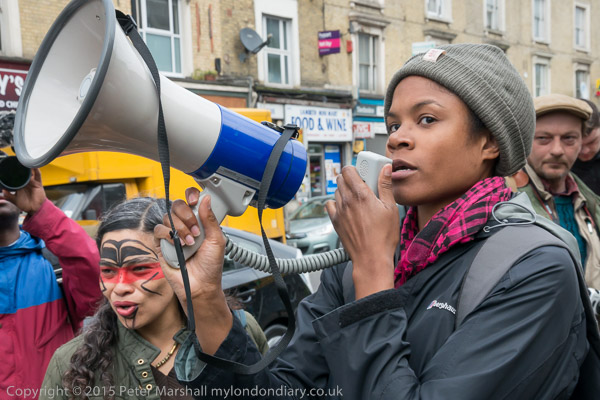
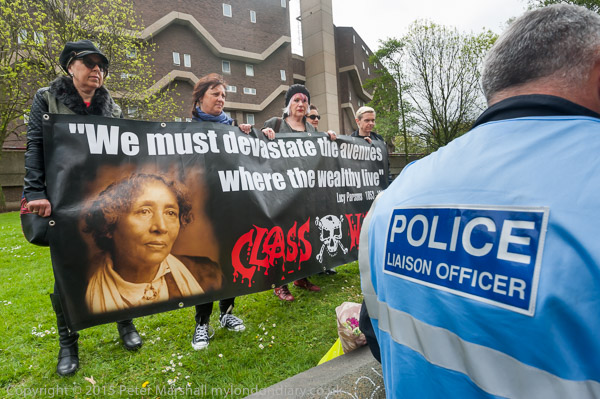
Peckham & Stockwell Protests - 2017

The protest was organised by Movement for Justice, but supported by many other groups including including SOAS Detainee Support (SDS), Anti Raids Network, Zimbabwe Human Rights Organization Mazimbabweans, Jewdas, BLMUK, London Mexico Solidarity, Fight Racism – Fight Imperialism (FRFI), Sisters Uncut – South East London and Lesbians and Gays Support the Migrants.

After a short rally the protests marched down Rye Lane, the main shopping street in Peckham, attracting a great deal of support from shoppers on the crowded street.

Some went into shops and handed out leaflets there and on the street. They held a short rally at the south end of the street before returning for another in the square by Peckham Library.

Peckham march against deportations


Oh! Mother march against knife crime – Peckham

Another protest march was taking place in Peckham during the afternoon. Oh! Mother, A Christian organisation based in South London which campaigns for change in communities was protesting to put an end to gun and knife crime.

Their march followed the stabbing to death in Peckham on 30th December 2016 of 24 year old Ernest Kalawa. Among the marchers were members of the dead man’s family, some of whom wore t-shirts commemorating him.

Oh! Mother march against knife crime


March against closing community centres – Stockwell

Members of Lambeth Labour were meeting in Stockwell to march to Stockwell Community Centre, one of two local community centres in Stockwell and Kennington Park which are run by Hyde Housing Association which were threatened with closure.

Lambeth Council is spending £50 million on a new town hall and had pledged £20 million to support the vanity Garden Bridge project, but the Labour-run council had made drastic cuts in community services, including library closures and selling off council estates to developers but has refused to support these community centres.

Lambeth Labour Council is one of a number of London Labour councils dominated by right-wing members who appear to have lost any sense that councils exist for the benefit of their residents rather than of the councillors.

Lambeth appear to follow in the footsteps of neighbouring Southwark, here journalist Anna Minton found that “20 per cent of Southwark’s 63 councillors work as lobbyists” for developers in the planning industry and that a significant number of Councillors and Council officers are making use of a ‘well-oiled revolving door’ to the industry.

March against closing community centres


FlickrFacebookMy London DiaryHull PhotosLea ValleyParis
London’s Industrial HeritageLondon Photos

All photographs on this page are copyright © Peter Marshall.
Contact me to buy prints or licence to reproduce.