Michelin, Dove, Co-op, Clothing, Jesus, Eves & Eels – 1989

This is the final section of my walk on Sunday September 3rd 1989 which had begun in Stratford, from which some images appeared in my web site and self-published book ‘1989’, ISBN: 978-1-909363-01-4, still available. The pictures here are in the order I took them, and almost all of these final images are in the book so you can read my deliberately disjointed thoughts that made up the text on the book pages here. Although this was the end of this walk I returned to the area for another walk a few days later.


Michelin, Dove, Co-op, Clothing, Jesus, Eves & Eels
Railway Bridge, Coopers Lane, High Rd, Leyton, Waltham Forest, 1989 89-9b-52

Michelin, Dove, Co-op, Clothing, Jesus, Eves & Eels
Dove Cafe, 390, High Road, Leyton, Waltham Forest, 1989 89-9b-54

Michelin, Dove, Co-op, Clothing, Jesus, Eves & Eels
Andy & Co, Catering Equipment, 376-80, High Rd, Leyton, Waltham Forest, 1989 89-9b-55

Michelin, Dove, Co-op, Clothing, Jesus, Eves & Eels
Good As New Clothes, High Rd, Leyton, Waltham Forest, 1989 89-9b-41

Jesus is Alive, Leyton Rd, Stratford, Newham, 1989 89-9b-43

178-80 High Rd, Leytonstone, Waltham Forest, 1989 89-9b-44

Here you can see the buildling where I took a photograph in a earlier post of Eves, a ‘STRICTLY LADIES ONLY HEALTH CLINIC’. The road on the corner at the left of the picture is Eve Rd. As you can read the building was also BeCKS Driving Lessons, BRITAINS LARGEST PRIVATELY OWNED DRIVING SCHOOL FOR CAR & H,,G,V.’.

There are some clues as to the origin of this building, including the intertwined initials J and S but I have been unable to find out more. Currently it is a bookmakers.

Noted Eel & Pie House, West St, 481, High Rd, Leytonstone, Waltham Forest, 1989 89-9b-45

Finally I photographed the Noted Eel & Pie House, still present at the start of West Street although the Potato Dealers and Farm Produce shop at left is now an off-licence.
The shop sign for the Eel & Pie House has changed and now spreads across three bays and all those white tiles have been replaced by green and the shopfront also now has a large eel at right.

You can read the history of the shop, with some pictures on their web site. It began with the great grandfather of the current owners who was the skipper of an eel barge sailing out of Heeg, a fishing village in the Netherlands. Eels were exported to London from there until 1938. Around 1894 his youngest son came London at the age of nine to live with a family who owned a pie shop and learn the trade, opening a pie shop in Hoxton with a cousin just before the outbreak of The Great War. He married the daughter of another pie shop owner and in 1926 with a loan from his father-in-law set up his own shop under his father-in-law’s name, E Newton, on Bow Road.

The shop name was changed soon after the outbreak of the Second World War when the Home Office insisted his name as a “friendly alien” had to be on the shop front. It became the “Noted Eel & Pie House” with his name, “H HAK” in the smallest font permitted in the bottom right corner as he worried customers might think it German.

In 1976 when two of his sons were then running the business the shop was compulsory purchased by the council and the business opened in Leytonstone in 1978. I suspect the sign in my picture may have come with them as it doesn’t quite fit and there is a name painted over at bottom right.

This was the final frame exposed on this walk. But I was soon to return to take more pictures in the London Borough of Waltham Forest.


FlickrFacebookMy London DiaryHull PhotosLea ValleyParis
London’s Industrial HeritageLondon Photos

All photographs on this page are copyright © Peter Marshall.
Contact me to buy prints or licence to reproduce.


Mecca, Statues, Bakers, Ladders, Timber… 1989

Mecca, Statues, Bakers Ladders, Timber… Continuing my walk on Sunday September 3rd 1989 which had begun in Stratford, from which some images appeared in my web site and self-published book ‘1989’, ISBN: 978-1-909363-01-4, still available. The pictures here are in the order I took them. For those images which were in the book I’ll show the book pages here.

Mecca, Bingo Hall, 468, Hoe St, Walthamstow, Waltham Forest, 1989 89-9a-11

Back at the Bakers Arms after a little stroll on Leyton Flats I found this closed Mecca Leisure Bingo Hall on Hoe Street, its ground floor frontage covered with flyposting. Cinema Treasures says it opened as The Scala Cinema in 1913, was renamed the Plaza Cinema in 1931 and then closed, reopening in 1933. After its next name change in 1961 to The Cameo Cinema in 1961 it kept going for two years before becoming a Mecca Bingo Club. Left derelict for 18 years after this closed in 1986, it was taken over by a church in 2004, Grade II listed in 2006 and now looks much better. The listing text calls it the Former Empress Cinema and notes its still existing elaborate interior plasterwork.

Mecca, Statues, Bakers Ladders, Timber
Child mannequins, shop window, Hoe St, Walthamstow, Waltham Forest, 1989 89-9a-12

London Master Bakers, Benevolent Institution, Lea Bridge Rd, Leyton, 1989 89-9a-13 1989 89-9a-13
London Master Bakers, Benevolent Institution, 551, Lea Bridge Rd, Leyton, 1989 89-9a-13 1989 89-9a-13

The London Master Bakers’ Pension Society (now the Bakers’ Benevolent Society) was founded in 1832 and in 1854 decided to build almshouses. The foundation stone for the first was laid in 1857 and the first block of 18 were finished by 1861 and the rest by 1866, providing homes for elderly poor bakers and their widows.

In the late 1960s the site was purchased, probably as a part of a GLC road-widening scheme and the Bakers moved out to new villas in Epping. The almshouses were saved from further threats to demolish them by Grade II listing in 1971 and were purchased by Waltham Forest Council for use as 1-bed flats.

Mecca, Statues, Bakers Ladders, Timber
Drew, Clark & Co, Ladders, Lea Bridge Rd, Leyton, Waltham Forest, 1989 89-9b-61

This is now Clow Group Ltd, Diamond Ladder Factory, still in this shop on the corner of Shortlands Rd.

Bakers Arms Tyre & Brake Co, 545, Lea Bridge Rd, Leyton,  Waltham Forest, 1989 89-9b-62
Bakers Arms Tyre & Brake Co, 545, Lea Bridge Rd, Leyton, Waltham Forest, 1989 89-9b-62

Rather to my surprise this corner of Russel Road and Lea Bridge Road still looks remarkably similar although the names have changed and the central buildings have been rebuilt, I think with a slightly wider pavement. But it still sells tyres and cars and there is still a shed on the corner, though no longer named the DUCK INN, and the buildings down Russell Road still look much the same.

Mecca, Statues, Bakers Ladders, Timber
Statues, Capworth St, Leyton, Waltham Forest, 1989 89-9b-64

House, 27, Capworth St, Leyton,  Waltham Forest, 1989 89-9b-66
House, 27, Capworth St, Leyton, Waltham Forest, 1989 89-9b-66

This house was demolished to build a modern office for the Capworth Panel & Timber Co Ltd, which was dissolved in 2012. As well as the main house all of the sheds and buidings at right also went.

The house had obviously seen grander days, and I wonder it it had originally had a carriage entrance at left where the brickwork does not quite match and the window and door are clearly much more modern, perhaps having been added at the same time as the first floor windows were given a makeover probably in the 1930s or 50s.

I still had time to continue my wandering around the area and take a few more pictures and will post a final set from this walk shortly.


FlickrFacebookMy London DiaryHull PhotosLea ValleyParis
London’s Industrial HeritageLondon Photos

All photographs on this page are copyright © Peter Marshall.
Contact me to buy prints or licence to reproduce.


Stratford 2005

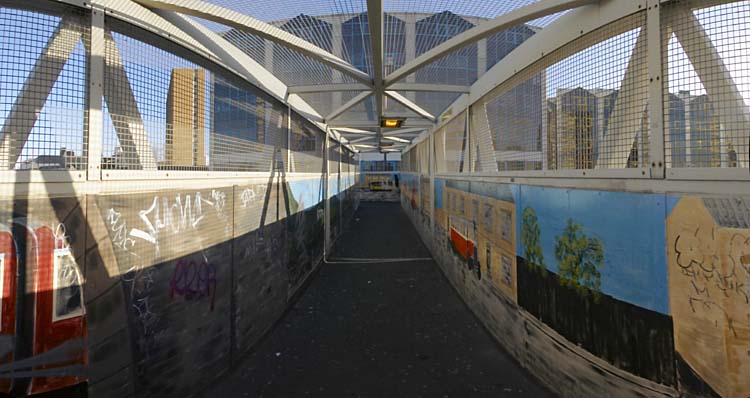
Footbridge at Stratford to Carpenters Estate

Back in 2005 many were still hoping that London would not win their bid to hold the Olympics, particularly those who lived in the area who could see how their lives would be disrupted by this huge event (though in the end it was far worse than they had imagined.)

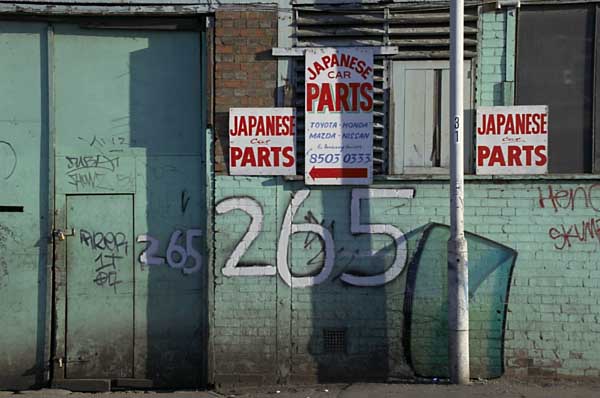
One of many businesses on Carpenters Road

They also saw how it would impact on the longer term development of the area. Many planners warned how it would distort the proper planning of the area and its future; although investment in the area was welcome, much or most of it would be put into white elephants which would have little long-term utility.

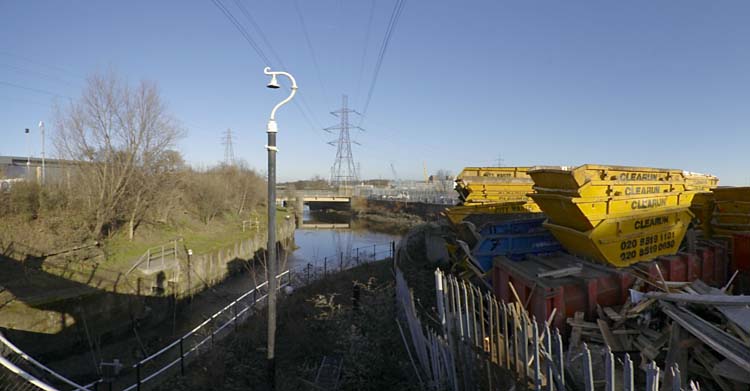
Waterworks River and Old River Lea at Carpenters Lock

On Sunday 23 January 2005 I took my bike with me to Stratford and cycled to the meeting point at Temple Mills for a tour of the Olympic area with No to London 2012, a coalition of east london community groups and social justice campaigners.

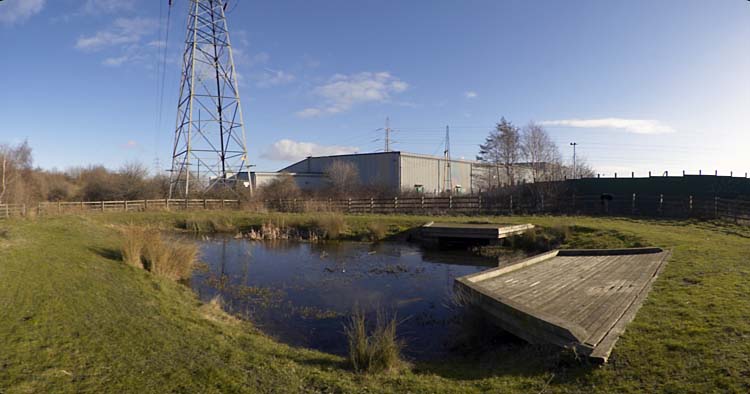
Bully Point Nature Reserve

Around 20 of us then took a walk around the area, getting some informative comments at a number of locations. As I remarked in my write-up of the event in My London Diary:

It was an opportunity that IOC delegates are not likely to have, with their view of these particular areas expected to be with a pair of binoculars from a distant tower block.

My London Diary: January 2005

I was already familiar with the area, having photographed around it since the 1980s, but still learnt a lot from some of those who spoke – and had just a little to add.

BMX track at Eastway Cycle Circuit is marked out

On our route around and also on my way to the meeting point I took the opportunity to take a few pictures, and after I’d sat down after the tour to eat my sandwiches by the Lea Navigation, to cycle to another area which was to be affected by the Olympics, Marsh Lane in Leyton, before making my way back to Stratford.

Wick Field, Hackney Wick

We were lucky with the weather, mild for January and with some sunshine, and I’d enjoyed the fairly short rides as well as the guided tour. I’d made several hundred pictures, including a number of panoramic images and felt I’d had a good day.

Leyton Marsh

Of course, London lost – and was condemned to host the Olympics. It was an event that caught the imagination of many of the public for the few weeks it was on, but has left a toxic legacy that will last decades.

You can see more of these pictures on My London Diary, where I’ve also written more about it.


All photographs on this and my other sites, unless otherwise stated, are taken by and copyright of Peter Marshall, and are available for reproduction or can be bought as prints.


Meridian 2

Continuing with pictures from my walk along the Greenwich Meridian in Greater London in 1984-6.

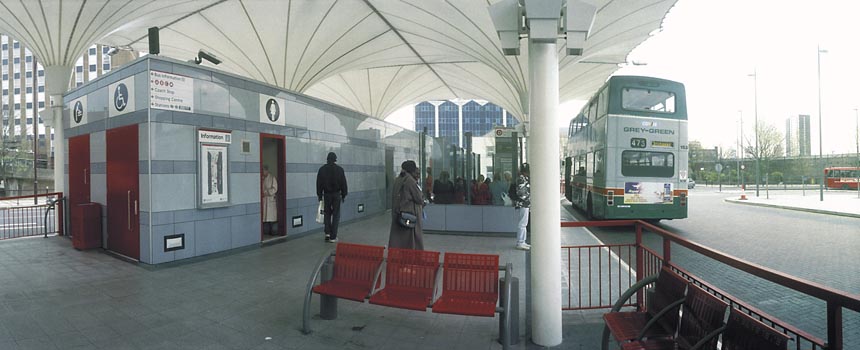
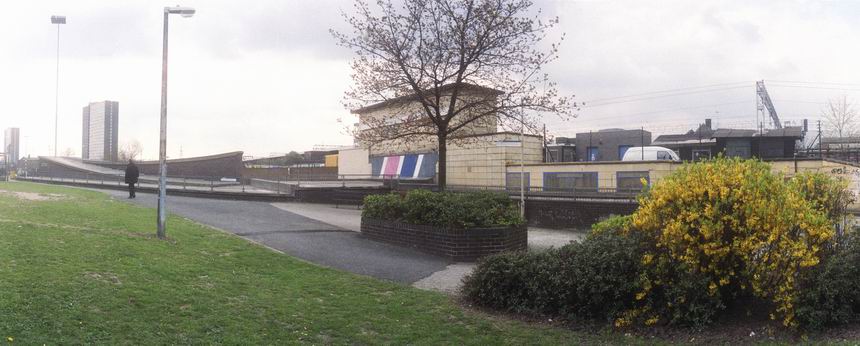
Stratford Bus Station – Peter Marshall, 1995

My walks took me as close to the line of the Meridian I had pencilled on my 1983 1:25000 OS map as possible, though that line may not have been quite exact. I think it goes through the area at the extreme left of the picture above, here just a few yards east of the roadway. My series of walks kept as close as possible to the pencil line, but it often runs through private property, buildings, across rivers etc and many detours, some quite lengthy were required.

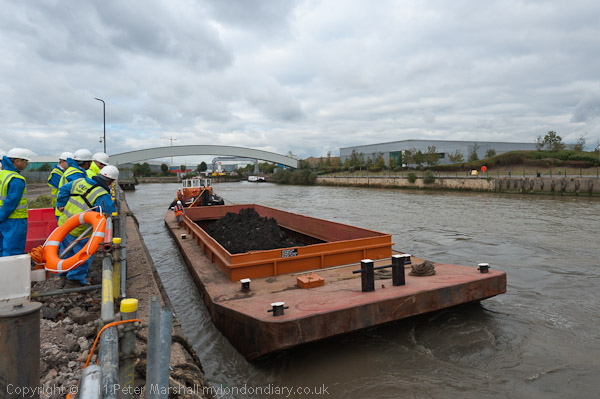
Barge carries contaminated earth from Poplar gasworks site, Peter Marshall, 2011

One of those fairly lengthy detours was north from Poplar, where the line ran through the gas works site and across Bow Creek. It wasn’t until 2011 that I was able to go onto the former gas works site, having been engaged to photograph the use of a barge to carry away the heavily contaminated soil from the site. The line crosses the river here, going through the left end of the large shed close to the opposite bank, near to Cody Dock. This is also part of a private business estate, though you can now walk along the roadways in it. There are several such areas I have been able to photograph in later years, but I won’t add any other later pictures to these posts.

Stratford Station – Peter Marshall, 1995

The line continues through the east end of Stratford Station.

Thinking of the line of the Meridian, I had decided it was appropriate to use a panoramic format, and these pictures were all taken with a swing lens panoramic camera. I think at the time I owned two such cameras, an expensive Japanese model and a cheap Russian one. The Russian was a little more temperamental and it was sometimes difficult to wind on the film, but had a much better viewfinder and I think was probably used for most of these. Both give negatives which are roughly the width of medium format film – 55-58mm – but only 24mm high, the limit of 35mm film, giving a roughly 2.3:1 aspect ratio. There is no discernible difference in image quality.

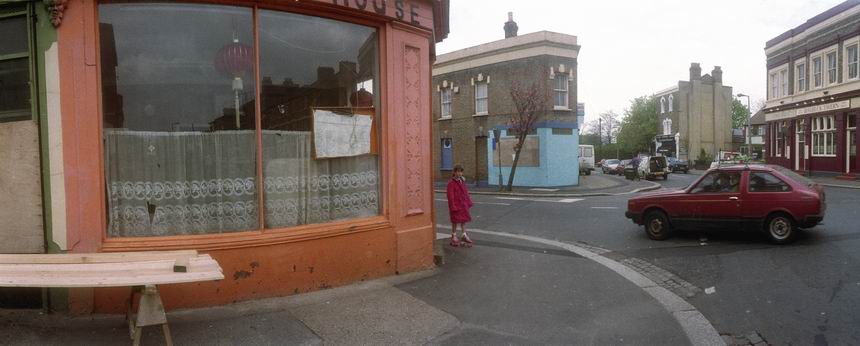
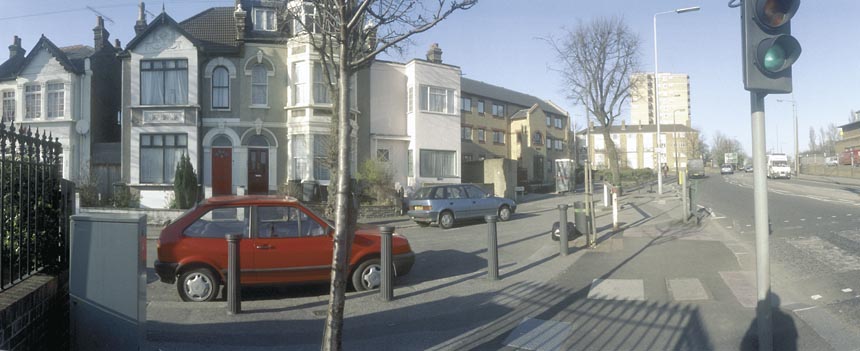
Langthorne Rd, Leyton – Peter Marshall, 1995

Both used 35mm film and curve it in the horizontal plane around a little over a third of the outside of a circle, with the lens pivoting roughly 130 degrees around the centre of that circle during the exposure. This keeps the distance between the centre of the lens and film constant, avoiding the distortion produced by using flat film, where the edges of the film are further from the lens node. This gives a very noticeable distortion with ultra-wide lenses, limiting them to an angle of view (horizontal) of roughly 100 degrees.

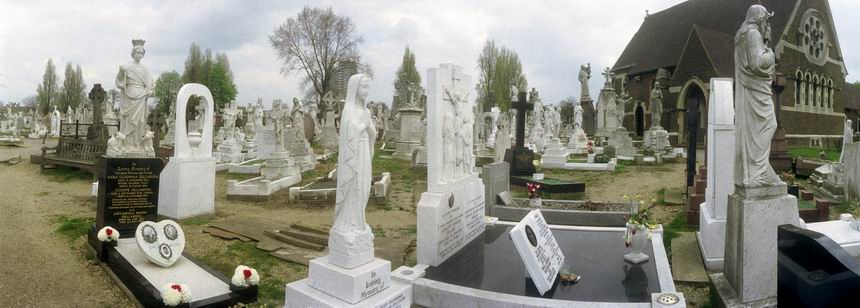
St Patrick’s Cemetery, Leyton

Swing lens cameras are limited in angle of view only by the mechanical limitations and can generally cover 130-140 degrees. But the curvature of the film does produce its own unique view. Assuming you keep the camera upright, straight vertical lines remain straight as the film is not curved vertically, but non-vertical lines show curvature, increasingly so as you move away from the centre of the film. You can see this clearly in the shop window in Langthorne Rd.

Whipps Cross – Peter Marshall, 1985

To be continued…