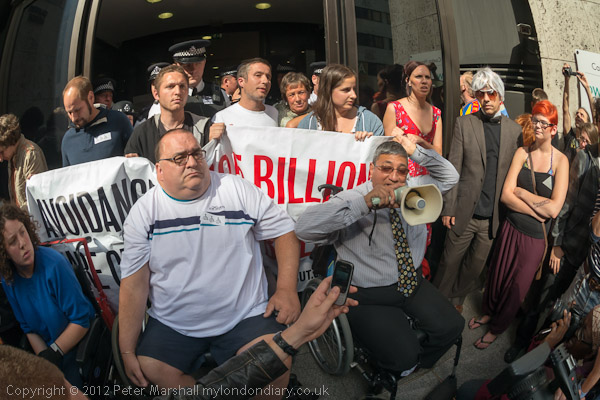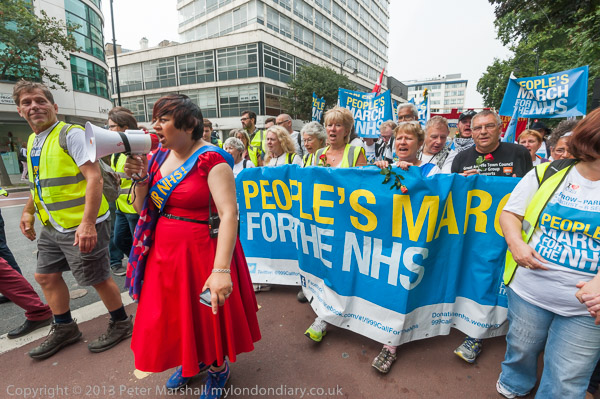
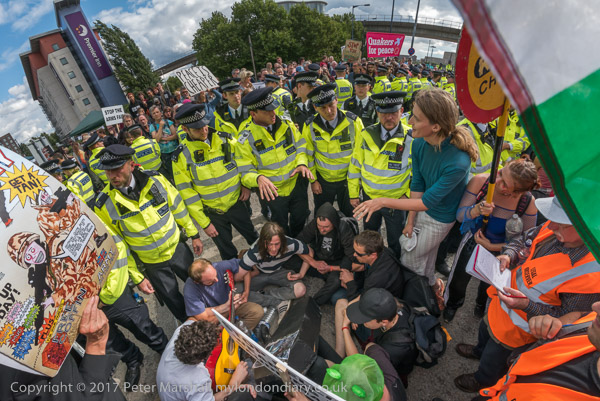
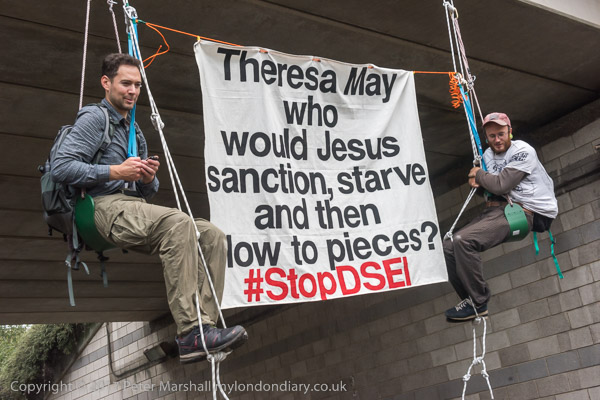
Although I first took pictures at protests in the 1970s, I had been taking part in protests since the middle of the 1960s. But I was then a penniless student with no idea about how you could cut costs by developing and printing your own films; I did own a camera, a Halina 35X, but had dropped it in the lake at Versailles and it never worked reliably after that, delivering random but usually very slow shutter speeds from its rusty leaf shutter.
Even after I had taken a short photographic course and got a job and could afford a new camera (a cheap Russian Zenith SLR) and had rigged up a temporary darkroom in the kitchen of our flat, I was still going on protests as a protester and took few if any photographs.
BBC
Of course there were fewer protests back in the 70s and 80s, or at least it was harder to find out about them in the days before the World Wide Web. There were of course huge events such as the Miners’ Strike, but unless you lived in the mining areas or could travel to them, which didn’t fit with my full-time job you read about most of these after the events were given newspaper coverage if at all. Many other protests related to strikes and union issues were simply impossible to know about unless they concerned your own union.
My attendance at protests was largely limited to the big national demonstrations organised by groups I belonged to – such as CND and the Anti-Apartheid movement and a few others that were advertised in advance in the alternative press. Many protests were only advertised by fly-posting on walls mainly in the areas they were to take place in – and there were few if any such postings in the area where I lived.
I began to be more a photographer of protests than an actual protester in the 1980s, particularly after a few of my photographs were accepted for an exhibition on protest (and I think one won a prize.) I began to realise that I could make a great contribution to the various causes with a camera than simply marching or attending rallies, and, a little later, began contributing my photographs to a picture library concerned with social issues, and later still providing my services directly to some protest groups.
As more and more people and groups went on-line things began to change. I found out about more and more protests, at first as groups set up web sites to promote their activities. I’d spend an evening or more a week going through a list of perhaps 20 or thirty different groups and using sites which listed bus and travel diversions and various search engines to find out about events and put them in my diary. Then Google arrived and made searching easier and finally Facebook and I had little time to photograph anything but protests.
The Free Nelson Mandela march in London was on Saturday 17th July 1988, the day before his 70th birthday and two years before he was released from prison. I walked with the protesters taking pictures from Camden Town to Hyde Park, and took a few pictures in the crowds in Hyde Park, but none of the stage and speakers at the rally. You can see more of the pictures in the Flickr album uploaded a couple of days ago. Clicking on any of the pictures above will take you to the larger version in the album.
All photographs on this and my other sites, unless otherwise stated, are taken by and copyright of Peter Marshall, and are available for reproduction or can be bought as prints.
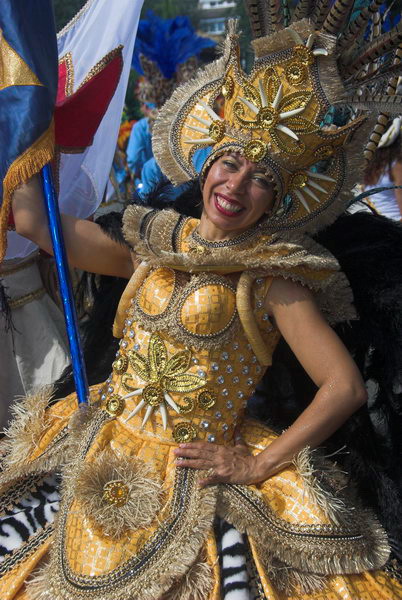
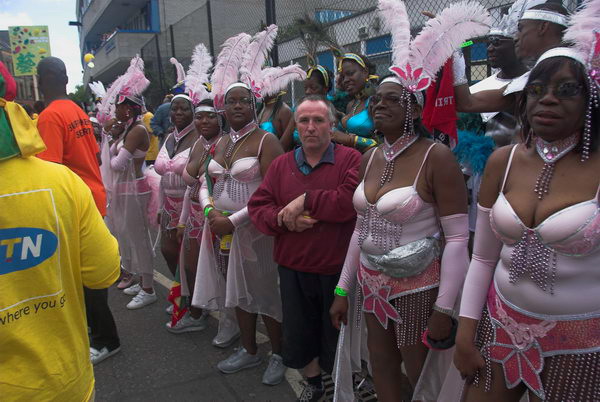
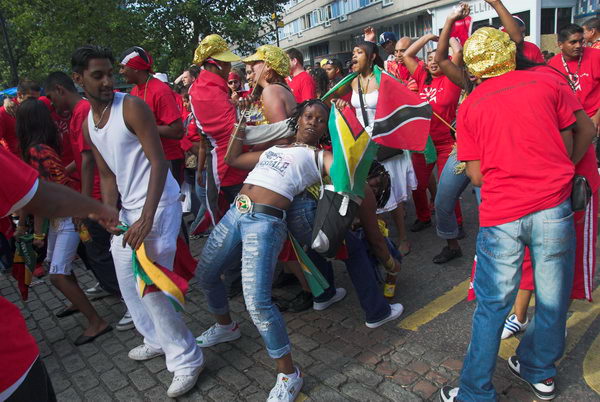
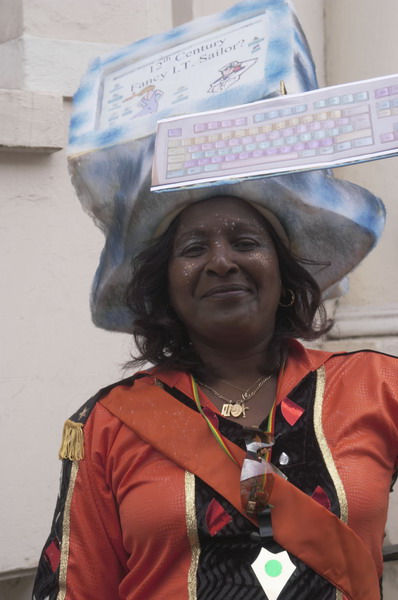
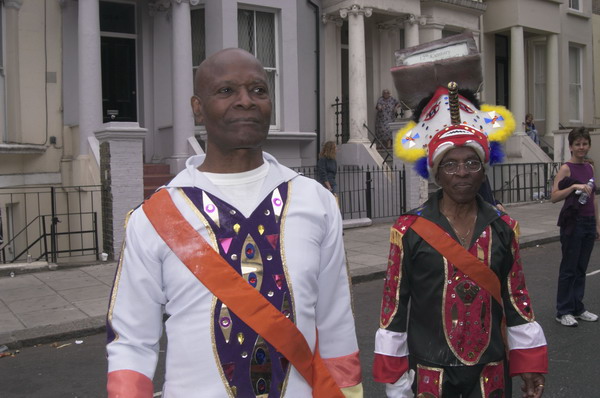
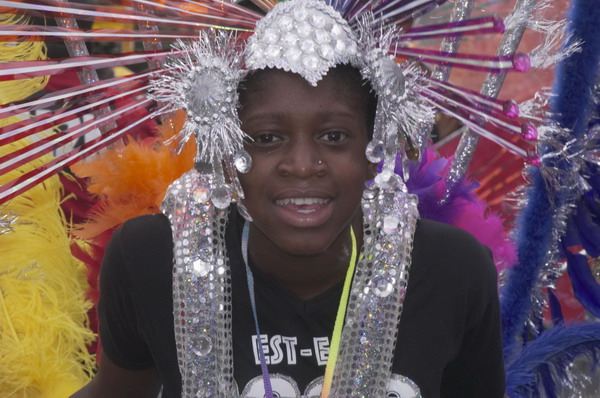
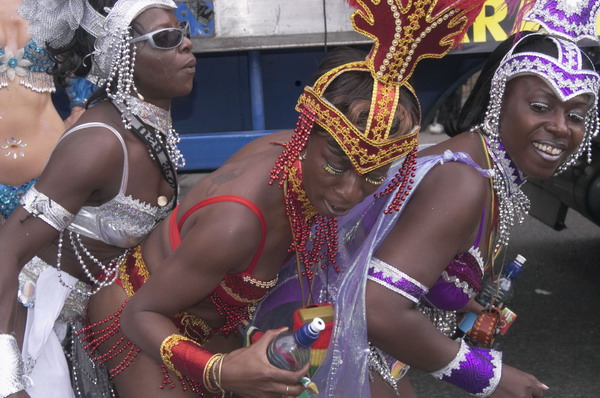
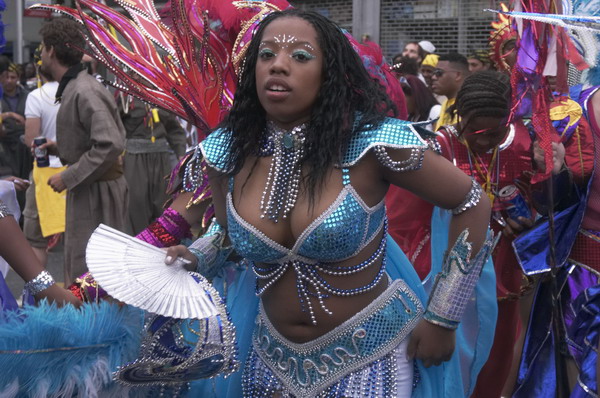
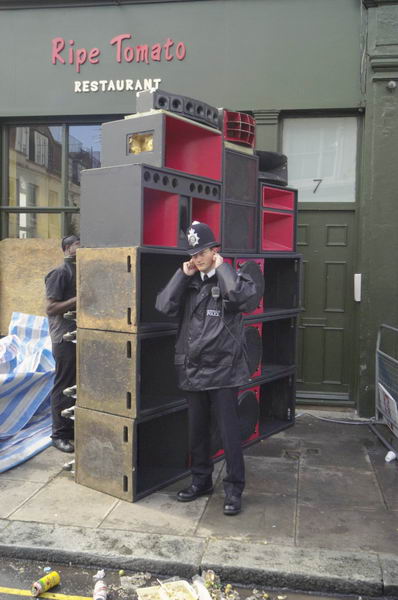
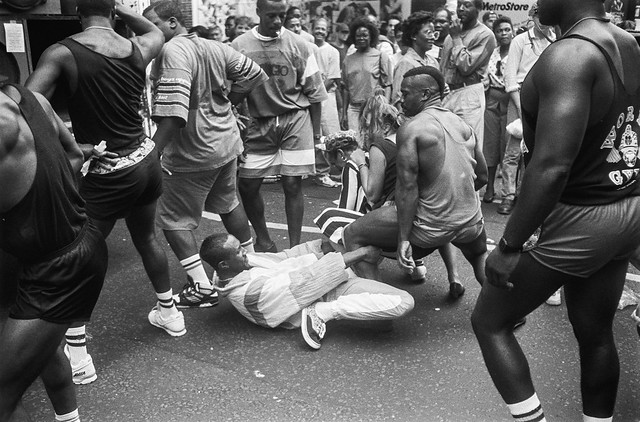
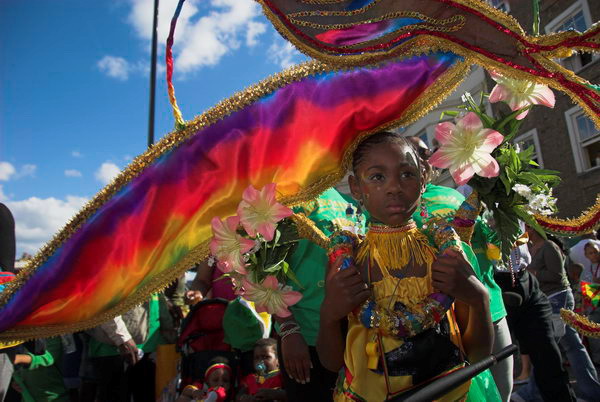
In 1994 I set out to photograph carnival both in black and white and in colour, and while my colour images concentrate on the people in the procession and their costumes, it was a little more varied than in previous years, with more overlap with the black and white work.
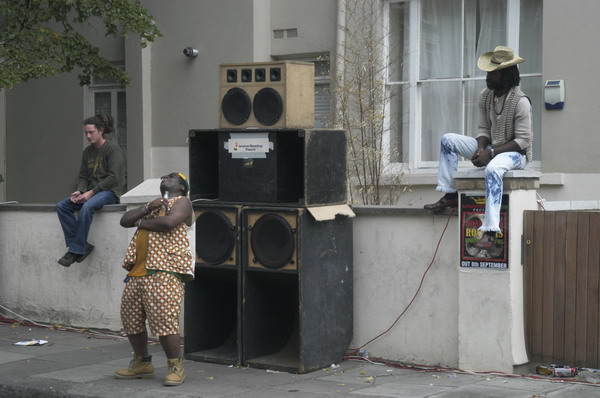
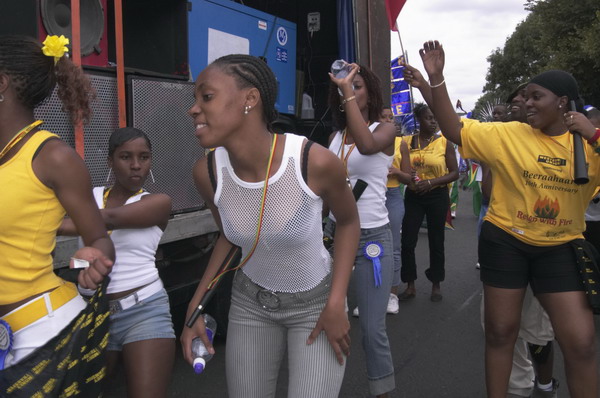
So I took some pictures of the people watching the carnival in colour and perhaps rather more than in previous years where the carnival was the background rather than the main subject.
I was working with colour negative film, and exposures were a little more critical than with black and white, which has greater latitude. There are some I could not get good prints from in the darkroom, and although digitising makes it a little easier there are still some where the colour is not as good as I would like.
But despite these problems I was encouraged by the results , and the following year for various reasons photographed Notting Hill almost entirely in colour.
There are around 60 colour pictures from 1994 beginning some way down page 6 of my Notting Hill in the 90s album and continuing onto the next page. Clicking on any of the pictures above will also take you to larger versions in this album.
All photographs on this and my other sites, unless otherwise stated, are taken by and copyright of Peter Marshall, and are available for reproduction or can be bought as prints.
Although my main project on Hull had really been completed with a show in the Ferens Art Gallery in 1983 I continued to make at least annual visits to the city, staying with my family at the home of my in-laws in north Hull just off Chants and Bricknell Ave.
While there I would go out for long walks around the city, often with my two sons and occasionally with other family members or on my own, but always with a camera (or two.) Mostly, as in June 1988, I was re-visiting areas already familiar to me but sometimes finding new things to photograph.
Our visit in 1988 was a short one, I think for the wedding of a god-daughter, and most or all of these pictures were taken on a long walk which began with a bus journey to the city centre and the Old Town and then went north along the streets close to the River Hull to Sculcoates, before returning, possibly on another day or by bus, to the city centre and Paragon Station.
Both my sons, then aged 7 and 9 were with me on the walk, and appear in photographs that I took, but only one is I think present in the pictures on line, hiding at the side of a bridge. I seldom photographed people on my walks at the time, prefering to concentrate on the buildings and cityscape, but there is one rare example in these pictures of a man leaning on a fence on the pavement in Carr Lane. Almost certainly he had watched me taking photographs and had asked me to take his picture.
I think I have managed to put the pictures more or less in the order in which they were taken, so those familiar with Hull can follow my wlak, although they will find some buildings have since been demolished.
All photographs on this and my other sites, unless otherwise stated, are taken by and copyright of Peter Marshall, and are available for reproduction or can be bought as prints.
I think I had gone to Liverpool St to see off some visitors from Germany who had been staying with us and we arrived at the station long before their train was due to leave for Harwich, so I took them to see Christ Chruch, which was then in the middle of building works. The air was rather dusty and the light a little dim, but the structure was still impressive, and we were greeted by one of the clergy who gave us a short conducted tour.
One of Nicholas Hawksmoor’s great pentagram of London churches much celebrated in the writings of Iain Sinclair, Peter Ackroyd and others it is a building I find more satisfying seen close too and at and angle as in this picture than in more prosaic and distant views.
Close to the church in Commercial Rd was this builidng, housing Peach and several other fashoion and clothing firms as well as The Colour Assembly litho printers. But I didn’t have long to take pictures as our visitors had a train to catch and we made our way back to Liverpool Street.
St Katharine’s Way, Wapping, Tower Hamlets, 1987
Afterwards I walked down to St Katherine’s Way, where some of the old warehouse buildings were being gutted and turned into flats, while keeping the basic facades. Miller’s Wharf dates from 1865, but once beyond the front wall is mostly from 1989. A 2 bed flat with a river view is currently for sale at £1.6m should you be looking to move.
Tower Bridge, River Thames, Thames Path, Wapping, Tower Hamlets, 1987
Just a few yards east is a part of the Thames Path from which you can get similar views (though only at ground level) without the huge price tag. Somewhere around this time I went with a group walking along the north bank of the river with the person from Tower Hamlets responsible for footpaths and we found then a number of places where there was supposed to be public access to the river had their gates locked. More recently when I’ve walked along here I think I have been able to access most or all of them.
I think this picture, which has police launches moored in the foreground is taken from Wapping New Stairs – which are of course very old.
Little remains of the old London Docks, with new housing covering much of the area, here alongside the ornamental canal which I think includes some sections of the old dock wall. I took two pictures from the road overlooking the canal, one concentrating on the south and the other the north side.
The two pictures actually overlap and can be joined to make a narrow panorama, though I don’t think I particular intended this when I took them.
The right of the picture is dominated by the large Wapping printing works of News International, the site of a protests for over a year from 1986-7 by the print unions against Murdoch. The strike ended in what seemed an inevitable defeat for the unions who were trying to prevent the introduction of new technology, moving away from the hot metal of Fleet St which employed several thousand type setters to litho printing which allowed journalists to directly input there stories.
All photographs on this and my other sites, unless otherwise stated, are taken by and copyright of Peter Marshall, and are available for reproduction or can be bought as prints.
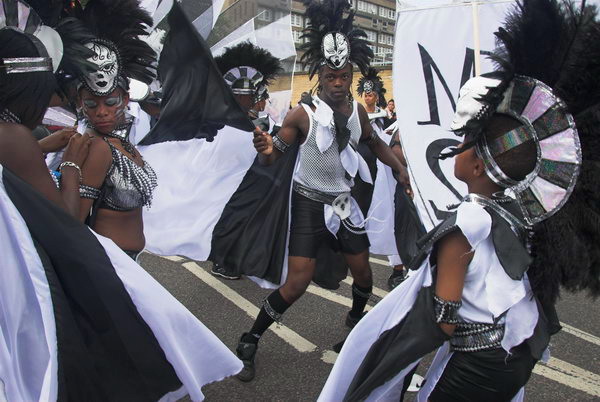
Although almost all the pictures I took at Notting Hill Carnival in 1993 were in black and white, I did make a few colour images, and here are a small selection.
Almost all of them were of the procession, and I think taken in a fairly short period of time, mainly on Ladbroke Grove.
I tried to cut my equipment to a minimum for carnival, partly to make it easier to move through the crowds, but also because I was just a little worried about taking what looked like camera bags full of expensive equipment to the event. And I wanted to be able to dance as I took pictures.
Instead of a normal camera bag, I took a small khaki canvas ex-army shoulder bag which I still use today when I want to travel light, issued in 1942 possibly for a gas mask, large enough to take a camera, one or two spare lenses, a decent supply of film, notebook, water bottle and a few oddments, which back in those days would usually include a Mars Bar for when my energy lagged, and sometimes a sandwich or two.
Probably when I saw some particularly attractive and colourful costumes and had finished a black and white film I picked a colour one to reload the camera – probably my Minolta CLE, a rather superior second version of the Leica CL which for some obscure reason Leitz decided not to put their name on, ending their collaboration with Minolta. I then took pictures quickly to finish the film so I could get back to my real work using black and white. I think that happened a couple of times on Children’s Day, but on the Monday I concentrated on more serious black and white work.
In crowds I always made sure to put the shoulder strap over my head and on one shoulder and hold the bag on my stomach so as not to get caught up behind me. I always kept the camera on a strap around my neck too. But generally the crowds were good-natured and in high spirits and I had no trouble taking pictures.
Just once, in the centre of a heaving crowd of dancers in front of a sound system I suddenly realised that someone had put their hand into my left trouser pocket. I grabbed it and held it there protesting, and slowly pulled it out to reveal it holding a wallet. But it wasn’t mine (I’d left that at home) and of course it had no money in it. I’m not sure why he was planting it on me, but pushed it back into the hand I was still firmly holding and told the guy to eff off and he ran off pushing through the crowd. It didn’t seem the place to investigate further.
All photographs on this and my other sites, unless otherwise stated, are taken by and copyright of Peter Marshall, and are available for reproduction or can be bought as prints.
The view from the bridge on Bishop’s Bridge Road is now rather different with the building over the canal having been replaced by a footbridge and an new entrance to Paddington station now obscuring the front of the station. You can still see the GWR Hotel and the canal, but the empty towpath has been much tidied and is now often thronged by people.
Paddington Basin and the area around the canal leading to it has been fairly dramatically redeveloped with tall blocks and leisure activities. There were few boats moving back when I took this picture and I think the rescue one in this picture was the only one I saw, though there may have been a few kayaks. Now the canal is rather busier, with small electric boats a popular but not cheap hire.
The bridge I was standing on was replaced by a wider modern bridge in 2006; shortly before it had been discovered that Brunel’s original 1839 iron bridge was still in place hidden under the 1906 structure – though its cast iron beams were clearly visible below. It was Brunel’s first iron bridge and of important historical and engineering interest but English Heritage agreed not to list it as it would have considerably affected the replacement plans; instead it was carefully dismantled and put into store on the understading it would be rebuilt for use as a footbridge across the canal around a hundred yards to the north.
Although planning permission was granted for this it never happened and the parts remain in a rather messy heap at English Heritage’s store at Fort Cumberland in Portsmouth, probably because the developers of the area preferred a nice modern and probably much cheaper design. Other former canalside artifacts removed at the same time with similar promises appear to have simply been lost, but the bridge was perhaps too large for that to happen.
Bishop’s Bridge Road only got its name after the Second World War, before which it had been simply Bishop’s Road, developed around the time the railway was built in 1836, replacing an earlier footpath. The Bishop was rather earlier, the manor of Paddington being given to Nicholas Ridley, Bishop of London by Edward VI around 1550.
Assembly of God Pentecostal Church, Harrow Rd, Maida Vale, Westminster, 1987
The Assembly of God Central Pentecostal Church on Harrow Road survived until 2015 on the edge of a huge area of high-rise development in North Paddington, but has now gone. It had moved to the ground floor of this building from the Edgware Road in 1946, and was relocated at a temporary site in Tresham Crescent in 2015 while Westminster Council built Dudley House, completed in November 2019. This provides 197 homes at ‘intermediate rent’ as well as new premises for the church, a secondary boy’s school and shops.
North Wharf Rd, Paddington, Westminster, 1987
You can see the curiously ugly QEQM (Queen Elizabeth the Queen Mother) building of Paddington’s Queen Mary’s Hospital towering above these simple but rather elegant buildings on North Wharf Road. That is still there but these buildings are long gone, replaced by towering glass fronted structures which now line Paddington Basin.
The redevelopment of this area, part of ‘Paddington Waterside’ began in the late 1990s and is now more or less complete, filled with high rise buildings. You can now stroll along beside the canal on both banks, while back in 1987 access was very limited. But the whole atmosphere of the area has changed. Although open to the public I think most or all of the open space is privately owned and some photographers, myself included, have been stopped taking pictures by security officers around Paddington Basin.
Warwick Avenue, Maida Vale, Westminster, 1987
Green Lane was named Warwick Rd on a plan made in 1827 and later became Warwick Avenue. There were some houses on it by 1840 and most of the rest were built shortly after, all rather grand and in an Italian style and covered in stucco. Many like this one which overlooks the canal basin at Little Venice are listed. The name ‘Warwick’ came from Jane Warwick of Warwick Hall, in Warwick-on-Eden in Cumbria, who in 1778 married the great-grandson of Sir John Frederick who had leased the land from the Bishop of London.
Just a few yards from the more industrial area around the canal at Paddington, this is at the southern edge of Maida Vale, an area which attracted many of the wealthier members of London’s Jewish population in the late nineteenth century.
Clifton Gardens, Maida Vale, Westminster, 1987
In the twentieth century parts of Maida Vale became one of London’s more respectable red-light areas. Large houses which were too expensive went into multi-occupation, let out as single rooms, usually sharing kitchens and bathrooms, and often became very run-down. Disruption of families by war and high levels of unemployment forced some women onto the streets where they would walk along keys dangling from their hands and invite passing gentlemen to take tea with them, though tea was apparently seldom served. But more recently the area has gone up in the world considerably again, and semidetached houses in the area sell for £5m or more.
Blomfield Rd, Maida Vale, Westminster, 1987
In 1805 Napoleon had defeated both Austrian and Russian armies at Austerlitz and forced Austria to sign a peace treaty and he had also made peace with Prussia. This left him free to try to conquer more of Italy and in particular the Kingdom of Naples, which despite a treaty of neutrality with France had allowed both Russian and British troops to land. Napoleon rapidly advanced and conquered much of that kingdom, with the King and government fleeing to Sicily along with the British troops. A British expeditionary force returned at the end of June to Calabria where there was an insurrection against the French occupation and on 4th July engaged with French forces at Maida.
The battle was was on a relatively small scale with around 5,000 troops on each side and only lasted a few hours before the French who had suffered heavy losses during a cavalry charge against superior British guns and muskets were forces to retreat in considerable disarray. The British commander, John Stuart, was given the title Count of Maida by the Italians and a pension of £1000 a year by the UK parliament as well as being made a Knight of the Bath.
Clifton Gardens, Maida Vale, Westminster, 1987
The victory on land against Napoleon’s forces who had been so successful elsewhere gave Britain a much-needed boost in morale, and gave both Maida Vale and Maida Hill their names.
There is now a pub in Shirland Rd named for Stuart, The Hero of Maida, but it was not built until 1878 and was then The Shirland Hotel, later becoming Idlewild and in 2014 the Truscott Arms. Opened under new owners in 2018 it was re-named ‘The Hero of Maida’.
All photographs on this and my other sites, unless otherwise stated, are taken by and copyright of Peter Marshall, and are available for reproduction or can be bought as prints.
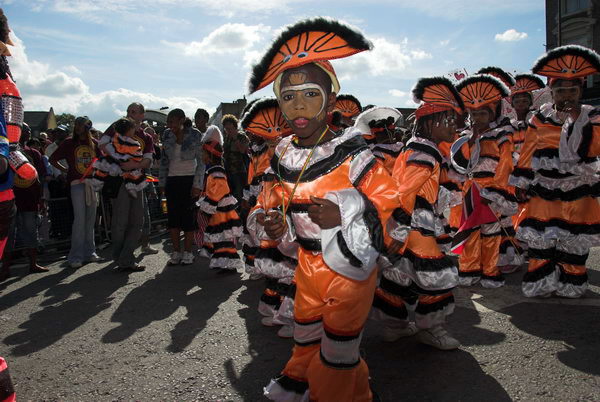
In 1991 I photographed Carnival in both black and white and in colour. I went on both days, but I think it was only on Sunday, the Children’s Day, that I took any colour pictures. Nearly all were taken on Ladbroke Grove as the floats and groups went down, often stopping for quite long periods.
I’ll post a few pictures here, but there are quite a few in the album, Notting Hill Carnival – the 1990s, starting at this one if you want to see more.
The picture above is the last colour image from 1991 in the album.
All photographs on this and my other sites, unless otherwise stated, are taken by and copyright of Peter Marshall, and are available for reproduction or can be bought as prints.
I’ve long been a fan of Willy Ronis (1910-2009) and in particular his pictures of Paris, particularly of the working-class areas of the north-east of the city, and have on several occasions written about him and the pictures I’ve taken on walks around the same areas as him. When in 2008 I was given a copy of his ‘La Traversée de Belleville’ at Le Bar floréal, published by them for his exhibition there in 1990, I found that I had already walked all of the streets on his route – though that didn’t stop me doing so again.
Peter Marshall 2008
It’s now some years since I last went to Paris, and every time I look at http://peter-marshall.com my pictures of the city which I first visited in 1966 I feel the urge to go again.
Peter Marshall 1984
Like most of a certain age and medical condition I’m still more or less banged up at home, though going out for walks and bike rides avoiding so far as possible any close contact with others apart from my wife. So unfortunately I won’t be going to Paris in the next month and so will miss the exhibition of 100 photos by Ronis at the galerie Argentic from October 3-17 2020 which I read about in The Eye of Photography a couple of days ago.
Peter Marshall 1973
Instead I’ll take the few books of his work I have down from my shelves and browse through them to renew my memory of his work. And perhaps read again some of the posts I’ve made that mention him, including Retour en Lorraine, bar Floréal & Willy Ronis and the shortened version of my essay on him from 2003 that I republished in a post on the occasion of his death in 2009.
Peter Marshall 2006
Here I’ve posted a few of my own pictures of Paris, very different from the work of Ronis which you can see a good selection of at the Peter Fetterman gallery. There is a video of an interesting talk by Matthieu Rivallin about his life at Hong Kong University, as well as many other short videos about him and his work available on line.
Grade II listed Minerva House on the North Crescent of Chenies St , architect George Vernon, was built in 1912-3 for the Minerva Motor company which had begun in Belgium making bicylces before moving on to motorbikes and cars. One of its English dealers in 1903 was Charles Rolls, who the following year joined up with Henry Royce to sell his cars. In 1910 he became the first Briton to be killed in a crash by a powered aircraft when his Wright Flyer lost its tail during an air display in Bournemouth.
When I took this picture Minerva House was the Combined Training School for University College Hospital, training around 300 nurses a year. Since Minerva was the Roman Goddess of poetry, medicine, wisdom, strategic warfare, commerce, weaving, and the crafts this seems appropriate. She was also supposed to have created the olive tree and invented the flute and numbers. Minerva House is now the London home of global media agency OMD.
At right is the bleak Chenies Street concrete blockhouse entrance to the deep-level air raid shelter built in 1942, currently called ‘The Eisenhower Centre’ though it had no real wartime connection to the General. Before the war Minerva House looked out onto gardens.
19 Pembridge Gardens was obviously in rather poor condition in 1987 when I took this picture, with peeling paint and trees growing up in odd places. The house was empty, its front door secured by two padlocks. It had been Grade II listed three years before I photographed it.
It looks in rather better condition now, and it should be as it appears to be home to a firm of “well-established Expert decorators.” Though I think it a shame not to have retained what is I think an illuminated house number above the door.
It’s hard to count the number of bells at the left of the door to this house just a couple of doors up from the house in previous picture, but then obviously in rather better condition. There are 15 of them on the five floors of this house. Built in the mid 19th century (with a later top floor) it was also Grade II listed in 1974.
A neatly aligned sign indented in the rendering on the wall of an end terrace house in Portobello road still informs us
A. DAVEY. BUILDER. M A N U F A C T U R E R O F EVERY DESCRIPTION OF INSIDE AND OUTSIDE WINDOW BLINDS. UPHOLSTERER AND DECORATER ESTABLISHED 1851.
though I’m sure he was well gone from the premises when I photographed them 136 years later.
Davey the builder was probably one of the original occupiers of this long purpose-built terrace of shops which were developed in 1848-9 by the Rev Brooke Edward Bridges and Thomas Pocock who had bought the land for ‘Portobello Terrace’ from Felix Ladbroke; they were built by various local builders to a similar plan, with a ground floor shop and two floors above for the shopkeeper and his family. More recently extra doors have been added and the upper floors are largely let as expensive flats.
Looking at the text of the sign I think the lettering was probably stamped out while the rendering was still damp rather than cut out. It has certainly lasted well and can hardly be called a ‘ghost sign’. Fitting in some of the longer text was obviously rather tricky and there are just a few places where the letter spacing seems not to be optimal. Though generally rather better than my crude attempt above.
Dodo and this sign were at 185 Westbourne Grove, no longer something Antiques but now occupied by American Vintage, but Dodo is certainly no longer at 3 Denbigh Rd, a short distance to the west just off Westbourne Grove. You can see a picture of this row of shops with Dodo in place on the RBK Local Studies web site which takes a photographic stroll down Westbourn Grove and comments rather inaccurately “In the centre of the picture a shop called Dodo Designs, wholesalers of fancy goods.”
Dodo, set up by “London’s acknowledged queen of advertising ephemera” Liz Farrow has been “selling genuine vintage advertising posters since 1960” and is still doing so through the Dodo Posters web site.
Just around the corner in Ledbury Rd is this row of shops with an entry to Ledbury Mews North. This whole area had a large number of antique shops but now seems largely devoted to fashion.
No 38 to the right of the mews entrance is certainly an attractive building, but I think what particularly attracted me is the lion on the pavement in front of Lacy Gallery – which has of course gone with the Gallery, that shop now split back into two different businesses.
Apart from my obsession with doorways which will have become obvious to regular readers of my posts, there are various other sub-themes in my work on London, some explored in black and white, others in the colour work and some in both.
One of these was the various different representations of the human body, both two and three-dimensional, as in the robot, dress forms and corsetry advertising in these pictures.
I think I also photographed two of these in colour, and certainly my colour pictures at the time include a remarkable number of shop windows containing heads without bodies.
Urns and other sculptural detail and ornaments were also something I felt worth recording.
One of the photographers whose work I greatly admire is Eugène Atget and his work contains many such images particularly those in grand gardens such as the Parc St Cloud, and in 1984 I had spent several weeks photographing Paris in a homage to his work which you can see in my book In Search Of Atget – the preview there includes many of the best images.
These pictures are from page 5 of my Flickr album 1987 London Photos and clicking on any of them will take you to a larger version there which will also tell you where they were taken.
All photographs on this and my other sites, unless otherwise stated, are taken by and copyright of Peter Marshall, and are available for reproduction or can be bought as prints.