Another Chelsea Walk – 1988

Church Of The Ñazarene, Grant Rd, Battersea, Wandsworth, 1988 88-5j-54-positive_2400
Church Of The Ñazarene, Grant Rd, Battersea, Wandsworth, 1988 88-5j-54

I returned for another walk in Chelsea, taking the train to Clapham Junction and taking a few pictures on my short walk to the bus stop of the Church Of The Ñazarene close to the north entrance to the station on Grant Road. The church, a twelve-sided building by Green Lloyd Adams was built in 1970 on the edge of the Winstanley Estate, developed by Battersea Council in the 1960s. The lettering on the ramp ‘JESUS SAID I AM THE WAY’ is designed for maximum size rather than typographical nicety.

Currently extensive building work is being carried out to considerably extend the church, though its future may be threatened if Crossrail 2 goes ahead. Of the two pictures I made I preferred a view across the small area with seats to a cleaner architectural view also included in the album.

Falcon Rd, Battersea, Wandsworth, 1988 88-5j-55-positive_2400
Falcon Rd, Battersea, Wandsworth, 1988 88-5j-55

On the bus I took advantage of an unusually clean front window on the upper deck to take a photograph of Falcon Road with the Queen Victoria pub. Also apparently known as ‘Spikey Hedghog’ the pub which had been there since the 1860s closed permanently in 1999 and was demolished to build the 8 flats of St Luke’s Court.

The picture also includes a falcon – both image and text on the side of a lorry. Elsewhere you can read a short post Falcon Road – a Memory of Battersea by someone who grew up living in the pub which gives an idea what the area was like, probably in the 1950s.

Beaufort St, Chelsea, Kensington & Chelsea, 1988 88-5j-45-positive_2400
Beaufort St, Chelsea, Kensington & Chelsea, 1988 88-5j-45

I got off the bus in Beaufort St in Chelsea and photographed this doorway there before walking along Cheyne Walk. Although the door is on Beaufort St, this is Belle Vue Lodge with the address 91 Cheyne Walk. It gets a lengthy mention in the Survey of London, first published in 1913 which suggests it dates from before 1771. It states that in 1829 it was occupied by “Luke Thomas Flood, who was a great benefactor to the parish. He was evidently a friend of the historian, for he addressed some lines to him, which conclude with the halting line ‘Sweet Chelsea shall ever live in thee.’ Flood Street was named after him, and his benefactions are celebrated at the parish church by a service on January 13th,—’Flood’s Day.'”

Houseboats, River Thames, Chelsea Embankment, Chelsea, Kensington & Chelsea, 1988 88-5j-32-positive_2400
Houseboats, River Thames, Chelsea Embankment, Chelsea, Kensington & Chelsea, 1988 88-5j-32

I walked across Cheyne Walk to make a photograph over the roofs of houseboats at the moorings, looking towards Chelsea Harbour and at left the Rank Hovis flour mills at Battersea and the Battersea Rail bridge. Then I think only used by goods trains this now carries frequent services of the London Overground as well as Thameslink trains.

Cheyne Walk, Chelsea, Kensington & Chelsea, 1988 88-5j-33-positive_2400
Cheyne Walk, Chelsea, Kensington & Chelsea, 1988 88-5j-33

I took a picture of houses in Cheyne Row. That at left is No 104 with two blue plaques, for the artist Walter Greaves (1846-1930) and Anglo-French ‘Poet, essayist and historian’ Hilaire Belloc (1870-1953) whose poem Jim (who ran away from his Nurse and was eaten by a Lion) ends with the famous lines:
‘And always keep ahold of nurse
For fear of finding something worse.’

No 104 doesn’t get a mention in the Survey of London, but No 100 at right of the picture is part of Lindsey House which it suggests was “rebuilt much in its present external form by the third Earl of Lindsey in 1674” but then divided into separate houses as 95-100 around 1775. It gets a very long entry.

Beaufort St, Chelsea, Kensington & Chelsea, 1988 88-5j-22-positive_2400
Beaufort St, Chelsea, Kensington & Chelsea, 1988 88-5j-22

I walked back up Beaufort St, passing a long row of frontages with identical garden ornaments which I think is Beaufort Mansions, though the gardens now have hedges. I think these mansion flats probably date from around 1890.
Shop window, Kings Rd, Chelsea, Kensington & Chelsea, 1988 88-5j-23-positive_2400
Shop window, Kings Rd, Chelsea, Kensington & Chelsea, 1988 88-5j-23

I was on my way to take a few more photographs on the King’s Road, including a several shop interiors. I think the name of the shop is on the wall at left, part hidden, Pineapple.

More pictures from this walk in a later post.


Click on any of the images above to go to a larger version in my album 1988 London Photos from where you can browse other images in the album.


Dovehouse Green, Chelsea Square & Upper Cheyne Row 1988

Millars Obelisk, Dovehouse Green, Chelsea, Kensington & Chelsea, 1988  88-5i-54-positive_2400
Millars Obelisk, Dovehouse Green, Chelsea, Kensington & Chelsea, 1988 88-5i-54

Dovehouse Green was the name given to the King’s Road Burial Ground on the corner of Dovehouse St and King’s Road when it was improved by the Chelsea Society and Kensington & Chelsea council to celebrate the the Queen’s Silver Jubilee and the Golden Jubilee of the society in 1977. The area was given to the parish by Sir Hans Sloane in 1727 and opened as a burial ground in 1736. Chelsea soon outgrew this small area and a new burial ground was opened on the east side of Sydney St in 1812 and there were no more interments here other than in existing family tombs.

The Millar Obelisk which became the centrepiece of this small public park was erected in the old burial ground in 1751, by the wealthy leading bookseller and publisher Andrew Millar to mark the family burial place. Buried close to it were three of his children who died before it was erected and Millar himself who died in 1768 and his wife who outlived him by 20 years. You can read more at Millar’s obelisk, a post by Baldwin Hamey on London Details.

The park has been refurbished a couple of times since I made this picture, but its basic layout remains. On the other side of Dovehouse St is Chelsea Fire Station with its tower. If Crossrail 2 is ever built this may be the site of a station on it. Dovehouse street got its name around 1880, having previously been called Arthur St; I think the name was probably ‘borrowed’ from an early Dovehouse Close some distance away on the other side of King’s Rd. Just to the north of the burial ground was the workhouse for St Luke’s Parish, Chelsea, demolished in the 1970s.

Chelsea Square, Chelsea, Kensington & Chelsea, 1988  88-5i-42-positive_2400
Chelsea Square, Chelsea, Kensington & Chelsea, 1988 88-5i-42

Chelsea Square is a couple of hundred metres to the northwest of Dovehouse Green, though a little further to walk. It was developed as Trafalgar Square in 1810, five years after the battle, with houses around a garden designed to encourage wealthier people to move to Chelsea, then something of a slum. The area came to the Cadogan estate when the lease ran out in 1928 and they redeveloped the area replacing the existing houses from 1931 and building on around a quarter of the garden. New houses were according to the Victoria County History, “designed in early Georgian style by Darcy Braddell and Humphrey Deane, and built of pinkish stock brick, with bright red brick dressings and green-glazed tiles.” and “neo-Regency villas in white stucco… designed by Oliver Hill and built in 1930 and 1934.”

Chelsea Square, Chelsea, Kensington & Chelsea, 1988  88-5i-55-positive_2400
Chelsea Square, Chelsea, Kensington & Chelsea, 1988 88-5i-55

Presumably to avoid confusion with the rather better known Trafalgar Square in Westminster it was renamed Chelsea Square in 1938. Many other duplicated London street names were also replace at the time.

Church of Our Most Holy Redeemer and St Thomas More, Cheyne Row, Chelsea, Kensington & Chelsea, 1988  88-5i-61-positive_2400
Church of Our Most Holy Redeemer and St Thomas More, Cheyne Row, Chelsea, Kensington & Chelsea, 1988 88-5i-61

Designed by Edward Goodie, this Grade II listed Roman Catholic church opened in 1895. It gained the dedication to St Thomas More after he was made a saint in 1935. Damaged by bombing in 1940, it was repaired after the war. Much internal work was carried out in the 1970s.

The Studio,  Upper Cheyne Row, Lawrence St, Chelsea, Kensington & Chelsea, 1988  88-5i-62-positive_2400
The Studios, Upper Cheyne Row, Lawrence St, Chelsea, Kensington & Chelsea, 1988 88-5i-62

Upper Cheyne Row is sometimes referred to as Millionaires’ Row, though that would now apply to most London streets. One house here was recently on the market for £22m. The sign ‘The Studios’ on No 27 has now gone.

Chelsea Pottery, plaque, Lawrence St, Chelsea, Kensington & Chelsea, 1988 88-5i-63-positive_2400
Chelsea Pottery, plaque, Lawrence St, Chelsea, Kensington & Chelsea, 1988 88-5i-63

The LCC square blue plaque which can just be seen on 16 Lawrence St has the message ‘CHELSEA CHINA WAS MANUFACTURED IN A HOUSE AT THE NORTH END OF LAWRENCE STREET 1745-1784
TOBIAS SMOLLETT NOVELIST ALSO LIVE IN PART OF THE HOUSE 1750 TO 1762′. You can read more about Lawrence St from the article on ‘A London inheritance’ Lawrence Street And Chelsea China.


Click on any of the images above to go to a larger version in my album 1988 London Photos from where you can browse other images in the album.


Glebe Place and Carlyle Square 1988

Glebe Place, Chelsea, Kensington & Chelsea, 1988 88-5i-52-positive_2400
Glebe Place, Chelsea, Kensington & Chelsea, 1988 88-5i-52

Glebe Place on the southern side of the King’s Road is a curious street with two right-angle bends and includes a series of artists studios, some grander than others, and its residents over the years have included a huge list of artists and writers – Wikipedia lists around 30 – as well as Paul Robeson, Shirley Williams and Constant Lambert.

I don’t remember outside which house I found this rather fierce sculpture which I think is no longer present.

Glebe Place, Chelsea, Kensington & Chelsea, 1988 88-5i-51-positive_2400
Glebe Place, Chelsea, Kensington & Chelsea, 1988 88-5i-51

25 and 25a Glebe Place. The heraldic lions have since left and the roof has been replaced. No 25 was the home of artist George Washington Lambert (1873-1930) who was born in Russia, educated in Somerset and emigrated with his mother and sisters to Australia in 1887. There he began exhibiting paintings and working as a cartoonist and illustrator. In the 1900s he spent a year in Paris, then moved to London; in the First World War he was an official Australian war artist, and he returned to Australia in 1921. His second son, Constant Lambert (1905-51), a notable British composer, was born in London in 1905 and also lived here; he was the Founder Music Director of the Royal Ballet.

Carlyle Square, Chelsea, Kensington & Chelsea, 1988 88-5i-34-positive_2400
Carlyle Square, Chelsea, Kensington & Chelsea, 1988 88-5i-34

The houses at left of the picture are the pair at the north end of the east side, No 27 and 28 and to the right of them are the doors of No 25 and 24 on the north side.

Carlyle Square, Chelsea, Kensington & Chelsea, 1988 88-5i-35-positive_2400
Carlyle Square, Chelsea, Kensington & Chelsea, 1988 88-5i-35

This rather agonised looking sculpture on the balcony was at No 28 but is no longer present.

Carlyle Square was laid out by the Cadogan Estate in the 1830s after Lord Cadogan bought the land on the north side of King’s Road in 1835, quickly clearing it of the existing small houses and cottages and laying out Oakley Square around an ornamental garden. But development of the square was slow. As originally set out, there were entrances for vehicles from both the east and west sides to King’s Road; more recently an area of garden separates the square from King’s Road, allowing only pedestrian entrance, with vehicle entrance being only from Old Church St.

Development began with short terraces of 3 houses on both the east and west sides next to King’s Rd, all now Grade II listed. They were followed in 1855 by a couple of semi-detached villas on the west side and around 1860 the north side of the square was largely completed with some varied houses. The remaining gaps – including most of its east side – were completed not long after, mainly with large identical semi-detached houses with a few feet gap between them.
Among notable residents over the years were Osbert and Sacheverell Sitwell, William Walton, Sybil Thorndike, Edna O’Brien and David Frost (who held an annual summer party for some years in the garden.) No 21 was built for the Duke of Portland around 1860, and a later Duke of Portland who was Chair of the Joint Intelligence Committee during WW2 was still in residence.

Carlyle Square, Chelsea, Kensington & Chelsea, 1988 88-5i-22-positive_2400
Carlyle Square, Chelsea, Kensington & Chelsea, 1988 88-5i-22

Bushes carefully trimmed in pots under the windows of No 22.

Carlyle Square, Chelsea, Kensington & Chelsea, 1988 88-5i-24-positive_2400
Carlyle Square, Chelsea, Kensington & Chelsea, 1988 88-5i-24

This rather splendid tree is I think a fig tree and is still present – along with the pots at No 22 on the south-facing north of the square.

Carlyle Square, Chelsea, Kensington & Chelsea, 1988 88-5i-33-positive_2400
Carlyle Square, Chelsea, Kensington & Chelsea, 1988

No 37-40 have walls and gate posts like this, and this is the entrance of 38. Most of the rest of the houses on the east and west side have plain iron railings.


Click on any of the images above to go to a larger version in my album 1988 London Photos from where you can browse other images in the album.


Sri Guru Singh Sabha Gurdwara 2005

Sixteen years ago on Saturday 1st October 2005 I was fortunate to be able to go with friends from the now long defunct London Arts Café on a visit to the Sri Guru Singh Sabha Gurdwara completed in Southall in 2003 with the building’s architect Richard Adams of Architect Co-Partnership and one of the Sikh volunteer guides. The temple, built with over £17m of local donations was said to be the largest in the western hemisphere, intended to be “a temple second only to the Golden Temple in Amritsar, with a life expectancy of a minimum of 100 years“.

The architects had won the commission in open competition and working with the Sikh community and had produced what I described as “a building suited to their needs, and it does so impressively:clean simple surfaces, powerful colour in the windows and light streaming into the central stairway and lobby from the large window and glass roof areas.” I hope my pictures convey something of this.

Here’s some of the text I wrote about the visit at the time, when I was posting entirely in lower case:

the sri guru singh sabha gurdwara serves the community, both for workship and for other needs. as well as a vast prayer hall officially capable of seating up to 3,000 people (and actually holding rather more at major festivals) there is a fine marriage room, and various other facilities including a langar (dining hall); this free community kitchen can serve over 20,000 vegetarian meals over a festival weekend.

the gurdwara had a powerfully religious atmosphere. on entering we followed the customary practice of removing our shoes, covering our heads with the scarves provided and washing our hands before commencing our visit. at various points both our guide and the architect explained how the building served the basic sikh tenets of service, humility and equality, and also the spiritual guidance from the sri guru granth sahib, the religious writings which are were appointed as spiritual head of the sikh religion, the eternal guru, by guru gobind singh around three hundred years ago.

although the architecture and the prayer hall in particular were impressive, what made the strongest impression on me was the kitchen, especially the team of women working together. the food was excellent, a real pleasure to eat, although my still rather painful knee made it easier for me to stand and eat at one of the tables rather than in the traditional manner seated on the floor. although food is free, those eating may perform some service to the temple in thanks for their food, or give an donation of some kind, which we gladly did.

southall is now britain’s holy city, apparently with places of worship for over 50 religions or denominations. brother daniel faivre’s ‘glimpses of a holy city’ published in 2001 after more than 20 years of living in southall gives a good insight into some of this diversity.

More pictures on My London Diary.


All photographs on this and my other sites, unless otherwise stated, are taken by and copyright of Peter Marshall, and are available for reproduction or can be bought as prints.


30 Sept 2007 – Two Religious Events

Martydom of Ali

On Sunday 30th September 2007 I photographed two events in London connected with religion, the first Muslim and the second organised by Christian Aid.

Shia Muslims hold a large parade every year mourn the martydom of Ali, a cousin who grew up the the house of the prophet Muhammad and was one of the first to profess his belief when the prophet disclosed his divine revelation when Ali was around ten years old. Later he married Muhammad’s daughter Fatimah and was a great warrior and leader and one of the foremost Islamic scholars.

Ali was elected as the fourth Caliph at a time when civil wars were taking place between Muslims following the death of his predecessor, and he fought in a number of battles, eventually being assassinated in 661 CE by a member of a group who regarded him as a heretic while praying in the mosque at Kufa, now in Iraq. Many of the details of events around this time are disputed.

Ali is one of the central figures of Shia Islam and they regard him as having been the rightful successor to Muhammad while Sunni Muslims supported the father-in-law of Muhammad, Abu Bakr who became the first Caliph. The split led to various battles but only became a schism almost 20 years after Ali’s death, when Ali’s son Husayn and family were killed at the Battle of Karbala in 680 CE.

The ceremonies which involve a procession with an elaborate flower-decorated coffin, and tall banners about Ali, began at Marble Arch with a long period of mourning. There was much beating of breasts and then a procession moving very slowly down Park Lane with much continued mourning and beating of breasts. The men march in one group and then the women behind them, the two groups separated by the bier. Many of the men are stripped to the waist and their bodies become reddened by their powerful beating.

It’s an impressive event which I photographed on several occasions. The stewards at the event have sometimes told me “We do not photograph the ladies” but I’ve also had emails from some of the women thanking me for recording their participation in the ceremony.

Cut the Carbon

An event of a very different nature was taking place at St Mary’s Battersea, a church with fine views across the River Thames that Turner sat at window above the entrance to record – and a window inside remembers him, with another for William Blake, along with some splendid monuments, one with a relief illustrating Edward Wynter’s feats of crushing a tiger to death and overcoming 60 mounted moors.

I was there with others to photograph the arrival of Christian Aid’s ‘cut the carbon’ march, arriving in London at the end of a thousand mile journey from Bangor in Northern Ireland via Belfast, Edinburgh, Newcastle On Tyne, Leeds, Birmingham and Cardiff to London – including a detour to meet Prime Minister Gordon Brown at the Labour Party conference in Bournemouth. The following day they were going on to City Hall and then to finish at St Paul’s Cathedral.

This was a march 14 years ago with an international perspective on climate change, with walkers from Brazil, El Salvador, Kenya, India, Bangladesh, South Africa, Congo and elsewhere. When I photographed it the following day in front of Tower Bridge it was led by marchers from Brazil representing an organisation of landless farm workers – and I was very pleased a few months later to include picture of them in my show on environment protests as a part of Foto Arte 2007 in Brasilia.

More at:
Mourning the Martydom of Ali
Cut the Carbon march

and on October 1st 2007
Christian aid Cut the Carbon march – final mile


All photographs on this and my other sites, unless otherwise stated, are taken by and copyright of Peter Marshall, and are available for reproduction or can be bought as prints.


At the LSE – Sept 29, 2016

I’d gone to the LSE to attend a session in the LSE’s 3-day ‘Resist’ festival organised by Lisa McKenzie, then a research fellow in the Department of Sociology there, though I imagine that this was one of several reasons her contract was not renewed. It’s OK if your work is purely academic, or if it supports the kind of people and companies that fund universities, but anything practical which supports the working classes is definitely infra-dig.

At the end of the session (more about it below) McKenzie called upon Petros Elia, General Secretary of the United Voices of the World trade union to which many of the LSE cleaners now belong. He accused the management of the LSE of failing to protect the interests of cleaners working there who they have outsourced to a cleaning contractor in a cost-cutting exercise without insisting on decent working conditions and conditions of service. He invited all present to a meeting to discuss action by the cleaners which was to be held as a part of the Resist festival later that day. I hadn’t intended to stay for that, but decided to do so.

Covid has made many re-evaluate the contributions of many low-paid workers, and to realise how essential their services are to the running of society. Cleaners are one such group and the meeting organised by the UVW made clear how terribly they were being treated by their employers, Noonan, while the LSE was happy to pocket the few pennies they were saving by outsourcing and look the other way to the injustices taking place under their own roof – while claiming the moral high ground and uncovering and moralising on those in societies around the world.

It was also a meeting which would have shattered any prejudices about low-paid workers being less intelligent, less aware or less articulate than those in higher positions. Many of them were migrant workers and speaking in their second (or third) language, though some through interpreters, but made themselves heard more clearly than the average cabinet minister in a radio or TV interview.

The cleaners’ campaign for parity of treatment with other workers employed directly was supported by students – including those on a new graduate course in Equality – and the students union General Secretary, several post-graduate students and staff. One of those present was LSE Professor of Anthropology David Graeber who so sadly died aged 59 just over a year ago and is much missed.

Students and staff continued to support the cleaners in various actions and the campaign was partly successful. The cleaners were brought in house in June 2017, but are still remained “frustrated and grieved by their continuing treatment as “second-class” workers.” A petition was launched in April 2021 making 14 demands. A major continuing problem is that the LSE does still not recognise or talk with the cleaners’ trade union, the UVW, but talks with Unison which never consults the cleaners and fails to represent many of their needs.

The earlier session of ‘Resist’ was a lengthy and detailed indictment by Simon Elmer of Architects for Social Housing of a report by a group of LSE academics on Kidbrooke Village, a development by Berkeley Homes and Southern Housing. This replaced the LCC-built Ferrier Estate in SE London, which was deliberately run-down, demonised and emptied by Greenwich Council from 1999 onwards.

Elmer accused the report of lies about the estate regeneration, of basing their report on that of the property developer and passing it off as their own, of placing the cultural legitimacy of an LSE report in the service of Government policy and the profits of Berkeley Homes and of accepting financial backing to validate the desired conclusions of their backers.

Elmer made a convincing case, but none of those responsible came to make any defence of the report, and it was hard to know whether there could have been any – though I suspect it might well have been only a matter of picking a few holes and making minor corrections to his analysis. Clearly universities should not be places where property developers or even governments call the tunes and the LSE would appear to have been caught out kowtowing to capital.

More at:
LSE Cleaners campaign launch
Simon Elmer of ASH indicts LSE


All photographs on this and my other sites, unless otherwise stated, are taken by and copyright of Peter Marshall, and are available for reproduction or can be bought as prints.


10,000 Disabled Dead

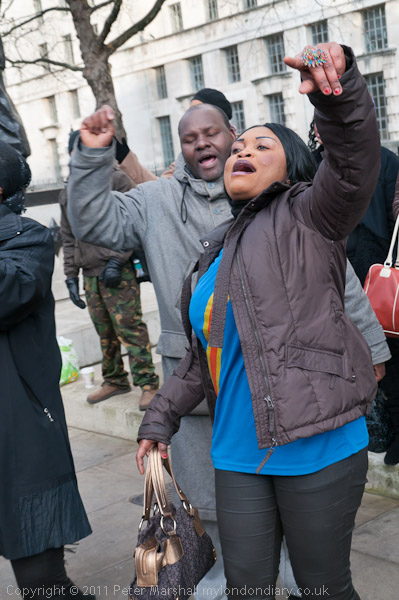
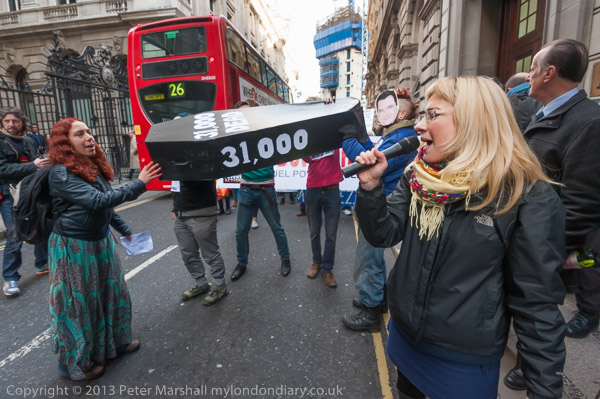
On 28th September 2013, disabled activists and supporters came to Parliament Square for ‘10,000 Cuts & Counting’, a ceremony of remembrance and solidarity for over 10,000 who died shortly after the degrading Work Capability Assessments run for the government by Atos.

The figure of 10,000 is the number who died in the 3 months following the degrading Atos-administered tests used by the government intended to assess the needs of people receiving benefits related to disability and ill health. The campaigners are not claiming that the test itself killed people, although some have been driven to commit suicide after being failed by Atos, but that such tests administered in the final days of life are unfeeling, unnecessary and persecute the sick and dying.

At the event we heard moving personal testimonies by disabled people and a mother of three disabled children, with many damning indictments of the failures of Atos and the Department of Work and Pensions, both failing to understand the needs of the disabled and not treating them with dignity and humanity, and of deliberately discriminatory policies, arbitrary decisions and bureaucratic incompetence.

Parliament Square was covered with 10,000 while flowers, one for each of the dead, and there was 2 minutes of silent remembrance for those who have suffered and died.

The silence was followed by four prayers facing the four sides of the square; prayers facing Westminster Abbey for the families of those who have suffered and disabled people still suffereing or despairing; facing the Supreme Court calling for justice and compassion for those without resources and power and for an end to discrimination and violence against the disabled; towards the Treasury calling on those in national and local government who decide on the use of resources to take into account the effect on people of what they do; and finally towards Parliament, calling for a new deal for disabled people and to put right the evident wrongs in the current system.

Unfortunately the prayers were not heard by those in power. The government’s response? They stopped issuing the figures on which this event was based.

More at 10,000 Cuts – Deaths After Atos Tests.


All photographs on this and my other sites, unless otherwise stated, are taken by and copyright of Peter Marshall, and are available for reproduction or can be bought as prints.


Students Lead The Way 27 Sept 2019

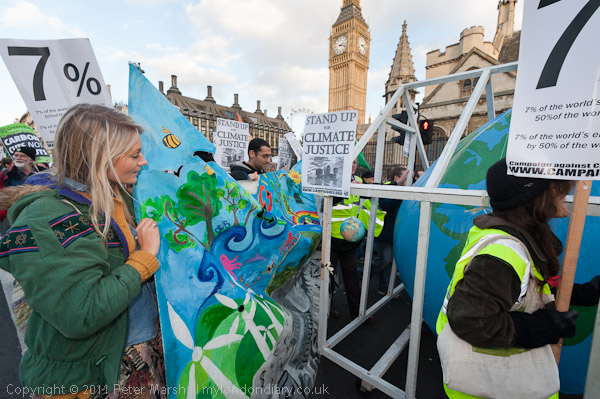
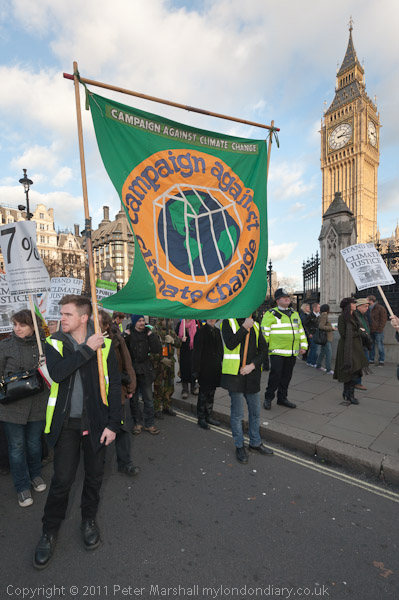
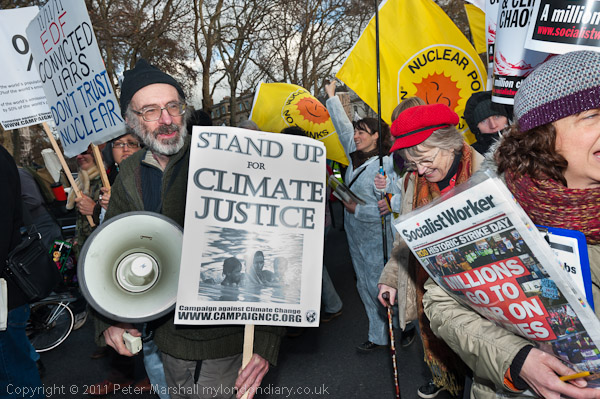
Two years ago school students and supporters were in Parliament Square campaigning at the end of a week of Global Climate actions and the start of a worldwide General Strike for climate justice and against extinction.

We had another Global Climate Strike last Friday (24th Sept 2021) though I was unable to photograph it for pressing family reasons, but although we now hear much more about the terrifying consequences of carbon emissions increasing global temperatures and have begun to feel them, there has been relatively little action. The UK government has learnt to talk a little of the talk, but is still pressing ahead with highly environmentally destructive plans – supporting new oil, gas and coal fields, subsidising destructive wood-burning and backing projects such as HS2 and Heathrow expansion.

It is hardly a good record for a government that is urging others do more, whether by the Prime Minister speaking at the UN or other diplomatic meetings leading up to COP26 in Glasgow. “Do as I say not as I do” is seldom a productive approach. Like other such meetings it seems almost certain to end with too little and too late.

The schoolkids get it – they’ve heard and understood the message from Greta Thunberg and David Attenborough. The scientists get it and have published reports which make it clear. Even some politicians across the parties get it, but not those in ministerial offices and Downing St. The real problem is that any effective policies would threaten the status quo which they have been put in charge to protect. They want business as usual, which is exactly what has got us in this mess.

I haven’t entirely abandoned hope, though it is getting very thin, rather like the hope of a revolution or a second coming, which is now about what would be needed to avert disaster. Things are certain to get very much worse than at present, perhaps enough to force our leaders to see sense before it is entirely too late, though I think it unlikely I will live long enough to see it.

Environmental lawyer Farhana Yamin, arrested for protesting against Shell with Extinction Rebellion

It wasn’t just the schoolkids who were on the streets in 2019. Later in the day I went with some of them to Trafalgar Square where artists, designers, musicians, cultural workers and others were talking about their own creative individual and collective responses to the climate emergency in a ‘Climate Rally for the Imagination.’

Although many of these were inspiring I left feeling depressed as it all seemed so divorced from our mainstream culture, which is dominated by the billionaire owned press and major TV stations which largely take their lead from those same publications. It would take a major miracle for Murdoch to convert from protecting his profits to protecting the earth, but that’s the kind of change we need for survival.

Climate Rally for the Imagination
Students Strike for climate justice


All photographs on this and my other sites, unless otherwise stated, are taken by and copyright of Peter Marshall, and are available for reproduction or can be bought as prints.


Deaf & Disabled March & a Harvest Festival

Saturday 26th September 2015 wasn’t one of my busiest Saturdays, but the two events I photographed were very different, and took place some distance apart. The first was in the centre of London, at Westminster and was a protest over the discrimination by the Tory government against disabled people.

It was clear from the start of the coalition government that came to power in 2010 that the Tories were out to target the disabled, and that they saw them and the benefits they were getting as a drain on our taxes they were keen to diminish. They declared that cuts in government spending were essential, blaming the previous New Labour government for the results of the world-wide banking crash which in reality was caused by the exploitation of an unstable system by greedy bankers and using this as an excuse for largely counter-productive austerity.

Looking at ways to make cuts, they picked on the disabled as they thought they would be an easy target and could bring large savings. But the disabled have turned out far more resilient than they expected, with groups like Disabled People Against Cuts turning out to be formidable opponents and getting considerable public support.

This particular protest was over the the cutting of the DWP’s Access to Work scheme which enables disabled people to work on an equal basis to non-disabled people. They want to work and have careers and to make a contribution to society, but cutting this essential support will prevent them doing so. And as the protesters pointed out, every £1 spent on Access to Work results in a return of £1.48.

Local resident Christine Taylor of Stop Heathrow Expansion points at the Heathrow plan

A long tube journey, changing to go almost to the edge of London on the Piccadilly line and then catch a bus to Sipson took me to Grow Heathrow in Sipson. It was a reminder that although London once led the world with its Underground system, it has failed to keep up with the times and now so many other cities have more modern and faster systems. When I first went to Paris we used to laugh at the quaint Metro clattering slowly and noisily around under the city, but now Parisians used to the RER must enjoy at least a little smile at our creaking system – and perhaps gloat that some of their system is now financed by the profits from Londoners using RATP run buses. Germans too profit as DB Arriva run the Overground as well as buses as well as three rail franchises.

Grow Heathrow was celebrating another harvest at their occupied nursery site with ‘music, pumpkins and pizza’ as well as an open ‘No Third Runway!’ discussion. They had squatted the derelict site in 2010 and five years later were still resisiting eviction with their court case then adjourned until the following summer. Half the site was evicted in 2019 but the rest continued until the final eviction in March 2021.

I was late (thanks to that slow journey) for the start of the discussion on Heathrow, but got there in time to hear much of it and take pictures – and as a fairly local long-term resident to make a very small contribution to the debate led by John Stewart of HACAN and other campaigners including Christine Taylor of Stop Heathrow Expansion and Sheila Menon of Plane Stupid. I grew up under the flightpath a couple of miles from touchdown and have lived the last 47 years a similar distance from the airport. Established by deception it has long been clear the airport is in the wrong place, and now even clearer that we can’t continue expanding air transport if we want to avoid climate catastrophe.

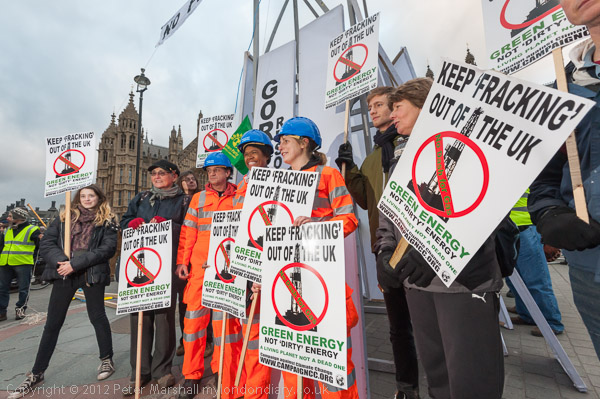
It is hard to take the government’s environmental policies seriously when they continue to support the expansion of air travel and transport and plans for another runway at Heathrow. We should be looking urgently at ways to cut our dependence on air freight and reduce travel, as well as ways to reduce the carbon emissions involved in the lower amount that will continue. This is one of the government policies that seriously undermines its national and international credibility at the forthcoming COP26 climate talks.

Grow Heathrow showed how people could live in different ways and evolve stronger communities and more democratic systems, although few would want to live as ‘off-grid’ in the rather spartan conditions of the residents here. But although we might not all want to make our own charcoal, nor go back to running vehicles on it, producing biochar is one of the few practical methods currently feasible of carbon capture and storage.

Grow Heathrow celebrates Harvest Festival
Deaf & Disabled Access to Work protest


All photographs on this and my other sites, unless otherwise stated, are taken by and copyright of Peter Marshall, and are available for reproduction or can be bought as prints.


More Chelsea

Sir Thomas More, St Thomas More Gardens, Chelsea Embankment, Chelsea, Kensington & Chelsea, 1988 88-5g-25-positive_2400
Sir Thomas More, St Thomas More Gardens, Chelsea Embankment, Chelsea, Kensington & Chelsea, 1988 88-5g-25

My Chelsea walk continued with a little wandering close to the Thames where I found two elderly people contemplating the statue of Sir Thomas More. More (1478-1535) opposed the Reformation and wrote polemics against Luther, Zwingli, Calvin and Tyndale, although he is better known now as the author of ‘Utopia’, published in 1516. But it was his opposition to the politics of a real island, refusing to accept Henry VIII rather than the Pope as supreme head of the Church of England that led to him losing his head at Tower Hill and eventually to his being made a Catholic saint in 1935.

Cheyne Walk, Chelsea, Kensington & Chelsea, 1988 88-5g-15-positive_2400
Cheyne Walk, Chelsea, Kensington & Chelsea, 1988 88-5g-15

It was the elegant iron work supporting the balcony that particularly attracted me to 48 Cheyne Walk, though I didn’t think it was particularly improved by the lamp post outside, awkwardly in the pavement, which though of relatively elegant design seemed out of place.

Cheyne Row,  Chelsea, Kensington & Chelsea, 1988 88-5g-16-positive_2400
Cheyne Row, Chelsea, Kensington & Chelsea, 1988 88-5g-16

Cheyne Row leads north away from the river between no 49 and 50 Cheyne Walk and I get confused between the two similarly named streets. This house, known for obvious reasons as Old Sun House at No 2 is the first on its east side.

Boy with a Dolphin, David Wynne, sculpture, Cheyne Walk, Oakley St, Kensington & Chelsea, 1988 88-5h-62-positive_2400
Boy with a Dolphin, David Wynne, sculpture, Cheyne Walk, Oakley St, Kensington & Chelsea, 1988 88-5h-62

One of several variations on a theme by Sir David Wynne including his Girl with a Dolphin close to St Katherines Dock, this is perhaps the most interesting. I have to admit of not being a great fan. At least two other casts of this sculpture exist, both in the USA.

The model for the boy was Wynne’s son Roland David Amadeus Wynne, then 11. After Roly committed suicide aged 35 in 1999 a plate was added to the statue dedicating it to him.

Cheyne Walk, Kensington & Chelsea, 1988
Cheyne Walk, Kensington & Chelsea, 1988 88-8h-63

Perhaps the only distinctive later building on Cheyne Walk, this Grade II listed house at 38 was designed by Charles Robert Ashbee (1863-1942) one of the leading figures in the Arts and Crafts movements and built around 1900. C R Ashbee like Moore wrote utopias, though his two, like much of his work was very much inspired by William Morris, whose ‘News from Nowhere’ appeared in 1890. He was a prominent homosexual, but he married in 1898 and some years later the couple had four daughters.

Cheyne Walk, Kensington & Chelsea, 1988 88-5h-64-positive_2400
Cheyne Walk, Kensington & Chelsea, 1988 88-5h-64

C R Ashbee, like More, wrote utopias, though his two, like much of his work was very much inspired by William Morris, whose ‘News from Nowhere’ appeared in 1890. He was a prominent homosexual, but he married in 1898 and some years later the couple had four daughters, one of whom wrote a frank ‘novel’ about the family relationships in which only the names are thought to be fictional.

Thomas Carlyle, Chelsea Embankment Gardens, Chelsea, Kensington & Chelsea, 1988  88-5h-55-positive_2400
Thomas Carlyle, Chelsea Embankment Gardens, Chelsea, Kensington & Chelsea, 1988 88-5h-55

I took another picture of Thomas Carlyle sitting on his chair as well as the two in a previous post. I think this perhaps better describes both the statue by Sir Edgar Boehm, erected in 1882, the year after his death and also the surroundings.

Click on any of the pictures to go to a larger version in my album 1988 London Photos. They appear in a different order in the album but in this post are in the order I took them on my walk.


All photographs on this and my other sites, unless otherwise stated, are taken by and copyright of Peter Marshall, and are available for reproduction or can be bought as prints.