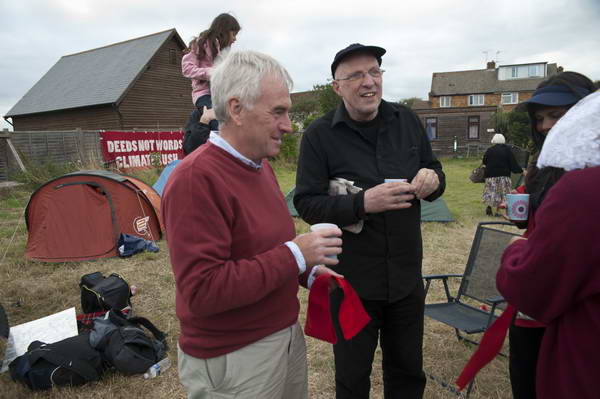
Fossil Fools Day – 2008

Fossil Fools Day: Tuesday 1st April was Fossil Fools Day, a day of protests around the world over our increasing use of fossil fuels, despite the effect they are having on global climate.
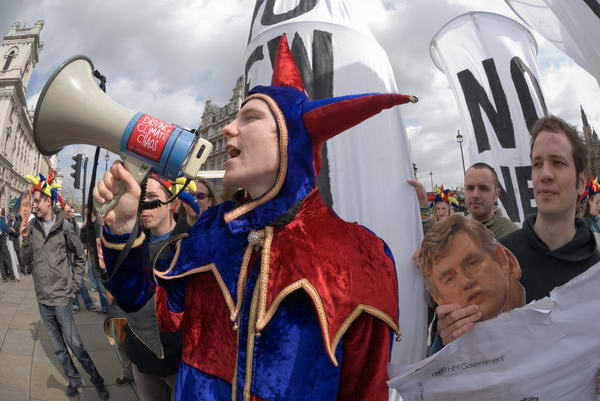
Fossil Fools Day - 2008

The ‘greenhouse effect‘ of various gases in the atmosphere had first been described in 1824, although the actual term only dates from 1901. But already in 1856 American scientist and women’s rights campaigner Eunice Newton Foote had shown that carbon dioxide was very effective in trapping the sun’s energy and warming the atmosphere.

Almost all polyatomic gases are ‘greenhouse gases’ with some such as methane much more effective than carbon dioxide. But its great importance is because of the huge amounts of it formed when carbon-containing fuels are used. And burning wood, coal and oil and their use in powering machines of all types and electricity production became the basis of the industrial revolution and our whole civilisation from around the beginning of the nineteenth century.
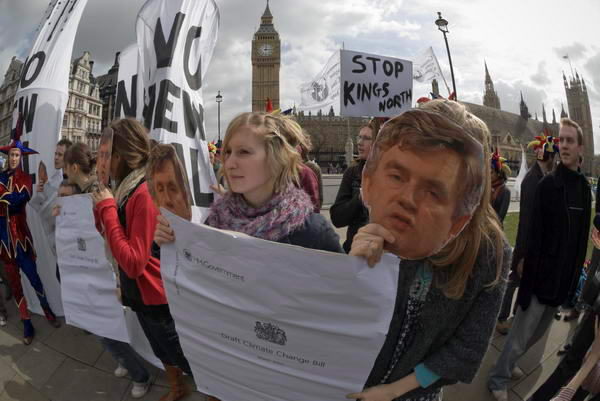
Fossil Fools Day - 2008
Protesters with power station ‘cooling towers’ in Parliament Square

Wood is not of course a fossil fuel, and in pre-industrial times the carbon dioxide produced by burning it was more or less in balance with the amount that was removed from the atmosphere by photosynthesis producing new plants, trees and other organisms. CO2 levels remained roughly constant during human history at around 280ppm until they began to rise more and more rapidly after 1850, and increasingly rapidly since then. They are now around 430ppm and rising steeply.

The full effects of the current levels only become apparent over a period of around 50 years, though we are already seeing some of them already, particularly in the global South – though we too are beginning to see the effects on our climate, not just in terms of temperature but even more as instability.
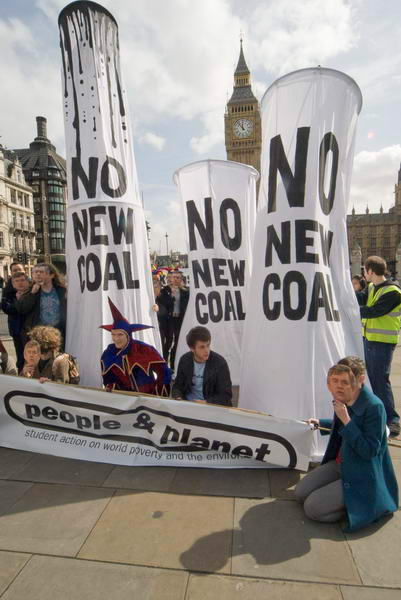
Fossil Fools Day - 2008

For well over fifty years it has been obvious that we need to take urgent action to stop burning fossil fuels, but that urgency has not led to any really significant action. Talk, investment in renewable energy – but fossil fuel use, even of coal, is still increasing. If life on this planet is to have a future we need to see a rapid drop in the consumption of coal, oil and gas – and also aathe development of ways to use renewable energy to remove greenhouse gases from the atmosphere, as well as increasing natural ways such as planting more trees.

And there is another reason to end the use of oil for fuel, as I first mentioned in the 1970s. These finite resources are of much greater use as a chemical feedstock for producing other essential materials of our modern life, including plastics.

Everything at the moment is still going in the wrong direction – and the huge energy requirements of AI are making things worse.


Fossil Fools Day: No New Coal

Parliament Square

Fossil Fools Day - 2008
Lighter fuel goes up in flames on the Climate BIll

The focus of the protest by students from ‘People and Planet’ and other climate activists were the plans by E.ON to build a new new coal-fired power station at Kingsnorth in Kent.

The protesters brought three large white ‘cooling towers’ and many had cutout masks of Gordon Brown’s face as they shouted out advice to him over the ridiculous Draft Climate Change Bill which would have resulted in an increase in carbon emissions.

The launch of ‘ev-eon Unnaturally Carbonated Water’

They were joined by a group with the spoof launch of ‘ev-eon Unnaturally Carbonated Water’ a new carbon capture technology to be used at E.ON’s Kingsnorth Power Station.

“‘Ev-eon’ uses the CO2 from coal burning to carbonate water which you then swallow. And if you can swallow the governments coal-fired policy you can swallow anything. And of course with Ev-eon, should you burp, breathe or otherwise release that CO2 you’ve swallowed, global warming is all your fault – and not E.ON’s.”

As a result of this and other environmental protests and criticism by a wide range of organisations E.ON eventually dropped the plans.

More on My London Diary at Fossil Fools Day: No New Coal.


Fossil Fools Day: Opencast Coal

Albany Courtyard, Piccadilly
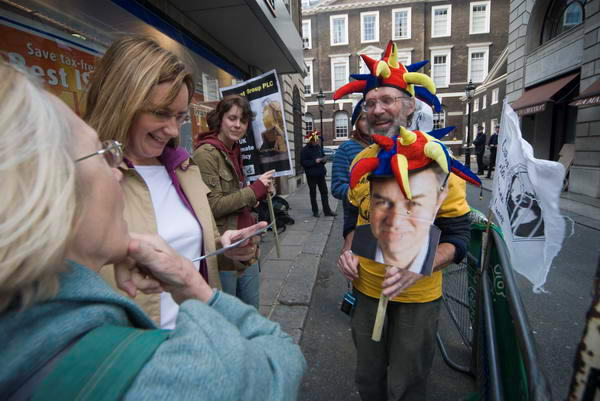
Campaign against Climate Change protest at the offices of Argent Group PLC in Piccadilly over the UK’s largest opencast coal mine, Ffos-y-Fran in Merthyr Tydfil, South Wales, run by Miller-Argent.
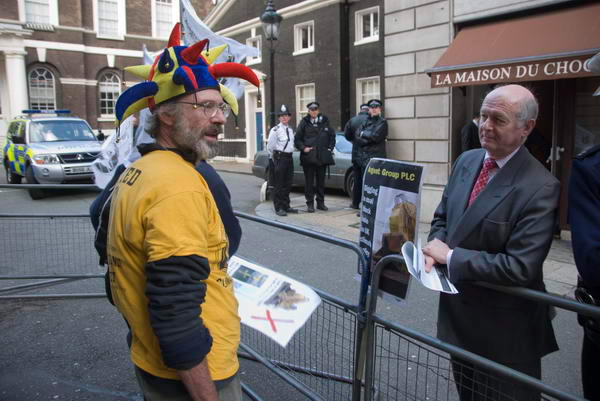
The manager of Albany talks with the demontrators, taking some information for Argent

As well as the at least 30 million tons of CO2 of carbon dioxide from the coal the mine was expected to produce over the next 15 years, this mine was also only 36 metres from the nearest houses – compared to the Scottish Safety standards of 500 metres. The Welsh Office delayed the implementation of a Welsh safety standard to enable the mine to go ahead.
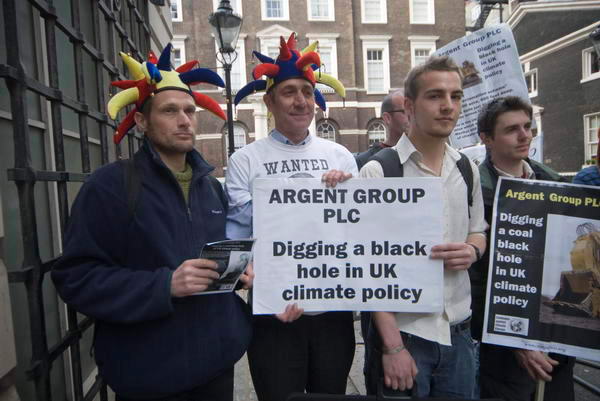
Locally it produced years of misery and health hazards through air-borne dust, diesel fumes and noise to the 70,000 or so people who live in Merthyr. A Health Impact Study commissioned by the authorities was so damning they refused to accept it.
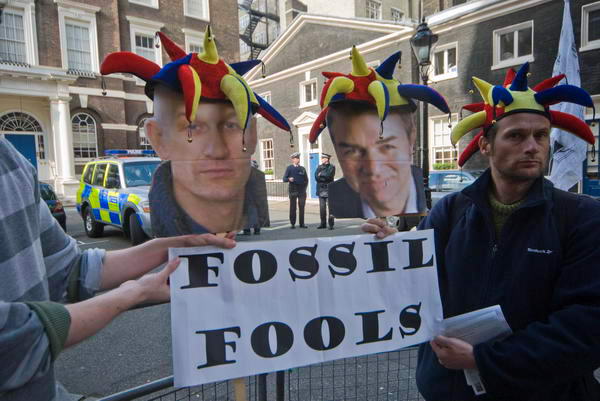
The initial scheme for the mine had been approved by the Welsh Assembly in 2005 despite huge local objections and residents took it to the High Court which quashed it – but this was reversed on appeal in 2006.

The mine licence expired in 2022 and an appeal for an extension was refused with the mine shutting down in November 2023.

London protest Welsh Opencast Coal


FlickrFacebookMy London DiaryHull PhotosLea ValleyParis
London’s Industrial HeritageLondon Photos

All photographs on this page are copyright © Peter Marshall.
Contact me to buy prints or licence to reproduce.
Climate Rush in Hayes & Sipson – 2009

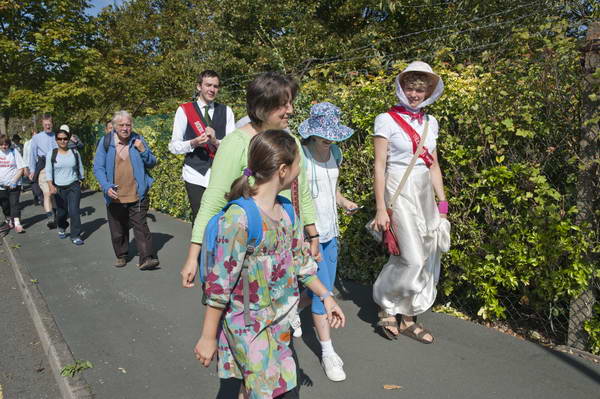
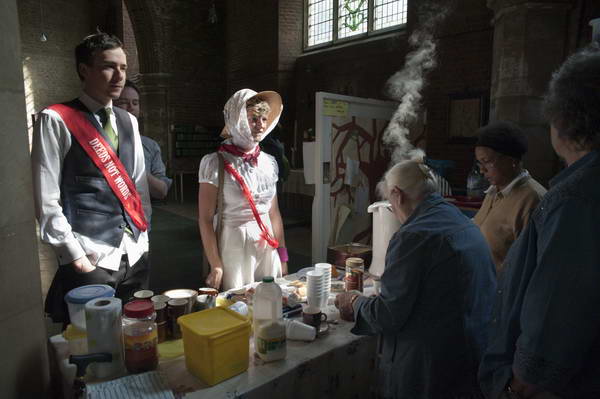
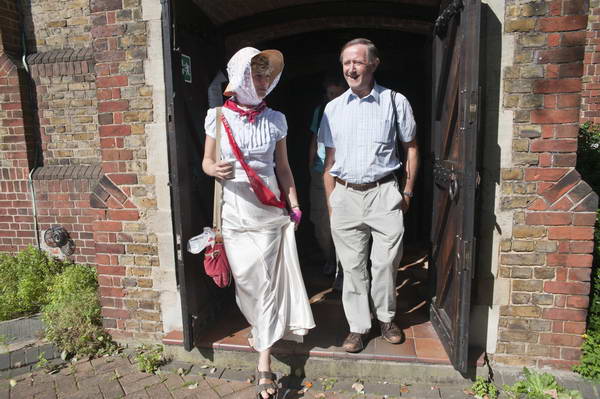
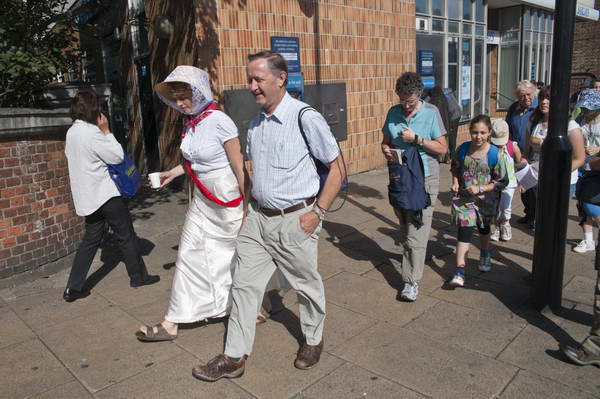
Climate Rush in Hayes & Sipson: On Saturday 5th September 2009 I went to Hayes to join a small group of Climate Rushers at a service at the start of a walk by the London Churches Environmental Network. We joined the marchers for the first part of their walk to the Sipson Airplot, set up to oppose plans for a third runway at Heathrow, rushing back there to prepare for the Celebration of Community Resistance which took place in the afternoon.


Climate Rush on the Run – Hayes & Sipson

Climate Rush in Hayes & Sipson - 2009

On My London Diary you can read more about the Climate Rush, a group of women who had come together to celebrate the centenary of the 1908 ‘Suffragette Rush‘. In 1908 more than 40 women were arrested in an attempt to rush into the Houses of Parliament, and on 13 Oct, 2008, at the end of a rally in Parliament Square Climate Rush again tried to rush in.

Their protest in 2008 called for “men and women alike” to stand together and support three key demands:

* No airport expansion.
* No new coal-fired power stations.
* The creation of policy in line with the most recent climate science and research.
Climate Rush in Hayes & Sipson - 2009
The walk begins

Since then Climate Rush had organised and taken part in various other climate protests and in September 2009 were taking part in “a rollicking tour of South West England“, staging events, supporting campaigns and “entertaining the towns, villages and hamlets” on their route with “16 Climate Suffragettes, 3 horses and 2 glorious caravans“. The Airplot at Sipson was their starting point and I’d photographed their procession to Heathrow the previous day, and later photographed them at a Green Fayre in Aylesbury.

Climate Rush in Hayes & Sipson - 2009

After a service at St Anselm’s Church, Hayes attended by several Climate Rushers we set off with the the London Churches Environmental Network to walk back to Sipson. We left the marchers at Cranford Park to take a shorter route to get back to the Airplot to prepare for the Celebration of Community Resistance taking place there in the afternoon.

Climate Rush in Hayes & Sipson - 2009

Much more on My London Diary at Climate Rush On the Run!

Climate Rush: Celebration of Community Resistance – Sipson

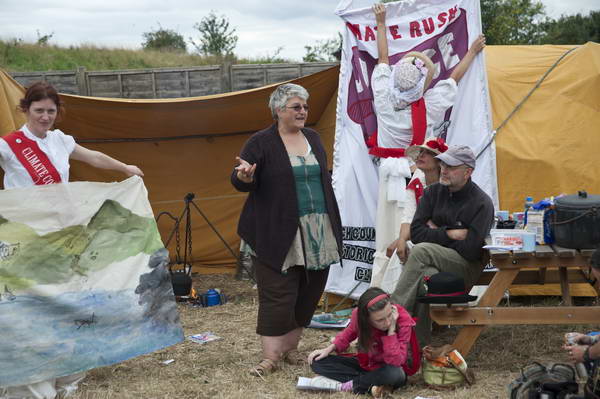
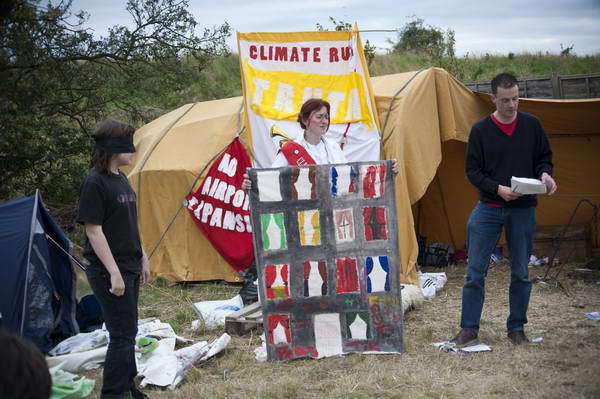
Climate Rush in Hayes & Sipson - 2009
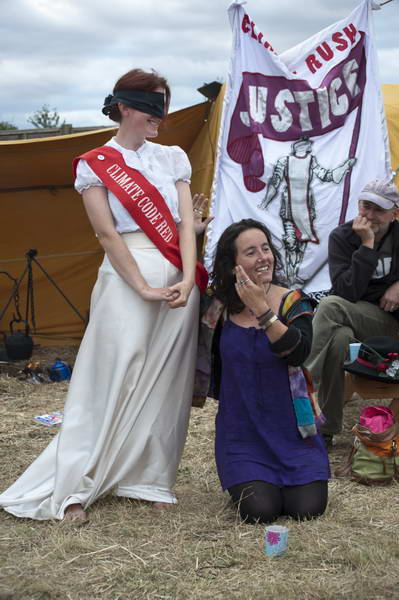
Tamsin plays the villain BAA while Geraldine talks about the NoTRAG campaign

Greenpeace had the idea of setting up the Airplot, an orchard in the centre of the village of Sipson, one of those under threat from Heathrow’s plans for expansion. They bought the site and created one metre square plots of land there and invited the public to become “beneficial owners“, I think paying one pound for the privilege and receiving a certificate of ownership. Somewhere I may still have mine, but here is one on Wikimedia.

Airplotcert

It had seemed a good idea which would make the development more complex, though I suspect would have had little or no effect in practice, but it was never put to the test as plans for the third runway were scrapped by the government in 2010 on environmental grounds – though they have since been revived.

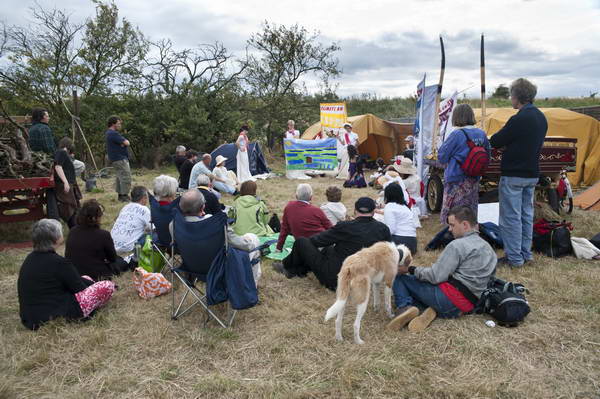
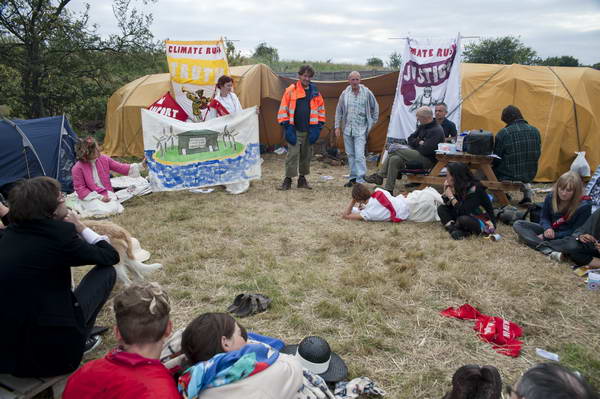
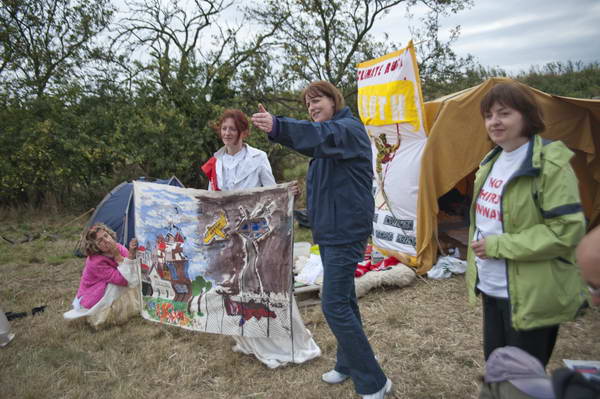
The Airplot was the first stop on the Climate Rush tour and for the Celebration of Community Resistance they had invited activists from around the country to come and give short presentations on their campaigns.

The first example of community resistance we heard about was Radley Lakes at Didcot which npower wanted to fill in with pulverised fuel ash. Although some lakes had been filled, the campaign managed to save three of them. You can see more about them on the Radley Lakes Trust web site.

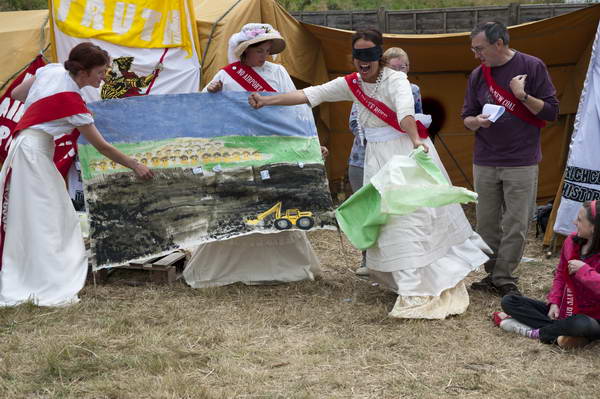
Next we heard about the scandal of opencast mining at Ffos-y-Fran, common land at Merthyr Tydfil. I photographed a Campaign Against Climate Change demonstration against this mine at the London offices of Argent Group plc in April 2008.

“Argent form half of Miller-Argent who run the UK’s largest opencast coal mine, Ffos-y-Fran in Merthyr Tydfil, South Wales. Just 36 metres from the nearest houses, extraction will continue for more than 15 years (perhaps as along as 40 years), producing coal that will add at least 30 million tons of CO2 to to our atmosphere. Scottish safety standards demand a minimum gap of 500 metres from housing, but the implementation of a 350 metres limit by the Welsh office has been delayed – allegedly to allow the Merthyr working to go ahead.”

Coal mining continued here until November 2023, and local residents say that the plans for the future of the site represent the “ultimate betrayal“.

Protesters had come earlier in the year from County Mayo in Ireland for a St Patrick’s Day protest at the Shell building against the Corrib Gas Project. We heard how the Rossport Solidarity Camp and the Shell to Sea campaign were fighting this against a corrupt government and thugs who protect the oil companies interest by illegal methods. While the protests failed to stop the project, the environmental groups involved continue to highlight related issues.

Cathy McCormack, a community activist in Glasgow Easterhouse was unable to attend but a colleague came to read her views on poverty and the financial crisis, and in particular the part played by the World Bank and the IMF.

Next we heard from two former Vestas workers who sat in their factory in Newport on the Isle of White when the company proposed the closure of what was then the UK’s only major wind turbine production site. Unfortunately they failed to prevent the closure.

The last group to talk were the No Third Runway Action Group (NoTRAG), and Geraldine described how they had opposed the BAA plans for airport expansion.

In the audience watching the presentation were local MP John McDonnell and airport campaigner John Stewart of HACAN. The campaigners won that round against Heathrow’s plans – and we celebrated in 2010, but today there are new plans – and a government which only plays lip-service to the coming environmental diaster seems sure to back either Heathrow’s own proposals or that from the Arora group, and the fight is on again.

Many more pictures on My London Diary at Celebration of Community Resistance.


FlickrFacebookMy London DiaryHull PhotosLea ValleyParis
London’s Industrial HeritageLondon Photos

All photographs on this page are copyright © Peter Marshall.
Contact me to buy prints or licence to reproduce.