Funeral For Legal Aid And A Pig

Funeral For Legal Aid And A Pig

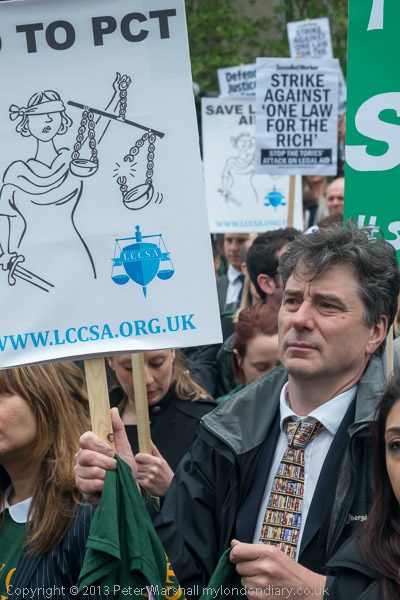
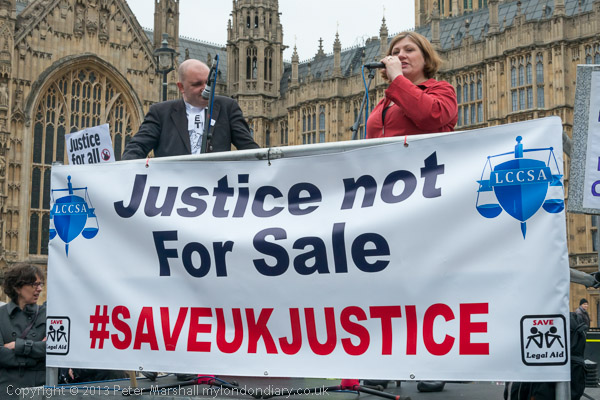
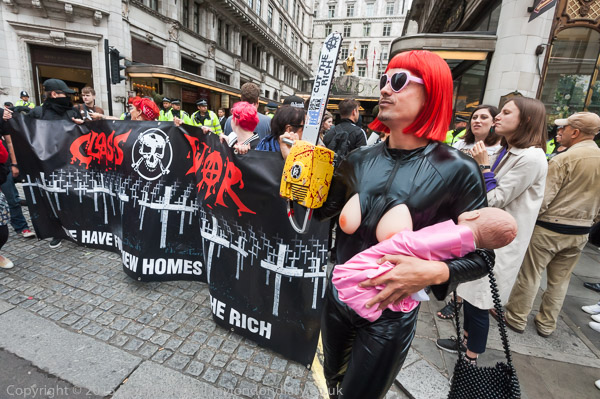
I don’t think the London Criminal Courts Solicitors’ Association organise many protests, but they did a good job on Wednesday 22nd May 2013, with a mock funeral and rally at Parliament against government proposals for justice on the cheap, restricting legal aid and ending the right of clients to chose their solicitor with work going to the cheapest bid.

Funeral For Legal Aid And A Pig

The introduction of price-competitive tendering (PCT) would have the effect of bankrupting smaller law firms, while opening up provision of legal aid to large non-legal companies, including Eddie Stobart and Tesco. It would also prevent those eligible for legal aid from being able to choose appropriate specialists in the legal area involved in their cases.

Funeral For Legal Aid And A Pig

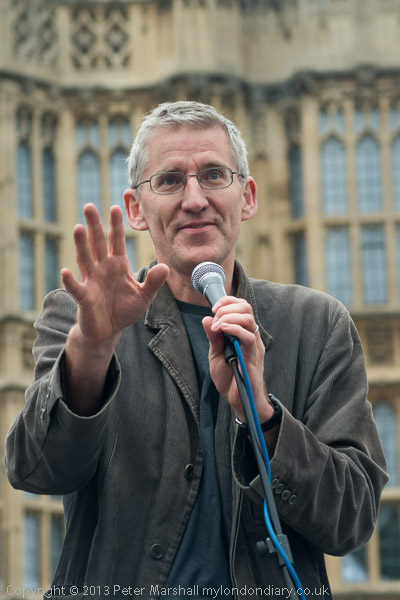
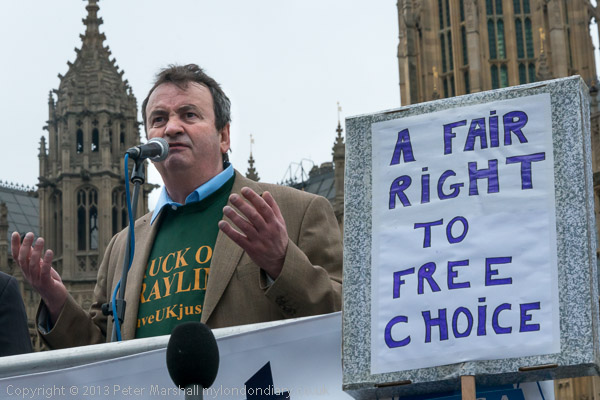
It was a protest that brought together a wide range of organisations an interests, with many speakers from the legal professions, from political parties and some who had been involved in cases of injustice including Gerry Conlan from the Guildford 4, a member of the family of Jean Charles De Menzes, Susan Matthews, mother of Alfie Meadows and Breda Power, the daughter of Billy Power, one of the Birmingham 6. Solicitors who spoke included Clive Stafford Smith, the founder of Reprieve, and Blur drummer Dave Rowntree, and notable among the QCs, Helena Kennedy.

Clive Stafford Smith

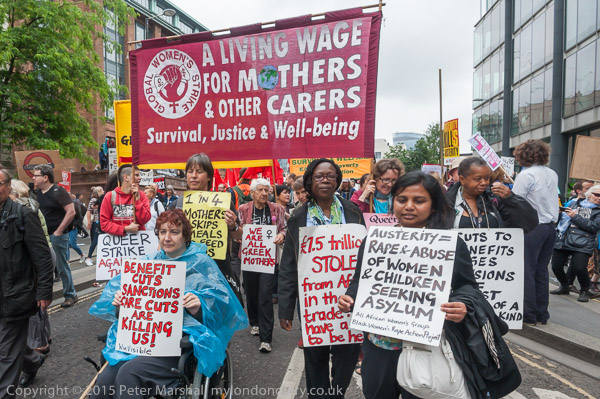
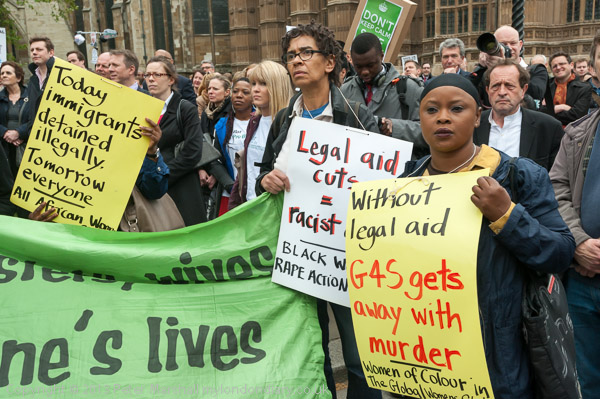
Some, including those from Women Against Rape, Winvisble, Women of Colour in The Global Womens Strike and other groups had come because the proposed changes would have drastic effects on women involved in domestic violence and rape cases, and immigrants fighting for asylum.

Gerry Conlan – the Guildford 4 only got justice when they could get the right lawyers on legal aid

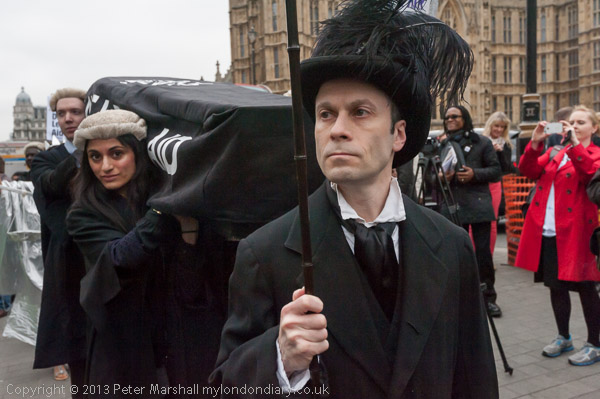
The event had begun with a funeral procession led by a marching jazz band with robed and wigged figures carrying the coffin of Legal Aid, followed by a woman dressed as the Scales of Justice. After the speeches there was a summary by leading barrister John Cooper QC and then the whole assembly delivered its verdict on the Lord Chancellor and Secretary of State for Justice Grayling, ‘guilty as charged’.

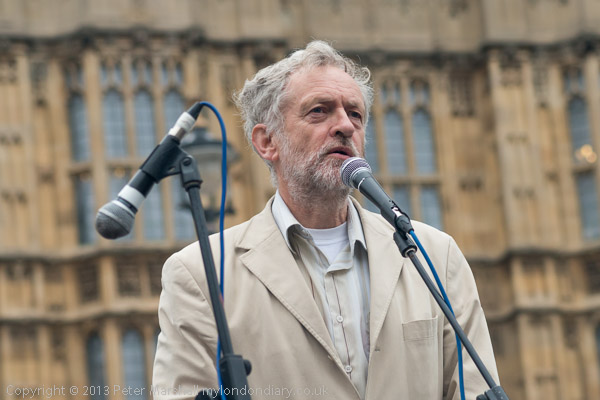
Jeremy Corbyn, MP

Not for nothing did Grayling become widely known as ‘Failing Grayling‘ for his was a consistent record of incompetency and blunders in various ministerial roles in both Coalition and Tory governments conveniently summarised in the i‘s article 10 disasters that have happened under his watch.

As well as the cuts to legal aid which led to many victims of domestic violence in the courts and family courts facing their abusers without a lawyer, Grayling’s attempt to end legal aid to those in prison was ruled unlawful in 2017. His introduction of high fees for employment tribunals in discrimination cases was ruled unlawful by the Supreme Court – and the government had to refund £27 million. He made an agreement with Saudi Arabia for training in their jails which had to be dropped when other ministers pointed out their abysmal human rights record. Then there was the prison book ban, again found unlawful. And his 2014 overhauling and privatisation of Probation services was a disaster that forced its later reversal.

Emily Thornberry, MP

Grayling then moved to Transport, worsening the Southern Rail fiasco, costing us £2bn over Virgin East Coast, contributing to chaos over rail timetabling and awwarding a firm with no ferries a no-deal Brexit contract. And although the i article stopped at 10, Grayling didn’t.

More pictures at Lawyers Funeral for Legal Aid


Daddy’s Pig heads for the Trough – Downing St to Bank

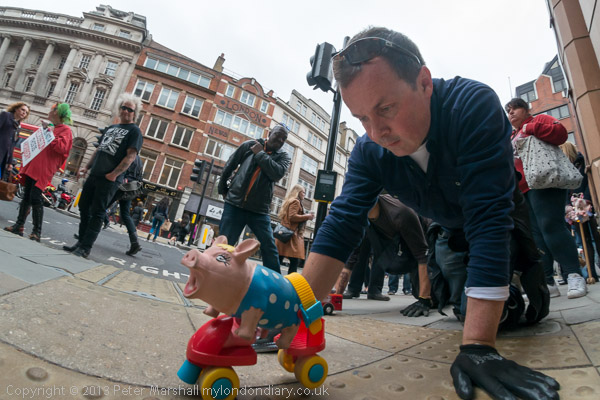
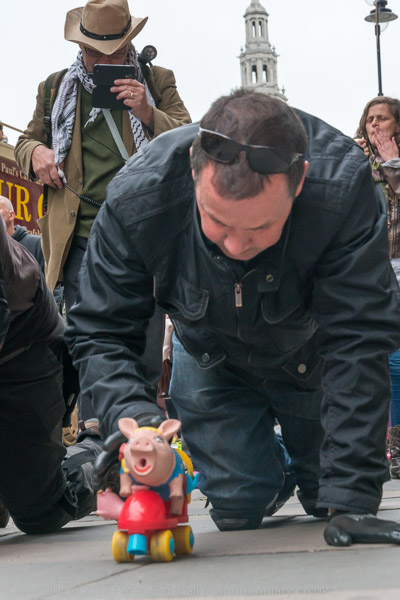
The legal aid protest at Parliament meant I had missed the start of the three mile marathon by artist taxi-driver Mark McGowan on his knees pushing his Daddy’s Pig, accompanied by another protester pushing a fire engine, from Downing St to the Bank of England.

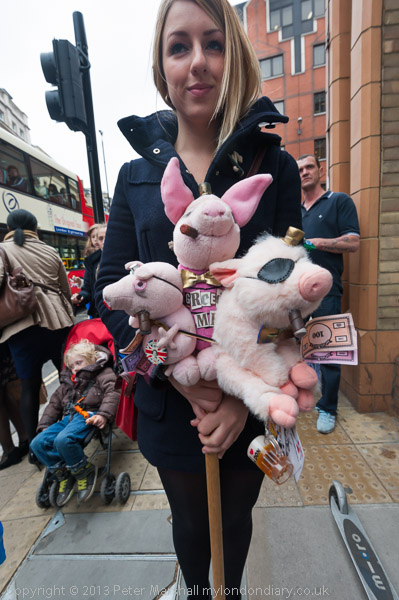
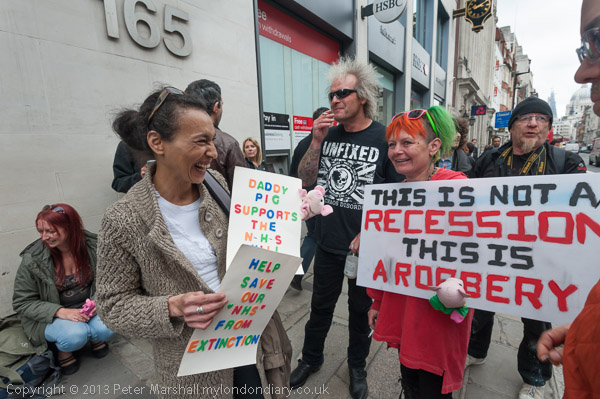
I met them outside the Royal Courts of Justice, where the two had taken a rest before starting off on the second half of their gruelling journey, accompanied by a group of supporters, some of whom were carrying pigs.

While the country suffers from the effects of the various cuts, bankers, private equity companies, oligarchs and other friends of the Tories were having a feeding frenzy, snouts in the trough as the government privatised much of the NHS and other services and the City of London entrenched its position as the money laundering capital of the world.

More pictures at Daddy’s Pig heads for the Trough.


Nakba, NHS, Gitmo etc & Tamils

NakNakba, NHS, Gitmo etc & Tamils – Saturday 18th May 2013 was another busy day for protests in London and I covered a number of demonstrations.


End Israeli Ethnic Cleansing – Old Palace Yard, Westminster

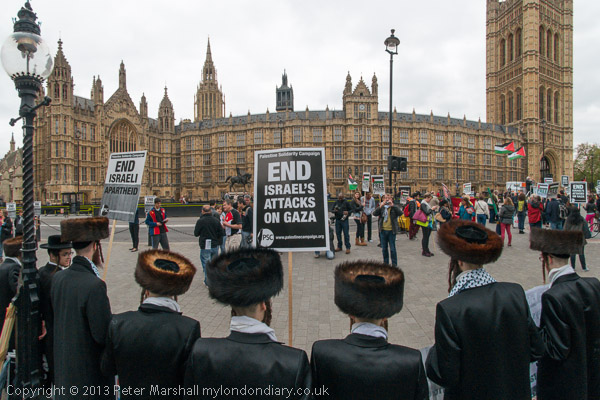
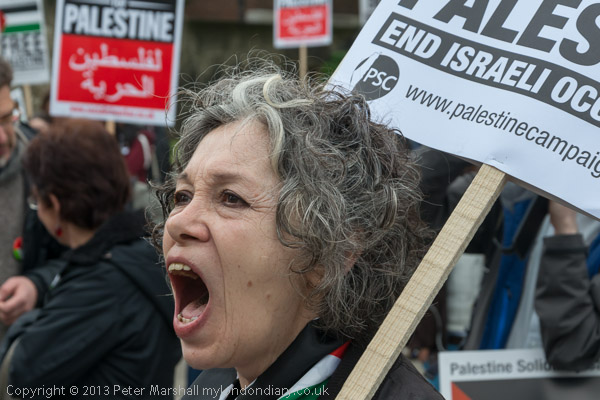
65 years after 700,000 Palestinians were driven out of their homes as refugees in the ‘Nakba’ (catastrophe) when the state of Israel was created, Palestinians and their supporters protested outside parliament calling for an end to the continuing ethnic cleansing and a boycott and sanctions until Israel complies with international law.

There had been protests in Jerusalem earlier in the week on Nabka Day against the continuing sanctions against Palestinians that have crowded them into an ever-decreasing area of land, diminishing almost daily as new Israeli settlements are created and new restrictions placed on the movement of Palestinians. Many of those protesting in London from Jewish or Palestinian backgrounds and as usual these included a group of extreme orthodox Neturei Karta Jews who had walked down from North London; they see themselves as guardians of the true Jewish faith, and reject Zionism.

The speeches were continuing when I left to cover another event. More at End Israeli Ethnic Cleansing


London Marches to Defend NHS – South Bank to Whitehall

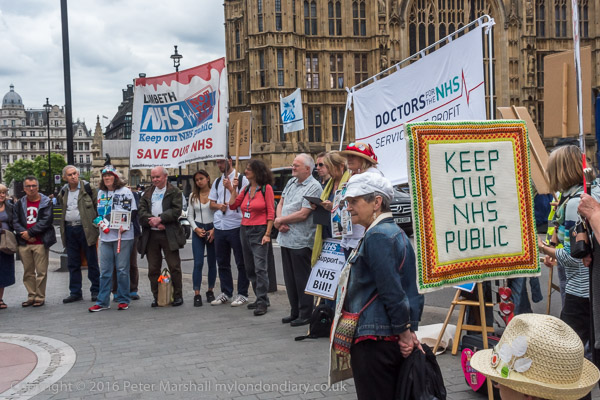
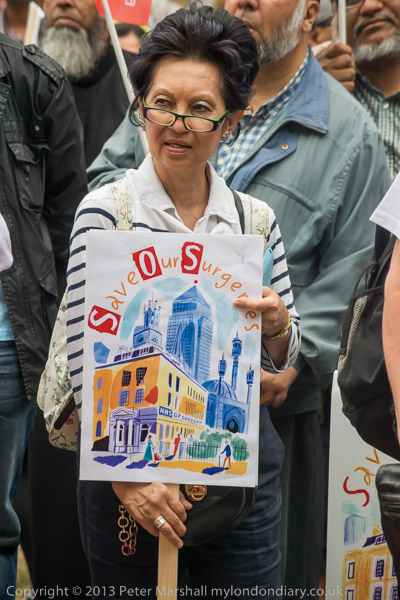
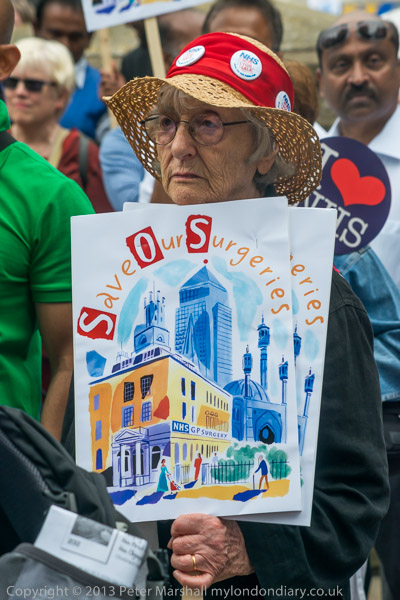
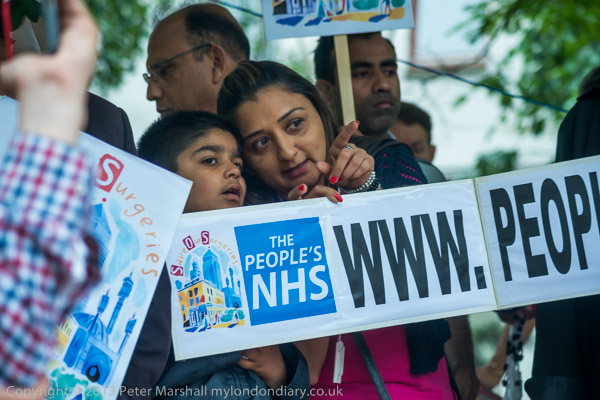
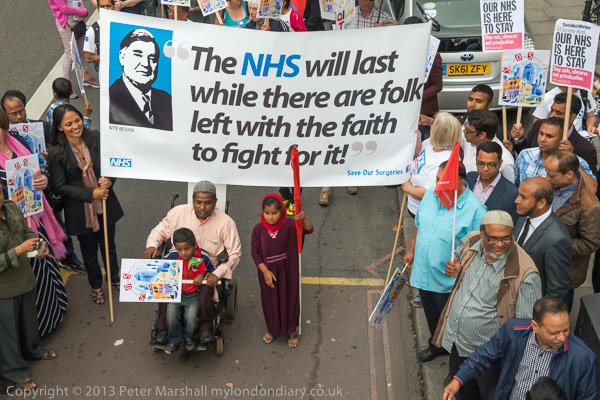
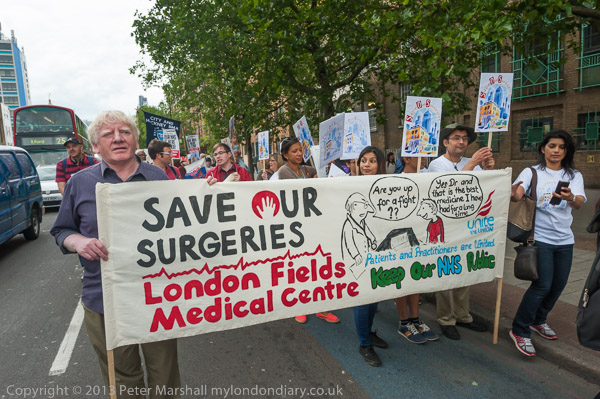
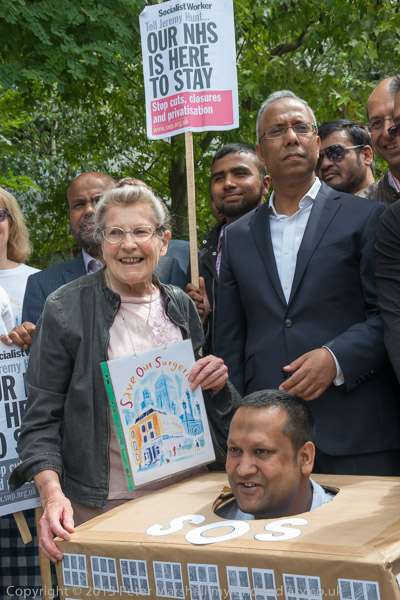
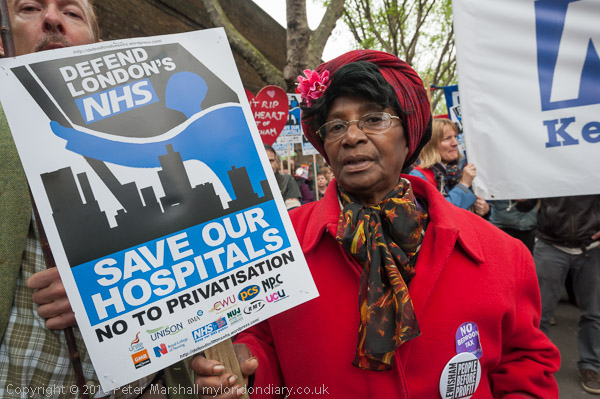
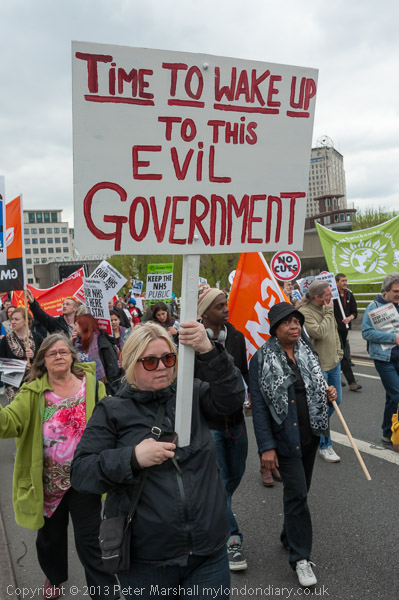
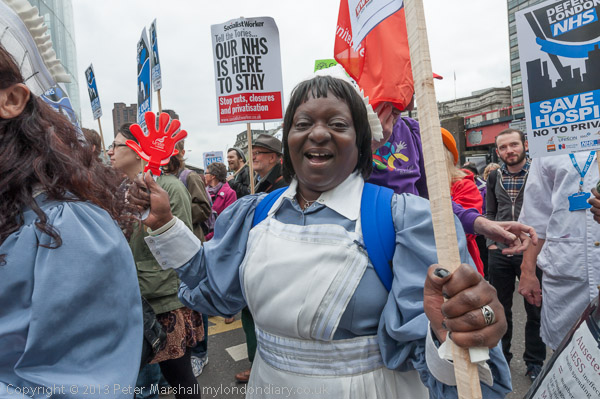
On the opposite side of the River Thames thousands were gathering by the Royal Festival Hall to march against cuts, closures and privatisation of the NHS, alarmed at the attack by the government on the principles that underlie our National Health Service and the threats of closure of Accident and Emergency facilities, maternity units and hospital wards which seem certain to lead to our health system being unable to cope with demand – and many lives put at risk.

Nine years later we are seeing the effect of these policies with ambulance services unable to cope with demand, lengthy delays in treating people in A&E, delays in diagnosing cancers leading to increased deaths and more. And although it was only a matter of time before we had a pandemic like Covid, and exercises had shown what needed to be done to prepare for this, the NHS had not been given the resources to prepare for this, leading to much higher death rates than some comparable countries.

Part of the problems of the NHS come from disastrous PFI agreements pushed through under the Labour government, landing NHS trusts with huge debts that will continue for many years. This forced NHS trusts into disastrous hospital closure plans, some of which were defeated by huge public campaigns. Many of those marching were those involved in these campaigns at Lewisham, Ealing, Charing Cross, Hammersmith, Central Middlesex, Whittington and other hospitals around London.

I left the march as it entered Whitehall for a rally there. More at London Marches to Defend NHS.


Guantánamo Murder Scene – US Embassy, Grosvenor Square

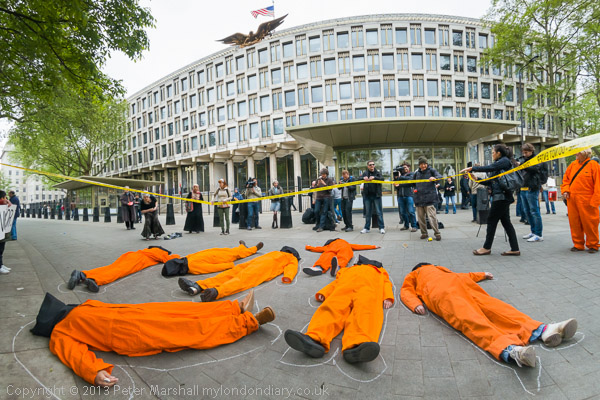
London Guantánamo Campaign staged a ‘murder scene’ at the US Embassy on the 101st day of the Guantánamo Hunger Strike in which over 100 of the 166 still held there are taking part, with many including Shaker Aamer now being forcibly fed.

More at Guantánamo Murder Scene.


More US Embassy Protests – US Embassy, Grosvenor Square

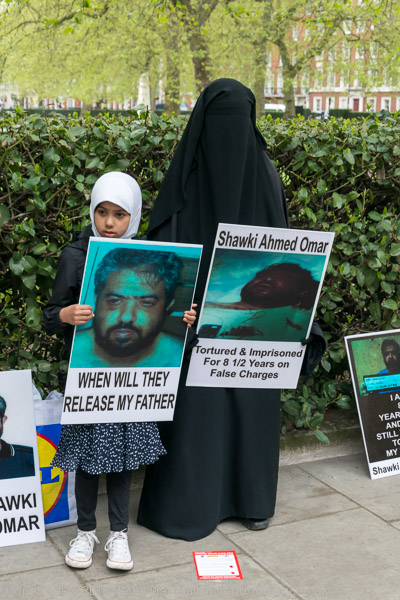
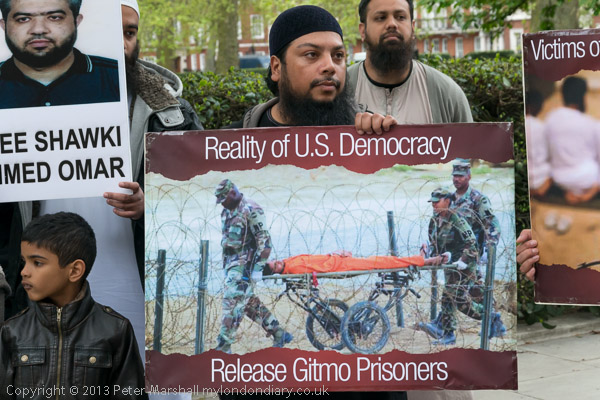
Other protesters outside the US Embassy included Narmeen Saleh Al Rubaye, born in the US and currently living in Birmingham, whose husband Shawki Ahmed Omar, an American citizen, was arrested in Iraq by American forces in 2004 and turned over to Iraqi custody in 2011. He was tortured by the Americans when they held him and was now being tortured by the Iraqis and also was on hunger strike. She has protested with her daughter Zeinab outside the US Embassy for a number of weekends and on this occasion was joined by a small group of Muslims who had come to protest against Guantanamo, appalled by the actions of the US waging a war against Islam and Muslims.

Shawki Ahmed Omar is still held in Iraq; before he died in 2021 former US Attorney General Ramsey Clark recorded a video calling for his release which was posted to YouTube in with the comment by another US lawyer “This case is one of the greatest miscarriages of justice in recent United States history. It is a case where the US government essentially lied to the US Supreme Court to cover up torture and to be able to turn an American citizen over to people who they knew would torture him.”

A few yards away, kept separate by police, a group of supporters of the Syrian regime, including some from the minor Communist Party of Great Britain (Marxist-Leninist) was also holding a protest in favour of the Assad regime and against western intervention in Syria.

More at More US Embassy Protests.


Tamils protest Sri Lankan Genocide – Hyde Park to Waterloo Place

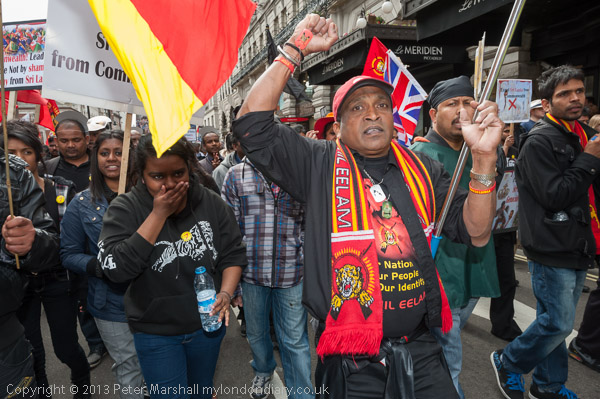
I met thousands of British Tamils and dignitaries and politicians from India, Sri Lanka and the UK as they marched through London on the 4th anniversary of the Mullivaikkal Massacre, many dressed in black in memory of the continuing genocide in Sri Lanka. Many wore the tiger emblem and called for a Tamil homeland – Tamil Eelam.

Although it was a large protest, with perhaps around 5,000 marchers I think it received absolutely no coverage in UK media, and I seemed to be the only non-Tamil photographer present. Tamils were rightly disgusted at the lack of response by the UK, the Commonwealth and the world to the organised genocide that took place in Sri Lanka, of which the massacre at Mullivaikkal four years ago was a climax.

The march had started from Hyde Park, and I caught up with it on Piccadilly and went with it taking photographs to Waterloo Place where there was to be a rally. But it had been a long day for me and I left just before this started.

More at Tamils protest Sri Lankan Genocide.


Tax Robbery, Racism & John Lewis

Tax Robbery, Racism & John Lewis. Saturday 21st March 2015 was another busy day for me in London, covering protests against the criminal activities of UK banks, a large march and rally against racism in the UK (and a few racists opposing this) and customers of John Lewis calling on the company to treat its cleaners fairly.


Great British Tax Robbery – HSBC, Regent St.

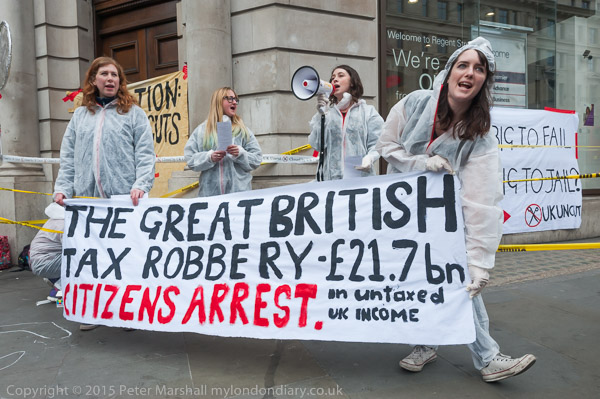
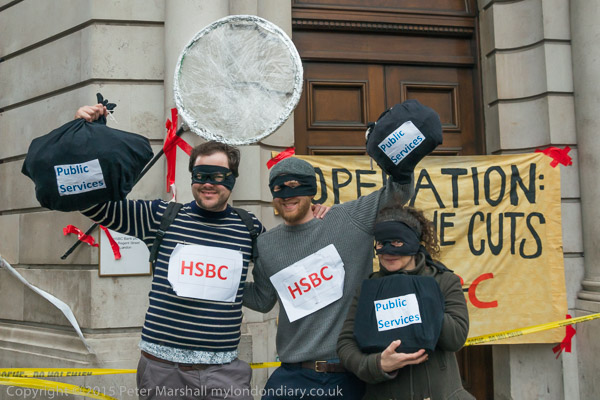
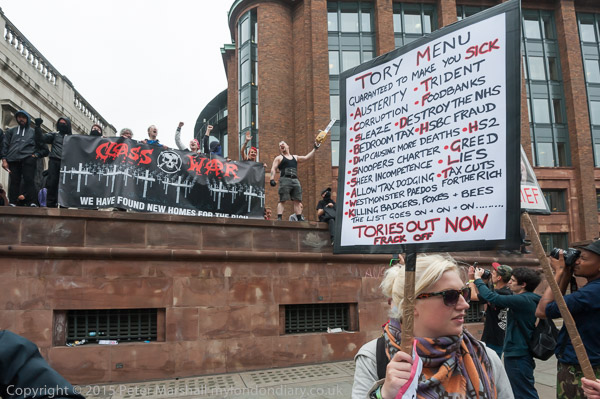
UK Uncut campaigners arrived at the HSBC Regent St branch dressed as detectives and robbers to highlight the bank’s crimes in causing the financial crash and tax dodging, which have led to drastic cuts in vital public services and welfare and attempt a ‘Citizen’s Arrest’.

UK Uncut had a clear message for both HSBC and the government, accusing them of being criminals:

The government told us they’d “protect the poorest and most vulnerable”. They said “those with the broadest shoulders will bear the brunt of the cuts”. And what have we seen? Dismantling the NHS and wrecking the welfare state. Cutting schools, youth clubs, sure start centres, domestic violence refuges and libraries. Slashing local council budgets. Attacking disabled people with inhumane ‘work capability assessments’ and cuts to vital benefits. Removing access to justice through legal aid cuts. Allowing the big six energy companies to push people into fuel poverty. Cutting jobs, wages and pensions. Selling off social housing and moving people away from their communities. Driving hundreds of thousands into food banks and making families choose between heating or eating

My London Diary, March 2015

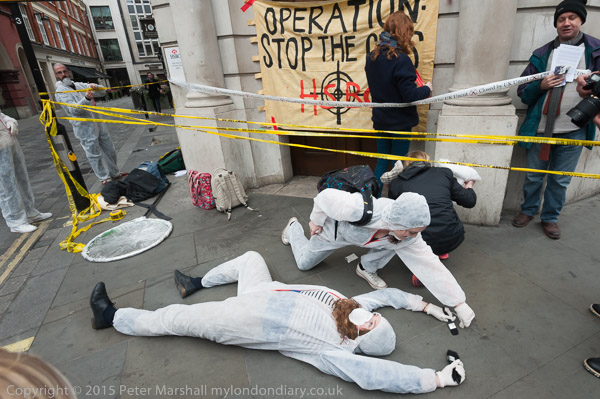
The bank closed a few minutes before the protesters arrived and kept its doors shut as the protesters’ ‘forensic team’ chalked around ‘crime victims’ on the ground and put crime scene tape around the area, sealing off the door with a banner. There was a speech from a NHS campaigner from East London about the effects of the cuts on the NHS and ‘criminals’ with HSBC on their chests posed for pictures. After a few minutes the protest was ended as many of those taking part were, like me, joining the Anti-Racism protest.
Great British Tax Robbery


Stand Up to Racism March – BBC to Trafalgar Square

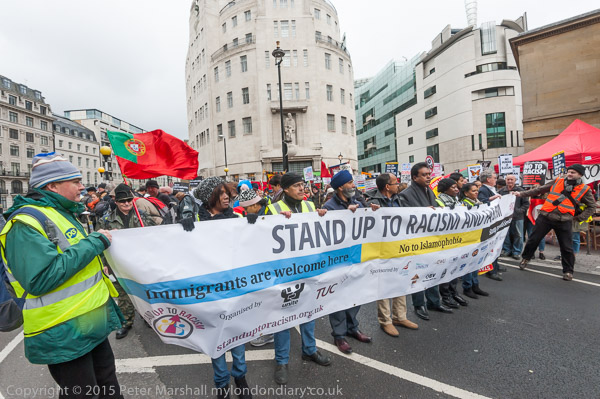
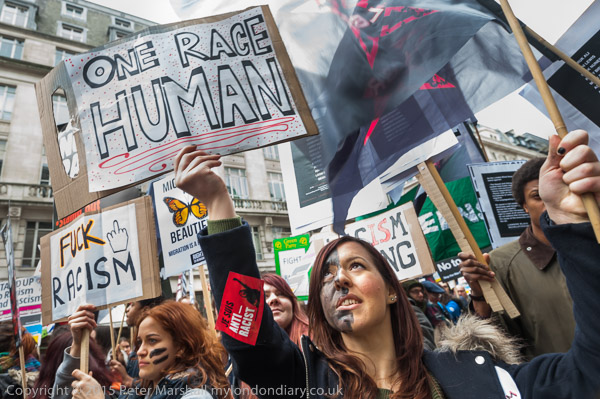
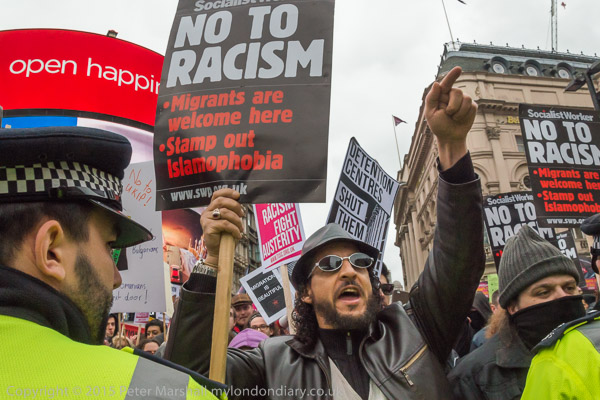
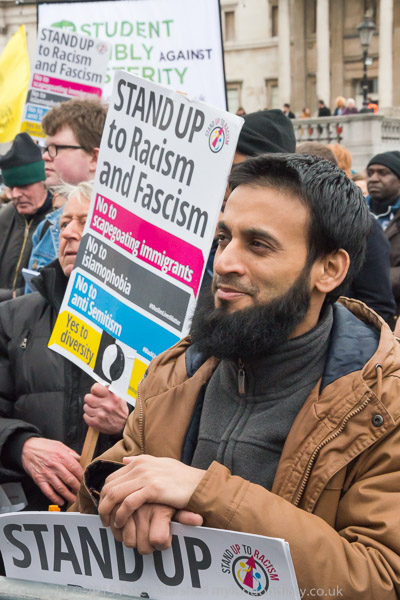
Thousands came to the Stand Up to Racism march from the BBC to Trafalgar Square to reject the scapegoating of immigrants, Islamophobia and anti-Semitism and to celebrate the diversity of Britain, with the message ‘Migrants are Welcome Here!

The march began at the BBC, who campaigners accuse of having a policy of ignoring protests in the UK, especially those against government policies – such as the racist hounding of immigrants under their ‘hostile environment’.

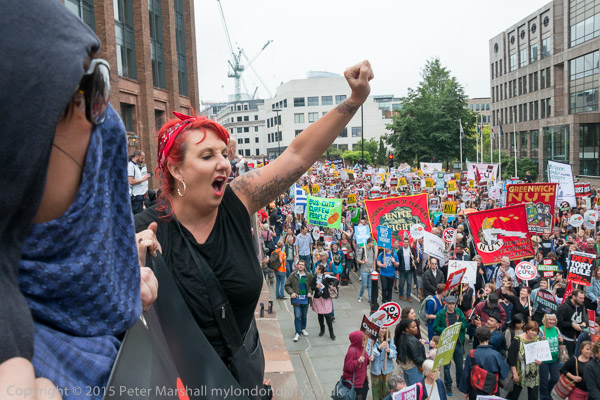
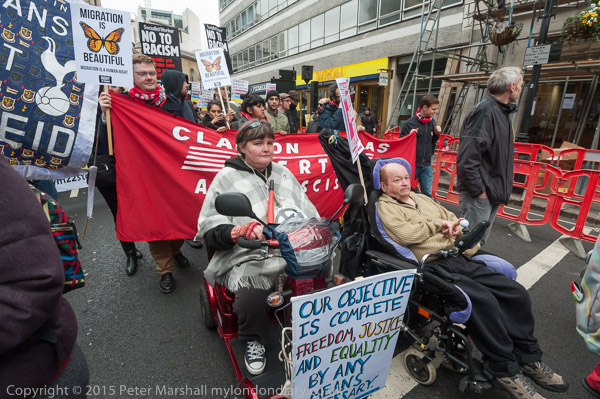
Among those marching were DPAC, Disabled People Against Cuts. Government policies have also targeted disabled people, cutting benefits and subjecting them to unfair ‘fitness to work’ tests which largely ignore medical evidence.

Stand Up to Racism March


Britain First Protests anti-Racist March – Piccadilly Circus

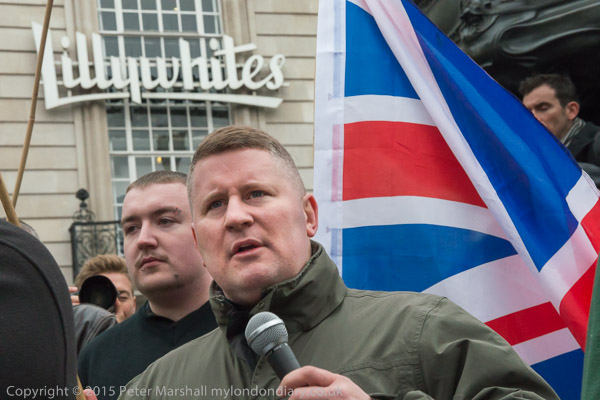
A small and rather sad extreme right-wing group stood on the steps around Eros waving flags and shouting insults at the anti-racist marchers as the thousands marched past. It was a reminder of the kind of bigotry the great majority were marching against.

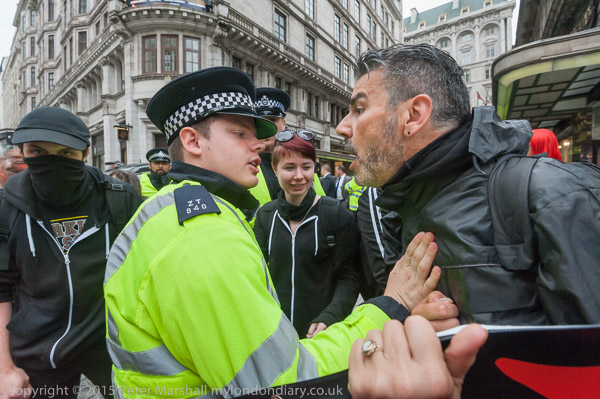
Some of the marchers paused to shout back at them, while others followed the advice of the march stewards and ignored the small group. There were a few scuffles but generally police kept the two groups apart, though later I learnt that after I had gone past a group of anti-fascists had seized the Britain First banner.

Britain First Protests anti-Racist March


Stand Up to Racism Rally – Trafalgar Square

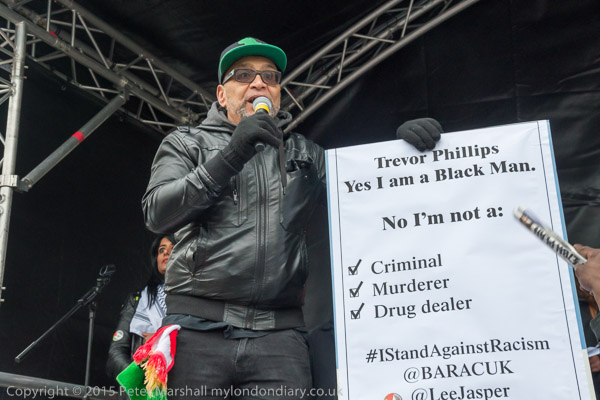
Lee Jasper holds up a large poster responding to Trevor Phillips saying he is not a criminal, murderer or thief

Several thousand who had marched to ‘Stand up to Racism’ through London stayed on to listen to speeches at a rally in Trafalgar Square.

Speakers included Owen Jones, Jeremy Corbyn, Zita Holbourne, Omer El Hamdoon, Lee Jasper and many others, whose photographs you can see on My London Diary.

Stand Up to Racism Rally


John Lewis customers support Living Wage – Oxford St

John Lewis is a company proud of its history and its reputation as a company based on its constitution as the UK’s largest employee owned business with both John Lewis and Waitrose owned in Trust by its 80,000 ‘partners’. They say everyone who works in its stores are not just employees, but a partners in the company, and in almost every year they enjoy a share in its profits.

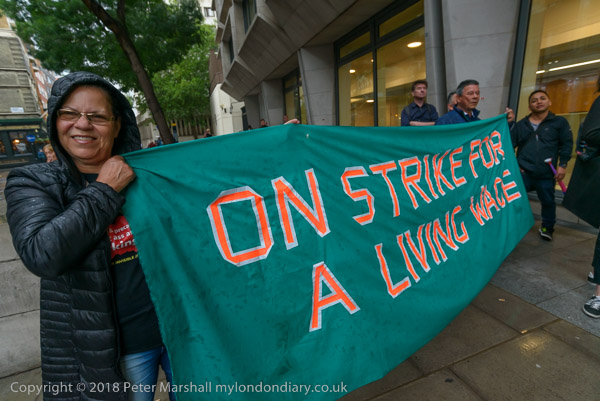
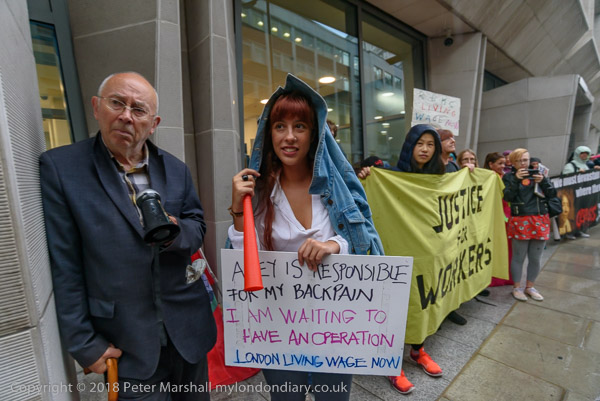
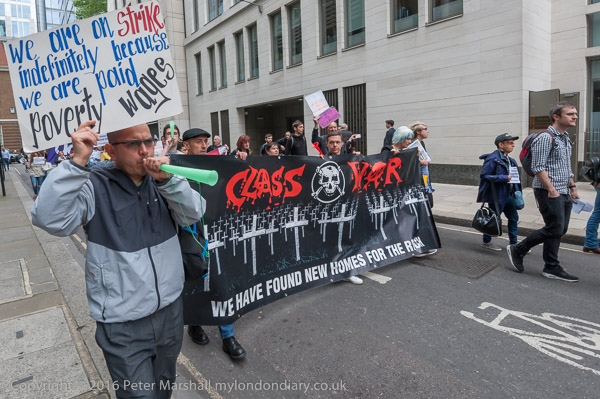
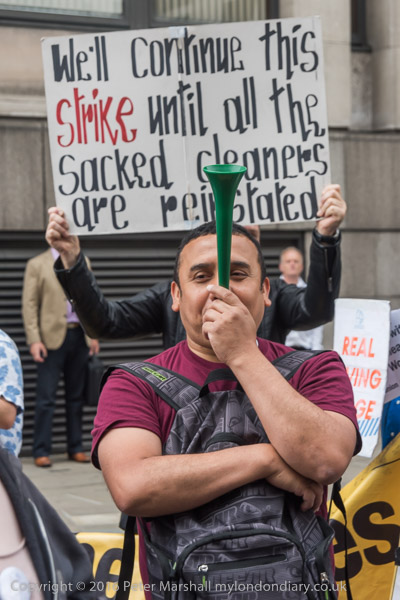
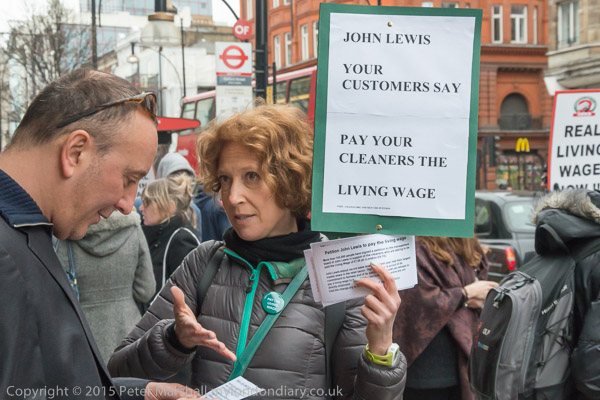
Everyone who works there, except the cleaners who play a vital role in the proper running of the stores. John Lewis gets out of making them partners by using other companies to employ them and provide the cleaning as a service, choosing its cleaning company through competitive tendering. Cleaning companies cut wages and conditions of service such as sick pay, maternity pay, pensions, holiday pay to the bone – usually the absolute legal minimum – so they can put in low tenders and still make good profits. They exploit the workers – a largely migrant workforce with limited job opportunities – while John Lewis can claim it isn’t them who are doing so and try to maintain their reputation as a good employer.

For some years the cleaners have been protesting to get a living wage and also for John Lewis to recognise their responsibility as the actual company the cleaners are providing a service to. They want to be treated equally with the others who work in the stores, rather than the second-class employees they are now. The least John Lewis could do would be to insist on contractors paying the living wage and giving employees decent conditions of service as a condition of tender, but they had refused to take any responsibility.

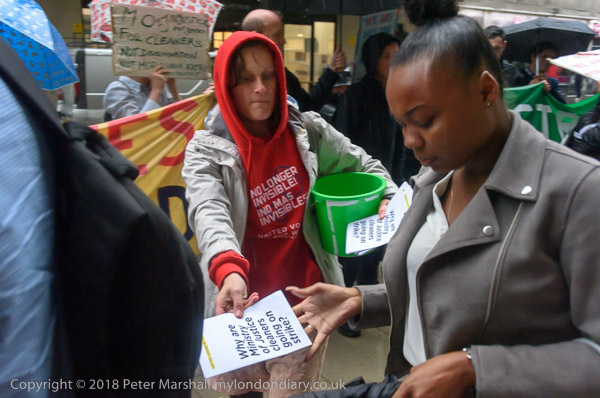
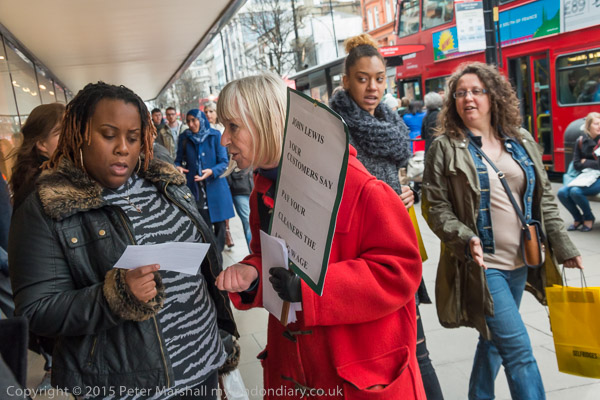
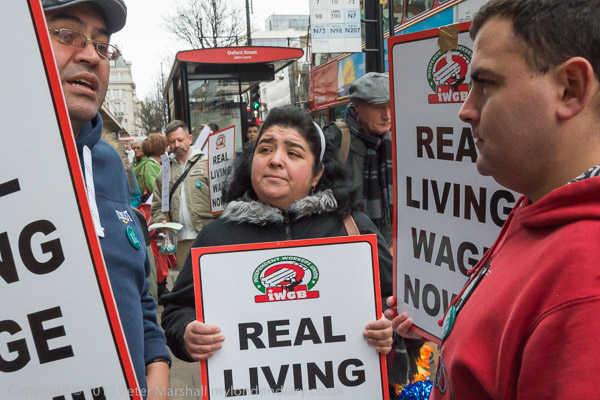
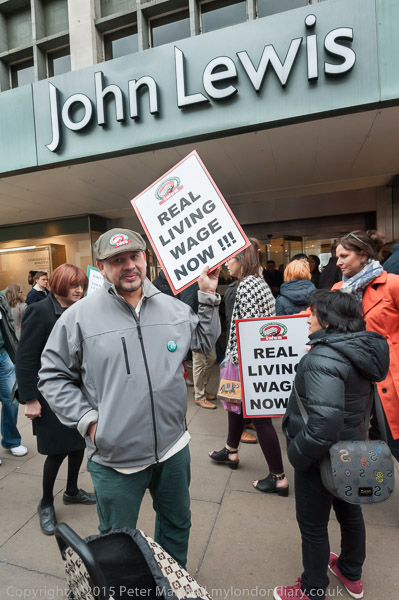
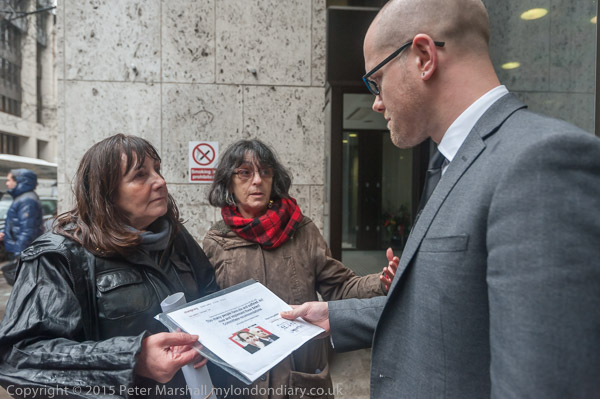
Many customers of John Lewis – a very middle-class group – back the cleaners’ case for fair and equal treatment, and a few had come to hand out flyers and talk to shoppers to back their case in a very restrained protest. One of them told me it was the first time she had ever taken part in any protest. They were supported by a few members of the cleaners union, the IWGB, who had brought some of their posters.
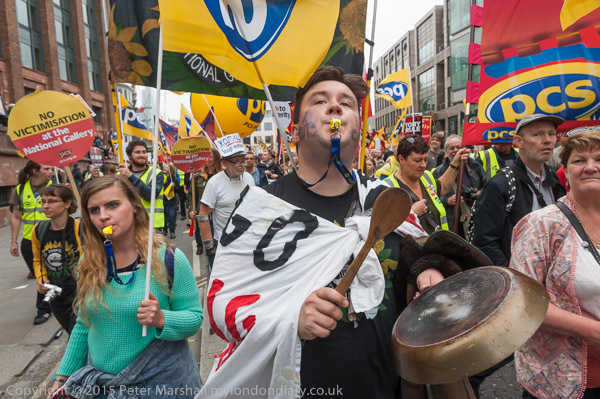
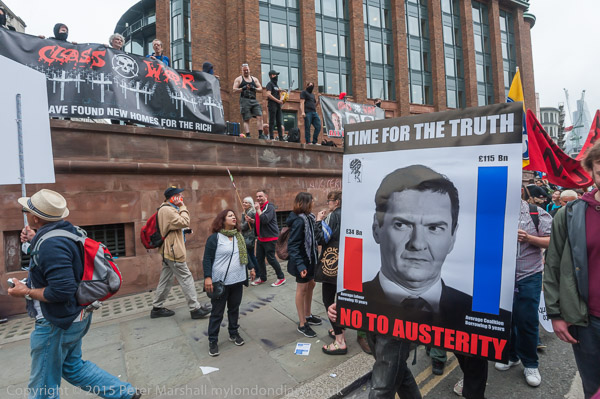
John Lewis customers support Living Wage


Junior Doctors, Ugandan Election, Benefit Sanctions

Junior Doctors, Ugandan Election, Benefit Sanctions. Three protests I photographed on Wednesday 9th March 2016

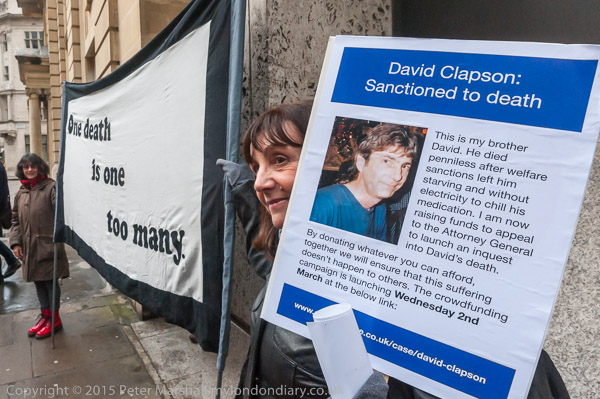
David Clapson, one of many victions of inhumane Tory policies

UCH rally for Junior Doctors Strike

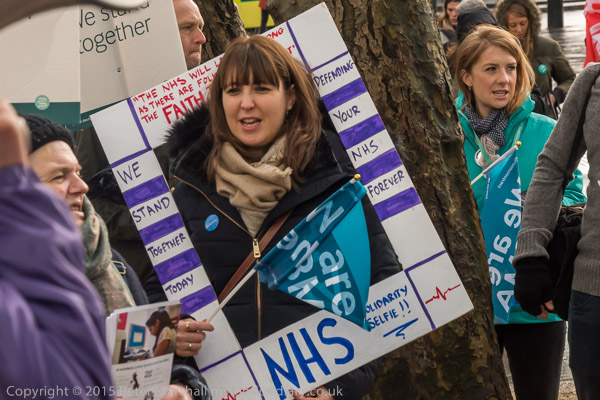
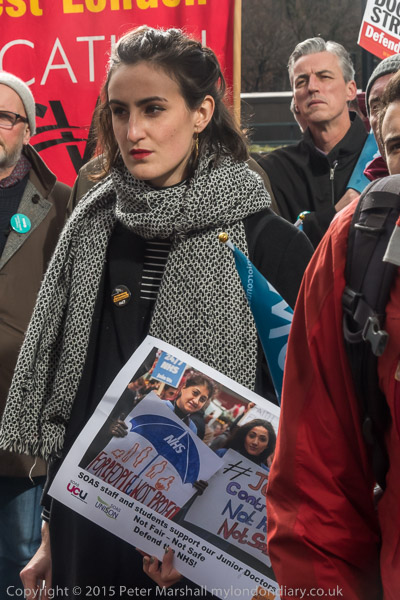
Junior doctors were on a one day strike against the imposition of unfair contracts which they say are unsafe and they were joined by other trade unionists on the picket line at University College Hospital on Euston Road.

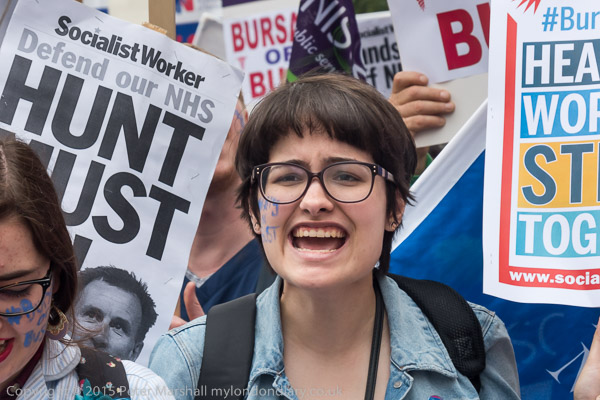
Later in the morning came the rally opposite the hospital I photographed when other health workers and NHS activists came to support them, and also to oppose the axing for NHS student bursaries and the creeping privatisation of the NHS.


Ugandans protest rigged Presidential Election

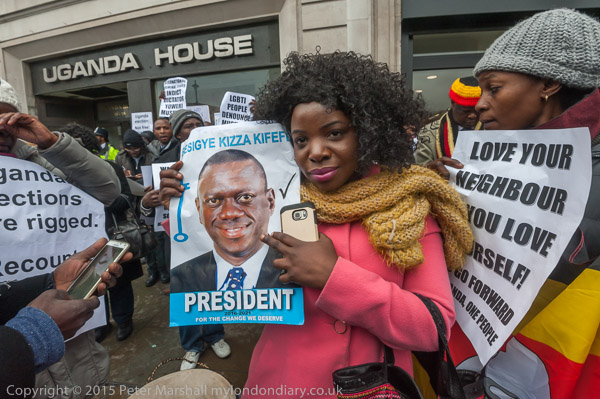
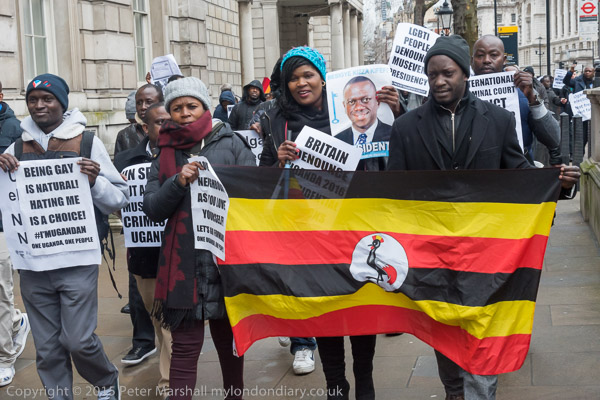
Elections had been held in Uganda in February 2016, and international observers reported widespread fraud and irregularities with opposition politicians being arrested, voters intimidated and many polling stations reporting results very different to the actual votes cast.
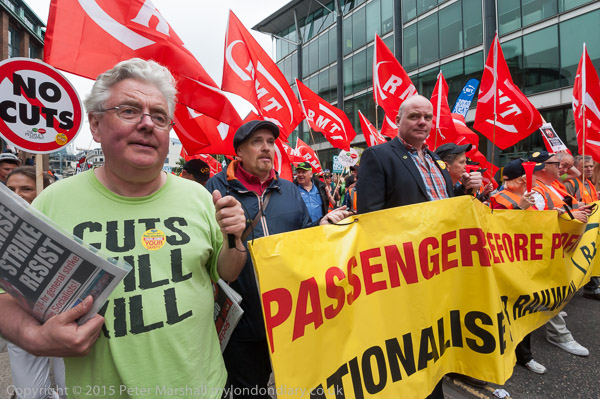
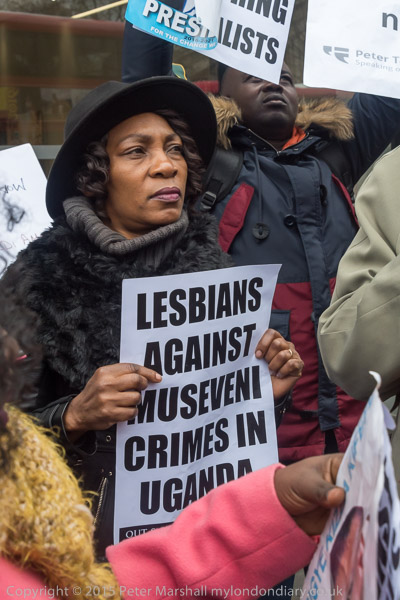
The protesters called on the UK not to recognise Museveni as the legitimate President of Uganda and for the immediate release of Dr Besigye and other political prisoners, as well as action against those responsible for torture.

The protesters, who included the African LGBTI Out & Proud Diamond Group and Peter Tatchell Foundation were clear that Museveni had lost the election to his challenger Besigye, and having held a high-spirited protest outside the Ugandan High Commission on the corner of Trafalgar Square marched down to deliver a letter to Downing St.
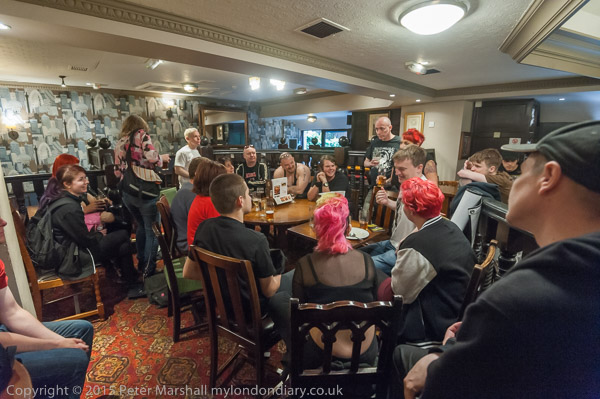

Unite against Benefit Sanctions

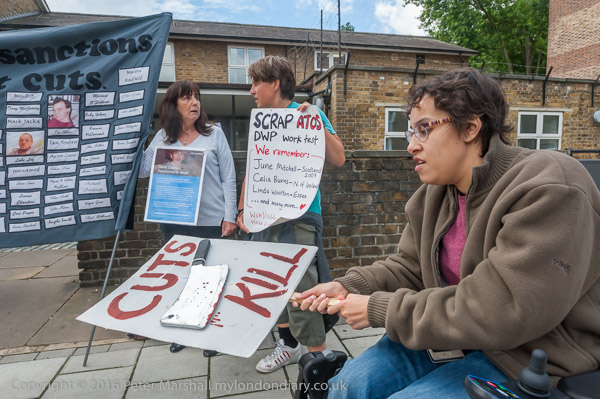
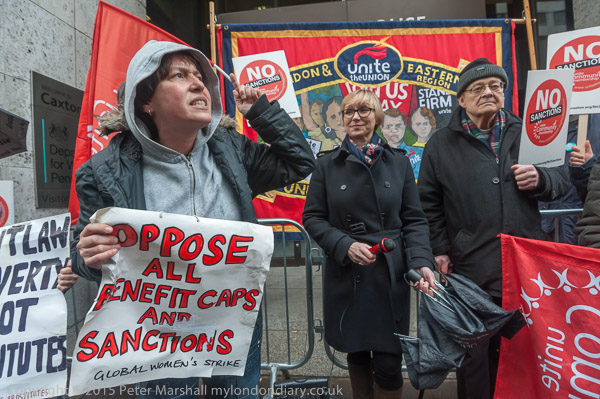
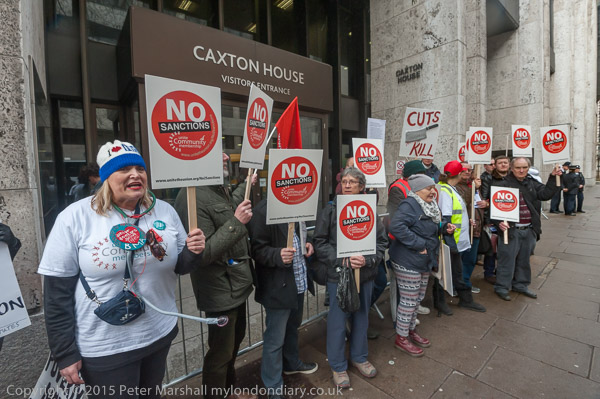
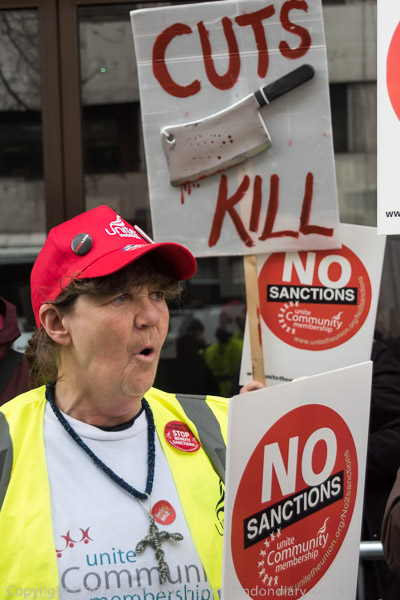
Demonstrations were taking place at over 70 job centres across the country against the use of benefit sanctions. Many claimants lose benefits for trivial reasons and for events beyond their control and are left without support. Some are sanctioned for arriving a few minutes late because of traffic congestion or for missing appointments they have not been informed about. I photographed a protest called by Unite Community members outside the ministry responsible for the policy, the DWP in Caxton St, Westminster.
Sanctions mean people lose benefits and are left destitute. Despite government denials at least 95 deaths are known to have resulted from these sanctions and without the efforts of the many food banks the figure would be much higher.

Some campaigners see the use of sanctions as a deliberate and successful attack on the unemployed and disabled by minister Iain Duncan Smith who is responsible for those working for the DWP being given incentives and targets for causing maximum misery and they label him ‘Minister for Euthanasia’.


David Clapson – Sanctioned to Death

Among those at the protest at Caxton House was Gill Thompson, the sister of David Clapson, a diabetic ex-soldier who died starving and destitute because he was penalised by the Job Centre for missing a meeting. She delivered a petition calling for an inquest into his death and an end to unfair benefit sanctions which leave claimants without support. Over 200,000 people have signed this and a related petition.


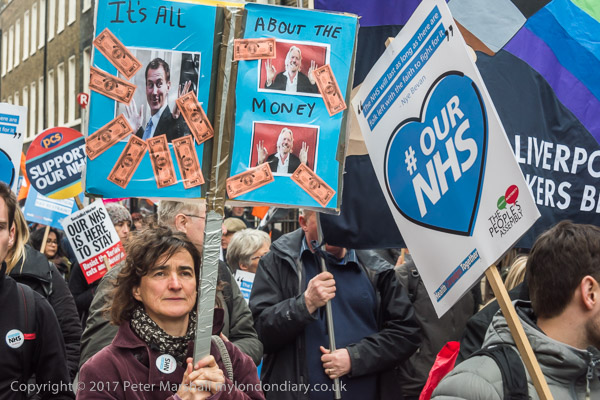
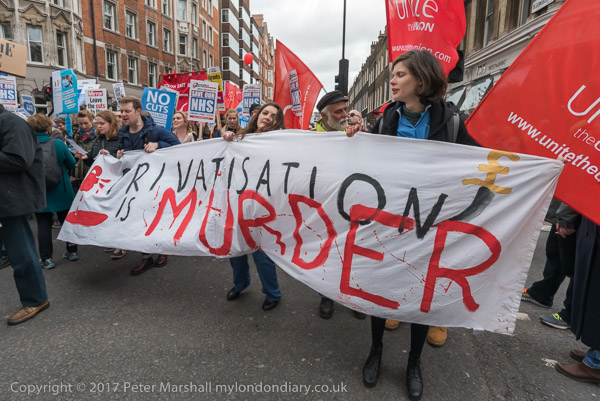
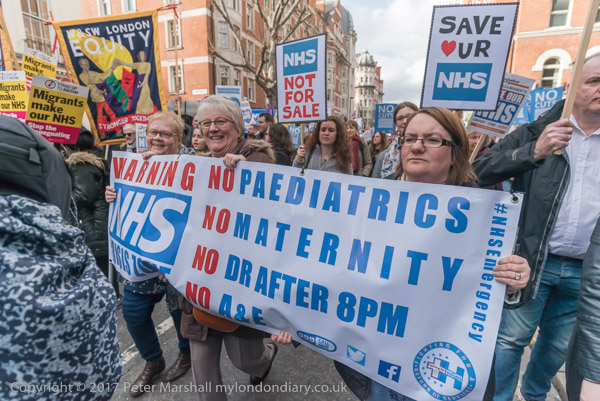
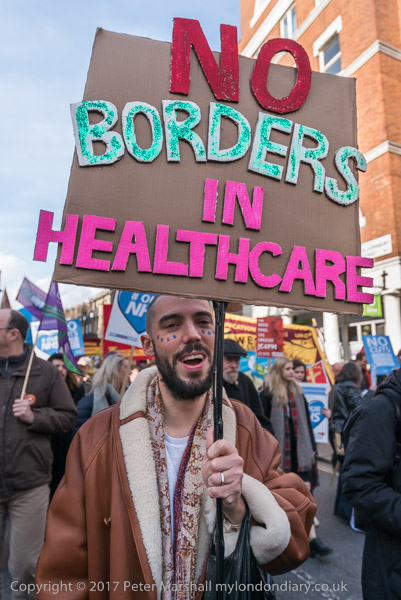
Save Our NHS March, London, 2017

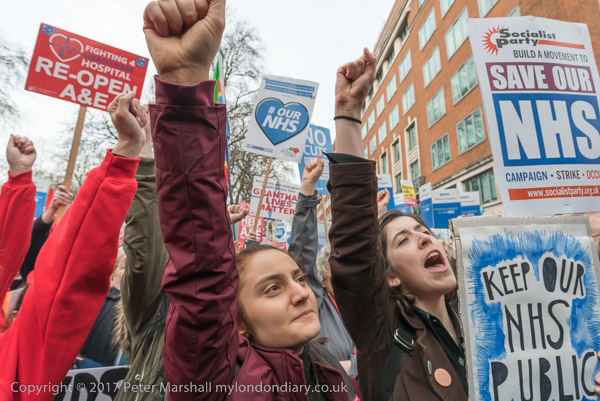
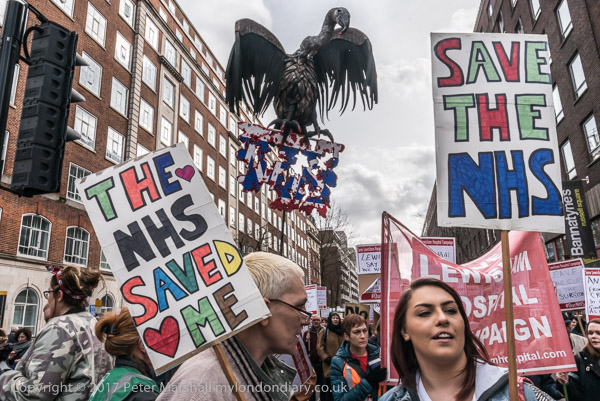
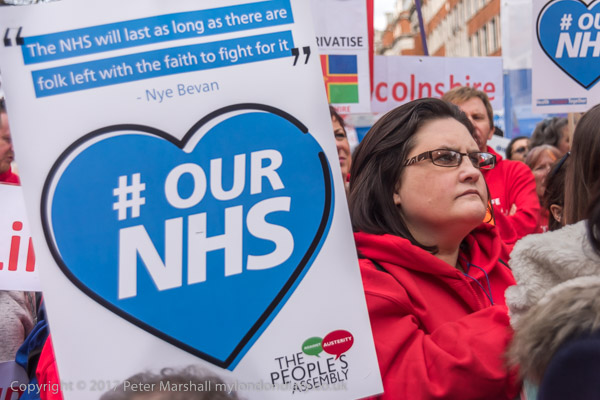
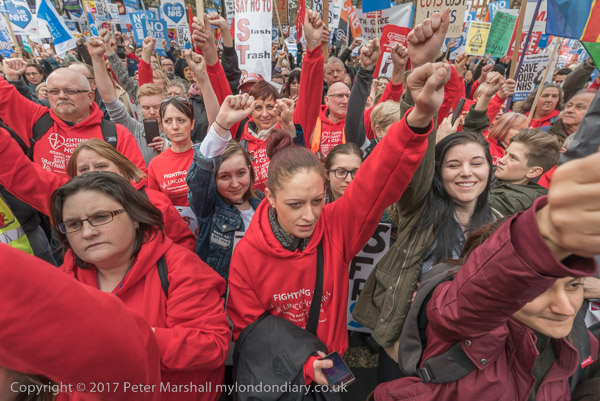
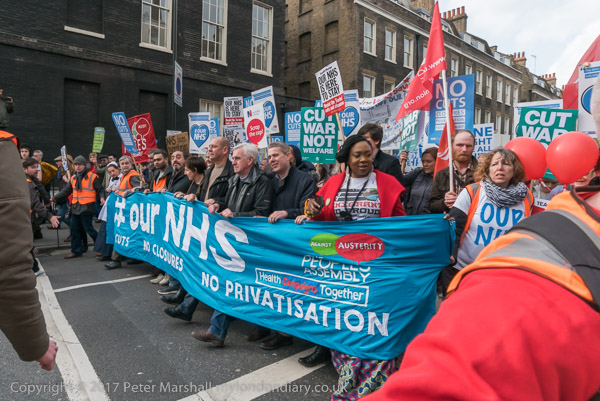
Save Our NHS March, London, 2017. On 4th March many thousands marched through London from Tavistock Square where the BMA have their headquarters to a rally in Parliament Square in protest against the cuts and privatisation of the NHS.

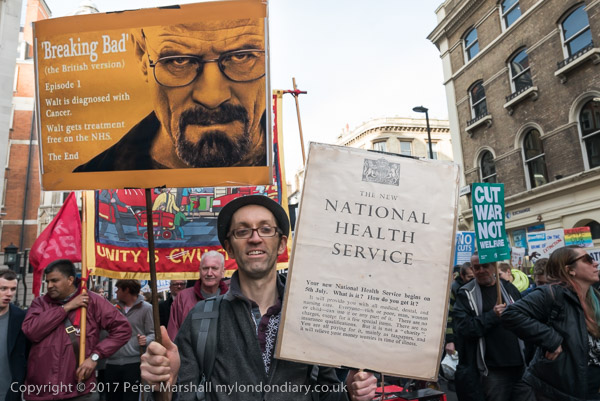
The Conservative Party were against the formation of the NHS from the start, and voted against both the Second and Third readings of the National Health Service Bill in the House of Commons in 1946.

The formation of a public state heath service had been advocated by Beatrice Webb as early as 1909, and the idea of a free, comprehensive and universal health provision had been gaining public support over the years, becoming official Labour policy under George Lansbury in 1934. By 1942 even the British Medical Association had proposed having regional councils running hospitals with consultants as paid staff, although they opposed the 1946 bill as they though doctors would lose money under the NHS.

But it was the 1942 report by William Beveridge, Social Insurance and Allied Services, that put the NHS firmly on the political agenda, with even Tory Prime Minister Winston Churchill suggesting in 1943 it would be a part of the rebuilding of Britain after the war, and both Liberals and Conservatives supporting consultations with doctors and others that resulted in a 1944 White Paper, ‘A National Health Service’.

When Labour’s Health Minister Aneurin Bevan put his National Health Service Bill to parliament in 1946, there was general agreement on the idea of a comprehensive health service, but the Tories were opposed to doctors becoming full-time employees and thus being unable to continue in hugely lucrative private practice. And the BMA shared their position, continuing their opposition after the Act was passed and eventually were able to force Bevan to amend the act and remove the introduction of a salaried service for GPs.

So, although it was a great day when the NHS came into being on 5th July 1948, and was from the start a little hamstrung by commercial interests – in this case of individual doctors. Dentistry has never been properly integrated into the system, and many find it impossible to get NHS dental treatment as relatively few dentists are prepared to work at the rates offered by the NHS. Even for those who are able to get registered as NHS patients, their are fees which for those not qualifying for exemption can be prohibitive despite being subsidised by the NHS.

The march sets of with John McDonnell, Mark Serwotka and others holding the main banner

It was a Labour government that proposed the idea of prescription charges in a 1949 Act, prompting the resignation of Aneurin Bevan from the Labour government, but it was a Conservative Government that introduced them in 1952. They were abolished under Labour by Harold Wilson in 1965 but he brought them back in 1968 though with significant exemptions based on age, income and medical conditions. Wales, Nothern Ireland and Scotland have now abolished charges, but in England each item now costs £9.35.

Since the 1990s many politicians, particularly Tories but also some of the leading figures in the New Labour government and on the right of the party have backed changing from the current universal system to a personal insurance-based system, and there has also been a huge increase in those taking out private insurance, with now around 4 million having this, mainly through the companies they work for.

Healthcare is now a massive industry in the UK, enabling the wealthy to avoid delays in receiving treatment in the underfunded NHS. The NHS also massively funds the private system, with some private healthcare providers receiving as much as 80% of their income for providing services to NHS patients. Some NHS hospitals also get in on the act by offering private care.

Many of the more routine services provided by the NHS have now been outsourced to private providers and over the years various changes in the way the NHS works have meant more and more has to be made available for tender by outside bodies. In some cases the level of services provided has been extremely poor – when I was in one hospital the outsourced cleaners had insufficient time to clean the floor under the beds, and accidentally putting down my hand I found a dirty dressing and a used needle from a previous occupant. Probably such outsourcing was a significant cause of various hospital-acquired infections.

But much private medicine is of a high standard – using the same surgeons and consultants others expensively trained by the NHS who work both for the NHS and private hospitals. The best private hospitals will have more equipment and more up-to-date equipment than the NHS hospitals that have suffered from years of cuts, and will also provide better conditions for their patients, with private rooms and more.

Having a two-tier system which is rapidly growing means that politicians, themselves wealthy and overwhelmingly representing the interests of the better off, and the more vocal wealthier groups in society, as well of course as the well-paid lobbyists for private health, are less likely to provide the NHS with the funding it needs to provide modern healthcare.

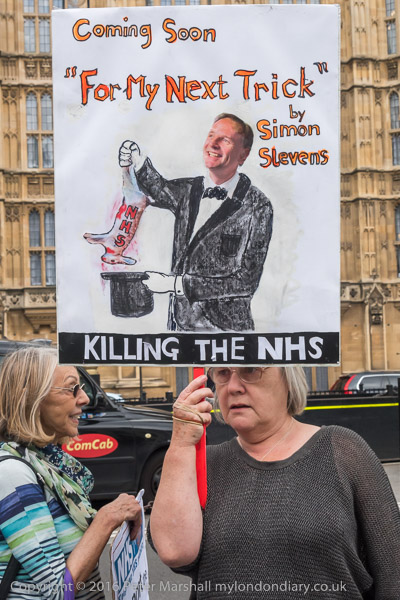
Many believe that our NHS is under threat, slowly and step by step being sold off to private healthcare companies, many based in the US, and that before long the NHS will be a name only, a branding used by private companies (as in many areas it already is.) The country is slowly being prepared for a complete move to an insurance based system, which will be brought in by politicians – Labour or Conservative- still chanting the mantra ‘The NHS is safe in our hands‘.

More at Save our NHS March.


Why we are short of Nurses

Why we are short of Nurses
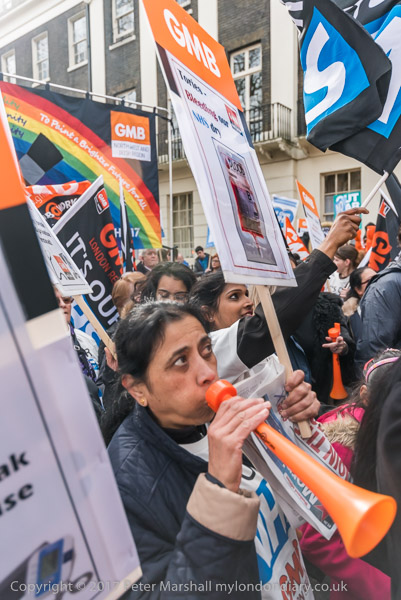
On January 9th 2016 I took the pictures shown here of a rally and march against the axing of bursaries for student nurses and midwives. The current huge surge in hospitalisation of Covid victims as Omicron rages through the nation has highlighted the huge shortage of qualified medical people in the NHS at all levels.

For years, but increasingly since the Tory-led coalition came to power in 2010, there have been huge shortages, with the NHS having to recruit from overseas – including from many poorer countries which are even more short of staff than the UK.

We have of course been bringing in nurses and doctors from abroad for many years – at least from the 1950s – rather than training enough from our own population. It has never been that there were not enough young people who want to be nurses and doctors – and in my years as a teacher I taught quite a few suitable young men and women who were well qualified but failed to gain admission to medical schools where there were perhaps 12 applicants for every place.

Hospitals have also become hugely reliant on agency nurses rather than directly employed staff, partly because of relatively low pay, but also because of a lack of self-defeating lack of flexibility by underfunded NHS hospitals which actually results in increased costs.

But for training nurses, the Tory government really messed things up in 2016 by removing the training bursaries for NHS nurses and midwives. Unlike other students they perform essential work for the NHS in hospitals caring for patients as an integral part of their courses, which makes it virtually impossible for them to undertake other part-time employment during their studies.

And in 2017 things got even worse and nursing students have had to pay tuition fees in the same way as other university students, leaving them with large loans to pay off when they complete their courses and go into employment.

Len McClusky, General Secretary of Unite next to a Unison banner

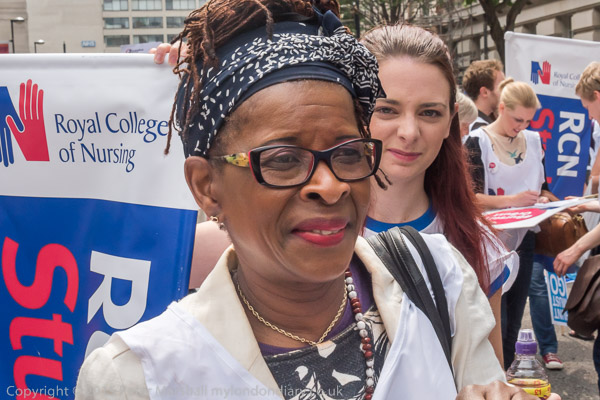
In 2020 the Royal College of Nursing published a report Beyond the Bursary: Workforce Supply which makes the point that at the start of the pandemic there were almost 40,000 nursing vacancies in the NHS in England alone, and called on government to develop a fully funded workforce strategy and aim for “an oversupply of nurses given years of underinvestment and the growing needs of our population.

The report notes that following the removal of the bursary there was a 31% drop in applicants for nursing courses, and over 4% fewer being accepted. Where we needed and increase in numbers being trained due to the shortage, government policies directly produced a decrease.

The RCN called on the government to abolish the tuition fees for nursing courses and reimburse the fees for those students affected by the removal of the bursary. And although the welcomed the decision to bring back an annual maintenance grant of £5000 for nursing students (£8,000 for some difficult to recruit specialities) from September 2020 they asked for that to be increased to a level that reflects the actual cost.
Of course the pandemic has made things worse. Some have died from Covid, partly as a result of the failure to provide effective protective clothing – and those contracts given to Tory mates with no experience in the field while some established companies failed to get orders. Many among those who recovered from Covid continue to suffer its after-effects – ‘long-Covid’. Others have simply been exhausted by overwork – and this is “a workforce that felt undervalued, unrewarded and where one in three were nearing retirement age.”

Brexit too has taken its toll, both with nurses from European countries leaving the UK and the failure of our government to respect the early promises it made to EU citizens working in the UK has not helped. Brexit and the continuing squabbles by the government over the treaty it signed is also a deterrent to people to now come and work here.

The shortage of nurses – and other medical staff – is a direct result of government policies. Not just the Tories but also of Labour under Blair and Brown, and is a part of the slow sabotaging of the NHS as a part of a policy of creeping privatisation that has been underway since at least the Thatcher years, though vastly accelerated since 2010. Unfortunately it isn’t as one placard states that the Tories are short-sighted, but that they are playing a long game to undermine our National Health Service.

More pictures on My London Diary:
NHS Bursaries March
NHS Bursaries rally before march


Selling Off The NHS

Two news items in recent days (neither given any great prominence in the media) show clearly how the Tories are selling off the NHS.

Though it was the Financial Times which reported why Rishi Sunak failed to attend a roundtable discussion with the UK hospitality sector. He was in California and the UK meeting was said by Treasury insiders to have clashed with his scheduled call with “US healthcare bosses.” Like me you probably don’t read the FT, but you are unlikely to have heard much about this from the BBC.

The second recent news is that Virgin Healthcare, a company that has been awarded contracts worth well over £2 billion for providing parts of our NHS services was this month sold to the private equity group Twenty20 Capital.

Virgin Care runs 400 NHS and local authority services including GP surgeries and Physiotherapy, generally concentrating on simple services which leaves more difficult and expensive work to be carried out by the NHS. It has a structure including Virgin Group Holdings based in the British Virgin Islands which sets up companies with large amounts of debt it uses to legally avoid paying UK tax – though the owners the Branson family have donated £70,000 to the Tory party.

You can watch a Labour Party video in which Jeremy Corbyn, then the Labour Leader, holds up a 451 page uncensored report and the considerably slimmer heavily redacted version released by Boris Johnson’s government. The unedited version confirms that the US demanded that the NHS is firmly on the table in the trade talks. “These uncensored documents leave Boris Johnson’s denials in absolute tatters… We’ve now got evidence that under Boris Johnson the NHS is on the table and will be up for sale.”
On Friday 23rd December 2016, I photographed ‘Howls of protest for death of the NHS‘, a protest at Downing St on the day that contracts were signed across the country to implement the government’s ‘Sustainability and Transformation Plans’ which effectively means the NHS can be handed over to private companies without any public engagement or consultation, ending a public service whose vision which has long been the envy of the world, signing the NHS over for private profit.

Every 15 minutes the speeches were interrupted for a long and loud ‘howl of protest’ by those taking part. These were timed to coincide with three social media ‘Thunderclaps’ across Facebook, Twitter & Tumblr by several hundreds of people mainly unable to be at the rally.

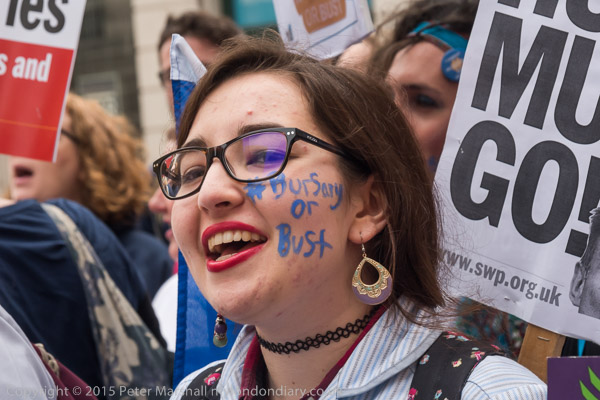
Speakers at the rally included Paula Peters of DPAC, Ealing Councillor Aysha Raza, trainee nurse Anthony Johnson of the Bursary or Bust campaign, a trainee mental health nurse, a patient and campaigner Gina and retired paediatrician and co-chair of Keep Our NHS Public Tony O’Sullivan.

At the end of the rally a small group of those present led by several DPAC campaigners, were harassed by police and threatened with arrest as they marched on the road to hold a final howl outside Parliament, with another short speech by Paula Peters.

Though the NHS has been deliberately weakened and made more available for private companies to run for profit by successive governments we still do have an NHS which is largely free at the point of need. But half of NHS beds have been lost since Thatcher began the cuts and privatisation and over 40% of services in UK healthcare are now provided by private companies and many of those who are now running the government have made clear in speeches, pamphlets and books that they favour an insurance backed scheme based on the US model.

The US model is expensive and flawed. Two thirds of personal bankruptcy in the USA is because people are unable to pay for the cost of healthcare either because they cannot afford the insurance or often because their insurance will not cover the treatment they require.

The Health and Care Bill 2021 continues the threats to the future of the NHS and gives much greater powers to the government to direct the NHS and will undoubtedly lead to greater penetration of the service by private providers, including the major US healthcare companies that Chancellor Sunak was making plans with in California while neglecting his duties in the UK.

More from 23rd December 2016: Howls of protest for death of the NHS


Fuel Poverty, NHS Staffing & Zero Hours – 2013

Eight years ago there were protests about fuel poverty and NHS staffing which seem still very much in the news today, and zero hours contracts remain a problem, though unscrupulous employers have found another unfair way to screw their workers with ‘fire and rehire’, although legal actions brought by smaller and more active unions have begun to curb some of the more obviously illegal aspects of the gig economy.

Justice Not Jumpers at NPower HQ

But fuel costs are rising fast and putting many energy companies out of business. Not that they were really energy companies, simply middlemen gambling to make a quick profit, buying energy as cheaply as they could and attracting customers to deals which have become uneconomic to honour as fuel prices have risen. The scheme to rescue their customers, passing them on to those companies still in business makes life tougher for those who have to pick them up, and with the latest company to go under – or at least into administration – means that either taxpayers or possibly electricity customers – we await the details – will have to shoulder the bill.

It’s a crisis that has its roots in the privatisation of the industry and the absurd belief in competition that has created an overpopulated market in companies taking a cut out of our bills, with others profiting from persuading people to switch suppliers. Along of course with a government failure to provide proper support for insulation of homes – as Insulate Britain have been gluing themselves to the M25 and elsewhere to highlight, as well as ending the building of onshore wind farms, failing to put investment into other renewable sources such as tidal power and instead backing climate-destroying wood burning and expensive nuclear schemes. The recent half-hearted support for heat pumps is yet another failure by government. We should have schemes that ensures that new build properties are built with either air or ground source heat pumps and high levels of insulation and provides incentives for them to have solar panels.

On Tuesday 26th November I went with fuel poverty activists to march to the offices of NPower, one of the big six energy providers to protest against the profiteering by them that leads to people having to choose between eating and keeping warm, causing unnecessary deaths.

They included people from Fuel Poverty Action, UK Uncut, the Greater London Pensioners’ Association and Disabled People Against Cuts and were protesting against the huge increase in energy costs and against the deception of the energy companies who blame price rises on ‘green taxes’. The protests, in London and at British Gas’s new Oxford HQ, as well as in Lewes and Bristol were supported by other groups including No Dash for Gas, Campaign Against Climate Change, Climate Revolution, Young Friends of the Earth, Frack Off London, Power for the People, Barnet Alliance for Public Services, Lewes Against the Cuts, SOAS Energy & Climate Change Society and Southwest Against Nuclear.

They went to the NPower offices in Threadneedle Street in the centre of the City of London because NPower is the UK’s most complained about energy company with double the customer complaints of its nearest rival EDF and higher price rises in 2013 than any of the other Big Six companies. It had then paid zero corporation tax for the past 3 years despite a 34% profit rise of £413million and in the previous winter its price hikes were estimated to have pushed 300,000 people into fuel poverty.

Fuel poverty leads to premature deaths – and the figure for these announced that day for winter 2012-3 was a shock, with an increase of almost a third on the previous year, to 31,000 people. The protesters emphasized this by carrying a coffin to the offices, with several of the wearing masks with the faces of the prime minister and chancellor, David Cameron and George Osborne, and wearing jumpers with the logos of major energy companies.

Police protected the offices of NPower while the protesters held a peaceful rally outside, where many testimonies were read from people who were having to chose between heating and eating, already cold and dreading the coming winter. In a press statement, Susan Jarrett of UK Uncut said: ‘The fact that people are dying of fuel poverty as Npower and other energy companies rake in the money and avoid tax is a scandal. This Government is not only unnecessarily cutting our services in the name of austerity but are allowing these energy companies to literally get away with murder which is why we are fighting back today.’

This winter fuel costs are higher. Global warming means our weather is far less predictable, and its possible we may have an unusually cold snap. Or we may be lucky and avoid extremes of cold. But if we do get them, then there will be more deaths.

4:1 legal minimum NHS staffing

Back in 2013, the Dept of Health was still in Richmond House on Whitehall, and nurses were there to campaign for a manadatory staffing level of one nurse for every 4 patients in the NHS. They were joined by other groups protesting against closures and privatisation in the NHS. Its probably because of protests like this and many others that the department moved to obscure offices some way down Victoria St – which at least one protest I photographed marched past without noticing and got several hundred yards down the road before they realised they had missed it. Richmond House is now set to hold Parliament while the old building undergoes extensive and very expensive modernisation.

The protest was a response to various disastrous news stories about the problems of the NHS, including the RCN (Royal College of Nursing) revealing the NHS has over 20,000 nursing vacancies and the Department of Health’s decision to downgrade (effectively close) 100 A&E departments. Protesters also urged people to sign a petition calling for the NHS to be exempted from the provisions of the EU-US trade treaty then being negotiated in secret; and post-Breixt the government has made clear they will not protect the NHS in UK-US negotiations.

Cultural Workers against Zero Hours

Finally I went to photograph PCS members from national cultural institutions in London at Tate Modern and on the Millennium Bridge protesting against zero hour contracts which give them no guaranteed weekly hours or income, while stopping them taking on other work. Employers use zero-hour contracts to cut wages, avoid holiday pay, pensions, and ensure the maximum flexibility and profit for themselves. Workers are also unable to take on other part-time work, as they are obliged to be available for work at the whim of the employer.

There have been some minor changes in the law and in 2015 employers were banned from requiring workers to get permission before accepting other work but zero hours contracts continue to be a problem for many workers. Workers on them have no way of knowing their income week to week and although in theory they have the right to refuse any work offered, this still often leads to them being offered fewer hours in future. And while in theory zero hours workers have employment rights, these are often denied – and virtually impossible for individuals to enforce. All workers – particularly those suffering from zero hours contracts – need to join an effective union.


Trade Justice Parade 2001

Twenty years ago today on 3rd November 2001 I wrote:

the trade justice parade was a serious event but also we were having some fun. the world trade organisation isn’t at all amusing, but i loved the t-shirt that said ‘wto – unsuitable for anyone with a conscience.

giant pound signs, balloons, a hug fat cat, the wto dragon, pirates and everyone made it an event to remember.

speakers included naomi klein (author of ‘no logo’) and sergio cobo from mexico.

My London Diary

And with the article I posted the two black and white images shown here. But I think most of the pictures I took of the parade were in colour, taken on colour negative film. But the only work I was putting in to a picture library back then was in black and white – and then still 8×10″ prints. There was still greater demand for black and white, and some of the pictures I took in colour I printed as black and white. The library would have taken colour, but mostly they worked with colour transparencies.

But I had recently bought a scanner with which I could scan colour negative film and it had software that could produce positive results with something like the correct colours. The results were not great and seemed to accentuate the faults in the negatives and exaggerate flare. The results were certainly not of professional quality as you can probably see – even after I have improved the pictures in Lightroom.

A year after I made these pictures I bought my first DSLR and things changed, though it took a while for the library and some other outlets to shift to accept digital files, and for a little while I was still taking black and white film for the prints they wanted as well as digital colour. But things changed quite rapidly to an all-digital world.

Going back to the negatives I’m sure I could now make much improved digital versions than these by ‘camera scanning’ – using a DSLR to photograph them and then Negative Lab Pro software to convert them to positives. It’s good news for those of us with archival material on colour negative film. But I can see no reason at all for wanting to take film again when digital produces so much better results with much less hassle.

The issues people were protesting about in the Trade Justice Parade are still very much with us – and in the UK the government last week passed yet another act hastening the privatisation of our NHS, while many of the same issues that were brought up by the protest are behind the failures to deal effectively with climate change. The huge greed for consumption and wealth of a small minority of the ultra-rich underlie both; they are not ‘high net worth’ but ‘high global liability.’


Nine years ago: 6 Oct 2012

Proposals to close Accident and Emergency services at four of the nine hospitals in North West London provoked fury among local residents and opposition from local councils as they would mean slow journeys over heavily congested roads for those living in much of northwest London. The proposals seemed to be motivated simply by cost savings with no regard to the consequences.

This protest was one of a number that I photographed, particularly about the closure of A&E and some other services at both Charing Cross Hospital (which is in Hammersmith) and Ealing Hospital. The previous month I had photographed a http://mylondondiary.co.uk/2012/09/sep.htm#hospitals large march from Southall Park to Ealing Hospital against the closure plan and there was another march to Central Middlesex Hospital taking place that same day.

These large and widespread protests and legal actions taken by the protesters were almost certainly a major factor behind the decision in March 2019 by then Health Secretary Matt Hancock to finally scrap the plans for what was the biggest hospital closure programme in the history of the NHS. The campaigners welcomed the decision but said it should have come much earlier rather than after seven years of the Dept of Health supporting the plans, which would have involved demolishing Charing Cross Hospital and selling off most the site.

I photographed as people gathered for the march in Shepherds Bush but had to leave as the march was setting off for Hammersmith and a rally in Fulham to go to Westminster.

Britain First, a far-right anti-Muslim movement (it describes itself as “a modern, responsible patriotic political movement”) was protesting at Downing St against what they described as ‘Britain’s secret shame – Muslim Grooming’ and were joined on their protest by members of other extremist groups including the English Defence League. After protesting for around an hour at Downing St they marched the short distance to Parliament Square where they tried to burn an Islamic flag. It proved to be rather fire-resistant.

A few yards away, thousand of Muslims packed Old Palace Yard opposite the Houses of Parliament in a peaceful protest against an Anti-Muslim film made in the USA. They called for laws to protect religious figures.

The film, Innocence of Muslims, a crude video made by https://en.wikipedia.org/wiki/Nakoula_Basseley_Nakoula Egyptian-born American writer Mark Basseley Youssef had already prompted violent anti-American protests in various Muslim countries. Youssef was then in jail in Los Angeles for violations of a probation order which, among other things included making false statements regarding his role in the film, and his use of the alias “Sam Bacile”. He had a previous conviction for in 1997 for intent to manufacture methamphetamine and was under probation following release in June 2011 from being jailed in 2010 for his part in a bank fraud.

Youssef, under his alias Bacile, falsely claimed that the anti-Islamic film had been funded by $5 million from 100 Jewish donors and that he was an Israeli Jew. An Egyptian court tried him and others in absentia and sentenced them to death for defaming Islam in November 2012. He was released from prison in 2013 to serve the remainder of his sentence in a halfway house in Californinia followed by 4 years of probabation.

Finally I travelled to Kilburn for a march and rally demanding Brent council rehouse the Counihan family from South Kilburn. Two years earlier, Anthony Counihan, a London bus driver inherited a few acres of poor land in Galway on the death of his father. Rented out, it brings an income of £18 a week.

He reported this to Brent Council, who responded with an eviction order and a demand for repayment of £70,000 of housing benefit, later telling him he should move back with his family to Ireland where he was born – while continuing to drive a bus from Cricklewood Depot. His wife Isabel and five children were all born in Brent.

The case was complicated by the fact that the family had moved out of a council property to go back to Ireland for a year to look after his sick father, and had signed away their lease as the council had not told them they could sublet for the year, and by their treatment by the council after their return, when they were unable to find accomodation they could afford on a bus-drivers salary. Brent decided they had made themselves “intentionally homeless” and were refusing their statutory duty to rehouse the family.

More on all at:
Rehouse the Counihans
Muslims against Anti-Muslim Film
Britain First – Muslim Grooming
Save Our Hospitals – Shepherds Bush