Maggie’s Hugs & Fortnum & Mason – 2011

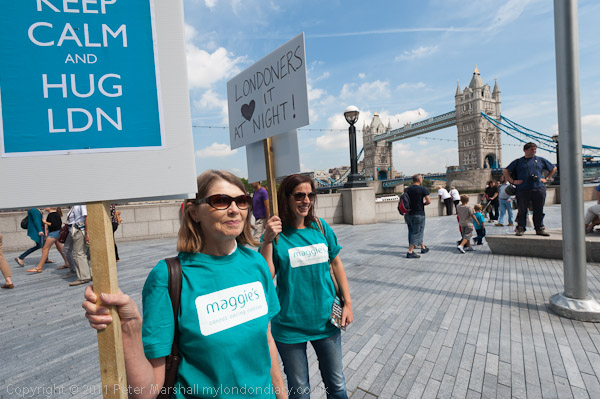
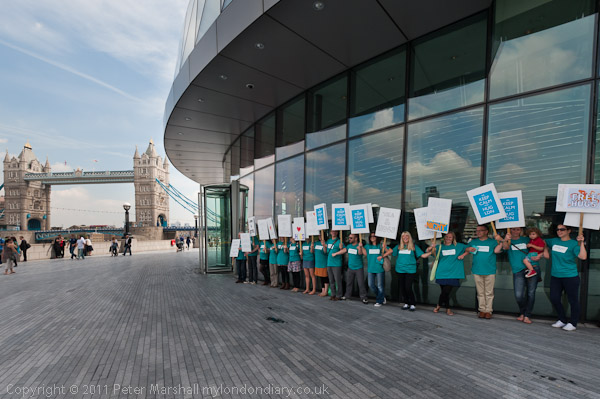
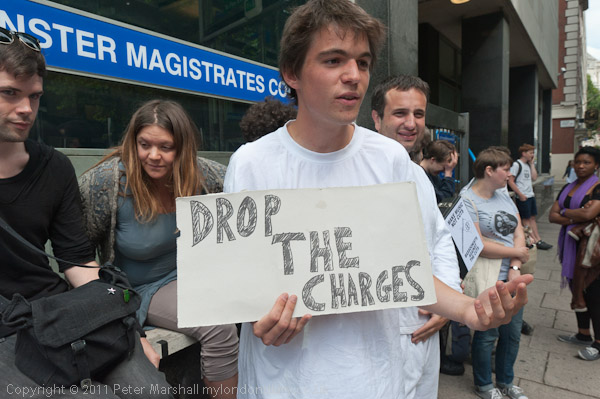
Maggie’s Hugs & Fortnum & Mason: On Friday 19 August 2011 I stopped briefly on the Queen’s Walk outside City Hall on the south bank of the Thames close to Tower Bridge to photograph the ‘Hug London‘ event by cancer charity Maggie’s, before going on to a protest outside Westminster Magistrates Court where protesters arrested during a peaceful protest in luxury food shop Fortnum & Mason were facing charges of aggravated trespass.


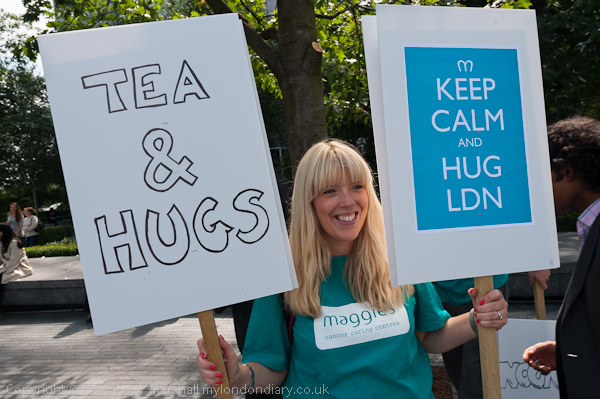
Maggie’s Charity Hugs London

City Hall
Maggie's Hugs & Fortnum & Mason - 2011
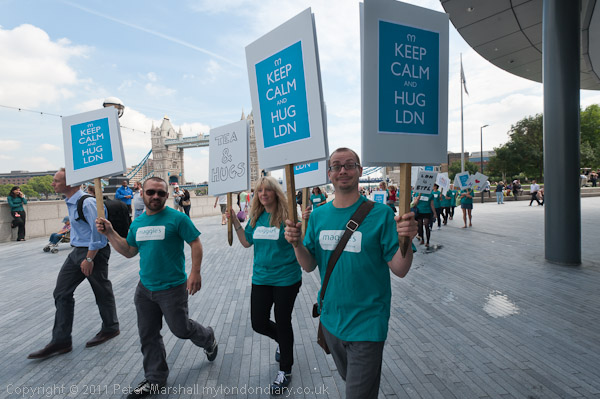
Keep calm after the riots and join Maggie’s fund-raising Night Hike was the message

Maggie’s Centres offer support for anyone affected by cancer and to their family and friends from the time of diagnosis, during and after treatment, to recurrence, end of life or in bereavement.
Maggie's Hugs & Fortnum & Mason - 2011

The cancer care charity was set up by Maggie Jencks after the recurrence of her breast cancer in 1993 and opened the first Maggie’s Centre in Edinburgh shortly after her death in 1995.
Maggie's Hugs & Fortnum & Mason - 2011

There are now in 2026 around 30 centres across the UK and four international centres – considerably more than in 2011. The main fundraising events for the charity are various challenges and the largest of these in 2011 was a London Night Hike, a a 10 or 20 mile adventure held in partnership with Open House London, with hikers getting to visit inside a number of iconic buildings on the route for food and entertainment.
Maggie's Hugs & Fortnum & Mason - 2011

Unfortunately registration for the Night Hike had opened on the day when London’s 2011 riots were taking place and this had led to a great drop in registration – although London would almost certainly be peaceful when the actual event was to take place in September.

Volunteers had come to London to try to get more people to take part , walking around London offering Londoners free hugs and handing out invitations to sign up for the Night Hike.

Maggie’s Hugs London


Support Fortnum & Mason Protesters

Westminster Magistrates Court, 70 Horseferry Road
Maggie's Hugs & Fortnum & Mason - 2011

UK Uncut were one of a number of groups taking action during the massive TUC ‘March For The Alternative‘ on Saturday 26th March 2011. They came to Oxford Street to hold peaceful protests at tax dodging shops and banks around Oxford St and to party at Oxford Circus.
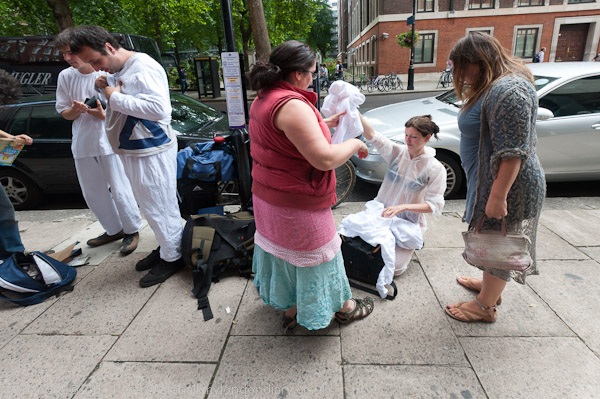
Getting ready outside the court

I had photographed some of their protests earlier in the day but went home to change clothes before they got to Fortnum and Mason, having been hit by a paintball from a black bloc protester, possibly aimed at police. Otherwise I would probably have probably have been with them when the went into the luxury shop and might well have been arrested despite having a Press Card.
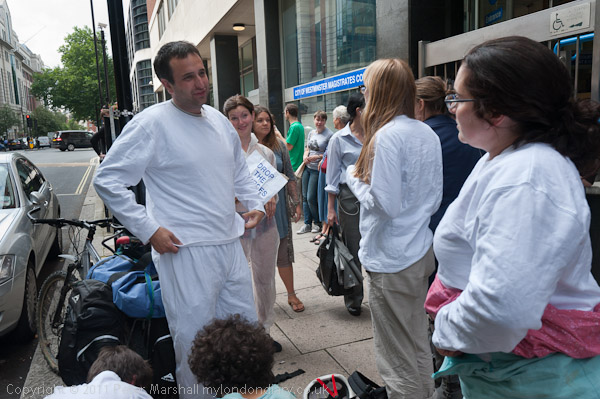
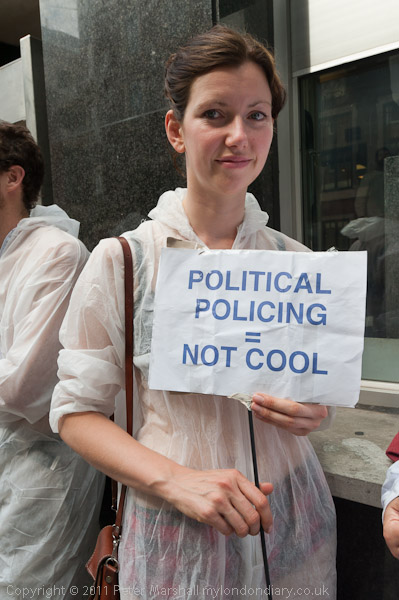
Half the protesters went into the public gallery, though they had to change out of white suits to be allowed in

Fortnum and Mason was occupied because it is ‘a symbol of wealth and greed‘ and made use of a tax avoidance scheme to save £10 million a year. During the protest police praised the protesters for their cooperation with the police in not attempting to leave the premises.

Chief inspector Claire Clark, the senior officer present can be seen and heard on video promising them that they would be free to leave, but apparently she already knew that they would be arrested as they left.
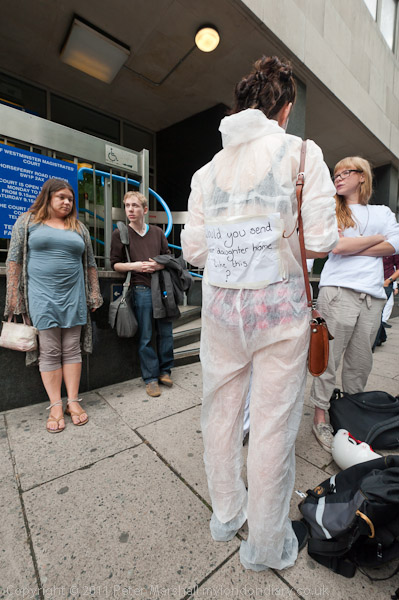
Police held the protesters in the store as there were battles taking place between the black block and police in the area around and the police were unable to control the situation – and there would probably have been unable to make mass arrests. Police also needed time to had made arrangements for a large number of arrests. So officers – in best police tradition – lied to the protesters.

All 145 UK Uncut protesters were arrested as they left the store and charged with the serious offence of aggravated trespass with intent to intimidate. They were then taken to various police stations and held for many hours. Some were turned out in the early hours of the morning only partly dressed, in flimsy white part transparent suits over their underclothes, often many miles from their homes
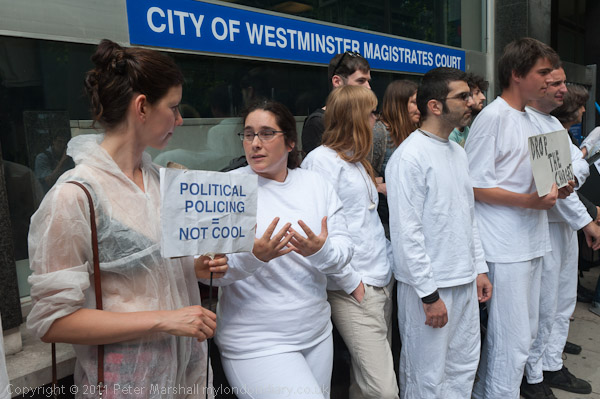
A mother of one of those arrested in a plastic suit over underwear as her daughter was turned out by police

Eventually charges against most were dropped, but 30 were brought to court, divided alphabetically into three groups, A, B and C. All ten in trial A were found guilty but given a conditional discharge and told to pay £1,000 each towards costs, with the judge telling them “History often vindicates those involved in such acts.” Those in Trial B were initially found guilty but five of the nine were acquitted on appeal. All in Trial C were acquitted.
I still find it hard to believe that the CPS decided it was in the public interests to bring these prosecutions having seen the videos and heard much of the evidence. There was little damage in the shop, although some people trapped in there for two and a half hours by the police may have sampled a little food. The main loss to the shop was caused by police as the protesters would have left peacefully after a few minutes of occupation had the police allowed them to do so – and there would have been little loss of business.

Clearly these arrests and trials were politically motivated. It was a peaceful protest and it was the police who closed the shop, not the protesters.

Support Fortnum & Mason Protesters


FlickrFacebookMy London DiaryHull PhotosLea ValleyParis
London’s Industrial HeritageLondon Photos

All photographs on this page are copyright © Peter Marshall.
Contact me to buy prints or licence to reproduce.
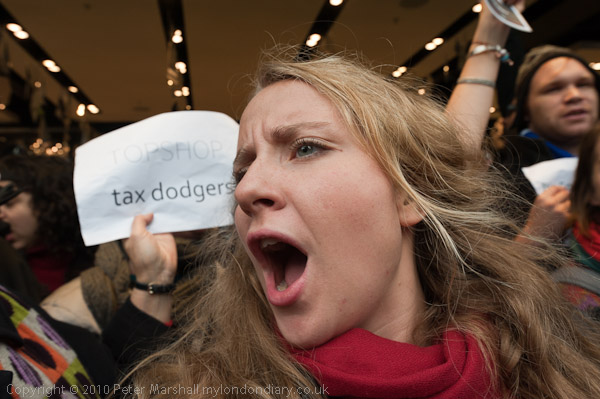
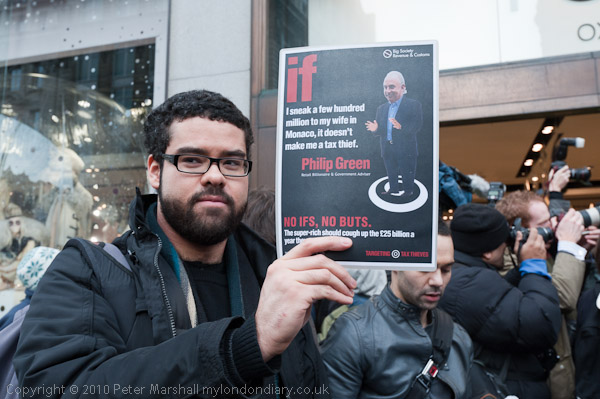
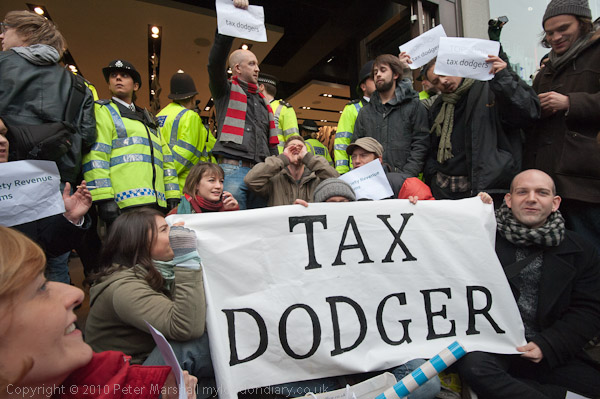
Tax Robbery, Racism & John Lewis

Tax Robbery, Racism & John Lewis. Saturday 21st March 2015 was another busy day for me in London, covering protests against the criminal activities of UK banks, a large march and rally against racism in the UK (and a few racists opposing this) and customers of John Lewis calling on the company to treat its cleaners fairly.


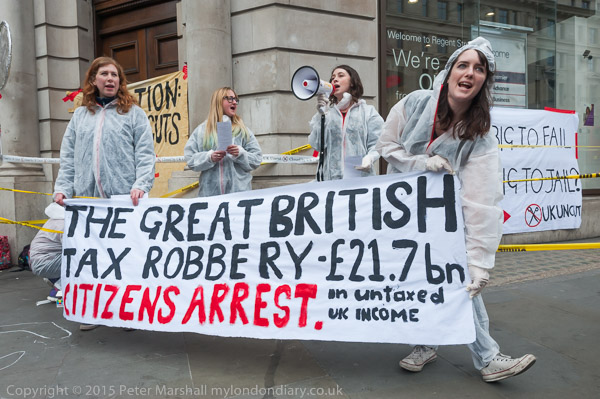
Great British Tax Robbery – HSBC, Regent St.

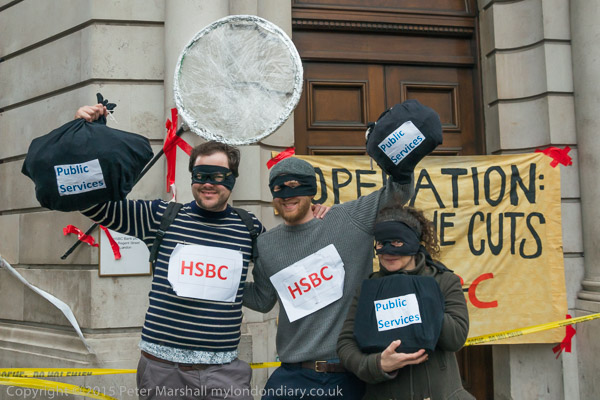
UK Uncut campaigners arrived at the HSBC Regent St branch dressed as detectives and robbers to highlight the bank’s crimes in causing the financial crash and tax dodging, which have led to drastic cuts in vital public services and welfare and attempt a ‘Citizen’s Arrest’.

UK Uncut had a clear message for both HSBC and the government, accusing them of being criminals:

The government told us they’d “protect the poorest and most vulnerable”. They said “those with the broadest shoulders will bear the brunt of the cuts”. And what have we seen? Dismantling the NHS and wrecking the welfare state. Cutting schools, youth clubs, sure start centres, domestic violence refuges and libraries. Slashing local council budgets. Attacking disabled people with inhumane ‘work capability assessments’ and cuts to vital benefits. Removing access to justice through legal aid cuts. Allowing the big six energy companies to push people into fuel poverty. Cutting jobs, wages and pensions. Selling off social housing and moving people away from their communities. Driving hundreds of thousands into food banks and making families choose between heating or eating

My London Diary, March 2015

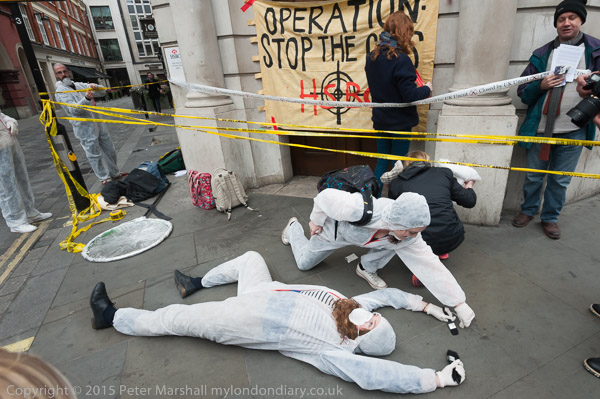
The bank closed a few minutes before the protesters arrived and kept its doors shut as the protesters’ ‘forensic team’ chalked around ‘crime victims’ on the ground and put crime scene tape around the area, sealing off the door with a banner. There was a speech from a NHS campaigner from East London about the effects of the cuts on the NHS and ‘criminals’ with HSBC on their chests posed for pictures. After a few minutes the protest was ended as many of those taking part were, like me, joining the Anti-Racism protest.

Great British Tax Robbery


Stand Up to Racism March – BBC to Trafalgar Square

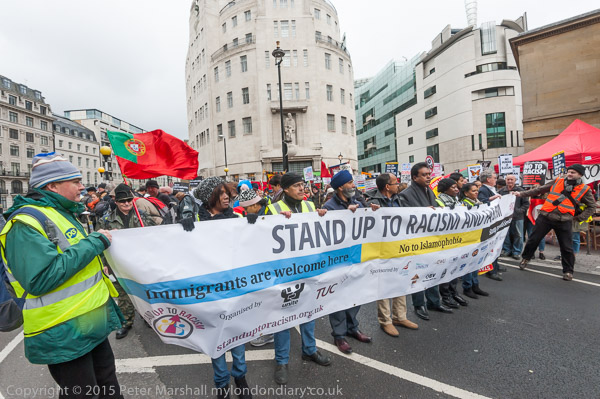
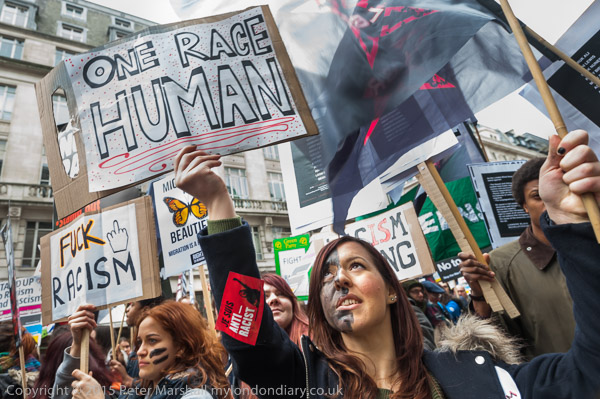
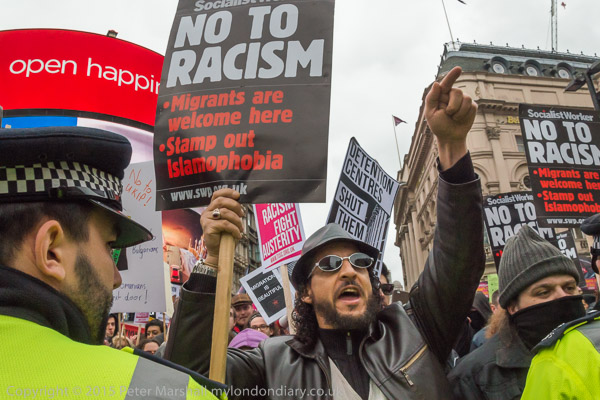
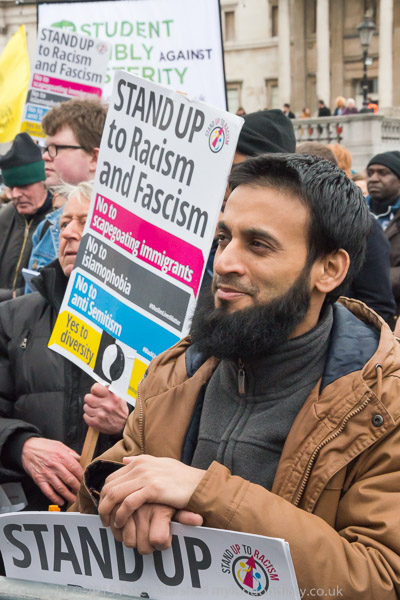
Thousands came to the Stand Up to Racism march from the BBC to Trafalgar Square to reject the scapegoating of immigrants, Islamophobia and anti-Semitism and to celebrate the diversity of Britain, with the message ‘Migrants are Welcome Here!

The march began at the BBC, who campaigners accuse of having a policy of ignoring protests in the UK, especially those against government policies – such as the racist hounding of immigrants under their ‘hostile environment’.

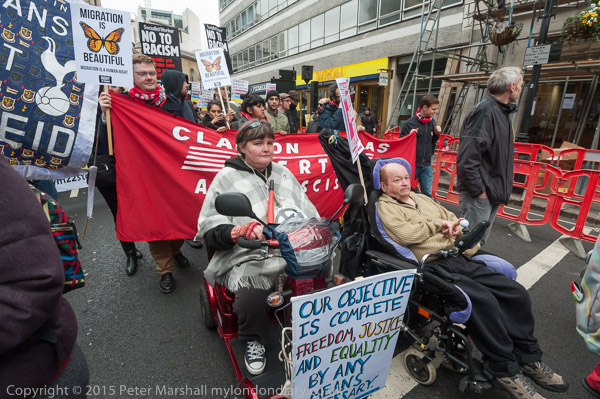
Among those marching were DPAC, Disabled People Against Cuts. Government policies have also targeted disabled people, cutting benefits and subjecting them to unfair ‘fitness to work’ tests which largely ignore medical evidence.

Stand Up to Racism March


Britain First Protests anti-Racist March – Piccadilly Circus

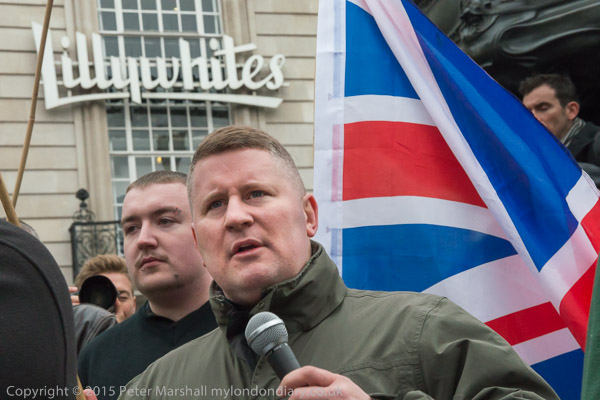
A small and rather sad extreme right-wing group stood on the steps around Eros waving flags and shouting insults at the anti-racist marchers as the thousands marched past. It was a reminder of the kind of bigotry the great majority were marching against.

Some of the marchers paused to shout back at them, while others followed the advice of the march stewards and ignored the small group. There were a few scuffles but generally police kept the two groups apart, though later I learnt that after I had gone past a group of anti-fascists had seized the Britain First banner.

Britain First Protests anti-Racist March


Stand Up to Racism Rally – Trafalgar Square

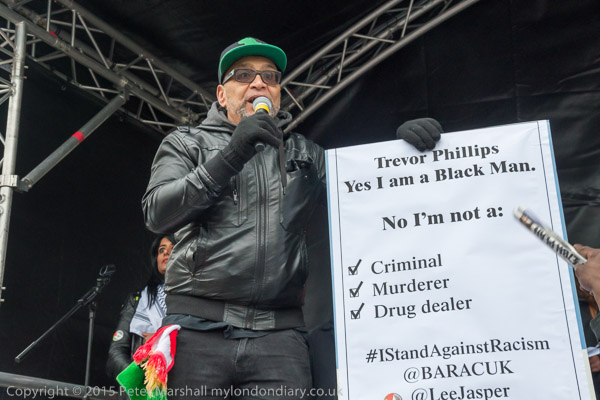
Lee Jasper holds up a large poster responding to Trevor Phillips saying he is not a criminal, murderer or thief

Several thousand who had marched to ‘Stand up to Racism’ through London stayed on to listen to speeches at a rally in Trafalgar Square.

Speakers included Owen Jones, Jeremy Corbyn, Zita Holbourne, Omer El Hamdoon, Lee Jasper and many others, whose photographs you can see on My London Diary.

Stand Up to Racism Rally


John Lewis customers support Living Wage – Oxford St

John Lewis is a company proud of its history and its reputation as a company based on its constitution as the UK’s largest employee owned business with both John Lewis and Waitrose owned in Trust by its 80,000 ‘partners’. They say everyone who works in its stores are not just employees, but a partners in the company, and in almost every year they enjoy a share in its profits.

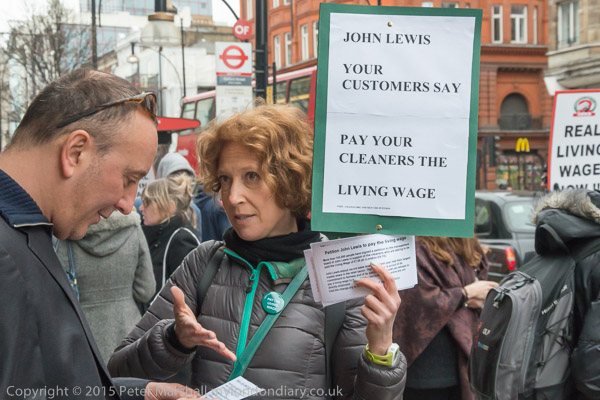
Everyone who works there, except the cleaners who play a vital role in the proper running of the stores. John Lewis gets out of making them partners by using other companies to employ them and provide the cleaning as a service, choosing its cleaning company through competitive tendering. Cleaning companies cut wages and conditions of service such as sick pay, maternity pay, pensions, holiday pay to the bone – usually the absolute legal minimum – so they can put in low tenders and still make good profits. They exploit the workers – a largely migrant workforce with limited job opportunities – while John Lewis can claim it isn’t them who are doing so and try to maintain their reputation as a good employer.

For some years the cleaners have been protesting to get a living wage and also for John Lewis to recognise their responsibility as the actual company the cleaners are providing a service to. They want to be treated equally with the others who work in the stores, rather than the second-class employees they are now. The least John Lewis could do would be to insist on contractors paying the living wage and giving employees decent conditions of service as a condition of tender, but they had refused to take any responsibility.

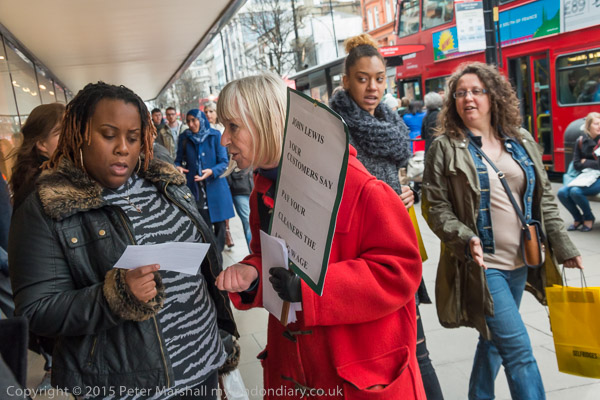
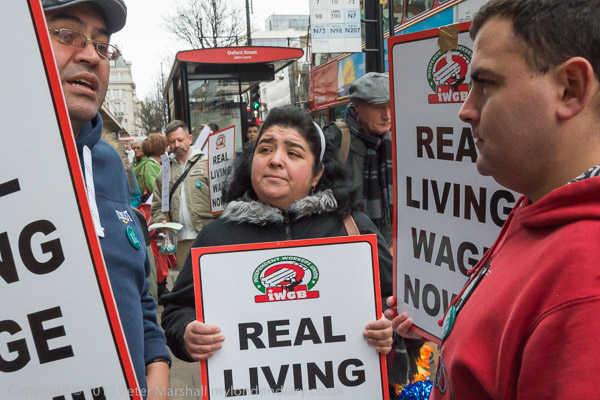
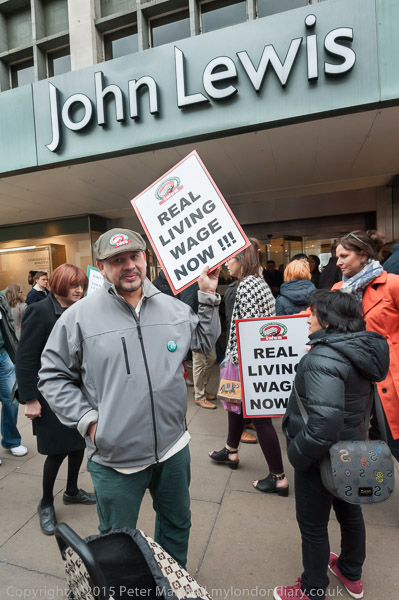
Many customers of John Lewis – a very middle-class group – back the cleaners’ case for fair and equal treatment, and a few had come to hand out flyers and talk to shoppers to back their case in a very restrained protest. One of them told me it was the first time she had ever taken part in any protest. They were supported by a few members of the cleaners union, the IWGB, who had brought some of their posters.

John Lewis customers support Living Wage