Maggie’s Hugs & Fortnum & Mason – 2011

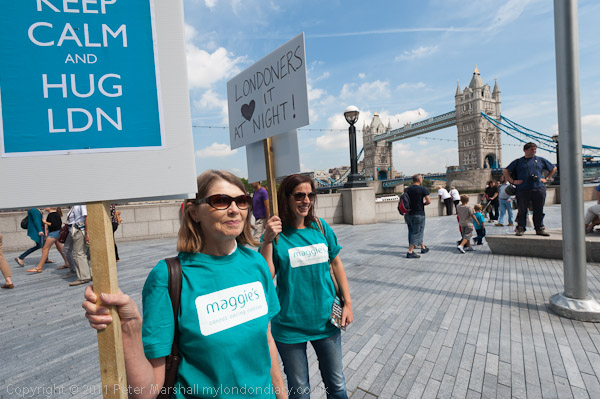
Maggie’s Hugs & Fortnum & Mason: On Friday 19 August 2011 I stopped briefly on the Queen’s Walk outside City Hall on the south bank of the Thames close to Tower Bridge to photograph the ‘Hug London‘ event by cancer charity Maggie’s, before going on to a protest outside Westminster Magistrates Court where protesters arrested during a peaceful protest in luxury food shop Fortnum & Mason were facing charges of aggravated trespass.


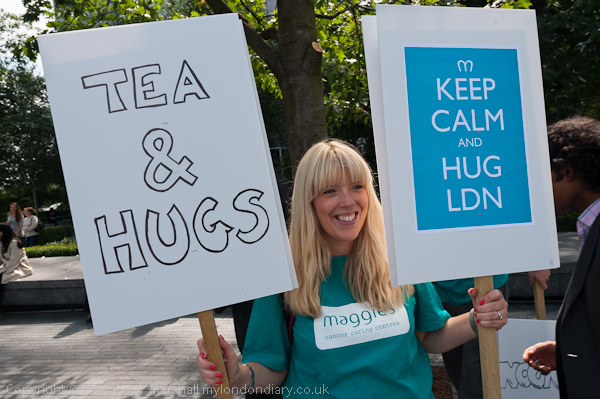
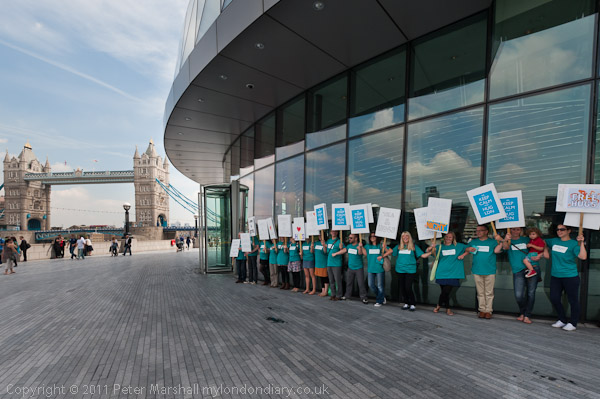
Maggie’s Charity Hugs London

City Hall
Maggie's Hugs & Fortnum & Mason - 2011
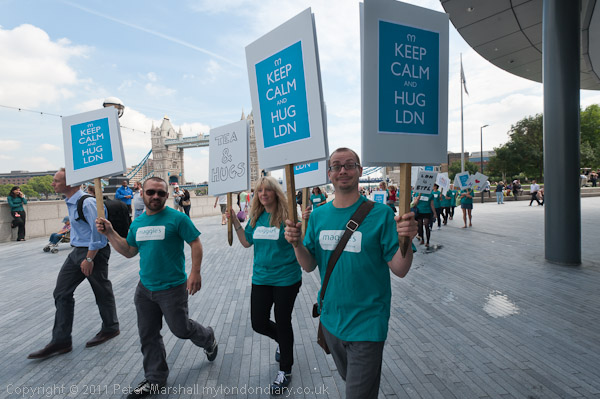
Keep calm after the riots and join Maggie’s fund-raising Night Hike was the message

Maggie’s Centres offer support for anyone affected by cancer and to their family and friends from the time of diagnosis, during and after treatment, to recurrence, end of life or in bereavement.
Maggie's Hugs & Fortnum & Mason - 2011

The cancer care charity was set up by Maggie Jencks after the recurrence of her breast cancer in 1993 and opened the first Maggie’s Centre in Edinburgh shortly after her death in 1995.
Maggie's Hugs & Fortnum & Mason - 2011

There are now in 2026 around 30 centres across the UK and four international centres – considerably more than in 2011. The main fundraising events for the charity are various challenges and the largest of these in 2011 was a London Night Hike, a a 10 or 20 mile adventure held in partnership with Open House London, with hikers getting to visit inside a number of iconic buildings on the route for food and entertainment.
Maggie's Hugs & Fortnum & Mason - 2011

Unfortunately registration for the Night Hike had opened on the day when London’s 2011 riots were taking place and this had led to a great drop in registration – although London would almost certainly be peaceful when the actual event was to take place in September.

Volunteers had come to London to try to get more people to take part , walking around London offering Londoners free hugs and handing out invitations to sign up for the Night Hike.

Maggie’s Hugs London


Support Fortnum & Mason Protesters

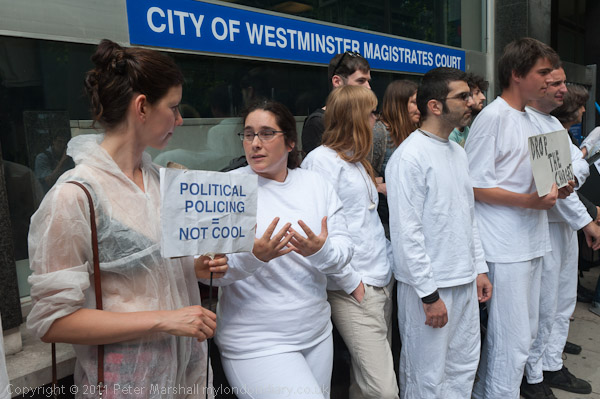
Westminster Magistrates Court, 70 Horseferry Road
Maggie's Hugs & Fortnum & Mason - 2011

UK Uncut were one of a number of groups taking action during the massive TUC ‘March For The Alternative‘ on Saturday 26th March 2011. They came to Oxford Street to hold peaceful protests at tax dodging shops and banks around Oxford St and to party at Oxford Circus.
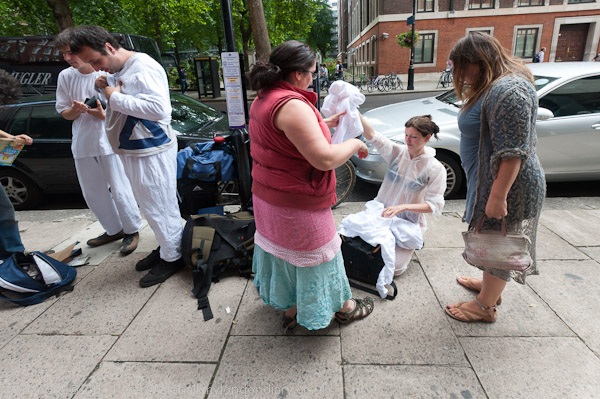
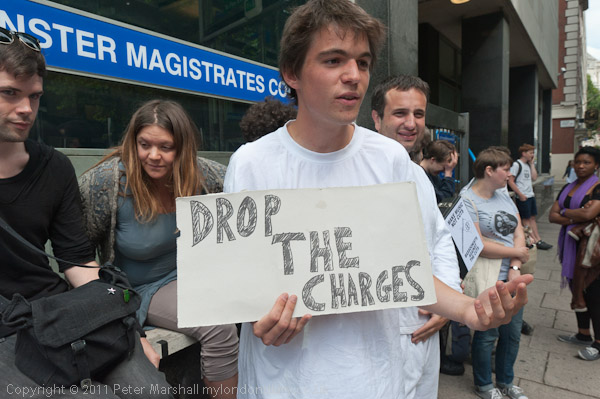
Getting ready outside the court

I had photographed some of their protests earlier in the day but went home to change clothes before they got to Fortnum and Mason, having been hit by a paintball from a black bloc protester, possibly aimed at police. Otherwise I would probably have probably have been with them when the went into the luxury shop and might well have been arrested despite having a Press Card.
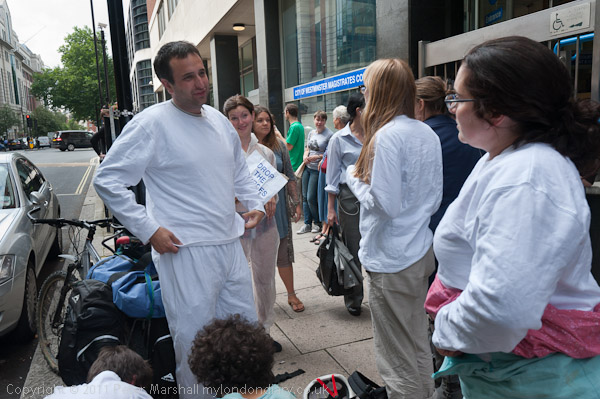
Half the protesters went into the public gallery, though they had to change out of white suits to be allowed in

Fortnum and Mason was occupied because it is ‘a symbol of wealth and greed‘ and made use of a tax avoidance scheme to save £10 million a year. During the protest police praised the protesters for their cooperation with the police in not attempting to leave the premises.

Chief inspector Claire Clark, the senior officer present can be seen and heard on video promising them that they would be free to leave, but apparently she already knew that they would be arrested as they left.
Police held the protesters in the store as there were battles taking place between the black block and police in the area around and the police were unable to control the situation – and there would probably have been unable to make mass arrests. Police also needed time to had made arrangements for a large number of arrests. So officers – in best police tradition – lied to the protesters.

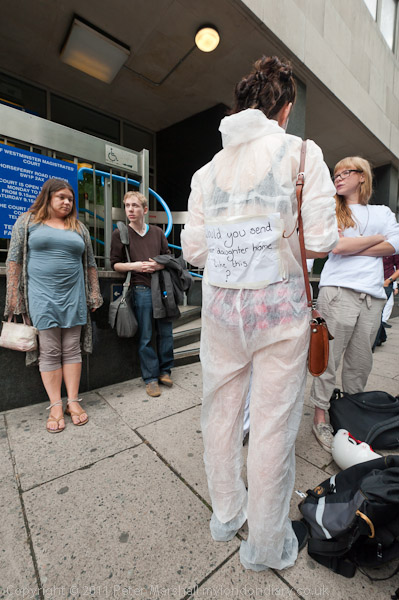
All 145 UK Uncut protesters were arrested as they left the store and charged with the serious offence of aggravated trespass with intent to intimidate. They were then taken to various police stations and held for many hours. Some were turned out in the early hours of the morning only partly dressed, in flimsy white part transparent suits over their underclothes, often many miles from their homes
A mother of one of those arrested in a plastic suit over underwear as her daughter was turned out by police

Eventually charges against most were dropped, but 30 were brought to court, divided alphabetically into three groups, A, B and C. All ten in trial A were found guilty but given a conditional discharge and told to pay £1,000 each towards costs, with the judge telling them “History often vindicates those involved in such acts.” Those in Trial B were initially found guilty but five of the nine were acquitted on appeal. All in Trial C were acquitted.
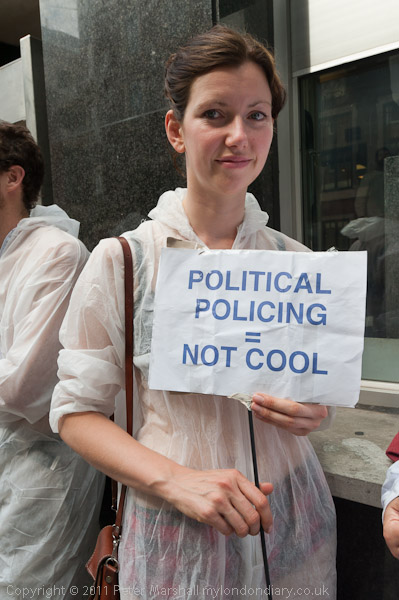
I still find it hard to believe that the CPS decided it was in the public interests to bring these prosecutions having seen the videos and heard much of the evidence. There was little damage in the shop, although some people trapped in there for two and a half hours by the police may have sampled a little food. The main loss to the shop was caused by police as the protesters would have left peacefully after a few minutes of occupation had the police allowed them to do so – and there would have been little loss of business.

Clearly these arrests and trials were politically motivated. It was a peaceful protest and it was the police who closed the shop, not the protesters.

Support Fortnum & Mason Protesters


FlickrFacebookMy London DiaryHull PhotosLea ValleyParis
London’s Industrial HeritageLondon Photos

All photographs on this page are copyright © Peter Marshall.
Contact me to buy prints or licence to reproduce.
Smiley Culture & Orange Order – 2011

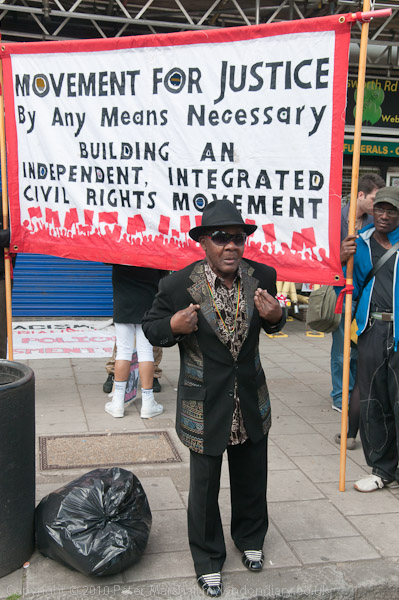
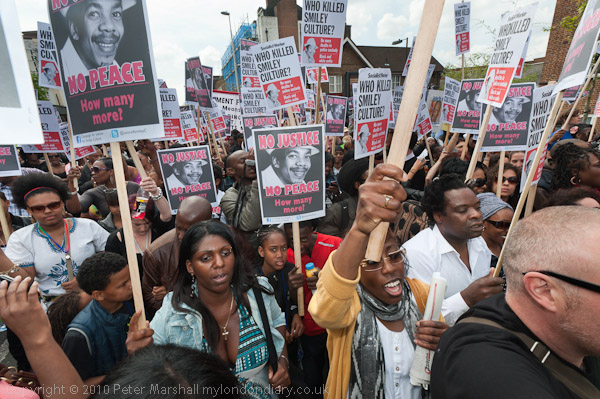
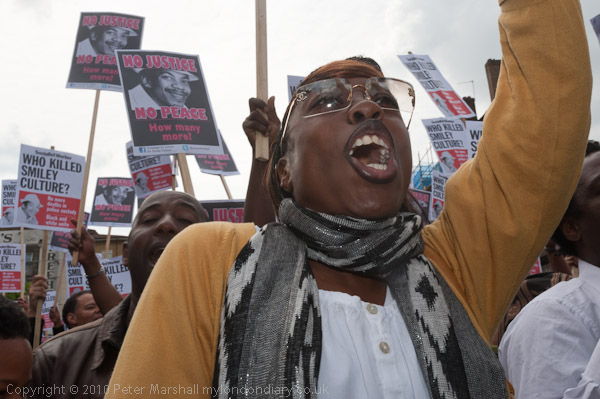
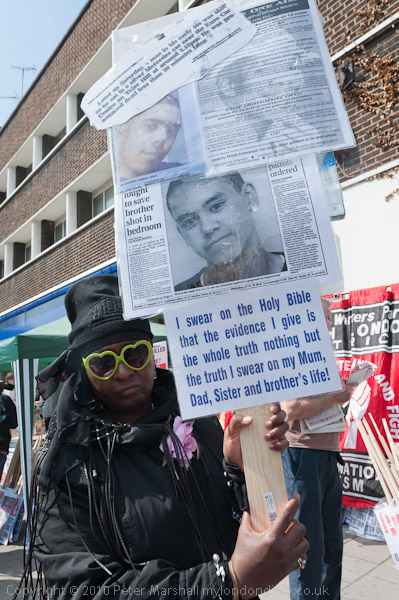
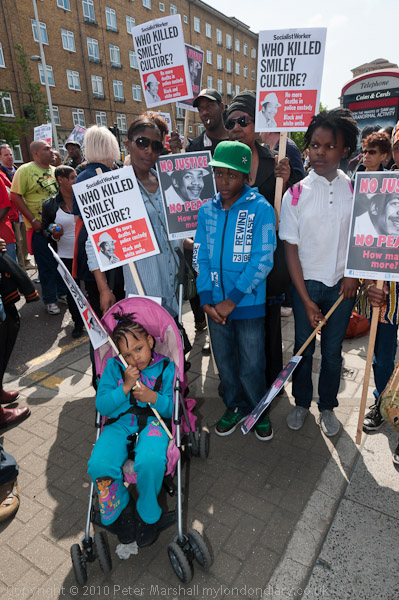
Smiley Culture & Orange Order: On Saturday 16th April I photographed two very different marches in London. The first was by several thousand people, mostly black, in protest over the death of reggae star Smiley Culture during a police drugs raid on his home and later I took pictures of the annual parade in Westminster by the City of London District Loyal Orange Lodge.


Who Killed Smiley Culture?

Smiley Culture & Orange Order - 2011

On 15th March 2011 police raided the South Croydon home of reggae star Smiley Culture at around 7am, apparently in relation to a drugs charge on which he was due to appear in court shortly. An hour and a half after their arrival, he is alleged to have been allowed to go into his kitchen alone to make a cup of tea, and to have killed himself with a single stab to the heart.

Smiley Culture & Orange Order - 2011

As many commented, it seemed a most unlikely story. Surely police would “not have allowed a man they had arrested to go alone into his own kitchen, where apart from the possibility of escape they would also know there would be dangerous weapons. And killing oneself with a single stab wound to the heart is not an easy task. His family and friends are sure there was no reason why he should have wanted to commit suicide.”

Smiley Culture & Orange Order - 2011

In April 2011 the case was being investigated by the Independent Police Complaints Commission and their report went to the coroner. At the inquest in 2013 the jury were unable to reach a unanimous verdict but the coroner accepted a majority verdict that the death had been suicide, while criticising the police for their lack of care and the IPCC for faults in their investigation.

Smiley Culture & Orange Order - 2011

Wikipedia reports that at the request of the coroner the IPCC report “was neither made public nor made available to Emmanuel’s family” and questions remain about the actual circumstances of his death and of the IPCC’s statement “that there was neither criminal conduct by officers, nor individual failings by officers that might amount to misconduct.

As I pointed out in my post, “Deaths in police custody are unfortunately not rare, and according to Inquest, in the twenty one years since 1990 there have been a total of 930, with 247 of these in the Met area.

I went on to say that few of these cases get “more than a short paragraph in the local press” unless as in this case they involve celebrities or take place in public with witnesses and often videos of the event; “most of them take place in the secrecy of the police station or other premises with police officers as the only witnesses.

Among those taking part in this march were families whose sons and brothers also died while in police custody, and in my post on My London Diary I mentioned some of these. The march took place on the “anniversary of the death of David Oluwale, killed in the first known incident of racist policing in 1969; his death remains the only case in British history that police officers have been found guilty of criminal offences leading to the death of a suspect, although they were found guilty only of assaults, the judge ordering the charge of manslaughter to be dropped.”

The death of Smiley Culture was one of several cases identified as a contributing factor to the riots later in the year after the police shooting of Mark Duggan by a study led by the LSE and The Guardian.

In February 2025 a blue plaque was unveiled outside Smiley Culture’s home from 1976-1980 on the Wandsworth Road, close to where this march began, celebrating his contributions to music and culture.

More about the march and rally and many more pictures on My London Diary at Who Killed Smiley Culture?.


Orange Parade in London

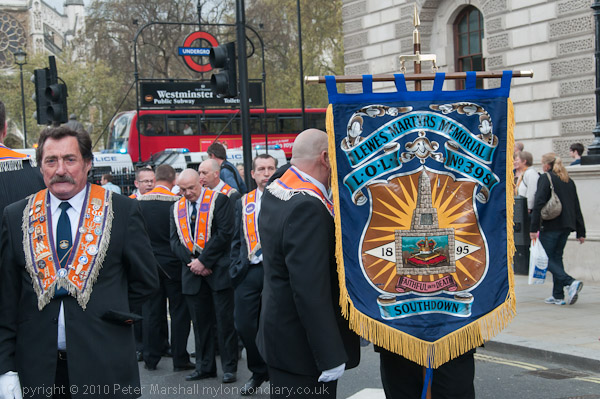
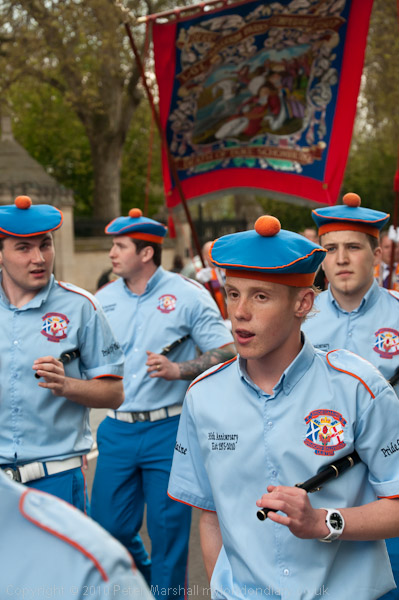
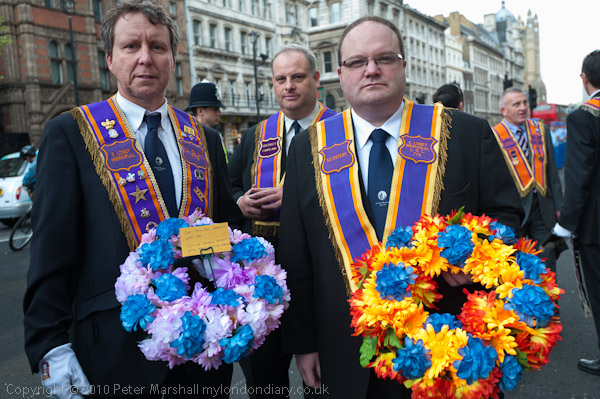
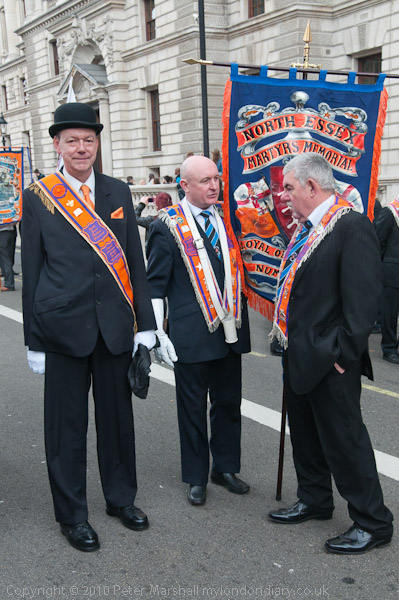
The City of London District Loyal Orange Lodge (L.O.L.) led their annual parade through London with lodges and bands from around the country taking part.

Founded in 1796 to uphold the Protestant religion, the Orange Order was was revived in the early twentieth century to oppose Home Rule for Ireland, and still plays a powerful role in Northern Ireland politics and government, embedded in Unionist politics.

Parades in Northern Ireland are still controversial and seen by many Catholics as deliberately provocative, while many Orangemen regard the Parades Commission, set up to regulate these events as discriminating against them. But here in London they have little political significance and are a colourful celebration of the Irish Protestant tradition.

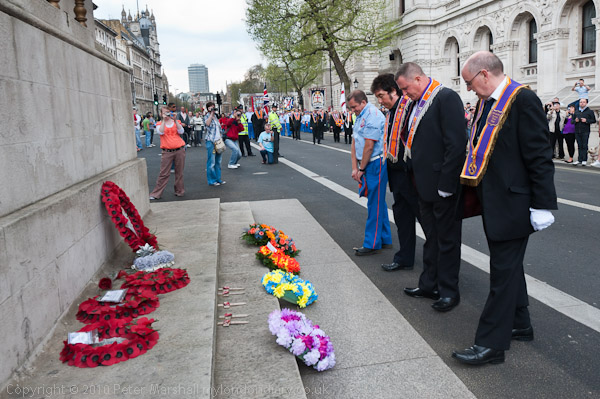
From Millbank the parade marched around Parliament Sqaure and then on to the Cenotaph where wreaths were laid in memory of the fallen and former comrades by the City of London Lodge, two lodges from Glasgow and the Maine Flute Band from Ballymena.

I left them opposite Downing Street where some had gone in to deliver a letter to the Prime Minister before the parade moved on to its end at statue of the Duke of York in Waterloo Place.

More at Orange Parade in London.


FlickrFacebookMy London DiaryHull PhotosLea ValleyParis
London’s Industrial HeritageLondon Photos

All photographs on this page are copyright © Peter Marshall.
Contact me to buy prints or licence to reproduce.