Fire Risk Tower Blocks

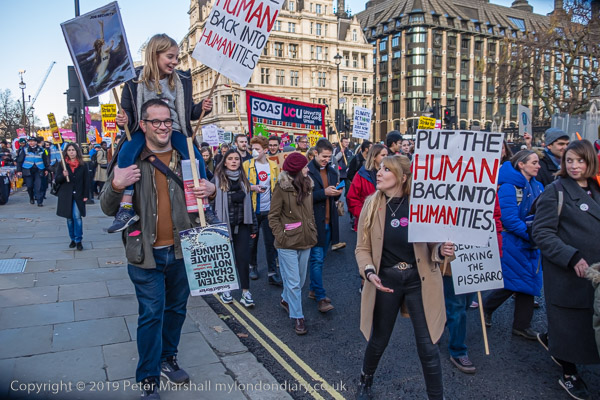
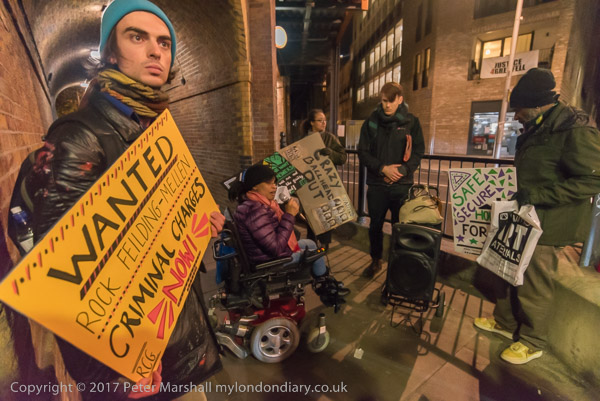
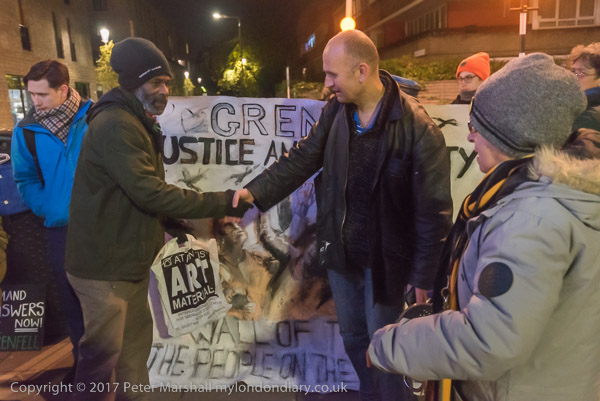
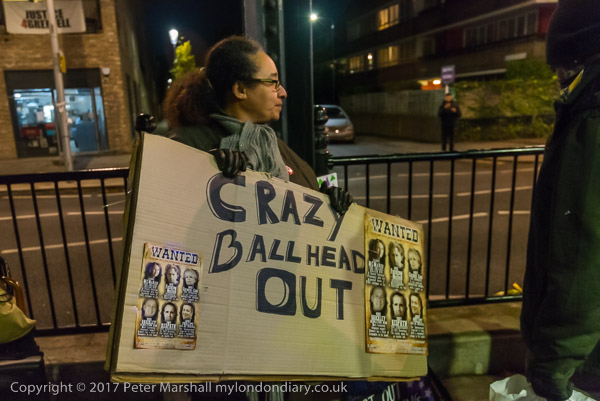
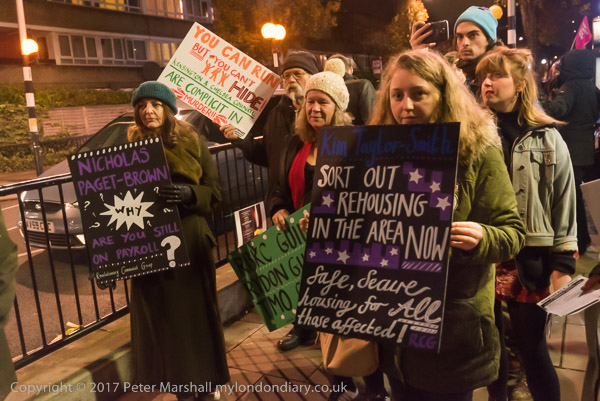
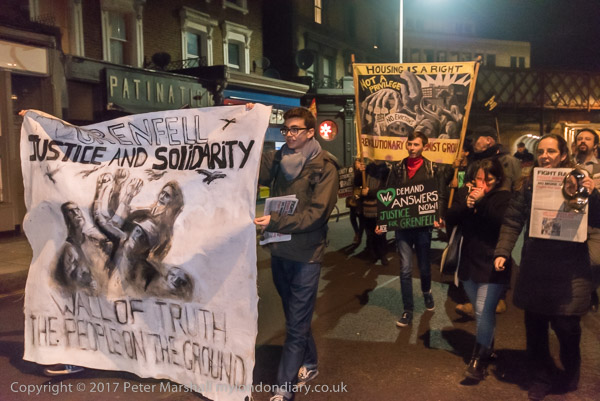
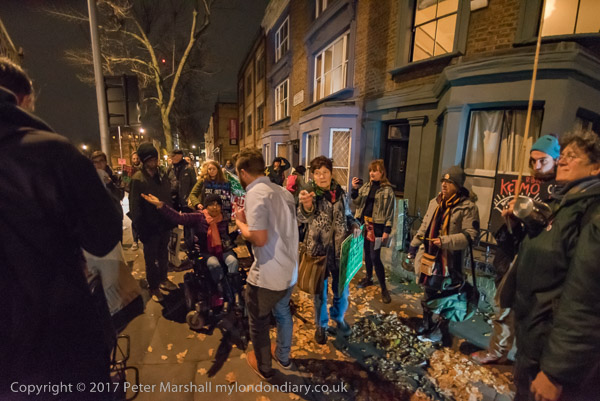
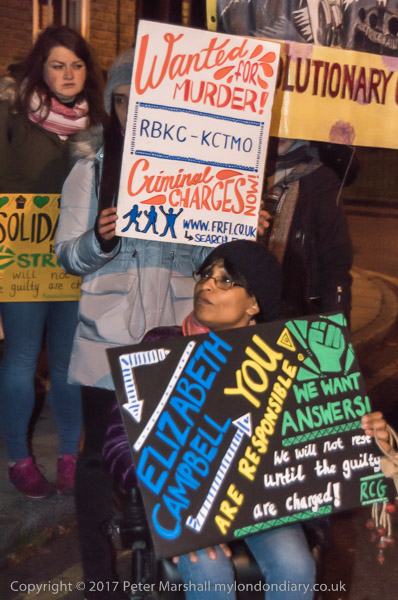
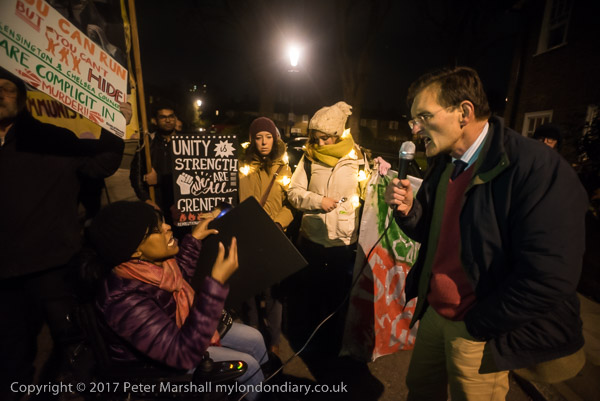
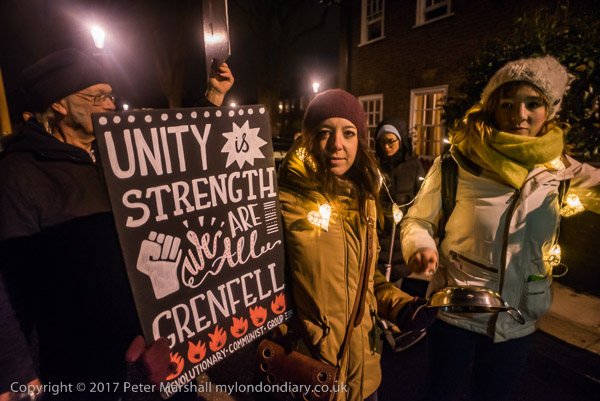
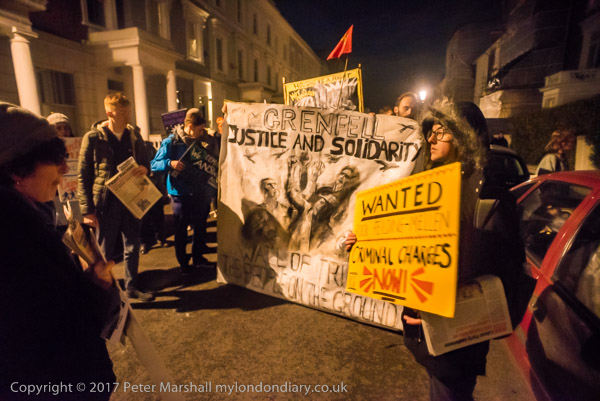
Fire Risk Tower Blocks – On Saturday 12 August 2017 Focus E15 Mothers led a march from Ferrier Point in Canning Town to a rally at Tanner Point in Plaistow pointing out the danger of these two blocks with the same cladding as Grenfell Tower, and then on to the Carpenters Estate in Stratford demanding safe homes, not social cleansing in East London.

Fire Risk Tower Blocks

The May 2022 Fire Risk Assessment of 119-205 Butchers Road, Canning Town conducted for Newham Council was obtained by a Freedom of Information request and can be downloaded. The 11 floor block of 43 flats has a single staircase and then had 86 people sleeping there.
Fire Risk Tower Blocks

The report by Phoenix Green Group declared the likelihood of fire to be ‘Medium’ but the potential consequences would be ‘Extreme Harm’ and gave the building a ‘Substantial’ fire risk rating, stating that urgent action should be taken and listing what was needed. I can find no information on Newham Council’s web site of whether this has been done, or of other council properties which might still be needing urgent action.
Fire Risk Tower Blocks

The block on Butchers Road was not one of those visited on the march led by Focus E15 Mothers in their march around Canning Town and Plaistow to the Carpenters Estate in Stratford. This had begun at Ferrier Point in Forty Acre Lane, Canning Town around 5 minutes walk away, a rather taller 23 storey block with dangerous ACM cladding like that on Grenfell Tower.

Fire Risk Tower Blocks

The cladding on Ferrier Point was replaced with non-combustible cladding in 2019. Otherwise there would have been a very different story when fire broke out on a 12th floor flat there around 6pm on 22nd June 2020. By the time the Fire Brigade arrived at 6.22pm around 150 residents had left the building and the LFB had the fire under control by 7.45pm. Six people required treatment for smoke inhalation, one in hospital the others treated on the spot by London Ambulance staff.

Tanner Point in Plaistow was another stop on the march where residents were extremely worried as this also had fire-risk ACM cladding. Along with that on Nicholls Point, a little off the march route, this was also replaced in 2018-9.

The march was organised and led by the Stratford-based Focus E15 housing campaign but supported by other groups, including the Socialist Party, East End Sisters Uncut, the One Housing campaign, Movement for Justice, Whitechapel Anarchist Group, the Revolutionary Communist Group and local residents, including those from the blocks with dangerous cladding.

The march ended on the Carpenters Estate in Stratford, a once popular estate with over 400 empty homes which Newham’s Labour council largely emptied of people over 10 years ago and intended to demolish and sell off. Here there was a ‘hands around the Carpenters Estate’ solidarity event against decanting, demolition and social cleansing.

Events like this put pressure on Newham Council to speed up the removal of unsafe cladding from its taller tower blocks, but it seems there are still fire safety issues in other blocks that it owns. Years of actions by Focus E15 and others have stopped Newham selling off the Carpenters Estate and they are now going ahead with regeneration plans although these unfortunately lack the real commitment to social housing that the area so desperately needs.

More about the march and more pictures on My London Diary at Fire Risk Tower Blocks.


Broadwater Farm & Mark Duggan

Broadwater Farm & Mark Duggan: Sunday 4th August 2017 was the sixth anniversary of the killing by Metropolitan police officers of Mark Duggan which had led to widespread unrest in Tottenham and other areas. I went to photograph a march from Broadwater Farm to a rally outside Tottenham police station on the anniversary, arriving very early and taking a walk around the estate and the adjoining large park before the march.


Broadwater Farm Estate – Tottenham

Broadwater Farm & Mark Duggan
The Moselle goes underground as it approaches Broadwater Farm

Broadwater Farm Estate became notorious in the 1970s and 80s when poor maintenance and crime in poorly lit ‘deck level’ walkways made it into a sink estate after problems with damp, infestation and electrical faults led to half of its original residents moving out.

Broadwater Farm & Mark Duggan

The estate was built over the River Moselle which flows above ground through the adjoining 20 acres of public park, the Lordship Recreation Ground, and the area had remained as open land because of the flood risk until the estate was built in the 1960s. And though building the housing in blocks above ground floor open car parks solved the flooding problem it created large areas of largely empty and rather intimidating covered space.

Broadwater Farm & Mark Duggan

Things came to a head on the estate in October 1985 after police came to search the home of Cynthia Jarett whose son had been falsely arrested and charged with theft and assault. She died of a heart attack during the search, according to her daughter after being pushed by a police officer. Feelings in the Black community in London were already running high following the shooting in Brixton of Cherry Groce the week earlier during a police search in Brixton which left her in a wheelchair for the rest of her life.

Broadwater Farm & Mark Duggan

The death on the estate provoked a protest at Tottenham Police Station and various incidents on the estate which blew up into a riot as more and more police came into the estate with firefighters who put out a small fire. Faced by increasing attacks from residents the police withdrew, but two officers failed to escape. PC Richard Coombes was seriously injured and PC Keith Blakelock was beaten and hacked to death.

In the following years there was an intensive regeneration programme which greatly altered the estate, removing the deck level almost completely and making both structural and environmental changes. Some shops were converted into light industrial units to provide local employment and a local team was set up to manage the estate. As I wrote in 2017, “By the 2000s the estate had a long waiting list and had one of the lowest crime rates in London, though it still retains a powerful and blinkering presence in the Met’s demonology.”

More pictures Broadwater Farm Estate.


Tottenham remembers Mark Duggan

People met on Broadwater Farm where Mark Duggan had grown up on the sixth anniversary of his killing to march to a rally at Tottenham Police Station.

As well as the killing of Duggan, the march also protested the police killings of other members of the Tottenham community – Cynthia Jarrett, Joy Gardner, Roger Sylvester and Jermaine Baker as well as the recent deaths in London of Rashan Charles, Darren Cumberbatch and Edson Da Costa.

After Duggan’s death there were various misleading stories put out by the media including the BBC who reported police lies about the event, in particular that Duggan had shot at police first. He hadn’t fired a gun at all, and had almost certainly left it in the cab. The police involved refused to be interviewed in the IPCC investigation and gave conflicting testimonies. Almost certainly the most reliable account of the shooting came from the driver of the cab Duggan was in who said that Duggan got out of the taxi to run away and was immediately shot by police, he “only got 2-3ft from my car when he was shot.” It remains hard to understand the eventual inquest verdict of lawful killing.

At the front of the march was Tottenham community activist Stafford Scott who was also one of the speakers at the rally. At the police station we listen to a local poet and there was a minute of silence to remember those who had been killed.
As well as speeches from members of bereaved families and local activists, there were also speeched from Becky Shah from the Hillsborough campaign and a speaker from the Justice for Grenfell campaign.

Among those present was Myrna Simpson, the mother of Joy Gardner who died after being restrained by police who raided her home. Three officers were tried for her manslaughter but acquitted.
The crowd spread out into the street with a large group of mainly young men on the opposite side of the street.
More pictures and captions on My London Diary at Tottenham remembers Mark Duggan.


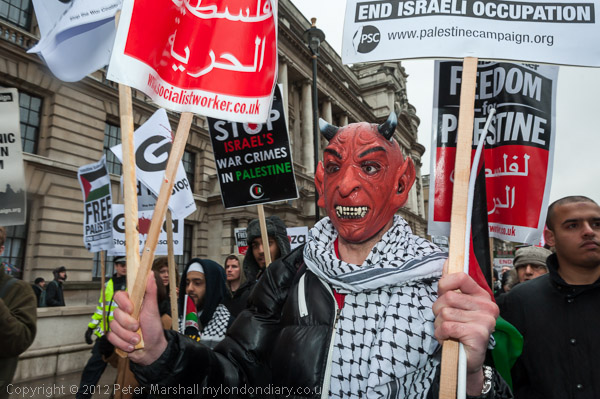
Al Quds Day march for Jerusalem 2014

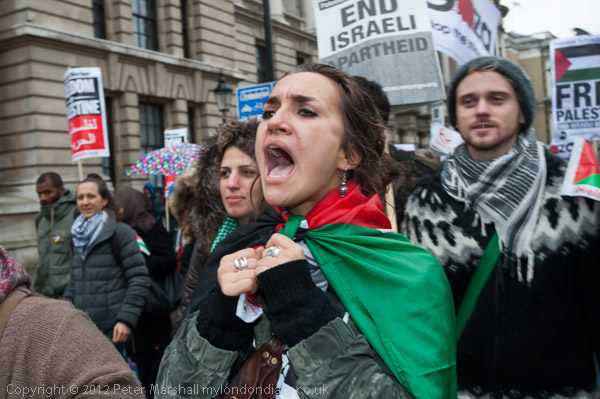
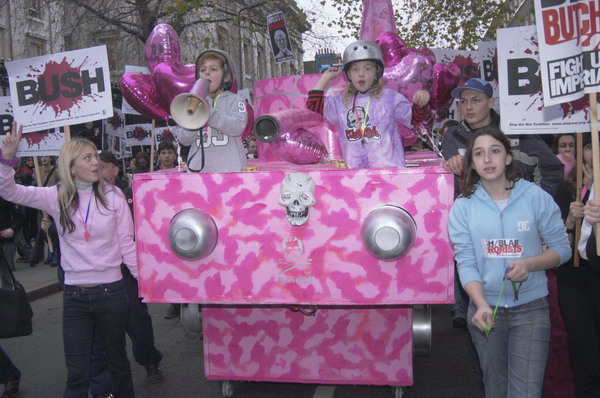
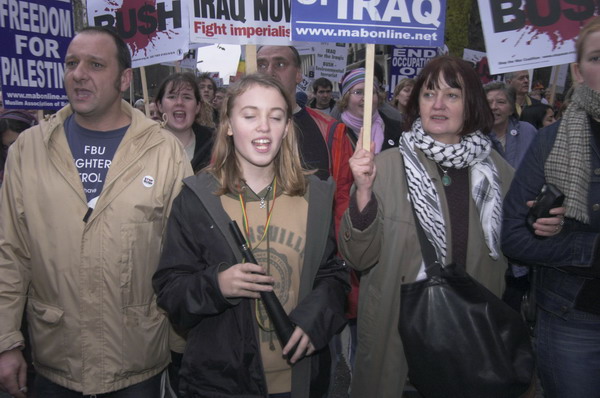
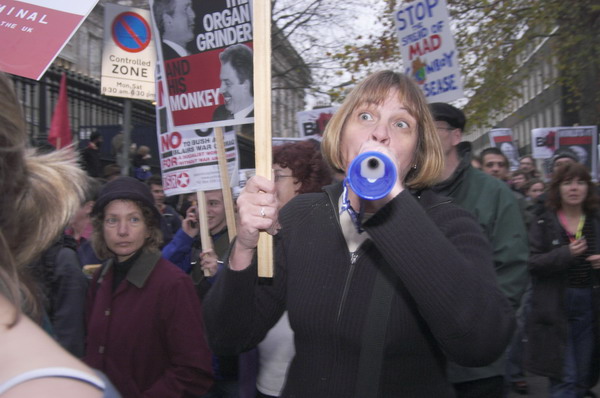
Al Quds Day march for Jerusalem: In 2014 the annual Al Quds Day march was held on Friday 25th July and came the day before a major protest close to the Israeli Embassy over attacks by Israeli forces on Gaza which had killed over a thousand Palestinians, mainly civilians.

Al Quds Day march for Jerusalem

I’ve written many times before about these marches which began in Iran in 1979 and is a anti-Zionist protest in solidarity with the Palestinian people and in support of their rights and specifically concerned with the Israeli occupation of East Jerusalem (Al Quds) and the West Bank which followed the 1967 Six-Day War. Israel celebrates this with a national holiday on Jerusalem Day.

Al Quds Day march for Jerusalem

Public events take place across the Arab world, particularly in countries with large Shia Muslim communities and also in London and some cities in Europe and America. Many of these events are organised by groups funded by Iran.

Al Quds Day march for Jerusalem

Critics have often accused the event of being anti-Semitic, but on the various occasions I’ve photographed them there has been little evidence of this. I have seenboyco a few people who have turned up with anti-Semitic slogans on placards being forced to discard them or leave the march by the stewards.

Al Quds Day march for Jerusalem

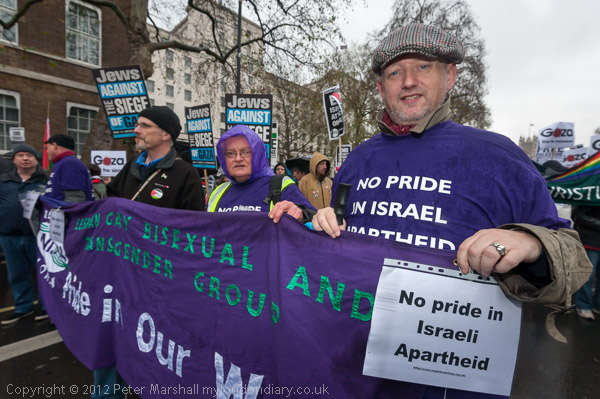
Although the vast majority of marchers are Muslims there is also a significant number of Jews on the march, most obviously with the ultra-orthodox Neturei Karta Jews carried their usual placards and banners against the Zionist state and condemning the atrocities carried out in its name. They say that Judaism is not a nationalist religion and reject any idea of a Jewish State. But many of the the non-Muslims from various left groups that support the march are also Jewish.

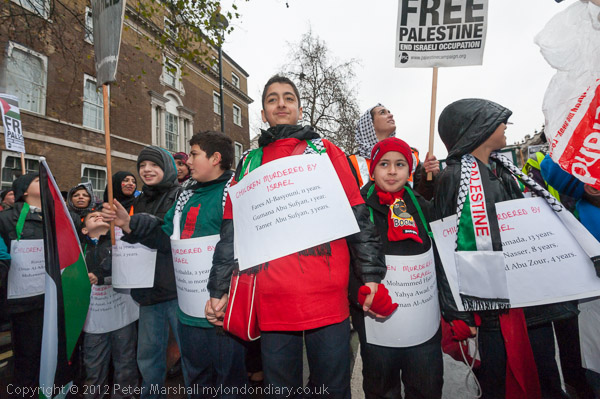
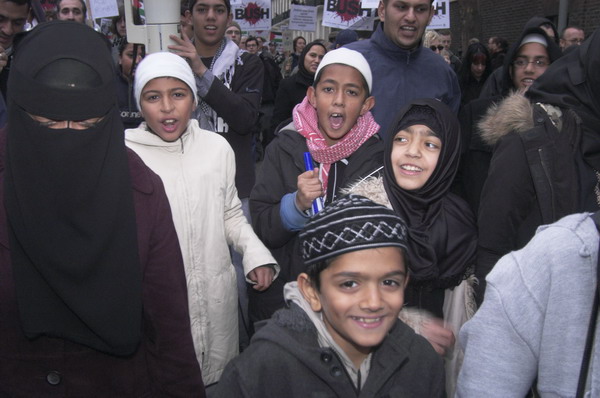
The march in London was fairly large with perhaps 5-10,000 people, including many who had come in coaches from mosques around the country. Many had come with families and some marched together, but mostly men and women marched in separate groups as you can see from my pictures. The women were considerably more colourfully dressed and along with the Neturei Karta – all male – are over-represented in my coverage of the event.

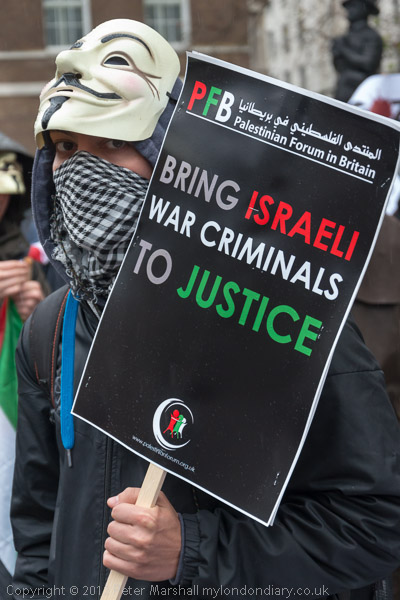
The march calls for Freedom for Palestine and for all oppressed people across the world, and it also calls for a boycott of Israel and an end to Israeli occupation of Palestinian land and Israeli apartheid. And clearly this is an anti-Zionist event, but not anti-Jewish, as one of the chants used by the marchers made clear: ‘Judaism Yes, Zionism No!’.

I left the march as it turned off of Regent Street to make its way to a rally at the US Embassy. By that point there had been no sign of the opposition to the march I had seen in some previous years from Zionist, Iranian freedom, communist and royalist movements and UK right wing fringe groups, but I think there many have been some Zionists waiting to protest against it at the US Embassy.

Many more pictures at Al Quds Day march for Jerusalem.


BEIS Birthday Strike, Ecocide and XR Procession

BEIS Birthday Strike, Ecocide and XR Procession: Monday 15th July 2019


BEIS workers begin indefinite strike, Westminster

BEIS Birthday Strike, Ecocide and XR Procession

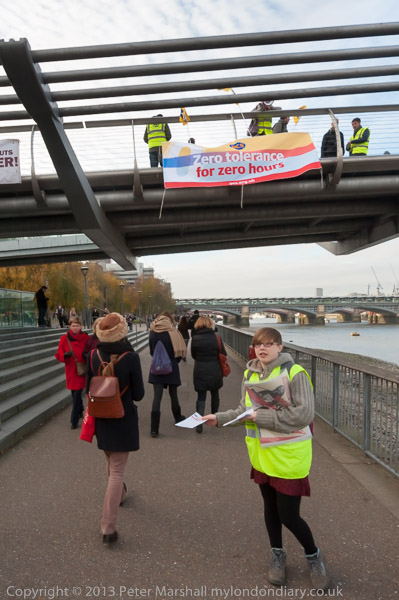
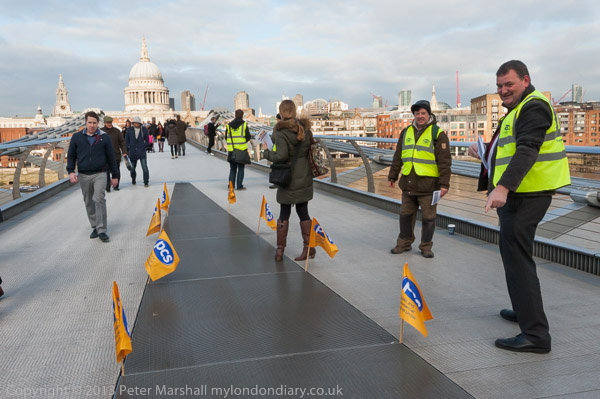
Low paid cleaning and catering workers at the Department for Business, Energy and Industrial Strategy (BEIS) on Victoria Street celebrated the third anniversary of their fight for proper pay and conditions with cakes as they walked out on the first ever indefinite strike at a government ministry.

BEIS Birthday Strike, Ecocide and XR Procession

The workers are demanding the London Living Wage and to be directly employed by the department rather than outsourcing companies ISS and Aramark.

BEIS Birthday Strike, Ecocide and XR Procession

As the workers came out on strike hey got a rousing reception from a crowd of around 100 with speeches from one of the strikers, PCS general secretary Mark Serwotka, RMT General Secretary Mick Cash, newly elected UCU general secretary Jo Grady , Shadow Chancellor John McDonnell, Labour MP Mary Glindon, National Vice-President of the PCS Zita Holbourne, Sam Gurney, TUC Regional Secretary, Kiri Tunks, Joint President of the NEU and Sandy Nicoll of SOAS Unison who led the succesful campaign to bring workers there back in-house. and one of the strikers.

BEIS Birthday Strike, Ecocide and XR Procession

I stayed long enough to eat a piece of one of the cakes which had been made for the protest, but then had to leave as the party continuned outside BEIS.

More pictures at BEIS workers begin indefinite strike.


XR call for Ecocide Law – Royal Courts of Justice, Strand

BEIS Birthday Strike, Ecocide and XR Procession

Extinction Rebellion was beginning another series of protests in five major cities against the criminal inaction by the government on climate and ecological collapse.

The main theme of the day’s protest was to call for a law making ecocide a criminal offence.

The protesters brought a yacht named after Polly Higgins who fought for years for an Ecocide Law to the Royal Courts of Justice.

They continued her fight blocking the Strand all day with performances, discussions, speeches, music and ceremonies in front of the yacht.

We need urgent action and our government along with most others has failed, continuing with policies which seem designed to make the situation worse and bring life on earth to an end, and XR is certainly bringing that to people’s attention, even if our media are still largely ignoring it and concentrating on trivia. But although I fully support the aims of XR I do find some of XR’s activities – yachts and new-age mumbo jumbo – off putting. In part I guess it’s a class thing – much of their activity seems insufferably middle class. Its probably an age thing too.

XR call for Ecocide Law


XR Summer Uprising procession

Having occupied the street across the front of the Royal Courts of Justice all day, the protesters and their yacht moved on around afternoon tea time to their home for the next three days, on Waterloo Millennium Green, a park area just south of Waterloo Station.

At the front of the procession were banners and a large crowd of people with XR flags, more banners, posters and placards, as well a large pink dodo. Bringing up the rear was the blue yacht named for the late Ecocide Law protester Polly Higgins, on a boat trailer, escorted by police.

When the procession was all on Westminster Bridge it came to a halt and people sat down blocking the road for a short protest against the police violence towards peaceful protesters when they were arresting people during the ‘Garden Bridge‘ occupation of the bridge in April.


There were a few short speeches there and the procession moved on. It came to a halt a little further on after police tried to block it on from moving onto the Millennium Green.

By this time the back of the procession was on its way around the IMAX Waterloo roundabout, and the rush hour was beginning. I hung around for around half an hour before deciding it was time to get on a train home. But by stopping the protest police had brought a large area of south London quite unnecessarily to a standstill.

Many more pictures at XR Summer Uprising procession.


Housing For Need Not Greed

Housing For Need Not Greed: Mostly my posts here look at old work, either from a few years ago or my work on London back in the 1980s and 90s. But I’m still goining out at taking pctures if not quite as often as I once did. So this post is about one of the two events I photographed last weekend.

Housing For Need Not Greed - Aysen Dennis - Fight4Aylesbur
Aysen Dennis – Fight4Aylesbury

Last Saturday, 8th July 2023 was National Housing Action Day, and a march from the Elephant to the Aylesbury Estate was one of 16 across the country on National Housing Day. Others were taking place in Lambeth, Islington, Kensington, Cardiff, Glasgow, Abbey Wood, Wandsworth, Harlow, Merton, Ealing, Cornwall, Folkestone, Devon, Birmingham, and Hastings.

Housing For Need Not Greed -Tanya Murat - Southwark Defend Council Housing
Tanya Murat – Southwark Defend Council Housing

The Southwark protest demanded Southwark Council stop demolishing council homes and refurbish and repopulate estates to house people and end the huge carbon footprint of demolish and rebuild. They demanded housing for need not corporate greed, refurbishment not demolition, filling of empty homes and an end to the leasehold system.

Housing For Need Not Greed
Marchers at the Elephant on their way to the Aylesbury Estate

Demolition and rebuilding of housing produces huge amounts of CO2, and whenever possible should be avoided now we are aware of the real dangers of global warming. Instead existing buildings should be insulated, retrofitted and refurbished and properly maintained.

Housing For Need Not Greed

Southwark Council’s estates have for well over 20 years been deliberately run down and demonised with some being demolished and replaced. Around 1000 council homes on the Aylesbury Estate have already been demolished buy around 1,700 are still occupied but currently scheduled for demolition.

Marchers on Walworth Road on their way to the Aylesbury Estate.

These homes were well built for the time to higher standards than their replacement and could easily and relatively cheaply be brought up to modern levels of services and insulation with at least another 50 years of life. The estate was carefully designed with open spaces, natural daylight and a range of properties, many with some private outdoor space. The planned replacements are at higher density, less spacious and unlikely to last as long – and only include a small proportion at social rents. Current tenants are more secure and the properties are far more affordable.

People on the street watch and video the march

Many of those whose homes have already been demolished here and on the neighbouring Heygate estate have been forced to move outside the area, some far from London as they can no longer afford to live here.

Bubbles and Marchers on Walworth Road on their way to the Aylesbury Estate.

Although the developers have profited greatly from their work with Southwark Council here and in other estates, and some officers and councillors involved have personally landed well-paying corporate jobs and enjoyed lavish corporate hospitality, the schemes have largely been financial disasters for the council and council tax payers.

Fight4Aylesbury was formed in 199 as Aylesbury Tenants and Residents First, and has been fighting Southwark Council’s plans to demolish the estate since then. While these schemes – part of New Labour’s regeneration initiative – have always been destructive of local communities and disastrous for many of those whose homes have been demolished, we now see that they are also environmentally unsupportable.

You can watch a video on YouTube of Aysen Dennis, Fight4Aylesbury and Tanya Murat, Southwark Defend Council Housing talking about the protest, and FIght4Aylesbury recently released a newsletter, The Future of the Aylesbury with more details on the estate and their proposals. A few more of my pictures from the event are in the album Housing For Need Not Greed – National Action Day, London, UK and are available for editorial use on Alamy.


Royal College of Music, Al Quds 2015

Royal College of Music, Al Quds: I photographed two unrelated protests on Friday 10th July 2015. The first was calling for decent pay and conditions for outsourced workers and the second was the annual Al Quds day march.


IWGB protest at Royal College of Music – Kensington

Royal College of Music, Al Quds

Outsourced cleaners and other low paid workers at the Royal College of Music immediately south of the Albert Hall in South Kensington belonging to the IWGB were protesting to get similar conditions of sick pay, holidays and pension to workers employed directly by the RCM.

Royal College of Music, Al Quds

The Independent Workers’ Union of Great Britain is a registered trade union which organises cleaners, porters, hospitality workers, domestic workers and other precarious workers in a number of sectors. It is a grass-roots union run by and representing mainly low paid migrant workers in London and has proved effective in getting better pay and conditions for these groups of workers who have largely been neglected by the larger traditional unions, who have often seemed more concerned with preserving differentials in pay than in improving the lot of the lowest paid.

Royal College of Music, Al Quds

The IWGB had called for talks with the RCM management and their employers to discuss their claims, offering to call off the protests if they agreed to this. But the employers had refused to recognise the IWGB or to hold talks with them.

Royal College of Music, Al Quds

So the IWGB and supporters came and held a noisy protest outside the College entrance, handing out leaflets about why they were protesting to those entering the College for a graduation ceremony. RCM security tried to move them further away where the protest would probably not have been heard inside, but they refused to move, while taking care not to impede those entering or leaving the college.

One woman came out to argue with the protesters, telling them to go away and eventually lost her temper and kicked one of them. The RCM’s head of security quickly led her away. The protest was continuing when I left for my next event.

IWGB protest at Royal College of Music


Al Quds Day march – Portland Place to US Embassy

The annual Al Quds Day march on the last Friday of Ramadan, organised by the Islamic Human Rights Commission gathered close to BBC Broadcasting House, marching from there to a rally at the US Embassy, calling for justice and freedom for Palestine.

As I’ve written in previous posts, he celebration of Al Quds Day on the last Friday of Ramadan was introduced by Ayatollah Khomeini in Iran 1979 and spread from there to other countries. The march in London is organised by the IHRC which has received some support from the Iranian regime.

As usual, most of the banners and placards and the chanting on the march were calling for freedom for Palestine, and there were many placards against Israeli violence in Gaza and the West Bank, and calling for a boycott of Israel, a movement which seems to be growing in strength.

This year I saw few celebrating Khomeini and fewer Hezbollah flags and badges than in some previous years. As usual the Neturei Karta were prominent with their anti-Zionist placards stating that ‘Authentic Jewry Always Opposed Zionism And the State of “Israel”‘, but I found no evidence for anti-Semitism, which opponents of the march always charge it with.

Perhaps because the march was on a Friday there were fewer Zionists protesting against the march, and I only saw one man who was protected by march stewards and then led away by police. I imagine there would have been more waiting to protest against the march when it reached the US Embassy, but I left before then.

Al Quds Day march


Votes, Love, Arms & Al Quds

Votes, Love, Arms & Al Quds: Sunday 3rd July 2016 was a busy day for me, photographing young people demanding the right to vote, a board remembering murdered MP Jo Cox, a picket against sponsorship of the London Transport Museum by one of the largest arms companies in the world and then the always controversial annual Al Quds Day march and its Zionist counter-demonstration.


16-17 Year olds demand the vote – Trafalgar Square to Parliament Sq

Votes, Love, Arms & Al Quds

Many young people who were not old enough to vote in the EU referendum were outraged at not being able to take part in the vote which will impact their future more than that of older generations.

Votes, Love, Arms & Al Quds

They point out that many of those who did vote will die before the worst effects of Brexit are felt, and that it was the vote of the eldest in the population to leave Europe than swung the vote. Young people, including those too young to have a vote were strongly in favour of staying in Europe.

Votes, Love, Arms & Al Quds

The march by several hundred people, mainly 16-17 year olds, called for a lowering of the voting age to 16. Most of the speakers at the rally in Parliament Square were teenagers.

More pictures at 16-17 Year olds demand the vote.


Jo Cox banner of love – Parliament Sq

Votes, Love, Arms & Al Quds

People were still coming to sign and write tributes on a giant board in Parliament Square to Labour MP Jo Cox, brutally murdered on 16th June on the street in Birstall where she had gone to hold a constituency surgery.

Cox, who had worked for some years at Oxfam GB as head of policy and advocacy had become an MP in 2015 and had founded and chaired the parliamentary group Friends of Syria, campaigning over the Syrian Civil War, and supported Palestinian rights and the BDS campaign. She was one of few MPs who stood up and campaigned for refugees and their rights.

Her murderer, a constituent with far-right white supremacist obsessions, shot her three times before multiple stabbings. He was sentenced to life with a whole-life tariff.

Jo Cox banner of love


Arms dealers out of LT Museum – London Transport Museum, Covent Garden

I stopped briefly outside the London Transport Museum to talk with and photograph campaigners from the London Campaign Against Arms Trade (CAAT) who were holding a picket to demand the museum end its sponsorship by Thales, the worlds 12th largest arms company. Thales supplies missiles, drones and other military products, selling them to repressive regimes around the world including Saudi Arabia, Russia, Colombia, Kazakhstan and the UAE.

More pictures at Arms dealers out of LT Museum.


Al Quds Day March – BBC to US Embassy

Several thousands, mainly Palestinians and Muslims from around the country, as well as other supporters of Palestinian freedom marched from the BBC to a rally at the US Embassy.

The final Friday of every Ramadan was designated Quds (Jerusalem) Day by Ayatollah Khomeini in 1979 as a day when Muslims around the world would demonstrate their solidarity in support of the Palestinians and call for an end to the Israeli occupation of Palestine. The London march takes place on the Sunday following.

A few supporters of Israel tried to protest against the march, holding Israeli flags and shouting at the marchers, but police kept them away.

Some of the marchers came with flags and t-shirts supporting the Lebanese Shia Islamist political party and militant group, Hizbullah (Hezbollah). Since 2019 this entire organisation has been proscribed in the UK, but in 2016 we still followed the EU in making a distinction between it as a political party with MPs in the Lebanese government and as a terrorist group.

Among the marchers were a group of Neturei Karta Orthodox Jews whose religious beliefs reject Zionism and the Israeli state. Their posters say Judaism is ‘G-dly & Compassionate’ while Zionism is ‘G-dless & Merciless’ and that ‘Jews True to their faith will Never recognise ZIONIST occupation’ and other similar statements.

At the US Embassy a large force of police separated their rally from a counter-protest by Sussex Friends of Israel, the Zionist Federation and the Israel Advocacy Movement. They displayed placards demanding ‘Peace Not Hate’ and Israeli flags.

This group reserved its loudest and most angry shouting for the anti-Zionist Neturei Karta Jews who came and stood facing them from a wall in front of the US Embassy.

Much more on My London Diary:

Al Quds Day March
Supporters Stand Up for Israel


Hate Crime & Brexit

Hate Crime & Brexit: I tend to think of Brexit as a hate crime, inflicted on the British nation by millionaires out to make a quick buck (or rather a few million) like Mogg, but this title refers to two quite different protests on Saturday 2nd July 2016, both Brexit related.


Love Islington – NO to Hate Crime – Highbury Fields

Hate Crime & Brexit

This protest in Islington was called by Islington Labour Party in reaction to the increase in hate crime against racial, faith and other minorities following the Brexit vote.

Hate Crime & Brexit

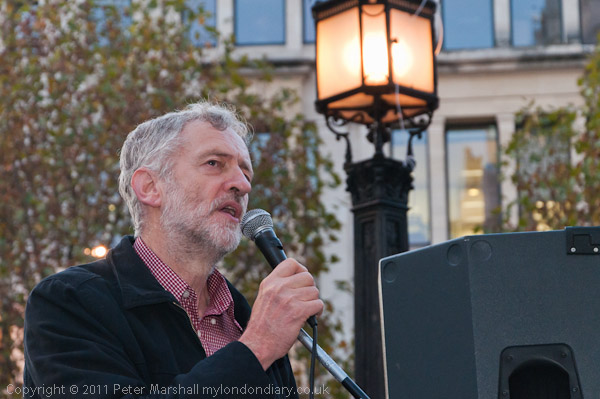
Speakers at the event included local MPs Jeremy Corbyn and Emily Thornberry, London Assembly members Jennette Arnold and Caroline Russell, faith leaders, including a gay Catholic priest, a leader of the Somali community, Richard Reiser of DPAC, the leader of Islington council and councillors.

Hate Crime & Brexit

They came to declare that Islington was proud to be a diverse, tolerant and cohesive community with good relations between all who live there, regardless of race, faith, sexual orientation, disability and transgender identity, and to urge everyone to stand up against hate crimes and report any incidents to the police.

Hate Crime & Brexit

For once one of my pictures was picked up by some of the national press, not to talk about the event or the problem of hate crimes and the role of the Brexit referendum in encouraging some very nasty characters out from under their stones, but to make snooty remarks about the jacket which Jeremy Corbyn was wearing. The obviously saw it as another Michael Foot donkey jacket moment.

Foot of course did not wear a donkey jacket at the Cenotaph in November 1981. He wore a short, blue-green Jaeger overcoat bought by his wife at Harrods so he would look smart, and on which the Queen Mother complimented him on. But the press was out to get him and the lie, invented by a right-wing Labour MP, stuck.

I had taken the pictures of Corbyn while wearing a jacket very similar to his, appropriate for the weather that rather cool July morning. Mine certainly didn’t come from a charity shop, and I’ve no idea whether his did but if so he was fortunate to find it and made a very sensible decision to purchase it.

Pictures of the other speakers and more at Love Islington – NO to Hate Crime.


March & Rally For Europe against Brexit

More than 50,000 people marched through London to a rally in Parliament Square to show their love for the EU and in protest against the lies and deception from both sides of the EU referendum campaign.

Many feel that the result did not truly reflect the will of the people and that the majority was too small to be a mandate for such a drastic change.

David Cameron had been so convinced that the result would be to remain in Europe that he had failed to act rationally. It was a decision that has dramatically changed our nation and one that in any sensible system should have required a truly decisive majority, rather than just creeping past halfway at 51.8%.

I was raised in a church where all decisions were made by consensus, with discussions continuing until all were willing to agree, often requiring considerable concessions on all sides. It was sometimes a rather slow process.

Since I’ve belonged to other organisations where constitutional changes required a two-thirds majority. Perhaps this is a little too high, but the Brexit vote was hardly a mandate with only 37.4% of those registered to vote backing it.

We’ve now begun to see what Brexit means in practice, with many of the problems dismissed as false by Brexit campaigners becoming evident, while few if any of the advantages they trumpeted have appeared. Last month an opinion poll showed that 55% now think Brexit a mistake while only 32% think it was a good decision, and their number continues to fall. But there doesn’t seem any easy way out of this mess, though perhaps a new government that understands how to negotiate would one day help ease some of the worst effects.

The march was a huge one. I had arrived at Hyde Park Corner just as it was starting and it was over 90 minutes later that I left the end of the march as its end was getting close to Green Park station less than half a mile away. I took the Jubilee Line the single stop from there to Westminster and only arrived in time for the last few minutes of the rally which had begun and only heard the two final speakers, David Lammy MP and Bob Geldorf speaking to a packed Parliament Square. Marchers were still arriving there after the rally had finished but I went home.

Mand more pictures on My London Diary:
March For Europe against Brexit
Rally For Europe against Brexit


NHS – Free, For All, Forever?

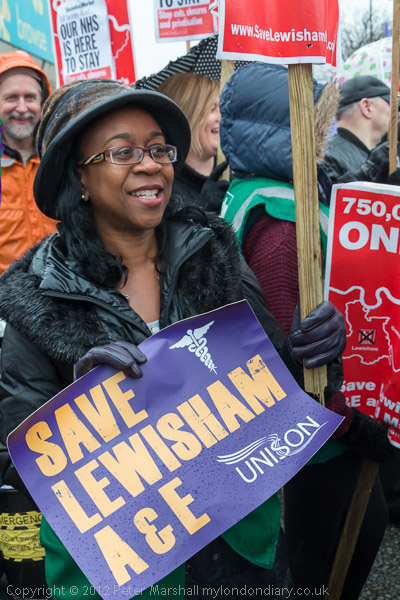
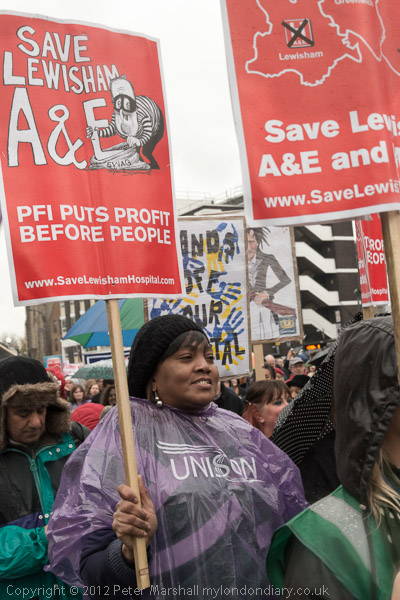
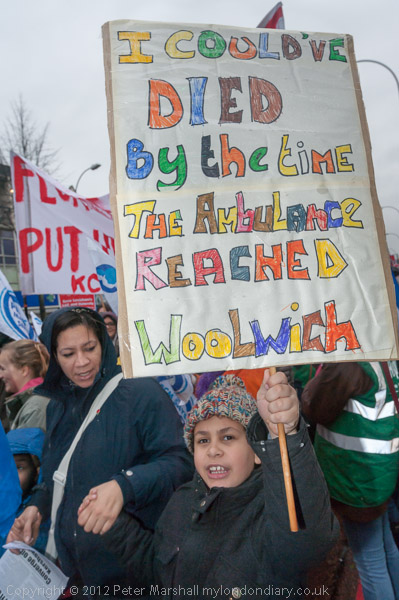
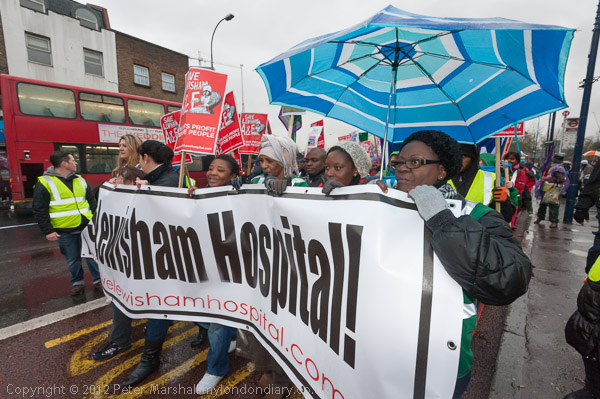
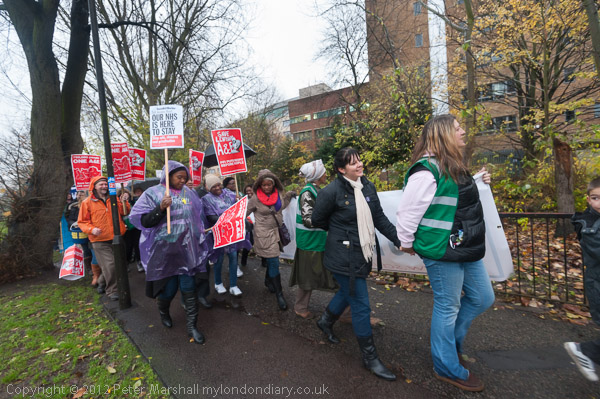
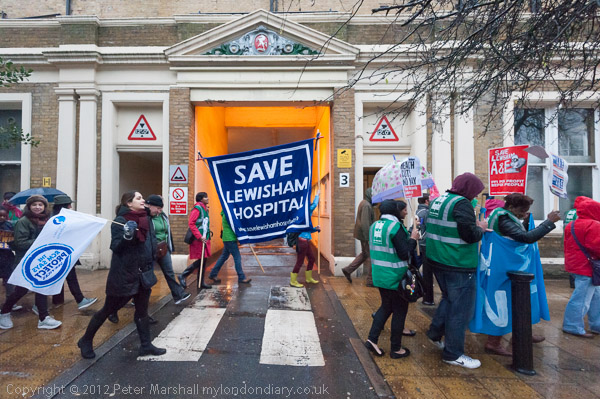
NHS – Free, For All, Forever?. Five years ago on Saturday 30th June thousands marched through London to celebrate 70 years of the National Health Service, which began on 5th July 1948. In a few days we will celebrate the 75 anniversary. The pictures here are from that march.

NHS - Free, For All, Forever?

A few days ago the Kings Fund published their report comparing the NHS to health care systems of other countries. It made depressing reading, but its findings were already well-known – and the result of government policies over the years.

NHS - Free, For All, Forever?

Conservatives were opposed to the setting up of the NHS and voted against it on numerous occasions when Aneurin Bevan was campaigning for its setting up and taking the bill through parliament. Bevan established the three basic ideas, that it should benefit everyone, that healthcare would be free and that care would be provided on the basis of need rather than ability to pay.

NHS - Free, For All, Forever?

Many doctors and dentists were opposed to the new system, which they saw as a threat to their lucrative private practices and this led to a number of compromises which have had serious consequences over the years.

NHS - Free, For All, Forever?

Dentistry has never really been made properly a part of our health care system and now large areas of the country have few if any dentists who will take on NHS patients. Private medicine has continued and grown parasitically on the NHS – who train those working in it, while it now gets paid by the NHS to provide many of the simpler aspects of treatment while leaving the heavy lifting to our public service.

Both Conservative and Labour governments since its formation have made changes which have diluted Bevan’s principles. Contracting out of various services began under the Tories, sometimes resulting in disastrous lowering of standards. Proper cleaning services etc are essential in hospitals.

New Labour brought in Private Finance Initiative projects (they borrowed the idea from the Tories) which have led to huge ongoing debts for some NHS trusts – and closures of some vitally needed hospital departments to meet these.

Since the Coalition and then the Tories came back into power there has been a huge increase in the creeping privatisation of the NHS, with Andrew Lansley’s 2012 Health and Social Care Act forcing the NHS into a market-based model based on competitive tendering, which even his successor as Health Minister, Jeremy Hunt has described parts of as ‘frankly, completely ridiculous’. So much so that even the Tories have no had to row back a little.

The King’s Fund report makes clear that “The UK has below-average health spending per person compared to peer countries” and it “lags behind other countries in its capital investment, and has substantially fewer key physical resources than many of its peers, including CT and MRI scanners and hospital beds.”

Successive governments have prevented the training in the UK from expanding the numbers of university places for medical training, and a few years ago the Tories removed the bursaries available for nurses. Since the start of the NHS this had been a failure, and as the report states there are now “strikingly low levels of key clinical staff, including doctors and nurses” and the NHS is “heavily reliant on foreign-trained staff.” Only in recent days have we seen an effort by government to put forward plans to address the issue – and almost certainly one that is inadequate.

There is also the question of pay, brought to the fore in recent months by strikes by nurses and doctors. The government’s response has mainly been to refuse to enter into meaningful talks and mutter about the impossible demands being made.

Of course nobody expects junior doctors to get a 35% rise, but all that it would take to resolve the dispute is a much lower figure, combined with a commitment to make a small above inflation increase in a number of following years to reduce the gap that has opened up.

You can read more about the march and rally and some of the issues in my post on My London Diary from June 2018, which also includes some information about the interests or many MPs and peers in private healthcare and connections to those wanting to see the NHS abolished. It may be ‘OUR NHS’ but many of those who have power to determine its future want it to belong to them.

And of course, many more pictures at NHS at 70 – Free, for all, forever.


UAF, EDL and Pride – 2013

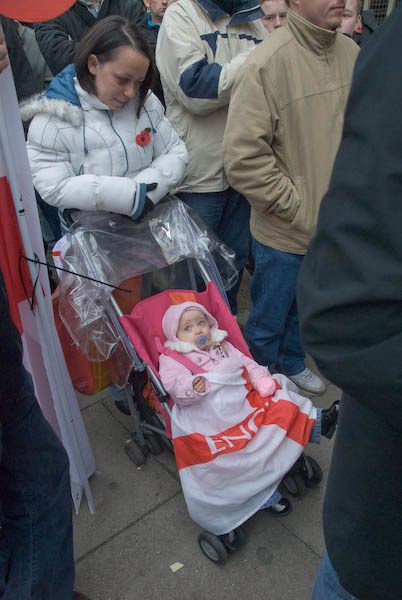
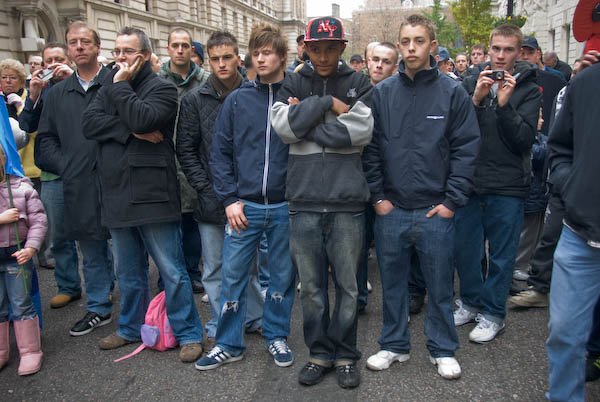
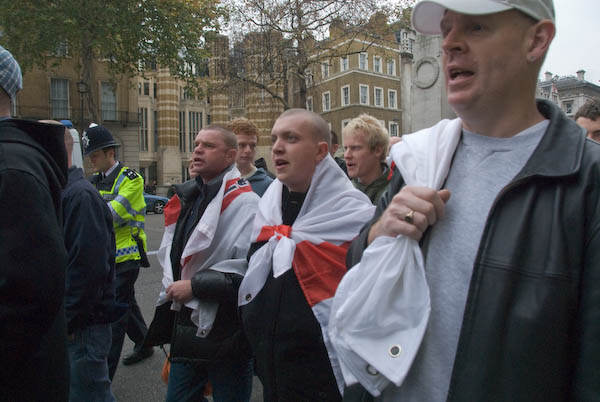
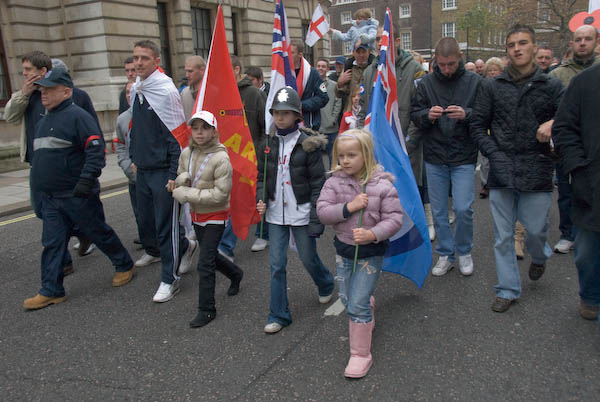
UAF, EDL and Pride : Ten years ago on Saturday 29th June 2013 my work began in Hyde Park where anti-fascists had gathered to oppose an EDL march – for which very few had arrived. I left to photograph the 2013 Pride London event.


UAF Oppose, EDL Don’t Come – Hyde Park

UAF, EDL and Pride - 2013

Police had banned the EDL from marching past the East London Mosque in Whitechapel and from any assembly or procession in Woolwich where Lee Rigby had been cruelly slaughtered under the Public Order Act.

UAF, EDL and Pride - 2013

Instead they had allowed a march by the EDL from Hyde Park to a rally near Parliament, and had also allowed Unite Against Fascism to march in protest against the EDL.

UAF, EDL and Pride - 2013

But the two EDL leaders, Stephen Lennon and Kevin Carrol had called themselves ‘charity marchers’ and had turned up in Tower Hamlets and been arrested by police. This news was relayed to the UAF supporters in Hyde Park and they gave a loud cheer. There were at most a hundred of them, and they had intended to march to the starting point of the EDL march, but none of the EDL had turned up. I left to photograph Pride.

More at UAF Oppose, EDL Don’t Come.


Pride Celebrates Love and Marriage – Baker St – Trafalgar Square

UAF, EDL and Pride - 2013

Over 150 groups had turned up for the 2013 Pride Parade to welcome the equal marriage Bill in England and Wales and celebrate the love that binds the London LGBT+ community together and links it with the wider community.

They included many of the figures I had photographed at previous Prides over the years – such as ‘The Queen’ , including some I had photographed back in the 1990s.

As always, some of the costumes were spectacular, while others were, frankly, just very odd. But variety is of course the spice of life, and there was certainly no shortage of spice.

My pictures show many of the individuals taking part, as well as smaller groups, but no the more commercial aspects of the parade which now tend to dominate. And I also like to show those using the occasion to make a political point. Pride is still for some a protest.

After photographing the marchers at the start – always where the most interesting photographs of the event can be found, I made my way to Trafalgar Square to photograph people arriving at the end of the parade.

By the time the march ended I’d been on my own feet too long and went home.

Many more pictures at Pride Celebrates Love and Marriage.