Occupy & Women’s Equality – 2011

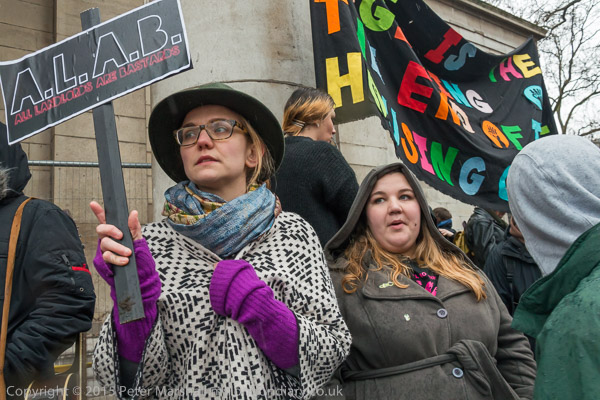
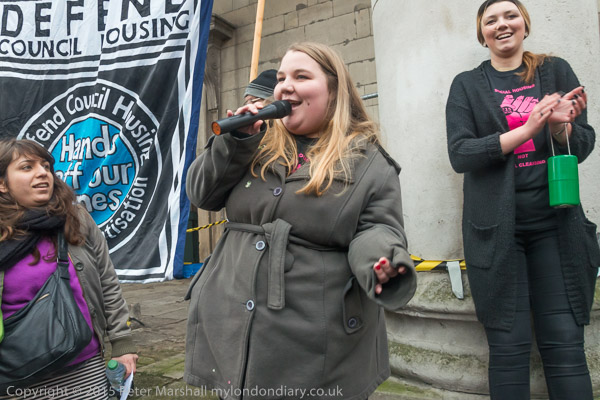
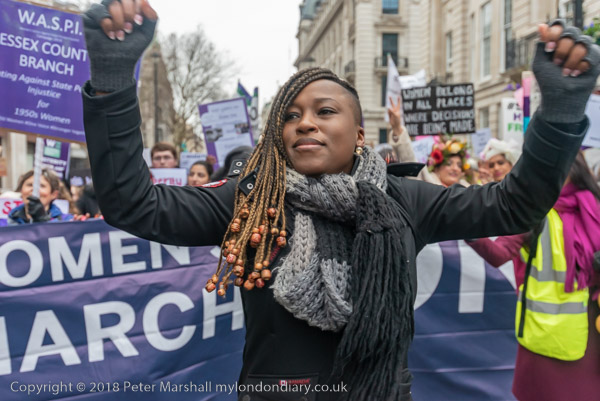
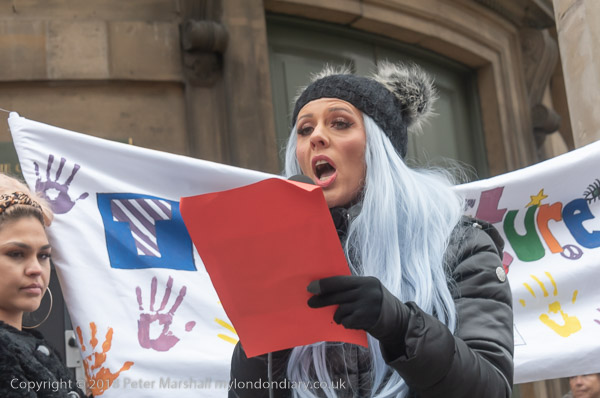
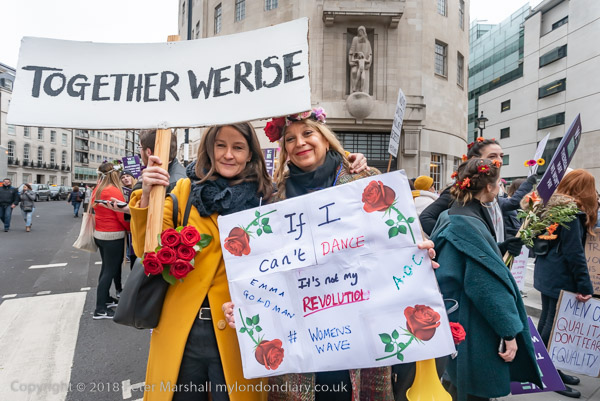
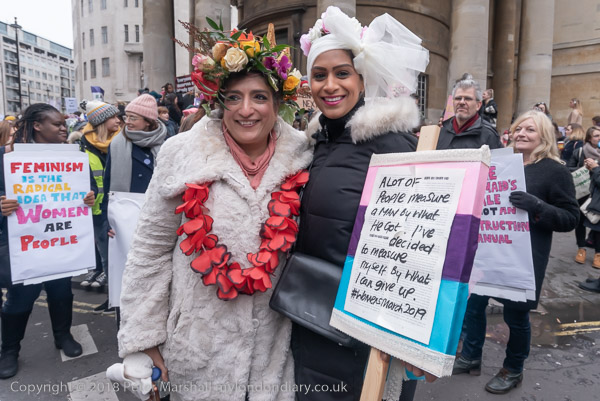
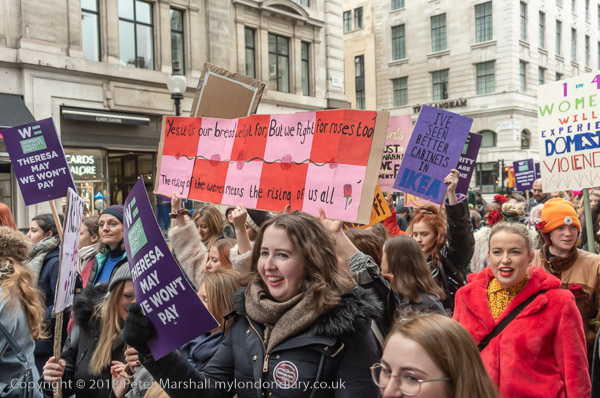
Occupy & Women’s Equality – On Saturday 19 November 2011 Occupy London was in full swing in St Paul’s Churchyard and elsewhere and the Fawcett Society were protesting against government cuts that were reversing the movement to greater equality for women.


Don’t Turn The Clock Back – Temple to Westminster

Occupy & Women's Equality

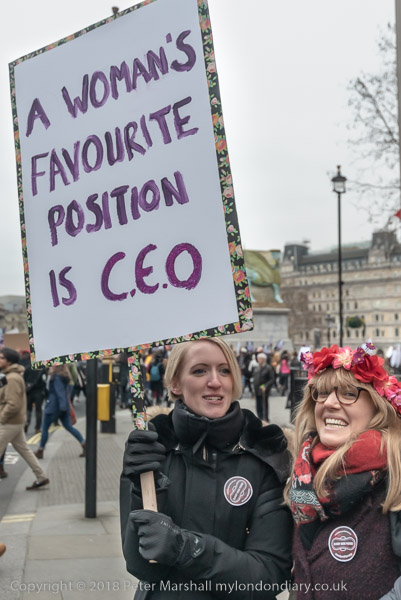
The Fawcett Society were angered by government’s cuts which they said were putting the clock back on the advances which women have made towards equality since the 1950s, and had organised a march in protest with a 1950s theme.

Occupy & Women's Equality

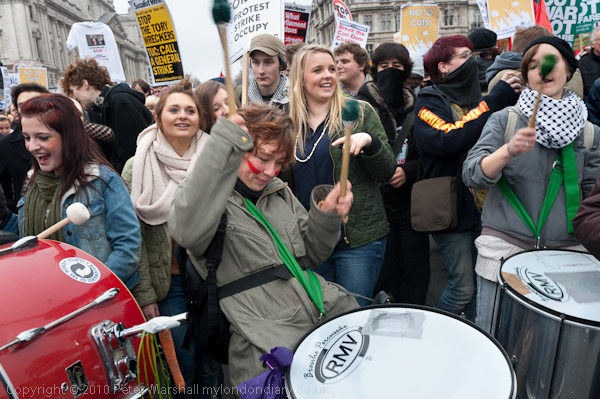
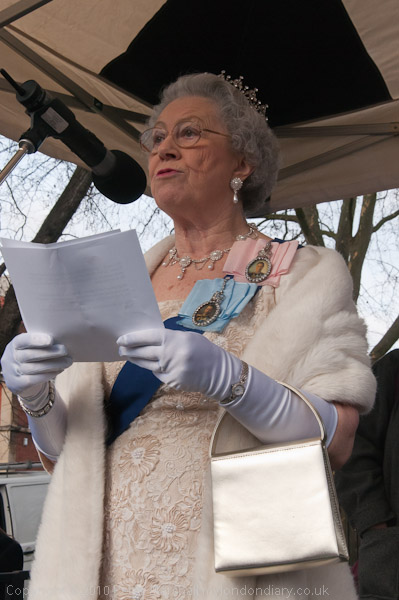
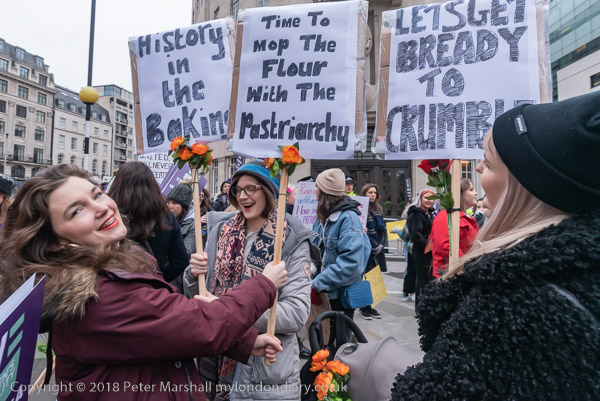
Many of the marchers, mainly women, had come dressed in 1950s styles “ranging from the most elegant of Paris fashion of the day to aprons, hairnets and curlers. Others carried brushes or brooms, wooden spoons or other kitchen implements as symbols of what they felt was the only role our government can envisage for women, the ‘good little wife’.”

Occupy & Women's Equality

Many women had been particularly angered by the sexist and patronising putdown in parliament made by then Prime Minister David Cameron, a man who a few days ago made a surprising return to a leading role in UK politics. Probably insulated as he has been from normal life by an education at Eton and Oxford and wealth he thought little about his sexist and patronising put-down ‘Calm Down Dear!’ to Labour’s Angela Eagle in the House of Commons, but it enraged at least half the nation.

Occupy & Women's Equality

On the march people chanted ‘Calm Down Dear!’ followed by the deafening response ‘No We Won’t!‘ The marchers also had some caustic comments directed at the press (though not us journalists covering the march) for their “belittlling labelling of some groups of women in public life – such as ‘Blair’s Babes‘ – as well as the general predominance of semi-pornographic imagery and demeaning attitudes to women.”

But it was the cuts that really were the focus of the march, particularly the cuts in public services. A majority of those who will lose their jobs are women, employed in the NHS and elsewhere. And women depend more on the various services that will be cut, and will also have disproportionally to provide unpaid services such as care to make up for those cut. Finally the cuts in pensions will also have a larger effect on women who were already seeing a raise in their pension age.

The Fawcett Society was founded in 1866 to campaign peacefully for votes for women and remains a powerful campaigning organisation for equal rights. It had called on a wide range of speakers for its rally including journalist Tanya Gold, Estelle Hart, NUS Women’s Officer, comedians Kate Smurthwaite and Josie Lond, Heather Wakefield of Unison, Vivienne Hayes from the Women’s Resource Centre, Chitra Nagarajan of Southall Black sisters. Aisha Mirza from UK Uncut and a spokesperson for the Turkish and Kurdish Refugee Women’s group.

More at Don’t Turn The Clock Back.


At Occupy London

Morning at St Pauls

I’d visited Occupy in St Paul’s Churchyard briefly before going to photograph the Fawcett Society march and returned later in the day to visit the ‘Bank of Ideas’ in Sun Street and Occupy Finsbury Circus before returning to St Pauls to hear a range of speakers on other campaigns both in London and around the world, including news of the Occupy movement from the USA and Bristol, where the occupation seems not to have attracted the opposition shown by the City authorities and sections of the church in London.

A meeting in progress in the Bank of Ideas

The Bank of Ideas was an empty former UBS bank building in Sun Street that was occupied and used for a wide range of meetings and discussions.

Occupy Finsbury Square
People listen to a wide range of speakers on the steps of St Pauls
Jeremy Corbyn
Vivienne Westwood

Later a group who had taken part in the non-Stop Picket of South Africa House started by the City of London Anti-Apartheid Group on 19 April 1986 shared some of their songs and their experience.
They had defied defied the attempts of British police, the British government and the South African embassy to remove them for almost 4 years until Mandela was released in 1990. There had been around a thousand arrests, but 96% of the cases brought to court were dismissed. Before this they had organised a number of shorter non-stop protests outside the embassy, the first of which in 1981 lasted 86 days and resulted in South African political prisoners including David Kitson being moved to better conditions.

The official Anti-Apartheid Movement opposed their actions and expelled them from the movement, warned trade union and local anti-apartheid groups not to have anything to do with them and asked Westminster Council to remove them. It wanted to avoid any confrontation with the British Government and opposed the City of London group’s support for other African liberation movements as well as the African National Congress.

More from the day at Occupy on My London Diary:
City of London Anti-Apartheid Group
Speakers At Occupy London
Bank of Ideas & Finsbury Square
Saturday Morning Occupy London


Our Flag & Olympic Site 2007

Our Flag & Olympic Site – On Saturday 17th November 2007 I had a more varied day than usual, beginning with a march my football supporters, then a walk around the outside of the then fenced off Olympic site followed by an Olympic-related symposium. I can’t remember anything about the symposium, though I think it was almost certainly critical of what was being done to London, its future being sacrificed to a highly commercial sports festival.


March For Our Flag – Westminster

Our Flag & Olympic Site 2007

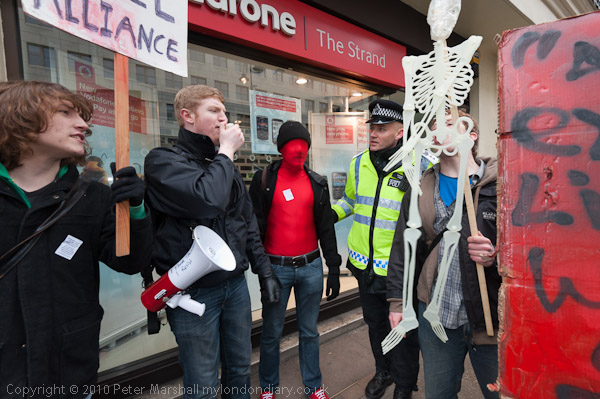
A few months earlier in February 2007 I’d photographed and written about a ‘March for Our Flag’ organised by football supporters, particularly Tottenham fans. The main group backing that – and the repeat march this month through Westminster – was the United British Alliance. There was a suggestion that, although a patriotic event, it was at least trying to detach itself from the racism of the far right.
The UBA web site described itself as “a multi-ethnic, multi-faith organisation with a passionate interest in reclaiming our once proud nation from the grip of international terror and political correctness gone-mad,with a view to re-installing some pride in our communities and way of life.”

Our Flag & Olympic Site 2007

As I commented in November 2007:

Although individuals may well be sincere in these attempts, it isn’t so easy to shake off this impression. Some of the links on the [UBA] web site are to people and groups who I would consider as having extreme views, and the discussion you can find on football forums and elsewhere seems clearly Islamophobic.

Our Flag & Olympic Site 2007

Although there were even fewer supporters this time – well under 200 – there did seem to be a slightly calmer attitude and a slightly wider range of people attending, although still only one or two black faces.

Our Flag & Olympic Site 2007

Curiously enough, on the UBA web site galleries, all the marchers have their faces – or at least their eyes – blacked out. The only people not given this treatment are the police escorting the event.

Our Flag & Olympic Site 2007

As I’ve often said, the only way to protect our freedom is by being free. That includes standing up for what you believe – and being seen to do so. So I’m totally opposed to this kind of censorship of the news. Freedom of expression is a part of the British heritage of which I’m proud. As too are Morris Dancing, Association and Rugby football along with the many other things, including the way we have successfully integrated elements from other cultures and religions into our way of life over the years – and continue to do so.

My London Diary

My pictures from the 17th November do show one or two families and their children took part and I can see just one darker face among the young men. In view of recent events and the behavior of Suella Braverman my final two sentences are very appropriate and very relevant: “We all need far more positive messages and actions from our politicians to lead us all – including Britain’s muslims to a new and united vision of our society. Islamophobia needs combating, not encouraging.”

More pictures on My London Diary


Stratford – Olympic Edge

I walked out of Stratford Station and across the footbridge leading to the Carpenters Estate and on to Bridgewater Road, a dead end with a bridge across the tidal Waterworks River.

The road to Hackney Wick is firmly closed and so too was the Greenway just a few yards from the entrance on Stratford High Street.

You could walk down it just a few yards, and I took another picture looking back along the Waterworks River towards Bridgewater Road where I had been standing earlier.

I took a few pictures around the edge of the area, then walked back along the High Street towards the centre of Stratford.

The Log Cabin pub had been here at 335-337 High Street, Stratford as a coaching inn since at least the mid-18th century, though it was known as The Yorkshire Gray before being renamed around 1997 when the hiddeous green excresenes were added. The building was Grade II listed in 2003, almost certainly saving it from demolition and is thought to date from around 1740, and though parts were rebuilt in the late nineteenth century much of the interior had survived more or less intact. It closed in 2001 and is now a hotel.

My final picture was at The Working Mens Hall and Club Rooms on Romford Road, founded in 1865 and rebuilt in 1905, with the motto Labor Omnia Vincit (Work Conquers All). Perhaps it was here that the symposium was held, and I have a very vague recollection of a talk by Iain Sinclair, although that could have been on quite a different occasion.

A few more pictures here.


Kick Boris out of Uxbridge – 2019

Kick Boris out of Uxbridge – When Boris Johnson was coming to the end of his wrecking spell as Mayor of London he decided he wanted to confer the same benefit on the country and the first step in that was to become an MP again. So in the 2015 election he was elected as the member for Uxbridge and South Ruislip, a safe Tory seat on the edge of West London.

Anarchists came to join the FCKBoris protest on Saturday 16th November 2019

He got roughly the same percentage of votes – just over 50% – there in 2017, but the Labour candidate managed to cut his majority considerably, and there were hopes in 2019 that this trend might continue. Unfortunately it didn’t and Johnson increased his percentage of the vote by 1.8% while the Labour vote went down by a little more.

Kick Boris out of Uxbridge

After Johnson’s resignation the by election there in 2023 was a close run thing, with the Tory vote down 7.5% and Labour’s up by 5.6% and the Tory candidate just scraping in with a majority of 495. Most commentators saw the result as being caused by the unpopularity of London Mayor Sadiq Khan’s ULEZ low emission zone extension which was to include the area later in the year overcoming the incredible unpopularity of the Tory government.

Kick Boris out of Uxbridge

But in 2019, many felt Labour had a chance in what had for many years been a safe Tory seat with a solid blue vote of around 50%. And among them were a group who called themselves FCKBoris who came to campaign there against him on Saturday 16th November 2019.

Kick Boris out of Uxbridge

I went there to photograph them and others went to protest with them. Uxbridge is only around 7 miles from where I live, but it isn’t a place I often visit, not least because public transport on the edges of London isn’t too hot. There are no direct links and my fastest route is on a bicycle. But I was feeling lazy and instead took three buses, with waits at each change. Two years later we now have a sightly faster service, at least in theory.

Arriving in Uxbridge I came across a fairly small group of people wearing orange woolly hats and handing out fliers with the message ‘Boris Doesn’t Want You to Vote…’ and telling people who were not registered how to get themselves on the electoral roll.

A few of London’s anarchists had travelled out from London to join them, bringing posters encouraging people not to vote but instead to revolt and some with photographs of the Bullingdon Club and the message ‘FUCK OFF BACK TO ETON’ – Johnson’s old school only a few miles away.

There were just a few other placards and banners, and also an open-top bus wth a large banner with the message #KICKBORISOUT from which a hefty sound system pumped out a rhythm that kept many of the campaigners dancing both on the street and on the top of the bus where I joined them briefly.

But the effectiveness of the bus was greatly reduced by the pedestrianisation of much of the town centre with an impenetrable one-way system and soon a police officer came along to tell the driver very politely that he couldn’t park where he was. And soon the bus and protesters set off slowly to march to Brunel University, accompanied by a handful of police.

And it was perhaps the university and its students which was the main focus of the campaign with the message directed more at them. Although students can register to vote both at home and where they live during the universtiy term, relativley few generally bother to do so. So much of the messages of this protest were aime at them, though there were some posters which might have had a more general appeal, such as one describing Johnson as “UNFAITHFUL, LIAR, SELF-SERVING, WIFE BEATER? DRUNK?” and saying ‘Don’t trust Boris Johnson. Don’t give him your vote‘.

They were joined at Brunel by a few more protesters with posters including one wearing a rainbow flag and carrying a ‘Queers Against Boris’ poster and with FUCK BORIS written on her forehead,

But otherwise once on the campus it seemed pretty deserted and people didn’t know what to do. Finally they formed up again behind the bus which drove off back towards the centre of the town. But I decided I’d walked enough and sat down at a bus stop for a long wait for a bus to Heathrow where I could wait again for a bus home.
Probably the campaign had very little influence on the result of the election on 12th December, where the Tory campaign was almost entirely on their promise to “Get Brexit Done”. Johnson’s majority here was 7,210 and he went on to make the worst of all possible deals we are now suffering from, largely because of a Tory conviction that bluster and intransigence is the best form of negotiation.
More at Kick Boris out of Uxbridge.


Grenfell Remembered in South Norwood – 2018

Grenfell Remembered in South Norwood. On the 14th of every month since the terrible fire on 14 June 2017 I remember Grenfell, though its something which has fallen out of the news. The Grenfell Inquiry dragged on – as it was meant to – until November 2022, and now its final report is not expected until some time in 2024. Such is the long grass which the UK excels in to protect the guilty, or at least the wealthy guilty who are an integral part of the establishment and corporate bodies.

Grenfell Remembered in South Norwood
Pictures are from South Norwood Stands With Grenfell march on November 14, 2018

It seems unlikely that there will ever be justice for the victims and their families or that any of the people or companies and other organisations responsible will ever be brought to trial. Probably at most there will be a few minor cases resulting in some fairly inconsequential fines.

Grenfell Remembered in South Norwood

Of course there have been some changes, with the similar cladding on some other towers being replaced by less flammable alternative, although there are still buildings with this dangerous cladding.

Grenfell Remembered in South Norwood

It didn’t take long for independent experts to produce extensive reports into the causes of the fire and publish these, and nothing that years of inquiry have produced adds much more than minor details and an increased list of those culpable. At one protest a few months after the fire we were told of a similar fire in Japan where those responsible were in court a matter of weeks after the disaster.

Grenfell Remembered in South Norwood

We also saw a concerted attempt in the first phase of the inquiry to push blame for the deaths onto the fire service, which was over-stressed due to cuts and which had been prevented from doing many of the things recommended in the report by a government programme of ‘reducing red tape’ in health and safety and building regulations which led those responsible only too literally get away with murder.

Jane Nicholl and Ian Bone

An earlier fire in Southwark had led to an inquest which had identified some of these problems and the coroner had made a number of recommendations, most of which had not been implemented.

What is clear is that on the night of the fire, firefighters had acted with incredible bravery despite lacking some essential equipment – such as the long ladders that had to be brought in from Surrey. And that as they were not aware of the conditions in this tower and some other blocks they had not realised until too late that the fire measures that should have contained the fire in the flat where it had started would not work.

A few weeks later there was a similar incident in a council block in East London which was contained and there was no loss of life. If Grenfell had been properly inspected and maintained the same would have been true, but it had been turned into a firebomb.

The march on Wednesday 14th November 2018 in South Norwood was prompted by a disgusting video being posted of a cardboard Grenfell tower being burnt by Conservative club members at a bonfire party in the area. It was a hateful video that shocked the nation by its callous treatment of a distaster that killed so many.

The South Norwood Tourist Board – and unofficial community group which has enriched the area by converting waste areas into public gardens and promoting local community events – organised a march to show solidarity with Grenfell, with several hundreds of local residents marching through the streets at the same time as the monthly silent march of remembrance in Notting Hill on the 14th of every month.

Those taking part included several former residents of Grenfell Tower and some who lost friends in the tragic fire, and several came with a Grenfell United banner to support South Norwood’s demonstration of solidarity. Leading members of the SNTB include Jane Nicholl and her partner Ian Bone of Class War. Ian had lived in Grenfell Tower when he first moved to London and it was from there that the first issued of Class War’s magazine were produced.

A relative of Sandra Ruiz of Grenfell United died in Grenfell Tower

Some shops along the route were decorated in support of Grenfell, and after the final speeches there was very welcome free hot soup provided by the Portland Arms pub.


Armistice Day Protests 2006

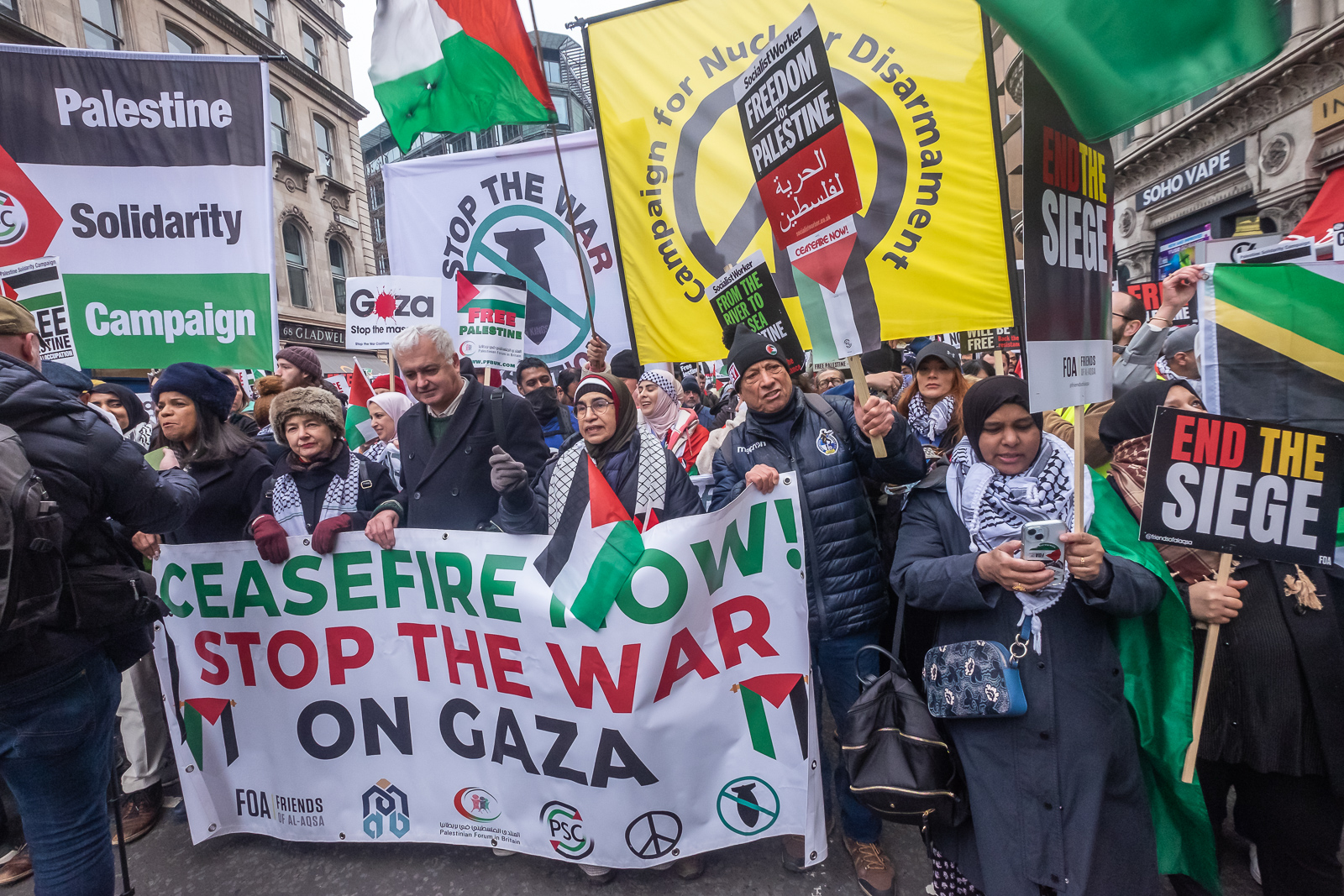
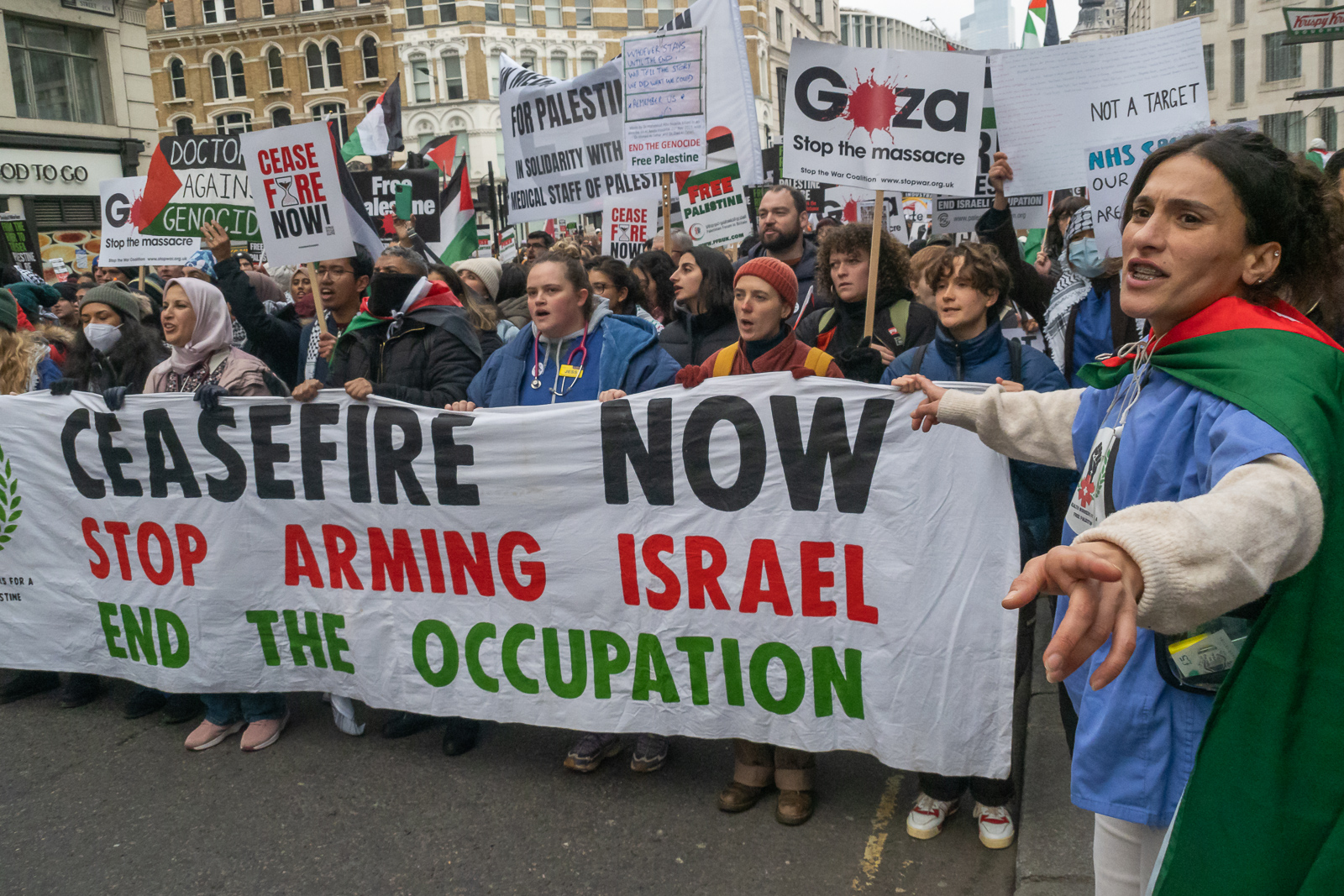
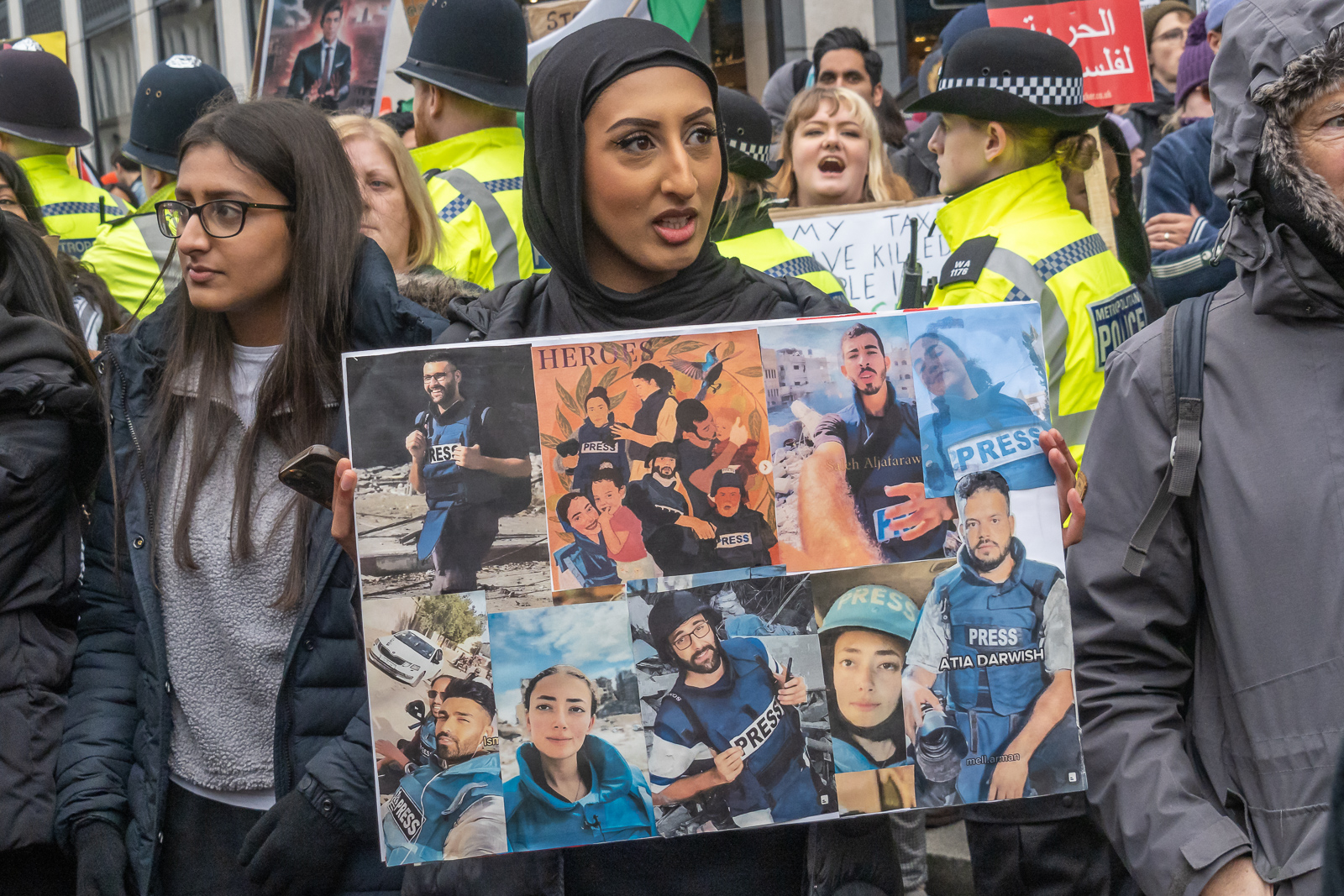
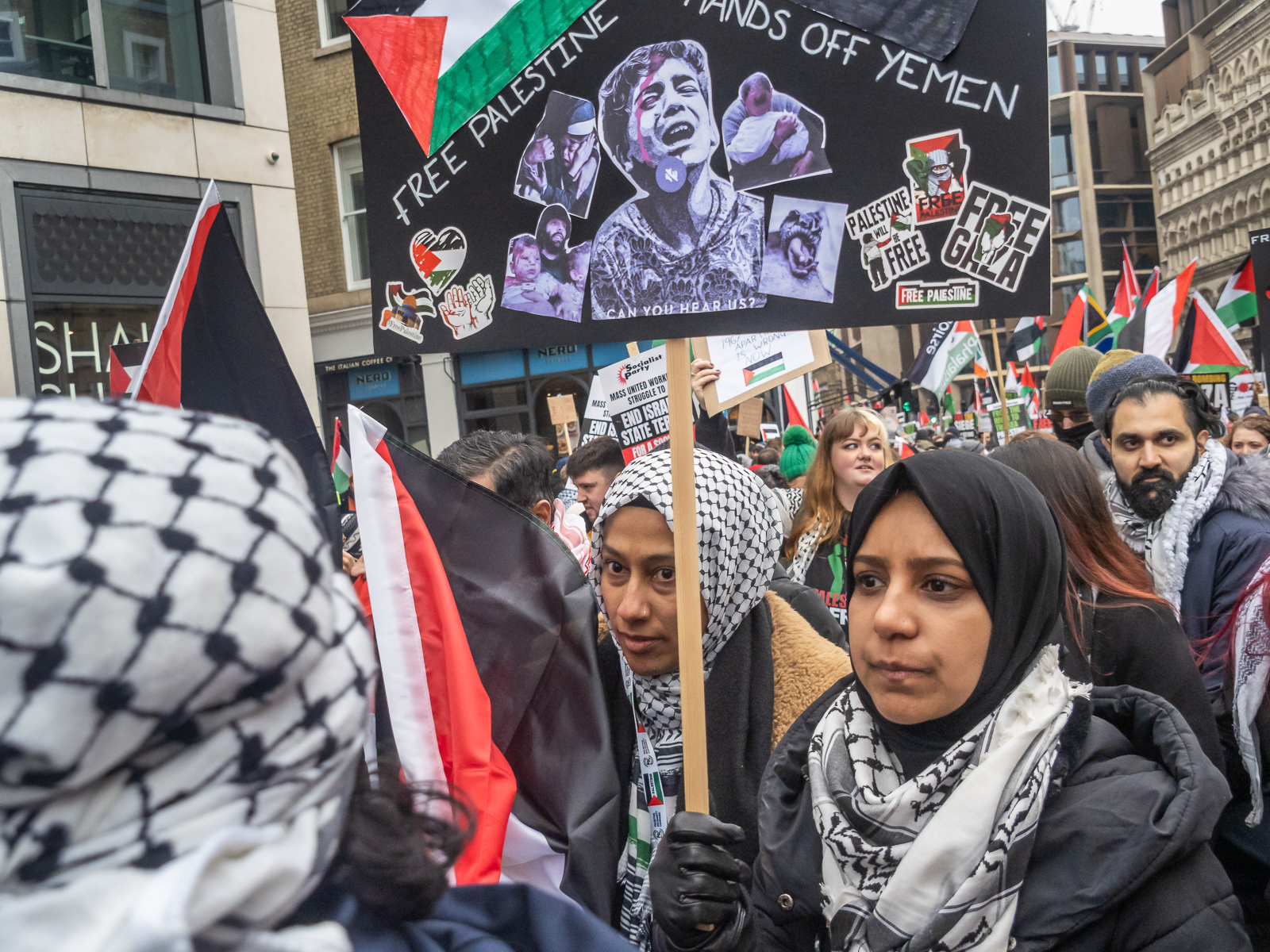
Armistice Day Protests – Today I hope to be photographing a huge protest calling for a ceasefire in Gaza and peace in the Middle East as it makes its way from Hyde Park to the US Embassy. It’s an event some Tory politicians have tried to arouse controversy around, aided by some of the media in their lies. Armistice Day has always been an occasion for protests for peace and making it out as some huge national celebration we all share in is untrue as this post shows.

Armistice Day Protests

Both the BBC and the Tories seized on the fact that some people at a protest in London shouted ‘Jihad!’ but lie in saying it was an offshoot from the huge march taking place in London calling for peace and justice for Palestine.

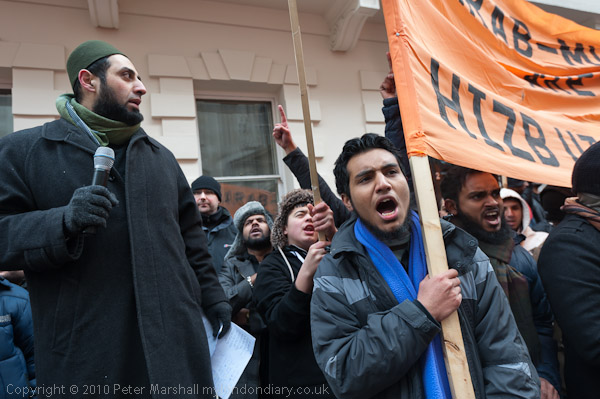
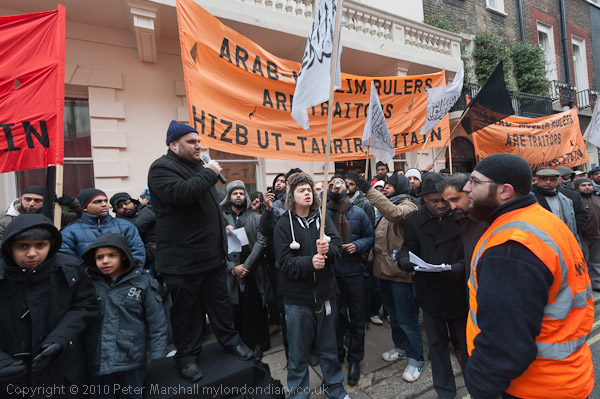
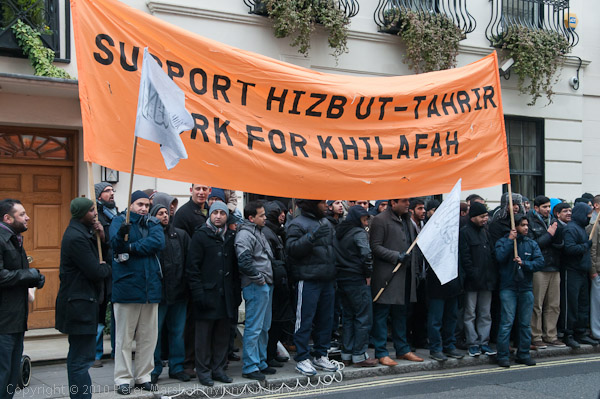
It’s a lie that the BBC continues to let them promulgate without question, although their journalists must surely know that this was at an entirely separate protest organised by Hizb ut-Tahrir Britain, an Islamic fundamentalist political organisation dedicated to the establishment of an Islamic caliphate, whose lead banner at their protest read “Muslim Armies! Rescue the People of Palestine!”.

Armistice Day Protests

I’ve photographed many protests by Hizb ut-Tahrir in London since I first came across them in 2004 and they are very different and entirley separate from those organised by mainstream Muslim organisations, Stop The War, CND and the others now leading the protests by hundreds of thousands across the country calling for an end to the killing of civilians – whether Palestinian or Israelis – in Palestine and Israel. Most are particularly enraged by the killing of so many children in Gaza by air strikes which Israel claims are targeted, but are targeted on places where many people live and so die in them.

I think most of us who march – and the many more who support the marches but are unable to attend – want peace and the justice that can only come if there is a thriving country where Palestinians can live normal lives in peace and not under military rule and an apartheid regime.

Armistice Day Protests

Probably that can only come about with a two-state solution and a massive world aid programme to restore the incredible damage in Gaza as well as establishing rational borders for Palestine with the removal of many of the illegal settlements.

I grew up in a largely working class area on the outskirts of London in the 1950s, and then I think it was true that virtually the whole of the country paused to celebrate and commemorate the armistice, joining in with the minute’s silence in schools, shops, works and offices and traffic on the roads coming to a halt.

Armistice Day Protests

But even then relatively few joined in the military style parades on Remembrance Sunday, with most of my friend’s parents who had fought in WW2 having had more than enough of that kind of thing. My attendance was compulsory as a Wolf Cub and Boy Scout but I resented it and my freezing legs as cold November winds blew up my shorts – and the derision from friends who weren’t members. And by the time I was a Senior Scout we collectively refused to take part.

The idea that Armistice Day is not a suitable day for a peaceful protest calling for an end to the fighting and peace in the Middle East seems to me to be beyond absurd – yet again is taken seriously and promoted by the BBC. Armistice Day has I think always seen protests for peace – and November 11th 2006 was no exception.

On that day I began on Park Lane, where there was a brief ceremony in front of the sculpture commemorating animals who died in war in the central area there at 11 am. There were only a small group there, wearing poppies they described as purple, though to me they seemed more lilac or mauve. In 2018, the Peace Pledge Union sold 122,385 white poppies: more than any year since white poppies were first worn in 1933, and many keep their white poppies to wear in following years, as unlike the red poppies their sale is not intended to raise funds but they are simply worn as a symbol of remembrance and peace.

I moved on to Grosvenor Square and the US Embassy where School Students Against The War had scheduled a ‘die-in’. Unfortunately only around 20 had turned up for it – probably now many work on Saturdays or prefer to enjoy a lie-in at home.

Another short walk took me to Marks & Spencer on Oxford Street, where a protest was taking place as a part of the fourth International Week of Action against the Apartheid Wall in Palestine.

Fight Racism, Fight Imperialism who had organised this event also hold regular vigils outside M&S every Thursday evening, calling for a boycott of the company as part of a wider Boycott Israel campaign. M&S sell goods including those coming illegally from the occupied territories of Palestine and give financial and moral support to Israel.

School Students Against The War came from the US Embassy to join them and staged their die-in on the wide pavement in front of M&S. This certainly generated a great deal of attention and they made some short speeches to the the crowds milling past M&S before marching off down Oxford Street with their megaphones and banner. They staged a second ‘die-in’ further down the street, again attracting the attention of shoppers, although perhaps surprisingly, not the police none of whom seemed to be around.

I went on to Trafalgar Square where I hoped to photograph the fountains filled with red poppies, but I arrived a little late to find a man in waders fishing them out with a shrimp net. It was bizarre if not surreal, although not quite what I’d been hoping for.

My main event of the day was taking place on Whitehall, at the Cenotaph. Not the military parade ‘at the eleventh hour‘ which I had refused to cover, but a commemoration by some of the families of servicemen killed in Iraq.

Led by a piper they marched solemnly to stand in front of it, while they came up to read out the names of the 121 dead British servicemen killed in the Iraq war. A small selection of names of Iraqi civilians killed was also read out. It’s difficult to estimate the exact number who have died, and more deaths have occured since 2006. The US Brown University Watson Institute now states “we know that between 280,771-315,190 have died from direct war related violence caused by the U.S., its allies, the Iraqi military and police, and opposition forces from the time of the invasion through March 2023.”

A deputation then took a letter in to Downing Street for Prime Minister Tony Blair who had misled parliament and ignored the largest protest ever seen in the UK to take the country into a misguided invasion together with the USA.

Among those taking part in what was an extremely moving ceremony were Rose Gentle of Military Families Against The War, and others who have lost sons or partners in Iraq, including Ann Lawrence, Roger Bacon, Natasha Mclellan, Maureen Bacon as well as Lance Corporal George Solomou, from the London Regiment of the Territorial Army who refused to go to fight in Iraq. Families of some serving soldiers also took part.

Also there and supporting the event among others were Kate Hudson of CND, Yvonne Ridley and Lindsey German of Respect and Stop The War, fashion designer Katherine Hamnett, and Jeremy Corbyn MP.

This was an event that attracted considerable media attention; there is a delicate balance between intruding on private grief, but those there had chosen to make their grief public, and we had to record it for them.

More Pictures on My London Dairy – Scroll down the page there for links.


Sparks And Students – 2011

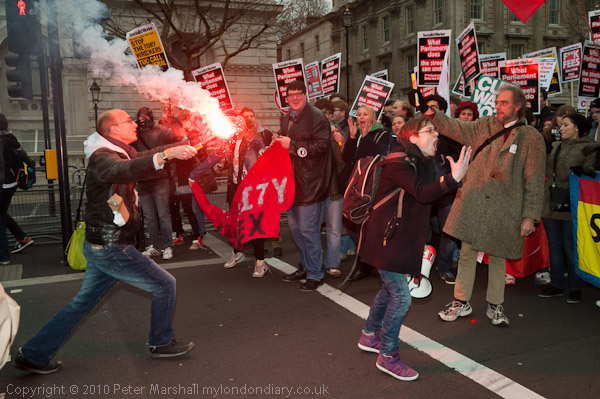
Sparks And Students – On Wednesday 9th November there were protests by electricians in Southwark and police shut down most of central London to harass students as they marched to the Moorgate building of London Metropolitan University.


Sparks At The Shard – London Bridge

Sparks And Students

Around a thousand electricians – ‘sparks ‘ – marched to a protest rally at the building site for the Shard in a protest led by Unite against plans by 7 major employers to tear up national agreements and impose worse conditions and pay cuts of at least 26 %.

Sparks And Students

In 1968 major employers and the trade union had come together to set up the Electrotechnical Joint Industry Board (JIB) to set standards for the electrical industry and to provide a means of resolving the frequent disputes which were then taking place by bringing together both sides in committees with equal representation. JIB has also developed to set the standards for employment, welfare, grading and apprentice training in the electrical contracting industry.

Sparks And Students

In May 2011 seven major companies – Bailey Building Services, Balfour Beatty, Tommy Clarke, Crown House Technologies, Gratte Brothers, SES and SPIE Matthew Hall – announced that they would withdraw from the JIB pay and conditions deal and impose their own agreement known as BESNA (Building and Engineering Services National Agreement) which would enable them to replace skilled workers by those on lower grades.

Sparks And Students

Unite targeted Balfour Beatty for action as the largest company and ring-leader in the employers group and at the rally Unite General Secretary Len McCluskey announced that the union had given notice today of a strike ballot for its members employed by them. The Shard was one of Balfour Beatty’s major projects at the time, along with Crossrail.

Several hundred of the electricians had earlier held a protest in Bishopsgate and visited the Occupy London site at St Paul’s Cathedral before marching to the rally at the Shard. Police had tried to stop them at various points on their march and they arrived with a large police escort.

Before the official rally started there were speeches by rank and file trade unionist. They were followed by several Unite speakers with a final address by McClusky. Around 600 of the sparks then marched off to support the students who were protesting in London but police closed both London Bridge and Blackfriars Bridge and stopped them.

Following this and further actions by rank and file electricians Balfour Beatty, the largest of the firms in Febraury 2012 announced it was going into further talks with Unite on updating the JIB agreements and this was the end for BESNA.

More pictures on My London Diary at Sparks At The Shard.


Students March Against Cuts & Fees – Bloomsbury to Moorgate

Despite police attempts to provoke them, more than 5000 student protesters marched largely peacefully against fees increases and cuts in services. Most kept to the agreed route, from London University in Bloomsbury to London Metropolitan University in Moorgate, which was lined by thousands of police.

Students are angry about the high fees and the cuts in education – particularly the loss of the Educational Maintenace Allowances and various cuts in service, but in the early stages of the march the protesters were in a relaxed and positive mood, many talking to and joking with the police who were accompanying them.

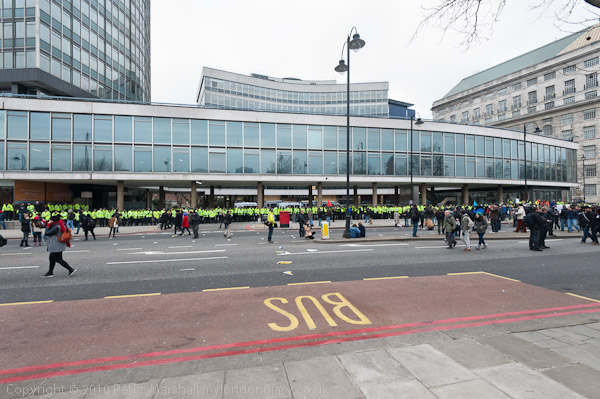
After the police failure to stop some student fees protesters who had stormed the Tory HQ at Millbank in 2010, the police this year were determined to control events. To do so they closed all major roads in central London for hours before the march began, making it hard for many to get to the protest. There were no buses and I had to walk two miles from London Bridge and so arrived after the march started.

I could hardly see the marchers as they came down towards me on Shaftesbury Avenue, with a line of mounted police in front, followed by several lines of police on foot. Behind them were march stewards and then the main banner, behind which was a vast crowd of students and supporters carrying placards.

The march continued but with sporadic stoppages by the police for no apparent reason. But after it had come up Strand to Aldwych a snatch squad of police ran into the centre of the march, grabbed several of the many black-clad protesters, and dragged them across to the side of the road. Many around them, including me, were roughly pushed aside and I received a painful kick in my leg from one officer.

The crowd were angered and gathered around the police for some time but were persuaded by stewards to move on. People were further angered when they heard that the group of 600 electricians had been prevented from coming to join them, and the crowd took up the chant “Free the sparks!” But most then continued along the agreed route up Fetter Lane.

Police then decided to try and stop the march in what I commented “seemed like an act of complete folly“. Slowly the marchers pushed the police back from the confines of the street to the open area of Holborn Circus. Here “proceedings reached a state of comic chaos, with senior officers shouting orders to small strings of police to stop the protesters; while they were grappling with the few within reach the rest of us simply walked through the huge gaps between these lines.” Holborn Circus was really a circus.

A large group of students then ran past the police horses on Holborn Viaduct where they had withdrawn from Holborn Circus after several riders had lost control of their horses and I ran with them. Police managed to stop the rest of the marchers on Holborn Viaduct and after a short wait people decided to continue along the agreed route to Morgate without them.

I went on to talk with the people at Occupy Finsbury Circus who were worried by the huge police presence and felt they might be evicted. I thought it unlikely as with 5000 student marchers around it would be likely to spark a riot. I left and walked across the City where major roads were still closed to traffic and remained so for some hours. Later I watched videos showing students being kettled at Moorgate and individuals being attacked by snatch squads of plain clothes police who had posed as protesters after I had left.

More at Students March Against Cuts & Fees.


Movement For Justice at Yarls Wood – 2015

Movement For Justice at Yarls Wood – On Saturday 7th November 2015 Movement for Justice organised a large protest with other groups to show solidarity with the women locked up inside Yarl’s Wood immigration detention centre and to demand that all such detention prisons be shut down.


MFJ Meet To March to Yarl’s Wood – Twinwoods Business Park

Movement For Justice at Yarls Wood

Yarl’s Wood was built on a former wartime airfield in remote countryside five or six miles from the centre of Bedford, perhaps chosen in part for its remoteness, which makes it difficult for visitors or protesters to get there.

Movement For Justice at Yarls Wood

But Movement for Justice – MfJ – and others had organised coaches from around the country, including eight from London as well as one from Bedford Station to bring people with others arriving by car, taxi or bicycle. The road leading to the prison is private, but people were able to meet on a public road around a mile away outside the main entrance to the business park there.

Movement For Justice at Yarls Wood

While we were waiting for everyone to arrive there was lively rally with a great deal of dancing, singing and chanting, keeping everyone’s spirits high, and keeping us warm as a chilly wind with occasional spots of rain swept across the open site on top of a high plateau.

Movement For Justice at Yarls Wood

Among those at the protest were many immigrants who had themselves been detained at this or other detention centres around the country while waiting for a decision to be taken on their asylum claims. Sometimes this takes several years and those who are taken to prisons such as these are held indefinitely, never knowing if or when they will be released or taken under guard to be forcibly deported.

Movement For Justice at Yarls Wood

Many inside have fled their countries after violent attacks including sexual assault and rape and deserve humane treatment not imprisonment. Few if any pose any real threat and could be housed outside, often with friends or relatives in this country. If they were allowed to work many would make a positive contribution. They would also be much more able to contact their solicitors and collect information to support their asylum cases than from inside the detention centres where access is limited.

Instead the Home Office locks them away and sometimes seems to have forgotten them and lost the key. One woman was detained for a couple of days less than three years before being released – after which she returned with the MfJ and spoke at protests which give those still inside some hope and remind them that they have not entirely been forgotten.

More at MFJ Meet Outside Yarl’s Wood.


MfJ ‘Set Her Free’ protest at Yarl’s Wood

As well as MfJ, Sisters Uncut, Lesbians & Gays support the Migrants, All Africans Women’s Groups, Glasgow Unity and others had come to join in the protest. Eventually with around a thousand people gathered it was time to march, though a few coaches had not yet arrived.

We set off on the long walk to the detention centre, with banners and placards, a short distance along the road and then down the public footpath which runs through a couple of fields and across another track, and into a field on the north side of the prison, about a mile from where the campaigners had gathered.

Here there was a fairly steep rise a few feet up a hill from the 20 foot high fence around the detention centre and from the top of this we could see the upper floor windows, some of which had women at them, though only through the dense thick wire grid of the upper half of the fence.

The windows do not have bars, but only open a few inches, but this was enough for the women inside to put their hands through and hold towels and clothing to greet the protesters. Some managed to hold out messages: one read ‘We came to seek Refuge. Not to be locked up’ and another ‘We are from torture. We Need Freedom’.

The lower 10 feet of the fence is made of stout metal panels, and beating or kicking on these makes a very loud noise. Later some protesters brought up rope ladders so they could hold placards and banners on the more open top of the fence so they could be seen by the women inside.

The prisoners are allowed to have phones which they need to contact their solicitors and advisers over their cases and some were able to use these to communicate with the protesters and to have their voices relayed over the PA system the protesters had brought.

There was a heavy rain shower during the protest, and the ground which was already muddy and with large puddles became very treacherous and getting up from the concrete and narrow flat area at the bottom of the fence became difficult. But soon the sun was back out again.

Most of those who spoke at the event were former detainees, some of whom had friends who were still inside the immigration prison.

The protest was still continuing when I had to leave and the low winter sun was beginning to make photography more difficult. It seemed a long and rather lonely journed as I made my way back to the road, boots heavy with mud. But I was free to go, while women who had come to this country seeking asylum from danger and violence in their own countries were still locked up by a hostile and unfeeling government.

More at MfJ ‘Set Her Free’ protest at Yarl’s Wood.


Dear Suella, Please Resign

Dear Suella, Please Resign – I and I think most of the British public have had enough of your hate speech, and your latest tirade against the half million or so people who came out onto the street to call for a ceasefire in Gaza plumbed new depths in hypocrisy.

Dear Suella, Please Resign

Those hundreds of thousands who marched last Saturday – and I was there – were marching for a ceasefire to end the humanitarian catastrophe which is underway in Gaza, where thousands of civilians have already died through Israeli attacks and more will do so if the attacks continue from bombing and shelling, the lack of food and clean water and the almost complete breakdown of medical services.

Dear Suella, Please Resign

There was no celebration of Hamas on the march and certainly none for the particularly barbaric actions in Israel on October 7th. Nor for the taking of hostages, although some on the march will certainly have felt it was the only way that Palestinian prisoners in Israel might be freed – over 4,000 of them, many locked up without charge, including (April 2022 figures) 32 women and 160 children. The continuing attacks on Gaza also threaten the lives of the hostages held by Hamas and appear to have stopped for the moment negotiations which would have led to further releases.

Dear Suella, Please Resign

Together with the BBC and some other news media you continue to collude to suggest that people at these protests shouted for Jihad. As you well know, these shouts took place at an entirely separate protest by Hizb ut-Tahrir Britain, an extreme Islamic organisation calling for the establishment of a caliphate, whose protests I have covered since 2004. Their protest was not for peace but was calling upon Muslim Armies to liberate Palestine. To use their activities to denigrate those taking part in the huge protests for an end to the fighting and occupation in Palestine is dishonest in the extreme.

Dear Suella, Please Resign

The world needs peace in Palestine and so does Israel as well of course as the Palestinians. We have seen over the years since Israel was set up that war is not the way to achieve this.

As the UN Secretary General made clear when condemning the Hamas attack, it did not take place in a vacuum. It took place after years when Palestinians have been forced out of their homes, their lands occupied, and they have been subjected to arbitrary military rule under an apartheid regime with Gaza held under siege. Years in which the peace process has been put to one side. The only hope for peace is if Palestine is allowed to grow and to flourish rather than continue to be oppressed.

I grew up in a country which prided itself for its sense of fair play and decency, even though this ideal was not usually extended in practice to those we colonised.

We were a country that led the way in the establishment of the United Nations and the Universal Declaration of Human Rights and other conventions.

Now we seem to be a country that is ruled by politicians that have no real regard for human rights and the rights of asylum seekers, that are massively incompetent and put their own personal aggrandisement before the national interest, and are directed by corporate interests rather than those of the people or the planet. With some politicians from both main parties claiming huge expenses and often fiddling unnecessary second homes and increasingly frequent sexual scandals.

Government ministers and shadow ministers alike seem prepared to come onto the media and bluster and lie for the party, backed up by an electoral system that fails to provide any real democracy. Our current parliamentary election system is actually rather less democratic than the system that brought Hamas to power in 2006 – despite considerable interference by the US and Israel in the electoral process, though since Hamas took over Gaza completely by military force in 2007 and there have been no elections there.

The Covid inquiry continues to reveal government failures which led to many early deaths and its now clear that our current government have decided to abandon any real attempt to slow down or reverse our excessive global heating despite almost daily scientific evidence of the increasing risks – and the evidence we all fell as our weather becomes more and more chaotic. And rather than try to deal with the many problems that various protests bring to the fore, successive governments have enacted laws to restrict the right to protest and free speech and have encouraged police to prevent protests and courts to impose harsh ‘exemplary’ punishments.

Frankly Suella, you and your government are a disaster. And you are the leading edge of that disaster. The sooner you all go the better for Britain. Resign Now.

Pictures here are from London last Saturday, 28th October 2023. You can see more of those I made during the protest at:
National March for Gaza – Ceasefire Now, London 28 Oct 23
More Pictures – Gaza Ceasefire Now! London 28 Oct 23
Gaza Ceasefire Now! Protest At Waterloo Station, London 28 Oct 23


Call for Justice over Police Killings

Call for Justice over Police Killings: The huge media outcry over the charging of a police officer for murder over the killing of Chris Kaba is a reminder to me that thousands have died in police custody, in prison, immigration detention and secure psychiatric hospitals, many under very suspicious circumstances, almost certainly over 2000 since 1990.

Call for Justice over Police Killings

Official figures fail to record many of these deaths has having taken place in custody and those responsible have often lied or withheld evidence. Investigations have often been superficial and some inquests, rather than attempting to get at the truth have been used to hide it.

Call for Justice over Police Killings

The Kaba case is something of a landmark and while the officer concerned remains innocent until proved guilty, if convicted he will be the first to be found guilty of either murder or manslaughter for such a death. Although it seems obvious that the police should be held responsible for their actions, until now our justicve system has failed to do so.

Call for Justice over Police Killings

Earlier this month, the IOPC (Independent Office for Police Conduct) published a letter to the family of Sean Rigg, making a unreserved apology for the failures in investigating his death in Brixton Police Station in August 2008. It was an apology which only came about after 15 years of determined campaigning and investigation by the family, particularly Sean’s sister Marcia, doing much of the job the police should have themselves done and being met by lies, deceit and cover-up.

Call for Justice over Police Killings

This apology was also a first, and many other families are still waiting for any semblance of justice and with little hope of ever receiving it.

Policing isn’t an easy job, but it isn’t made easier by some of the actions of the police and the institutional failures, including racism. Policing in the UK is meant to be by consent, but that is a consent that has to be earned, and one that is squandered by failures to properly respond to complaints and investigate the actions of officers.

Every year since 1998, the United Families and Friends Campaign (UFFC), a coalition of families of people killed by police, in prisons, in immigration detention and in secure psychiatric hospitals have met in Trafalgar Square and made a march of remembrance to a rally opposite Downing Street. Most years I’ve taken part and photographed this, and the pictures in this post come from the march on 28th October 2006.

You can read what I wrote then about this some way down the My London Diary October 2006 page, and I won’t repeat it here. There are of course a few more pictures too, linked from there, though you can also go directly to them.

But there are some particular things I’d like to point out about that year’s march. Firstly is that among those taking part were members of the Family of Jean Charles de Menezez, the Brazilian electrician shot without warning as he sat peacefully in an Underground train at Stockwell Station. The woman who ordered this murder was later rewarded with various promotions and honours and cleared at a trial of any personal culpability for his death and rose to become Commissioner of the Metropolitan Police and was honoured for her service.

On her watch we saw the first plans for patrols in the UK by armed police, increased use of controversial stop and search powers, live facial recognition, the heavy handling of a vigil for Sarah Everard, various failures to implement reforms and obstruct the course of justice in cases involving the police.

Pauline Campbell speaking at the event in 2003

Also taking part in 2006 was Pauline Campbell, whose daughter Sarah Campbell died in Styal Prison in 2003, who told us that home office had finally admitted responsibility for the death of her daughter. The death of her daughter drove her to become a powerful and persistent campaigner taking direct action against the increasing number of deaths of women in custody. But Pauline’s story had a tragic end when her body was found on her daughter’s grave after committing suicide on her daughter’s birthday in 2008.


No More Police Killings, Time For Justice

No More Police Killings, Time For Justice: On Saturday 27th October 2012 I photographed the 14th annual march by the United Families & Friends Campaign (UFFC), a coalition of people whose family members and friends have died while in the care of police, prisons and in psychiatric detention.

No More Police Killings, Time For Justice
Marcia Rigg holds the list of 3,180 known custody deaths since 1969

Tomorrow, 28th October 2023 the UFFC will again be marching from Trafalgar Square at noon, though the event will be rather overshadowed by a massive march taking place at the same time a short distance away supporting Palestine. I hope to spend some time covering both events.

No More Police Killings, Time For Justice

Back in 2012 I wrote a long post, No More Police Killings, Time For Justice, on My London Diary about the event and little has changed since then, except that the list of those who have died has grown longer. So today I’ll quote some large parts of that article, along with some of the many pictures I took then.

No More Police Killings, Time For Justice

A slow silent march in memory of over 3000 people who have died in suspicious circumstances in custody since 1969 made its way slowly down Whitehall to Downing St, where a rally called for an end to police violence and immunity from prosecution.

No More Police Killings, Time For Justice

Among the families involved in the campaign, many of whom were represented at the protest, were those of Roger Sylvester, Leon Patterson, Rocky Bennett, Alton Manning, Christopher Alder, Brian Douglas, Joy Gardner, Aseta Simms, Ricky Bishop, Paul Jemmott, Harry Stanley, Glenn Howard, Mikey Powell, Jason McPherson, Lloyd Butler, Azelle Rodney, Sean Rigg, Habib Ullah, Olaseni Lewis, David Emmanuel (aka Smiley Culture), Kingsley Burrell, Demetre Fraser, Mark Nunes and Mark Duggan. Every year the list of names of those who have died in custody grows by several hundred – and among the new names this year were Billy Spiller, killed on 5 Nov 2011 and Philmore Mills, killed in Slough on Dec 27, 2011 and Anthony Grainger, killed by police on 3 March 2012. A total of 3.180 whose names are known since 1969, and there are others about which no details are available. Many have died in situations where foul play seems obvious, but not one single police or prison officer has been convicted.

People carry a coffin on which families wrote the names of those killed

There they came to a halt on the southbound roadway and held a rally at which many representatives of the families who are campaigning for justice spoke. Their stories were a horrific indictment of the UK police and justice system, with case after case of mainly fit and healthy men (and their have been some notable women) being detained by police and after a remarkably short time in the hands of the police being dead. Most but not all were black, but there was considerable agreement when one of the speakers said it was not a matter of race but of class; some police felt they could treat working-class people they detained how they liked, and that they could literally get away with murder.

Carole Duggan described the officer who shot her nephew Mark Duggan last year as “a serial killer in a uniform”

Instead the police issue lies to the press – as in the case of Mark Duggan whose shooting which appears to have been an extra-judicial exection – sparked the recent riots, saying that the victims were pointing guns at police or false stories about drugs or gang connections or other stories which give lurid headlines. Often evidence later emerges which means they have to retract these stories – as in the case of the entirely innocent Brazilian electrician Jean Charles de Menezes.

Jan Butler, mother of Lloyd Butler who died in a police cel

These and other cases often too see police officers colluding with each other over stories – which again often unravel as more evidence emerges. We’ve seen too the deliberate use of discredited forensic investigators, as after the killing of Ian Tomlinson, as well as in that case and many others the deliberate use of delaying tactics in the investigation. CCTV evidence seems sometimes to mysteriously disappear, police fail to question officers who are the key suspects, and more. The Independent Police Complaints Commission has clearly too often has failed to be independent, often seeming to deliberately avoid or hide the the truth and to aid the police in getting away literally with murder.

No More Police Killings, Time For Justice
Stephanie Lightfoot-Bennet, twin sister of Leon Patterson

In the article I went on to give some details of the cases that family members spoke about, including the cases of Mark Duggan, shot by police in London, Anthony Grainger shot in Warrington, Lloyd Butler who died in a police cell, Kingsley Burrell who died in hospital after police had sectioned him when he called for help, Leon Patterson, battered to death in a police cell in Manchester in 1992, Demetre Fraser, Jason McPherson, Christopher Alder and others. I had to leave while some family members were still waiting to speak.

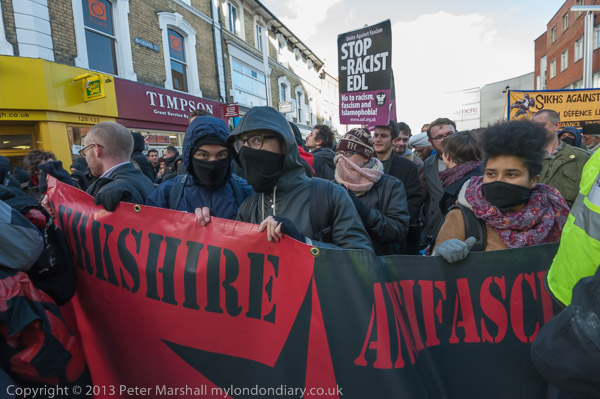
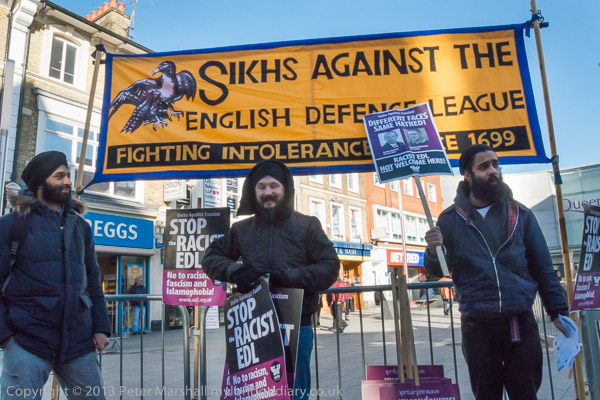
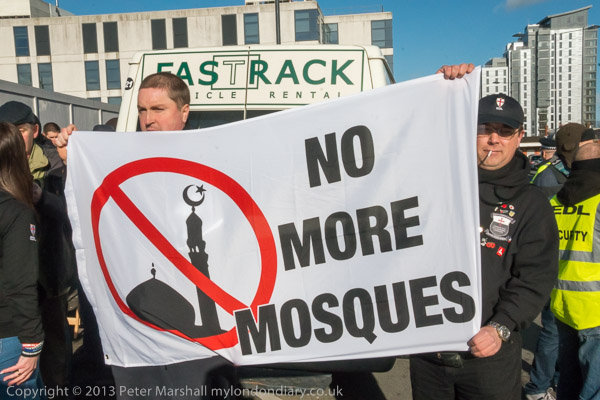
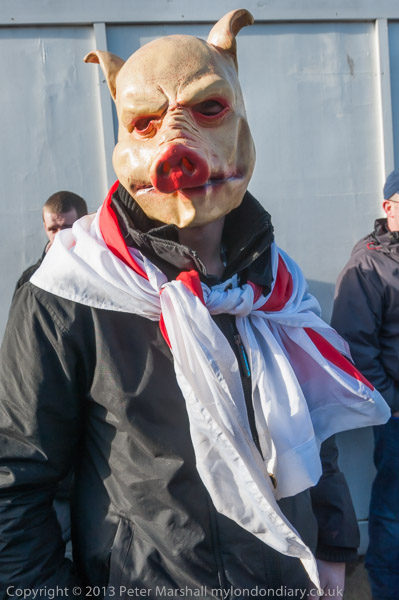
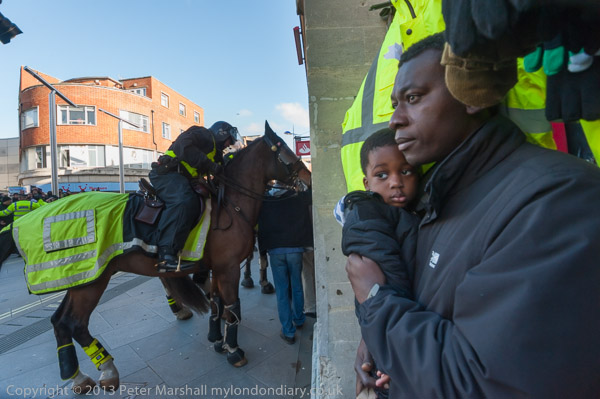
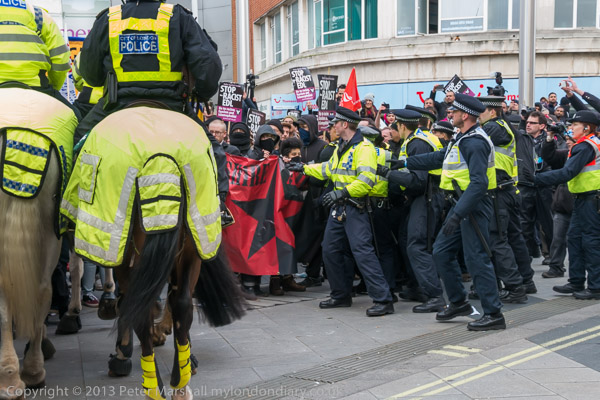
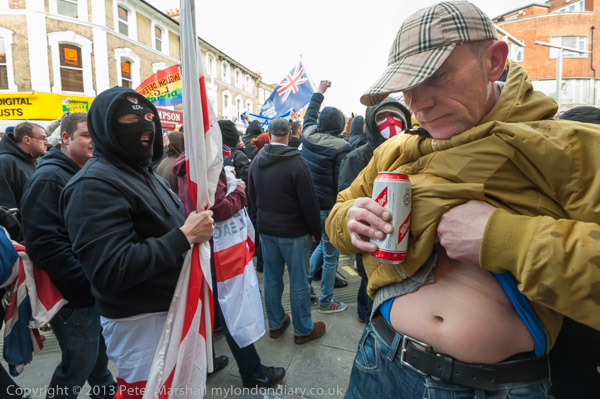
As I left the rally a small group of EDL members came and began to shout abuse. Police did rapidly respond and lead them away, and stewards from the rally tried hard to stop people chasing them. I reported “I photographed one man abusing a photographer, forcing her to run rapidly backwards as he ran at her, and another with a camera trying to hide his face behind his coat as he was being photographed running away.” I think he had been photographing for the EDL and had assaulted a woman who had photographed him.

Janet Alder – her brother Christopher was killed by police in Hull in 1992

In the article I list the 10 demands contained in a letter the UFFC were to deliver to Downing St at the end of the rally. I don’t think any of them have been met. Although the IPCC – the so-called Independent Police Complaints Commission – was replaced in 2018 by a new Independent Office for Police Conduct, IOPC, which seems equally flawed. It still uses the police to investigate the police and of over 23,000 complaints made about poor policing between 2020-2021, only 18 resulted in a police officer facing a misconduct meeting or hearing.

More text and pictures at No More Police Killings, Time For Justice.