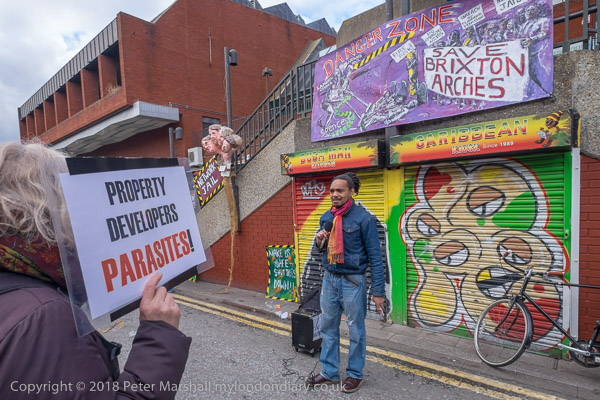
Gentrification is Class War: 4 Feb 2018

Back when I began taking pictures of London in the 1970s London still had many largely working class areas, many the kind of places where some photographer friends would raise an eyebrow when I said I had been taking pictures there, or even send me dire warnings about the dangers of walking the streets there with a camera around my neck.
They were areas where people in the basic jobs that keep the city running could afford to live – both those whose families had moved to these areas several generations back and those including migrants and refugees who had come more recently. Some were certainly beginning to see a new more affluent population moving in, and many of my pictures featured skips in front of housing that was being renovated, both by developers who were buying up many older properties and young professional couples who were often ‘knocking through’, and pub conversations began to be riddled with terms such as ‘RSJ’.
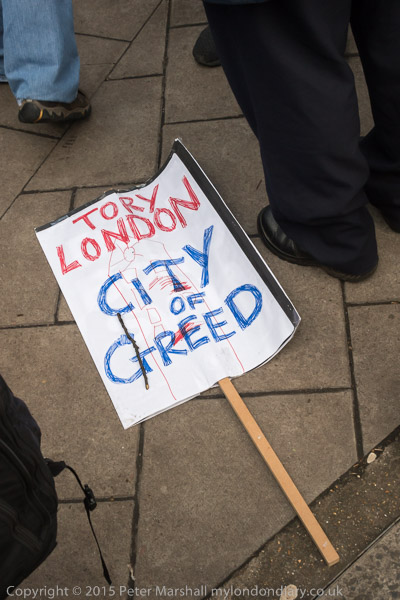
Since then more and more areas across London have been subject to ‘gentrification’, their character being changed and new businesses coming in to cater for the new wealthier population, while increasingly the low-income inhabitants are forced out to cheaper areas further from central London as house prices and flat rents soar – and as council estates are demolished and replaced by higher density largely private flats at high market rents.
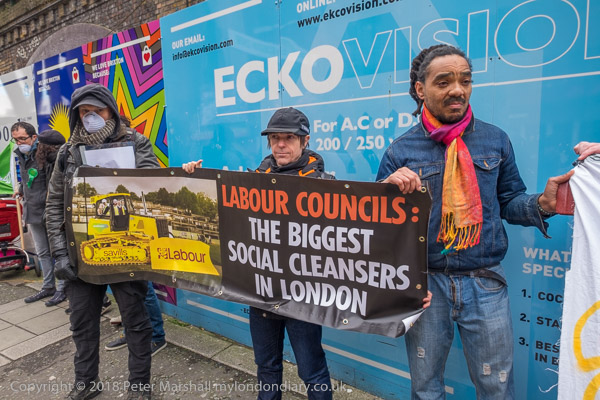
This process of ‘social cleansing’ has been taking place across London, and has been accelerated by many Labour councils since Tony Blair began New Labour’s regeneration programme with a press photo-opportunity on the Aylesbury Estate in Southwark in his first speech as Prime Minister in 1977.
Many of the shops that I photographed back in the 70s and 80s, small local shops – corner stores, cobblers, hairdressers, greengrocers, butchers, etc – and other small local businesses have now disappeared, their premises now often estate agents, and cafés have changed their nature from ‘greasy spoons’ where you could get a filling cheap lunch to serving coffee and cakes, vegetarian food or rather more expensive restaurants catering for the new and wealthier clientèle. Of course tastes generally have changed and so have shopping habits, and some of the new is certainly welcome. But so much of those shops and pubs that were a part of these neighbourhoods have been lost.
Brixton perhaps stood out against gentrification longer than most – with the reputation it had from the disturbances in 1981, 1985 and 1995 deterring many newcomers. All took place following heavy-handed police action; Operation Swamp 81, when over 900 people were stopped and searched in 5 days, with 82 arrested, the shooting of Cherry Groce in 1985, and the death in police custody of Wayne Douglas in 1995. But many young people were attracted to the area by the vibrant atmosphere and Caribbean culture, by music venues, the Roxy, markets, food and pubs, and with its good transport links and closeness to central London it has attracted many young professionals in more recent years.
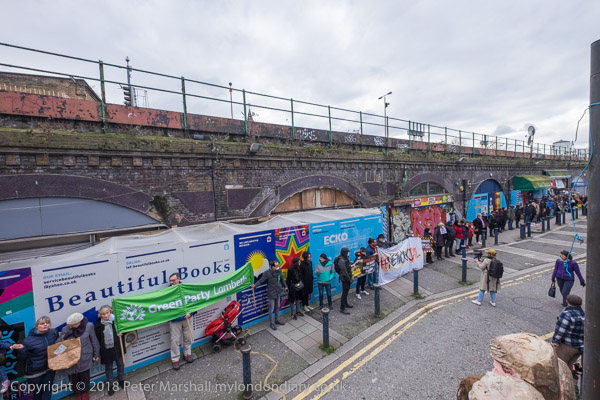
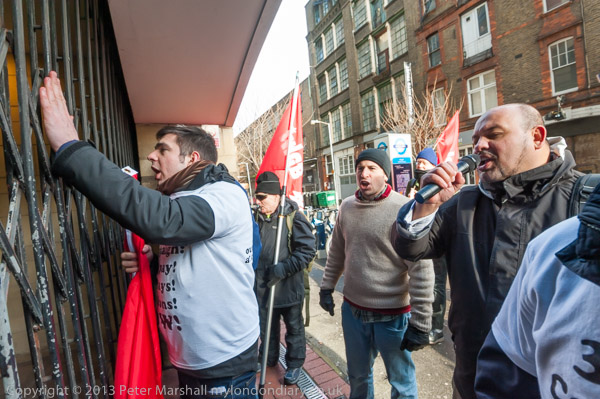
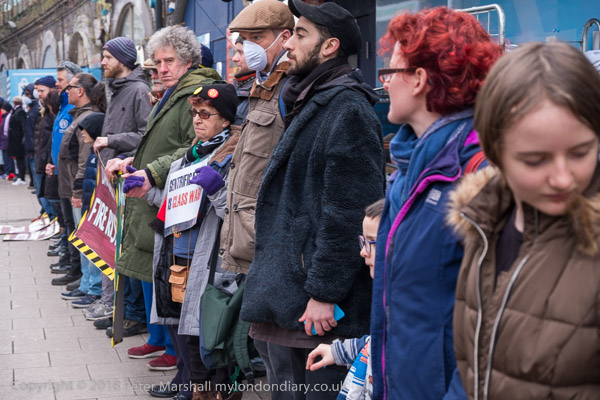
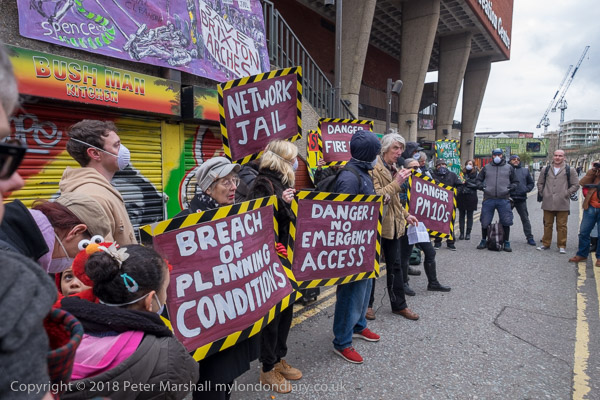
Railway lines run through the centre of Brixton, and the arches underneath them have been an important part of its life, providing low cost premises for businesses and, particularly in Atlantic Road and Brixton Market Road, for shops. They provided what has been called “the heart of Brixton”. But as I wrote in my text for Save Brixton Arches: 3rd Anniversary Action on Sunday 4th February 2018:
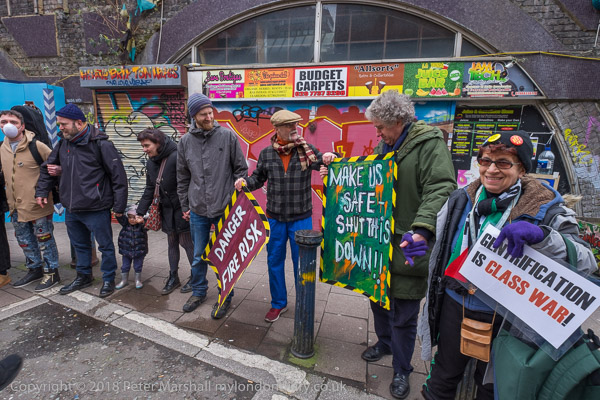
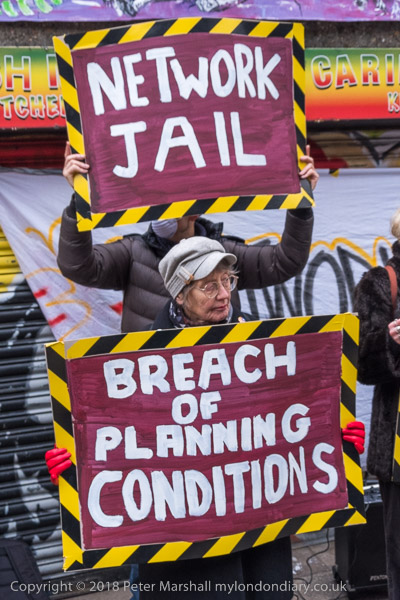
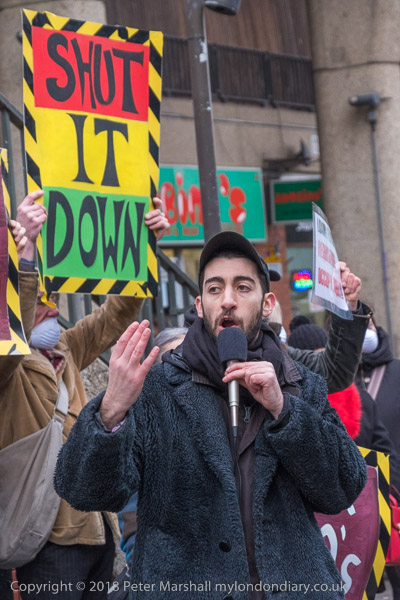
Network Rail have colluded with Lambeth Council to get rid of something that gave Brixton its unique character and replace it by trendier shops catering for the new wealthy young population – part of Lambeth Labour’s programme of social cleansing which includes demolishing council estates and replacing them with high cost private accommodation (with a token amount of so-called affordable properties.) The Council ignored the public outcry and large demonstrations to keep the arches.

The plans were accompanied by a great deal of lies and mismanagement by Network Rail and work was supposed to be completed by 2016 but is only scheduled to start tomorrow, and the Save Brixton Arches campaign are calling for it to be abandoned as the plans for the work fail to include proper fire safety precautions and will severely restrict access by emergency services to local businesses and the railway and station.

Save Brixton Arches: 3rd Anniversary Action
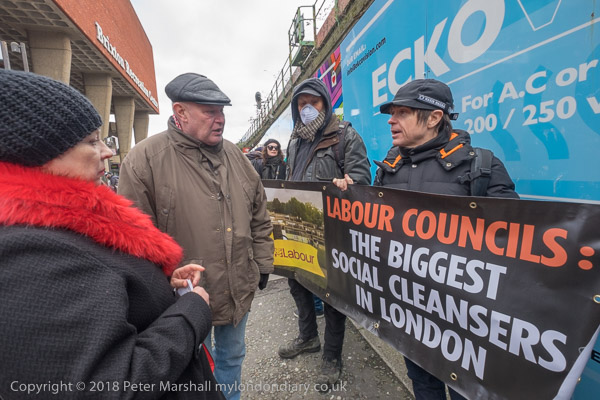
Despite the campaign both by the traders and many of the local population the refurbishment of the arches went ahead, though over a year later many had not been re-let. Allies and Morrison, the architecture and urban planning practice which recommended the scheme in 2013 has been involved in many contentious ‘regeneration’ schemes with developers and councils across London which opponents describe as social cleansing. Local Labour MP Helen Hayes was a senior partner in this firm until she left shortly before being elected in 2015, although she has denied any involvement in this particular scheme.

More at Save Brixton Arches: 3rd Anniversary Action.


All photographs on this and my other sites, unless otherwise stated, are taken by and copyright of Peter Marshall, and are available for reproduction or can be bought as prints.
Protesting Trump’s Deal: 1 Feb 2020

A year ago I was out taking pictures of a protest at the US Embassy in Nine Elms, and it really does seem a huge age ago. I’ve got so used to staying at home, just occasionally going out for a little exercise. But last Thursday I had my first dose of the vaccine, and in a few weeks time I can perhaps be thinking about getting back to work, though until the current lockdown ends (and who knows when that will be) there won’t be many protests for me to photograph.

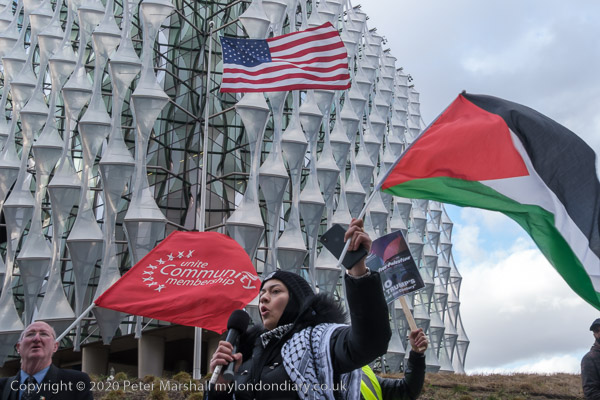
I never much liked the US embassy in Grosvenor Square, and what architectural attraction it had was rather spoiled when it got hidden behind some rather ugly security additions. The new embassy isn’t perhaps a great piece of architecture and the screen which covers three sides is rather a plastic add-on, but at least it does make it stand out from the buildings around, and the moat is rather a nice piece of landscaping. But I think the main motivation behind the move was to move the many protests at the embassy out of the public eye, away from the centre of London to a rather obscure location.

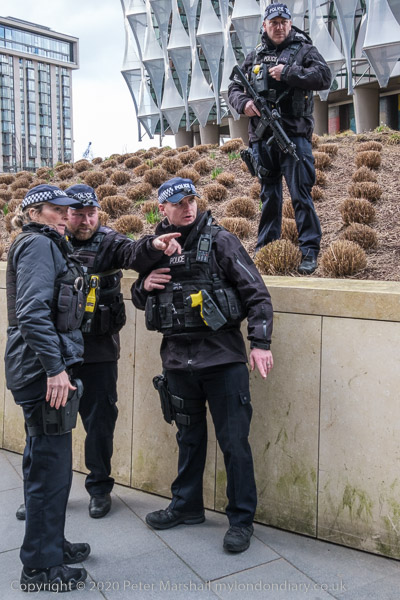
Protests here are invisible, hidden from any road and only seen by the armed guards patrolling the area and by people actually going into or out of the embassy. On a weekday there will be queues for visas, but at the weekend the area is deserted. Of course this does make filming and photography of any protests and the publication of these more important.

Although it is still very much of backwater London, the area around here is also the largest development area in London, with new flats already around the embassy and others going up to the east and the west where there is huge development around Battersea Power Station. It’s already easy to get to, with Vauxhall station, one of London’s larger transport hubs, just a few minutes away, but will be even more accessible once the Northern Line extension to Battersea opens – supposedly this autumn – with a station at Nine Elms.

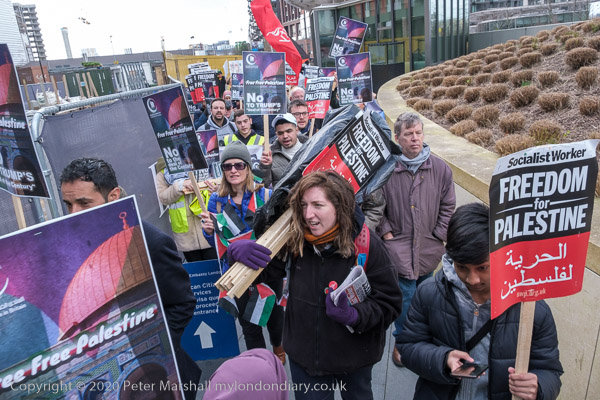
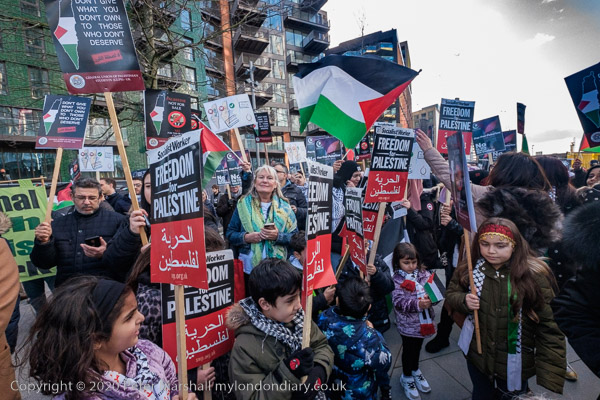
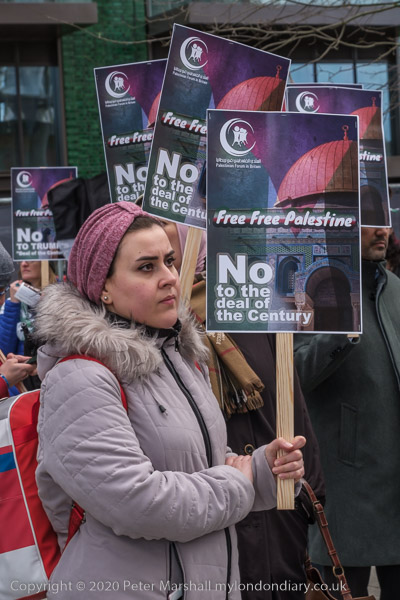
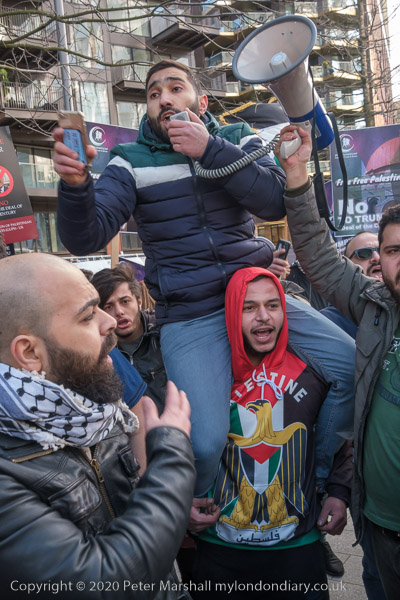
The protest on Saturday 1 Feb was against Trump’s ‘Deal of the Century’ which they say is intended to liquidate the Palestinian cause and minimise sovereignty for the Palestinian people across Palestine, marginalising them in isolated ghettos in a rigid implementation of the current apartheid regime.

It was organised by various Palestinian groups in Britain and supported by the Palestine Solidarity Campaign (PSC), Friends of Al-Aqsa (FoA) and the Muslim Association of Britain (MAB), and there were many Palestinians among the several hundred taking part.

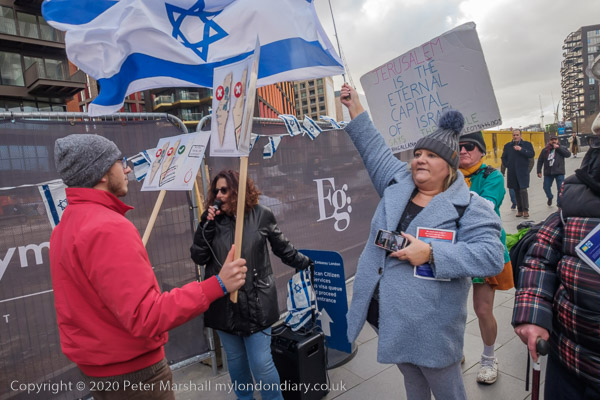
Also coming to protest against the Palestinians was a rather sad group of four Zionists who came to wave Israeli flags and try to disrupt the protest, shouting insults. Some of the protesters confronted them, shouting back, and police stepped in to keep the two groups a short distance apart while the main rally continued.

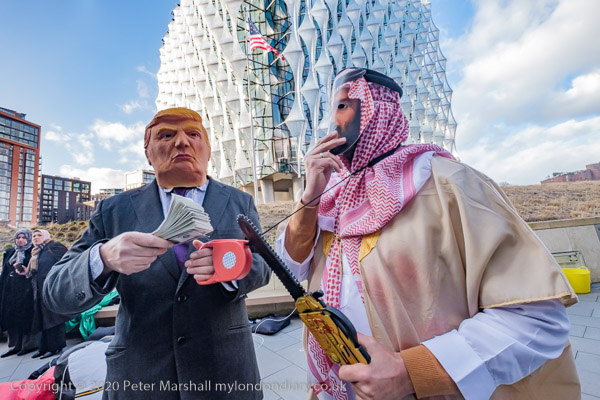
Among the many protesters were a couple posing as President Trump who handed a fistful of dollars to another dressed as Saudi Prince Mohammad bin Salman, who was holding a bone saw like that used to dismember Saudi dissident and journalist for The Washington Post Jamal Kashoggi by the team he ordered to the Saudi consulate in Istanbul, Turkey on 2 October 2018.

More at Palestinians against Trump’s Deal


All photographs on this and my other sites, unless otherwise stated, are taken by and copyright of Peter Marshall, and are available for reproduction or can be bought as prints.

Against the Housing Bill – 30/01/2016

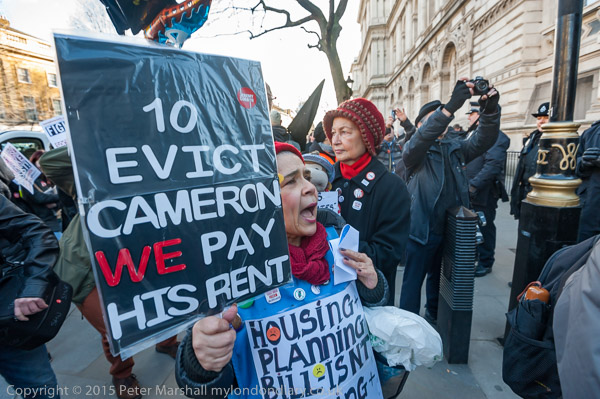
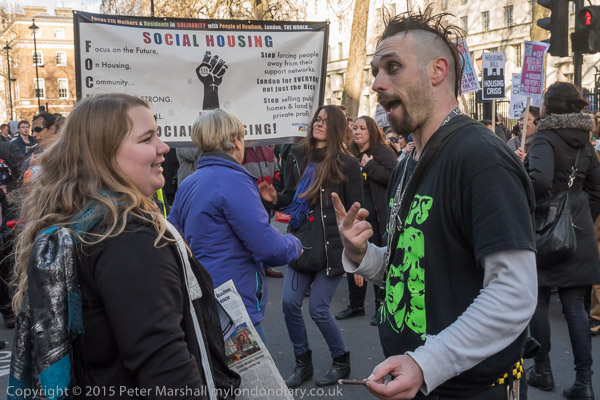
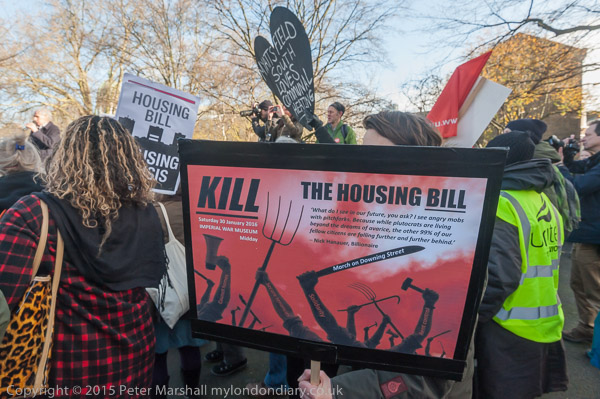
Five years ago, on Saturday 30th January, Lambeth Housing Activists organised a rally and march from the Imperial War Museum to Downing St to protest against the Housing and Planning Bill, which was to have a particularly large impact in London and greatly worsen the already acute housing crisis here.

Rather unusually, the activists were joined for the march by some local councillors including Southwark Council Cabinet Member for Housing Richard Livingstone. Southwark, a Labour dominated council, has attracted a great deal of criticism over the demolition of council estates in the borough, including the scandal of the Heygate estate at the Elephant & Castle, and many on the protest were residents of estates currently being demolished – such as the Aylesbury estate – or under threat of demolition. Southwark and other Labour-run councils in London have made huge reductions in council housing through their so-called regeneration of estates, with many former residents being forced to move away from inner London and into much higher rent private or housing association properties, often with very poor security of tenure.

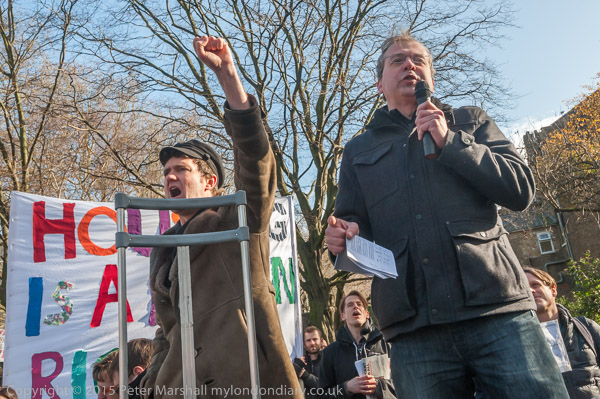
There were a number of speakers at the rally, including the then Green Party Leader Natalie Bennett and housing researchers and activists, who were listened to attentively and warmly applauded, both for their condemnation of the Bill and also of the social cleansing effect of the estate demolitions being carried out by councils. It was hardly surprising that when Richard Livingtone came to the microphone he was greeted by boos and loud heckling and a heated argument with one of the activists.

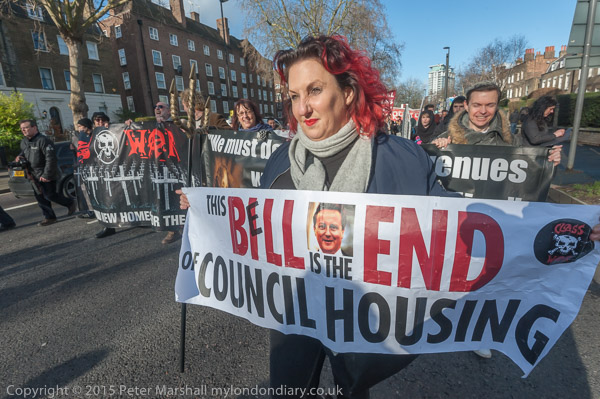
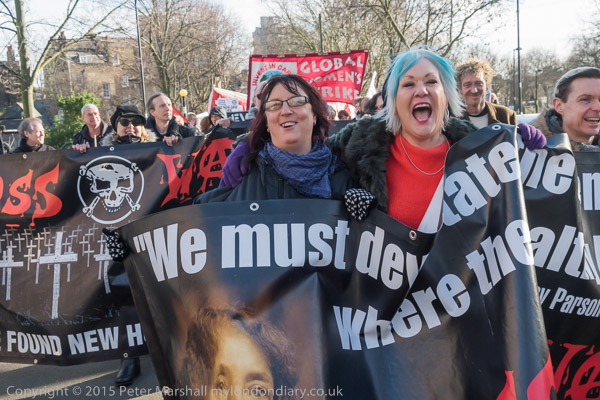
Eventually the rally broke up and the march began, starting by walking through the streets of Lambeth before turning around to make its way through Westminster. Class War and friends decided to liven things up a little, first by dancing along the street singing the ‘Lambeth Walk’ and then by rushing across the pavement towards a branch of of large estate agents and protesting outside it for some minutes before moving on.

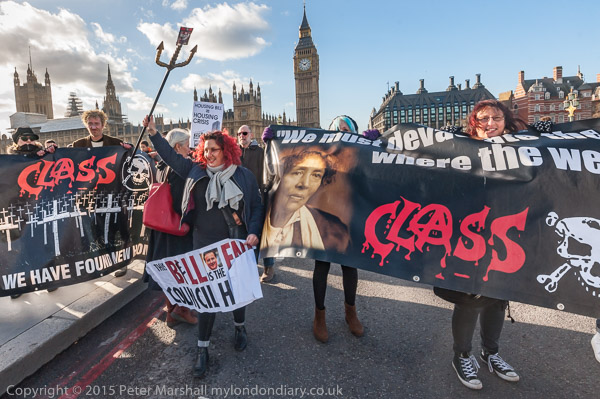
Earlier at the rally Simon Elmer of Architects for Social Housing had given a closely researched and caustic assessment of the role of Labour Councils and housing policies which have been largely dictated by estate agents. Class War had brought a number of more controverisal banners related to housing, among them one with a picture of a military cemetery with its field of crosses stretching into the distance and the message ‘We have found new homes of for the rich’ and the Lucy Parsons banner with its quotation “We must devastate the avenues where the wealthy live”.

Police had rushed to protect the estate agents, but Class War made no attempt to enter or damage the property, and soon moved off. There was what seemed to be some entirely pointless harassment of protesters by police – including the so-called liaison officers – throughout the march, but I saw no arrests.

At Downing St police formed a line to lead the marchers to the opposite side of the road, and the activists followed their direction then simply walked across Whitehall behind the police line and posed for pictures in front of the gates and spilling out to block the north-bound carriageway. Police attempted to persuade them to move and eventually people drifted away and I left too.

More at Housing and Planning Bill March.


All photographs on this and my other sites, unless otherwise stated, are taken by and copyright of Peter Marshall, and are available for reproduction or can be bought as prints.

3 Cosas – 28 Jan 2014

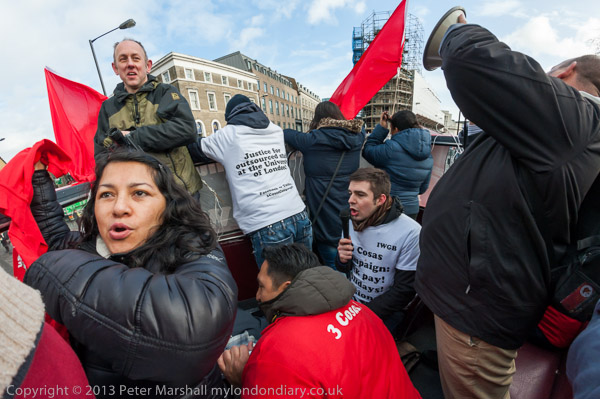
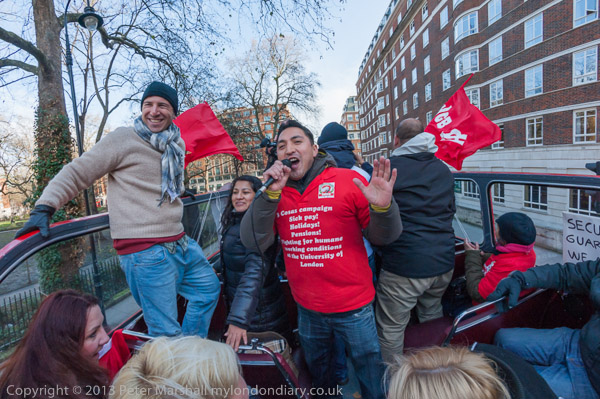
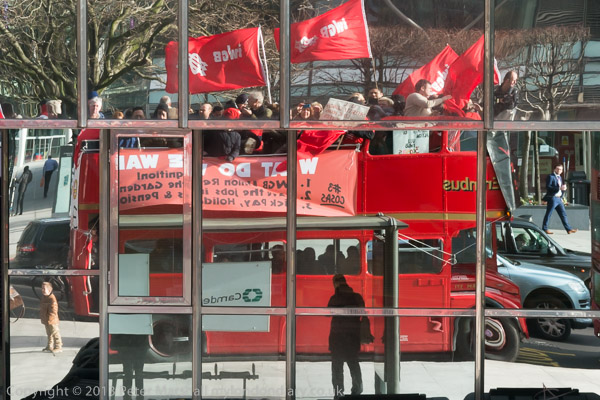
It was the second day of the 3 day strike by the IWGB for union recognition and better conditions for outsourced workers at the University of London, and the union had hired an open-top bus to take their campaigners around London to protest.

The ‘3 Cosas’ campaign was calling for Sick Pay, Holdidays and Pensions for the workers, who were only getting the minimal statutory provisions from the cost-cutting contracting companies who employed them. They worked alongside people who were employed directly by the University who enjoyed considerably better conditions of service.

Although the majority of the workers were members of the IWGB, the University and the contractors refuse to talk with this union. The University management instead recognises a union that has few if any members, using this as an excuse not to recognise the union the workers belong to.

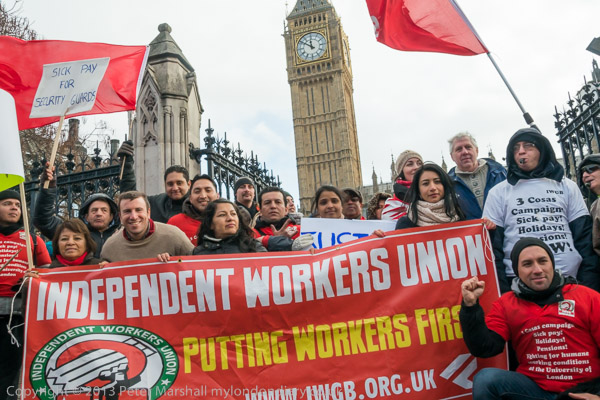
After a lengthy tour of London, stopping at some of the workplaces and elsewhere for speeches from the top of the bus, we came to Parliament Square, where there was a short rally and MPs John McDonnell, Jeremy Corbyn and Andy Burnham came to show their support.

I’ve written about the day at some length on My London Diary so I won’t go into much detail and repeat myself here. There are of course many more pictures, rather too many, as I got a little carried away and there was so much to photograph.

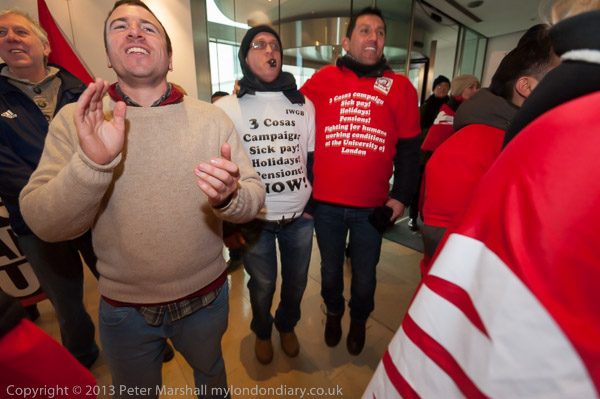
While the idea through the morning had been to draw as much attention to the strike and protest noisily, the next event was a suprise protest at another location where the IWGB were campaigning for union recognition and a living wage, the Royal Opera House. The bus stopped a short distance away and then members rushed into the foyer to hold a noisy protest there.

We then left and went for a final protest outside the offices of the contractor who employ many of the workers at the University, Cofely GDF-Suez. There the gates were locked and the protest took place on the street outside.

More pictures and text from the day:
‘3 Cosas’ Strike Picket and Battle Bus
IWGB at Parliament
IWGB in Royal Opera House
IWGB at Cofely GDF-Suez


All photographs on this and my other sites, unless otherwise stated, are taken by and copyright of Peter Marshall, and are available for reproduction or can be bought as prints.

Outsourcing and Covid

One of the reasons why the UK has suffered so badly from the corona virus has been outsourcing. Not of course the major reason, which has been government incompetence and failure to take effective action, always a case of too little too late. A year after the outbreak began it is only now considering the kind of travel restrictions that would have saved many thousands of lives (and which even one government minister has said she was arguing in favour of at the start.) Three weeks before we had the first lock-down I was getting urgent messages from relatives who were in touch with the medical advice that was going to the government that, because of my age and diabetes, I should isolate myself.

And of course there has been the failure to work properly with existing public bodies, instead preferring to give huge payments to cronies to set up an ineffectual systems for testing and tracing, to source inadequate PPE and take large consultancy fees to no particular purpose, wasting billions.

Government has deliberately promoted policies which have increased the spreading of the virus, failing to stop much unnecessary work or ensure that proper protective measures are enforced and giving offers to people to go out for meals largely in indoor settings where the spread of infection was almost inevitable. Although they now deny it, their polices were based on ideas of herd immunity, where infection gives a large proportion of the population some immunity and stops the virus spreading; for this to work, perhaps 80% of us would need to have had it, and a quick back of envelope calculation showed that would mean perhaps 400,000 deaths – and I would have been rather too likely to be one of them. It’s a figure we may still reach, though 200,000 seems more likely now – and we are over half way there.

A couple of days ago on the Today programme on Radio 4 I heard Maria, a cleaner from the IWGB being interviewed. She contracted the virus, probably while travelling to work on crowded public transport, and tested positive. Before the test she had been ill at work and had asked her employer if she could go home, but had been told she had to stay. After the positive result, she had to continue to go to work, as the sick pay she would have received was simply not enough to live on.

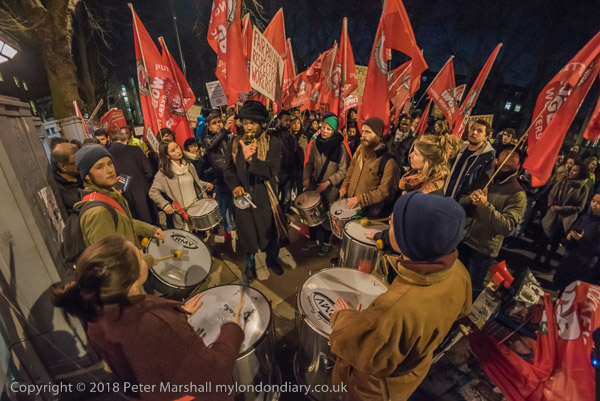
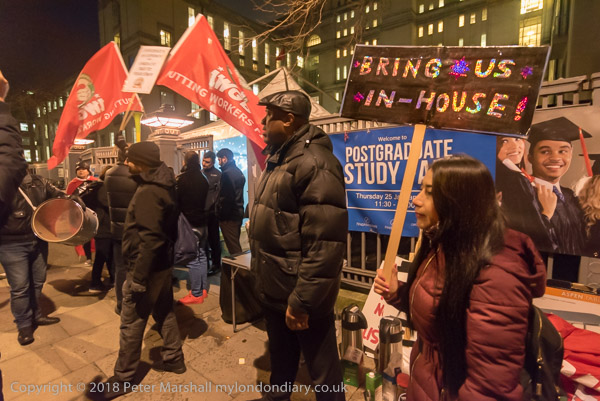
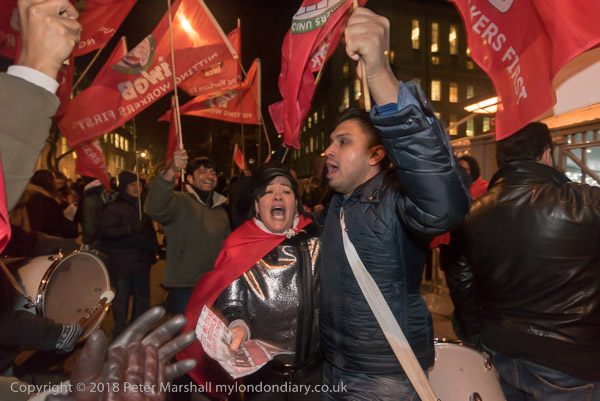
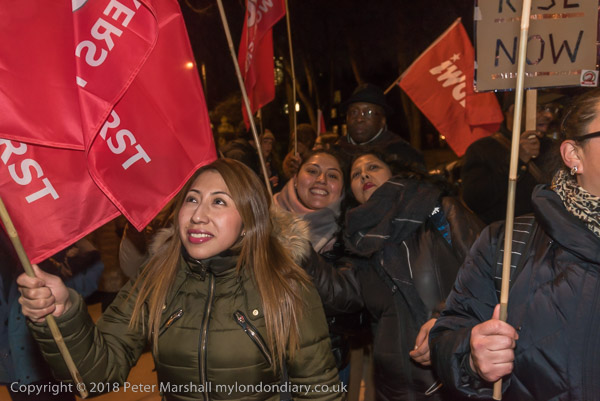
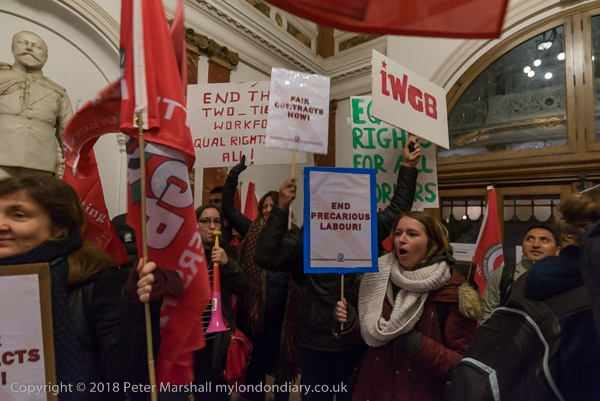
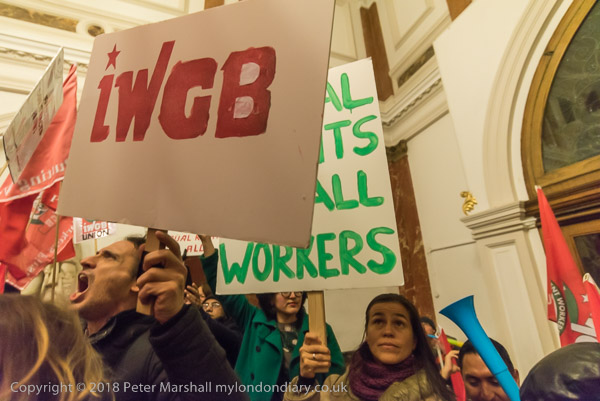
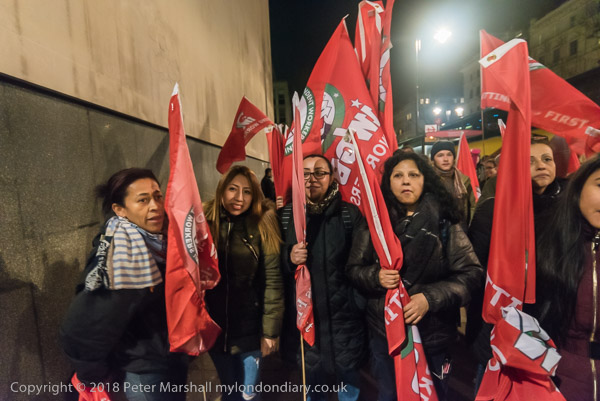
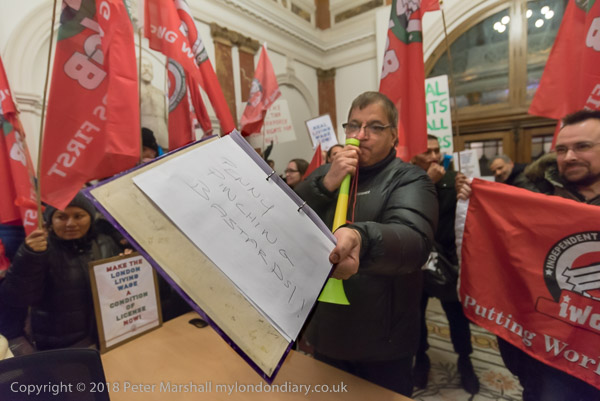
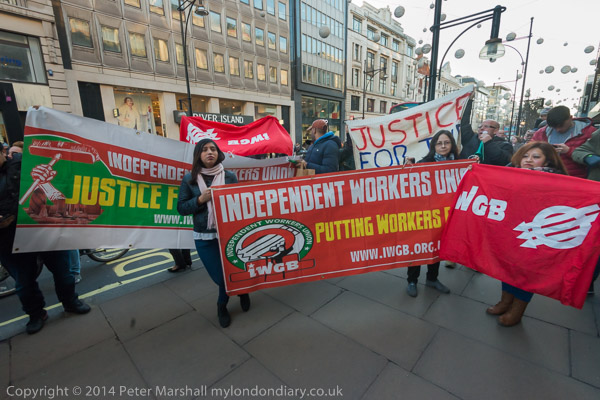
Maria is probably one of those IWGB members in the pictures I took on 25 Jan 2018, and the other pictures I’ve taken at IWGB protests against outsourcing. Outsourced workers are employed not by the company at their work place – on this occasion the University of London – but by a company that is given a contract for the services they provide. Contracts are usually awarded to the lowest bidder, and outsourcing companies cut their costs by paying low wages, giving only the statutory minimum in conditions – including sick pay, holidays, pensions etc – and often bullying the workers, demanding impossible workloads and failing to provide proper safety equipment – so that they can gain contracts and also make a profit for the company owners.

Usually too both the contractors and the workplace management refuse (often illegally) to recognise the trade unions to which the outsourced workers belong – such as the IWGB, and refuse to discuss any of the workplace issues with them. Often union members are disciplined and sacked for their union activities.

Had Maria been one of the cleaners at the various places where the IWGB have been able by organising protests like this and forcing the management to talk with them and to get the workers directly employed she would have got the kind of conditions that other workers at these places take for granted. She would have been able to call in to work when she knew she was ill and have time off, and would have been able to self-isolate after her positive corona test, as she would have been able to rely on proper sick pay.

Outsourcing and other poisonous working arrangements, particularly zero hours contracts, have been a major factor in directly spreading the infection, and are a part of the reason for its increased prevalence among our black and ethnic minority communities. Low pay too has an indirect effect, leading to more crowded housing conditions. Many low paid jobs too are ones that involve considerable contact with others, and often involve travel in crowded public transport to workplaces.

The first protest on that Thursday evening in January was calling for the University of London to directly employ the cleaners, receptionists, security officers, porters and post room staff that work in the premises that are part of the central administration, including offices and halls of residence, and took place outside the University’s Senate House. Earlier protests have persuaded the University to consider direct employment for some of these workers, but the IWGB call for all of them to be brought in-house as soon as possible. Students and some teaching staff from various colleges came to support the protest.

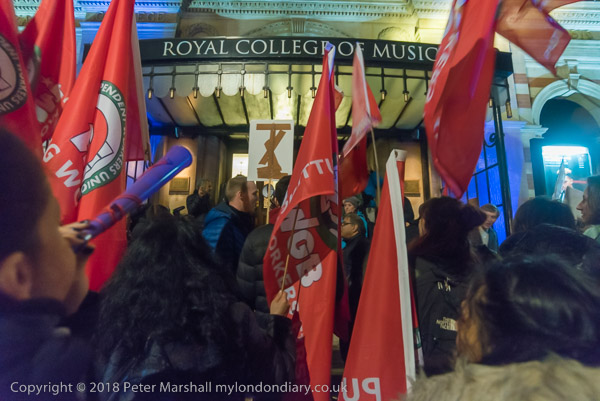
At the end of this protest a double-decker bus hired by the union arrived to take those present to a ‘secret location’ for a further protest and I was invited to go with them. It dropped us off around the corner from the Royal College of Music, and the protesters ran into the building. A new contractor had taken over the RCM cleaning contract and decided to halve the hours worked by cleaners and change shift times. Most of the cleaners have to work on several jobs like this to make ends meet and so were unable to change to the new hours and had been threatened with dismissal. The RCM and the contractor had refused to discuss the changes with the IWGB who had launched a collective grievance; the cleaners have balloted for strike action and the union is also considering a legal challenge under law governing the transfer of undertakings.

It was a short and very noisy protest inside the foyer, and the protesters who had been very careful to avoid any damage left when the police arrived after 12 minutes and continued their protest outside.

More at:
Cleaners rush into Royal College of Music
End Outsourcing at University of London


All photographs on this and my other sites, unless otherwise stated, are taken by and copyright of Peter Marshall, and are available for reproduction or can be bought as prints.

Young Mums Party in Protest

One of the more encouraging series of protests it has been my privilege to photograph over recent years has been that begun by young single mothers who when threatened with eviction from their hostel in Stratford with Newham Council intending to disperse them into private rented accomodation often hundreds of miles away from their friends and families stood up and fought for their rights.

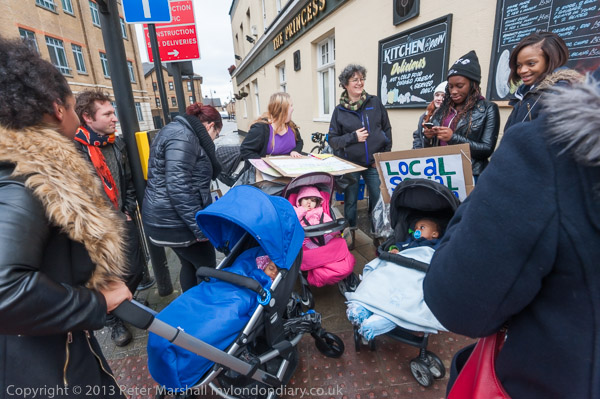
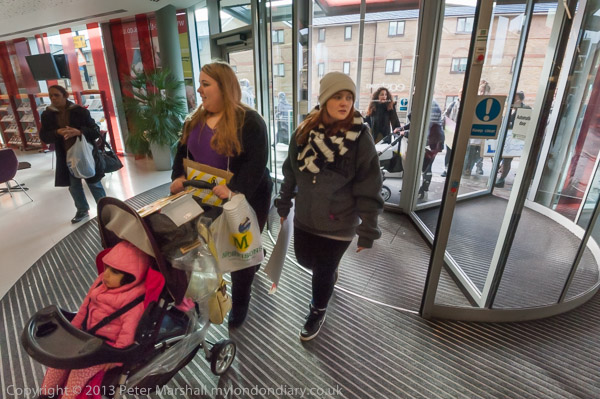
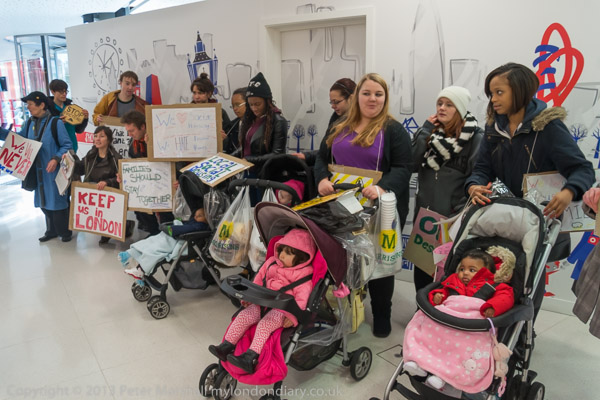
The mothers and their supporters met on a street corner close to East Thames Housing

The campaign by the mums from Focus E15 gained a great deal of publicity and support for their cause, and some of them became rather unlikely celebrities, speaking at conferences and other events and appearing in theatre performances. And they were largely successful both in getting the council to rehouse them locally, and also in bringing some of the worst aspects of housing policies, both national and by local authorities to the attention of a wider public. They even got me on stage in 2017.

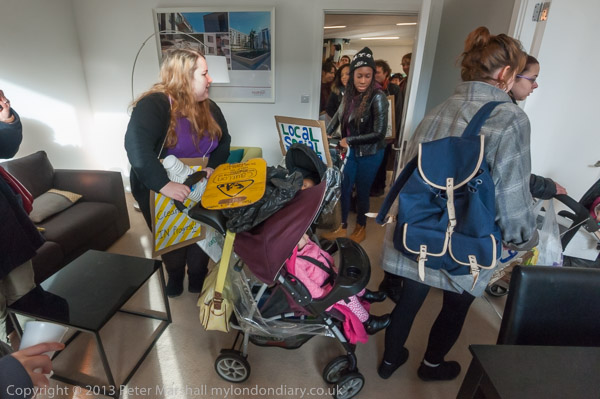
And made their way into the foyer of East Thames Housing

Their campaign widened to a more general campaign over housing problems, particularly in the London Borough of Newham, but also becoming involved in other campaigns across London and elsewhere. Newham is a borough with huge housing problems, but also one that the local Labour Party has managed to make much worse, with policies that have deliberately left good quality council housing empty for years despite one of the longest housing waiting lists in the country.

They pose for a photograph for the local newspaper

Part of the problem with Newham lies in the creation of a directly elected mayor in 2002, the first such mayor in England. This put more power into the hands of the mayor, Robin Wales, and a small cabal of right-wing Labour members, who pursued policies to increase the economic prosperity of the area with little regard for the poorer members of the community, encouraging businesses and bringing wealthier people into the area into new private developments. Focus E15 accused Robin Wales of being a kind of reverse Robin Hood, robbing the poor to give to the rich through his policies which they labelled as ‘social cleansing’.

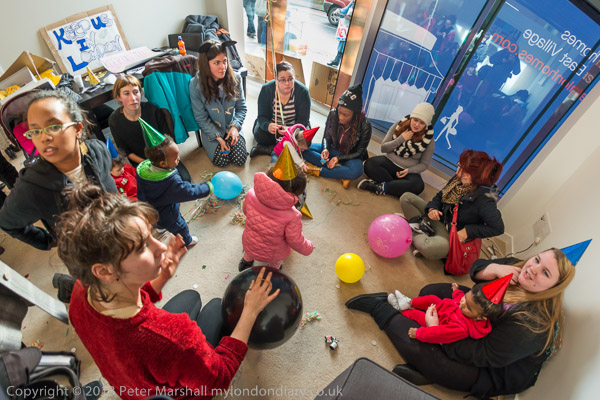
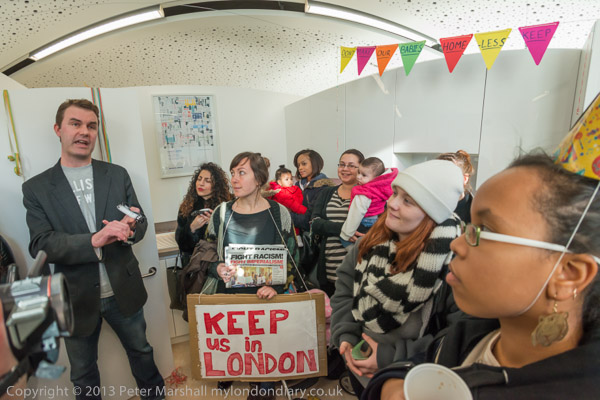
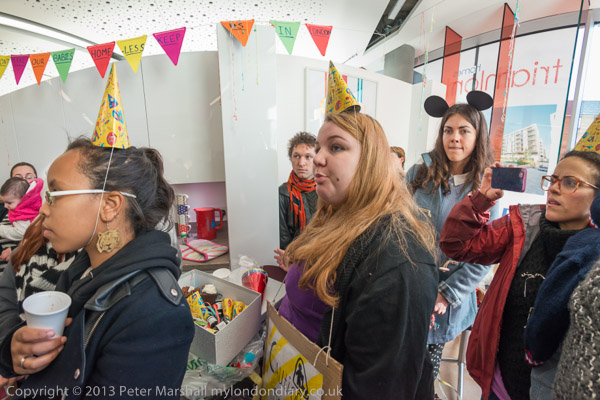
And then occupy the East Thames show flat for a party

Focus E15 confronted Wales on a number of occasions, and he reacted angrily at times – and later was forced to apologise. Earlier he had been involved in another fight against local residents when he wanted to replace Queen’s Market with a new development including a 31 storey tower; it was seen as so bad that even then London Mayor Boris Johnson stopped it going ahead. And under Wales, the council made some disastrous investments which have lumbered the council with huge interest payments. Newham is essentially a one-party state, but by 2016 many in the local Labour party had become disillusioned with him and wanted change. Wales managed to rig a vote to prevent other candidates standing for Mayor in 2018, but this was overturned after an outcry in the party, and in 2018 Rokhsana Fiaz was elected as mayor. Wales went off to work for the influential right-wing free-market think tank Policy Exchange.

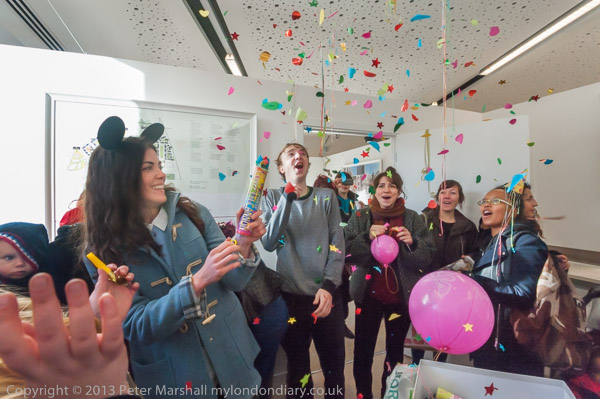
the air is filled with hearts, stars and other shapes

I’m proud to have done a little to promote the campaigns of Focus E15 through photographing some of their events – though I”ve been unable to do so over the past year. They continued to hold a regular weekly outdoor street stall on Stratford Broadway and socially distanced protests through 2020 and hope to do so this year, despite the increased restrictions. You can read about them on their web site, where they make clear that despite the new mayor in Newham little has changed:

The struggle must go on and Focus E15 campaign enters 2021 determined to continue to build a housing movement, challenge the Labour council, give solidarity to all those fighting for housing justice, and…. Educate! Agitate! Organise! so that we expose this ruthless capitalist system and begin to work in unity together for a better future for everyone.

Focus E15 web site
An East Thames officer comes to discuss their sitation with them

The pictures here are from a protest seven years ago today, on Fri 17 Jan 2014, and I hope illustrate something of why I found them so interesting to photograph. They went into the offices of the housing association that ran the Focus E15 hostel and held a party inside the show flat there. They had good reasons to be angry and protest, and were fearless and imaginative in how made their views clear – and provided great opportunites for photography. Many protests are rather dour occasions which are hard to make interesting though our pictures, but their protests were always lively and never run-of-the-mill.

He gets some tough questioning – and states that although it’s up to the council to rehouse them, East Thames will not evict them.

At the protest they did get an assurance that they would not be evicited, though it was clear than there was a lack of trust from the mothers in this statement. I left them still partying to file my story, and after a while they also left and went to protest at the nearby council housing offices.

More at Focus E5 Mothers Party Against Eviction.


All photographs on this and my other sites, unless otherwise stated, are taken by and copyright of Peter Marshall, and are available for reproduction or can be bought as prints.

16th January 2013

Probably the best way to describe my work on Wednesday 16th January would be varied, and that’s one of the things that attracts me to photographing protests on the streets of London. I was never quite sure what I would find or what would happen, and every protest brought its own problems in terms of photography, and also sometimes in how to write about them.

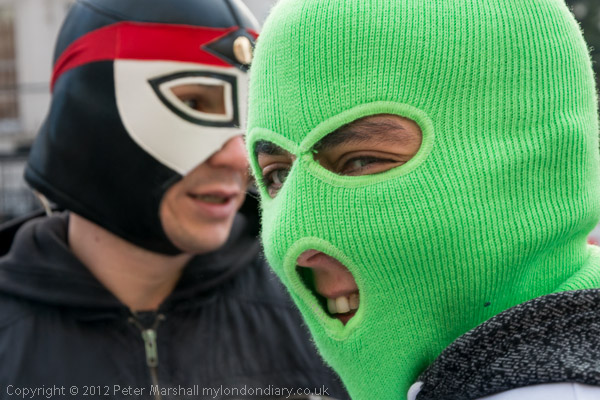
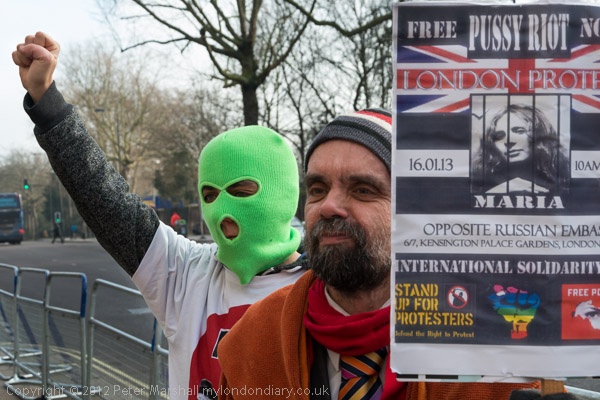
I started the day with Pussy Riot, or rather with protesters in solidarity with them on an International Day of Solidarity with Maria Alyokhina, attending a court hearing today over her plea for her sentence to be suspended so she can raise her son until he is 14. She was one of three members of Russian punk band Pussy Riot sentenced for their performance of an anti-Putin “punk anthem” in a Moscow Orthodox cathedral in February, and was sent to a prison camp in Siberia for two years.

I had expected rather more protesters than the small group I found there, as the case had attracted considerable publicity, but perhaps it was too early on a cold January morning to attract many. It isn’t either a very good place to protest, as the actual embassy is hidden away a few yards down a private road roughly opposite where protests (and photographer) are strictly forbidden. But I also left fairly promptly after the time set for the start of a protest, and numbers may have grown later.

Pussy Riot London Solidarity Demonstration


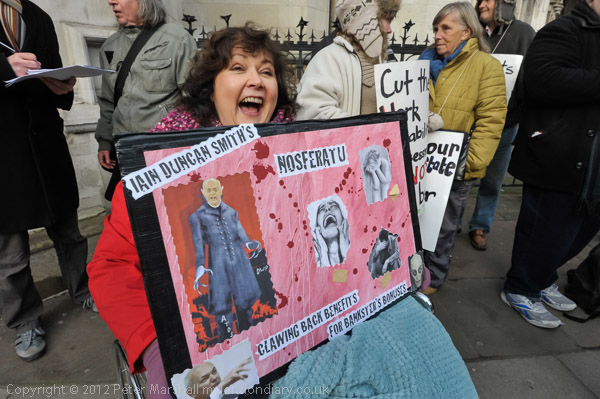
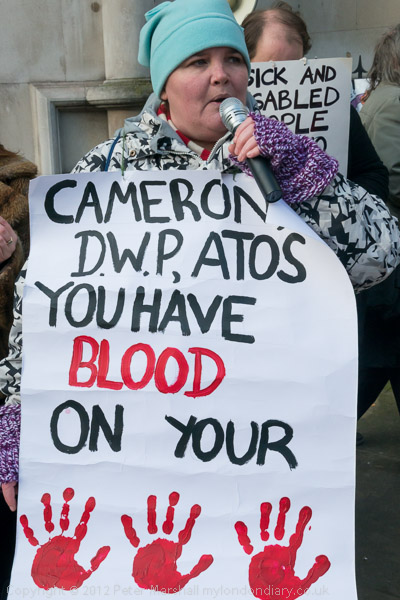
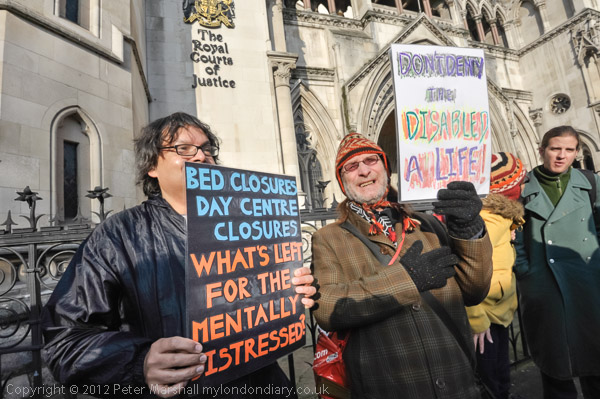
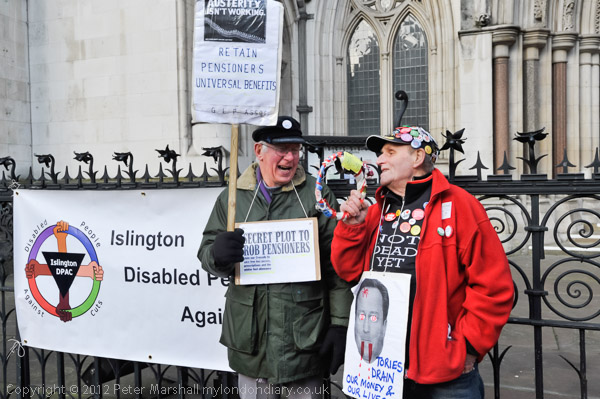
There were more people, including quite a few that I knew, at a rally outside the Royal Courts of Justice on the Strand. Many were disabled, with a few in wheelchairs, but more who have mental health conditions, along with a number of pensioners, trade unionists from the court branch of the PCS and other supporters and the protest was organised by disabled activist groups including DPAC and the Mental Health Resistance Network.

Inside the court a tribunal was hearing a judicial review into Work Capablility Assessments on the grounds they violate the Equality Act, not being accessible for those with mental health conditions, and several of those speaking at the rally had personal stories to tell of how they had suffered as a result.

Mental health conditions are often spasmodic, which may result in claimants on a good day not seeming very ill and on a bad day being unable to attend an assessment – which results in them being automatically judged fit for work. Few of those carrying out the tests had sufficient knowledge and experience in the area of mental health to be able to sensibly conduct the assessment, and medical records were often not taken into consideration.

It seems totally ridiculous for benefits which people need because of their medical conditions not to be assessed on the basis of reports by the doctors who have examined and know their patients, but we have a system that instead tries to deny benefits on the basis of often arbitrary ‘tests’ by unqualified staff.

Equality Protest Against ATOS Work Assessments


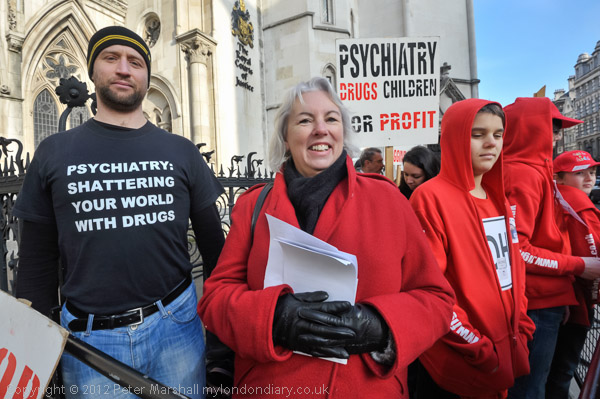
Another protest was taking place outside the courts, which I hadn’t been aware of, and it had a very different atmosphere which I found rather chilling.

There was something very organised about it, with people dressed in red and all the placards carefully printed and it lacked the kind of spontaneity. Although it was a protest against the use of drugs to treat mental illness, some of those taking part gave the impression that they had been drugged.

Drugs are certainly misused in the treatment of people with mental health issues, though I think there are occasions when they are an important part in improving people’s health. And certainly they are over-used as a way to avoid treating the real causes of some people’s problems which come largely from poverty, lousy housing and terrible jobs. But there seemed to be something very wrong in some of the assertions that were being made.

I hadn’t heard of the Citizens Commission on Human Rights, and was not really surprised when I looked it up on the web and found it described on Wikipedia as ‘a Scientology front group which campaigns against psychiatry and psychiatrists‘ established in 1969 by the Church of Scientology.

And as I wrote when I put these pictures on line:

it seems unfair to dismiss all of psychiatry as their banner did as ‘Junk Science and Dangerous Drugs‘ and I find it impossible from personal experience to deny the existence of medical conditions such as depression – or to dismiss the utility of some drugs in the treatment of mental conditions.

Stop Psychiatry Drugging Kids

US Shame – Jan 11th

Many commentators after the recent Trump-induced invasion of the US Capitol said that the 6th January 2021 (1/6/21) is a date that will go down in history as a day of shame for the US, comparing it to December 7, 1941, the Japanese attack on Pearl Harbour. The latter was perhaps a little over the top, as that attack killed 2,403 US personnel, while the death toll after police let Trump supporters in to protest currently stands at five, three of these from health-related issues. But certainly it was a shameful day for US democracy – and a date that might well have been better compared to 1/11/02, 11th January 2002, the date when the first prisoners were held in illegal detention at Guantánamo Bay.

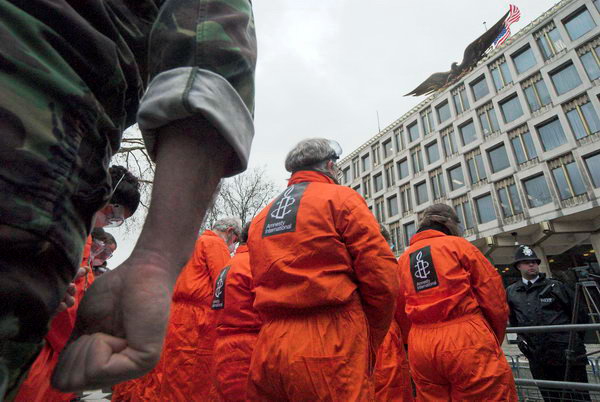
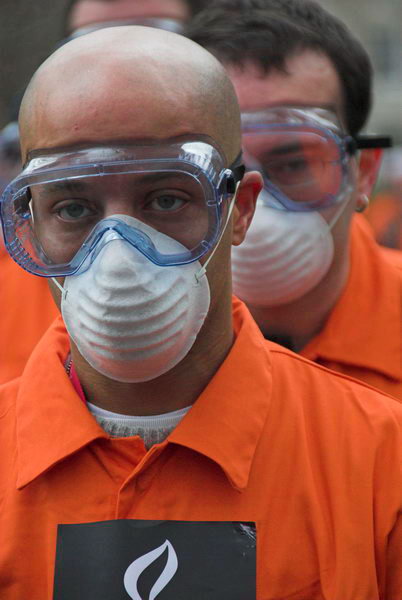
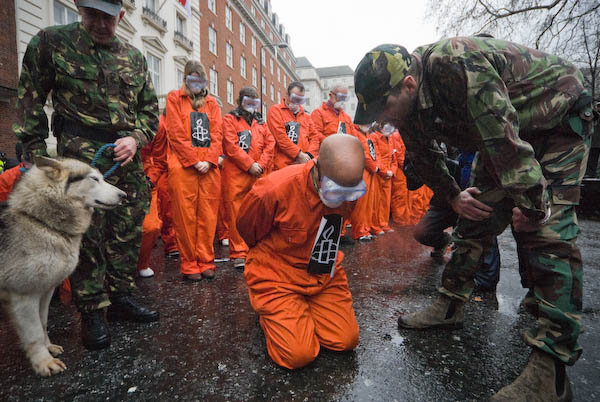
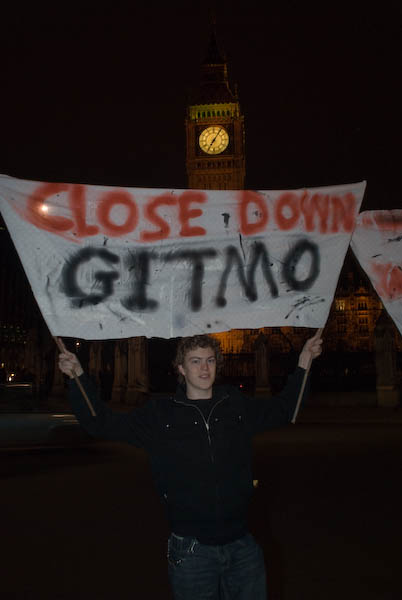
It was five years later than I first photographed a protest against this illegal detention, outside the US Embassy in London, still then in Grosvenor Square, where Amnesty International had brought over a hundred people dressed in orange jump suits to represent the detaines, forming them up into a large block in front of the embassy.

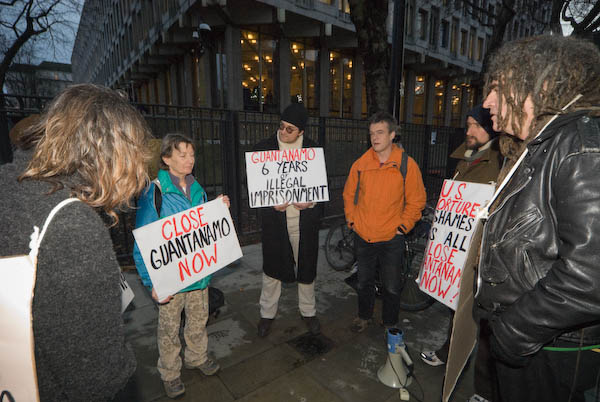
The following year on the sixth anniversary I photographed rather more demonstrations around London. Amnesty were back again outside the US Embassy, though the area in front of the embassy had been sealed off, presumably to prevent the protest taking place there. Instead it was on the street just to one side.

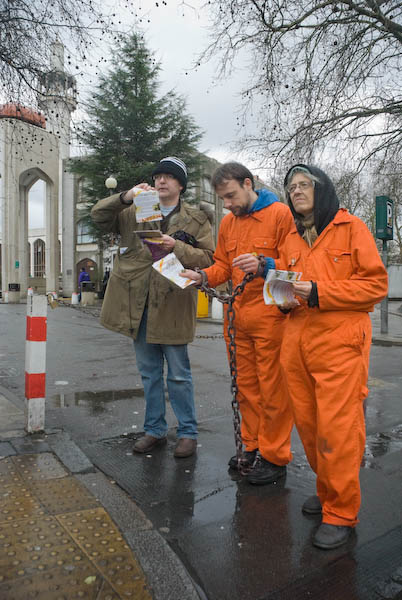
My next stop was the Regents Park Mosque, where I met a group of campaigners, some dressed in the now familiar orange jump suits, from the London Guantánamo Campaign and Cageprisoners who were handing out fliers calling for the closure of the Guantánamo prison camp at various sites around London all day. After giving them to people leaving the Mosque after Friday prayers I went with them to Paddington Green Police Station, where terrorist suspects were normally detained and questioned.

From there I returned to the US Embassy, where the pavement in front was now open again, and a small group from London Catholic Worker had come to hold a vigil. A man from the US Embassy came out and tried to get them to move away, but they stood their ground, lighting a circle of candles as it grew dark.

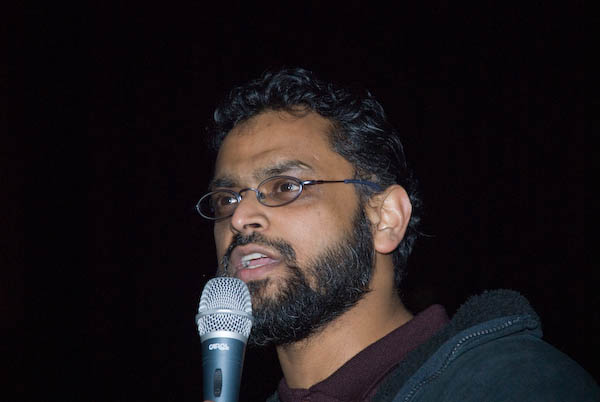
The final event of the day was a rally in Parliament Square, with speakers including former Guantánamo detainee Moazzam Begg (above) and leading campaigners for the closure of this illegal prison which has cast huge shame on the claims of the USA to be a freedom-loving democracy which upholds international law. Of course those claims have long been known to be largely sham, with the USA backing many of the world’s most repressive regimes, taking part in shady affairs such as the Bay of Pigs attempted invasion, and sponsoring coups such as the 1973 Chilean coup d’état that deposed the Popular Unity government of President Salvador Allende on ‘9/11’ 1973.

Although many detainees have been released – there was no evidence against the great majority who were simply foreigners who far various reasons in the wrong place at the wrong time, many held by militias and sold to the US who were offering considerable bounties – the camp remains open. President Trump in 2018 signed an executive order to keep the detention camp open indefinitely, and currently 40 prisoners remain there, still subject to torture and degrading conditions. Guantánamo remains a shameful blot on the United States.

2007
Close guantanamo 5th anniversary demonstration

2008
Six years of Guantanamo: Amnesty
London Guantanamo Campaign / Cageprisoners
Guantanamo – London Catholic Worker
Guantanamo – Parliament Square Rally

There are reports on many later protests calling for the closure of Guantánamo on My London Diary.

13 December 2014

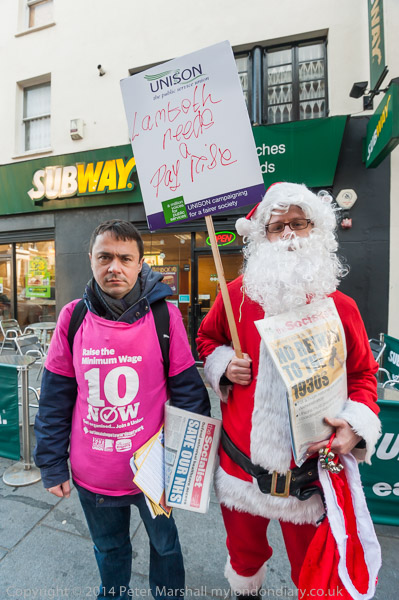
I started work on December 13th 2014 in Brixton, where a well-dressed Santa was with other Lambeth Living Wage protesters including National Shop Stewards Network chair Rob Williams, calling for all workers to be paid a living wage. They entered a number of shops on the main shopping street where workers are only paid the minimum wage, spreading their message through a megaphone and placards and handing out leaflets and union membership forms to shop workers.

They left when asked to do so by security staff and continued along the street to the next shop on ‘Santa’s Naughty List’.
‘Santa’s Naughty List’ Living Wage


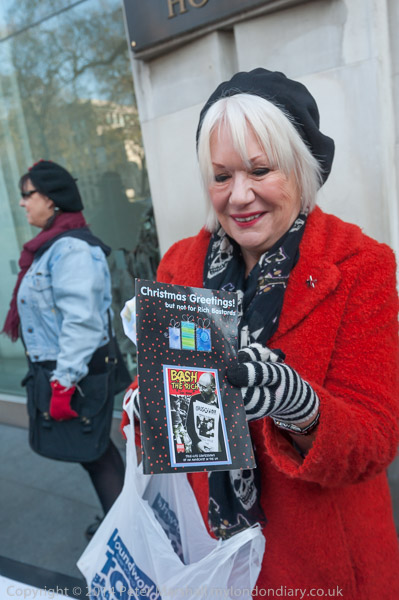
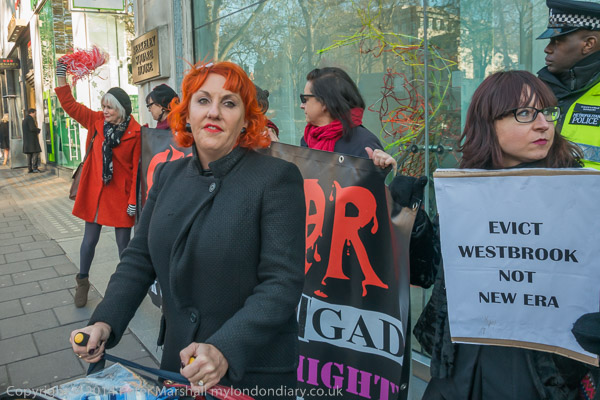
The Victoria line from Brixton tube took me to Green Park and I made my way to join the ‘Advance to Mayfair’ protest organised by Class War at the Mayfair offices of US property developers Westbrook Partners. The protest was in solidarity with the tenants of the Hackney New Era Estate who Westbrook are intended to evict before Christmas.

There had been some disagreements expressed on social media before the protest and the organiser was ill and unable to publicise the event over the previous few days and the protest was rather smaller than anticipated. The police had however come out in force for what was a small and well-behaved protest in which after some speeches, Class War delivered a Christmas card to Westbrook – and someone came out from their office to accept it.

This and other protests by and in support of the residents and the publicity they generated in the media worked, and a few days later Westbrook sold their interest in the New Era estate to the Dolphin Square Foundation and the New Era tenants were saved from eviction.
Class War: ‘Evict Westbrook, Not New Era’


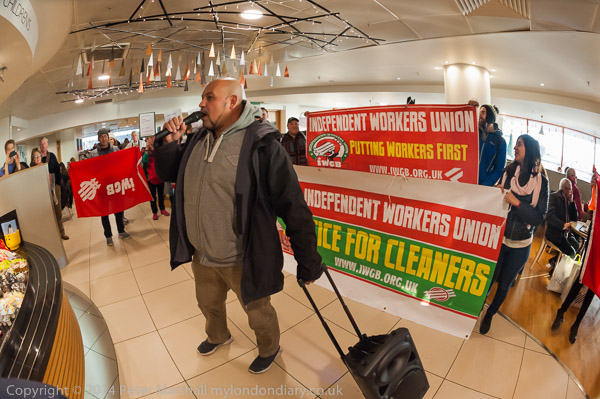
My final destination for the day was the flagship John Lewis Store in Oxford St, not for some Christmas shopping, but to meet with members of the IWGB and John Lewis customers who were campaigning for equality for the cleaners. Cleaners who work in the store receive less than the living wage, and are not entitled to the considerable bonus payments that other staff who work in John Lewis receive as ‘partners’ in the business. John Lewis outsources the cleaning to cleaning contractors to avoid having to give them decent wages and conditions while retaining its reputation as a decent employer.

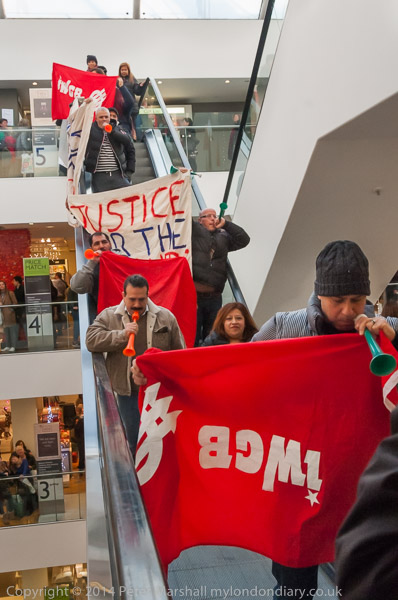
We met up in the café on the fifth floor of the store, and after unrolling there banners there was a brief speech about the unfair treatment of the cleaners from Alberto Durango before the protesters marched around the top floor to the escalator blowing vuvuzelas. They made their way slowly around to the down escalator on each floor, pausing to hang their banners over the balcony and continuing the noisy protest.

By the time they arrived at the ground floor, police had arrived and were confusing the issue, with some trying to stop the protesters leaving the store and others trying to force them out. Most of the protesters were trying to leave and like me had to push our way past police to get onto the pavement where the protest continued. Police made one or two arrests, though I think all were released without charge as John Lewis would not welcome the publicity a court appearance would provide.

Cleaners Xmas Protest in John Lewis


All photographs on this and my other sites, unless otherwise stated, are taken by and copyright of Peter Marshall, and are available for reproduction or can be bought as prints.

‘Free the Table’ and more

Five years ago on Saturday 12th December I had another busy day travelling to events around London. I began at Stratford on the east of London, the opposite side of London to where I live, but now a relatively easy journey since the opening of the Jubilee line there at the end of 1999.

For the previous couple of years I’d been following the progress and protests of Focus E15, formed when Newham Council planned to close down a hostel for young mothers in Stratford and scatter them to private rented accommodation often hundreds of miles away. They stood their ground and got more local rehousing, but, appalled by the activities of the council and its Mayor Robin Wales, continued to take action over the failure of Newham Council to sensibly address the acute housing problem in the borough, which has around 5,000 people living in temporary accommodation and while 400 homes in the Carpenters Estate close to the centre of Stratford have been empty for up to ten years. They accuse the council of ‘social cleansing’, attempting to force those needing housing out of London.
Apart from various actions, including preventing evictions and embarrassing the Mayor by confronting him at public events Focus E15 had held a weekly Saturday street stall on the wide pavement at Stratford Broadway, handing out leaflets and advice to the public on housing issues.

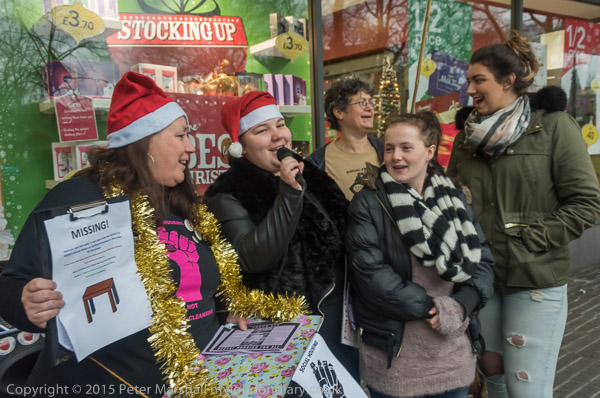
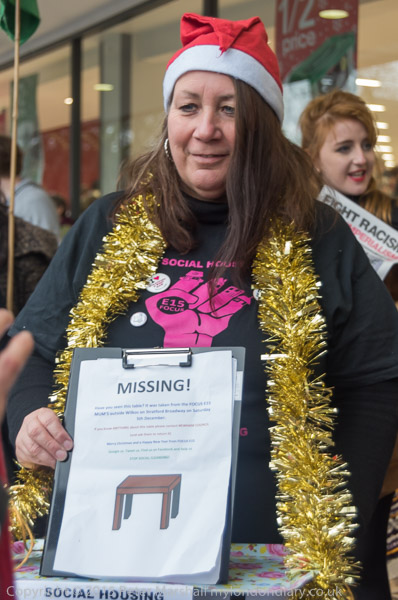
Although their weekly protest was legal, it clearly annoyed the council, and on Saturday 5th December Newham Law Enforcement officer John Oddie arrived, assisted by several police officers and confronted the campaigners and told them they were not allowed to protest there, and that unless they immediately packed up their stall, sound system, banners and other gear it would be seized. The group made clear that they would not move and following some argument, police seized a table and threw it in the back of their van.

It soon became clear that this action by police and the council officer had been illegal, and the council asked the protesters to come and collect the table. They replied asking the council to return it to them at the following week’s protest, and advertised this widely as a ‘Free the Focus E15 Table’ event, making considerable humorous mileage out of the council and police gaffe. The council didn’t turn up with the table, but there a number of other tables there, celebrating ‘Tablegate’ and although the local newspaper seemed to be boycotting the event (could they possibly attract considerable revenue from publishing official council notices) a BBC local news crew came along to film a few interviews.

Free the Focus E15 Table


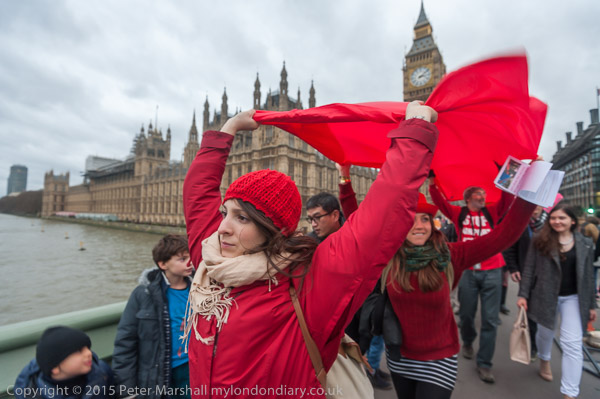
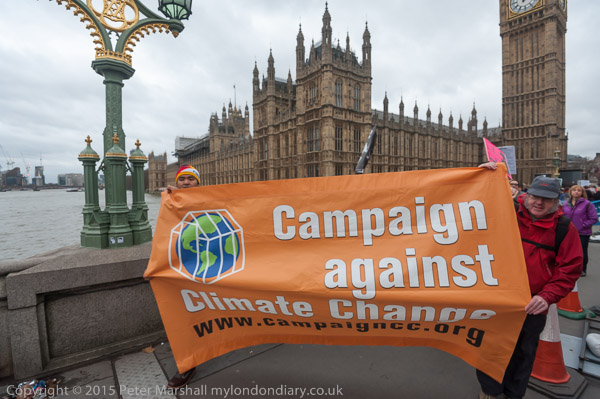
I couldn’t stay until the end but caught the tube back to central London where the Campaign against Climate Change were protesting against the inadequacy of the COP21 Paris deal, which sets the target temperature rise too high, has no way to enforce the measures needed and will allow the giant corporations to continue to prevent governments from carrying out effective green measures.

After a short rally in Old Palace Yard the protesters unrolled a 300m length of bright red fabric, carrying it above their heads across Westminster Bridge. It was a tricky to photograph but visually effective reminder of the need of governments to take urgent action to keep fossil fuels – including shale oil, with fracking now shown to be as dirty as coal – in the ground, or at least only to be extracted as chemical feedstock rather than fuel, and an increased urgency in the transition to renewable energy.


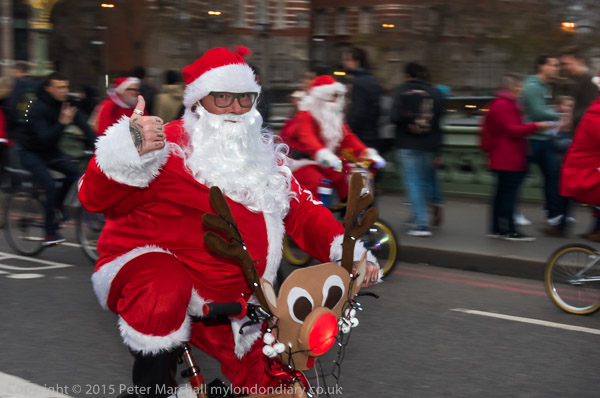
As I was photographing on Westminster Bridge, I was surprised to see a group of several hundred Santas on BMX bikes riding across on the opposite carriageway and rushed across to take a few pictures. I later found that this was an annual BMX Charity ride – which I went to photograph in 2019.

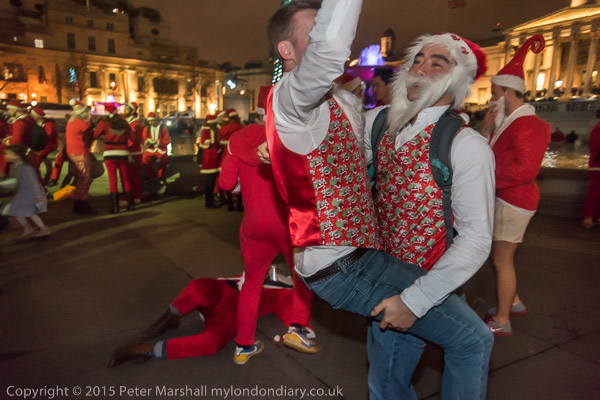
Later in the day I went to Trafalgar Square where a completely unconnected Santa-themed event was taking place, with Santas arriving at the end of the annual Santacon, a largely alcohol fuelled festive costume ramble through London.

Pictures from both Santa events are in Santas in London.


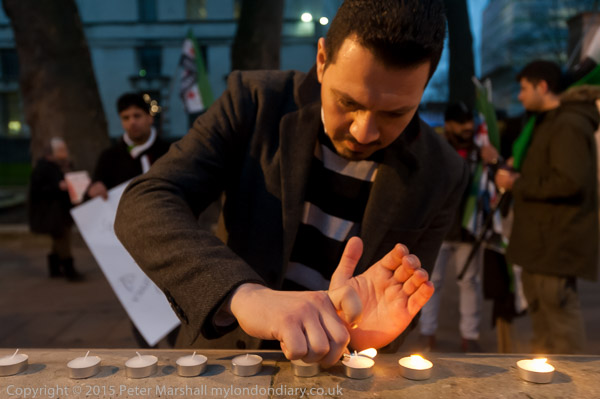
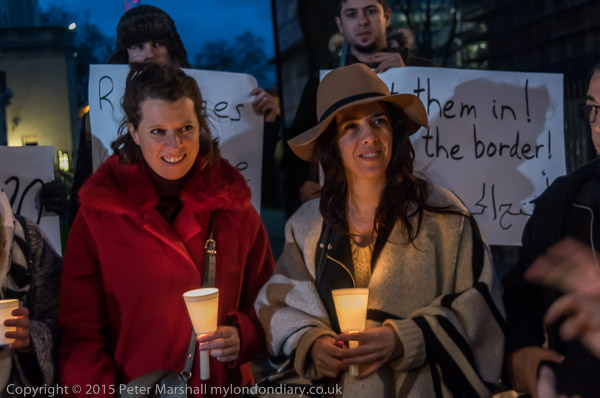
In late afternoon, solidarity campaigners and Syrian activists met for a vigil opposite Downing St vigil demanded justice for refugees, opening of EU borders to those fleeing war and terrorism and a much more generous response from the UK government.

It was a candlelit vigil, but a gusty wind blew out the flames as soon as they were lit until someone went to buy plastic cups to act as windshields though these rather hid the actual flames.

The response of the British government to the refugee crisis, particularly from Syria, but also from elsewhere around the world is seen by many to be abysmal. Even after considerable pushing from the British people which forced David Cameron to increase numbers, the UK was only promising to take 20,000 in the next five years, while Canada will take more – 25,000 – in a single year.


Christmas Solidarity Vigil for Refugees
Santas in London
Climate Activists Red Line protest
Free the Focus E15 Table


All photographs on this and my other sites, unless otherwise stated, are taken by and copyright of Peter Marshall, and are available for reproduction or can be bought as prints.