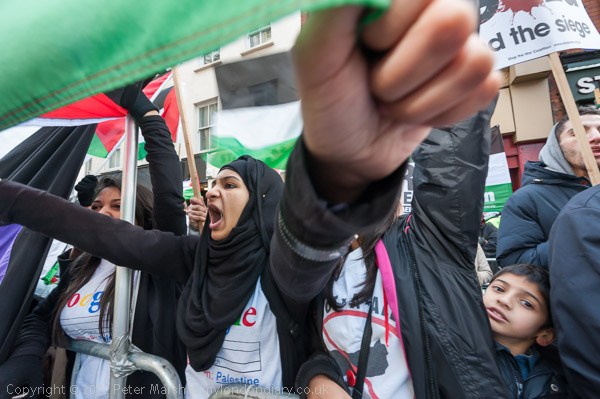
Women March, Bolivians Protest, Antifa Solidarity

Women March, Bolivians Protest, Antifa Solidarity
Saturday 19th January 2019 was another day of protests in London.
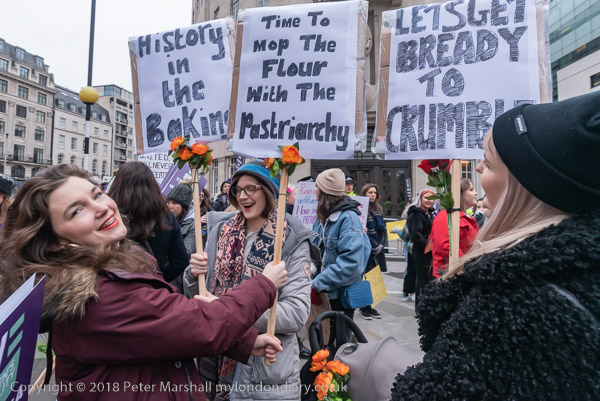
Women’s Bread & Roses protest

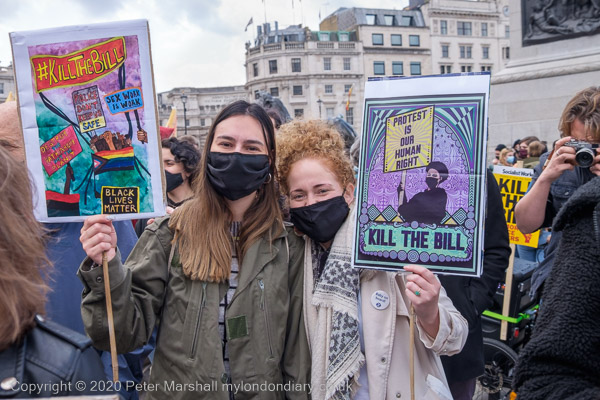
Inspired by the Bread & Roses protests which revolutionised workers’ rights for women in 1912, Women’s March London marched from the BBC to a rally in Trafalgar Square. The march was a part of an international day with women marching in many countries across the world and particularly in the USA.
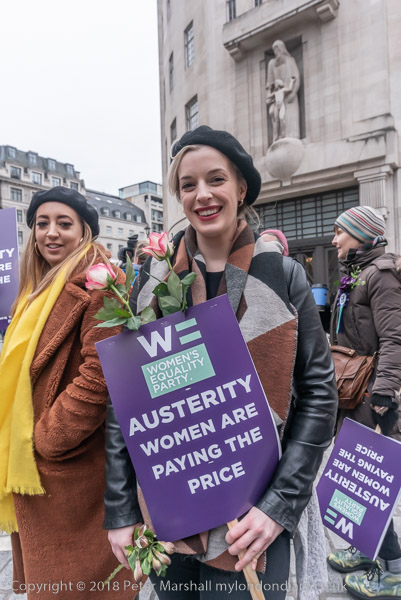
Women were marching against economic oppression, violence against women, gender pay gap, racism, fascism, institutional sexual harassment and hostile environment in the UK, and they called for a government dedicated to equality and working for all of us rather than the few.
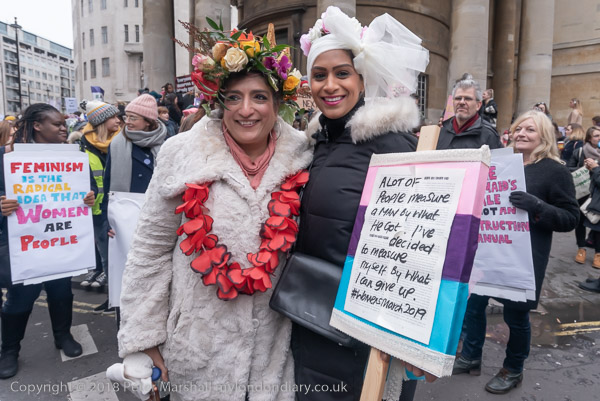
It began rather oddly outside the BBC with a carefully organised and scripted rally by a TV crew working for the BBC to produce what they called a documentary, though it seemed to have little real connection with the event that was taking place.
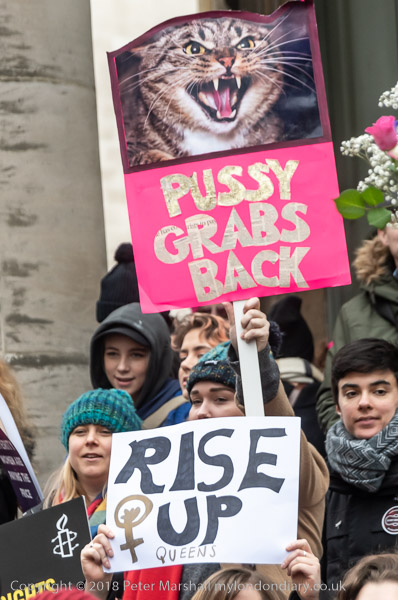
I walked with the women photographing them as they marched to another hopefully less scripted rally in Trafalgar Square where I left them to go to another event.

Bolivians protest against Morales
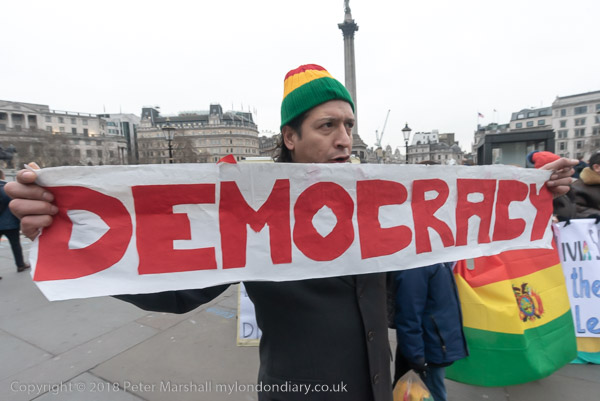
While in Trafalgar Square I photographed another protest taking place on the North Terrace, where Bolivians from the 21F movement had gathered against the ruling by Bolivia’s Electoral Tribunal that President Evo Morales could stand for a fourth term in office. Morales was first elected president in 2005, and supported the 2009 constitution which only allowed two consecutive terms in office. But later he tried to change this and the matter was put to a national referendum on 21st February 2016 which narrowly rejected the change.
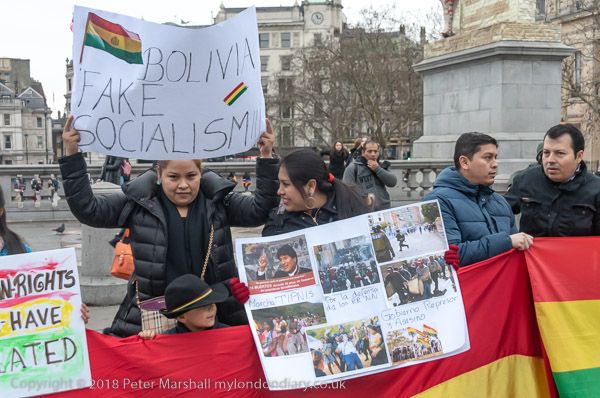
Morales then went to the courts and they ruled that the limitation to two terms was an infringement on human rights and allowed him to stand again,, and he won a third term in office. The protesters were from the 21F movement, named from the referendum debate who accused him of corruption and interfering with the court system and say he is behaving as a dictator by trying to remain in power for a fourth term. He stood and won in October 2019, but a coup attempt in November 2019 forced him to flee the country, though he was able to return after MAS candidate Luis Arce won a clear victory in the 2020 general election and was sworn in as President.

Morales, the head of the Movement for Socialism party (MAS) while in office implemented leftist policies, reducing poverty and illiteracy and combating the influence of the United States and multinational corporations in Bolivia which has made him very unpopular with many of the middle class who were used to running the country – as well as the USA who have encouraged and financed opposition to him. Perhaps the 21F protest was really more about his policies than a concern for the integrity of the constitution.

Solidarity with Russian anti-fascists
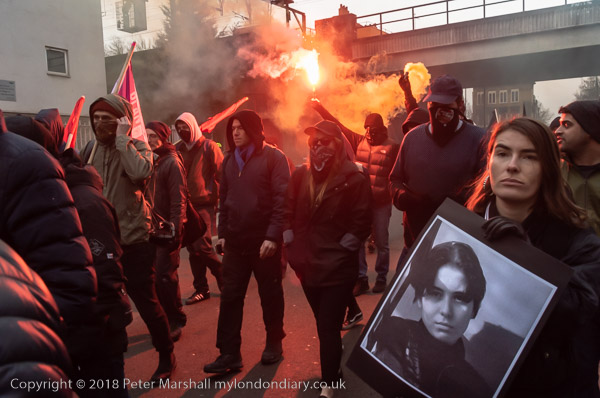
From Trafalgar Square I made my way to the Cable Street Mural on the former Stepney Town Hall in St George’s Gardens Shadwell, where Anarchist and Anti-fascists were gathering to march to oppose racism, xenophobia, fascism and the upsurge of far-right populism and to show solidarity with Russian anti-fascists who have been arrested, framed and tortured in a brutal wave of repression.
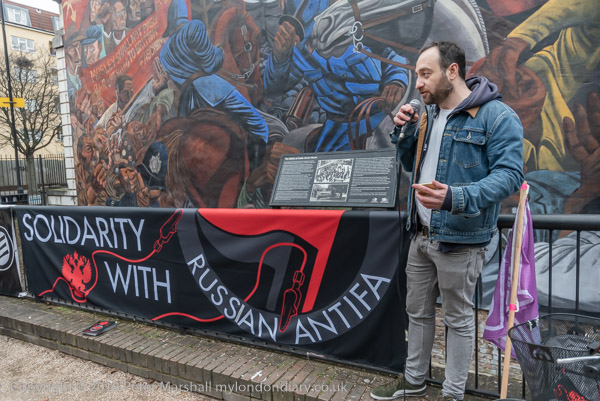
There were speeches by Russian and Ukrainian comrades and a message from some of those under arrest in Russia. Six were arrested in 2017 by the Russian Federal Security Service (FSB) and charged with belonging to a non-existent organisation, ‘The Network’. They have been and beaten and tortured in the pre-trial detention facility using electrical torture and hanging them upside down to get them to sign confessions, which they were forced to memorise.
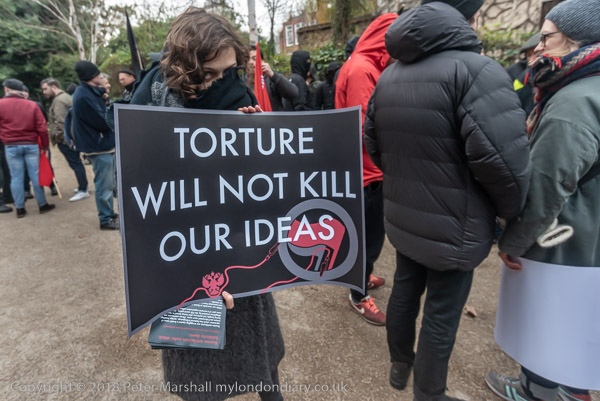
Five more anti-fascists have been arrested since and also tortured to admit they were members of ‘The Network’, which the FSB claims were planning explosions during the Russian presidential elections and the World Cup. They could be jailed for up to 20 years for membership of the fictional group.
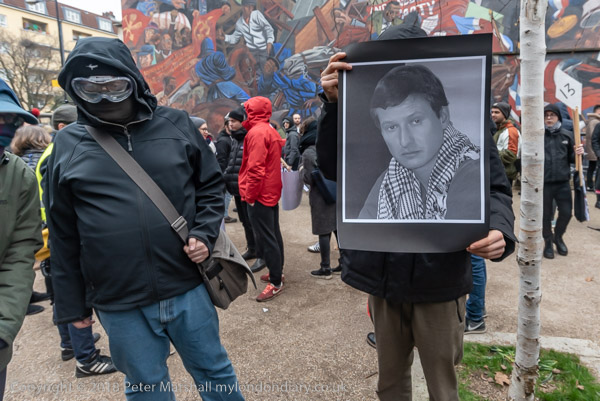
Stanislav Markelov, murdered by fascists in broad daylight on January 19th 2009.

January 19th was the 10th anniversary of the brutal murder on a Moscow street in broad daylight of two Russian anti-fascists, journalist Anastasia Baburova and lawyer Stanislav Markelov. Russian anarchists and anti-fascists hold events to remember them on this day every year.
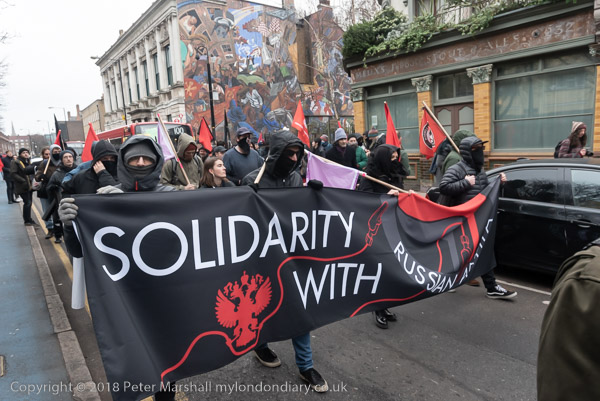
From the fine mural celebrating the 1936 Battle of Cable Street, when the East End rose up to fight the police who tried to force a way for Mosley’s Blackshirts to march through the Jewish East End, the protesters marched to Altab Ali Park in Whitechapel, re-named after a young Bengali textile worker, 24 year old Altab Ali, who was murdered here on May 4th 1978 in a brutal unprovoked racist attack by three teenage boys as he walked home from work.

More on all three protests on My London Diary:
Solidarity with Russian anti-fascists
Bolivians protest against Morales
Women’s Bread & Roses protest
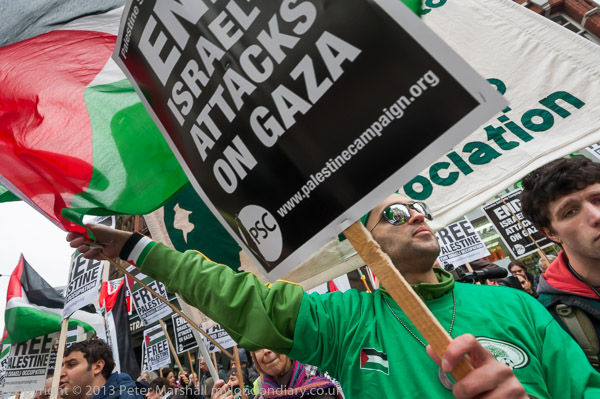
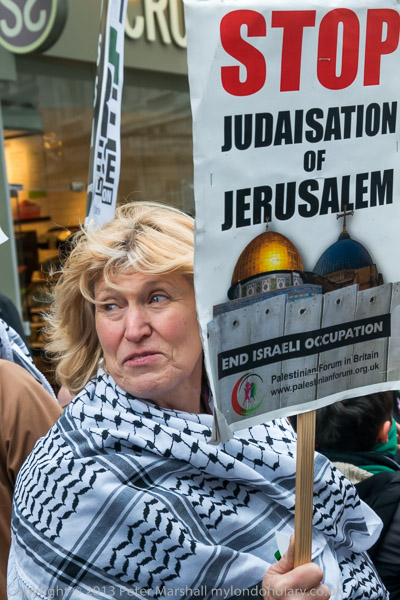
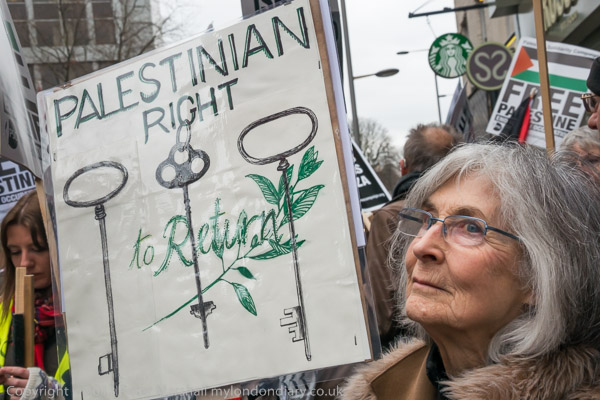
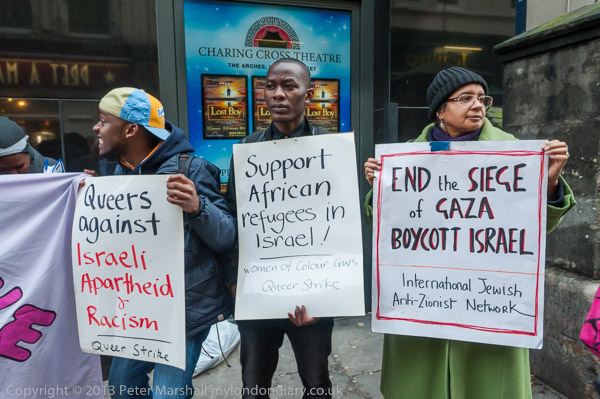
Gaza, Syria, Anons & Israeli Pinkwashing

Gaza, Syria, Anons & Israeli Pinkwashing: 18/01/2014
Another busy day for protests in London seven years ago.

Gaza Massacre 5th Anniversary
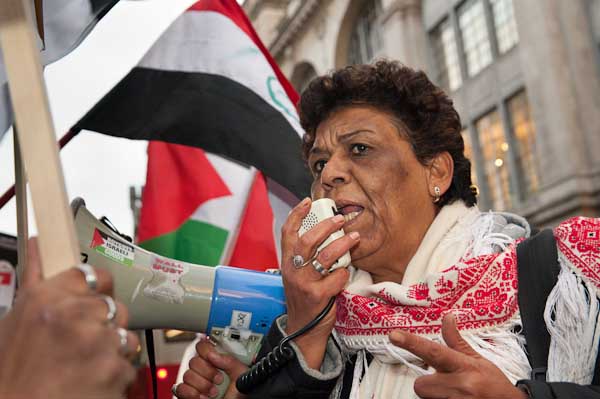
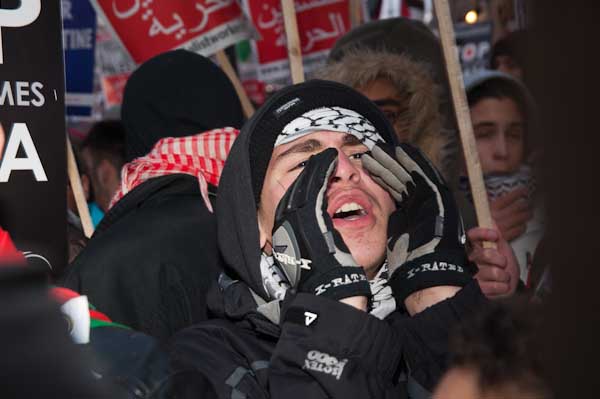
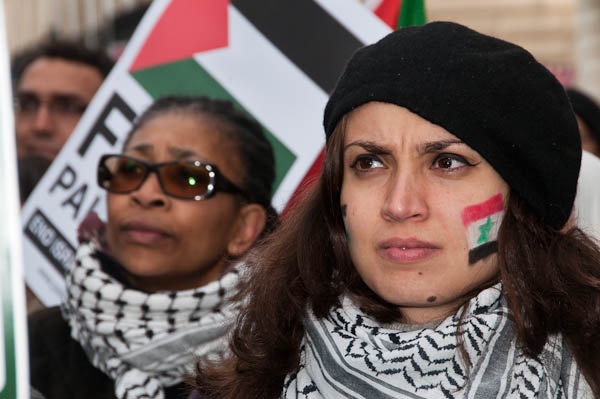
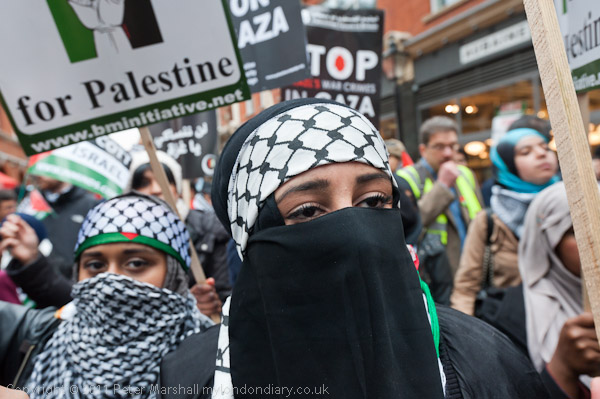
A large crowd protested on Kensington High Street opposite the private gated and guarded road containing the Israeli embassy five years marked 5 years after the end of the 2008/9 massacre in Gaza, Operation Cast Lead, in which around 1,400 Palestinians were killed, many of them unarmed civilians.

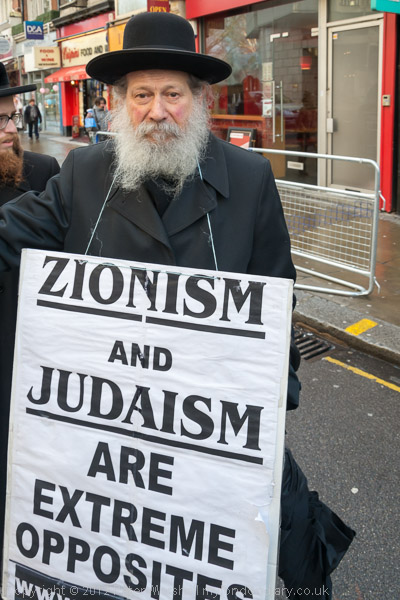
Among those taking part were a number of Palestinians and Jews, who have been prominent in calling for a boycott of Israeli goods.

The protest was supported by many groups, including the Palestine Solidarity Campaign, the Palestinian Forum in Britain, British Muslim Initiative, Campaign for Nuclear Disarmament,
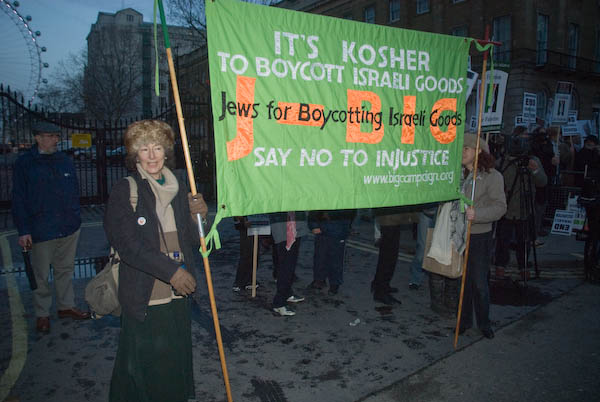
Stop the War Coalition, Jews for Justice for Palestinians, Friends of Al-Aqsa UK, Liberal Democrats Friends of Palestine, War on Want, Unite the Union, Public and Commercial Services Union, Amos Trust and ICAHD UK.

Anonymous March For Freedom UK

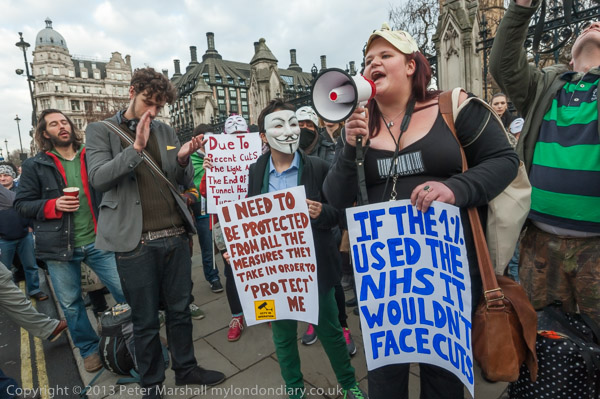
Following their large protest on November 5th, Anonymous supporters arranged a another wide-ranging protest against privatisation, cuts, environmental and other issues, calling for the people to claim the country back from those who are destroying it.
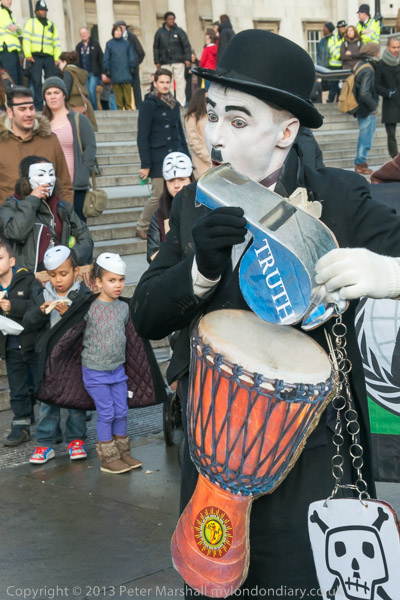
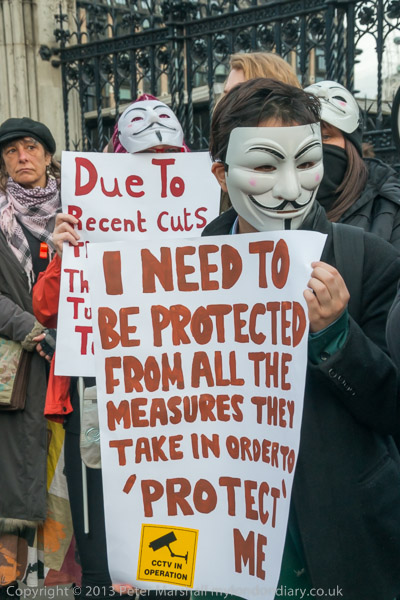
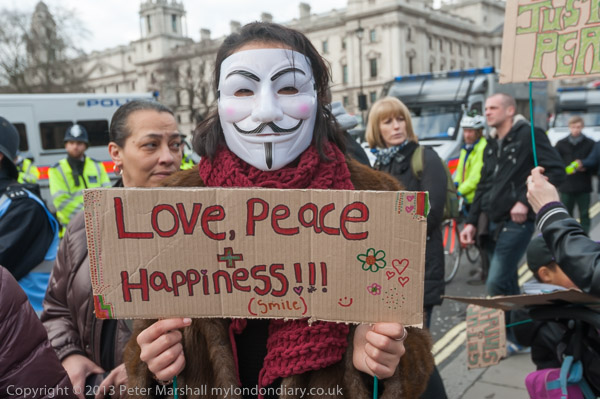
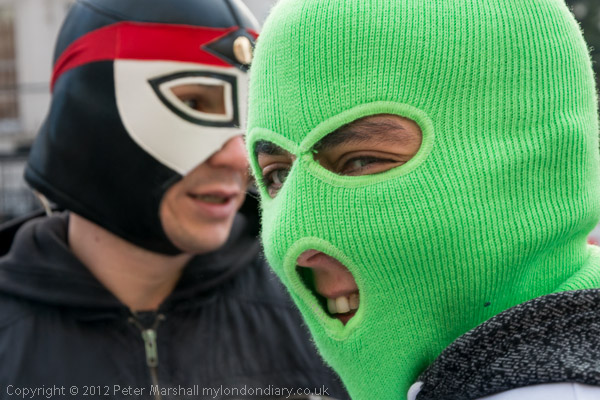
This was rather smaller with perhaps a little over a hundred people, some wearing Anonymous masks meeting in Trafalgar Square and then marching down to Parliament, although as it was a Saturday there would be no politicians there.

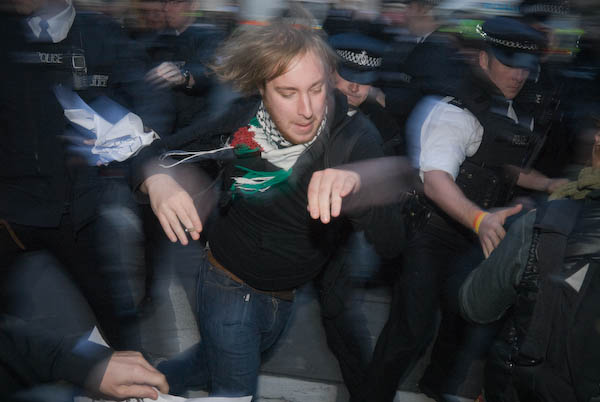
Standing around the square were quite a number of police, including Police Liaison Officers in their blue bibs as well as a FIT team with a police photographer. But the police seemed much less confrontational than in November and actually helped them to march down Whitehall to Parliament – and when no one seemed then to have any idea what to do next actually made some sensible suggestions.

Eventually the police persuaded the protesters to move off the road and on to the pavement outside Parliament where they held a rally. There were a number of speeches than the protest rather ground to a halt, with some suggesting that they party in Parliament Square. I left at this point, walking past enough police vans to hold several times as many officers as protesters as I did so.

Peace vigil for Syria

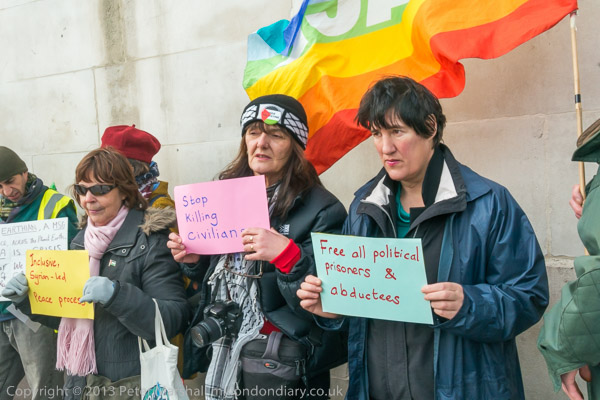
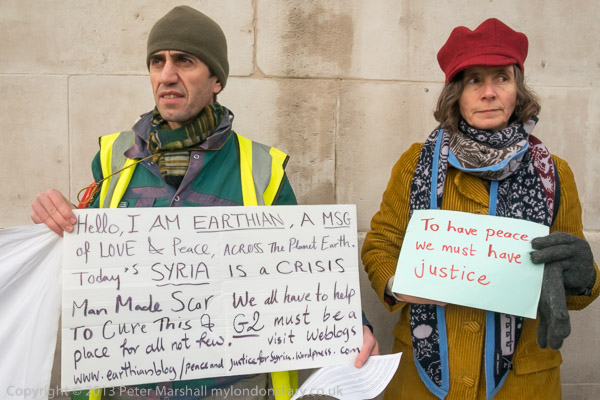
In Trafalgar Square Syria Peace & Justice were holding a peace vigil ahead of the Geneva 2 peace talks. They called for immediate humanitarian ceasefires and the release of all political prisoners and an inclusive Syrian-led peace process.

Unfortunately although the USA and western countries who had encouraged the Syrian rebels made supportive noises, they failed to come up with any real support. It was left to Russia who came to Assad’s aid and ensured the continuation of his regime, with some help from Turkey, who despite their membership of NATO colluded with both Assad and ISIS as well as Russia.

Israeli Gay Tourism Pinkwashing

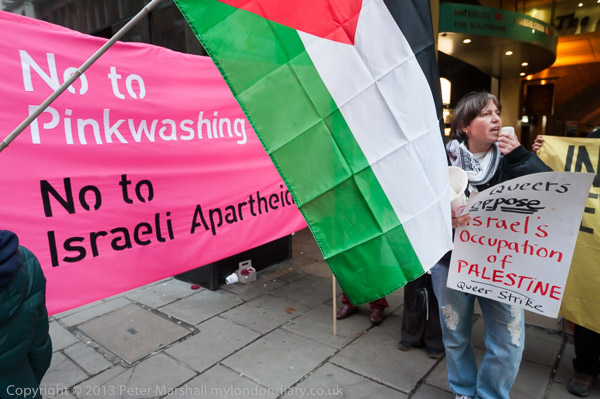
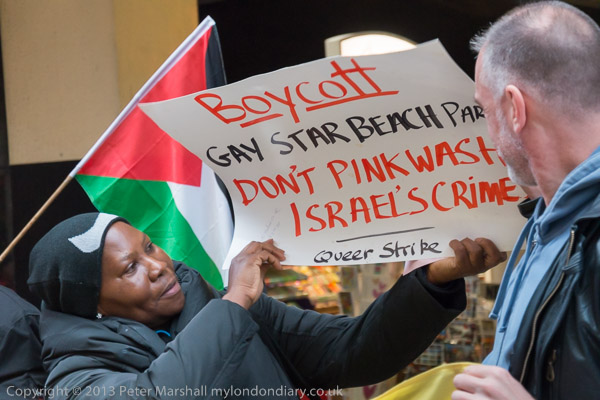
Nearby in Villiers St, there were protesters outside the Gay Star Beach Party LGBT tourism promotion, which received money from the Israeli Tourism Board to encourage gay tourists to holiday in Tel Aviv.

The picket outside the event asked people to boycott Israel until ends human rights abuses and recognises the Palestinians’ right to self-determination and complies with international law, and handed out ‘No Pinkwash’ cards which they say persuaded a number of people not to attend the event. Very few appeared to actually attend the beach party.

They also highlighted Israel’s racist treatment of African people following the protests in Tel Aviv last week by 30,000 African asylum seekers and refugees. These demanded that all African refugees imprisoned in Israeli prisons and detention centres be freed and that their rights as asylum seekers and refugees be recognised.

More on all four protests on My London Diary:

Israeli Gay Tourism Pinkwashing
Peace vigil for Syria
Anonymous March For Freedom UK
Gaza Massacre 5th Anniversary


Pussy Riot, ATOS, Scientology & Stand with Brad

Pussy Riot, ATOS, Scientology & Stand with Brad
January 16th 2013 was an unusually busy day for protests in London on a Wednesday, though not all were quite what they seemed.

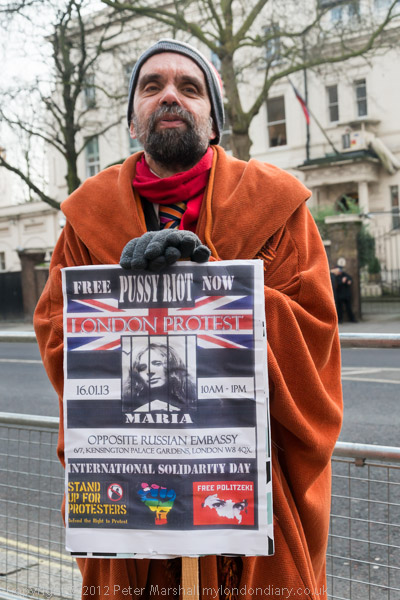
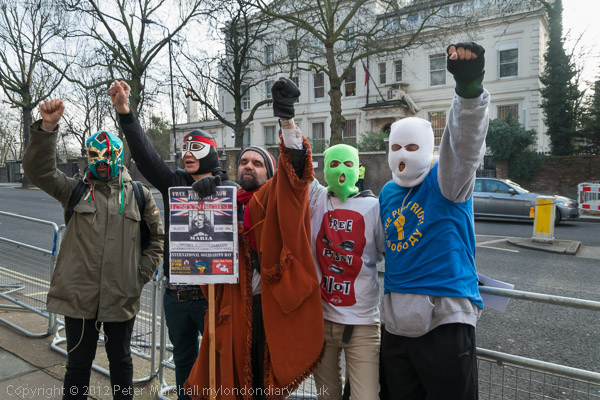
My working day started a short walk from Notting Hill Gate station, where a small group of protesters had come to take part in an International Day of Solidarity with Maria Alyokhina, one of the three members of the Russian punk band Pussy Riot who were sentenced for their performance of an anti-Putin “punk anthem” in a Moscow Orthodox cathedral the previous February.

Alyokhina was sent to serve two years in a prison camp at Perm in Siberia, one of the Soviet Unions harshest areas and was appearing in court that day to plea for her sentence to be suspended so she could raise her son, born in 2008, until he is 14.

She was kept in prison until 13th December 2013 when she was released under an amnesty bill by the Russian Duma, and since has continued her political activism, suffering further arrests and assaults. Last year – 2021 – she served two 15 day prison sentences before being put on a year’s parole.

The protest on the main road close to the Russian Embassy which is hidden down a very private street was scheduled to last three hours, and had got off to a slow start, with some of those arriving deciding to go away for coffee and come back later. Numbers were expected to rise later, but I couldn’t wait as I was due at another protest at the Royal Courts of Justice on the Strand.

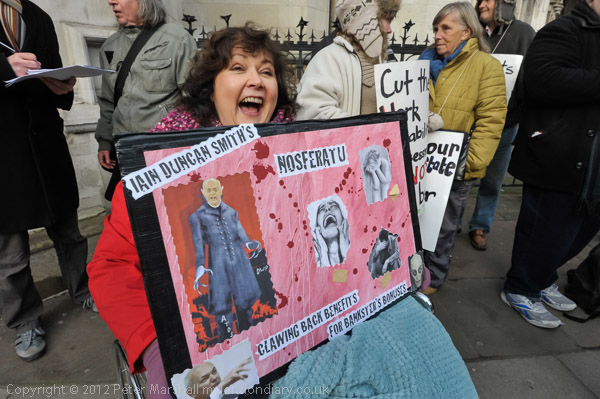
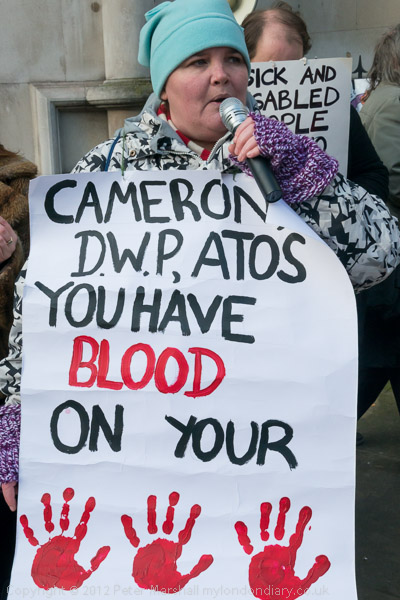
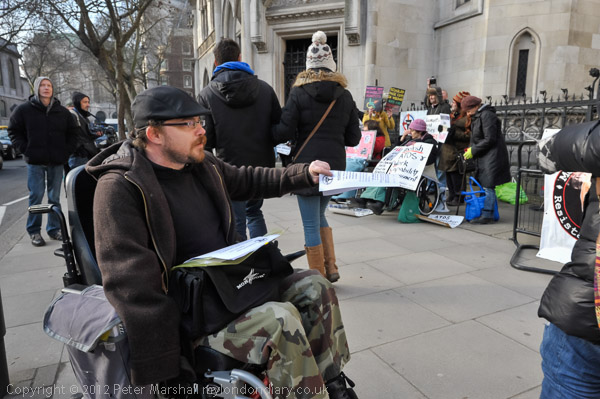
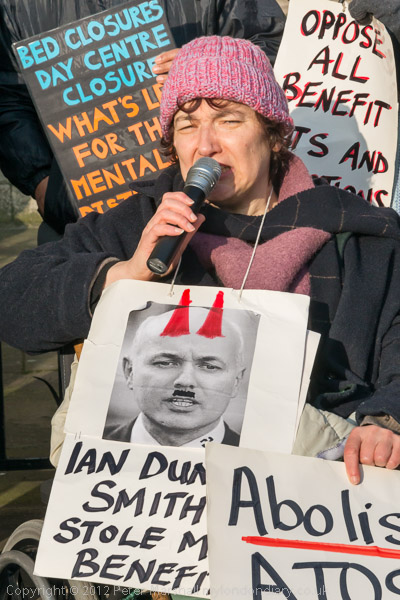
I arrived at the vigil at the Royal Courts of Justice to find there was also a second protest taking place. I had come to meet disabled protesters who were supporting a tribunal hearing of a judicial review of Work Capablility Assessments on the grounds they violate the Equality Act as they are not accessible for those with mental health conditions.

Those taking part included members of the Mental Health Resistance Network, MHRN, Disabled People Against Cuts, DPAC, Winvisible, Greater London Pensioners Association and others, including members of the Counihan family and PCS members who work at the court.

Speakers at the rally reminded us of the special problems with the Work Capability Assessments for many with mental health conditions, as these are often spasmodic. On good days claimants may not seem very ill and seem fit for work, while on bad days they may be unable to attend an assessment and for this reason be automatically judged fit for work.

Their press release included the statement:
‘Dozens of disabled people are dying every week following assessment. Nearly 40% of those who appeal the decision to remove benefits have the decision overturned, meaning thousands of people are wrongly being put through a traumatic and harrowing experience needlessly. The governments own appointed assessor of the policy has ruled it ‘unfit for purpose’… This would not be acceptable in any other government contract, yet goes without comment or sanction by this government. No-one is called to account, no-one takes responsibility.’

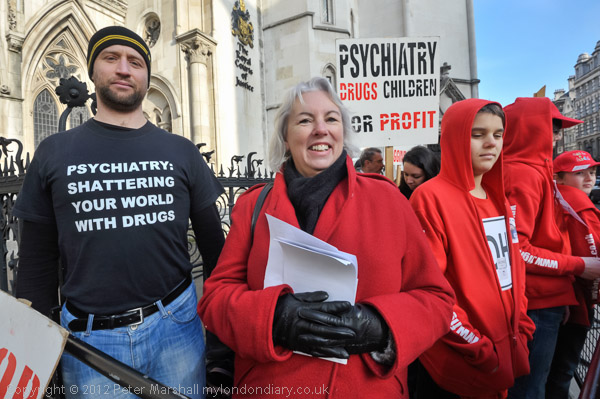
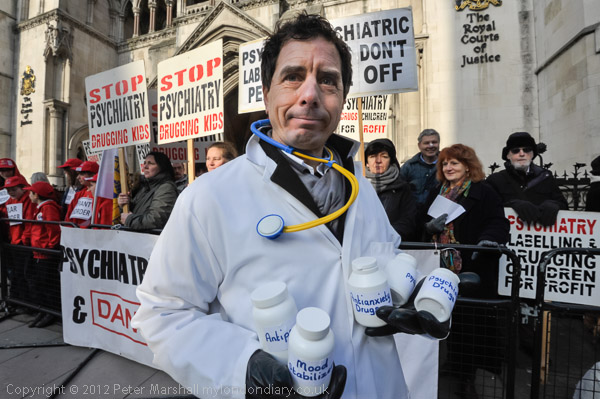
Also protesting outside the courts were the ‘Citizens Commission on Human Rights (United Kingdom)’ who claimed that a child who has never been diagnosed with any mental illness was being dosed with a dangerous anti-psychotic drug prescribed by a psychiatrist. Wikimedia describes the group as ‘a Scientology front group which campaigns against psychiatry and psychiatrists’ and was established in 1969 by the Church of Scientology.

The court backed them in the particular case concerned, though most of the information about it was confidential and the court decision may not have been confirmed by the family court.

Among those taking part in their protest was a man in a white coat at the protest holding pill bottles representing the drugs they described as redundant and unscientific and instead promoting the benefits of ASEA, which appears to be an unscientific scam, promoted by dubious means. Basically salt water, the web site ‘Science-Based Medicine’ concluded: “The only value of the product is the entertainment value that can be derived from reading the imaginative pseudoscientific explanations they have dreamed up to sell it.”

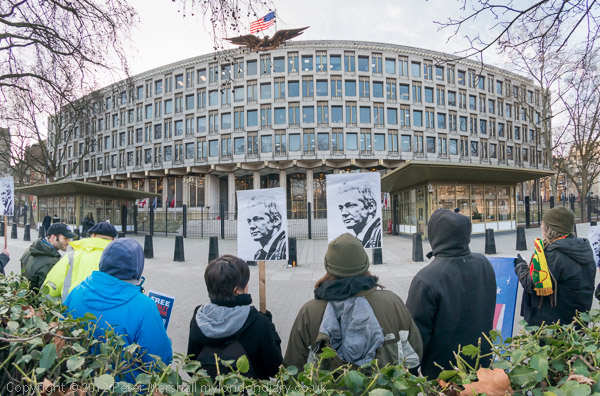
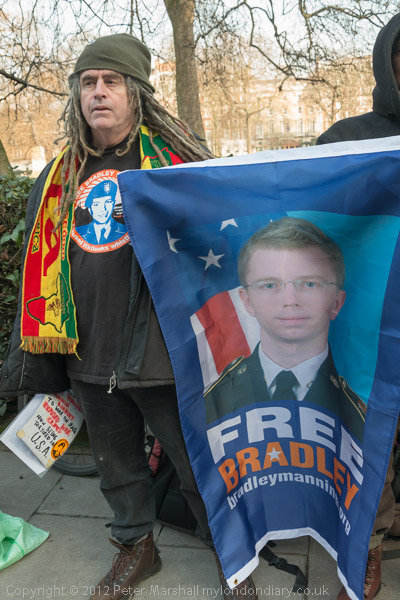
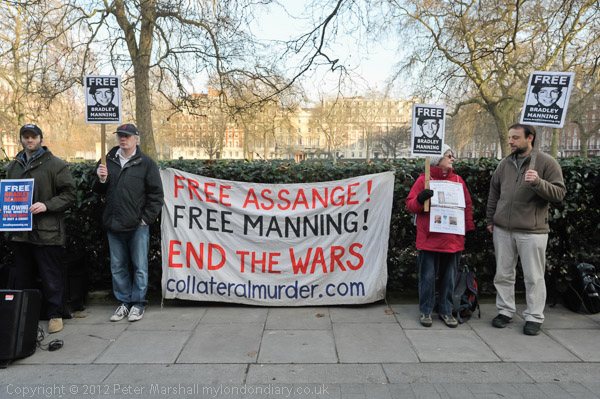
Finally I went to Grosvenor Square for a protest outside the US Embassy where protesters, including members of ‘Veterans for Peace’, were holding a vigil in solidarity with Bradley (now Chelsea) Manning, on day 963 of his pretrial detention while his defence argued in court for charges to be dismissed for lack of a ‘speedy trial.’

They stood holding placards in silence while the audio of a 45 minute video, ‘Collateral Murder’ allegedly leaked by Manning to Wikileaks was played on a PA system. The video clearly shows US forces committing war crimes and has become a symbol of the need for Wikileaks and ‘for courageous whistle-blowers like Bradley Manning.’

The protest was one of a series organised by WISE Up Action, a Solidarity Network for Bradley Manning and Julian Assange, and after the vigil at the US Embassy many of those taking part were going to the daily vigil outside the Ecuadorian embassy where Assange was then inside having been granted asylum and under threat of arrest by British police should he leave. But it had been a long day and I decided it was time for me to leave for home before ‘Collateral Murder’ finished playing.

More at:
Stand with Brad at US Embassy
Stop Psychiatry Drugging Kids
Equality Protest Against ATOS Work Assessments
Pussy Riot London Solidarity Demonstration


Freedom To Protest Under Threat

Back in 2008, people were protesting against the severe restrictions against our freedom to protest, that had been brought in by the Labour government under the Serious Organised Crime and Police Act 2005. As well as greatly widening the powers to arrest people and widening the scope of harassment, the act had criminalised trespass at certain protected sites and severely limited the holding of protests in a wide designated area of up to one kilometre from any point in Parliament Square.

CSG border post “To the left you have lost your freedom to protest

This latter provision was particularly aimed at Brian Haw and his Parliament Square Peace Campaign, but also prevented many other protests, and led to a number of arrests of campaigners. Parliament Square in particular had become the main focus of protests against the government and may government ministries were also inside the prohibited area.

There was wide disquiet about the effect of SOCPA on protest, and Prime Minister Gordon Brown had begun a public consultation with the Home Office on October 2007 issuing a document ‘Managing Protest’ which many felt threatened further threats to freedom of assembly throughout the UK.

The provisions regarding protests in the area around Parliament were replaced in 2011 by the Police Reform and Social Responsibility Act 2011 which gave police more draconian powers to restrict certain prohibited activities in and around Parliament Square – and have been used to seize tents, umbrellas, tarpaulins, sleeping bags and other equipment in the area.

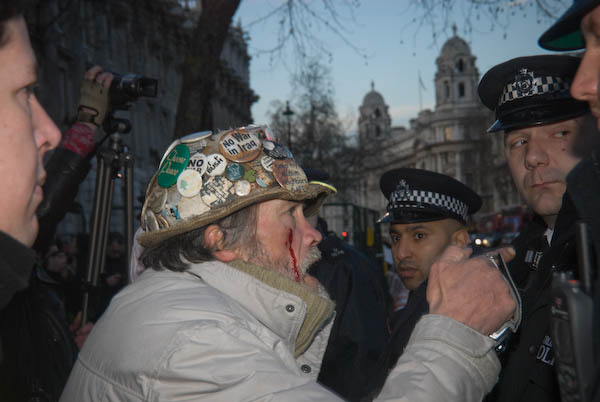
Brian Haw complains that a police officer pushed his camera into his face and caused this injury

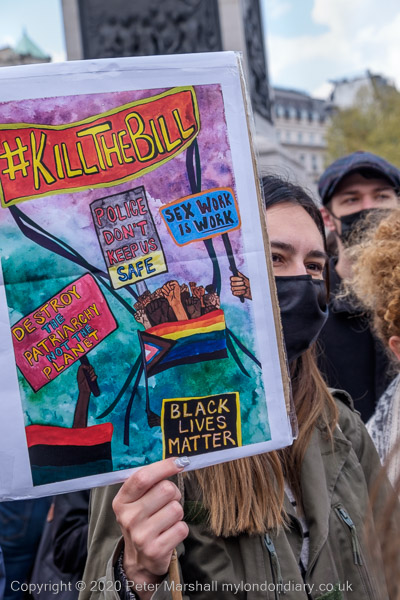
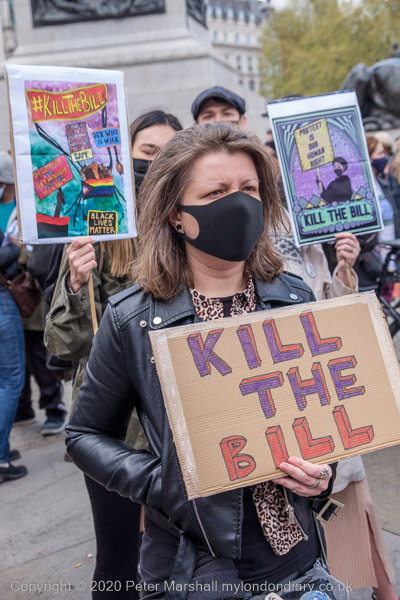
The Freedom to Protest is under even greater threat now, with the current passage through Parliament of the Police, Crime, Sentencing and Courts Bill – which a select committee has said “would curb non-violent protest in a way that is inconsistent with our human rights” and has led to many ‘Kill the Bill’ protests. Also disturbing is the reaction of many Tory politicians to the jury verdict in the Colston statue trial, which apears to be threatening state control of our legal system.

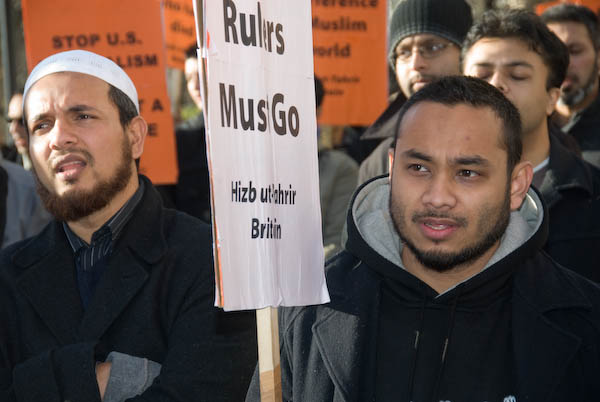
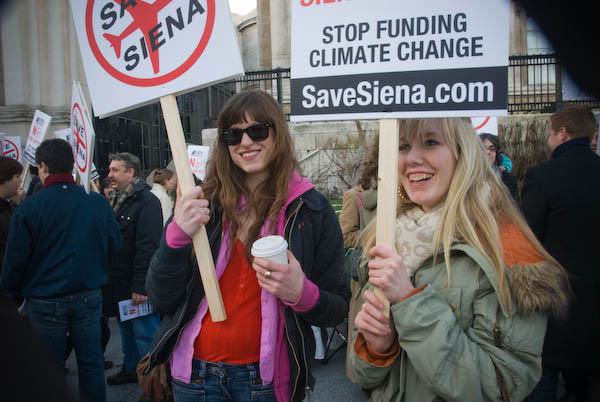
On Saturday 12th January 2008, I covered protests in Trafalgar Square and in front of Downing St upholding the freedom to protest. Earlier I had covered Hizb ut Tahrir marching to the Saudi Embassy against Bush’s Middle East tour and a small group of rich young people outside the National Gallery on the last day of the Siena exhibition protesting against the expansion of Siena airport which would bring more less well-heeled tourists into the area.

Although I’m very much against any expansion of air travel – the planet simply can’t afford it, I found it hard to take this particular protest too seriously – it seemed to be rather more about protecting privilege than opposing environmental crime.

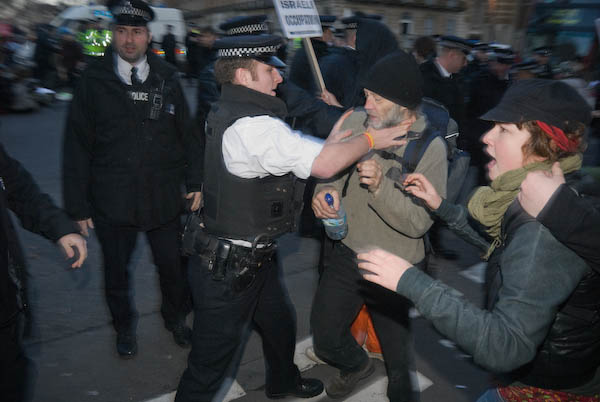
And while I had gone to Downing St mainly for the Freedom to Protest demonstration, while there I photographed another protest calling on an end to the Israeli government’s siege of Gaza. This included a number of British Jews, including those calling for a boycott of Israeli goods.

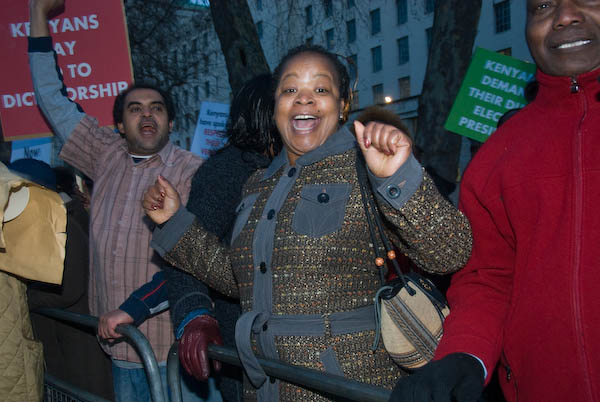
Also present opposite Downing St were another large group of Kenyans, protesting against the re-election of the incumbent President Mwai Kibaki. A US commissioned exit poll suggested opposition leader Raila Odinga had won by a 6% margin and there was widespread international agreement that the election was rigged.

More on My London Diary:
Hizb ut Tahrir against Bush tour
Siena Airport Protest
CSG Border Post
Freedom to Protest – Downing St
End Gaza Seige
Kenyans Protest Election Fraud


Stratford, Woolwich & Chelsea

Stratford, Woolwich & Chelsea
Perhaps the only thing these three parts of London really have in common was that I photographed in them in the last few days of July 1988. The first two were on a family visit to the railway museum then at North Woolwich station, largely for the benefit on my two sons, then aged 12 and 9, and both with a real interest in railways and had decide on this as a birthday outing for the elder. I think we probably had a few of their friends with us, some in the second picture below.

Stratford Station, Stratford, Newham, 1988 88-7m-34-positive_2400
Stratford Station, Stratford, Newham, 1988 88-7m-34

North London Line, Stratford Station, Stratford, Newham, 1988 88-7m-35-positive_2400
North London Line, Stratford Station, Stratford, Newham, 1988 88-7m-35

And once we were in North Woolwich it would have been a shame to miss the free ride across the River Thames on the Woolwich Ferry. One of their favourite books when younger had been Alfie and the Ferryboat, by Charles Keeping, published in 1968 Keeping, born close the the Thames in Lambeth tells the story of a small boy from Woolwich crossing the river on the ferryboat to ‘the other side of the world’ in search of his old sailor friend Bunty and his dog.

Woolwich Ferry, North Woolwich, Newham, 1988 88-7m-24-positive_2400
Woolwich Ferry, North Woolwich, Newham, 1988 88-7m-24

Keeping was a superb and innovative illustrator and the book is perhaps his best work. Copies of it are now hard to find and rather expensive.

Woolwich, Greenwich, 1988 88-7m-12-positive_2400
Woolwich, Greenwich, 1988 88-7m-12

The ferry that Alfie took was one of the same that we took, which were introduced in 1963 – the John Burns, Ernest Bevin and James Newman, double-ended ships with powerful diesel engines which were replaced in 2018 after 55 years on the run.

I only made twelve black and white pictures on this trip, along with three in colour, probably too occupied with herding 12 year-old boys than photography, and getting them all back to a birthday tea on the other side of London.

Moorings, River Thames,Cheyne Walk, Worlds End, Chelsea, Kensington & Chelsea, 1988 88-7m-14-positive_2400
Moorings, River Thames, Cheyne Walk, Worlds End, Chelsea, Kensington & Chelsea, 1988 88-7m-14

Days are long in July, and four days later I began taking pictures on Battersea Brdige and then a short walk in Chelsea.

Crosby Hall, Cheyne Walk, Chelsea, Kensington & Chelsea, 1988 88-7n-02-positive_2400
Crosby Hall, Cheyne Walk, Chelsea, Kensington & Chelsea, 1988 88-7n-02

Probably I had looked at pictures I had taken earlier in the year and decided there were some I would like to retake, or perhaps found some things I had missed. I spent a lot of time on researching the areas I was photographing, which was much harder before the days of the world wide web – and many of the books I had to rely on were years out of date, often pre-war or even older.

Sir Hans Sloane, memorial, Chelsea Old Church, Cheyne Walk , Chelsea, Kensington & Chelsea, 1988 88-7n-62-positive_2400
Sir Hans Sloane, memorial, Chelsea Old Church, Cheyne Walk , Chelsea, Kensington & Chelsea, 1988 88-7n-62

I think I may not have got a picture – or not one I liked of this memorial to Sir Hans Sloane (1660-1753), an Anglo-Irish doctor and collector who travelled widely to France and the Caribbean, where he supposedly invented drinking chocolate as well as giving a harrowing account of the sadistic punishments inflicted on slaves and married the wealthy widow of one of the larger slave owners.

Her money from slavery and his income from a doctor and investments in property and slave trading companies enabled him to build up a collection of 71,000 items which he left to the British Nation. These provided the foundation of the British Museum, the British Library and the Natural History Museum.

Christchurch St, Chelsea, Kensington & Chelsea, 1988 88-7n-55-positive_2400
Christchurch St, Chelsea, Kensington & Chelsea, 1988 88-7n-55

But after taking around thirty pictures the next (not on-line) shows a view from the back of two women on a station escalator, with the next frame on the Commercial Road in Limehouse. I think I will have taken the Underground from Sloane Square to Tower Hill and walked to Tower Gateway for the DLR which had opened in 1987 to Limehouse. But pictures from my longer walk from there will be in a further post.


Click on any of the pictures to see a larger version in my album 1988 London Photos, from where you can browse the rest of the album.


Why we are short of Nurses

Why we are short of Nurses
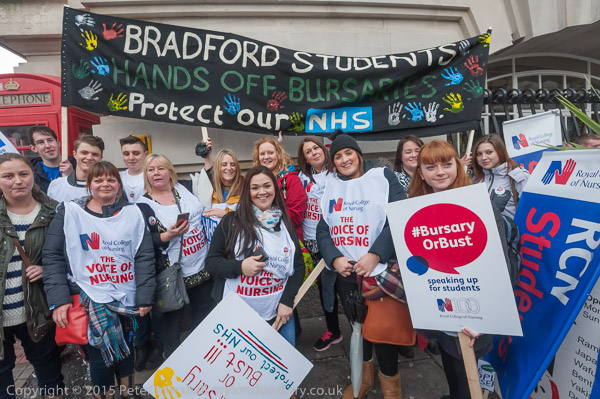
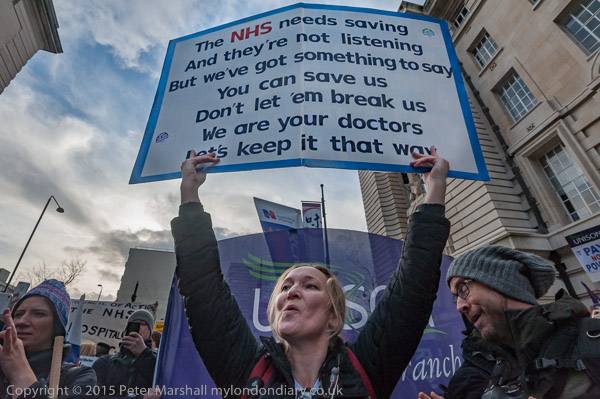
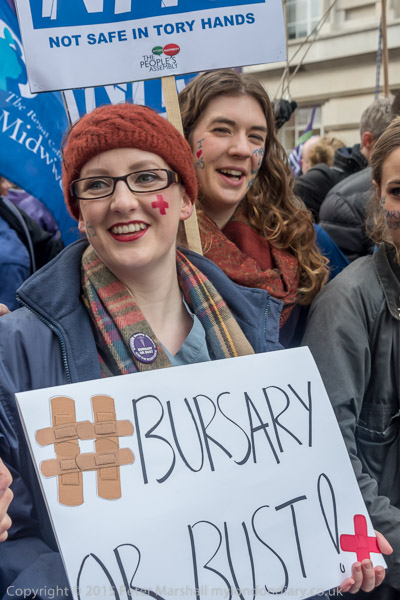
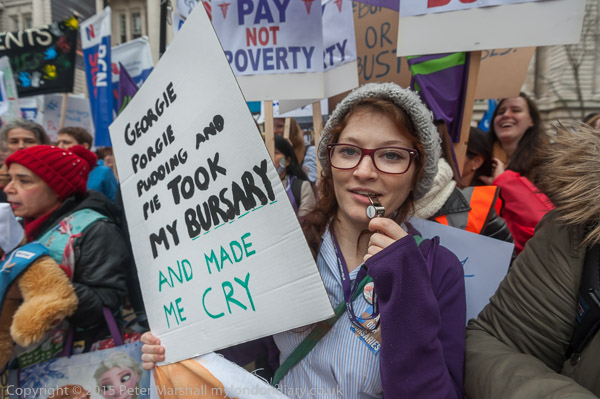
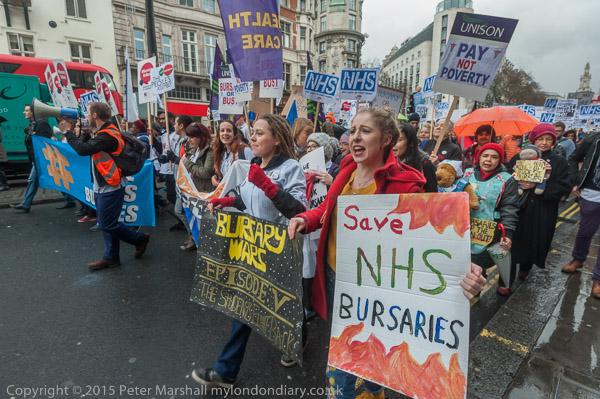
On January 9th 2016 I took the pictures shown here of a rally and march against the axing of bursaries for student nurses and midwives. The current huge surge in hospitalisation of Covid victims as Omicron rages through the nation has highlighted the huge shortage of qualified medical people in the NHS at all levels.

For years, but increasingly since the Tory-led coalition came to power in 2010, there have been huge shortages, with the NHS having to recruit from overseas – including from many poorer countries which are even more short of staff than the UK.

We have of course been bringing in nurses and doctors from abroad for many years – at least from the 1950s – rather than training enough from our own population. It has never been that there were not enough young people who want to be nurses and doctors – and in my years as a teacher I taught quite a few suitable young men and women who were well qualified but failed to gain admission to medical schools where there were perhaps 12 applicants for every place.

Hospitals have also become hugely reliant on agency nurses rather than directly employed staff, partly because of relatively low pay, but also because of a lack of self-defeating lack of flexibility by underfunded NHS hospitals which actually results in increased costs.

But for training nurses, the Tory government really messed things up in 2016 by removing the training bursaries for NHS nurses and midwives. Unlike other students they perform essential work for the NHS in hospitals caring for patients as an integral part of their courses, which makes it virtually impossible for them to undertake other part-time employment during their studies.

And in 2017 things got even worse and nursing students have had to pay tuition fees in the same way as other university students, leaving them with large loans to pay off when they complete their courses and go into employment.

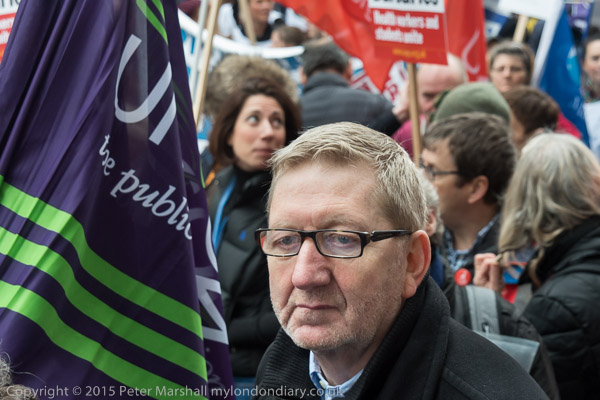
Len McClusky, General Secretary of Unite next to a Unison banner

In 2020 the Royal College of Nursing published a report Beyond the Bursary: Workforce Supply which makes the point that at the start of the pandemic there were almost 40,000 nursing vacancies in the NHS in England alone, and called on government to develop a fully funded workforce strategy and aim for “an oversupply of nurses given years of underinvestment and the growing needs of our population.

The report notes that following the removal of the bursary there was a 31% drop in applicants for nursing courses, and over 4% fewer being accepted. Where we needed and increase in numbers being trained due to the shortage, government policies directly produced a decrease.

The RCN called on the government to abolish the tuition fees for nursing courses and reimburse the fees for those students affected by the removal of the bursary. And although the welcomed the decision to bring back an annual maintenance grant of £5000 for nursing students (£8,000 for some difficult to recruit specialities) from September 2020 they asked for that to be increased to a level that reflects the actual cost.

Of course the pandemic has made things worse. Some have died from Covid, partly as a result of the failure to provide effective protective clothing – and those contracts given to Tory mates with no experience in the field while some established companies failed to get orders. Many among those who recovered from Covid continue to suffer its after-effects – ‘long-Covid’. Others have simply been exhausted by overwork – and this is “a workforce that felt undervalued, unrewarded and where one in three were nearing retirement age.”

Brexit too has taken its toll, both with nurses from European countries leaving the UK and the failure of our government to respect the early promises it made to EU citizens working in the UK has not helped. Brexit and the continuing squabbles by the government over the treaty it signed is also a deterrent to people to now come and work here.

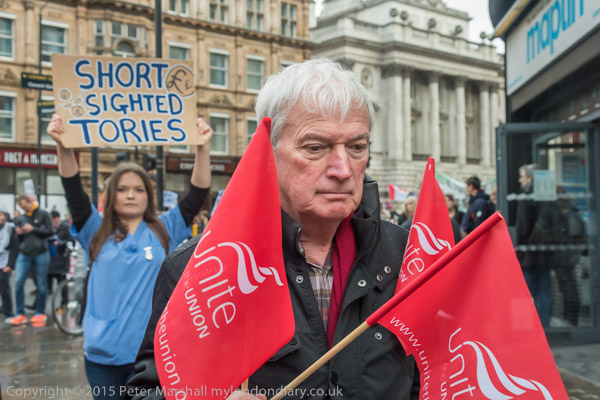
The shortage of nurses – and other medical staff – is a direct result of government policies. Not just the Tories but also of Labour under Blair and Brown, and is a part of the slow sabotaging of the NHS as a part of a policy of creeping privatisation that has been underway since at least the Thatcher years, though vastly accelerated since 2010. Unfortunately it isn’t as one placard states that the Tories are short-sighted, but that they are playing a long game to undermine our National Health Service.

More pictures on My London Diary:
NHS Bursaries March
NHS Bursaries rally before march


Epiphany Rising Against Monarchy

Epiphany Rising Against Monarchy
Relatively few nowadays observe the 12 days of Christmas which come to an end on January 6th with Epiphany. Traditionally in the UK and some other countries it was when Christmas decorations were taken down, but also a feast day celebrating the arrival of the Three Kings with their gifts. Nowadays most seem to put up decorations even before the start of Advent and often take them down by the New Year.

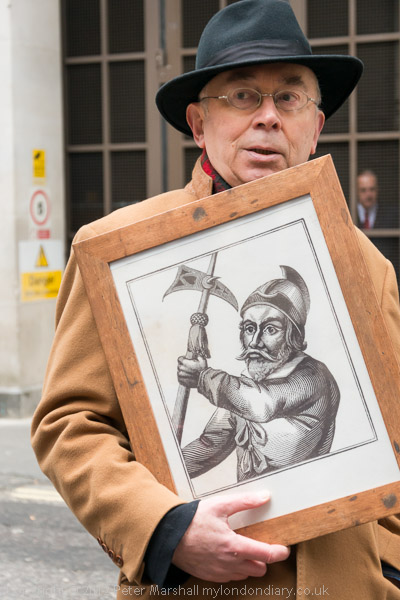
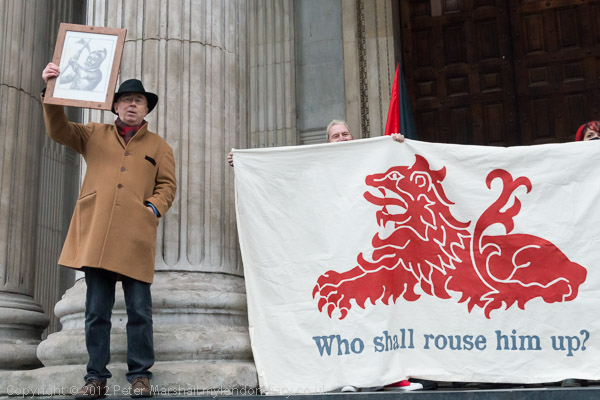
Ian Bone holds a picture of Thomas Venner

Epiphany gained a new importance in literature and moved to entirely lower case in the work of James Joyce, where his hero Stephen Daedalus defines it as “a sudden spiritual manifestation, whether in the vulgarity of speech or of gesture or in a memorable phase of the mind itself.” Epiphanies are moments of revelation that change the the way a character or person sees life or a particular situation, suddenly seeing things in a new light. I think all great photographs are epiphanies.

Ian Bone speaks

But getting back to the 6th of January, and in particular the 6th of January 1661 which was the subject of a partial re-enactment on the 6th of January 2013, we need to remember the centrality of religion in those times. Though many might now protest against the monarchy, particularly in recent days over the ennobling of a war criminal and the alleged criminal acts against minors by one of the royal family, few would now do so for the kind of religious reasons that led Thomas Venner and his fellow Fifth Monarchists to carry out a bloody armed insurrection in the City of London.

As I wrote in My London Diary:

The Fifth Monarchists were an important religious movement in England during the rule of Oliver Cromwell, seeing the execution of King Charles as being part of the fulfulment of the Biblical prophesy in the book of Daniel about the end of the four kingdoms of history being followed by the “rule of a son of man” for a thousand years (which they took as the rule by the Pope) after which would come the Christ’s reign on earth. For this to happen, the old order had to be ended by violence – as had begun with the beheading of the king.

They included three of those who had signed the execution warrant, but they soon become disillusioned with Cromwell, who they saw as trying to make himself a king and they began to agitate against him. Thomas Venner was imprisoned for several years for plotting to overthrow Cromwell, but released when Richard Cromwell became Protector.s

They were incensed by the restoration of the monarchy, and in particular by the savagery shown by the new order against the ‘regicides’, including Fifth Monarchist Major-General Harrison who showed great bravery during his gruesome public execution by hanging, drawing and quartering.

My London Diary

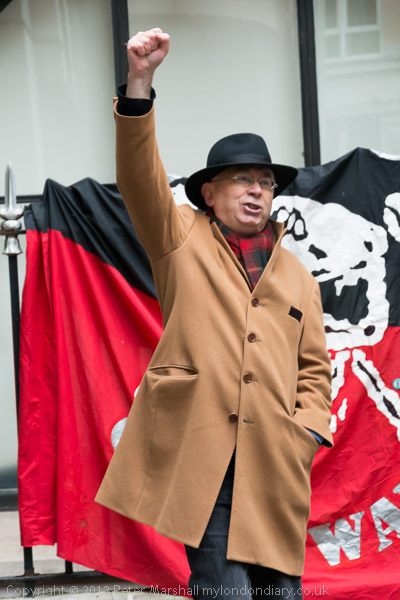
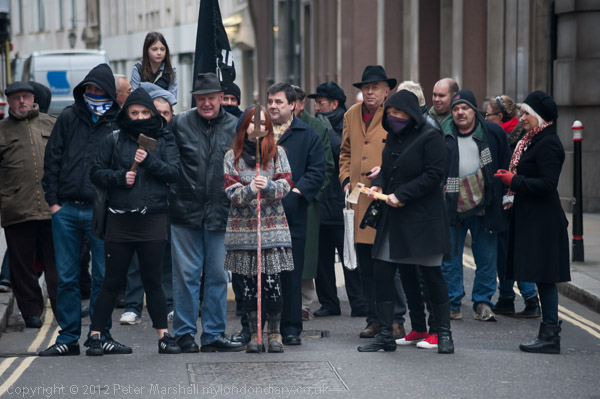
Like Venner’s the re-enactment began at Swan Alley (now Great Swan Alley) and with around a similar number of his 50 or so followers, and were variously armed with pikes and other weapons. The event in 2013 began with a speech by Ian Bone about the history of the earlier event, followed by several other anarchists and socialists whose comments related the it to our current times. The event was for a short film, Epiphany, with Ian Bone as writer working with director Suzy Gillett.

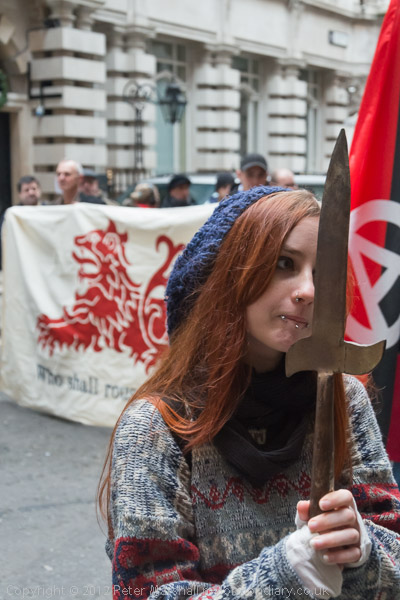
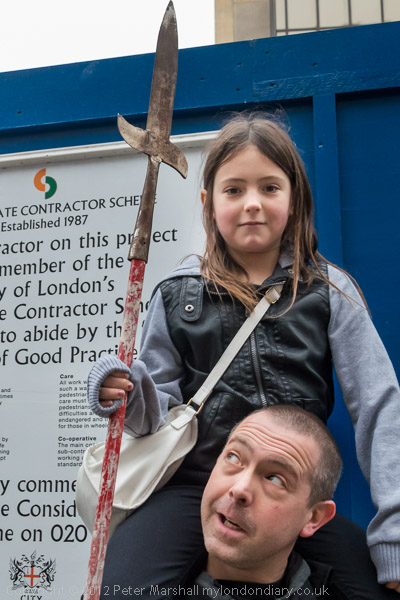
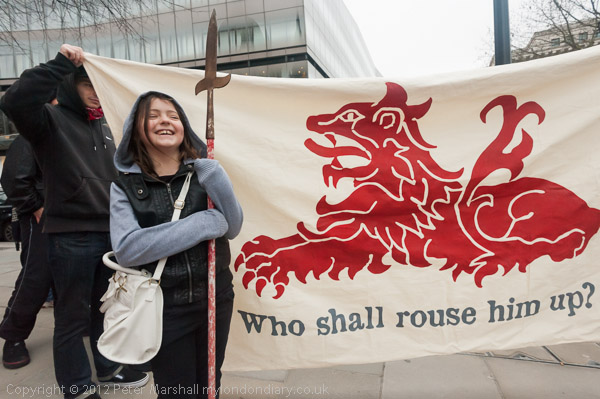
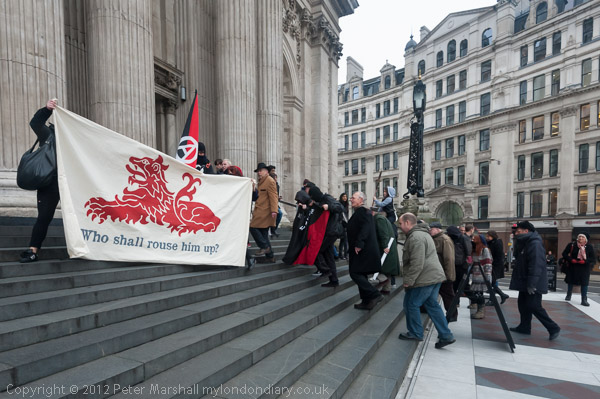
I suspect Venner’s address was rather more fiery, but we did have a very fine banner, with a heraldic lion and the text ‘Who shall rouse him up?’, and as in 1661 the mob was led out of the yard by a young woman bearing a pike and the battle cry “King Jesus and the heads upon the gates“. Among those taking part was Sam, grandson of Philip Sidney Noakes, the last of the Muggletonians, another of the radical seventeenth century religious movements with his daughter Rachel.

Sam, grandson of Philip Sidney Noakes, the last of the Muggletonians, with his daughter Rachel

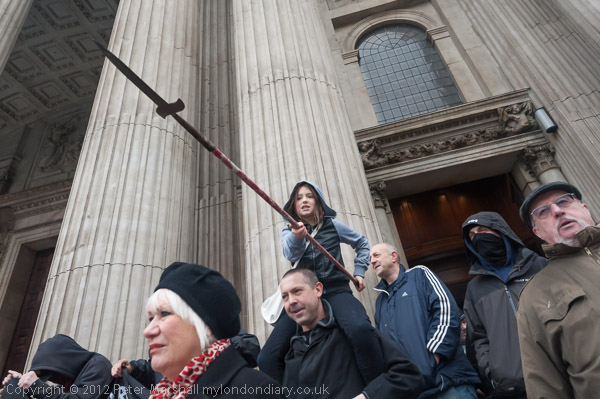
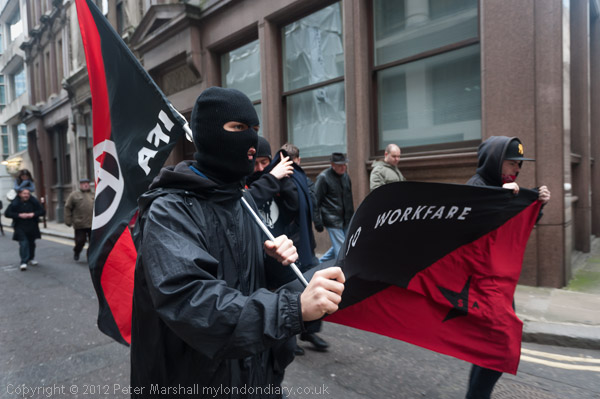
There were other anarchist banners and black and red flags and banners and people shouted some of the old slogans, ‘King Jesus‘, ‘Heads On Pikes‘ and ‘Nobility In Chains’. Though some were carrying axes and hammers, certainly illegal offensive weapons, none were put into use into what was a rather tame stroll with a number of stops to allow the film director Suzy Gillett to move the camera into position on the way via the Guildhall to the steps of St Paul’s Cathedral.

There the group were content with posing for photographs, rather than following Venner’s example and storming in and holding it for several days, along with other parts of the city, until finally the army was sent in against them. Most were then killed and the others captured after a long and bloody fight. Venner himself was wounded in 19 places before he was finally overpowered.

Together with ten others after a brief trial he was sentenced to be hung, drawn and quartered; the sentence was carried out in front of the meeting place of his congregation in Swan Yard on 19 Jan 1661. Many other Fifth Monarchists who had taken no part in the rising were hunted down and hung or imprisoned, and draconian laws were enacted against dissenters but this did not end the movement.

You can read a fuller account of the event in Epiphany Rising Against King on My London Diary, and even more detail in a post on the Bristol Radical History Group site.


John Lewis Cleaners Protest

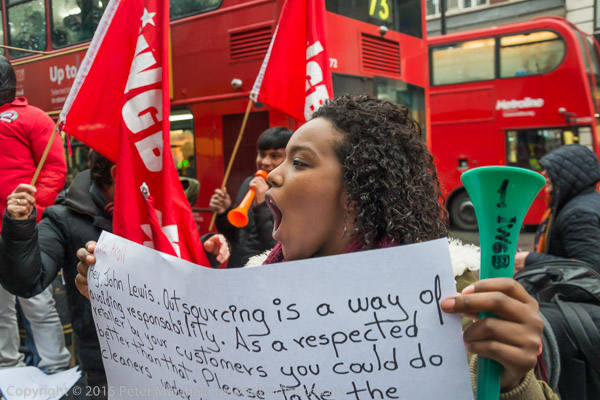
A protester holds a message from John Lewis customer Una Kroll: ‘Outsourcing is a way of avoiding responsibility’

John Lewis Cleaners Protest
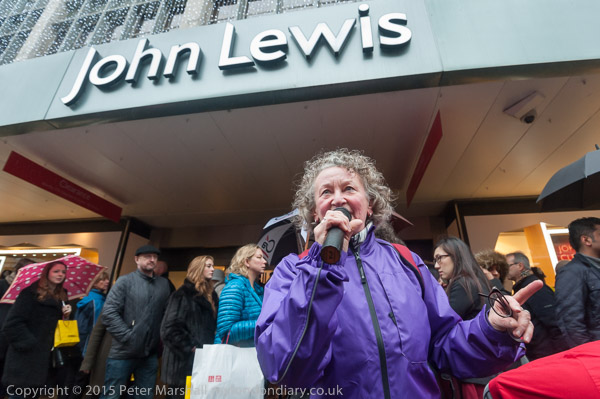
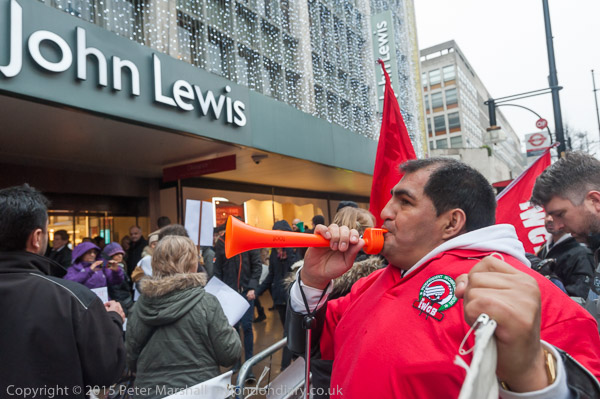
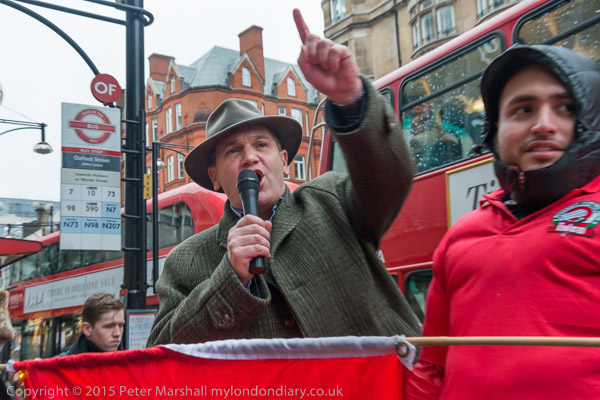
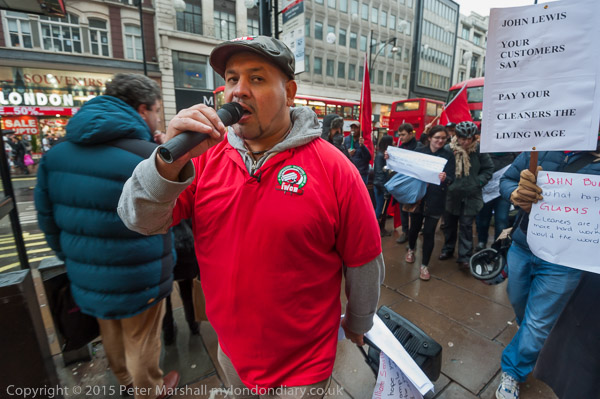
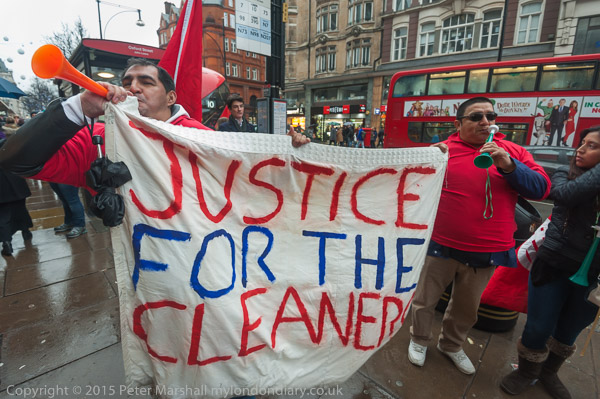
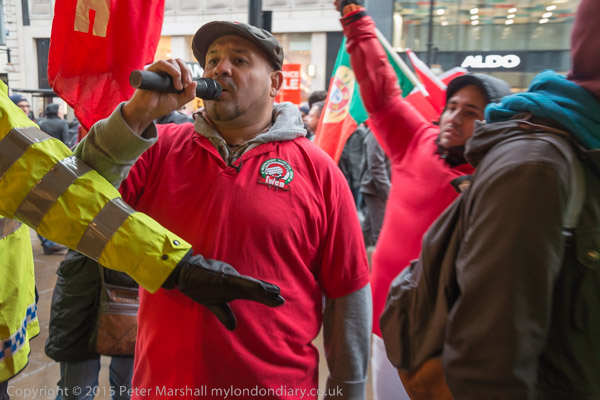
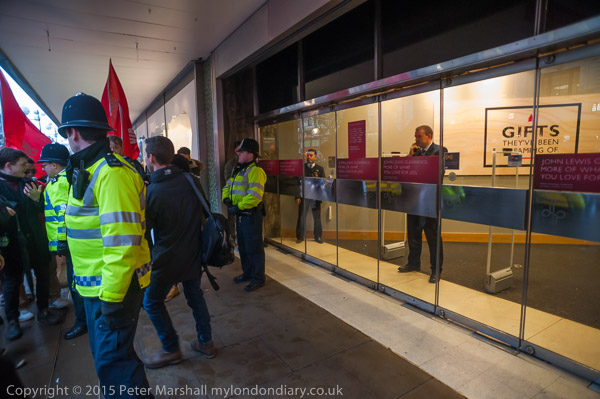
On Saturday 3rd January 2015 I met cleaners from the Cleaners And Facilities Branch of the IWGB (Independent Workers Union of Great Britain) outside John Lewis’s flagship Oxford Street store. They were there to hold a protest rally demanding the company lived up to its ethical reputation and paid the workers who keep the shop clean a living wage.

When John Spedan Lewis set up his small drapers shop on Oxford Street in 1864 he had the revolutionary idea of involving those who worked for him in the running and progress of the business, setting up a constitution that made all of them partners.

The ultimate purpose was expressed in Principle 1 of this consitution:

The happiness of all its members, through their worthwhile and satisfying employment in a successful business.
Because the Partnership is owned in trust for its members, they share the responsibilities of ownership as well as its rewards – profit, knowledge and power.

John Lewis Partnership

Green Party London Assembly member Jenny Jones, Baroness Jones of Moulsecoomb, speaking at the protest

But although staff on the counters and running other aspects of the business remain partners – and almost every year get an extra bonus payment as a share of the profits, the cleaners who work in the store who are not included in the scheme and say that in this and other respects they are being treated as second-class citizens.

Although the cleaners work in the store next to the John Lewis partners they are not employed by John Lewis. John Lewis pays a cleaning contractor to employ its cleaners, who get lower rates of pay and far inferior conditions of service than staff who are directly employed.

This lets John Lewis maintain the pretence of being an ethical employer while these people who work there get bullied, work under poor and often unsafe conditions, are paid less than a living wage and get only statutory minimum holidays and sick pay.

Mick Dooley of London TUSC

Neither John Lewis nor the cleaning contractor recognise the IWGB although a large majority of the cleaners belong to it, and neither had been willing to engage in talks about the dispute. John Lewis attempts to disclaim any responsibility for the cleaners, but the trade unionists and others who came to speak dismissed this as a a shallow attempt at deception. The work done by the cleaners takes place in the store and is essential to its running and should be properly recognised and paid.

In a protest before Christmas I had met with members of the IWGB in the restuarant at the top of the store and photographed an unannounced protest by them inside the store. This time was very different, with the protest being held on the wide pavement outside and given as much advance publicity as possible.

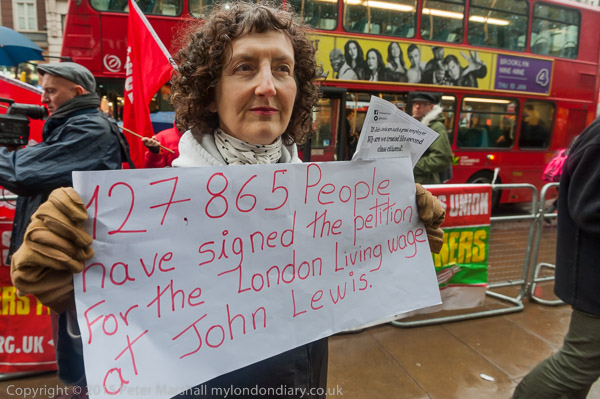
The union had received considerable support from John Lewis customers, with over 125,00 signing a petition calling on the company to live up to its ethical reputation and ensure that the cleaners are paid a living wage. Some of them came to protest with the union.

After speeches in front of the store on Oxford St, the protesters marched around the block containing the store which has entrances for shoppers on three sides. Although they arrived at some of these before the police and security they made no attempt to go inside, determined to avoid any trespass, though there were some arguments with police over a thin metal line in the pavement which marked the edge of the property.

Many shoppers on the street stopped briefly to find what the protest was about and most expressed support for the workers. The main doors to the store were closed by John Lewis security staff for much of the roughly an hour and a half protest.

Happy New YEAR? We Can Hope

London, UK. 1st May 2021. Several thousands held a rally in Trafalgar Square before marching past the Ministries of Justice, DWP and Education to the Home Office against the Police, Crime, Sentencing and Courts Bill which will ban effective protests, criminalising many and create new offences with heavy sentences, discriminating against Gypsy, Roma and Travellers and expanding racist stop and search powers. Peter Marshall

Happy New YEAR? We Can Hope. We can only hope 2022 will be a better year than 2021, though despite everything I found plenty to enjoy in the last year. But I’m not making any resolutions, other than to try and keep going as best I can.

Some Thoughts on 2021

The first few months, still under lockdown and largely isolating at home were dull. When a trip to the dentists is the highlight of your week you know there is something seriously wrong.

London, UK. 1st May 2021

But the vaccinations – my first at the end of January and the second in mid-April – were very welcome. I’ve no sympathy for those who refused them, their arguments are entirely specious – like those for not wearing masks – apart from a very small group with genuine medical reasons.

London, UK. 1st May 2021.

I was fortunate not to have more than a little soreness from the needle for the day or two after the injection. Though I was rather disappointed when a few weeks later a lateral flow blood test for antibodies gave a negative result, though these tests are apparently even less reliable than those for Covid – where I’ve been pleased so far to always get a negative.

London, UK. 1st May 2021.

But a couple of weeks after the second dose I felt confident enough – despite my advanced years and diabetes – to go up to London rather than miss another May Day. Although the official May Day March was cancelled there was a large protest taking place. The pictures here are all from that day.

London, UK. 1st May 2021

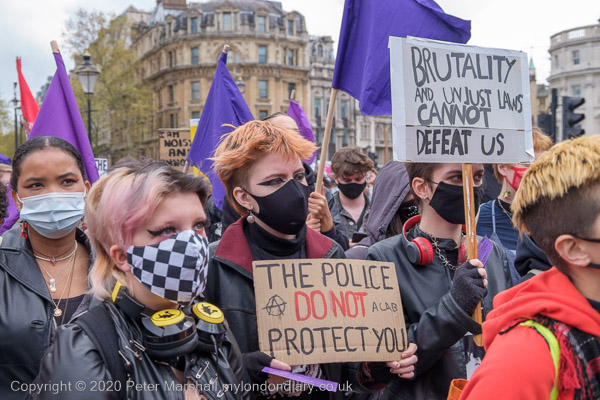
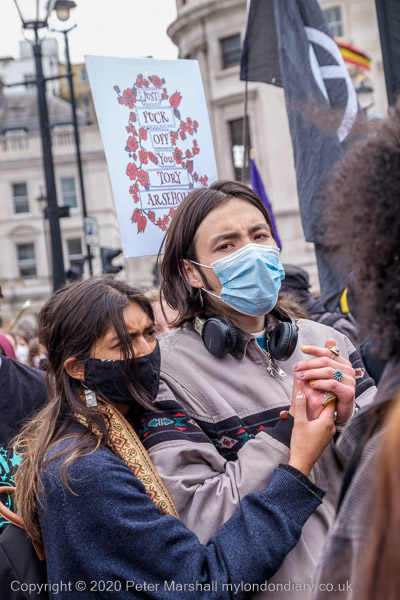
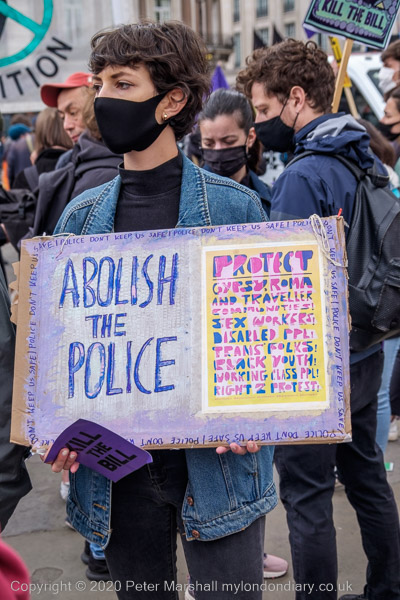
Of course I wore a mask – as did many of those in the protest against the Tory bill attempting to seriously limit our rights to protest also did, even though we were out of doors. It did after all get quite crowded on the streets. Even some of the police wore masks.

London, UK. 1st May 2021.

It was good then and on later days when I went up to London to meet many I’d not seen for over a year, though sad to remember there are some I won’t see again, largely victims of the Boris Johnson’s failures to bring in effective measures in time.

London, UK. 1st May 2021.

As the year went on I continued making occasional visits to London to photograph events, though many were still cancelled. I decided also to cut down on the number of events I attended, concentrating on those I felt more strongly about that were taking place on Saturdays, seldom covering things during the week. And although I’ve not posted these on my own web site, pictures are available on Alamy. You can go to my Alamy portfolio page to see them all.

London, UK. 1st May 2021.

I also began occasionally meeting socially with family and a few friends – though still rather cautiously and keeping in mind the need to avoid too much risk. We kept mainly outdoors and mainly ate in near-empty pubs.

But then came Omicron, since when things for me have rather closed down again, even though I got my booster early. We had Christmas and Boxing Day meals with only two of our immediate family and I’ve again stopped going to London.

London, UK. 1st May 2021.

On the plus side, the hiatus since early March 2019 has given me the time to get to grips with digitising and posting online many photographs from my early years – now almost to the end of 1992 with the black and white work. Now I have over 18,000 images on-line in albums on Flickr, mainly black and white images of London – but also Hull and Paris and a few other places, and some in colour.

London, UK. 1st May 2021.

So far those images have generated over 4.5 million views and a considerable amount of feedback, though rather to my surprise much of this has been about the cars on the streets in some pictures rather than the buildings or people I was photographing.

London, UK. 1st May 2021.

I think though I’ve not checked that I’ve also managed to put a post here on >Re:PHOTO for every day in 2021, something I can’t promise to do for 2022. It takes up quite bit of my time, though it helps that I can write the posts a day or two in advance and schedule them to be posted.


There are no adverts on this site and it receives no sponsorship, and I like to keep it that way. But it does take a considerable amount of my time and thought, and if you enjoy reading it, please share on social media.
And small donations via Paypal – perhaps the cost of a beer – would be appreciated.

Desperate Day For Gaza

December 27th 2008 was a desperate day for Gaza, when the Israeli military launched the beginning of a massive air attack on the small enclave. Operation Cast Lead had been six months in the planning and 100 pre-planned targets were struck in less than four minutes. The initial air attack was followed by others and on the 3rd of January 2009 with a ground attack. Israeli Defense Forces ended their attacks on 18th January 2009.

According to Wikipedia, the Israeli government stated was a response to weapons smuggling into Gaza and to Hamas rocket attacks on southern Israel with, according to the Israeli military 3,000 rockets hitting Israel over the whole of 2008 – despite a ceasefire agreement which held for around 5 months before an Israeli attack on a cross-border tunnel in Gaza in November. Rockets killed 8 people in Israel in 2008, four of them after the attack on Gaza began on 27th December.

Again according to Wikipedia (I’ve removed the 14 references to sources which you can find in the original);

A total of 1,100–1,400 Palestinians (295–926 civilians) and 13 Israelis were killed in the 22-day war.

The conflict damaged or destroyed tens of thousands of homes, 15 of Gaza’s 27 hospitals and 43 of its 110 primary health care facilities,800 water wells, 186 greenhouses, and nearly all of its 10,000 family farms; leaving 50,000 homeless, 400,000–500,000 without running water, one million without electricity, and resulting in acute food shortages. The people of Gaza still suffer from the loss of these facilities and homes, especially since they have great challenges to rebuild them.

Wikipedia

There is much more detail on the attack and its consequences, as well as on later attacks on Gaza in 2014, 2018 and 2021 on Wikipedia in articles including those cited above and there would be little point in going further into the details here.

There was a large protest in London against the attack early in January 2009, and I photographed this an other protests, including those the anniversary of the start of the attack on 27th December 2009, 2010, 2011 and 2012. There I’ve written more about the protests and with many more pictures, including pictures of Tony Benn, Jeremy Corbyn and many others speaking against the attacks and ongoing siege of Gaza.

January 2009 Gaza: Protest March from the BBC
December 2009 Remember Gaza
December 2010 London Vigil For Gaza
December 2011 End The Siege Of Gaza
December 2012 Gaza – End the Siege