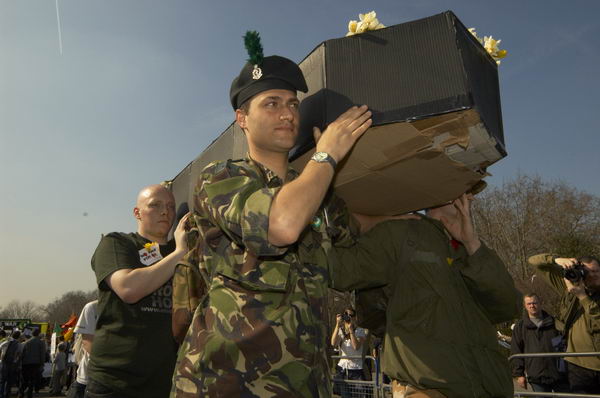
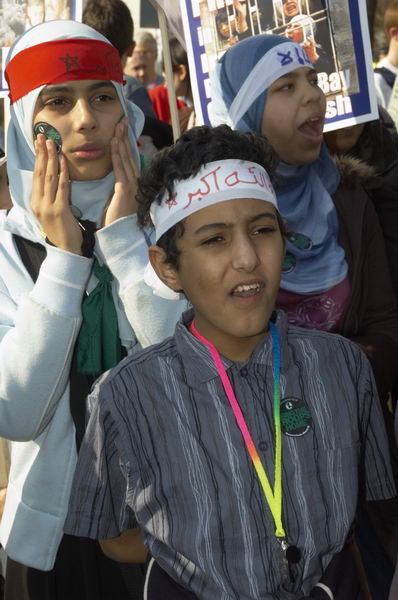
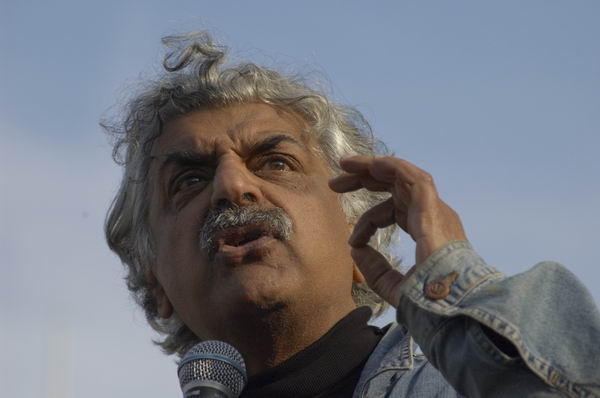
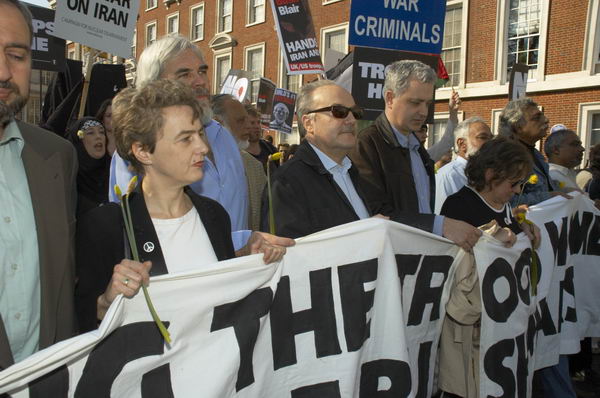
Make Poverty History – 2005

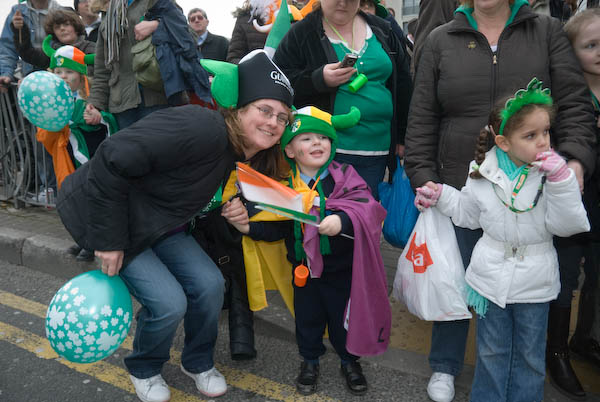
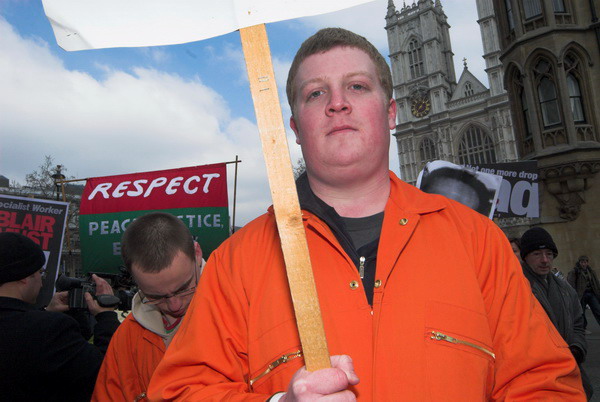
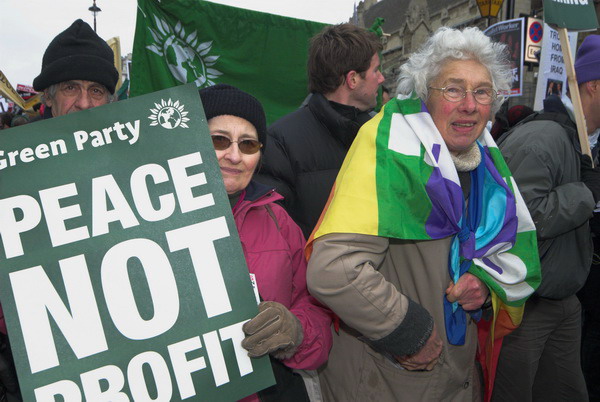
Make Poverty History: Twenty years ago on February 3rd 2005 I was one of the 20,000 or so people who packed Trafalgar Square on a Thursday lunchtime to see and hear Nelson Mandela speak in the first major real event in the UK’s ‘Make Poverty History’ campaign.

Make Poverty History - 2005

Make Poverty History was a coalition of charities, religious groups, trade unions, campaigning groups and celebrities which had come together here and in a dozen other countries around the world to promote trade justice, to cancel the debts that were crippling poorer countries and to press for more aid and for this to be better targeted at improving the lives of people in the recipient countries.

Make Poverty History - 2005

The campaign in the UK had officially been launched on TV on New Year’s Day on the same day that Britain took over the Presidency of the G8 – and in July was to host a G8 summit that was supposed to be largely about poverty in Africa, but this rally was the first major national event.

Make Poverty History - 2005

I’d severely misjudged the numbers that would turn up for the rally, arriving only minutes before it was due to start and was unable to make my way through a densely packed crowd to anywhere near where the the speakers – including Mandela would be speaking.

Make Poverty History - 2005

This was an occasion when a long and heavy fast telephoto lens would have come in handy, but I’ve never owned one of these, preferring whenever possible to work at close range. But the relatively small zoom lens I had with a focal length of 200mm and a maximum aperture of only f5.6 did just about allow me to take some recognisable images of what was happening on the stage in the distance.

It helped that Nikon was still sticking to its conviction that its DX format, a sensor half the size of a 35mm frame was all that was needed for digital photography, giving the lens on my D70 the equivalent view of a 300mm on full-frame.

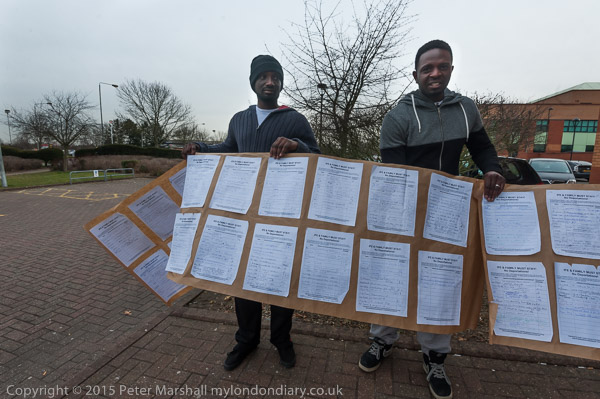
he ‘pills’ are a petition calling for urgent action on aids, to get 3 miilion people on treatment by 2005.

But I was please to have been able to capture some of the event – such as the handshake between Mandela and Bob Geldoff and children coming to meet Mandela, even if someone’s head got in my way a little of the time and those 6Mp images could perhaps have been just a little sharper.

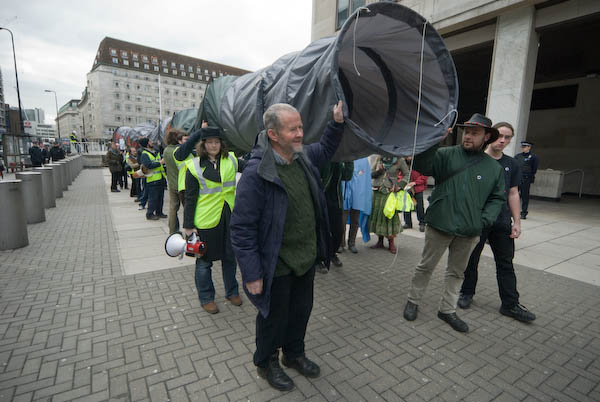
Mosquito nets can help stamp out malaria in Africa

Later I was able to return to focal lengths more in my comfort zone, with a fisheye to show the crowds and more normal wide-angle views of people in the crowds.

The only way to be photographed with Nelson Mandela at the Rally

The ‘Make Poverty History’ movement lasted in the UK until 31st Januarly 2006, though relations between some of the 540 groups involved were very difficult. Oxfam in particular was seen as far to keep to follow a ‘New Labour’ line and some other major NGOs were also often felt to be insufficiently radical. Even though these groups dominated the campaign the TV adverts which had been aired at the start were soon banned by Ofcom as they were deemed to be “‘wholly or mainly political’ in nature, since they aimed to ‘achieve important changes'” – surely the whole point of the campaign.

Clearly the campaign had begun to disturb the rich and powerful who were feeling their privilege and profits from impoverishing the poor might be at risk. But although the campaign raised awareness of the problems its actual achievements were rather limited.

Bust of Nelson Mandela, sculpted by Ian Walters, commisioned by the GLC to mark the 70th anniversary of the African National Congress in 1982, and unveiled by Oliver Tambo in 1985. It records Mandela’s imprisonment in 1962, with added inscriptions marking his release in 1990, the Nobel Peace prize in 1993 and his inauguration as the first president of a free South Afrrica in 1994.

You can read more about the event and seem many more pictures on My London Diary


FlickrFacebookMy London DiaryHull PhotosLea ValleyParis
London’s Industrial HeritageLondon Photos

All photographs on this page are copyright © Peter Marshall.
Contact me to buy prints or licence to reproduce.
Central Hill Estate – 2016

Central Hill Estate: Tuesday 2nd February 2016 was a bright winter day in London and i decided to go and take a look – and of course to photograph – the Central Hill Estate on the edge of Lambeth, which I had heard and read much about as Lambeth Coucil weree planning to demolish it.

Central Hill Estate - 2016

You can read an excellent account of the building of the estate by architect Kate Macintosh on the Twentieth Century Society website, which records the care taken by lead architect Rosemary Stjernstedt (1912-1998) and her team, who had previuosly been head-hunted by Lambeth’s Chief Architect and Planner Ted Hollamby.

Central Hill Estate - 2016

As well as planning to make the most of the steeply descending site with its extensive views across London the plans presevered as many as possible of the existing mature trees and included a Doctor’s group practice, a youth club, an old persons’ day centre and shops, open space, play areas, community buildings and a district heating system.

Central Hill Estate - 2016

The Twentieth Century Society also supported the two applications for the listing of this site, turned down in 2016 and again in 2021, although the reasons for the refusal seem increasingly spurious and I think based on political pressure rather than architectural evidence.

Central Hill Estate - 2016

I wrote about it at some length after my visit in February 2016 on My London Dairy and have visited it again on several occasions since, not lease to see the exhibition of alternative plans to meet Lambeth Council’s stated objectives for the demolition and rebuildling by careful and much lower cost development on the existing estate which would retain its essential excellent design.

Here I’ll quote a part of what I wrote then, beginning with my introduction.

“There is only one real problem with the Central Hill Estate in Upper Norwood. Which is that the estate, owned by Lambeth Council, was built in an age when architects and planners were proud to design the best they could and councils keen to house their tenants to the highest standards, but it has lasted into an age where government policy aims to get rid of all social housing and councils are out to join developers in profiting from redeveloping with lower standards and higher densities for private sale.”

“The whole is on a much more human scale than other large developments of the era, with a design that has proved successful in encouraging community. People like living on the estate and all I talked to when walking around taking pictures were very positive – except for the one council employee who came out from the upper Norwood Community Resource Centre to ask me what I was doing. “

“A survey answered by 150 residents recently found only two in favour of it being demolished. It has been a safe place to live, with below average crime levels – perhaps having the police station at its south-east corner has helped.”

“Like all social housing, the estate has suffered from neglect and poor maintenance, and the properties need refurbishment and bringing up to modern energy standards. Considering the age of the estate the cost per dwelling assessed by Lambeth Council is relatively moderate and only a fraction of that of new building.”

You can read the alternative proposals by Architects for Social Housing – Simon Elmer and Geraldine Dening – prepared for the residents of Central Hill estate between May 2015 and March 2017 in response to the threat of demolition of 456 homes on the estate by Lambeth Labour Council.

In the introduction to the ASH report they write “However, there is nothing, either in current government legislation or in the housing policies of the Conservative, Labour or Liberal Democrat parties, that will stop councils from following the same practices Lambeth council employed to push through their plans to demolish Central Hill estate against both the wishes of residents and the demonstrable social, financial and environmental benefits of the design alternatives.” Lambeth Council refused to seriously consider their alternative suggestions.

Little has changed since then although we are now much more aware of the environmental impacts of demolition and rebuilding, and some greater lip-service was been paid the the “wishes of residents“, but the changes in planning recently announced by Labour had they been in place back in 2016 would almost certainly have meant that Central Hill would not now still be standing.

The fight to save Central Hill continues, with the Facebook Group ‘Save Central Hill Estate‘.

You can read more and see many more pictures – it was an estate I found hard to stop photographing – at Central Hill Estate.


FlickrFacebookMy London DiaryHull PhotosLea ValleyParis
London’s Industrial HeritageLondon Photos

All photographs on this page are copyright © Peter Marshall.
Contact me to buy prints or licence to reproduce.


Turnham Green – 1989

Turnham Green – 1989: The second post on my walk which began at Kew Bridge Station on 10th of December 1989. The previous post was Kew Bridge & Gunnersbury 1989.

Empire House, Chiswick High Rd, Turnham Green, Hounslow, , 1989 89-12a-64
Empire House, Chiswick High Rd, Turnham Green, Hounslow, 1989 89-12a-64

It might be thought odd that this tall office building which was built starting in 1959 should have been called Empire House, when the British Empire was almost completely gone, but the Empire from which this tower got its name was the Chiswick Empire, built for theatre owner and manager Oswald Stoll at 414 Chiswick High Road, replacing some shops and a smithy which opened in 2012.

The architect was the leading theatre architect Frank Matcham and it was a grand example of the Edwardian ‘Jacobean’ style. Built to seat 4,000 it featured mainly variety shows, but also more serious theatre and perhaps was in its heyday in the 1940s and early 50s. Wikipedia has a great list of some of those who appeared in its final years “Tommy Cooper, Max Miller, Max Bygraves, Julie Andrews, Morecambe and Wise, Ken Dodd, Max Wall, Dickie Valentine, the Ray Ellington Quartet, Peter Sellers and Dorothy Squires (1952), Laurel and Hardy on a return visit (1954), Al Martino, Alma Cogan, Terry-Thomas (1955) and Cliff Richard (1959).” Cliff wasn’t quite the man who brought the house down, with the final shows being by Liberace with the theatre being demolished within a month of his stepping away from the piano.

I don’t know who was the architect responsible for Empire House. It has recently been bought and redeveloped into flats and town houses.

Sandersons Wallpaper. Factory, Barley Mow Passage, Turnham Green, Hounslow, 1989, 89-12a-52

This elegant wallpaper factory was designed by C F Voysey and built in 1902. It was the only commercial building designed by the celebrated Arts & Crafts architect and designer and is Grade II* listed.

Arthur Sanderson & Sons Ltd, now just Sanderson, was founded in Islington in 1860 and made fabrics and wallpaper. The company came to Chiswick in 1879 and this building was an extension on the other side of the road to their earlier factory, built in 1893. After a fire in 1928, the company moved to Perivale selling off the Voysey building. They had also built a factory in Uxbridge in 1919 to produce fabrics. Sandersons moved back to into the Voysey building in 2024.

Sandersons had bought the business of Jeffrey & Co who had printed William Morris’s wallpapers and in 1940 when Morris & Co dissolved they also bought the rights to use the Morris name.

House, Dukes Avenue, Turnham Green, Hounslow, 1989, 89-12a-41

Dukes Avenue runs south from Turnham Green towards Chiswick House. Lord Burlington’s grandson was able after the Chiswick enclosures act of 1814 to build the road from his estate to Chiswick High Road. The road is lined with lime trees.

Houses along here seem seldom to be sold, but one went recently for over £3 million. Most appear to be large, solid and Edwardian but of no great interest.

Gateway, House, Dukes Avenue, Turnham Green, Hounslow, 1989, 89-12a-42
Devonshire Works, Dukes Avenue, Turnham Green, Hounslow, 1989, 89-12a-43

This former Sandersons factory, the “Devonshire works”, was used for light engineering in the 1960s by Evershed & Vignoles of Acton Lane. From 1971 it stood empty until restored by the Cornhill Insurance Co. as the Barley Mow Workspace, for individuals or small firms of designers or craftsmen, the first of whom arrived in 1976.”

Devonshire Works, Dukes Avenue, Turnham Green, Hounslow, 1989, 89-12a-44

After Lord Burlington who built Chiswick House died the property was inherited by the Dukes of Devonshire. I think this works probably dates from 1893.

Chiswick Memorial Club, Afton House, Bourne Place, Turnham Green, Hounslow, 1989, 89-12a-45

Afton House, built around 1800 is the only remaining example of the grand houses which were bilt in around 1800 along Chiswick High Road, and it Grade II listed. In the 1850s it was called Falkland House and was a school, but was renamed Afteon House in 1861. From then until 1887 it remained a school but then became a laundry until 1913. Empty and bcoming derelict it was bought in 1919 by Dan Mason of the Chiswick Polish Company (best remembered for their Cherry Blossom Shoe Polish) and given as a club for ex-servicemen.

Linden Gardens, Chiswick High Rd, Turnham Green, Hounslow, 1989, 89-12a-34

Dr Ralph Griffiths who founded the Monthly Review and edited it for 50 years was one of the many “noble, artistic and scholarly residents” of the area in the 18th century and he lived in Linden House where Linden Gardens now is. He was a London bookseller and publisher Ralph Griffiths, with “bookshops at St. Paul’s Churchyard from 1747 until 1753, then at 20 Pater Noster Row until 1759, and finally on the Strand near Catherine Street until 1772 – all under the sign of the Dunciad.”

Griffiths was notably involved in the 1746 publication of Acanius or the Young Adventurer, a fictionalized account of the Young Pretender, and may have been its author. The government attempted unsuccessfully to suppress the book and it remained in print for over 150 years.

Chiswick Fire Station, Chiswick High Rd, Turnham Green, Hounslow, 1989, 89-12a-36

Chiswick Fire Station at 197 Chiswick High Road is an elegant building with a tower and is now a bar and restaurant. It was for sale when I made this picture. Built in 1891 the tower at right was used to hang up fire hoses to dry and also to store the long fire escape ladder. A new fire station was built in 1963 and this became redundant.

War Memorial, Turnham Green, Hounslow, 1989, 89-12a-26

Erected in 1921 ‘In grateful and affectionate memory of the men of Chiswick who fell in the Great War, 1914 – 1918’ this simple obelisk is a rather plain reminder of their sacrifice designed by Edward Willis FSI, Engineer and Architect to the Chiswick Urban District Council. More names were added after the Second World War. There seems to be little reason to justify its Grade II listing

I walked on to Bedford Park. More from there in a later post .


FlickrFacebookMy London DiaryHull PhotosLea ValleyParis
London’s Industrial HeritageLondon Photos

All photographs on this page are copyright © Peter Marshall.
Contact me to buy prints or licence to reproduce.


Kew Bridge & Gunnersbury 1989

Kew Bridge & Gunnersbury 1989: I didn’t get our for a walk again in 1989 until the 10th of December, probably partly because of the weather with drizzle, mist, fog and some very cold days. But it was just a little warmer and I decided to go out. But at this time in London sunset is before 4pm and so I decided to take pictures fairly close to home so I could make an earlier start. Kew Bridge station is only around a half hour journey from my home.

Brentford, from Footbridge, Kew Bridge Station, Kew Bridge, Hounslow, 1989 89-11i-42

I made my first picture from the footbridge in the station taking me to the station exit. As you can see the station buildings were in pretty poor condition. The view includes the local landmark water pumping tower and the top of the engine house of Kew Bridge Engines, opened as a remarkable museum in 1975 (now renamed as London Museum of Water & Steam) and the tower blocks further down Green Dragon Lane. Six 23 storey blocks were built here as the Brentford Towers Estate in 1968 to 1972 by the London Borough of Hounslow.

Green Dragon Lane apparently got its name from a 17th century pub but there appears to be no record of where this was, though there are or were around 40 other pubs of that name elsewhere in the country. The name is usually thought either to have come from the Livery Badge worn by servants of the Herbert family, the Earl of Pembroke, which showed a bloody arm being eaten by a dragon or a reference to King Charles II’s Portuguese Catholic queen, Catherine of Braganza whose family badge was the Green Wyvern.

Kew Bridge station gets rather crowded at times now, as Brentford’s new football stadium is next door.

Spenklin House, Gunnersbury Avenue, Gunnersbury, Hounslow, 1989 89-11i-46

I walked up to Gunnersbury Avenue where on the north-east corner of the Chiswick roundabout was this magnificently derelict former works of Spenklin Ltd. They appear to have made Power-operated work clamping devices and other engineering tools including boosters, clamps, cylinders and hydraulic ram heads. The company name was a contraction of Spencer Franklin. I think the next factory along – demolished by the time I took this – had been Permutit water softeners.

I think this building probably dates from around 1925 when the Brentford Bypass – soon better known as the Great West Road – was opened. The roundabout here came later along with its flyover in 1959.

Spenklin House, Gunnersbury Avenue, Gunnersbury, Hounslow, 1989 89-11i-31

A closer view of the entrance with its boards showing it had been acquired by Markheath Securities PLC a London property developer, though 49 per cent owned by The Adelaide Steamship Co Ltd. They appear to have been responsible for several developments in the area and to have made Section 106 contributions to Hounslow Council for improvements to nearby Gunnersbury Park.

National Tyres, Gunnersbury Avenue, Gunnersbury, Hounslow, 1989 89-11i-33

My memory – often false – tells me that this was on the west side of Gunnersbury Avenue (the North Circular Road) to Spenklin House and I think is probably from the same era. At least it is clear what the business of the National Tyre Service was and the building has a rather fine squad of Michelin men.

Chiswick Rd, Acton Lane, Chiswick Park Station, Chiswick Park, Houslow, Ealing, 1989 89-11i-36

Quite a long walk along Chiswick High Road took me to Acton Lane where I took this picture on the corner of Chiswick Road. A station was built here in 1879 when the District Railway was extended from Turnham Green to Ealing Broadway, but clearly that in the distance here is from the 1930s.

On the corner we have a rather unremarkable post-war building but with some rather remarkable Christmas decorations. The long shop front is now divided into separate shops.

Chiswick Park Station, Chiswick Park, Ealing, 1989 89-11i-23

A closer view of Chiswick Park Station, one of many characteristic stations by architect Charles Holden for London Underground and built in 1931-2. Holden’s first complete Underground stations were built on the Northern Line southern extension from 1926, but he later designed many more. This station remains almost as it was built and shares its features with many of his others. It was Grade II listed in 1987.

Chiswick Park Station, Chiswick Park, Ealing, 1989 89-11i-1

The interior of the tall drum-shaped ticket hall with a shop, Midas Gold Exchange at right. Useful signs above the exit tell the way to buses and to Acton Green, while the lower advertising panels are all for Underground posters. The Underground were pioneers in various ways in advertising – not least in the tall tower at this and other stations whose main if not only purpose was to carry their branding with the trade-mark roundel and station name.

I think the brick building at left which I think housed the ticket office was perhaps a later addition to the building which otherwise has been altered little.

To be continued.


FlickrFacebookMy London DiaryHull PhotosLea ValleyParis
London’s Industrial HeritageLondon Photos

All photographs on this page are copyright © Peter Marshall.
Contact me to buy prints or licence to reproduce.


Housing and Planning Bill March – 2016

Housing and Planning Bill March: On Saturday 30th January 2016 housing activists including some local councillors and housing activist groups mainly from South London including Class War marched from the Imperial War Museum to Downing St in a protest organised by Lambeth Housing Activists against the Housing and Planning Bill.

Housing and Planning Bill March - 2016

They say the bill will have a particularly large impact in London and greatly worsen the already acute housing crisis here.

Housing and Planning Bill March - 2016

Speeches at the rally before the march in Geraldine Mary Harmsworth Park at the side of the Imperial War Museum by Green Party Leader Natalie Bennett and an number of housing activists including Simon Elmer of Architects for Social Housing were warmly applauded.

Housing and Planning Bill March - 2016

But there was one exception; when Southwark Council Cabinet Member for Housing Richard Livingstone the atmosphere changed, with boos and loud heckling from several people in the crowd including Elmer.

Housing and Planning Bill March - 2016
Simon Elmer shouts as Richard Livingstone speaks

The arguments continued in the crowd after Livingstone had left the platform with Elmer pointing out the scandal over the demolition of the Heygate Estate and now the Aylesbury estate, where thousands of council homes have been demolished and few of the promises made by Southwark Council have been kept.

Housing and Planning Bill March - 2016

Financially and morally Heygate was a scandal, with the council making derisory offers of compensation to leaseholders, far less than the value of comparable properties in the area and a huge loss of social housing, while getting rid of a huge public asset at a fraction of its true value. And since it was something the council seemed determined to repeat, and it is not surprising that feelings ran high.

Rather to the surprise of many the march set off walking in the opposite direction to its final destination of Downing Street, and it soon became clear that we were on a tour of Lambeth rather than taking a direct route.

“Class War decided to liven things up a little, first by dancing along the street singing the ‘Lambeth Walk’ and then by rushing across the pavement towards a large estate agency.

Police formed a line to stop them entering and they stood outside for some minutes with their banners – the field of crosses with the message ‘We have found new homes of for the rich’ and the Lucy Parsons banner with its quotation “We must devastate the avenues where the wealthy live” before rejoining the march.”

For much of the march Lisa Mackenzie who had stood at Class War’s candidate in the 2015 General Election against Iain Duncan Smith in Chingford stood in front of the banners waving a plastic trident with a small banner ‘This Bill is the end of Council Housing’ with its second message an image of David Cameron and the alternative text ‘Bell End’. At times she donned a face mask of Smith.

Eventually the march reached Downing Street where police tried to direct them to the opposite side of Whitehall, but the marchers walked past them and crossed back to protest outside the gates, blocking traffic on Whitehall.

Here there were several groups listening to speakers and a samba band playing. Eventually police persuaded most of them to leave the road and I left for home.

More pictures at Housing and Planning Bill March.


FlickrFacebookMy London DiaryHull PhotosLea ValleyParis
London’s Industrial HeritageLondon Photos

All photographs on this page are copyright © Peter Marshall.
Contact me to buy prints or licence to reproduce.


1995 Colour Part 4 – Around Dartford

1995 Colour Part 4 – Around Dartford: More of my panoramic images. These were taken in and around Dartford in Kent in March 1995 on a walk which took me from the centre of the town and along by the River Thames to an area close to the QEII Dartford Bridge. All these were taken on Sunday 19th March 1995. Dartford is a part of the Thames Gateway area around the Thames Estuary.

Dartford

Gasholder, Hythe St, Victoria Rd, Dartford, 1995, 95p03-531

I walked up Hythe Street and then turned right to a path that led me to a bridge across Dartford Creek.

Bridge, Dartford Creek, Nelsons Row, Dartford, 1995, 95p03-533

Dartford Creek is the tidal creek of the River Darent and was once important navigable creek to wharves in the centre of Dartford. Work has now been going on for years to restore the half-lock and make the creek navigable again. I made more panoramic images along the footpath beside the creek later in the year, but on my first visit was keen to get to the River Thames and left the Creek to walk up Joyce Green Lane and Marsh Street to the River Thames.

Littlebrook

Littlebrook Power Station, Dartford Bridge, QEII Bridge, River Thames, Dartford, 1995, 95p03-612

The first power station at Littlebrook was coal fired and opened in 1939 and was joined by a second in 1949 and a third in the 1950s with the final station Littlebrook D shown here opening in the 1980s. The earlier stations had been converted to burn oil by 1958 and were all decommisioned by 1981 when the final station began to be put into use. This continued to produce power until 2015 and was finally demolished in 2019. You can read much more detail on Wikipedia.

River Thames, Dartford Bridge, QEII Bridge, Dartford, 1995, 95p03-631

Google’s map now shows Littlebrook Beach as a ‘tourist attraction’ but I’m fairly sure I was the only person there on the day I made this picture.

Jetty, Littlebrook Power Station, Dartford Bridge, QEII Bridge, River Thames, Dartford, 1995, 95p03-643
Littlebrook Jetty, Dartford Bridge, QEII Bridge, River Thames, Dartford,  1995, 95p03-661
Littlebrook Jetty, Dartford Bridge, QEII Bridge, River Thames, Dartford, 1995, 95p03-661
National Power, River Thames, Dartford, 1995, 95p03-663

Crossways

As I walked along the path beside the river taking these and rather more black and white images I kept looking for a gate or gap in the fence betweent the riverside path and Crossways I could go through, but there was none. It was only when I got to Stone Marshes that I was able to leave the river and then walk along St Mary’s Road and into Crossways Business Park.

Warehouse, Crossways Business Park, Crossways, Dartford, 1995, 95p03-873

The area has been considerably expanded now, with a new major road to Greenhithe as well as new housing and commercial development.

Lake, Crossways Business Park, Crossways, Dartford, 1995, 95p03-733

The lake now has much new development around it, including a pub, The Wharf on Galleon Boulevard, close to where I made these pictures

Lake, Crossways Business Park, Crossways, Dartford, 1995, 95p03-721
Lake, Crossways Business Park, Crossways, Dartford, 1995, 95p03-723

I walked back into Dartford taking quite a few more black and white images but no more panoramas. The black and white pictures from this walk start here.


FlickrFacebookMy London DiaryHull PhotosLea ValleyParis
London’s Industrial HeritageLondon Photos

All photographs on this page are copyright © Peter Marshall.
Contact me to buy prints or licence to reproduce.


On the IWGB ‘3 Cosas’ Battle Bus – 2014

On the IWGB ‘3 Cosas’ Battle Bus: On Tuesday 18th January 2014 I got up uncharacteristically early and joined a packed rush hour train into London, something I usually like to avoid. The bus to Russell Square was also slow, held up in busy traffic, but even so I joined the morning picket at the east gate to the entrance to the Senate House car park before 9am and was taking pictures.

On the IWGB '3 Cosas' Battle Bus - 2014
On the picket line at Senate House: Daniel Cooper, Vice-President, ULU, IWGB Branch Secretary, Jason Moyer-Lee and Branch Chair, Henry Lopez.

It was a bright winter morning, but not much above freezing and not the kind of day anyone sensible would go on an open-top bus ride around London, and though I’d layered up well for the event it was still chilling.

On the IWGB '3 Cosas' Battle Bus - 2014

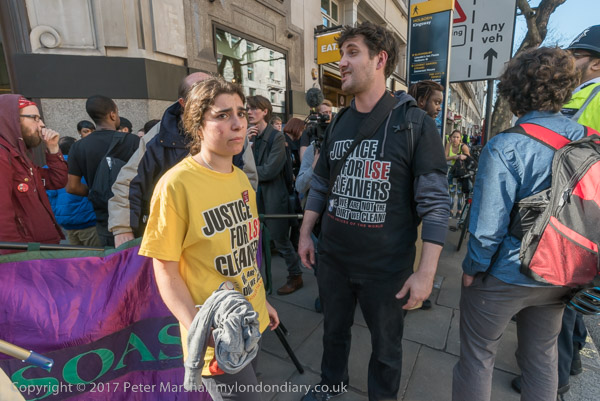
But those on the picket line on the second day of the 3 day strike by the IWGB for union recognition and better conditions had already been there since 5am, beginning while I was still sleeping in a warm bed and were still in good spirits. Cleaners, maintenance and security staff who work in the University of London were joined by student leaders and students from the University. Of course many of the workers would normally have been at work in the early hours.

On the IWGB '3 Cosas' Battle Bus - 2014

Although these workers work at the university and carry out work essential for the running of the university, the university does not employ them. Most low paid workers – cleaners, maintenance and security staff, catering workers and others – at the University of London are no longer directly employed by the University, but work in the University on contracts from contractors.

On the IWGB '3 Cosas' Battle Bus - 2014

Outsourcing these workers enables the University to evade its responsibilities towards this essential part of their workforce who suffer from poorer conditions and pay and aggressive management from the contractors that any responsible employer would be ashamed to implement. Most were only getting the legal minimum in terms of pay, pensions, sick pay and holidays, well inferior to comparable fellow workers directly employed by the University.

On the IWGB '3 Cosas' Battle Bus - 2014

In the past these precarious employees had belonged, if at all, to traditional unions such as Unison, who had taken their fees but done nothing to improve their conditions, often seeming to them to only be concerned in keeping the differential between those on the lowest pay and higher paid staff.

On the IWGB '3 Cosas' Battle Bus - 2014

It was only when these workers, many of them Spanish-speaking, joined the newly formed grass roots union, the Independent Workers’ Union of Great Britain, that they were able to achieve some gains thanks to noisy public protests and strong negotiating by the union which by 2013 had won them the London Living Wage, considerably more than the national minimum wage. They achieved this despite both the University of London and the employers refusing to recognise the IWGB, continuing to recognise the more compliant Unison to which few if any of these workers belonged.

In 2013, having won the London Living Wage and started the now famous 3 Cosas or “three things” campaign for sick pay, holiday pay and pensions, as well as continuing to press for union recognition.

Daniel Cooper & Alberto Durango

This 3-day strike, following another strike the previous November, was the latest action in this campaign. Union recognition was particularly important for those working at the Garden Halls of residence in Bloomsbury which the university was intending to close in the coming Summer. The IWGB was demanding these workers be given priority for vacancies that arise elsewhere in the university, with preference being given to those with the longer periods of service, but the employers were refusing any cooperation.

Waiting for us in the driveway was an open-top bus, and after I had been there around an hour most of the strikers and supporters boarded this ‘battle bus’ to go on a protest tour of various sites in London, with just a small picket remaining. I had been invited to go with them on top of the bus to take photographs.

“The sun shone on the workers as the bus drove away, followed by a group of student supporters on bicycles. I was on the upper deck taking photographs as the workers waved their red IWGB flags, chanted and listened to IWGB Branch Secretary Jason Moyer-Lee, Branch Chair Henry Lopez, President of the Independent Workers of Great Britain Alberto Durango, Branch Vice-Chair and leading member of the 3 Cosas Campaign Sonia Chura and University of London Union Vice-President Daniel Cooper as they used a powerful public address system to address the public and workers about the fight for union recognition for the IWGB and comparable conditions of service with directly employed University of London workers for outsourced workers at the university.

In between the various speeches and chants, including some in both Spanish and translated into English, there was loud music to draw attention and also to keep the strikers happy.”

The first stop was in Cartwright Gardens outside the University’s Garden Halls of residence where there were several speeches from the top of the bus. Somehow we went on to drive past the Unison headquarters on Euston Road in both directions, to booing from many of the workers, and on the second pass an IWGB flag was caught in the branches of a tree and left flying in front of the Unison building.

The route had been planned to stop outside the offices of The Guardian, but it, like most London buses, was running late due to traffic congestion, and it continued on to go very noisily through Trafalgar Square and down Whitehall, before a complete circuit of Parliament Square before stopping to let us get off outside the Supreme Court.

There was then a rally on the pavement in front of Parliament, with short speeches by Labour MPs John McDonnell, Andy Burnham and Jeremy Corbyn who had come out to join us.

We marched to the Embankment and boarded the bus again for a short journey, leaving the bus just around the corner from the Royal Opera House, where everyone kept quiet as we approached the building and then rushed in. The IWGB had been campaigning there for some time for the London Living Wage.

This is another workplace where the management had refused to recognise and have talks with the IWGB, preferring to recognise Unison. The IWGB were confronted there by the Unison Health & Safety rep who told them the management had now agreed to pay cleaners the Living Wage but hadn’t yet told them. Doubtless this was another victory for the protests by the IWGB, though of course he refused to acknowledge this.

We piled back onto the bus and went to the offices of the new employer of the outsourced workers, Cofely GDF-Suez, who had taken over from Balfour Beatty Workplace in December. Police were there and the front and back gates were both locked. The workers held a brief rally outside the gate in Torrens Place.

I was invited to go back on the bus to a late lunch with the workers at the Elephant & Castle – but it was already after 2pm and I didn’t relish the thought of another long bus ride. So I said goodbye and began my journey home to work on and file some of the many pictures I had taken over the day.

You can read more about this in posts on My London Diary, where there are also many more pictures.
‘3 Cosas’ Strike Picket
3 Cosas’ Strike Picket and Battle Bus
IWGB at Parliament
IWGB in Royal Opera House
IWGB at Cofely GDF-Suez


FlickrFacebookMy London DiaryHull PhotosLea ValleyParis
London’s Industrial HeritageLondon Photos

All photographs on this page are copyright © Peter Marshall.
Contact me to buy prints or licence to reproduce.


Slavery, Aninal Cruelty & Turkey Attacks Rojova – 2018

Slavery, Aninal Cruelty & Turkey Attacks Rojova: Protests in London on Saturday 27th January 2018 against migrants being sold as slaves in Libya, the continuing cruel trapping of animals to use in clothing sold by Canada Goose and the attacks by the Turkish army on Kurdish areas of North Syria.


End UAE support for slavery in Libya – UAE Embassy

Slavery, Aninal Cruelty & Turkey Attacks Rojova - 2018

African Lives Matter and the International Campaign to Boycott UAE protest at the UAE Embassy in London against the funding by the the United Arab Emirates of armed Groups in Libya which imprison, torture and kill African migrants and sell them as slaves.

Slavery, Aninal Cruelty & Turkey Attacks Rojova - 2018

The protest also called for an end of the human trafficking of African migrants to and from Dubai and for help to be given for slavery victims in Dubai to return to their families in Africa.

Slavery, Aninal Cruelty & Turkey Attacks Rojova - 2018

This turned out to be a fairly small protest, although the police had obviously planned for something much larger and I had expected more after earlier protests over the issue.

End UAE support for slavery in Libya


Canada Goose protests continue – Regent St

Slavery, Aninal Cruelty & Turkey Attacks Rojova - 2018

Protesters were again outside the Canada Goose flagship store in Regent St asking shoppers to boycott the store because of the horrific cruelty involved in trapping dogs for fur and raising birds for down used in the company’s clothing.

The company had obtained an injunction to try to prevent protests, but this had been amended in the previous month to allow more protesters and to enable them to use loud hailers between 2pm and 8pm. They were now carrying out weekly protests on Saturdays as well as occasional protests during the week.

Finally in 2022 Canada Goose announced it would stop purchasing new fur from trappers and transition to using reclaimed fur, though it seems unclear whether they have achieved their goal. The company is apparently still selling garments made with its large stocks of trapped fur and continuing to use feathers from geese and ducks which campaigners allege are plucked from live birds.

Canada Goose protests continue


Defend Afrin, stop Turkish Attack – BBC to Downing St

Several thousand people, mainly Kurds, marched through London from outside the BBC to a rally opposite Downing St, calling for an end to the attacks by Turkish forces on the Afrin Canton of Northern Syria, now a part of the Democratic Federation of Northern Syria (DFNS) or Rojava, a de facto autonomous region in northern Syria.

Many see Rojava with a constitution based on a democratic socialism which treats all ethnic groups as equal and women as equal to men as a model for a future federal Syria, although it seems unlikely to find favour with Hay’at Tahrir al-Sham.

Turkey is the second largest military force in NATO, second only to the USA and appeared to be using its position in NATO and the threat of closer relationships with Russia to eliminate the Kurds on its borders, who it alleges are a part of the PKK, the Kurdistan Workers’ Party, a Kurdish nationalist organisation regarded by Turkey and its allies as a terrorist organisation which was proscribed by the UK in 2001.

Kurds are around 15-20% if the population of Turkey, its largest ethnic minority and were violently suppressed following the establishment of the Republic of Turkey in 1923, with a number of massacres and a continuing attempt to erase their language and culture. Even the words “Kurds” or “Kurdistan” were banned and in 1980 their languages were banned, with those found using them arrested and imprisoned. It remains illegal to teach using Kurdish in schools in Turkey.

Kurdish forces,aided by US air support played a major role in the defeat of ISIS in Syria. Eventually the Turkish attacks on Afrin were halted after the Kurds in Rojava reached an agreement with the Syrian army to aid them in the defence of Syria. Further Turkish encroachment into Syria was prevented by the setting up of the Second Northern Syria Buffer Zone, part of the Sochi Agreement, in 2019.

Turkey encouraged ISIS in Syria as a part of their attempts to remove Kurdish influence in the areas close to their borders. Sales of oil smuggled through Turkey with the connivance of leading figures in the Turkish government provided most of the funding for ISIS.

The marchers met at the BBC who they say has failed to report over many years on Turkish atrocities and their genocidal attacks on the Kurds before marching to Downing Street.

Police apparently seized a number of PKK flags before the start of the march, though I did still spot one when the marchers reached Downing St. Kurds largely view the PKK as a nationalist rather than terrorist organisation and there were many flags with the image of the PKK’s long imprisoned leader Abdullah Öcalan. His nickname ‘Apo’ means uncle in Kurdish. It was his reading and thinking during long years of solitary confinement that led to the new thinking in the constitution of Rojava.

I listened to a few of the speeches at Downing Street before leaving for home and you can see many more pictures of the march and some of the speakers on My London Diary.

Defend Afrin, stop Turkish Attack


FlickrFacebookMy London DiaryHull PhotosLea ValleyParis
London’s Industrial HeritageLondon Photos

All photographs on this page are copyright © Peter Marshall.
Contact me to buy prints or licence to reproduce.


Students, World Service, Kashmir & Dr Sen – 2011

Students, World Service, Kashmir & Dr Sen – 2011: On Wednesday 26th January 2011 the Education Activist Network had called for students to come to a protest in Trafalgar Square against education cuts. But it wasn’t clear what they intended to do and few had bothered to come. In the end most of them decided to go to join the NUJ protest against cuts in the BBC World Service at Bush House which I had also been intending to go to. And since it was India’s Republic Day there were also a couple of protests outside the Indian High Commission a few yards down the road from there.


Student Day of Action – Trafalgar Square

Students, World Service, Kashmir & Dr Sen - 2011

The event organisers, the Education Activist Network who describe themselves as “group of educationalists, lecturers, and students who campaign against cuts in adult, further and higher education” had called on students to walk out of their schools and colleges and come to a protest in Trafalgar Square, but there appeared to have been little planning about what would then happen.

Students, World Service, Kashmir & Dr Sen - 2011

Fewer than a hundred had turned up and there were a couple of literature stalls collecting petition signatures and selling the Socialist Worker etc there appeared to be just one man with a megaphone. Several others came up and made short speeches against the cuts and a Heritage Warden and myself took some photographs but nobody knew what to do next.

Students, World Service, Kashmir & Dr Sen - 2011

A few people stood around holding Socialist Worker placards with the message F**K FEES – Save EMA – Free Education and others. After some discussion most decided to march to Aldwych where the NUJ were holding a protest I had planned to photograph against cuts in the BBC World Service’.

Student Day of Action


Save the BBC World Service – Bush House, Aldwych

Students, World Service, Kashmir & Dr Sen - 2011

Bush House was built overlooking Kingsway as a major new trade centre for American industrialist Irving T. Bush, who approved its designs in 1919 but this imposing Portland Stone Grade II listed “most expensive building in the world” was only finally completed in 1935. A few years later in 1941 it became used by the BBC and became the headquarters of the BBC World Service. The BBC’s lease expired around a year after this protest and they did not renew it, with the building being taken over in 2015 by King’s College.

The BBC World Service has a well-deserved reputation as the best in the world and is an important part of the UK’s ‘soft power’. NUT General Secretary jeremy Dear who spoke at the protest put it well: “The diversity of staff and their presence in so many key locations around the world contributes to making the BBC World Service the leading voice in international broadcasting. At its best the World Service can challenge corruption, expose human rights abuses and promote democratic values. By cutting the service the government will cut British influence in the rest of the world, and cuts will also be deeply damaging for objective quality news services around the globe.

Government cuts in the grant from the UK’s Foreign & Commonwealth Office for the World Service announced in October 2010 and the transfer of the service in 2014 completely to the license fees led the BBC in January 2011 to announce swingeing cuts, axing Portuguese for Africa, Caribbean English, Macedonian, Serbian and Albanian services, the end of all shortwave radio services and more. These cuts were estimated by the BBC to result in a loss of more than 30 million listeners across the world, including in India, China and Russia.

The cuts were also expected to result in 480 BBC employees losing their jobs in 2011 and a further 170 by the time the service became entirely licence fee funded in 2014. Many of the NUJ members taking part in the protest would be among those made redundant.

Save the BBC World Service.


Free Kashmir & Khalistan – Indian High Commission, Aldwych

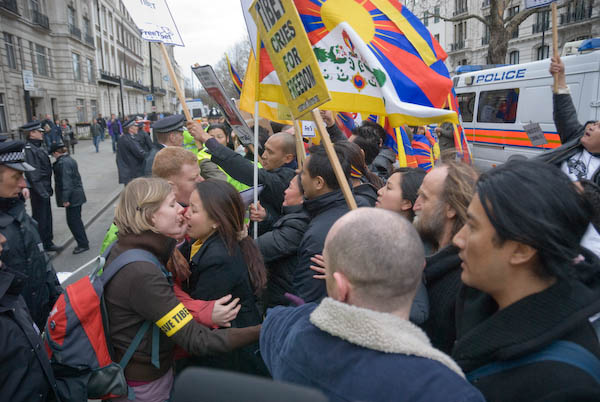
Kashmiris and Sikhs held a protest together outside the Indian High Commision on Republic Day, the 61st anniversary of the Indian Constitution, calling for the freedom that their nations have been denied by Indian military repression.

Kashmir was an ancient kingdom, becoming a Muslim monarchy in 1439, later a part of the Sikh empire but again becoming a monarchy under British guidance in the 19th century. But Kashmir – as well as the Sikhs – were unfairly mistreated in the negotiations for Indian independence and the 1947 partition.

Although Kashmir has am 80% Muslim population its then Maharajah ceded the kingdom to India as a way to protect his privilege and rule against an invasion by Pakistan. In return Kashmir was granted some limited autonomy by the Indian Constitution (revoked in 2019.)

Kashmiris campaigning for freedom from Indian rule have been savagely repressed and the country has a huge occupying force of Indian troops and police, with widespread human rights abuses, many continuing to be imprisoned, tortured and murdered.

Both India and Pakistan have been found by UN bodies and other investigations to be guilty of widespread human rights abuses in the areas of Kashmir they administer. The UN in 1948 called for the people of Kashmir to be allowed to determine their future by a free and fair vote, but this has never been possible due to the opposition of both India and Pakistan. A small part of the country is also occupied by China, doubtless also abusing human rights.

Protesting with the Kashmiris were Sikhs, also neglected at Partition which divided the Punjab between India and Pakistan. Widespread agitation for their own independent state of Khalistan was accelerated by the 1984 attack by the Indian Army on the Golden temple at Amritsar, and the widespread anti-Sikh riots and killing which after the assassination of Prime Minister Indira Gandhi by her Sikh bodyguards which followed. As in Kashmir, Sikhs in India have suffered widespread and continuing human rights abuses.

Free Kashmir & Khalistan


Release Binayak Sen Now – Indian High Commission

Dr Binayak Sen is a highly regarded Indian doctor, internationally recognised for his work with indigenous and marginalised people with a lifetime of service of the rural poor.

He helped establish a hospital serving poor mine workers in Chhattisgarh and founded a health and human rights organisation that supports community health workers in 20 villages, and was an officer of the People’s Union for Civil Liberties (PUCL).

Dr Sen criticised the state Government’s atrocities against indigenous people who were fighting the handover of their lands for mining, and their establishment of an armed militia, the Salwa Judum, to fight against the Naxalite (Maoist) rebels in the area.

In 2007 he was arrested and charged with having links with the Naxalities and was held in prison until granted bail two years later in May 2009. But in December 2010, Dr Sen was found guilty of sedition and conspiracy and sentenced to life imprisonment. At the time of the protest his appeal was continuing. He was granted bail in April 2011 and the case against him has not been pursued.

Release Binayak Sen Now


FlickrFacebookMy London DiaryHull PhotosLea ValleyParis
London’s Industrial HeritageLondon Photos

All photographs on this page are copyright © Peter Marshall.
Contact me to buy prints or licence to reproduce.


Peace, Congo, Iran, Egypt, Bikers, Trafalgar Square… 2012

Peace, Congo, Iran, Egypt, Bikers, Trafalgar Square: On Wednesday 25th January 2012 I went up to London in the middle of the afternoon and continued to take photographs at various places and events for several hours.


Parliament Square Peace Camp

Peace, Congo, Iran, Egypt, Bikers, Trafalgar Square… 2012

I began with a brief visit to the Peace Camp – as I often had over the years – but found that Barbara Tucker was busy tidying up in anticipation of yet another police raid in their long campaign of harassment of her and here supporters and on this occasion didn’t have time to talk. So I just took a couple of pictures and then walked up to Trafalgar Square. On May 10th 2012 the protest had been 4000 Days in Parliament Square but was evicted shortly after.


Congolese Keep Up Protests – Trafalgar Square

Peace, Congo, Iran, Egypt, Bikers, Trafalgar Square… 2012

In Trafalgar Square I found a small group of Congolese protesters in a pen on the pavement outside South Africa House, calling on South Africa to put pressure on the Congo regime. They called on South Africa to free political prisoners and recognise opposition leader Étienne Tshisekedi wa Mulumba as the duly elected President of the Democratic Republic of Congo. The 2011 elections were widely regarded as having been fixed and it is unclear whether he or the incumbent Joseph Kabila whose election was confirmed by the Supreme Court of the Democratic Republic of Congo actually got more votes.

The protesters told me that more people were expected to arrive for the protest soon and I promised to return. But I got a little held up elsewhere and by the time I returned everyone had left.


Peace For Iran – No To War – Foreign & Commonwealth Office, Whitehall

Peace, Congo, Iran, Egypt, Bikers, Trafalgar Square… 2012

I walked back along Whitehall to the Foreign & Commonwealth Office in King Charles St where a small group were protesting against going to war with Iran, calling for peace.

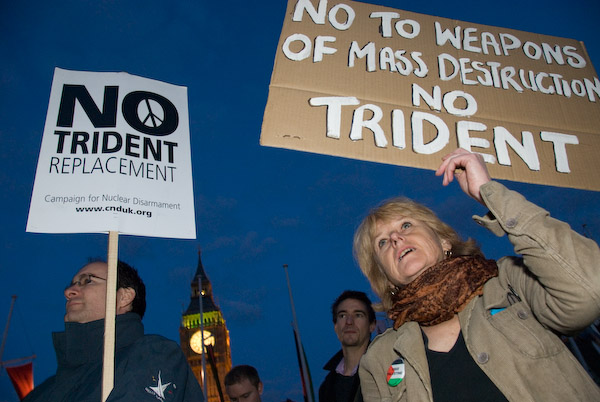
I waited with the protesters who told me they expected more to arrive, but had to leave after around 20 minutes. I think few were coming as a large protest was to happen a few days later (you can see my report and pictures on this at No War Against Iran & Syria)


Egyptians Protest Against SCAF – Egyptian Embassy

Peace, Congo, Iran, Egypt, Bikers, Trafalgar Square… 2012

I had to leave to go to the main event I had come into London to report, the protest by Egyptians on the first anniversary of the Egyptian revolution. Egypt was then suffering under the Supreme Council of the Armed Forces (SCAF) and they called for the revolution to continue and an end to military rule.

This was an energetic and protest by over a hundred Egyptians in solidarity with the estimated 300,000 who had marched to Tahrir Square earlier in the day.

A few from the British left had come to give their support, including Chris Nuneham of Stop the War who was one of those who spoke.

The speakers urged solidarity with the Egyptian people and also with the other revolutions of the Arab Spring, and called for an end to the Western attempts to enforce an agenda on the Arab nations.

They voiced their opposition to the increasingly likely military action against Iran, and called on those present to join the No War Against Iran & Syria protest at the US Embassy on the following Saturday.

Many more pictures from the Egyptian Embassy protest on My London Diary.


Westminster Bikers First Olympic Jubilee Demo Ride – Trafalgar Square

I returned to Trafalgar Square for a protest by motorbike riders, incensed by the so-called experimental parking charges for powered two wheelers.

‘No To the Bike Parking Tax’ see the parking charges introduced by Westminster Council as a simple money-making racket and have been making regular Wednesday protests against it as well as lobbying and making a legal challenge.

The daily fee for parking in a solo motorcycle bay is now only £1, and bikers can move from bay to bay.

More pictures


Around Trafalgar Square

After the bikers rode away I took a few pictures in Trafalgar Square under its dramatic red lighting then walked away. There had been a traffic accident on Northumberland Avenue which seemed to have involved two bikers and a cyclist and the police were now in attendance. I took a single frame as I approached but I didn’t investigate this further, walking down Whitehall.

Opposite Downing St a small protest was taking place calling for Freedom for Syria from the Assad regime, but nothing much was happening there and after making a couple of pictures I moved on, now in a hurry to get home and have something to eat.

You can read and see more pictures of these events on the January 2012 page of My London Diary


FlickrFacebookMy London DiaryHull PhotosLea ValleyParis
London’s Industrial HeritageLondon Photos

All photographs on this page are copyright © Peter Marshall.
Contact me to buy prints or licence to reproduce.