DSEI March and a Tank – 2007

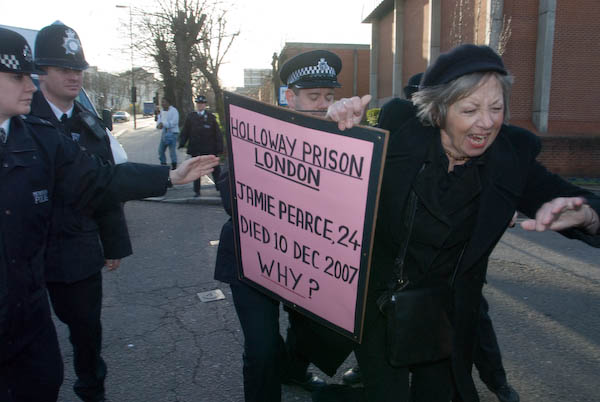
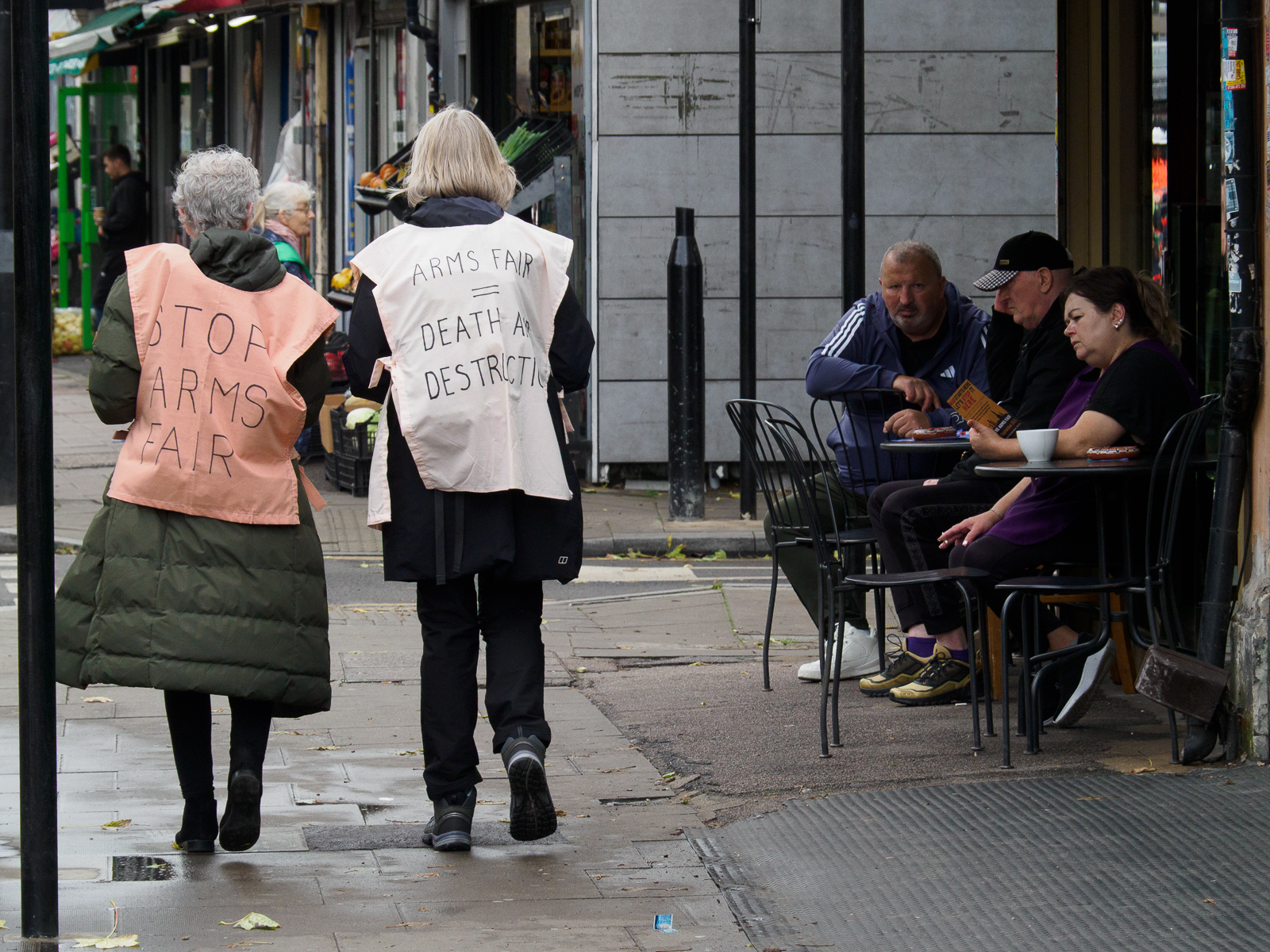
DSEI March and a Tank: On Tuesday 11th September 2007 I marched with protesters from Plaistow Park to Custom House were the largest arms fair in the world was being held, – it is still held every two years and is again taking place now. Then I went to the main entrance by the side of the Royal Victoria Dock to welcome the Space Hijackers, “an international band of anarchitects” who had promised to come with a tank to sell it at the fair as a protest.

DSEI March and a Tank - 2007
Over 150 people marched from Plaistow Park to Custom House

Here, with some minor corrections, is what I wrote about the day’s events back in 2007, along with some of the pictures I took and links to where you can see more of my pictures on My London Diary.


CAAT March Against DSEi East London Arms Fair

DSEI March and a Tank - 2007 CAAT March Against DSEi East London Arms Fair

One of the more scandalous events to take place in London is the DSEI (Defence Systems & Equipment International Exhibition) arms fair, held every two years since 2001 at the Excel Centre on the side of the Royal Victoria Dock in Newham.

DSEI March and a Tank - 2007

Even if you are not a pacifist (and I’m not) it is a trade that has its sickening side, with arms sales to corrupt regimes who use them to kill, torture and deny human rights to their own people, as well as endless shady deals by arms dealers that end up with weapons traded there in the hands of criminals around the world – including some used on the streets of this country.

DSEI March and a Tank - 2007

Britain also has a thriving business in implements of torture, which have been exposed as on sale in earlier shows here. The show also features all the other kinds of nasty devices used by police forces around the world to keep corrupt governments in power.

Of course our government claims to have an ethical policy so far as arms sales are concerned, but in reality it is more about making deals look clean on paper than really worrying about where the arms will end up and what they will be used for. DSEI isn’t just a UK show, it is the world’s largest arms fair – the 2005 show had over 1200 exhibitors from 35 countries present.

DSEI March and a Tank - 2007

The Campaign Against Arms Trade (CAAT) organised a peaceful protest against the fair with a march through Newham from Plaistow Park to a rally outside Custom House Station, as close as they were allowed to get to the Excel Centre. Around 150 people walked the 2 miles to the rally where they met around 50 others who had travelled there directly, and later they were joined by a group of ‘Critical Mass’ cyclists.

Unfortunately the police set up a long thin pen along the side of the road opposite the station, and would not allow speakers to use the small cycle-towed sound system. So the demonstrators were too spread out for many to hear the speeches, by local residents Len Aldis and Bill Perry, local councillor Alan Craig, Green Party Mayoral Candidate Sian Berry, CAAT’s Ian Prichard and comedian Mark Thomas.

DSEI March and a Tank - 2007

The DSEI causes major disruption to the area, with millions spent on extra policing and a number of roads and paths being closed – including the very useful high-level bridge across the dock itself. But the very minor inconvenience of a slightly louder amplification for a few minutes was apparently out of the question. It was a decision that clearly indicated police priorities.

Normally the Royal Victoria dockside is open to the public, but this week the whole northern side was off limits as I found. I took a walk past the eastern end of the dock and then around to the dockside at Brittania Village to get a view of the Excel Centre and the military vessels moored alongside, including a Swedish Stealth Corvette, with odd profiles and jagged camouflage designed to reduce its visibility and radar and other profiles.

More pictures at CAAT March Against the Arms Fair

Space Hijackers Auction Tank at Arms Fair

The ‘tank’ makes its way down Tidal Basin Road to the ExCeL entrance

I was slowly making my way around the the Tidal Dock Basin Road which leads to the main vehicle entrance to Excel. The Space Hijackers had announced they would be bringing a tank to the fair, and this seemed to be the likely route they would take.

Police had earlier stopped their actual tank almost as soon as it hit the road for some so-called ‘road safety checks’, but the Space Hijackers had tank number 2 in reserve. I think it was strictly a converted Armoured Personnel Carrier, but still a very impressive vehicle. I was pleased to find my guess was right when it made its way down the road, led by someone on a bicycle.

No surprise, the police wouldn’t let it into the arms fair, but it was allowed to park by the side of the entrance and a party and auction took place.

When people began to leave the arms fair, the protesters were able to make a very visible and audible protest as they drove slowly by. At one stage the police helped by blocking the traffic for a while so they could get a better view of the protest.

Generally the police were unnecessarily restrictive, penning the protesters to one side of the road, and harassing press. That isn’t a genuine press pass one said when I showed my NUJ issued press card [from the UK Press Card Authority Ltd and recognised by the National Police Chiefs’ Council as showing me “a bona fide newsgatherer” who were trying to stop me doing my job], threatening me with arrest unless I got back behind the line of police.

The police FIT team did its usual best to stoke up the atmosphere with their intimidatory tactics – certainly something that gives photographers a bad name. It is hard to believe that those hundreds (probably by now thousands) of pictures they have of me – mainly with a camera obscuring my face – are of any great use in protection national security. [Later when I made a ‘Freedom of Information’ request they denied having a single image of me.]

Communications centre inside the ‘tank’

I’m not worried about being photographed – my appearance is pretty much public property since until recently a picture of me was viewed around a million times a month on the commercial site I used to write for.

I stayed until the tank had been auctioned, with some interesting bids but then had to leave to attend a meeting where my presence was vital. I was rather annoyed at having to walk an extra half mile or so to the station when police refused to let anyone use the direct route. There was really no reason or logic for this kind of minor harassment.


You can see much more about the event and also read more comments on the police harassment of journalists on My London Diary at space hijackers auction tank at dsei.


FlickrFacebookMy London DiaryHull PhotosLea ValleyParis
London’s Industrial HeritageLondon Photos

All photographs on this page are copyright © Peter Marshall.
Contact me to buy prints or licence to reproduce.
Isle of Dogs and Poor Doors – 2014

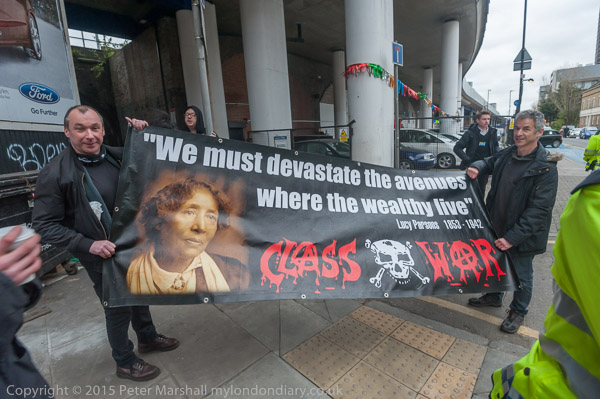
Isle of Dogs and Poor Doors: On Wednesday 3rd September 2014 the weather was fine with blue skies and clouds and I decided to spend the afternoon photographing in the Isle of Dogs before meeting with Class War for one of their ongoing series of protests against separate entrances for the wealthy and social housing residents of a tower block in Aldgate.


Isle of Dogs Panoramas – Island Gardens to South Quay

Isle of Dogs and Poor Doors - 2014

The main purpose of my visit to the Isle of Dogs was to make panoramas of scenes which I had photographed more conventionally over the years, including the black and white images that I included in my book ‘City to Blackwall‘ and more of them are now in my albums on Flickr.

Isle of Dogs and Poor Doors - 2014

I had gone back so make some panoramas in the area in the 1990s and early 2000s, using various panoramic film cameras, but the switch to digital had made creating panoramic images much simpler for me.

Isle of Dogs and Poor Doors - 2014

Perhaps the most important change was in accurate viewfinding – with my first panoramic film camera the most accurate way to see the extent of my pictures was by viewing along two arrows on the top of the body – much more reliable than its viewfinder. But of course digital also gave a wider range of shutter speeds and ISO.

Isle of Dogs and Poor Doors - 2014

And to do this, the camera needed to be firmly mounted on a tripod – and I carried a rather heavy Manfrotto around with me. This also enabled me – with the aid of a spirit level – to ensure that the camera was level. The Nikon I used for these panoramas had level indicators in the viewfinder and was easy to use handheld.

Isle of Dogs and Poor Doors - 2014

However to make these on digital I needed to use a fisheye lens – the 16mm Nikon fisheye. Not the kind that gives a circular image, but a full-frame fisheye where the image circle goes through the corners of the frame. This gives a 180 degree image across the frame diagonal, but rather less horizontally and vertical, with considerable curvature of straight lines.

Software – I then used PTGUi for these – than comes to the rescue, converting the spherical perspective into a cylindrical one which rendered verticals upright (there are several ways this can be done with slightly different results.) Later I moved to simpler software.

With the 36Mp Nikon D800E there were far more pixels than necessary even after this stretching and this was no longer a problem. I could work with single exposures rather than stitching together several images as I had done earlier with digital cameras.

Many more pictures at Isle of Dogs Panoramas.


Isle of Dogs – Wideangle Images

Although I had mainly gone to make panoramas I also took a Nikon D700 body and made pictures with a 16-35mm Nikon zoom. Not everything is best suited by the panoramic treatment.

Again there are many more pictures at Isle of Dogs.


Class War ‘Poor Doors’ picket Week 6 – Aldgate

A police officer watches as people walk down the alley leading to the ‘poor door’ of the luxury development

Class War and friends held their sixth weekly protest outside 1 Commercial St in Aldgate and it was a relatively uneventful one.

As the protesters arrived, two police officers came out from the building and talked with the protesters making clear that they expected the protesters not to block the doorway for people entering or leaving the building. More officers soon arrived to police the event.

There were a few heated arguments between protesters and police but nothing of any consequence. The protesters held their banner well in front of the door.

They talked and handed out leaflets to people leaving and entering the ‘rich door’ as well as to people walking past – and to at least one cyclist stopped at the traffic lights.

After keeping up the picket for an hour as intended, Class War packed up and left – until the next week.

More pictures – Class War ‘Poor Doors’ picket Week 6.


FlickrFacebookMy London DiaryHull PhotosLea ValleyParis
London’s Industrial HeritageLondon Photos

All photographs on this page are copyright © Peter Marshall.
Contact me to buy prints or licence to reproduce.

The Battle of Walthamstow – 2012

The Battle of Walthamstow: On Saturday 1st of September the extreme right English Defence League attempted to march into Walthamstow and hold a rally outside the Waltham Forest Civic Centre on Forest Road. Several thousand people from all of Walthamstow’s communities came together as ‘We are Waltham Forest’ determined to oppose them.

The Battle of Walthamstow - 2012

From a long rally in Walthamstow’s main square with speeches by many community leaders and performances by local drummers and singers, the people of Walthamstow marched to Forest Road, arriving an hour or so before the EDL march was due.

The Battle of Walthamstow - 2012

As they made their way along Hoe Street there was no doubt of their wide support from the community, with people coming out from virtually every shop and building, many waving and cheering in support.

The Battle of Walthamstow - 2012

When the march reached Forest Road many of the marchers sat down on the road at the key junction on the EDL march route. I left them there and walked back towards where the EDL march was to start.

The Battle of Walthamstow - 2012

The Battle of Walthamstow - 2012

When I saw the EDL march coming towards me, it looked more like a police march as the EDL were probably surrounded by more officers than there were supporters on the march. None of the main EDL leaders was on the march as they had gone separately to where they intended to hold a rally and were setting up the PA system.

The Battle of Walthamstow - 2012

It was hard to get a clear view of the marchers through the lines of police around them, and I only had a short telephoto when a much longer lens would have been useful.

The Battle of Walthamstow - 2012

But I managed to take some pictures of the marchers and many of them saw me and shouted abuse or made offensive gestures. Others tried to hold up hands in front of their faces – in one case making a woman look as if she was giving a Nazi salute. One man even rushed through a gap between police officers and put his hand over my lens before police dragged him back into the march. Although they got in my way I was rather glad the police were there.

A few people had come out onto the side of the streets to watch the marchers. Most did so in silence, but some held posters against the marchers or shouted at them. I saw only one supporter, an elderly man who came out of his house to greet them and was greeted with cheers from the marchers. As I commented, “Clearly here the silent majority they claim to represent was overwhelmingly against them.”

As the crucial road junction was blocked, police diverted the march down a side road shortly before it. Some of the EDL were angry at leaving the route and wanted to get at those blocking the road and there were some minor scuffles between the EDL stewards and police.

I went to the junction where the EDL march was led across the Chingford Rd and joined other photographers who were photographing the march and residents who had come to oppose them. Here EDL stewards dragged back marchers who tried to attack us and police and managed to keep their march more or less in order.

Police halted the march in Farnan Avenue at the side of the Civic Centre, but it was now clearly impossible for them to continue to the planned rally location because of the mass of protesters opposed to the EDL who were mainly held by police behind barriers on the opposite side of the road.

Kevin Carroll

I went to where Tommy Robinson and Kevin Carroll had come with a few others to set up for the rally and took a few pictures before I was stopped by an EDL steward who insisted I was a Unite Against Fascism photographer and called over a police officer. I showed the officer my press card, but he still insisted I leave the area. I unhitched a barrier and went across to the other side of the road.

Facing them were hundreds of people from Waltham Forest with the message ‘EDL not welcome’

‘We Are Waltham Forest’ organisers had asked that the protest remain a peaceful one, but some had other ideas and a few sticks and other objects were begining to be thrown towards the EDL. A small brick landed a few yards from Robinson, and was picked up by him and handed to a police officer as evidence.

I moved to one side to avoid being hit as more objects began to be thrown – unlike many other photographers I wear no protective headgear. The situation appeared to be a stalemate, and although many of the counter-protesters had left it seemed unlikely that the EDL rally would be possible. When I left the EDL marchers were still surrounded by police in the side road.

Police later told the EDL that the rally could not go ahead, and the EDL leaders left. Police then kept the marchers surrounded for several hours for their own protection and after RMT members told police they would not allow hooligans to endanger the public by boarding trains, police decide to arrest them all and take them in vans to various police stations. They were apparently de-arrested and released in the early hours of Sunday morning.

This defeat was important in the demise of the EDL and you can see many more pictures at Waltham Forest Defeats the EDL.


FlickrFacebookMy London DiaryHull PhotosLea ValleyParis
London’s Industrial HeritageLondon Photos

All photographs on this page are copyright © Peter Marshall.
Contact me to buy prints or licence to reproduce.
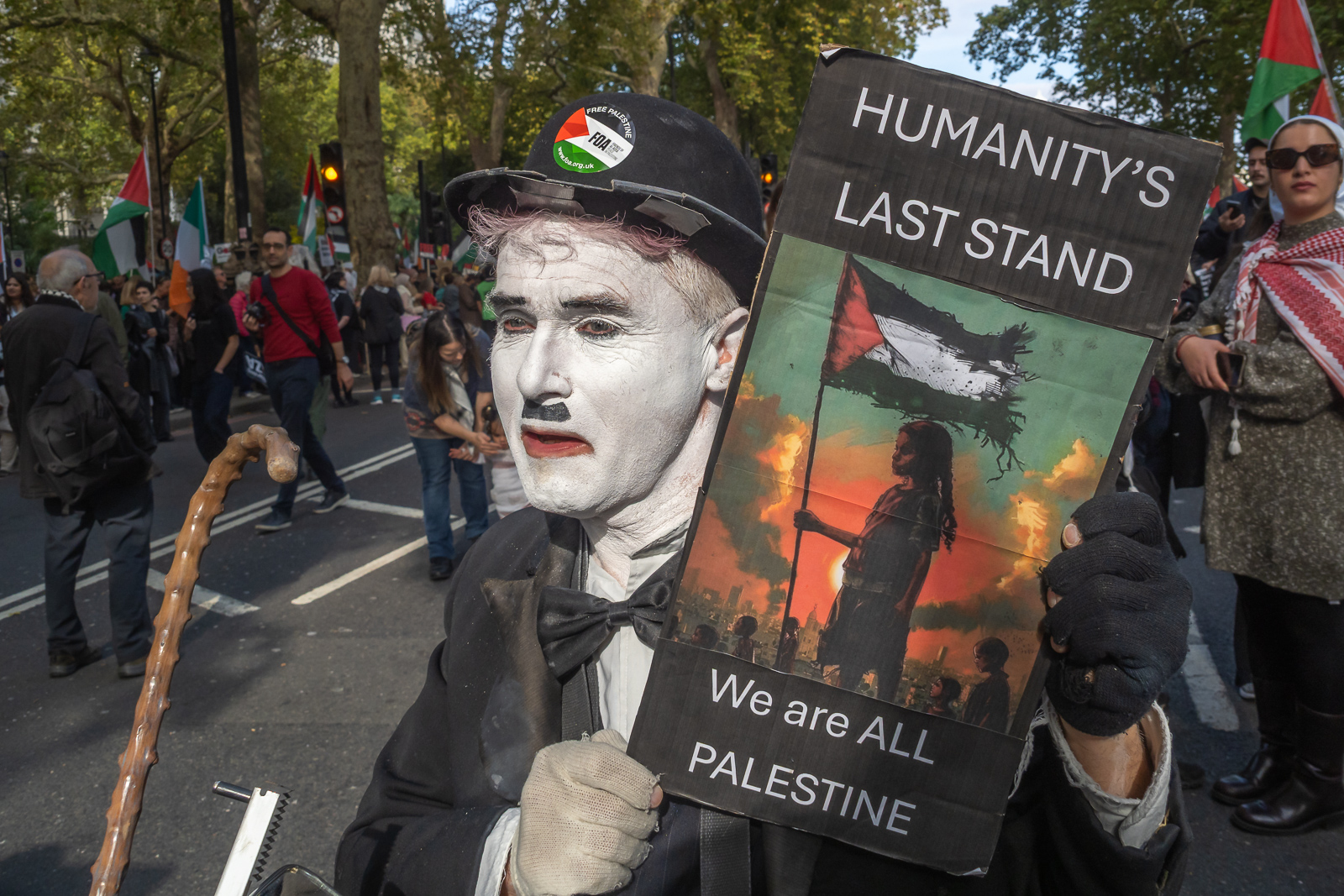

Notting Hill Carnival – Children’s Day – 2012

Notting Hill Carnival – Children’s Day: Lurid and largely untrue media reports had put me off from attending carnival until 1990, but after I had gone and seen for myself the two days at August Bank Holiday each year became one of my unmissable events of the year.

Notting Hill Carnival - Children's Day - 2012

Each year from then on I went to photograph the revels, trying to capture the spirit of the event in my pictures, and I had some success, with publications and some small exhibitions of the work.

Notting Hill Carnival - Children's Day - 2012

I saw and experience little of the criminality reports of which still often dominate press coverage, with many still trying to get carnival banned or to emasculate it as a static event in Hyde Park or something similar. Opposition to carnival, a great community event, seems at least in part driven by the same kind of racist and classist attitudes that led to Grenfell. I only once in over 20 years came close to it when I caught a pickpocket with his hand in one of my trouser pockets in a densely packed crowd. I grabbed it and pulled it out, to find it clutching an empty wallet – not mine.

Notting Hill Carnival - Children's Day - 2012

Of course I took some sensible precautions, taking only the equipment I needed and keeping a close eye and hold on it. I used a small bag which in crowded areas at least was always around my neck and in front of me rather than on my shoulder, and left my wallet and credit cards at home, carrying enough cash for travel, food and drink in a zipped pocket.

Notting Hill Carnival - Children's Day - 2012

Most of what mayhem there was – and given the huge number of people in the area there was relatively little of it – took place later in the day, after a day of dancing and drinking and after I had gone home, always before the light began to fade.

Notting Hill Carnival - Children's Day - 2012

While I was there the streets were full of people having a good time and happy to be photographed while they were doing so. Mostly they were Londoners, and particularly black Londoners, though some people came from far away for the event. When we were in St Denis at the north of Paris one year I photographed posters advertising trips for the event.

Notting Hill Carnival - Children's Day - 2012

The only real problem I had over the years was with my ears. At carnival you don’t just hear the music, you feel it as the tarmac on the streets vibrates and your internal organs jump around to the beat. For several days afterwards my ears would hurt , my hearing would be dull and my head would still be ringing. Some years when carnival came late in the month I was back teaching within a couple of days and it was hard.

Professional media crews covering the event mainly wear ear protectors, and I did try using earplugs, but found it unsatisfactory. They stopped me experiencing carnival fully and made communication with those I was photographing difficult. It was like eating wearing boxing gloves. So I just put up with being deafened and taking a day or to for recovery.

But by 2012 things were different for me. As I wrote then: “But either I’m getting too old for it, or perhaps carnival is changing, and this year I found it a little difficult. So I went on the Sunday, stayed around three hours and didn’t really want to return for the big day. So I didn’t.

And this was the last time I went to Carnival. The next year I was away from London and in years since then I’ve thought about it, but not gone. I feel I’ve taken enough pictures of it.

You can see more of the pictures from the 1990s in two albums – Notting Hill Carnivals and Panoramas on Flickr though I’ve still to add some from later years. Many of those from this century are on My London Diary, including many more from 2012 at Notting Hill – Children’s Day.


FlickrFacebookMy London DiaryHull PhotosLea ValleyParis
London’s Industrial HeritageLondon Photos

All photographs on this page are copyright © Peter Marshall.
Contact me to buy prints or licence to reproduce.

Divided Families, Gaza, Ghouta & Sri Lanka – 2014

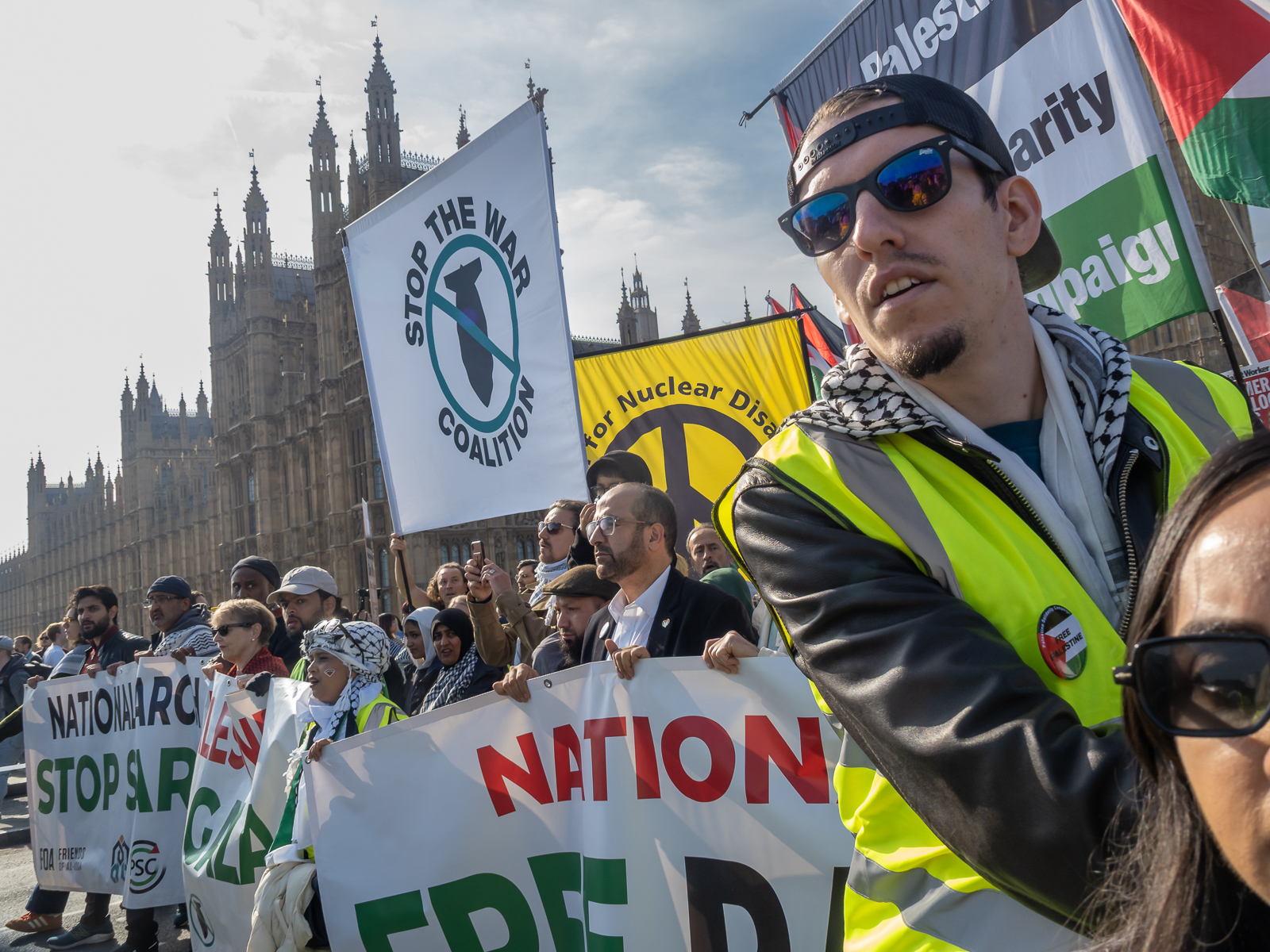
Divided Families, Gaza, Ghouta & Sri Lanka: Saturday 23rd August 2014 was a busy day for protests around Whitehall. I began at Downing Street with a protest by family members kept apart from their loved ones by Teresa May’s cruel and unfair immigration rules in a deliberate breach of the Universal Declaration on Human Rights, then photographed a protest against arms sales to Israel and an end to Israeli war crimes. Then in Trafalgar Square Syrians marked the first anniversary of The chemical massacre at Ghouta before marching to Downing Street, where Tamils were protesting the rapes and killing in Sri Lanka.


Divided Families protest over cruelty – Downing St

Divided Families, Gaza, Ghouta & Sri Lanka - 2014

The Universal Declaration on Human Rights states:

'No one shall be subjected to arbitrary interference with his privacy, family, home or correspondence, nor to attacks upon his honour and reputation. Everyone has the right to the protection of the law against such interference or attacks.'
Divided Families, Gaza, Ghouta & Sri Lanka - 2014

But British citizens who are married to foreign nationals from outside the EU and may have children with them can only bring their partners to the UK if they are in well-paid jobs. And even then the visas needed are expensive and there are tough English Language tests, a need to prove greater attachment to the UK than of any other country and a five year probationary period.

Divided Families, Gaza, Ghouta & Sri Lanka - 2014

The rules are complex and hard to understand and have changed since 2014, particularly by Brexit. Then those earning less than £18,600 a year were unable to bring on-EU spouses to join them – and couples with two children needed an annual income of £24,800. Visa application was also (and still is) very expensive.

More at Divided Families protest over cruelty


Gaza Protest – Stop Arming Israel – Downing St

Divided Families, Gaza, Ghouta & Sri Lanka - 2014

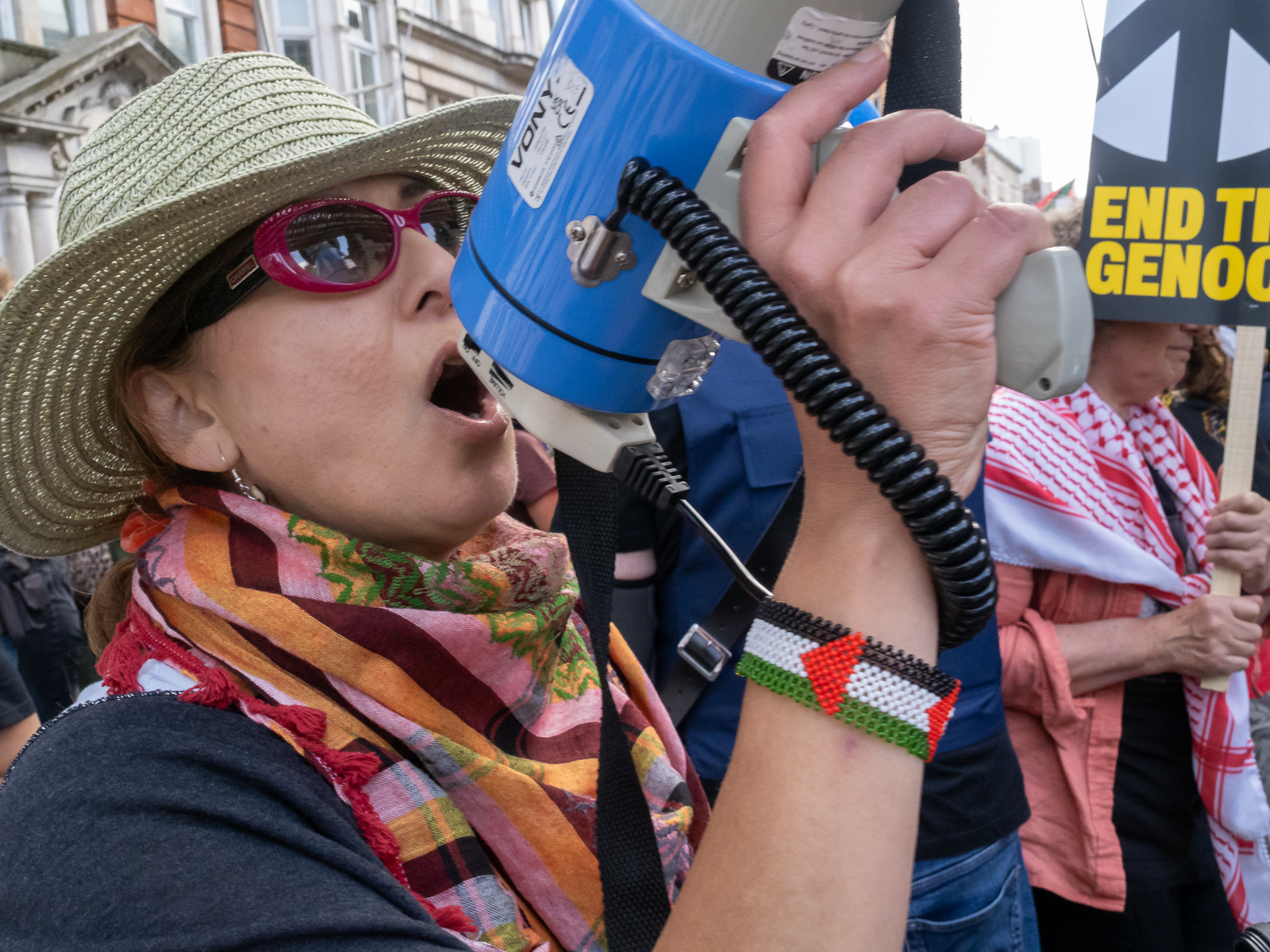
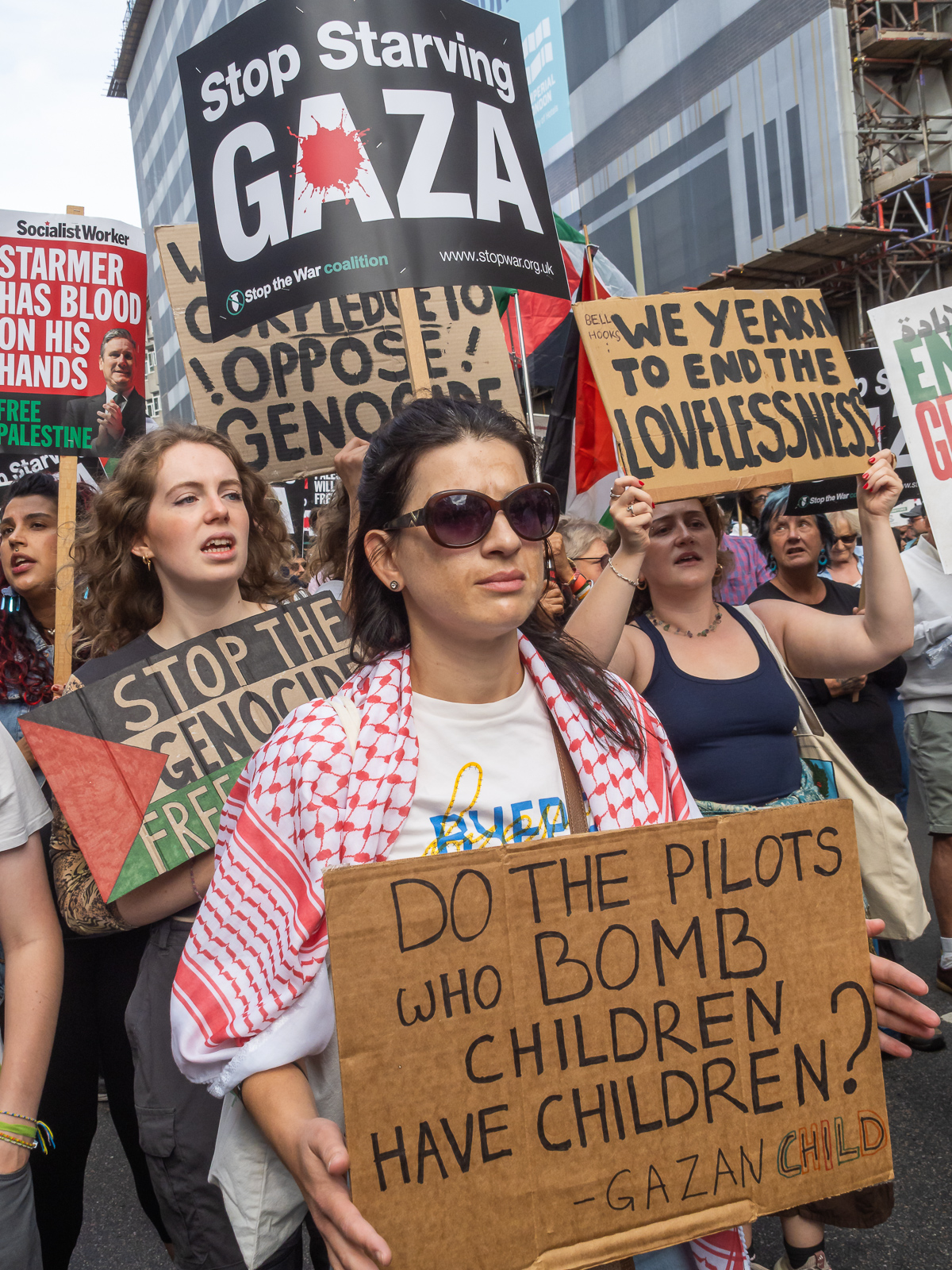
Back in 2014 as now people were calling for an end to UK arms sales to Israel and for an end to Israeli war crimes.

Divided Families, Gaza, Ghouta & Sri Lanka - 2014

The 2014 conflict in Gaza resulted in over 2000 Palestinians being killed including almost 1500 civilians and many more injured, leaving around a thousand children with life-changing disabilities.

Fighting lasted 50 days with many schools and health centres being damaged and over 12,600 homes being destroyed and around a further 6,500 seriously damaged. At the time of this protest UNRWA was housing around 300,000 internally displaced people in the roughly half of its school buildings which had not been destroyed or seriously damaged.

Among the protesters were several groups of Jews, including ‘Jews for Justice for Palestinians’. Also there were Neturei Karta Orthodox Jews with banners opposing Zionism and the idea of a Jewish political state; they call for all to live peacefully together in Palestine – as Jews and Arabs did before the partition and formation of Israel.

A small group of pro-Israel protesters, one dressed as Superman, tried to disrupt the protest but after a short while were led away by police.

More pictures at Gaza Protest – Stop Arming Israel.


Syria Chemical Massacre Anniversary – Trafalgar Square

The chemical attack using the nerve gas Sarin by the Assad regime on Ghouta on 21st August killed 1,477 residents including over 400 children in this Damascus suburb.

Leaders in countries around the world expressed outrage at the attack, called for action to be taken. Pressure did lead to Syria agreeing to sign the Chemical Weapons Convention and the US and Russia agreed on a framework to eliminate Syria’s chemical weapons, and much of Syria’s stock was destroyed in the year following the massacre.

‘I am Chemical Bashar Al Assad and one year on I am still gassing Syrian children.
Thank you for UN veto’

But Assad continued to use chemical weapons, including many attacks with chlorine gas which was not covered by the framework because of its widespread chemical uses, as well as some attacks involving Sarin or a similar nerve gas. In 2023 the UN Security council declared that Syria’s chemical weapons declaration was incomplete and demanded full disclosure and cooperation with the Organisation for the Prohibition of Chemical Weapons.

Syria Chemical Massacre Anniversary


Tamils protest Sri Lankan rapes & killing – Downing St

Following the Sri Lankan military defeat of the Tamil Tigers in 2009, Tamils allege that the Tamils who make up around 11% of the population of Sri Lankan have been the subject of a continuing genocide by the government and the Sinhalese majority.

The protest called for the UN to conduct a referendum over setting up a Tamil state and investigate Sri Lankan genocide of Tamils. The Sri Lankan government had not kept the promises it made to the international community at the time of the Tamil defeat and has subjected the Tamil region to military occupation, rapes and killing.

Tamils protest Sri Lankan rapes & killing


FlickrFacebookMy London DiaryHull PhotosLea ValleyParis
London’s Industrial HeritageLondon Photos

All photographs on this page are copyright © Peter Marshall.
Contact me to buy prints or licence to reproduce.

EDL Outnumbered in Chelmsford – 2012

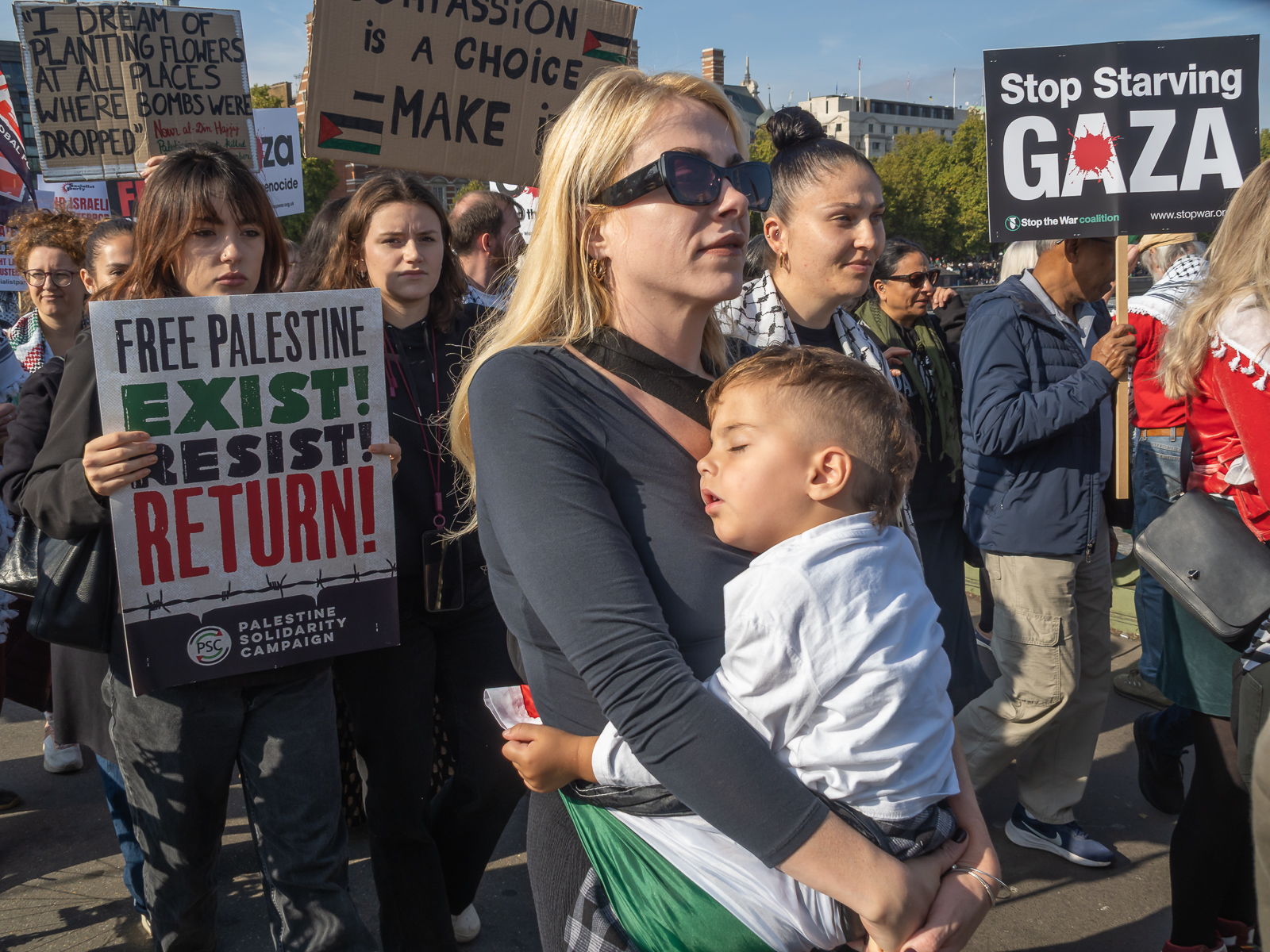
EDL Outnumbered in Chelmsford: On Saturday 18th August I made my first (and quite possibly my last) trip to Chelmsford, Essex where the extreme right English Defence League were marching against plans to build a large mosque in the city. Chelmsford, the County Town of Essex, had in the previous month been given City status to mark the Queen’s Diamond Jubilee.

EDL Outnumbered in Chelmsford - 2012
EDL members in the pub garden before their march

Until 1979 Muslims living in Chelmsford, Essex had to travel to London or Southend to attend Friday prayers. That year a house was rented for prayers and the following year the first floor of a restaurant became a mosque. As congregations grew other premises were found for worship. Permission to build a mosque was granted in 1992 but it was only fully completed in 1997.

EDL Outnumbered in Chelmsford - 2012
EDL Essex Division spokesman Paul Pitt

Soon that mosque was becoming overcrowded and by 2012 plans were being made for a new larger building but there were a number of set-backs, including some strange and possibly racially motivated behaviour by the council, as well as financial problems and it was not built. In 2020 the Chelmsford Muslim Society were able to buy the Hamptons Sports & Leisure Centre which is now in use for both worship and leisure. The older Central Mosque in Moulsham Street is also still in use.

EDL Outnumbered in Chelmsford - 2012
The EDL march gets ready to leave

Over two hundred people had come to the centre of Chelmsford for a rally called by Unite Against Fascism to oppose the EDL march. I went to photograph them first and then went along to the pub where the EDL were meeting. There were far fewer EDL, perhaps 80 in all, and most were in the garden of the pub.

EDL Outnumbered in Chelmsford - 2012

I went close to the fence around the beer garden in Cottage Place and took a few pictures of the EDL inside. I was met with abuse and one man complained to the police – who told him I was acting within the law. Others made V’ signs and other gestures for the camera, and I was pleased there was a fence between us.

EDL Outnumbered in Chelmsford - 2012
Police hold the Essex Unite Against Fascism march until the EDL are inside the cordon around their rally

After I had taken a few more pictures the officer politely requested I move away to avoid further upsetting the marchers and I complied as I felt I had already done all I could. Across the road in New Street EDL Essex Division spokesman Paul Pitt was being interviewed for TV, claiming the EDL were not racist and not generally opposed to mosques being built. He said that the size and location of the proposed building was unsuitable and that local people had invited them to come to Chelmsford and protest against it.

A few minutes later the EDL came out of the pub and formed up behind several banners for the march. I kept close to the banners at the front and to the police who were watching the marchers. They began singing racist EDL songs and as I stood on the corner photographing the march going past one man came menacingly right up to me and said “I hope all your family die of cancer.”

I was shocked, but followed the march as they were escorted by police for a short march around largely empty streets city and into a pen for their rally. Once they were inside police, sealed the street and allowed the UAF to sstart their much larger and more public march, far louder and with many more people, placards and banners than the EDL.

There was a single small incident where two EDL supporters came to the roadside and began to loudly shout ‘EDL!, EDL!‘ Police dragged them to a bench some distance away and held them until the march had passed and made clear they would be arrested if they interfered with it again.

There were several people in clerical dress, including this local hospital chaplain

The EDL were behind a couple of police lines perhaps 200 yards away as the march came to an end, but they will have been clearly able to hear the strength of the opposition.

I concluded my account on My London Diary: “Although the EDL managed to hold their march, it was a small event and went around the outskirts of the centre, seen by very few. The UAF and others held a long meeting right in the centre of the shopping area with much greater support, and clearly were far more successful and widely supported.”

Many more pictures at EDL Outnumbered in Chelmsford.


FlickrFacebookMy London DiaryHull PhotosLea ValleyParis
London’s Industrial HeritageLondon Photos

All photographs on this page are copyright © Peter Marshall.
Contact me to buy prints or licence to reproduce.

A Scottish Protest – SDL and UAF in Edinburgh 2013

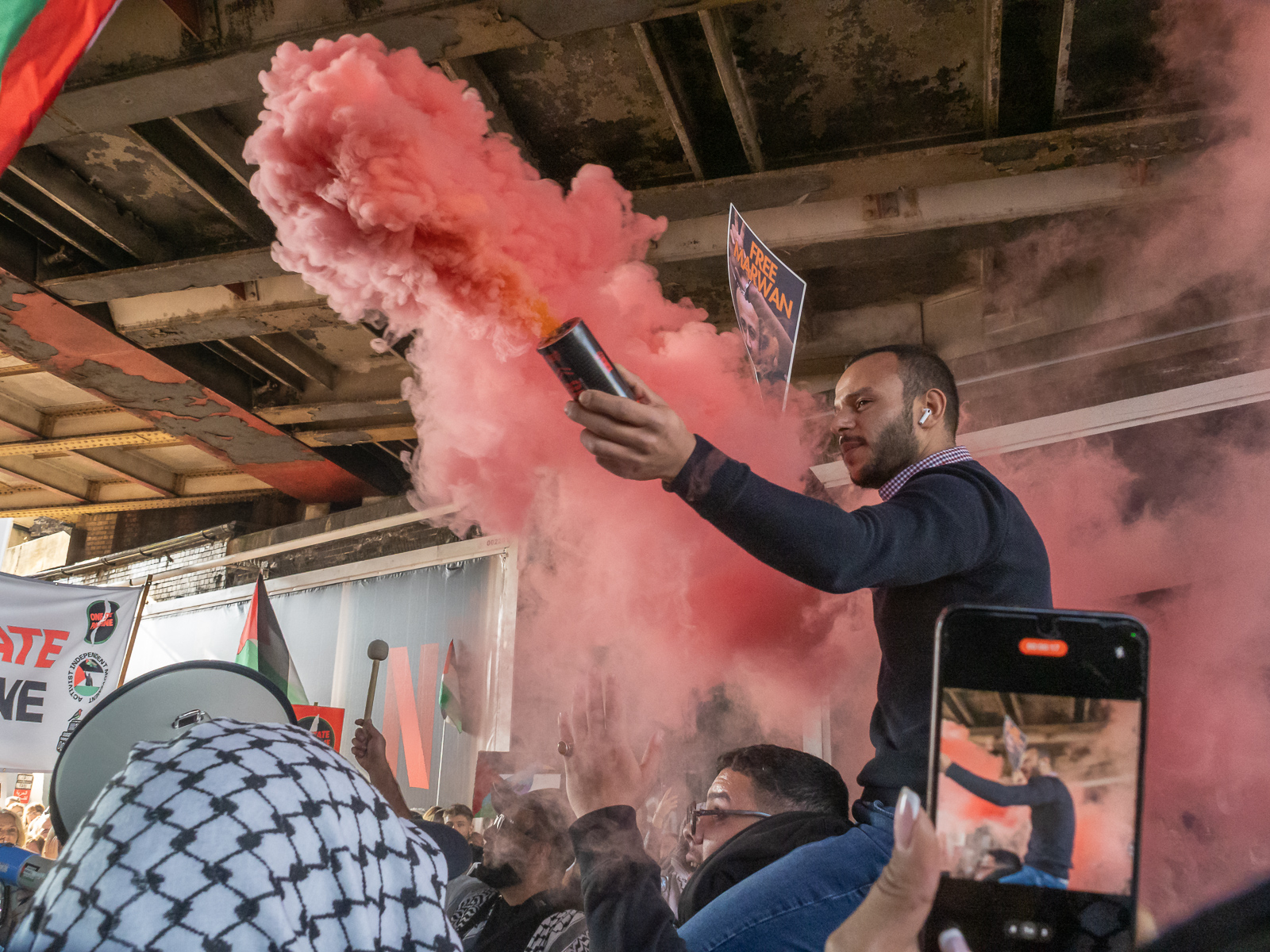
A Scottish Protest: On Saturday 17th August I photographed anti-fascists in Edinburgh protesting a march by the Scottish EDL in Edinburgh, the only time I have ever photographed a protest in Scotland.

A Scottish Protest - SDL and UAF in Edinburgh 2013
Anti-faascists march to Hollyrood

I was in the city for the Edinburgh Festival, which I was also attending for the first and only time, having been invited to share a flat for the week with others. We did have a good time and went to quite a few performances and events but should I ever visit the city again I’d prefer to do so when things there were more normal – as I did back in 2003.

A Scottish Protest - SDL and UAF in Edinburgh 2013

I found photographing the protest at times more stressful than usual. Partly because of the slightly different policing and the fact that I knew none of the protesters or the other photographers covering the event, (though I did recognise a few in the Scottish Defence Leagure protest from EDL protests in London) but also because I was using different equipment, working just with the Fuji X-E1 which was then my ‘travel’ camera rather than the brace of Nikons of my professional kit.

A Scottish Protest - SDL and UAF in Edinburgh 2013

Not that the X-E1 wasn’t a good camera – and I’ve now been working for some years with other Fuji cameras to cut down the weight of my camera bag on my ageing shoulder. The Fuji lenses are fine but I still miss the directness of an optical viewfinder and the relative simplicity of the Nikon interface.

A Scottish Protest - SDL and UAF in Edinburgh 2013

And the Nikon reliability. Often with various Fuji cameras I find it hard to get the cameras to behave as I want them too. Last Saturday checking my kit before I left home I could find no way to persuade my Fuji X-E3 to let me work in RAW rather than jpeg mode, eventually abandoning it for an older Fuji body. I did all the things that should have allowed it, but I suspect I will have to go to a full factory reset and then restore my favourite settings.

A Scottish Protest - SDL and UAF in Edinburgh 2013

With the X-E1 I found the autofocus noticeably slower than with my Nikons and I did miss some pictures, but the results on those I did take were fine. Fuji glass really is good and the XF 18-55 is possibly the best ‘kit’ lens ever, though I did at times miss not having something wider than its 27mm equivalent and something longer then its 82mm equivalent.

I left the protest while it was still taking place and made my way to meet my wife and go to the postgrad show at the Edinburgh College of Art and then on to the ‘Attack of the 50 Foot German Comedian’, both something of a disappontment, before a restaurant meal with the others from the flat to celebrate the end of a week together. The next morning we were up early to catch the 10.30 train back to London.

You can read more about our week at the festival on My London Diary, with more from the protest at SDL and UAF in Edinburgh.


FlickrFacebookMy London DiaryHull PhotosLea ValleyParis
London’s Industrial HeritageLondon Photos

All photographs on this page are copyright © Peter Marshall.
Contact me to buy prints or licence to reproduce.

Give Our Kids A Future – 2011

Give Our Kids A Future – Dalston to Tottenham. A week after the police killing of Mark Duggan and the disturbances which followed in Tottenham, across London and in other towns and cities, community groups in North London came together on Saturday 13th August 2011 with around 1500 people marching from Dalston to Tottenham Town Hall pleading “Give Our Kids a Future.”

Give Our Kids A Future - 2011
The march starts from Gillet Square

These disturbances were seen by many without surprise as tensions were rising in the more deprived areas of London and across the country as a result of the cuts to youth services and other support begun under New Labour and continued more savagely by the Coalition government.

Give Our Kids A Future - 2011

Local Authorites were being starved of resources and had little choice but to make cuts where they could, cuts which disproportionately affected young people, the elderly and the disabled who rely more on their services. In particular many youth clbbs and other facilities had been closed.

Give Our Kids A Future - 2011

Young people had also been hit by the announcement that the Educational Maintenance Allowance (EMA) which enabled many in lower icnome homes to continue their eduction was to end this summer. Many school students had been radicalised and had taken part in sometimes disorderly student protests, joining in the protests over university fee rises and other changes in education.

Give Our Kids A Future - 2011


On these protests they had seen and suffered from heavy-handed policing with kettling, excessive use of batons and charges into crowds by police horses. And on the streets where they lived many had experienced police harassment, with racially discriminatory stop and searches and being moved away from areas where they met with friends.

Give Our Kids A Future - 2011

People in these areas were becoming more aware of unexplained deaths in police custody, with anger and resentment “multiplied by the lies told by police to the press, and the various cover-ups and white-washing by the IPCC, CPS and other authorities that have been used to prevent bringing those responsible to justice.

Some saw the shooting of Mark Duggan as an execution by police, and the undisguised glee of some of our right-wing media at his death, having taken the police lies and convicted him, clearly raised tempers. It was the total failure of Tottenham police to engage with the family members and others who held a peaceful vigil last Saturday and the police attack and beating of 15 year old girl that sparked the outbreak of rage that spread rapidly.

The march was not organised to condone any illegal behaviour but was an attempt by a long list of local organisations with the support of some wider political groups (a long list on My London Diary) “to bring all sections of local communities together to promote unity and to urge for positive action working together to find solutions to some of the long-standing problems of the area which made it fertile ground for the disturbances.

Some of the many Kurds on the march

“They want an end to the cuts in public services and for investment to be made into regeneration of the communities, with housing, jobs, education and leisure facilities and a restoration of all the youth services that have been cut”.

“More specifically about the riots they want a community led regeneration of the damaged areas and support for those affected, including the immediate rehousing of those made homeless and grants for small businesses.”

“But perhaps the most important of their demands was one for a cultural change, moving away from the demonisation of youth and the unemployed towards a culture of valuing all people.”

Their leaflet ended with the statement:

Let’s work together for a decent society, based not on greed, inequality and poor conditions, but on justice, freedom, sharing and cooperation.

More, including many more pictures, on My London Diary at Give Our Kids A Future.


FlickrFacebookMy London DiaryHull PhotosLea ValleyParis
London’s Industrial HeritageLondon Photos

All photographs on this page are copyright © Peter Marshall.
Contact me to buy prints or licence to reproduce.

Carnaval, Right To Protest & Tobin – 2005

Carnaval, Right To Protest & Tobin: On Sunday 7th August 2005 I began by photographing London’s Latin Americans getting ready for the Carnaval Del Pueblo procession, then went to Parliament Square for an illegal protest against the Serious Organised Crime and Police Act 2005 which had come into force on August 1st and among other things restricted the right to demonstrate within a large area around parliament without prior written notice to the police. Finally another illegal protest on Westminster Bridge expressed support for the Tobin Tax, a low rate of tax on currency conversions with the aim of discouraging short-term currency speculation and so stabilising currency markets. Here is what I wrote about the day in 2005 with some pictures and links to more on My London Diary


Carnaval del Pueblo – Southwark

Carnaval, Right To Protest & Tobin - 2005

Sunday I started off photographing London’s Latin American communities getting ready for the start of their annual Carnaval Del Pueblo procession. This year it was starting from Potters Fields near the GLA headquarters, on an empty site awaiting development, rather than from a street, and this made photography a little more difficult.

Carnaval, Right To Protest & Tobin - 2005

It was good to see so many groups taking part, although I found it very difficult to sort out the different nations, and found myself unable to recognise most of their national flags.

Carnaval, Right To Protest & Tobin - 2005

This procession, making it’s way to Burgess Park where there is a Latin-American Festival, is one of London’s most colourful events, with some costumes to rival those seen at the much larger annual Notting Hill event at the end of the month.

Carnaval, Right To Protest & Tobin - 2005

I was sorry not to be anle to go on to the festival, especially since there was to be a short period of silence to mark the tragic shooting by police of the innocent Brazilian electrician, Jean Charles de Menezes, on a tube train at Stockwell Station the day following the second round of bombings in London.

I followed the procession up to London Bridge Station where I needed to get on a train to get to Westminster.

More pictures


The Right to Protest – Parliament Square

Police arrest a demonstrator in Parliament Square, London. The crime? Holding a protest banner. Welcome to Britain, the police state (not that I think the police particularly welcome it.).

Britain once had a deserved reputation as a haven for free speech and the rights of the citizen. A number of acts by our New Labour government have seriously curtailed these freedoms – including introducing a number of measures that they had opposed before they came to power.

Some of these measures have just been a part of the general trend to central control begun under Thatcher, but others have been brought on by the threat of terrorism and even more by the growth of opposition to government policies, and in particular to the war on Iran.

Formerly a life-long supporter of the party it saddens me, and angers me. One of the signs that Brian Haw holds in a picture is a quotation from a speech by Condoleeza Rice in January 2005, when she said “if a person cannot walk into the middle of the town square and express his or her views without fear of arrest, imprisonment, or physical harm, then that person is living in a fear society, not a free society. We cannot rest until every person living in a ”fear society” has finally won their freedom.”

New restrictions have been brought in that move Britain into that realm of a “fear society”.

This afternoon I saw five people arrested for simply peacefully holding banners supporting the right to protest. It happened on the square opposite our Houses of Parliament, and it made me feel ashamed to be British.

Although the law was passed largely to get rid of Brian Haw, it turns out not to alter his right to be there, as his protest started before the act became law and is thus not covered by it. Rather a lot of egg on government faces there.

[The High Court decision that agreed Haw was not covered by the Act was overturned by the Court of Appeal in an alarming decision in May 2006.]

More pictures


The Westminster Tea Party – Time for Tobin Tax

Holding up tea bags on Westminster Bridge

In 1978, Nobel Prize-winning economist James Tobin proposed a uniform world-wide tax at a very low level – perhaps only 0.2% – on all foreign currency exchange transactions. The aim was to deter speculation on currency movements, thus giving the elected governments greater control over their fiscal and monetary policies, and reducing the power of unelected speculators (who include some of the larger multinational companies) to affect the markets.

Exporters, importers and long-term investors would all benefit from less volatile exchange rates, and the revenue raised by the tax could make a significant contribution both to the revenue of national economies and also for international development projects.

As a small gesture of support for the Tobin Tax, another illegal demonstration took place in Westminster this afternoon, unnoticed by police. A small group of demonstrators, again following an example from Boston – although this time from 1773 – chose tea as a way to symbolise their protest. Each threw a teabag, produced by one of the giant corporations, from the middle of Westminster Bridge into the River Thames below.

A couple more pictures at the bottom of this page on My London Diary.


FlickrFacebookMy London DiaryHull PhotosLea ValleyParis
London’s Industrial HeritageLondon Photos

All photographs on this page are copyright © Peter Marshall.
Contact me to buy prints or licence to reproduce.

Broadwater Farm & Mark Duggan – 2017

Broadwater Farm & Mark Duggan: On Sunday 4th August 2017 I went to Tottenham to cover the march on the 6th anniversary of Mark Duggan being killed by police, and arriving early I took a walk around the Broadwater Farm Estate.


Broadwater Farm Estate – Tottenham

Broadwater Farm & Mark Duggan - 2017

You can read the real story of the Broadwater Farm Estate on the excellent Municipal Dreams web site. In 1961 Haringey Council had a shortfall of 14,000 homes with many families living in squalid conditions in rented accommodation in overcrowded and run down Victorian back to back slums.

Broadwater Farm & Mark Duggan - 2017

The estate was built on former allotments next to the Lordship Recreation Ground and above the River Moselle which was culverted. Its design was strongly influenced by the work of Le Corbusier and used ‘piloti’ to raise the homes above ground level both to combat the perceived flood risk from the river and to segregate pedestrians from traffic on walkways with the the ground level providing extensive parking for residents’ cars.

Broadwater Farm & Mark Duggan - 2017

Construction began in 1967 and ended in the early 1970’s. The 1063 new homes were built to high standards, spacious and with all the ‘mod cons‘ expected in that era and with ‘constant hot water for heating and domestic use…supplied to all homes from the central oil-fired boiler’.

Broadwater Farm & Mark Duggan - 2017
There are large green spaces between the blocks which were named after RAF wartime airfields

Things didn’t work out quite as expected, and although people were delighted at first, problems soon emerged. Flat roofs leaked, the heating system proved inefficient and noisy and there were cockroach infestations, lift breakdowns and fires of rubbish.

Broadwater Farm & Mark Duggan - 2017

The huge parking spaces under the buildings were underlit and hidden from sight and “physically created a concrete ‘underworld’ for crime to thrive” and the many pedestrian walkways proved ‘impossible to police‘.” There were racial tensions too – the Tenants’ Association initially excluded black members and “its president was forced to resign in 1974 after a TV appearance speaking on behalf of the National Front.”

It became harder for the council to find tenants for the flats and the estate became a ‘dumping ground’ for difficult and disadvantaged tenants. In 1979 it became part of the government’s Priority Estates Project and Haringey council and the estate residents had mobilised to improve things. By 1984 homes were no longer hard to let and crime had been much lowered.

But policing was increasingly a problem, with many residents experiencing “heavy-handed and oppressive policing“. Things – as a second post on Muncipal Dreams details – came to a head after police raided the home of Cynthia Jarrett close to the estate looking for her son Floyd, a leading member of the Broadwater Farm Youth Association (BFYFA). She died of heart failure during the raid, and the following day, Sunday 6th August 1985, protesters set out from the estate to march for a peaceful protest outside Tottenham Police Station.

They were met and stopped by police in full riot gear, who sealed off all routes from the estate and a seven-hour riot began. As I wrote in 2017 “more and more police came into the estate with firefighters who put out a small fire. Faced by increasing attacks from residents the police withdrew, but two officers failed to escape. PC Richard Coombes was seriously injured and PC Keith Blakelock was beaten and hacked to death.”

After the disturbances shops were moved down to Willan Rd

Municipal Dreams continues: “A full-scale state of siege followed. Four hundred police officers occupied the Estate over the following weeks and some 270 police raids took place over the next six months. Some 159 arrests were made.” The inquiry into the disturbances at Broadwater Farm concluded that it “was essentially about policing – police activity and police attitudes.

Work to improve the estate continued, helped in 1986 by a £33m grant from the Government’s Estate Action programme which enabled huge changes to the structures, eventually removing the walkways and bringing life to the ground level and with the BYFA leading improvements in the environment. By 2003 dit had become “a stable and safe community.”

The shooting of Mark Duggan, raised on the estate, by police on 4th August 2011 led to another march from Broadwater Farm to Tottenham Police Station three days later which sparked riots on Tottenham High Road and other areas of London and other towns and cities. Broadwater Farm was not the cause of these disturbances, which again were largely provoked by “a widespread resentment of police behaviour.

Improvements to the estate continued after this but it is now under threat from further so-called regeneration which would see it “as ‘improved’ by importing middle-class owner-occupiers and private renters.

Broadwater Farm Estate


Tottenham remembers Mark Duggan

People met on Willan Road in the centre of the Broadwater Farm Estate for a peaceful march to a rally at Tottenham Police Station on the sixth anniversary of the shooting of Mark Duggan by police. The marchers included members of his family and the family of Jermaine Baker, shot dead by police on 11th December 2015 in Wood Green.
Baker was unarmed and although a public inquiry found there had been a failings in the police operation that his killing was lawful and no criminal charges would be brought against any police officers although one would face gross misconduct proceedings.

Mark Duggan’s shooting had been accompanied by various false reports from the police and officers gave contradictory evidence at the inquest, where finally after weeks of deliberation the jury in January 2014 returned an 8–2 majority verdict that his death was a lawful killing. Legal challenges to the verdict were later rejected but in 2019 Duggan’s family accepted a settlement of their civil claim from the Met.

Mark Duggan’s mother Pamela Duggan (centre) with family and friends

Speakers outside Tottenham Police station remembered the police killing of other members of the Tottenham community apart from Duggan and Baker – Cynthia Jarrett, Joy Gardner, Roger Sylvester, and the recent murders of Rashan Charles, Darren Cumberbatch and Edson Da Costa.

As well as a minute of silence, speakers from the two families and local activists including Stafford Scott there were also speeches from Becky Shah of the Hillsborough campaign and from the Justice for Grenfell campaign.

The crowd spread out into the street with a large group of mainly young men on the opposite side of the street

Many more pictures on My London Diary at Tottenham remembers Mark Duggan.


FlickrFacebookMy London DiaryHull PhotosLea ValleyParis
London’s Industrial HeritageLondon Photos

All photographs on this page are copyright © Peter Marshall.
Contact me to buy prints or licence to reproduce.