Barnet Spring – Save Local Democracy

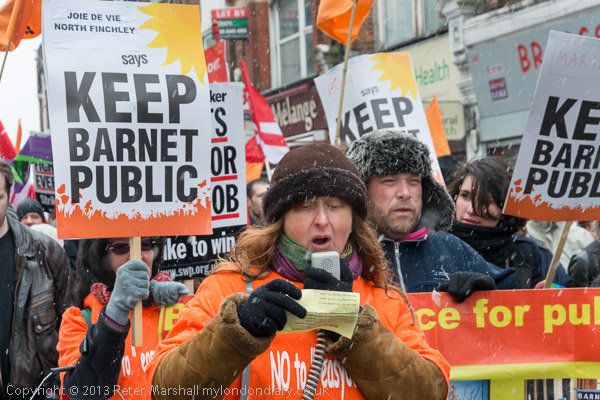
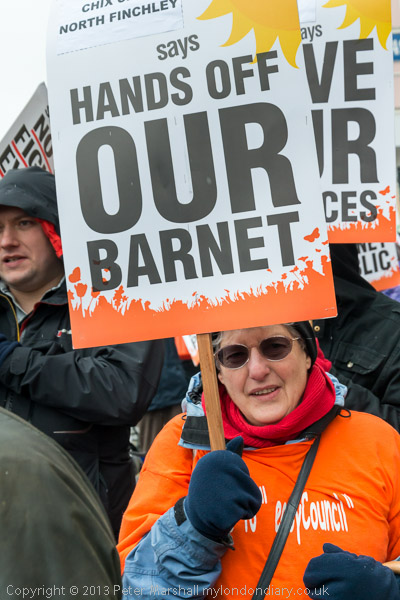
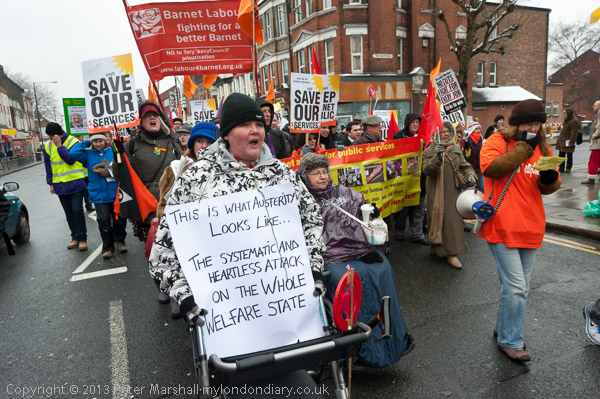
Barnet Spring – Save Local Democracy. The pictures in this post are from a march in from Finchley to Friern Barnet Community Library on 23rd March 2013.
Barnet Spring - Save Local Democracy

Politics in the UK has always been a messy business, both at national and local levels and has become more so in recent years, particularly as the Conservative Party has been keen to promote anti-democratic practices honed in the USA as well as accepting large donations from wealthy sources of doubtful legality as recent controversies over Russian oligarchs have brought into public debate.
Barnet Spring - Save Local Democracy

The current problems have been exacerbated in particular by the Brexit debate, largely carried out through totally misleading promises and false information, which led to leaving Europe and an unhealthily large parliamentary majority in the 2019 election, with draconian laws now being enacted. As well of course as some rather large financial gains by some of those leading the lying.
Barnet Spring - Save Local Democracy

Corruption has always been at the heart of our political system, both at local and national level, and involving some members of all political parties. While we may have got rid of some of the more obviously dubious practices, those which are less obvious appear to have become industrial in scale, now no longer solely the province of individuals and families (particularly those royal and noble) but of companies, including the mega-nationals.
Clearly our electoral system – both at local and national level – has outlived its usefulness and this is reflected in low turnouts at polls as well as a general disillusion in the political system. We need to move to voting systems that more accurately reflect the people and away from one that effectively disenfranchises so many of us. Perhaps to a very different model of government which removes the idea of any permanent political class.
Reform in the UK has almost always been slow and piecemeal, when what we need are radical changes. After many years of debate we have just recently made minor changes to the system of leasehold, when what is needed is its complete abolition, with all leaseholders being granted freehold. Even probably the most radical change of the last century, the formation of the NHS was hamstrung at birth by concessions made – and has since been considerably nibbled and increasingly hollowed by creeping privatisation.
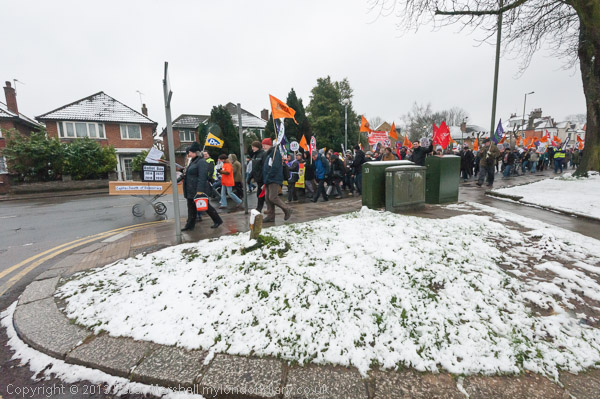
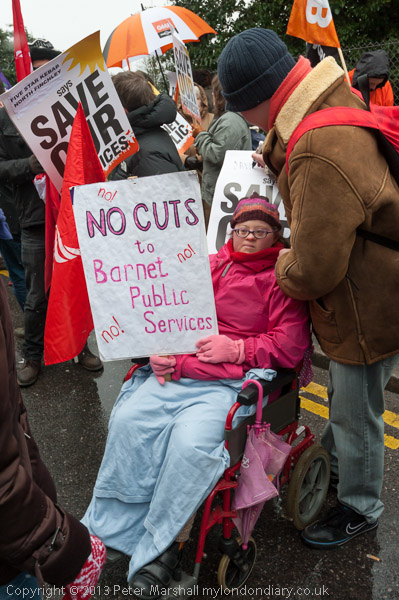
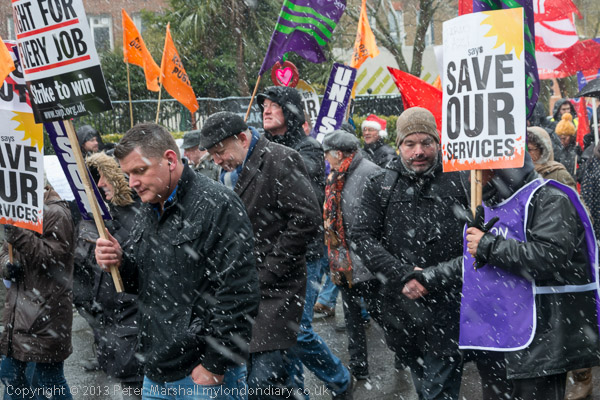
The march took place on a bitter day, where light snow turned into a small blizzard

The reorganisation of local authorities in 1965 was a muddled and half-hearted one, reflecting an unwillingness in national government to cede power to the regions while moving local government further from local people. The advances it could have brought were largely removed by Thatcher’s contempt for local authorities and in particular in London her abolition of the Greater London Council. It’s hard to walk or ride a bus across Westminster Bridge and not to feel rage at seeing the range of offices she sold off on the south bank.
Recently we have seen a backlash against the leader and cabinet model of local councils which gives control to the leader and a select group of councillors and in 2000 became (along with Mayor and cabinet for those authorities with a directly elected Mayor) the required method. In 2012 authorities were allowed instead to revert to the more democratically accountable Committee-based system which had previously been the practice.
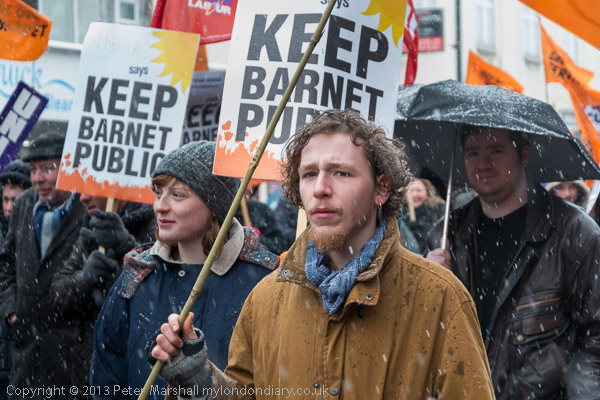
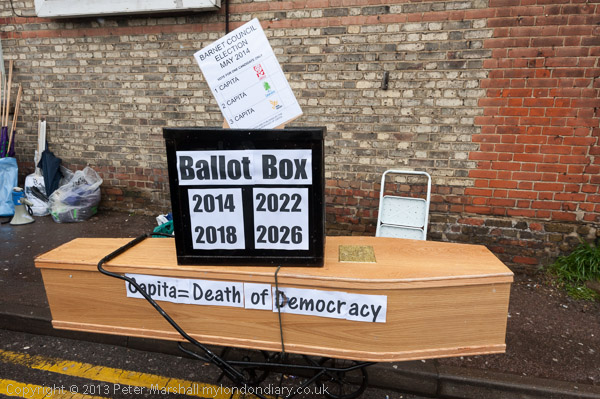
As I wrote back in 2013, “Barnet Council in North London is widely seen as a blueprint for Tory plans to end local democracy and privatise nearly all public services, leaving the local authority merely as a commissioning body.” Barnet’s CEO Nick Walkley introduced the ‘One Barnet’ plans, known as “easyCouncil” in 2009 and negotiated contracts with companies such as BT and Capita worth around £1 billion.

As I commented:

This is a development that ends real local involvement in running local affairs, locking councils into lengthy contracts which seldom meet local needs, but which councils are powerless to change and which often involve huge legal costs for the councils when disputes arise. One contractor has already successfully sued Barnet for over £10m when their contract failed to deliver the anticipated profits, and another, running services for adults with disabilities is failing financially and is drastically reducing the level of service it will provide.
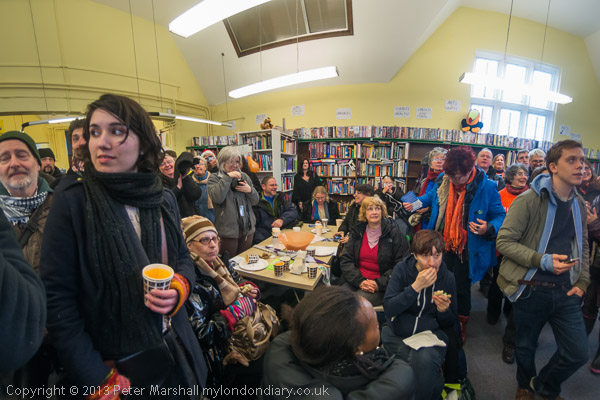
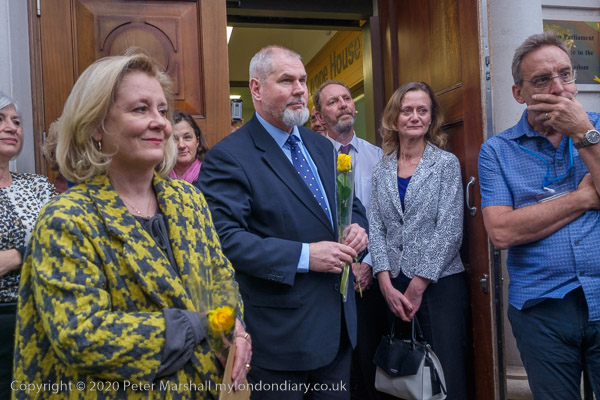
On Saturday March 23rd 2013 I joined with several hundred to march through freezing snow in Finchley against the privatisation of local democracy in Barnet and against cuts in public services . The march began in Finchley, with a number of speeches from an open-top bus, with speakers including Green Party GLA member Jenny Jones (now Baroness Jones of Moulsecoomb), And Labour MPs John McDonnell and Jeremy Corbyn. The march ended at the Friern Barnet People’s Library, closed by Barnet Council in April 2012, but rescued determined by determined community action aided by squatters and reopened officially as a community library in February 2013.

More on My London Diary: Barnet Spring – Save Local Democracy

Why we are short of Nurses

Why we are short of Nurses
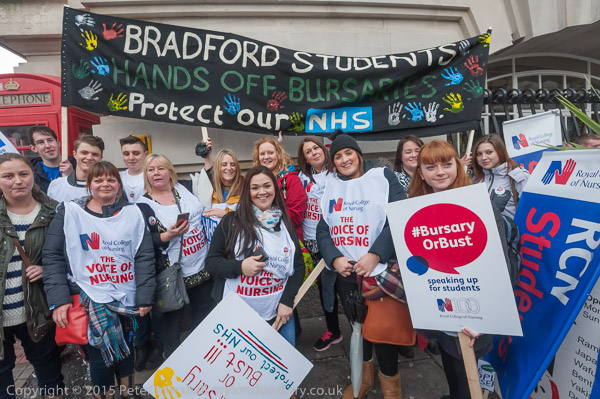
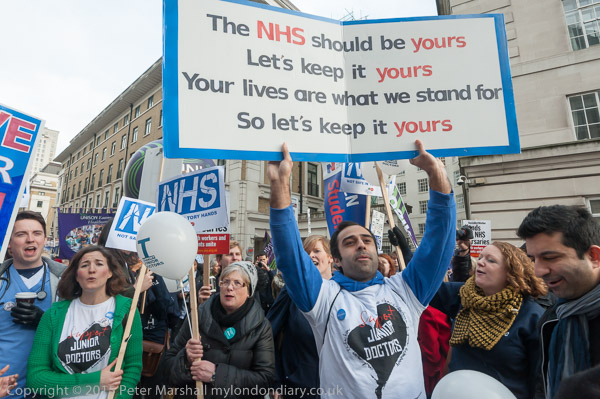
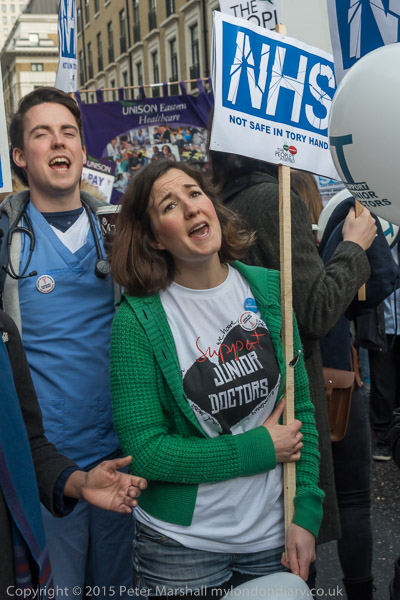
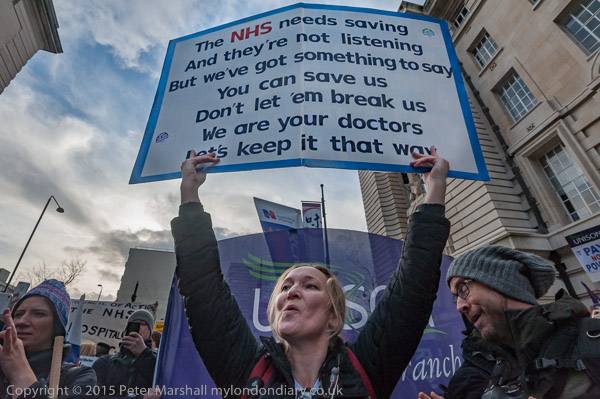
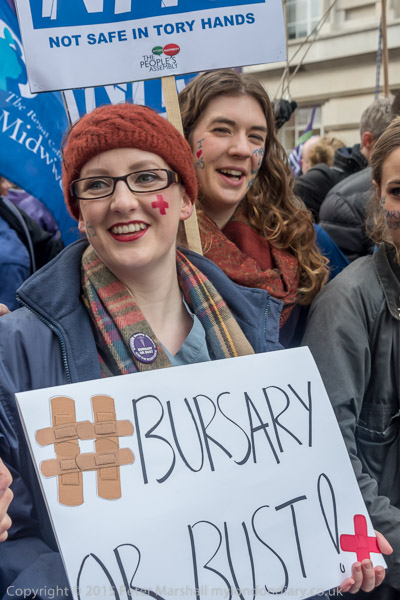
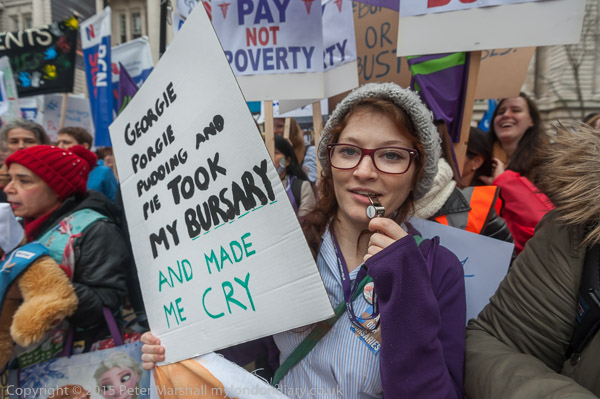
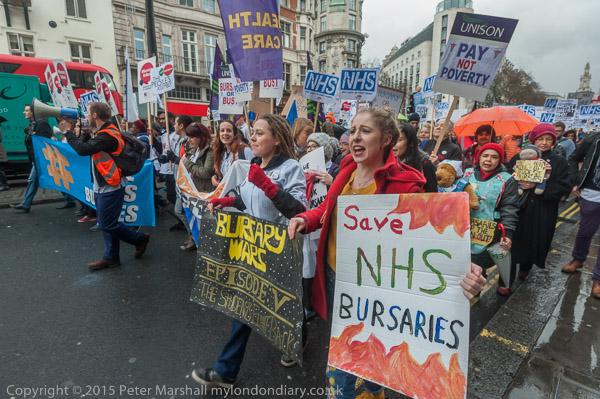
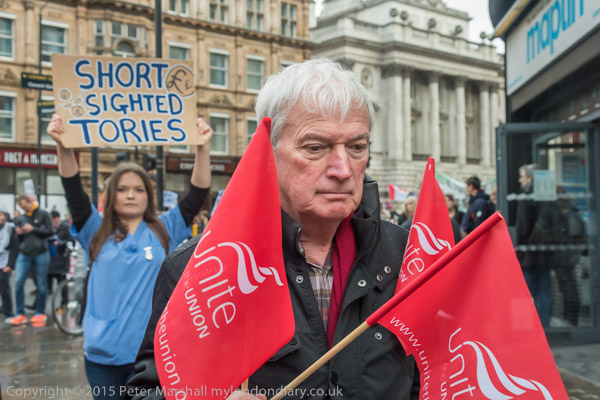
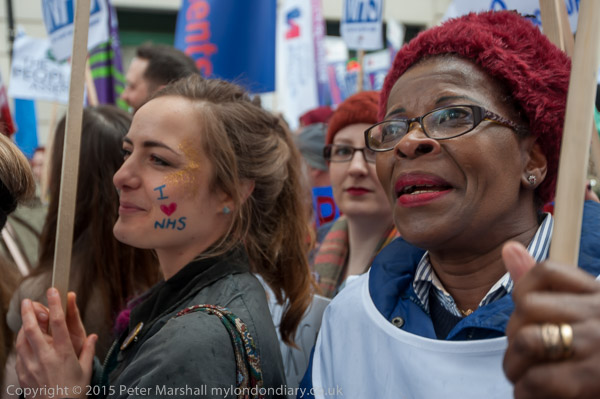
On January 9th 2016 I took the pictures shown here of a rally and march against the axing of bursaries for student nurses and midwives. The current huge surge in hospitalisation of Covid victims as Omicron rages through the nation has highlighted the huge shortage of qualified medical people in the NHS at all levels.

For years, but increasingly since the Tory-led coalition came to power in 2010, there have been huge shortages, with the NHS having to recruit from overseas – including from many poorer countries which are even more short of staff than the UK.

We have of course been bringing in nurses and doctors from abroad for many years – at least from the 1950s – rather than training enough from our own population. It has never been that there were not enough young people who want to be nurses and doctors – and in my years as a teacher I taught quite a few suitable young men and women who were well qualified but failed to gain admission to medical schools where there were perhaps 12 applicants for every place.

Hospitals have also become hugely reliant on agency nurses rather than directly employed staff, partly because of relatively low pay, but also because of a lack of self-defeating lack of flexibility by underfunded NHS hospitals which actually results in increased costs.
But for training nurses, the Tory government really messed things up in 2016 by removing the training bursaries for NHS nurses and midwives. Unlike other students they perform essential work for the NHS in hospitals caring for patients as an integral part of their courses, which makes it virtually impossible for them to undertake other part-time employment during their studies.

And in 2017 things got even worse and nursing students have had to pay tuition fees in the same way as other university students, leaving them with large loans to pay off when they complete their courses and go into employment.

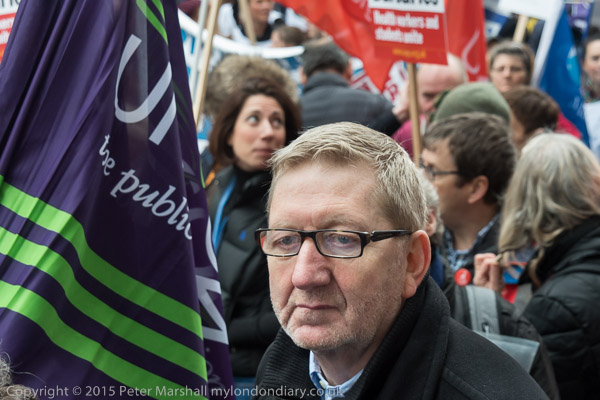
Len McClusky, General Secretary of Unite next to a Unison banner

In 2020 the Royal College of Nursing published a report Beyond the Bursary: Workforce Supply which makes the point that at the start of the pandemic there were almost 40,000 nursing vacancies in the NHS in England alone, and called on government to develop a fully funded workforce strategy and aim for “an oversupply of nurses given years of underinvestment and the growing needs of our population.

The report notes that following the removal of the bursary there was a 31% drop in applicants for nursing courses, and over 4% fewer being accepted. Where we needed and increase in numbers being trained due to the shortage, government policies directly produced a decrease.

The RCN called on the government to abolish the tuition fees for nursing courses and reimburse the fees for those students affected by the removal of the bursary. And although the welcomed the decision to bring back an annual maintenance grant of £5000 for nursing students (£8,000 for some difficult to recruit specialities) from September 2020 they asked for that to be increased to a level that reflects the actual cost.

Of course the pandemic has made things worse. Some have died from Covid, partly as a result of the failure to provide effective protective clothing – and those contracts given to Tory mates with no experience in the field while some established companies failed to get orders. Many among those who recovered from Covid continue to suffer its after-effects – ‘long-Covid’. Others have simply been exhausted by overwork – and this is “a workforce that felt undervalued, unrewarded and where one in three were nearing retirement age.”

Brexit too has taken its toll, both with nurses from European countries leaving the UK and the failure of our government to respect the early promises it made to EU citizens working in the UK has not helped. Brexit and the continuing squabbles by the government over the treaty it signed is also a deterrent to people to now come and work here.

The shortage of nurses – and other medical staff – is a direct result of government policies. Not just the Tories but also of Labour under Blair and Brown, and is a part of the slow sabotaging of the NHS as a part of a policy of creeping privatisation that has been underway since at least the Thatcher years, though vastly accelerated since 2010. Unfortunately it isn’t as one placard states that the Tories are short-sighted, but that they are playing a long game to undermine our National Health Service.

More pictures on My London Diary:
NHS Bursaries March
NHS Bursaries rally before march


MP Threatened Over Brexit

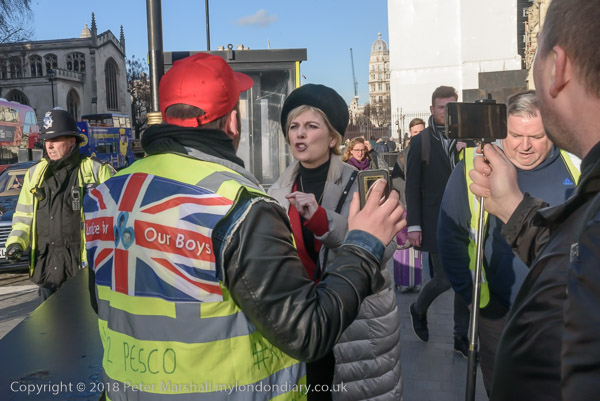
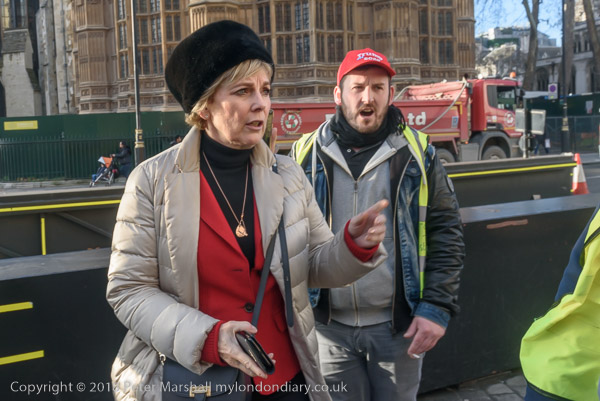
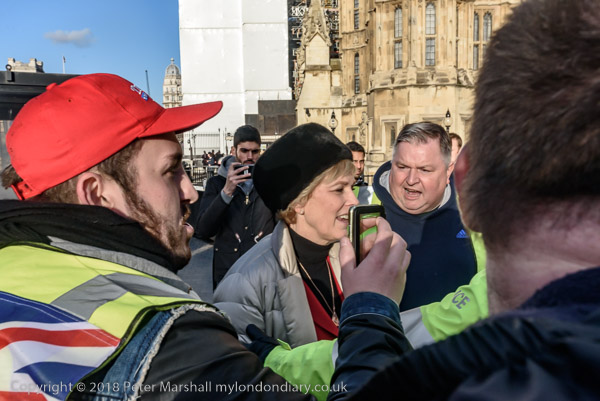
Anna Soubry MP harassed by extremists

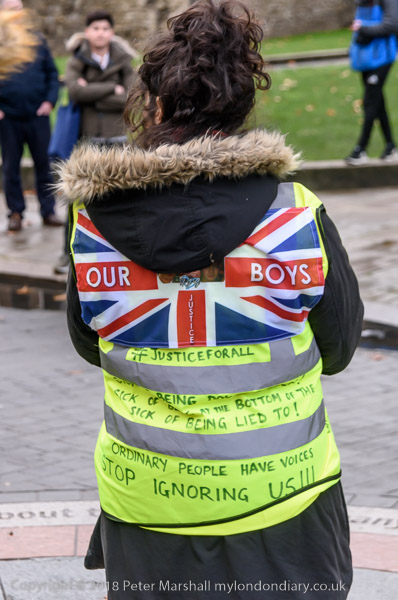
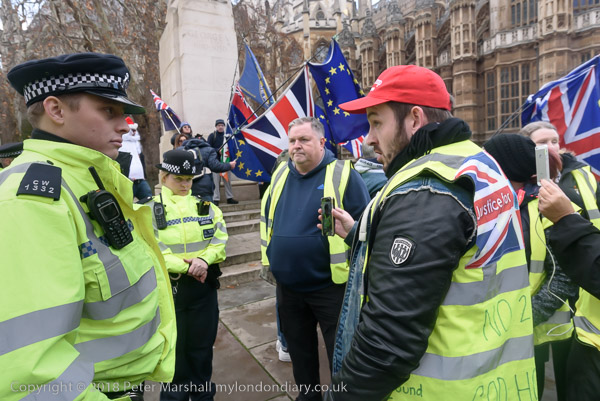
On December 19th 2018, tempers were still running high over Brexit, and I had been photographing extreme Brexiteers shouting at and threatening Steven Bray and other pro-Europeans as they continued their daily vigil outside parliament.

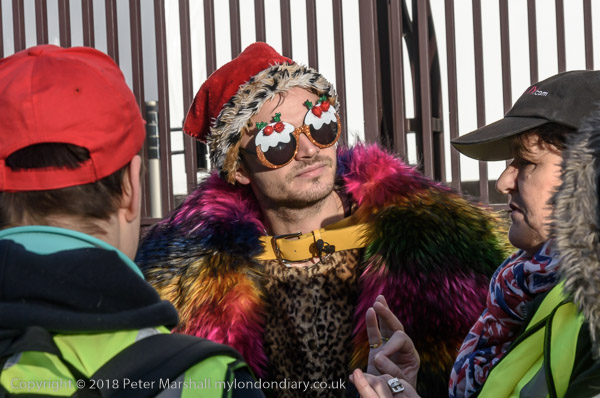
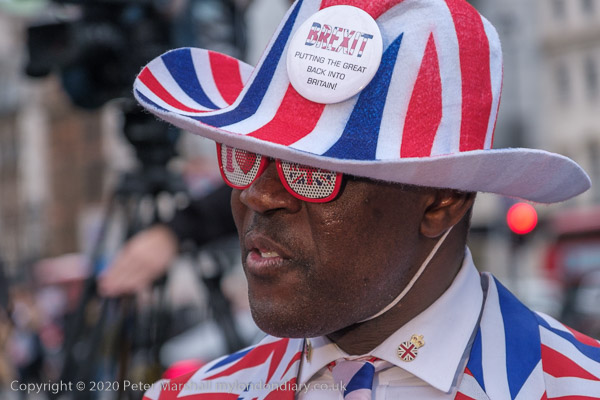
The protests across lunchtime seemed to be drawing to a close when I noticed the small group of extremists interviewing a bizarrely-dressed blogger outside the public entrance to the Houses of Parliament and went across to take some pictures.

Then they saw Anna Soubry, then the Conservative MP for Broxtowe, on the west edge of Nottingham and a vocal pro-European walking past and confronted her. She stopped to talk and argue with them, and they angrily shouted at her. She called to a police officer nearby for support, but he simply told the protesters to stop and ignored them when they failed to do so. Eventually after a minute or so she managed to turn away and walk past more police into Parliament, and officers then prevented the Brexiteers from following her.

I filed the pictures rather more rapidly than usual to meet deadlines as I realised that I was the only photographer present (though at least one of the extremists was filming the confrontation) and was pleased to see a few of them in the papers later. Though had I been with a more active agency I would have made much more from the set.

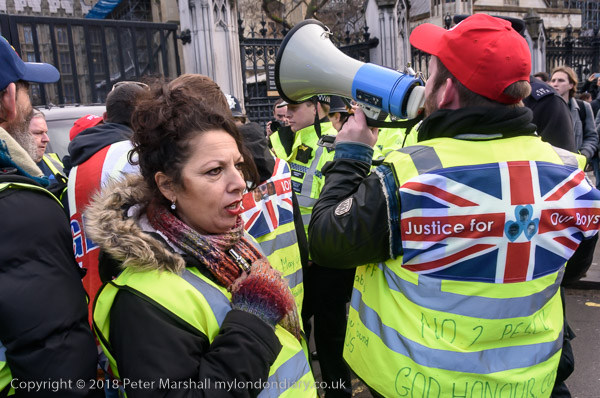
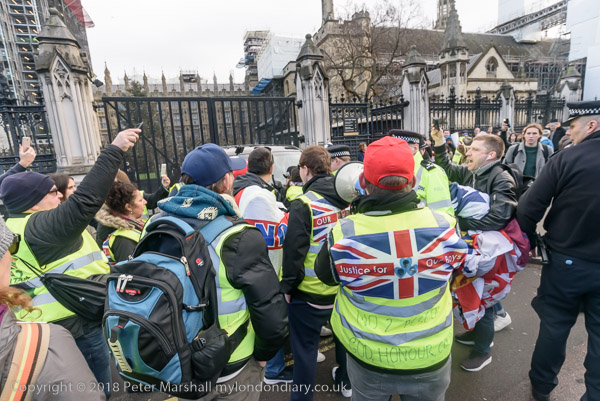
Extremist Brexiteers at parliament

Here are a couple of the pictures from a few minutes earlier outside the gates of Parliament.

Police were holding them back as they tried to stop cars leaving through the gates.

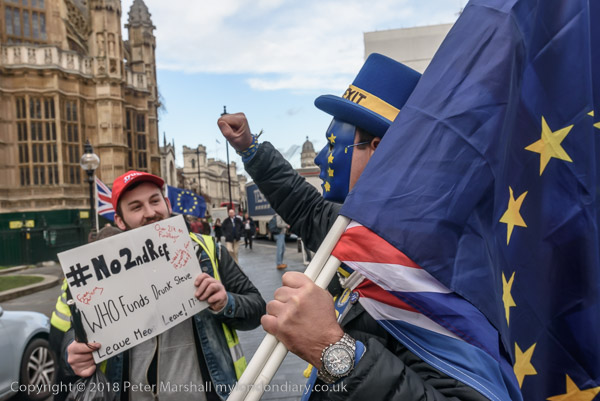
Extreme Brexiteers clash with SODEM

Earlier the group of extremist Brexiteers had been harassing Steven Bray and the supporters of SODEM, (Stand of Defiance European Movement) the group he founded in 2017 and which was holding daily vigils whenever Parliament was in session.

They accused Bray of being a drunk and asked “Who funds Drunk Steve”, a question that was rather redundant as two large banners were covered with logos of a wide range of organisations supporting SODEM’s daily pickets. There was a lot of shouting, threats and aggressive gestures, but no actual violence with police trying with little success to separate the two groups.

I’d photographed both groups on previous occasions, and had given up on going specially to photograph them, but was still taking pictures when I had gone up to cover other events – as on this Wednesday. SODEM were always pleased to be photographed, but their opposition at times objected to my presence.

MP welcomes Delhi to London driver

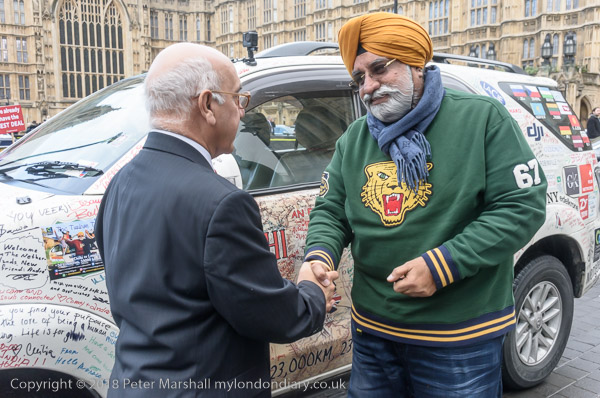
Another event that happened while I was there was the arrival of The Turban Traveller, a Sikh with a film crew from Creative Concept Films in Delhi who arrived in London today after driving overland from Delhi and was greeted by Virendra Sharma, Labour MP for Ealing Southall.

Cuts kill disabled people say protesters

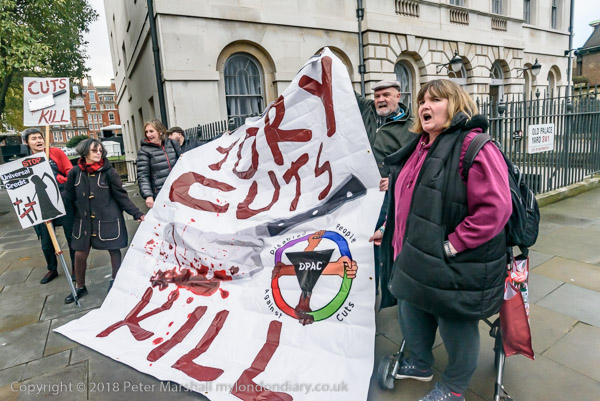
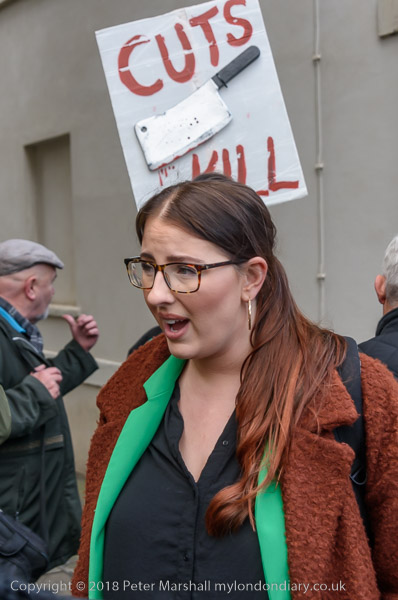
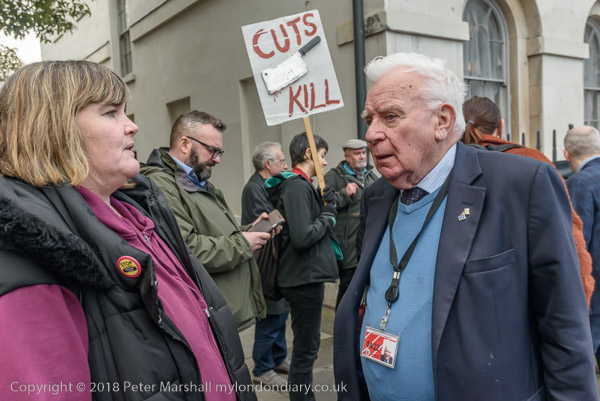
But I had come to Parliament to photograph disability groups DPAC (Disabled People Against Cuts) and MHRN (Mental Health Resistance Network) who together with WOW campaign were protesting against the cumulative impact of the cuts on the lives of disabled people.

The War on Welfare campaign attracted over 200,000 signatures to its petitions against welfare cuts, and the protest was in support of a debate due later in the day on the cumulative impact of the cuts on the lives of disabled people.

Among those who came to speak with the protesters was Virendra Sharma MP, who had come out to meet the Sikh overland traveller and although showing an interest seemed to be unaware of the problems the cuts had caused the disabled, Laura Pidcock (then MP for North West Durham) and Lib-Dem peer Lord Roberts of Llandudno. Both the latter seemed very concerned about the terrible effect the various cuts falling particularly on the disabled.


Anna Soubry MP harassed by extremists
Extremist Brexiteers at parliament
Extremist Brexiteers clash with SODEM
MP welcomes Delhi to London driver
Cuts kill disabled people say protesters


Brexit and More: 20th Oct 2018

Brexit isn’t the end of the world, but it is beginning to become very clear what a huge mistake it was, driven by a relatively few people who not only stood to make large profits but also were scared of losing the huge advantages they get from currently legal tax avoidance schemes which the EU were promising to clamp down.

The vote – a close one – shows how the handful of billionaires who control most of our media and set the agenda for the rest use their power to influence many voters in this country, making a mockery of the ideals behind our ideas of democracy. It also showed the stupidity of the then Conservative leader who was so sure of winning that he set up the vote on an important constitutional change in a way that would not have been allowed by the average tennis club, where important issues would need rather more than a simple majority.

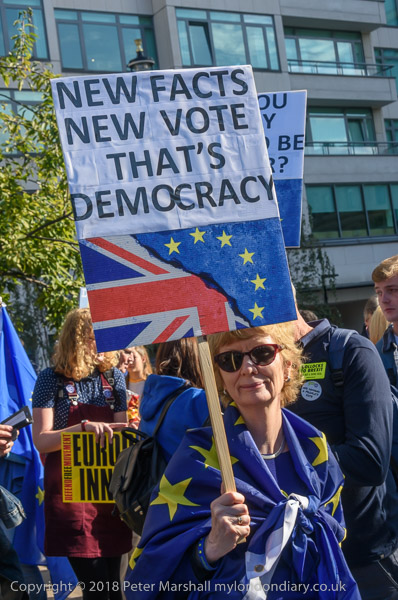
Those behind the People’s Vote argued that so much evidence had come out since the referendum that it was necessary to get a new mandate from the people to leave the EU. It was an argument that although well-founded was not going to get any support from the then PM Theresa May who was by then running scared of the right-wing hard Brexiteers who eventually took over the party. And it was also to prove toxic to the Labour Party who were pushed into supporting it by Keir Starmer – when there was already no shortage of poison and dirty tricks – as a leaked report made clear – though we still await the report of the Forde Inquiry on this.

The current dispute over the agreement signed with the EU to resolve the problems of the Irish border shows how eager the Johnson government was to get a hard Brexit done, apparently signing up without reading the small print (or rather ignoring the advice of civil servants who had read it.) Although the EU seem to be making things as easy as possible for exports to flow freely it currently seems likely that the UK will continue to demand the impossible and trigger a complete breakdown and a massive and highly damaging trade war, probably not confined to Europe.

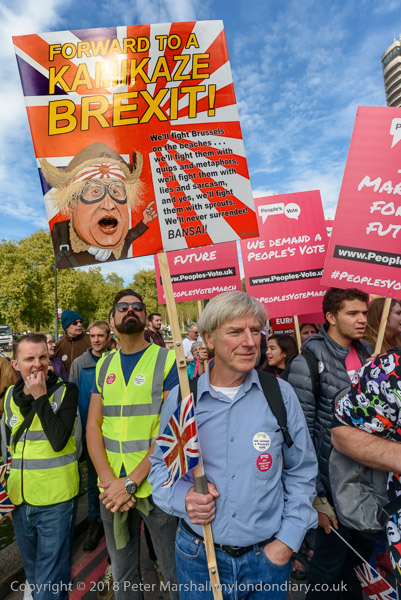
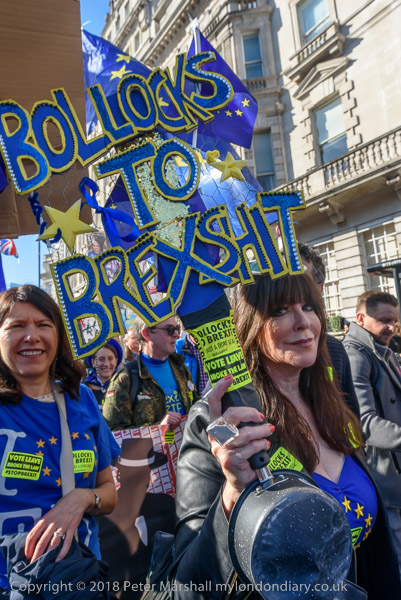
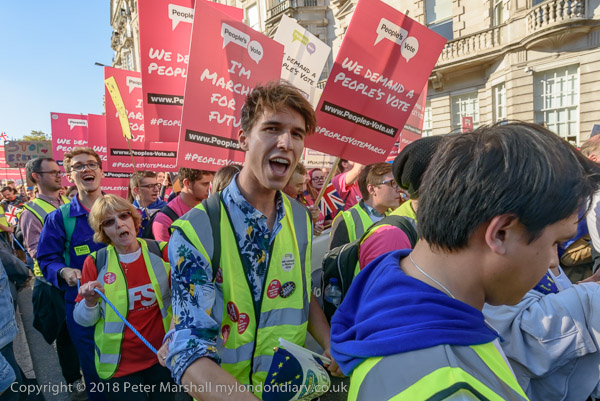
I photographed at the start of the huge People’s March, when people filled much of Park Lane and a large corner of Hyde Park, and watched as they streamed past me.

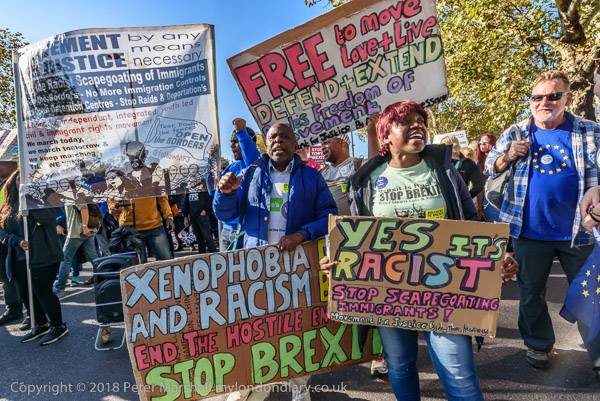
Movement for Justice came to the march and tried to join it near the front, and when they were refused went and stood on the road in front of the official banner – along with quite a few other protesters. They were calling for an end to the hostile environment and the scapegoating of immigrants and demanding an amnesty for all people already present in the country and the extension of freedom of movement to include the Commonwealth. They marched down Piccadilly ahead of the main march whose start was held up.

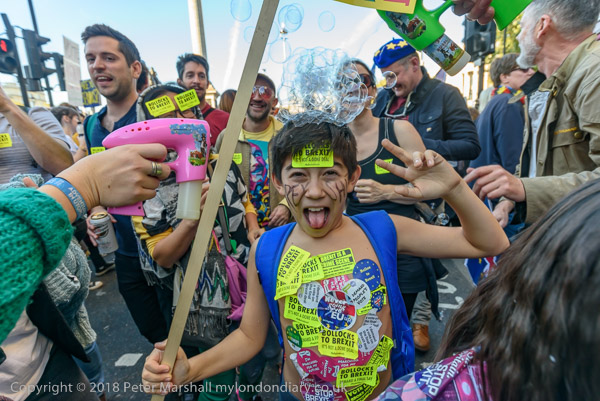
Later I rejoined the main march as it came down Whitehall for the rally in Parliament Square. There were so many people that they could not all get into the square and many came to a halt along Whitehall, while others were reported still to be at Green Park, just a short distance from the start of the march. People were dancing and partying on the route having given up the attempt to complete the march.

A couple of other protests were taking place around Whitehall. Opposite Downing St the
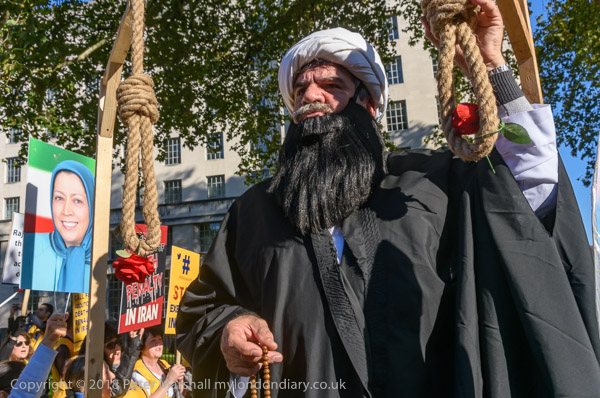
People’s Mujahedin of Iran were protesting against the repressive regime in Iran,. there and calling for an end to executions there Posters reminded us that the Iranian regime is the world record holder for executions and gibbets and three women held in a prison cell illustrated the reign of terror there.

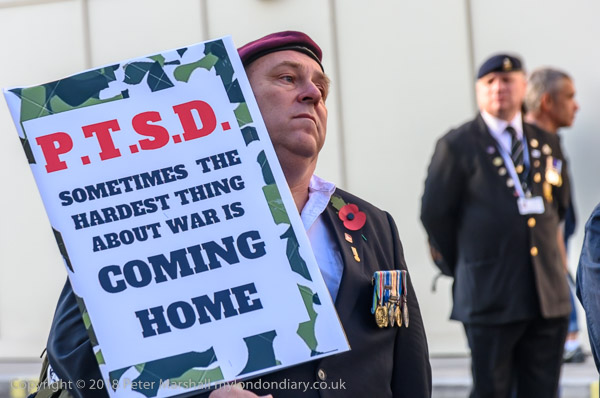
At the Ministry of Defence Veterans United Against Suicide were calling for more to be done to help service men and veterans in the fight against their developing PTSD and eventually committing suicide. They appeared to be a small extreme right group exploiting the issue, with a large banner supporting the soldier discharged for standing with Tommy Robinson in a photo used to publicise his extreme right-wing views. While I took a few pictures a speaker was condemning one of the major forces charities, accusing it of fraud and failure to act over the mental health issues. Some of those present made clear that I was not welcome at the event and I decided not to stay.

More at:

People’s Vote March – End
Veterans United Against Suicide
People’s Mujahedin of Iran
MfJ at People’s Vote March
People’s Vote March – Start


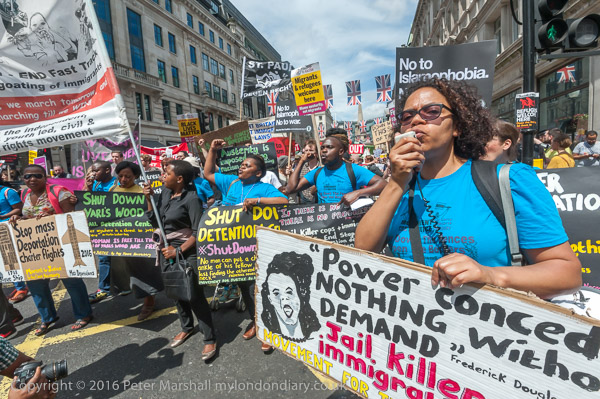
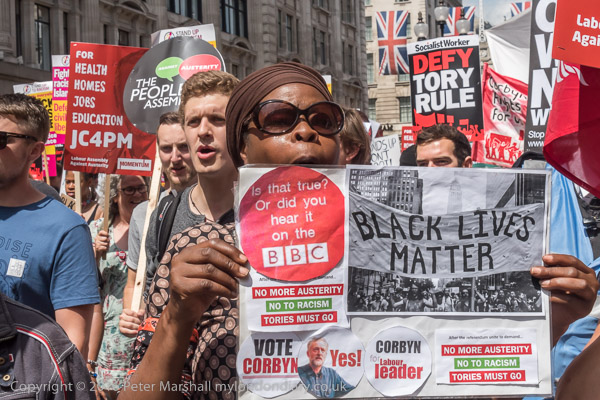
End Austerity, No to Racism, Tories Out! 2016

Five years ago the People’s Assembly and Stand Up To Racism organised a march through London as a response to the referendum campaign conducted by many Brexit campaigners on an anti-immigration platform which had provoked an upsurge in racism and hate attacks on Black and particularly Muslim people online and on the streets of Britain.

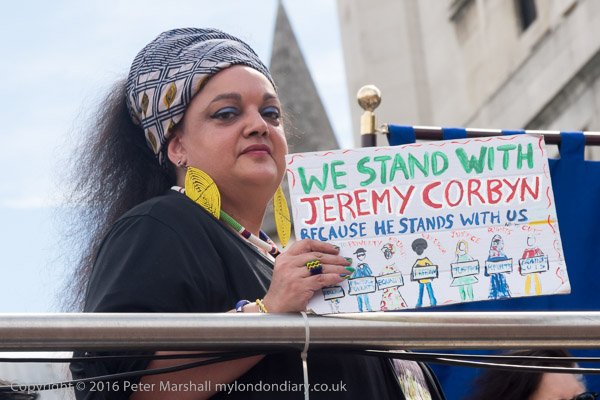
The marchers met outside the BBC, as I wrote ” in the forlorn hope that they might for once cover a protest in Britain properly” but of course they ignored the thousands on their doorstep. Probably they were too busy giving Nigel Farage a quite disproportionate amount of publicity and air-time, along with the Labour plotters against Jeremy Corbyn – who sent a message of support to the marchers and like them showing solidarity with refugees and asylum seekers.

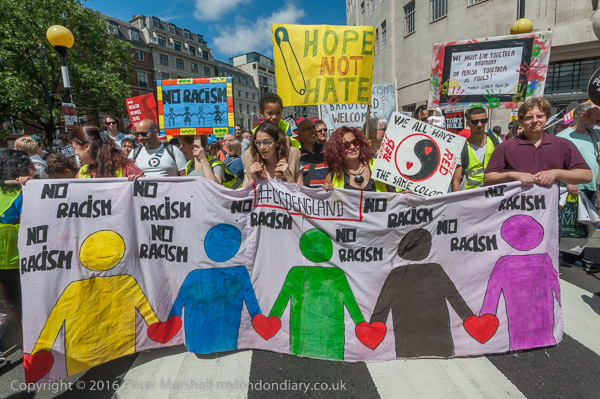
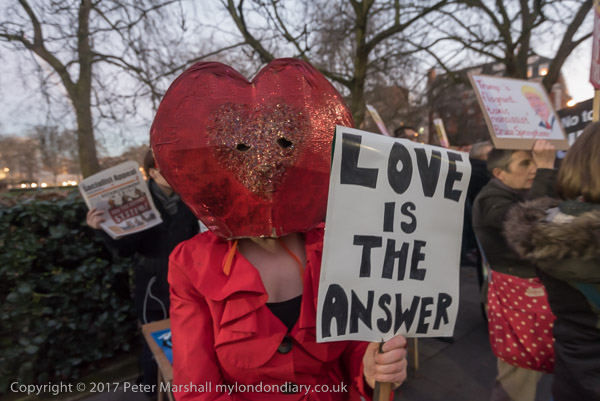
This banner and the placards for me summed up the message of the march, a demand for ‘Hope Not Hate’ and for people of all backgrounds to join hands in love and respect and say ‘No Racism’. We’ve recently seen a huge backlash against racist remarks against footballers in the English team showing that people across the country oppose racism, whether from the far right or Tory ministers and MPs who denigrate footballers who ‘Take the Knee’.

Later I managed to get to Parliament Square for the rally at the end of the march with speakers from many organisations, including an asylum seeker as well as politicians and activists. It was a sunny day and there was a warm and pleasant atmosphere in the large crowd listening and applauding the speakers.

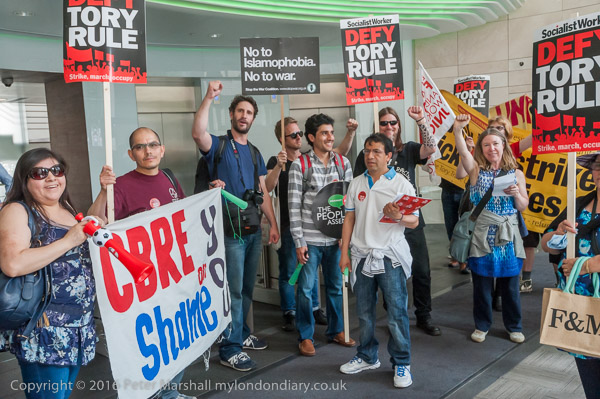
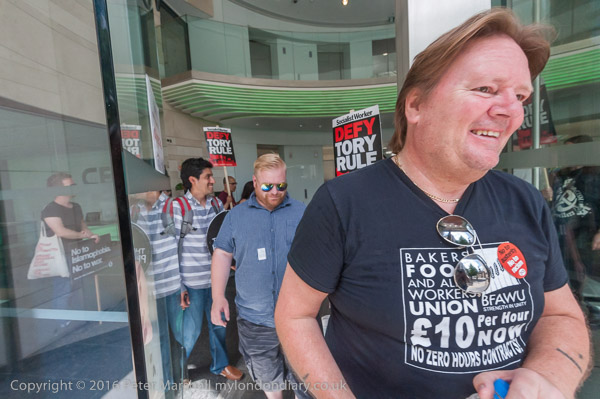
I’d waited on Regent St as the march set off for some time until the last of the several thousand marchers had passed me, then hurried off to the HQ Offices of CBRE in Henrietta Place, where cleaners from the strike at 100 Wood St, managed by CBRE, had broken away from the march to stage a flash mob, along with supporters including United Voices of the World General Secretary Petros Elia and Bakers Union (BFAWU) National President Ian Hodson.

I’d arrived too late to go with them into the foyer, whose large glass doors were firmly locked when I arrived, but after a few minutes photographing through glass the doors were opened I was able to take a few more pictures as they got ready to leave. They went on to rejoin the march, but I went off to look for the English Defence League whose protest had been called to oppose that by the People’s Assembly.

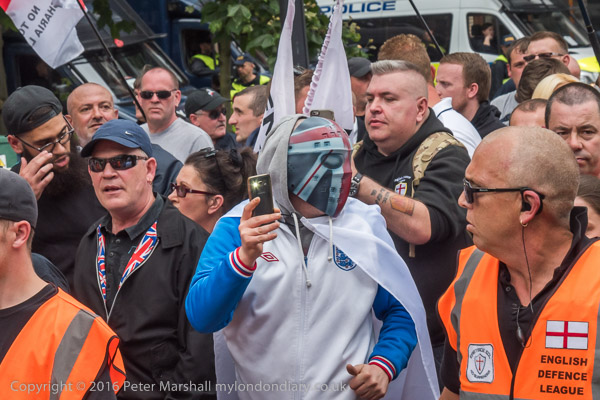
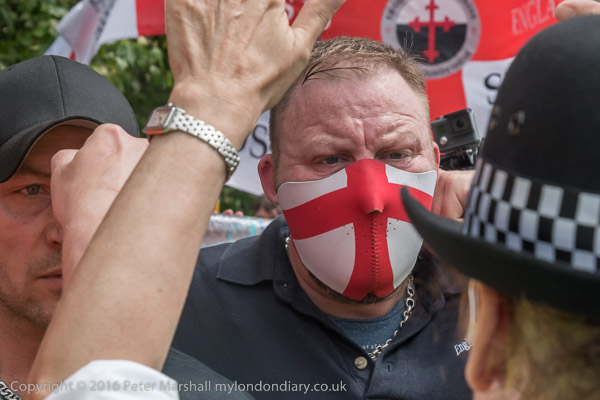
I don’t like photographing extreme right-wing groups such as the EDL. It gives them publicity, which they don’t deserve as it exaggerates their importance. Generally their protests are small and their extremism represents a very small fringe of our society, though racist attitudes unfortunately are much more widespread. But rather more directly they are generally not nice people to be near. They shout and scream messages of hate, often in vile language, and routinely threaten me as I take photographs. I’ve been spat at and even, fortunately not often, grabbed, pushed and punched.

While with most protests I can move freely through the event, at these I need to keep a safe distance away. I’m usually glad that police are present, and without them I would be assaulted and my equipment smashed, but police sometimes make any photography virtually impossible. While I’d managed to cover the march I could only see brief glimpses of the rally which followed through several lines of police with several hundred of them surrounding perhaps a hundred protesters. I gave up then and took the tube to cover the anti-racist rally.

EDL march and rally
Cleaners Flash Mob at CBRE London HQ
End Austerity, No to Racism, Tories Out!


All photographs on this and my other sites, unless otherwise stated, are taken by and copyright of Peter Marshall, and are available for reproduction or can be bought as prints.


London 20 May 2017

Probably the question I’m most often asked about my photographs of protest is how I find out what is happening. Back in the old days of the last century it was difficult, and I photographed far fewer events. I’m not sure if there were fewer protests, though I think so, but it was certainly then much harder to find out about them. Apart from the printed newsletters and magazines of organisations there were posters pasted illegally on mainly derelict sites around parts of London and the flyers that were handed out at one protest about others in the following months. And word of mouth, again mainly from people I met at protests.

With the Internet, and in particular the World Wide Web and web browsers things began to change, though fairly slowly at first. Organisations slowly began to have web sites and advertise their protests on them; others set up e-mail lists and in 1999 Indymedia began. Google had been founded a year earlier, but there were other search engines more prominent for some years; at the time I was earning money writing for a commercial web site and much of my work depended on web searching to find content to write about – and I also searched for protests, building up a long list of useful sites.

Over the next few years, Google came to dominate web searching and social media began to be more important. By around ten years ago most protests had become Facebook events and much of my diary could be filled in by a search through the events on that platform. Also as I put more of my photographs on-line, at first through Indymedia and later through Facebook and Demotix, I began to get more and more invitations by e-mail and through Facebook to events, some in London and others around the country and world I could not possibly attend. And of those that were in my area I could only cover a fairly small fraction, generally those I saw as most important.

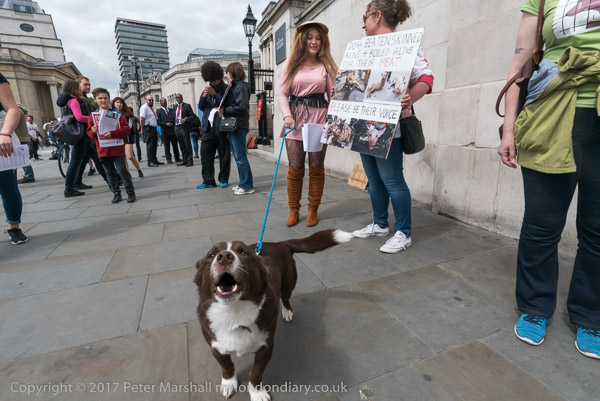
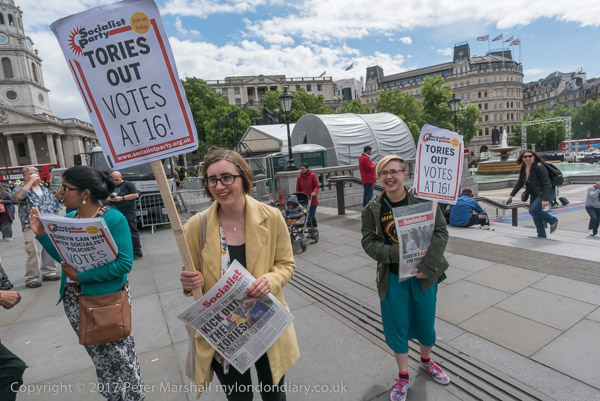
But there were and are those protests I came across by accident, often when covering other events. I’m not sure now whether or not I was aware that 20th May 2017 was Fight Dog Meat Kindness and Compassion Day, but while I’m against torturing animals I would not have gone out of my way to photograph the End dog and cat meat trade protest but was there in Trafalgar Square for Teen Voice says votes at 16, where young people were saying it was unfair they had not been able to vote in the Brexit referendum – while they can work, pay taxes and even join the armed forces they had no say in a decision which will effect their future to an arguably greater extent than anyone who voted.

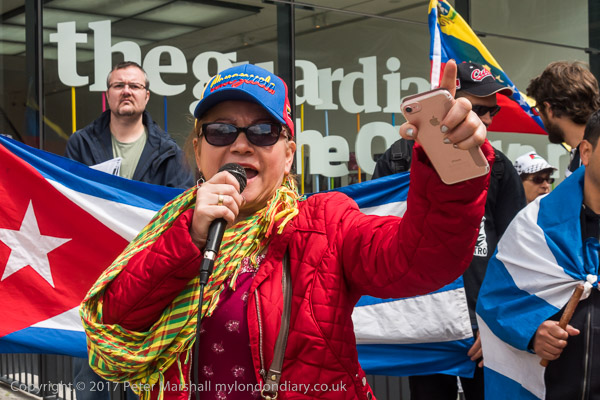
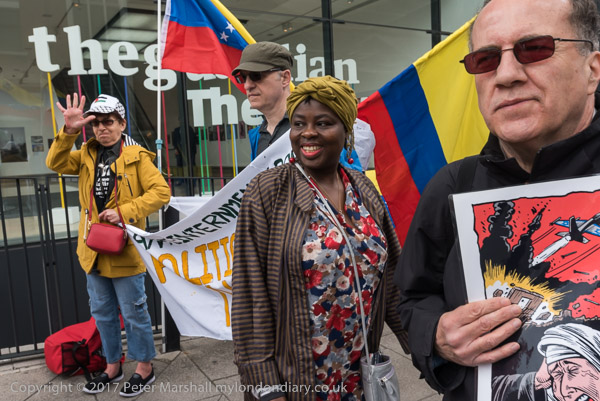
The protest at The Guardian newspaper was very definitely in my diary, and I was saddened by their coverage of events in Venezuela, which has consistently taken the side of the right-wing middle class in that country against President Maduro and his predecessor Hugo Chávez whose reforms have done so much, decreasing poverty, providing free health care and education, devolving power into the hands of local collectives and building homes for the working class. While reporting on the ‘pro-democracy’ protests which are part of a US-backed right-wing coup it has failed to report their attacks on hospitals, schools and socialist cities which have led to many deaths and the mass demonstrations in favour of the government by working class supporters.

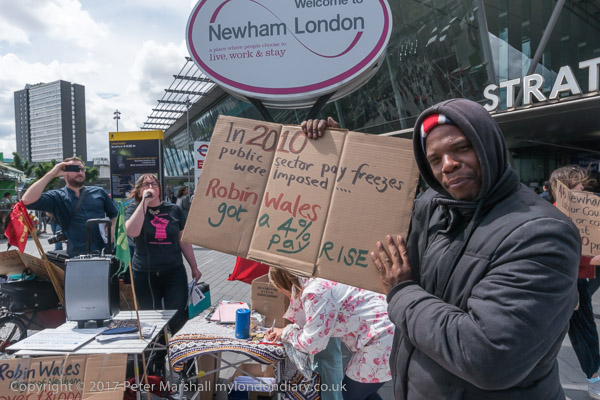
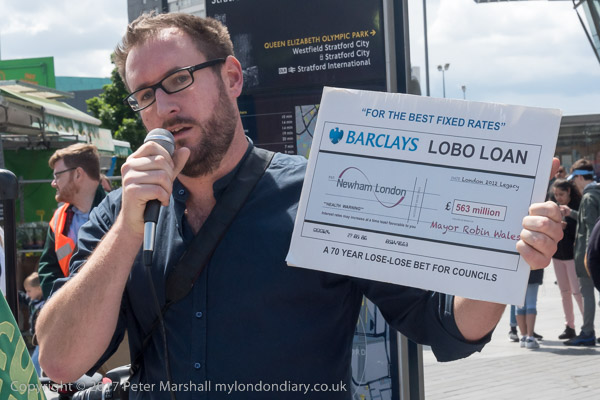
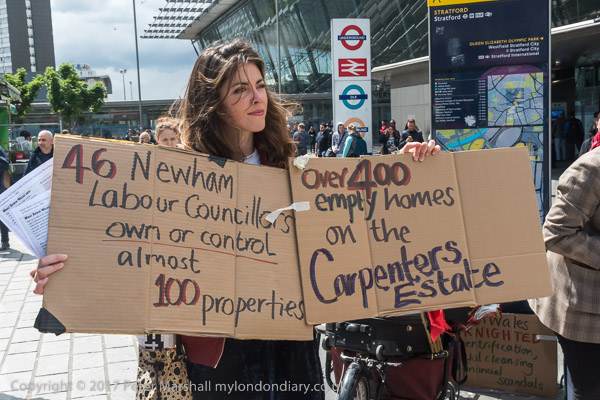
Thanks to the Jubilee Line I was able to travel on to Stratford to photograph Focus E15 launch The Newham Nag, a handout giving some of the facts about Newham Council which somehow were not included in the council’s glossy information sheet. Newham has more homeless than any other local authority in England – one in 27 residents – and more evictions from rented accommodation than any other London Borough. As well as failing housing policies with many homes deliberately kept empty for over ten years, Mayor Robin Wales is also responsible for huge and disastrous expensive long-term loans which mean 80% of council tax from Newham’s residents goes directly in interest payments to the banks.

The protesters here on the wide plaza in front of Stratford Station were harassed by both police and Newham Council officers who made the ridiculous claim they were causing an obstruction in the large uncrowded area and issued them with a £100 fixed penalty notice, part of the ongoing attempt by Newham to silence Focus E15 who continue to throw a spotlight on the activities of Newham Council and Mayor Robin Wales, both a disgrace to the Labour movement. Eventually even Newham Labour could no longer stomach another term for Robin Wales, though his successor has yet to greately improve matters.

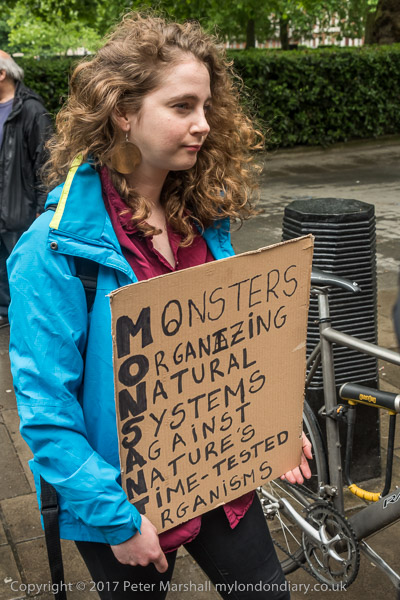
Finally it was back on the Central Line to Grosvenor Square, still then the home of the US Embassy, where March Against Monsanto was protesting – along with others in an international day of protest – against the use of genetically modified organisms (GMOs), glyphosate-based herbicide Roundup, dangerous bee-killing neonicotinoid pesticides, and the need for improved protection victims of multinational corporations. It turned out to be a disappointingly small protest even though the then ongoing secreetive TTIP trade talks between the EU and the USA could have lead to a deal which would override our national laws which protect our health and safety and endanger the integrity of our food supplies as well as banning or greatly restricting the traditional practice of farmers saving their own seeds.

March Against Monsanto
Focus E15 launch The Newham Nag
End media lies against Venezuela
Teen Voice says votes at 16
End dog and cat meat trade


All photographs on this and my other sites, unless otherwise stated, are taken by and copyright of Peter Marshall, and are available for reproduction or can be bought as prints.


Brexit – One Year On

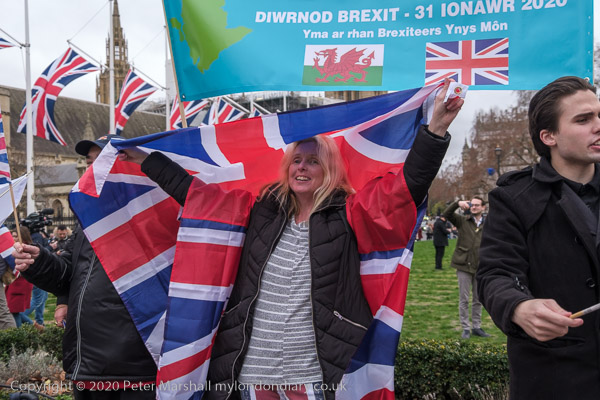
Celebrating Brexit in Parliament Square

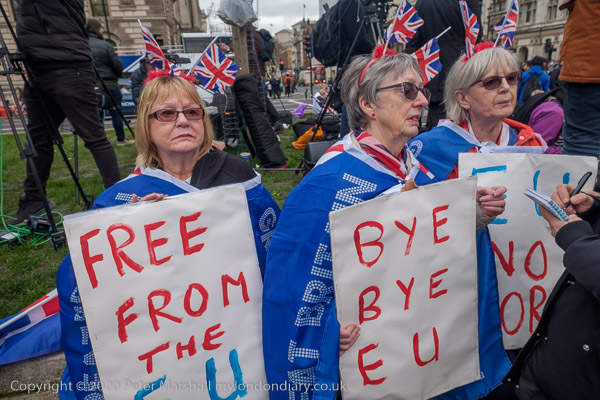
A year ago there were people celebrating that we were about to leave Europe. Some of them are probably still celebrating now, though we’ve yet to see any of the many advantages that were promised, and have had to come to grips with a few of the downsides.

People had come from across Britain to celebrate

Of course the virus has rather taken our minds off Europe, and while the date of 31st January 2020 had political significance, the transition period and apparently endless bickering over a trade agreement meant that effectively we only left on Christmas Eve – and with an agreement that, thanks to the ridiculous negotiating strategy of our government who seemed to expect that Europe would somehow cave in if we kept shouting at them in English that we would leave without a deal, was considerably less favourable than was on offer earlier in the process.

It’s been a year in which the sheer incompetence and greed of the Conservatives in handling the virus emergency – and in particular the handing out of contracts to their unsuitable and unqualified friends and donors and a dogmatic attitude towards local government and their efforts over previous years to move the NHS towards privatisation has led to many tens of thousands of avoidable deaths. In particular the near-total failure of a national system of tracking and tracing and a poorly implemented phone-based system seemed deliberately designed to increase transmission, perhaps in line with the government’s initial espousal of developing herd based immunity. This would have required a very high percentage of the population to have become infected, and given what was known at the time about the likely death rate, would have resulted in around 400,000 early deaths. Some in government apparently saw that as a bonus, as these would largely have been among the elderly and unproductive, hugely reducing the payments of pensions and other benefits and, post-covid, the costs of what remained of the NHS.

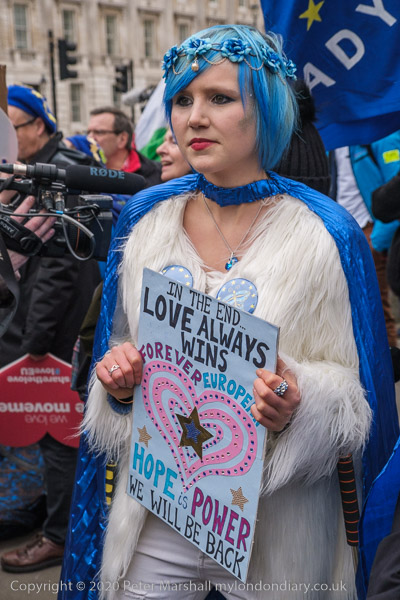
EU Supergirl’ Madeleina Kay – Forever Europe

But back on 31st January a year ago, Covid was not much on our minds (I began to get warnings I should isolate though contacts with those scientists advising the authorities a couple of weeks later – and it took another month after that for the government to react.) But Europe very much was, and as well as those celebrating there were others mourning our loss and celebrating “the 47 years we were in the EU and all we contributed and the positive influence it has on our country.”

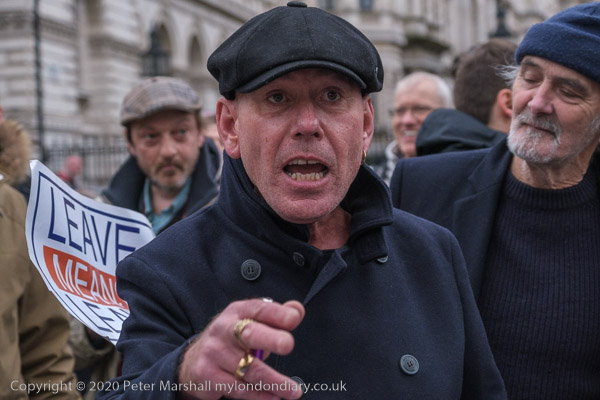
A man shouts insults

The deliberately met several hours before the pro-Brexit celebrations were due to start avoid any clashes as they marched from Downing St to the offices of the European Commission in Smith Square, but despite this triumphant extreme-right Brexiteers came to Downing St to shout insults, calling the EU supporters traitors and telling them they were not British, bad losers and more. After police had managed to separate the more aggressive of them moving them to the centre of Whitehall they then attempted to burn an EU flag. The flag refused to burn, though it melted a little in the parts that were heated and the flames came almost entirely from an aerosol spray and some paper fliers.

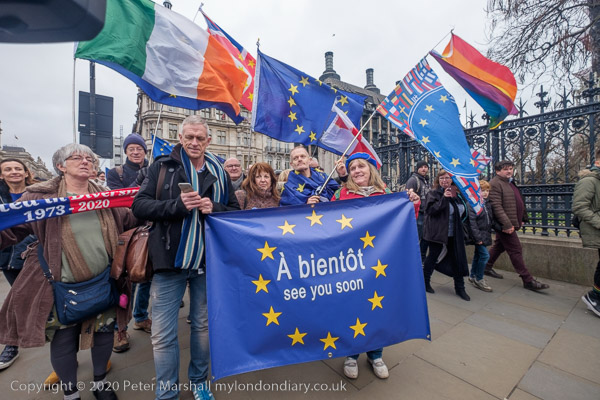
Marchers celebrate our 47 years as part of Europe

The march went ahead, with just a few jeers as it passed through Parliament Square. At Europe House the European Commission staff came out to welcome them and were given flowers and there was a short speech expressing thanks for what the EU has done for our country and hoping that one day we will rejoin Europe.

European Commission staff meet the march outside Europe House

I went home then not wanting to join in the celebrations that were shortly to take place in Parliament Square. As I wrote at the time:

I’d had enough of Brexit. We will have to live with its consequences for some years and I’m not looking forward to it. Times are likely to be tough for the poor, the disabled, the sick and for workers generally,
including most of those who voted for it and were celebrating in Parliament Square. The wealthy will of course gain – not least by avoiding the clamp down on tax evasion which the EU is now beginning.

My London Diary, Jan 31 2020

À bientôt EU, see you soon
Extremist Brexiteers Behaving Badly
Brexiteers celebrate leaving the EU


All photographs on this and my other sites, unless otherwise stated, are taken by and copyright of Peter Marshall, and are available for reproduction or can be bought as prints.


Inauguration Day

Trafalgar Square, 20/1/2017

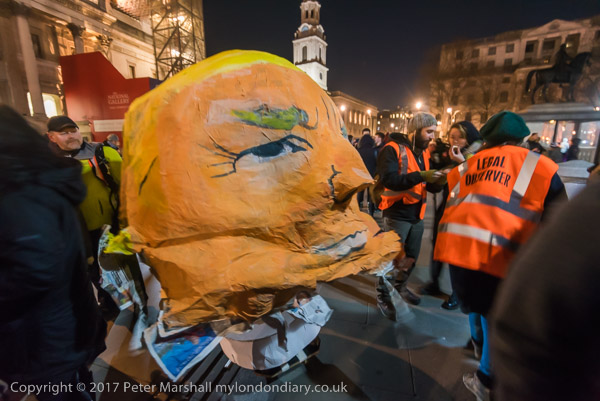
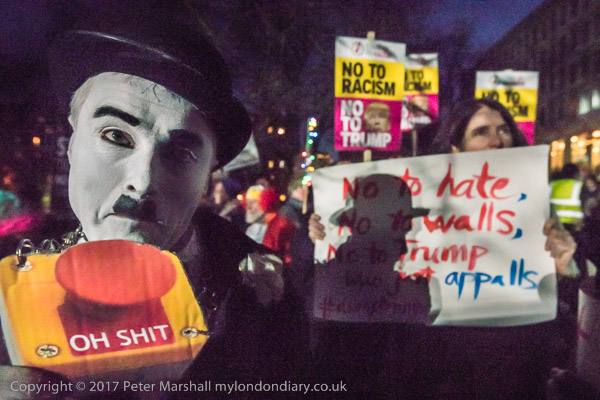
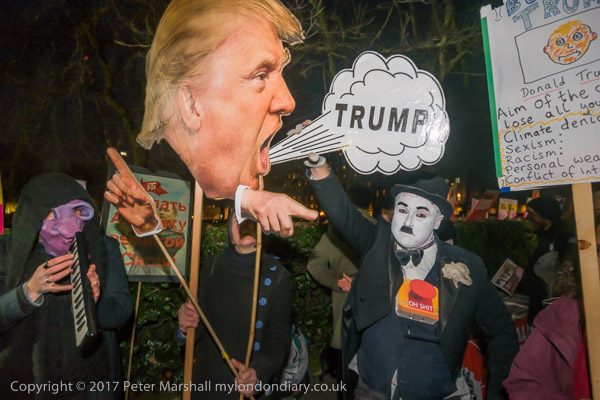
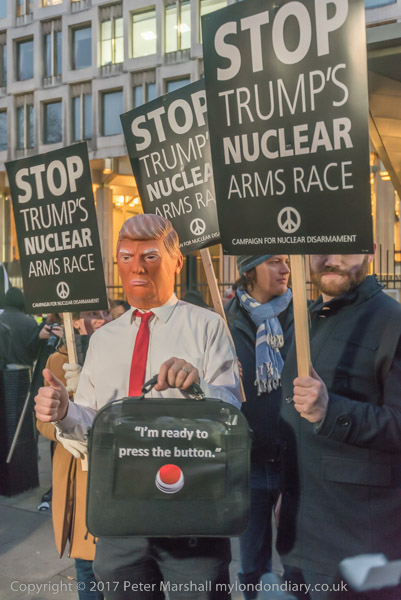
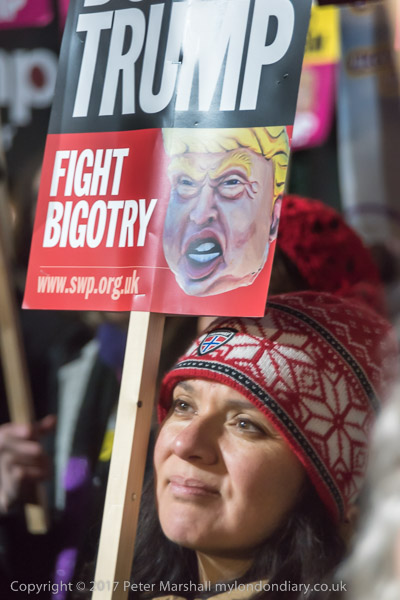
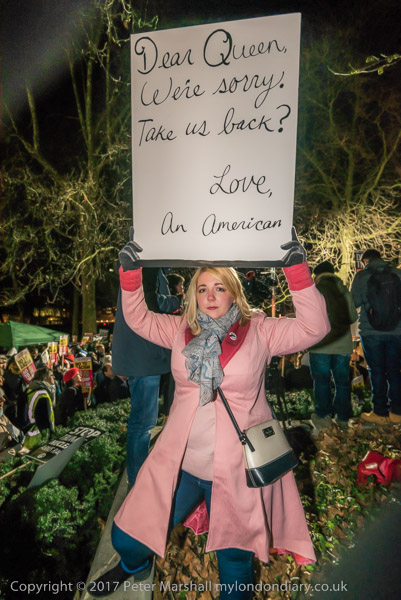
Four years ago, on 20 Jan 2017, London was protesting against another inauguration, that of Donald Trump. Commenting on those protesting outside the US Embassy – still then in Grosvenor Square I wrote:

All were appalled at the thought of a president who is a climate change denier, has a long history of racist and Islamophobic outbursts, has boasted of sexually assaulting women and has downplayed the severity of sexual violence.

Crowds protest Trump’s Inauguration

The four years that followed have confirmed most of our worst fears and in some ways gone further than we imagined, for example with disastrous polices in the Middle East and in particular over Israel and Palestine.

There will not be significant protests in London today, and even if police were not enforcing Covid restrictions particularly rigorously against protests I don’t think there would have been. We may not have any particularly high hopes for Biden and Harris, but at least they are almost certain to be better than Trump.

At least the US seems certain to re-engage with climate change – although probably still intent on keeping the US as the world’s largest polluter and allowing US companies to plunder the world for resources. And though it’s good to have a slightly saner finger close to that nuclear button it seems unlikely that the US will stop supporting corrupt fiefdoms in the Middle East and elsewhere and desist from supporting coups against popular governments that attempt to regain control over their own resources in South America and elsewhere.

Though I do hope for some positive surprises in the first hundred days, and there have certainly been rumours of some. Perhaps we will see the cancellation of some of the more environmentally damaging projects given the go-ahead by Trump. Almost certainly there will be fewer racist rants and tweets and there could even be some real progress on civil rights.

But while we may have some hopes for the United States of America, the future for our United Kingdom remains depressing. Suffering under the burden of Brexit and Covid, with a government that continually proves itself both corrupt and inept and an opposition which is ineffectual and sycophantic – and currently outclassed, outgunned and outplayed by a young footballer.

And that ‘United’ is less and less than ever appropriate; Brexit divided the country, and most of us now realise it was a terrible mistake – even increasingly more of the 34% who voted for it. It has created a border between the mainland and Northern Ireland and exacerbated the gap between England and Scotland. Even Wales seems more distant, though it has protected our relationships with those tax havens that make us possibly the most corrupt country in the world.

There is one small glimmer of hope, apart from the vaccinations that may just eventually allow us to gain some accommodation if not exactly control over Covid. Last Sunday saw the inauguration of the Project for Peace and Justice, founded by Jeremy Corbyn, an international campaign which describes itself as “a hub for discussion and action, building solidarity and hope for a more decent world.”

F**k Trump
Crowds protest Trump’s Inauguration


All photographs on this and my other sites, unless otherwise stated, are taken by and copyright of Peter Marshall, and are available for reproduction or can be bought as prints.


Human Rights Day

Today, 10th December is UN Human Rights Day. I think the 10th December 2016 may have set a personal record in that I covered seven events, although one was only a fleeting meeting with a Rhino as I passed through Parliament Square. But five were human rights protests.

My work began in Old Palace Yard, in front of the House of Lords and around the rather ugly statue of George V. On 10th December 1948 the UN General Assembly adopted the Universal Declaration of Human Rights (UDHR) and since then the day has been celebrated in countries around the world as Human Rights Day.

The UK was one of the countries that played a large part in both the establishment of the UN, whose first General Assembly was held in the early months of 1946 just a few hundred yards away in Methodist Central Hall, and in the UDHR, which “proclaims the inalienable rights which everyone is entitled to as a human being”.

But our current government finds some of its provisions inconvenient and one of the driving forces of Brexit is that it will provide the opportunity to weaken compliance with the UDHR, threatening our human rights including workers rights to paid holidays, maternity leave and fair treatment at work, disability rights and the right to freedom from discrimination.

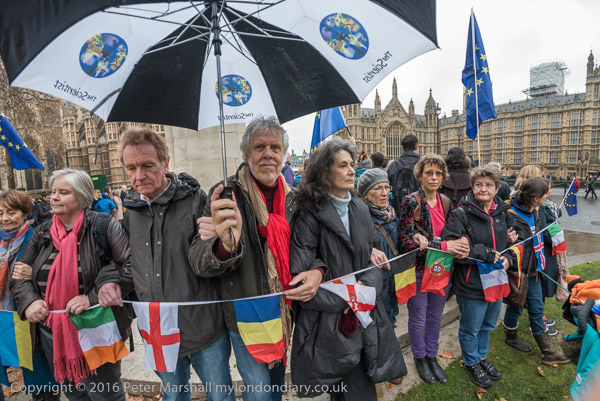
Supporters of the UK remaining in Europe were protesting in silent chains in towns and cities across the country and several hundred had come to do so in the centre of London. I didn’t find it easy to produce interesting pictures of what was a rather static event.
Silent Chain for Europe


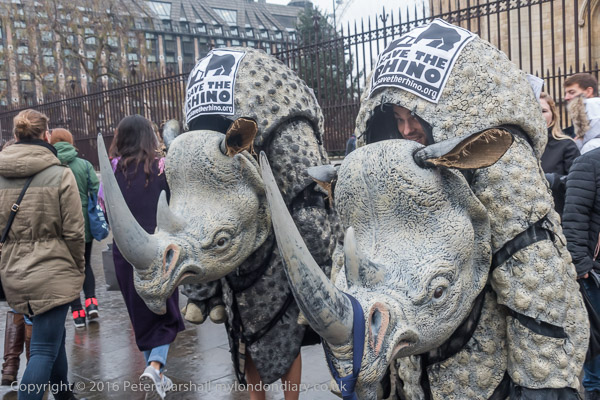
As I walked across the front of Parliament towards Westminster tube station I came across two people in rather impressive rhinoceros costumes who were being photographed in front of the House of Commons, and paused briefly to take a couple of pictures.

What rather surprised me was the almost total lack of interest in them shown by the many tourists walking past. After all it isn’t every day you pass two rhinos on the street.
Save the Rhino


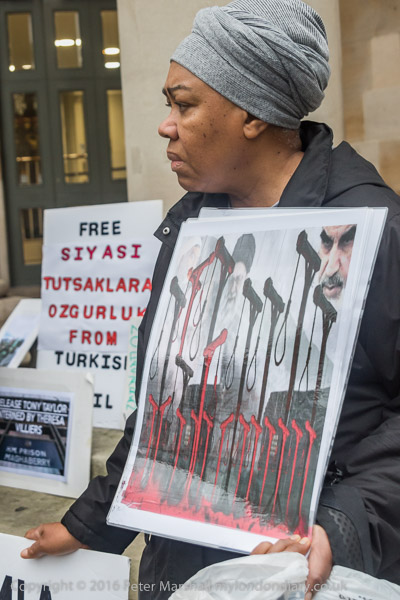
People from various campaigns had come to Broadcasting House to protest and hand in a letter about the BBC’s failure to report on political prisoners held unjustly in jails around the world. They accuse the BBC of an institutional policy of ignoring such cases, including a hundred Irish Republican prisoners, former Black Panther Mumia Abu Jamal held on Death Row in the USA for over 30 years, many Palestinians held in Israeli jails, the victims of Erdogan’s purge in Turkey, the many hanged in Iran and other cases of illegal imprisonment around the world.
BBC censors prison struggles


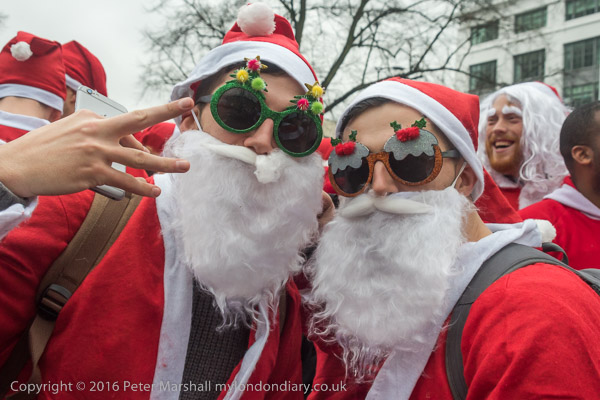
From the BBC I made my way north to Mornington Crescent, where I met one of the four groups of Santacon; the north London group had met up in Camden and were coming down into Central London and soon stopped in a small park.

I found it a little disappointing – as I wrote then,

“this year the event did seem rather more organised and tame, lacking some of the anarchic charm and chaos that brought much of London’s traffic to a halt in previous years – or perhaps I just took these pictures earlier in the day before the Christmas spirits, wine and beer had really kicked in. “

London Santacon 2016

I think police had leaned rather heavily on the organisers and insisted that they move off the streets into areas such as this for much of the event. I didn’t stay with the Santas long because there were other Human Rights Day events to photograph.


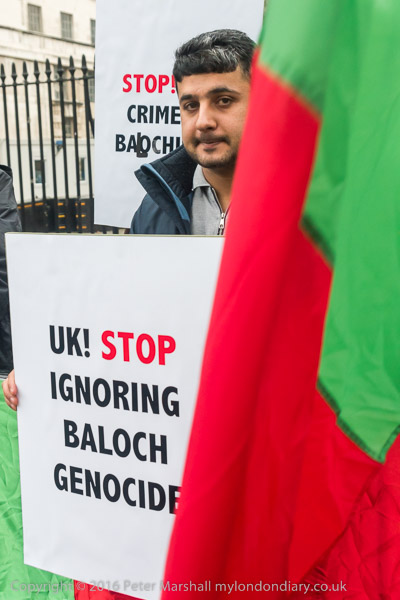
I took the tube back to Westminster where I found Balochs protesting opposite Downing St, calling on Theresa May to speak up for the Baloch people and their freedom against the Pakistan regime which they claim has a policy of genocide against the Baloch people and has killed thousands of Baloch activists and abducted more than 25,000 of them.

They say those abducted are tortured and then killed, with their bodies being dumped in deserted areas. Balochistan was an autonomous kingdom on the border of Pakistan and Iran, and was merged with Pakistan in 1948, the year after Pakistan was created. Since then there have been various Baloch separatist movements which have been brutally repressed by both Pakistan and Iran.
Balochs UN Human Rights Day protest.


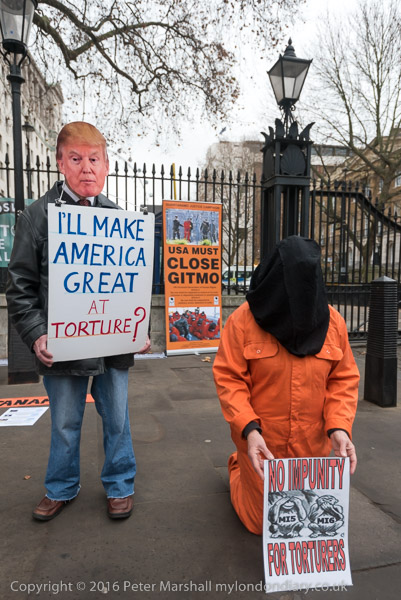
I’d come to Whitehall to report on the Guantanamo Justice Campaign protest on UN Human Rights Day opposite Downing St calling for an end to torture, the closure of Guantanamo and an end to British complicity in torture.

It wasn’t a well attended protest probably because there had been relatively little publicity, but also reflecting the problem of keeping up interest in long running issues such as this which no longer attract much if any attention from our news media. They will argue that it is no longer news, but that is only because they choose not to cover it, instead filling pages and programmes with empty speculation and inconsequential affairs of insignificant so-called celebrities rather than matters of importance.
Human Rights Day call close Guantanamo


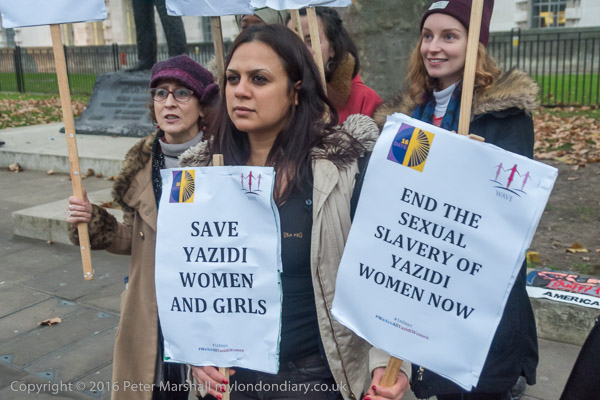
Another issue which has slipped almost completely off the news agenda is the plight of the Yazidi women and girls targeted and captured by ISIS (Da’esh) in Iraq. According to UN reports, more than 5000 Yazidis had been murdered and 5-7,000 abducted. Over 3,400 are believed to be still held, the women subjected to physical and sexual violence, including systematic rape and sex slavery.

The visit to the UK by UN goodwill ambassador Nadia Murad Basee Taha for 16 days of action prompted little or no news coverage.
Save Yazidi women and girls


More about all these events and more pictures on My London Diary.

Save Yazidi women and girls
Human Rights Day call close Guantanamo
Balochs UN Human Rights Day protest
London Santacon 2016
BBC censors prison struggles
Save the Rhino
Silent Chain for Europe


All photographs on this and my other sites, unless otherwise stated, are taken by and copyright of Peter Marshall, and are available for reproduction or can be bought as prints.


A People’s Vote

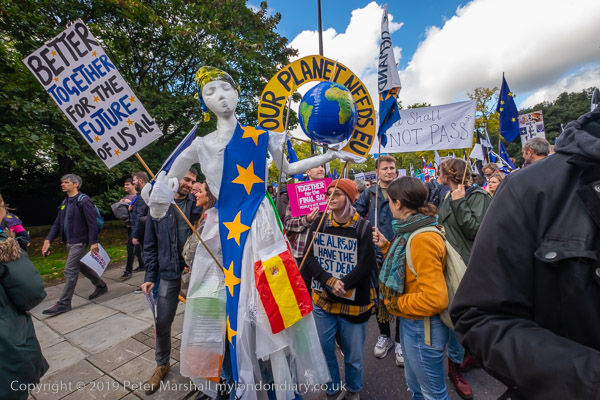
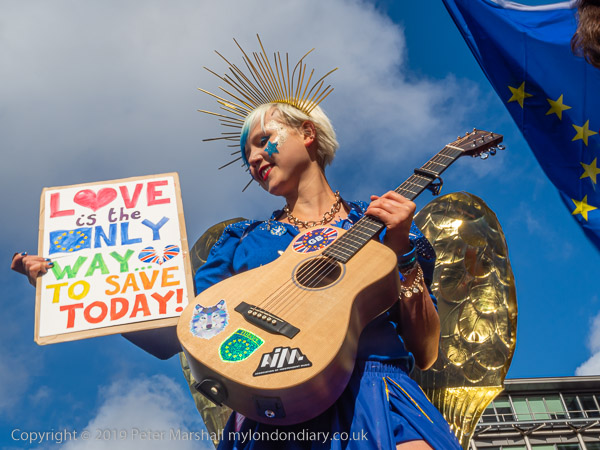
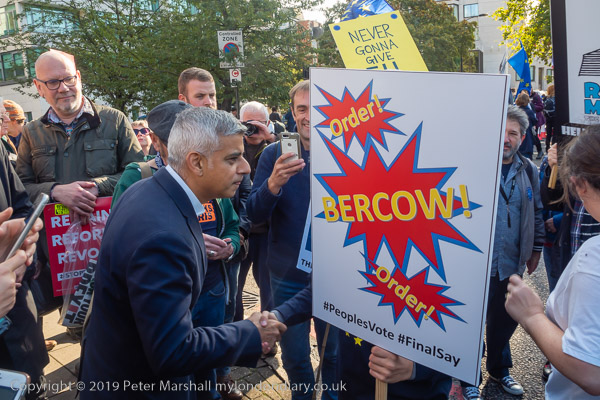
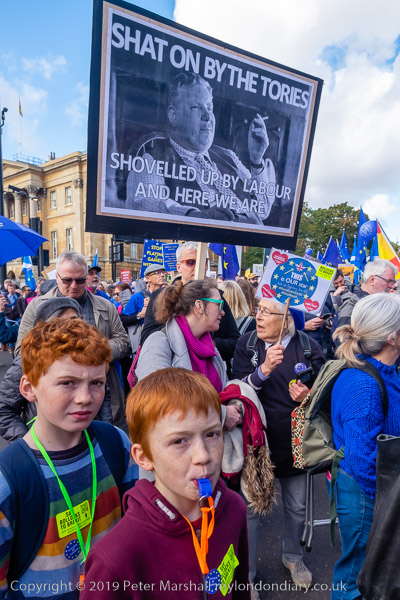
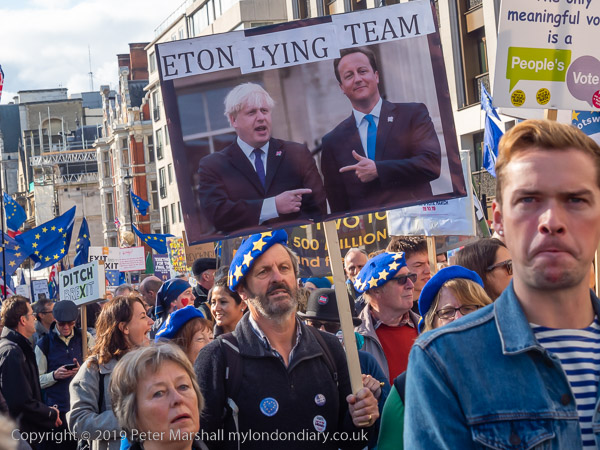
Around a million people came to the start of a march from Hyde Park last October to call for a referendum on the Brexit deal negotiated by Boris Johnson. Although when we held the referendum in 2016 a small majority won the vote to leave Europe, by the time it had actually become clear what this would really mean many had changed their minds.

But we had a government driven by a small group of people determined we should leave whatever, and whose whole existence was predicated on getting Brexit done and prepared to lie and lie again to do so. Some at least of them stood to make millions or billions out of leaving, and others feared that European legislation might soon force them to pay the large amounts of tax they are avoiding.

Facing them was an opposition which was divided over Europe and with a large group of MPs and officers whose main aim wasn’t to provide meaningful opposition to the government but to undermine and replace their leader. Their activities had already lost enough seats in the 2017 election to deny Labour a chance of leading a government and they were hell-bent on making sure of a disastrous result in the next which was expected before long and took place in December.

The Lib-Dems had shot themselves in the foot in July’s leadership election and that left only the 35 SNP members and the Green Party’s Caroline Lucas as an effective opposition.

So while this huge protest was an outpouring of feeling representing a large proportion of the public who feel that now we knew more about what Brexit we should be asked to make an informed choice on whether to leave Europe, it stood little or no chance of success.

Although it is now clear that staying in the EU is far better than any deal that Johnson can negotiate – and that the Tories will do their utmost to reach a ‘no deal’ exit – nothing short of the kind of huge-scale popular revolt that would bring the government down can stop it. The people I was photographing on the streets of London were certainly not the kind of popular mob that would need, and it is difficult in these times to see how that could be achieved – except perhaps by a government ban on Strictly, that Bake Off and the Archers.

More pictures at March for a People’s Vote.


All photographs on this and my other sites, unless otherwise stated, are taken by and copyright of Peter Marshall, and are available for reproduction or can be bought as prints.