Holland Park & Notting Hill

Holland Park, Holland Park, Kensington, Kensington & Chelsea, 1988 88-1d-64-positive_2400
Holland Park, Holland Park, Kensington, Kensington & Chelsea, 1988

Holland Park is a street in London as well as an actual park and the name of a tube station which has transferred to an area of Kensington to the west of Notting Hill. Virtually every house in the street is listed – I think 88 of them. The exception is the Greek Embassy at No.1. This had been the most interesting house in the street. Built in 1860 it was bought in 1864 by banker Alexander C. Ionides (1810-1890), who had been Greek Consul General in London from 1854 to 1856. He and his son who inherited the house were wealthy Greek business men and patrons of the arts – and from 1864 and they transformed the property, commisioning external work leading Victorian architect Philip Webb, who also gave it a grand staircase and other fine public rooms, with internal decorative work by the leading figures of the day, including Willliam Morris who supervised much of the work and whose company provided much of it. It became a meeting-place for all London’s leading artists coming to its Sunday open house in the 1880s and 90s. The family moved out in 1898 and the house was sold a few years late.

Holland Park, Holland Park, Kensington, Kensington & Chelsea, 1988 88-1d-61-positive_2400
Holland Park, Holland Park, Kensington, Kensington & Chelsea, 1988

The interior of 1 Holland Park was meticulously recorded by the leading architectural photographer of the day, Henry Bedford Lemere as well as in the work of others. But the new owners – who were also the owners of nearby Holland House – did not treat it well, whitewashing over the William Morris ceilings. The house was badly damaged by bombing in WW2 and was sold with Holland House and the park to the London County Council in 1952, when it was reported that little worth preserving remained and the house was demolished. The building which now houses the Greek Embassy was built in 1962 by architects Playne & Lacey and bought by Greece in 1973. An article available online gives muuch more detail on the Ionides family and the house

Holland Park Mews, Holland Park, Kensington, Kensington & Chelsea, 1988 88-1d-63-positive_2400
Holland Park Mews, Holland Park, Kensington, Kensington & Chelsea, 1988

Holland Park is actually two parallel streets, each stuffed with listed houses, built under the watchful eye of Lady Holland who saw to it that they met her standards, though at the time they were not felt to be anything special – typical houses for the wealthy. And the wealthy needed carriages which required to be kept at hand, along with the horses to draw them. They and the men who looked after them lived in the mews between the two streets, and would be drive the carriages around when required to the front doors – and the rich would emerge from those iron and glass porte cochères to ride in them.

Stoneleigh Place, Notting Hill, Kensington & Chelsea, 1988 88-1d-35-positive_2400
Stoneleigh Place, Notting Hill, Kensington & Chelsea, 1988

A short distance north of Holland Park, some housing is on a less grand scale.

Freston Rd, Notting Hill, Kensington & Chelsea, 1988 88-1d-24-positive_2400
Freston Rd, Notting Hill, Kensington & Chelsea, 1988

Another picture from Freston Road. The London City Mission built The People’s Hall on Latimer Road in the Kensington Piggeries in 1902, when parts of the area were one of the worst slums in London. This part of Latimer Road was renamed Freston Road when the construction of the Westway and the West Cross Route cut it in half. The hall on the corner of Olaf St became the centre of the Free and Independent Republic of Frestonia in 1977. Probably it’s best known now as the place where much of The Clash’s album Combat Rock was recorded.

Royal Crescent, Notting Hill, Kensington & Chelsea, 1988 88-1c-61-positive_2400
Royal Crescent, Notting Hill, Kensington & Chelsea, 1988

Royal Crescent is at the western edge of Holland Park/Notting Hill, just to the north of Holland Park Avenue, just east of the Holland Park roundabout. It was one of the earliest parts of the Norland Estate to be developed in the 1840s, to the estate plan of Robert Cantwell and is Grade II* listed. It took a long time to rent these properties, which were thought to be too far out from London in the days of horse-drawn traffic for the wealthy.

St Ann's Villas, Notting Hill, Kensington & Chelsea, 1988 88-1d-32-positive_2400
St Ann’s Villas, Notting Hill, Kensington & Chelsea, 1988

St Anne’s Villas leads north from the centre of the Royal Crescent, and is on one of the routes I’ve sometimes walked more recently from Shepherd’s Bush station to join the silent walks remembering Grenfell.

St Ann's Villas, Notting Hill, Kensington & Chelsea, 1988 88-1c-52-positive_2400
St Ann’s Villas, Notting Hill, Kensington & Chelsea, 1988

St Anne’s Villas were built as a part of the Norland Estate, mainly around 1845. The area was developed by by Charles Richardson with barrister Charles Stewart taking building licences from him for these Tudor Gothic revival semi-deatched houses, now Grade II listed.


All photographs on this and my other sites, unless otherwise stated, are taken by and copyright of Peter Marshall, and are available for reproduction or can be bought as prints.


Notting Hill – Notting Dale – 1988

Nottingwood House, Clarendon Rd, Notting Hill, Kensington & Chelsea, 1988 88-1e-62-positive_2400
Nottingwood House, Clarendon Rd, Notting Hill, Kensington & Chelsea, 1988

Notting Hill – and the London Borough of Kensington & Chelsea – is very much a place of two halves and these two pictures illustrate this, with the large block of council housing built on the site of the Notting Hill brewery and other industrial buildings shortly before the war.

Houses, Blenheim Crescent, Clarendon Rd, Notting Hill, Kensington & Chelsea, 1988 88-1e-61-positive_2400
Houses, Blenheim Crescent, Clarendon Rd, Notting Hill, Kensington & Chelsea, 1988

This picture was taken from roughly the same place as the previous picture, but from the opposite side of the road. Houses in Blenheim Crescent are currently on sale for £4 million. Of course many of the social housing tenants in Nottingwood House took advantage of Thatcher’s social housing giveaway ‘Right to Buy’, though quite a few then found themselves needing to sell these properties, with many becoming ‘buy to let’ properties – now at perhaps £2000 a month, and other flats on sale for perhaps £800,000, so the difference here is rather less real than when I made this picture.

Bramley Arms, Bramley Rd, Freston Rd, Notting Hill, Kensington & Chelsea, 1988 88-1e-53-positive_2400
Bramley Arms, Bramley Rd, Freston Rd, Notting Hill, Kensington & Chelsea, 1988

I think the pub had closed shortly before I took this picture. The building is still there but is now offices with flats on the upper floor. The pub has appeared in at least five major films including Sid and Nancy (1986), Quadrophenia (1979) and The Lavender Hill Mob (1951) as well as TV series.

This area was cut off on two sides by the construction of the Westway and the West Cross Route in the 1960s and became very run down and what had been the southerns section of Latimer Rd was renamed Freston Road. Oddly, Latimer Road station (on Bramley Rd) was not renamed, though it is no longer close to Latimer Road. In 1977 squatters occupied houses and flats the GLC planned to demolish in Freston Road and declared the Republic of Frestonia. The GLC granted them temporary leave to remain and the area was developed more sensitively by the Bramley Housing Co-operative from 1985. You can see the ‘Underground’ bridges in the distance on both streets in this photograph.

Freston Rd, Notting Hill, Kensington & Chelsea, 1988 88-1e-52-positive_2400

This neat and unpretentious factory building is still present on the corner of Freston Rd and Evesham Rd, but now surrounded by a large redevelopment and painted a dull grey.

Mural, Harrow Club, Freston Rd, Notting Hill, Kensington & Chelsea, 1988 88-1e-45-positive_2400
Mural, Harrow Club, Freston Rd, Notting Hill, Kensington & Chelsea, 1988

Although the area around and under the Westway was fairly desolate in 1988, attempts had been made to brighten the area with a number of well painted murals. The Harrow club was set up by former pupils of Harrow School in 1883 as The Harrow Mission Church “to improve the quality of life for local people, aiding harmony and promoting opportunity” for the people of Notting Dale and continues to do so.

Freston Rd, Westway, Notting Hill, Kensington & Chelsea, 1988 88-1e-44-positive_2400

More graffiti.

Freston Rd,, Stable Way, Westway, Notting Hill, Kensington & Chelsea, 1988 88-1e-35-positive_2400

The caravans are around Stable Way. The car is coming down a link road from the Westway which runs across the top of the picture to the West Cross Route. This is the edge of a BMX cycle circuit at the north end of Freston Rd.

Freston Rd, Westway, Notting Hill, Kensington & Chelsea, 1988 88-1e-32-positive_2400

Another picture from the BMX track beyond the end of Freston Road, close to the Westway junction with the West Cross Route.

Freston Rd, Westway, Notting Hill, Kensington & Chelsea, 1988 88-1e-31-positive_2400

This picture gives a more informative view of the location, though I can find no trace of this oval now, but it was I think a part of the BMX circuit at the north end of Freston Rd.

Freston Rd,, Westway, Notting Hill, Kensington & Chelsea, 1988 88-1e-23-positive_2400

The landscaped area here is at the end of Freston Rd, with the Harrow Club at left.

Westway, Notting Hill, Kensington & Chelsea, 1988 88-1e-14-positive_2400

Underneath the Westway and the links from the West Cross Route.

Westway, Notting Hill, Kensington & Chelsea, 1988 88-1e-13-positive_2400

Various sports facilities underneath the motorway junction. Opened in 1970 as the A40(M) its status was downgraded in 2000 to an all-purpose road. There were plans to include a separated cycleway on parts of it announced in 2013 but these were scrapped in 2017. However Kensington & Chelsea Council have opposed all protected cycle routes on their streets, and even scrapped a temporary route which was implemented during the Covid lockdown.

More from the other half of Notting Hill in another post.


All photographs on this and my other sites, unless otherwise stated, are taken by and copyright of Peter Marshall, and are available for reproduction or can be bought as prints.


Photography Workshop 9th May 2004

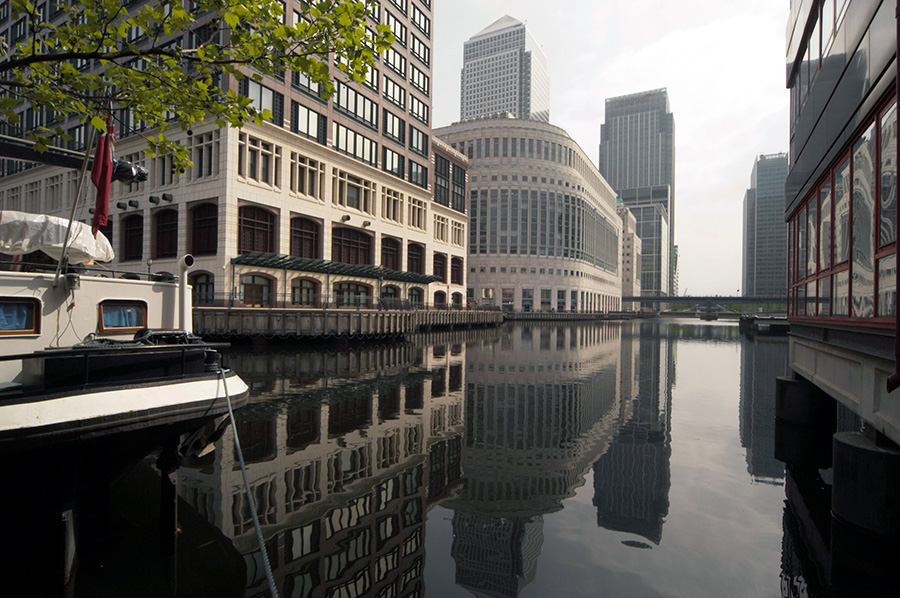
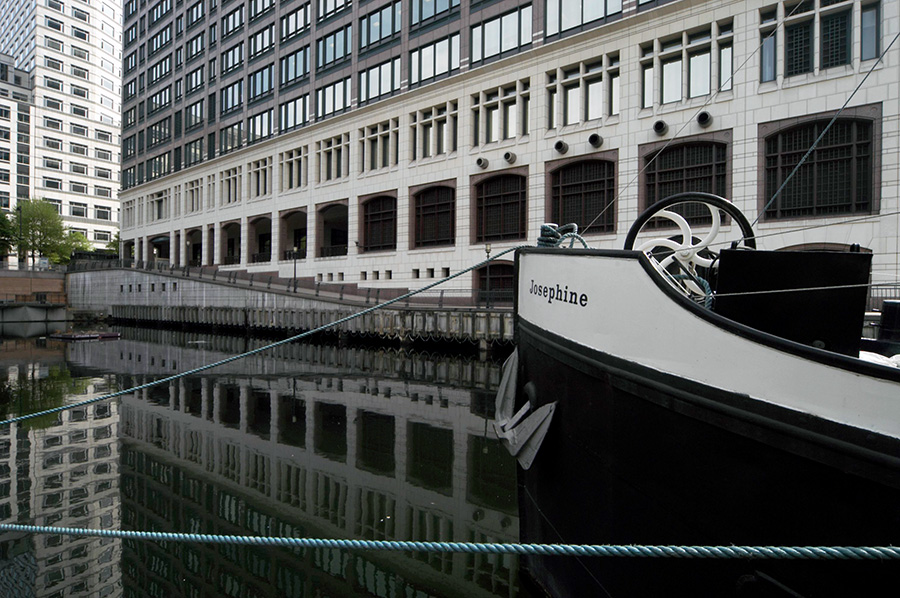
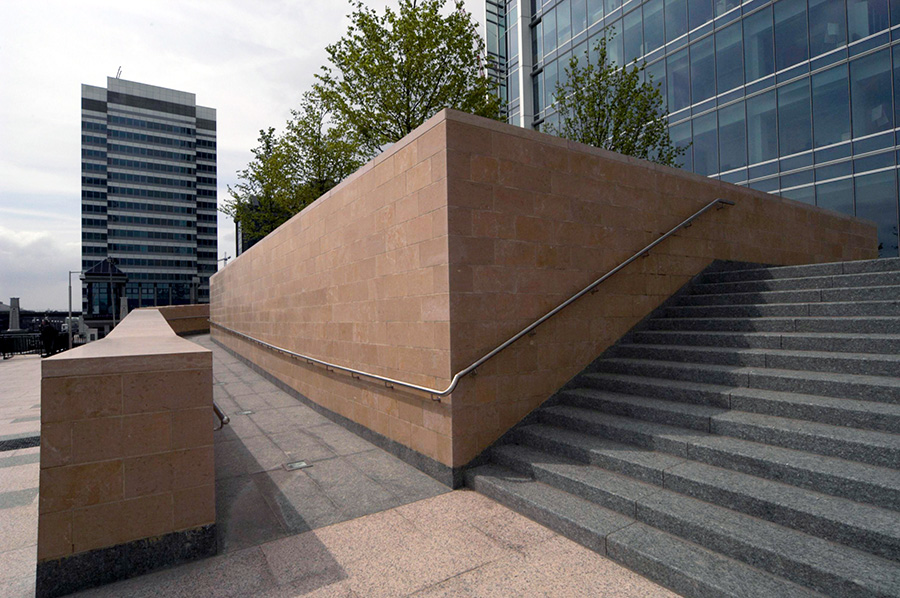
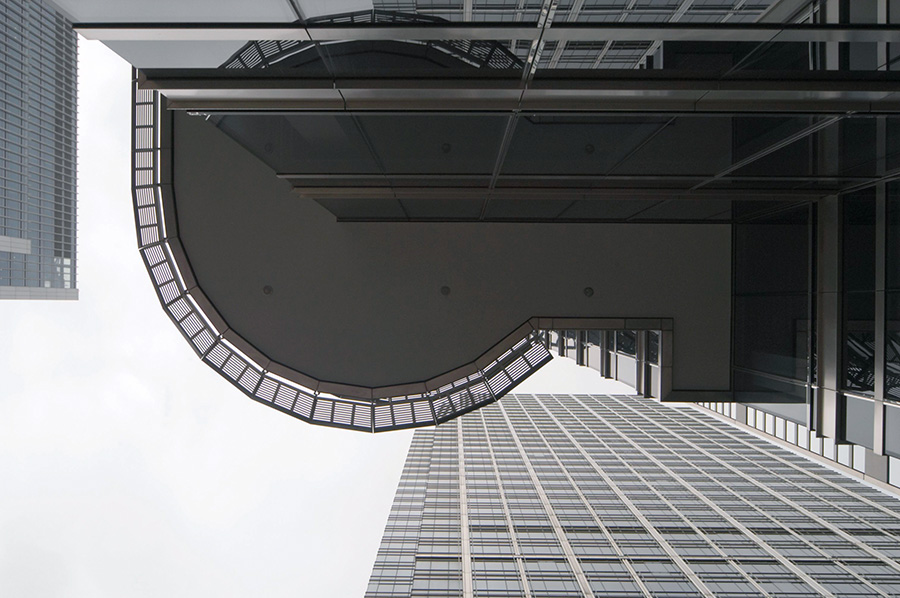
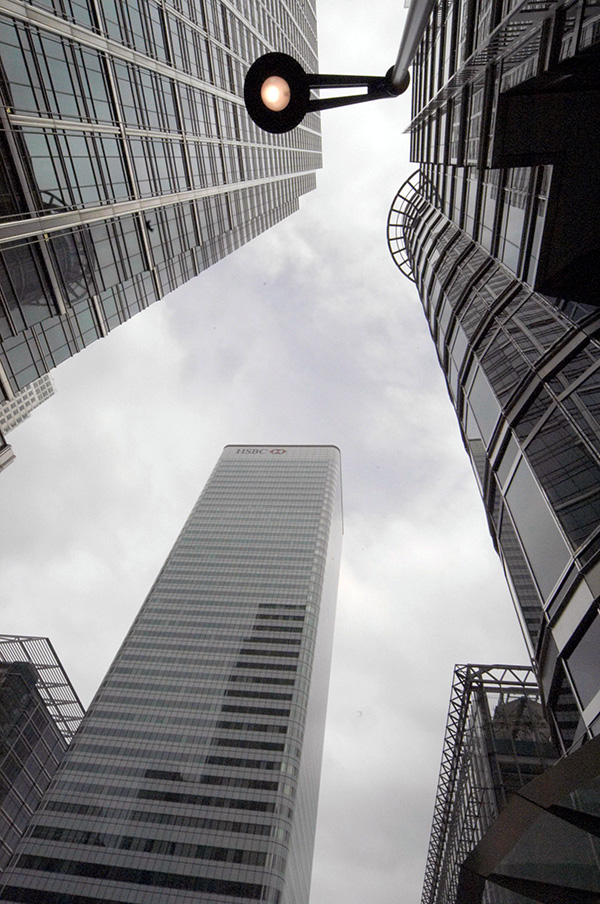
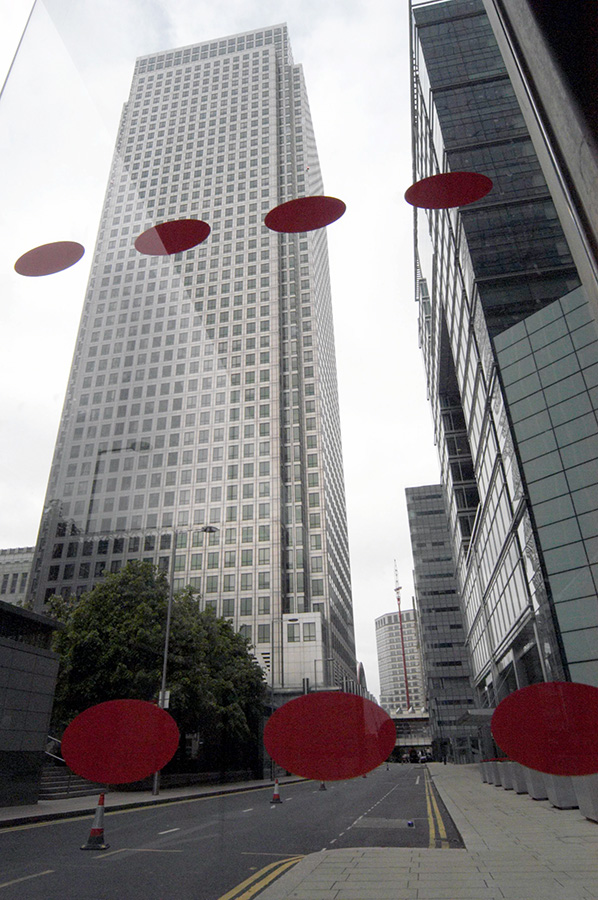
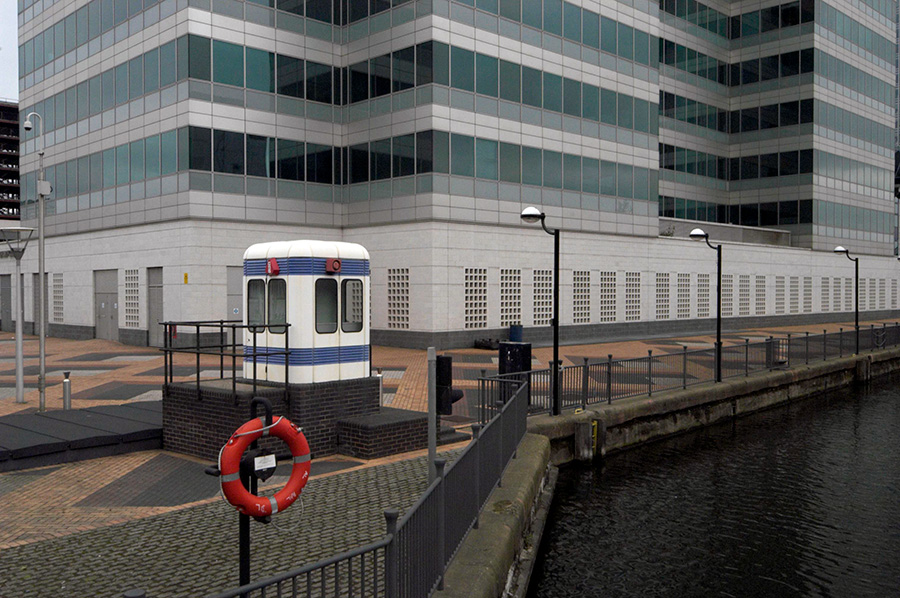
I hope those who came with me on the workshop I led around a part of London’s Dockland 17 years ago found it stimulating. For me it was a familiar walk, but I think most of the others were seeing the area for the first time. One of the instructions for the workshop some will have found difficult was not to bring a tripod, as these were and are red rags to the security staff who closely patrol the Canary Wharf estate. We had no problems with security on this workshop, though I have had confrontations on other occasions – including being once escorted off the estate.

I think I had been asked to run the workshop for London Independent Photography, though I’m not sure. On My London Diary I put a short text about the event and some pictures that I made during it. I’ve corrected the spelling and capitalisation of the original, otherwise it is exactly as written, probably deliberately in part ungrammatically.

May 9 found me taking a group of photographers for a walk around some parts of London’s docklands. we started at the centre of this ‘crime of the century’. I still don’t quite understand why a Conservative government felt so at odds with the City of London that it decided to set up offshore competition in the Enterprise Zone.

The feeding frenzy that ensued, trousering public property and tax breaks into the private pocket at an unprecedented rate.

The long-term consequence has been a distorted development with few real buildings of distinction but some expensively finished tat, and a lack of overall planning. I’m not sure that London would benefit from gaining the Olympics for which it is currently bidding, but if it fails, probably part of the reason will be the docklands debacle.

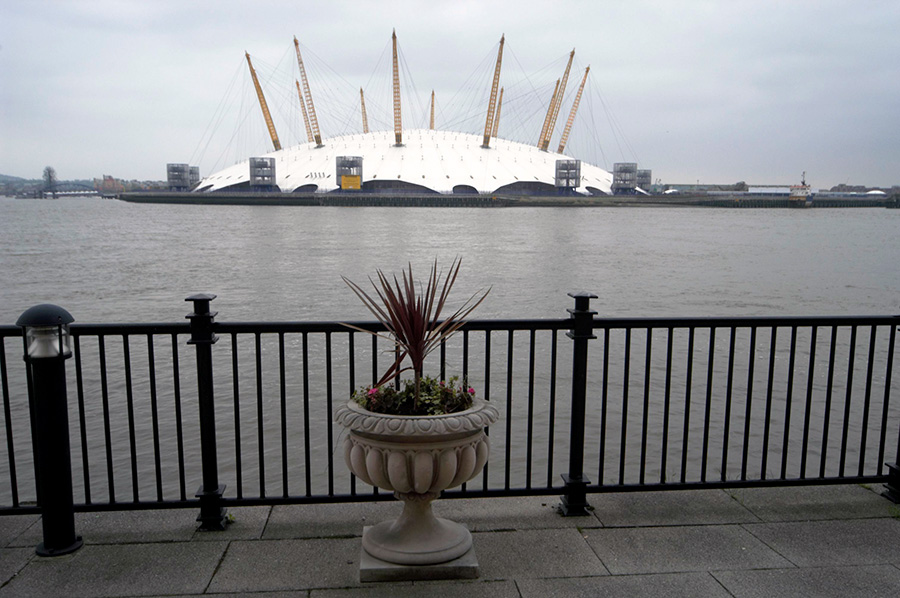
We started below the obscene gesture towards the old city, at least clear about its symbolism, then took the DLR down to Crossharbour with its silly bridge, walking back to the wharf and taking the Jubilee to Canning Town. then back alongside the Lea (still waiting for that riverside walkway) to East India Dock Basin and along by the Thames, where a galleon appeared in front of the dome.

My London Diary – May 2004

Docklands has continued to change since 2004, but it remains a largely lost opportunity to develop what had become the redundant area for the benefit of the people as a whole rather than to enrich a few.


Back in 2004 I was still working with my first DSLR, the Nikon D100 for which had recently bought the Sigma 12-24mm lens and on this DX format camera this gave effective focal lengths of 18-36mm. The smaller format also avoids the weaker corners of this extreme wide-angle zoom (I think the first of its type) and within the smaller field it was remarkably distortion-free. There are a few more pictures on My London Diary – including that galleon – some rendered rather dully by the RAW software of the time – I’ve improved the rendering of those included in this post.


All photographs on this and my other sites, unless otherwise stated, are taken by and copyright of Peter Marshall, and are available for reproduction or can be bought as prints.


North Kensington

Pall Mall Deposit, Barlby Rd, North Kensington, Kensington & Chelsea, 1988 88-1f-54-positive_2400
Pall Mall Deposit, Barlby Rd, North Kensington, Kensington & Chelsea, 1988

There were several reasons I used to like going to this area of North Kensington to make photographs, one of which was that when people asked me where I had been I could tell them I’d been to the North Pole, which was just down past the end of Barlby Rd on North Pole Rd. Sadly the North Pole was bought by a property company in 2012 who turned the upper floors into flats and soon closed the pub which became a Tesco Express around 2015.

Pall Mall Deposit, Barlby Rd, North Kensington, Kensington & Chelsea, 1988 88-1f-53-positive_2400
Pall Mall Deposit, Barlby Rd, North Kensington, Kensington & Chelsea, 1988

The Pall Mall Deposit and Forwarding Co became a limited company in 1899, with premises just off Regent St, and built this large storage facility to the design of W G Hunt in 1911 (the often given date of 1901 is most probably a much-quoted typo.) Furniture storage was quite big business at the time as a large proportion of the more affluent lived in rented houses, often moving frequently. The building extends some way back from Barlby Road and has been a rather trendy centre for offices, studios etc, selling itself as close to Portobello Road.

Ladbroke Hall, Clement-Talbot Motor Works, Barlby Rd, North Kensington, Kensington & Chelsea, 1988 88-1f-52-positive_2400
Ladbroke Hall, Clement-Talbot Motor Works, Barlby Rd, North Kensington, Kensington & Chelsea, 1988

Barlby Road was also the location of the first purpose built English car factory, the Clement-Talbot Motor Works built from 1903-11, architect William T Walker. According to Cherry and Pevsner (London 3 : North West) this reinforced concrete building used the Hennebique system, but for the office building fronting the road this was well-disguised by “a festive Wrennaisance front”.

Kensal House, Ladbroke Grove, North Kensington, Kensington & Chelsea 88-1f-46-positive_2400
Kensal House, Ladbroke Grove, North Kensington, Kensington & Chelsea

North of the Great Western mainline, which bisects the area, is its greatest architectural gem, Kensal House, built in 1936 by Maxwell Fry leading a small group of like-minded architects. Even in the rather run-down state I photographed it, the ensemble is impressive. It’s and impressive modernist building and rather more functional than some, and the low cost flats included what were for the time some very up-to-date features.

Kensal House, Ladbroke Grove, North Kensington, Kensington & Chelsea 88-1f-45-positive_2400
Kensal House, Ladbroke Grove, North Kensington, Kensington & Chelsea

The site was developed by the Gas Light & Coke Company who owned the site and the adjoining gas works to provide housing for their employees – 54 three-bedroom and 14 two-bed flats- and virtually everything – down to the irons – was gas powered. Of course gas lighting was still very common – and in my youth there were still many older people who preferred its more gentle light. But as built there was no electricity in these gas company flats.

Kensal House, Ladbroke Grove, North Kensington, Kensington & Chelsea 88-1f-42-positive_2400
Kensal House, Ladbroke Grove, North Kensington, Kensington & Chelsea

As well as two large blocks of flats the site also contained a nursery, with a curved frontage that ran around the former site of a gas holder. One of those who worked with Fry on the designs was social reformer Elizabeth Denby who had also worked with him at the Peckham Health Centre.

Kensal House, Ladbroke Grove, North Kensington, Kensington & Chelsea 88-1f-34-positive_2400
Kensal House, Ladbroke Grove, North Kensington, Kensington & Chelsea

The gas works have gone, with Sainsbury’s and Argos in their place, but the railway remains. Some of these flats must have been great places for train spotters, but the Kings and Castles thundering past might have upset the sleep in those days of single glazing and poor sound insulation. And gas works did produce some fairly noxious odours and pollution, though if they provided your living that probably seemed less of a problem.

Kensal Green Basin, Grand Union Canal, Paddington Branch, North Kensington, Kensington & Chelsea, 1988 88-1f-35-positive_2400
Kensal Green Basin, Grand Union Canal, Paddington Branch, North Kensington, Kensington & Chelsea, 1988

You can still see Kensal Green Basin when you go to get your shopping at Sainsbury’s on Canal Way, though it is largely well hidden behing bushes around the car park and seems an missed opportunity – as do many of the planning decisions in this area. A large and ugly canalside building now straddles its entrance from the canal. Further along Canal Way there are still a couple of gas holders at the west end of the gas works site.

Exmoor St,North Kensington, Kensington & Chelsea, 1988 88-1f-26-positive_2400
Exmoor St,North Kensington, Kensington & Chelsea, 1988

Late Victorian Housing on Exmoor St with some nice detailing and later railings.

Hewer St,North Kensington, Kensington & Chelsea, 1988 88-1f-25-positive_2400
Hewer St,North Kensington, Kensington & Chelsea, 1988

At left is the Grade II listed St Charles’ Hospital in Exmoor St, built in 1881 as the St Marylebone Union Infirmary. Surprisingly it is still in medical use, providing mental health services and as a community health centre. Part of the building are rather more attractive than this view suggests. John Nodes and Sons Ltd provided a very handily based funeral service.

Barlby Rd, North Kensington, Kensington & Chelsea, 1988 88-1f-22-positive_2400
Barlby Rd, North Kensington, Kensington & Chelsea, 1988

Finally back to Barlby Rd, and a terrace of houses still present close to Ladbroke Grove. On the left you can still see one of the gas holders of the Kensington Gas Works, and to the right of the block the Great Western Mainline and one of the blocks of Kensal House.

As usual there are a few more pictures from my walks around the area in 1988 in the album, and clicking on any of the pictures here should take you to a larger version in the album from which you can move through it to see all those I have put online.


All photographs on this and my other sites, unless otherwise stated, are taken by and copyright of Peter Marshall, and are available for reproduction or can be bought as prints.


Kensal Town & Notting Hill 1988

Emslie Horniman's Pleasance, Park, East Row, Kensal Town, Kensington & Chelsea, 1988  88-2c-34-positive_2400
Emslie Horniman’s Pleasance, Park, East Row, Kensal Town, Kensington & Chelsea, 1988

Who you might ask was Emslie Horniman? You may recall the name ‘Horniman’s Tea’, though the company, founded in 1826 in Newport, Isle of Wight by Emslie’s grandfather, the more prosaically named John. It was tea that made the family’s fortune, particularly after the company moved to London in 1852. The family were Quakers and determined not to cheat their customers were the first to sell tea in sealed packets, ensuring it was not contaminated with contrary materials used by many others to increase profits, and by the end of the Victorian era under Emslie’s father Frederick John Horniman they had become the largest tea company in the world.

Emslie Horniman's Pleasance, Park, Kensal Town, Kensington & Chelsea, 1988 88-2c-22-positive_2400
Emslie Horniman’s Pleasance, Park, Kensal Town, Kensington & Chelsea, 1988

It was the money from tea that enabled Frederick Horniman, an inveterate collector of curiousities, to set up the Horniman Museum in south London which opened in 1901 and was extended after his death by his son Emslie, also a collector. Born in 1863 Emslie had been educated by private tutors before attending the Slade School of Art and travelling around the world and became a Liberal party politician in London. From 1906-10 he was Liberal MP for Chelsea and in 1911 he planned and donated the park in Kensal Town, Emslie Horniman’s Pleasance, to the London County Council. He probably had little interest in the tea business, which was sold in 1918 to J Lyons & Co and is now owned by Jacobs Douwe Egberts; the brand is apparently still popular in Spain.

The walled garden shown in these two pictures was designed for Horniman by C.F.A. Voysey and Madeline Agar and is Grade II listed.

Ladbroke Grove area, Notting Hill, Kensington & Chelsea, 1988  88-2c-31-positive_2400
Ladbroke Grove area, Notting Hill, Kensington & Chelsea, 1988

Perhaps someone will remember where Rose’s Fresh Fruit and Vegetables were sold somewhere in Notting Hill. The house number, 222, should be a good clue, as relatively few streets aspire to such high numbers, but it doesn’t appear to match those I have looked at. The previous frame was taken on Ladbroke Grove, close to Barlby Rd, and the next on Southern Row.

88-2c-15-positive_2400
Sculpture, Portobello Rd, Notting Hill, Kensington & Chelsea, 1988

A mannequin holds a light fitting to illuminate a shop sign at the north end of Portobello Rd, close to Bonchurch Rd. I can’t read the sign because of the angle of the picture, but it later years at least it read ‘3 4 5’, the number (and name) of the shop below. Back in 2019 this figure was still on the wall, in a different pose and with its left arm and the sign missing.

Cobden Working Mens Club and Institute, Kensal Rd, Kensal Town, Kensington & Chelsea, 1988  88-2c-12-positive_2400
Cobden Working Mens Club and Institute, Kensal Rd, Kensal Town, Kensington & Chelsea, 1988

The Grade II listed Cobden Working Men’s Club and Institute at 170-172 Kensal Road was built in 1880, as a part of a Fabian initiative to educate the working classes and is the earliest known surviving purpose-built working men’s club and apparently retains many original features. These include an upper floor song room, probably where Bill Clinton played his saxophone as a student, and where Christmas parties were held for local children until the club closed at the end of the last century.

Architects for the building were Nathan Glossop Pennington and Thomas Edward Bridgen, and recently a ceremonial mallet awarded to Pennington on the opening of the building was presented back to Golborne Life by a woman from Texas who had bought it some years ago, possibly in the market on Portobello Rd.

Opinions seem to differ over whether the building was named after 19th-century radical politician Richard Cobden or a Fabian philanthropist, Lord William Cobden, who is said to have put up the money for the club. After it closed money was raised in 1995 to open it as a restaurant and night club; this closed in 2010 and the building was bought as a private residence by American businesswoman, model, actress, and television personality Caprice Bourret.

Bramley Rd, North Kensington, Kensington & Chelsea, 1988 88-2b-16-positive_2400
Bramley Rd, North Kensington, Kensington & Chelsea, 1988

Roseblades were brass or non-ferrous metal founders, incorporated in 1962 and struck off in 2004 several years after the company ceased operation. The firm was run by Ron Roseblade and his two sons John and Martin. Wilkinsons were also metal founders, but with a longer history, having been founded in 1793 as Philip Wilkinson and Sons and trading in Westminster, becoming just P Wilkinson & Sons in 1936.

The two companies became associated in 1972 when Wilkinsons moved out of Tottenham Mews and Tottenham Street to Stanmore – though the also appear to have had a part of this building. Roseblades also moved to works at 18 Minerva Road, Park Royal, Brent. The two companies made a number of memorials etc together “Four bronze servicemen on the War memorial outside Euston Station, the Wreath on the Cenotaph in Whitehall as well as the external lantern work at Victoria and Albert Museum”, some possibly with G W. Lunts of Birmingham.

Malton Rd,  North Kensington, Kensington & Chelsea, 1988 88-2b-12-positive_2400
Malton Rd, North Kensington, Kensington & Chelsea, 1988

Malton Road runs parallel to Westway, seen at the right of the picture, and is a service road for the businesses underneath the elevated roadway here between St Mark’s Road and Ladbroke Grove. The buildings at right are of the London Ambulance Service. At left of picture are the backs of the houses in Cambridge Gardens.

See larger versions by clicking on any of the above images, all of which are in my album 1988 London Photos.


All photographs on this and my other sites, unless otherwise stated, are taken by and copyright of Peter Marshall, and are available for reproduction or can be bought as prints.


North Kensington 1988 (1)

I continued my personal exploration of London in January 1988 with some extended walks around the north of Kensington. It was an area I was largely unfamiliar with, though I had walked just outside its northern edge on the towpath of the Grand Union in Kensal Town – and had been to a few meetings and workshops in a studio in that area.

In the following years I would come every August to carnival and photograph it on Ladbroke Grove – and you can see many of those pictures in the album ‘Notting Hill Carnival – the 1990s’, but in 1988 my version of Notting Hill was still coloured by the memories of the press reports of the Notting Hill riots 30 years earlier – and the continuing misrepresentation of the carnival in the media as a hotbed of violence.

St Mark's Rd, North Kensington, Kensington & Chelsea, 1988  88-2c-65-positive_2400
St Mark’s Rd, North Kensington, Kensington & Chelsea, 1988

These pictures come from the area north of the Westway, the most destructive of all road projects in Greater London, laying waste a wide swathe through the area when it was constructed in 1964-1970. Part of a plan for ‘Ringway 1′, the London Motorway Box’ conceived in the 1950s when the car was seen as the future, and the development seen as so obviously beneficial that the GLC didn’t even bother to present evidence to justify the case for it and the huge expense involved.

St Mark's Rd, North Kensington, Kensington & Chelsea, 1988  88-2c-62-positive_2400
St Mark’s Rd, North Kensington, Kensington & Chelsea, 1988

But it was the social destruction caused by the Westway that awakened many to the huge impact of road-building and the end of the massive road building plans for a number of concentric ring motorways in London that had come from the drawing boards of our post-war planners. The only ring that was completed was of course the M25, mostly passing through rural land on the outskirts of the city, providing perhaps the most accurate boundary to London.

Ladbroke Grove, North Kensington, Kensington & Chelsea, 1988  88-2c-46-positive_2400
Ladbroke Grove, North Kensington, Kensington & Chelsea, 1988

I find it hard to look down on this wide expanse of largely empty street and recognise it as Ladbroke Grove, that place where I’ve so often stood since inside crowds of people standing and watching and dancing along behind the carnival floats.

Paul House, Ladbroke Grove, North Kensington, Kensington & Chelsea, 1988  88-2c-45-positive_2400
Paul House, Ladbroke Grove, North Kensington, Kensington & Chelsea, 1988

Back in 1988 most blocks of council flats were still entirely open to the public, with no security doors or entry systems, and even the few that had these, the doors were largely wedged open by residents to make access easier. I was able to walk in and walk up to take views from the stairways and balconies – as in this picture and that above of the street.

Saint Michael, North Kensington, Ladbroke Grove, Kensington & Chelsea, 1988  88-2c-44-positive_2400
Saint Michael, North Kensington, Ladbroke Grove, Kensington & Chelsea, 1988

Saint Michael and All Angels, the Anglican Parish Church here on Ladbroke Grove is Grade II listed, as the listing text states was built in 1871 to the designs of J and JS Edmeston in a Rhineland Romanesque style though in London stock brick with terracotta, red Mansfield and Forest of Dean stone dressings, and clay roof tiles.

St Charles Square, Ladbroke Grove, North Kensington,  88-2c-43-positive_2400
St Charles Square, Ladbroke Grove, North Kensington, 1988

Sean’s poorly written tag also appears on the previous picture which shows the same building taken a yard or two further from the corner of Ladbroke Grove. The house is a substantial one facing onto Ladbroke Grove, the main thoroughfare in the area, and these steps are up to a second front door for its sizeable rear extension. The main house has five floors including a basement (which explains the steps) and an attic. The next house on Ladbroke Grove, behind me as I took this picture, has a blue plaque for Hablot Knight Browne, better known as ‘Phiz’, whose illustrations enlivened the novels of Charles Dickens and who lived here from 1874-80.

Ladbroke Grove, Notting Hill, Kensington & Chelsea, 1988  88-2c-41-positive_2400
Ladbroke Grove, Notting Hill, Kensington & Chelsea, 1988

There was something of a brooding, menacing atmosphere of these house-fronts on Ladbroke Grove, with shuttered lower windows and bushes and trees in the narrow space in front of the basement. The house looks much more open now as the last tree here was taken down around ten years ago and the whole row of houses is in much better condition. These houses which were pretty run-down back in 1988 are now almost all flats, perhaps eight to a house, and a nearby basement flat sold for over £1million in 2017.

All these pictures are from my album 1988 London Photos. Clicking on any will take you to a larger version in the album which you can the explore.


All photographs on this and my other sites, unless otherwise stated, are taken by and copyright of Peter Marshall, and are available for reproduction or can be bought as prints.


More Battersea 1988

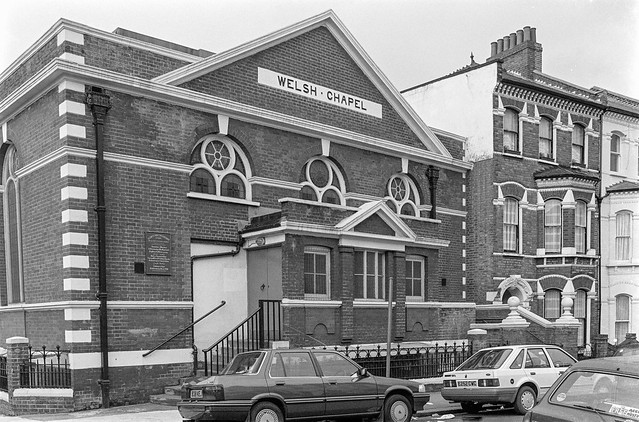
Welsh Chapel, Beauchamp Rd, Battersea, Wandsworth, 1988 88-2d-56-positive_2400
Welsh Chapel, Beauchamp Rd, Battersea, Wandsworth, 1988

The only one of my four grandparents I ever knew was a small lady dressed always in black, who seldom moved far from the fire and range in the back room of their house. I don’t remember her ever saying much, though I think she was still very much in charge in the house where she lived with my three maiden aunts, where our Sunday afternoons were strictly observed with only quiet activities and good books allowed, though I think we children sometimes escaped to the wilder parts of the large garden where we were out of sight. She was a Baptist, though the church she and the aunts were members of was a few miles further out of London, though having been born in Llansaintfred, Radnor she would have been home at the Welsh Chapel. Eliza Ann Davies came up to London to work in a Welsh Diary on the Kings Cross Road owned by an uncle, and it was there that she met my grandfather, Frederick Marshall, a young wheelwright and blacksmith, came into the shop some time in the late 1880s and they were married in 1890. I never met him as he was killed in a road accident 12 years before I was born.

Lavender Hill, Battersea, Wandsworth, 1988 88-2d-54-positive_2400
Lavender Hill, Battersea, Wandsworth, 1988

This impressive range of shops can still be seen on Lavender Hill, just to the east of Clapham Junction station – the pub glimpsed in the distance is The Falcon on the corner of Falcon Rd. But while the Falcon is still in business, every single shop has I think changed hands since I took this in 1988. I took a few other pictures on the main shopping streets, including St John’s Hill and St John’s Road some of which I’ve posted in the Flickr album these pictures come from.

St John's Rd, Battersea Rise, Battersea, Wandsworth, 1988 88-2d-35-positive_2400
St John’s Rd, Battersea Rise, Battersea, Wandsworth, 1988

The corner of St John’s Rd and Battersea Rise still looks much the same, and the Northcote Arms is still there, though with some new signage. Rhino sports has gone and in its place you can now get acupuncture and other health and beauty treatments. The place of Angel shoes has been taken by a hairdressers, its hanging sign gone, though the iron bracket from which it hung is still in place. And pedestrians are no longer fenced in at the junction.

Aliwal Rd, Battersea, Wandsworth, 1988 88-2d-33-positive_2400
Aliwal Rd, Battersea, Wandsworth, 1988

Many quite ordinary houses such as these were finished with interesting detail as on these houses in Aliwal Road. It was I suppose then a relatively inexpensive way to add a touch of class, or perhaps a builder’s edpression of pride in his work.

Broomwood Rd, Battersea, Wandsworth, 1988 88-2d-15-positive_2400
Broomwood Rd, Battersea, Wandsworth, 1988

65 Broomwood Road is no longer a dentists, and has lost all those signs, as well as the details of its glazing, but the door and the side panels remain as well as the decoration above. It is at the end of a short row of similar houses on the street,

Webbs Rd, Shelgate Rd, Battersea, Wandsworth, 1988 88-2d-13-positive_2400
Webbs Rd, Shelgate Rd, Battersea, Wandsworth, 1988


Like many corner shops in London, Sacha Wines on the corner of Webbs Rd and Shelgate Rd has now been converted for residential use and customers have to go elsehwere for ‘Food, Wines, Beers, Spirits’ etc. Most of these photos were probably taken as I wandered towards Webbs Rd, not for Sacha Wines, but for the Wandsworth Photo-Co-op.

Bellson & Co,  Battersea Rise, Battersea, Wandsworth, 1988 88-2d-26-positive_2400
Bellson & Co, Battersea Rise, Battersea, Wandsworth, 1988

You can still fine the ball on top of a pillar on Battersea Rise, a few yards up on the south side from Northcote Road, but it takes a little imagination to recognise the scene in my 1988 photograph. The shopfront has gone and 73a is now a house, while Bellson & Co has added an extra floor, though still retaining the bay windows and porch. The changes have been made in a way that integrates pretty seamlessly and without that ball (the pillar is now exposed brick) I would have found it hard to convince myself that this was indeed the same place.

Clicking on any of the pictures in this post will take you to a larger version in my album 1988 London Photos.

Battersea 1988

Tool shop, Northcote Rd, Battersea, Wandsworth, 1988 88-2e-63-positive_2400
Northcote Rd, Battersea, Wandsworth, 1988

Clapham Junction is claimed to be Europe’s busiest station with over 2000 trains a day passing through and around 60% of them stopping, including all of those I take into London. And like many others, I’ve often changed there to trains for destinations across the south of London and further afield, and less often exited to take buses.

Service Centre, Northcote Rd, Battersea, Wandsworth, 1988 88-2e-65-positive_2400
Service Centre, Northcote Rd, Battersea, Wandsworth, 1988

But in February 1988 I left the train with the intention of taking photographs of the area around the station – which is not in Clapham which is a 10 minute bus ride away, but in Battersea. Over the years the area has also become referred to as Clapham Junction, and parts are also called by the names of some of the major streets, such as Lavender Hill and Northcote Road, but I’ve simply called it Battersea in the captions to my images, which also include the name of its London Borough, Wandsworth, the area a mile or so to its west.

Tool shop, Northcote Rd, Battersea, Wandsworth, 1988 88-2e-63-positive_2400
Tool shop, Northcote Rd, Battersea, Wandsworth, 1988

In the short days of February I tended to photograph more in the areas that were within easy reach of my home so as to make the most of the light; I could leave home and be standing on the street at Clapham Junction in around 35 minutes.

Northcote Rd, Battersea, Wandsworth, 1988 88-2e-55-positive_2400
Northcote Rd, Battersea, Wandsworth, 1988

The area to the south of the station, particularly down St John’s Road is a major shopping centre for this area of London, so it is perhaps not surprising that many of my pictures were of shops.

Belleville Rd, Northcote Rd, Battersea, Wandsworth, 1988 88-2e-51-positive_2400
Belleville Rd, Northcote Rd, Battersea, Wandsworth, 1988

It was also a time when I was finding an increasing interest in how shop interiors, particularly those of small businesses with low set-up costs, reflection the areas and customers they served. Hair-dressers, shoe repairs and other independent small businesses very much came from the communities they served.

Northcote Rd, Battersea, Wandsworth, 1988 88-2e-53-positive_2400
Northcote Rd, Battersea, Wandsworth, 1988

Many of these businesses are now gone. Few people now get their shoes repaired – and like some other areas they are now largely served by franchises. Tastes in various areas have changed, often dramatically, and of course in recent years shops have been hit by a move to on-line in many areas.

Lavender Hill, Falcon Road, Battersea, Wandsworth, 1988 88-2e-43-positive_2400
St John’s Rd, Battersea, Wandsworth, 1988

My apologies for some technical deficiencies in some of these images, most noticeable in some of the skies. Unfortunately this is a result of considerable under-development, probably resulting from an exhausted or incorrectly replenished developer. Digital retouching could improve them, though probably not entirely eliminate the effect and it very time-consuming. But the blemishes, though annoying, don’t prevent you seeing the subject, so I’ve published these here and on the web despite the blemishes, though I have never shown prints from them.

St John's Rd, Battersea, Wandsworth, 1988 88-2e-42-positive_2400
St John’s Rd, Battersea, Wandsworth, 1988

If you walk down these streets today – or when the ‘non-essential’ shops re-open, expected to be on 12 April you will see the differences from 1988. The streets around Clapham Junction now look rather more like those in any main street around the country and the area has been considerably more gentrified.

All from my album https://www.flickr.com/photos/petermarshall/albums/72157715589148871/with/50254685063/ 1988 London Photos – and clicking on any of the images here should take you to larger versions there from which you can browse the album.

Earls Court & South Ken: 1987

Melbury Rd, Holland Park, Kensington & Chelsea, 1987  87-12d-63-positive_2400
Melbury Rd, Holland Park, Kensington & Chelsea, 1987

Another of those artists houses in Melbury Rd, just a short walk north from Earls Court. The house, now Grade II* listed, was commissioned by painter and illustrator Marcus Stone from achitect Richard Norman Shaw and completed in 1875. Stone’s best work was probably his illustrations for books by Charles Dickens, Antony Trollope and others, and his paintings, particularly his later works, though technically superb have been described as “a particular type of dainty sentiment, treated with much charm, refinement and executive skill” or more bluntly, “chocolate box.” The many windows of the studio were probably more to light his work for clients than for painting, as the larger group shown here are east-facing.

Collingham Gardens, Earls Court, Kensington, Kensington & Chelsea, 1987  87-12e-31-positive_2400
Collingham Gardens, Earls Court, Kensington, Kensington & Chelsea, 1987

Collingham Gardens is one of a number of streets on the edge of Earls Court and South Kensington which together have a wide range of late Victorian architecture, sometimes rather overdone.

Collingham Gardens, Earls Court, Kensington, Kensington & Chelsea, 1987  87-12e-26-positive_2400
Collingham Gardens, Earls Court, Kensington, Kensington & Chelsea, 1987

Many of the houses in this area were built by Peto Brothers to the plans of Ernest George (1839-1922) and the younger Harold Ainsworth Peto (1854–1933). These architectural partners also designed houses for the Cadogan Estate before Peto decided to leave London in 1891. Many of the leading architects of the early 20th century trained in George’s London office, includint (according to Wikipedia) “Herbert Baker, Guy Dawber, John Bradshaw Gass, Edwin Lutyens and Ethel Charles”, who was the first woman to be admitted to the RIBA.

Collingham Gardens, Earls Court, Kensington, Kensington & Chelsea, 1987   87-12e-46-positive_2400
Collingham Gardens, Earls Court, Kensington, Kensington & Chelsea, 1987

George and Peto added a remarkable range of vernacular elements derived from across Northern Europe to the basically Queen Anne design of the hourses in the area, particularly in Harrington Gardnes and Collingham Gardens, based on the sketches they had made of houses in Holland, Germany and elsewhere. It was an eclecticism that was not always admired, either at the time or now.

Harrington Gardens, Earls Court, Kensington, Kensington & Chelsea, 1987  87-12e-35-positive_2400
Harrington Gardens, Earls Court, Kensington, Kensington & Chelsea, 1987

These houses are large and many have been converted into flats. Some are listed but many are not. The overall effect of wandering these streets is overpowering and best taken in small doses. A 2-bed flat in the area may cost you a million, and houses perhaps £15m.

Kenway Rd, Earls Court, Kensington & Chelsea, 1987  87-12e-41-positive_2400
Kenway Rd, Earls Court, Kensington & Chelsea, 1987

Coming out of Earls Court Station I often crossed Earls Court Road and made my way down Hogarth Road and then along the narrow Hogarth Place past shops onto Kenway Road as a short cut to a friend’s studio not far away. Or rather than wait for the crossing I might walk a few yards north and then cross directly to Kenway Road, where this shop was at No 9 on the north side of the street, with Arabic script on the window and its illuminated sign, together with an animal I was never sure was a sheep, cow or goat.

Kenway Rd, Earls Court, Kensington & Chelsea, 1987  87-12e-42-positive_2400
Kenway Rd, Earls Court, Kensington & Chelsea, 1987

I think Kashmir Stores was more or less opposite, where a short alley leads off to a rear yard. The owner saw me taking photographs and was very keen not to be left out.

There are a few more pictures of the area in my 1987 London Photos.


All photographs on this and my other sites, unless otherwise stated, are taken by and copyright of Peter Marshall, and are available for reproduction or can be bought as prints.


Wealthy Kensington – 1987

The London I grew up in, on the outskirts of the capital was an area of small late Victorian terraces and Edwardian and inter-war two or three-bed semis, interspersed with the occasional factory, church and municipal buildings, with few or any sizeable private houses of any age. It was largely working class, poor and largely honest but not particularly deprived. And back then we had the NHS, free education and the welfare state.

Walking around Holland Park and other wealthy areas of Kensington is a completely different world; another country of large detached house and large blocks of mansion flats, an opulence based both on the exploitation of the British Empire and of the exploitation of the workers in the mass of England. I wrote first “our country”, but I think it was never really our country, but their country, “England” or “Great Britain” a deception that sent many working people to toil in factories or die in the trenches – as well as profiting from slavery and working in mines and plantations across the world.

Looking at these pictures now, it’s hard not to think of the times I have walked past some of these and similar places more recently, often on my way to Grenfell Tower or to join the monthly silent marches in memory of those who died there, some of which have passed through this area, walking from Kensington Town Hall.

Vintage car, Philbeach Gardens,  Earls Court, Kensington, Kensington & Chelsea, 1987 87-12c-65-positive_2400
Vintage car, Philbeach Gardens, Earls Court, Kensington, Kensington & Chelsea, 1987

The Addison Road area was the first to be developed, on 200 acres of farmland belonging to Lord Holland, beginning in the 1820s. The estate was sold off in parts for development from 1823 to 1930.

Royal Crescent, Holland Park, Kensington & Chelsea, 1987 87-12d-12-positive_2400
Royal Crescent, Holland Park, Kensington & Chelsea, 1987

Royal Crescent to the north of Holland Park Avenue was built in 1846, and the whole crescent of houses is Grade II* listed. The picture shows the eastern corner of the crescent with Holland Park Avenue.

St Anns Villas, Notting Hill, Kensington & Chelsea, 1987 87-12d-15-positive_2400
St Anns Villas, Notting Hill, Kensington & Chelsea, 1987

The road leading north from the centre of Royal Crescent is St Ann’s Villas and is lined with substantial houses. After a few in stucco and a road junction it is lined with a development of 12 similar but not identical semidetached houses in a red brick Tudor style, with attractive stonework and blue brick diapering, built in 1852 and Grade II listed. The blue plaque here is for music hall artist Albert Chevalier, born here and best remembered for one of his many songs “My Old Dutch”. Although he wrote and performed in cockney as a costermonger and was called ‘the coster’s laureate’, he was from a rather more middle-class background, his father being the French master at Kensington School, Jean Onésime Chevalier, and Albert was christened Albert Onésime Britannicus Gwathveoyd Louis Chevalier. His mother was Welsh, which accounts for the Gwathveoyd, more usually spelt Gwaithfoed.

87-12d-23-positive_2400
Debenham House, Peacock House, Addison Rd, Holland Park, Kensington & Chelsea, 1987

Debenham House, also known as Peacock House, is the only Grade I listed building in the Addison Rd, designed by architect Halsey Ricardo for department store owner Ernest Ridley Debenham and completed in 1907. it became known as Debenham House after it was sold following Debenham’s death in 1952. The exterior, designed to retain its appearance despite the ravages of London’s soot with coloured tiles and glazed bricks is in an Italianate style, but the interiors are Arts and Crafts, with work by some of the leading designers of the time. Unfortunately we can only see them in photographs and in several films made using it as a location.

87-12d-31-positive_2400
Holland Rd, Holland Park, Kensington & Chelsea, 1987

Holland Road is a long straight street largely lined with 4 storey terraces of substantial houses like the one in this picture. Expect to pay something around £4m for one of them – or perhaps £700,000 for a 1-bed flat.

Addison Rd, Holland Park, Kensington & Chelsea, 1987  87-12d-35-positive_2400
Addison Rd, Holland Park, Kensington & Chelsea, 1987

This house at 77 Addison Road is opposite Debenham House and I rather prefer its more restrained manner.

Addison Rd, Holland Park, Kensington & Chelsea, 1987  87-12d-41-positive_2400
Addison Rd, Holland Park, Kensington & Chelsea, 1987

One of a row of similar houses on Addison Rd, in a neo-Gothic style dating from around the 1850s. The next door house is listed but for some reason this one is not.

Addison Rd, Holland Park, Kensington & Chelsea, 1987 87-12d-42-positive_2400
Addison Rd, Holland Park, Kensington & Chelsea, 1987

And this is the house next door, rather hidden behind its more impressive gate

All pictures are from page 8 of my album 1987 London Photos.