Brian Haw, Democracy, Cabs, Colombia & Israeli Atrocity – 2010

Brian Haw, Democracy, Cabs, Colombia & Israeli Atrocity: Six protests on Wednesday 2nd June 2010.


Brian Haw & Democracy Village – Parliament Square
Brian Haw, Democracy, Cabs, Colombia & Israeli Atrocity

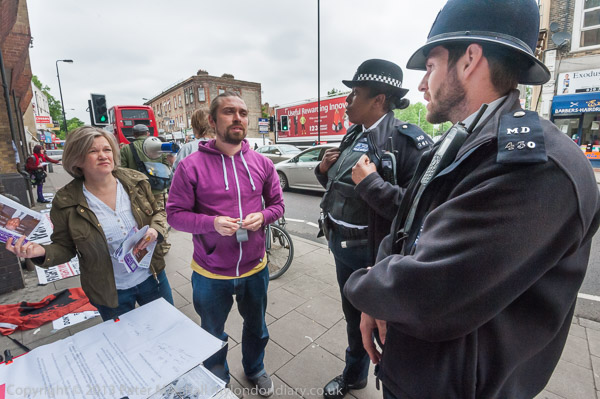
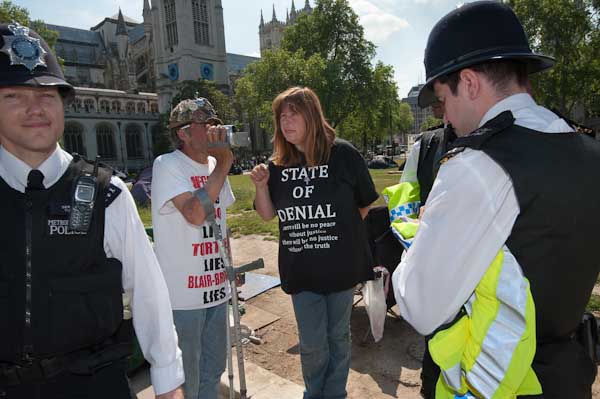
It was 9 years since Brian Haw had begun his peace protest in Parliament Square and police marked the occasion by serving a summons on his fellow protester Barbara Tucker for using a megaphone. An officer writes out the details as I take photographs (more online.)
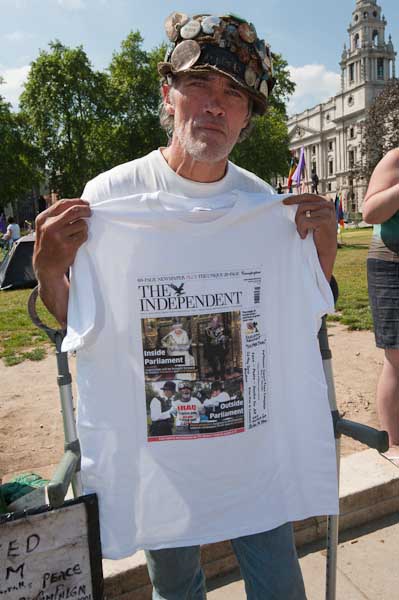
Brian Haw, Democracy, Cabs, Colombia & Israeli Atrocity

The previous week both Brian and Barbara had been arrested and held for 30 hours while the Queen came for the state opening of Parliament – as usual others in the campaign continued the protest during their enforced absence.

Brian Haw, Democracy, Cabs, Colombia & Israeli Atrocity

The arrest had come after Brian had objected to police carrying out a search of his home – a tent in Parliament Square – without a warrant – the 13th or 14th illegal search police have made as a part of the continual campaign of harassment against him over the years.
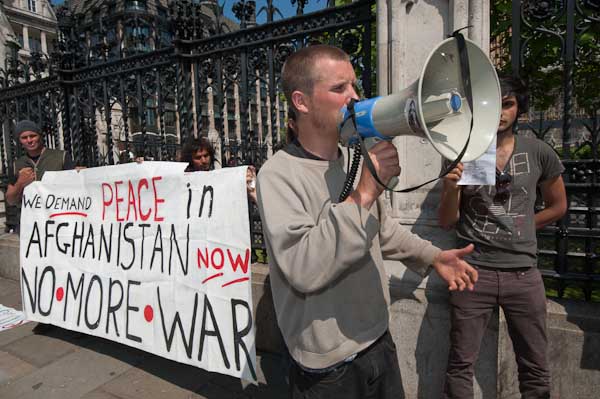
Brian Haw, Democracy, Cabs, Colombia & Israeli Atrocity

Still also in Parliament Square were the tents of the separate peace campaign Brian and Barbara label as the Police Camp, Democracy Village, there since the May Day protest a month ago.
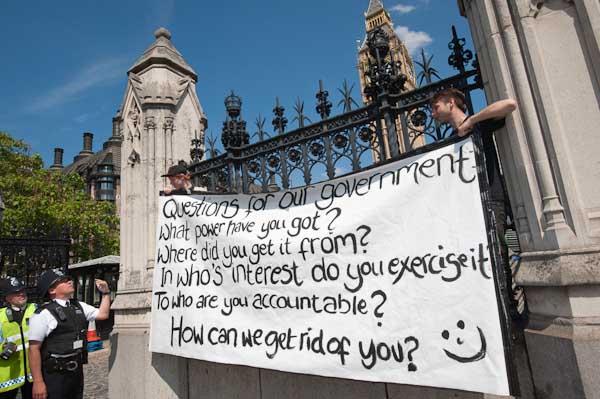
A handful of those from the camp were protesting outside the railings around Parliament with banners demanding peace and questioning the authority of Parliament. Police generally left them along apart from telling some to climb down from the wall.

BrianHaw – Summons Marks 9 Years
Democracy Village Protest


Black Cabs Protest – Aldwych
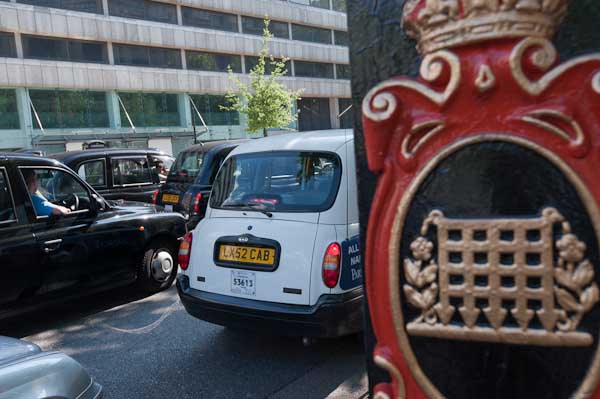
Several thousand ‘black cabs’ had come to Aldwych with a number of ‘knowledge boys and girls’ on scooters currently training for the job, causing considerable disruption and delay to London traffic. They claim they are unfairly victimised by Transport for London, the Public Carriage Office and Westminster city council.

Many non-cabbies feel that these cabs are an outdated relic from the era of the hansom cab and that their operations in ‘plying for hire’ lead to unnecessary congestion. Minicab drivers feel that they are discriminated against in favour of the cabs and arguably have a rather stronger case.

Black cabs are largely used by a relatively small and well-off section of the community and we could surely have a better public transport system for the majority without them. But in my post on My London Diary I have a longer description of their grievances as well as reporting how police attempts to control the protest multiplied its effectiveness.

Black Cabs Protest


BP Picket for Colombian Oil Workers – St James’s Square
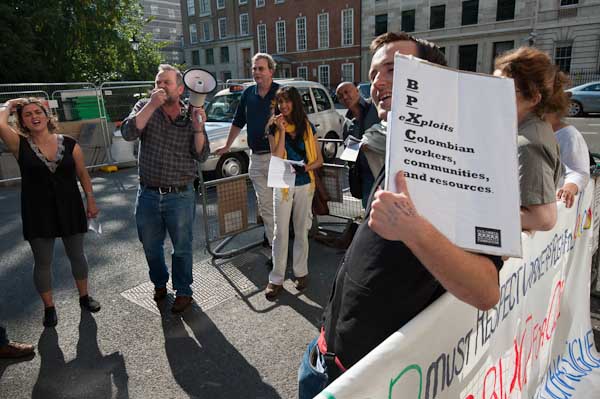
The Colombia Solidarity Campaign held a picket outside BP’s HQ in support of Colombian oil workers who have occupied a BP plant on the Cusiana oilfield and are stopping building works there while allowing normal work at the plant to continue.

On My London Diary you can read a lengthy piece on the dispute in an area of Colombia under military occupation and where peaceful protesters occupying the plant were attacked by armed commandos from the Colombian Army together with BP’s private security personnel.

Among the speakers at the picket was Jim Catterson of the ICEM, the International Federation of Chemical, Energy, Mine and General Worker’s Unions, ICEM, which represents more than 20 million workers around the world, and was calling for international solidarity with the oil worker’s union (USO) and the Movement for the Dignity of Casanare in the fight against BP.

Much more about the dispute and protest at BP Picket for Colombian Oil Workers.


Protest for Murad Akincilar – Turkish Embassy, Belgrave Square

A protest at the Turkish Embassy called for the release of trade unionist Murad Akincilar arrested the previous September while on extended holiday in Turkey and still in prison in Istanbul. Lack of medical care in prison has resulted in serious eye damage and partial blindness. His case was due to come to court again the following day.

Based in Switzerland where he works for trade union Unia, Akincilar had studied in London for a Masters degree at the LSE 18 years earlier and was known personally to some in the protest organised by Fight Racism! Fight Imperialism! and Gikder to support the campaign being organised by the Swiss trade union Unia.

Protest for Murad Akincilar


Zionist Federation Supports Israeli Atrocity – Israeli Embassy, Kensington
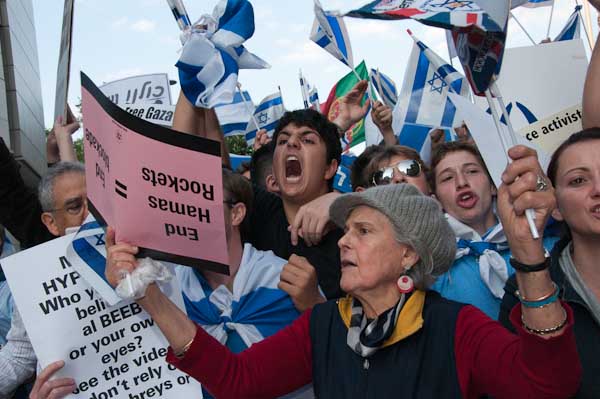
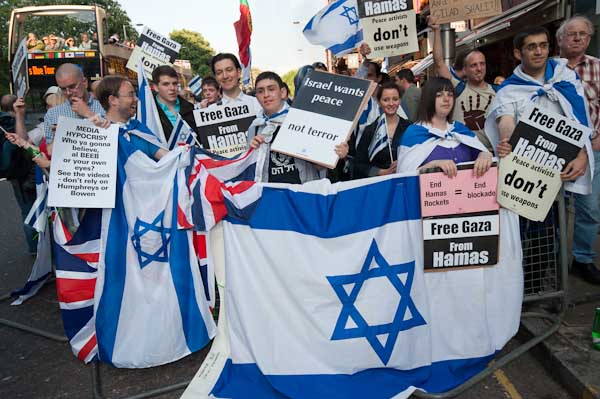
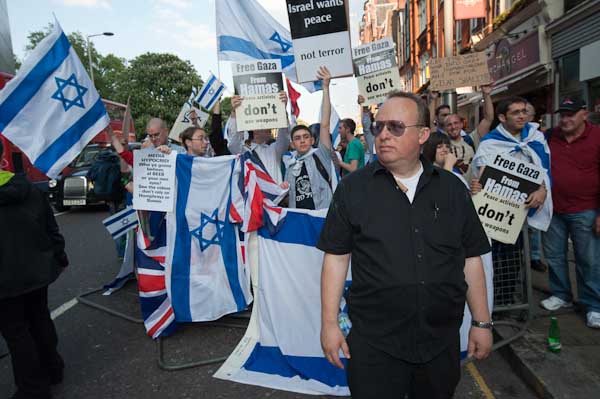
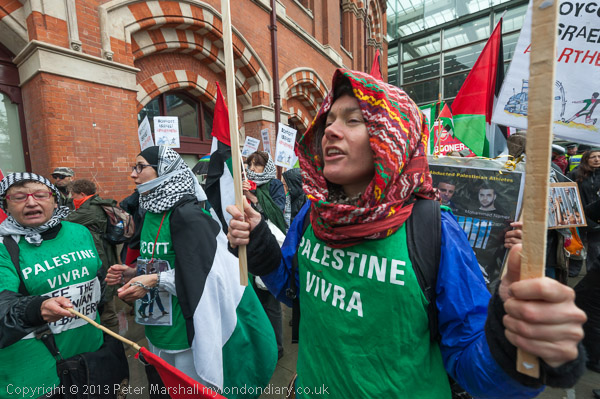
The Zionist Federation together with members of the English Defence League demonstrated opposite the Israeli embassy in support of the Israeli Defence Force killings in the attack on the Gaza aid flotilla.
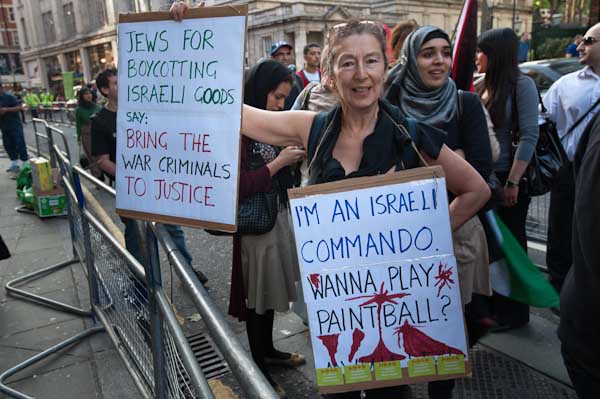
A few Palestinian supporters had come to oppose this protest but the Palestinian Solidarity Campaign and Stop the War had decided not to support the counter-demonstration to avoid conflict.
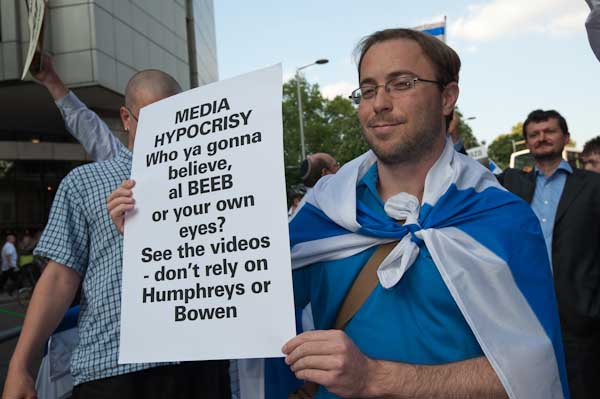
On My London Diary I quote statements by the World Zionist Orgainsation and the World Jewish Congress (WJC) expressing regret at the loss of life that occurred, but the mood of this pro-Israel protest was very different, “one of a gloating triumphalism that seemed entirely inappropriate to the situation“, and I state I was “sickened when at one point a large group of the demonstrators began chanting ‘dead Palestinian scum‘.

I also recorded “I had been appalled to find that this was to be a demonstration jointly with the Zionist Federation and the English Defence League, some of whose members many of us have seen and heard chanting racist slogans on our streets. It seems unbelievable that a Jewish organisation should align itself – even if unofficially – with people like this.” Few EDL actually turned up.
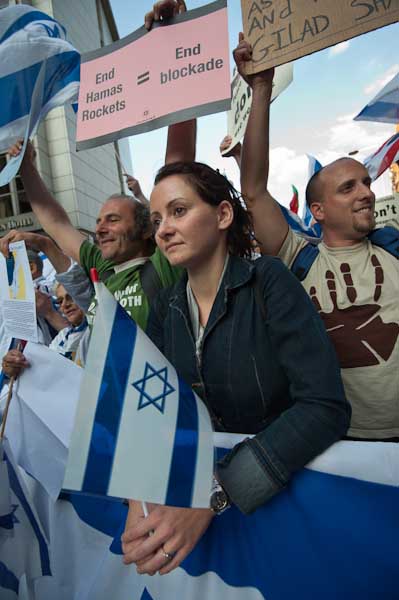
One placard read ‘Peace Activists don’t use weapons’ but as I pointed out on My London Diary the the photographs on the WJC web site show “almost entirely exactly the kind of tools that would be expected to be found on any ship in its galley and for general maintenance, as well as items being taken for building work in Gaza” with the exception of “a few canisters of pepper spray, some catapults and what looks like some kind of ceremonial knife.

As I also pointed out in my report, the “the actions of the state of Israel in their attacks on Gaza, their disruption of everyday life for the Palestinians and the blockade is making the possibility of peace much more distant. I’m not a supporter of Hamas, but Israel needs to ask why Hamas enjoys such support in Gaza and to change its own policies which have led to this. Like other conflicts, resolution depends on winning hearts and minds and this can’t be done with tanks and bulldozers.”
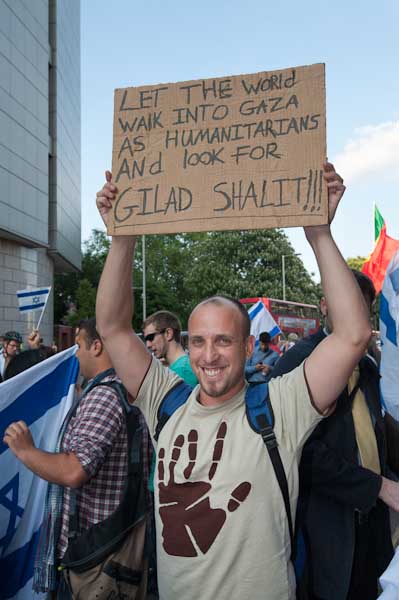
I had few problems covering the protest but other press were less fortunate. Four “were surrounded and chased by a an angry group of threatening Zionist demonstrators at the end of the protest, before police eventually stepped in to protect them.”

More at Zionist Federation Support Israeli Atrocity.


FlickrFacebookMy London DiaryHull PhotosLea ValleyParis
London’s Industrial HeritageLondon Photos

All photographs on this page are copyright © Peter Marshall.
Contact me to buy prints or licence to reproduce.
Fight the Height, Walthamstow 2008

Fight the Height, Walthamstow: Sunday 1 June, 2008

Fight the Height, Walthamstow

In 1999 Waltham Forest council demolished a large site at the east end of Walthamstow High Street and on Hoe Street. An arcade of shops was built through the block between the two streets in the 1960s and the site was known as the Arcade site.

Fight the Height, Walthamstow

The area had been heavily bombed in the war and the post-war buildings on the site were of no particular architectural merit but they were home to many small local shops remembered fondly by local residents, as well as some council flats on the second and third floors above them. Waltham Forest council are blamed for failing to properly maintain the properties resulting in their deterioration.

Fight the Height, Walthamstow

When demolition took place in 1999, the council announced their intention to put the site to cultural use and benefit the community – a new leisure centre, library and arts centre together with social housing. But for some years this was an empty square with a path across. But developer St Modwen published its proposals for the site in 2008 they appeared to be dominated by commercial interest and to have little regard for local needs.

Fight the Height, Walthamstow

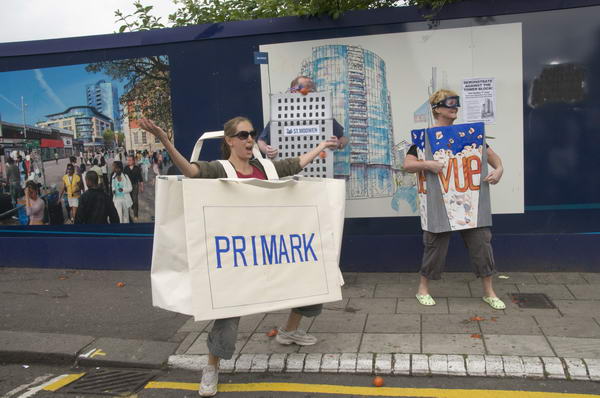
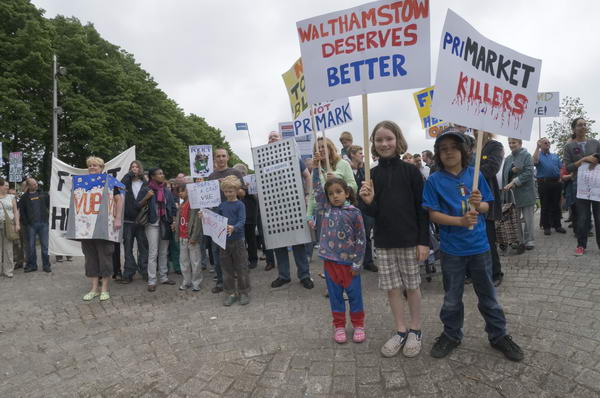
The Arcade site was at the east end of Walthamstow’s famous street market, claimed to be the longest in Europe which began in 1885 and attracts shoppers from across London and tourists from around the world. St Modwen’s plans included a large Primark supermarket which would threaten the future of the market and many of the shops along the high street.

Fight the Height, Walthamstow

Then there was the Vue multiplex cinema which would put an end to any chance of the restoration of the Grade II* listed 1930 high Art-Deco Moorish style former Walthamstow Granada a few yards away on Hoe Street.

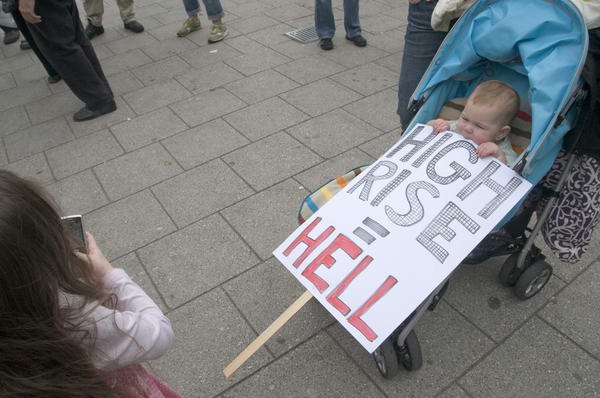
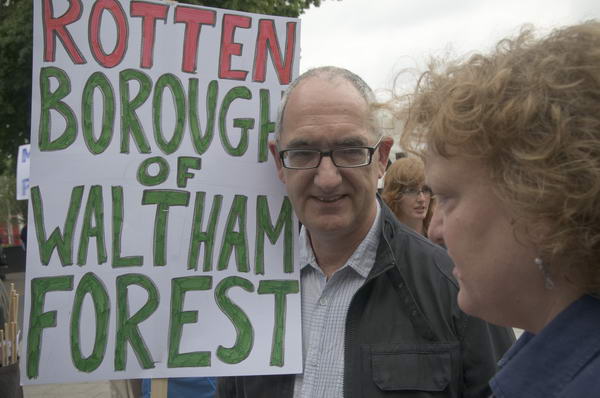
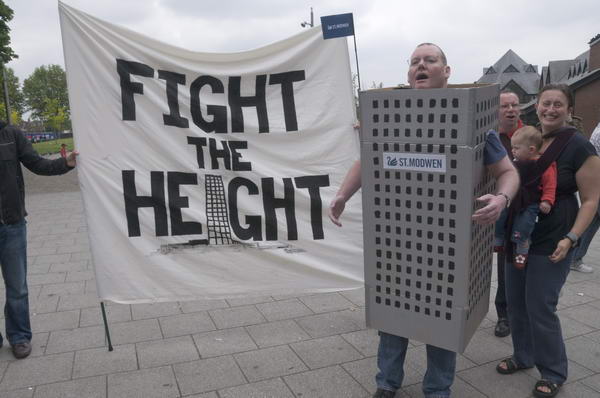
In the 2008 plans was an 18 storey tower block, quite out of scale with the surrounding area, with its terraces of two storey housing and small scale developments. It was this that led those protesting to call their campaign ‘Fight The Height‘.

Flats in this tower block would be highly attractive to well-paid city workers, just a short walk from Walthamstow Central station with its 4 trains an hour to Liverpool Street in 17 minutes as well as a frequent Victoria Line service to the West End.

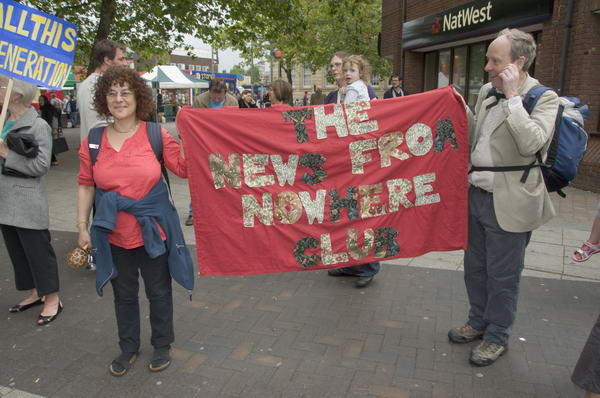
Considerable thought had gone into the protest to attract publicity for the campaign. There were three characters representing the tower block, Vue cinema and Primark who bravely stood in front of the hoardings with the large coloured computer generated images of the proposed development as the protesters pelted them with over-ripe tomatoes donated by market stall-holders. And it made the TV news.

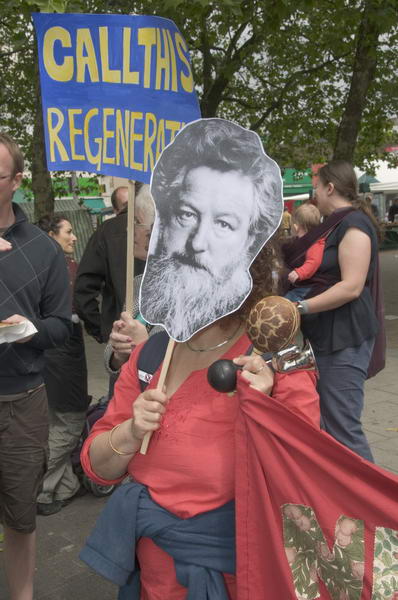
There were also many large placards with adults and children carrying them, and local boy William Morris (1834-1896) born here in and celebrated in his childhood home now the William Morris Gallery in Lloyd Park) also put in an appearance. Morris in 1877 was one of the founders of the Society for the Protection of Ancient Buildings, often known by its nickname Anti-Scrape, a charity whose purpose remains ‘Heritage protection’.

And “local artists and non-artists” founded the Antiscrap campaign “against against the attacks on our culture by the local authority.” Originally formed to fight cuts in museum fnding, on their web site you can read more about the Arcade campaign and other campaigns about out-of-character local developments.

Protests like this one were probably important in leading St Modwen to revise their plans for the Arcade site.

Here is a post from Antiscrap on Thursday 22 November 2012:

The shocking news about the new Arcade site plans is that they’re not bad. No, really. Opinions differ as to whether it’s appropriate to build 120 new homes and a nine-screen cinema there at all. But the plans have been thoughtfully designed with good attention to detail and far less negative impact on central Walthamstow than previous plans.

http://www.antiscrap.co.uk/

But as a short visit to Walthamstow will show, some other campaigns in the area have met with rather less success, though the Granada has been saved and now hosts a theatre. There are now tower blocks clustered around various areas of the town – largely in easy walking distance from its stations – and the Ensign camera factory has been replaced by flats rather than rediscovered under its ugly 1980s cladding.

More at Fight the Height, Walthamstow.


FlickrFacebookMy London DiaryHull PhotosLea ValleyParis
London’s Industrial HeritageLondon Photos

All photographs on this page are copyright © Peter Marshall.
Contact me to buy prints or licence to reproduce.

Heathrow – No Third Runway – 2008

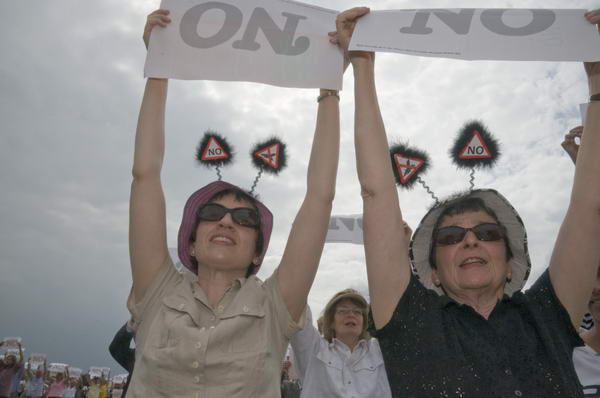
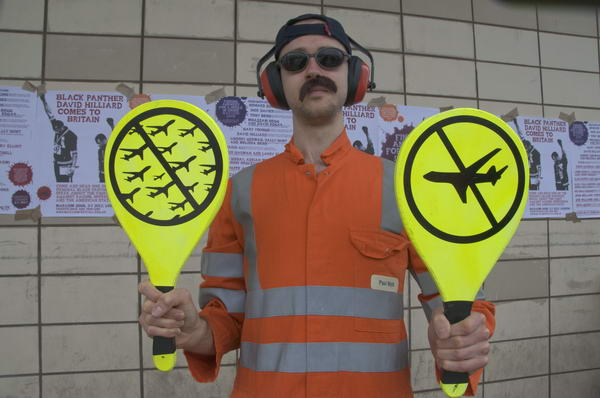
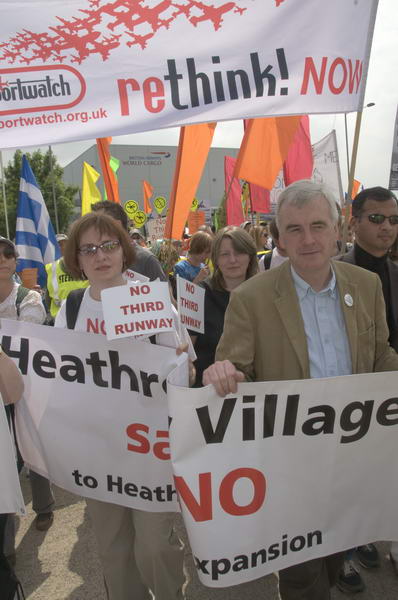
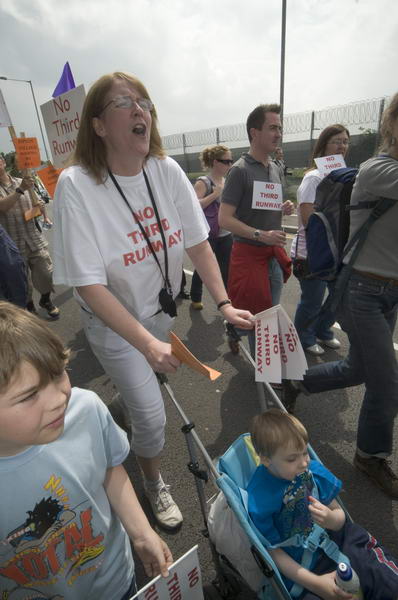
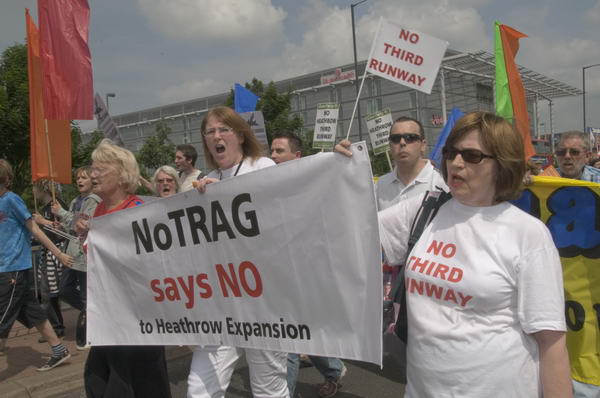
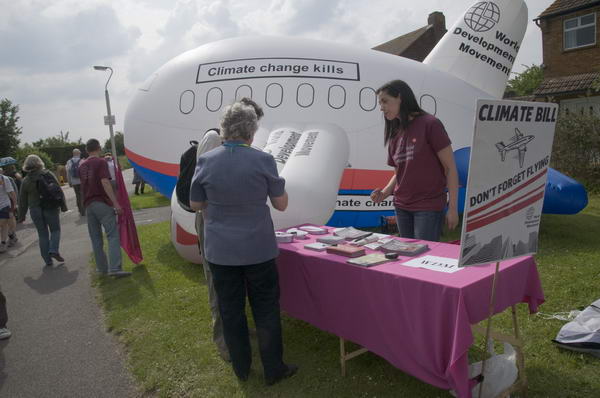
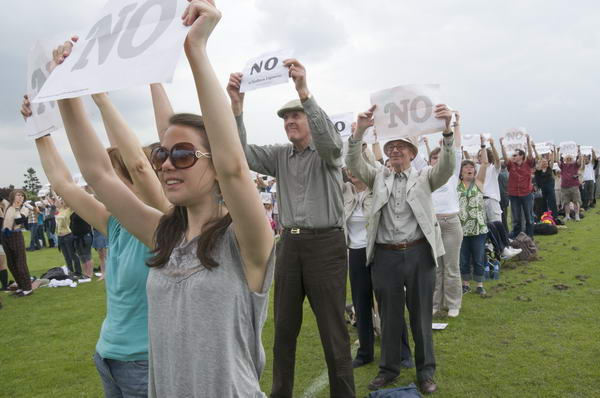
Heathrow – No Third Runway: On Saturday 31st May 2008 I joined around 4000 people marching from Hatton Cross to the village of Sipson, doomed if Heathrow was to be allowed to go ahead with its plans for a ‘third runway’.

Heathrow - No Third Runway

This was a protest I had a more personal interest in than most. I grew up under the Heathrow flight path, about two and a half miles from touchdown, and have lived in the area most of my life. I now live about the same distance from the edge of the airport but fortunately no longer on the flightpath, with just the occasional aircraft making the steep turn needed to fly over our house.

Heathrow - No Third Runway

My post about the protest written in 2008 began with this paragraph:
“It is now obvious to everyone with their head out of the sand is that London Heathrow is in the wrong place. It always was, since its creation by subterfuge and lies during the last years of the war, but no government since has had the nerve to challenge the powerful aviation lobby.”

Heathrow - No Third Runway

In 2010 the newly formed Coalition government did cancel the plans as a part of the deal the Tories reached with the Lib-Dems. But then the government set up the Davies Commission, chaired by Howard Davies who was at the time employed by one of the principal owners of Heathrow, GIC Private Limited. Though he resigned when he was appointed it came as no surprise when his final report recommended the building of a third runway and a sixth terminal at Heathrow.

Heathrow - No Third Runway

The government, now solely Conservative, approved these proposals in 2016 but London councils and the Mayor of London, Sadiq Khan applied for judicial review and the Court of Appeal ruled that the decision was unlawful as it did not take into account the government’s commitments to combat climate change under the Paris Agreement. Heathrow appealed and in 2020 the UK Supreme Court lifted the ban.

Since then nothing has happened, partly because of lack of finance and arguments about who would fund some of the huge infrastructure costs involved in the proposals outside the airport boundary. The economic costs of the dislocation during the long development would also be considerable. Covid led to a huge decrease in passenger numbers and although these have picked up, finding the investment needed to finance the project probably remains impossible.

You can read more detail on Wikipedia about the supporters of expansion and also those opposed to it.

Although the project was always clearly an environmental disaster, clearly the government and Supreme Court decisions reflected the lack of importance at the time given to our increasing climate chaos. Recent weather in the UK and around the world are now beginning to change this and a new government is going to have to do more than pay lip-service and will no longer be able to push things into the distant future. So I think it very unlikely we will ever see another runway being built at Heathrow.

You can read a lengthy account of the protest on 31st May 2008 on My London Diary, when I mention that when I was taking pictures like the one at the top of the post as a few under 3000 of us made a giant human ‘NO’ on the grass of the recreation ground I was taking pictures with one hand and holding up my ‘No’ towards the cameras on the cherry-picker behind my back with the other.

Heathrow – No Third Runway

Peckham, Choudary, Vedanta & Gove 2014

Peckham, Choudary, Vedanta & Gove: Ten years ago Friday 30th May 2014 saw me rushing around London to cover four events, my day starting outside the job centre in Peckham and ending with being escorted out of the Department for Education in Westminster.


Peckham Jobcentre Penalises Jobseekers

Peckham, Choudary, Vedanta & Gove 2014

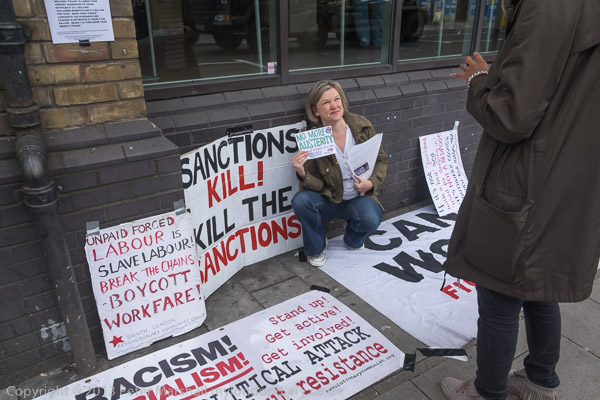
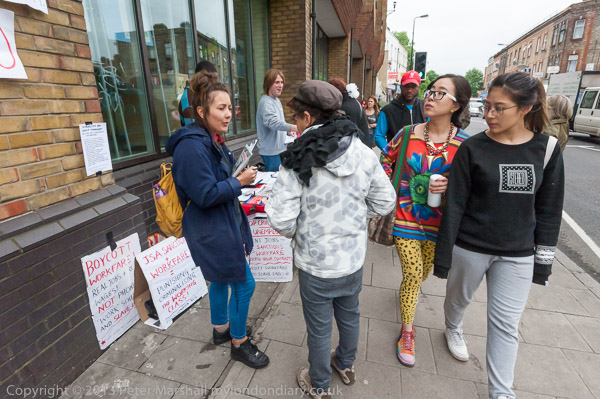
People had come to protest outside Peckham Jobcentre because it removes benefits from claimants at twice the rate of other London job centres and they demanded to know why this was.

Peckham, Choudary, Vedanta & Gove 2014

People are sanctioned for many reasons, often for things outside their control such as missing interviews where letters have either not been sent or not been received due to postal delays, or arriving late when trains or buses have been cancelled. Some were also being sanctioned for refusing to work without pay un unfair ‘workfare’ schemes.

Peckham, Choudary, Vedanta & Gove 2014

Sanctioning leaves many job seekers destitute, without any source of income, often for three months, sometimes longer, removing the ‘safety net’ the welfare state is supposed to provide. There have long been sanctions on benefits, but the major changes introduced by the Coalition Government’s Welfare Reform Act 2012 have hugely increased their use, often for trivial reasons.

Peckham, Choudary, Vedanta & Gove 2014

The new sanctions regime is yet another example of the failure by the Tories (and in this case the Lib-Dems too) to understand how people outside of the middle and upper classes get by; what it is like to live on benefits or low incomes with no resources to fall back on. And it shows that they just don’t care.

Peckham, Choudary, Vedanta & Gove 2014

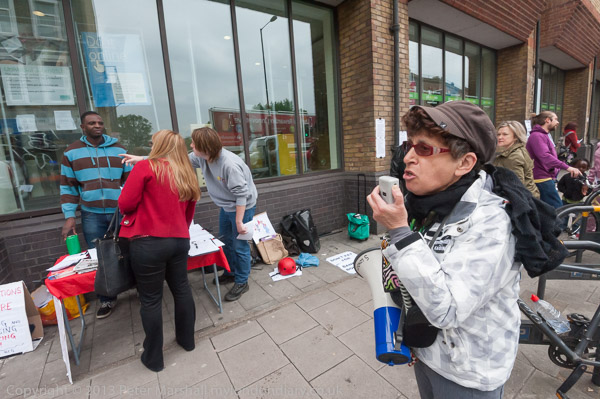
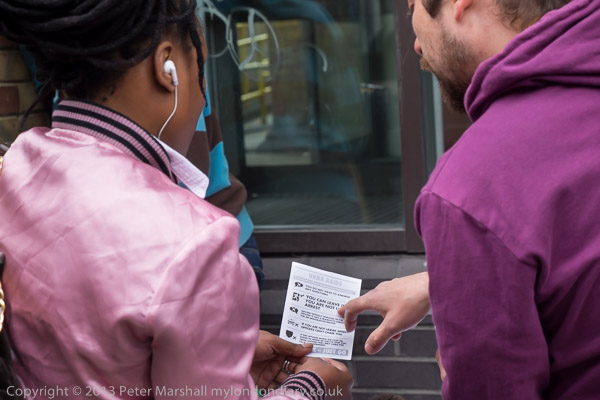
The protest was organised by the Revolutionary Communist Group though others came to support it. Speakers used a megaphone to tell people why they were protesting and people handed out leaflets to those entering and leaving the job centre as well as those walking past. They also gave out an information leaflet about UK Borders Agency raids.

More pictures Peckham Jobcentre penalises jobseekers.


London Mosque Protest For Sunni Extremist

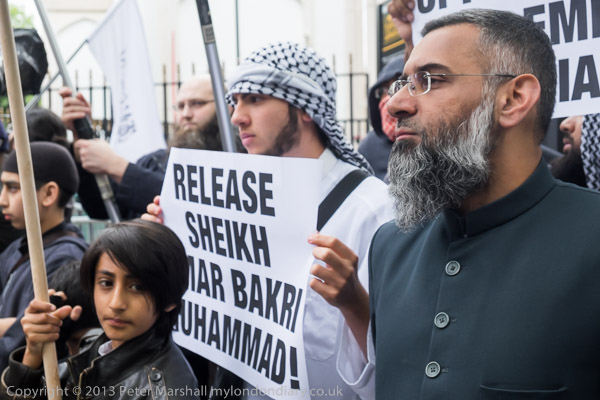
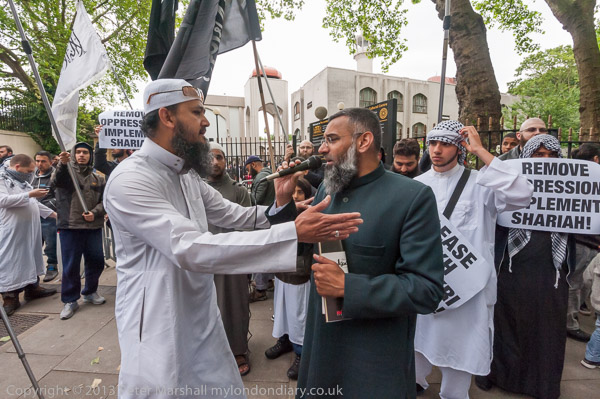
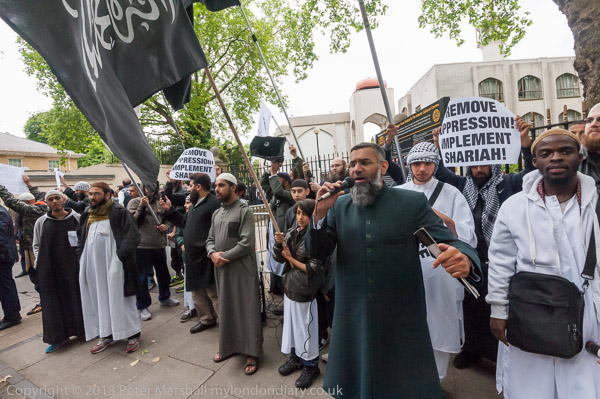
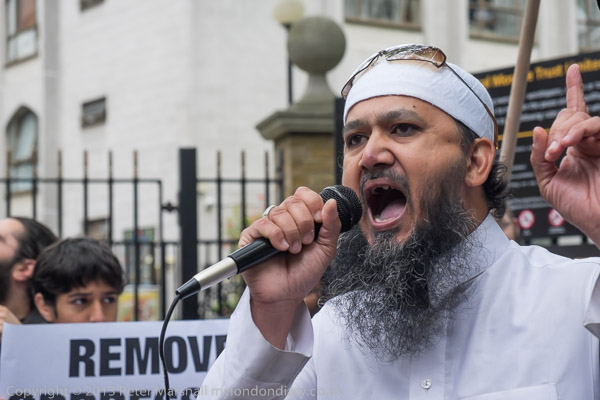
I left Peckham to go to the London Mosque in Regents Park where Anjem Choudary and his followers were protesting on the road outside as the crowds left after Friday prayers.

Choudary had come to call for the release of militant Islamist Omar Bakri Muhammad, held in Lebanon for his support of extremist fighters Islamic State of Iraq and the Levant (ISIL.) Few in the crowds stopped to listen to him and many crossed the street to avoid him. A few came to argue with him.

Omar Bakri Muhammad claimed asylum in the UK in 1986 and came to Finsbury Park Mosque, where he built up Hizb ut-Tahrir and was one of the founders of Al Muhajiroun, banned in the UK after alleged involvement in the 2005 London bombings. He left the UK for Lebanon and was told by the Home Office he could not return here.

In 2010 he was sentenced in Lebanon to life with hard labour for acts of terrorism, but was released on bail after some retracted their testimony against him. He was arrested again in May 2014 for alleged involvement in attacks carried out by militant Sunnis in Lebanon for his support for the Islamic State of Iraq and the Levant who he had called to bring their fight to Lebanon.

This was a segregated protest, with around 30 women covered from head to foot in black in a separate group holding up posters and joining in the chanting of slogans.

More pictures London Mosque protest for Sunni extremist.


African Liberation Day protest against Vedanta

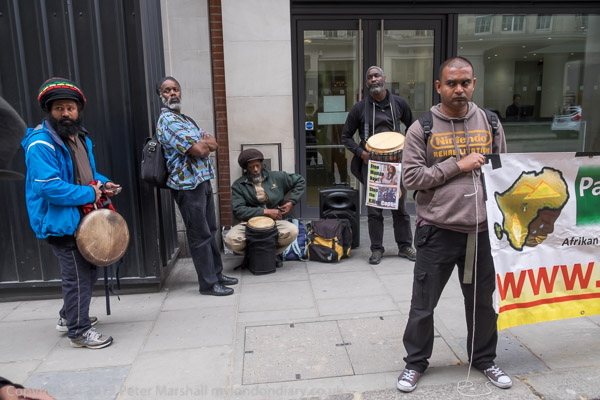
African protesters were outside Vedanta’s Mayfair offices for an Afrikan Liberation Day protest over the London listed company owned by Indian billionaire Anil Agarwal which has cheated both Zambia over copper and Liberia over iron ore deals.

Agarwal appears in a video where he ridicules the Zambian government over the small sum he paid to buy the Konkola Copper Mines and boasting that they made him more than US$500 million every year in profit. Other sources show he avoids paying tax on these huge profits. Vedanta were also taken to court in Zambia over massive pollution of the Kafue River and a large fine was imposed, although apparently it had not been paid.

The Liberian government sold the Western Cluster iron ore deposits cheaply to a small company Elenilto in 2009. They immediately sold 51% to Vedanta, transferring the rest in a few months.

People were slow to arrive for the protest and I had to leave before it really got going.

African Liberation Day protest against Vedanta


Gove “Read-In” protest in Department for Education

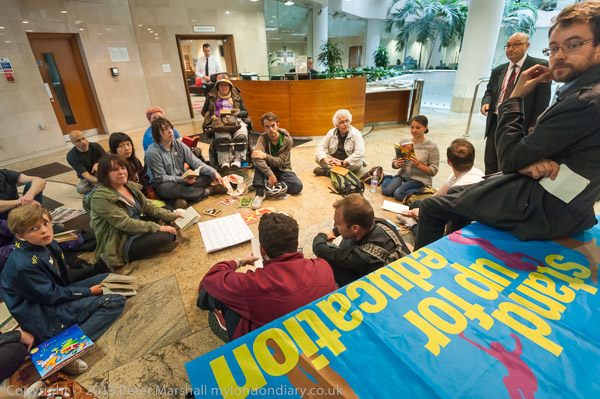
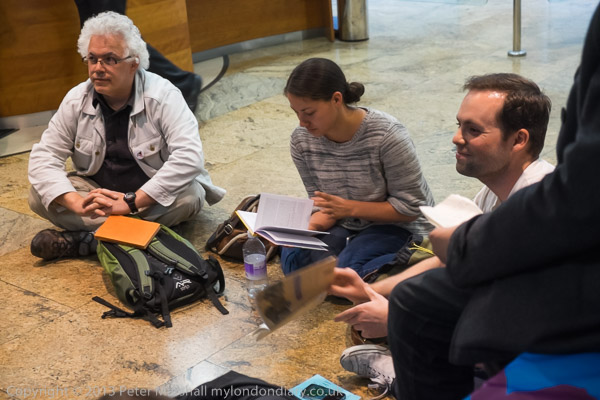
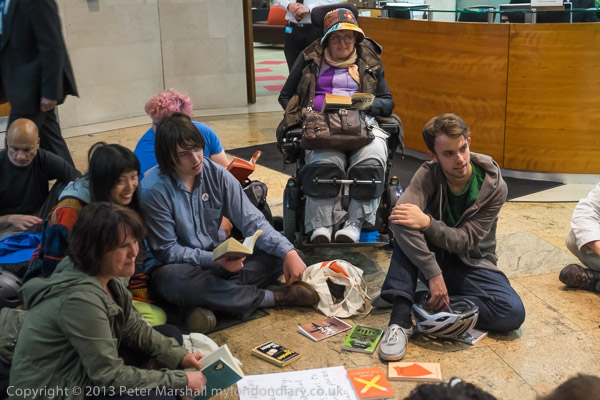
I met a ‘class’ of protesters outside the Department for Education in Great Smith Street, Westminster and walked with them into the foyer where they sat down for an ‘English lesson’ in protest against Michael Gove’s political interference in the curriculum side-lining modern US books, promoting education for the needs of business rather than people.

We had not been stopped when entering although the protesters expected to be ejected as soon as they began making speeches and displayed their banner.

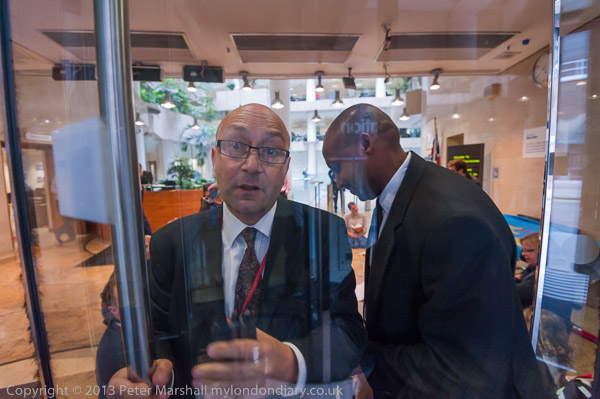
Unfortunately I was asked to leave before this happened as the department were unhappy with the press taking pictures in a public building where there were surely no security implications – though perhaps a high risk – if not a certainty – of the minister and the government being embarrassed.

Although they were insistent that I leave the security staff were unusually polite and rather apologetic and I got a strong impression that they were not happy at being told to keep the press out. I had already taken a number of pictures and took a few more on my way out.

The DfE had issued a statement denying that Gove had anything to do with the decision to narrow the curriculum and promote a more narrowly nationalist agenda for education – one that will sideline not only modern US literature, but also the great wealth of writers from the Commonwealth who have enriched English literature.

They stated the change was a result of consultation with all interested parties, while teachers, examiners, education and literary professionals have launched a mass campaign against what is clearly a ministerial diktat, political interference in education. For them, the DfE statement was simply an uninspired work of fiction.

Gove “Read-In” protest in DfE


FlickrFacebookMy London DiaryHull PhotosLea ValleyParis
London’s Industrial HeritageLondon Photos

All photographs on this page are copyright © Peter Marshall.
Contact me to buy prints or licence to reproduce.

Holy Trinity, Pigs & Brewery, Hull 1989

Holy Trinity, Pigs & Brewery: At the end of my walk in East Hull I spent a little time wandering around the Old Town and came back to the centre the following day before catching the train home.

Holy Trinity, South Church Side, Hull, 1989 89-8p-42

Grade I listed Holy Trinity (since 2017 Hull Minster) is a remarkable survival despite some later architectural vandalism large parts of its original building from 1285 to 1420 remain. It is said to be the largest parish church in England with a floor area of 20,056 square ft and has some of the finest medieval brick-work in the country. Wikpedia lists its vicars from Robert de Marton in 1326; Arthur Robinson was Vicar here when the infant William Wilberforce, Hull’s most famous son, was baptised here in 1759.

Surprisingly it escaped serious damage in the Second World War when much of central Hull was destroyed by bombing. This side of the church now looks rather different with recent building work although the church ant gates posts remain.

Posterngate, Hull, 1989 89-8p-43

These Grade II listed buildings date from 1868 and 1874, designed by the architect to Trinity House William Foale in a Gothic Revival stye were the Department of Transport Marine Office in Hull.

A gated alley between the two blocks leads to Zebedee’s yard and has a label (not visible in my picture) SPACE FOR OFFICIAL CAR’. There is now a first floor bridge across the alley connecting the two buildings.

Pigs, Hull, 1989 89-8p-44

Somewhere in Hull I walked past these pig carcases hanging from hooks and took a picture. I think there are four of them. It was rather a gruesome sight, but has not yet put me off eating bacon.

Hull Brewery, Silvester St, Hull, 1989 89-8p-45

I think it was probably on the following day that I returned to the centre of Hull and photographed the Anchor Brewery Brewery on Silvester Street. I was standing close to Kingston House not far from the west end of the street. The former Hull Brewery site is Grade II listed and was largely built around 1867 to the designs of W Sissons. The extensive buildings were being converted to flats and offices as The Maltings when I made this picture.

Hull Brewery began in Dagger Lane in the Old Town as the John Ward Brewery in 1765 and in 1865 Ward’s grandson Robert Ward Gleadow joined with W T Dibb to form Gleadow Dibb & Co. They moved to the new brewery site in 1868, and in 1887 having taken over several other Hull brewers became The Hull Brewery Co. Ltd.

In 1972 having over the years taken over 13 smaller brewers and a bottlers in Hull, Cottingham, Beverley and elsewhere they were themselves taken over by Northern Dairies and became North Country Breweries. This was bought in 1985 by the Mansfield Brewery who closed down brewing in Hull.

New Garden St, Hull, 1989 89-8p-31

New Garden Street runs from Sylvester Street and along the back of properties on George Street to Grimston Street. On George Street was one of Hull’s most famous stores, Carmichaels, now the Carmichael Hotel. The sign on the buildings at left is for Carmichael’s Goods Entrance.

Carmichaels was set up in 1902 as a small shop but was enlarged in 1914 and later extended to the premises now on George Street. It became Hull’s poshest (and priciest) store, sometimes called the ‘Harrods of the North’, paticularly known for the glass, china and jewelry it sold as well as its posh cafe. Apparently the family sold it to Woolworths in 1963, but was bought by its manager in 1989 who wanted to restore its high quality status, but it closed in 1991.

People who worked there say that behind the posh side that the public saw the place was something of a shambles. The actor Ian Carmichael was the son of one of the three brothers who founded the shop.

After this I returned to Holy Trinity to visit its interior, taking a couple of images I’ve not put online before taking the train back to London.


FlickrFacebookMy London DiaryHull PhotosLea ValleyParis
London’s Industrial HeritageLondon Photos

All photographs on this page are copyright © Peter Marshall.
Contact me to buy prints or licence to reproduce.

Chelsea Flower Show – 2005

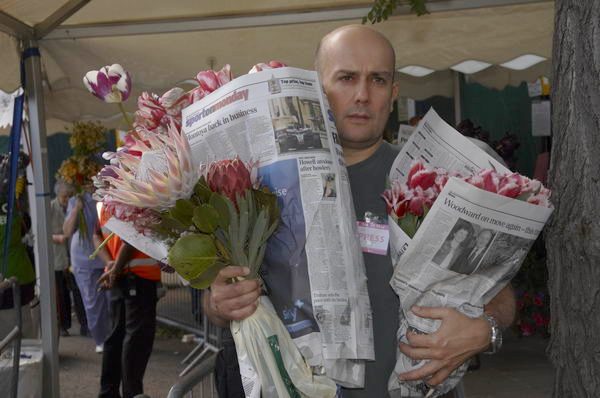
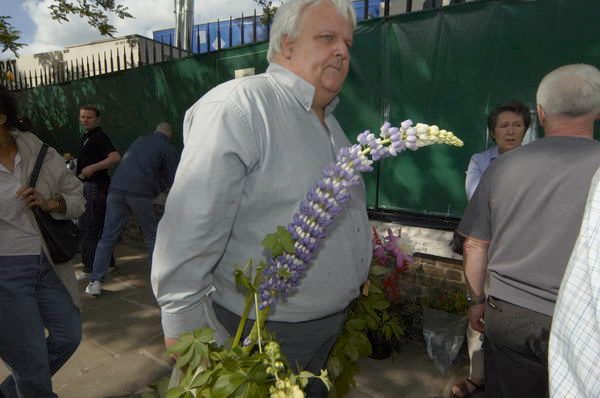
Chelsea Flower Show: I have never had any desire to go to the Chelsea Flower Show and still have never been, but in 2005 I was persuaded by friends to go with them to photograph people on the streets taking flowers home at the end of the show. I’d previously largely and deliberately avoided this and other events that were part of London’s Social Season and I’ve not been since.

Chelsea Flower Show

I hadn’t known that this happened, but here is what I wrote back in 2005 (with the usual minor corrections):

Chelsea Flower Show is the biggest event of the gardening season, and the crowds are huge. This year an extra day was added to cut down on the jams, though i don’t know how effective it was. Unless you are a gardening photographer, the most interesting part of the whole event is the end, when many of the plants on show are sold off and proudly carried home by their purchasers. As you can see from the pictures, they carry them along the streets to the bus stop or car park or coach, providing a rather unusual spectacle.”

Looking through the work now, here are some of the pictures that caught my eye.

Chelsea Flower Show

Chelsea Flower Show

Chelsea Flower Show

I put rather a lot of pictures on-line and you can see many more here on My London Diary.


FlickrFacebookMy London DiaryHull PhotosLea ValleyParis
London’s Industrial HeritageLondon Photos

All photographs on this page are copyright © Peter Marshall.
Contact me to buy prints or licence to reproduce.


More from East Hull 1989

More from East Hull: The final episode of my walk around East Hull in October 1989.

The Fish House, Holderness Rd, Hull, 1989 89-8p-65

The Fish House I think sold decorative tropical fish to swim in your aquarium but I was mildly amused by the small house on the pavement in front of their sign. Certainly it was unsuitable for fish, but I couldn’t decide what it was for, perhaps a kennel for a Chihuahua. And further up on the house is a picture of dog of some sort.

Putting “the fish house holderness road hull” into Google brings up, apart from this picture, a large number of fish and chip shops and restaurants mainly around Hull. But I think the fish here would have generally been rather insubstantial as well as expensive to eat.

Bush, Opticians, 337 Holderness Road, Hull, 1989 89-8p-66
Bush, Opticians, 337, Holderness Road, Hull, 1989 89-8p-66

Bush are still there on the corner of Durham Street, though its frontage now looks rather different with a front extension across the whole of it. Though I’m sure this gives a better working space it has lost the character of the ground floor with its fort as the left, angular bay windows and glasses sign.

Bush, Opticians, 337 Holderness Road, Hull, 1989 89-8p-52

Another view of Bush Opticians. The Bush family have been prominent opticians in Hull for many years, with Herman Bush being one of Hull’s first opticians in the mid-19th century.

The sign jutting out from the shop has the date 1865, and there have been branches run by members of the family around Hull and in surrounding areas where five generations of the Bush family have been testing eyes and making spectacles in Hull. Though one of the Bush opticians websites states that, it seems now to be at least six generations, as the obituary of the most controversial of the fifth generation, the late Sydney Bush, includes a quote by his son who worked with him for over 30 years.

Country Butcher, Clip Joint, Newbridge Trophy Centre, 142-6, New Bridge Rd, Hull, 1989 89-8p-51

Hairdressers seem often to have punning titles like The Clip Joint, though the scissors taking the lower part of the T was a nice touch. The years have been tough for small shops, particularly those a little off the main streets, and The Country Butcher with its curiously altered bay windows is now residential.

The hairdresser went though several name changes and has now become a shop selling “Eco-friendly, Handmade Products” and the Newbridge Trophy Centre at 142 has become a pizza place.

Mo's Cafe, Great Union St, East Hull, 1989 89-8p-54
Mo’s Cafe, Great Union St, East Hull, 1989 89-8p-54

Mo’s Cafe in this picture was at the north end of Great Union St, at the rear of the Waterloo Hotel on the corner of Clarence Street. The buildings behind and at left were a part of the Rank Hovis mill site at Drypool Bridge and were demolished with the mill in 2015 for a hotel that was never built.

The sign on the window says Mo’s Cafe has moved to 18 Hedon Road, 2 minutes walk away.

River Hull, Drypool Bridge, Hull, 1989 89-8p-56

My walk in East Hull was at an end and I took a final picture before going to the Old Town as a walked across Drypool Bridge. The wharf at left is part of the Rank Hovis Mill. There were still a few vessels moored in the River Hull in what was Hull’s first harbour, with some fine warehouses on the right bank converted to flats.

The next post from Hull will be the last of my pictures there in October 1989 – and after that I will return to posting more pictures of London.


FlickrFacebookMy London DiaryHull PhotosLea ValleyParis
London’s Industrial HeritageLondon Photos

All photographs on this page are copyright © Peter Marshall.
Contact me to buy prints or licence to reproduce.


UK Uncut Great British Street Party – 2012

UK Uncut Great British Street Party: Waterloo, Barnes & Putney

UK Uncut Great British Street Party

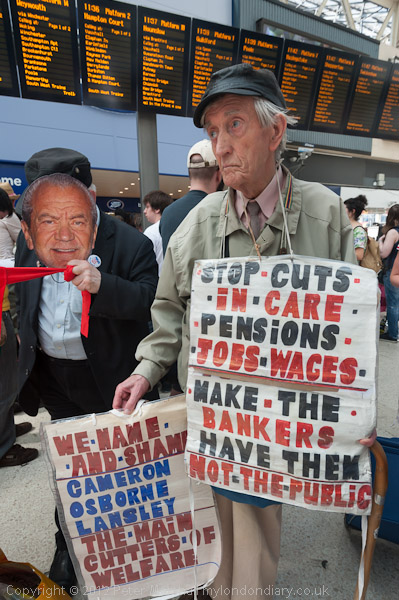
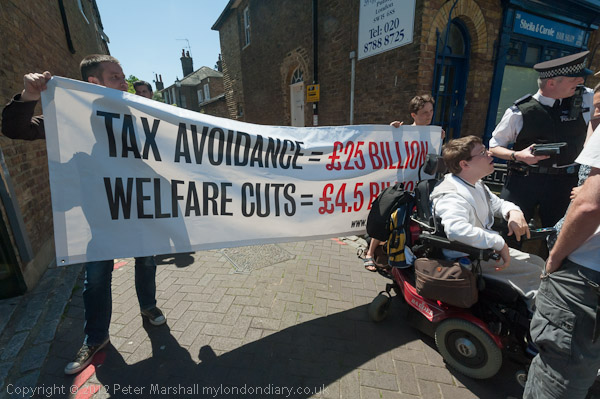
In 2012 public services were being destroyed by cuts made by the coalition government with the Liberal Democrats having gone into the coalition government with the Tories after the indecisive 2010 election. UK Uncut decided to hold street parties in protest on 26th May 2012 and to call for a better and different future..

UK Uncut Great British Street Party

In the 2010 election the Tories had won 306 seats and Labour 258, but with 57 seats the Liberal Democrats could have formed a coalition with either party to form a government. Although a coalition with Labour would only have included 315 MPs, less than half the total of 650, the differing positions of the 28 MPs outside of the main parties would have made this a working majority.

UK Uncut Great British Street Party

Perhaps because they lied to him more effectively, Nick Clegg chose to form a coalition with the Tories. Probably the most important thing he hoped to gain from this was electoral reform – and the United Kingdom Alternative Vote referendum resulted in a resounding defeat for the alternative vote system – a modified form of ‘First Past The Post’. What Clegg didn’t get was what he wanted, a referendum on proportional representation.

UK Uncut Great British Street Party

With an general election coming up on July 4th again under FPTP we can again see the urgent need for electoral reform. With FPTP we are more than likely simply to see Tweedledee replaced by Tweedledum rather than the more vital changes we need to deal with the urgent changes we need, particularly to deal effectively with the climate challenge, but also to move towards a more equal and united society.

UK Uncut Great British Street Party

But for now at least we are stuck with FPTP. Possibly the rise of the Reform Party will present a real challenge to our current two party monopoly, and though I’m very much not a supporter of their policies this fragmentation would certainly improve matters. Just a shame that no similarly positive split on fundamental issues has occurred within the Labour Party which has managed to successfully marginalise its right wing – or expel them – without a similarly important alternative party emerging. Perhaps because of a much deeper loyalty on the left to the Labour movement.

Wherever we live I think the best response to the continuing use of FPTP is to vote anti-Tory – that is for the candidate with the greatest chance of defeating the Tory candidate rather than for any particular party. The best result I think we can hope for in July is one that requires a coalition of several parties to govern. Politics would then have to move into an area of cooperation and consultation rather than the adversarial nonsense which now dominates our politics.

Clegg sold the country down the river for false gold, and joined the Tories in implementing a vicious series of cuts to public benefits from central government in almost every aspect of our lives.

UK Uncut stated:

"The government is slashing our public services and making the most marginalised people in our society pay for an economic crisis they did nothing to cause. It doesn’t have to be this way. In 1948 the UK’s national debt was far larger than it is today, but instead of cutting services and hitting the poorest hardest the NHS and the Welfare State were born.

So forget the Queen’s Jubilee and join the only London street party worth going to this summer – UK Uncut’s Great London Street Party. Let’s celebrate the services that are being destroyed, take the fight to the streets and party for our future, a different future, a better future, that we can build together."
 

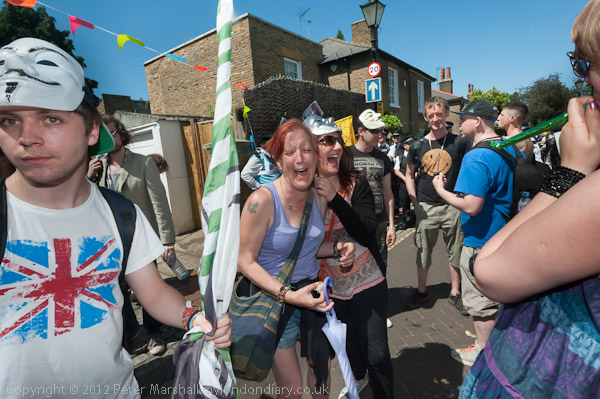
The London event was one of several street parties organised in towns and cities across the UK. In London 4 blocks, one highlighting the welfare cuts, another the NHS, a third the disproportionate effects the cuts were having on women and the last mourning the effects they are having on democracy itself, met and finally entrained at Waterloo Station, travelling either to Putney or Barnes.

The destination was kept secret, and after we left the trains we followed bloc leaders with coloured umbrellas, only finding when we were almost there that the party was to take place in the short Putney street where Nick Clegg has his London home. They were on holiday elsewhere.

Police tried to stop the protesters at various points, including on the final street, but eventually had to let the party go ahead. People taking part seemed to be careful not to cause any damage, though some were pushed into hedges by police. But the protesters kept up the party atmosphere despite considerable provocation.

Later I heard that when the party ended at 6pm and people were making their way peacefully to Putney station they were attacked by a group of police, who were perhaps frustrated by not being allowed to attack the party earlier in the day when the press was present in large numbers reporting on the event.

You can read more about the party and see many more pictures on My London Diary at UK Uncut Great British Street Party


FlickrFacebookMy London DiaryHull PhotosLea ValleyParis
London’s Industrial HeritageLondon Photos

All photographs on this page are copyright © Peter Marshall.
Contact me to buy prints or licence to reproduce.

Pagan Pride & Justice for Darfur 2008

Pagan Pride & Justice for Darfur: On Sunday morning 25th May 2008 I made my way to Red Lion Square in Holborn to photograph the Pagain Pride public procession. Later I went to Downing Street were protesters were meeting to march to a rally at the Sudanese Embassy calling for Sudanese war criminals to be brought to justice.


Pagan Pride – Beltane Bash – Red Lion Square/Russell Square

Pagan Pride & Justice for Darfur

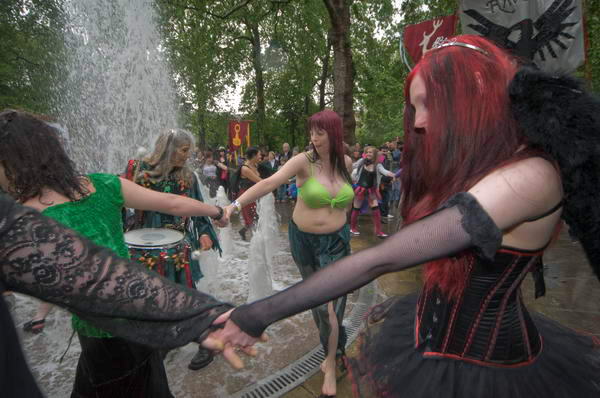
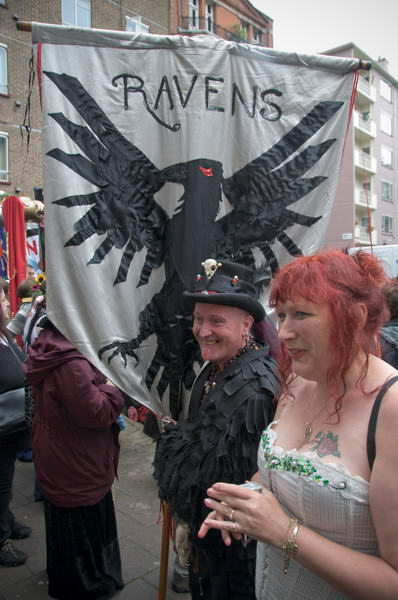
Pagans – or rather neo-Pagans had come to Conway Hall in the corner of Red Lion Square for a day of celebration of the ancient Spring festival of Beltane, celebrating coming out of winter and the springing of the world into growth.

Pagan Pride & Justice for Darfur

As well as their private celebrations inside the hall they were also taking part in a public procession, Pagan Pride, which goes the short distance to the fountain in Russell Square for a joyful celebration before returning to Conway Hall.

Pagan Pride & Justice for Darfur

Nature and the cyclical nature of the seasons plays a central part in pagan beliefs and Godesses and Gods linked with nature play an important role in their ceremonies.

Pagan Pride & Justice for Darfur

As I commented in 2008 nature appeared “not to be too kind to them as the rain bucketed down as the participants were supposed to gather, with only a few braver members (and some with umbrellas) coming out of the hall, but fortunately for them and the photographers it soon eased off, finally almost stopping as the parade got under way.”

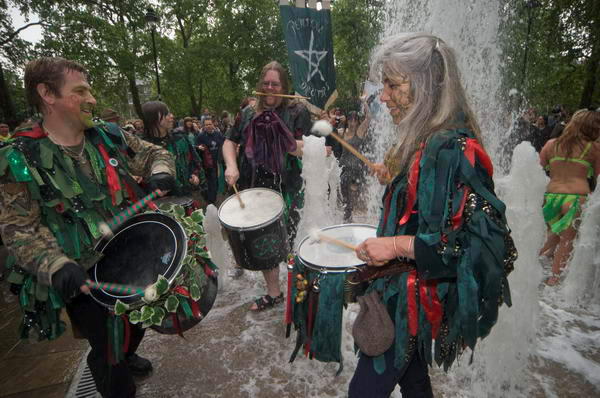
That circular fountain in the garden of Russell Square “could have been designed with them in mind, with a strongly phallic character in the water jets, which in normal use rise and fall, but were left to flow at full strength for most of the ceremony.” In 2008 it was open for everyone to play in but on more recent visits I have noticed it is now surrounded by a fence.

At first the group danced around the fountain in rings with hands joined, but then many of them started to run through the centre, many getting soaked.”

Even the drummers, who at first stood on the edge providing a rhythm for the dance, eventually ran though the jets, and finally the Green Man also did so.

By the time the parade left the square for its return to Conway Hall I’d had enough, and my feet and legs were soaked.

I left with a friend to go and have a cup of tea before going to Whitehall for a very different event.

More pictures at Pagan Pride – Beltane Bash.


Justice for Darfur – London Protest; Whitehall – Sudanese Embassy

Around 200 people, mainly from the Sudan, had gathered opposite Downing Street for a noisy protest before marching to a rally at the Sudanese Embassy opposite St James’s Palace in London.

The Justice for Darfur campaign was supported by around 30 organisations including the Aegis Trust, an international organization working to prevent genocide, Amnesty International and Darfur Union UK, who organised this event together with Aegis Students.

The campaign began when the Sudanese government refused to had over two men to the International Criminal Court. Sudan’s former Minister of the Interior Ahmad Haroun and Janjaweed leader Ali Kushayb were wanted on 51 charges of war crimes and crimes against humanity arising from persecution, rapes and murder of civilians in four West Darfur villages.

Haroun had even been promoted to be responsible for humanitarian affairs, and Kushayb, who had been in jail facing other charges when the ICC warrants were issued has been released.

In 2005 the UN Commission of Inquiry into war crimes listed 52 people for investigation and placards named some of these calling for them to be brought to justice. They included Sudan’s President Omar Al Bashir, Saleh Gosh, head of Sudan’s National Security and Intelligence Service, Minister of the Federation Government Nafi Ali Nafi and former Foreign Minister Mustafa Osman.

Earlier that month there had been fresh reports of beatings, detentions and shooting of Darfuri civilians in Khartoum and Omdurman but little had appeared in the UK mainstream press and they had sent no photographers or reporters to the event. It was one of those protests that later one photographer told me his editor dismisses as “tribal matters“.

More pictures at Justice for Darfur.


FlickrFacebookMy London DiaryHull PhotosLea ValleyParis
London’s Industrial HeritageLondon Photos

All photographs on this page are copyright © Peter Marshall.
Contact me to buy prints or licence to reproduce.


UEFA gets a Red Card for Israel – 2013

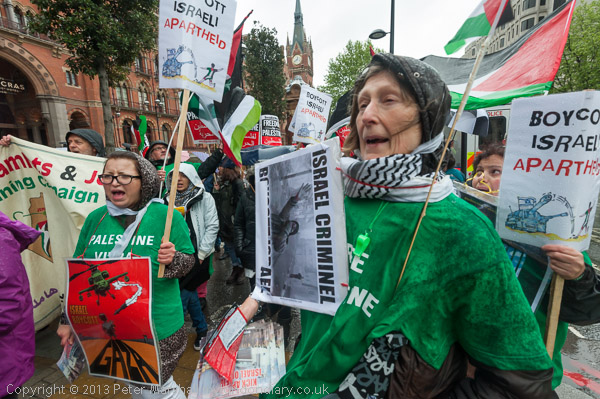
UEFA gets a Red Card for Israel – On Friday 24th May 2013 UK campaigners met those who had arrived by Eurostar at St Pancras to march to the Mayfair hotel where UEFA was holding its annual congress. They demanded it to kick out Israel and protested against the UEFA under-21 men’s football final being held in Israel in June 2013.

UEFA gets a Red Card for Israel

The event was organised by the London-based Red Card Israeli Racism Campaign founded by members of the Palestine Solidarity Campaign, Friends of al-Aqsa and Jews for Boycotting Israeli Goods and followed protests at UEFA’s Swiss offices following a letter signed by 52 leading players deploring Israel ’s attacks on Gaza.

UEFA gets a Red Card for Israel

Previously the Red Card campaign had led protests over the detention of Palestinian footballer Mahmoud Sarsak detained without charge in 2009 while travelling from Gaza to a new club on the West Bank. He lost almost half his body mass in a 3 month hunger strike and was only finally released in July 2012 after appeals from the international professional footballers association FIFPro, Eric Cantona, Frédéric Kanouté and the presidents of EUFA and FIFA, as well as others from outside football.

UEFA gets a Red Card for Israel

Israel’s participation in international football has long been controversial, and in 1974 they were expelled from the Asian Football Confederation of which they had been a founder member when several nations refused to play against them. They became a full member of UEFA in 1994. In February 2024 UEFA turned down demands from 12 Middle East Nations to suspend Israel from international competitions.

UEFA gets a Red Card for Israel

International football is clearly a political football. And Israel’s team have clearly demonstrated their intention to use it as such when captain Eli Dasa held up a small sports shoe of a missing child hostage and talked about it ahead of a Euro 2024 qualifier against Switzerland.

The Palestinian Football Association called in April on FIFA/UEFA to suspend Israel from international competition and are asking other FAs to join them. FIFA is carrying out a legal assessment before it makes a decision on whether to agree to Palestine’s call to suspend the Israeli federation over the war in Gaza was repeated a few days ago at FIFA’s congress in Bangkok.

PFA president Jibril Rajoub was quoted by the BBC as saying “How much more must the Palestine football family suffer for FIFA to act with the same severity and urgency as it did in other cases?” and others have also accused FIFA and UEFA of double standards.

As a petition by some football fans calling on the English FA to support the suspension of Israel states: “It took FIFA/UEFA less than one week to ban Russia from international competition following the invasion of Ukraine. Apartheid South Africa was suspended from FIFA for ten years before being expelled in 1976 and was only permitted to re-join in 1992 as the apartheid regime was dismantling. In that same year, the Yugoslavia national team was suspended by FIFA from international competition as a part of UN-led sanctions against the former state during the Balkans war.
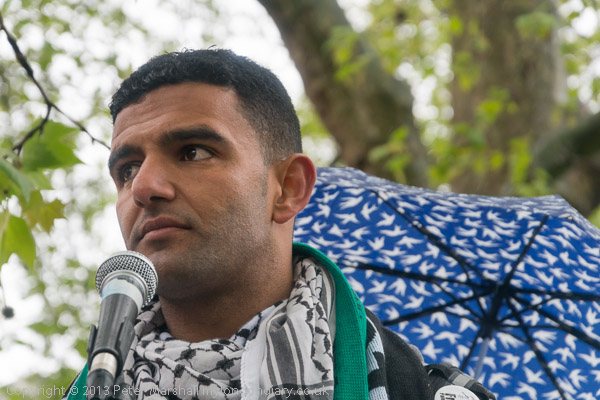
Palestinian footballer and former hunger striker Mahmoud Sarsak

You can read an account of the May 2013 march and the static protest outside the hotel in Park Lane on My London Diary with many more pictures. One of the speakers at this was former hunger striker Mahmoud Sarsak and he received a huge welcome and “the couple of hundred people present really sounded like a rather larger football crowd.”

UEFA gets a Red Card for Israel.


Don’t hang Prof Bhullar!

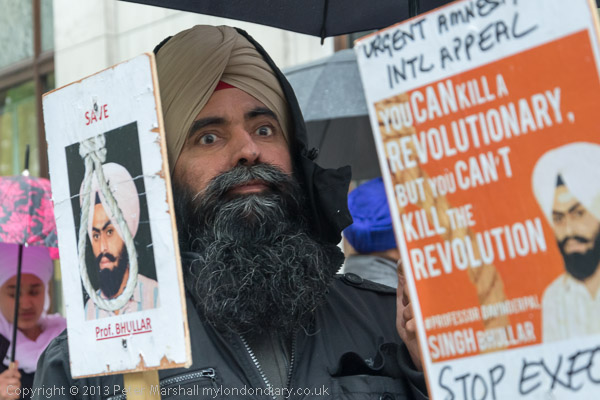
Also on Friday 24th May 2013 I photographed a protest by Sikhs at the Indian High Commission against the intended hanging of Professor Devender Pal Singh Bhullar who had then served 18 years on death row following his conviction for involvement in a car bomb in Delhi. His conviction was based on a confession based on torture in police custody. The Indian Supreme Court commuted his sentence to life imprisonment in March 2014. More on My London Dairy at Don’t hang Prof Bhullar!.


FlickrFacebookMy London DiaryHull PhotosLea ValleyParis
London’s Industrial HeritageLondon Photos

All photographs on this page are copyright © Peter Marshall.
Contact me to buy prints or licence to reproduce.