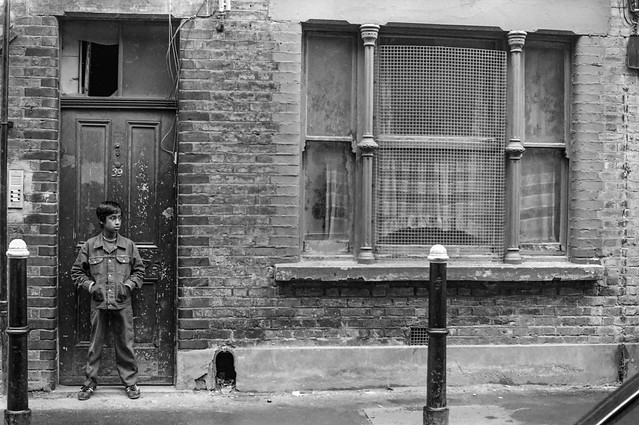
July 1986 on Flickr

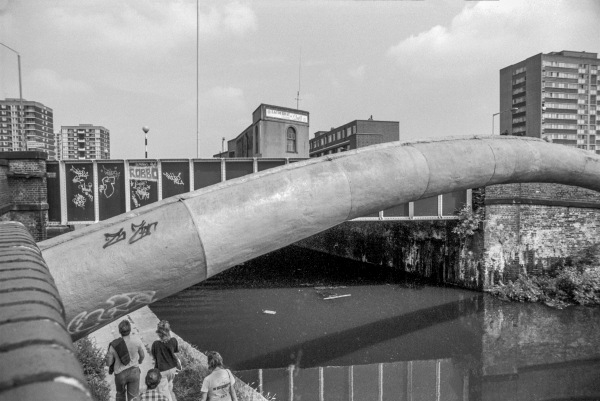
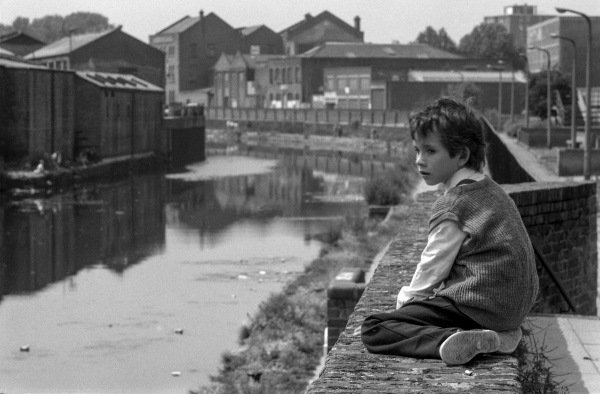
Pipe Bridge, Regent’s Canal, Baring St, Islington

I had more time to take pictures in July as my teaching came to an end for the summer vacation around halfway through the month. This meant I could go up to London on some weekdays, though I still had two small boys to look after on days my wife was working. That usually meant staying at home, but sometimes I took them both out with me to London.

Regent’s Canal

I spent some time in Shadwell and Bethnal Green, but also further north in Shoreditch, Hoxton and Dalston, occasionally wandering into Islington. Though I obviously photographed on foot, I had to travel from my home outside London and then around London to the starting point for my walks, and the One Day Capitalcard, valid on all public transport in London after 9.30am made this much simpler after its introduction in June 1986 – the one-day Travelcard launched in 1984 had been for bus and tube only.

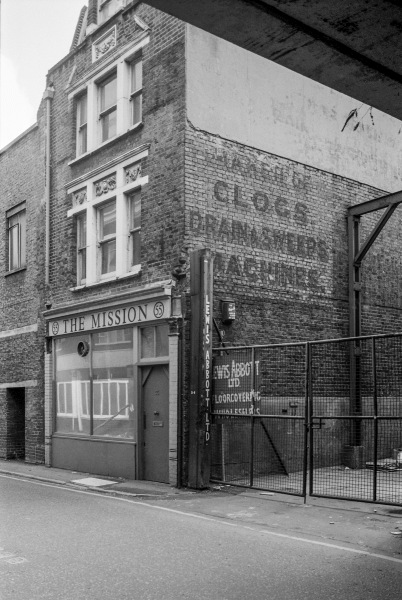
The Mission, Holywell Lane, Shoreditch, Hackney

Towards the end of the month I moved my focus to the City of London, even easier for transport then as the Waterloo and City line was still run by British Rail and my ‘London Terminals’ ticket was valid all the way to Bank.

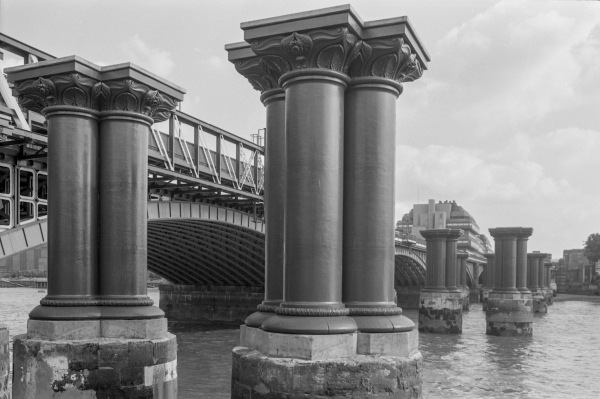
Blackfriars Rail Bridges

When I began photographing London there were two railway bridges across the River Thames at Blackfriars, but all that remained of one of these by 1986 were the pillars that had supported it. And while these were rather a fine set of pillars they were (and remain) a rather curious river feature, presumably left in position simply to save the cost of removing them.

Queenhithe and the River Thames

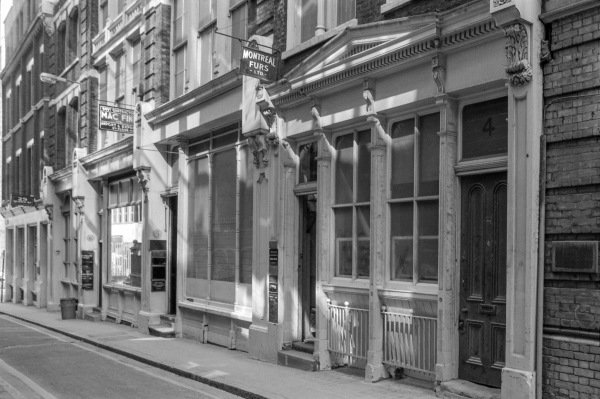
Queenhithe, a small inlet on the City side of the river has a long history. The Romans built a quay here, and buried deep down in the wet mud some of the timbers they put here survive, as do remains of the dock contructed when Alfred the Great, King of Wessex re-established the City of London aroudn 886 AD. It got the name Queenhithe (a hythe is a small harbour) when Henry I gave the right to levy dues on goods landed there to his wife Matilda around the time of their marriage in 1100. Queenhithe was still a major harbour for the city hundreds of years later and remained in use, with lighters bringing skins for the fur trade which was based a short distance to the north until the Second World War.

Fur shops in Great St Thomas Apostle

Around 300 of the black and white pictures I took in July 1986 are now online:
Peter Marshall: 1986 London Photographs on Flickr.
July’s pictures start here.

The images are copyright but may be shared on non-commercial personal social media. A licence is required for any corporate, commercial or editorial use.


All photographs on this and my other sites, unless otherwise stated, are taken by and copyright of Peter Marshall, and are available for reproduction or can be bought as prints.

There are no adverts on this site and it receives no sponsorship, and I like to keep it that way. But it does take a considerable amount of my time and thought, and if you enjoy reading it, please share on social media.
And small donations via Paypal – perhaps the cost of a beer – would be appreciated.
City and Thames

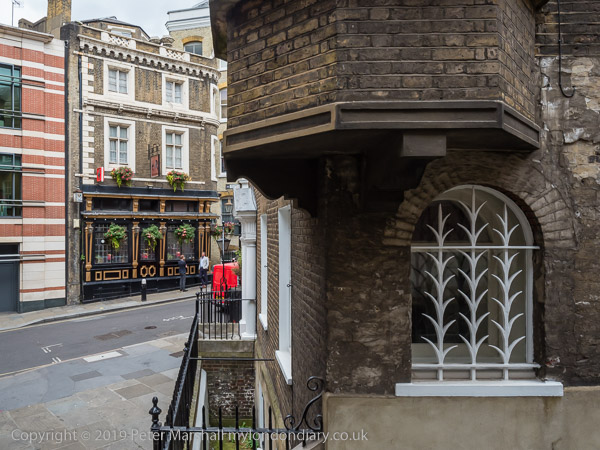
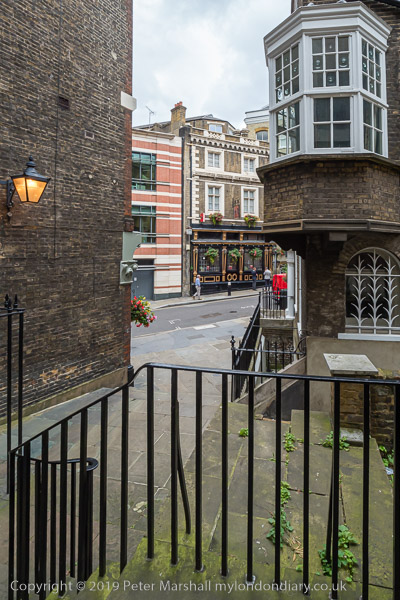
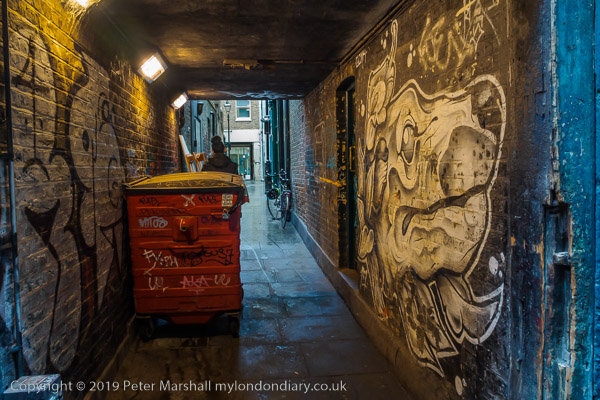
The area by St Andrew-by-the-Wardrobe, an Anglican church a few hundred yards south of St Paul’s Cathedral fascinated me when I first walked by it in the 1970s, and of course I’ve tried to photograph it over the years with various success, though mainly failure.

This picture, taken from the steps up to a locked door into the church is one that I found impossible on colour film, with the gloomy alley – with a light on even in the middle of the day when I took this picture contrasting with the more brightly lit street with The Cockpit pub. But the day was overcast, reducing the contrast and the digital camera coped well, though needing some dodging and burning in Lightroom to give the results here.

I didn’t go into the church though I have been inside on at least one previous occasion, just following an Indian Orthodox service there, when the atmosphere was thick with incense. The site has an interesting history, with a church here for perhaps a thousand years or more, though the first written mention is in 1170 or . It became part of an ancient royal residence, Baynard’s Castle, and in 1361 Edward III or Edward IV moved his royal clothes and arms from the Tower of London to a more handy site in a building close by.

Like most of London it was destroyed in the Great Fire of 1666, and was rebuilt in 1695 to one of the simplest and last of Christopher Wren’s many church designs. Although it now looks ancient, it was mostly destroyed again by German bombing in 1940 and rebuilt and reconsecrated in 1961, with most of its internal decor being salvaged from previously demolished Wren churches. Among the memorials on its walls is a modern carved wood one for William Shakespeare, a parishoner for 15 years.

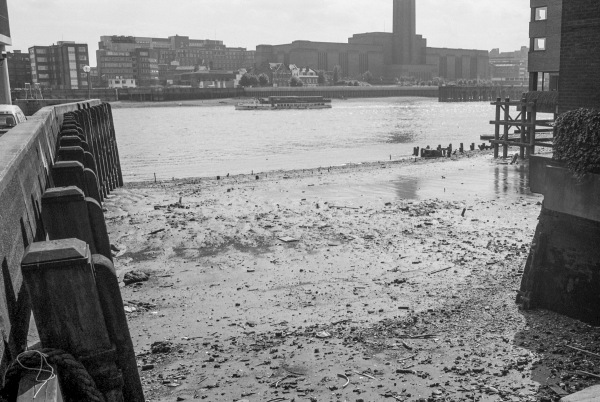
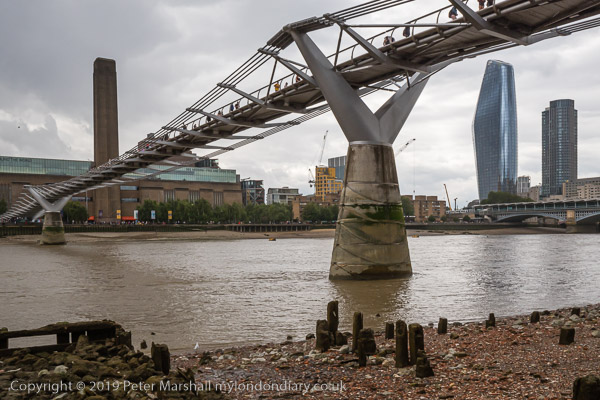
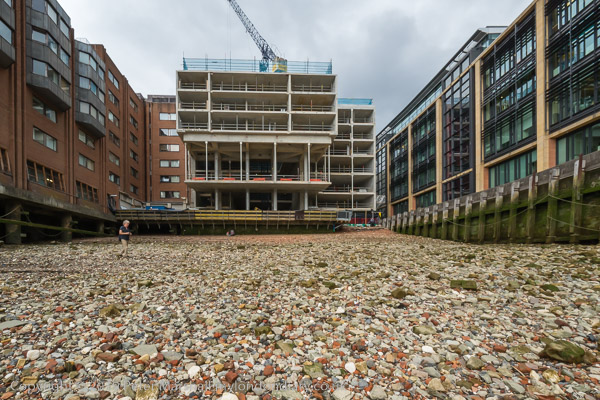
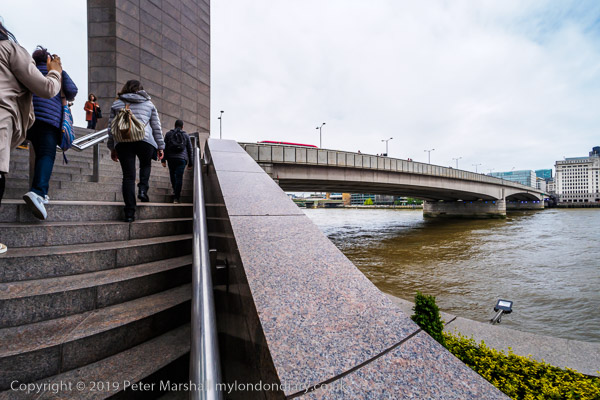
From the church I crossed Queen Victoria St and made my way down to the riverside walkway. There was an extremely low tide and I went down the steps onto the foreshore, which here is sand and shingle with many remains of wooden posts.

I walked the short distance along to Queenhithe, a historic monument as London’s first dock though the Roman and Saxon docks are now all buried beneath the mud and stones or hidden behind the visible more modern river walls and the area is surrounded by rather boring modern offices.

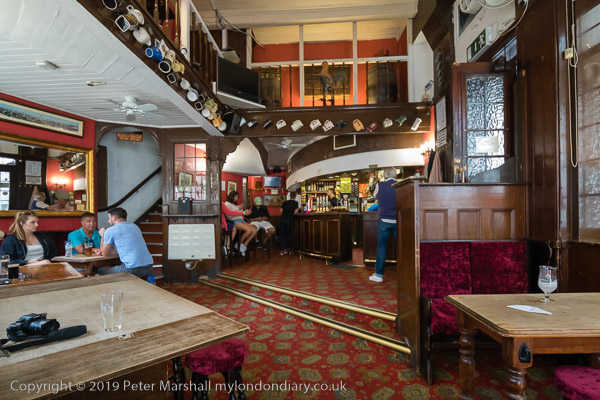
I went back and up onto the riverside walkway and then made my way to meet with friends for a short walk through the city, on which I took a few more photographs. One of the places we visited was where I had begun taking pictures, and this time we went inside The Cockpit on St Andrews Hill opposite the church, one of London’s smaller and more fascinating places.

Although the text for it’s grade II listing states tha the building is ca 1860, but the interior is in part older. The pub claims to have been established in 1787 and to have been rebuilt in 1842 and that it was once Shakespeare’s home – and certainly it is on the corner of Ireland Yard where he is known to have lived.

The interior is literally a ‘cockpit’ and the bar and seating is on the very floor where the pair of gamecocks, equipped with razor-sharp metal spurs would be set to fight to the death while gamblers looked on from the balcony above. Cock-fighting was banned in England and Wales by the  Cruelty to Animals Act 1835 and the last fight in this pub was said to have been in 1849. Apparently there are still some illegal fights in the UK.

More pictures at City & Thames.


All photographs on this and my other sites, unless otherwise stated, are taken by and copyright of Peter Marshall, and are available for reproduction or can be bought as prints.

There are no adverts on this site and it receives no sponsorship, and I like to keep it that way. But it does take a considerable amount of my time and thought, and if you enjoy reading it, please share on social media.
And small donations via Paypal – perhaps the cost of a beer – would be appreciated.
Photographers Walk

There is something about walking with other photographers that inhibits the making of photographs. The best companion when you are taking pictures are your thoughts.

I often see invitations to walks led by other photographers or group photographic walks, and back when I was still starting in photography I used to go out with a group of other photographers and we would take pictures.

That was useful, partly because I got taken to places I would not otherwise have been, sunset at Stonehenge, the South Wales Valleys, the Isle of Portland, deserted coastline in Kent and Essex and more, but mainly because we would meet up later and rip each other’s pictures to pieces in no-holds barred critical sessions.

But we were pretty independent guys who would usually walk in different directions and not as a group. We travelled together but seldom worked together and I can’t recall the others getting in my way or I in theirs. We had different ways of working and different interests.

Of course there are times when you need companions. Places photographers wouldn’t get to or wouldn’t dare to go without a fixer. But that isn’t the kind of photography I do. There are no ‘no-go’ areas in London, though quite a lot I’d avoid at some times of night.

But the walk I went on with a few others at the end of August wasn’t like this, and although my companions were photographers it was more a social event. And to be honest, more of a pub crawl, though on this occasion we did manage to walk quite a long way before meeting our first Wetherspoons.

Even then, we only rushed to get there because the rain started. Which may be why I didn’t take any more pictures after that. But by the time we got there I had made a remarkable number of exposures for me on a photographers’ walk.

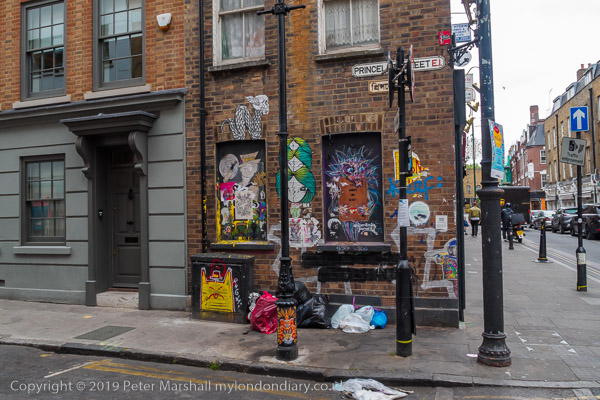
A few more pictures: City and Spitalfields walk

London Church Walk

Most years unless I’ve some more pressing committment I’ve accompanied my wife as she takes part in a sponsored walk around London churches in support of Christian Aid.

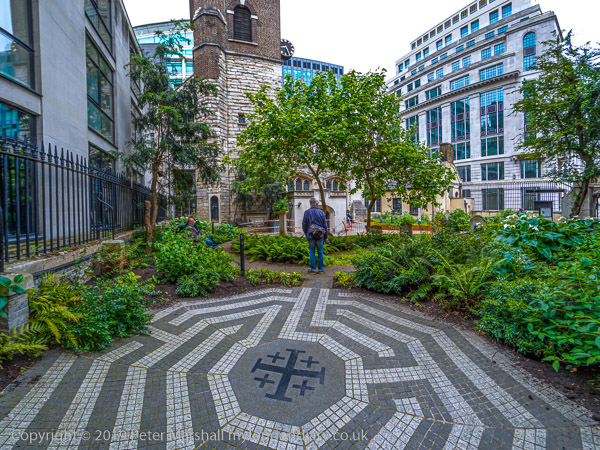
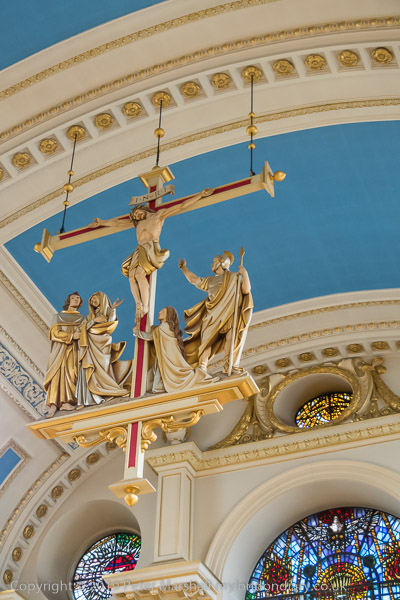
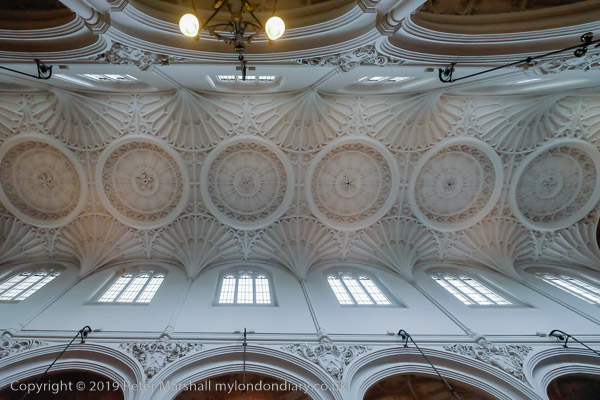
Walking around the City is always interesting, and although I’ve been in most of the churches before, most years there is something new to see. Many of London’s churches are open at times during the week, often hosting lunchtime concerts, others are usually locked.

The walk isn’t of huge length, but it takes quite a time, especially if you want to look carefully at those churches you get inside – some of the checkpoints are a table outside a locked building. Other churches offer tea and cakes and it gets difficult to complete the circuit in the time allowed; this year I was disappointed that we arrived at the Temple Church just as it was closing.

Most of the churches in the city were built around the same time, after the Great Fire of 1666, and usually the architect was Wren, but although they share some characteristics there are significant differences.

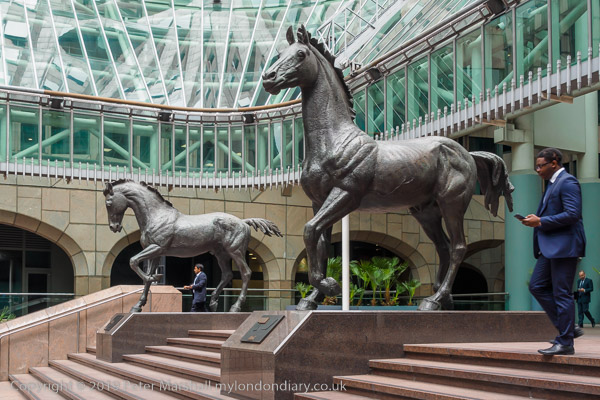
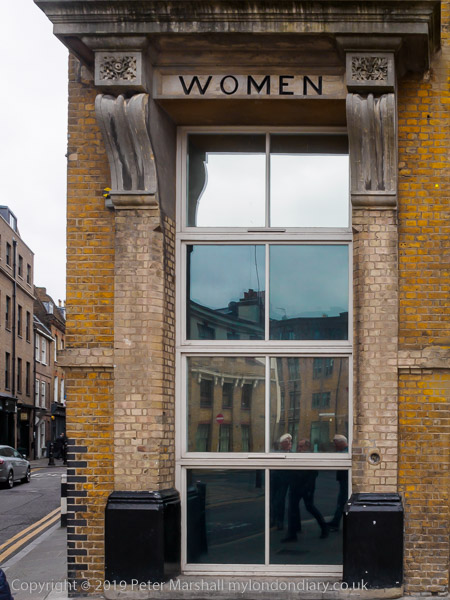
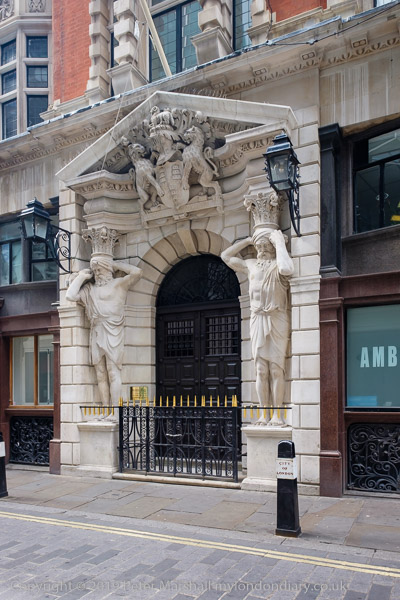
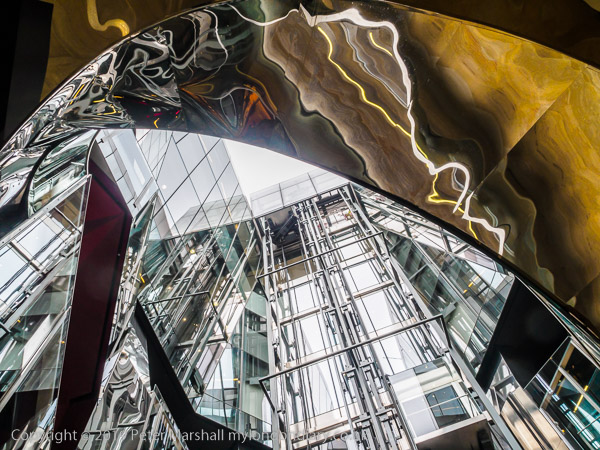
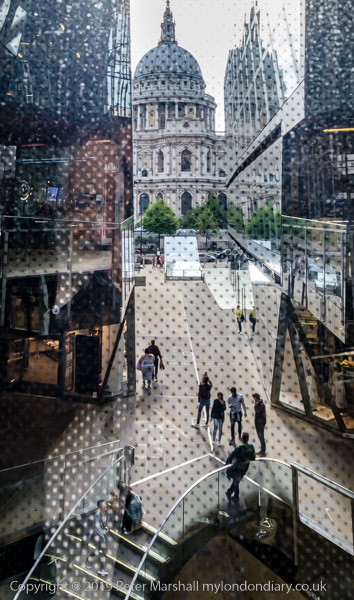
But of course the City has many interesting secular buildings as well as its churches, both ancient and modern, and I photographed a few of these as we walked by.

More pictures: City Churches Christian Aid Walk


All photographs on this and my other sites, unless otherwise stated, are taken by and copyright of Peter Marshall, and are available for reproduction or can be bought as prints.

There are no adverts on this site and it receives no sponsorship, and I like to keep it that way. But it does take a considerable amount of my time and thought, and if you enjoy reading it, please share on social media.
And small donations via Paypal – perhaps the cost of a beer – would be appreciated.