Putin Hands Off Queers & Syria – 2013

Putin Hands Off Queers & Syria – 2013 On Tuesday 3rd September 2013, ten years ago I photographed two different protests in Central London, beginning at Downing St against Russian homophobia and going on the the US Embassy in Grosvenor Square for a rather mixed protest over Syria.


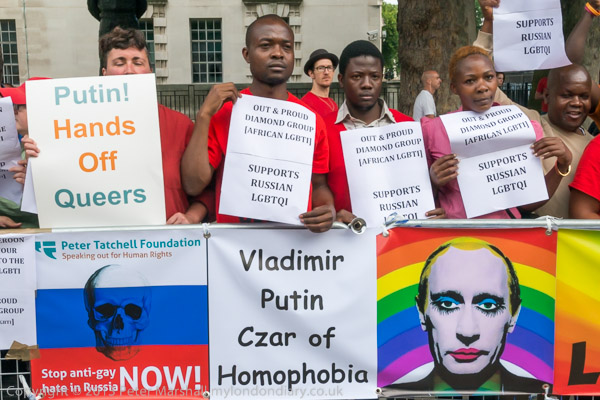
Love Russia, Hate Homophobia – Downing St

Putin Hands Off Queers & Syria

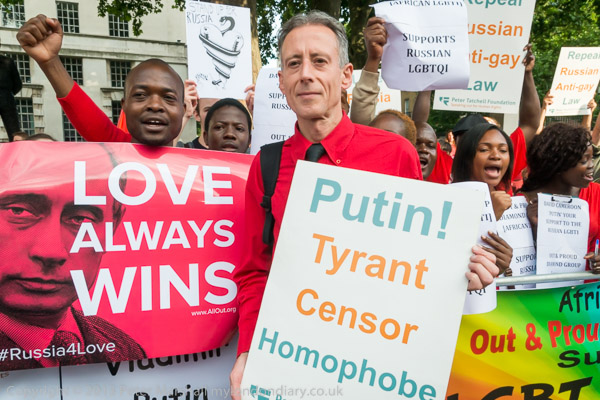
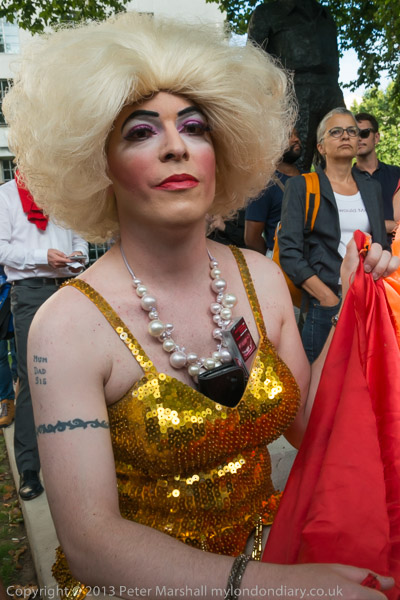
Several hundred had come to Downing St two days before David Cameron was to attend a G20 Summit in St Petersburg hosted by Putin, urging our Prime Minister to press him to repeal the Russian anti-gay law and prosecute violent homophobes.

Putin Hands Off Queers & Syria

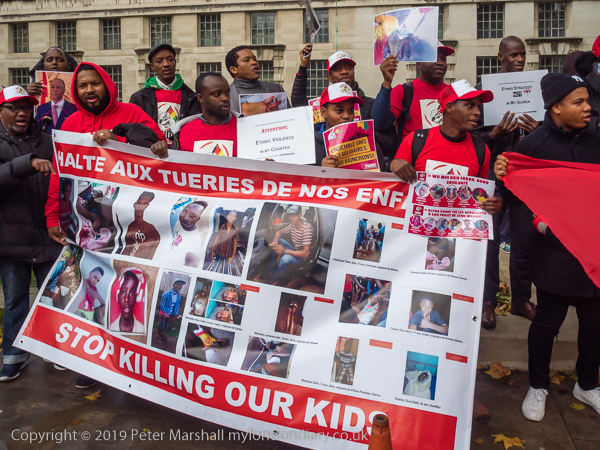
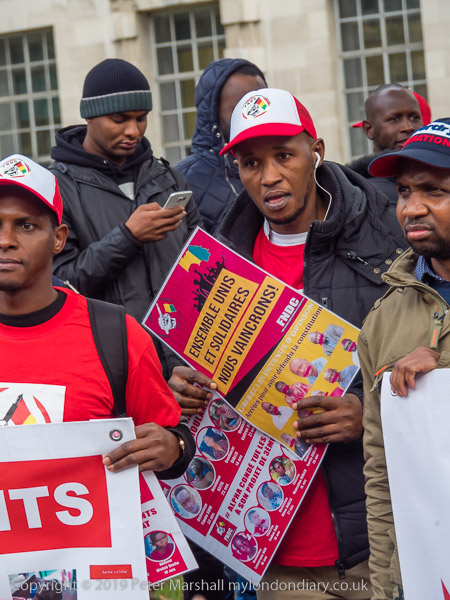
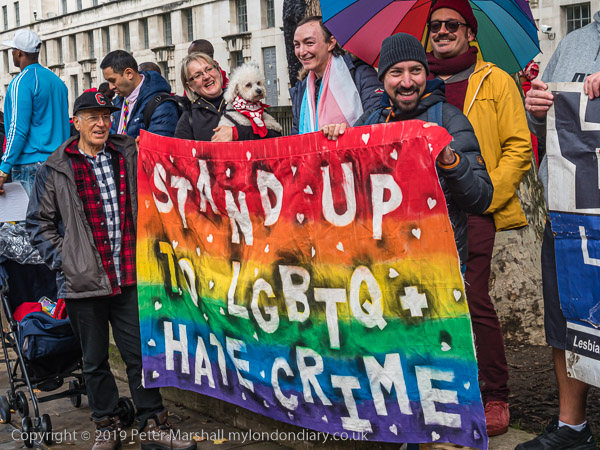
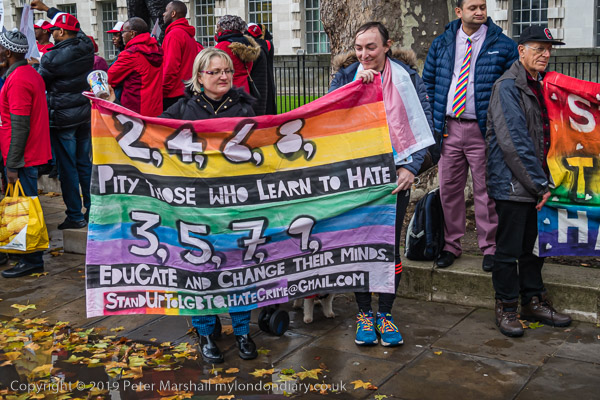
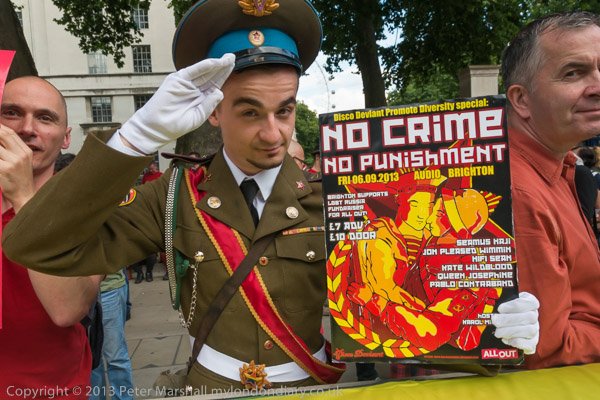
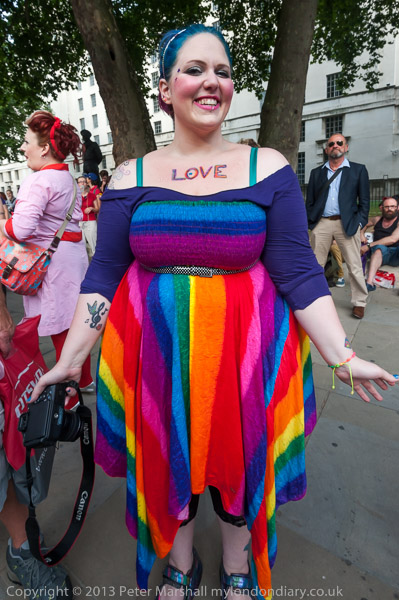
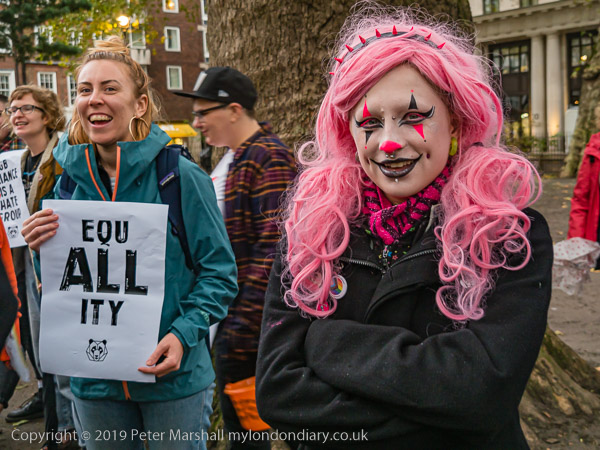
The organisers had asked people to wear red, and many did though others came in more colourful attire and several were in drag. The protesters including a large African LGBT contingent and Peter Tatchell.

Putin Hands Off Queers & Syria

The protest which was a part of a world-wide day of action against Russian homophobia :

Putin Hands Off Queers & Syria

The organisers had listed eight themes for the action including some related to the forthcoming 2014 Sochi Winter Olympics:

  • David Cameron: What are you doing about the anti-gay law in Russia? We want answers. Tell Putin to drop the law.
  • Russia: End the anti-gay law & homophobic violence
  • Solidarity with Russian LGBT & human rights defenders
  • Defend freedom of expression & human rights for all Russians
  • Oppose the Putin regime’s escalating authoritarianism
  • IOC must protect LGBT athletes and spectators, and ensure freedom of expression
  • Sochi corporate sponsors must condemn homophobic legislation & violence
  • The IOC must insist that Russia lifts its ban on a LGBT Pride House at Sochi

More pictures at Love Russia, Hate Homophobia.


Hands off Syria – US Embassy, Grosvenor Square,

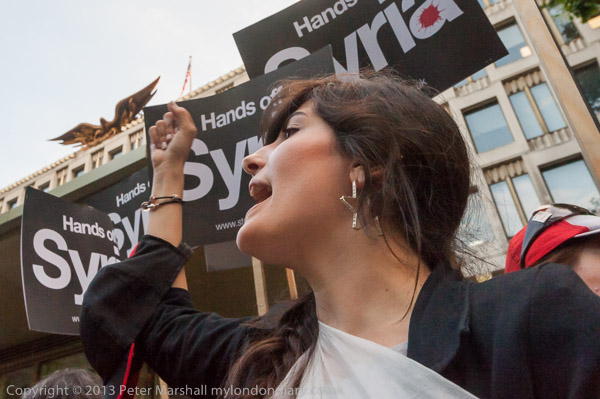
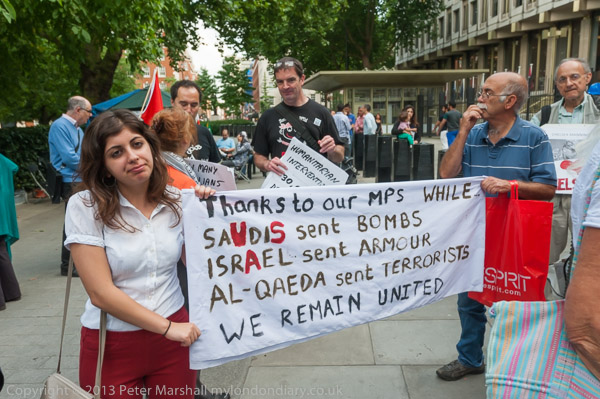
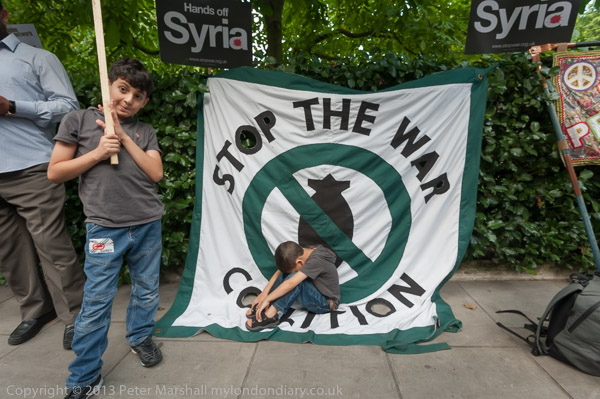
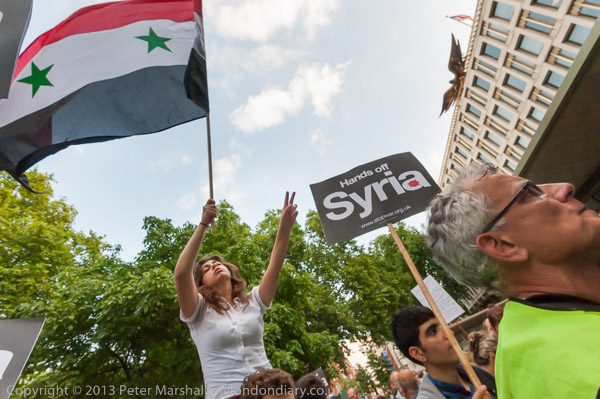
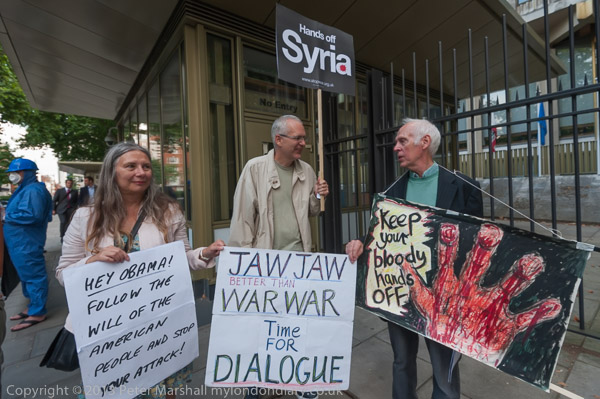
Several hundred people, including many Syrians living in the UK, came to the US Embassy for a protest rally called by Stop The War to keep up the pressure on President Obama not to bomb Syria.

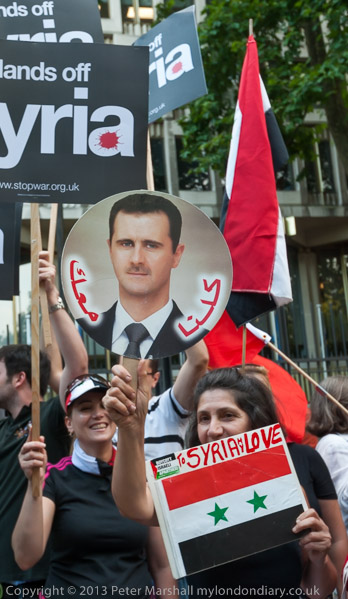
Among the Syrians present were groups supporting both the revolution in Syria, particularly Kurds who have long suffered discrimination and repression in the country and supporters of the Assad regime who made the ridiculous claim that there had been no discrimination in Syria.

The Assad regimes have made more than 300,000 Kurds stateless, not included in the census, unable to vote, stand for office, gain school certificates or university degrees, or travel outside their own provinces. International organisations have clearly shown that Kurds in Syria are subject to discriminatory policies against their language and dress.

The Stop The War protest was followed by a lengthy protest by the pro-Assad Syrians against US intervention. They vociferously denied that Assad’s forces had used chemical weapons in Syria blaming others for their use. Reports by various bodies now show there is no room for any doubt that they were used by government forces.

The failure by Obama and other western countries to take effective action in Syria – such as enforcing a no-fly zone in disputed areas left the door open for Putin to intervene providing direct military support for Assad in 2015. Putin was also able to come to arrangements with Turkey despite them being key members of NATO in the region and enabled them to take military action against the Kurds who were the most efficient force in the fight against ISIS in Syria.

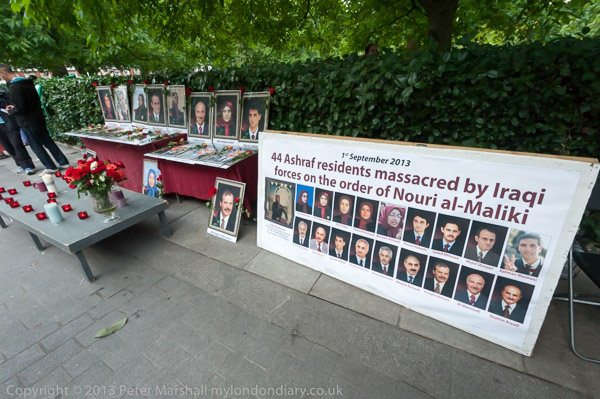
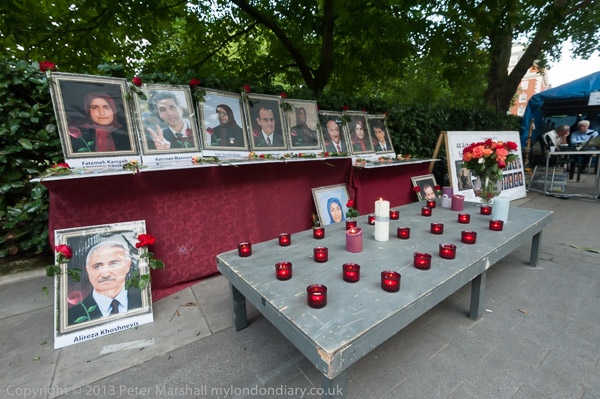
The failures of the USA in Syria was probably also key in giving Putin the confidence to invade the Crimea and parts of Ukraine in 2014 – and then on to the current invasion there. We were also given a powerful reminder of earlier US blunders by the presence outside the US Embassy just along from the protests I was covering of a protest camp already in front of the embassy over the attacks on Camp Ashraf in Iraq on 1 September.

Camp Ashraf in Iraq had been home to the People’s Mujahedin of Iran (PMOI/MEK), the main opposition to Islamic rule in Iran, in 1986. Before the US coalition invasion of Iraq, the US had come to an agreement with Iran that they would neutralise the PMOI, and coalition forces attacked the camp. Eventually there was a ceasefire after which the PMOI agreed to give up its tanks, armoured vehicles and heavy artillery and the residents of the camp were given protected status as civilians under the Fourth Geneva Convention.

But after the US left Iraq, the camp came under control of the Iraq government, who attacked it on several occasions. The Iraqi army killed 34 and wounded 318 in a raid in April 2011, and a raid on September 1, 2013 had killed killed 52. The PMOI blamed Iraq for this but others blame Iranian militias directed by Iran’s Islamic Revolutionary Guard Corps. The PMOI camp was calling for the US for support. The PMOI were focibly moved to another site in Iraq in 2012 and in 2016 the US brokered a deal to relocate them to a site in Albania, giving the UN refugee agency $20million for their resettlement.

More pictures of the Embassy protests at Hands off Syria.


Turkish Spring, Badgers and BNP – 2013

Turkish Spring, Badgers and BNP: Ten Years ago on Saturday 1st June 2013 Turks in London were celebrating the start of the Turkish Spring, but now they are mourning last Sundays’ election results with the Islamist dictator winning another term in office. Badger culling was just beginning and there is still no sign it will actually end and over 210,000 badgers have now been killed to little effect – and Defra is still failing to introduce more effective methods to control bovine TB. Anti-fascists managed to prevent the BNP laying a wreath to exploit the killing of Lee Rigby – but despite the family’s clearly stated wishes and MoD condemnation – racists including a leading Tory MP are still using the murder to whip up hatred.

London Supports Turkish Spring – Marble Arch

Saturday 1st June 2013

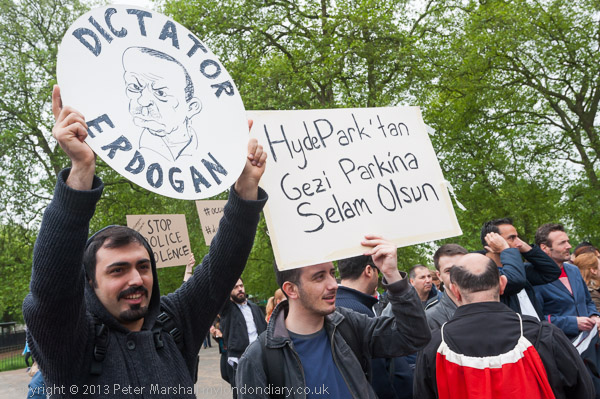
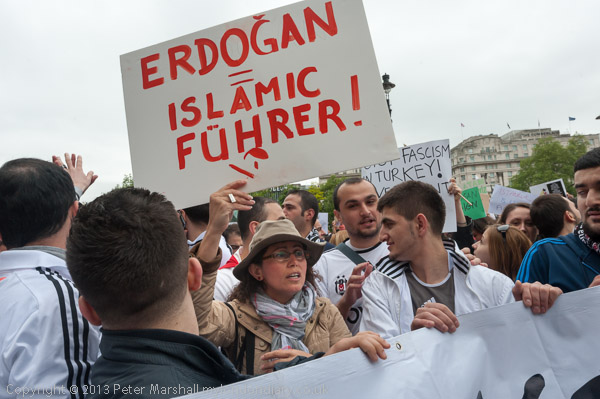
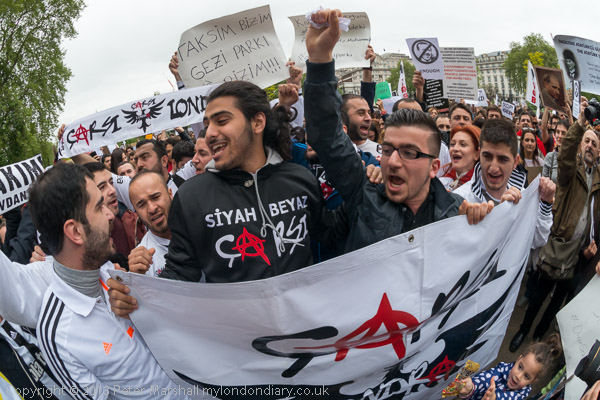
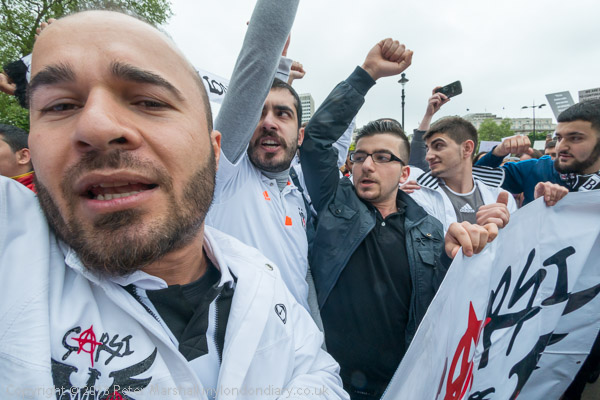
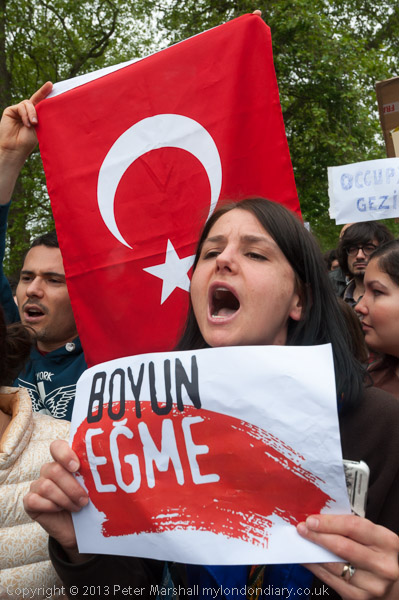
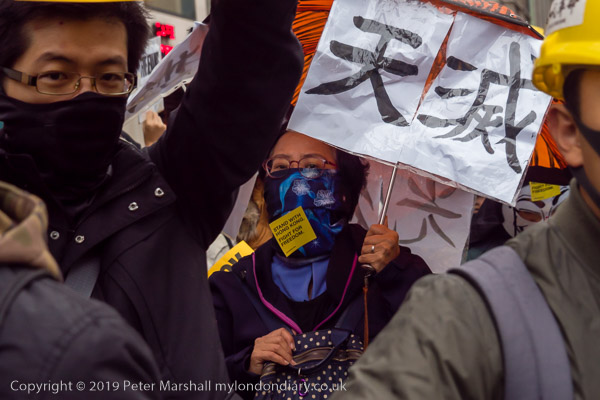
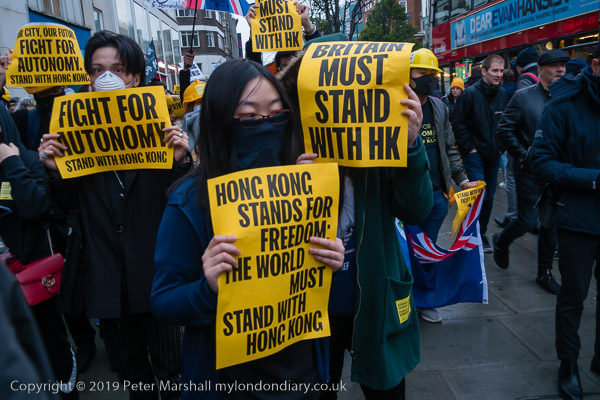
A large crowd, mainly Turks and Kurds from North London, met in Hyde Park close to Marble Arch for a march in support of the popular protests that had erupted over the previous few days over Gezi Park.

Saturday 1st June 2013

At first there had been small protests against the loss of one of Istanbul’s few remaining green spaces for a shopping mall. But brutal police repression, with tear gas and water cannon used indiscriminately on people in the area angered many and the protests grew, becoming protests calling for an end of the authoritarian Erdogan regime.
Saturday 1st June 2013

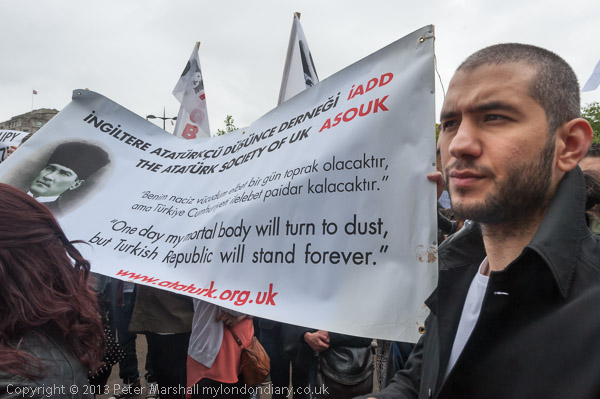
Many Turks were then disturbed at Erdogan and his Justice and Development Party (AKP), abandoning the secular state established as the basis for modern Turkey in the 1920s by Kemal Atatürk towards a conservative authoritarian Islamic dictatorship.
Saturday 1st June 2013

This process has continued, and Turkey has also been involved in the supporting of wider Islamic movements in the Middle East, particularly ISIS, as well as supporting Russia in its intervention in crushing the anti-Assad revolt in Syria. Last week’s election came as a huge blow to democracy in Turkey.

The 2013 protest was high-spirited and noisy, with many young men including Turkish football supporters. Many of London’s Turkish and Kurdish community are people who had to flee Turkey for political reasons and their sons and daughters. Kurds in particular have long been subjected to huge discrimination and oppression with the Turkish government attempting to eliminate their culture.

I had to leave before the march to the Turkish Embassy were around four thousand protested in support of the ‘Turkish Spring’.

London Supports Turkish Spring


Cull Politicians, Not Badgers – Westminster

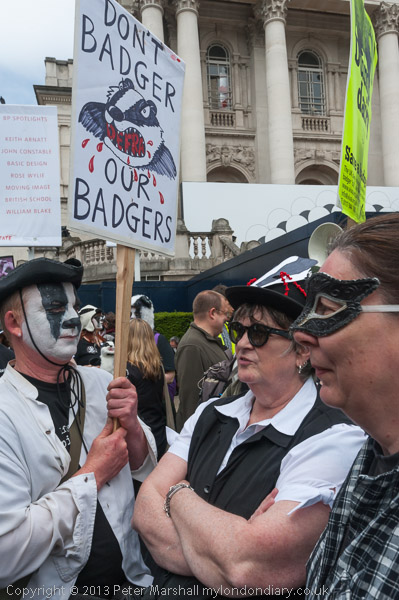
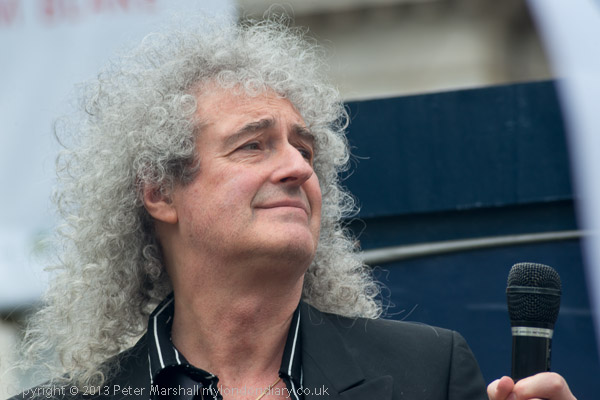
I joined a large crowd at a rally in front of Tate Modern for the National March Against the Badger Cull, where the speakers included Queen Guitarist Brian May.

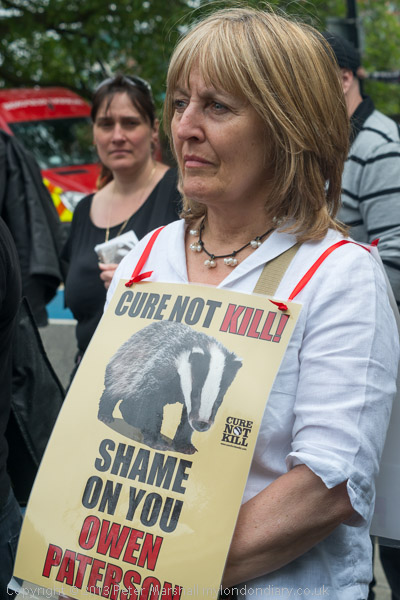
Many at the protest had come up to London from country areas, particularly from the pilot areas in west Gloucestershire and west Somerset where culling was to start later in the year. Many more licences were issued in later years and culling is continuing. Detailed statistical analysis suggests in some areas culling has led to a slight decease in bovine TB but overall it has had no real effect as badgers are only responsible for a small amount of the transmission, with 94% of infection being passed from cow to cow.

Defra’s support for culling and their reluctance to bring in more accurate cattle testing, controls on the movement of cattle, vaccination, proper slurry management and other effective measures seems largely to be driven by lobbying from farmers who want to avoid more controls on their activities.

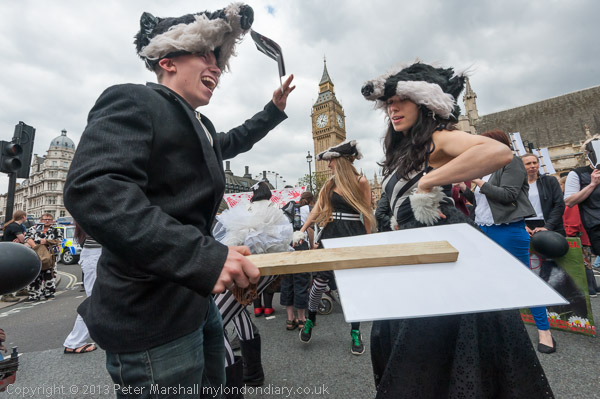
After the rally there was a short march to Parliament where some of those taking part danced on the street, with many then going on to join the protest taking place opposing the racist British National Party.

Cull Politicians, Not Badgers


Anti-Fascists Prevent BNP Exploiting Brutal Killing

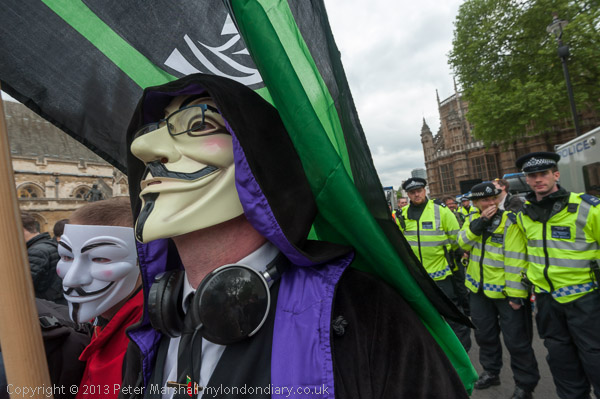
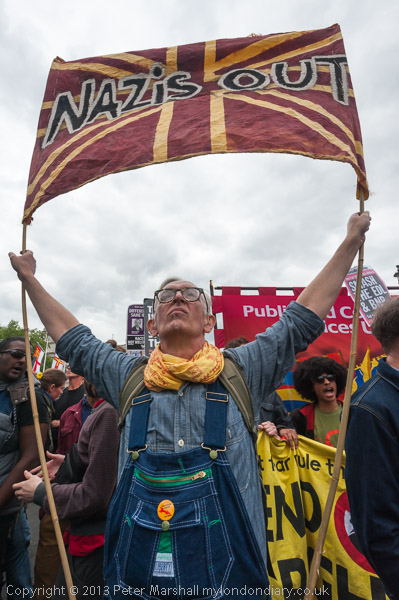
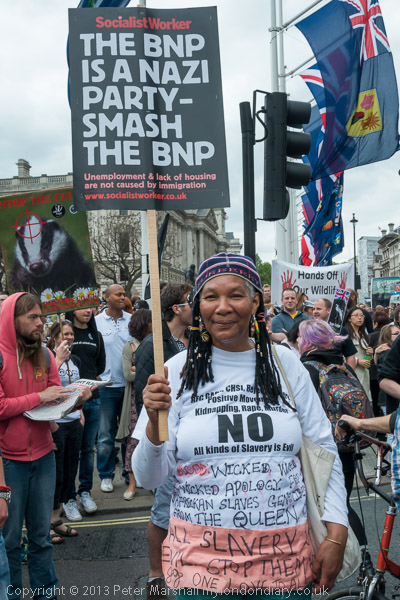
Anonymous were there along with Antifa, trade unionists and the UAF to oppose the BNP hate

On May 22nd 2013, off-duty Fusilier Lee Rigby was brutally murdered on a Woolwich street, run over then stabbed by two Muslim men who tried to decapitate him. The killing was universally condemned, including by Britain’s Muslim community, and I had two days ago photographed a march and rally in East London by Muslims to show solidarity and sympathy with the family of Lee Rigby and to denounce his brutal killing, describing it as against all the tenets of Islam.

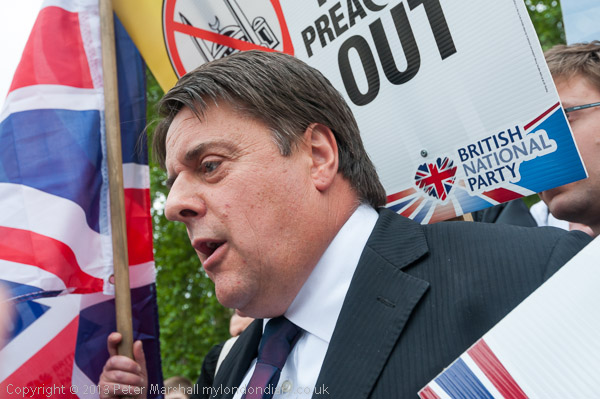
Nick Griffin answers questions under a placard ‘Hate Preachers Out’ and fails to appreciate the irony

The BNP had wanted to organise a mass protest in Woolwich to exploit the killing, making use of his senseless slaughter there to gain support for their anti-Muslim rhetoric, but police had banned their plans for a march as it would have endangered public safety, enraging many in the local area. Lee Rigby’s father had made clear that he and his family did not want his son’s death to be used to stir up hatred.

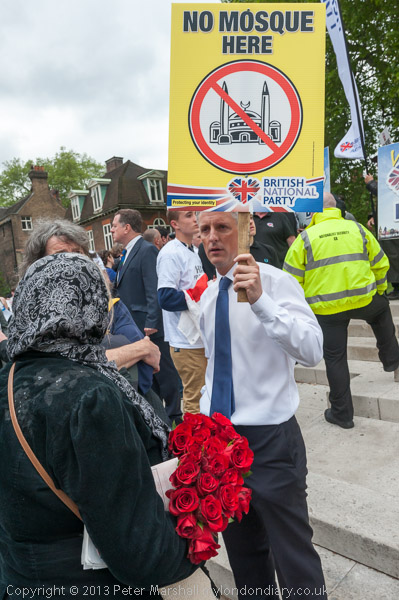
Instead, BNP leader Nick Griffin had planned to march to the Cenotaph and lay a wreath there, and had come with a small group of supporters to Old Palace Yard to start the march. It was only a very small group, even for the BNP, with perhaps as I wrote suggesting “it was something that even the ultra-right membership of the BNP could not stomach”.

Griffin himself blamed the low turnout on the police turning many of his followers away, stating that the whole area around Westminster was “a virtual exclusion zone“. I’d just walked there seeing no unusual police activity, and certainly large numbers who had come to oppose his wreath laying found no problems in getting in to do so.

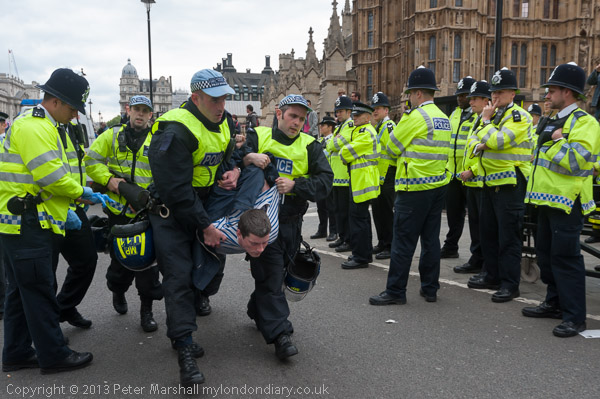
Police arrest an anti-fascist

It would have been possible for anyone – BNP member or not – to go to the Cenotaph on any of the days following the brutal murder and even on this morning to lay a wreath, though not today a well-known racist face like Griffin himself. But Grffin’s intentions were not about expressing sympathy. He wanted a triumphal march with flags flying to gain support for his Islamophobic hate, and given the opposition this never seemed likely to happen.

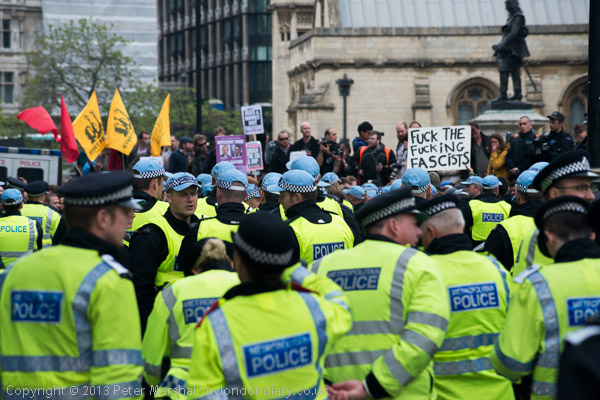
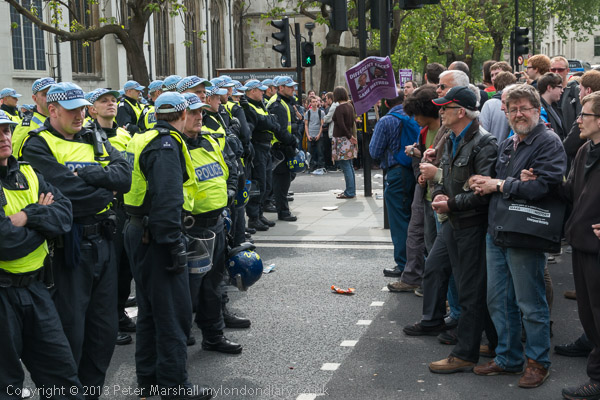
Police tried hard to clear a way for the BNP to march, but anti-fascists held their ground and refused to move. Police told them they were acting illegally and would be arrested if they did not move – and I saw a couple of double-decker buses being filled with arrested protesters and driven away, but there were simply too many for police to arrest them all.

The protest brought back memories of Cable Street, though few if any there were old enough to have actually been there back in 1936, though rather more had been at the http://mylondondiary.co.uk/2006/10/oct.htm 70th anniversary. But as then the slogan was ‘They shall not pass’, and on this occasion there were not enough police to force a way through. After the two buses of arrested protesters had been driven away police tactics changed and they simply maintained a standoff keeping the opposing groups apart.

Police told the BNP that they expected the anti-fascists to go home and they expected be able to clear the route by half past four, but they stayed on. It was the BNP who gave up, turning around and walking back to waiting coaches and leaving. When the anti-fascists were told the BNP had gone, they marched to Old Palace Yard for a brief rally to celebrate the victory.

Much more about the BNP and the protest which stopped them on My London Diary:
Anti-Fascists Stop BNP Wreath Laying
BNP Exploiting Woolwich Killing Stopped


New River, Nuclear Waste, Wandle, Orange Order & Syria

Saturday April 17th 2010 was a long and varied day for me, travelling to various parts of London and making a couple of short walks as well as photographing three events.


New River & Harringay – Finsbury Park

New River, Nuclear Waste, Wandle, Orange Order & Syria

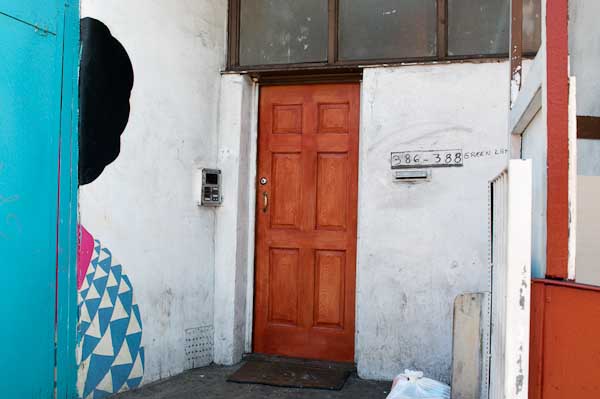
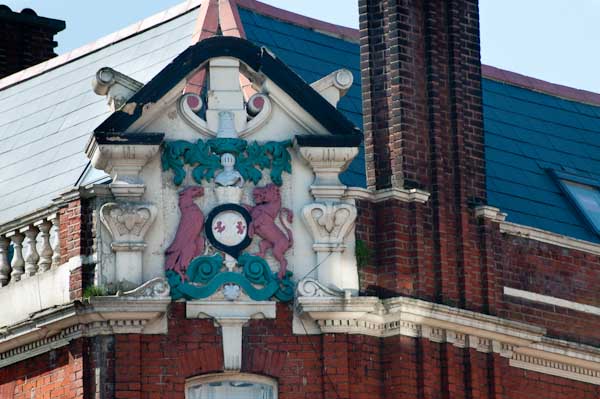
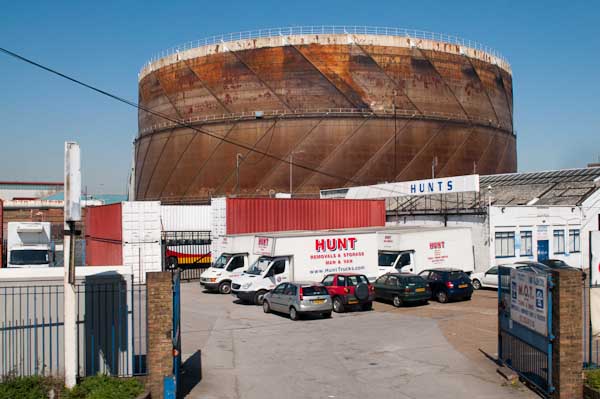
My journey across London had been rather faster than expected, probably because TfL’s Journey Planner had estimated rather longer times than I needed for connections, and I arrived at Harringay Green Lanes with rather a lot of time to spare.

New River, Nuclear Waste, Wandle, Orange Order & Syria

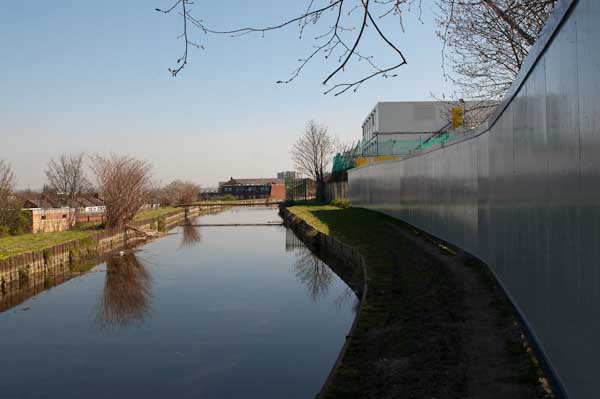
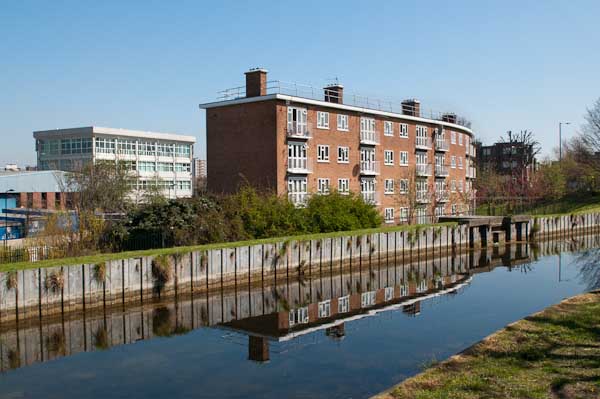
So I decided to walk around part of the area, walking partly along the New River, a water supply aqueduct opened in 1613 to bring water from Hertfordshire to London. It’s no longer New and was never a river.

New River, Nuclear Waste, Wandle, Orange Order & Syria

The light and sky was rather unusual. Like most of the Europe London was under a cloud of volcanic ash from the impossible to spell Eyjafjallajökull in Iceland, and no planes were flying. Thee sky had a slightly different blue to usual and lacked the con-trails and wispy clouds that these decay to and was a little dull from horizon to horizon. It wasn’t ideal for the panoramic views I made.

New River, Nuclear Waste, Wandle, Orange Order & Syria

More at New River & Harringay.


Olympics and Nuclear Trains – Harringey

New River, Nuclear Waste, Wandle, Orange Order & Syria

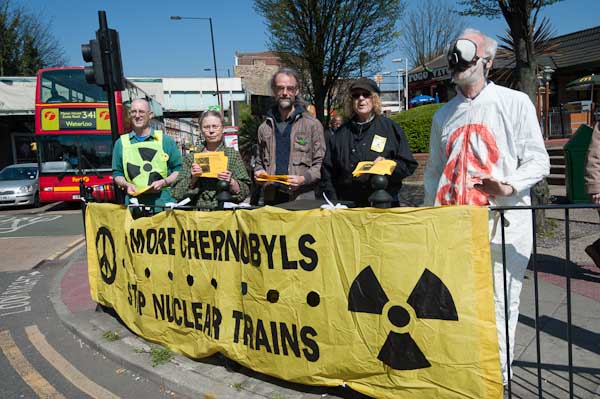
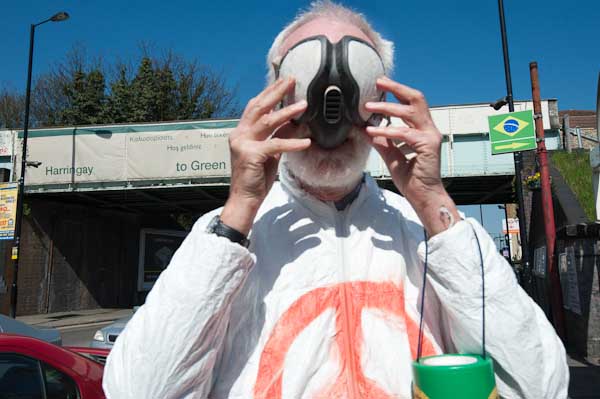
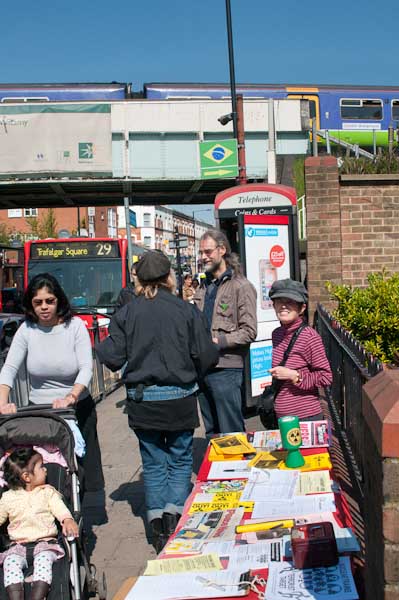
A few members of the Nuclear Trains Action Group and London CND were handing out leaflets close to the rail bridge on Green Lanes warning of the dangers of trains carrying highly toxic radioactive waste through densely populated North London. The event was given added moment by President Obama’s recent warning that nuclear terrorism is the gravest threat to global security.

Protesters had come to Haringey because nuclear waste from the power station at Sizewell is regularly shipped by rail on the line through here on its way to be reprocessed at Sellafield. Waste from Dungeness also travels through London, but on a route through the south and west of the city.

A terrorist attack on the trains carrying spent fuel rods could contaminate considerable areas of London with highly toxic materials and deaths could result. The protesters also pointed out that the route also goes past the Olympic site and an incident there would give the terrorists a huge amount of publicity.

Journalists had planted a fake bomb on one of these trains in London in 2006 to show the lack of real security and there has been no attempt to provide adequate security along the whole length of the route.

Transport by sea would be safer but would add significantly to the costs, and nuclear power is already hugely uneconomic when the full costs of decommissioning of power stations and safe long-term storage of wastes are included.

Olympics and Nuclear Trains


Wandsworth and the Wandle – Wandsworth

It hadn’t taken long to take a few pictures of the protesters in Haringey, and I still had rather a long time before my next event.

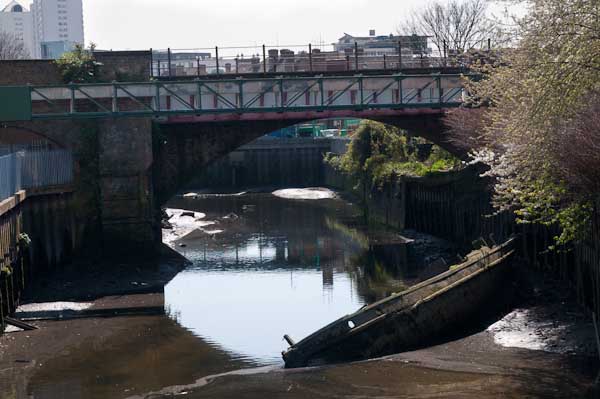
I’d heard that a new section of path had been opened by the Wandle close to where it enters the River Thames and planning my day I’d thought I would have time to take a look at it. It’s a longish journey from Haringey to Wandsworth, south of the river, but I had plenty of time to eat my sandwich lunch on the journey.

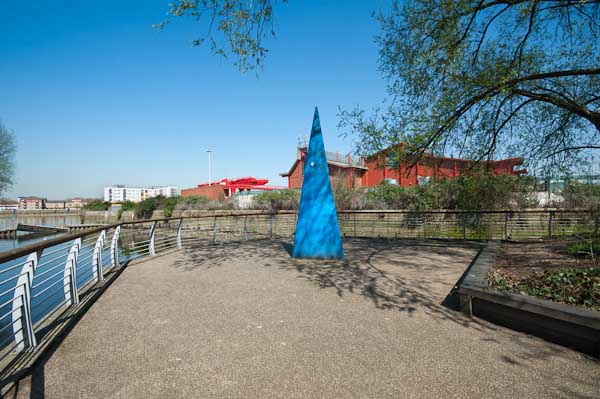
I was disappointed to find that although I could walk along the new section of ‘riverside’ path, it was still a short distance from both Wandle and Thames and these were still largely hidden from view by fences.

More at Wandsworth and the Wandle.


Loyal Orange Lodge London Parade – Westminster

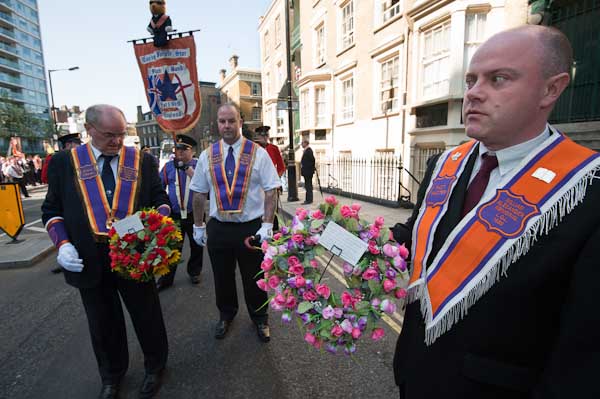
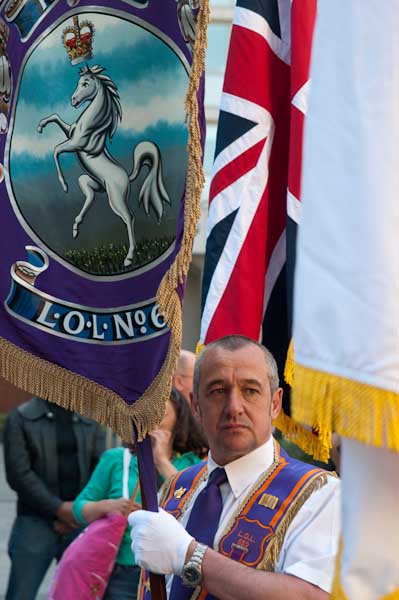
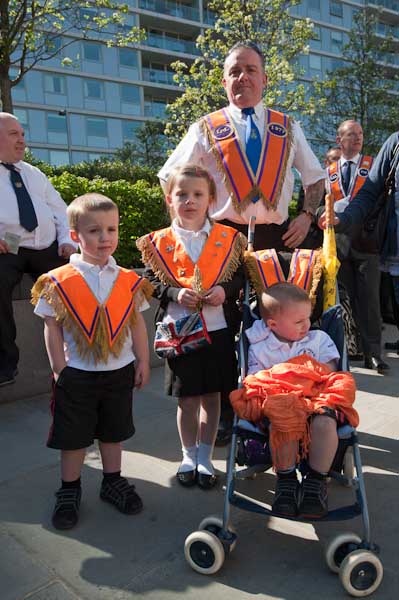
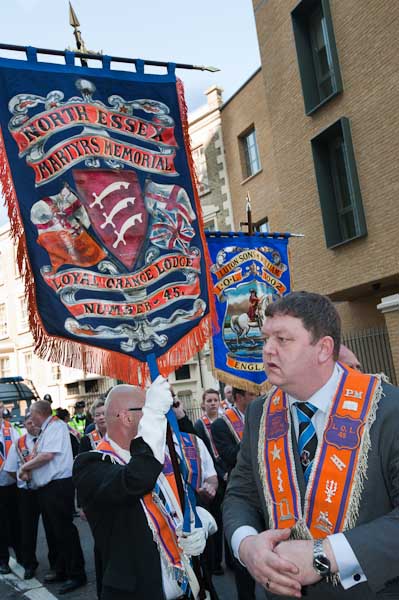
My next journey, to Clapham Junction and then Victoria was rather easier, and I arrived in time to photograph the members of the City of London District Orange Lodge and their guests as the prepared to march though central London on their St Georges Day Orange Parade.

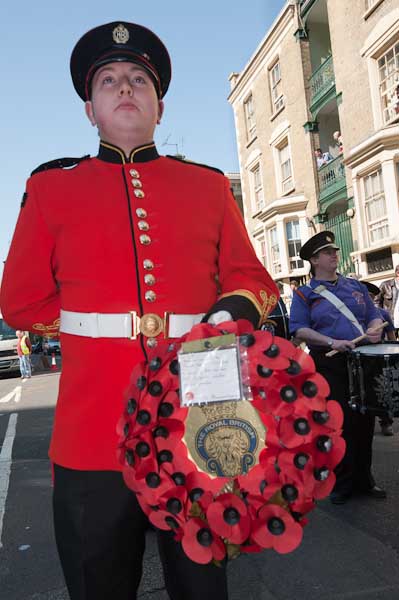
They were going to march to lay wreaths in memory of Crown Forces at the Cenotaph and then on to St James’s Square to lay another at the memorial to WPC Yvonne Fletcher, fatally wounded by a shot from the Libyan Embassy on 17 April 1984.

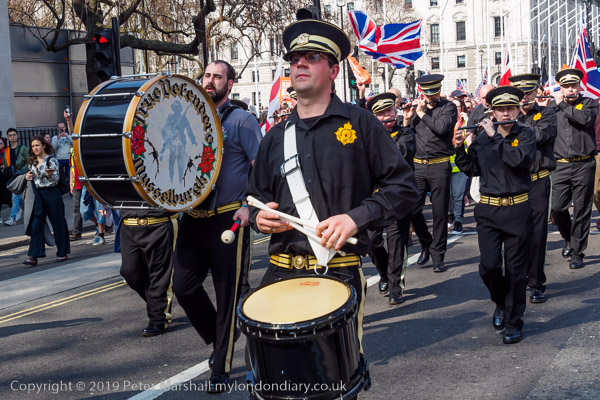
Among other groups taking part were the Corby Purple Star Flute Band and the Churchill Flute Band of Londonderry.

Even with progress towards peace continuing in Northern Ireland and now 25 years since the Good Friday Agreement, parades such as this are still contentious there. But in London they arouse little or no antipathy and are seen simply as a celebration of a particular Protestant culture.

More pictures at Loyal Orange Lodge London Parade.


Release Syrian Political Prisoners – Syrian Embassy, Belgrave Square

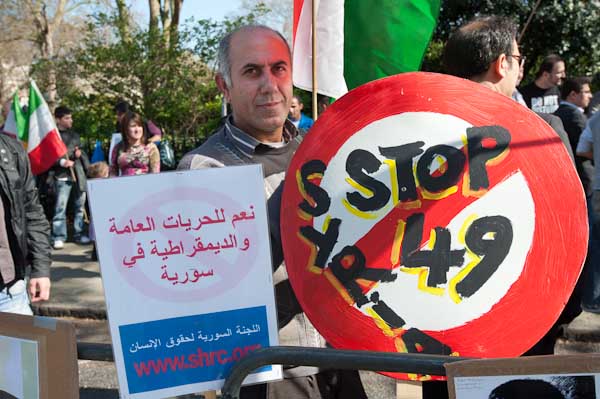
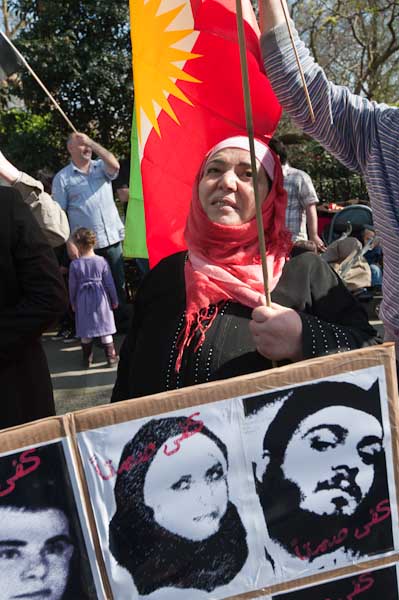
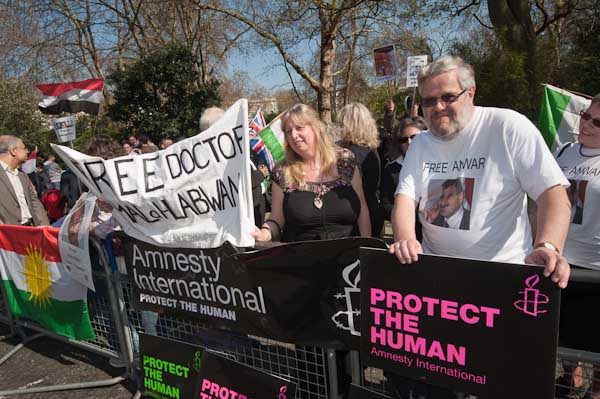
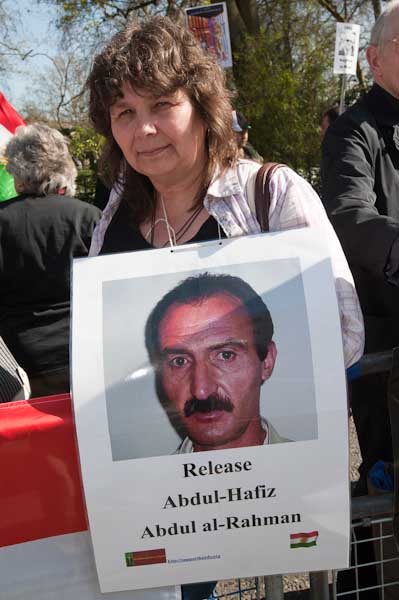
I left the Orange parade to make my way to the Syrian Embassy, where Kurds and others were protesting on the 64th anniversary of Syrian independence calling for the release of Kurdish prisoners of conscience held in Syrian jails.

Similar demonstrations, organised by the International Support Kurds in Syria Association (SKS, based in the UK and founded in 2009) were taking place in Brussels, Canada, Switzerland, France and the USA.

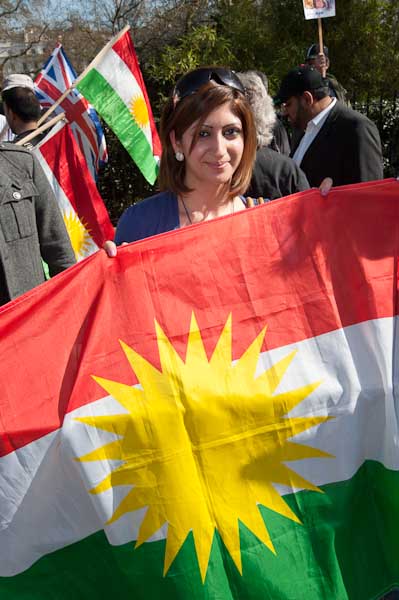
The protesters waved both Syrian and Kurdish flags – which are illegal in Syria – and called for the prisoners to be released and for the repeal of Decree 49. Introduced in September 2008, this controls the movement of people in the border area between Syria and Turkey where most Kurds live, and under it people there have to get a licence to build, rent or buy property.

Around 1.7 million Kurds live in Syria and have been systematically denied their basic human rights for many years. In 1973, around 300 villages were confiscated and the land taken from around 100,000 Kurds and handed over to Arab farmers, with the names of Kurdish villages being changed into Arabic names.

Emergency rule had been in force in Syria since 1963 and a 1962 law led to around 120,000 Kurds being stripped of Syrian nationality and becoming stateless. They are not allowed to move house, own land or businesses, are banned from many jobs, have no passports or other travel documents and their access to medical treatment is restricted.

Since the Syrian revolution of 2011, the largely Kurdish northeast of Syria has become the de-facto autonomous region of Rojava, adopting universal democratic, sustainable, autonomous pluralist, equal, and feminist policies.

More at Release Syrian Political Prisoners.


Brexit, Fridays For Future & Turkey

I’d not been well for a few days in March 2019 and was still feeling rather weak and tired on Friday 29th March, but decided to go up to London and cover some events happening in and around Parliament Square. But I found I wasn’t really well enough, and had to leave and come home much earlier than I had intended, before things were expected to get rather livelier later in the day when extreme right protesters were expected to march join those already in the square.


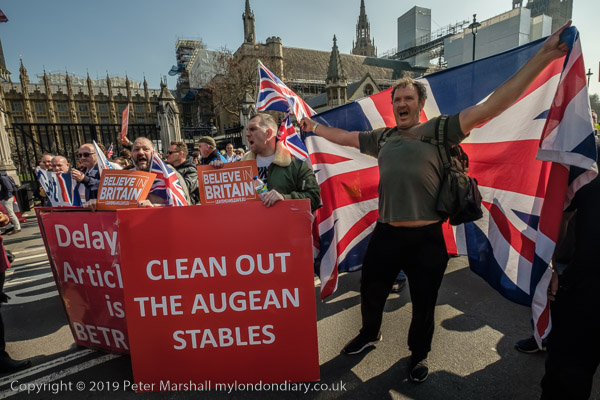
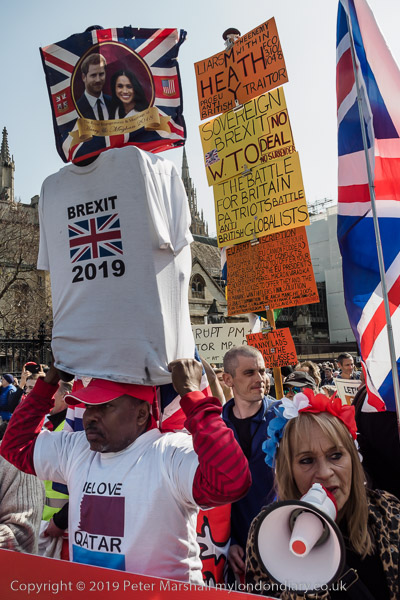
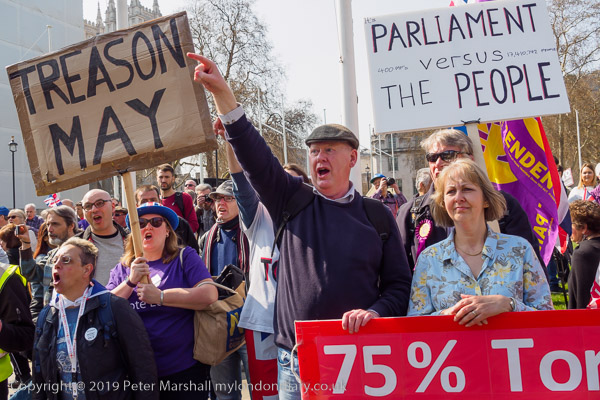
Brexiteers protest Betrayal – Parliament Square

Brexit, Fridays For Future & Turkey
‘Clean out the Augean Stables’ was doubtless the kind of snappy slogan that would appeal to Rees-Mogg

Friday 29th March had been the original deadline for the UK to leave the EU established when Theresa May triggered Article 50 and this was approved by the House of Commons, officially notifying the European Council of its intention to leave.

Brexit, Fridays For Future & Turkey

But things had not gone to plan, Parliament had dithered and there had been no real attempt to make the necessary negotiations for our departure – and indeed these have only really been completed with the Windsor Framework more or less agreed a month ago. Boris Johnson won an election on his promise of an ‘oven-ready agreement’ but this turned out as might have been expected to be half-baked.

Brexit, Fridays For Future & Turkey

Even with the agreement over the Irish border – if it proves workable, much still need to be agreed to really sort out our relationship with the EU and get things back to normal, though even that will be rather unsatisfactory compared with EU membership.

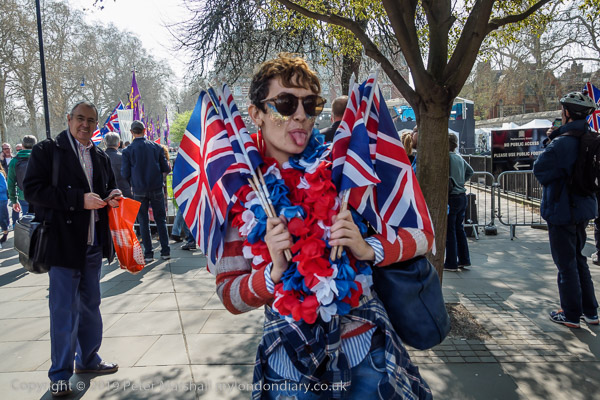
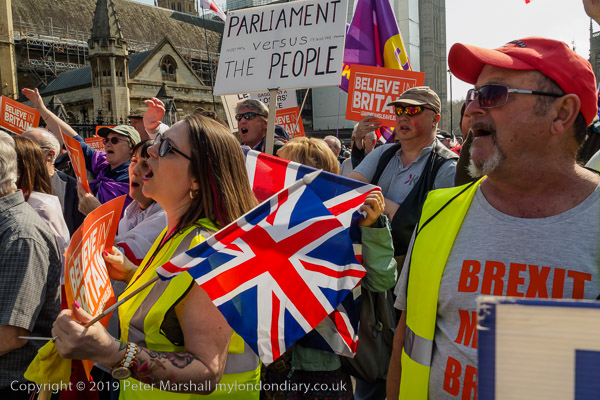
Brexiteers came to Parliament Square to protest against this failure to leave by the deadline, holding posters and banners. Later a ‘Leave Means Leave’ march arrived with two Orange marching bands.

There was a lot of noisy shouting and some MPs who walked through the crowd were subjected to angry abuse, while a few who were ardent supporters of Brexit stopped riedly to talk with the protesters.

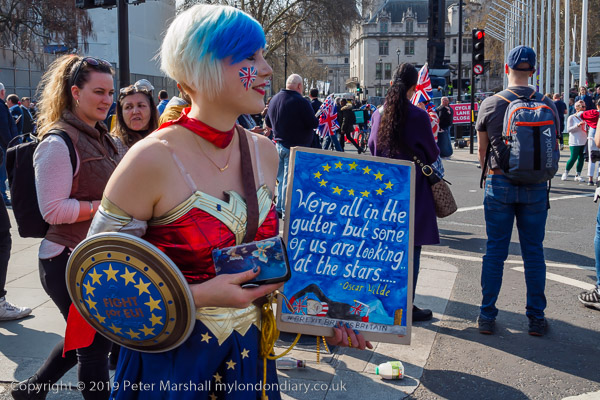
There were also a few Remain supporters, and while I was present they were largely ignored by the Brexiteers and the atmosphere remained generally calm. Among them was #EUsupergirl Madeleina Kay dressed as Britannia.

But after a couple of hours I was feeling very out of breath and weak and decided I was in no state to continue working, particularly as things were expected to get rather more heated as the extreme right Tommy Robinson and the Democratic Football Lads Alliance were expected to arrive shortly.

Brexiteers protest Betrayal


Fridays for Future climate protest – Parliament Square

Although the Brexiteers were the largest and noisiest group in Parliament Square, others were also protesting and I photographed them too.

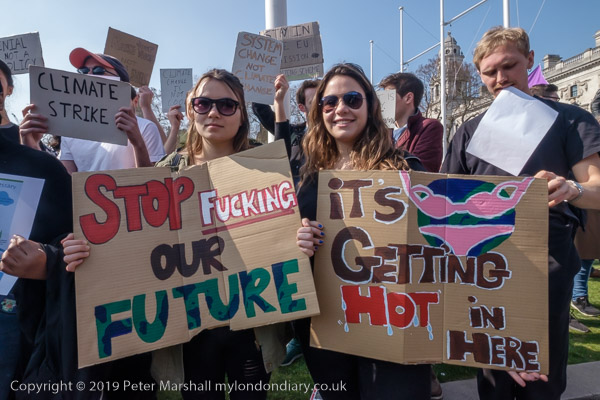
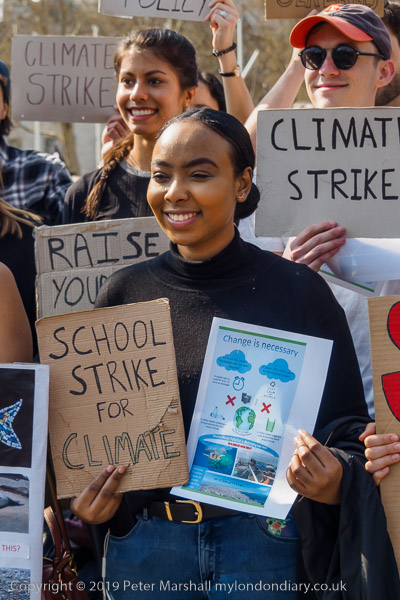
The school strike for climate was one of many weekly #FridaysForFuture events taking place in many cities and towns across the world. These protests were inspired by the action of 15-year old Greta Thunberg who instead of going back to school at the end of the Summer break in August broke the law by protesting outside the Swedish Parliament.

Fridays for Future climate protest


Kurds support hunger strikers – Houses of Parliament

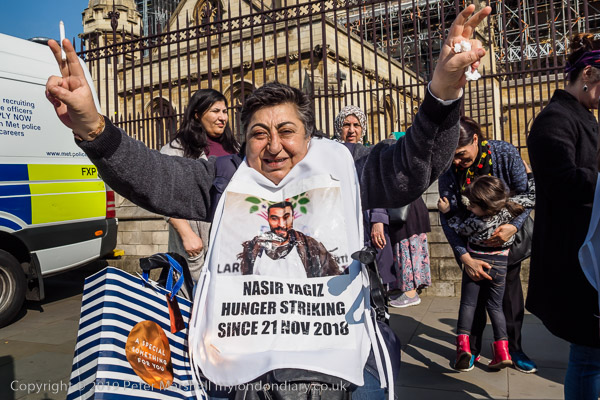
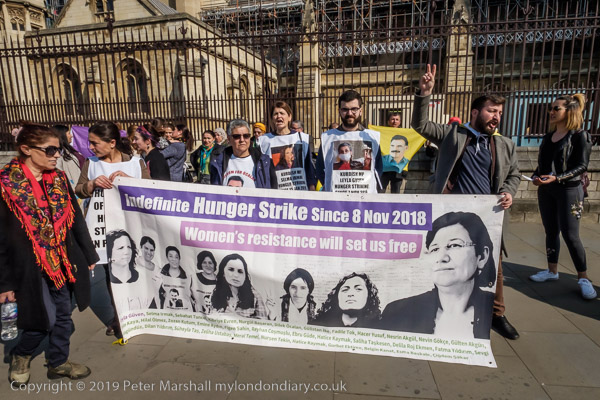
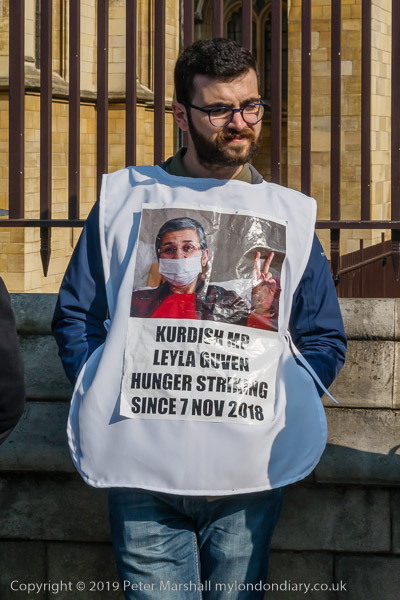
On the pavement in front of Parliament as I was getting ready to leave I photographed a group of Kurds who were protesting in solidarity with hunger strikers in Turkey, some of whom had been on hunger strike since November.

The strikes began on November 7th and were against the imprisonment of members of the HDP (Peoples’ Democratic Party) and the Free Women’s Congress, as well as many journalists, socialists and LGBTI+ campaigners. A number of Kurds in the UK have also gone on hunger strike in sympathy, including two of those taking part in this protest.

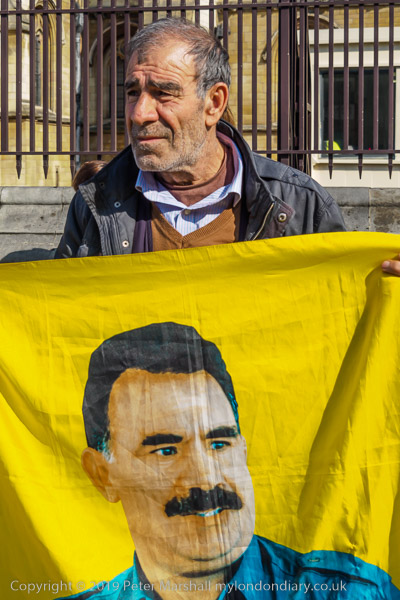
Leading the hunger strike in Turkey was HDP MP Leyla Güven, on indefinite hunger strike for over 110 days, vowing to continue until death unless the isolation of Kurdish Leader Abudullah Ocalan in prison was ended – and called an end to her hunger strike in May when this happened, having kept alive by consuming only Vitamin B and salty and sugary liquids.

The UK government continues to support Turkey as a fellow member of NATO despite the continuing human rights abuses there. Ocalan and many other Kurds remain in jail and many Kurds have been killed.

Kurds support hunger strikers


Turkey’s War on Kurds, Bunhill Fields – 2016

Break the Silence! Turkey’s War on Kurds – BBC to Trafalgar Square

Turkey's War on Kurds

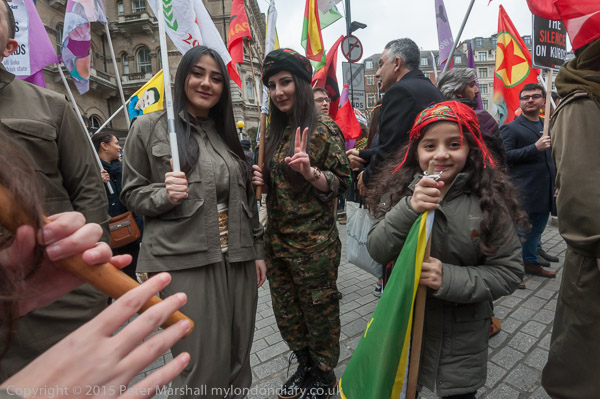
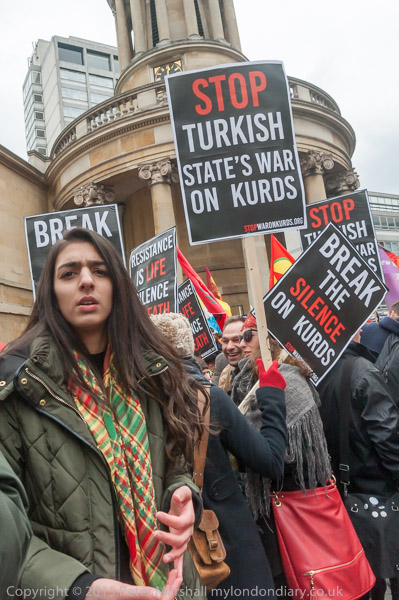
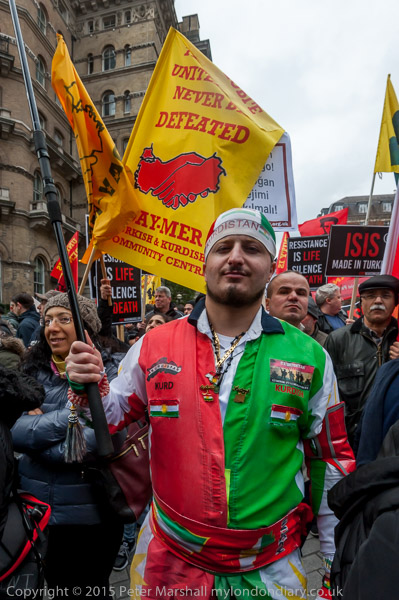
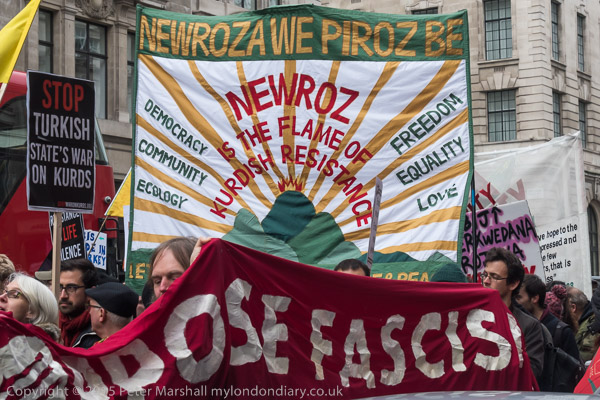
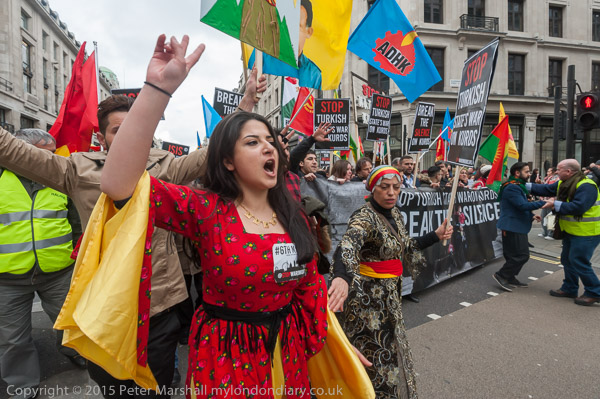
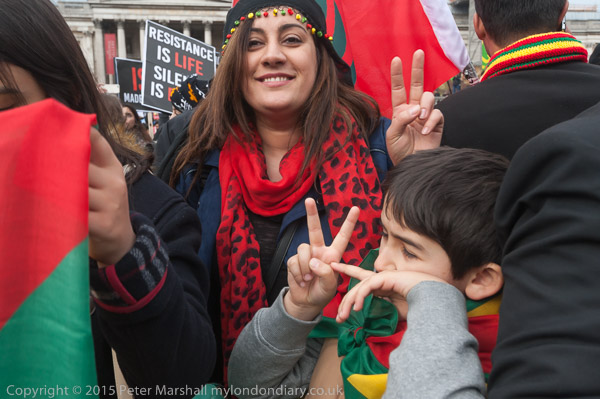
Turkey’s War on Kurds. On Sunday 6th March 2016, several thousand of Kurds and their supporters marched through London in solidarity with the Kurdish people calling for an end to the silence from Turkey’s NATO allies and the western press over Turkish war being waged against Kurds in northern Syria.

Turkey's War on Kurds

This area of Syria has successfully broken away from control by the Syrian regime under President Assad and set up a popular progressive participatory democracy under the name Rojava. Although Kurds form the majority, the impressive constitution of the new area guarantees the rights of all the minority groups and also has enshrined the equal rights of women. Many see it as a model for future democratic states elsewhere.

Turkey's War on Kurds

The Kurds also call for the UK to decriminalise the PKK Kurdish liberation Movement here, and for the release of their leader Abdullah Ocalan who has been in jail in Turkey since his illegal kidnapping in Kenya in 1999. In 2003 the European Court of Human Rights ruled his trial unfair, and called for a retrial. Turkey lost an appeal against this decision in 2005 but have still refused to hold a retrial.

The march began with around 5,000 people massing outside the BBC, who have consistently failed to cover the real issues over the Kurdish struggle and like to almost totally ignore any political protests taking place in the UK. True to form there appeared to be no mention of this large march in any BBC national or local news in the following few days.

The protest was called by his protest was called by Stop the War on the Kurds and supported by a huge array of groups, which I listed on My London Diary. Here it is again.

Peace in Kurdistan, Kurdistan National Congress (KNC), Scottish Solidarity with Kurdistan, Day Mer, GIK-DER/RWCA, National Union of Teachers (NUT), Public and Commercial Services Union (PCS), National Union of Rail, Maritime and Transport Workers Union (RMT), Transport Salaried Staffs’ Association (TSSA), Trade Union Congress – International Section, Greater London Association of Trade Union Councils (GLATUC), Trade Unionist and Socialist Coalition (TUSC), National Shop Stewards Network (NSSN), Unite Housing Branch, Unison Islington, Stop the War Coalition, People’s Assembly, Unite Against Fascism (UAF), Socialist Workers Party, Socialist Resistance, Plan C, Revolutionary Communist Group, Left Unity, Green Party, Kurdish Community Centre, Halkevi, Roj Women’s Assembly, Kurdish Students Union, Alliance for Workers Liberty (AWL), Anti-Fascist Network (AFN), National Campaign Against Fees and Cuts (NCAFC), Party of Free Life of Kurdistan (PJAK), Democratic Union Initiative & PYD and other groups.

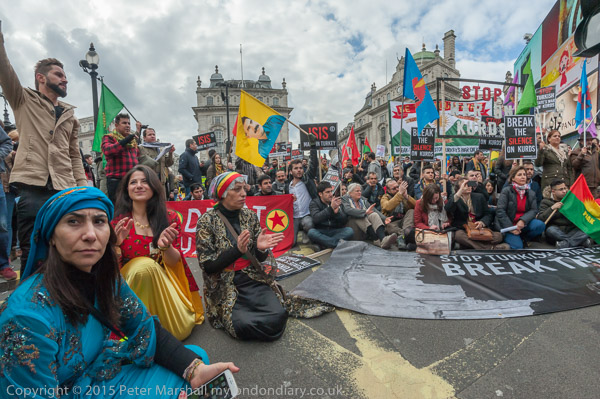
The march slowly went down Regent Street to Piccadilly Circus where the head of the march stopped and briefly sat down, blocking the junction. A few minutes later they got up and marched down Haymarket to a rally in Trafalgar Square. I left them to go to another event as te rally began.

More pictures on My London Diary: Break the Silence! Turkey’s War on Kurds.


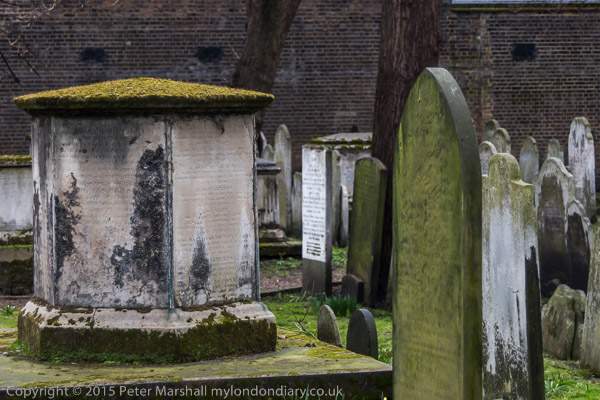
Bunhill Fields Under Threat

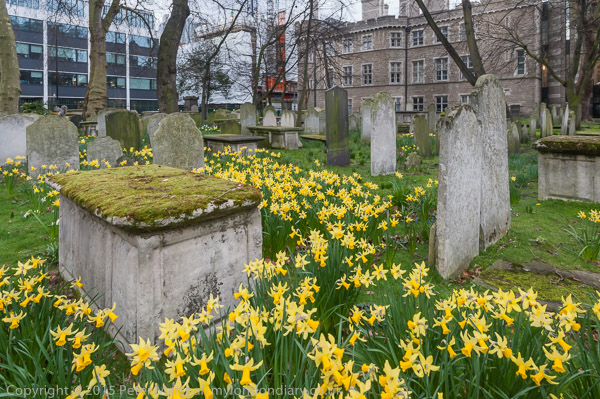
Bunhill Fields is one of the City of London’s most special places, a Grade I cultural heritage site owned by the City of London and enjoyed by many nearby office workers in the area as a quiet space for their lunch breaks, though I think these are rapidly becoming, like the cemetery a thing of the past, with many working from home or snatching a quick sandwich at their desk still staring at a terminal.

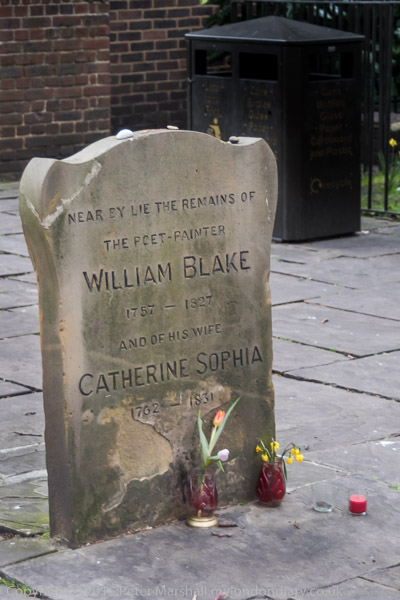
William Blake was buried a little this side of the tree on the far side of the path. His wife on the south side of the cemetery close to Susannah Wesley

It’s a quiet place, a sanctuary and every similar cliche you like to throw at it, and of course always under threat from rapacious developers (are there any other kinds?) Although the cemetery itself is protected by its listing, I’d signed a petition against a development immediately on the north-east boundary which will result in this small and important site being overshadowed by a large and inappropriate development.

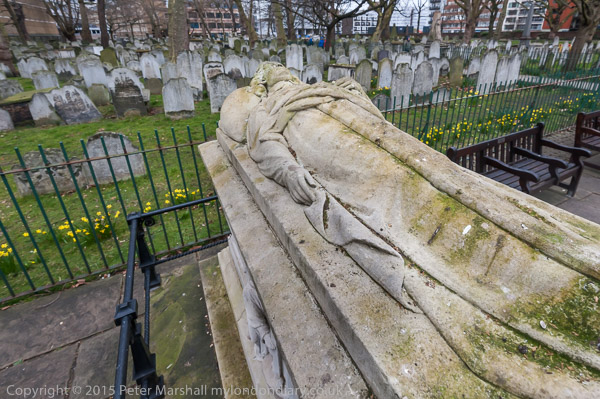
Tomb of John Bunyan

The proposed 10 and 11 storey skyscrapers would set a precedent soon to be followed by others and would severely change its nature, depriving it of light and altering its micro-climate. Islington Council had rejected the planning application but it was called in by then London Mayor Boris Johnson who allowed it to go ahead, along with other damaging schemes around the city.

Bunhill Fields was a burial ground mainly for nonconformists who could not be buried in Church of England churchyards and cemeteries and was in use from 1665 to 1854. It is best-known as the burial place of William Blake, Daniel Defoe, Isaac Watts, George Fox and John Bunyan, as well as others including Susannah Wesley.

Susannah Wesley’s stone is brilliant white. Now you can only walk along the path by it if accompanied by an attendant

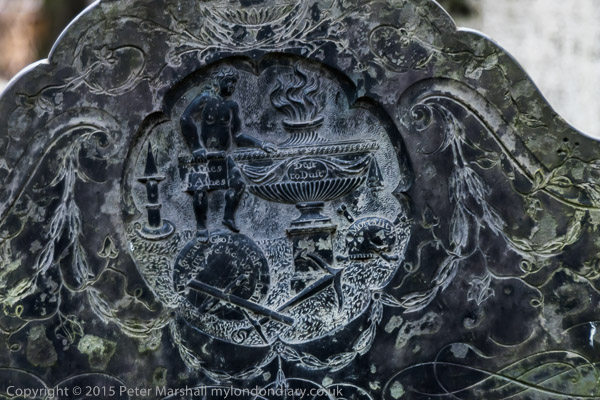
The cemetery, which has a public path through its centre, is opposite Wesley’s Chapel on the City Road, with the path leading through to Bunhill Row. Most of the monuments in it, many listed, are in enclosed areas behind fences and can only be viewed from the paths, though years ago it was possible to wander more freely. There is still a garden area at the north of the site, where many, including Blake, were buried, with a lawn and seating.

More pictures at Bunhill Fields Under Threat.


Kurds March Against Turkish State Attacks – 2016

Kurds March Against Turkish State Attacks

Seven years ago on February 7th 2016 I made my way on a Sunday afternoon to Edmonton in north London. I don’t now much like working on Sundays, when I often go out for a walk with my wife and catch up with things from the week that’s just ended. And public transport, on which I rely to get into and around London is often disrupted by engineering work on the railways and poorer or non-existent bus services.

Kurds March Against Turkish State Attacks

But the trains and underground on that day took me smoothly if rather slowly to Silver Street from where it was just a short walk along the street to the corner with Fore Street where Kurds were meeting up for a march. Angel Road is now I think the underpass which carries most of the traffic along the North Circular under this junction, but this is still the Angel junction.

Kurds March Against Turkish State Attacks

I’d responded to an invitation to cover the event with the title ‘End the siege of North Kurdistan! Turkey out of Rojava!’ which read (in part) “Kurdish, Turkish and left organisation call on the unions, left, progressive, feminist and antifascist groups of London to join a march through the heart of the community from Upper Edmonton to Haringay. We are calling for the end of the siege of the Kurdish regions by the Turkish army, and the withdrawal of Turkish troops from Rojava. We must show our solidarity with the resistance and popular assemblies in both regions, and build our links with this heroic and inspiring movement.”

The time given for the protest was 16:00 and I’d arrived a little before 4pm, hoping to take as many pictures as possible before the light faded. Sunset here in early February is just before 5pm, not that there was much if any sign of the sun on that dry but very overcast day. By the time the march moved off a little after 4.30pm the light was dropping fast, and before long I was working at ISO 2000 and 3200 on the two Nikons I was using. Even then many pictures were a little blurred due to people moving at walking pace.
On My London Diary I write more about the groups involved and the reasons for the protest. Almost all those on the march were from Kurdish groups and as I commented “Apart from a banner from the Paddington Branch of the RMT there was no presence from the British left, who don’t appear to have woken up to what is happening in Turkey and in Kurdistan.”

Our governments too over the years appear to have kept a deliberately blind eye to events in Turkey, standing up for it as a member of NATO rather than standing up to it and supporting the human and civil rights of the Kurds, who have long been oppressed.

Things got worse in Turkey after the success of Recep Tayyip Erdogan’s AKP party in the June 2015 elections with curfews, the imposition of martial law, and arrests of anyone opposed to the Turkish government, with attacks by tanks and artillery, and snipers targeting homes, killing more than 400 civilians in the last 7 months. Politicians, human rights activists, journalists, students and 30 mayors had been imprisoned and hundreds of thousands have been threatened and forced to flee their homes.

Britain and the EU have turned that blind eye to the support of Turkey for ISIS, aiding them to smuggle oil whose sale finances their activities. Kurds have led the fight against ISIS and Turkish attacks on them have hindered them.

Since 2016 the situation in Kurdish areas of Syria has worsened with Turkish forces invading parts of the area with the help of former ISIS fighters in 2018. Hundreds of Kurds were killed and Turkey has instituted a policy of ethnic cleansing, depopulating the area. The remaining Kurds face death, extortion, and kidnappings by various armed groups backed by Turkey. Kurdish-owned homes and farms are confiscated, and new settlements for non-Kurds are being built.

I left the march shortly after it passed White Hart Lane. I was getting tired and it was getting too dark to take more pictures without flash, and I thought I had done enough.
More at Kurds protest Turkish State attacks on My London Diary.


Saturday 17th December 2011

Although I’ve been photographing protests in London for many years it was only after I left a full-time teaching job in 2000 that I was really able to photograph more than the occasional event, and only after I began to use a digital SLR camera at the end of 2002 that pictures from them appeared regularly in My London Diary. For a couple of years after that I was still using both film and digital, largely because I only had one Nikon lens and it was a few years before I got a real wide-angle for digital, but the on-line posts were almost entirely from the digital images.

Saturday 17th December 2011

But the huge growth in internet use as people organising protests more and more began to put details on their web sites, use e-mail and Facebook meant that with a few hours searching each week I was able to find more and more events to photograph. Before it had only been easy to find out about the protests organised by groups I was a member of and major national organisations. Some I found from fly-posted notices in parts of London, and others from a little intelligent guesswork based on events in the news, anniversaries and other significant dates. And back then and still now, if I’m in London I’ll take a look at places like Trafalgar Square, Downing Street, Parliament Square and find things I had now prior knowledge of taking place.

Saturday 17th December 2011

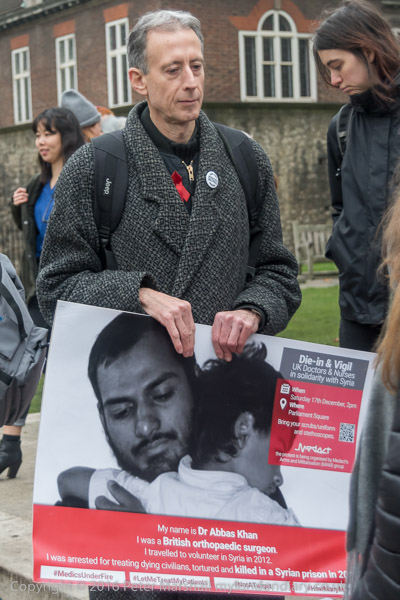
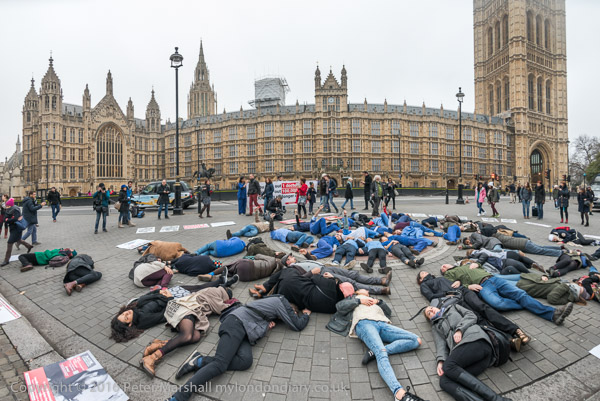
By 2011 there was a great deal of information on-line and I think I took the train to London with a list of all the events I managed to cover that day, three by UK Uncut, Kurds and Congolese protesting at Downing
St, Iraqis, Syrians and supporters of Bradley (now Chelsea) Manning at the US Embassy, and Egyptians at their Embassy. I sent pictures on each to Demotix (no longer with us) along with a story and later wrote a total of nine posts on My London Diary, possibly a record for any single day for me – peak protest!

Saturday 17th December 2011

With so many protests I’m not going to write much about any of them today – but you can click any of the links to read the roughly 2700 words I wrote about the nine events in 2011. All of the pictures in this post are from Saturday 17th December 2011.

UK Uncut Santa Calls on Dave Hartnett – HMRC, Parliament St

Saturday 17th December 2011

UK Uncut brought a Christmas present to Dave Hartnett, the UK’s top tax man, shortly to retire with a massive pension despite a huge series of blunders. And he had also let major companies off paying huge amounts of tax they owed – including £4.75 billion for Vodaphone and around £8 million for Goldman Sachs.

UK Uncut Santa Calls on Dave Hartnett

UK Uncut Xmas Protest At Topshop – Oxford St

A group from UK Uncut protested briefly inside the Oxford Circus Topshop at the failure of Arcadia group to pay UK tax on its UK earnings, continuing their protest with others on the pavement outside until cleared away by police.

UK Uncut Xmas Protest At Topshop

UK Uncut Xmas Protest At Vodaphone – Oxford St

UK Uncut moved to Vodaphone to protest about their dodging of UK tax. Police kept them a few yards from the shop but otherwise did not interfere with the peaceful demonstration.

UK Uncut Xmas Protest At Vodaphone

Kurds Call For A Stop To Syrian Massacres – Downing St, Whitehall,

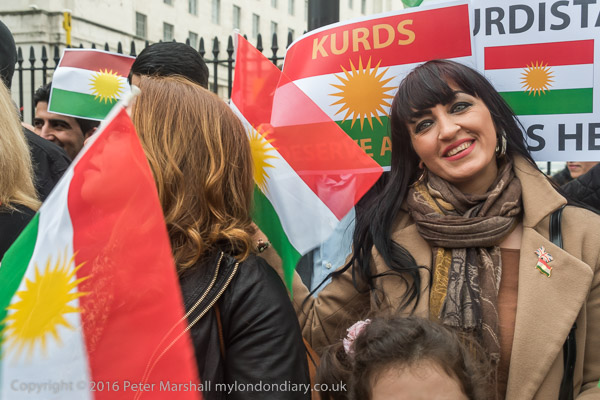
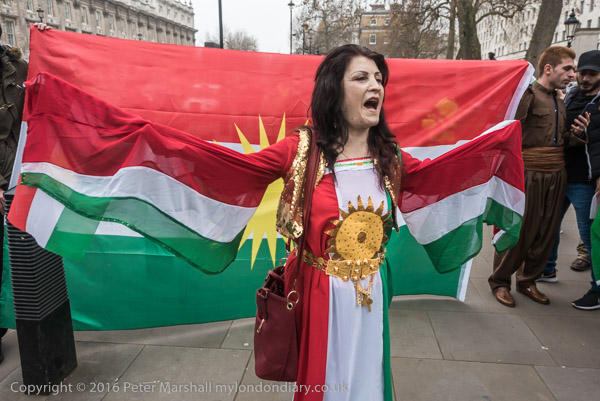
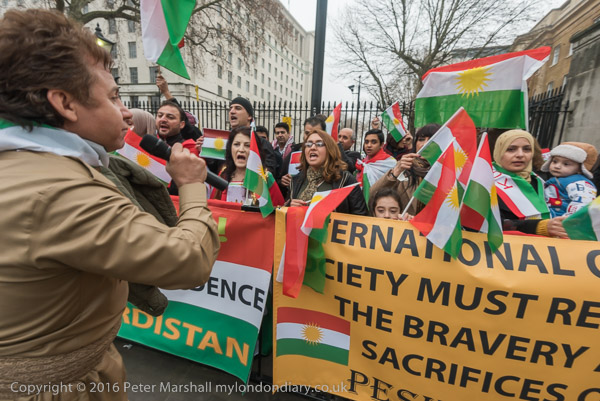
The Syrian Kurdish community protested at Downing St as massacres continue in Syria, calling for Britain to help to stop them. They want freedom for Syria and also for Kurds in Syria in a federation to replace the Assad regime.

Kurds Call For A Stop To Syrian Massacres

Congolese Election Protests Continue – Downing St, Whitehall

Congolese continued their protests in London against the election fraud, rapes and massacres and called on the British government to withdraw its support from the immoral regime of President Kabila responsible for the atrocities and voted out by the people.

Congolese Protests Continue

Iraqis and Syrians Protest At US Embassy – Grosvenor Square

Iraqis met to celebrate their defeat of the occupation on the day US troops left Iraq, and called for the mercenaries to go too, as well as for proper coverage of Iraq by the BBC. They were joined by Syrian supporters of President Bashar al-Assad, at the embassy to demand no US intervention in Syria.

Iraqis and Syrians Protest At US Embassy

Bradley Manning Birthday Demo – US Embassy, Grosvenor Square

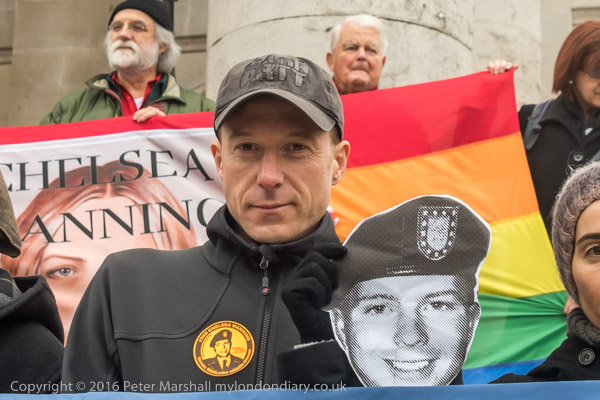
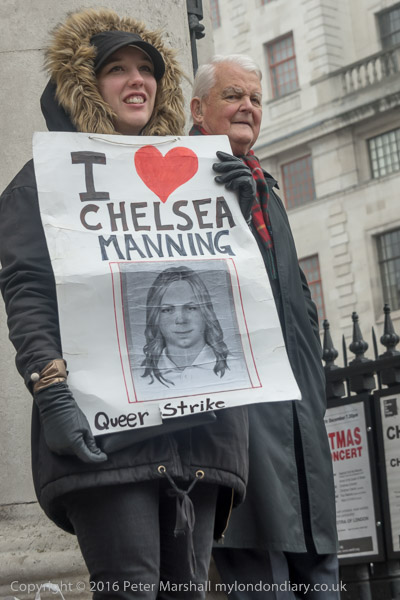
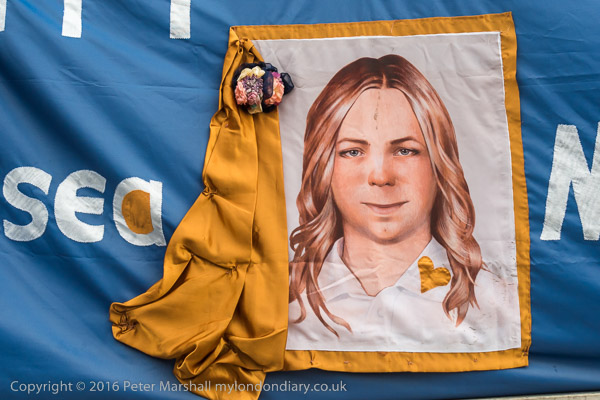
Supporters of Bradley Manning (now Chelsea Manning) held a vigil at the US Embassy on Saturday afternoon, his 24th birthday, and on the second day of his pre-trail hearing, calling him an American Peace Hero.

Bradley Manning Birthday Demo

Egyptians Protest Against Attacks on Protesters – Egyptian Embassy, Mayfair

News of the deaths and injuries in Cairo as armed forces attacked protesters prompted Egyptians to protest at the London Embassy, calling for the Supreme Council of the Armed Forces to halt the attacks and hand over power.

Egyptians Protest At Embassy


Naked Vegans, Acid Attacks, Anonymous & Kobane

PETA World Vegan Day Naked Protest – Trafalgar Square, Sat 1 Nov 2014

Wikipedia tells me that World Vegan Day is an annual event celebrated by vegans around the world every 1 November and was established in 1994 to mark the 50th anniversary of the founding of the UK Vegan Society and the coining of the terms “vegan” and “veganism”. The exact date of the founding wasn’t known and Nov 1st was chosen for its association with “Samhain/Halloween and the Day of the Dead”. November 1st has also been All Saints Day since AD 835.

I’m not a vegan. But I have no problems with eating vegan food or vegetarian food, but often prefer meat or fish in my meals. But clearly reducing the amount of meat that is eaten by people around the world would be a useful contribution to reducing carbon emissions, although some vegetable production does involve a considerable carbon footprint, as well as environmental problems.

I welcome that many people now choose not to eat animals and avoid animal products, whatever their reasons, but also think there are good reasons to keep farming animals though there are plenty of farming practices I think should be banned. But keeping livestock is very much a traditional part of life in this country, one that has produced the landscape we enjoy and the animals we like to see in it. It can be done in an ethical and humane manner, though this means paying a price that allows farmers to do so.

So although I was happy to photograph PETA’s World Vegan Day protest in Trafalgar Square when activists wearing little clothing and smeared with fake blood lay on a large tarpaulin, I was not in sympathy with some of the views expressed by PETA. But the posters held by those taking part in the protest (I think less than half the advertised 255, the number of animals killed for food in the UK every second) simply noted the “1 billion animals killed for flesh each year” and encouraged people to “Choose Life: Chose Vegan“.

PETA World Vegan Day Naked Protest


Against acid attacks on Iranian women – Trafalgar Square, Sat 1 Nov 2014

I think I had actually come to Trafalgar Square for this protest, organised by the 8th March Women’s Organisation (Iran – Afghanistan).

They were in the square protesting at the horrific attacks on women who go onto the streets of Iran not wearing a veil. Gangs encouraged by the Iranian regime have thrown acid in the faces of many women, causing intense pain and burning, leaving them scarred and blinded. As the protest also pointed out as well as the forced wearing of the veil, women in Iran have no right to divorce, can still be stoned to death for adultery and can be victims of so-called ‘honour killings’.

Against acid attacks on Iranian women


Revolution Banner Drop – Waterloo Bridge and Trafalgar Square, Sat 1 Nov 2014

‘Anonymous’ protesters in Guy Fawkes masks held up a large banner with the message ‘REVOLUTION’ on Waterloo Bridge to publicise their November 5th ‘March Against Government Corruption’ in London. I photographed it from Westminster Bridge, but the banner really wasn’t quite large enough to really stand out against the background of the City.

Later they took the banner to Trafalgar Square where a rally in support of Kobane was taking place (see pictures below) and it was rather more impressive there.

Revolution Banner Drop


Global Solidarity With Kobane – Trafalgar Square, Sat 1 Nov 2014

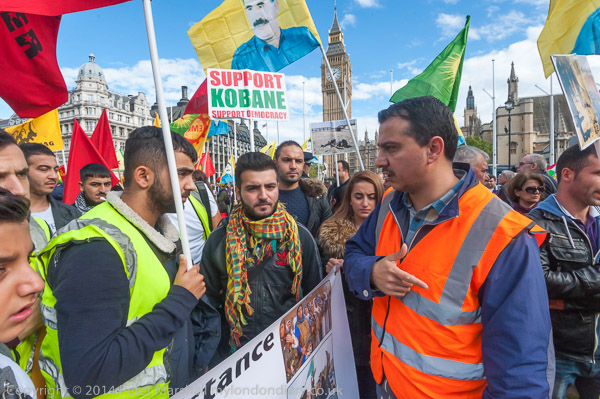
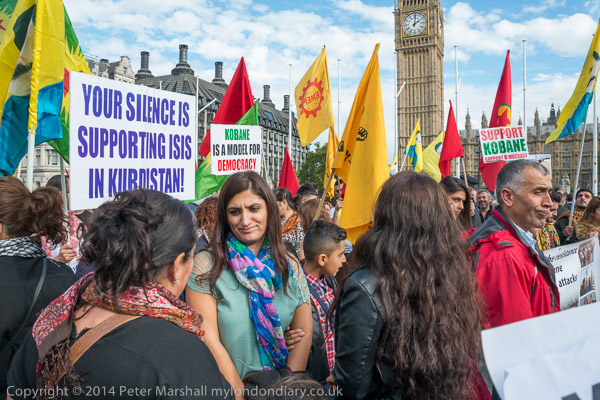
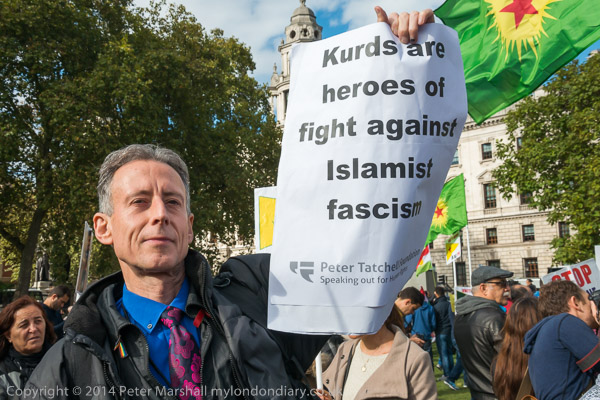
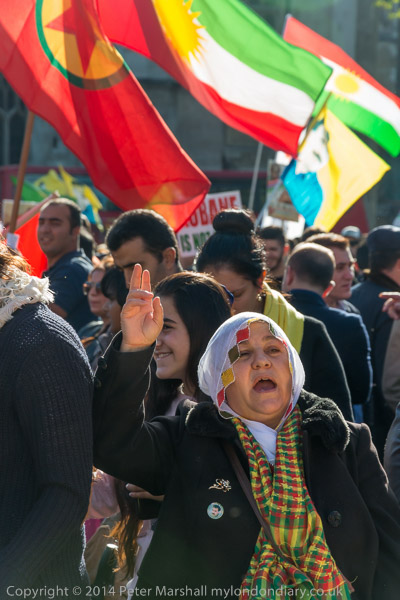
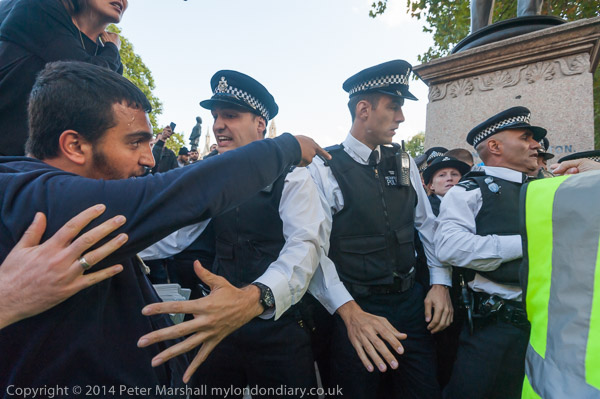
November 1st was also World Kobane Day, and thousands were in Trafalgar Square supporting the defenders of Kobane against ISIS and fighting for the remarkable democratic revolution of Rojava, calling for aid for the Kurdish fighters and refugees, legitimisation of the PKK and the release of Ocalan. The protest was part of a Global day of solidarity with the YPG (People’s Defense Units) and the women of the YPJ fighting against ISIS.

The protest was organised by the Kurdish People’s Assembly and Peace in Kurdistan Campaign in cooperation with Kurdistan National Congress (KNK), Roj Women Assembly and Free Youth Movement and community organisations, and was also supported by some left and human rights groups, but failed to attract some of the larger groups on the left.

Among the speakers were human rights lawyer Margaret Owen OBE, an adviser to Kurdish human rights groups in London, Jean Lambert, Green Party MEP for London, Mark Thomas, Peter Tatchell and Father Joe Ryan, a Catholic priest from Haringey as well as those from various Kurdish groups.

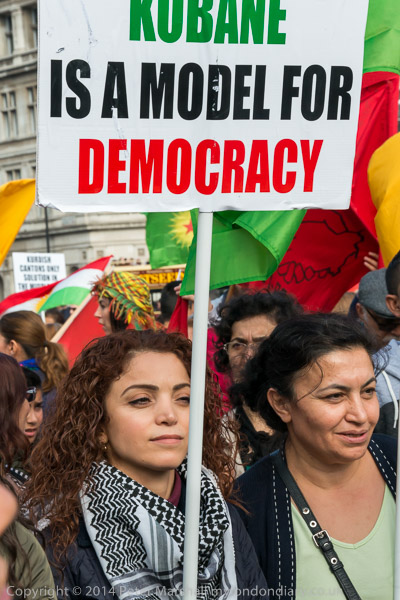
Many speakers criticised Turkey for supporting ISIS and allowing the smuggling of oil and other goods through Turkey which finance ISIS. They also supported the the model constitution adopted in Rojava, the de facto autonomous Kurdish majority region in northern and north-eastern Syria as an important democratic development, for its pluralism, democratic participation and protection of fundamental human rights and liberties.

Global Solidarity With Kobane


Rail Fares, ISIS and Biofuels – 28 Oct 2014

Fair Fares Petition – Westminster. Tue 28 Oct 2014

Eight years later problems with our rail system continue and no significant changes have been made. Rail is a textbook example of something which should be run as in integrated public service and privatisation has been an entirely predictable disaster, at least for taxpayers and particularly those who use the railways.

Campaigners met at the Dept of Transport in Horseferry Rd

It has of course been a bonanza for the companies that have run parts of the service, particularly the three large companies that own and hire out most of the rail carriages, engines and waggons. Three ROSCOs (Rolling stock leasing companies) – Porterbrook, Eversholt and Willow – own together 87% of the rolling stock – and have made huge profits for their shareholders while failing to invest a great deal in new rolling stock. They are almost entirely owned by German, Australian, Canadian and other multinationals, mostly registered in Luxembourg to evade tax.

Stephen Joseph OBE, executive director of the Campaign for Better Transport joins the protest

Probably most people now know that the companies that actually run the trains – Train Operating Companies or TOCs – are largely foreign owned, mostly by the nationalised railways of Germany, France and Holland, with a couple from Italy and one from China (Hong Kong.) We do now have three nationalised TOCs, ScotRail, Northern and Transport for Wales. So basically the railways proved a mechanism for our government to hand over large amount of our taxes to these foreign countries.

They stop to pose in Parliament Square

The Campaign for Better Transport protest on Tuesday 28th October 2014 was more simply about changes in the evening peak time fares introduced by Northern Rail, then I think run by Serco-Abellio, a subsidiary of the Dutch state railway. These changes have particularly hit shift and part-time workers who work irregular hours, resulting in a 167% increase for some. Other TOCs have since made similar changes – with the ‘Off-Peak’ fares no longer available on my line, having been replaced by much more restricted evening fares.

And then hand the petition to Rail Minister Claire Perry MP

Our whole incredibly complex fare system is also down to the fragmented privatisation, and often means people pay far more than necessary. Even the highly trained ticket office staff are often unable to find the cheapest fare, and machines and web services are often misleading.

Rail fares are now often ridiculously high, particularly for those unable to book in advance. It’s often cheaper to fly to America than take a train from one English city to another. Even the Advance fares (Introduced by British Rail before privatisation) limited to a specific train can be pretty huge, often several times the European fares for similar journey lengths. We need lower fares to encourage people to stop using cars and move to public transport.

More at Fair Fares Petition.


Kobane – Unite against Isis Drawing – Trafalgar Square, Tue 28 Oct 2014

Kurds chanted slogans against ISIS and in support of the defenders of Kobane around a giant pavement chalk drawing based on an agonised Statue of Liberty in front of London’s National Gallery in Trafalgar Square.

More pictures at Kobane – Unite against Isis Drawing.


Biofuel picket Green Investment Bank Birthday – King Edward Street, Tue 28 Oct 2014

Protesters from Biofuelwatch and London Biomassive, some dressed as wise owls, picketed the second birthday celebrations of the Green Investment Bank at Bank of America Merrill Lynch against their funding of environmentally disastrous biomass and incineration projects.

The say the large-scale projects the bank funds are worse for the environment and for climate change than burning coal and urged the GIB to finance “low carbon sustainable solutions” instead of these “high-carbon destructive delusions.”

More at Biofuel picket Green Investment Bank Birthday.


Saturday 27th October 2007

One of my busier days in London was Saturday 27th October 2007, when I began with a trip to Hoxton to collect and take home some pictures from a group exhibition, then travelled back into the centre of London for a number of events. The main protest I covered was the annual UFFC march against deaths in custody, but there were also Kurds protesting against Turkish army attacks on them in Northern Iraq, campaigners calling for a Brexit referendum, an anti-abortion rally and peace protesters around Parliament where I also photographed a new statue in Parliament Square. I ended my working day with a Halloween Zombie Crawl.

Here’s what I wrote back in 2007, with minor corrections including normal capitalisation and some changes of tense – and I’ve included some headings and pictures. As usual there are many more pictures if you follow the links to My London Diary.


On saturday, everything was happening. I had to run around to start with to collect my unsold pictures from the City People show at the Juggler in Hoxton. Fortunately I’d sold one of my four pictures, so that made them easier to carry, but it was a rush to be back in the centre of London and I had to more or less miss the demonstrators who wanted a referendum on leaving the European Union.

Protest Against Custody Deaths – Trafalgar Square & Whitehall, Saturday 27 Oct, 2007

Instead I started at Trafalgar Square, where the annual event remembering those who have died in custody was taking place, organised by the UFFC, families and friends of those killed.

It’s an occasion that always shocks me by the sheer number of people who have died in such disgraceful or suspicious circumstances, in police cells, in prisons and elsewhere. It’s an event I sometimes find it hard to photograph, both emotionally and physically – thankfully autofocus works even when your eyes are filling with tears.
more pictures

Kurds Demand – Stop Turkey – Trafalgar Square, London. 27 October 2007

While that demo was getting ready to march, a large crowd of Kurds swarmed into Trafalgar Square and held a short rally, protesting against the Turkish government’s approval of incursions into Northern Iraq to attack the PKK there. Both the Kurds and the Armenians have suffered greatly at the hands of the Turks (who in turn have been rather screwed by the EU over Cyprus.)

It was a typically exuberant performance, and one that I enjoyed photographing, but rather a distraction from the family and friends event.
more pictures

Pro-referendum on Europe Rally – Old Palace Yard, Westminster. 27 October 2007

There seems to be hiatus in the UFFC demonstration, so I caught a bus down Whitehall. Walking along to Old Palace Yard I passed a few of the pro-referendum demonstrators, though some others had stayed to join in the anti-abortion protest.
a couple of pictures

Anti-Abortion (Pro-Life) Rally – Old Palace Yard, Westminster. Saturday 27 October, 2007

This was rather smaller than I’d expected, perhaps around 500 people, although it was the only event that made the BBC news bulletins I heard when I got home later in the day.
more pictures

Lloyd George – Parliament Square, London. Saturday October 27, 2007

I listened a little to the speeches, but then went to Parliament Square to take a look at the new statue of Lloyd George – which failed to impress me. Of course he was long before my time – although I did have a landlady as a student in Manchester who had worked as a secretary for him – but somehow I feel the statue trivialises him, looking rather like an enlarged version of a plastic figure you might find in a box of cornflakes rather than a statue of a Prime Minister.
another picture

Peace Train – Parliament Square, Westminster. Saturday October 27, 2007

The Peace Train is beginning to form a protest in Parliament Square and I go along to talk to them and take a few pictures.


I rejoin the ‘Famiilies and Friends’ march now making a considerable protest opposite Downing Street, where a delegation has permission to deliver a letter to the prime minister’s residence at No 10. It takes a lot of argument before the police let them in despite this.

For some reason the police decide not to allow those with press cards into the street in the normal way. I don’t like going in – the security checks are a nuisance and being restricted to a pen on the other side of the street is normally hopeless, but I think its a matter of principle that access should not be unreasonably prevented – as it was for this event, even if personally I don’t particularly want to take advantage of it.

By the time the deputation emerge, the mood on the street is getting rather angry. One young policeman is getting surrounded and insulted and is trying hard to ignore it. A few minutes later a motor-cyclist foolishly stays in the route of the march, and is soon surrounded by angry people. He has to be rescued by his colleagues.

There are police who are racist, who are thugs, who are bullies. Too many who have got away with murder, often thanks to covering up or a lack of diligence in investigation by their colleagues. If it were not so, there would be no demonstration. But there are also officers who do their best to carry out a difficult and necessary job in a decent, reasonable and even-handed way – even though they may sometimes get disciplined for doing so. Those who bear the brunt of considerable and understandable hate directed against the police at a demo like this are not necessarily the guilty.
more pictures


Crawl of the Dead IV – City and Southwark, London. Saturday October 27, 2007

It’s time for me to leave and make my way to the City of London, where this year the zombies are starting their walk at a pub on Ludgate Hill. I go into the pub and talk to some of them and take photographs, and am gratified to find that quite a few have seen my pictures from around Oxford Street last year.

By the time they emerge from the pub it is getting dark, and my flash by now is refusing to work at all. I have to make do either with available light (and there isn’t a lot) or the pretty useless camera built in flash, but I still manage to get a few decent pictures, even though some are rather noisier than I’d like.

There are quite a few people around as we go over the Millennium bridge, and more in front of Tate Modern, where zombies decide to play dead for a while. Then we visit the famous crack in the turbine hall, coming out towards the Founder’s arms, where I made my goodbyes and turned for home.


More pictures on all these on My London Diary:

against deaths in custody
kurds demand – stop turkey
for a euro-referendum
anti-abortion (pro-life) rally
lloyd george statue
peace train
crawl of the dead iv