Stop The Arms Fair – 2017

The world’s largest arms fair currently takes place in London every two years, at the Excel Centre, a large exhibition centre in Custom House, East Ham in the London Borough of Newham. Organised by Clarion Events, the Defence and Security Equipment International show is “fully endorsed” by the UK Ministry of Defence and the Department for International Trade, but condemned by London’s Mayor Sadiq Khan and most Londoners and opposed by a week of protests organised by Campaign Against Arms Trade (CAAT) and supported by many other groups.

Sadiq Khan has failed to stop the arms fair taking place, lacking the powers to do so despite his repugnance. Amnesty International criticise it for selling weapons of torture and those that have been shown to have been used against civilians, and CAAT point out that it is attended by official military and security delegations from countries which are noted abusers of human rights, including those on the UK’s official list of countries subject to arms embargo.

Of course with the UK the high profits to be made on arms sales often trumps such listings; Action on Armed Violence points out that “five of the UK’s human rights priority countries feature on the DIT’s ‘key markets’ directory for potential arms sales (Bahrain, Bangladesh, Colombia, Egypt and Saudi Arabia)” and that “UK export licences for small arms and ammunition have been approved to 31 destinations on the embargoed and restricted list” betwwen 2015 and 2020.

In September 2017 I photographed protests outside the DSEI arms fair on four days in the week before the fair as well as a related event elsewhere and a wreath-laying ceremony on the opening day. There are fuller accounts on My London Dairy – links at the end of this post.

No Faith in War DSEI Arms Fair protest – ExCeL Centre, London. Tue 5 Sept 2017

The second day of protests against the world’s largest arms fair held in London’s docklands was ‘No Faith In War’, a series of events organised by various faith groups.
Stop The Arms Fair - 2017

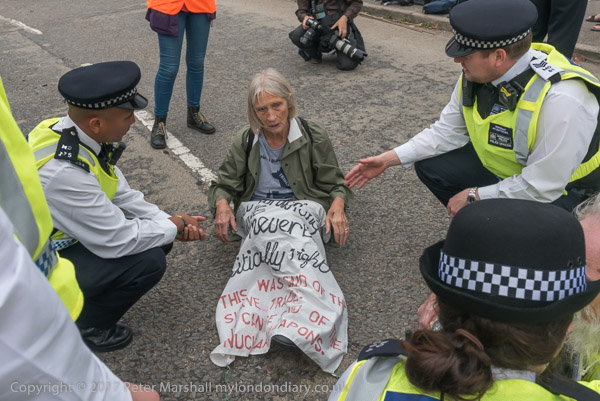
Quakers held a meeting by the side of the approach road to the East Gate of Excel, and some sat on the road to block it. Eventually police lifted this woman carefully and carried herto the side of the road. Some who persisted in blocking the road were arrested and taken to police vans.
Stop The Arms Fair - 2017

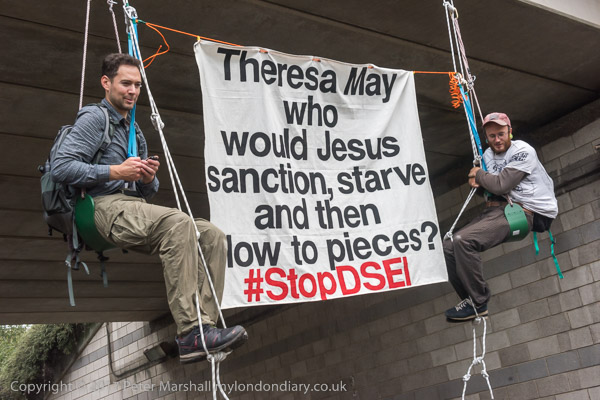
Four people abseiled from a roadway bridge to block the road. It took police a long time to find a safe way to remove them.
Stop The Arms Fair - 2017

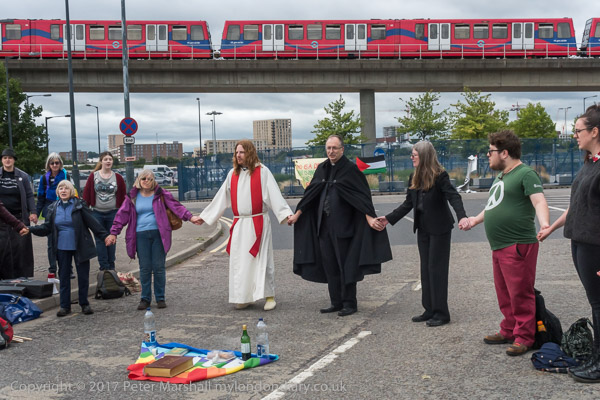
People held a mass on the roadway – police waited until they finished then made them leave.
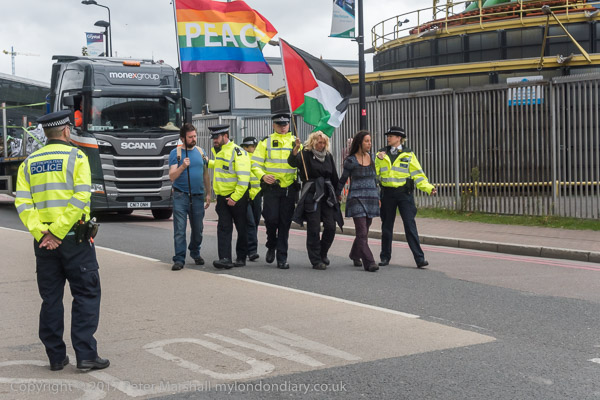
At the west gate people walked very slowly in front of the lorries. Eventually police pushed them off the road. Some were arrested. Others had come to support them and sing hymns and religious songs. There were various other activities at both gates.

Protesters block DSEI arms fair entrances – Wed 6 Sep 2017

Stop the Arms fair protesters carried out a series of lengthy lock-ons on the roads at both East and West gates blocking access to London’s ExCeL centre where preparations are being made for the worlds’s largest arms fair.
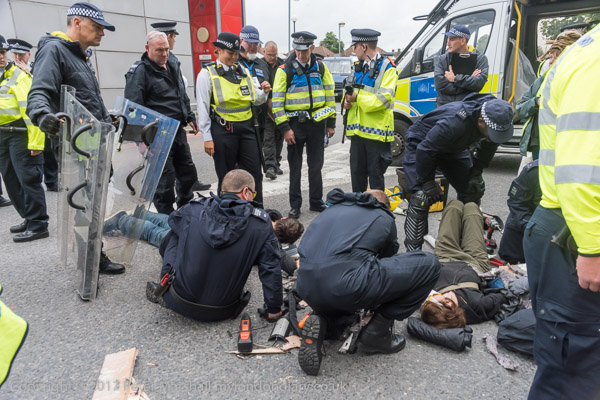
Police teams took quite a long time to carefully separate the people who were locked together to block the roads. There was also some street theatre from various groups. One pair of protesters managed to lock themselves on the roadway inside the centre gates – but police would not let journalists get closer to photograph them.
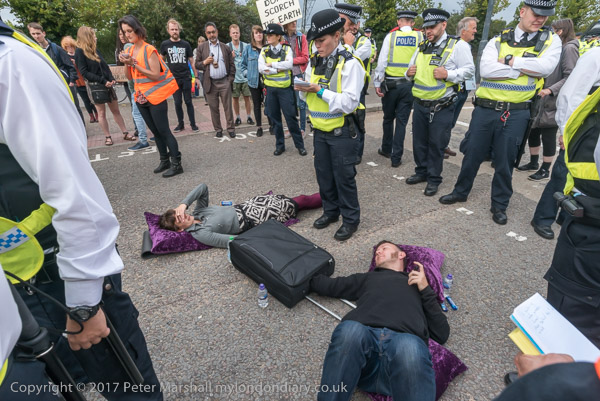
I went back to the East gate to find another pair locked on there. The protesters managed to block both entrances for several hours – and there were quite a few arrests.

Protest picnic & checkpoint at DSEI, London. Thu 7 Sep 2017
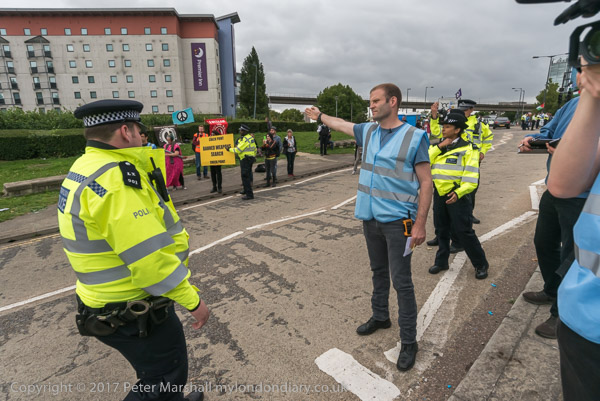
Veterans for Peace came to set up a banned weapons checkpoint. Police waved lorries on past their checkpoint, encouraging one lorry to drive through the protest at a highly dangerous speed, and removed protesters from the road with threats of arrest.
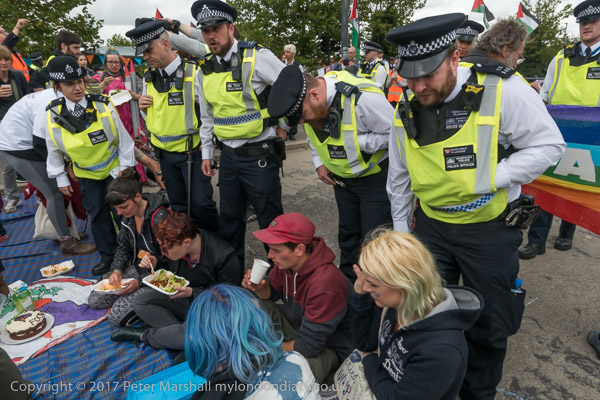
At lunchtime North London Food Not Bombs moved onto the road and blocked it to serve protesters with an excellent road-block picnic. After 15 minutes police moved in to clear the road, threatening the diners with arrest.

DSEI Festival Morning at the East Gate – Sat 9 Sep 2017
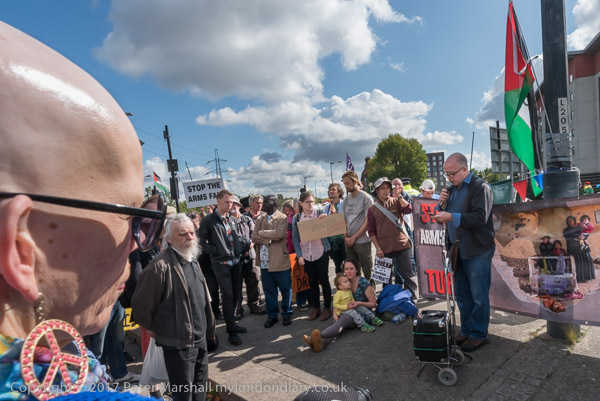
Several hundred people listened to a programme of speakers, workshops, spoken word, choirs and groups and stopped lorries bringing arms by walking in front of them until pushed aside by police.

Festival of Resistance – DSEI West Gate – Sat 9 Sep 2017

Things were a little livlier at the West gate, where cyclists in a ‘Critical Mass’ were arriving and Charlie X, a Chaplin clone who protests in mime had just been freed from the lorry he had locked on to but had been arrested and was being led away by a dozen police. They also arrested one of the cyclists for having a bike lock around his neck. He had it to lock the wheels to his bike if he had to leave it anywhere. If carrying a lock or chain for your bike was an offence, every cyclist in London would face arrest.

DSEI East Gate blocked – Sat 9 Sep 2017
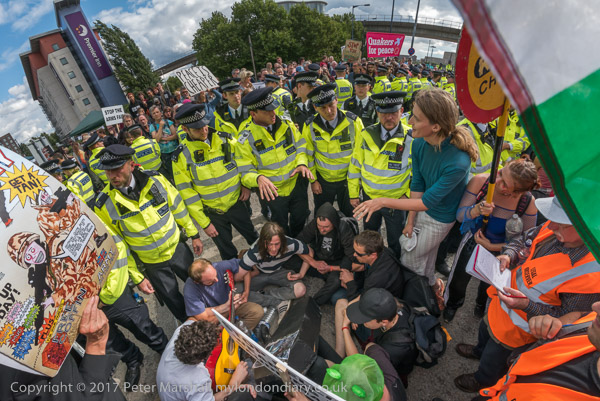
I took the DLR back to the East gate, arriving to find the road blocked by a lock-on, with two people joined through a pipe which the police were struggling to remove. Finally they did and arrested to two involved. People were blocking the road and holding a religious service, but police forced them off the road – with at least one more arrest of a woman who refused to move.
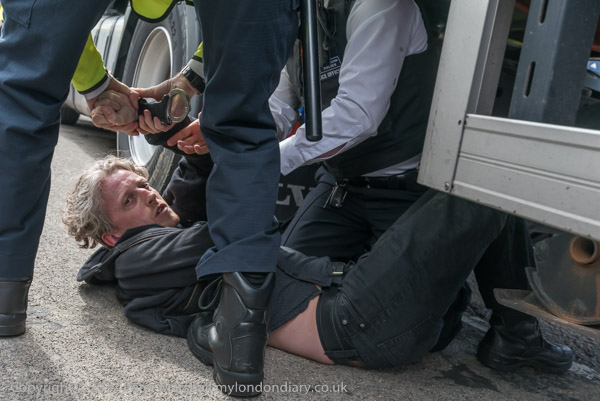
While the police were removing the two locked on, a man had locked himself to the lorry – and he too was removed and arrested. Other people came onto the road to block lorries and there were poetry and musical performances. Then a group of seven people joined arms in a circle on the road and refused to move. They were still there when I had to leave, stopping off briefly at the DLR entrance to the Excel Centre to photograph a musical protest there.

#Arming The World -Woolwich Arsenal, London. Tue 12 Sep 2017
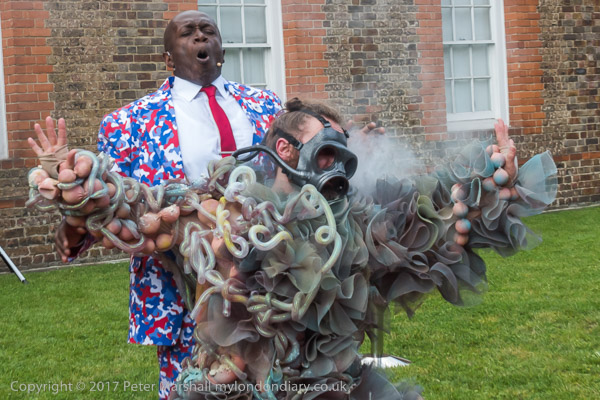
Ice & Fire theatre and Teatro Vivo with designer Takis, gave their first performance of #Arming The World, a satircial weapons catwalk show spreading information about Defence and Security Equipment International (DSEI) at Woolwich Arsenal with actors dressed as arms dealers, a Paveway IV Missile, a Eurofighter Typhoon and CS Gas.

Wreath for victims of the arms trade – Royal Victoria Dock, Tue 12 Sep 2017
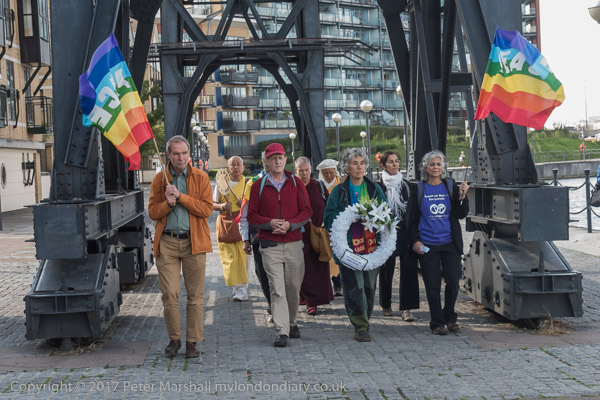
East London Against Arms Fairs (ELAAF) held a procession carrying a white wreath with the message ‘Remember Victims of the Arms Trade’ around the Royal Victoria Dock on the day the DSEI Arms Fair opened, launching the wreath onto the water opposite the ExCeL centre.


More on all these events on My London Diary:
Wreath for victims of the arms trade
#Arming The World
DSEI East Gate blocked
Festival of Resistance – DSEI West Gate
DSEI Festival Morning at the East Gate
Protest picnic & checkpoint at DSEI
Protesters block DSEI arms fair entrances
No Faith in War DSEI Arms Fair protest
No More Benefit Deaths – 2016

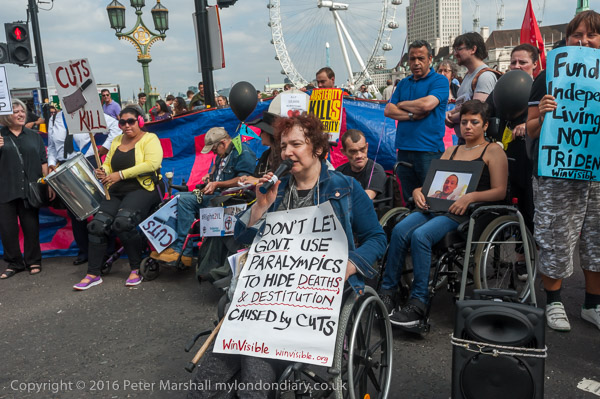
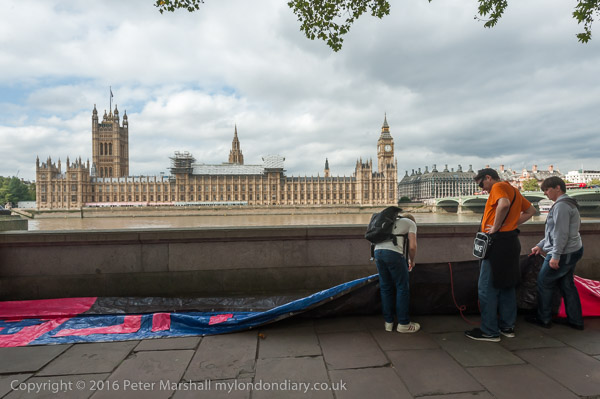
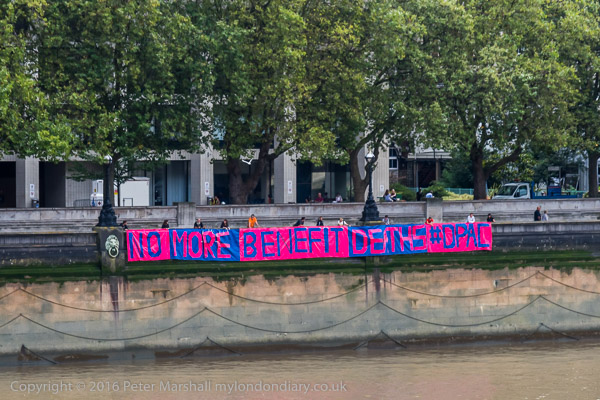
No More Benefit Deaths – 2016 The action on Wednesday 7th September 2016 began with a huge banner being displayed over the river wall on the Albert Embankment so it could be seen clearly be any MPs and others on the river terrace outside the houses of Parliament with the message ‘NO MORE BENEFIT DEATHS #DPAC’

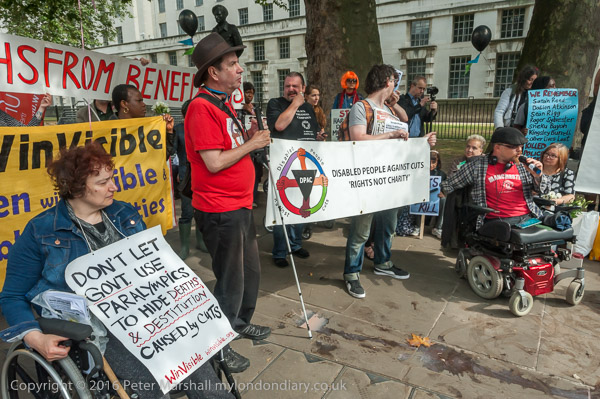
The date was the opening day for the Paralympics in Rio, and protesters held a rally outside Downing Street to call on Theresa May to pay attention to human rights and to make public the findings of the UN investigation into the UK for violations of Deaf and Disabled people’s rights, to scrap the Work Capability Assessment and commit to preventing future benefit-related deaths.

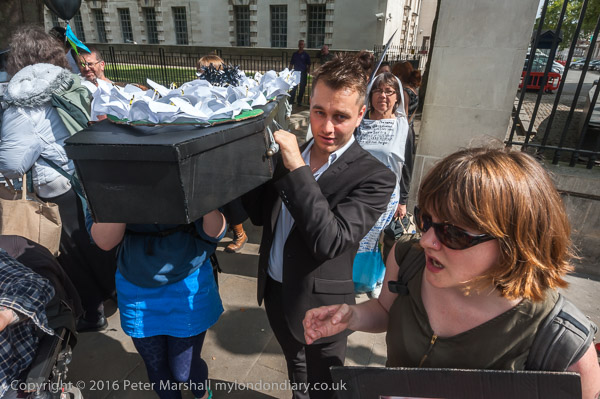
From Downing Street they marched behind a coffin towards Parliament Square.

But on reaching Bridge Street they surprised police by turning on to Westminster Bridge

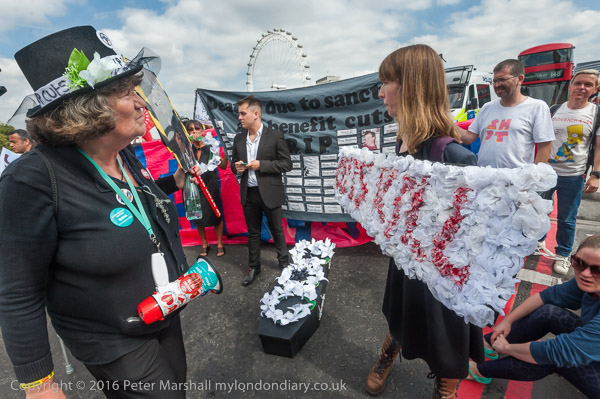
where they blocked the road on both carriageways with banners, a floral sign and the coffin.

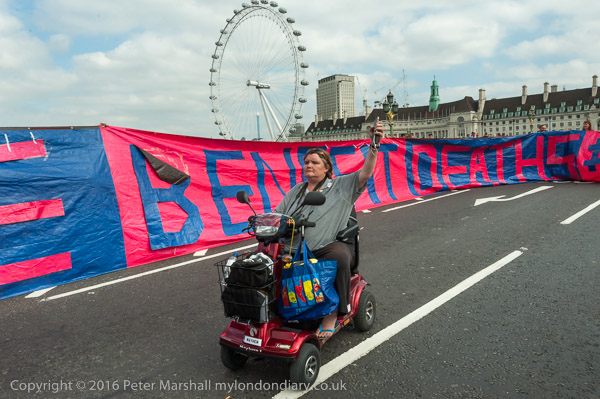
The giant banner that had previously been displayed on the embankment was now stretched across the road.

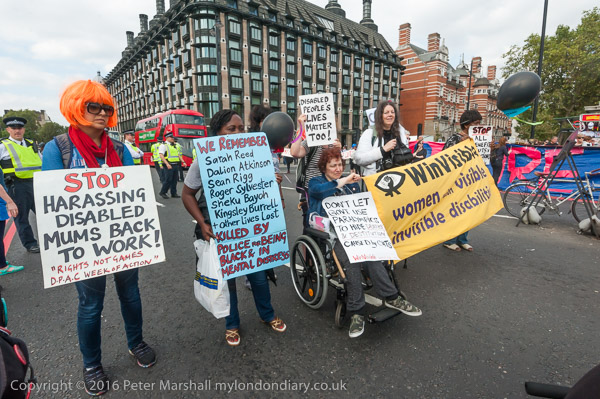
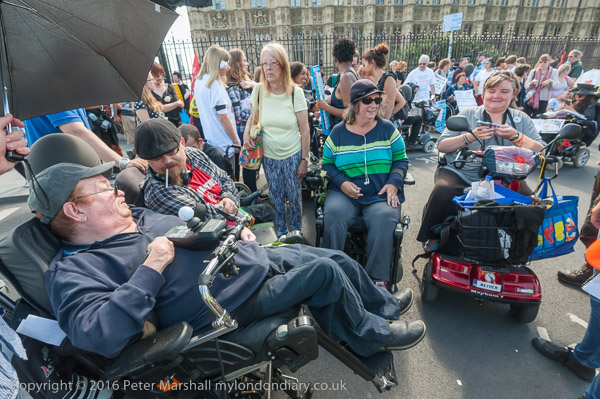
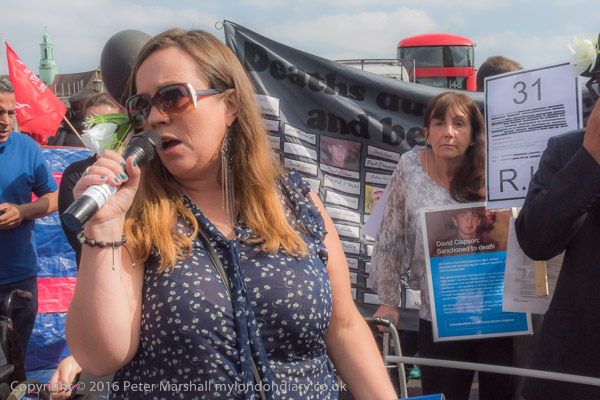
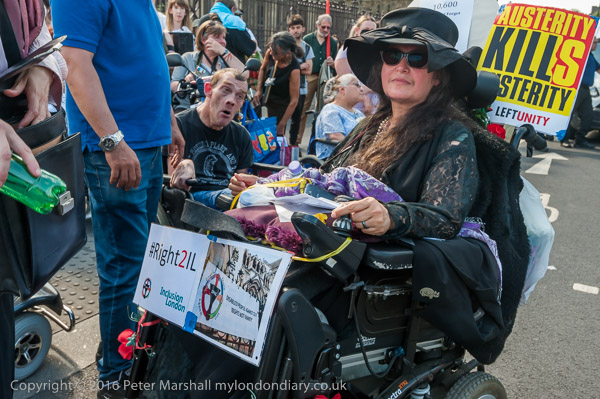
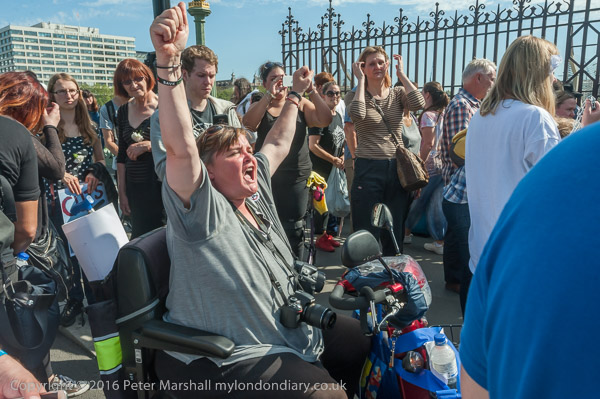
Protesters sat in wheelchairs or stood holding posters and banners and there were some speeches about why the protest was taking place.
Police at first asked them politely to leave, then began to threaten protesters and journalists covering the event with arrest if they remained on the highway.

Most of those in wheelchairs refused to move. One carer who was looking after a disabled person was arrested and taken to a police van.

I think those arrested were later released without charge – arrest was being used in an abuse of process to harass protesters

Many of DPAC’s disabled protesters refused to move and a few remained blocking the roadway almost two hours after the protest began.
Eventually Paula Peters decided that the protest had gone on for long enough and triumphantly called a halt to the protest.
DPAC block bridge over benefit deaths
‘No More Benefit Deaths’ rally
Giant Banner ‘No More Benefit Deaths


People’s March For The NHS And More – 2014

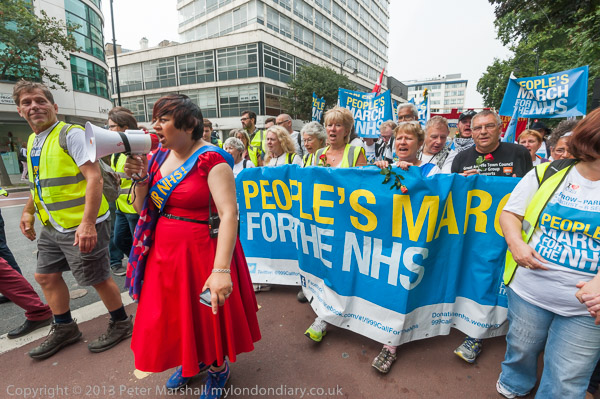
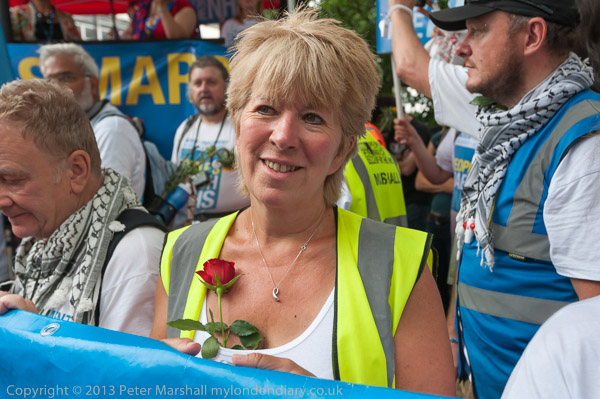
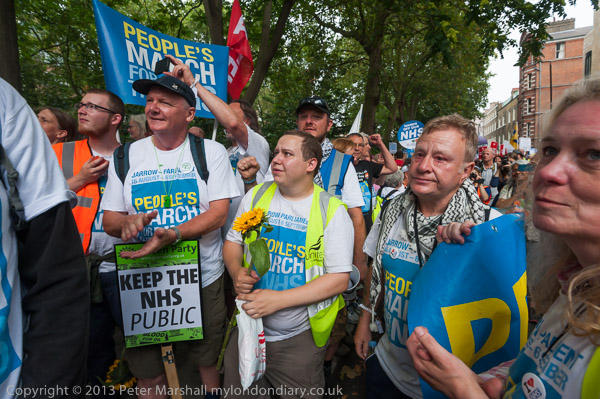
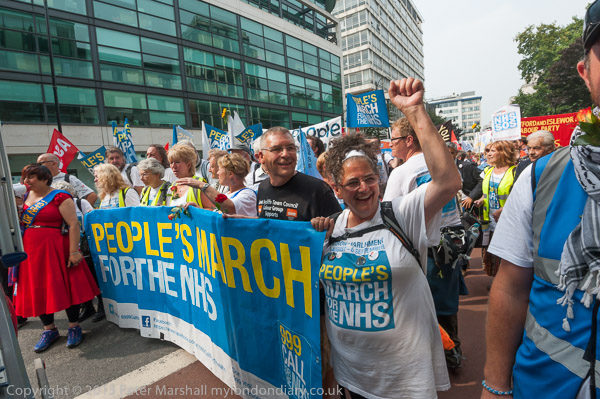
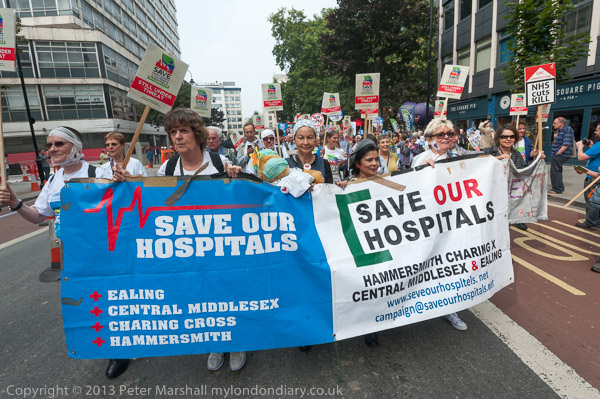
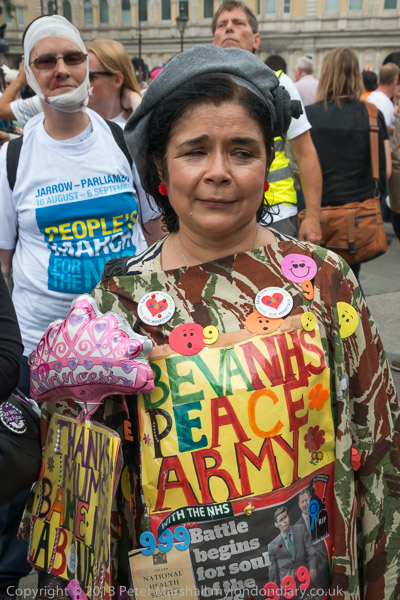
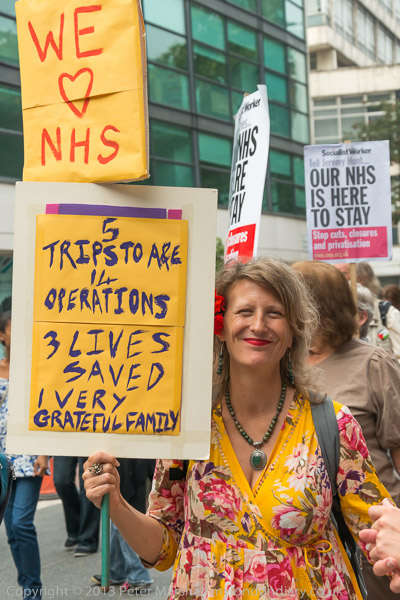
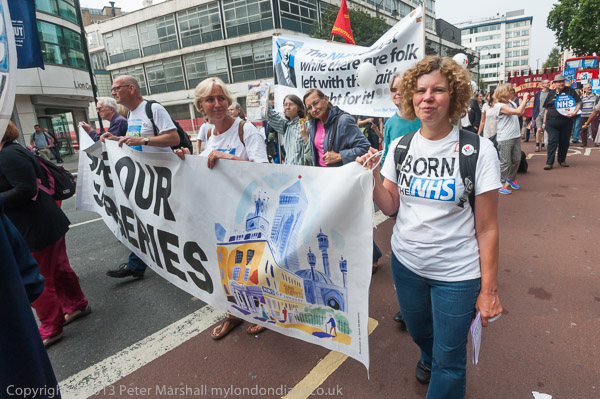
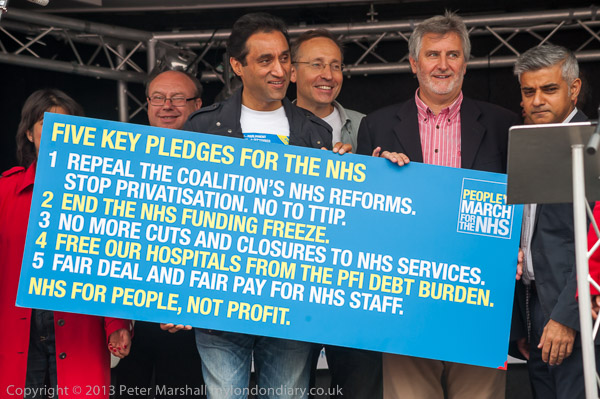
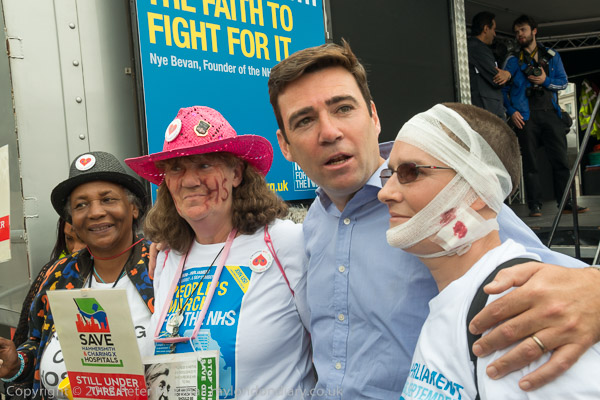
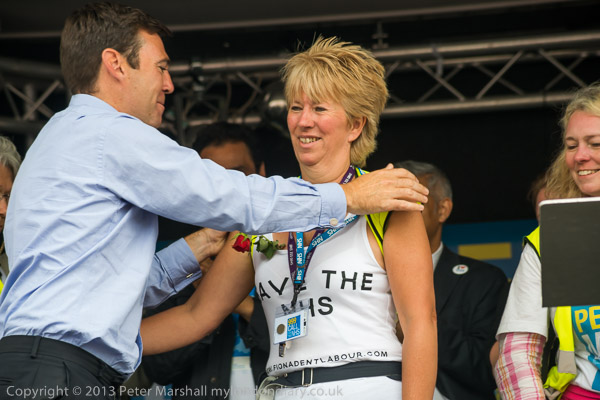
On Saturday 6th September I was in London mainly to cover the final stage of the People’s March for the NHS which had begun in mid August in Jarrow, but also photographed Mourning Mothers of Iran, people on a Rolling Picket against Israeli violence and a protest against children being taken for families by social workers and family courts.
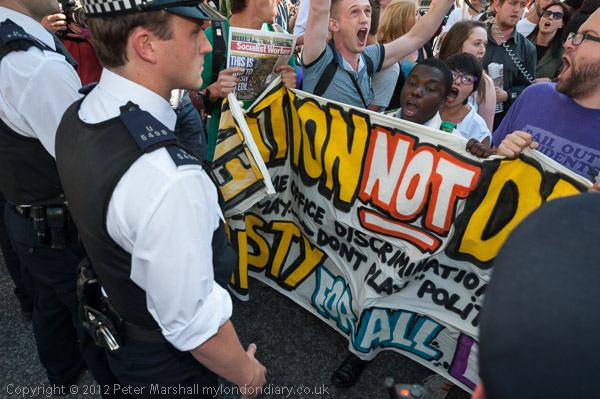

People’s March from Jarrow for NHS

When the NHS was founded back in 1948 it was an integral part of the welfare state, a social welfare policy to provide free and universal benefits. It was opposed at its start by the Conservative Party, and met with opposition from some doctors and other medical professionals worried that it would cut their earnings from private practice.

Particularly because of the opposition from doctors, the initial scheme had to be fairly drastically changed, with compromises being made by Minister for Health Aneurin Bevan. And dentistry was never really properly and fully brought withing the system.

Since 1948 much has changed. We’ve seen a huge growth in private hospitals, partly driven by many employers providing private healthcare schemes as a perk for their better paid employees, but also by public funding being used to pay for NHS services provided by the private sector.

We’ve also seen the introduction of charges for NHS prescriptions and more recently the NHS has decided on a fairly wide range of common conditions for which it will no longer provide treatment or prescriptions, sending people to the chemist for both advice and over the counter medicines.

There have been huge advances in medical science too, and more of us are living to a greater age than ever before, making more demands on the NHS. Our NHS is costing more, though still the total spending on health in the UK is significantly less than in many other countries as an OECD chart on Wikipedia shows – less than Japan, Ireland, Australia, France, Canada, Belgium, Luxembourg, Denmark, Sweden, Austria, Netherlands, Germany, Norway and Switzerland – and well under half of that in the USA.

Yet for some years many leading Conservatives have advocated the UK moving to a system based on the US model. It would not make our health any better, but would make it much more expensive. And lead to huge profits for healthcare companies – many of them US-based – which are already beginning to take large bites of our own NHS spending. Involving private companies in providing NHS services has not generally led to better services – and in some cases has certainly made them worse, unsurprisingly as it diverts money to shareholders rather than using it for patients. Some services have become more difficult to access.

GP surgeries have always been private businesses, but when these were run by the doctors they provided more personal services than those run by some private companies where patients are unlikely to see a ‘family doctor’ and far more likely to see a locum – if they can still get an appointment. The NHS also spends over £6bn a year on agency and bank staff which would be unnecessary if we were training enough staff.

The need to put services out to tender is time-consuming and wastes NHS resources, one of several things which has produced a top-heavy management. And accepting low tenders often leads to poorly performing services such as cleaning, as I found when I was in my local hospital and found staff simply were not allowed time to do the job properly.

The Health and Social Care Act 2012 was the most extensive reorganisation of the NHS to that date and Lansley has been widely seen as getting things wrong, and it replaced the duty on the NHS to provide services with one to promote them, with delivery possibly by others, opening up the entire health service to privatisation.

I walked with the marchers from a rally in Red Lion Square to Trafalgar Square where there was a final rally with speakers including Shadow Secretary of State for Health Andy Burnham and London Mayor Sadiq Kahn. In 1936 the Jarrow Crusade marchers in 1936 – who were shunned by the Labour Party but captured the hears of the British population – had been given a pound, along with a train ticket back to Jarrow, but failed to get any significant action from the government and Jarrow was left without jobs. Those marchers who had walked the whole 300 miles from Jarrow were presented with medals incorporating a pound coin.

People’s March from Jarrow for NHS


Mourning Mothers of Iran – Trafalgar Square

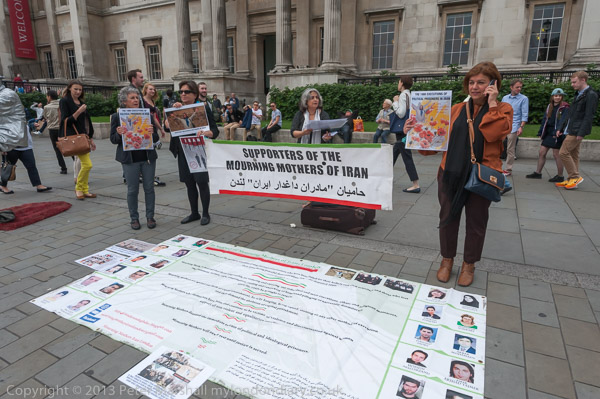
On the North Terrace of Trafalgar Square I found a group of mainly Iranian women standing in a silent vigil to support the Mourning Mothers of Iran.

Now renamed The Mothers of Laleh Park, these are women who hold vigils in the park in the centre of Tehran after their children were killed or imprisoned following a crackdown on members of the opposition after the 2009 Iranian election, and call for the release of political prisoners. Many of the women in Iran have been arrested for protesting and for talking to foreign journalists.

Mourning Mothers of Iran


Rolling Picket against Israeli violence – Downing St

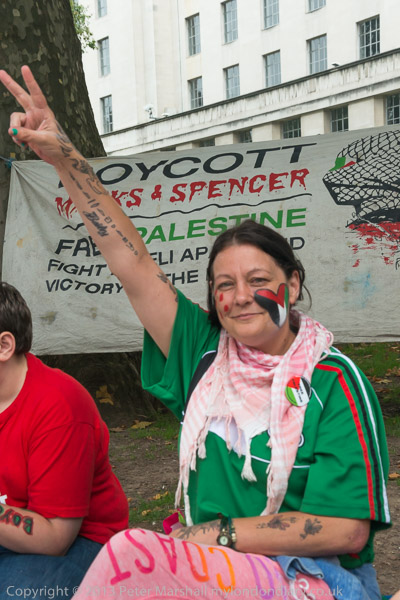
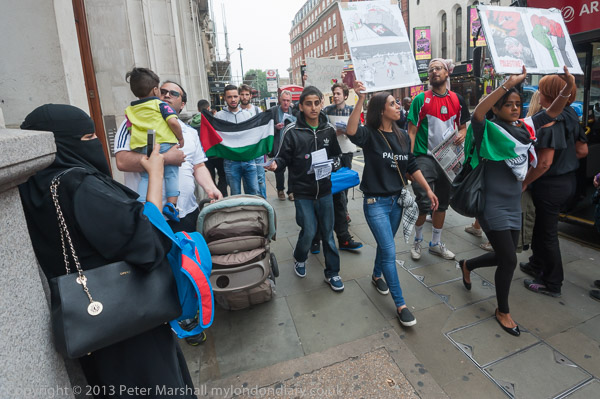
At Downing Street I photographed a group protesting against Israeli violence towards Palestinians and clalling for a boycott of Israeli good.

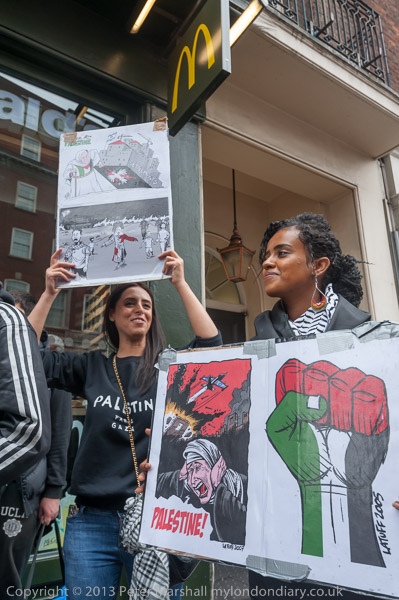
After a brief protest at Downing St they marched up Whitehall and protested outside McDonalds before going for another short protest outside the Tesco facing Trafalgar Square. Police intervened to move them away when they tried to block the doorway there. I left them on their way to make further protests outside shops supporting Israel on their way to Tony Blair’s house off the Edgware Rd.
Rolling Picket against Israeli violence


Stolen Children of the UK – Parliament Square

This group say that many children in the UK are removed from families by social workers and family courts for no good reason. They allege that there is systematic, systemic institutional abuse of around a thousand children a month being removed in this way and then abused by paedophile rings. Although there may be children wrongly taken from families there appears to be no firm evidence for such abuse.

These conspiracy theories are a world-wide phenomenon and in 2017 became the core belief of QAnon, the US extreme right wing conspiracy theory political movement.

Stolen Children of the UK


Don’t Deport London Met Students – 2012

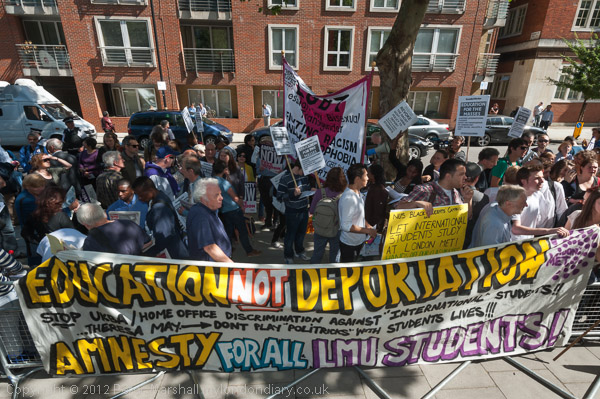
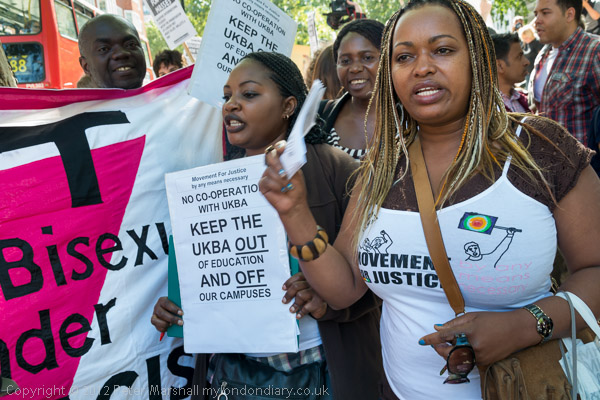
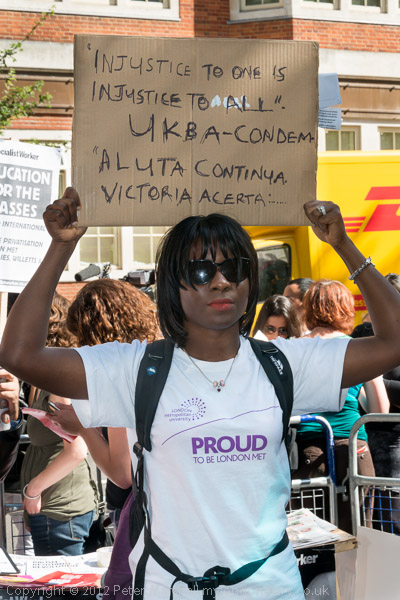
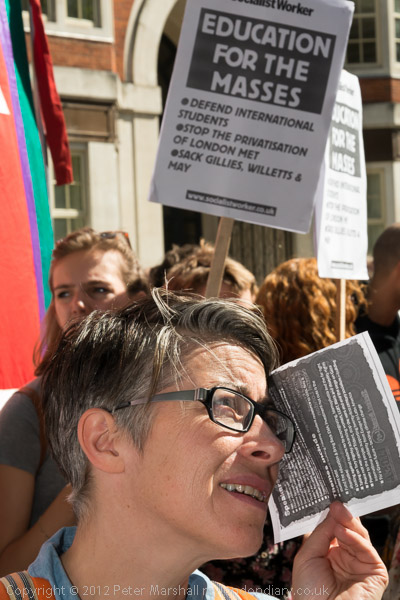
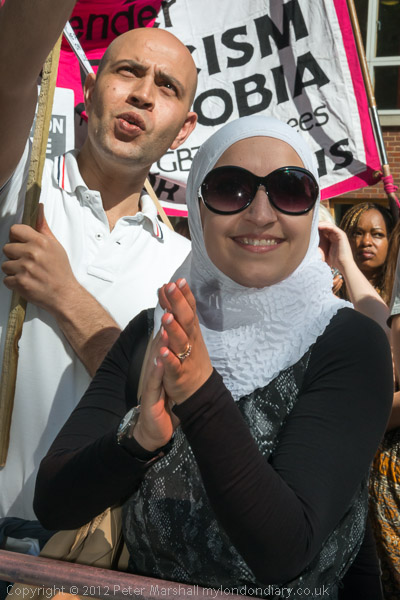
A protest at the Home Office on Wednesday 5th September 2012 called for international students at London Met University to be allowed to complete their studies and not face deportation after having invested heavily in getting a degree in the UK. Some then marched to Downing St.
The decision to revoke London Met University’s licence to sponsor non-EU students taken on 29 August 2012 taken by the UK Border Agency was an example of petty-minded racism by the Home Office at its worst. It was made after a limited investigation had found that some students studying there had no leave to remain in the UK.

It was a totally disproportionate reaction to the findings, which should have been dealt with on an individual basis and with discussions over the procedures in place at the university tightening them where necessary. But Home Secretary Theresa May had declared a ‘hostile environment’ three months earlier and this was something to show the public that she meant business.

It was a decision which caused unnecessary disruption and costs to the majority of international students who were legitimately pursuing their studies at the university and which seriously damaged the UK’s reputation as a country for students to come from abroad to study.

The licence was reinstated the following April, following further discussions and inspections at London Met, though they were only allowed to admit new students from abroad on a limited scale for the next 12 months. The actions taken by the Home Office could clearly have been taken without penalising students who were studying on courses at the university, and served to emphasise the callous disregard of the revocation.

Universities Minister David Willis had clearly also been embarrassed by the Home Office decision, setting up a task force to provide a clearing house for the displaced London Met students, and two weeks after the revocation the government launched a £2 million fund to “help legitimate students to meet additional costs they may incur by moving to another institution to finish their studies. These include: covering the cost of any fee for a repeat visa application and discretionary payments to cover, for example, lost deposits on accommodation due to having to move somewhere else to study.”

I’m not sure how adequately this fund recompensed students for their extra costs, but clearly they were subjected to considerable disruption in their studies and also in their personal lives, breaking the many relationships they will have had with fellow students and tutors, and being transferred onto courses with different approaches and areas of study. Even courses with the same titles will have significant differences and students may well find they were repeating some studies already made while missing out on others.

Students march to Downing St

The UK Border Agency had long been criticised for its actions and poor service, with an increasing number of complaints to the Parliamentary Ombudsman over asylum, residence status and immigration issue – and in 2009-10 all but 3% were decided in favour of the complainants. In 2013 a report by the Home Affairs Select Committee was so damning about its incompetence that Home Secretary Theresa May was forced to abolish it, replacing the agency by three new organisations, UK Visas and Immigration, Immigration Enforcement and Border Force.

You can read more about the protest and see more pictures on My London Diary:
Don’t Deport London Met Students


Pepys Road and Nunhead Cemetery

The previous post on this walk I made on 18th December 1988 was New Cross – Shops, Closed Pubs & Baths.

Pepys rd, New Cross, Lewisham, 1988 88-12d-64_2400
Pepys Rd, New Cross, Lewisham, 1988 88-12d-64_2400

Pepys Road and Nunhead Cemetery

Pepys Road is a part of the large Telegraph Hill conservation area designated a couple of years after I made this picture. It is a late Victorian planned residential estate in what was then known as Hatcham and mostly consists of rather similar houses built by two local builders on a fairly steep hillside owned by the Haberdashers’ Company between 1870 and 1899. I don’t think there is any particular connection between Samuel Pepys and Pepys Road, but certainly he was frequently in the area both for his work as Secretary to the Admiralty very much involved in Deptford’s Royal Dockyard and visiting John Evelyn at Sayes Court. The semaphore telegraph at the top of the hill which gives the area its name arrived later in 1795.

These two houses, Silverdale and Thornhill are on the west side of the street at 62 and 64, and are part of a long succession of more or less identical properties on both sides of the street. But these were the only pair with an ice-cream van outside when I made this picture.

Probably because of its uniformity I took few pictures on my long walk up the hill on Pepys Rd, just a couple of pictures at the top of the hill of Hatcham College, one of which (not digitised) includes the statue of Robert Aske, one of only five listed buildings in the conservation area, the others all being telephone kiosks!

Nunhead Cemetery, Nunhead, Southwark, 1988 88-12d-36-Edit_2400
Stearns Mausoleum, Nunhead Cemetery, Nunhead, Southwark, 1988 88-12d-36

I was on my way to Nunhead Cemetery, one of the ‘Magnificent Seven’ great cemeteries set up around the then outskirts of London as its population was growing rapidly and the small parish cemeteries in the city were becoming dangerously overcrowded.

Nunhead Cemetery, Nunhead, Southwark, 1988 88-12d-16-Edit_2400
Anglican Chapel and monuments, Nunhead Cemetery, Nunhead, Southwark, 1988 88-12d-16

Parliament passed an act promoting the establishment of private cemeteries outside central London in 1832 and in the following decade seven were established – in date order Kensal Green, West Norwood, Highgate (West), Abney Park, Brompton, Nunhead and Tower Hamlets.

Nunhead Cemetery, Nunhead, Southwark, 1988 88-12d-22-Edit_2400
Allen tomb, Nunhead Cemetery, Nunhead, Southwark, 1988 88-12d-22

Nunhead, originally known as All Saints’ Cemetery, was established by the London Cemetery Company in 1840 and is one of the least well known of the seven though it is the second largest at 52 acres.

Nunhead Cemetery, Nunhead, Southwark, 1988 88-12d-24-Edit_2400
Figgins tomb, Nunhead Cemetery, Nunhead, Southwark, 1988 88-12d-24

Financial difficulties caused its closure in 1969 and it was bought for £1 by Southwark Borough in 1975. In 1981 the Friends of Nunhead Cemetery was formed and together with the council began the restoration of the cemetery which was reopened to the public in 2001.

Nunhead Cemetery, Nunhead, Southwark, 198888-12d-26-Edit_2400

I think my pictures were taken on a Sunday afternoon tour led by the Friends. The include some of the more notable monuments in the cemetery which you can find out much more about on the Friends web site and they offer regular guided tours, but you can wander freely on your own as the cemetery is open to the public daily and you can find a useful map on the web.

Nunhead Cemetery, Nunhead, Southwark, 1988 88-12e-64-Edit_2400
Nunhead Cemetery, Nunhead, Southwark, 1988 88-12e-64

The Wikipedia entry on Nunhead Cemetery lists a number of notable people whose graves are in the cemetery, but few were familiar names to me. One who very much made an impact on London was Sir George Thomas Livesey (1834 – 1908), engineer, industrialist and philanthropist and chairman of the South Metropolitan Gas Company. Another was Thomas Tilling, who gave London its first double-decker buses and was for many years England’s major bus operator. Allegedly ‘Tom Tilling’ became Cockney rhyming slang for a shilling coin, though I never heard it used.

Brockley Footpath, Nunhead, Southwark, 1988 88-12e-51-Edit_2400
Brockley Footpath, Nunhead, Southwark, 1988 88-12e-51

The Brockley footpath runs along the southwest edge of Nunhead Cemetery and I was able to leave the cemetery and walk down it back towards Nunhead. You can exit the cemetery on Limesford Road and walk along this to the path.

My walk will continue in another post shortly.


Isle of Dogs and Class War

Isle of Dogs and Class War: The weather was fine on Wednesday September 3rd 2014, with some nice clouds which made it a good day for some more panoramic photographs, and I went up earlier in the day to continue my pictures around the Isle of Dogs before covering an evening protest by Class War in Aldgate.
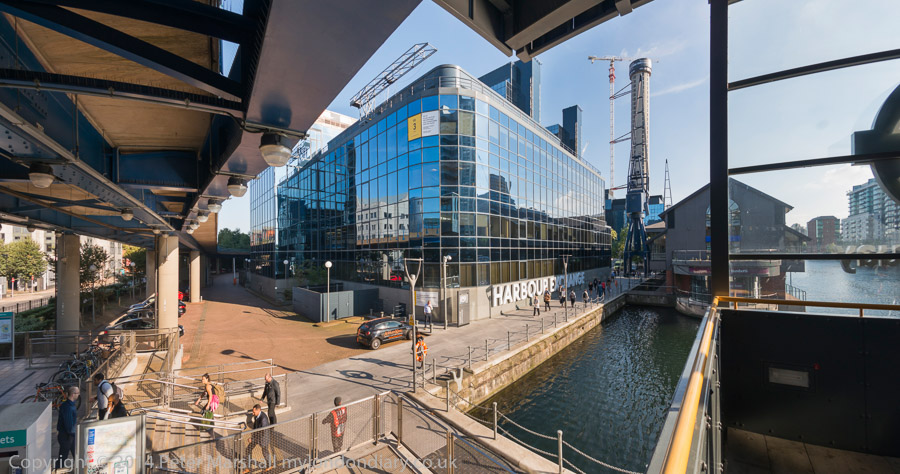
Isle of Dogs – Island Gardens to South Quay

Back in the 1980s I set out to photographed extensively in London’s docklands, part of a wider project on the de-industrialisation of the city, partly a response to changes in technology and globalisation, but greatly accelerated by the Thatcher government which saw great opportunities for their supporters profiting by a switch from manufacturing to service industries.

The government policies perhaps made some sense at the time – and certainly made some large profits for the friends and supporters of the Tories, but in many ways we are paying for them now, particularly for their ‘selling off the family silver’ by privatising utilities and other publicly owned activities.

In the docks the main changes were due to containerisation and other efficient ways of handling cargo. Much larger vessels came into service and the long journey up the River Thames to London’s Docks was difficult or impossible, as well as adding significantly to turn-around times. Only Tilbury, miles closer to the sea remained viable.

The changes to Docklands could have been managed for the benefit of the existing populations to the area, with development being carefully planned and managed locally. Instead we got the London Docklands Development Corporation which overrode local interests to benefit those of corporations but did produced a more rapid development than would otherwise have taken place. But it was a huge give-away to private developers, resulting in dramatic changes, and one that the area will continue to suffer from for generations.

Many of my pictures from the 1980s in colour as well as black and white are now available on Flickr in a https://www.flickr.com/photos/petermarshall/albums number of albums and there are also a number of books available on Blurb (in print and as PDF) with the Isle of Dogs being included in City to Blackwall ISBN: 978-1-909363-09-0 which has a working preview.

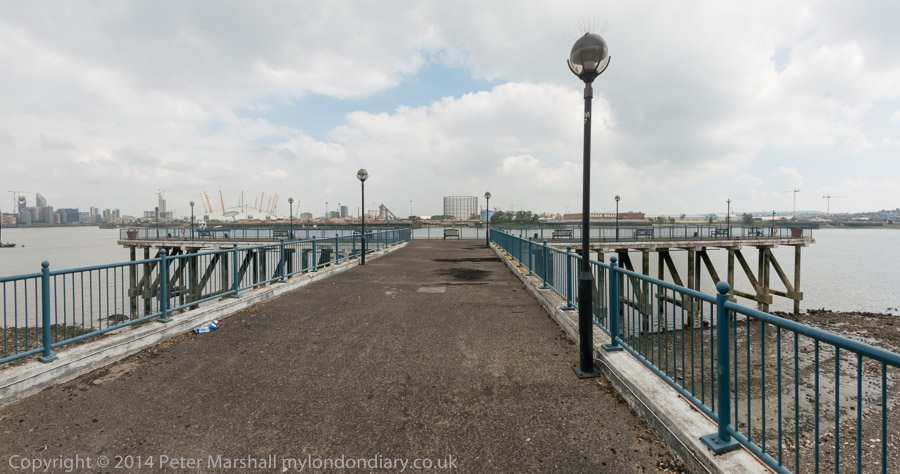
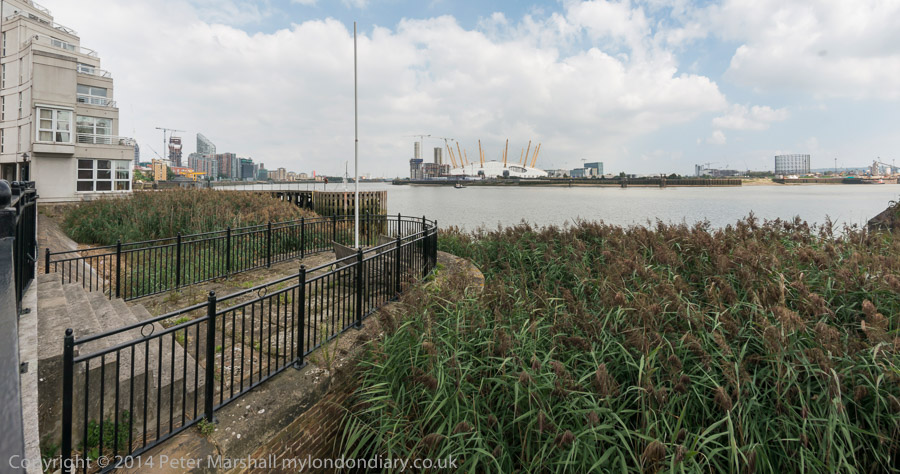
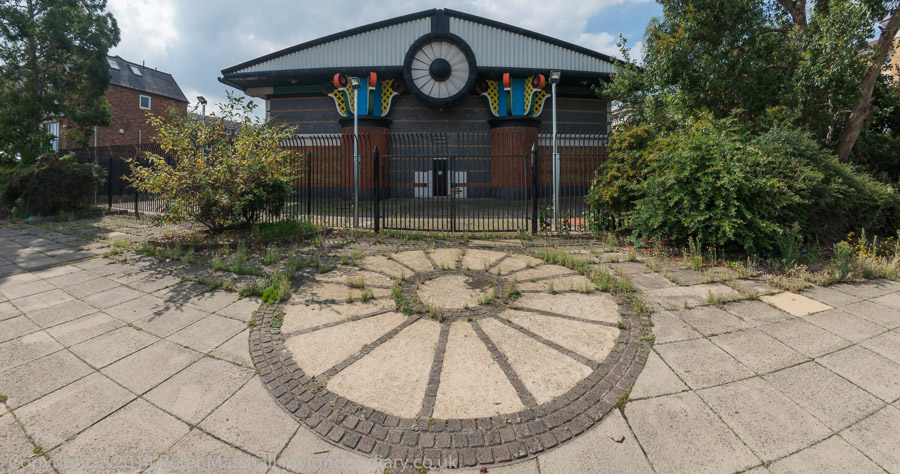
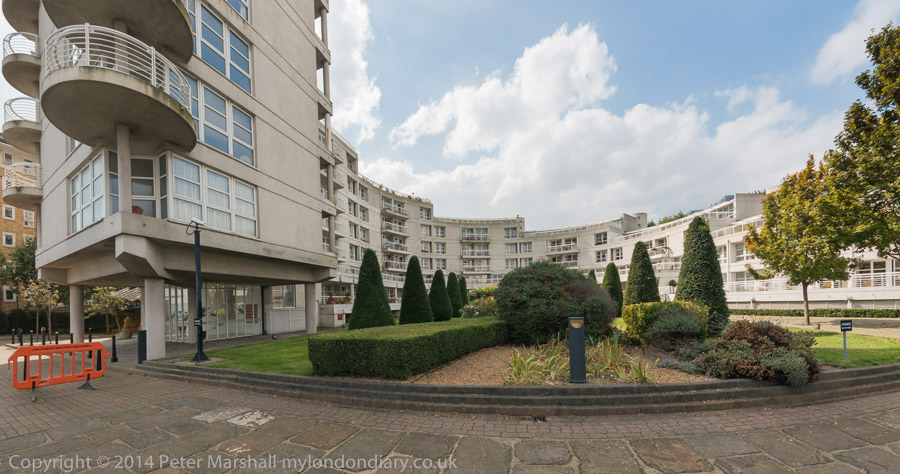
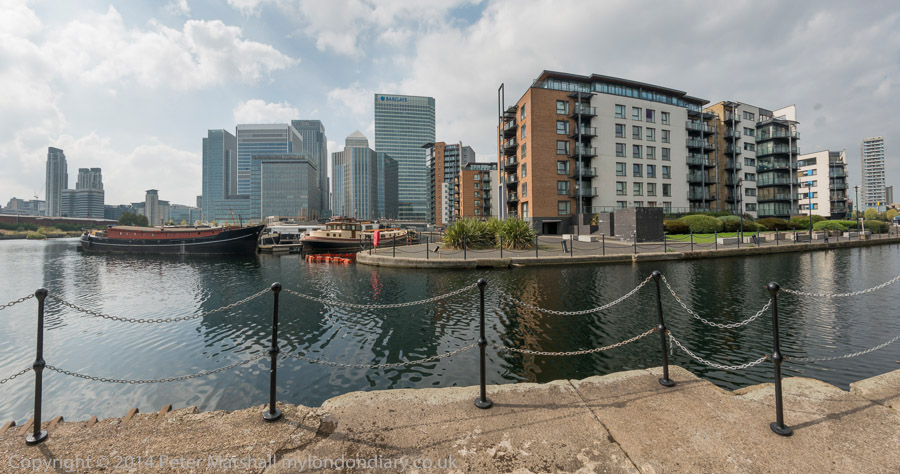
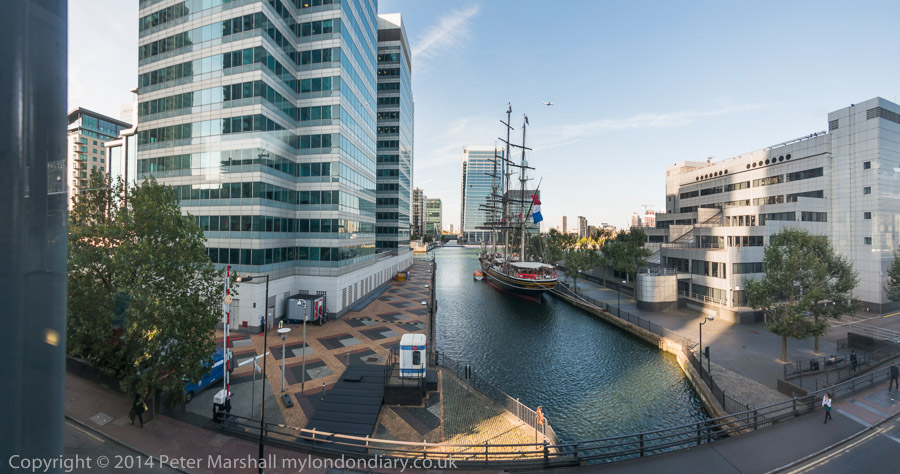
My walk in 2014 began at Island Gardens DLR station, where I had finished a previous walk, and I continued along the riverside path to the Blackwall Entrance, across to Poplar Dock and Blackwall Basin, down Prestons Rd and Manchester Road to East Ferry Road, and then up and around a little on my way to South Quay Station.

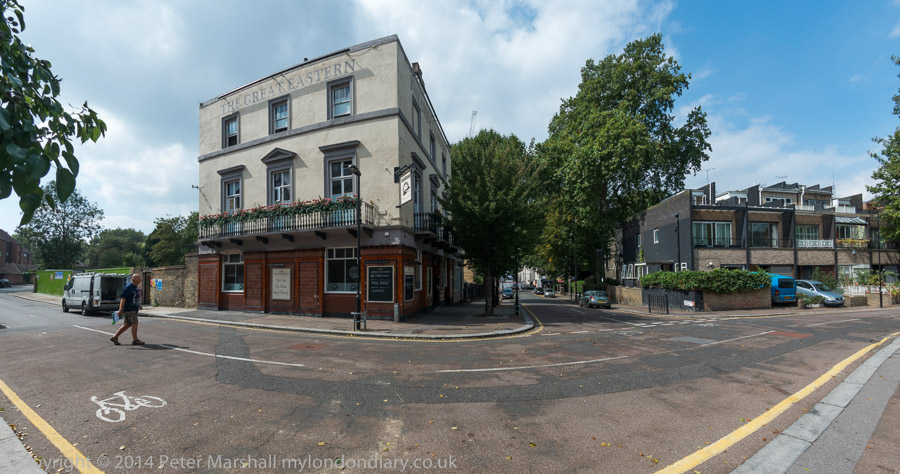
In 2014 I was mainly making digital panoramic photographs, with a horizontal angle of view of around 145 degrees – much greater than can be achieved with a normal rectilinear perspective. These pictures use a projection which keeps vertical edges straight and also gives a straight horizon line (so long as the camera is kept level) but other lines and objects away from the centre of the image curve. Similar projections were used by artists such as Canaletto. These images here have a aspect ratio of 1.9 to 1.

There are two posts on My London Diary with many more panoramas and a few ‘normal’ views from this walk:
Isle of Dogs
Isle of Dogs Panoramas


Class War ‘Poor Doors’ picket Week 6 – Aldgate

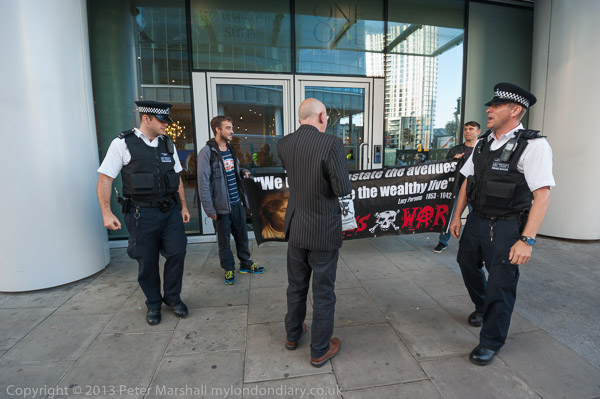
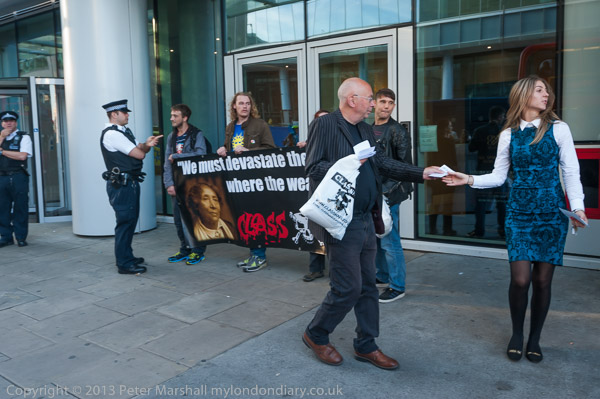
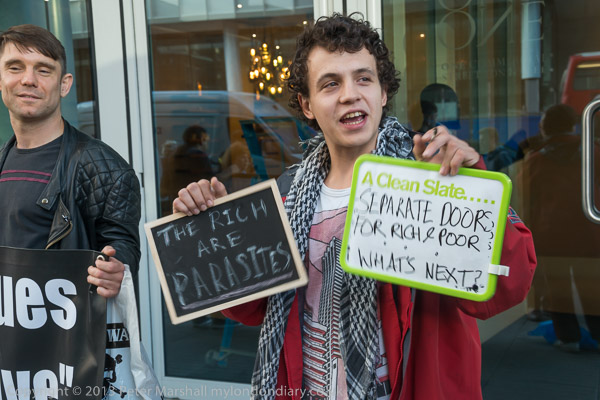
I got back a few minutes early to where Class War were to stage their sixth weekly protest against the separate doors for the wealthy residents and social housing tenants in the block ‘One Commerical St’. The entrance for the rich is on Whitechapel High St next to Aldgate East station while the poor door is down an alley on the west side of the building.
Unlike in previous weeks there were police already there and waiting for the protesters, a sign that the police were taking a firmer stance against the protests here. Almost certainly they were responding to pressure from the owners of the building, and their activities against the protesters were to heighten further in later weeks.

When the protesters arrived, officers immediately came and talked to them, making it clear that they were not to block the doorway for people entering or leaving the building.

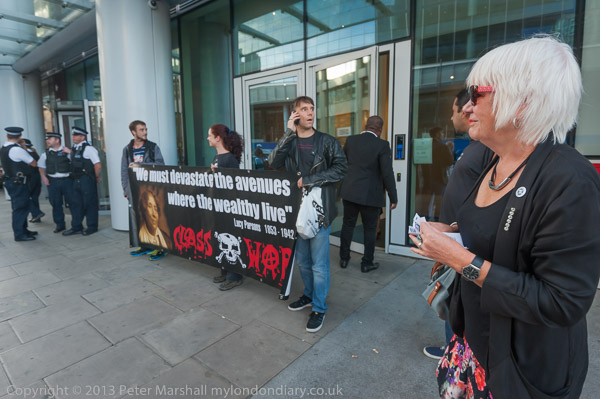
More police arrived, outnumbering the small group of little more than a dozen protesters who had come to hand out leaflets to people on the street outside. Many passing expressed surprise that this kind of segregation of rich and poor was allowed to happen in London and showed support for the protest.

It was perhaps the smallest of the series of thirty or so ‘Poor Doors’ protests outside this building. There were quite a few arguments with police officers but no arrests on this occasion.

More pictures at Class War ‘Poor Doors’ picket Week 6.


Disabled Protest at BBC in London
Disabled Protest at BBC in London
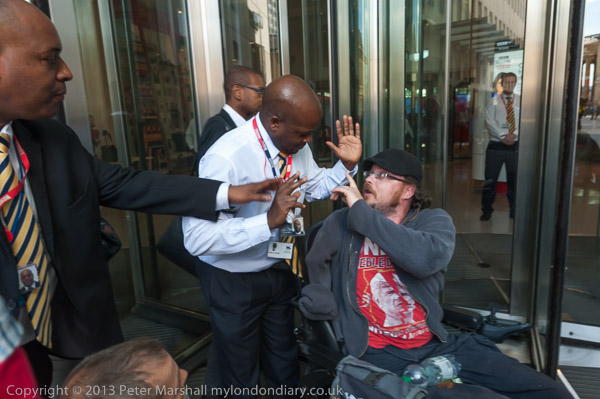
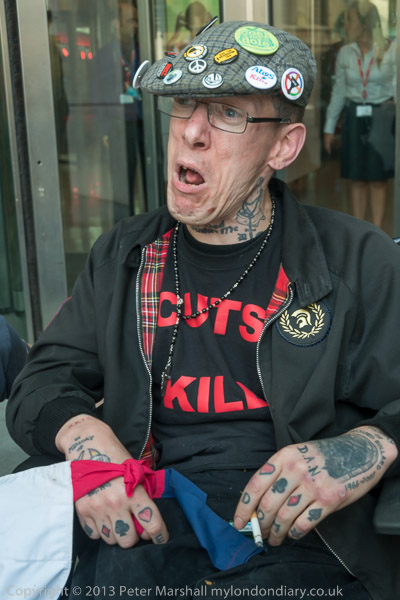
“Hands OFf” protester Andy Greene tells BBC secuirty

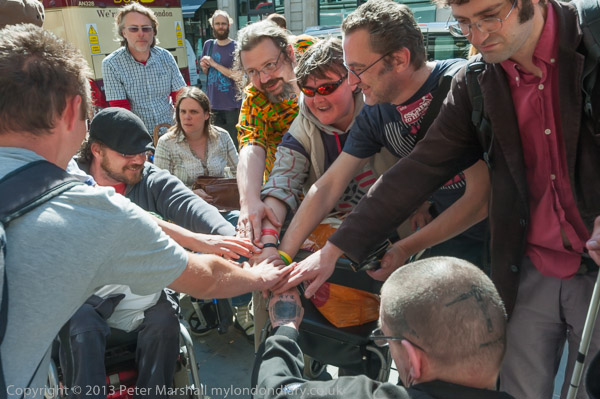
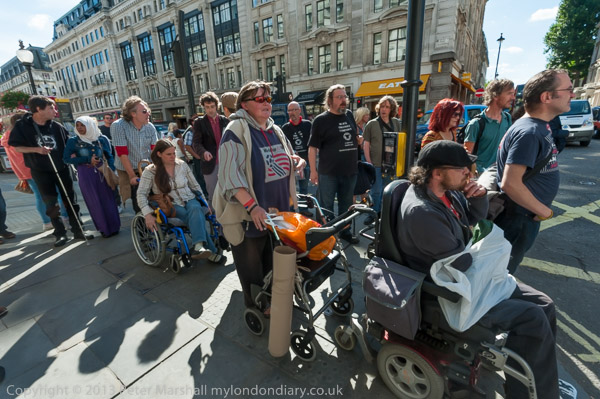
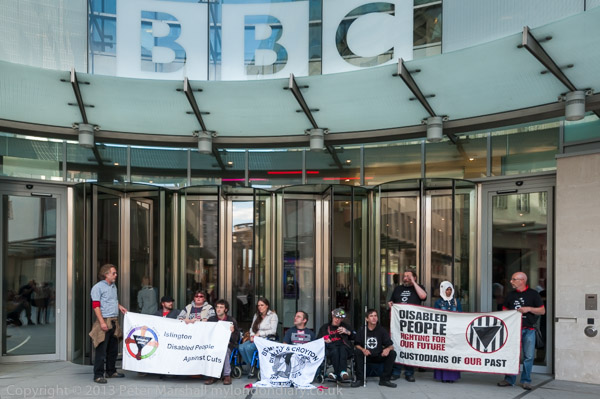
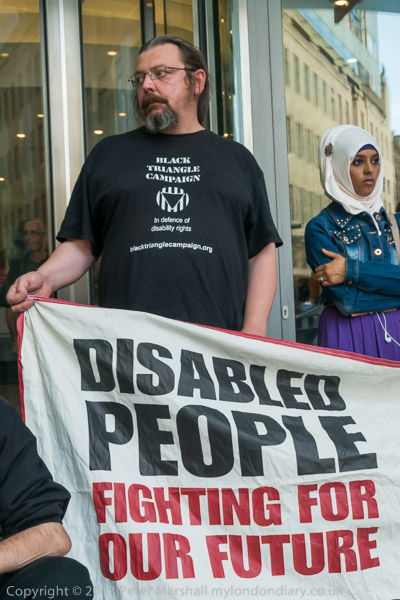
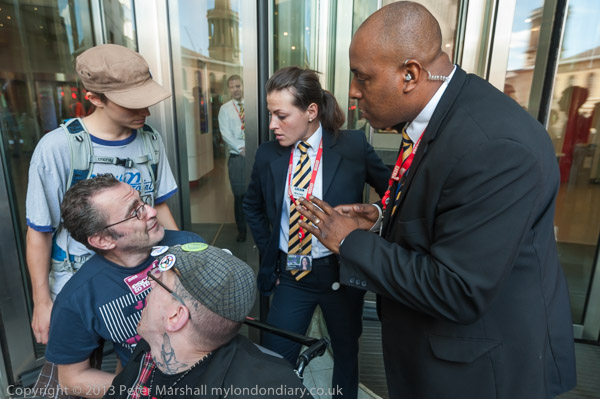
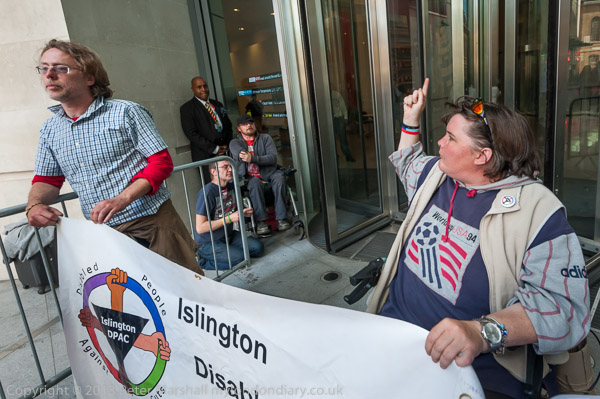
Disabled Protest at BBC in London: On Monday 2nd September 2013 I went with disablement protesters, some in wheelchairs, who were protesting at Broadcasting House in London at the BBC’s failure to report truthfully the effects of government cuts, particularly on the disabled. They blocked the main BBC entrance for an hour, with some locking themselves to the doors.
Disabled Protest at BBC in London
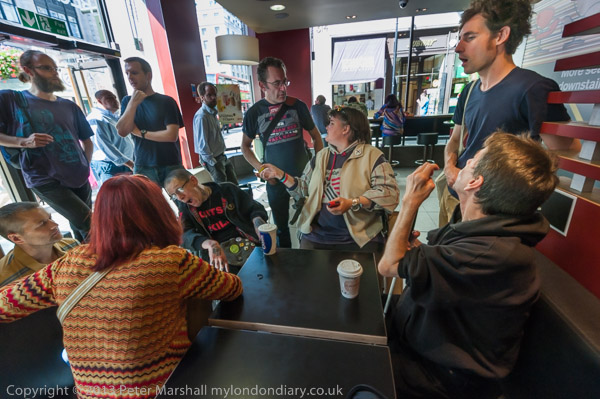
DPAC activists meet in McDonalds near the BBC

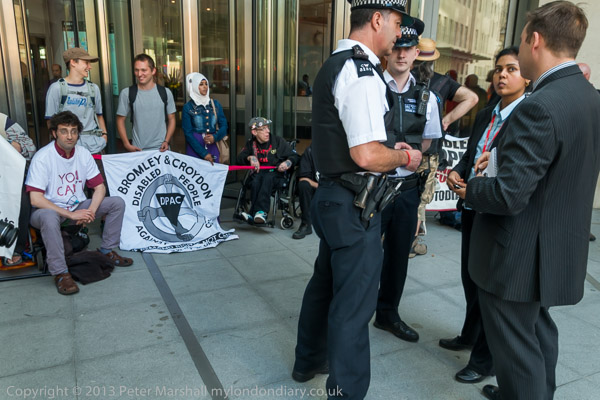
The BBC eventually called the police, who arrived not long before the protest was to end, and when they told the police this, the police stood back and watched until they did pack up and leave. Of course the protest was only a minor inconvenience to the BBC as there are alternative entrances which people were able to use.

They join hands before going to the BBC

At one point a BBC TV cameraman turned up who had been asked to film the protesters. I joked with them that perhaps he would be able to sell his footage to ITV news as it was most unlikely that it would be shown by the BBC. And I was correct in that there was no mention of the protest at all on BBC news programmes. Perhaps a few years later the footage might appear in some feature about disabled people.

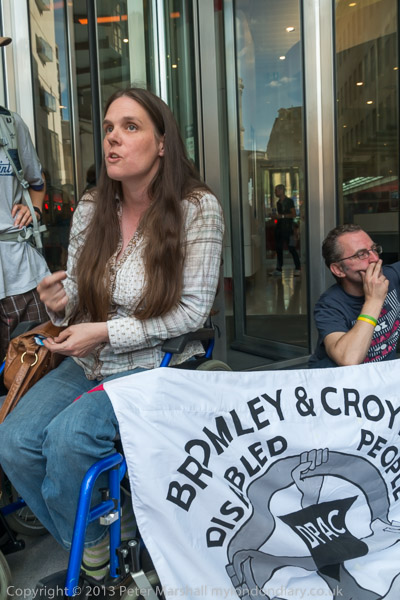
The protesters took turns in speaking out about the failure of the BBC to report the real hardship caused by ATOS assessments and the withdrawal of benefits, benefit cuts and caps and the bedroom tax. All were fed up with the BBC repeating the lies and half-truths of government and asked why the real problems and numerous deaths from the austerity programme and the protests over these were not being properly reported.

Outside the main BBC entrance

The situation was critical for many poor and disabled people, with over 500,000 having to resort to food banks set up by churches and charities to fend off starvation. The protesters chanted ‘BBC, Tell the Truth’ and requested someone from the BBC to come and discuss the issue with them – but no one would.

They made clear they were not asking for special treatment for the disabled, but for full, accurate and impartial reporting – something the BBC once had a reputation for, but sadly no more.

They were joined by chance by activist comedian Mark Thomas who had been inside the BBC when they arrived. Some had recently met him during his ‘Mass Miracle’ performance outs Atos’s Edinburgh office which had been a part of the previous months Edinburgh fringe. He was persuaded to speak briefly and gave his support to the protest, praising the protesters for coming to make their views known to the BBC.

I have mixed feelings about the BBC which still does produce some fine programmes but also I think has failed in many ways. Although they are supposedly independent they are very much an establishment mouthpiece and they very much work from the point of view of the wealthier parts of our class-ridden society.

BBC Security failed to persuade them to move

Journalist Emily Maitlis has recently spoken out about the ‘Tory cronyism at the heart of the BBC’ and their misguided approach to impartiality which led, for example, to climate deniers being given equal prominence to the huge body of scientific evidence over the extreme dangers of climate change.

Protesters took turns to speak about the effect of the cuts

Maitlis is clearly an accomplished journalist and presenter with a long and successful career. But she was in a very well paid post at the BBC, is married to an investment manager and lives and works in a very different world to the great majority of the British people. At least she was one of relatively few in such positions who was educated at a state school (though certainly not a bog-standard one) before going to Cambridge.

Eventually police arrived – and protesters told them they would leave shortly

But for years it has been clear that we can not rely on the BBC for a comprehensive view of events in the UK and around the world. If you want to be well-informed about what is happening and why you need to look and listen to other sources – including the BBC’s own World Service, and other UK and foreign news services (which often have a very different bias), as well as alternative UK media such as Double Down News, Novara Media and The Canary.

But the BBC has increasingly come under threats from governments who control its purse-strings – if at a slight distance. I don’t pay a licence fee because I don’t view TV but do listen to BBC radio for an hour or two most days, though usually with half and ear while doing other things. The BBC is still much better in many ways than the commercial alternatives and in a different league to those in some other countries – such as the USA.

More pictures at DPAC at BBC – Tell The Truth.


New Cross – Shops, Closed Pubs & Baths

The previous post on this walk in New Cross on 18th December 1988 was A Mattress, Pub, Cinema, Listed Pipe & Naval Baroque

New Cross Rd,  New Cross, Lewisham, 1988 88-12b-35-Edit_2400
New Cross Rd, New Cross, Lewisham, 1988 88-12b-35

New Cross – Shops, Closed Pubs & Baths: The four shops at the left of the picture are still there on New Cross Road at 257-263, but the buildings at right have gone, replaced by a grassed area on the road leading up to Sainsbury’s petrol station and three shopping warehouses. The antiques shop still looked much the same until around 2017.

Before the site to the right which stretches to New Cross Gate station was developed for Sainsbury’s most was a railway goods yard and works. Planning permission was granted for the development in 1995. Old maps show this site was a public house back in 1914 and it was The Railway Tavern which was still open in a picture from the 1940s which clearly is this same building.

New Cross Rd,  New Cross, Lewisham, 1988 88-12b-21-Edit_2400
New Cross Rd, New Cross, Lewisham, 1988 88-12b-21

This large detached house at 288 New Cross Road next to Deptford Town Hall is now a part of Goldsmiths University. It was built in 1842 as Hope Cottage and at least from 1914 to 1940 until later was the District Postal Sorting Office.

Unfortunately the long text on the door is impossible to read, but I suspect it told you to ro round to the back instead.

New Cross Baths, Laurie Grove, New Cross, Lewisham, 1988 88-12b-23-Edit_2400
New Cross Baths, Laurie Grove, New Cross, Lewisham, 1988 88-12b-23

A fine Victorian swimming baths, slipper baths and laundries provided by St Paul’s Deptford vestry in 1895-98 using their powers under the 1846 Public Baths and Wash-houses Act, designed by local architect Thomas Dinwiddy and well described in its Grade II listing text.

New Cross Baths, Laurie Grove, New Cross, Lewisham, 1988 88-12b-26

The baths seemed to me rather overegged with those little turrets and the wall with its rather ornate and substantial piers was a temptation I could not resist, outlining its rather phallic profile with the darkness of its doorway behind.

The premises were firmly divided into two halves for men and women, and of course I chose a post with the word ‘MEN’ in a rather fancy font for this picture.

Laurie Grove, New Cross, Lewisham, 1988 88-12c-51-Edit_2400
Laurie Grove, New Cross, Lewisham, 1988 88-12c-51

These rather solid and heavily built houses are opposite the baths in Laurie Grove and I think probably were built around the same date.

New Cross Rd,  New Cross, Lewisham, 1988 88-12b-12-Edit_2400
New Cross Rd, New Cross, Lewisham, 1988 88-12b-12

These shops at 297-309 New Cross Road are apparently still there, though restored or rebuilt in a way that removes both the various signage and the individuality of the units, producing a long coherent terrace extending from to 289 to 321 (287 still seems a little different.)

There was more character when I photographed the row, with what I think is an unlit neon sign ‘GREY FOR HMV’ and ‘EATWELL’S THE REAL BUTCHER’ who had declared war on rising prices and were you could save money. A cooked meat and sausage specialist, they supplied hotels, canteens and shipping.

New Cross Rd,  New Cross, Lewisham, 1988 88-12b-16-Edit_2400
New Cross Rd, New Cross, Lewisham, 1988 88-12b-16

Some way along New Cross Road was the London Tyre Warehouse, its adverts covering the side of The Fox public house at No. 62. In business here since at least 1851 it closed around 1997 and planning permission was granted to change the pub and the warehouse to a place or worship including a free food distribution centre.

It is now the Bethesda Building owned by Christ Faith Tabernacle International.

This walk will continue in a later post.


DPAC End Week of Protest Against Atos

DPAC End Week of Protest Against Atos: In August 2012 Disabled People Against the Cuts and UK Uncut organised the week of action as a protest against the sick spectacle of Atos, the company who pressures its staff to unfairly declare disabled people ‘fit for work’ so as to increase its profits and meet government targets, bathing in the glory of sponsoring the Paralympic games. The week ended with two protests on Friday 31st August.


Closing Atos Ceremony – Triton Square

Protests earlier in the week had included a spoof Paralympic opening ceremony next to Tower Bridge, then decorated with a giant paralympic symbol hanging from its upper level, a vigil at Westminster and a memorial service outside the Atos head office to remember the people who have lost their lives at the hands of Atos Healthcare. There had been protests too in other cities – with 40 protesters as corpses in the road stopping traffic, and at the actual Paralympic opening many of the contestants covered up the Atos name on their lanyards as a protest against their involvement as sponsors.

Among those protesting earlier in the week was Tara Flood, a former Paralympian who represented GB at three Paralympic games and whose gold-medal winning time at the 1992 Barcelona games remains a world record. She reflected the feeling of many disabled people when she stated: “It is a shocking irony that Atos is a main sponsor of London 2012 whilst destroying disabled people’s lives on behalf of the government.”

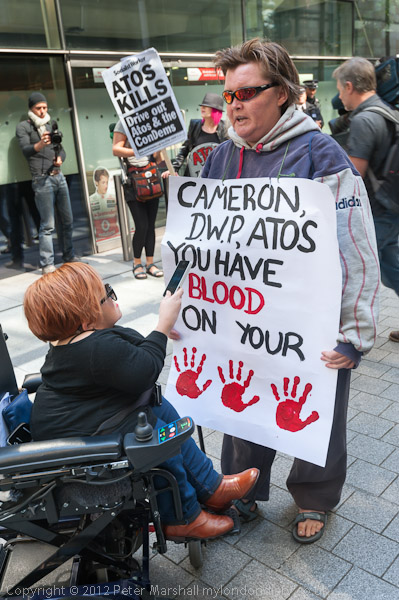
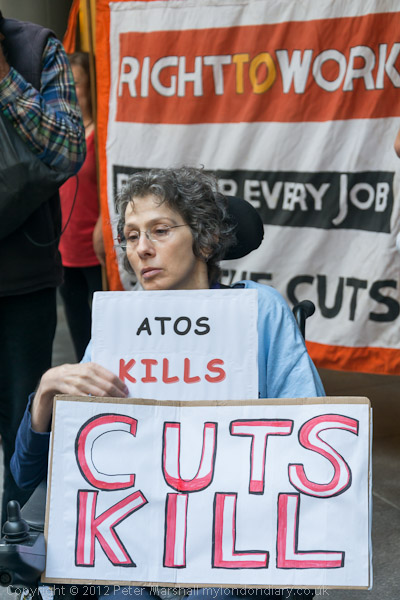
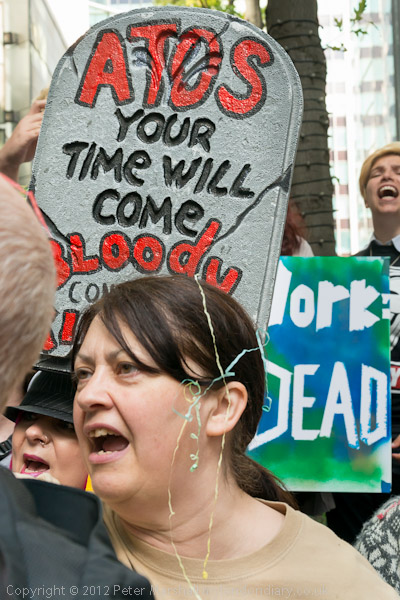
Over 500 came to Atos’s offices in Triton Square for a peaceful protest at the end of the week on Friday 31st August 2012. It had a festival atmosphere, with music and dancing, poppers, brightly coloured plastic water pistols and some fancy dress along the the usual banners and placards, but there was no mistaking the anger against Atos, evident in the slogans on the placards and chants of ‘Atos Kills!’

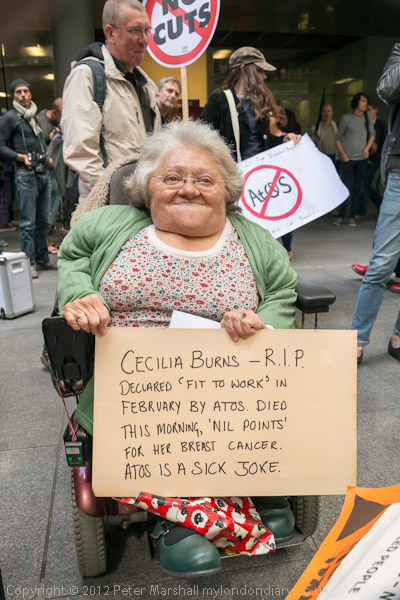
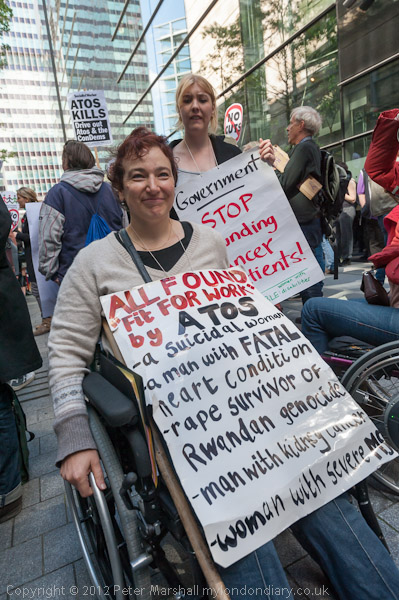
The target-driven computer-based work capability assessments delivered by Atos cause extreme hardship and misery to many disabled – and death to some. Last year 1,100 claimants died after Atos tests placed them on compulsory work-related activity to gain benefits, and others found ‘fit for work’ and so left without income have committed or attempted suicide.

Among conditions that Atos tests have found to have no bearing on fitness for work have been fatal heart conditions, terminal breast and kidney cancer and severe MS.

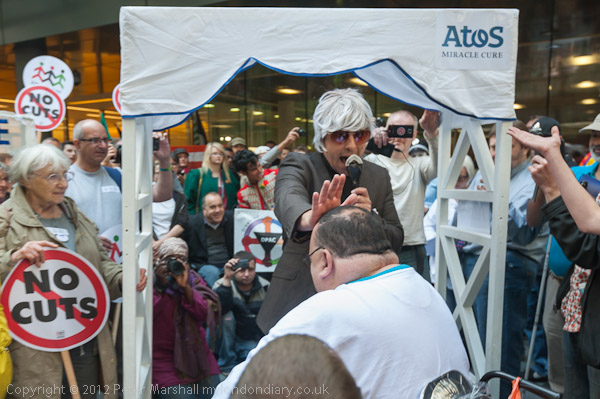
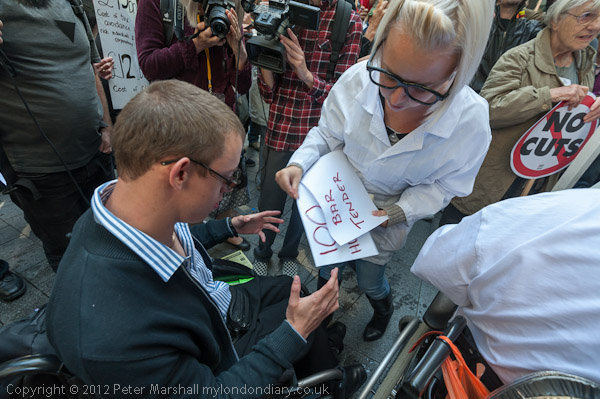
In one long street theatre performance disabled people who truly wanted to be freed of their disabilities were urged by ‘Atos’s own Reverend’ to come forward and go through the ‘Atos Miracle Cure’ archway, and several, mainly in wheelchairs, did so. Nothing seemed to happen to them, and they were disappointed, even after the ‘Rev’ had blessed them and patted them on the head, but then an ‘Atos doctor’ in a white coat came to assess them, and lo! she gave them each a certificate that they were now fit to work, and, even more miraculous, a job. But it was all a con!

By the time the ceremony ended I had left and was making my way to the Department of Work and Pensions offices, Caxton House, in Westminster, having been tipped off that disabled activists had entered and occupied them.

More at Closing Atos Ceremony.


DPAC Occupy Dept of Work & Pensions – Westminster

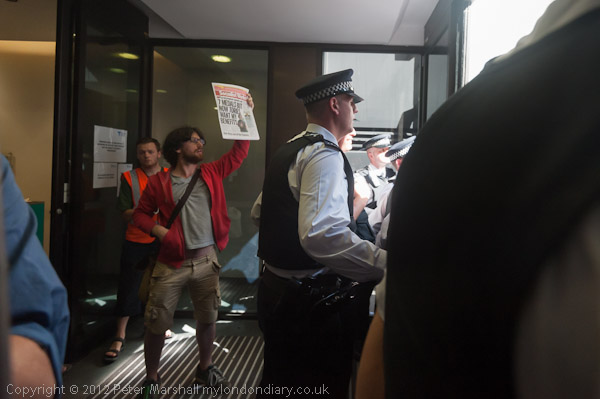
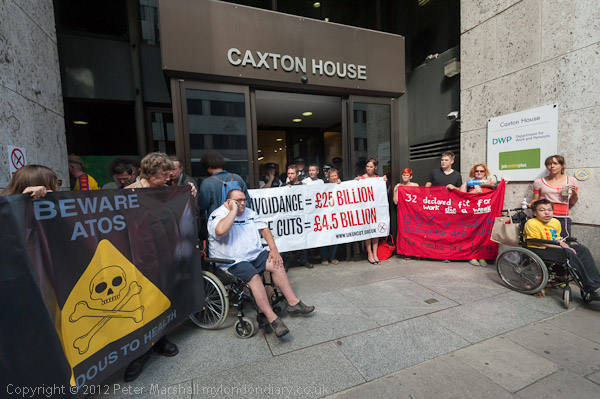
Traffic was heavy in London – I should have taken the tube. By the time I arrived there were around 20 or so protesters outside with banners in front of the entrance. Behind them were a block of around a dozen police in several rows in the fairly narrow outer lobby, and behind them I could see more police and a few protesters.

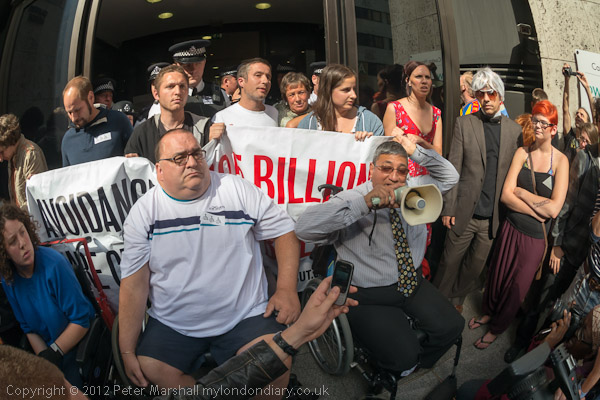
Shortly after me more arrived from the event outside the Atos offices, including quite a few in wheelchairs and formed a fairly large crowd, spilling out into the street.

Adam Lotun and spoke briefly about the reasons for the week of actions against Atos and announcing the struggle would continue and as a part of that he would be standing in the Corby by-election.

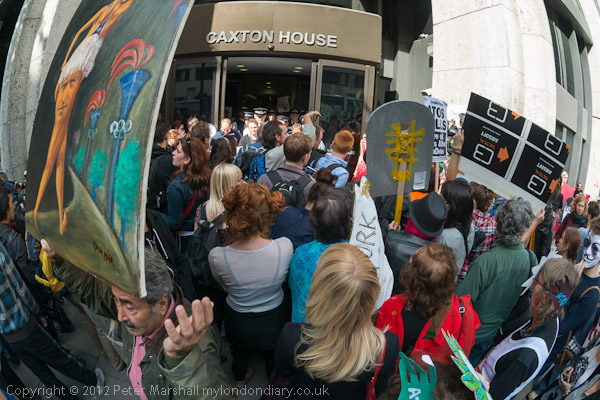
A few late arrivals tried to push past the police to join those already in the building, but as well as police there were people in wheelchairs and the media in their way and they had little chance of success. The situation became rather confused, but soon police reinforcements arrived and pushed the crowd back a few yards away from the doorway.


Racist Thugs Not Welcome 2014

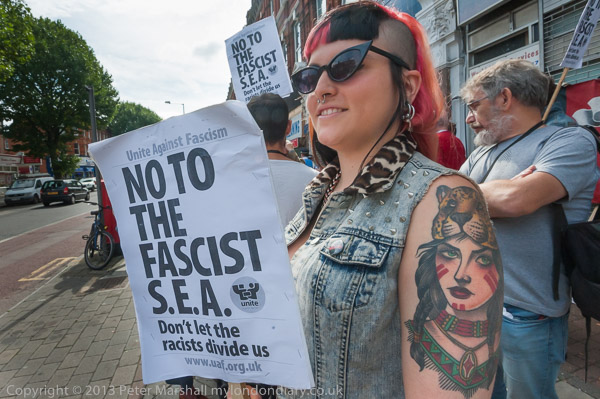
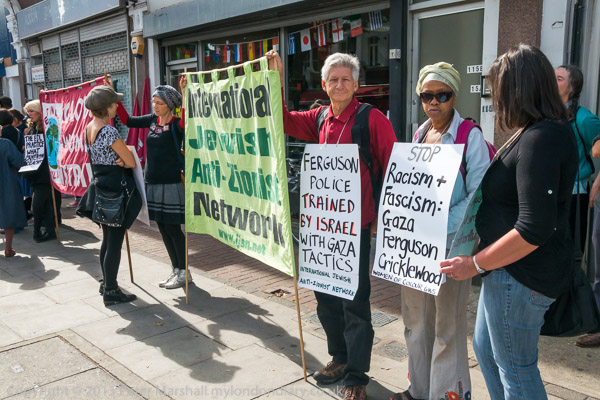
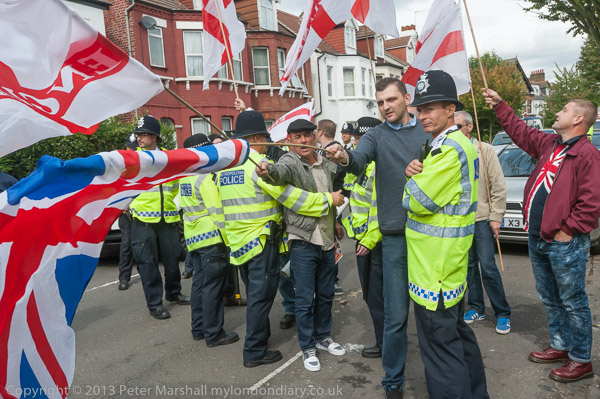
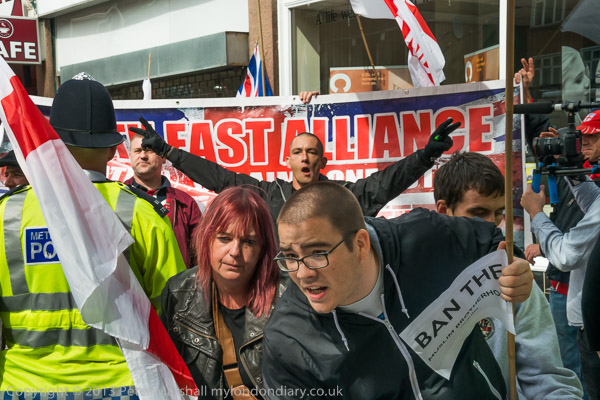
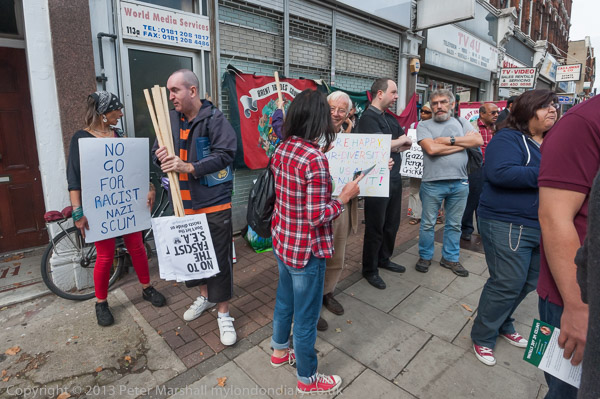
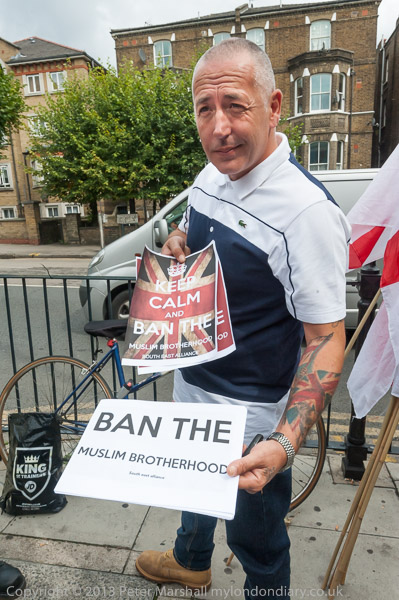
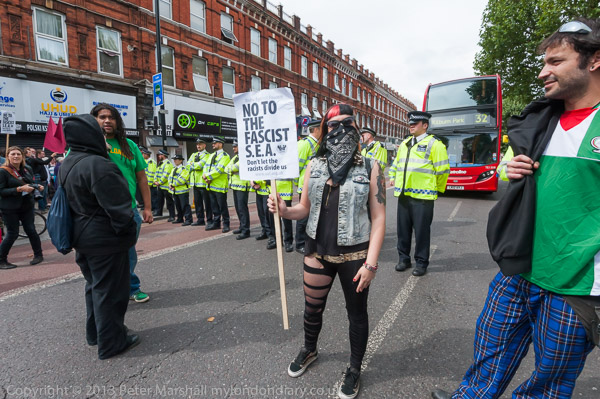
On 30th August 2014 I went to Kilburn and Cricklewood, where the far-right South East Alliance had annnounced they would protest at some empty offices they claimed were used as a recruiting centre by the Muslim Brotherhood.

The Muslim Brotherhood (MB) is a Sunni Islamist religious, political, and social movement largely based in Egypt whose candidate Mohamed Morsi was became the first to be elected as Egypt’s president in 2012, but was deposed by the military after massive popular protests a year later. The MB was then declared a terrorist group and Morsi was tried and sentenced to death. He was retried after that trial was overturned and died during his second trial, possibly due to being denied medical care.

A few other countries also declared the MB a terrorist group, but it had few members in the UK, though some of its supporters set up a ‘global information centre’ here in 1999 which I think operated from this small first floor ‘World Media Offices’ in Cricklewood. In 2014 Prime Minister David Cameron set up an investigation into its alleged terrorist activities, and the office closed down, moving its activities to Austria. The investigation reported that the MB had not been linked to terrorist related activity against the UK and had condemned the activities of Al-Qaeda in the UK.

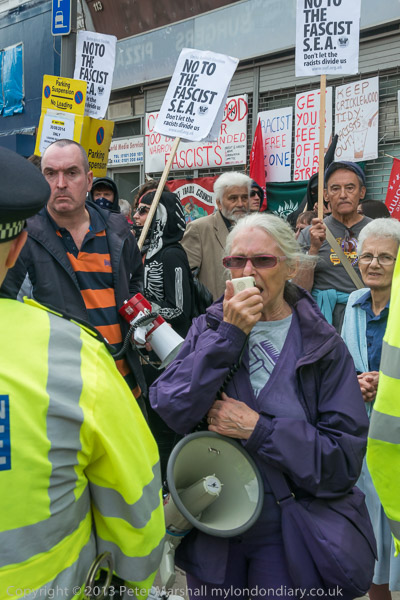
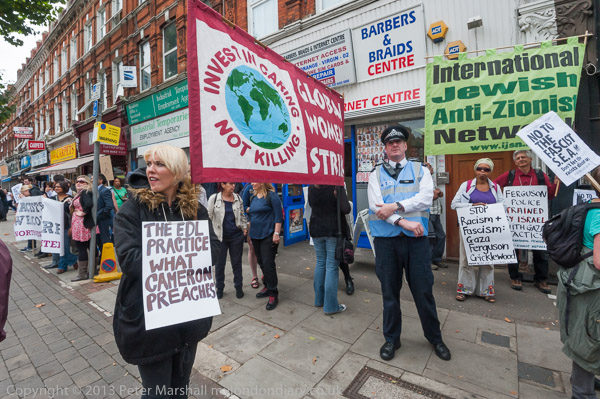
My bus to Cricklewood took me along the route of the march planned by the South East Alliance (S.E.A.) from Kilburn Underground Station, and I saw a number of police vans and motorbikes waiting for the event to start. There were a group of around 50 people and quite a few banners for groups in North West London United ready to oppose the S.E.A. march and tell them that fascists and racists were not welcome. I made a few pictures before taking the bus back to Kilburn station.

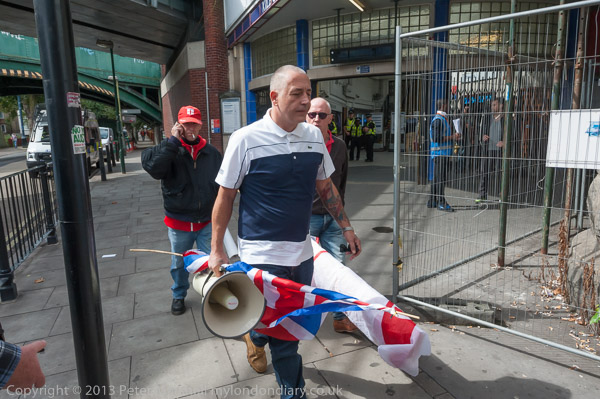
The station had been closed in anticipation of trouble there, but there are two stations on other lines a short walk away. Eventually 4 people arrived with a megaphone and flags, including Paul Pitt, leader of the S. E. A. and former Essex organiser for the English Defence League, who apparently expelled him two years earlier which led to him forming the S. E. A.

It was a rather embarassing situation with so few people present, and Pitt recognised me from previous exteme-right events I had photographed – which had led to threats against me in person and on-line. Although my photographs tried to show these events objectively, that was perhaps the problem so far as they were concerned. But there were plenty of police around.

Eventually the march set off, with the three men leading it and a woman walking more slowly with the aid of a stick completing the group some yards behind.

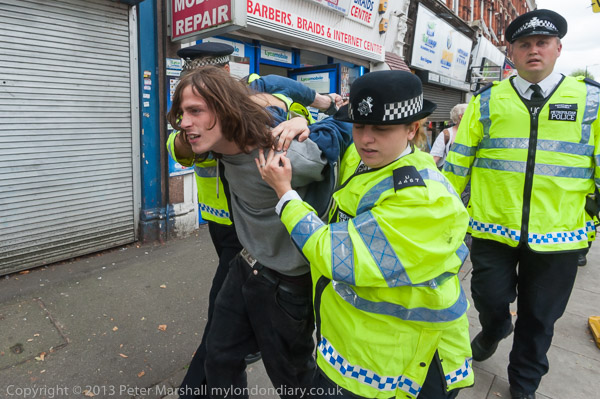
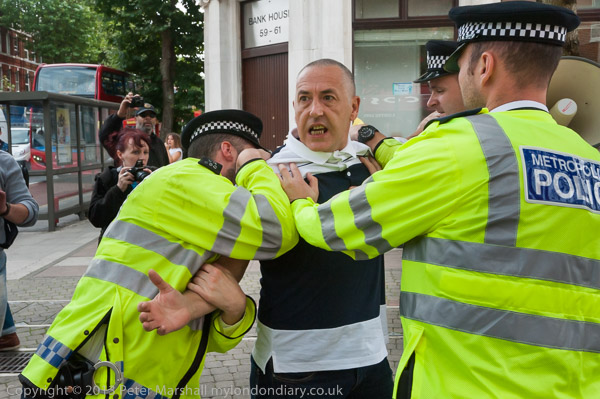
At Cricklewood the anti-fascists were waiting, with a line of police across the road to keep the two groups apart. Police were also surrounding and protecting a handful of S. E. A. supporters who had come directly to the end of the protest, and there were a few scuffles and arrests as anti-fascists tried to reach them.

Police stopped Paul Pitts small group of marchers and held them on a corner a short distance away. For a while it seemed he was being arrested, but then more officers arrived and he was told his protest would be facilitated.

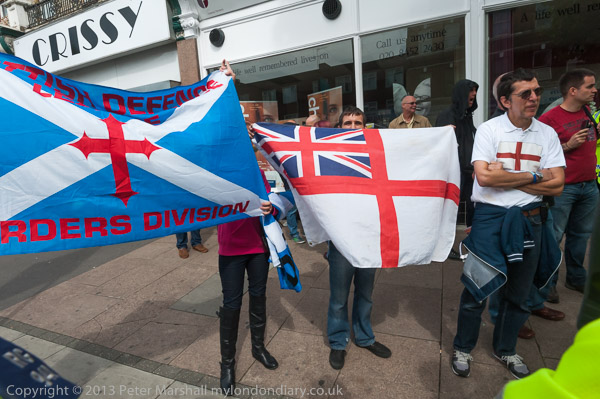
I returned to the other small S. E. A. group surrounded by police. While some of them were busy photographing police and myself and other photographers and trying to stop us taking pictures others were holding up banners and posters and demanding we photograph them.

In front of the former office the anti-fascist protesters were continuing with speeches and shouting against the S. E. A. and I saw police make at least one more arrest, though it was unclear why. I think they may have objected at some of the language used.

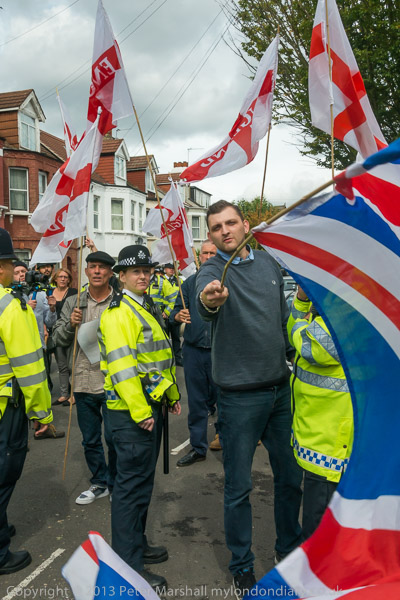
Then I saw some flags approaching along a side road, still several hundred yards away and rushed down to meet them. Another group of S. E. A. supporters was arriving, perhaps bringing the total number to around 50. Police arrived there just before me and stopped them.

As I took photographs these protesters at first began to hold flags in front of my lens then used the long canes holding the flags as weapons, trying to poke the photographers in their eyes. Eventually police escorted them to join the other S.E.A. protesters where they continued to try to attack photographers with their flag sticks.

Police eventually did react to the violent attacks with flags – by forcing photographers to move further away. By this time I was fed up with being insulted and attacked – and in any case people on both sides were drifting away and nothing much more seemed likely to happen. The road had now been reopened and I saw a bus coming and made for the nearest stop to make my way home.

More at South East Alliance ‘Racist Thugs Not Welcome’.