Human Rights, Intifada, Copyright & Free Speech: Four protests on Saturday 11th February 2012 all have a connection with with human rights and freedom of expression.
Amnesty International’s rally was in solidarity with protesters in Syria, Egypt and elsewhere, and the Victory to the Intifada protest outside Marks and Spencers also expressed solidarity with protesters in Syria, Iran and Somalia as well as support for Palestinians.
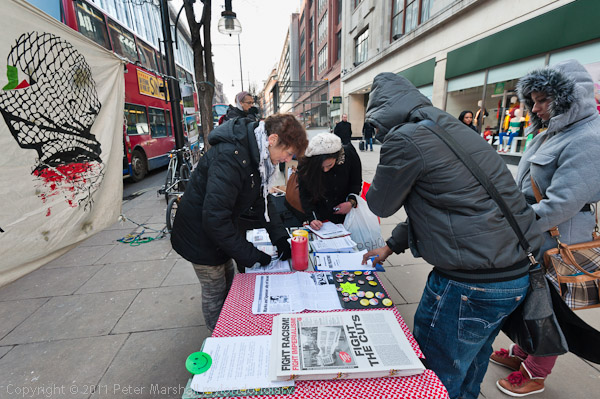
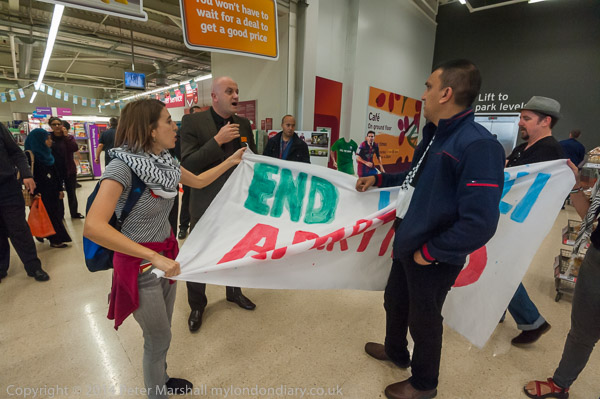
Recent arrests at protests in the UK are attempting to criminalise any expression of support for the Palestinian Intifada – a word which refers to any resistance by Palestinians to the Israeli occupation, whether violent or non-violent. It remains to be seen whether our courts will throw out their attack on human rights and freedom of expression.
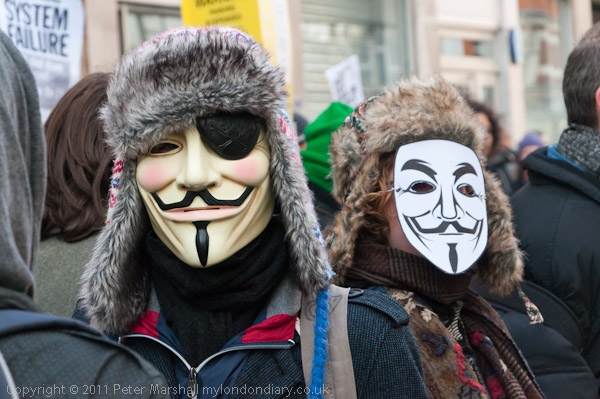
ACTA, the Anti-Counterfeiting Trade Agreement, was widely seen as an attempt by major film and music companies, drug manufacturers and other multinationals to infringe fundamental rights including freedom of expression and privacy for their own commercial interests and its ratification was eventually definitively rejected by the EU in July 2012.
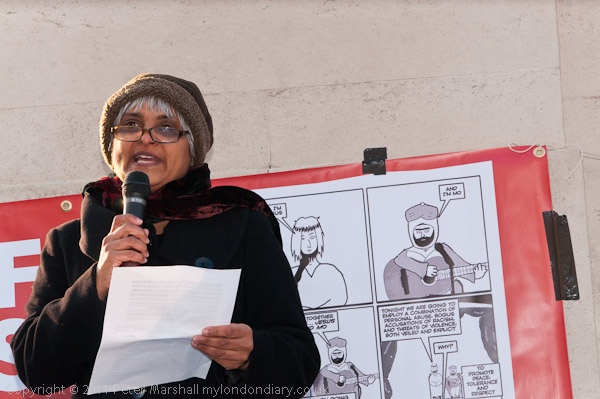
Finally I covered a rally by One Law for All defending freedom of expression, called following increasing pressure from Islamists asking for censorship of cartoons, meetings and expressions they regard as blasphemies.
Amnesty Protest For Human Rights
Trafalgar Square
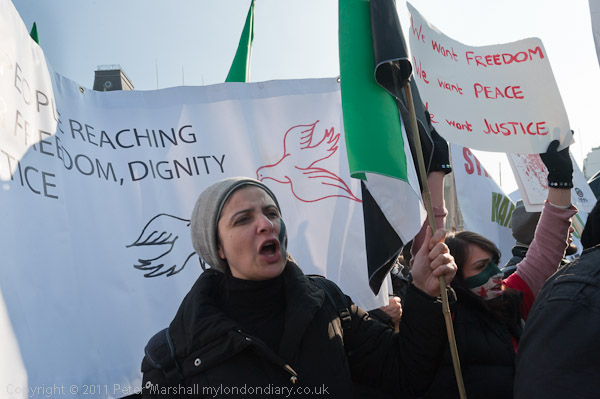
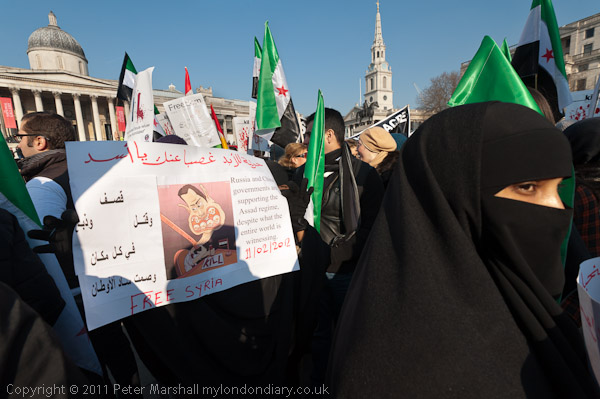
The large rally by Amnesty International was one a number of similar events in major cities across Europe, as well as in Iceland, Morocco, Nepal, Peru and Paraguay and sent thhe message to the people of the Middle East and North Africa that “you are not alone in your struggle. We are with you.”
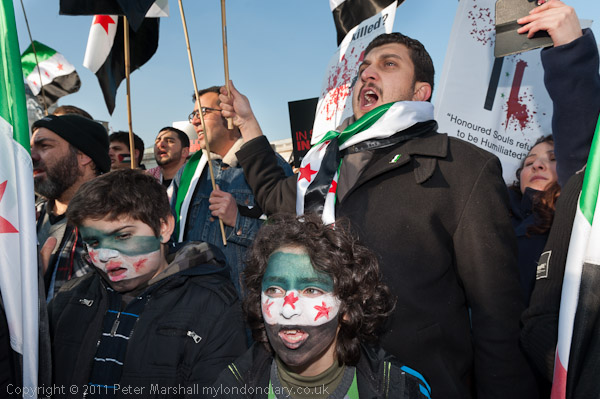
Large numbers of Syrian protesters formed a circle around a clock tower representing that in Homs, where Clock Square has been at the centre of the protests, and danced around it, waving Syrian freedom flags, and at the rally which followed there were live link ups to protesters in two Syrian towns
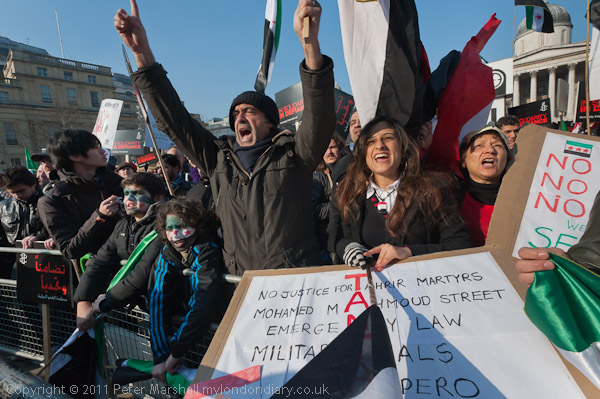
There were many Egyptians also present and they and protesters from other countries spoke to an enthusiastic welcome from the crowd in the square.

Amnesty Protest For Human Rights
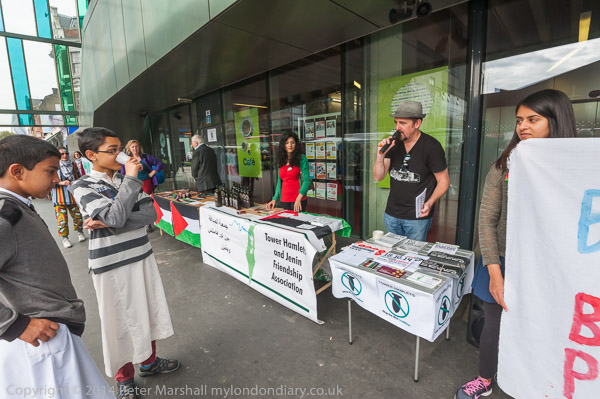
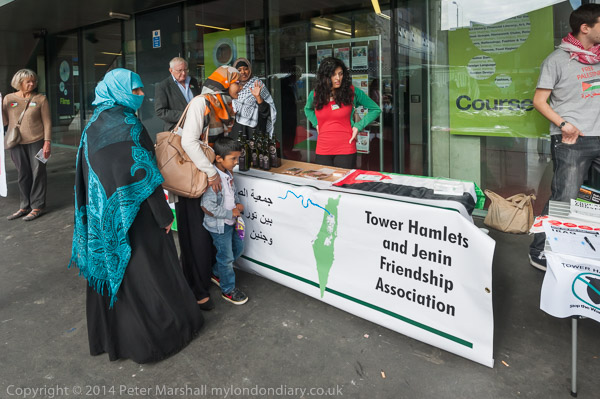
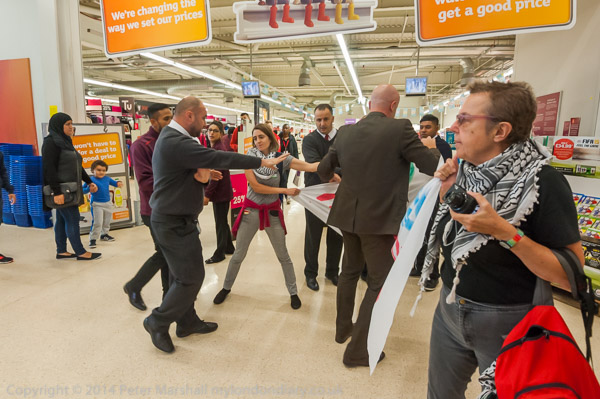
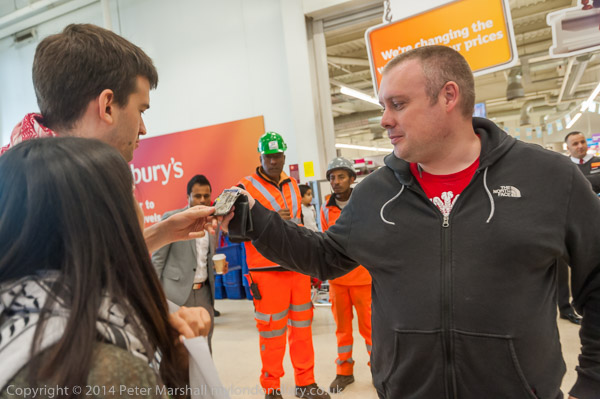
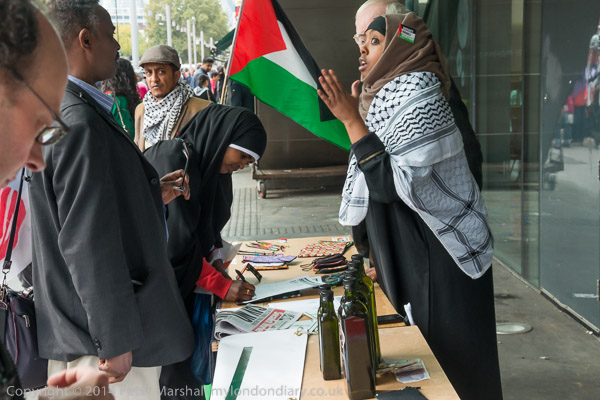
Victory to the Intifada Picket
Marks & Spencers, Oxford St
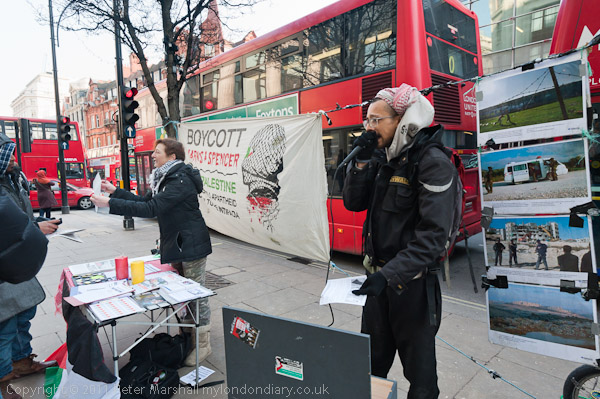
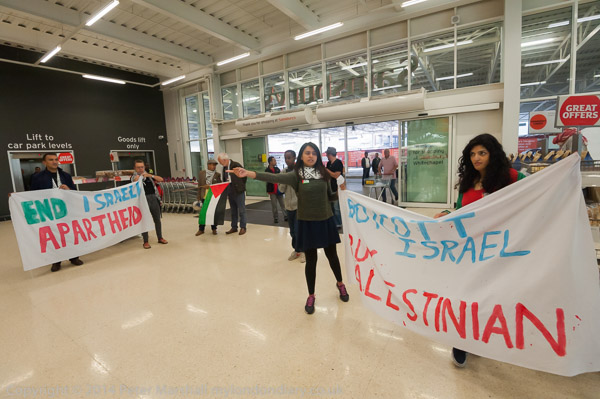
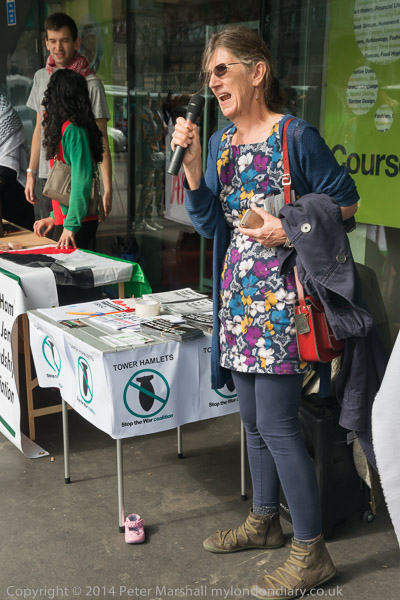
Victory to the Intifada had been holding regular pickets outside Oxford St flagship store since 2000 and this week were also stressing solidarity with Syrian, Iran and Somalia.
Their protests showing solidarity with Palestine began at the start of the Al Aqsa Intifada in 2000, and have continued once or twice a week since then. The location on the wide pavement here was chosen as M&S is Britain’s largest corporate backer of Zionist initiatives in Israel.
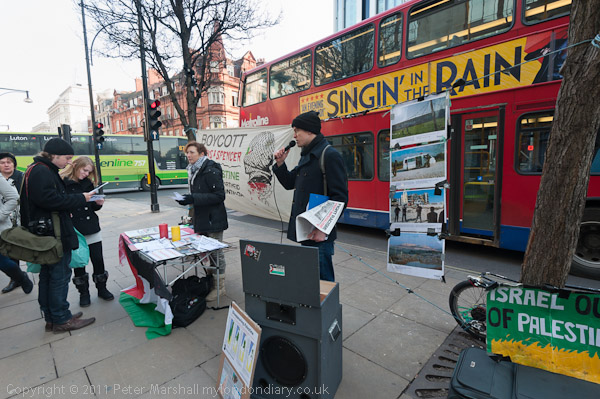
They urged shoppers to oppose British support for Israel and to boycott Israeli goods and support the Palestinian people’s right to self-determination.
Victory to the Intifada Picket
Stop ACTA – London Protest
British Music House, Berners St
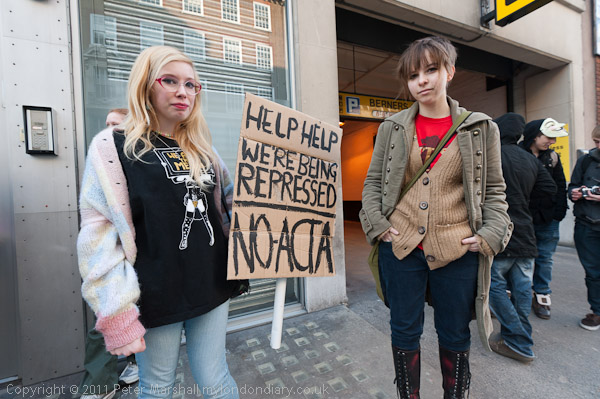
The Anti-Counterfeiting Trade Agreement (ACTA) was a treaty negotiated in secret talks with little or no public debate between major countries including the United States, the European Community, Switzerland, Japan, Australia, the Republic of Korea, New Zealand, Mexico, Jordan, Morocco, Singapore, the United Arab Emirates, and Canada to protect the commercial interests of major film and music companies, drug manufacturers and other multinationals.
During the talks there was little if any representation from the artists and others who actually create the intellectual property from which these companies profit, or from the general public who pay for them.
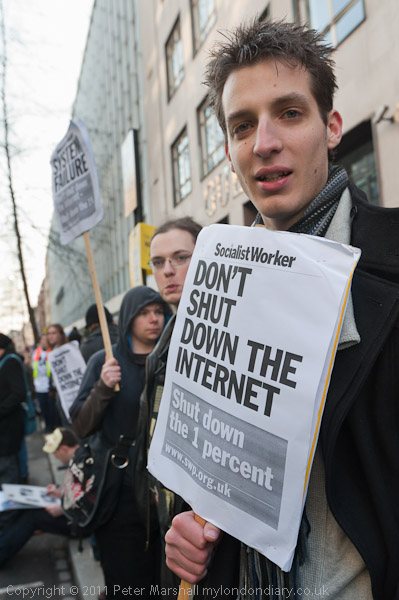
The protesters say that ACTSA would threaten free speech on the Internet and allow governments too much control over what could be put on the web. It would also make it possible for companies to prevent the making of parodies, which would stop proper creative and critical engagement with cultural works.
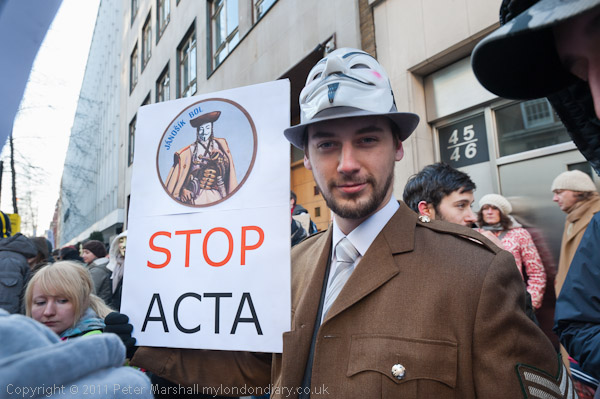
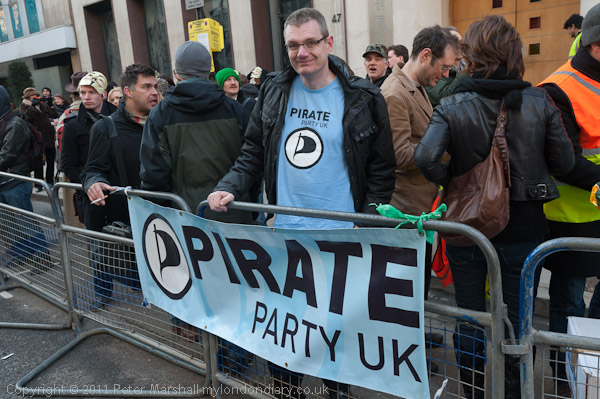
The protest was opposite British Music House where the Music Publishers Association, the Performing Rights Society for Music and other groups were based, and was called by an Anonymous group calling themselves ‘Stop Acta For Freedom’ and the ‘Open Rights Group’ and was joined by the ‘Pirate Party UK’. Many of those taking part wore ‘Anonymous’ masks, some with a black pirate eye patch.
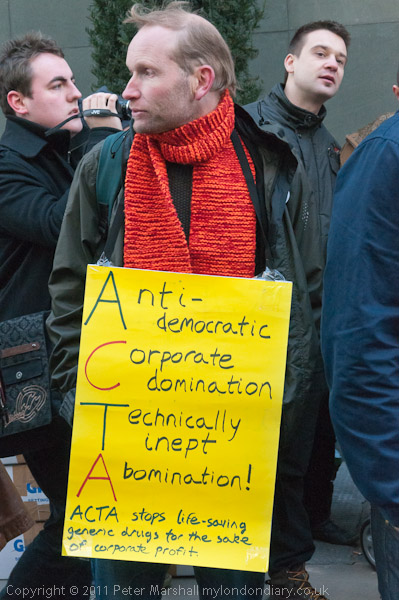
Apart from its effect on web freedom, ACTA would be used to prevent the production of cheap drugs which have a vital role in treating disease in the majority world.
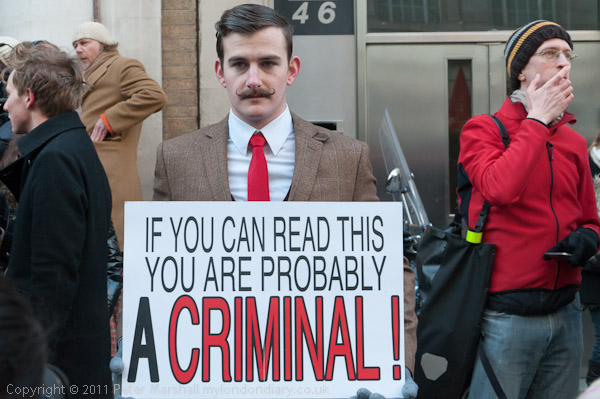
Although quite a few countries initially signed up to ACTA, few ratified it and public pressure finally resulted in it being abandoned. The full European Parliament rejected it in July 2012 by 478 votes to 39.
Defend Freedom of Expression
Old Palace Yard

I arrived late to join the roughly 500 people listening intently to speeches at the One Law for All rally opposite the Houses of Parliament.

The event like that by Amnesty International was part of a wider international Day of Action For Free Expression, with other events in Melbourne, Brazil, Paris, Gambia, Germany, Warsaw (and elsewhere in Poland), Portugal, South Africa and the US. In the UK the Day of Action was endorsed by nearly 100 groups and individuals including Jessica Ahlquist, Richard Dawkins, Equal Rights Now, Taslima Nasrin, National Federation of Atheist, Humanist and Secular Student Societies, National Secular Society, Salman Rushdie, Southall Black Sisters, and Peter Tatchell.
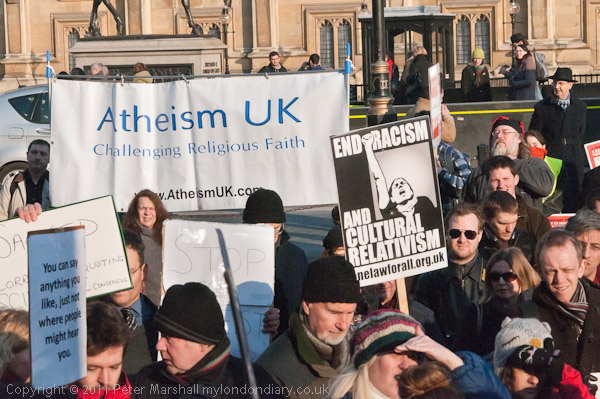
I felt that a few of the speakers were taking the opportunity to criticise religions in general and Christianity in particular in something of an anti-religious crusade in a way I felt was unsuitable; as I commented “atheist bigots are surely no more acceptable than religious ones“.
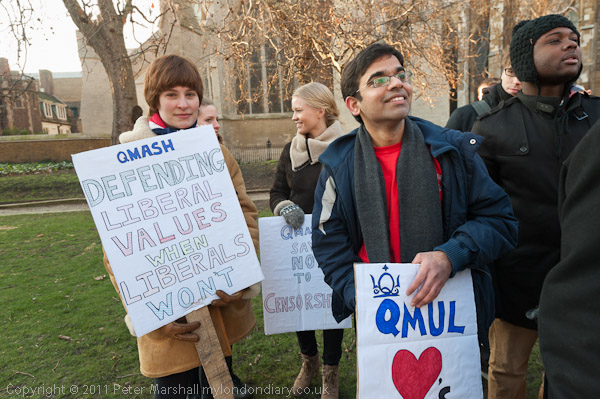
The protest was in response to actions taken by various authorities in this country, including at Queen Mary University and University College London acceding to demands by Islamists for the censorhip of individuals and organisations. We still see this attack on freedom of expression in institutions over this as well as other issues such as trans rights and accusations of anti-semitism by those who oppose Zionism and the activities of the Israeli government.
Flickr – Facebook – My London Diary – Hull Photos – Lea Valley – Paris
London’s Industrial Heritage – London Photos
All photographs on this page are copyright © Peter Marshall.
Contact me to buy prints or licence to reproduce.