Arctic 30, Gurkhas, Zombies & John Lewis

Another busy day for me in London on Saturday 2nd November 2013, though I spent quite a lot of it in a pub with zombies who were putting on a rather late Halloween appearance. But there were more serious things as well.


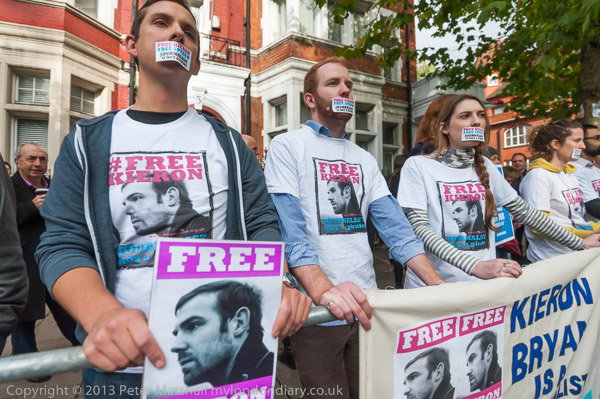
Free Kieron & Arctic 30 – Russian Embassy, Notting Hill. Sat 2 Nov 2013

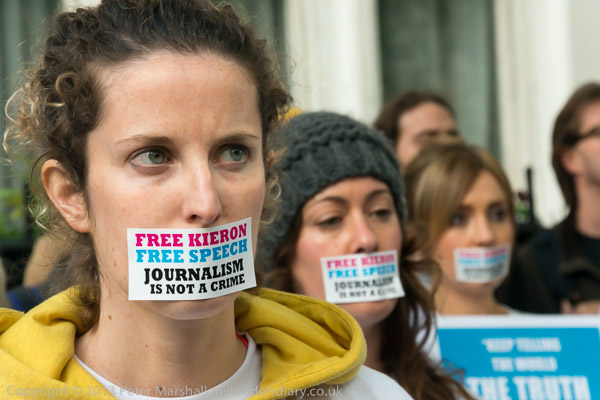
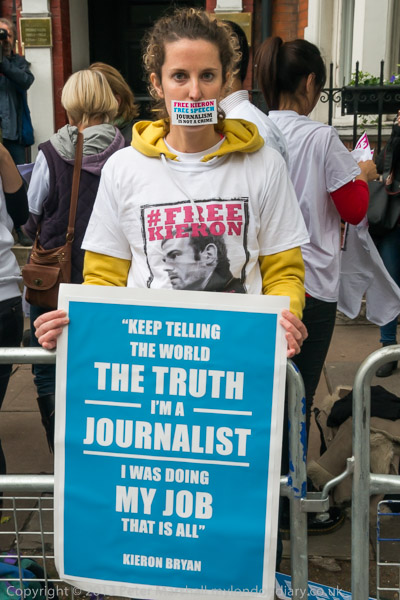
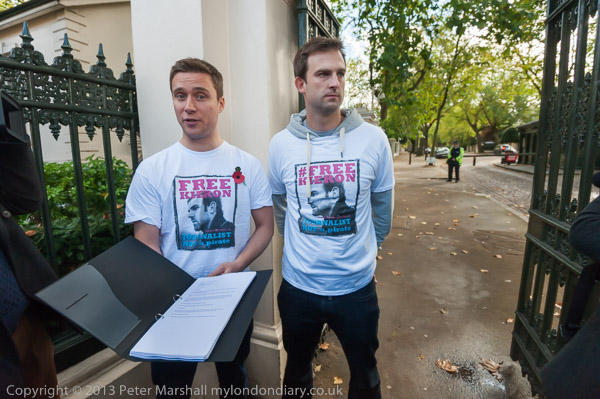
Family, friends & supporters of freelance videojournalist Kieron Bryan, one of the 30 arrested on Greenpeace’s Arctic Sunrise, held a silent vigil at the Russian Embassy, delivering a petition signed by over 1000 journalists calling for his release.

There was intense media interest in the event, with several TV crews, radio journalists and photographers, perhaps because the imprisonment of a journalist is a threat to all journalists around the world. Unusually the Russian embassy had agreed to meet Kieron’s brother and take the petition, and although no photography is permitted in the private street in which it (and the Israeli embassy) are situated I was able to photograph him standing in the gate to the street holding it.

The Arctic 30 had sailed to the Russian Arctic on the Greenpeace ship Arctic Sunrise in September 2013 to protest peacefully against Gazprom’s plans to start oil production in the Arctic. The ship was seized and they were kept in custody for two months before being released on bail in November – after the Netherlands had filed a case at the International Tribunal for the Law of the Sea which led to an order for the crew and Dutch-registered vessel to be released while the case was being considered. Although Russia ignored this ruling they did release the journalists, activists and crew, and six months later, the ship. Probably protests such as this helped to persuade them to do so.

The Dutch government filed complaints at the European Court against the unlawful detention of the Dutch-registered ship and the protesters also took a case claiming that hey had been detained unlawfully and their right to freedom of expression had been breached.

Free Kieron & Arctic 30


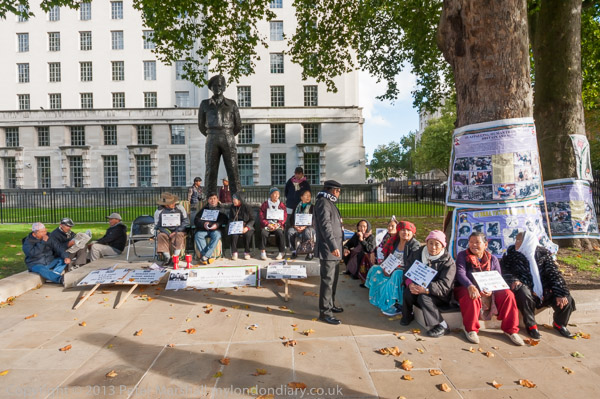
Gurkha Veterans Hunger Strike for Justice – Downing St, Sat 2 Nov 2013

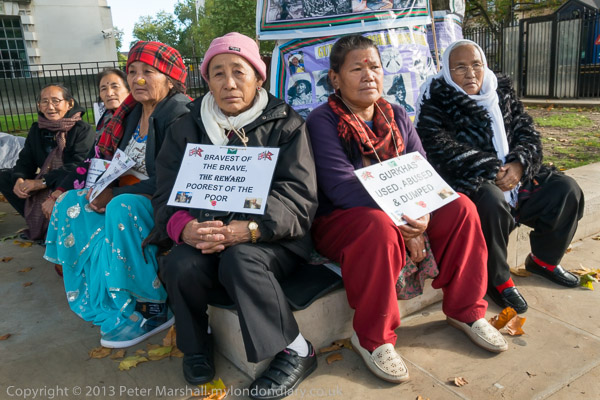
Gurkha wives and widows support the campaign for justice

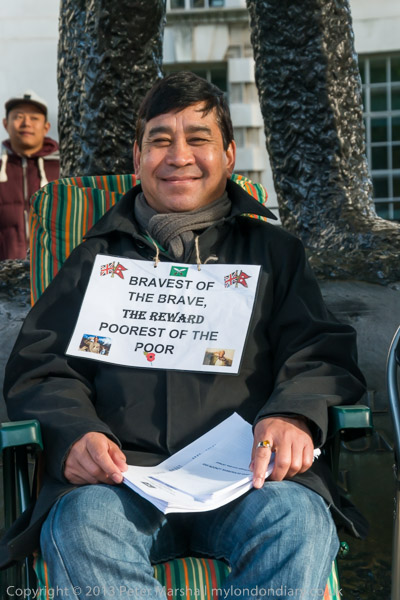
Although high-profile earlier campaigns supported by Joanna Lumley and others in the broadcast media have led to increased support for former Gurkha soldiers, elderly Gurkha veterans did not benefit from these and most live here in extreme poverty.

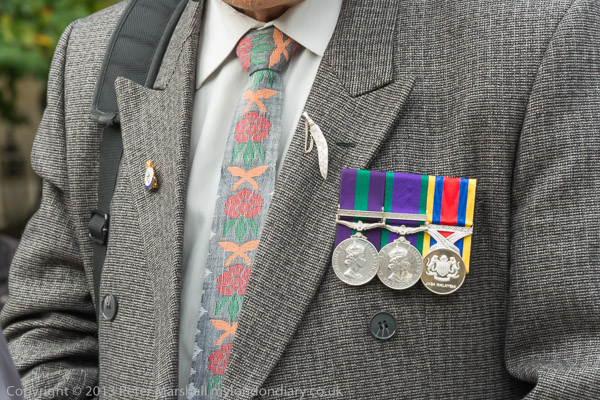
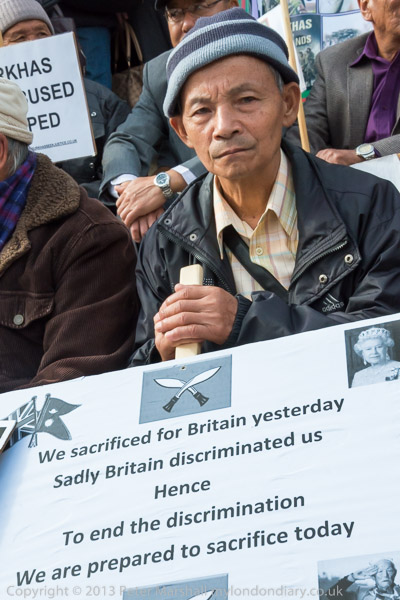
After submitting their petition to Prime Minister David Cameron and the Nepalese Prime Minister in April and getting no satisfactory result and they had “with a heavy heart” begun a series of hunger strikes. These had begun in late October with a “13 days relay hunger strike in the name of the 13 Ghurka VCs” which was in progress when I took these pictures, demanding equal pensions, compensation, a preserved pension for those made redundant, the right of settlement in the UK for their adult children and free medical treatment in Nepal.

Five days later some began a hunger strike until death, and after two weeks the government offered talks and this was halted.

Gurkha Veterans Hunger Strike


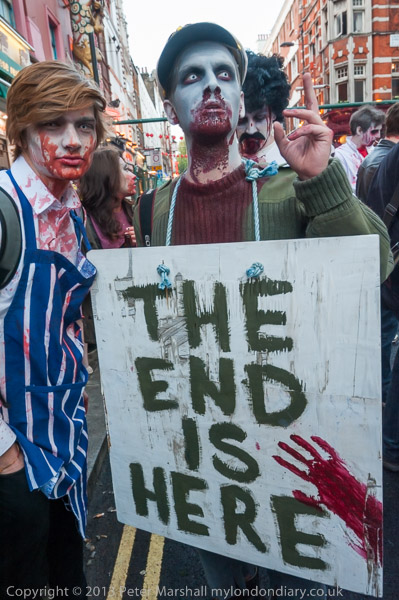
LoNdOn ZoMbIE WaLk VII – Soho, Sat 2 Nov 2013

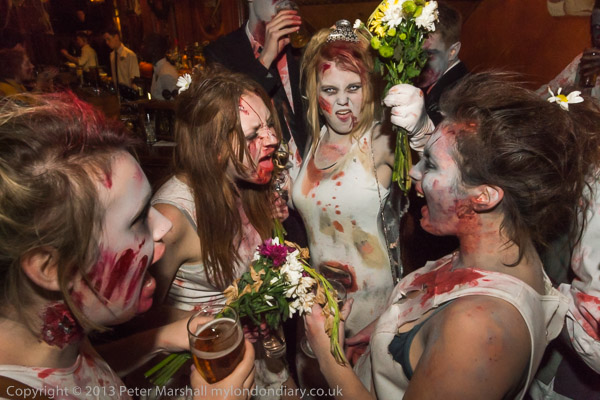
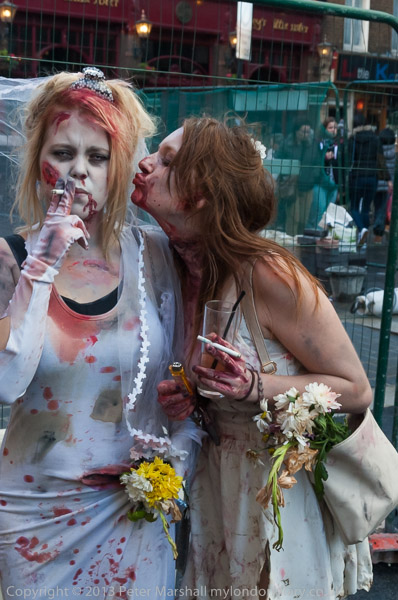
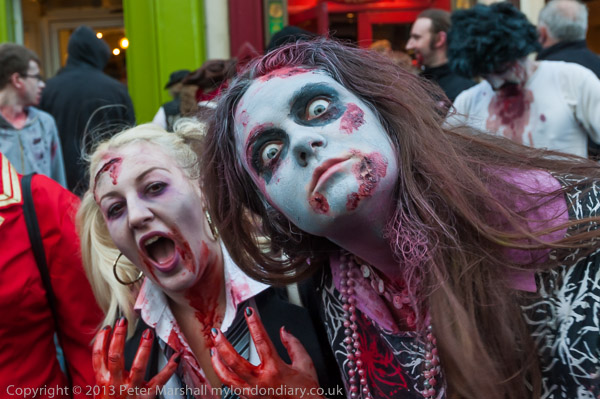
I met with around a hundred zombies in Waxy O’Connor’s pub on Rupert St, where they were drinking for a couple of hours occasionally emerging into the dim daylight of Wardour St for a fag break.

Around 4pm as dusk was falling the multitude of undead staggered up the stairs to begin their crawl around Londinium in search of brains and booze. I left them to it.

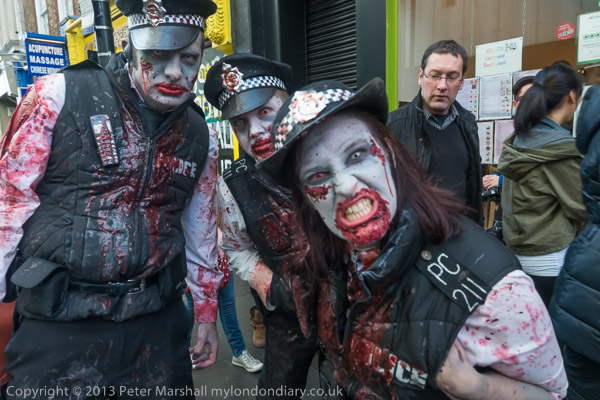
Among those on Gerrard Street were a group of Zombie Police whose warrant cards carried the message ‘A pint of Cider and Black Please’.

Announced as the seventh consecutive year for this event, it followed on from some earlier ‘Crawls of the Dead’ which began in 2004.

Inside the pub the lighting was low and I needed to use flash. While the Nikon flash gun I was using in the hot-shoe of my camera is generally a great performer I had some problems. While it is OK with the camera in landscape mode, turning the setup through 90 degrees for portrait format images isn’t really very successful. And I also found myself unable to use the usually magical i-TTL mode, not because of some zombie spells, but as later searches through the fat manual at home revealed it is incompatible with the camera mode I had set for the dark interior. I think the camera and flash manual have a total of well over 500 pages – these things are just too complicated for mortals.

LoNdOn ZoMbIE WaLk VII


City Link & Cleaners at John Lewis – Oxford St, Sat 2 Nov 2013

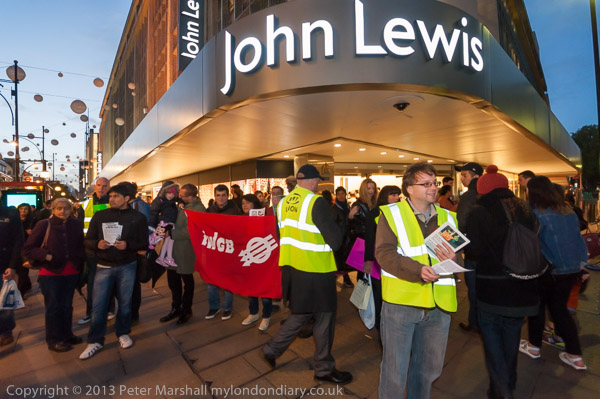
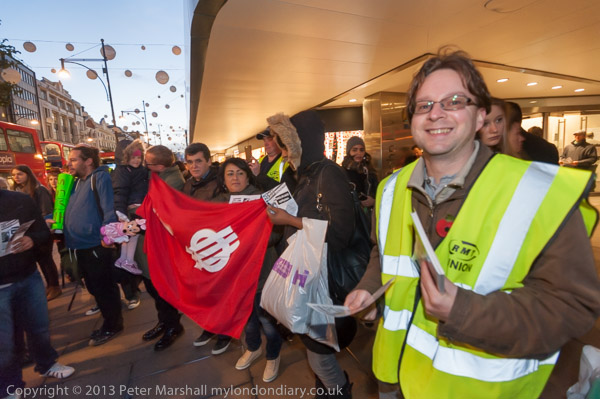
As the final zombies staggered out of the pub to crawl Soho I rushed away to Oxford Street where cleaners were holding a protest outside the flagship John Lewis Store, and were today joined by City Link workers who deliver goods for the company.

City Link was sold off earlier in the year to Jon Moulton’s private equity group ‘Better Capital’ and face pay cuts, enforced overtime, loss of bonus scheme and other changes. They were protesting with John Lewis’s cleaners who are fighting to get a living wage and better working conditions. Unlike other staff in the store who are directly employed by the company as ‘partners’ and share in the profits through a bonus scheme, cleaners are outsourced to a cleaning company and paid less than a pittance, with unsocial hours and poor conditions of service. John Lewis management wash their hands and say it it nothing to do with them.

City Link & Cleaners at John Lewis


Sex Workers, Gurkhas, Cannabis & Shaker

Wednesday 9th October 2013 was another day of varied protests in London.


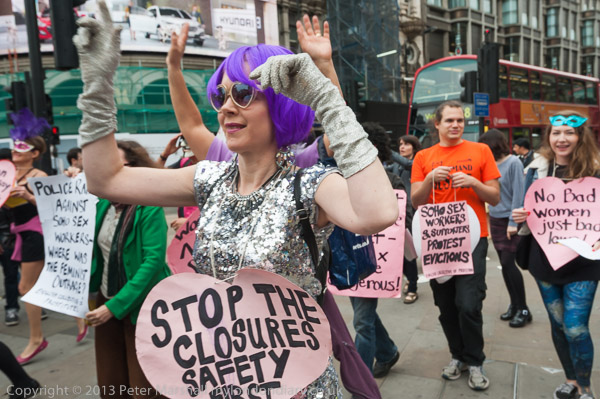
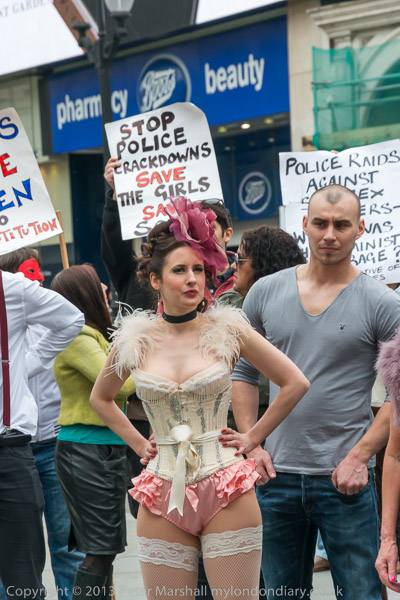
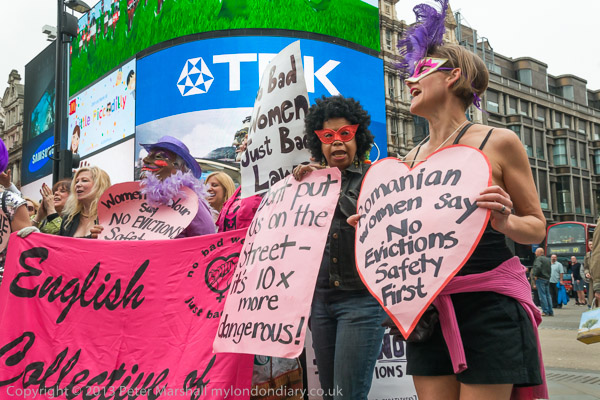
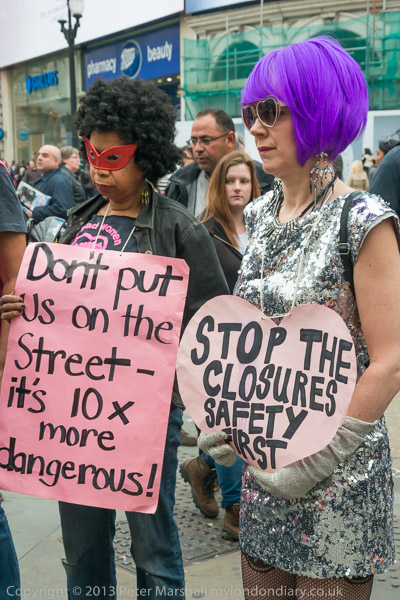
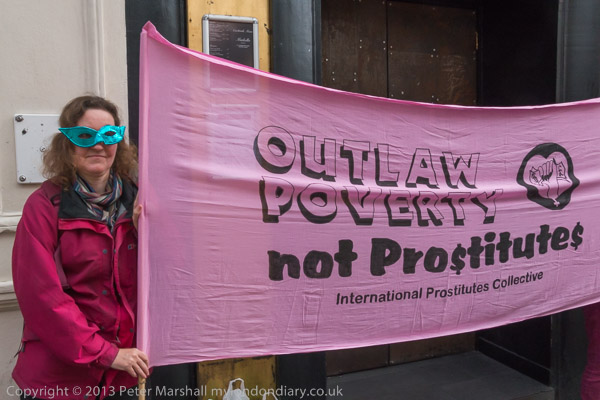
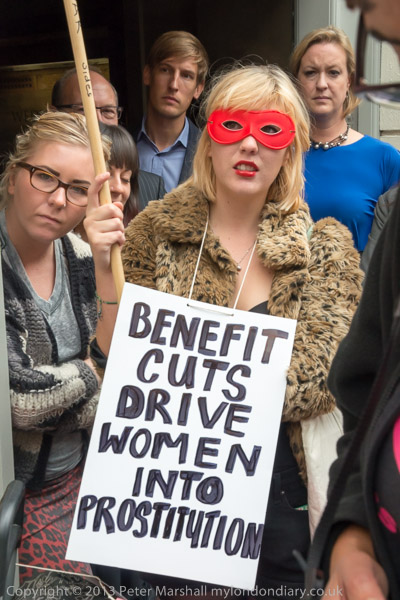
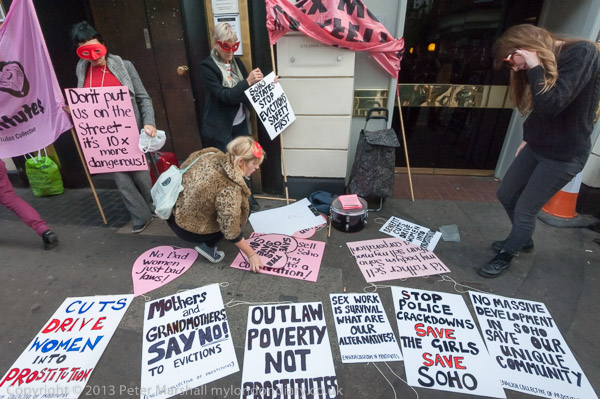
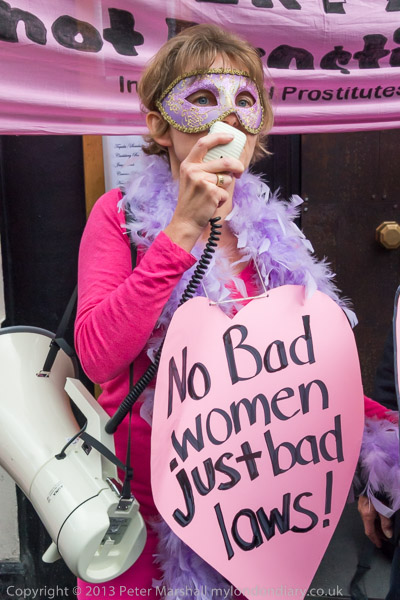
Police & Developers Evict Soho Working Girls – Greek St, Soho

Sex Workers, Gurkhas, Cannabis & Shaker

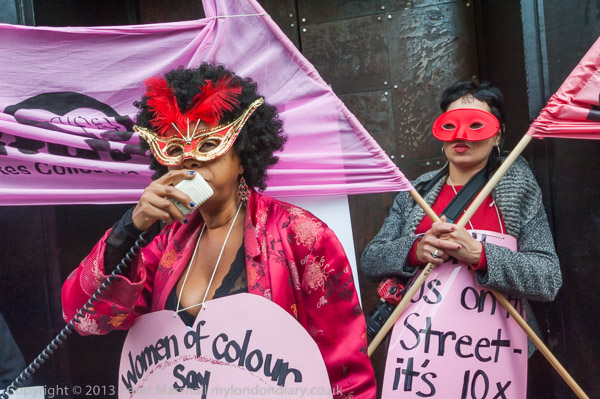
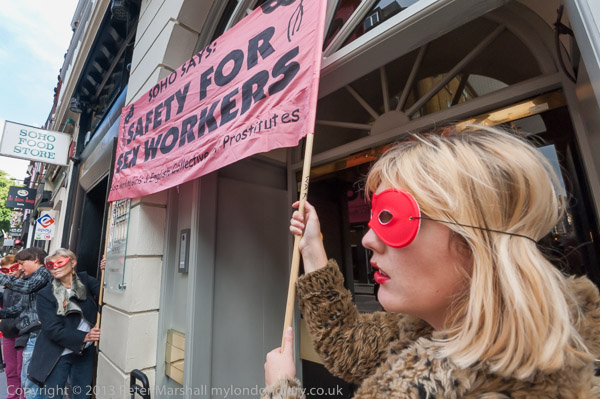
Although the immediate cause of this protest was the eviction of sex workers from flats in Romilly Street where they were operating within our laws restricting prostitution, the evictions were not at base about the activities of the women concerned but a result of property developers seeing enormous profits to be made by emptying properties in the area and redeveloping them.

Soho is particularly at risk from hugely profitable development as hotels and luxury flats because of its reputation and unique ambiance, which has largely derived in the past from its association with such risqué activities as strip clubs and models offering personal services as well as its restaurants and shops offering foreign delicacies unknown in the UK outside its boundaries.

Of course times have changed, and much of Soho is now Chinatown, but still its old reputation and some of those old activities remain, though many are fast disappearing. And while the tourists flock in, much of what attracts them is no longer there.

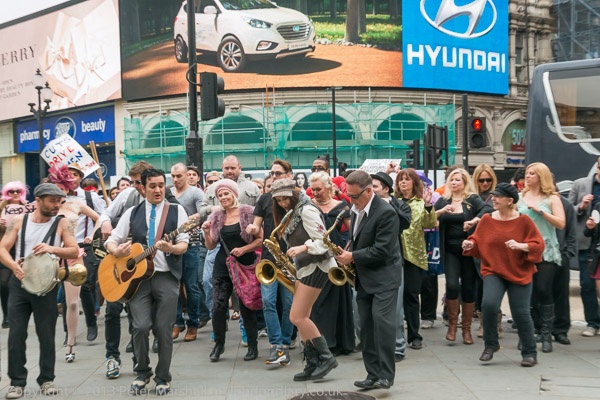
Sex remains a powerful attraction, and it was noticeable that there was far more media attention to this protest than most. Most of the masked women taking part in the protest were supporters of the ‘working girls’ from groups including the organisers of the event, Women Against Rape and the English Collective of Prostitutes (ECP) who I knew from other protests.

The police who issued notices to the property owners alleging that the properties were brothels are widely seen as working on behalf of the prospective developers, and owners Soho Estates whose managing director came out to speak at the event also have a financial interest. They could have stood up to the police intimidation and investigated the situation so they could assure the police that the activities in the flats were within the law, but failed to do so.

A speaker from the Soho Society told the protest that the activities of the women were one of the oldest traditions of the area, and were causing no problems with their neighbours and the many other trades of the area. Previous similar evictions have attracted local petitions signed by thousands and the ECP press release stated “Many express fears that gentrification is behind attempts to close these flats and that if sex workers are forced out it will lead the way for other small and unique businesses and bars to be drowned out by major construction, chain stores and corporations.”
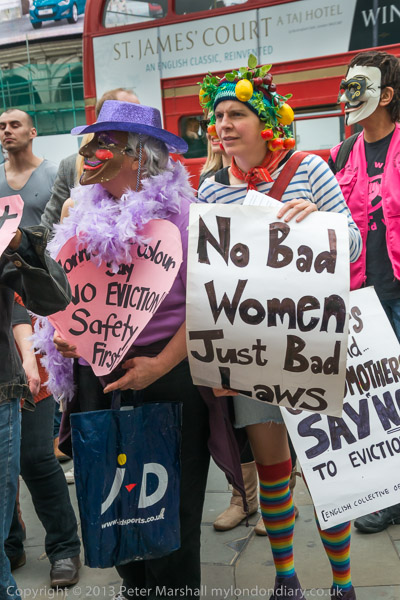
More at Police & Developers Evict Soho Working Girls.


Gurkha Veterans Demand Justice – Old Palace Yard, Westminster

Sex Workers, Gurkhas, Cannabis & Shaker

Elderly Gurkha veterans living in the UK did not benefit from earlier campaigns for fair treatment and most living here are in extreme poverty.

This was one of a number of protests every Wednesday and Thursday opposite the Houses of Parliament inviting the government to hold talks with them and if there was no progress by later in October they said they would begin a programme of nonviolent resistance (Satyagraha) with hunger strikes, beginning with a “13 days relay hunger strike in the name of the 13 Ghurka VCs which would then be followed by a fast-unto-death” if there was no progress.

Gurkha Veterans Demand Justice


Vigil for Shaker Aamer – Parliament Square

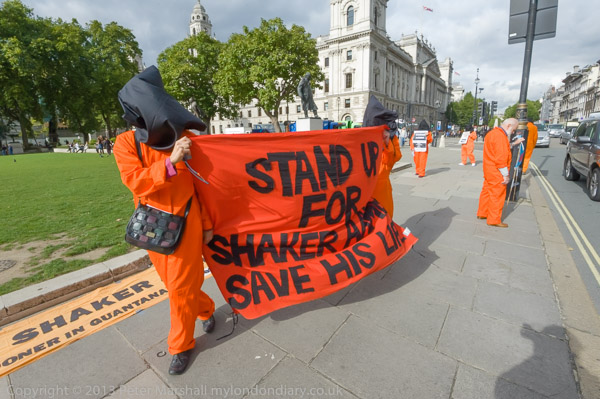
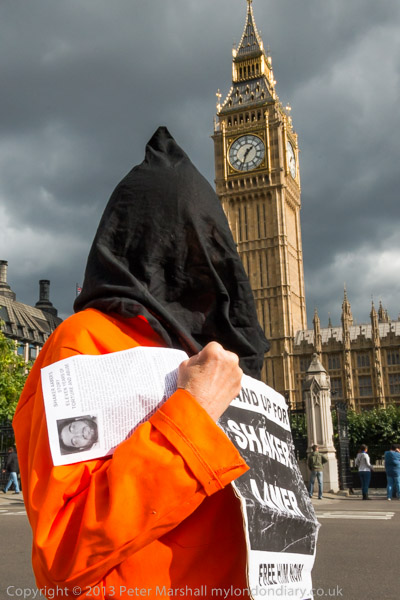
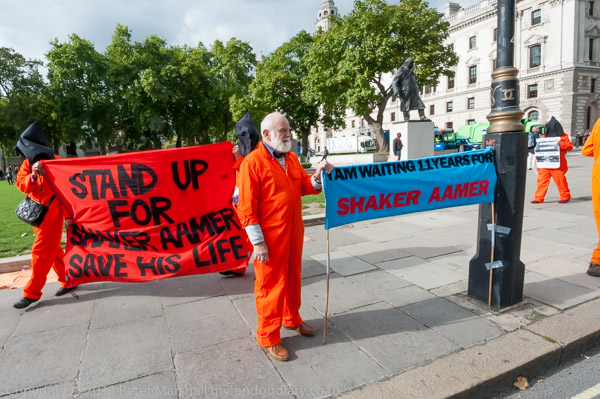
I paid a short visit to the campaigners from the Save Shaker Aamer Campaign who earlier in the year been holding a lunchtime protest on the pavement in Parliament Square facing the Houses of Parliament, standing out in their orange jumpsuits and black hoods on every day parliament was in session.

Shaker Aamer, a British resident still then held at Guantánamo was one of the first to be sent there after having been handed over the the US authorities for a cash reward. Although there was no evidence against him he had suffered years of torture in which the UK intelligence services had been implicated. Despite being cleared for release in 2007 and again in 2010 he was still being held, probably because his testimony when released would cause severe embarrassment to both US and UK intelligence agencies.

This protest was the start of a new series of regular weekly vigils seeking to draw attention to the failures of both President Obama and David Cameron, as well as demanding a full Parliamentary debate about Shaker’s case.

Vigil for Shaker Aamer


Cannabis Hypocrisy Protest – Westminster

An MS sufferer at the event

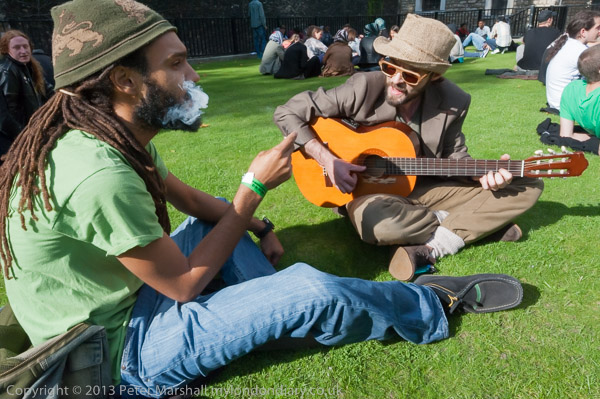
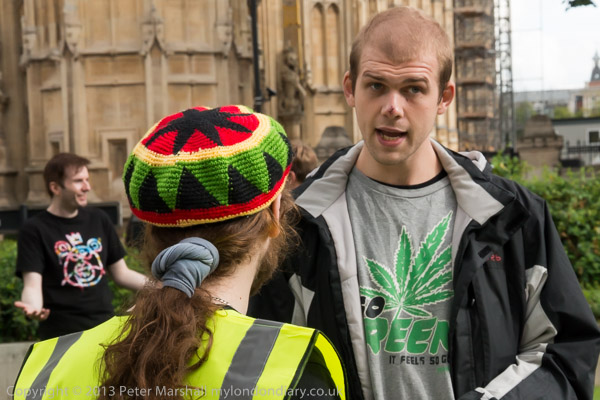
Campaigners had come to College Green, close to the Houses of Parliament to call for reform of the laws about cannabis, in particular to allow its medical use for MS sufferers. Legal medical cannabis is mainly available here to MS sufferers who can afford to pay its very high price.

Unsurprisingly it was a rather laid back protest, beginning rather late and not really getting started the whole 90 minutes I was there before giving up and going home as they were still waiting for the megaphone or PA system to arrive.

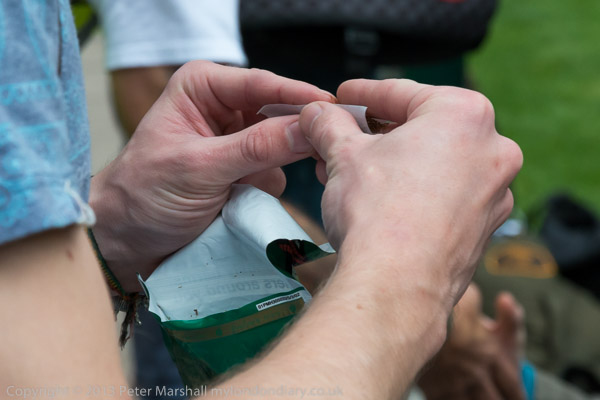
By the time I left there were quite a few people sitting around on the grass smoking. As I commented in a caption, the photographs don’t show what they were smoking, but the smell was unmistakable, and after I while I began to feel just a little unusual. Perhaps the two police officers who strolled over to take a look had no sense of smell or perhaps they simply felt that there was little point in taking any action.

Years ago I had to give lessons against drug use to 16-18 year olds as a part of a ‘personal and social education’ programme, and was aware that many of them had rather more experience in the area than me. But the materials from the Home Office that I relied on made clear that cannabis was considerably less harmful than alcohol or tobacco. Addiction to anything is a bad thing, but so too is the criminalisation that results from our current drug laws, which also fuel an illegal and highly profitable drug business. Appropriate reform, which would certainly include easier access for medicinal use, is long overdue.

Cannabis Hypocrisy Protest


Chinese New Year 2005

Chinese New Year 2005

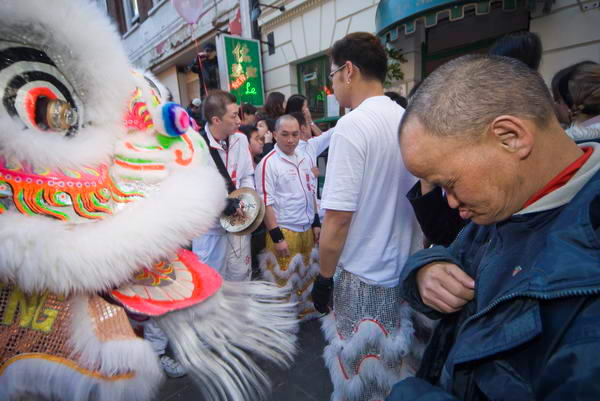
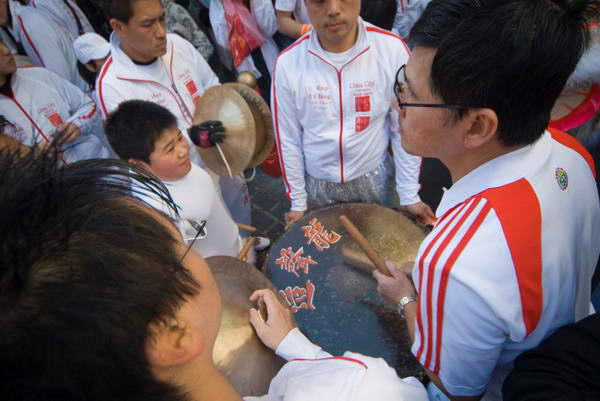
On Sunday 13th 2005, 17 years ago, London was celebrating the Chinese New Year of the Rooster which started the previous Wednesday – it was 4072.

Chinese New Year in Soho is something I’ve avoided in more recent years – as I wrote in 2005: “I used to enjoy the rather anarchic celebrations in Chinatown, but it’s now more of an ordeal, with far too many people coming in to watch and too much organisation.”

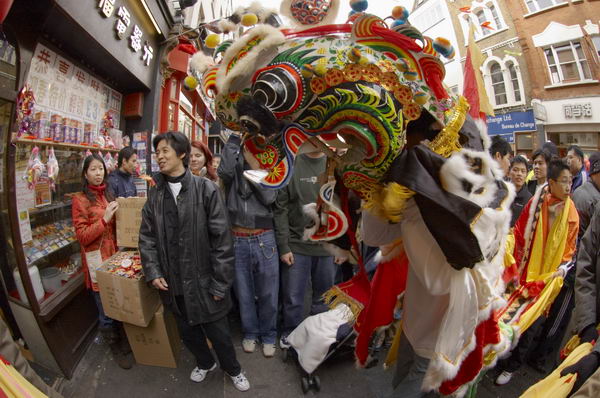
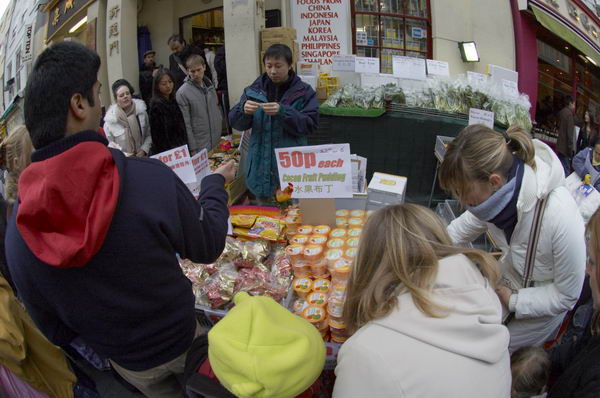
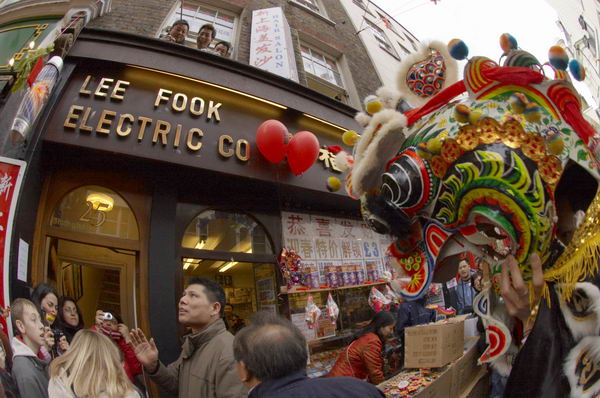
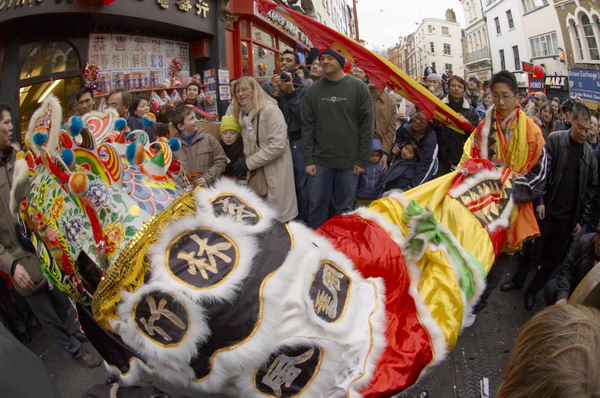
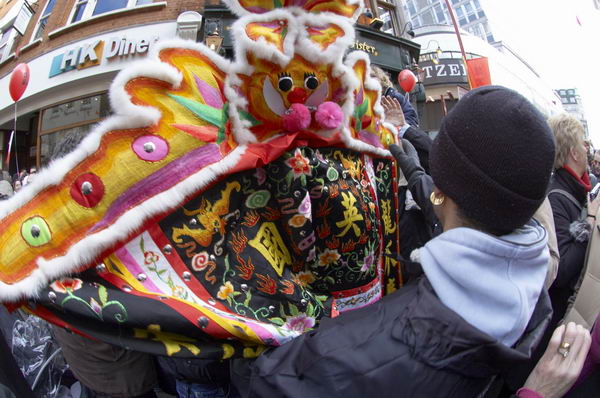
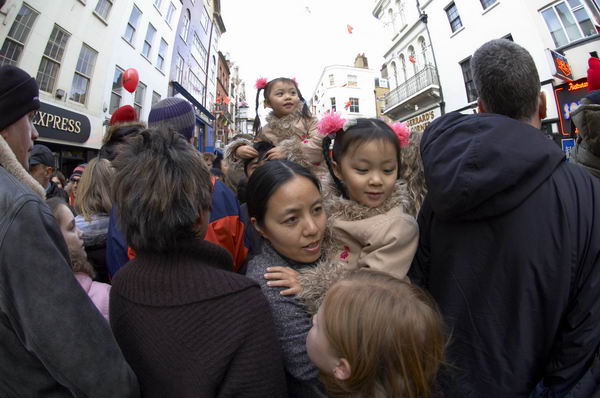
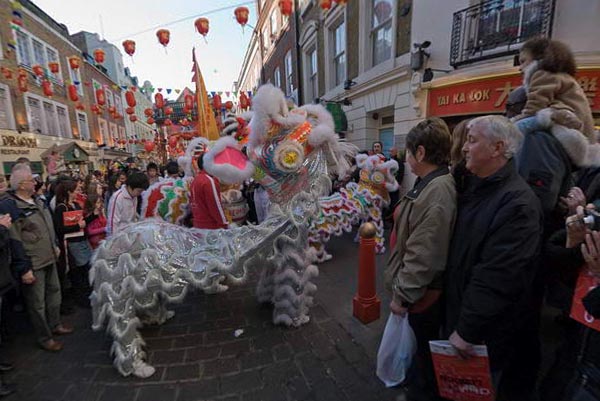
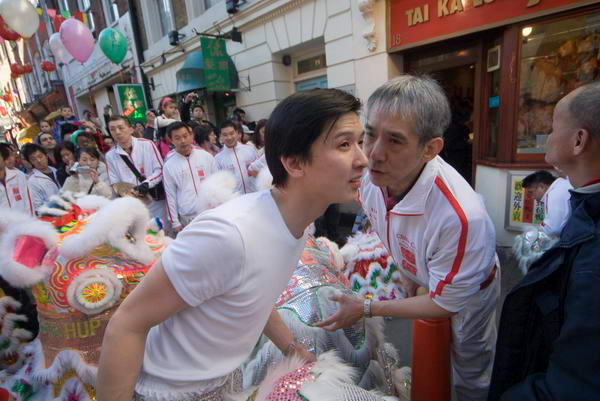
Trying to photograph in such crowded situations was a problem, and one I confronted in two main ways in 2005, something reflected in the two pictures above. At the top is a picture taken standing back some distance with a telephoto lens, while the lower picture is taken with a fisheye lens, both on a Nikon D70 DX camera.

De-fished version

Usually now when I use the a fisheye lens like this, I would convert the perspective to give straight verticals – as in the above image. But back in 2005 I didn’t have a good plug-in to do this conversion, and although it was possible with various programmes I was using for making panoramas it was a rather time-consuming process.

For this particular event I rather liked the fisheye effect, at least in some pictures. Although it does clearly misrepresent those faces close to the edges of the picture, for me it pulls the eye towards the centre of the picture and perhaps gives a greater impression of the crowding I was working in.

A small problem is that the image you see in the viewfinder is the fisheye one, and not that in the ‘de-fished’ version. But as you can see, the fisheye image which you see has the same horizontal limits at the centre of both the horizontal and vertical sides, with just a little of the image towards the four corners being lost. It’s still possible to frame accurately when working.

It’s not I think correct to call the effect of the fisheye lens ‘distortion’. It is simply a different way of recording the subject on a flat rectangle. Most fisheyes I’ve used (and I own four different examples, for DX and full-frame Nikon, for Fuji and for micro 4/3) seem actually to have rather less actual distortion than my ultra-wide rectilinear (i.e. ‘normal’) lenses.

In the de-fished image you can see that as well as the verticals of the building being straight, people at the edges of the picture are also shown naturally, unlike in the fisheye version. I was also taking some pictures with an ultra-wide 12-24mm lens (equivalent to 18-36mm full-frame) and with that at its widest faces at the edge would have been rendered a little stretched out horizontally.


I’m not sure what some major agencies would make of conversions using software like this, whether they would regard it as an unacceptable alteration of the image. For me its just one of many acceptable corrections of the image, but clearly it does alter the image as recorded by the camera. It would be possible to design a specialised wide-angle camera which carried out the correction in firmware but the market for this would probably be small. Rather it could be provided into normal digital cameras as an option – far more useful than all those special effects which clutter the menus on many cameras now.

More pictures on My London Diary – scroll down a little from the top of the page.


Chinese New Year 2008

Back in 2008 I photographed the London celebrations in Chinatown for the Year of the Rat, which took place on February 10th, 2008, and wrote this short text:

Chinese New Year Celebrations, Soho

Soho, Westminster, London. Sunday, 10 Feb, 2008

The Chinese New Year celebrations in London have rather got out of hand, with more and more people flooding in to Chinatown, and an incredible amount of sponshorship for the event. There is strong evidence in the programme, now 120 thick pages mainly of advertising, along with some of the most tedious photographs you will ever see. The genuinely useful content in it could have been handed out on a much more user-friendly 2 sides of A4.

But if you can avoid the worst of the crowds, it’s still a fun event and at times spectacular. But there are 51 other weekends of the year when its probably more interesting to come and see Chinatown how it really is.

http://mylondondiary.co.uk/2008/02/feb.htm#chinese

This year the celebrations are almost certain to be considerably more muted and mainly on-line. The Chinese New Year is actually in two days time on 12 Feb and in more normal times would have been celebrated next Sunday rather like in 2008 with crowds in Soho and a procession, with events in Trafalgar Square and Leiscester Square. But for the Year of the Ox I think you will have to make do with a virtual celebration – and perhaps a Chinese takeaway.

It’s a while since I’ve actually gone to the celebrations in Soho. Said to be the largest celebrations of the New Year outside Asia, the event has become far too crowded for me, and frustrating to try to photograph. Back in 2008 I went early, before the crowds built up, but later it became very hard to get the pictures I wanted.

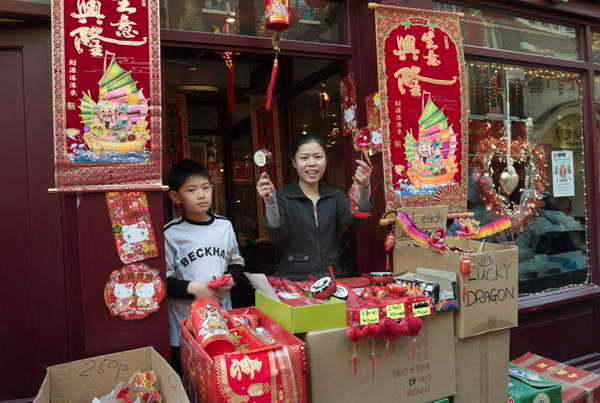
Using a fisheye lens did enable me to find a little space where there was really none; some of these pictures I ‘de-fished’ to give straight verticals but others I left with the obvious curvature. But more of the pictures were taken with the 12-24mm Sigma lens, giving a very wide rectilinear view even on the DX Nikon D200 I was then using.

Some of the other images – including three here – were taken on a Leica M8, mainly with a 35mm Summilux F1.4 lens. Although this was fine when taking pictures, it was an older lens and required considerable fiddling with software to get usable results, as not only did the sensor vignette badly, but the vignetting came with colour casts.

The M8 was a good black and white camera, but something of a disaster with colour. Leica and most early reviewers had failed to notice that because the M8 sensor had no IR filter it recorded much black clothing as strongly magenta, and there were other incorrect colours. The company eventually supplied those who had bought the camera with two IR cut filters, but that limited my choice of lenses to two – and one of my favourite lenses could not take a filter.

Given those limitations, the M8 was fine to use, with a simple interface that enabled you to take still pictures without the huge thick manuals that most digital cameras need. But I soon get fed up with all the hassle of processing the images, and got rid of it. It was an expensive experience that soured my whole view of Leica, and why I now use Fuji cameras rather than Leica.

We can also wish ourselves Happy New Year “Xin Nian Kuai Le” or “San Nin Faai Lok” and hope for ‘Happiness and prosperity!’ doing our best to pronounce 恭喜发财 / 恭喜發財, something like ‘gong-hey faa-choy

Chinese New Year Celebrations, Soho


All photographs on this and my other sites, unless otherwise stated, are taken by and copyright of Peter Marshall, and are available for reproduction or can be bought as prints.


1987: More Soho

Dance shop, Charing Cross Rd, Soho, 1987 787-2k-41-positive_2400
Dance shop, Charing Cross Rd, Soho, 1987

It’s always difficult to know where London’s districts begin and end, and sometimes it is rather a matter of personal opinion. There are some definite boundaries – postal districts and borough boundaries – though these seldom coincide with our perception of place, and most people – unless they actually live there are unaware that in central London you may be in Camden or Westminster etc. The City is a little more obvious, with its borders on some main streets clearly marked, but who would know when crossing the Charing Cross Road you might move from Westminster into Camden.

Poland St,  Soho, Westminster, 1987 87-2j-64-positive_2400
Poland St, Soho, Westminster, 1987

Names too change with the years. Fitzrovia for example only began to be used in the late 1930s, and other older area names are now seldom used. Building tube stations led to many of their names being used for areas which previously went under other names, and estate agents are notorious for promoting properties into nearby more salubrious areas – or inventing new area names, often by adding the word “village” to an existing name.

Never Park Here, Falconberg Mews, Soho, Westminster, 1987 87-2j-23-positive_2400
Never Park Here, Falconberg Mews, Soho, Westminster, 1987

Soho is perhaps one of the more clearly defined of all London areas, though some might quibble slightly at Googles definition, clearly bounded by major roads – Oxford St, Regent St, Shaftesbury Ave and Charing Cross Road. Many of us would also include Chinatown in its ambit, perhaps going south down Haymarket as far as Orange St to include Leicester Square. And perhaps some of the fringes just across Oxford St might qualify…

Carnaby St, Soho, Westminster, 1987 87-2i-21-positive_2400
Carnaby St, Soho, Westminster, 1987

On the streets themselves, the more modern street names – since the mid 1960s – include the borough name, but many London streets have proudly retained their older signs, sometimes with a postal district (though sometimes the earlier version.)

Taylors Buttons, Silver Place, Soho, Westminster, 1987 87-2h-35-positive_2400
Taylors Buttons, Silver Place, Soho, Westminster, 1987

Like all things, Soho is defined by what it isn’t. It isn’t Mayfair or Fizrovia or Bloomsbury or St Giles or Covent Garden or Westminster (the area not the Borough – which all or almost all of it is inside) or St James. And it’s not just a matter of geography, but also of character.

Walker's Court, Soho, Westminster, 1987 87-2h-25-positive_2400
Walker’s Court, Soho, Westminster, 1987

And it was that character which was uppermost in my mind as I made these pictures.

You can see more of them on page 2 of my Flickr album 1987 London Photos.


All photographs on this and my other sites, unless otherwise stated, are taken by and copyright of Peter Marshall, and are available for reproduction or can be bought as prints.


More 1987 – Mainly Soho

Camden Town Cemetery, St Martin's Gardens, Camden St, Camden, 1987 87-1k-46_2400
Camden Town Cemetery, St Martin’s Gardens, Camden St, Camden, 1987

The slow process of putting up my old black and white pictures is continuing, thanks to the lockdown leaving the time on my hands. Although I’m going out of the house for exercise, that only occupies around 50 minutes of the day – and perhaps another half hour to recover.

This picture of the piled up gravestones in Camden Town Cemetery was taken in January and is one of the last from that month I’ve put on line. Although I’ve always liked to wander in cemeteries, often the only real places of peace and quiet in cities, and often good places to rest and eat my sandwiches, I’ve generally tried hard to avoid taking too many pictures in them unless there is a very strong reason to do so.

Partly because as a teacher of photography I saw far too many pictures by students of gravestones and monuments. They were easy to photograph, didn’t move much or complain about being photographed and supposedly said something profound about the human condition. At the in-house moderation of student photography coursework from across the country it was never long before I or another assistant examiner would be exclaiming “Not another sodding angel!”.

Wardour St, Soho, Westminster, 1987 87-2f-55-positive_2400
Wardour St, Soho, Westminster, 1987

In February I turned my attention to Soho, where photography was not always welcomed, though I didn’t intend to emphasise its more sordid aspects. It was one of London’s most varied and interesting areas, and remains so despite the ravages of property developers and Westminster Council.

But I didn’t avoid photographing the frontages offering ‘Intimate Bed Show – No Extras‘ though I didn’t go inside and photographed them in the early mornings when there were few touts or barkers around and any workers who might have occupied them were at home in their own beds. Nor did I meet the ‘Very Sexy Busty Brunette Model‘ whose notice was by a door in D’Arblay St, not even to make my excuses and leave.

Shop WIndow, Berwick St, Soho, Westminster, 1987 87-2f-46-positive_2400

But Soho was remarkable for the variety of shops, a place were almost everything was on sale – and sometimes it was difficult to know exactly what was on offer.

Butterfly, Upper James St, Soho, Westminster, 1987 87-2g-14-positive_2400
Butterfly, Upper James St, Soho, Westminster, 1987

There is still a clothes shop on the corner of Upper James St and Beak St, but it is now larger and more corporate, with a bland plate glass frontage, and Butterfly proved to be as ephemeral as its name suggests. Many other Soho businesses were longer lasting, and Randall & Aubin, late Morin and Cavereau remains in place on Brewer St, though many of the older continental businesses have now gone.

Randall & Aubin, Charcuterie, Brewer St, Soho, Westminster, 1987 87-2e-62-positive_2400

If you look through my pictures of Soho from 1987 you will find some showing the increasing Chinese presence in the area, including one of a crowd watching the New Year celebrations, but far less than in my later pictures of the area.
Charles II, Cibber, Soho Square, Soho, Westminster, 1987 87-2e-24-positive_2400
Charles II, Soho Square, Soho, Westminster, 1987

Soho Square still looked much the same when I was last there a few months before the lockdown, though I do wonder if Cibber’s statue of Charles II looks rather more worn now. Though we may now regret the restoration of the monarchy and feel that the puritanical excesses of the Commonwealth would better have been ended without bringing back a king the so-called ‘Merry Monarch’ does sound in some respects an improvement on our present royal house. And a king with no legitimate children who acknowledged at least a dozen by various mistresses is perhaps a suitable character to be remembered in Soho.

Haverstock Hill, Chalk Farm, Camden, 1987 87-1a-12_2400
More at 1987 London Photos

All photographs on this and my other sites, unless otherwise stated, are taken by and copyright of Peter Marshall, and are available for reproduction or can be bought as prints.


Against Hate Crime

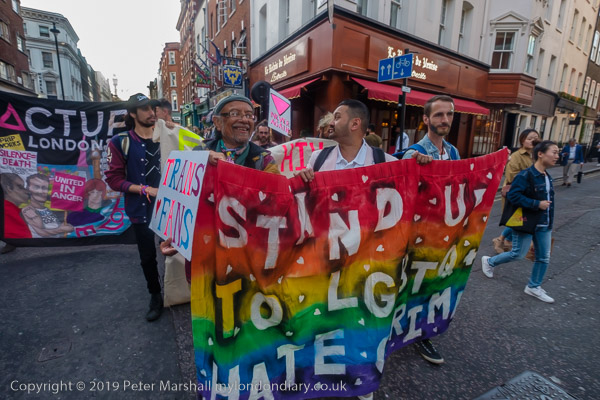
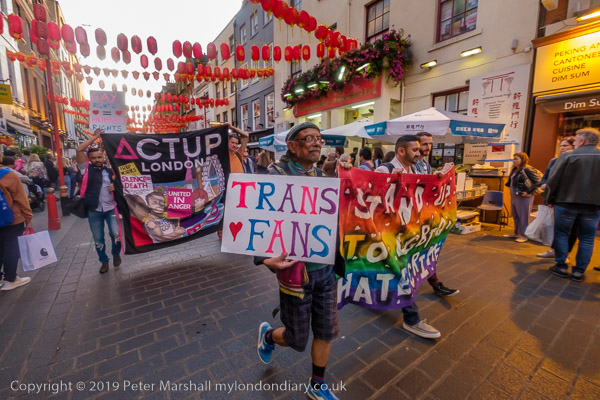
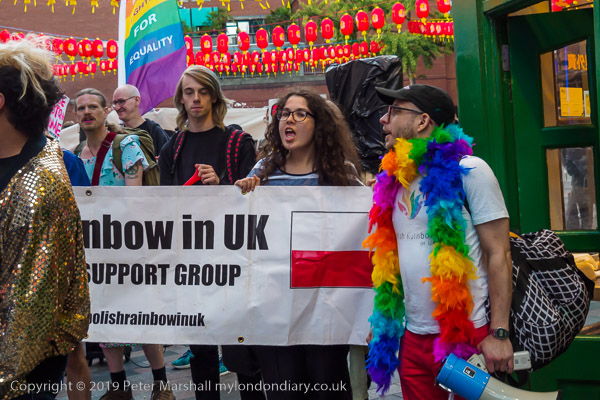
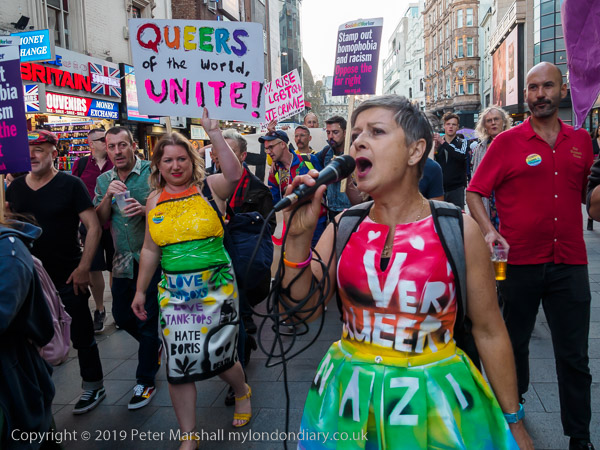
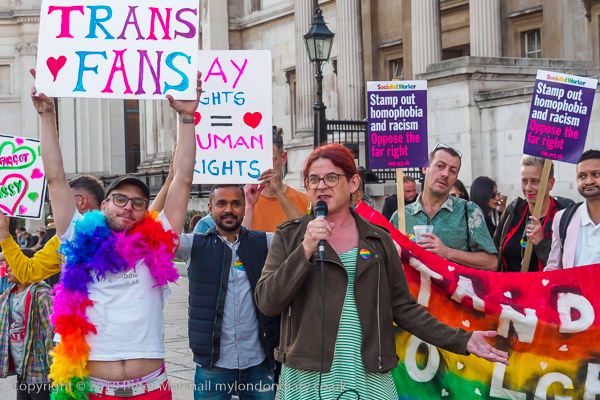
I’d caught a train that should have got me to London in good time to meet the Stand Up to LBGTQ+ Hate Crime protesters outside the Admiral Duncan pub in Soho, chosen because of the nail bomb attack on this gay pub by a Nazi supported in 1999 that murdered three people and injured many more. It was the second in a series of protests to combat the nearly 150% increase in anti-LGBT hate crime in the UK between 2014 and 2018. The campaigners say we should all be able to walk the streets without fear. 

But the South West Railway had other ideas, and my train made several unplanned stops on its journey into Waterloo, arriving around 40 minutes late – over double the normal journey time. It’s hard to understand quite why South West Railway has such a poor record of time-keeping. They use fairly recent rolling stock with automatice doors that cut down calling times at stations by perhaps a minute at each stop. The trains have better acceleration than the older units and I think faster maximum speeds. They cheat by shutting the doors 30 or 45 seconds before the train time – so you may miss the 17.38 unless you are actually there by 17.37:30 – unless it is running late. And most years they manage to add a minute or so to scheduled running time. Back when I first moved to where I now live, the ‘fast’ trains used to get to London in under 30 minutes; now they take 35, an unremarkable speed of 33.6 mph. They are even slower at weekends.

I ran from the station to the bus stop, and fortunately didn’t have long to wait, though buses are now always slow in evening rush hour traffic, though still usually faster than walking over anything but the shortest distance. But I’d known roughly how long it would take and had allowed for that in planning my journey. I ran from the bus stop down Old Compton St, annoyed at having missed the start of the event but hoping I could still find them on their march.

Fortunately they had begun a few minutes later than planned, and I caught them just a few yards from the start of the march, though I was too out of breath to take many pictures immediately. But I was able to go with them on their march through Soho, where they attracted considerable support from many on the streets outside the clubs and bars.

The light was going down noticeably as they marched, though it was still 25 minutes before sunset when they reached Trafalgar Square. But some Soho streets are quite narrow and the light can be low. Trafalgar Square is wide open and there was more light. I was working with the Olympus E-M5II on auto ISO and it wasn’t long before it was sometimes reaching the maximum I’d set of ISO 6400. The results at this setting were noticeably noiser than at ISO3200, but at this and lower ISOs the camera was a pretty good match to the Fuji XT1, which started the evening at ISO 1600 but I later switched to ISO 3200. With a wideangle 10-24mm on this camera I didn’t need to go higher.

Trafalgar Square had been chosen for the end of the march partly because it was the scene of the murder of Ian Baynham in a homophobic attack almost exactly 10 years earlier, but also because it is a public place with a long record of protests. Protests in the main area of the square now require the permission of the Mayor of London, but the North Terrace in front of the National Gallery, though pedestrianised, still counts as the public highway and protests such as this are allowed.

More at Against LGBTQ Hate Crime


All photographs on this and my other sites, unless otherwise stated, are taken by and copyright of Peter Marshall, and are available for reproduction or can be bought as prints.

There are no adverts on this site and it receives no sponsorship, and I like to keep it that way. But it does take a considerable amount of my time and thought, and if you enjoy reading it, please share on social media.
And small donations via Paypal – perhaps the cost of a beer – would be appreciated.
Shot in Soho

It’s a while since I’ve been to the Photographers’ Gallery, which once used to be a regular place to call. I was a member for many years, probably more than 30, and used to attend most of the openings there, as well as dropping in occasionally when I was in town, perhaps to have a coffee, lock and the pictures and browse in the bookshop, as well as attend some of the lectures and workshops that took place there.

Back in the old days the gallery had an extensive library, mostly I think donated by photographers and run by volunteers, and it was a good place to visit and study books that were no longer available or too expensive to buy.

Back in the 1980s I was a member of a photographers group that had regular meetings there mainly looking at work that others had brought in, and some well-known photographers would drop in and show a portfolio and comment on our work. It was a part of the gallery’s education programme that that was needed for their charity status, but one that their education officer found hard to handle, and was very pleased to be able to drop in 1987.

I also worked at one time with a group set up to produce educational material there, getting some time release from the college where I was working. I’m not sure that we ever produced any material but it was interesting and fun to do.

There was a different atmosphere to the place in the old days. I used to go to the bookshop or café not just to look at books and drink coffee but for intelligent conversation about photography both with staff and other users. This just doesn’t seem to happen any more.

In those days the gallery was in Great Newport St, just a short walk from where I often find myself with some spare time in Trafalgar Square. Nowadays I tend to go into the National Gallery or the National Portrait Gallery instead. Since 2009 The Photographers’ Gallery is now a little further to go in Ramillies St, but mostly I gave up going because so many shows there held little interest for me.

I continued being a member for some years, even though I only went very occasionally until one year the cost of membership increased significantly for me and others of advanced years when they removed concessionary membership rates. Of course I could have afforded it, though I’m not rich, but the jump in cost made me think whether it was worth it.

What got me thinking about this was an on-line post on the British Journal of Photography web site. Again I was a BJP subscriber for many years, when it was a weekly trade journal and as well as publishing some well-written reviews of equipment and exhibitions had a useful listing of exhibitions. Then the BJP was an essential guide to what was happening in photography in the UK, but at some point it morphed into a monthly doing what other photo magazines already did, often better, and sometimes mainly featuring work which was of little interest to me. There seemed little point in continuing my subscription.

Of course it does still publish some interesting articles on good work, and the article I read on the web site by Marigold Warner, Anders Peterson on Soho, Cafe Lehmitz, and intention is a fine example. 18 images by Peterson are in the show ‘ Shot in Soho‘, along with work by William Klein and several others at the Photographers Gallery, London until 09 February 2019 (more pictures, some rather boring on the press release) and I will be finding time to go along and see the show, probably after 17.00 when entry is free. Usually the gallery closes at 18.00 but stays open until 20.00 on Thursdays.