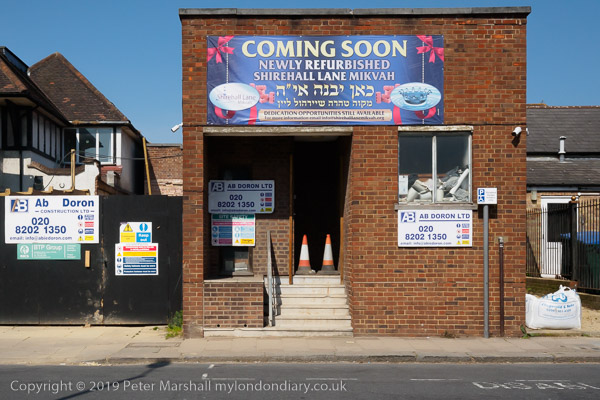
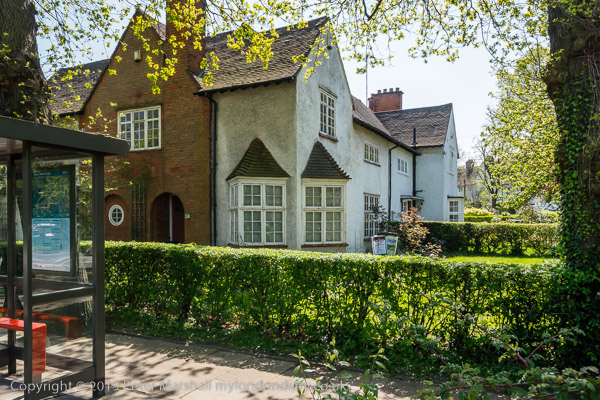
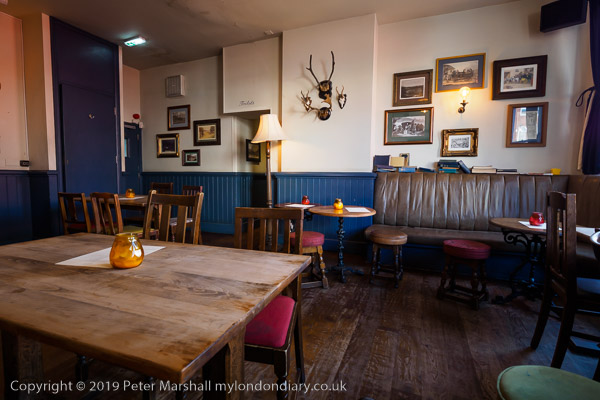
On the early May Bank Holiday – the one that should have been on May Day but isn’t – Linda and I walked another short section of the Capital Ring, from Highgate to Stoke Newington.
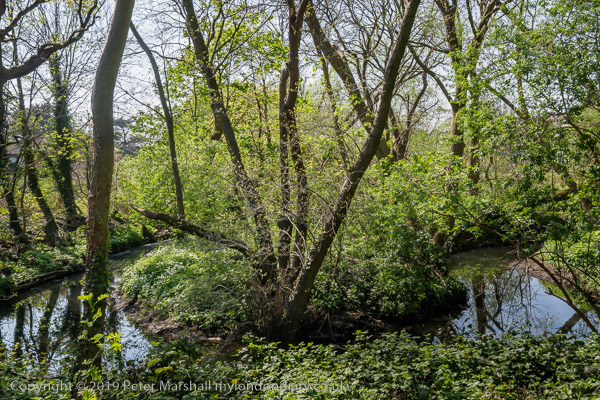
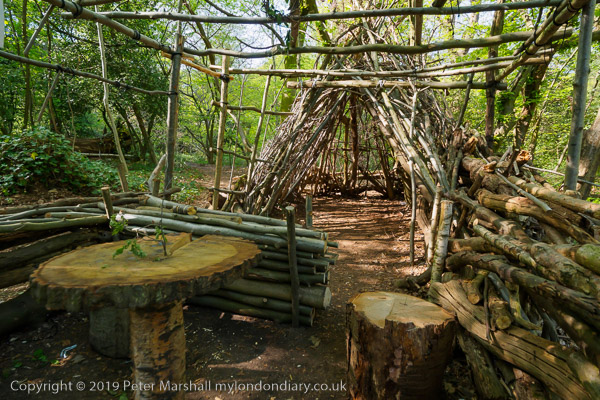
After a short walk along footpaths and roads, the route joins the former railway line which is now the Parkland Walk. Quite a lot of this is in a cutting, though there are some embankment sections, but except where the line has bridges over roads the view is often very limited by trees and bushes which have grown beside the former line.
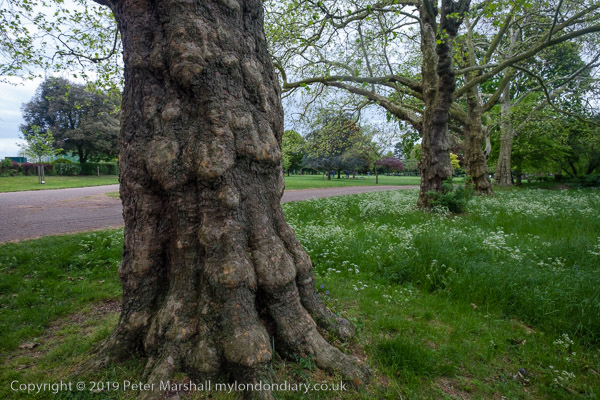
A long bridge takes you across the East Coast main line and its suburban outliers and into Finsbury Park, where both cafe and toilets were very welcome.
Across the park you join the New River, supplying water to London since 1613, thanks in particular to the efforts of Sir Hugh Myddelton, though I expect he had quite a few others to dig it for him (and it wasn’t his idea in the first place.)
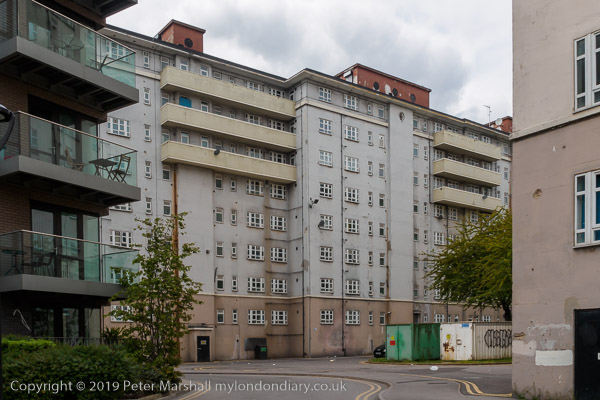
This goes along the edge of the Woodberry Down Estate, a large area bought by the LCC for housing in 1934, but only developed after the war as a ‘utopian estate of the future‘. Building began in 1949 and the 57 large blocks of flats were only completed in 1962. The estate included the country’s first purpose built comprehensive school and a medical estate opened by Nye Bevan, but unfortunately was allowed to deteriorate over the years, and beggining in 2009 became one of Europe’s biggest single-site estate regeneration projects.
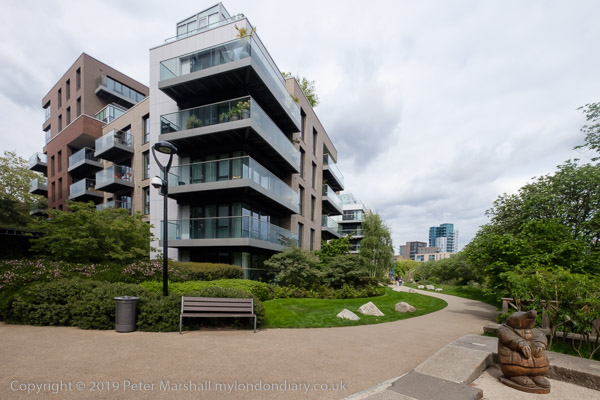
The controversial scheme by Berkeley Homes, Notting Hill Genesis and Hackney Council will involve a loss of around a fifth of social housing in the area estimated by the council at around 320 homes and has been described as ‘state-sponsored gentrification‘ with 3 bed flats selling for around £800,000 and many being bought up as investments by foreign investors rather than used as homes.
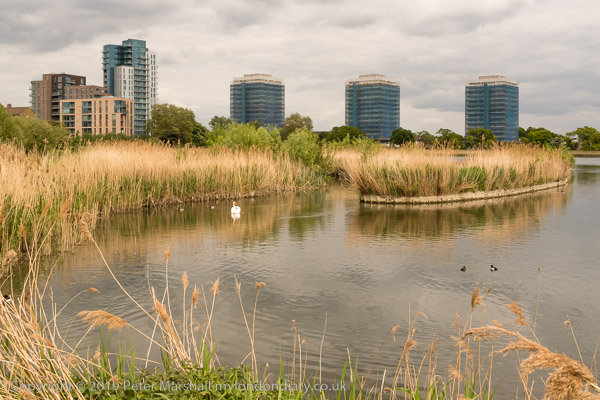
On the opposite side of the path, across the New River are large reservoirs of open water, part now a nature reserve with public access (and another tea room with toilets) and another used for sailing and other water sports. The remarkable Scottish Baronial castle built as offices for the water board is now a climbing centre.
From there it’s a short walk to Clissold Park (another cafe and toilets – this must be the best provided section of the Capital Ring) and Stoke Newington Church Street, often described as a ‘hipster hub‘. Next to the park are the two churches of St Mary, the older locked but with an atmospheric and overgrown churchyard and the Victorian built in 1858 to the design of Sir George Gilbert Scott, open and well worth a visit.
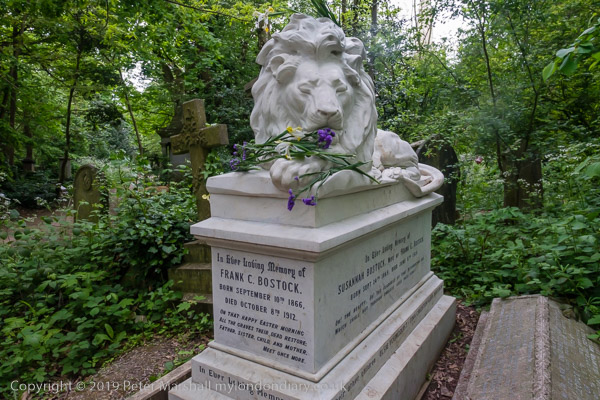
As a final climax we came to Abney Park Cemetery, one of London’s finest, set up in 1840 as a burial ground for non-conformists and the final resting place of around 200,000 Londoners, now a nature reserve. We looked up the train times from nearby Stoke Newington station and rather than rushing through to the station spent some time wandering around and finding a few of the better-known graves and some other interesting monuments.
In our rush from there the few hundred yards to the station I lost a little concentration and we went down to the wrong platform and caught a train going into London rather than out and had to re-plan our journey home. It turned out to be almost as fast.
More pictures from the walk at Highgate to Stoke Newington.
All photographs on this and my other sites, unless otherwise stated, are taken by and copyright of Peter Marshall, and are available for reproduction or can be bought as prints.
There are no adverts on this site and it receives no sponsorship, and I like to keep it that way. But it does take a considerable amount of my time and thought, and if you enjoy reading it, please share on social media.
And small donations via Paypal – perhaps the cost of a beer – would be appreciated.