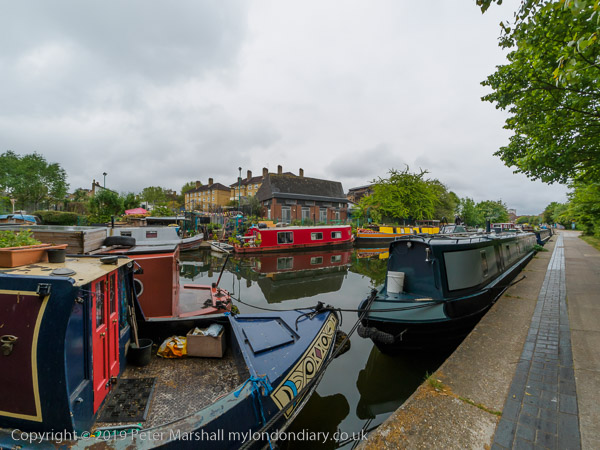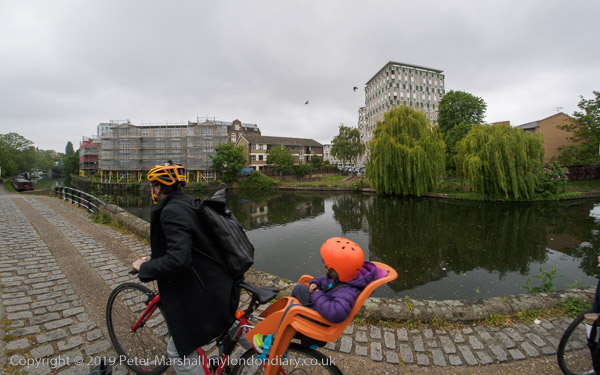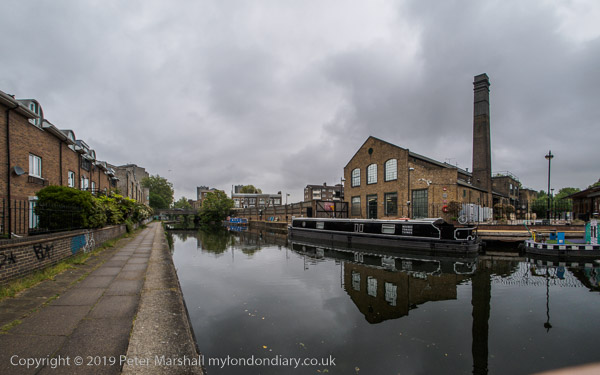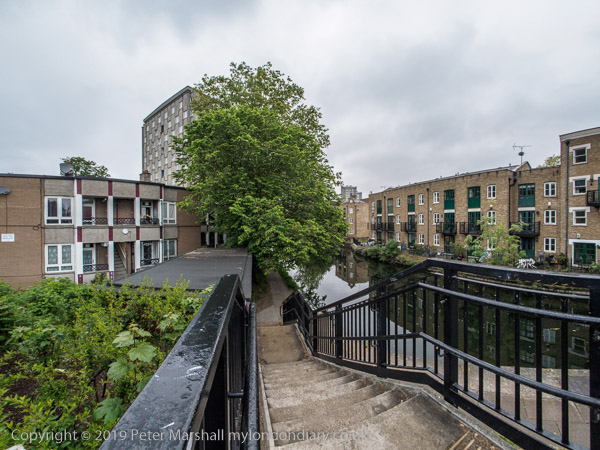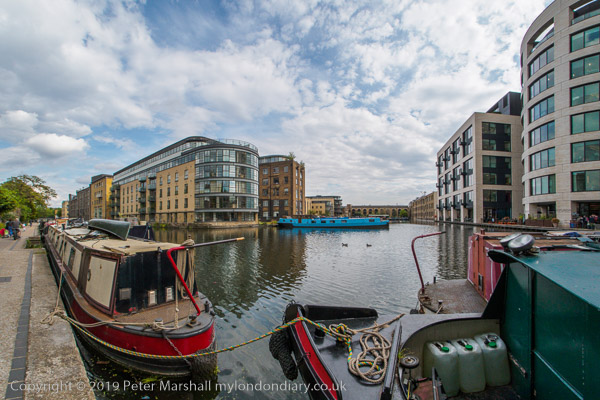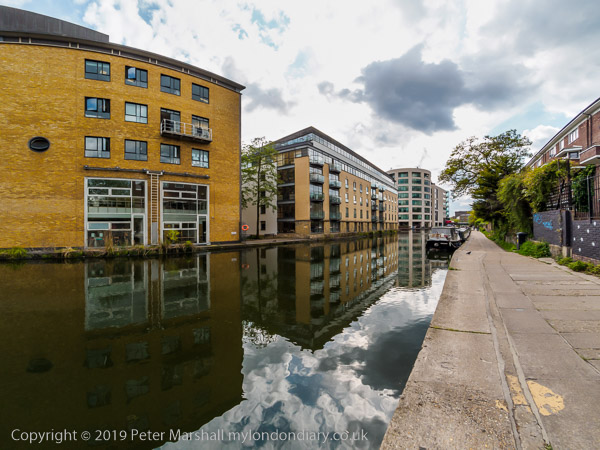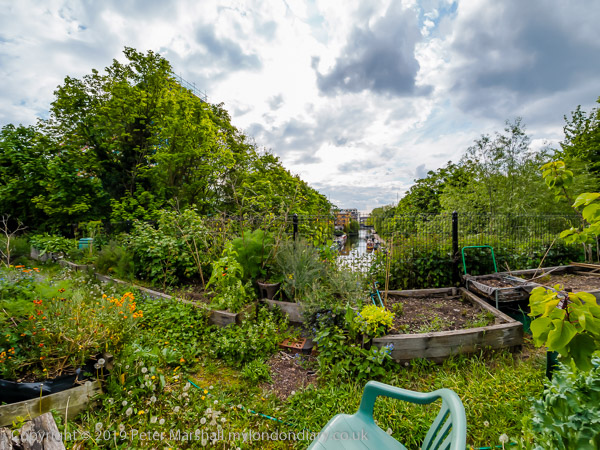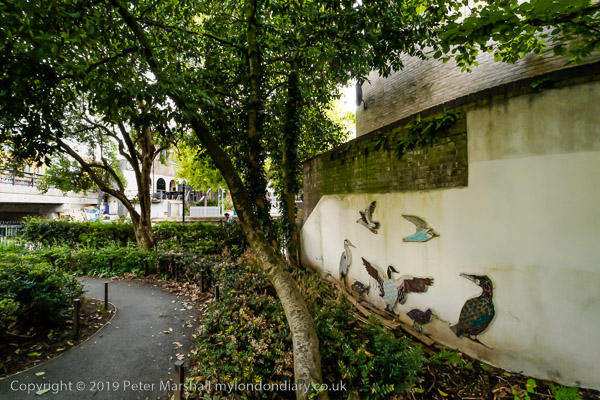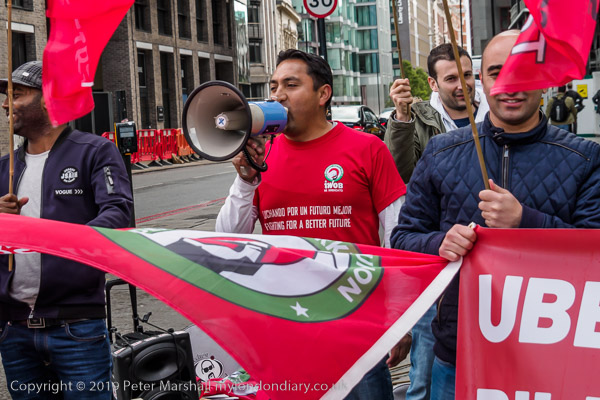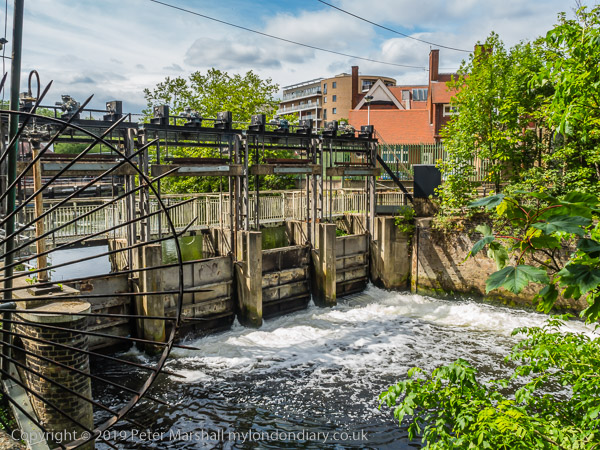
Stoke Newington to Hackney Wick

This short section of the Capital Ring is one of my favourites, or at least goes though some of my favourite areas, as this was the first time I’ve actually walked the whole section as a continous walk. It’s also one of the shorter sections of the London walk, which makes it rather easier for me now that my legs aren’t as young as they used to be.
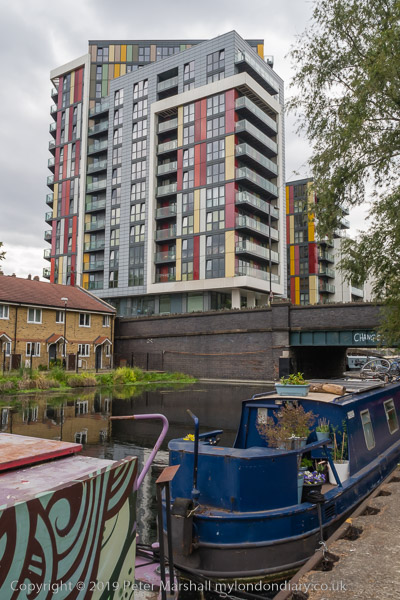
Walkers too often have a distance fetish, where the purpose of the walk becomes a matter of getting as many miles (or kilometres) as possible under your feet, heading from A to B without deviation or even stopping to enjoy the points in-between. I’m more of a wanderer and an explorer, happy to go where the mood or interest takes me. And if you look at the pictures you will find that we didn’t entirely stick to the published route.
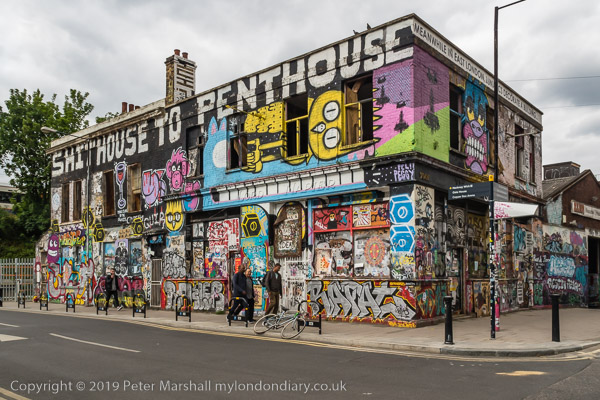
I spent around 20 years wandering around London in this way with a camera (or two), walking with a starting point and sometimes a few likely points of interest marked on a photocopied page of the A-Z, wandering until I felt tired or time was up, then finding a bus stop or station – never far away in London – to make my way home. It’s a practice that is celebrated in my self-published ‘London Dérives‘, images from 1975-83, still available from Blurb as a PDF or expensive hard copy – or direct from me.
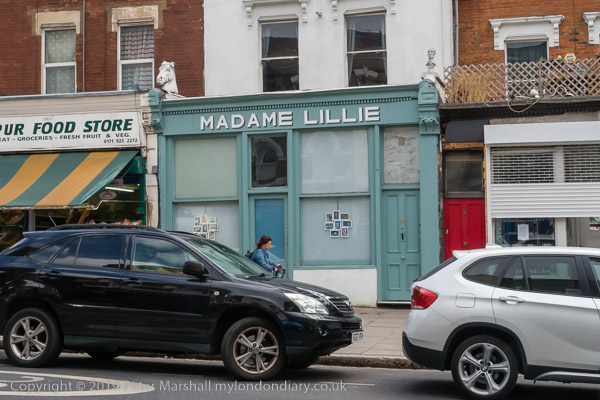
Some of these pictures were more like coming across old friends, locations that I’d photographed perhaps thirty or more years ago, while there were other parts of the route that I’ve walked many times over the years. Perhaps some of them are more pictures of loss than records of the present, taken because of what was there before rather than what is there now.
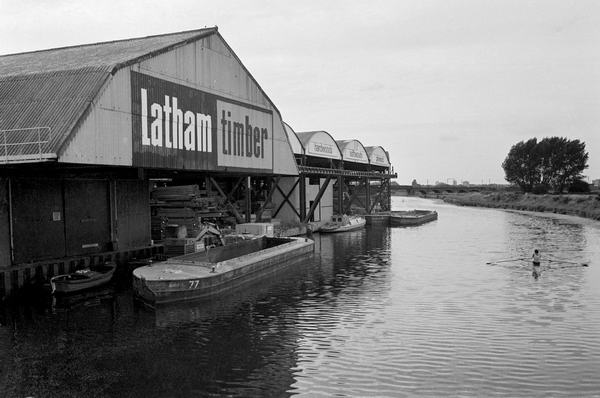
Around 1983 I made an unsuccessful attempt to get funding for a photographic project on the River Lea and the Lea Navigation, submitting a small portfolio of pictures I had already made of the area and a brief description, along with a letter of support from a well-respected photographer I knew and a CV in which the major (in fact the only significant) entry was a large exhibition in a provincial art gallery – much also now in another self-published book and web site.

At the time I was naive in the ways of the small elite controlling awards in the UK and failed to realise that the support of a leading member of the London Salon was the kiss of death. I didn’t make any further applications for funding and until 2003 the only official support I got for photographs came from the Arts Council poetry funds, payment for a portfolio and pictures in several issues of a magazine.
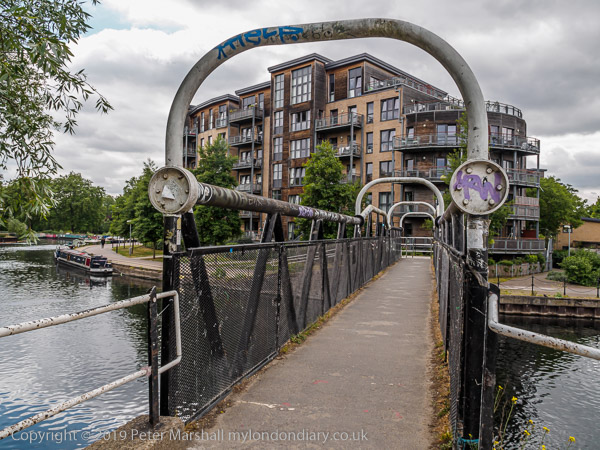
I went ahead and completed the project without financial support – fortunately a full-time teaching post giving me both enough to live on and relatively long holidays as well as weekends – even though during term I was putting in an average 60 hours a week into teaching, preparation and marking. Another self-published book, Before the Olympics, contains many of the pictures from this as well as later work, and more can be seen on my River Lea web site.


There are no adverts on this site and it receives no sponsorship, and I like to keep it that way. But it does take a considerable amount of my time and thought, and if you enjoy reading it, please share on social media.
And small donations via Paypal – perhaps the cost of a beer – would be appreciated.

All photographs on this and my other sites, unless otherwise stated, are taken by and copyright of Peter Marshall, and are available for reproduction or can be bought as prints.
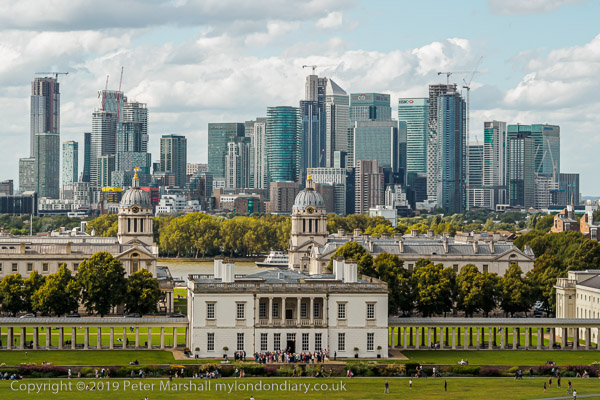
August 2019 on My London Diary

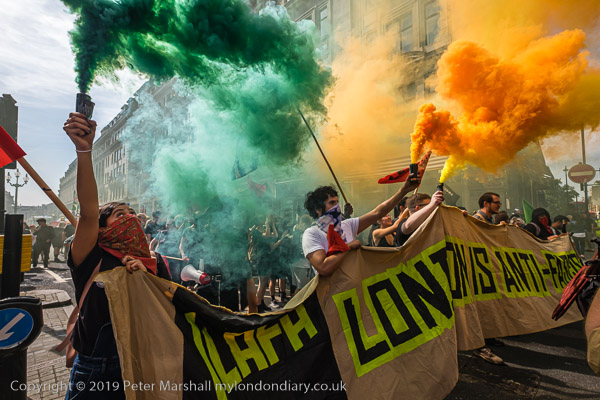
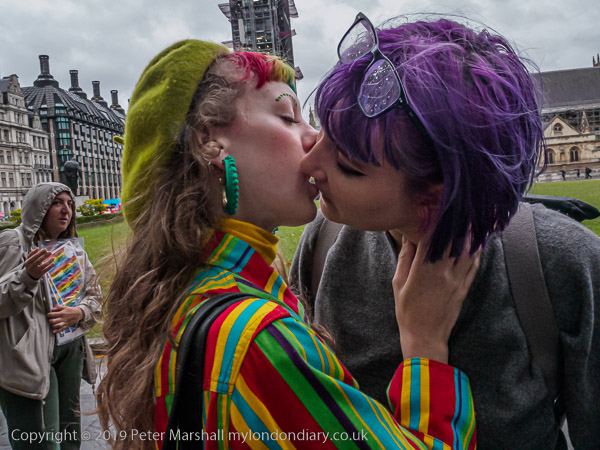
It has taken me a long time to complete putting my work from August on-line. Partly because I had a week’s holiday at the start of September. But while I covered quite a number of protests in August – and they all take time to put onto the web, I also found time to continue with one of my other projects with panoramic images, which take me rather longer to prepare.

Most of the pictures of protests are available for editorial use from Alamy, where the easiest way to find them is probably in my pages there. The latest images there are on the first page of many. Other pictures can be obtained direct from me.

August 2019

Students March to Defend Democracy
Defend democracy, Stop the Coup
Staines Moor
Solidarity with Polish LGBTQ+ community

Anti-fascists outnumber Protest for ‘Tommy’
Camden, Kings X & Regent’s Canal
Rebel Rising Royal Observatory Die-In
Charing Cross to Greenwich
Official Animal Rights March 2019
Stand with Hong Kong & opposition
XR Rebel Rising March to the Common

Stand up to LGBT+ Hate Crime Kiss-In
Justice for Marikana – 7 years on
Stand with Kashmir

Kashmir Indian Independence Day Protest
Stop Turkey’s Invasion of Kurdistan
Kashmiris protest in Trafalgar Square
Vegans Protest Diary Farming
Kashmiris protest at India House

City & Thames
SODEM at the Cabinet Office
Hiroshima Bomb victims remembered
Legalise Personal Light Electric Vehicles
‘Free Tommy’ protest

Anti-Racists march against the far right
LouLou’s stop exploiting your workers
North Woolwich Royal Docks & Thames
DLR – Bank to London City Airport


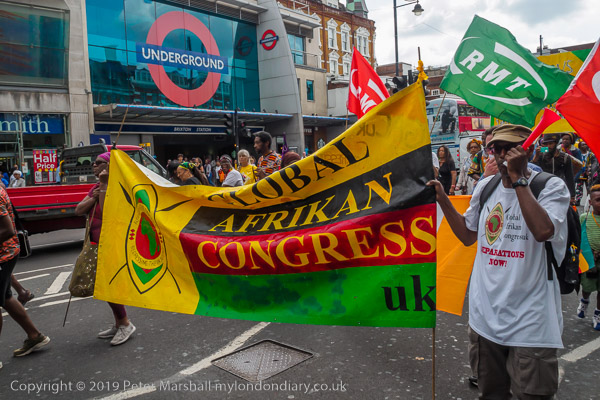
Afrikans demand reparations

London Images


There are no adverts on this site and it receives no sponsorship, and I like to keep it that way. But it does take a considerable amount of my time and thought, and if you enjoy reading it, please share on social media.
And small donations via Paypal – perhaps the cost of a beer – would be appreciated.

All photographs on this and my other sites, unless otherwise stated, are taken by and copyright of Peter Marshall, and are available for reproduction or can be bought as prints.

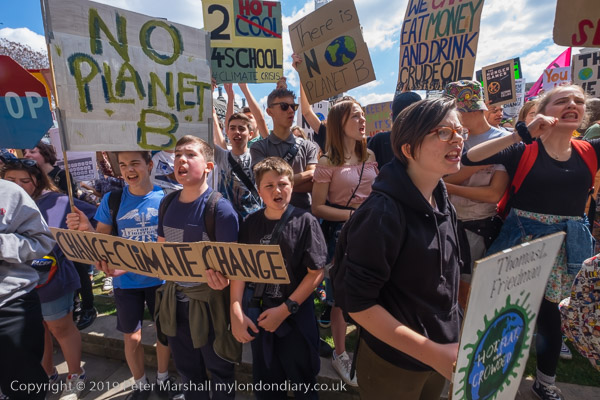
Youth Strike for Climate

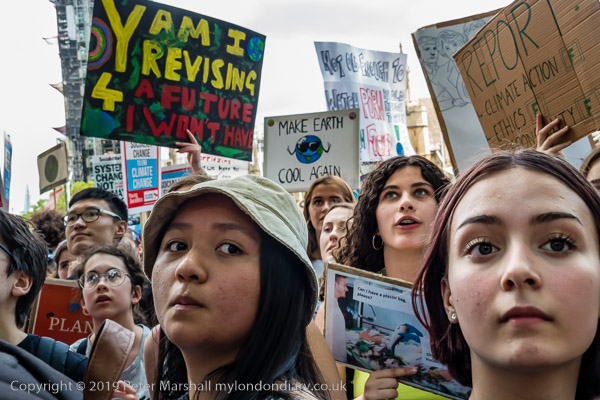
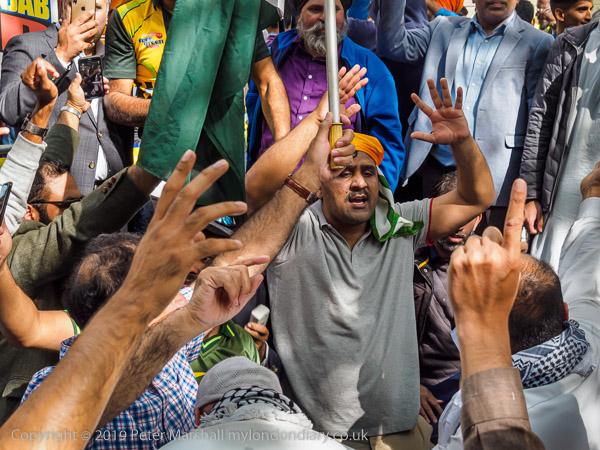
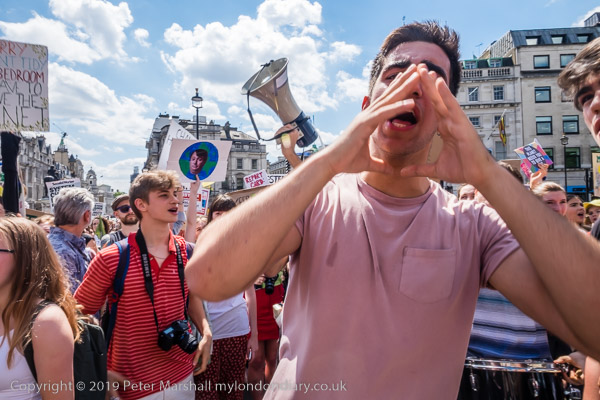
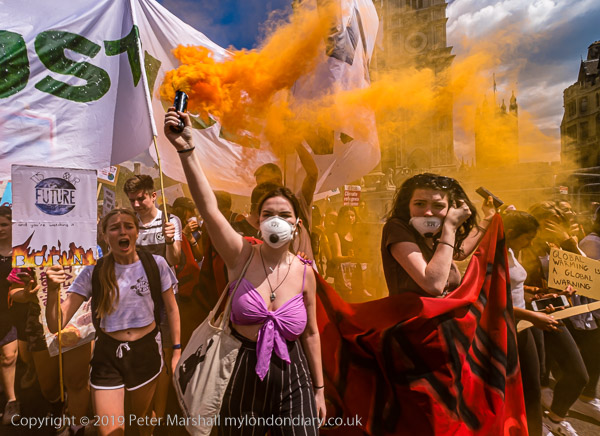
Youth Strike, inspired by Greta Thunberg’s protests, has injected a remarkable energy into the campaigning against what seems the inevitable climate disaster we are heading towards.

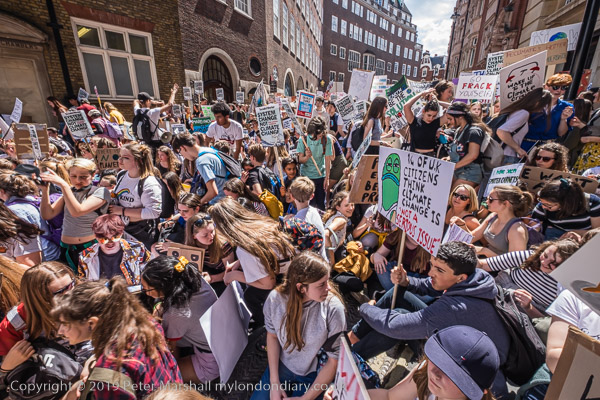
Most of those taking part in the protests on Fridays in London are taking time off from school to do so, sometimes with approval and even encouragement from teachers, but often despite threats and sanctions. Along with them are some students from FE and HE, but it does seem to be school students who are leading these protests.

And while schools may not approve, I think that many of the posters and placards show that the campaign is stimulating a great deal of activity in art departments across the area.

Of course as they say, it is their future which is at stake, their future lives that are at risk, while most politicians and those in charge of financial institutions and businesses in the rich world are likely to die before the worst effects of climate change begin to bite. Schoolkids don’t have a vote and feel that those who do are not thinking about the future of the young, and generally I think they are right.

Of course we are a part of the rich on this planet (despite homelessness and the other avoidable aspects of our increasing inequality); people in parts of the majority world are already in some places dying because of the effects of global heating, while here in the richer countries we are still ruled by smug wealth keeping getting richer with business as usual, and climate deniers who reject the science.

Theirs is a generation already feeling cheated by Brexit (whether we get either the current bad deal or a no deal) and by government cuts and longer term policies that have removed funding from education.

Protests like this one, and those by Extinction Rebellion, do have some effect in raising awareness and combating the lies still too frequent in the media. More people are beginning to think about how their own personal choices – over food, holiday travel and more – effect the environment but there still needs to be far more, not just at the personal level but also a giant cultural shift as well as political actions both here and across the world. We need as some of the posters and placards state, ‘System Change not Climate Change.’

More about the actual protest at Youth Strike for Climate.


All photographs on this and my other sites, unless otherwise stated, are taken by and copyright of Peter Marshall, and are available for reproduction or can be bought as prints.
There are no adverts on this site and it receives no sponsorship, and I like to keep it that way. But it does take a considerable amount of my time and thought, and if you enjoy reading it, please share on social media.
And small donations via Paypal – perhaps the cost of a beer – would be appreciated.


London Church Walk

Most years unless I’ve some more pressing committment I’ve accompanied my wife as she takes part in a sponsored walk around London churches in support of Christian Aid.

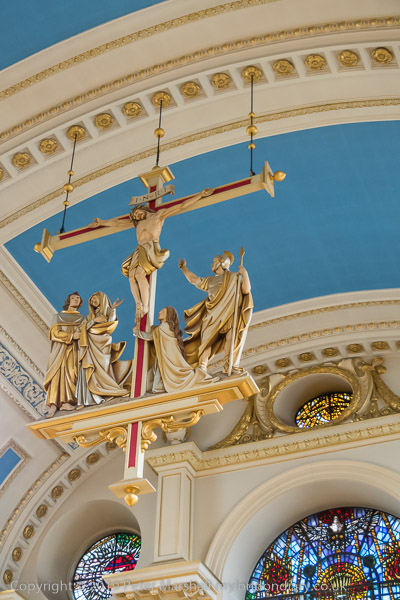
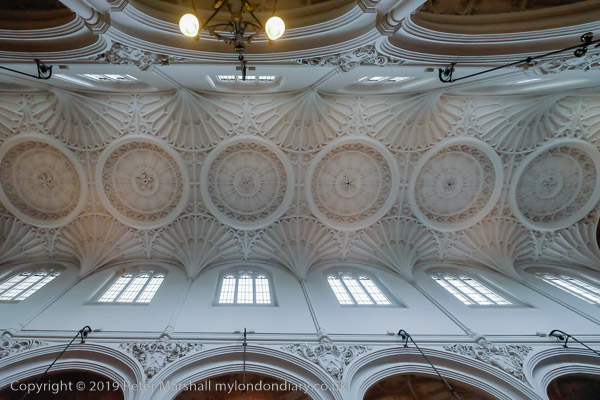
Walking around the City is always interesting, and although I’ve been in most of the churches before, most years there is something new to see. Many of London’s churches are open at times during the week, often hosting lunchtime concerts, others are usually locked.

The walk isn’t of huge length, but it takes quite a time, especially if you want to look carefully at those churches you get inside – some of the checkpoints are a table outside a locked building. Other churches offer tea and cakes and it gets difficult to complete the circuit in the time allowed; this year I was disappointed that we arrived at the Temple Church just as it was closing.

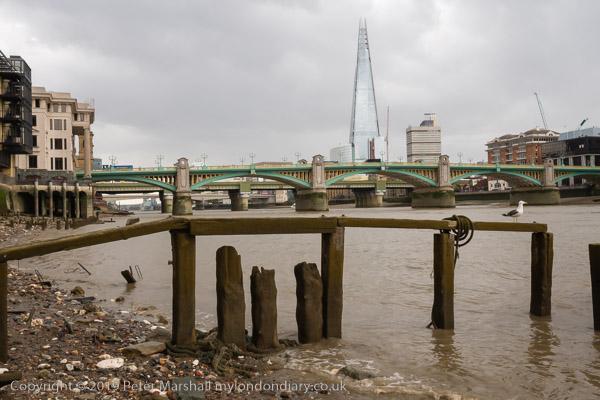
Most of the churches in the city were built around the same time, after the Great Fire of 1666, and usually the architect was Wren, but although they share some characteristics there are significant differences.

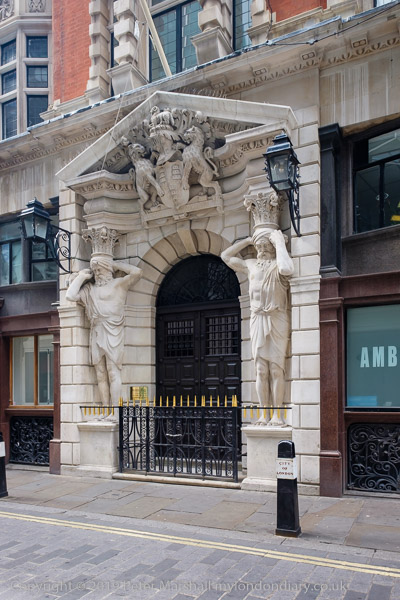
But of course the City has many interesting secular buildings as well as its churches, both ancient and modern, and I photographed a few of these as we walked by.

More pictures: City Churches Christian Aid Walk


All photographs on this and my other sites, unless otherwise stated, are taken by and copyright of Peter Marshall, and are available for reproduction or can be bought as prints.
There are no adverts on this site and it receives no sponsorship, and I like to keep it that way. But it does take a considerable amount of my time and thought, and if you enjoy reading it, please share on social media.
And small donations via Paypal – perhaps the cost of a beer – would be appreciated.


Tamils remember Mullivaikkal massacre

The British colonised Ceylon and in the nineteenth century it was a major source of coffee grown on British owned plantations. When the coffee crops began to fail, efforts were made to replace coffee by tea plants and seeds from Assam in India. Although at first this was unsuccessful, by the end of the nineteenth century tea had replaced coffee as the major export crop.

Sri Lankan Tamils had lived in parts of the island since at least around the 2nd century BC, but the tea plantations imported Indian Tamils to the hill areas in large numbers. Following independence in 1948, the Sinhalese-led government deported large numbers of the Indian Tamils and also made life difficult for the Sri Lankan Tamils, severely limiting employment opportunies, suppressing their culture and encouraging anti-Tamil riots, leading to the start of a civil war in 1983.

One-third of Sri Lankan Tamils now live outside Sri Lanka, the largest group, around 300,000, being in Canada.  There are thought to be between 100,000 and 200,000 British Tamils living in the UK, the figures vague as Tamil was not one of the ethnic groups listed in the UK census, though people could write it in.

Over 70,000 Tamils are thought to have been killed in the earlier phases of the Sri Lankan Civil war, but it came to a particularly disastrous and bloody end in 2009, on a small strip of land at Mullivaikkal, where 40,000 Tamils, around half of them civilians, are thought to have been killed, mainly by shelling by Sri Lankan government forces in what they had designated as a ‘no-fire’ zone, but some by the Liberation Tigers of Tamil Eelam (LTTE). The numbers are highly disputed, with huge variations between government and Tamil sources, but there is no doubt that it was a massacre on a terrible scale. According to the Tamil Guardian:”

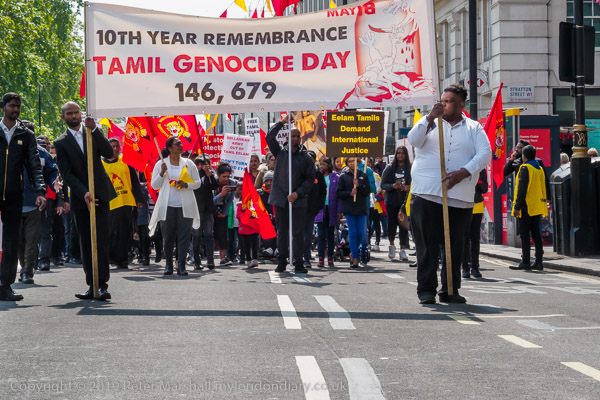
After providing an initial death toll of 40,000, the UN found evidence suggesting that 70,000 were killed. Local census records indicate that at least 146,679 people are unaccounted for and presumed to have been killed during the Sri Lankan military offensive.

May 18th, the date on which this protest took place is widely marked as Mullivaikkal Genocide Remembrance Day

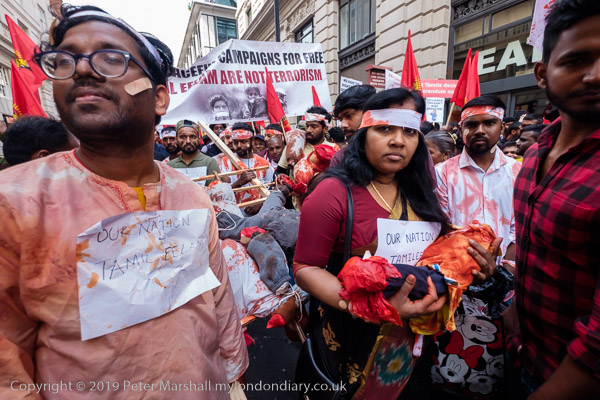
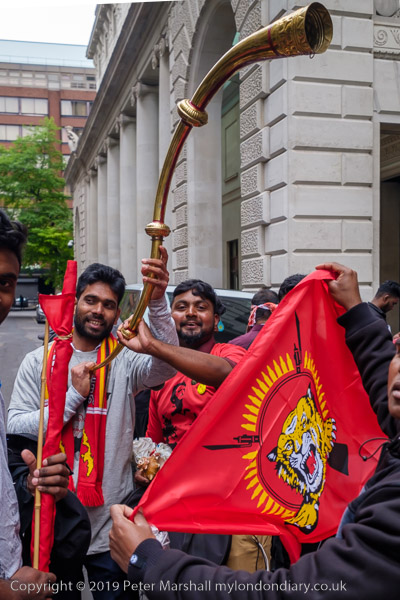
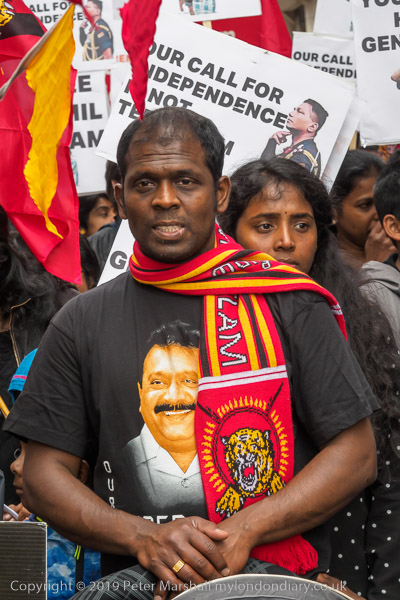
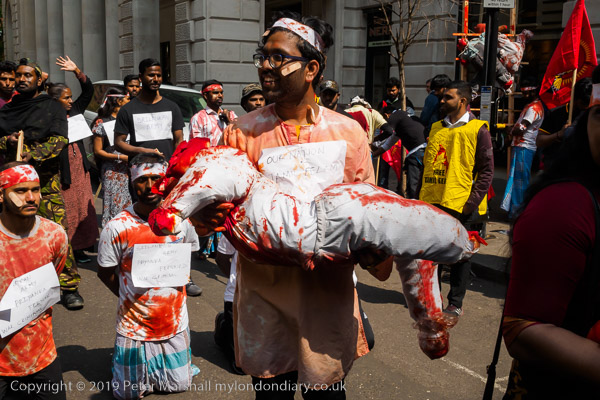
The protest I photographed included some graphic re-enactments of shooting (though only with crude wooden guns) and many people with bandages and fake blood, giving plenty of photographic opportunities. And unsurprisingly, feeling run high. Tamils want Sri Lanka to face prosecutions by the International Criminal Court for war crimes and a referendum in Sri Lanka to lead to the setting up of an independent state, Tamil Eelam.

More on the protest: 10 Years since Mullivaikkal massacre
A week earlier I photographed a group of Tamils at Downing Strike begining a week of hunger strike for their demands:
Tamil Genocide Hunger Strike


All photographs on this and my other sites, unless otherwise stated, are taken by and copyright of Peter Marshall, and are available for reproduction or can be bought as prints.
There are no adverts on this site and it receives no sponsorship, and I like to keep it that way. But it does take a considerable amount of my time and thought, and if you enjoy reading it, please share on social media.
And small donations via Paypal – perhaps the cost of a beer – would be appreciated.


More Canal Pans

Photographing protests and other events generally keeps me pretty busy and for some years I’ve had little time for anything else, along of course putting some of my earlier work online and writing this blog and keeping My London Diary almost up-to-date. But one project that I’ve managed to do a little work now and then on is making panoramic images of London’s canals – and I hope to use a few of these in a show next year.

My first panoramic project, back in 1992 when I bought my first panoramic camera was on the DLR extension then being built from Poplar to Beckton. Prints from this were shown at the Museum of London back then, and a few are now in their collection – and one is in the current show, Secret Rivers at the Museum of London Docklands.

I’d chosen to work in panorama (using a Japanese Widelux camera) because I thought that the essentially linear nature of the railway was particularly suited to the panoramic format, and it seems to me that the same applies to photographing the canals. I’m now working of course with digital, and the pictures I’m making don’t natively come in a panoramic format as the camera sensor is either 3:2 (with the Nikons) or 4:3 in the pictures I’ve made with the Olympus EM5 MkII.

The character of the cylindrical perspective that I’m currently working with (others are possible) means that the image curvature required to give the wide angle of view (around 145°) increases towards the top and bottom of the image, and using a 4:3 or similar format makes it more noticeable than a more normal panoramic format such as 2.5:1. So I often crop the images to a more panoramic aspect, often 1.9:1 which can give a more natural look.

Cropping the image also has another advantage. In making these images it is important to keep the camera level – aided by indicators in the viewfinder at bottom and left of the image. Doing so means that the horizon will always be a horizontal line splitting the image into two equal halves, and this can make a set of images a little monotonous. When cropping the images, it is possible to move this above or below the centre line. In days largely long past, landscape photographers used cameras with a rising or falling front to acheive the same goal, and for much of my black and white work on film I used a 35mm shift lens which could do the same.

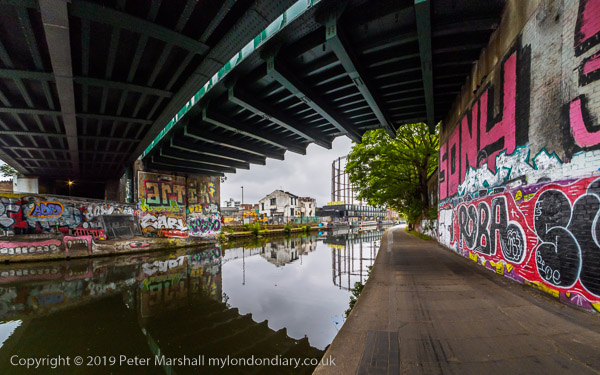
These pictures were taken between the end of a protest in Hackney and my visit to an Open Studio event at the Chisenhale Studios in Bethnal Green to which I walked. I began the walk along the canal in one of my favourite spots where Mare St becomes Cambridge Heath Road and goes over the canal and then walked east along the Regent’s Canal towpath to the junction with the Hertford Union Canal. I had time to go a little beyond the studios before turning around and returning to leave the canal and make my way to the studios. By the time I got there the rain was beginning to come down fairly steadily and I’d walked around a mile and a half.

More pictures at Bethnal Green Canal Walk


All photographs on this and my other sites, unless otherwise stated, are taken by and copyright of Peter Marshall, and are available for reproduction or can be bought as prints.
There are no adverts on this site and it receives no sponsorship, and I like to keep it that way. But it does take a considerable amount of my time and thought, and if you enjoy reading it, please share on social media.
And small donations via Paypal – perhaps the cost of a beer – would be appreciated.


Mothers’ Day March

Apparently according to Mothers Rise Up, 95 countries celebrate Mothers’ Day on 12 May, (although in the UK we traditionally celebrate our mothers on Mothering Sunday in March, on the 4th Sunday in Lent, a rather more low key event.)

Or rather people celebrate Mother’s Day, as Anna Jarvis trademarked the event in 1912 saying it should “be a singular possessive, for each family to honor its own mother, not a plural possessive commemorating all mothers in the world.”

Jarvis had begun campaigning for a day to honour mothers after the death of her own mother in 1905. Ann Maria Reeves Jarvis (1832 1905) had been a community activist and had established Mother’s Day Work Clubs in several West Virginia towns to assist and educate people to improve sanitation and reduce infant mortality and disease. During the US Civil War she had controversially insisted these clubs provide food, clothing and nursing to soldiers in need on both sides.

Mother’s Day in the USA rapidly developed, much against Anna Jarvis’s wishes into a commercial jamboree; she organised boycotts against sending mass-produced cards and gifts, urging people instead to mark the day and honour their mothers by writing them letters expressing their love and gratitude.

According to Wikipedia, Jarvis protested against the commercialisation of the event at a “candy makers’ convention” in Philadelphia in 1923, and at a meeting of the American War Mothers in 1925. The War Mothers were selling white carnations for Mother’s Day to raise funds, and this so enraged Jarvis that she protested and “was pulled away screaming and arrested for disturbing the peace.”

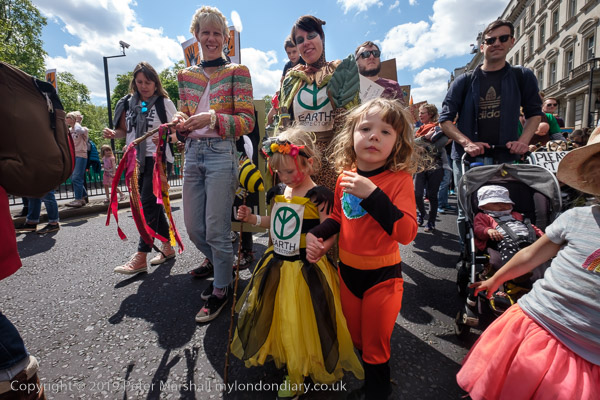
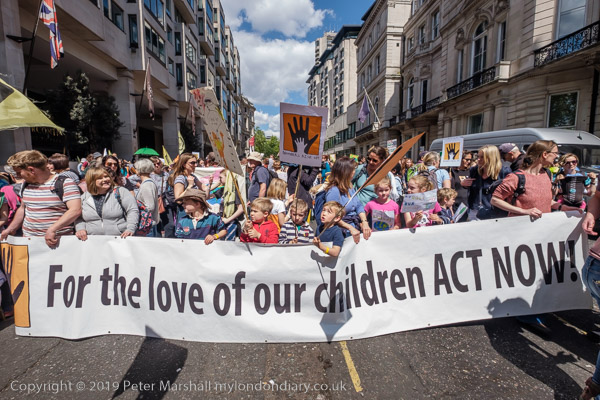
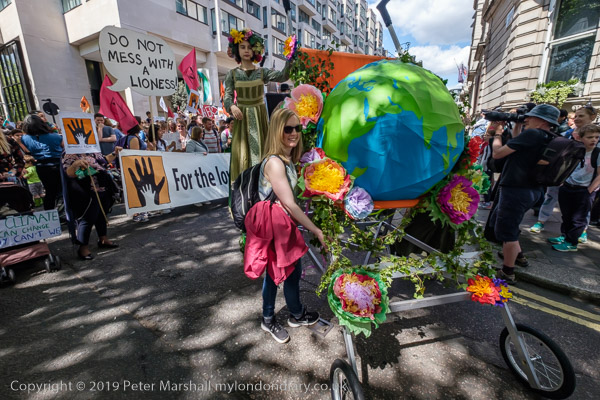
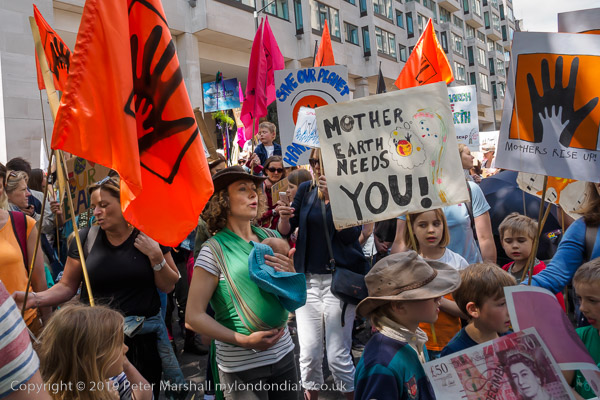
So it was very appropriate that Mothers Rise Up had chosen Mother’s Day to protest and “stand in solidarity with the #youthclimatestrikes” emphasising the urgent action needed to avoid disastrous climate breakdown, with scientists telling us we have only a few years to act. Perhaps as long as 11 years to take really decisive measures, although it may already be to late to prevent global human extinction. Already as they pointed out, people in parts of the Global South “are already suffering and dying as a result of climate chaos.”

Their call out for the protest began:

We will come together and rise as a maternal force to be reckoned with. With pushchairs and song, we will march from Hyde Park Corner to Parliament Square and demand that our government take immediate, drastic action for a just transition to a sustainable way of life.

I hope my pictures capture something of this “maternal force”, though the giant pushchairs did present something of a problem photographically. For once I walked with the protest the whole distance to Parliament Square (stopping off briefly to photograph another protest at Downing St) and stayed for a part of the rally.

One of the speakers there was the leading international climate lawyer and diplomat Farhana Yamin; I had arrived too late a few weeks earlier to photograph her arrest when protesting with Extinction Rebellion at Shell’s London HQ in April.

More pictures from the march: XR International Mothers’ Day March

March for Choice

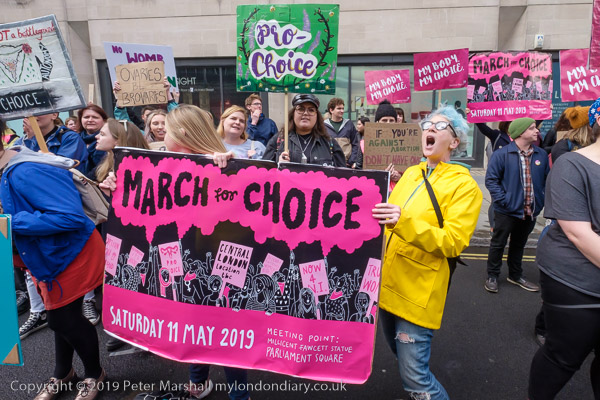
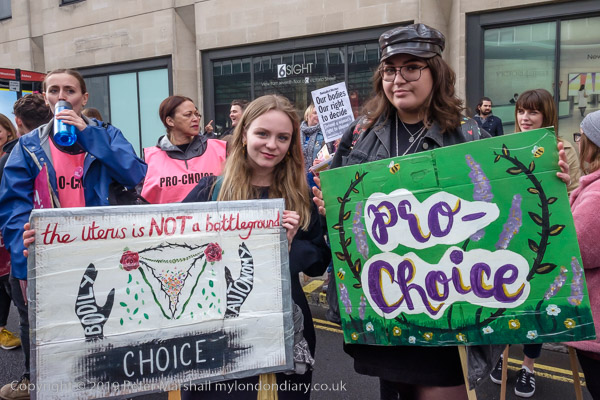
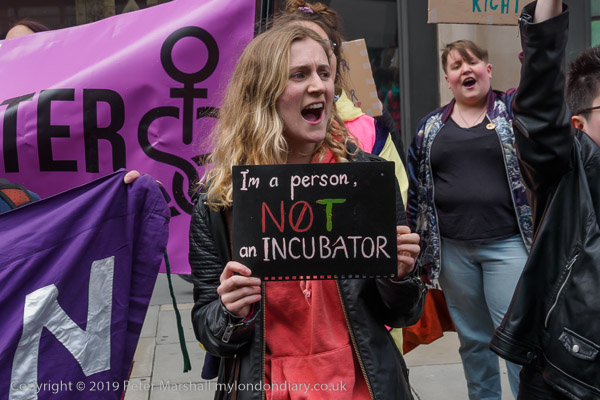
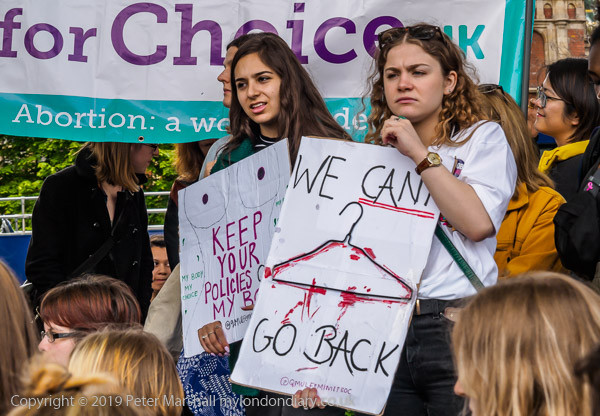
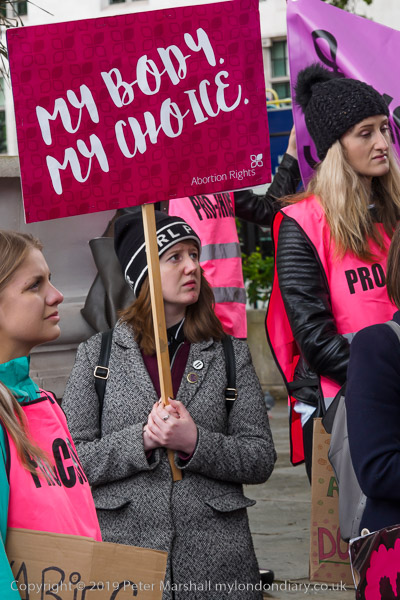
I missed the rally at the end of the demonstration in solidarity with Palestine in order to photograph the feminist rally in Parliament square for reproductive rights and the decriminalisation of abortion.

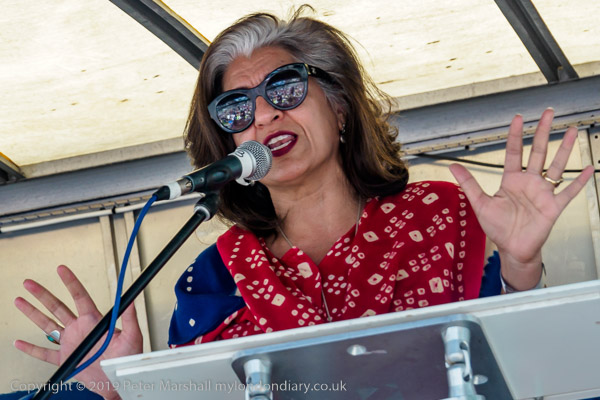
I felt by the time I left the Palestinian march I had enough pictures, particularly because I had managed to get what I thought was a decent picture of Ahed Tamimi who was to speak at the rally. Most of the other speakers were probably people I had photographed previously at other events.

I sometimes criticise news photographers who come to an event, take a few pictures (often setting up rather static group pictures) and then leave. I aim to tell the story of the event, and usually hang on for long enough to do so, while they want to get a single picture and send it (or more often a selection of single pictures) to the agency or newsroom before anyone else. In terms of making a living I’m sure they are right; what gets published is generally not the best picture but the one that arrives first.

And protests are rather like buses; you can wait for ages when nothing happens and then several come along at once. I think the most I’ve covered in a single day is seven, though there have been times when I’ve had double figures for the same date in the diary I make of protests I know about.

Of course they can even be in quite different places, though I very seldom leave London it can still involve a lot of travelling, and often I have to select not just on time but also on location, though my priority is always on the issues which the event is about. Though my definition of newsworthiness is often at odds with that of the mainstream media editors.

Abortion isn’t something to be encouraged or taken lightly, and I don’t believe that many women do, but the right of women to make choices about their bodies is a basic and important one. While at some point the rights of the unborn child also need to be considered, that time is most certainly not at conception but perhaps when that child becomes capable of an independent existence.

The 1967 Abortion Act was a great advance in clarifying law in this country, though unfortunately not in Northern Ireland and remains in force with the normal limit on abortion having been reduced from 28 weeks to 24 in 1990. It was a great advance as before 1967 the major cause of maternal deaths – around 60 -70 per year was unsafe abortions. And many children who might otherwise have been aborted because their mothers took thalidomide were born with severe or even fatal disabilities.

Apparently now 1 in 3 women in this country will at some time have a legal termination. Abortion outside the provisions of the Act (or in Northern Ireland under almost all circumstances) is still a crime – and can carry a sentence for both women and those who carry it out of life imprisonment.

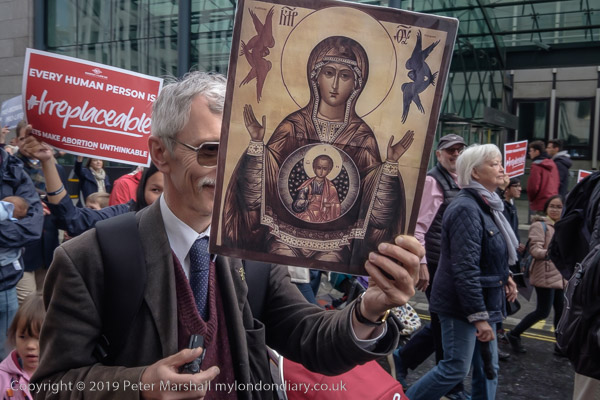
The ‘March for Choice’ was not really a march, but a rally followed by a short walk to a static protest in opposition to the anti-abortion March for Life UK, a largely Catholic event based on extreme right protests in the USA. March for Choice say it is made up of extreme anti-women, anti-choice, evangelical groups which regularly harass women outside abortion clinics, and has links to homophobic, fascist and far-right organisations. As well as abortion, it opposes contraception, sex education and IVF treatment.

More pictures from both groups:

March for Choice defends women’s rights
Anti-Abortion ‘March for Life UK’


All photographs on this and my other sites, unless otherwise stated, are taken by and copyright of Peter Marshall, and are available for reproduction or can be bought as prints.
There are no adverts on this site and it receives no sponsorship, and I like to keep it that way. But it does take a considerable amount of my time and thought, and if you enjoy reading it, please share on social media.
And small donations via Paypal – perhaps the cost of a beer – would be appreciated.


Regents Canal – Kings Cross

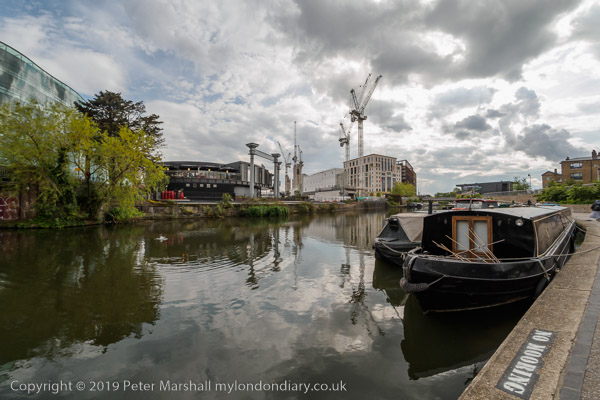
I had an hour or so to spare before a protest taking place outside The Guardian offices at Kings Place on York Way, the building at the left of the picture above and decided it was enough time to take some pictures along the canal, mainly to the east from York way to the mouth of the tunnel under Islington. The picture above is from where I walked down to the canal from York Way, and as you can see it was a good day for panoramic images like this, with plenty of interest in the sky. Skies do tend to take up a rather large part of such images, and either a dull overall grey or a clear blue can make them rather boring. The clouds in pictures like this also enliven the water with their reflections.

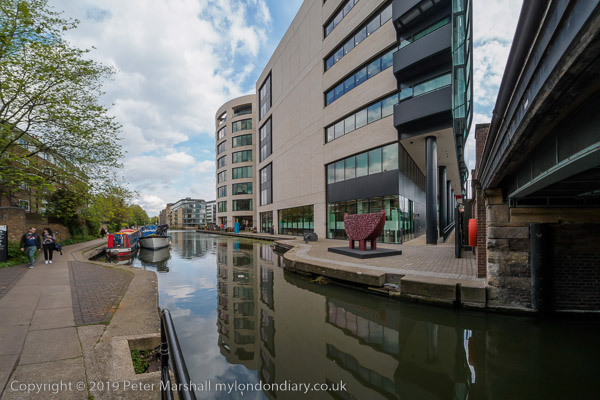
Walking under the York Way bridge I made an image showing the bridge and the building of Kings Place, with a waterside sculpture. There was little traffic on the canal and the water was a smooth mirror showing the buildings and the sky.

A few yards further on and I could see into the Battlebridge basin as well as the buildings alongside the canal and the moored narrow boats. When I first photographed here the buildings alongside the canal were industrial, but now they have largely been replaced by new flats. The canal here is more open and the water is rippled, making the reflections less clear.

A little further east and the canal was more sheltered, again giving a smooth mirror surface and clear reflections. The cylindrical perspective needed to acheive the extreme angle of view obviously curves the roof line of the building at left which is well away from the centre of the image. Vertical line and those through the image centre are rendered straight, but other lines curve increasingly away from the centre . The canal bank at the bottom of the building is less obviously curved as it is closer to the centre.

This isn’t really a distortion but a simple effect of the projection needed to get such an extreme view onto a flat surface. It could be made less obvious by cropping from the top of the image.

A few minutes later I had reached the tunnel mouth and found that there was a small garden across the top of it, though it wasn’t really possible to get a good picture as I was unable to get inside.

I wandered around a little more on my way back to York Way, and had time also to make a few non-panoramic images.

You can see some of these as well as other panorams on My London Diary at Regent’s Canal – King’s Cross


All photographs on this and my other sites, unless otherwise stated, are taken by and copyright of Peter Marshall, and are available for reproduction or can be bought as prints.
There are no adverts on this site and it receives no sponsorship, and I like to keep it that way. But it does take a considerable amount of my time and thought, and if you enjoy reading it, please share on social media.
And small donations via Paypal – perhaps the cost of a beer – would be appreciated.


Drivers protest at Uber offices

Uber drivers in London claim that on average they earn £5 an hour after taking into account their expenses, well below the national minimum wage and less than half the London Living Wage, the independently assessed minimum needed to live in London.

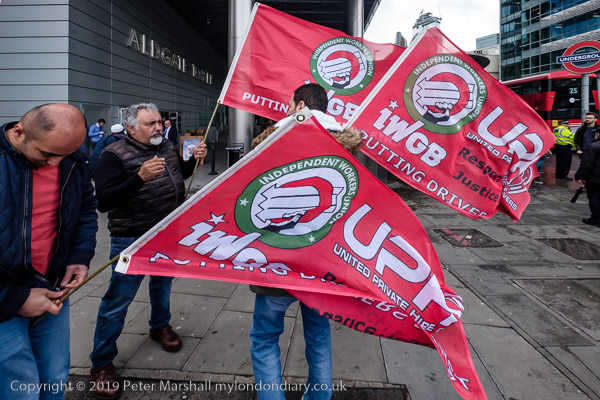
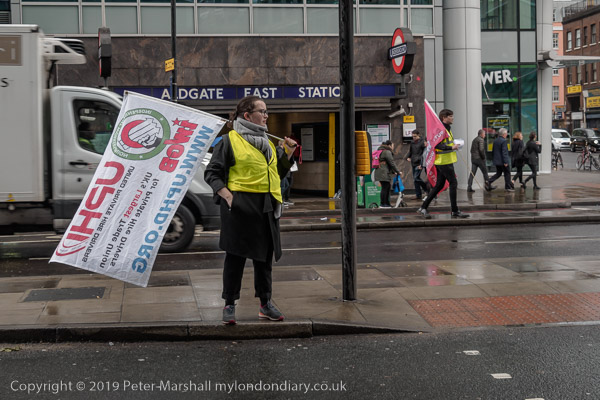
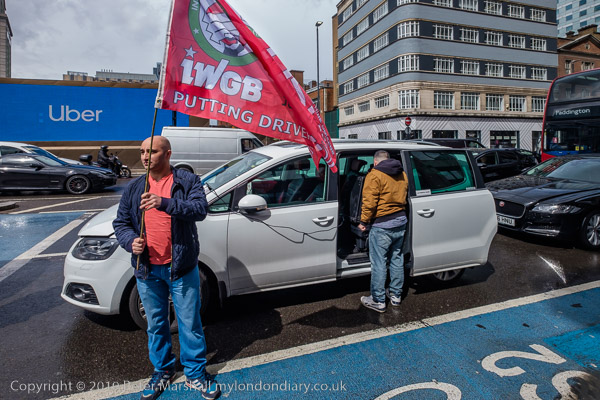
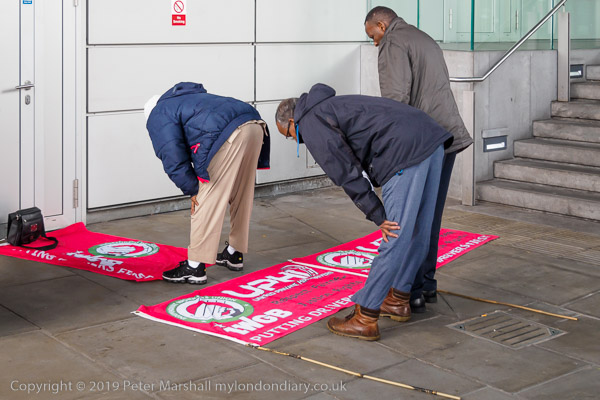
United Private Hire Drivers, a branch of the IWGB – Independent Workers Union of Great Britain – has been recruiting and organising private hire drivers including those working for Uber and organised a protest outside the Uber offices in Aldgate on the day before Uber’s Wall Street share flotation. The flotation at $45 per share meant a bonus of billions for Uber’s founders and for early investors including Amazon’s boss, Jeff Bezos and disgraced cyclist Lance Armstrong but absolutely nothing for the drivers.

Those who bought into the shares at the flotation may also have lost, unless they sold their shares at exactly the right time; the shares had lost around 7% at the end of the first day of trading and have only very briefly peaked above the opening price. In August they slumped down to around $32. Of course they may rise again – particularly if Uber ever manages to make money.

Despite cheating and exploiting its workers, avoiding tax and failing to properly recognise the status of the workers who drive for it, Uber has still never made a profit and may never do so. Of course it has done very nicely for the people at the top of the organisation – and those early investors.

In some respects, Uber certainly does point to the future of private hire, and highlights the antiquated and expensive nature of our London black cab system. And it provides a service many find very useful if not always entirely necessary, but at the expense of both its drivers and tax payers in general, cheated out of tax.

Better and cheaper true public transport services could do much to reduce the need and the desire for the service Uber offers, and there seems to be no inherent reason why a similar public service could not replace both Uber and black cabs and other hire services, although paying drivers decently and providing proer conditions of service as well as paying taxes would inevitably increase the cost to users.

The drivers say that fares need to be increased to £2 per mile and that the commission to Uber, currently 25%, needs to go down to 15%. They want an end to unfair dismissals for for Uber to respect the rights of drivers as workers which were confirmed by an Employment Tribunal ruling in 2016.

The protest involved drivers boycotting the Uber app from 7am to 4pm, and it was impossible to know how successful that had been. But there were rather fewer drivers than I expected outside the offices and blocking one lane of the busy road, though I left before the protest was over.


All photographs on this and my other sites, unless otherwise stated, are taken by and copyright of Peter Marshall, and are available for reproduction or can be bought as prints.
There are no adverts on this site and it receives no sponsorship, and I like to keep it that way. But it does take a considerable amount of my time and thought, and if you enjoy reading it, please share on social media.
And small donations via Paypal – perhaps the cost of a beer – would be appreciated.