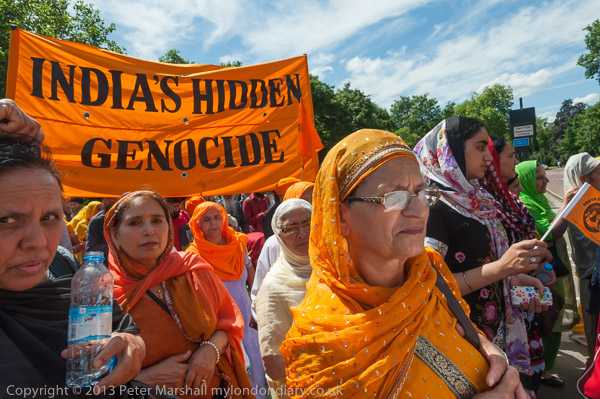
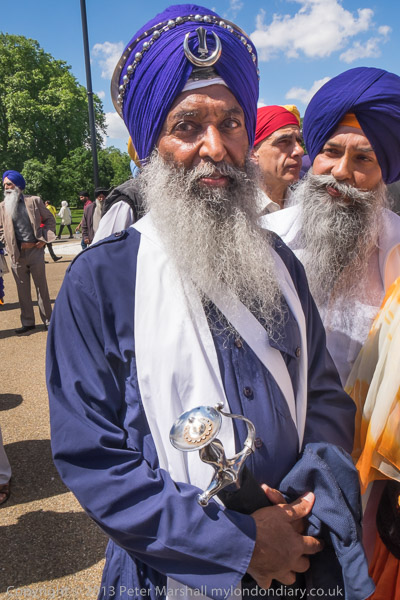
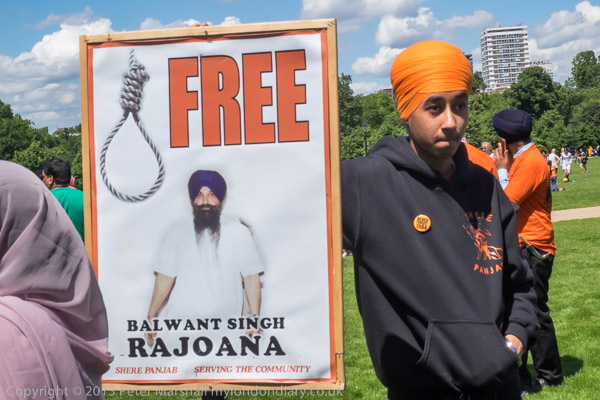
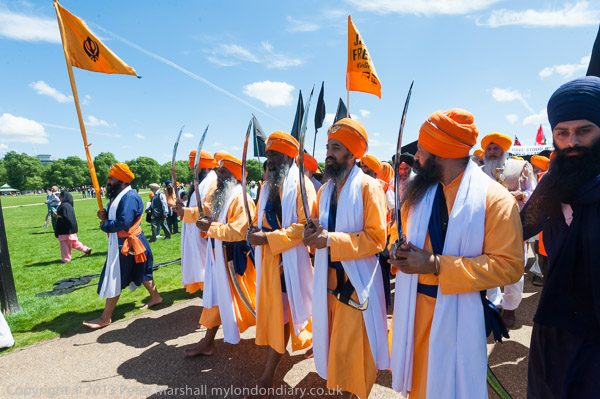
Old Comrades, Women for Life & Sikhs: Sunday 4th June 2006 was a day for marching and running on the streets of London. In the City, the London Regiments were remembering their fallen comrades, and several thousand women were raising funds for cancer research. In Hyde Park I joined several thousand Sikhs at a rally before they marched in memory of the martyrdom of the Fifth Guru and the Indian genocide of Sikhs, calling for the release of political prisoners and the formation of an independent Sikh state.
I wrote a rather longer piece than usual, ending with a complaint about the police harassment of photographers during the Sikh march. There do seem to be some officers who really have a very negative attitude towards photographers, and at times in particular towards those with UK Press Cards. Though formally these are recognised by all police forces in the UK, that recognition too often means nothing on the street. Below is what I wrote in 2006 – with the usual minor corrections.
London Old Comrades
Bank of England
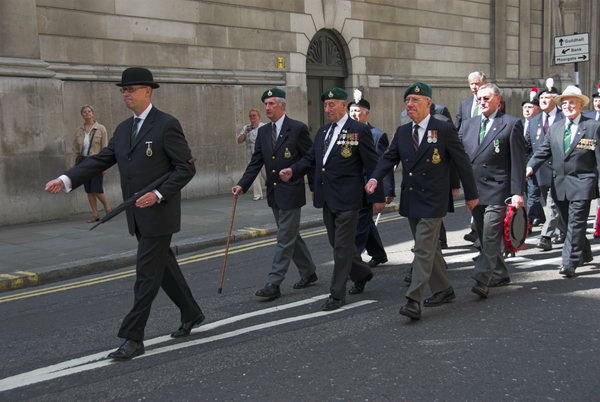
Early Sunday the centre of the real City, around the Bank Of England is generally pretty empty, but today things were going on. Immediately north of the bank a small group of ‘old comrades’ from the London Regiments were preparing to march and lay poppy wreaths at the monument to their fallen comrades in front of the Royal Exchange. Some of those I spoke to had fought in the second world war, though there were also some younger people there. It’s a remembrance that has taken place twice a year since 1919.

It was a solemn and ceremonial occasion, impressive and colourful, with a well-disciplined smoothness. The monumental architecture of the Bank made a good setting, although the area on top of Bank Station itself is too fussy and cluttered.
Race For Life London
City
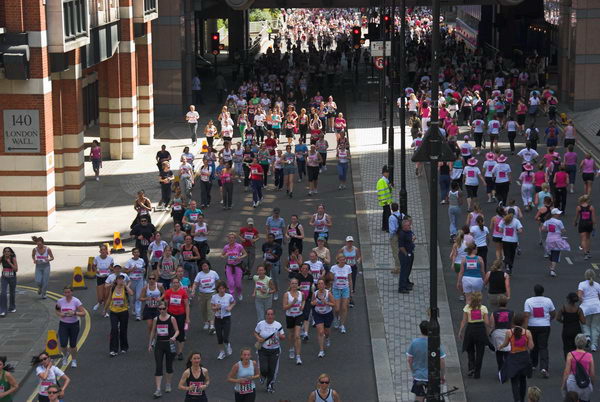
As they marched off, I peeled left in search of 750,000 women, or rather that fraction who were taking part in the Central London event. ‘Race For Life’ for Cancer Research UK, is the UK’s largest women-only nationwide fund-raising day. There certainly were a lot of them, [around 10,000], at times packing even the wider streets full from side to side, making it hard to walk along Cornhill.
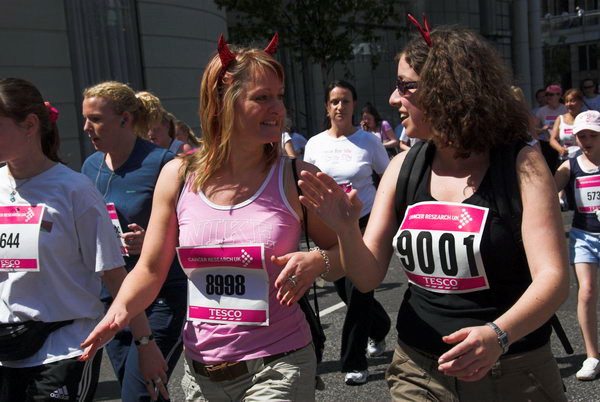
Women of all ages, shapes, sizes, races and speeds running, walking or limping or wheel-chairing around the 5km course. There were fewer serious runners than I’d expected and less fancy-dress, but the sheer numbers were impressive.
Sikh Remembrance March and Freedom Rally
Hyde Park to Trafalgar Square
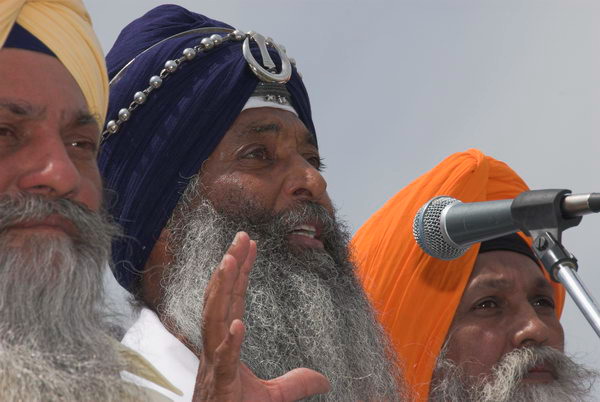
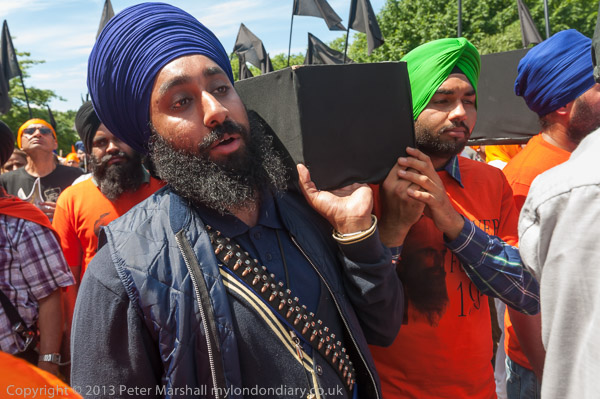
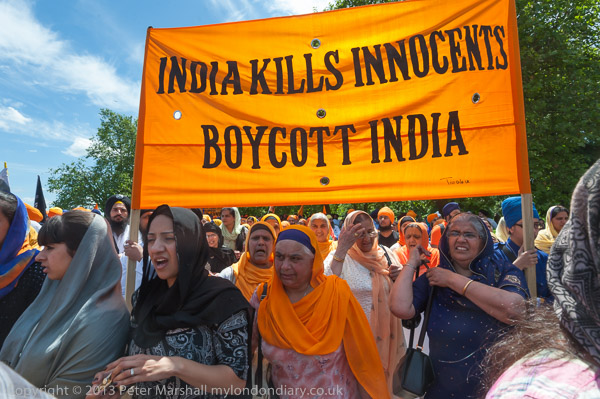
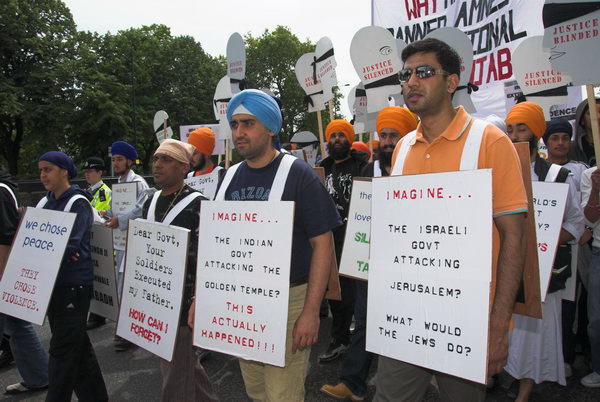
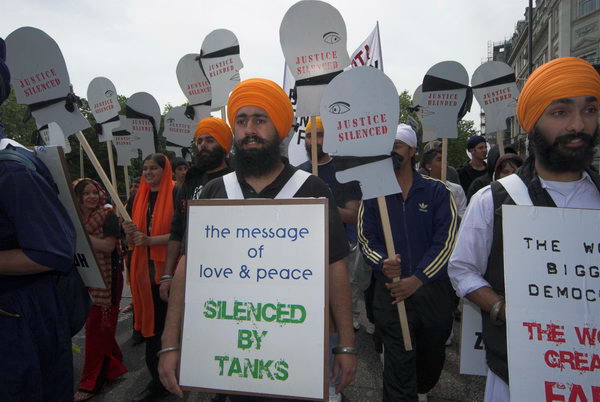
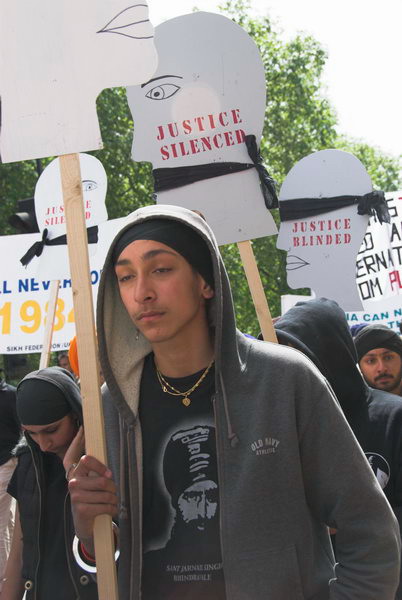
The Sikh Remembrance March and Freedom Rally commemorated the martyrdom of the fifth guru, Sri Guru Arjan Dev Ji 400 years ago, as well as the events of 1984.
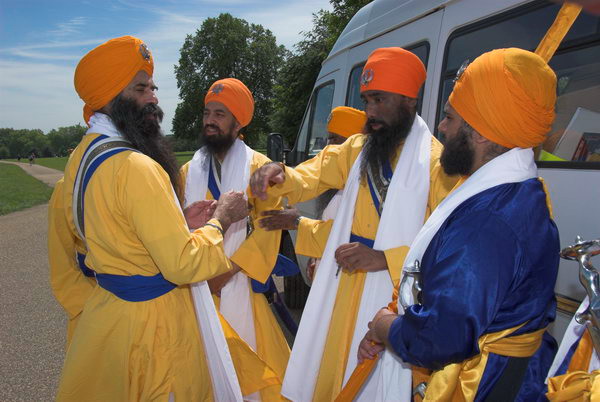
Guru Arjan Dev Ji compiled the first version of the Sikh holy book, the Guru Granth Sahib, in 1604, writing many of the hymns within it. He was arrested in Lahore in 1606 on the orders of Mogul Emperor Jehangir, tortured for 5 days and martyred on the banks of the River Riva.
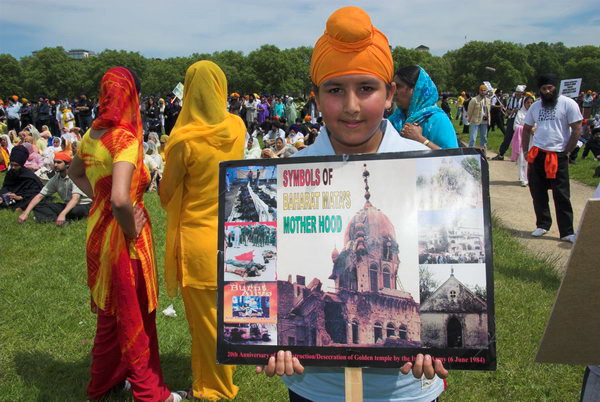
Punjabi speakers at the rally in Hyde Park described the events of 1984. The marchers demanded an acknowledgement of the Indian genocide of Sikhs, the release of Sikh political prisoners held in Indian jails, and for the establishment of an independent secular state of Khalistan in the Punjab.
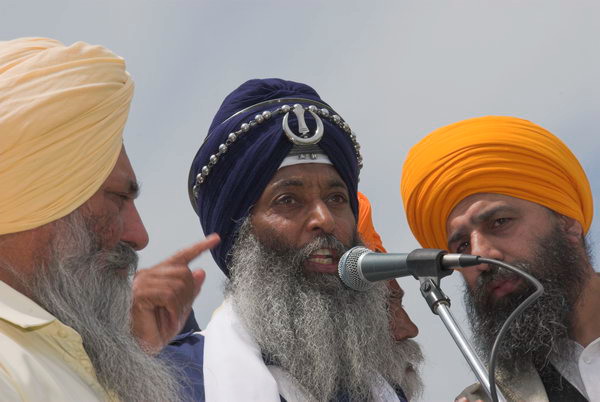
During the annual celebration of the death of Sri Guru Arjan Dev Ji in 1984, Indira Ghandi sent her troops to attack Sikh militants in the Golden Temple at Amritsar. Many innocent pilgrims – men, women and children – were killed in the brutal assault. Thousands more died around the Punjab, particularly in the riots incited by government TV and radio stations after the October assassination of Indira Ghandi by her Sikh bodyguards.
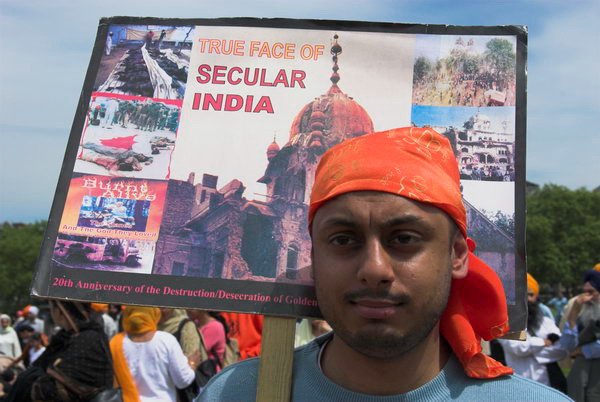
After the speeches came prayers, and then the march set off for Trafalgar Square and another rally. This was a serious event, with strongly felt grievances, and an impressive display of Sikh tradition and feelings.
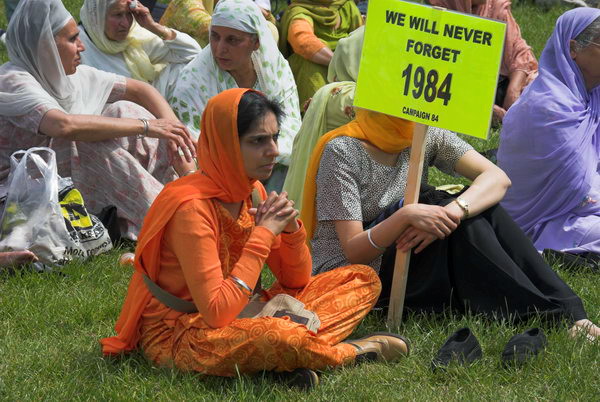
The marchers were pleased to find photographers taking an interest in their cause, with many of them encouraging me and thanking me for my presence. Some had heard of this web site [My London Diary] too.
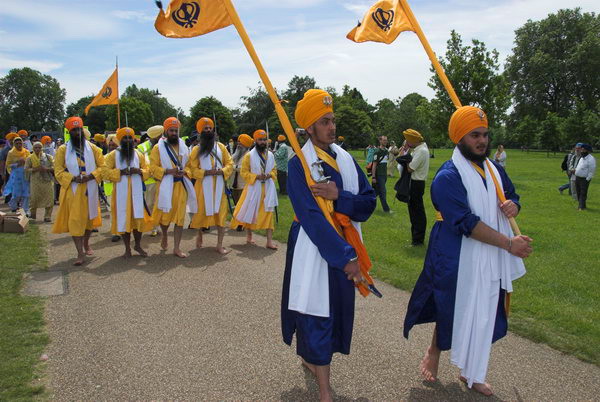
Until we were close to Hyde Park Corner, the police were helpful and in good humour too, but then along came one of the rotten apples, someone who just wanted to push photographers around. He came and told me to get off the road, as I was stopping the demonstration. This was clearly absolute nonsense, and I tried to tell him, but reason held no interest for him.
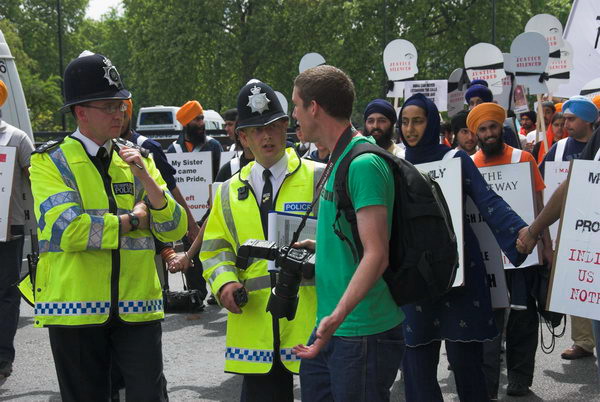
Other photographers got harassed too. You can see one of them in my picture. We are accused of holding up the march, generally nonsense as most of us want to capture action in our images, and if people even slow down, will wave them on.
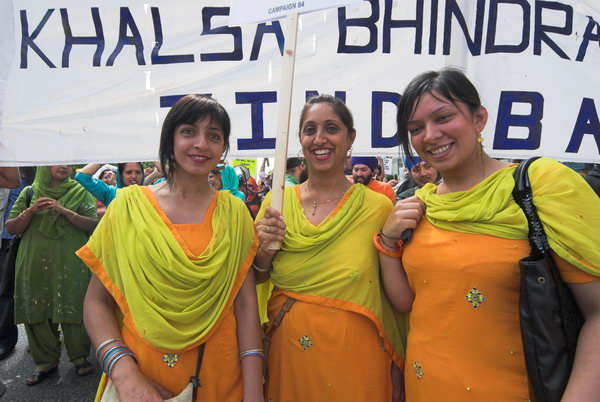
Of course it’s those at the actual front of the march who would have any effect on its progress. Further back where we were working, small gaps develop and are closed up all the time without affecting the overall progress.
I have respect for the police – some at least of their work is essential, but this kind of petty and stupid behaviour simply makes their job harder for no reason.
It also makes the work of photographers impossible. I can’t work unless I can stand in the right place to take pictures, and that is seldom on the sidelines. At the highest level, the police realise this; it’s about time they got some of the little dictators in the middle to put it into practice.
Of course the policing of many marches is over the top. There were probably ten times the number needed for this event, which was predictably well ordered, good natured and essentially self-policing. Traffic control was really all that was required. Perhaps harassing photographers makes these surplus guys on overtime think they have a purpose.
Twenty minutes later, along with several of the other photographers, I was on my third warning from this guy and he was getting redder and more and more tense. I was interested in how the situation might develop, but I was also tired and it was time for me to go elsewhere.
Flickr – Facebook – My London Diary – Hull Photos – Lea Valley – Paris
London’s Industrial Heritage – London Photos
All photographs on this page are copyright © Peter Marshall.
Contact me to buy prints or licence to reproduce.