Six years ago: 30 May 2015

May 30th, 2015 was one of those days where I travelled around London stopping off for various reasons en-route. As always on such occasions I give thanks to the GLC for their efforts which resulted in the London-wide travel card before they were sadly eliminated by Mrs Thatcher, leaving the city largely rudderless for a crucial 15 years when it fell behind other cities in the world – except of course for the financial City of London which further cemented its reputation as the corruption capital of the world.
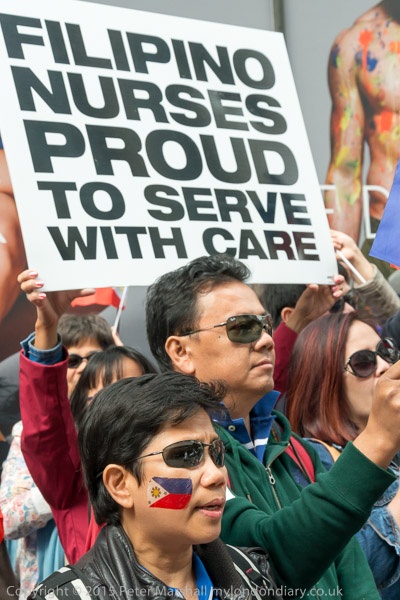
London is very much a world city, and my first event, outside the Daily Mail offices in Kensington reflected this, with protest by Filipino health workers over their coverage of the case of Victorino Chua, a nurse found guilty of murdering two patients and injuring others. The newspaper used the case to insult Filipino NHS workers who have for years formed a vital part of the NHS. When I came round in intensive care in 2003 it was to see a Filipino nurse who greatly impressed me with his care and attentiveness over the next few days.
It had taken around an hour for me to get to Kensington, and the journey across London to Peckham Rye was around another 50 minutes. I was there not for a protest but for the proposed Peckham Coal Line, an elevated linear urban park whose proponents compared in extremely misleading publicity to New York’s ‘High Line’ walk. And while the public were invited to walk the Coal Line, we were largely unable to do so as it is still an active part of the railway network – and one I took a train along after following around its length and back on existing local roads and paths.
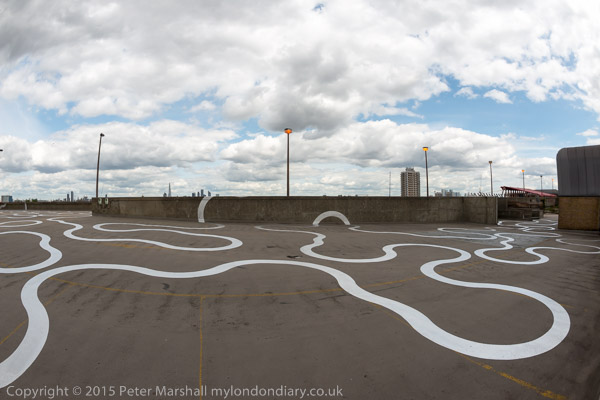
Despite that it was an interesting walk, including a visit to the roof of the multi-storey car park and the Derek Jarman memorial garden. Part of the proposed walk is already open to the public as a small nature reserve, cleared beside the railway line for a massive inner-ring road – part of the proposed London Ringways motorway scheme which was fortunately abandoned after the terrible impact of building its earliest sections including the A40(M) Westway in Notting Hill became clear.
A train from Peckham Rye station took me along the route of the Coal Line to Queen’s Road Peckham and then on to London Bridge, and the Underground to Waterloo where I met with UK Uncut who were to go to an undisclosed location for some direct action. This turned out to be Westminster Bridge, where the protesters blocked the road.
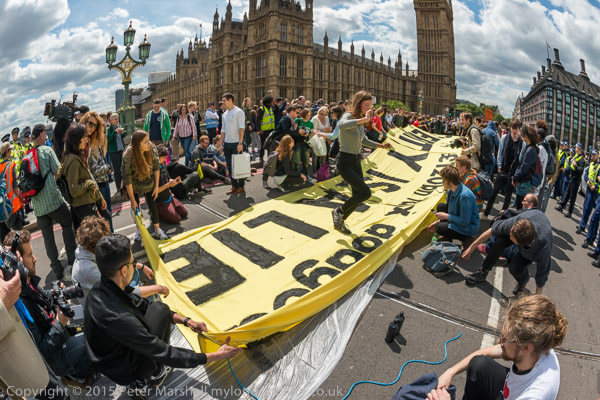
The then unrolled a large yellow banner and began to fill in the slogan that had been marked out on it with black paint. After some parading around on the bridge with it, they then lowered it over the upstream side of the bridge and lit a couple of smoke flares. I’d run down across the bridge and a little along the embankment in front of St Thomas’s Hospital to take pictures of the banner drop.
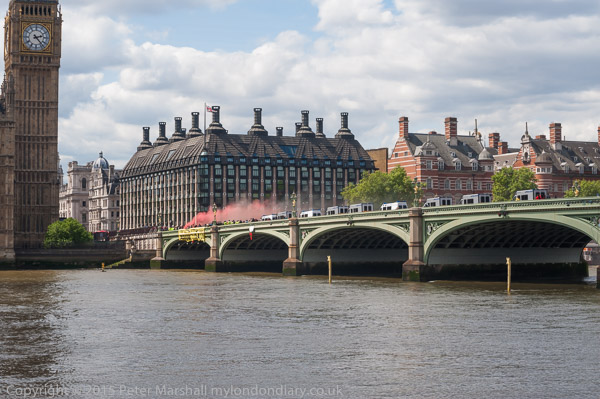
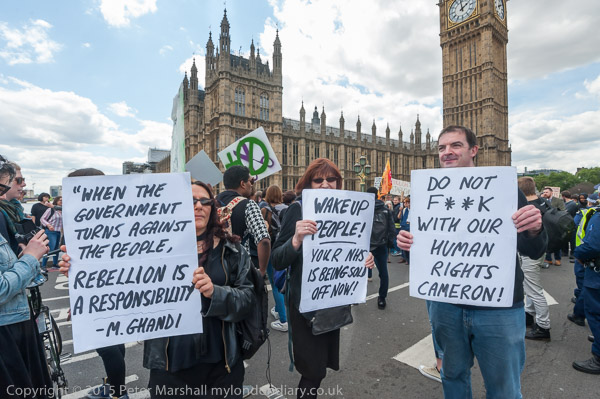
The banner drop was really on the wrong side of the bridge for photographs and it seemed something of an anti-climax. It was hard to read the banner and its message ‘£12 bn more cuts £120 bn tax dodged – Austerity is a lie’ ” was perhaps a little understated. I think may of those present had expected something rather more direct, both in message and action. I went on with many of them to join another protest in Parliament Square which was just coming to an end, against government plans to get rid of the Human Rights Act.
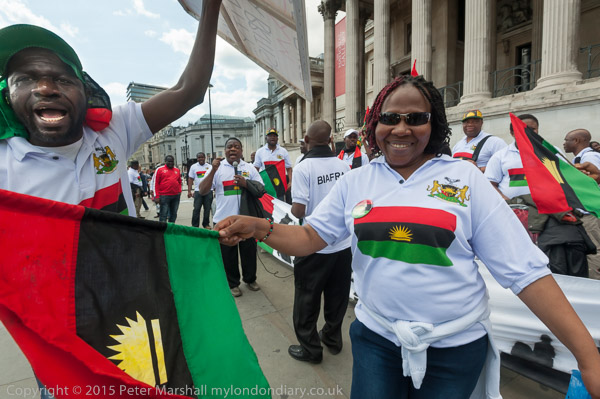
It was then a short walk to Trafalgar Square, where on the anniversary of the 1967 declaration of Biafran independence, Biafrans were calling on the UK government for support in getting back the country which they claim was taken away from them by the Berlin Conference in 1884 and incorporated into Southern Nigeria. They say Biafra was successor of the Kingdom of Nri of the Igbo people, which lasted from the 10th century to 1911 and was one of Africa’s great civilisations before the European colonisation. As well as backing the call for independence the protest also remembered those who died in the Nigerian-Biafran War.
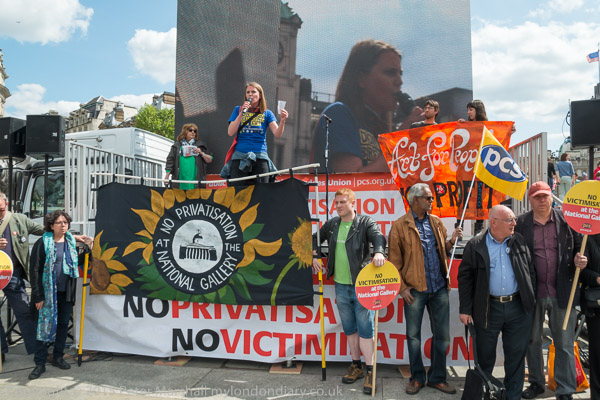
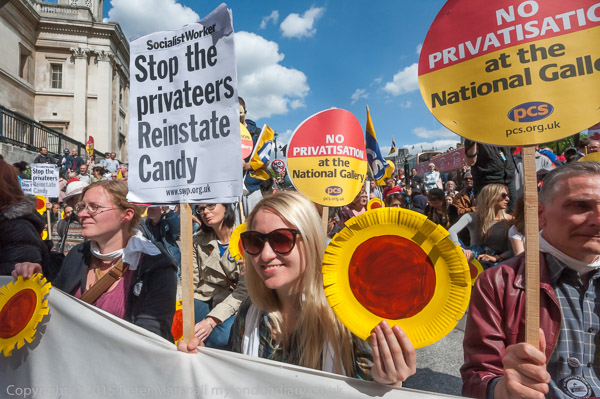
In the main body of the square, striking National Gallery staff and supporters were holding a rally after PCS rep Candy Udwin was sacked for her trade union activities against the plans to privatise gallery staff.
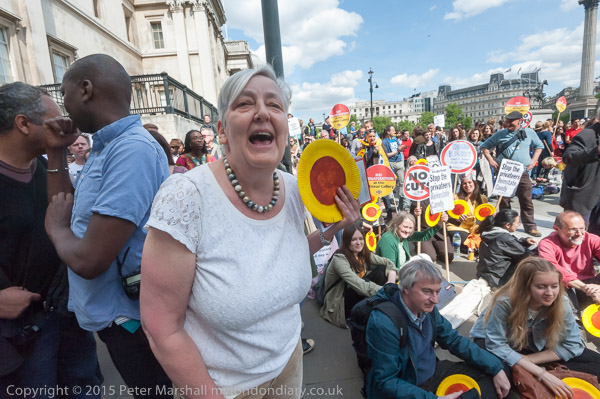
At the end of the rally, people moved towards the Sainsbury Wing, where security is already run by a private company and exhibitions guarded by outsourced staff. Police blocked the doors to stop them entering, and they sat down to hold a further rally blocking the gallery.

Mass rally Supports National Gallery strikers
Biafrans demand independence
UK Uncut Art Protest
Walking the Coal Line
Filipino Nurses tell Daily Mail apologise
State Opening, Class War and Student Protests

I usually make a point of keeping away from the big occasions such as the State Opening of Parliament, but made an exception on Wednesday May 27th 2015, partly because I had been told that Class War were planning to come and protest, but mainly as there were other events I was intending to photograph later in the day.

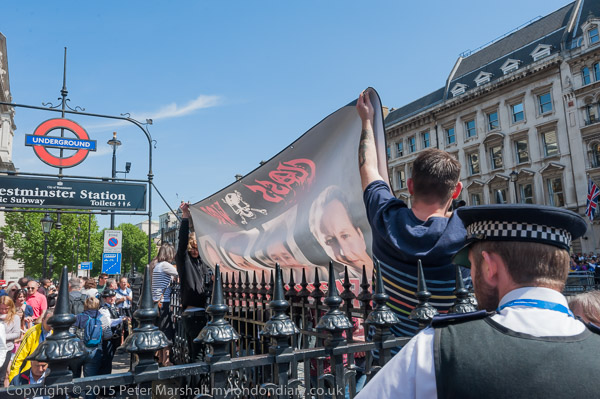
Class War arrived too late to reach the centre of Parliament Square where they had hoped to display their banner and the area was already tightly sealed off by police. Police security for royal events is always very tight and as on this occasion often goes well beyond what is legal. So although they managed to briefly display their banner well before the Queen’s coach arrived they were quickly forced to take it down and pushed away. Around 50 police then followed the dozen or so as they made their way to a nearby pub and a few more supporters, and stood around for an hour or so looking as if arrests were imminent before most of them moved off, but police continued to follow the group until they left Westminster. Two other people who had been showing posters against austerity in Parliament Square were arrested despite their actions being perfectly within the law; they were released without charge a couple of hours late.

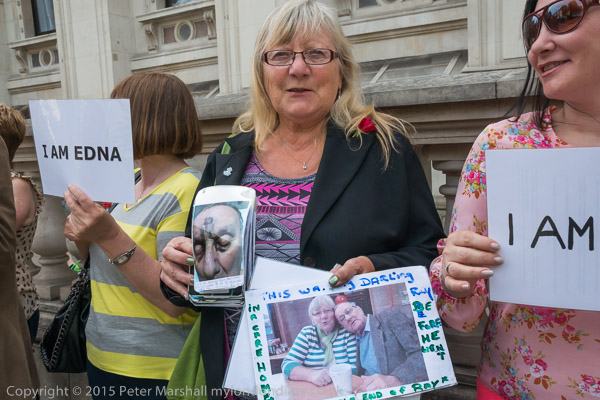
I walked from the pub up to Downing St, where a line of people from Compassion in Care where holding up posters and calling for ‘Edna’s Law’ which would make it a criminal offence to fail to act on the genuine concerns of a whistle-blower, and would make the state protect whistleblowers rather than them having to spend thousands of pounds on taking their cases for unfair dismissals to industrial tribunals. They say current law, the Public Interest Disclosure Act 1998 which has failed to protect the public, the victims or the whistle-blowers. So far nothing has changed.

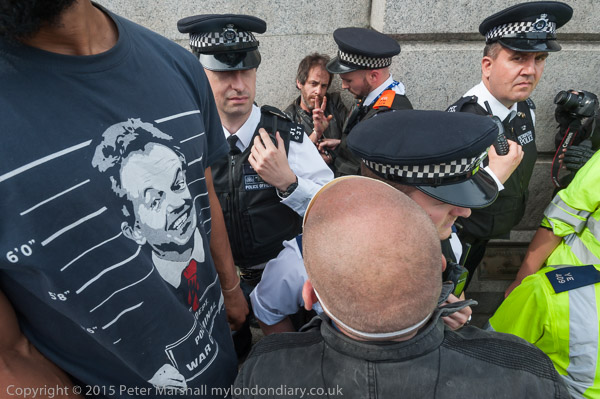
As I arrived in Trafalgar Square where people were gathering for a protest against education fees and cuts there was an angry scene when a squad of police surrounded and arrested a man, refusing to talk with any of those in the crowd around about their actions. Had they explained at the time that the man being arrested had been identified as someone who was wanted for an earlier unspecified offence and was being taken in for questioning, it would have defused the incident, but this was only revealed after the man – and one of the protesters who had questioned the police about their action – had been put into a police van a short distance away and driven off.

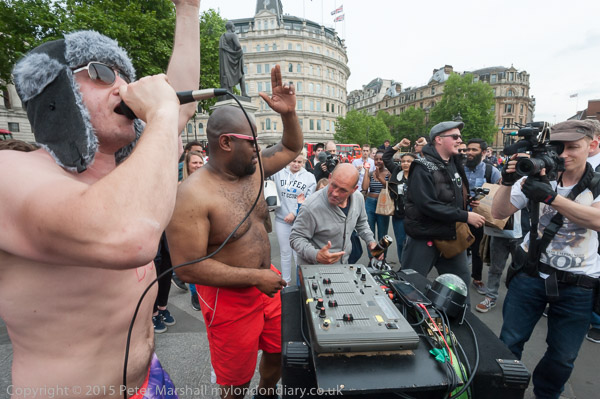
Back in Trafalgar Square there was music as we were waiting for the National Campaign Against Fees and Cuts protest to begin, provided by ‘Disco Boy’ Lee Marshall from Kent who had brought a mobile rig to Trafalgar Square. Apparently as well as running local discos he has a huge social media following.

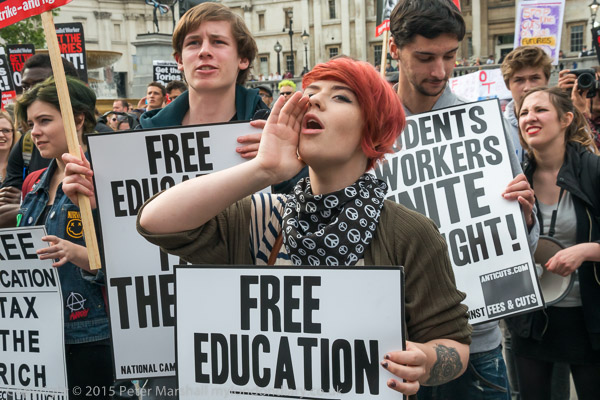
Finally the NCAFC protest got under way, with a good crowd of mainly students in Trafalgar Square and speakers on the plinth of Nelson’s Column.

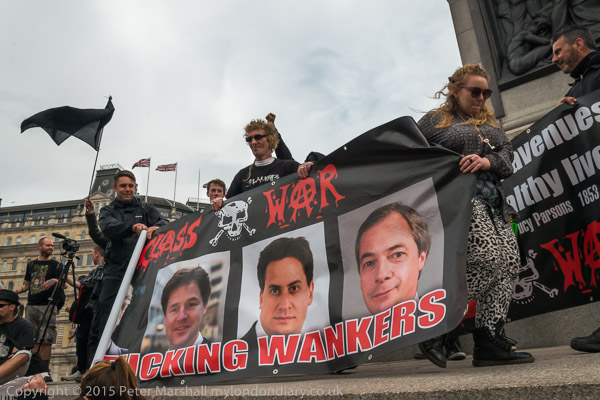
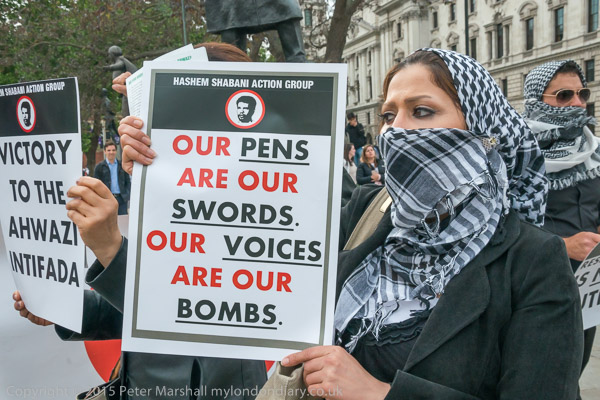
Class War came along (still followed by police) and there were cheers as they displayed their several banners; also taking the stage and marching with the students were the Hashem Shabani group of Ahwazi Arabs, who later held their own protest.

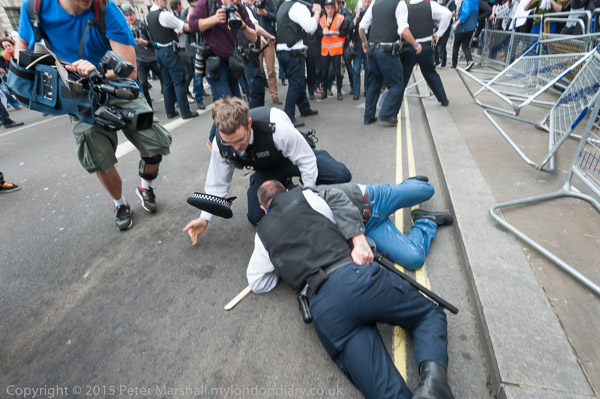
After the speeches in Trafalgar Square the NCAFC protesters set off to march to Parliament. Police tried to stop them with a line of officers and barriers at Downing St, but there were too few officers and many of the protesters walked around them and the barriers. Police apparently randomly picked on a few of the demonstrators and tackled them with unnecessary force making several arrests. The protesters continued marching around Westminster for some hours, but I left them at Parliament Square.

I finished my day’s work in Parliament Square with the Ahwazi Arabs who protested there against the continuing Iranian attacks on their heritage and identity since their homeland, which includes most of Iran’s oil was occupied by Iran in 1925. The occupation was important in protecting the interests of the Anglo-Persian Oil Company, effectively nationalised by the UK government in 1914 (later it became the Anglo-Iranian Oil Company and then in 1954, BP) and even after the nationalisation of Iran’s oil, BP remained a leading player in the consortium marketing Iranian oil.

Cuts, Yemen, Shopping Problem & Police Violence

Back in 2009 we had a Labour government, but public services were still under threat and public sector jobs being cut. The euphoria with which many had greeted the Labour victory in 1997 to the theme music of “Things Can Only Get Better” had long evaporated, thanks to the country being dragged against its will into a illegal war which had ended with Iraq in chaos and the failure to reverse or ameliorate disastrous privatisations and the attack on social housing.

New Labour had also proved themselves inept in the huge expansion of the Private Finance Initiative, PFI, which gave a continuing huge windfall to the private sector and left public bodies, particularly parts of the NHS, with huge debts. The financial crisis in which hit stock markets around the world in September and October 2008 was a final straw, and while the actions of prime minister Gordon Brown may have helped saved the banks this came at enormous cost.

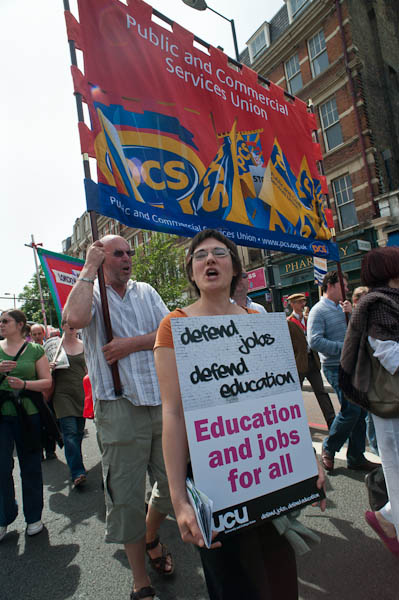
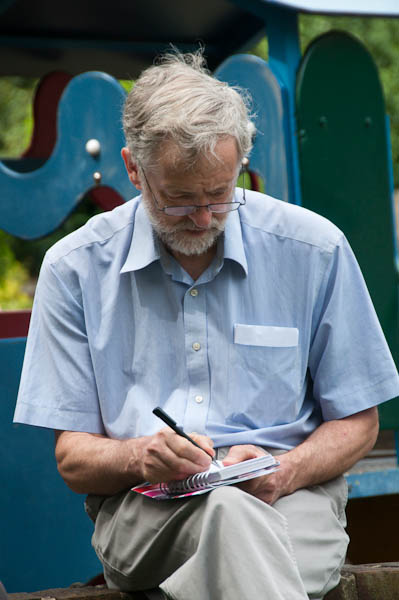
Government cuts were felt keenly in North London, where there were massive job losses including those of 550 mainly support workers from London Metropolitan University, 500 civil servants from Archway tower and more at City University, where adult education is under threat. On Saturday 23 May, 2009 around 500 met in Higbbury Fields for a march to a rally at Archway to defend jobs, services and education Among the mainly trade union speakers at the rally was just one local MP, Jeremy Corbyn.

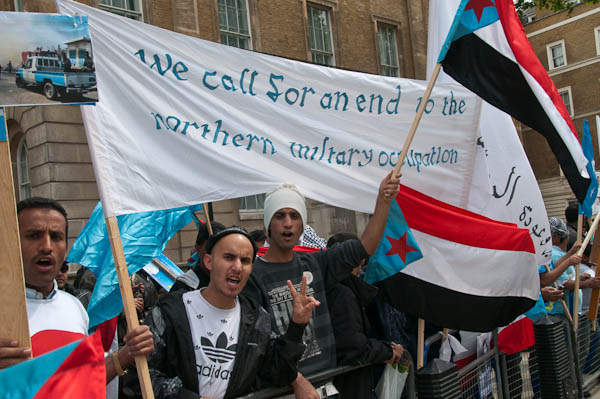
From the rally I took the Northern line to Charing Cross and walked down Whitehall to Downing St. Protesting on the pavement opposite were Yemenis from the Southern Democratic Assembly. Yemen has been a split country for years, with two civil wars in the 1980s as well as the current ongoing war. Southern Yemen and North Yemen had agreed in principle to unite in 1972, and did so in 1990, but the Southern Yemenis revolted in 1994, accusing the government of grabbing land and property and of human rights abuses. Their protest in 2009 was calling for an end to the repression and military occupation by the North and for the release of jailed Southern leaders. In 1994 and now, the situation is complicated both by religious differences – Sunni and Shia – and by the interventions of a wide range of foreign powers – with often some strange bedfellows. The current was is of course led by Saudi Arabia, whose see it as a fight against the regional Shia power, Iran.

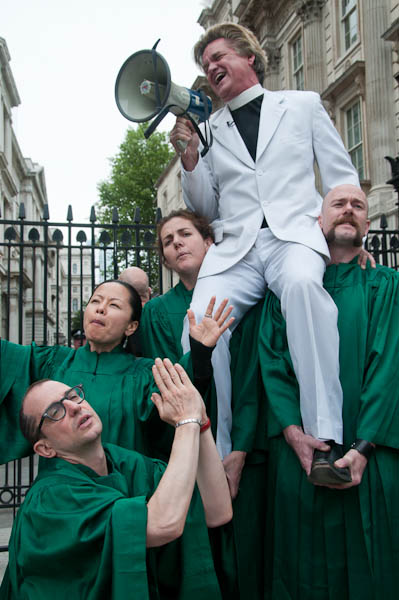
Opposite, on the pavement in front of the security gates to Downing St, I photographed a performance by the Reverend Billy and his ‘Life After Shopping’ Gospel choir from New York who were in London on their 2009 UK Shopocalypse Tour. Clearly the police didn’t quite now how to handle the holy activists, and the officer who stopped the Reverend to question him failed to make much progress – other than being diagnosed by Billy as having a “shopping problem.”

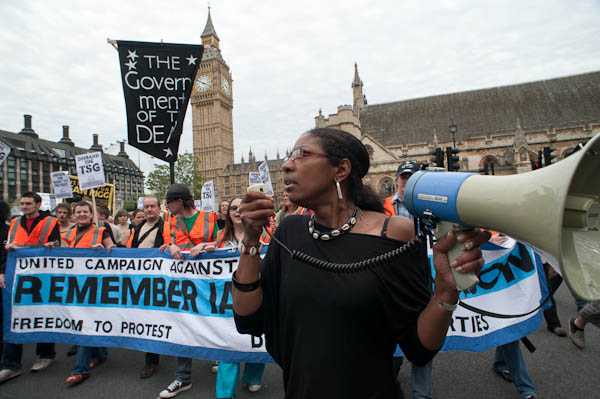
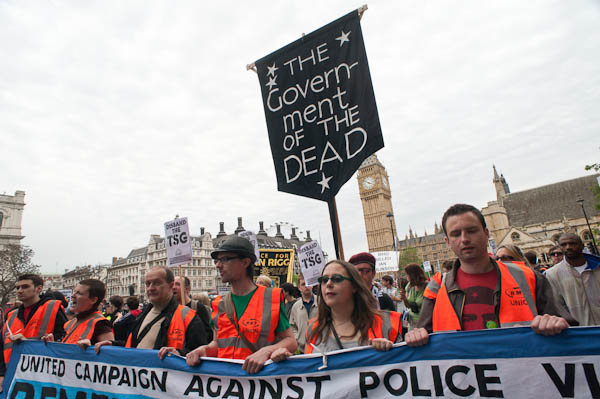
Like me, the Rev Billy and his team from the Church of Life After Shopping were on their way to the National Demonstration against Police Violence in London organised by the United Campaign Against Police Violence, set up following the G20 demonstration in London in which Ian Tomlinson, a man not taking part in the demonstration, was assaulted by and killed by a police officer.

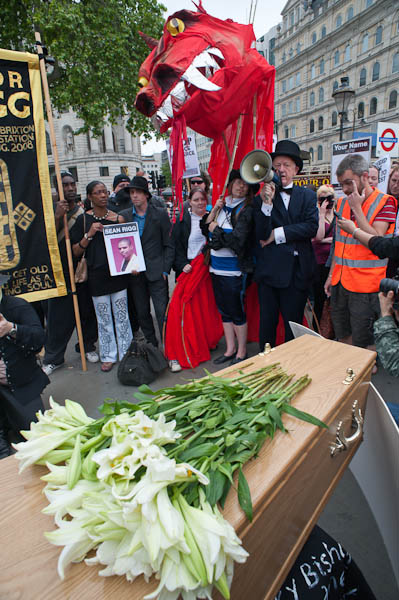
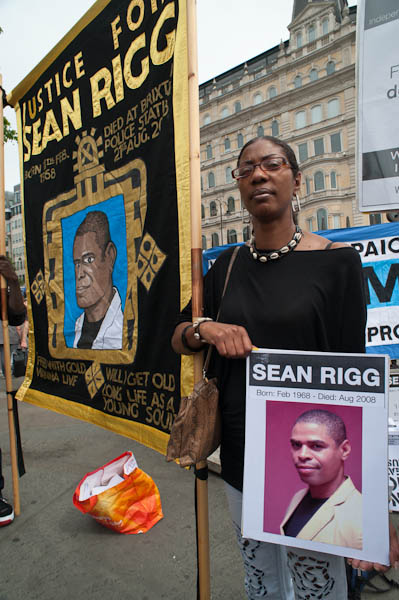
Prominent among those taking part were members of two families of men who were killed in Brixton Police Station, Ricky Bishop and Sean Rigg. Ricky Bishop, a 25 year old black man died after being detained and brought into the police station in 2001. Sean Rigg, also black – like the majority of those who have died in custody – was taken into Brixton police station in August 2008 and within hours this fit 40 year old was dead. Police issued a number of misleading statements – as they did around the death of Ian Tomlinson, and failed to make a timely investigation.

Gradually over the years, dedicated work, led by his sister Marcia led to an inquest verdict ‘that the police had used “unsuitable and unnecessary force” on Rigg, that officers failed to uphold his basic rights and that the failings of the police “more than minimally” contributed to his death’. Further pressure by the campaign resulted in an IPCC report and eventual request of three officers. The CPS decided to drop the all charges against two of them, while the third was charged with perjury, though only after the Rigg family had forced a review. Despite the officer accepting he had given false evidence, a jury acquitted him. Further pressure led to an independent review of the IPCC investigation which ‘concluded that the IPCC committed a series of major blunders and that there had been “inappropriate conduct” by the Police Federation of England and Wales.’ (More details on Wikipedia). There have been several thousand deaths in police custody, prisons or other secure institutions in the last 50 years but only one officer brought to justice for the killings – convicted of manslaughter in 1986.

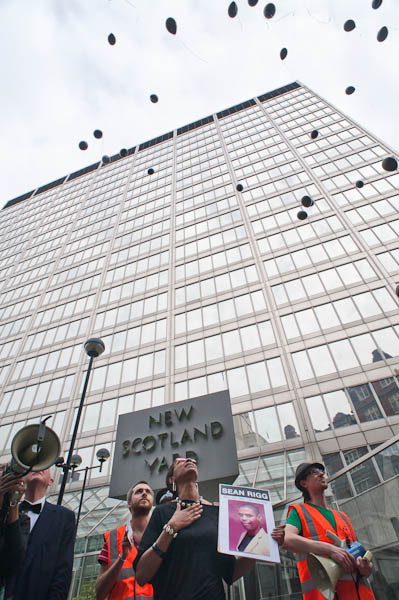
Police kept a close eye on the protesters and formed a line to protect Downing St, but otherwise acted reasonably until the protest held a solemn ceremony outside the police headquarters at New Scotland Yard on Victoria St, linking hands and holding a silence in memory of those who have died. This was rudely and provocatively interrupted by an woman officer sitting inside a police van blasting out a warning from her chief over the loudspeakers. Presumably as intended this produced an angry reaction from the crowd, and for a few seconds it seemed likely would provoke violence and lead to arrests, but those leading the event quietened the crowd and the ceremony continued, ending with the release of a large cloud of black balloons in memory of the dead.
Demonstration against Police Violence
Rev Billy Performs at Downing St
Southern Yemenis Demonstrate
March to Defend Jobs, Services & Education


All photographs on this and my other sites, unless otherwise stated, are taken by and copyright of Peter Marshall, and are available for reproduction or can be bought as prints.


Extinction Rebellion and more

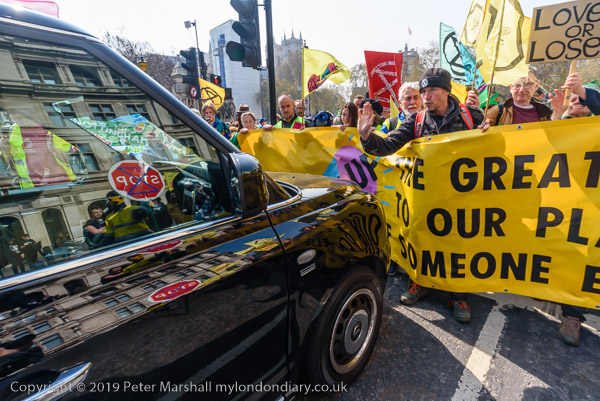
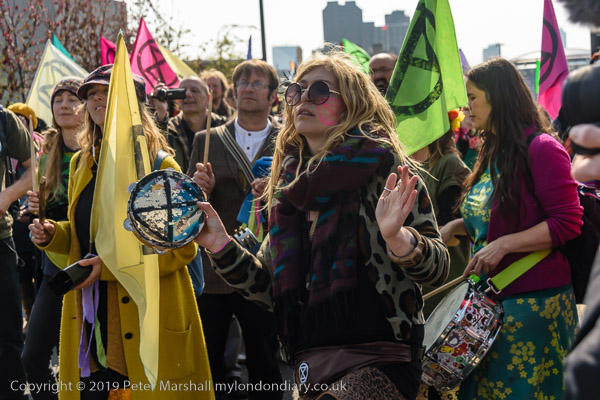
Extinction Rebellion (XR) began 11 days of protest which initially brought most of central London traffic to a halt on Monday 15th April 2019. They didn’t manage to keep up the protest until “the government takes necessary action on the global climate and ecological emergency” as we have yet to see that two years later, but they did considerably raise public and media awareness about the severity of the problem the world faces.

Unfortunately there seems to be little chance that effective action will be taken in time to halt biodiversity loss and reduce greenhouse gas emissions to net zero by 2015 as they demanded, though perhaps the half-hearted measures that will come out of the delayed climate summit later this year will do just a little to slow the rate our our planet’s decline, possibly enough to see my life out, though I worry about the future of my children and despair for that of my grandsons and daughters.

XR have now very much lost the initiative, mainly I think because of internal dissensions, perhaps inevitable because of some of the rather odd characters that they attracted. But some of their ideas, particularly over the police and arrests cut them off from many on the left who attacked them as a movement funded by shady capitalists and led by wacky idealists, more a Glastonbury festival than a political movement. Much of the criticism was ill-founded but not all.

The major effect they had on our government was for them to put pressure on the police to get rid of these pesky protesters – first by more arrests and prosecutions and now by the Police, Crime, Courts and Sentencing Bill to give the police greater powers to control all protests.

Early on the Monday morning, XR protesters set up camp at a number of key locations in London in a well-planned exercise. I turned up rather later to take photographs, first at Waterloo Bridge, which XR had turned into a ‘garden bridge’, blocking all traffic and bringing flowers and trees. There had been arrests earlier, but police had been unable to stop the protesters and the bridge – despite many further arrests – remained closed for over a week.

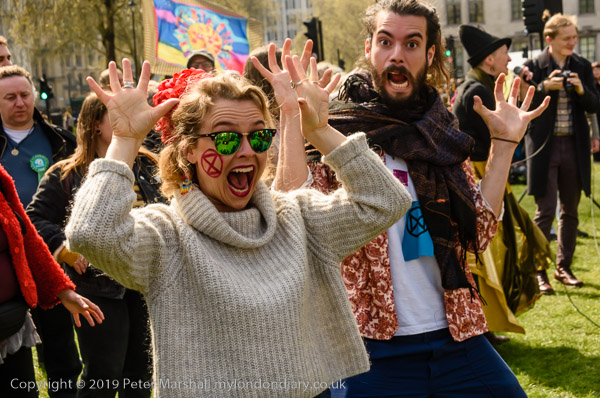
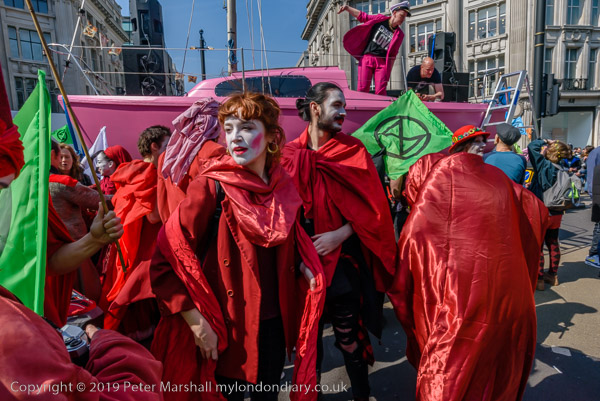
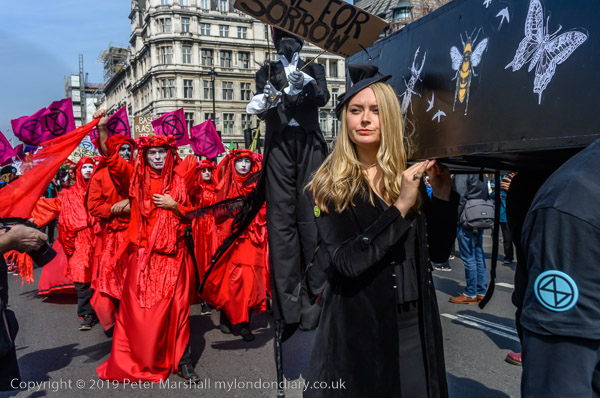
Because of the XR actions traffic all around the centre of London was at a halt, with buses not moving. Fortunately the tube was unaffected and took me to Oxford Circus, which now had a large pink yacht at its centre, named after the Honduran environmental activist and indigenous leader, Berta Cáceres, assassinated for her activism in 2016. It was here that I met the dance troupe dressed in red that were such a visible presence in XR protests.

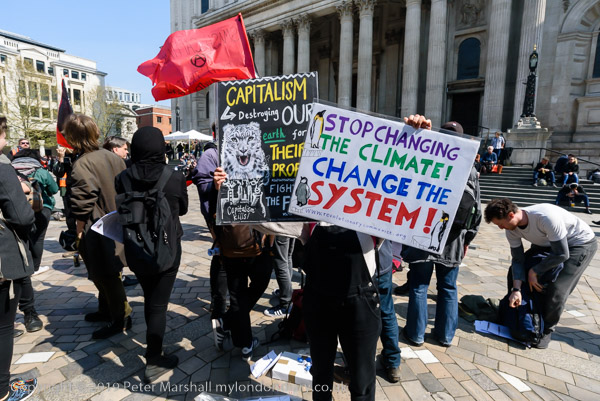
XR were not the only environmental game in town, and I took the Underground to St Paul’s Cathedral for a protest organised by the Green Anti-Capitalist Front, Earth Strike and London Students for Climate Justice. I arrived when there protest was due to start, but there were only a few of them present. I hung around for half an hour or so, and then gave up and left. Later I saw the accounts of their protest which did eventually attract a small crowd and was sorry I’d missed the action.

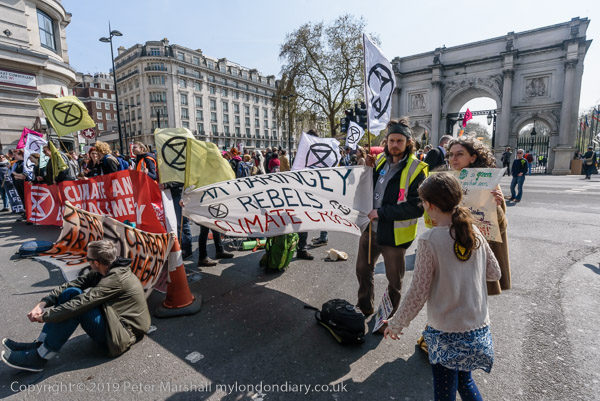
But there was rather more happening at Marble Arch, one of London’s main gyratory systems, where XR had blocked Oxford St, Park Lane, Edgware Road and a couple of other routes and had set up a stage, workshops and a tent village as well as the road blocks.

But XR had also planned an event for Parliament Square, where the roads around were blocked for a New Orleans funeral procession with jazz band to make its way around the square.

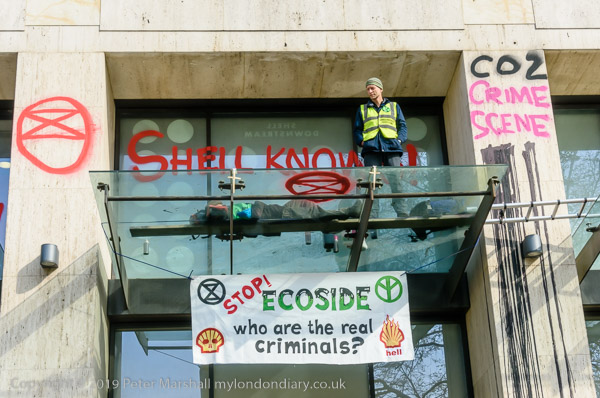
The funeral was perhaps also designed as a diversion for some more direct action, which I again missed at the Shell Centre on the South Bank. A small group of activists daubed slogans across the front of the building and two occupied the glass porch over the door. The activists had deliberately broken the glass in one of the doors, with the intention that this would result in a trial before a jury rather than by magistrates, enabling them to present the reasons for their action, and three had been arrested and taken away by the time I arrived, but the two were still up on the porch and others holding banners on the street in front.

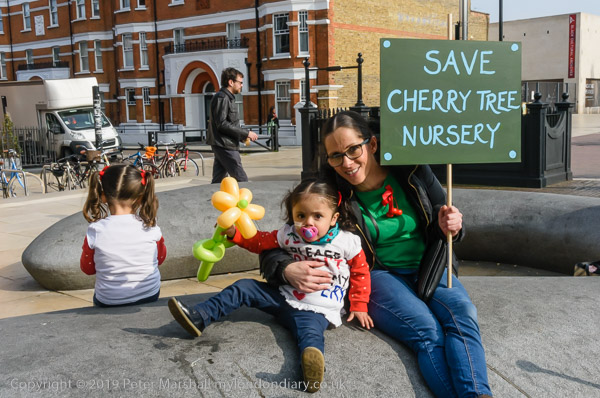
My day had not quite finished as I made a small diversion on my way home to visit Brixton, where staff, families and children from children’s centres were protesting against plans by Lambeth Council to close five centres and make drastic cuts at seven others. The council had recently spent £68 million on refurbishing the Town Hall and building a new Civic Centre.

Save Lambeth Children’s Centres
Extinction Rebellion at Shell
Extinction Rebellion Funeral Procession
Extinction Rebellion Marble Arch
Anti-capitalist environmental action
Extinction Rebellion Sea at Oxford Circus
Extinction Rebellion Garden Bridge


All photographs on this and my other sites, unless otherwise stated, are taken by and copyright of Peter Marshall, and are available for reproduction or can be bought as prints.


St Pat’s Day

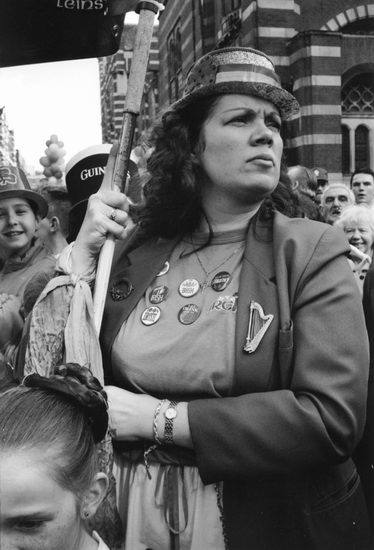
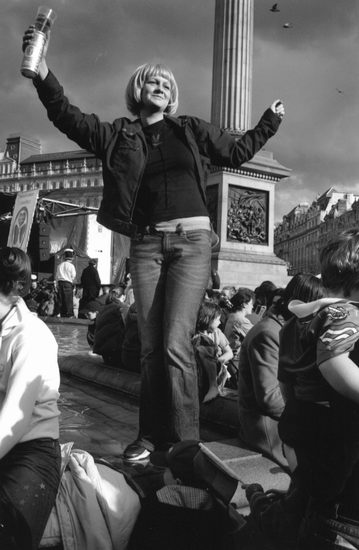
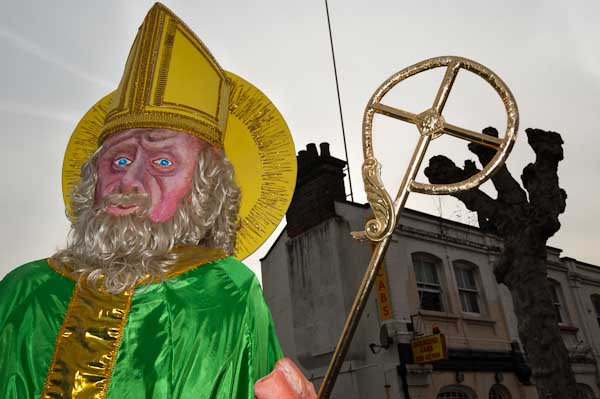
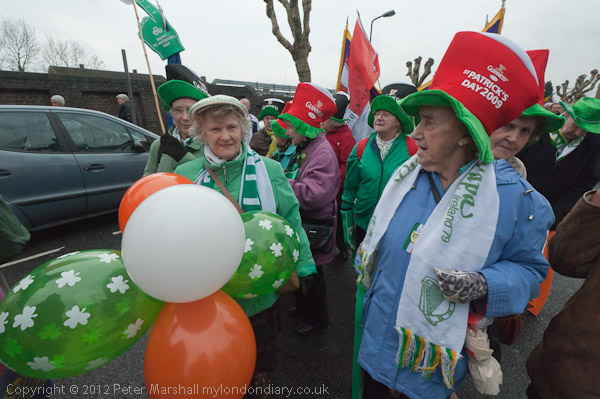
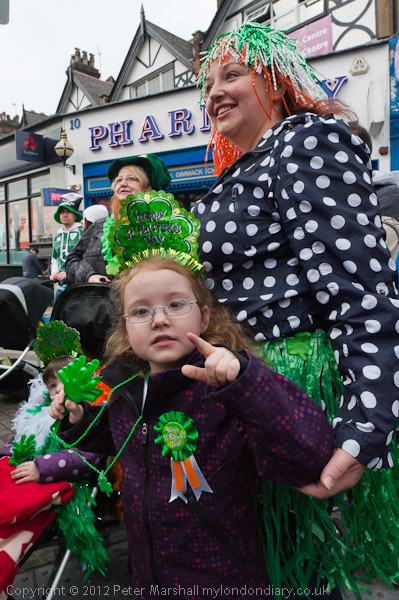
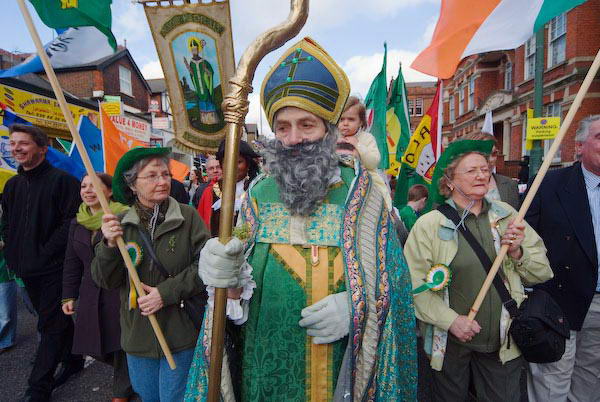
I don’t think March 17th 2002 was the first time I photographed St Patrick’s Day celebrations in London, but it is the earliest that I have pictures of on My London Diary. It looks as if the picture above was taken outside Westminster Cathedral, and later images are clearly in Trafalgar Square.

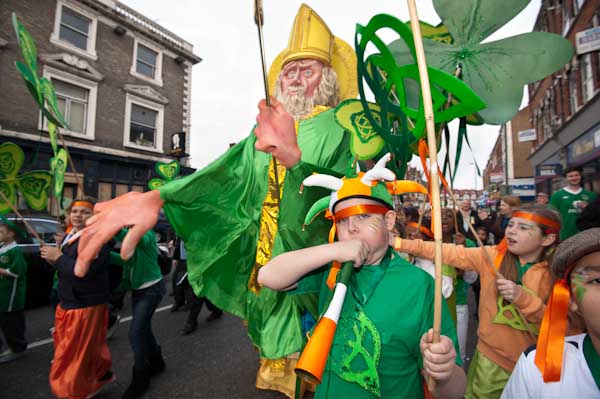
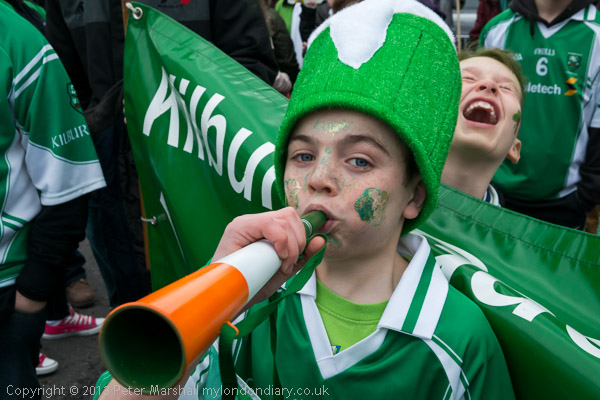
In later years the parade went from Hyde Park to Trafalgar Square, and the event, with backing from London Mayor Ken Livingstone and considerable sponsorship grew larger and trickier to photograph. I became more interested in smaller St Patrick’s Day events taking place elsewhere in the capital, and especially in Brent, where there was usually a parade on the actual day itself, with a large local Irish population coming out on their own streets.

The London Borough of Brent for years supported a number of community events including this, but also others that reflected the multicultural nature of its population – until government cuts made this impossible to continue, and funding was withdrawn in 2013. These were events that drew the communities together, with others joining in with their Irish neighbours and local schools getting all their pupils involved. They also celebrated Diwali, Eid, Christmas, Chanukah and Navrati, as well as Holocaust Memorial Day, and had a black history programme, their own ‘Respect’ festival and a world food and music festival.

I think I first photographed the Brent parade in 2007, going there with several photographer friends, including Bronx-born Irish-American John Benton-Harris who has covered St Patrick’s Day celebrations for many years and whose Saint Patrick’s People is available from Cafe Royal books.

I went to Brent again in several years, and it was always a great event to cover. The only problem with it was that once the parade was over the local pubs were far too crowded and we had to go elsewhere to get a drink.

There are far too many pictures to show here – I’ll add some links at the bottom of the piece as usual.

In these later years I did find myself faced with a problem. While the Irish were celebrating their saint, a Romano-British missionary who converted Ireland to Christianity at some time in the early Fifth century – Syrians in the UK were marking the anniversary of their revolution – which was being brutally repressed by the Assad regime. While timings made it possible to cover both stories, it did mean rushing away from one or the other, perhaps missing the end of the events, and I found the necessary switch in mood difficult.

St Patrick’s Day on My London Diary
2002
2004 (scroll down the page)
2005 (scroll down the page)
2006 (scroll down the page)
2007 (scroll down the page – 2 stories)
2008
2009 – London and Brent
2010
2011
2012
2013


All photographs on this and my other sites, unless otherwise stated, are taken by and copyright of Peter Marshall, and are available for reproduction or can be bought as prints.


Ten Years Ago – 2011

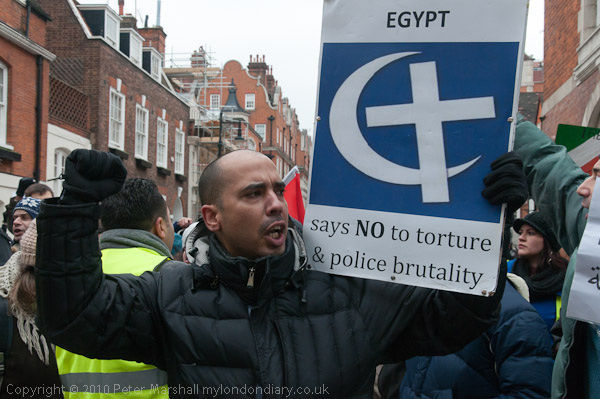
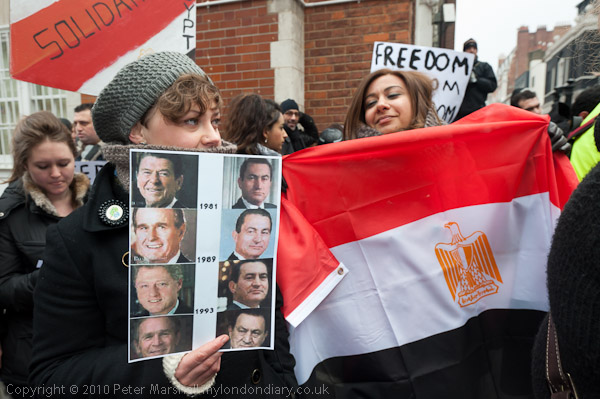
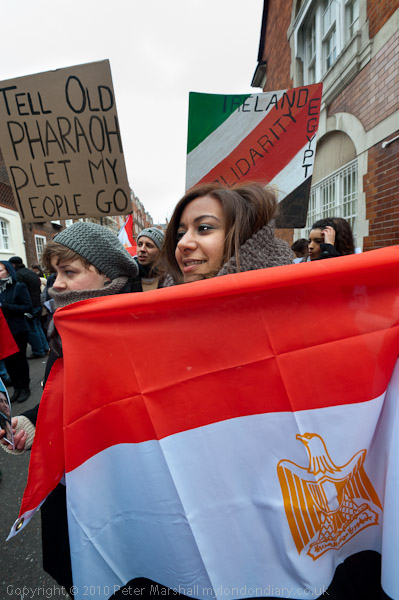
On Saturday 29th January 2011 several hundred people, “many of them Egyptians living in the UK from differing political & ideological backgrounds held a peaceful but noisy protest

to show our solidarity & support of our fellow Egyptians in our beloved country, who decided on making Tuesday 25/01/2011 a day of protests & demonstrations in Egypt against the unfair, tyrant, oppressive & corrupt Egyptian regime that has been ruling our country for decades.”

Protest flyer quoted on ‘My London Diary’

The ‘Arab Spring’ of protests had begun in Tunisia after street-trade Mohamed Bouazizi’s set himself on fire and died on 17 December 2010 leading to protests and the overthowing of the government on 14 January 2011. In January there were protests in Oman, Yemen, Syria, Morocco and in Egypt, where on 25 January thousands flocked to Tahrir Square in Cairo to demand the resignation of President Hosni Mubarak.

Hopes were then running high that the peaceful protests which had been met with suppression and brutality by the regime would succeed in achieving their “justified goal of a democratic, free & civil nation capable of ensuring a dignified, honourable & non-discriminatory life for all Egyptians.” But now we know that despite their early success things have not turned out well in the longer term.

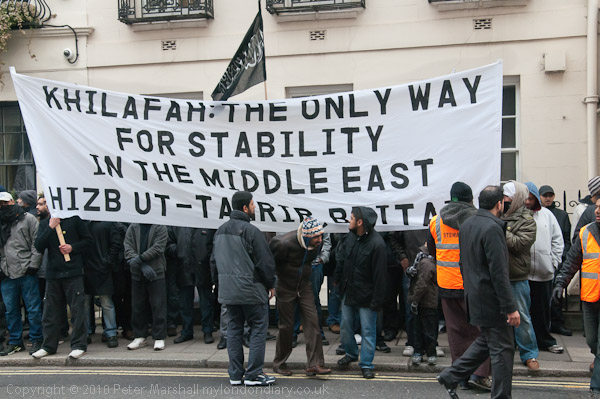
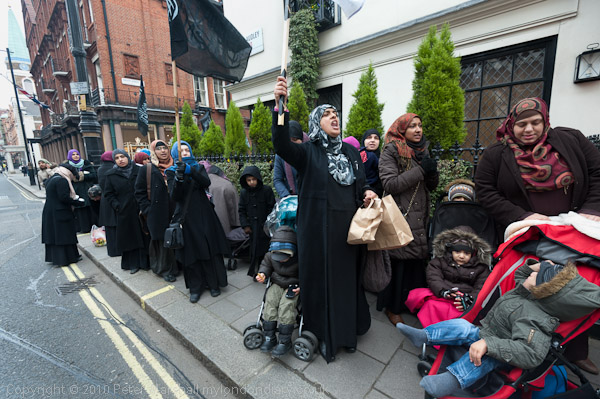
A second group came to join the protest outside the Egyptian Embassy, but Hizb Ut-Tahrir Britain who were calling in on their way to protest outside the Hilton Hotel in Park Lane against “two years Fascist Rule” by the Hasina Government in Bangladesh were told very firmly that the embassy protest – like the Egyptian revolution – was to be entirely non-sectarian and that they were not welcome, and had to protest a hundred yards or so down the street. Theirs, unlike that at the embassy, was a strictly segegrated protest, with the women kept at a distance and few even holding flags.

Hizb Ut-Tahrir is an Islamist group calling for the establishment of a Muslim caliphate, and in 2012, the Freedom and Justice Party, the political arm of the Muslim Brotherhood which shares similar aims won elections to become the largest group in the Egyptian parliament and their candidate Mohammed Morsi was elected as president. The following year there were protests against Morsi who after widepread unrest was deposed by a military coup in July 2013, led by General Abdul Fatah al-Sisi who became president. He remains in charge of an authoritarian miltary regime using “imprisonment, torture, extrajudicial killings, home demolitions, forced disappearances and sexual violence against its critics” and running rigged elections.

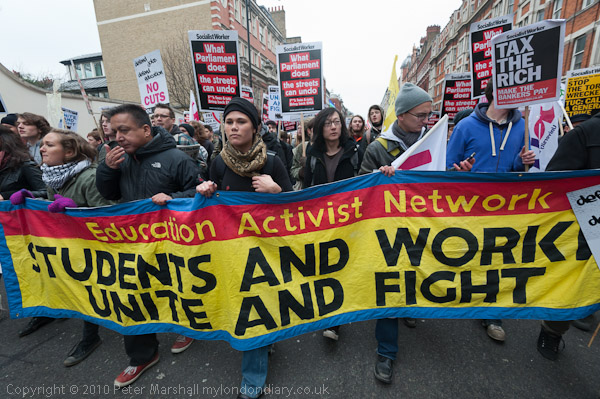
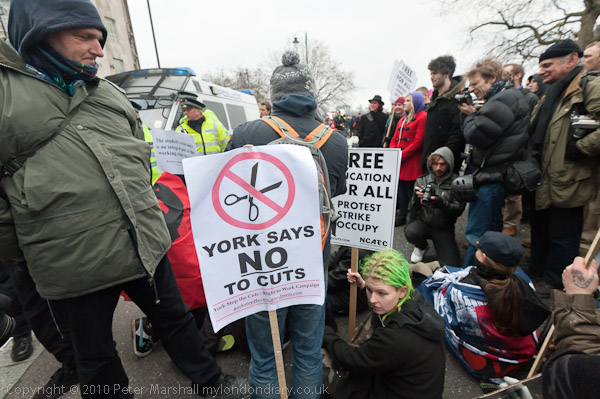
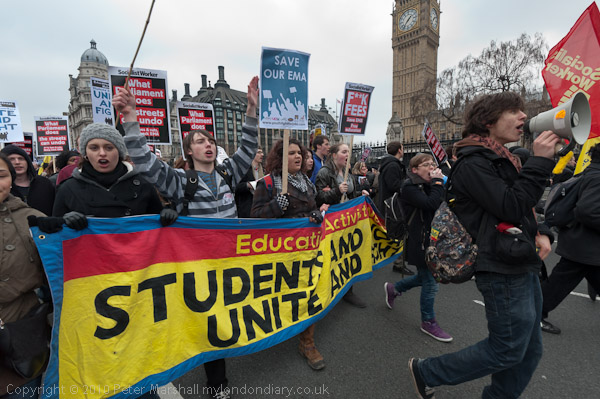
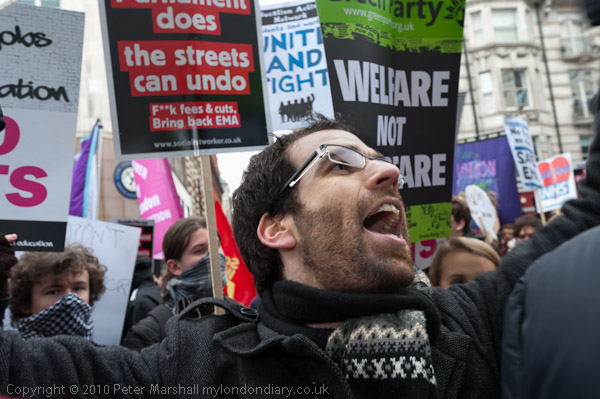
A rather larger protest was taking place further east in London with thousands of students, teachers, parents and others marching peacefully in the latest demonstration to defend education and the public sector. The demonstration, backed by the National Campaign Against Fees and Cuts was one of two national marches today, with another taking place in Manchester.

The protest was carefully policed following some incidents, particularly at the Conservative HQ on Millbank at a previous march in November 2010, but the police appeared for once to be trying to avoid provocation, and their were few incidents on the actual march, though I think later a smaller group of protesters went on to protest on Oxford St where there were some clashes with police and most of the fairly small number of arrests were made.

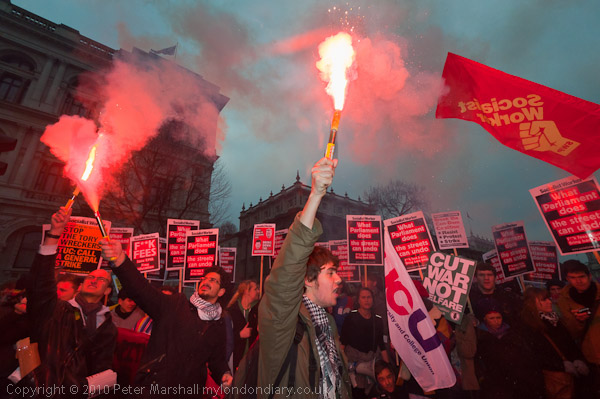
As always with such a large protest with around 5-10,000 people stretched out over half a mile or more of streets, its hard to know when and where any incidents are likely to occur, though some are more predictable. Obviously there were going to be some fireworks at Downing St – and in particular on this event the lighting of quite a few smoke flares, so I was there when this took place.

But I’ve also always wanted to document events as a whole, rather than concentrate on the more photogenic and controversial aspects. So I often – if not usually – find myself for much of the time away from most of the other photographers covering protests for the press, though still trying to cover the key aspects.

In November I’d missed much of the action outside the Tory HQ, arriving rather late on, but this time I’d anticipated correctly that the police would be making sure that it was very well protected against any possible trouble. As in November I spent quite a lot of time photographing protesters as they went through Parliament Square, and by the time the last of them arrived at the end of the march at Tate Britain the rally there had ended. It was a convenient location for me, just a short walk across Vauxhall Bridge to catch my train home.

More at:
No Fees, No Cuts! Student March
Solidarity with the Egyptian Revolution
Hizb ut-Tahrir Turned Away


All photographs on this and my other sites, unless otherwise stated, are taken by and copyright of Peter Marshall, and are available for reproduction or can be bought as prints.


Republic Day: 26 January 2011

Republic Day has been celebrated in India on the 26th January since 1950, and marks the day in 1950 when the Constitution of India came into effect. India had gained independence on 15 August 1947, but that left the country as a British dominion, still under British Law and with King George VI as head of state. It took until November 1949 for the new constitution to be agreed, and the January 26 was chosen for its introduction as the Indian National Congress had declared it as Independence Day in 1929.

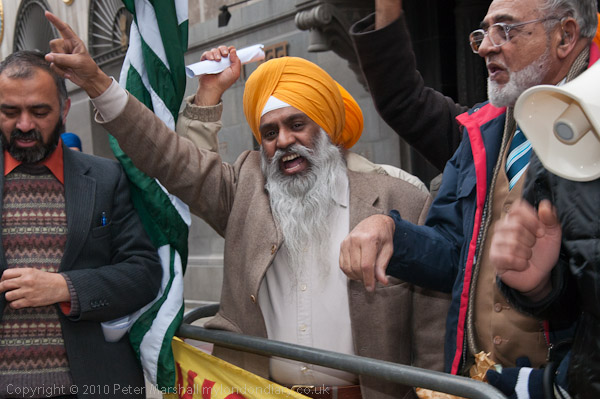
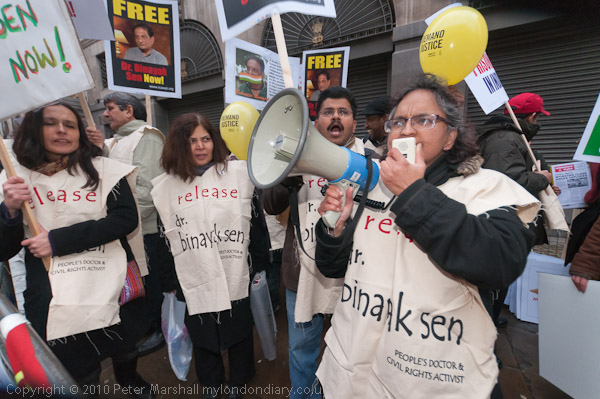
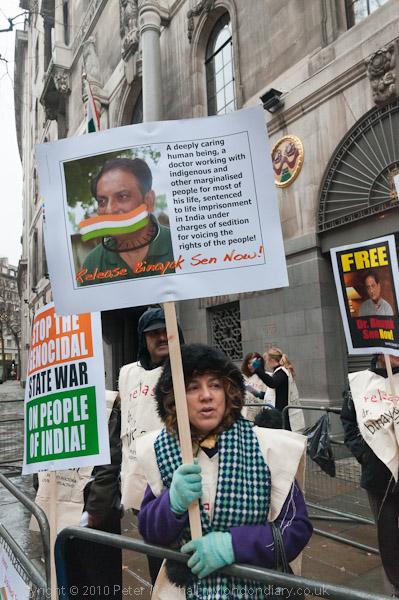
Along with Independence Day it is a day when there are often protests outside India House in London and on 26th January 2011, ten years ago today, there were at least two taking place. One called for the release of leading paediatrician and public health specialist Binayak Sen, a member of the People’s Union for Civil Liberties who has gained international recognition for his work in Chhattisgarh, India, where he “helped establish a hospital serving poor mine workers in the region, founded a health and human rights organization that supports community health workers in 20 villages.”

Dr Sen also criticised the Chhattisgarh state government’s atrocities against indigenous people fighting the handover of their lands for mining and their establishment of an armed militia, the Salwa Judum, to fight against the Naxalite (Maoist) rebels in the area, and was arrested and sentenced to life imprisonment by a Chhattisgarh court for sedition and helping the Naxalites. His case and appeal attracted support from around the world including from 22 Nobel laureates who sent a letter to the Indian President and Prime Minister and Chhattisgarh state authorities asking for him to be allowed to travel to the US to receive the Jonathan Mann Award for Global Health and Human Rights. Later in 2011 he was granted bail by the Indian Supreme Court.

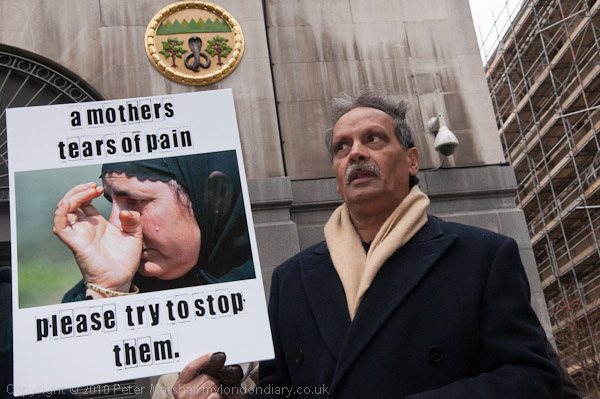
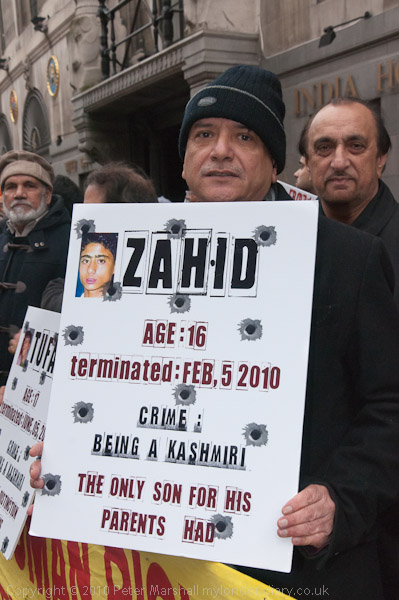
Also protesting outside India House were Kashmiris and Sikhs calling for the freedom for their nations which has been denied by Indian military repression. Kashmir is one of the oldest countries in the world, dating back to the Iron Age and became a Muslim monarchy in 1349, was later a part of the Sikh empire but was established later as a kingdom under British guidance. At partition the ruler ceded the country to India against the wishes of the majority of its inhabitants for military protection after Pakistan invaded the country, which is now in three parts, under military rule by India, Pakistan and a small part China.

The Indian administered area, known as Jammu and Kashmir and Ladakh had limited autonomy which was revoked on 5 August 2019 and has a huge occupying force accused by human rights organisations of imposing strict military law in a systematically brutal fashion, with deaths during interrogation of suspects, detention without trail, censorship, arson, beatings, rape, mass murder, and tortures of all kinds.

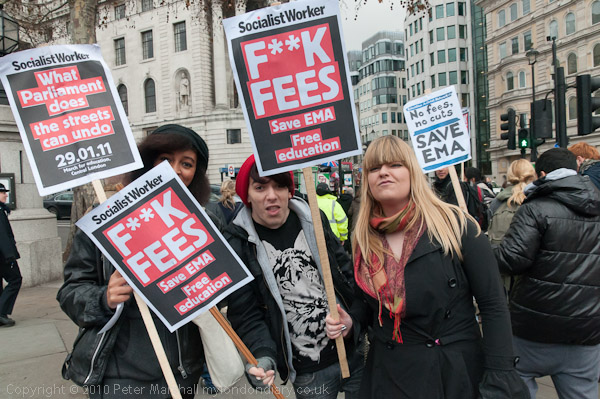
It was a busy Wednesday, with other protests taking place, including a student day of action against fees and cuts, including the loss of the Education Maintenance Allowance which has allowed many 16-18 year olds to remain in education. Axed in England it is still available in Wales, Scotland and Northern Ireland. Unfortunately although there had been publicity about students walking out of schools and college there was very little information available about the protests they might attend, and only perhaps qa hundred made their way to the rally in Trafalgar Square.

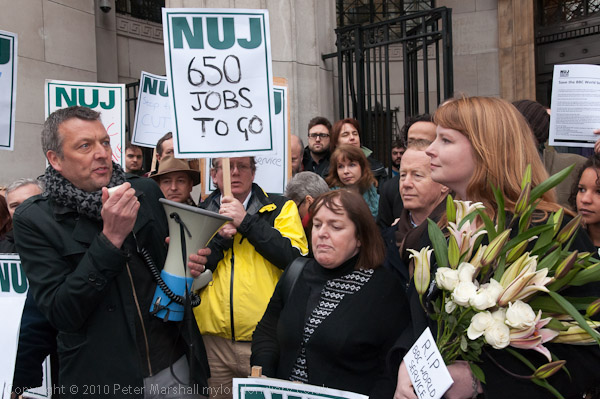
After some speeches there was a discussion about what to do next, and most of those present decided to join the NUJ demonstration outside Bush House against the savage cuts announced by the BBC for the World Service broadcasting, with up to 650 job losses, switching off of radio services and the complete loss of services in 5 languages. This was particularly convenient for me as I was also going to join this protest as a member of the NUJ – and it was just a few yards from India House were I was going to photograph other events.

More at:
Release Binayak Sen Now
Free Kashmir & Khalistan
Save the BBC World Service
Student Day of Action


All photographs on this and my other sites, unless otherwise stated, are taken by and copyright of Peter Marshall, and are available for reproduction or can be bought as prints.


9 January 2016

Class War at White Cube Bermondsey

This was always the most depressing point of my year. Particularly back when I was still teaching full-time, getting up on cold dark mornings to go into work, at the start of the term which, particularly for those teaching classed facing exams in May and June, seemed to be longest and hardest slog of the year. We are actually just a few days past the latest sunrise of the year, (it is a whole 2 minutes earlier today) but its only really by the middle of the month it starts to be noticeable.

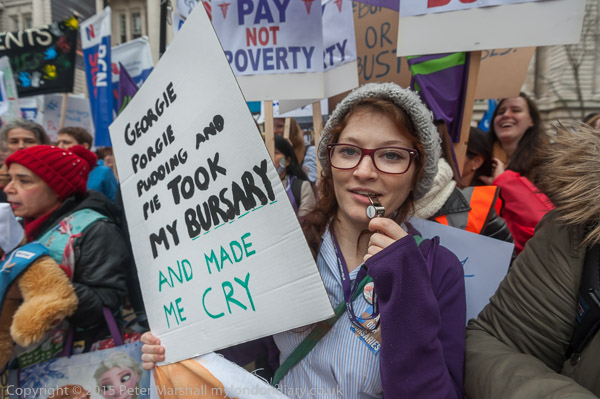
NHS Bursaries Rally & March

Usually we’ve put away the Christmas decorations, turned off the Christmas tree lights and put the tree outside, waiting for the energy to plant it in the garden. We’ve eaten the Christmas cakes (we usually have an iced fruit cake, stollen and Buche de Noel to get through, finished the meat, eaten the nuts and fruit, Bombay Mix and chocolates and are back on normal fare, with perhaps a dose of austerity to make up for the previous weeks of minor gluttony.

NHS Bursaries Rally & March

But this year has been different, with no family, friends and neighbours visiting to help us get through the Christmas bonus or see in the New Year. Everything has been flatter and less interesting, and I’m feeling bored. I exercise along routes I’ve cycled or walked close to home many times before, taking out my camera and making pictures largely out of habit rather than any great interest.

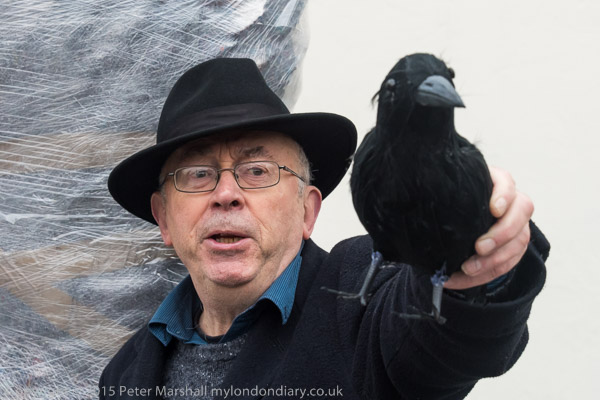
Ian Bone and Rita the Raven

Back in earlier years, protests and other events were getting back into swing at this time of year after something of a hiatus over Christmas and the New Year, when most of us were busy with other things. I live just too far from central London to be able to easily take part in the New Years Eve events, and though for some years I went up the following morning to photograph the New Year Parade, in recent years this became too organised to be really interesting.

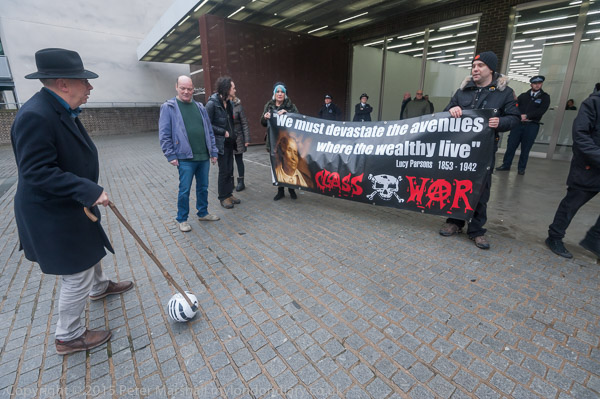
Ian Bone takes a free kick

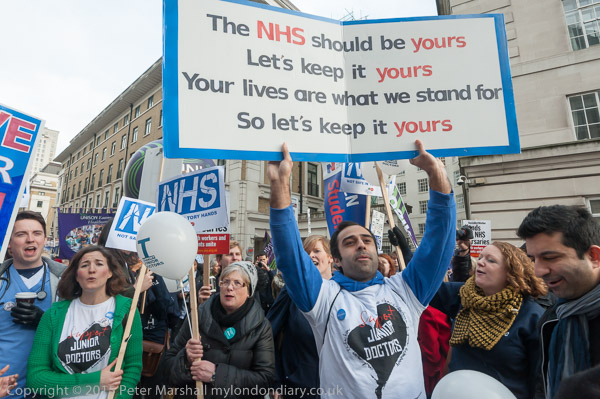
Saturday 9th January 2016 began for me with a rally and march against the axing of training bursaries for NHS nurses and midwives. As a part of their training they perform valuable work in hospitals, caring for patients, and the time involved means that unlike other students they are not able to get part-time work to support themselves.

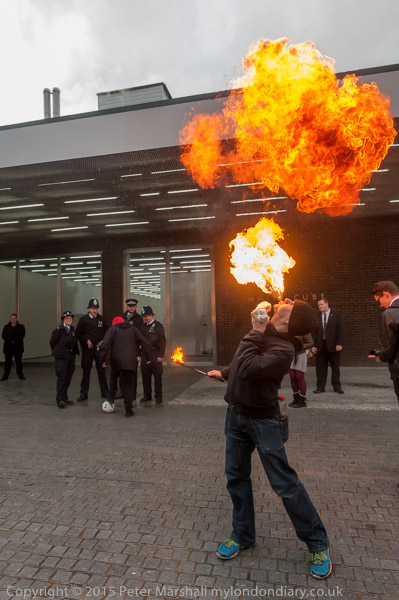
Fire-eating outside the White Cube

The removal of the bursaries seems certain to result in much greater hardship and also in fewer students training as nurses – and we already have a shortage of nurses. It was a simple cost-cutting measure that only makes any sense as a part of the Tory plans to privatise our NHS by stealth, part of which involves putting greater pressure on the system so that more aspects of it can be put out to private tender. Many in government have interests in private health companies and favour a move away from the principles behind the NHS of a service based on clinical need free to all towards a US-style high-cost insurance-based system.

I left the march before it finished to join Class War outside the White Cube Gallery in Bermondsey St, one of the areas of London where gentrification is most apparent.

December 9th 2015: Class War protest Gilbert & George at White Cube Bermondsey

I’d come the previous month to photograph Ian Bone of Class War and Simon Elmer of Architects for Social Housing holding a short protest outside the gallery over the appropriation of protest slogans by Gilbert and George in the show taking place there, and the gentrification of the area. I wrote then:

Bermondsey, once a working class industrial area on the edge of London’s docks with many small workshops in yards off of Bermondsey St producing hats, leather goods and a more recent arrival, the print trade, has changed dramatically. Run down when I first photographed there in the 1980s (and produced an industrial archaeology walk leaflet, West Bermondsey – The leather area) it is now full of restaurants, galleries, designer clothes and other businesses catering for London’s new gentrification, with offices, design studios and expensive flats now having replaced most of the workshops.

http://mylondondiary.co.uk/2015/12/dec.htm#banners

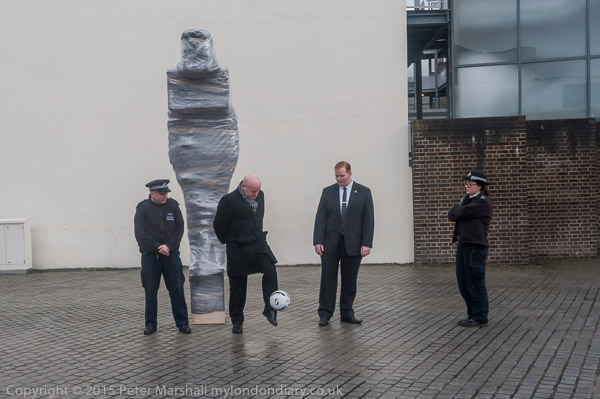
In front of the gallery is their large open yard, and Class War had decided that as this is an area where many still live in council estates with notices on the green spaces ‘No Ball Games’ that this would be an ideal place to hold a game of football as a protest against gentrification. And I’d been invited to come along and take pictures.

Although they hadn’t been invited, the police had clearly heard about the protest and had come along too, along with some security staff employed additionally by the gallery. A large sculpture at one side of the yard had also been wrapped up to protect it from damage (and artistically that seemed to me a great improvement.)

Jane Nicholl performs ‘The Finest f***ing Family in the Land

There was some opposition – and a hapless young police woman tried to tell the protesters that kicking a ball around was reckless behaviour – but the protest continued. Here is my description from My London Diary:

The protesters deliberately kicked the football at police and security, encouraging them to join in the game. Some of them did kick the ball back, while others simply stood and let a protester come to collect it, sometimes holding it but returning it when requested.

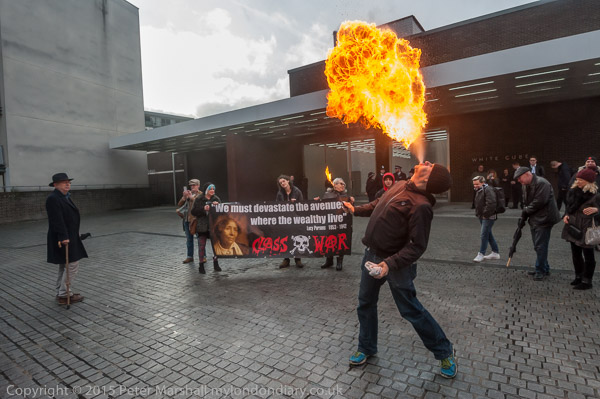
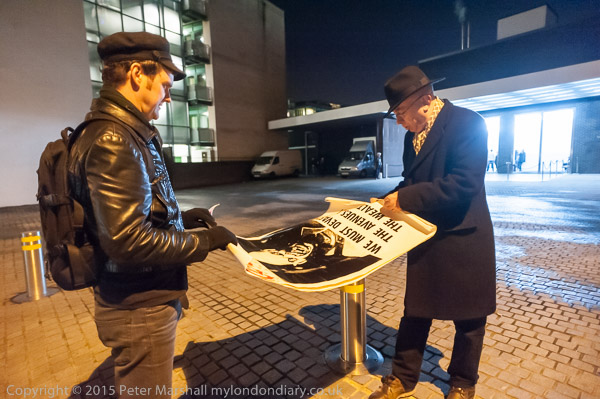
But the protest outside the ‘protest’ show (entitled ‘Banners‘) was not just football, but there was some spectacular fire breathing along with a premiere performance of Ray Jones‘s latest song, ‘any chance of a sub?’ dedicated to Damien Hirst and accompanied by the dancing Lucy Parsons banner ‘We must devastate the avenues where the wealthy live’. (Jones, together with Ian Bone were formerly part of the Welsh punk band “Page 3”.) ‘Sid Skill’ had brought along a fairly lifelike black model bird (a fiver on eBay) which inspired a histronic performance from Ian Bone, about how the security men guarding the White Cube had murdered the last raven from the Tower of London, and that London was now doomed. Doomed I say, doomed.

Later, there were two spoken word performances, one by Jane Nicholl of a traditional verse, ‘The Finest f***ing Family in the Land‘, performed with great gusto and with the small crowd joining in, and the second of a rather odd poem about a raven, sent in response to a tweet about Ian’s performance at the protest by Ray Jones, which he read to us all. And the Womens Death Squad led a rousing performance of their anthem, ‘ Bunch of C***s

Altogether it was a ‘happening’ with arguably rather more artistic credibility than the rather sterile work on display inside the gallery, and one that was appreciated by some members of the public even though it lacked the Art World’s financial imprimatur.

Eventually it was time to leave – and for Class War to continue their celebrations in a local pub … On the way a number of Class War Womens Death Squad stickers somehow found their way onto street furniture, walls and estate agents windows, to remind the gentrifiers that Class War will be back.

http://mylondondiary.co.uk/2016/01/jan.htm#whitecube

More on My London Diary
Class War Footy at White Cube
NHS Bursaries March
NHS Bursaries rally before march


All photographs on this and my other sites, unless otherwise stated, are taken by and copyright of Peter Marshall, and are available for reproduction or can be bought as prints.


Peace, Slavery & Social Cleansing

Three years ago December 9th was a Saturday and people were out on the streets in at least three protests which I photographed.

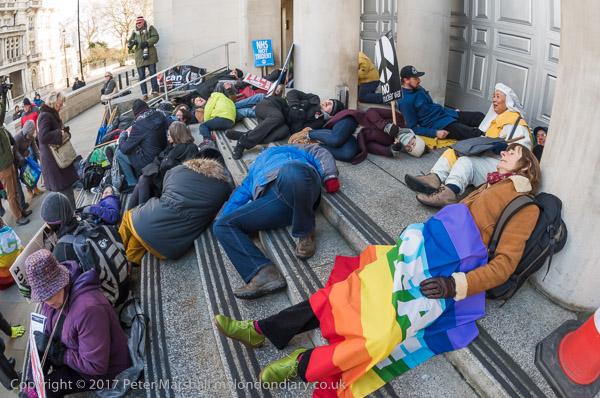
My day’s work began at the Ministry of Defence, where peace campaigners celebrated the award of the 2017 Nobel Peace Prize to ICAN, the International Campaign to Abolish Nuclear Weapons, with a die-in on the steps.

ICAN was awarded the prize for its role in pushing for a United Nations global nuclear ban treaty which was approved by 122 nations at the UN General Assembly in 2017. In October 2020 Honduras became the 50th country to ratify it and will come into force on 22 January 2021. The UK government refused to take and part in the negotiations and has refused to sign the treaty and the award of the Nobel prize hardly got a mention in the UK media.

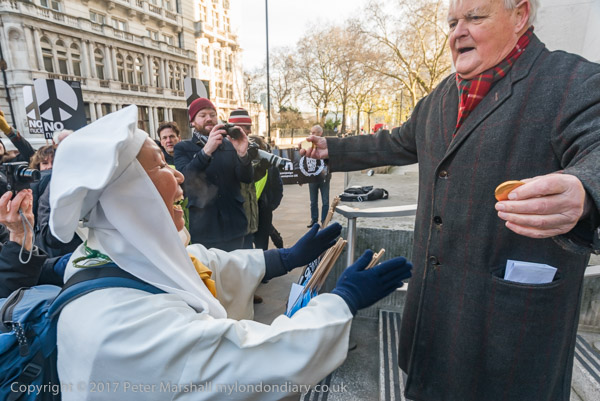
None of the main nuclear powers has signed the accord, and the protesters including members of ICAN UK, CND, Medact and WILPF, the Women’s International League for Peace and Freedom, urged the UK to sign up and scrap Trident replacement. Bruce Kent made a presentation of a large cardboard Nobel Prize to ICAN UK, and handed out small ‘Nobels’ (gold-covered chocolate coins) to all who come up for them. After a few speeches there was then a die-in on the steps of the ministry.


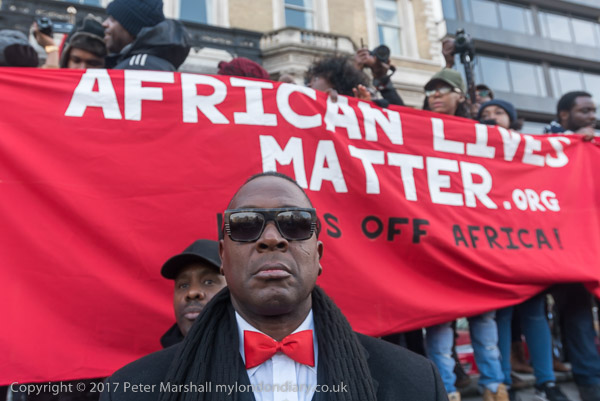
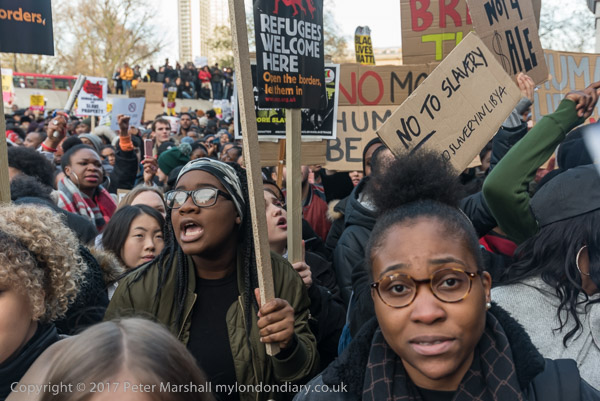
A large crowd had gathered in Belgrave Square for the National Anti-Slavery March, organised by African Lives Matter after the news that African migants detained in Libya were being sold as slaves by Arab slave traders.

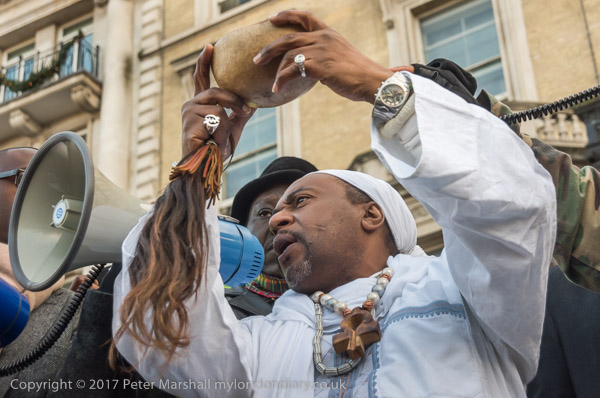
They marched to Knightsbridge and then along to Hyde Park Corner, going around the roundabout and then back along the other carriageway of Knightsbridge to the Libyan Embassy where there was a lengthy rally, including an African priest leading a libation ceremony in memory of the many Africans who have fought for their people against enslavement and colonialism; people in the crowd shouted out names for him to honour with pouring water onto the ground.

As well as demanding the closure of the Libyan detention centres, action by African governments to rescue people detained in the camps and condemnation of the slave trade and murders of migrants by all African leaders and the UN, calling on Libya to make and enforce laws that prevent these crimes against humanity, many also demanded reparations for the historic slave trade and the continuing despoliation of African resources by imperialist nations including the UK.


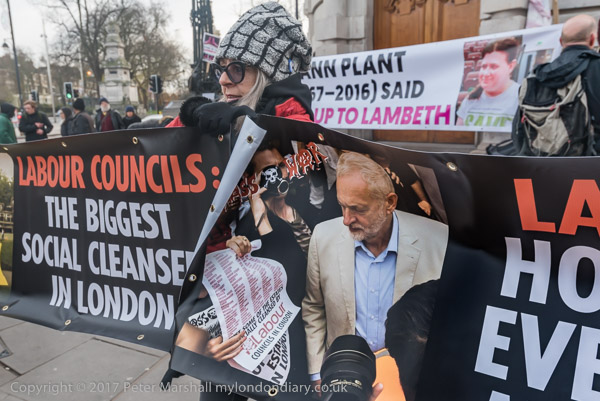
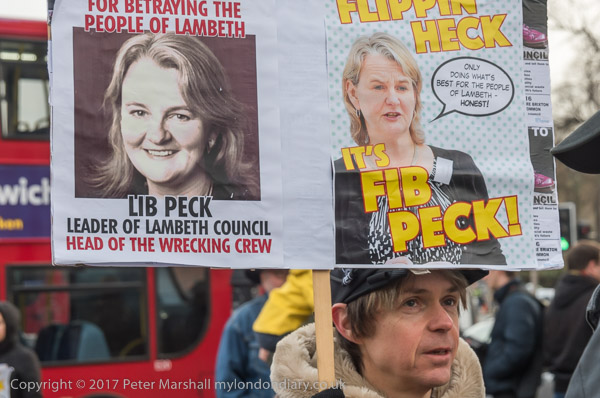
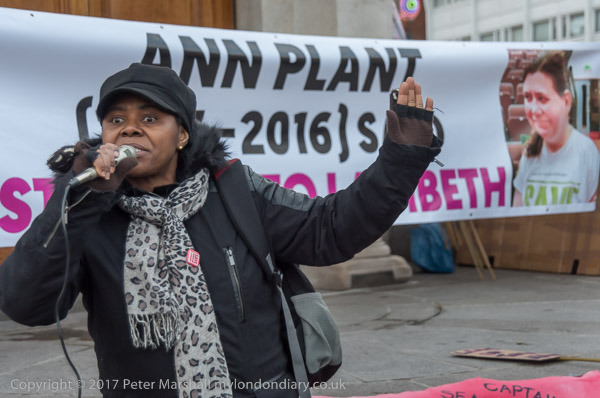
I had to leave before the rally ended as I was beginning to shake and feel unwell, weak and dizzy, the signs of an diabetic hypo, and I walked a short distance away to sit down eating one of the snacks I carry to give a rapid boost of my blood sugar. Soon I was feeling well enough to eat my lunch and take the tube to my final event of the day, a vigil outside Lambeth Town Hall in Brixton against the heartless policies of Lambeth Council.

Lambeth are one of the London Labour councils who are pursuing a policy of social cleansing under the guise of regeneration, realising the asset value of council estates by demolition and rebuilding with only small provision of social housing, resulting in many local council tenants and leaseholders being forced to move out of the area.

Lambeth have also made drastic cuts, shutting down community centres, cutting services for the disabled, those with mental health problems, young people and social services generally; although the Council claim these actions have been forced on them by Tory government cuts, the protester point out that Councillors’ expenses and allowances keep on growing and they have spent over £150m on a new Town Hall.

The vigil included a tribute to Cressingham Gardens resident and leading campaigner Ann Plant who died of cancer in December 2016, spending her final months continuing the fight to prevent the demolition of her home and her community by the council.

More from all 3 events on My London Diary:

Stand Up to Lambeth protest and vigil
National Anti-Slavery March
ICAN Nobel Peace Prize Die-In


All photographs on this and my other sites, unless otherwise stated, are taken by and copyright of Peter Marshall, and are available for reproduction or can be bought as prints.


November 30th 2011

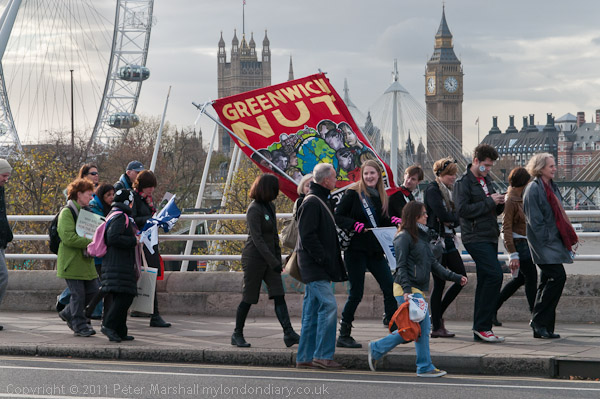
November 30th fell on a Wednesday in 2011, and it was the day of a strike by public sector workers against government plans to cut their pensions as part of the austerity programme following the banking crisis. As I wrote back then:

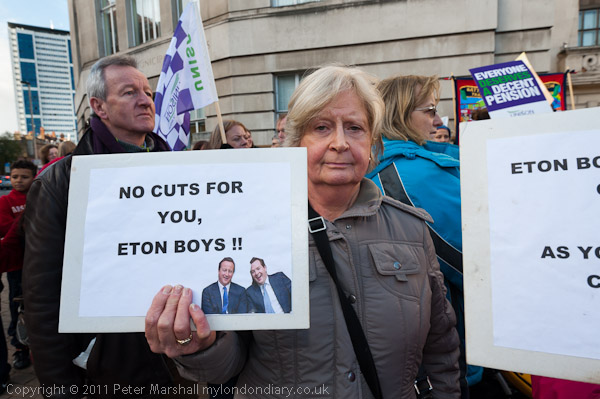
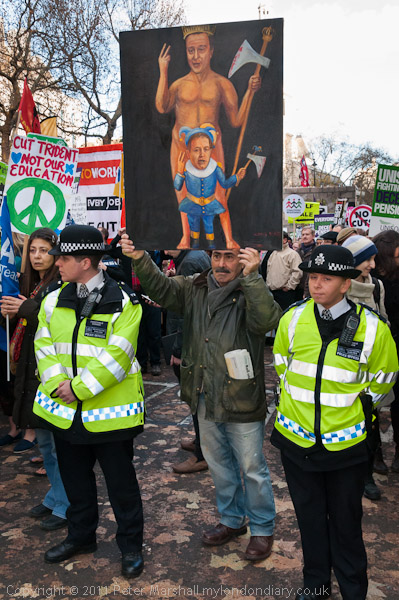
Feelings are certainly running very high over pension injustice, as well as over the government cuts in jobs and services. The widespread feeling across the country – not just trade unionists – that our government is made of of the wealthy and privileged who just do not understand the problems of ordinary people was reflected in the two hand-written placards I photographed, both with photographs of Cameron and Osborne alongside the texts ‘Eton Boys, Do you Feel Our Pain, As You Order Your Champagne‘ and ‘No Cuts For You, Eton Boys!!’

The day had begun early for strikers at Wandsworth Town Hall who had been on the picket line since 6am at the Town Hall and other council sites across the borough, though I only joined them around 4 hours later, when many were about to leave to join the TUC march in central London, and I also made my way to a packed Lincoln’s Inn Fields where around 20,000 were assembling.

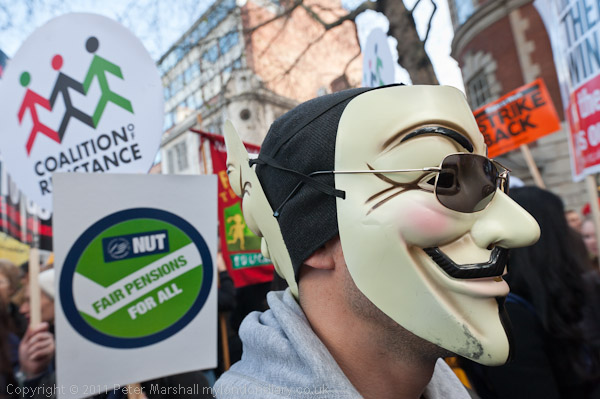
As well as public sector workers – including many from associations which have no record of previous strike action or taking part in protests – there were activists from groups such as the Education Activist Network and other student groups, people wearing ‘Anonymous’ Guy Fawkes ‘V for Vendetta’ masks and other supporters, including political artist Kaya Mar with his painting of coalition leader David Cameron and his Lib-Dem sidekick Nick Clegg carrying blood-stained axes.

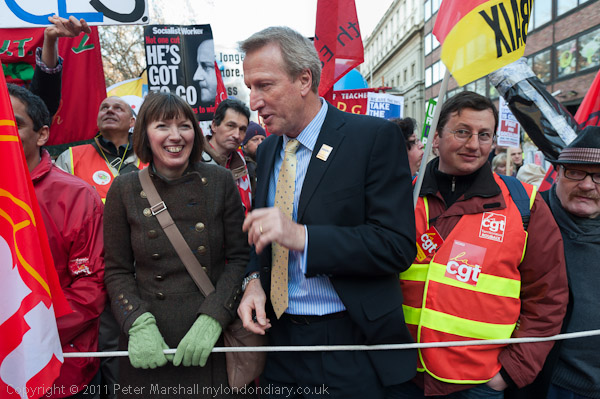
There were also a group of French trade unionists from the CGT, come to support their English colleagues – here in a picture beside Frances O’Grady, Dep Gen Sec of the TUC and John Rimmer, president of the NASUWT.

More joined the march along the route to Westminster. It was a peaceful march which hardly merited the huge police presence, and I think the French trade unionists will have thought it very restrained, although some groups, particularly some of the students, did liven it up a little with loud chanting and the occasional surge. The rally had already begun when I arrived, although the end of the march was still almost a mile back.

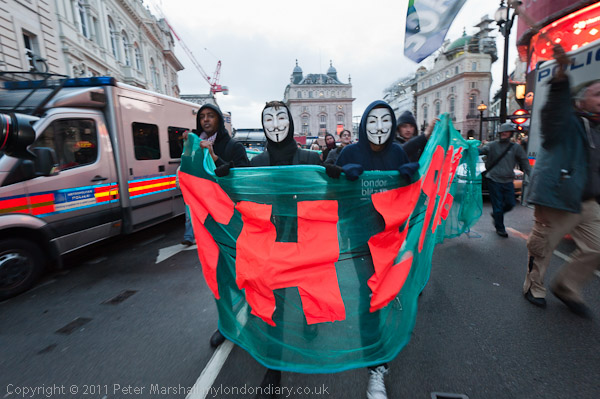
I didn’t wait to hear the speeches, but went to Piccadilly Circus, where Occupy London protesters from the camp outside St Paul’s Cathedral were gathering for a protest against corporate greed. I stood with them for around half an hour while we all waited for something to happen, watched by a large crowd of police. It began with a diversion as around 30 people with the ‘Precarious Workers Brigade’ banner that I’d photographed earlier on the TUC march rushed across the road to protest outside Boots, drawing much of the police attention.

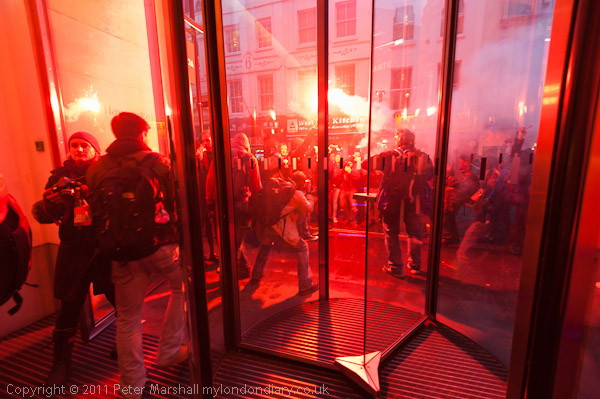
Others by Eros were getting ready the main banner ‘All Power to the 99%’ which they then rushed along the street with the rest of the protesters following, going down Haymarket, and I rushed along with them taking pictures. At Panton St, one of them lit a bright orange flare and they all turned down the street to Panton House, where some rushed into the foyer.

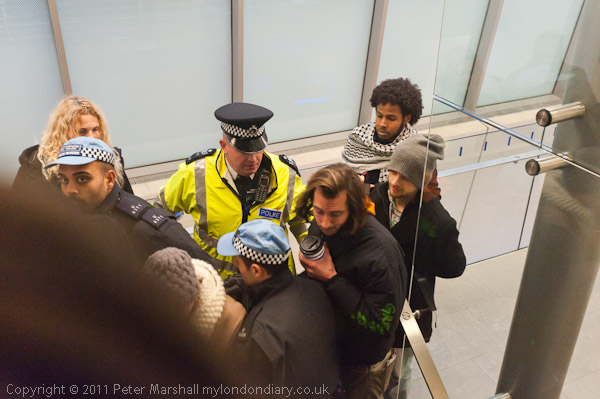
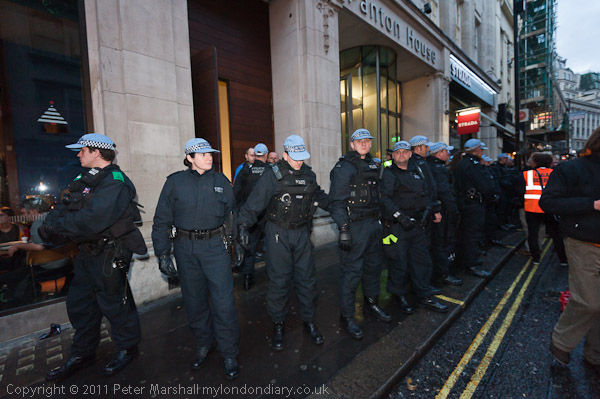
I stopped there to take a few pictures rather than rushing to follow them up the stairs. By the time I turned to follow them the stairs were rather crowded but I made my way up to the third or fourth landing before deciding I was out of breath and probably not going to get to the top as the stairs were too crowded. By then the police had begun to catch up, and stopped me going down. And although police were shouting and me and the others on the stairs to go down, other police were pushing us out of the way when we tried to do so as they rushed up to the roof.

Eventually I managed to make my way out and try to take a few pictures as protesters on the roof lowered banners over the edge while others outside formed a ‘human microphone’ to let everone know what the protest was about.

Occupy London had chosen Panton House as it contains the London offices of the mining Company Xstrata, whose CEO Mick Davies they say is the highest paid CEO in the UK, but according to their statement, “is a prime example of the greedy 1% lining their own pockets while denying workers pensions.”

I was sorry not to have made it to the roof as several other photographers had done, but at least I was able to slip through the police kettle and go home early after a rather tiring day.

More pictures at:

Occupy London Expose Corporate Greed
TUC Nov 30 March
Wandsworth Nov 30 Rally