Former Google diversity chief Mark Palmer-Edgecumbe had applied to Tower Hamlets Council for planning permission to open a “Museum of Women’s History” meant to celebrate suffragettes, equal-pay campaigners, and local social struggles, and got a number of historians, academics and others to advise on the project.
It was a shock when the building renovations were completed and those involved as well as the council saw from the frontage that it was instead to be a tourist trap celebrating the gruesome Victorian murders of ‘Jack the Ripper’.
Ian Bone asks “Would you protect it if it glorified the killing of police officers”
Many local residents, and others including descendants of the poor working class victims of the sadistic murderer where shocked, and even Tower Hamlets Council was moved to protest following its opening. Unfortunately the council found it had no power to close down what was described as a ‘sick horror attraction’.
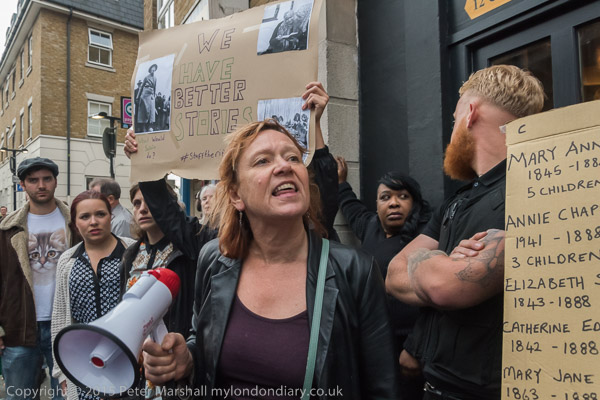
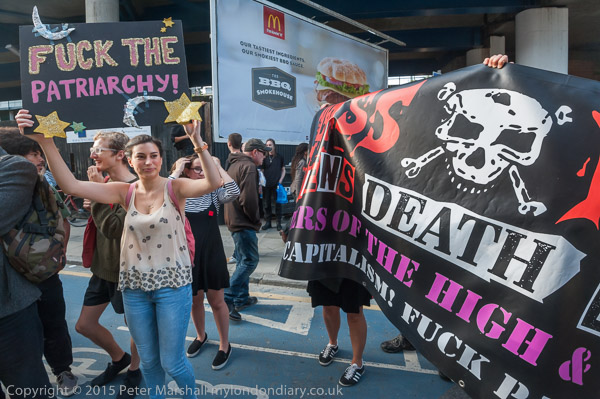
We have better stories’ says a poster with some images of women who should be celebrated rather than celebrating a brutal and deranged upper-class killer who attacked working class women
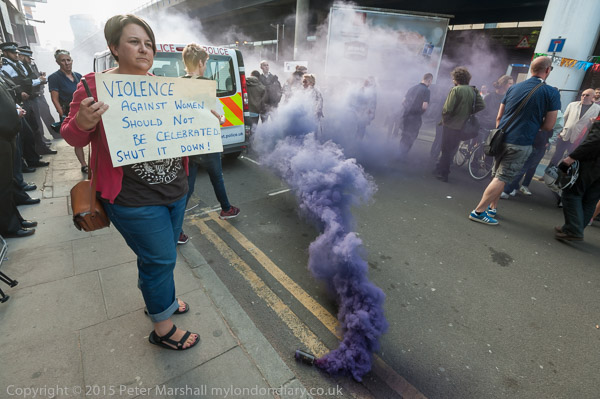
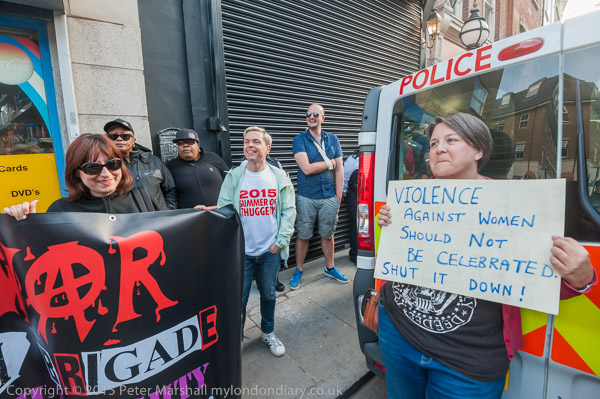
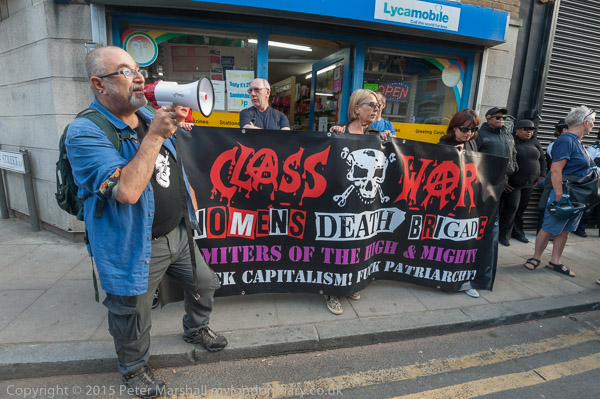
But the most sustained protests came from anarchist organisation Class War who carried out a series of colourful protests outside the so-called ‘museum’, including this one in which they were joined by Action East End and Fourth Wave and other feminists.
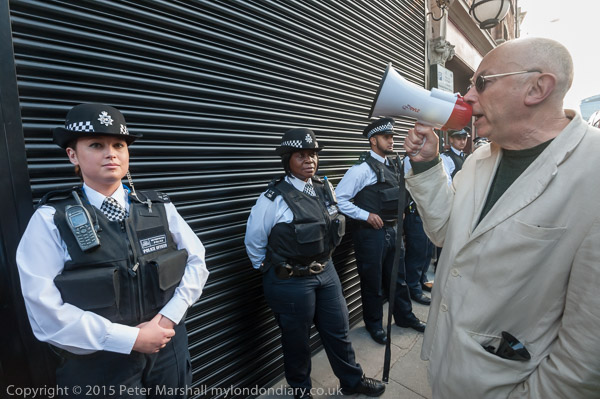
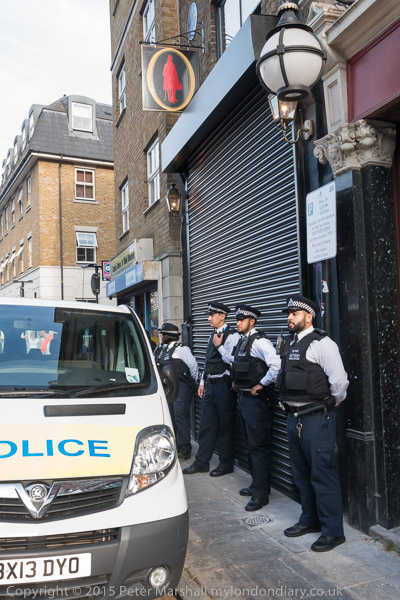
When protesters came to the tourist attraction they found it was hidden behind a heavy metal shutter, with police standing in front guarding it, erected since the previous protest a week ago. This was in breach of planning regulations and they were some time later foreced to remove it.
Among those who spoke at the protest was East End historian David Rosenberg who spoke about the real history of women in the East End, as well as Class War’s Ian Bone and Lisa McKenzie.
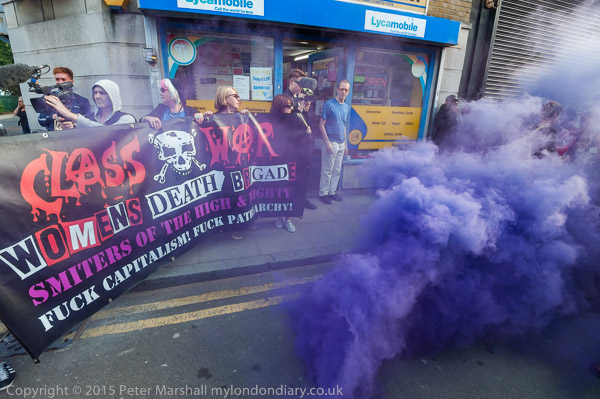
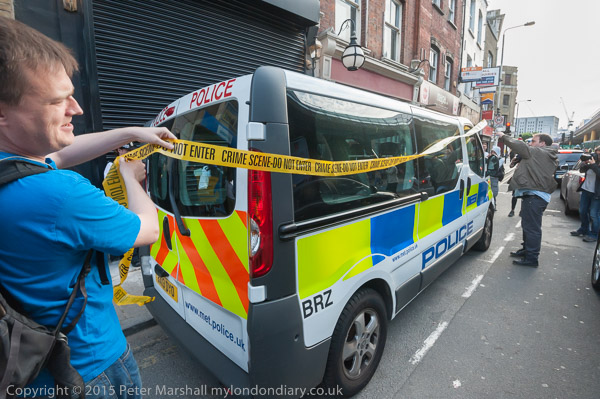
After the speeches and a couple of smoke flares the protesters, including some local residents blocked the road for some time though leaving the cycle path open. Police attempted to move them with no success, the women protesting asking them whether they would defend a museum celebrating the murders of police officers.
My final comment in 2015 was: “Protests will continue until the museum closes down or turns into what was promised, a museum of women’s history rather than of women’s degradation and brutal slaughter. It sensationalises the tragic fate of the working class victims at the hands of a deranged upper class murderer, presenting a voyeuristic experience that sickens anyone with any decency and humanity.”
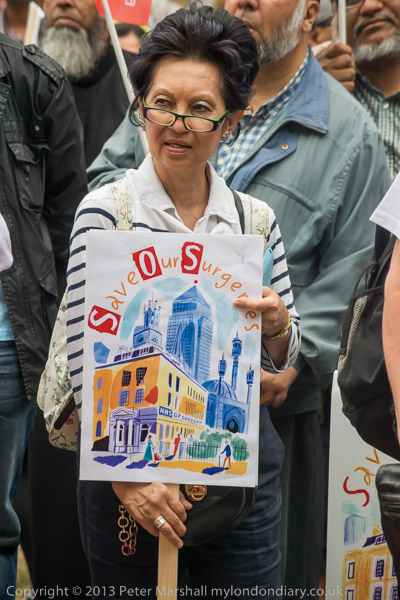
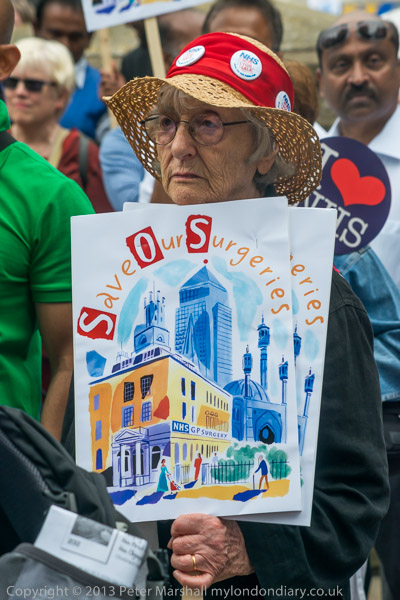
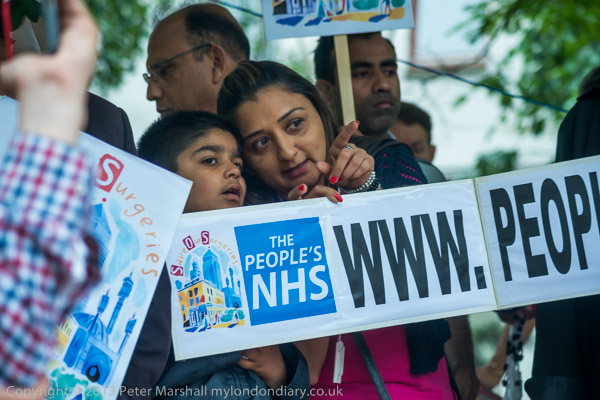
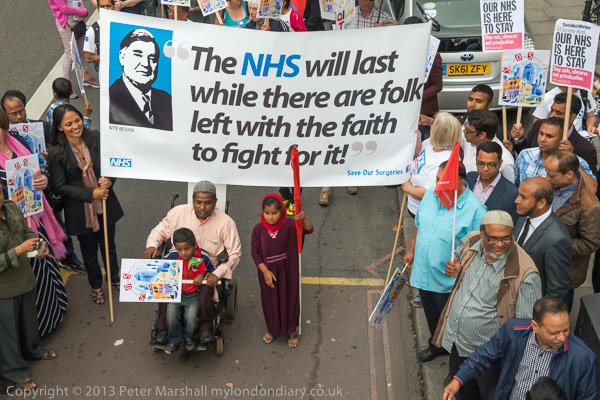
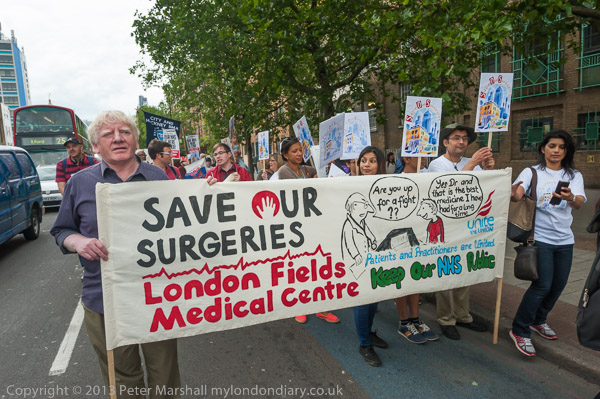
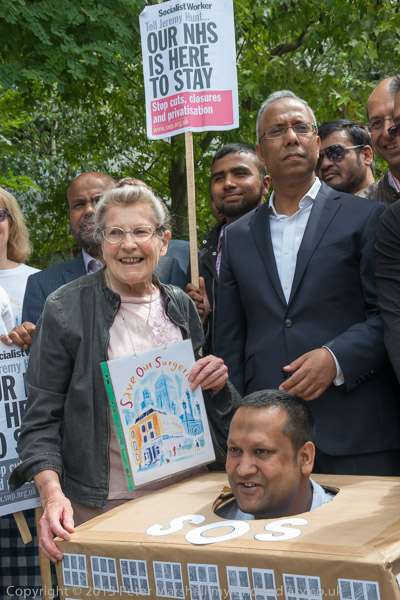
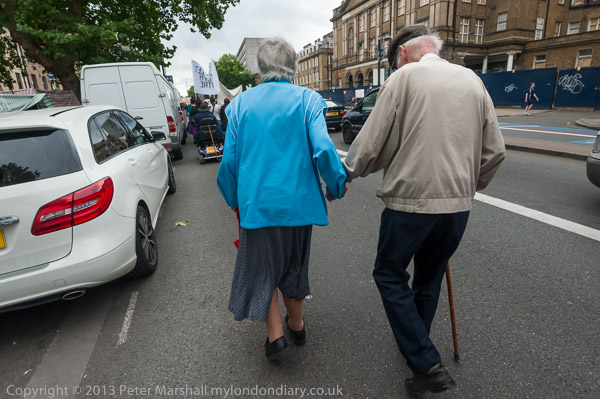
Save our Surgeries on NHS 66th Birthday – Whitechapel
The National Health Service came into operation in the UK on 5th July 1948, established by a Labour government despite considerable opposition from the Conservative Party and some doctors’ organisations. In most recent years there have been protests marking the anniversary against the increasing privatisation of the system, large parts of which have now moved away from being provided by the NHS itself to being provided by private companies, motivated by profits rather than public service.
The opposition to Aneurin Bevan’s plans in the 1940s led to a number of compromises, but the NHS was launched with three basic principles – to meet the needs of everyone, to be free at the point of delivery, and to be based on clinical need rather than the ability to pay. Although those principles remain, there are some respects in which they are not entirely met.
Prescription charges – currently £9.35 per item – were introduced in England in 1952, removed from 1965-8 but then re-introduced, remaining free for under-16s and over 60s, with some other exceptions. And we pay too for NHS dentistry, and many people find it impossible to get dental treatment under the NHS as no practice in their area will take them on.
Access to GPs and other services at surgeries around the country is also much more difficult for many, and it can be difficult or impossible to get an appointment in a timely fashion. Many services dealing with relatively minor medical issues are no longer available, and people have either to pay for them or continue to suffer. Some of these problems have been exacerbated by the take-over of many surgeries by healthcare companies as a part of the creeping privatisation of the NHS.
Twenty years ago, when I had a hospital stay of several weeks, hospitals have been forced to put some essential services – such as cleaning – out to tender, resulting in two of the three hospitals I was in being in filthy conditions.
In 2014, cuts in funding were threatening the closure of surgeries in Tower Hamlets as they failed to pay for the extra needs faced in inner-city areas. Local hospitals were also threatened, particularly because of the huge debts from PFI contracts for the building an management of new hospitals. The deals with the private sector made under New Labour have left the NHS with impossible levels of debt – and the companies involved with high profits, continuing in some cases for another 20 or 30 years.
After a short rally with speakers including the local mayor and MP as well as health campaigners including local GPs, there was a march by several hundreds to a larger rally in Hackney. But I left the marchers shortly after it passed Whitechapel Station.
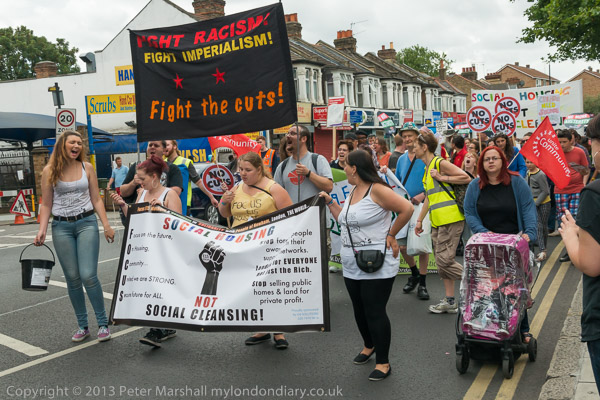
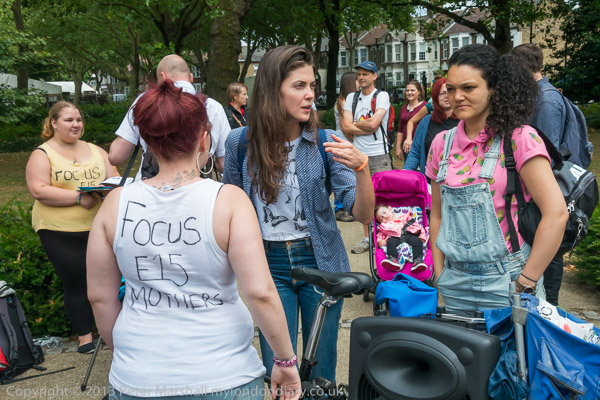
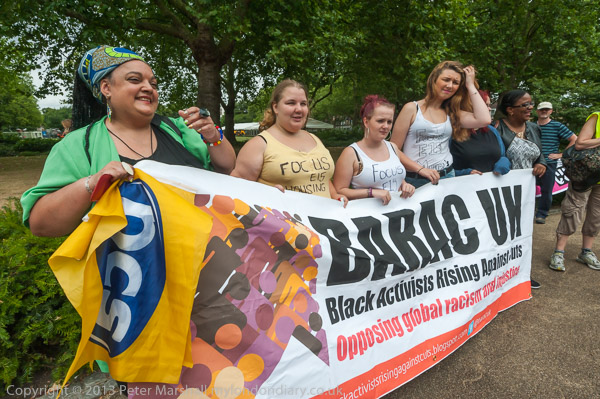
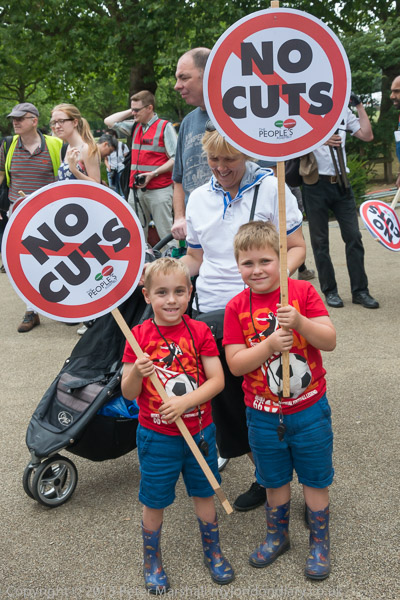
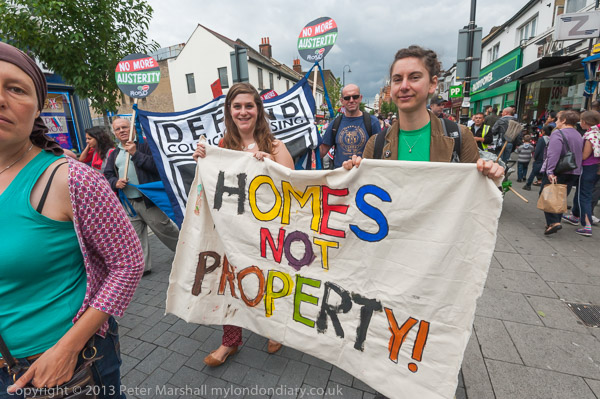
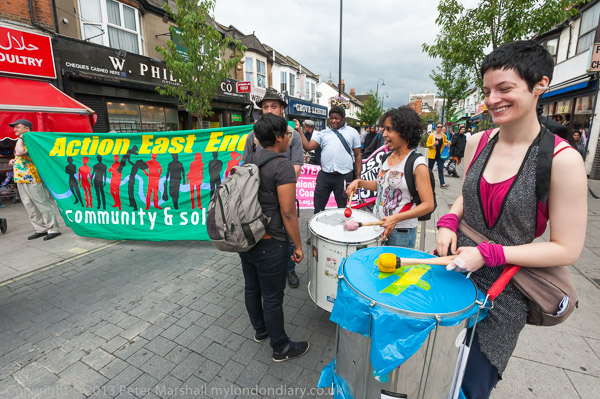
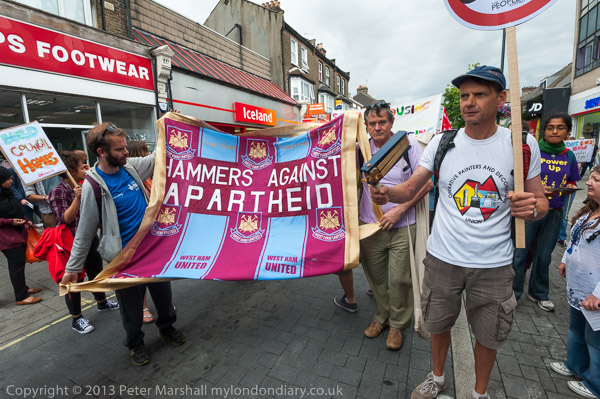
Earlier I had been to photograph a march through East Ham and Upton Park in a protest over the terrible state of housing in England, and in London in particular. The event had been organised by Focus E15 Mums with the support of Fight Racism Fight Imperialism, but included many other protest groups from Hackney, from Brent and from South London on the march as well as groups including BARAC, TUSC and others.
They included a number of groups who had stood up and fought for their own housing against councils lacking in principles and compassion who had suggested they might move to privately rented accommodation in Birmingham, Hastings, Wales or further afield, but who had stood their ground and made some progress like the Focus E15 Mothers.
Many London councils are still involved with developers in demolishing social housing and replacing it with houses and flats mainly for high market rents or sale, with some “affordable” properties at rates few can afford, and with much lower numbers than before at social rents. Many former residents are forced to move to outer areas of London in what campaigners call ‘social cleansing’.
Families that councils are under a statutory duty to find homes for are often housed in single rooms or flats, sometimes infected by insects or with terrible damp, often far from their jobs or schools. Councils are under huge pressure and funding cuts sometimes make it impossible for them to find suitable properties, though often there are empty properties which could be used, particularly on estates such as the Caarpenters Estate in Stratford which Newham had been emptying since around 2004 in the hope of redeveloping.
Government policies and subsidies for housing have largely been a way of subsiding private landlords, and we need national and local governments – as I worte ” determined to act for the benefit of ordinary people, making a real attempt to build much more social housing, removing the huge subsidies currently given to private landlords through housing benefit, legislating to provide fair contracts for private tenants and give them decent security – and criminalising unfair evictions.” Housing really is a national emergency and needs emergency measaures.
Much of what is currently being built in London is sold to overseas buyers as investments and often left empty as its owners profit from the rapid rises in property values in London. We need to make this either illegal or to impose heavy duties on overseas owners including increased council taxes on empty properties.
The march attracted considerable attention on the streets of East London, and as I note several motorists stopped to put money in the collection buckets – something I’ve never seen happen before. I left the march as it reached East Ham Station to go to the NHS event.