Palestine, Pancakes, Post, Olympics & Zombies – Tuesday 24th February 2009 was a long and varied day for me and included some serious issues that are still at the forefront of current news as well as some lighter moments – and I ended the day enjoying a little unusual corporate hospitality with some free drinks for London bloggers.
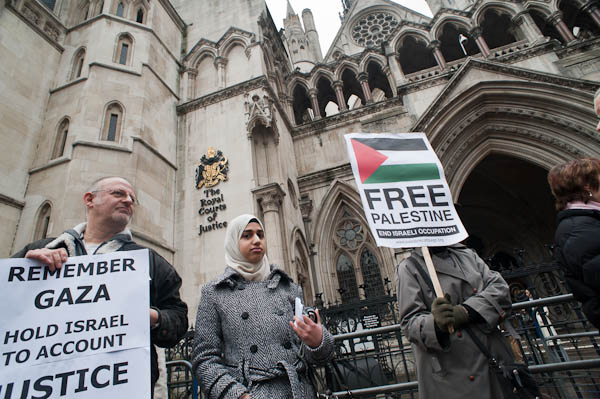
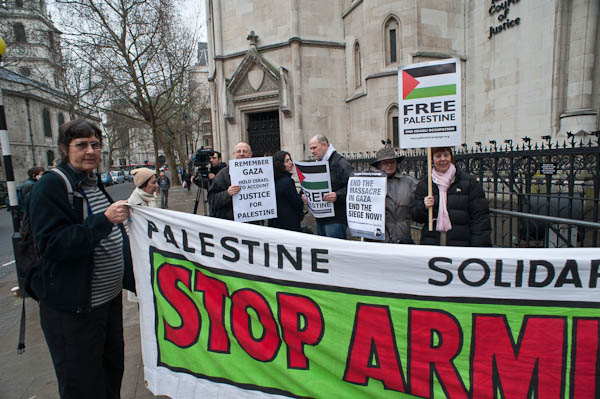
Al-Haq Sue UK Government – Royal Courts of Justice
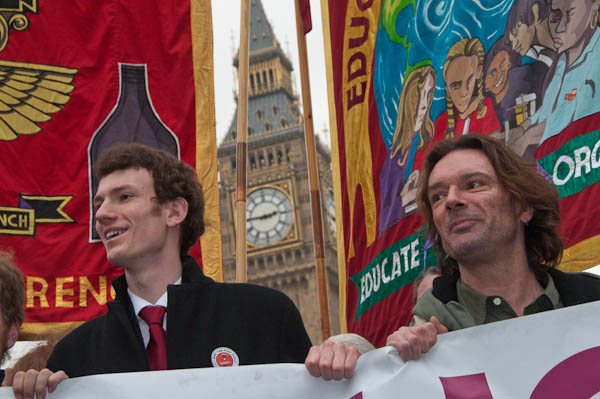
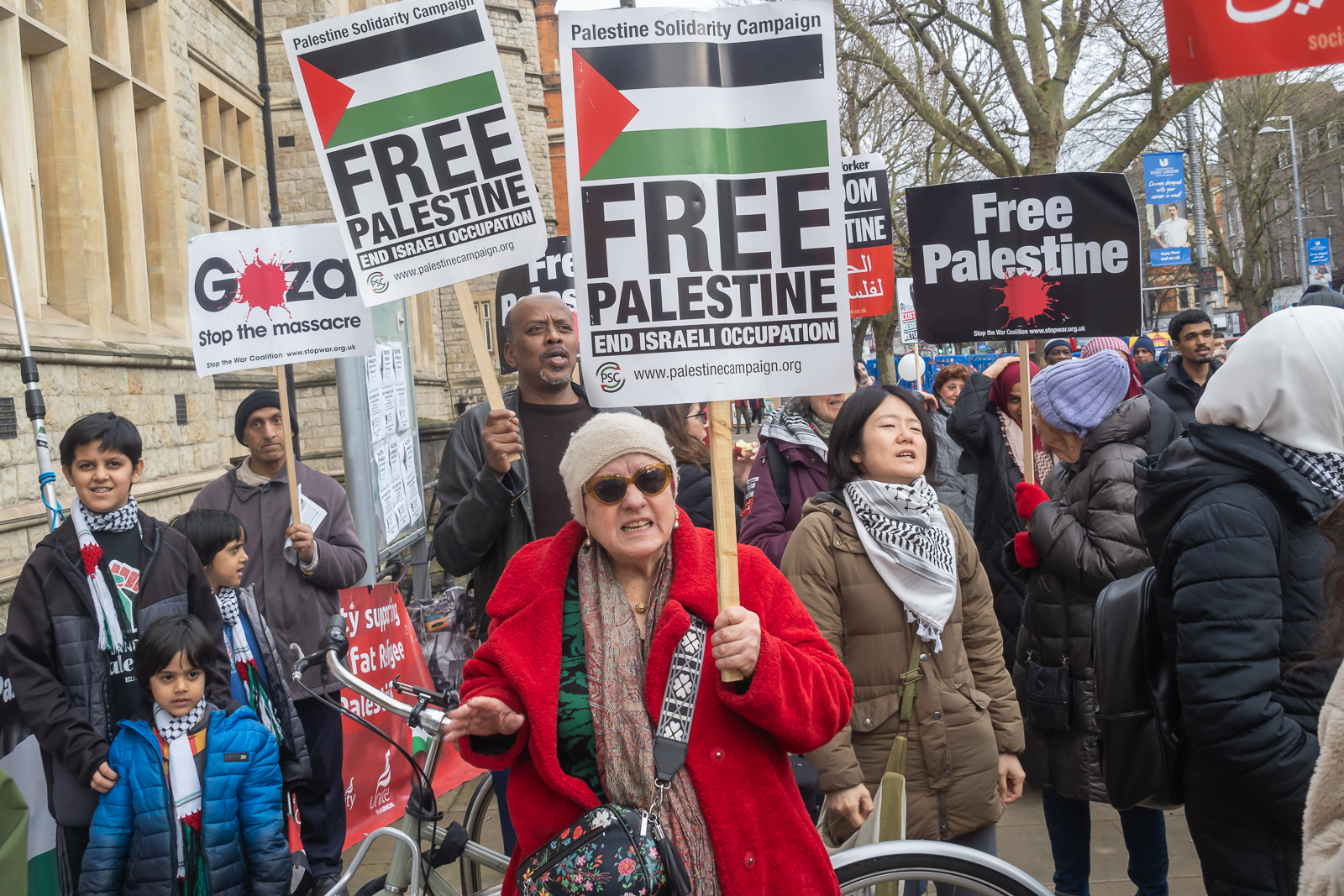
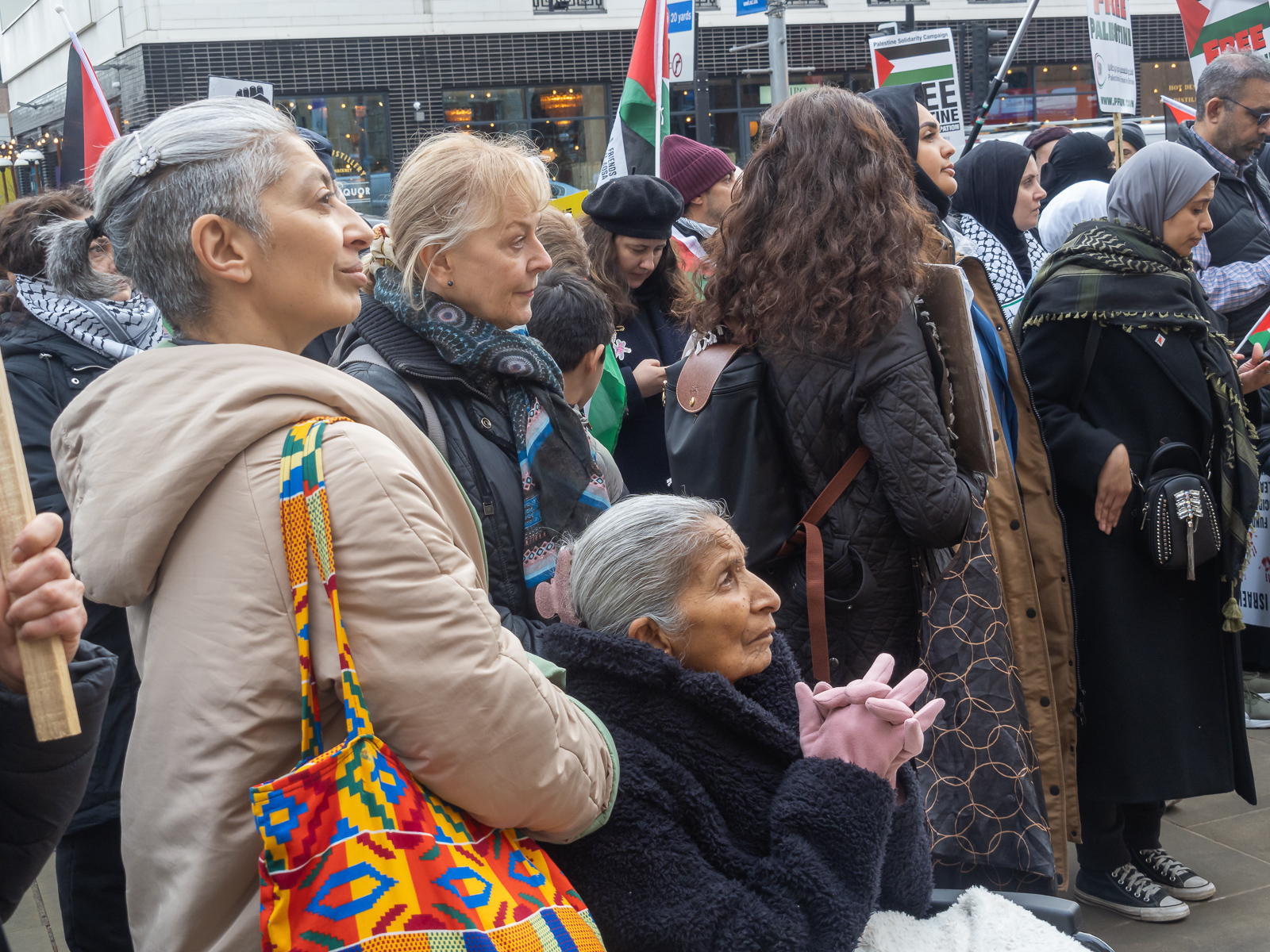
First came Palestine, with Palestinian human rights group Al-Haq filing a claim for judicial review before the High Court of England and Wales challenging the government’s failure to fulfil its obligations with respect to Israel’s illegal activities in Palestine.
They were calling on our government – then New Labour under Gordon Brown – to publicly denounce Israel’s actions in Gaza and the continuing construction of the separation wall, to suspend arms related exports and all government, military, financial and ministerial assistance to Israel and to end UK companies exporting arms and military technology.
They also asked them to insist the EU suspends preferential trading with Israel until that country complies with its human rights obligations, and for the government to give the police any evidence of war crimes committed by any Israelis who intend to come to the UK.
Of course the court refused Al-Haq’s case, declining to deal with the UK government’s compliance with its international legal obligations and stating that their claim would risk the UK’s diplomatic “engagement with peace efforts in the Middle East“, something which seemed at the time to be absolutely zero if not negative. They also refused Al-Haq any right to bring the claim because it was not a UK-based organisation and “no one in the United Kingdom has sought judicial review of United Kingdom foreign policy regarding Israel’s actions in Gaza“.
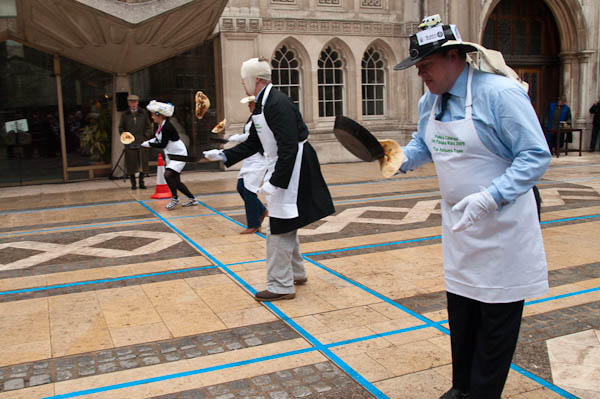
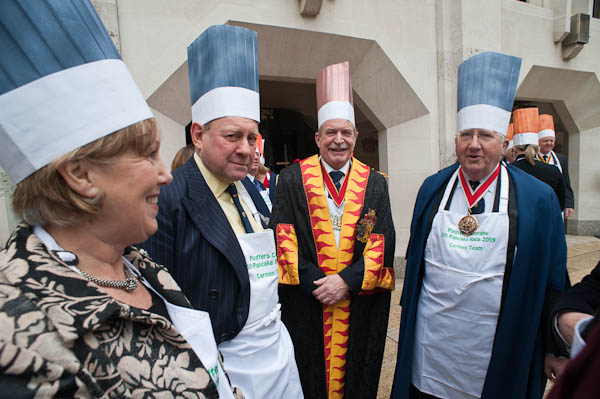
Worshipful Company of Poulters Pancake Race – Guildhall Yard
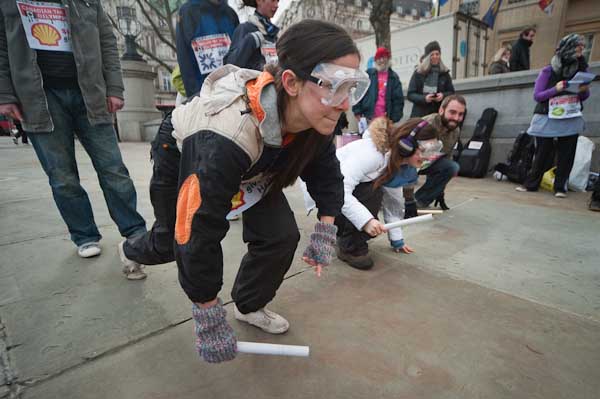
It was Shrove Tuesday and I couldn’t resist the Pancake Race organised by the Worshipful Company of Poulters, and held – with the permission of the Chief Commoner, in the Guildhall Yard.
As I said, “It’s a shame that the Pancake Race is unlikely to feature in the London 2012 Olympics, because it’s perhaps the one sport in which Britain still leads the world, and we seem to have plenty of talent in training.“
Postal workers came out from a rally in Methodist Central Hall against government plans to privatise Royal Mail. The government argued they needed to do this to protect pensions and modernise the service.
Postal deliveries had been deliberately made uneconomic by earlier measures which have allowed private companies to cream off the easily delivered profitable parts of the service, while leaving the Royal Mail to continue the expensive universal delivery service – including the delivery of its competitors post at low regulated prices to more difficult destinations.
The government picked up the responsibility for the pensions when the post was privatised and the privatised post office has been allowed to fail on its delivery obligations. We now get deliveries on perhaps 3 or 4 days a week rather than 6, few first class letters arrive on time, and the collection times for most pillar boxes are now much earlier in the day – now 9am rather than 4pm at our local box. While privatisation was supposed to result in more investment it largely seems to have resulted in large dividends and higher pay to managers and the Post Office is in a worse state than ever.
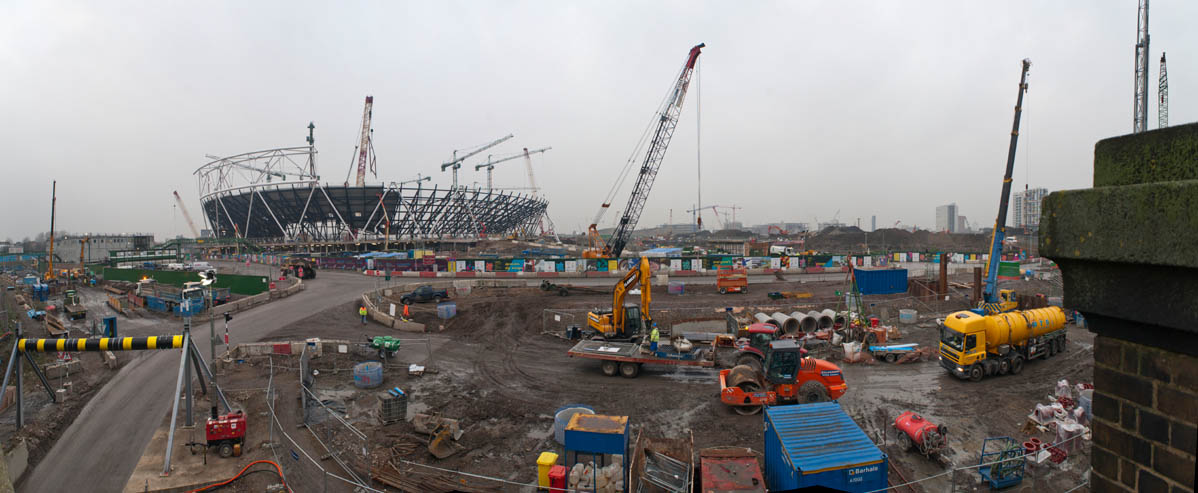
I had time for a brief visit to the publicly accessible areas in and around the Olympic site where a great deal of work was now taking place with the main stadium beginning to emerge.
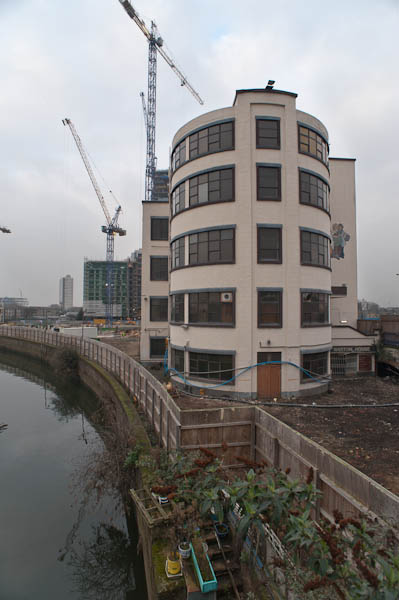
There were some reports at the time that the landmark building Warton House, once owned by the Yardley company with its lavender mosaic on Stratford High Street was to be demolished, but fortunately these turned out to be exaggerated, with only a small part at the rear of the building being lost. But all the buildings on the main part of the site had gone. Some others south of the mainline railway were also being demolished for Crossrail.
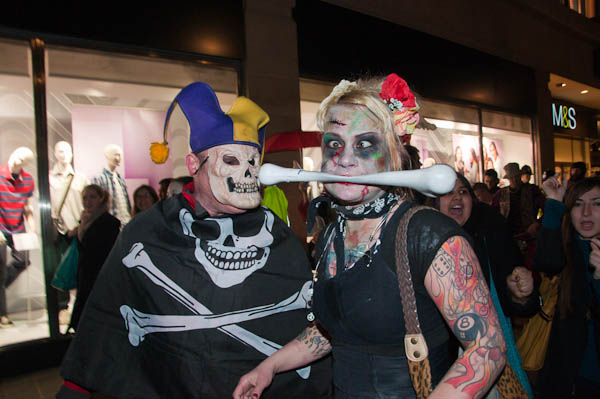
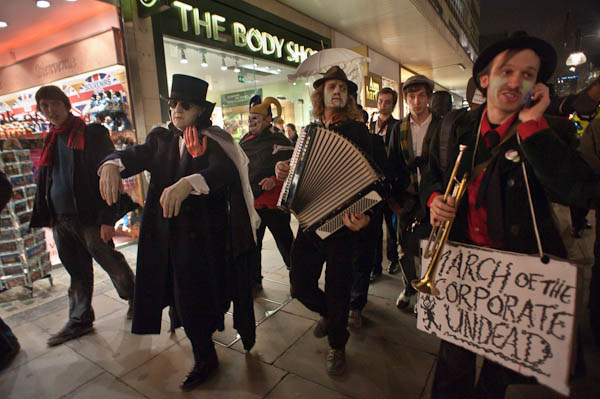
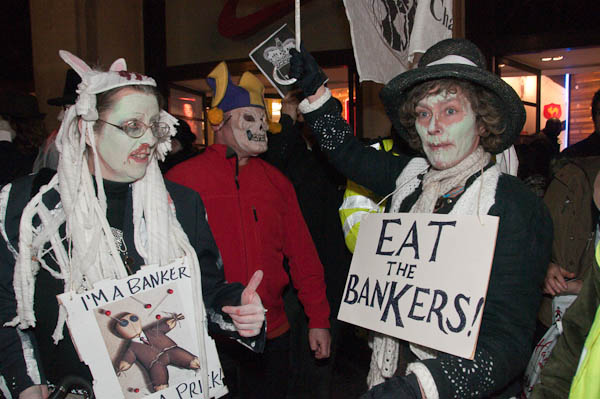
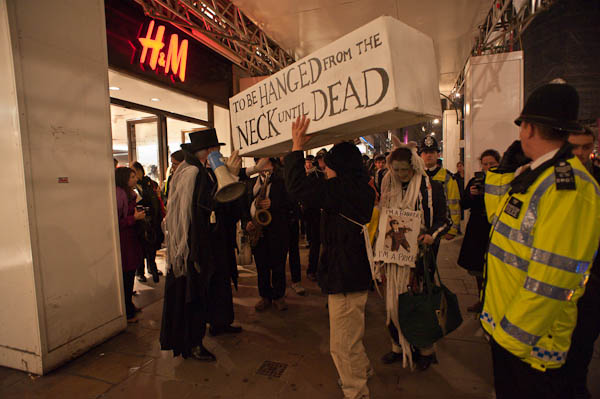
I made my way back to Oxford Circus for the ‘March of the Corporate Undead’, a Zombie Shopping Spree complete with coffins, a dead ‘banker’, posters, various members of the undead and a rather good band.
Police watched in a suitably deadpan manner (I did see one or two occasionally smile) as the group assembled and applied large amounts of white makeup before making its way along the pavement of Oxford Street, to the astonishment (and often delight) of late shoppers and workers rushing home.
We stopped off at Stratford Place, opposite Bond Street Station to toss some fried bankers brains in the frying pans and then there was a pancake race, holding up a Rolls Royce that was prevented by the police from driving through while we were there.
The parade continued, stopping for a minute or two under the bright lights of Selfridges before continuing to Tyburn, or at least Marble Arch, with more zombies joining all the time.
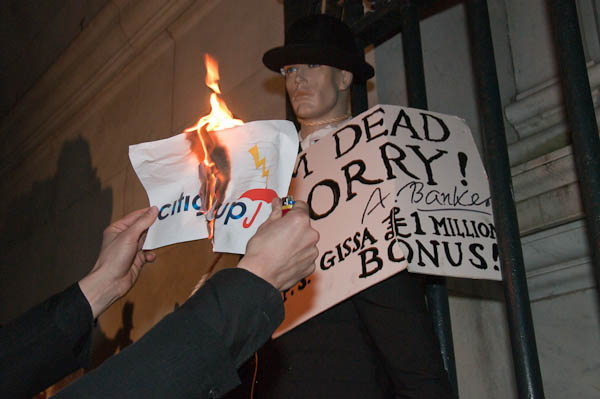
Hanging the already dead banker seemed a great idea, but getting a rope up over the arch was tricky. Eventually a severed hand gave sufficient weight to enable a rope to be thrown over the ornamental iron-work and the banker was soon hoisted up to dangle over the continuing revels below.
This was an anticapitalist event and in particular aimed against bankers and the huge amounts of cash given to them to in the aftermath of the 2007-8 financial crisis which was seen as rewarding the very people who had caused the mess the system was in. The mass of the population was having to suffer cuts in services under a severe austerity programme while bankers were still pigs in clover. The UK has become a very unequal society over the years since 1979 when Thatcher became Prime Minister. The the top 10% got 21% of the UK income, by 2010 it was around 32%.
I left to go to a meeting of London bloggers – and enjoy a few free drinks thanks to Bacardi. The blue and green Breezers seem to me just right for zombies, though I’m afraid after tasting one I went for the beer instead. But I think the zombies on Oxford Street were more alive than those in the corporate world.
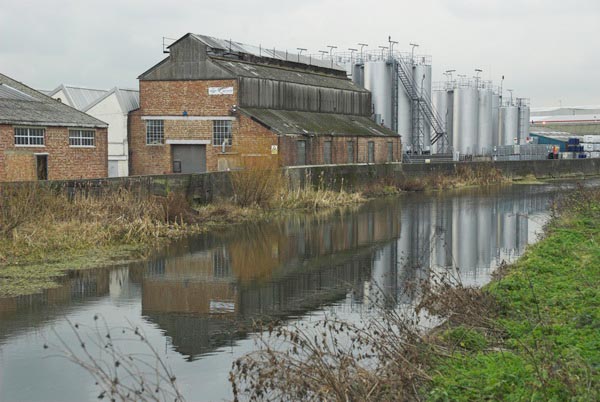
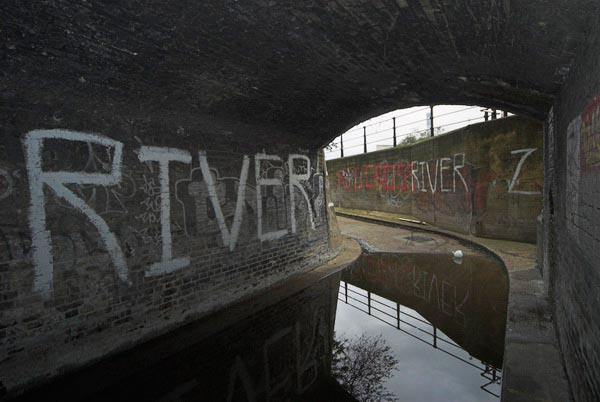
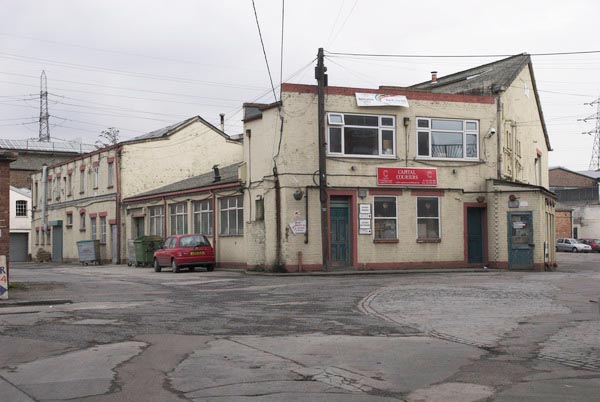
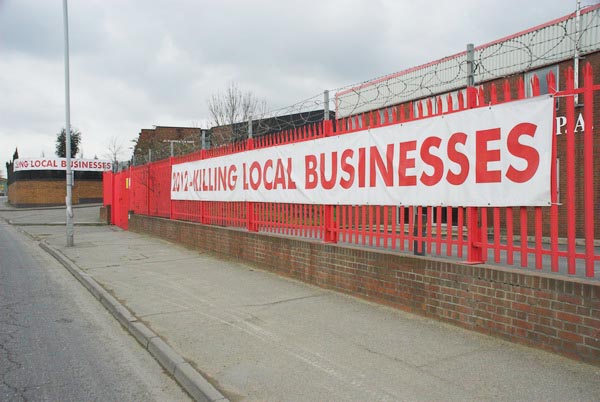
Global Civility and Stratford Marsh – On Saturday February 18th 2006 I photographed one of the continuing protests around the world which followed the publication by a Danish magazine of cartoons featuring images of the Prophet Mohammad in Trafalgar Square, then took the underground and DLR to Pudding Mill Lane station on Stratford Marsh to take more pictures of the area which was to be demolished for the London Olympics.
Proclamation for Global Civility – Trafalgar Square
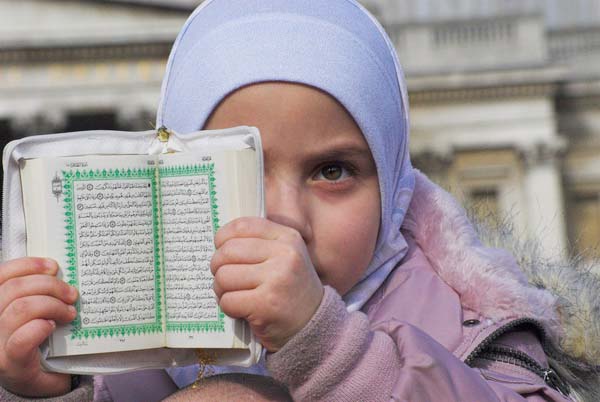
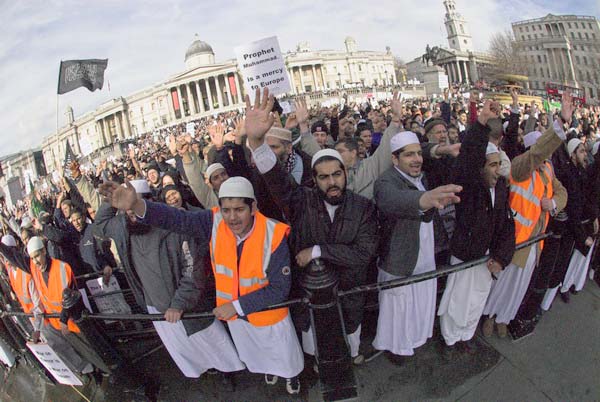
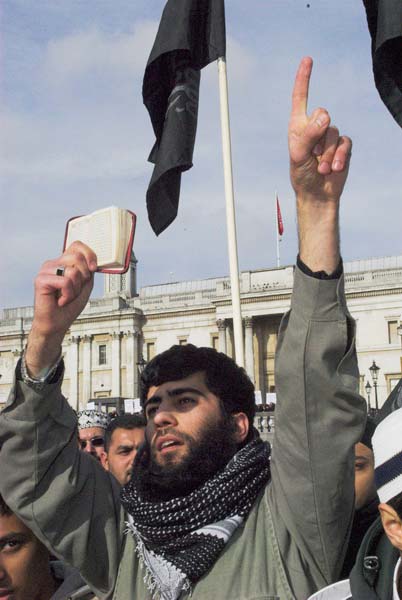
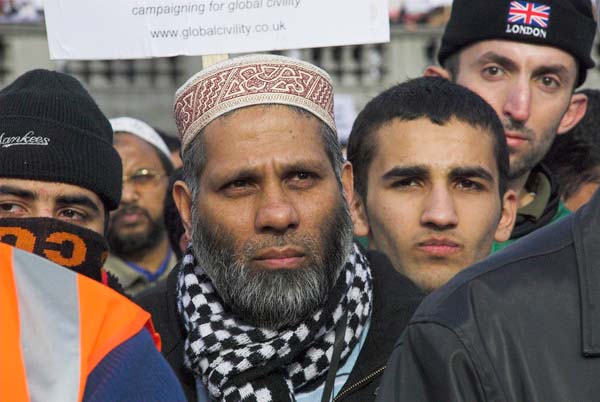
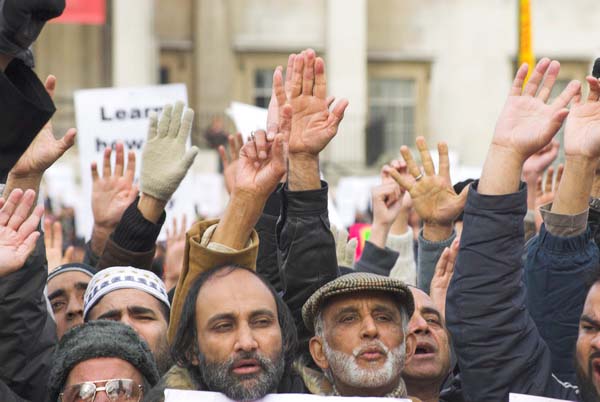
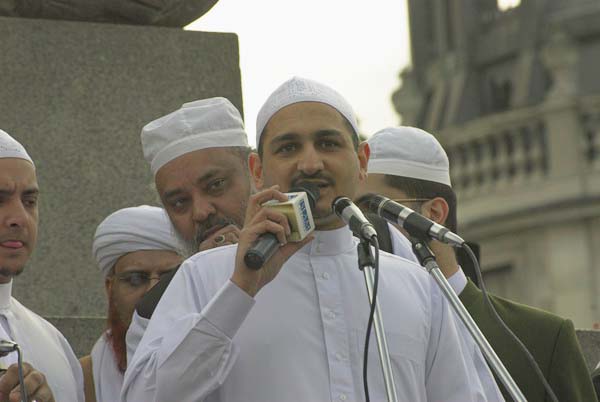
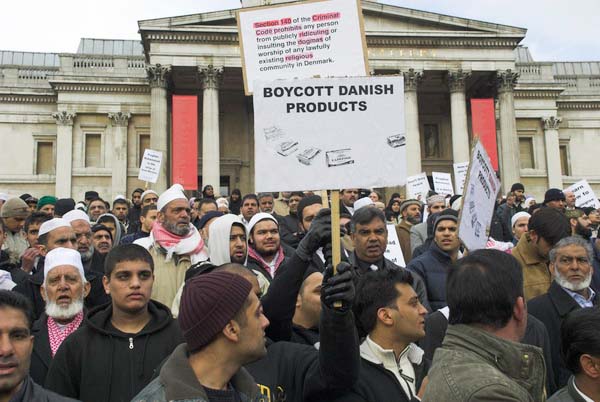
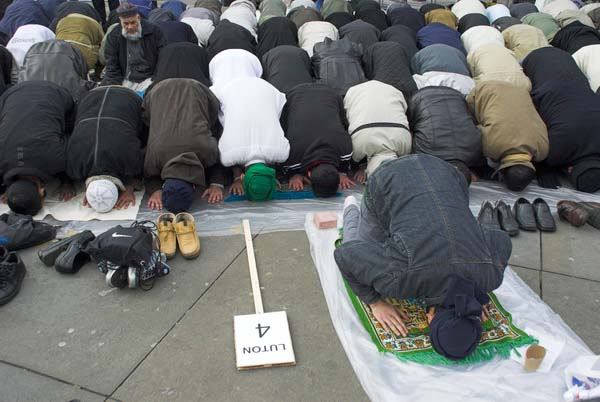
Muslim protesters packed Trafalgar Square for a protest by the Muslim Action Committee over the publication of the cartoons which they regard as blasphemous, but also to publicise a ‘proclamation of global civility‘. The key points of this were the recognition of human dignity as a fundamental right, the need to good manners and etiquette in serious debate, a desire to avoid irresponsible behaviour and to underline the significance of mutual respect for a harmonious co-existence.
The protest in London was kept in good order by stewards who remonstrated with some of the demonstrators who were in some way not behaving as they thought they should, and also moved photographers away from them and some other groups. But other protests around the world were much less restrained and news agencies that same day reported rioting outside the Italian consulate in Benghazi, Libya in which at least 10 people were killed as well as the storming and burning of Christian churches in northern Nigeria with at least 16 deaths.
“As I pointed out in my report in 2006, human dignity was recognised as vital in “the preamble to the Universal Declaration Of Human Rights, adopted and proclaimed by the United Nations General Assembly Resolution 217 of 10 December 1948. That declaration also contains a number of important safeguards such as ‘the right to freedom of opinion and expression‘ and states ‘in the exercise of his rights and freedoms, everyone shall be subject only to such limitations as are determined by law solely for the purpose of securing due recognition and respect for the rights and freedoms of others and of meeting the just requirements of morality, public order and the general welfare in a democratic society.'”
There are still many countries around the world where the principles of human rights in that declaration are not observed, including in many in the Muslim world.
Manners and etiquette are clearly very different in different societies and different religions certainly have very different views, particularly over blasphemy and apostasy. In the west we now prioritise freedom of speech and look back in horror at the Spanish Inquisition and trails for heresy and blasphemy, although in England and Wales, the ‘blasphemy’ and ‘blasphemous libel’ laws were only abolished in 2008, and in Scotland in 2021, while they are still in force in Northern Ireland.
The last conviction for blasphemy in England and Wales was in 1977 when the editor of Gay News received a suspended prison sentence after publishing the poem ‘The Love That Dares to Speak Its Name’ by James Kirkup, and in Scotland it was more than a century earlier when a bookseller was jailed for 15 months in 1843, though until 1825 it had been punishable by death.
While we may find some of the cartoons that were published offensive, it clearly does not justify the irresponsible behaviour and criminal actions of some Muslim mobs protesting against them.
Away from the stewards as I wandered through the crowd I was generally welcomed by the protesters, with many urging me to take their pictures. I left as the speeches, most of which I could not understand as few spoke in English, were finishing and people were getting ready to march,
I’d first photographed Stratford Marsh back in the early 1980s as part of a wider project on the River Lea, once a large and important industrial area in London, but like most of British industry falling into decline, accelerated by the policies of the Thatcher government determined to transform Britain away from manufacturing and into services.
Stratford Marsh was then full of largely small businesses employing local people and many still remained in 2006, though already blighted both by government policies and the tax breaks given to the nearby Docklands area. Now Olympic blight had set in with the whole area to be remodelled, and there were also areas which would be demolished for Crossrail.
As I wrote back then and I think my pictures show:
It is still an intriguing area, where a few yards can take you from wilderness to industrial wasteland, from dereliction to busy workshops (though most were closed on a Saturday afternoon.) Parts are visibly closing down, with compulsory purchase orders hanging on lamposts, some footpaths closed and factories demolished.
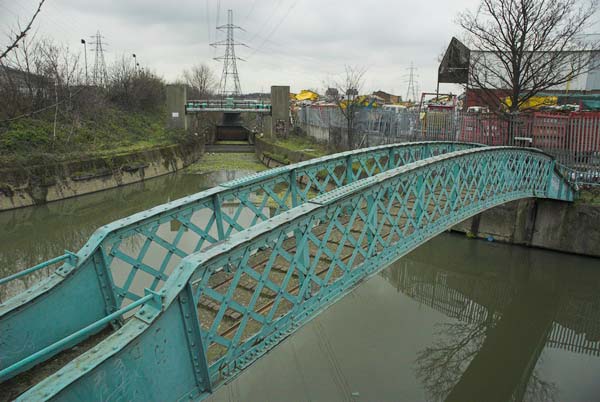
There was one small sign of a kind of regeneration. the unusual lock between the Bow Back Rivers and Waterworks River at Baker Road, for many years derelict, at last seems to have been replaced.
Photographing Police & Policing Protest: On Monday 16th February 2009 I photographed two protests, one against a new law on photographing police and the second which made me question how the police were policing protests. Fifteen years later we have seen a number of laws which severely restrict the right to protest and draconian new proposals to outlaw many more of the activities which help bring protests to public attention.
Media Protest at Terror Law – New Scotland Yard
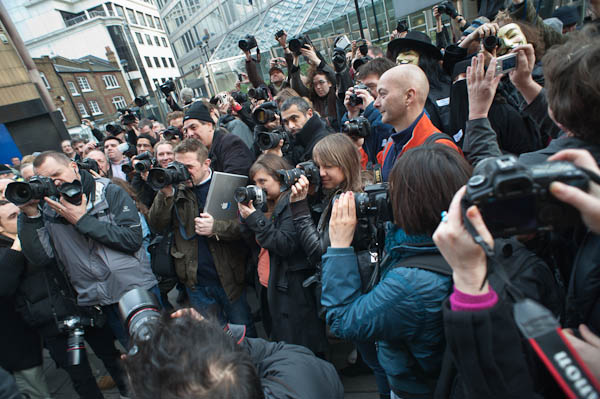
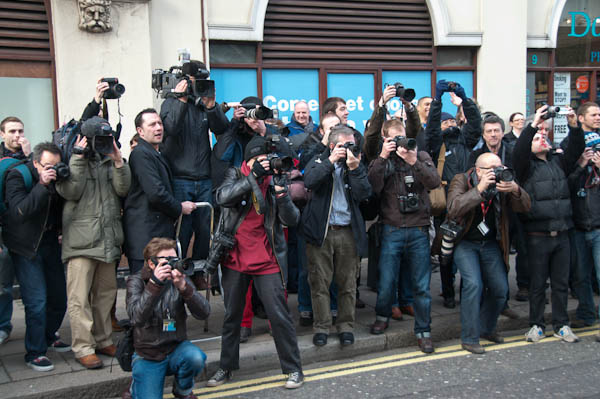
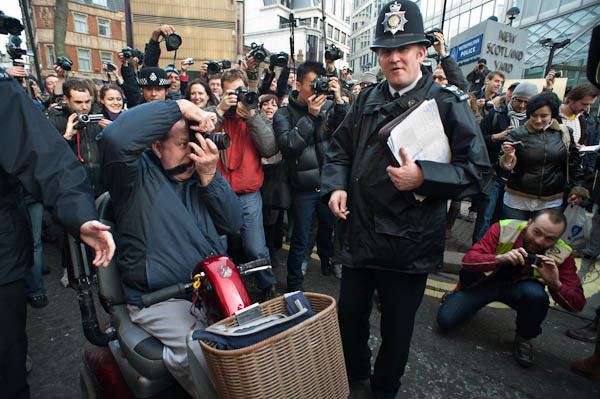
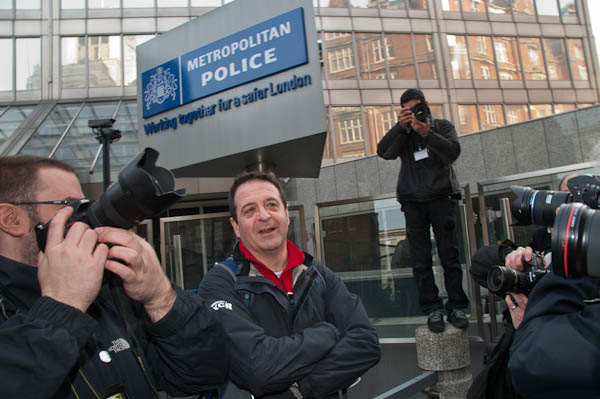
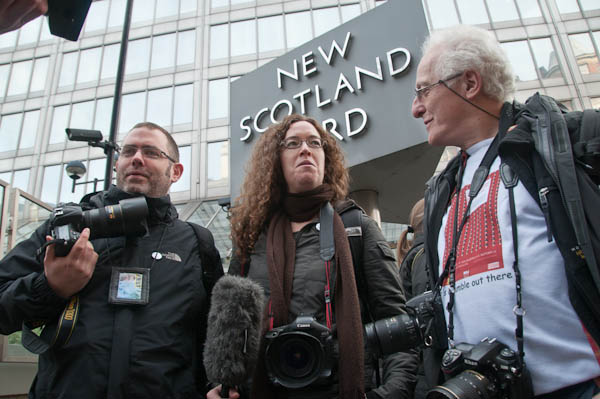
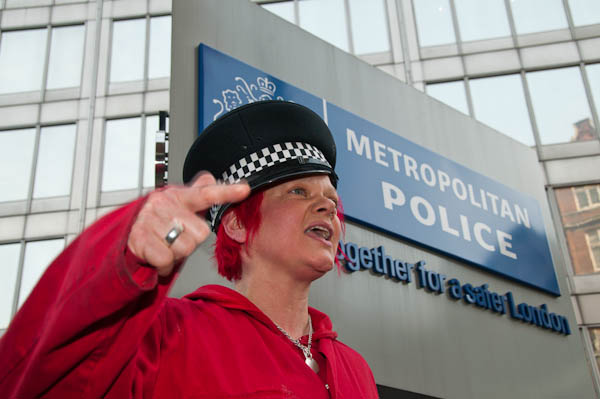
Around 400 people, mainly photographers, had turned up to protest outside New Scotland Yard, then still on Victoria Street, Westminster, on the day that Section 76 of the Counter-Terrorism Act came into force.
This makes it an offence to photograph members of the police, armed forces or security services, or at least to do so if the photographs are “likely to be useful to a person committing or preparing an act of terrorism“.
The vagueness of this statement is a a symptom of the failure of our parliament over recent years to properly scrutinise new legislation, and journalists and others have protested that it could seriously inhibit the freedom of the press as well as the normal liberties of all citizens. The Metropolitan Police Federation agreed, believing the law is unworkable and could well inhibit the freedom of the press.
Photographers saw it as yet another law which increases the climate of fear felt by anyone using a camera on the public streets. Many of us have experienced questioning by the police when working; photographers have already been detained and searched under existing anti-terrorist laws and other acts when covering demonstrations, travelling close to airports or even photographing weddings.
Mark Thomas speaking
Many of London’s leading press photographers turned up to this ‘media event’ organised to highlight the dangers to our freedom of expression and action this new law presents. Most of them wore badges or stickers proclaiming “I’m a photographer… not a terrrorist“, the name of the campaign group set up by photographers.
PHNAT’s founding description was “Photography is under attack. Across the country anyone with a camera is targeted as a potential terrorist. This campaign is for everyone who values visual imagery press freedom.” It was set up by a small group of London-based photographers and videographers who covered political protest including myself and colleagues in the NUJ and grew rapidly.
For once this was a protest which gained wide publicity even on the BBC and newspapers which generally ignore UK protests. It was of course covered in the photographic press too, though at the time I found the quality of the photographs of the event in some of them rather lacking.
Protest at Silence over Congo Genocide – Westminster
Police at the photographers’ protest had been friendly and for once I think they didn’t even bother to photograph us, though doubtless the whole area was covered by a number of CCTV cameras. But there was a very different atmosphere around the policing of this second event I photographed.
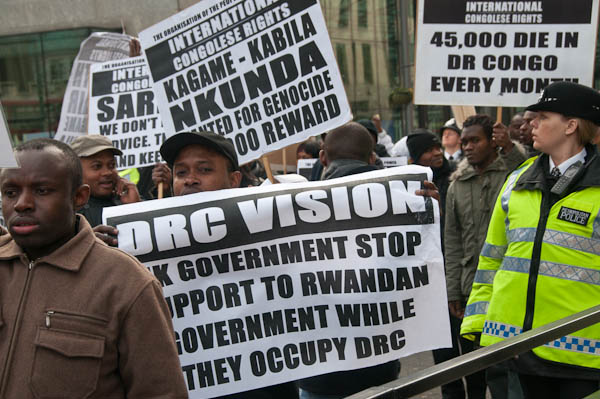
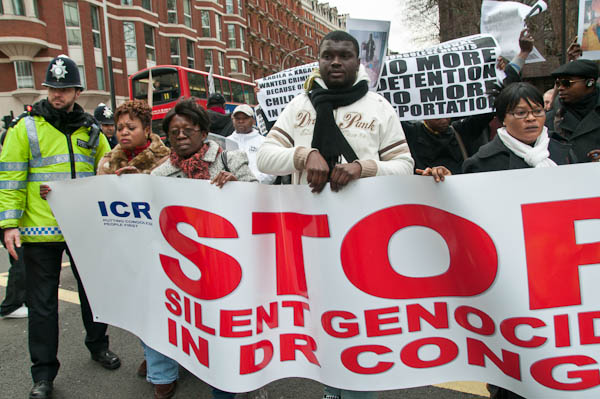
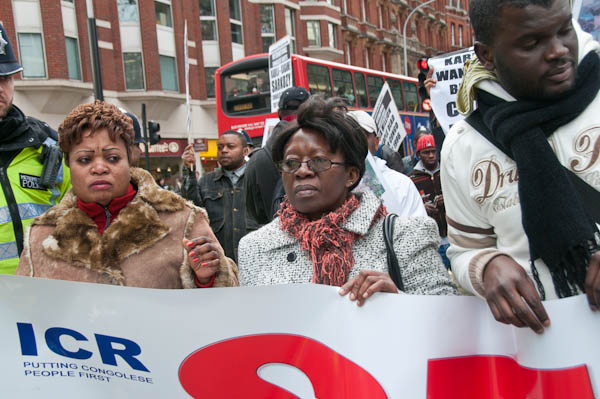
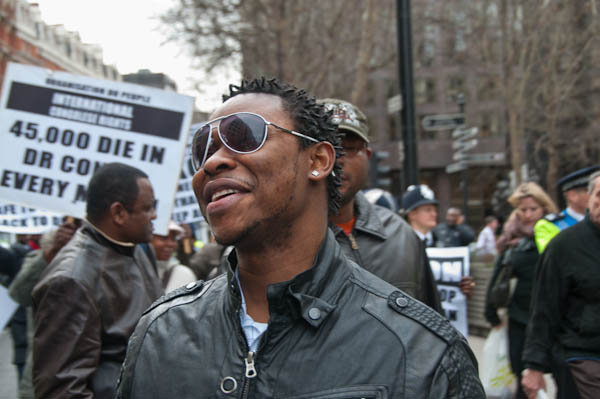
It was a fairly small protest, with perhaps 50 people in a march organised by International Congolese Rights against the continuing violence in the DRC, marching slowly down Victoria Street to Parliament Square.
They marched slowly, at a funereal pace in memory of those killed in Congo in the fighting since 1996. The marchers were continually harassed by police to go faster, but refused to do so. There were probably more police than marchers and the march was accompanied by five police vehicles, one in front of the marchers a surveillance vehicle with loudspeakers and continually filming the march.
When the march reached Parliament Square, the marchers were ushered into a pen of barriers on the side of the square facing Westminster Abbey and St Margarets, although clearly they intended to demonstrate to Parliament rather than the Church of England and surely should have been allowed to protest at the front of the square. One of their representatives was still arguing with police about this when I left.
Here is what I wrote in 2009 about the Congo and the reasons behind this protest:
Capitalism at its rawest is fighting for the mineral wealth of the country – particularly coltan, an ore containing niobium and tantalum, essential for mobile phones and other electronic devices, of which the Congo has 80% of known world reserves and cobalt – of which it is the world’s largest producer – but also diamonds, copper, and gold.
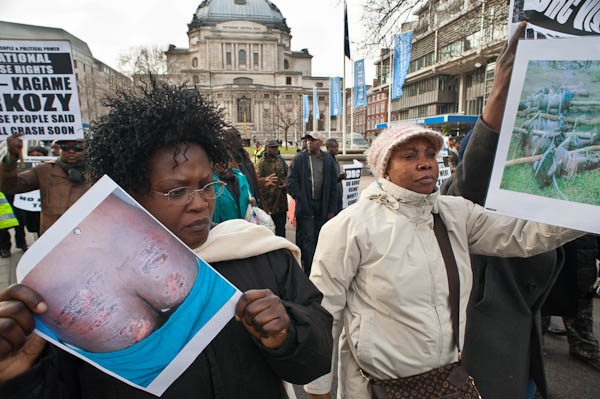
Competing interests trying to grab these riches have led to over 6 million people being killed in the Congo, and unimaginable atrocities against the people there – some of which were shown in the pictures that some of the demonstrators carried.
The Congo is a corrupt police state ruled by Laurent Kabila, with large areas occupied by forces backed by neighbouring states and criminal syndicates, including the Rwandan army. Rwanda, under President Paul Kagame has supported the National Council for the Defense of the People loyal to former General Laurent Nkunda. The UK government is accused of supporting Rwanda.
Saturday 10th February 2024 – Gaza & Iran – Saturday 10th February was another day of local actions around the country calling for and end to the horrific genocide now taking place in Gaza. I went to two of the local events in London as well as photographing an annual event on the anniversary of the 1979 revolution in Iran, calling for democracy there.
Ceasefire Now – Stop The Genocide In Gaza, Southwark
London, UK. 10 Feb 2024. Camberwell Green
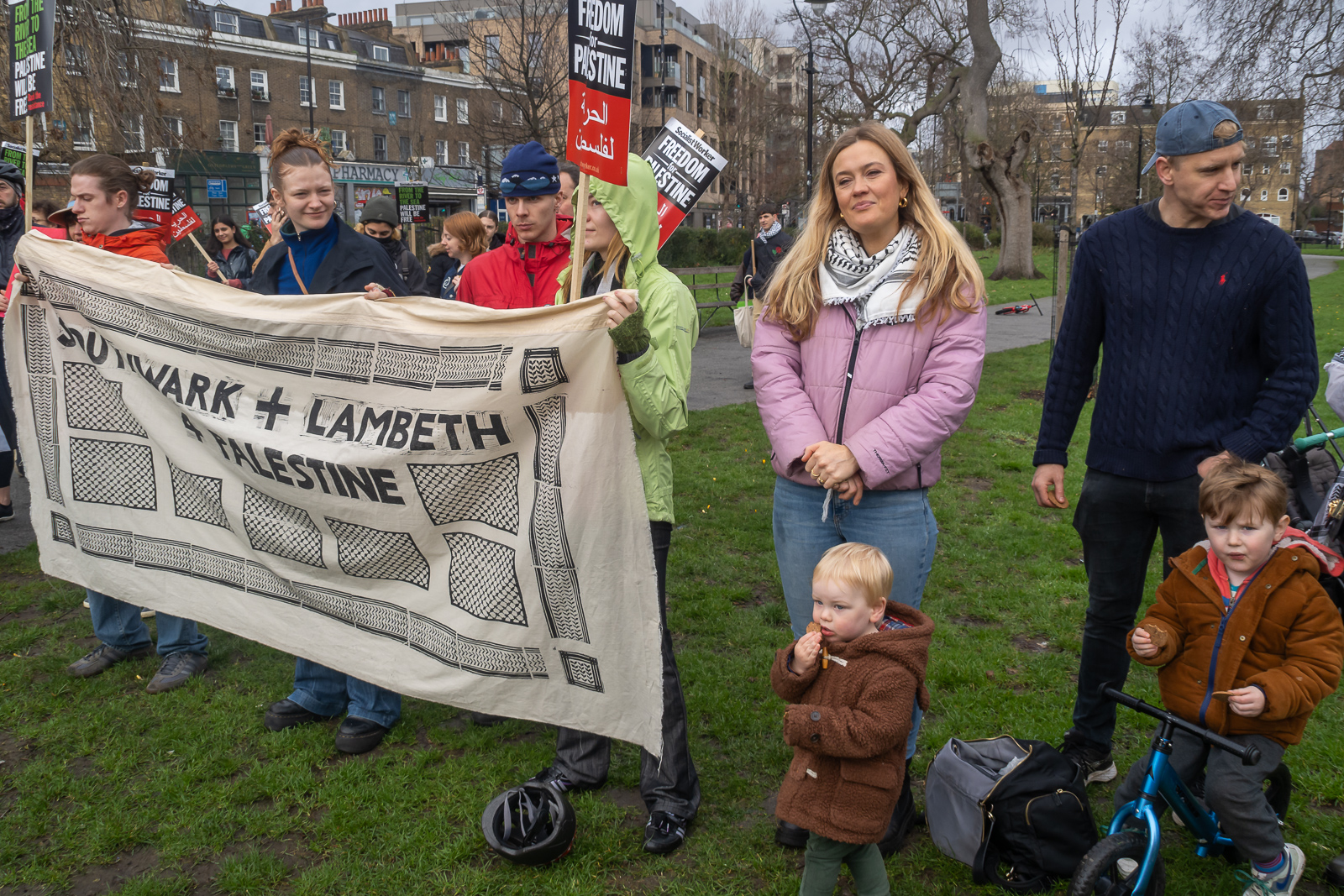
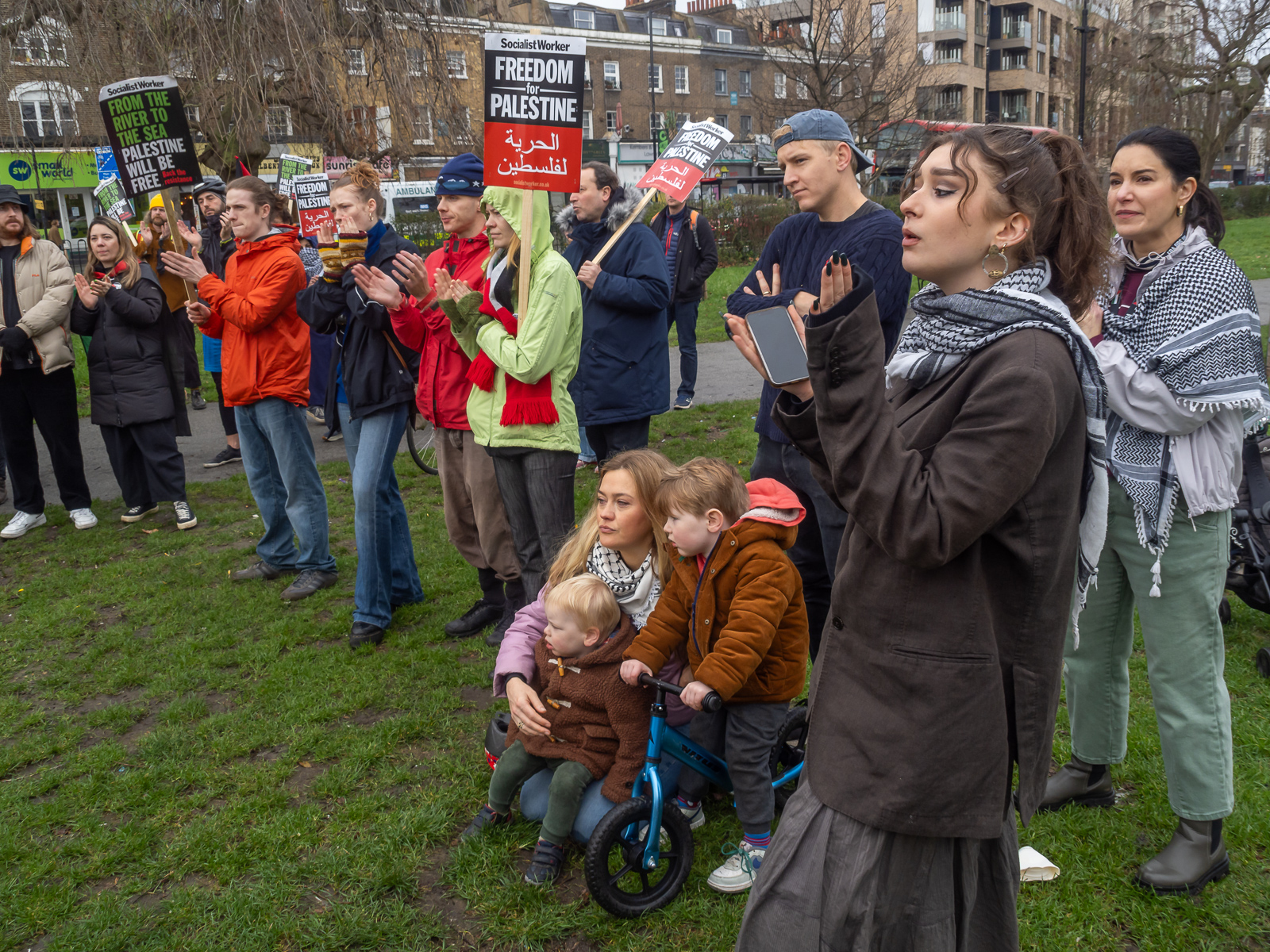
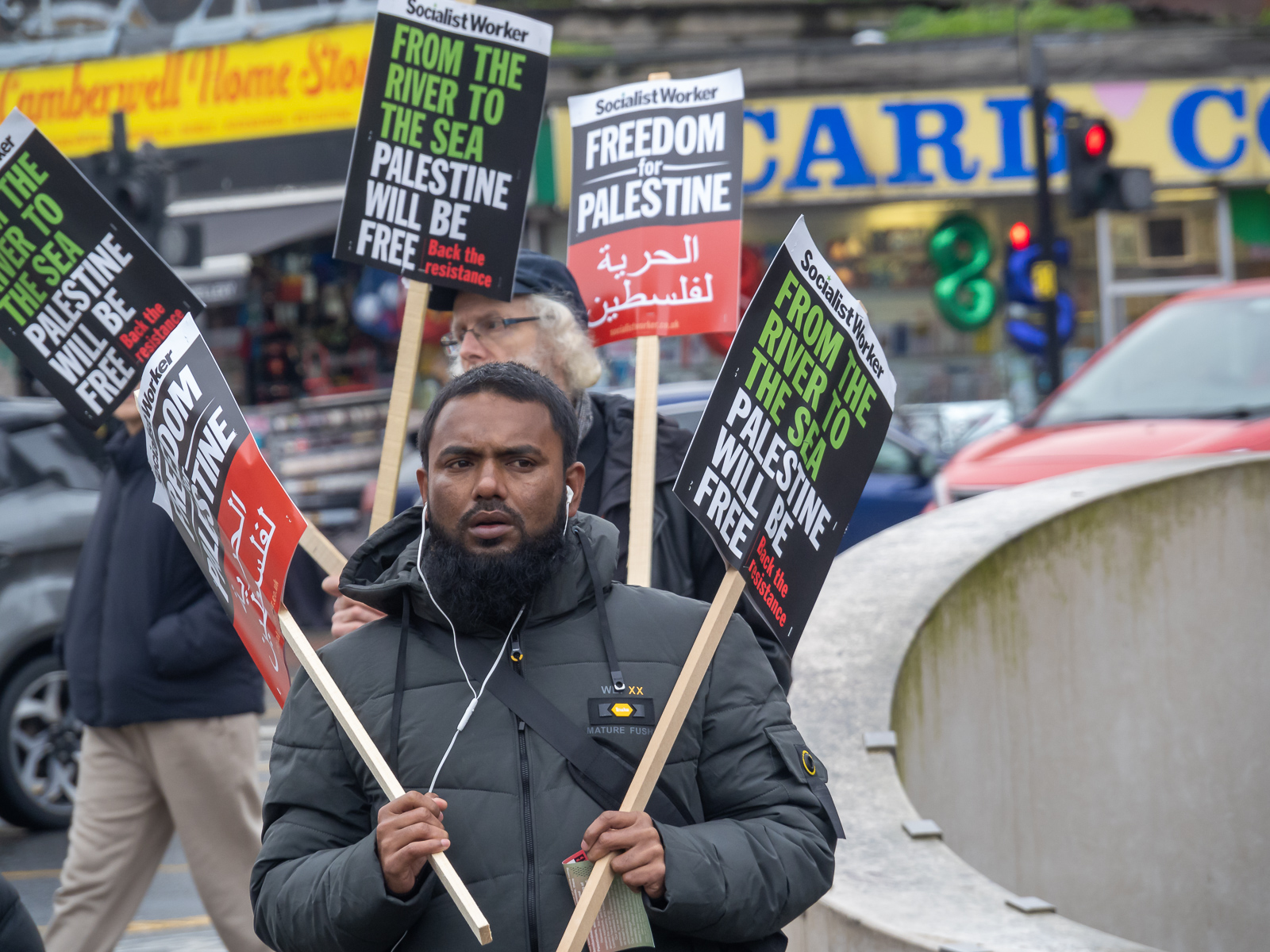
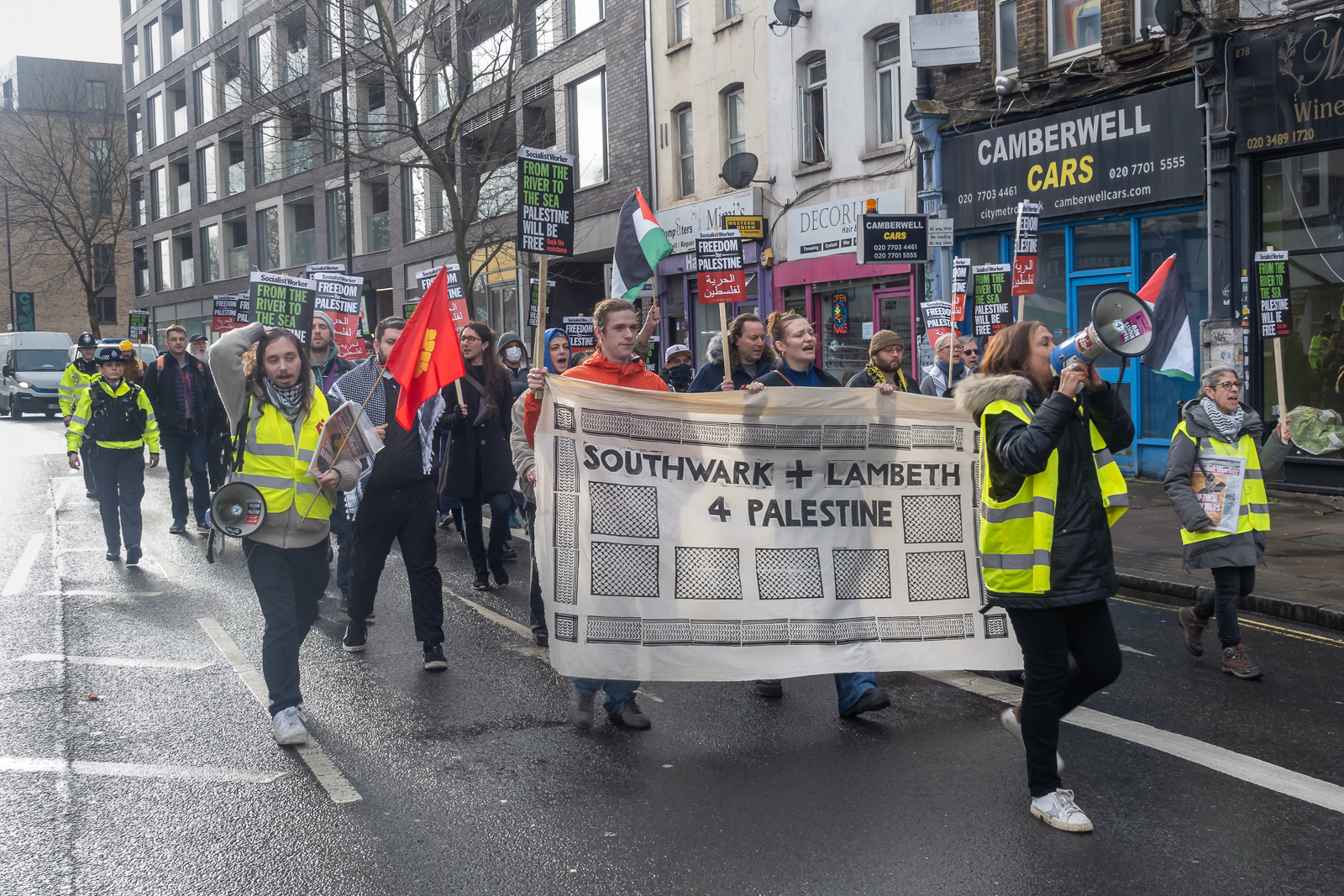
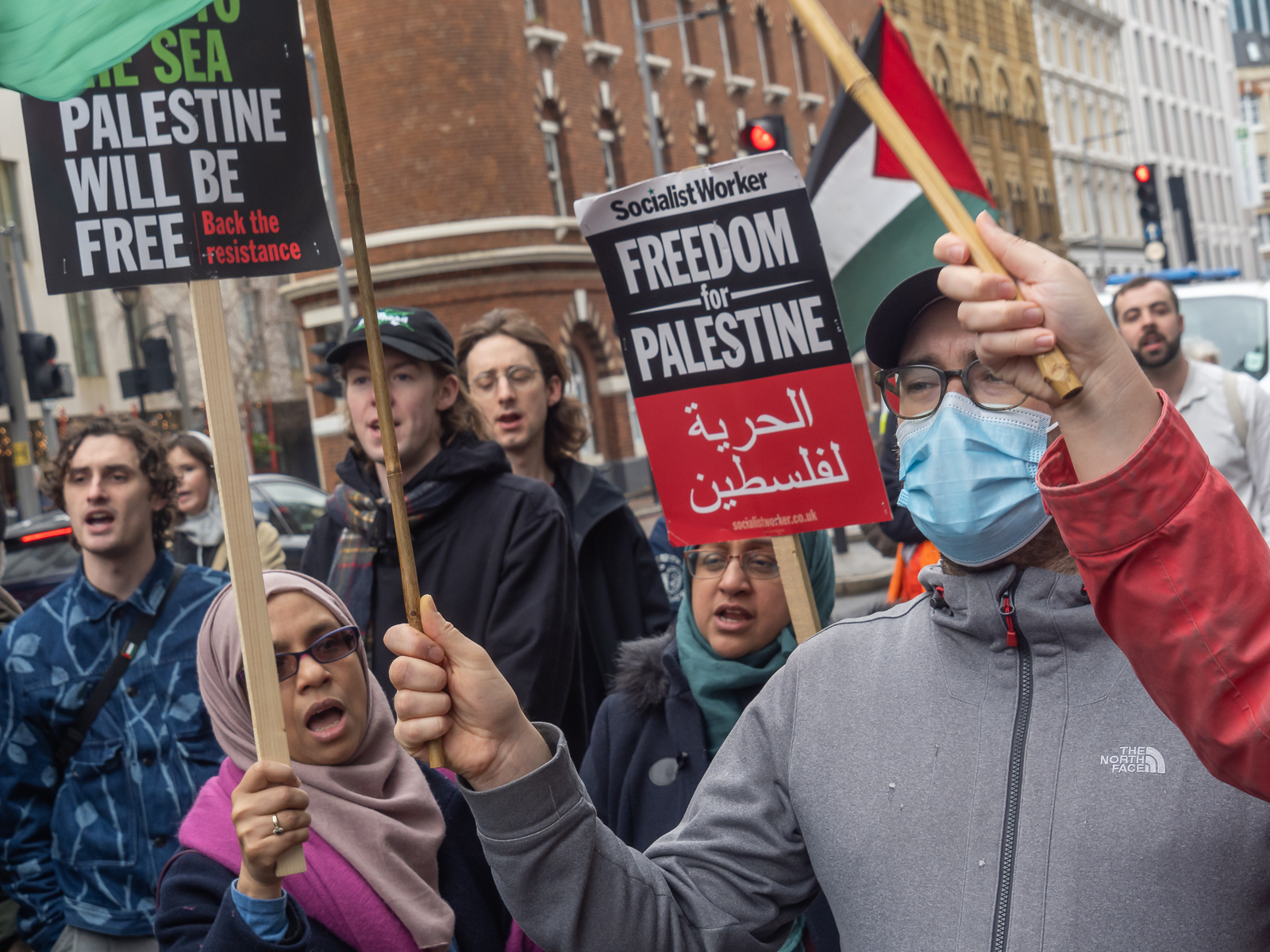
Southwark and Lambeth 4 Palestine had organised another march from Camberwell Green to BAE Systems offices on Southwark Street against the terrible genocide now being carried out by Israeli forces in Gaza. It turned out to be rather smaller than previous local marches, perhaps because many people in the area had demonstrated in workplace-based protests earlier in the week.
London, UK. 10 Feb 2024.
The event started with a few short speeches on Camberwell Green, including one from a student activist from the UAL at the Elephant where they had had a large protest. She talked about how she had been inspired by the example of Brian Haw’s protest over many years in Parliament Square who had carried on calling for peace and an ending to the killing of children until shortly before his death in June 2011, almost ten years after his protest there had begun.
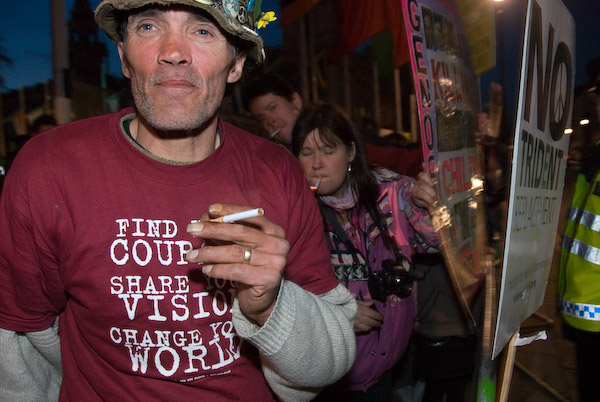
Brian Haw: Find Your Courage; Share Your Vision; Change Your World. (T-shirt from Dan Wilkins, The Nth Degree.)March 2007, Peter Marshall
I got to know Brian well, going to speak with him every time I went to photograph in Westminster and often photographing him, as you can see on-line at My London Diary. He suffered regular harassment from police, council officials and thugs encouraged by the authorities, some of whom were I think plain clothes officers or military. An Act of Parliament was passed largely to try to end his peace camp there, though it also severely restricted other protests within a kilometre of Parliament.
London, UK. 10 Feb 2024
Later, after his ill-health took him to hospital, his protest there was continued by Barbara Tucker who had joined his campaign there in 2005. She was subjected to even more severe police harassment, was arrested at least 47 times and served two periods in prison, of two weeks and nine weeks. In January 2012 police removed her protection against the elements – tent, blankets and sleeping bag and later they came back for her chair. She continued to protest there despite needing hospital treatment for exposure until May 2013.
London, UK. 10 Feb 2024.
The march set off with around a hundred people marching behind the banner though more joined the later at the end. There was considerable support from people on the roadside, particularly when it went past the busy section of Walworth Road close to East Street Market, and many drivers going in the opposite direction beeped their horns in support. Although the UK government continues its support of the Israeli genocide clearly the majority of the British people do not.
London, UK. 10 Feb 2024
I found it a rather long march – well over two and a half miles – and was wishing I’ve brought my bicycle by the time we got to the Bluefin Building on Southwark Street. The march stopped for a few minutes in front of the building where BAE Systems have offices on an upper floor.
London, UK. 10 Feb 2024.
BAE Systems is the world’s seventh-largest military contractor, and the largest in Europe and supplies Israel with a wide range of weapons which for years have been used against Palestinian citizens and civilian infrastructure “including hospitals, schools, and water and electric systems.” There is much more about their activities in arming Israel on the American Friends Service Committee web site.
London, UK. 10 Feb 2024
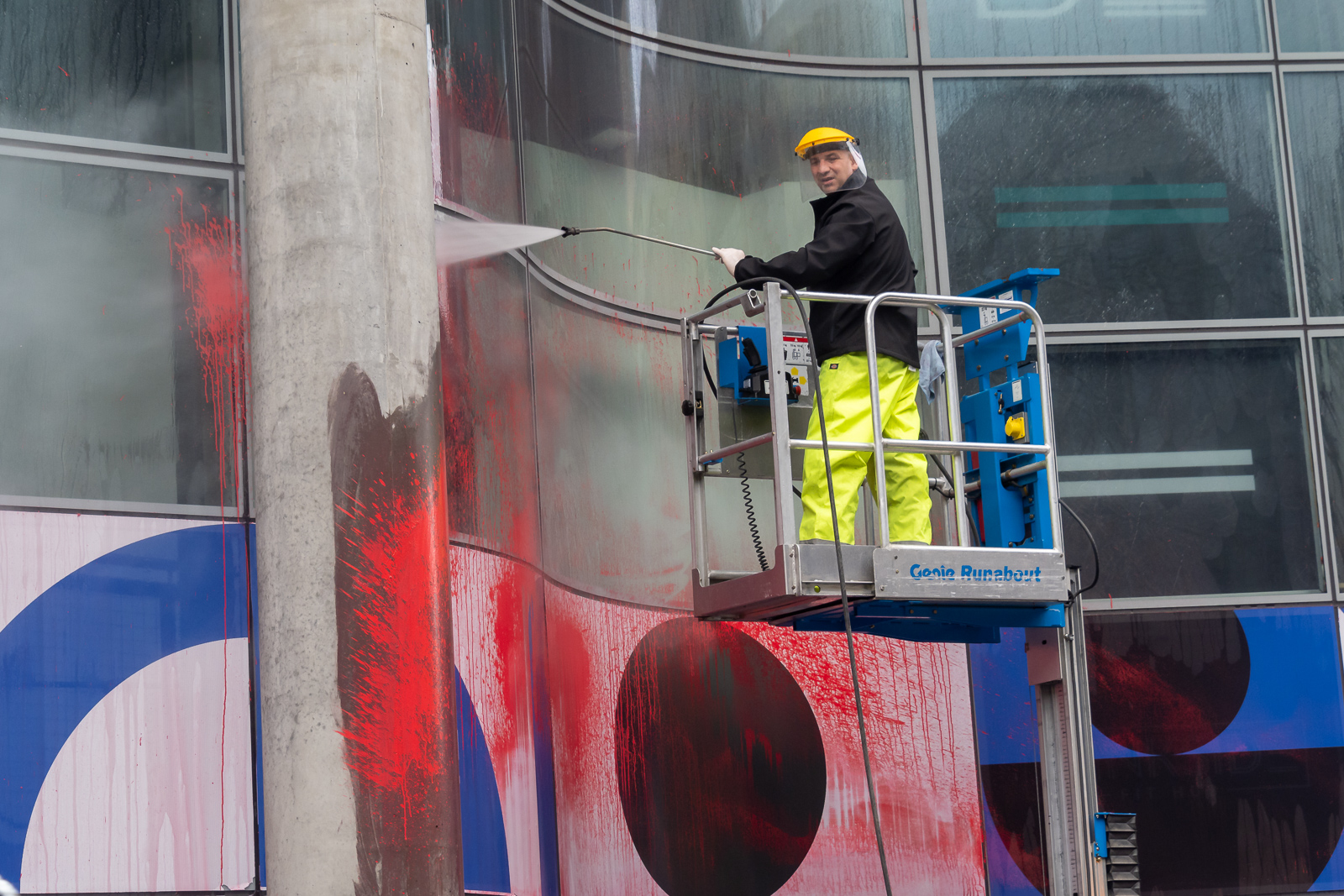
When we arrived at Bluefin, we saw that others had been there before us, and a large area of the frontage had been sprayed with red paint. A team of contractors were busy cleaning it off. I took a few pictures of them as the marchers moved off down the side of the building for another rally, but I walked back to Southwark Station to catch the Elizabeth line to Westminster.
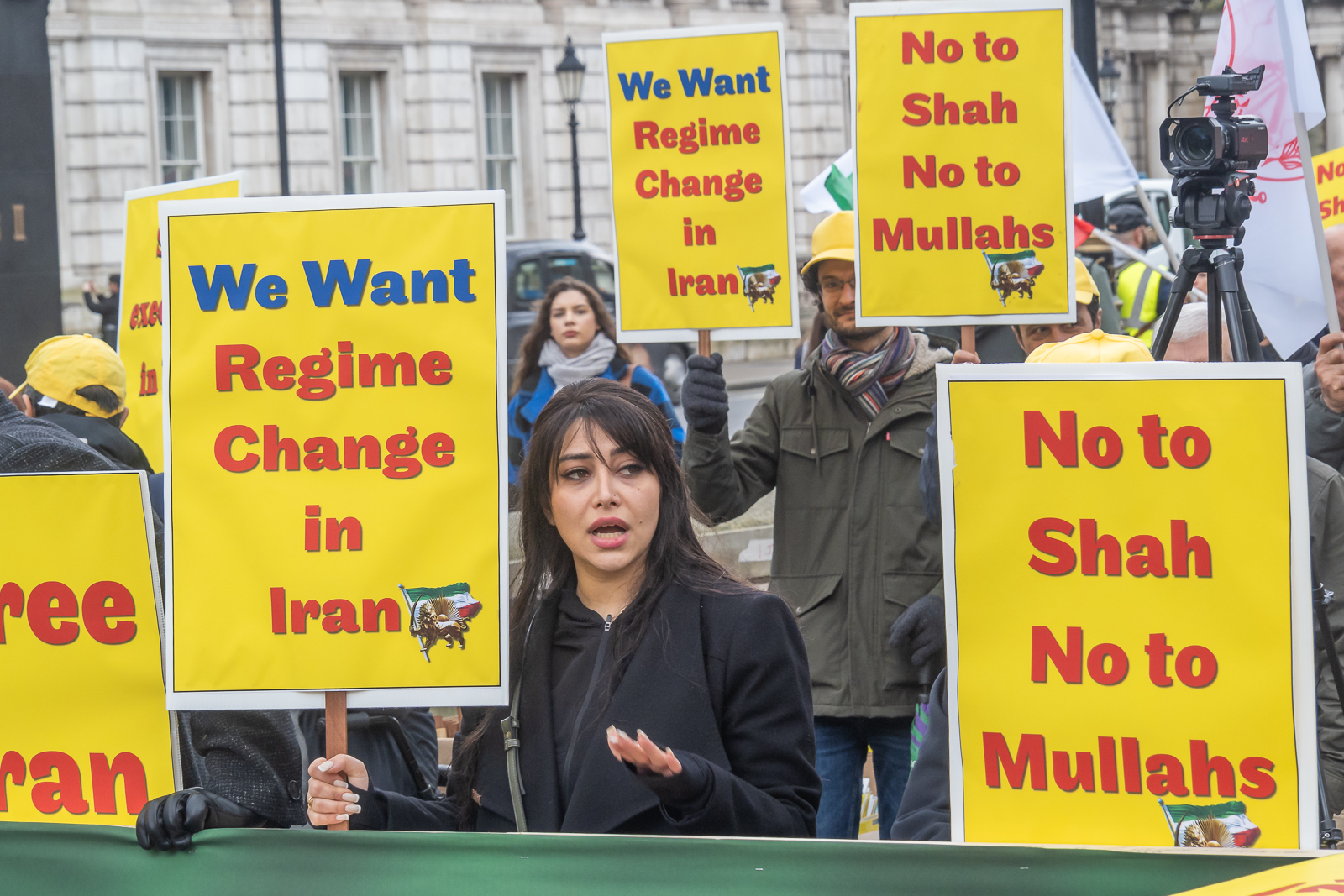
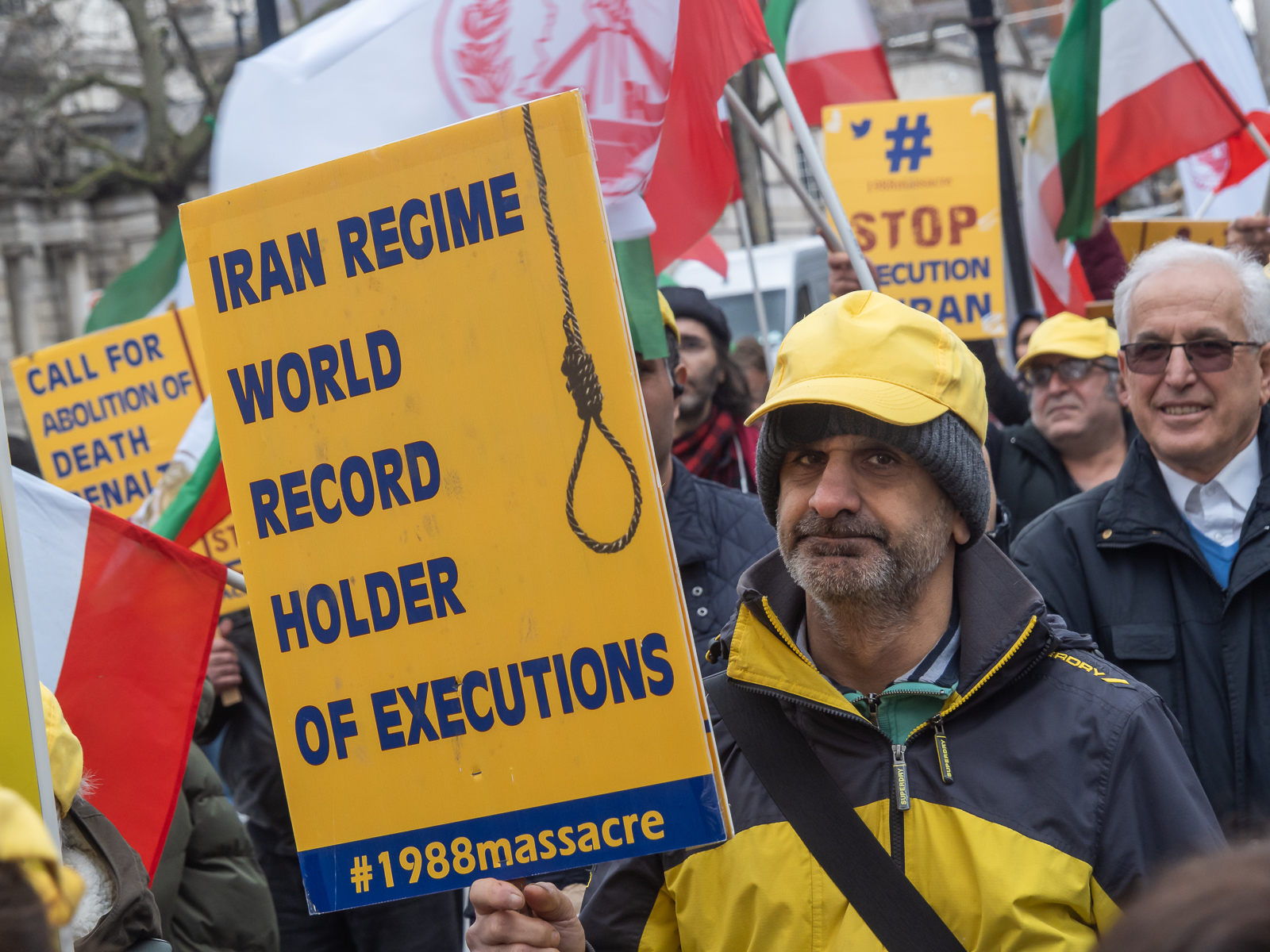
45 years after the Shah of Iran was forced into exile by a popular revolution following repression under the Pahvlavi regime, the Anglo-Iranian community and the National Council of Resistance of Iran call for a new revolution to end the oppressive theocratic regime with democracy and for the UK to declare the Islamic Revolutionary Guard a terrorist group.
They say Khomeini who had been invited back by the acting government after the revolution stole the leadership of the country revolution in a rigged vote, imposing the current oppressive theocratic regime.
London, UK. 10 Feb 2024.
The National Council of Resistance of Iran (NCRI) has put forward a ten point plan for a future democratic republic in Iran, with secular government, democratic elections, freedom of expression, equal rights for women and human rights and an independent judiciary and legal system.
The NCRI is a coalition with representation from five bodies, the major of which is the People’s Mojahedin Organization of Iran (PMOI), which currently has its headquarters in Albania. It was largely disarmed after the US/UK invasion of Iraq and its camp in Iraq was attacked after US forces withdrew.
London, UK. 10 Feb 2024
On Feb 1st this year, the House of Commons agreed to a motion in support of freedom and democracy in Iran. The motion condemns the violent state crackdown on the protests and urgest the government to proscribe Iran’s Islamic Revolutionary Guard Corps.
As I left the protest, two men came to try and disrupt the protest and there were brief scuffles as security and others tried to move them away. After a few minutes police came and held one of them, talking to him and suggesting he leave – the other was already a few yard down the road.
Ceasefire Now – Stop The Genocide In Gaza, Ealing, London, UK
London, UK. 10 Feb 2024
I was on my way to Ealing, fortunately a much faster journey now the Elizabeth Line goes to Ealing Broadway, although I still arrived well after the rally outside the town hall there had started. There was a large crowd around the steps on the main road in front of Ealing Town Hall, another of the many local protests around the country calling for an immediate ceasefire and an end to the genocide in Gaza which has now killed 28,000 mainly women and children and severely injured around 68,000.
London, UK. 10 Feb 2024
The entire population of Gaza is now living in desperate conditions with constant threat of bombing, shelling, famine and disease. Speakers condemned the failure to respond to the ICJ ruling to prevent acts of genocide and for the continued killing taking place there with precision targeted attacks on ambulances, aid workers, schools, hospitals, refugee camps, medical staff, journalists and others.
London, UK. 10 Feb 2024. Grenfell campaigner Moyra Samuels.
I think most of the speakers were from Ealing and Southall, but Grenfell campaigner Moyra Samuels had also come to speak both about the shameful attack on Gaza and also share some experiences of campaigning over the Grenfell fire, where continued protests had helped to keep the fight for justice alive – though there is little sign of justice so far.
London, UK. 10 Feb 2024.
I left as the rally was coming to a close, taking my final pictures of it from the top deck of the bus which was taking me to Brentford and a train home from there.
Tar Sands, Iran & Valentine Party – Three very different events on Saturday February 13th 2013 on the streets of London. First an Olympic-themed protest against one of the dirtiest fossil fuel projects, then a protest by Iranians 31 years after the revolution that brought the Islamic regime to power and finally a Valentine’s Day street party against the commercialisation of the annual event and celebrating the power of love.
Canadian Tar Sands Oily-Olympics – Trafalgar Square
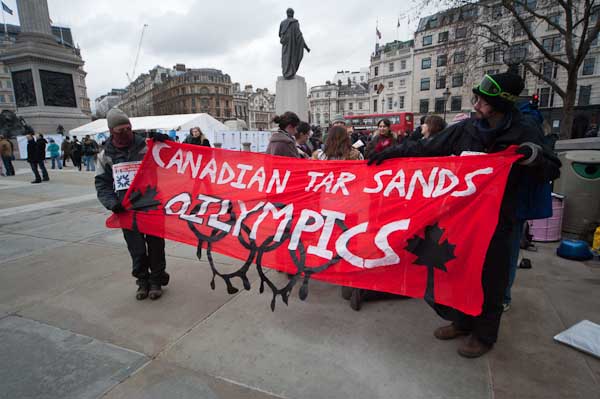
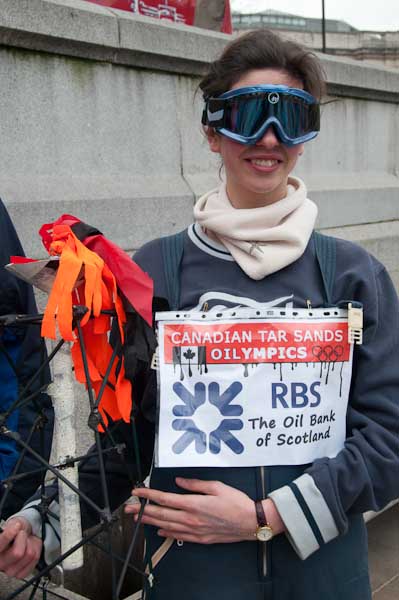
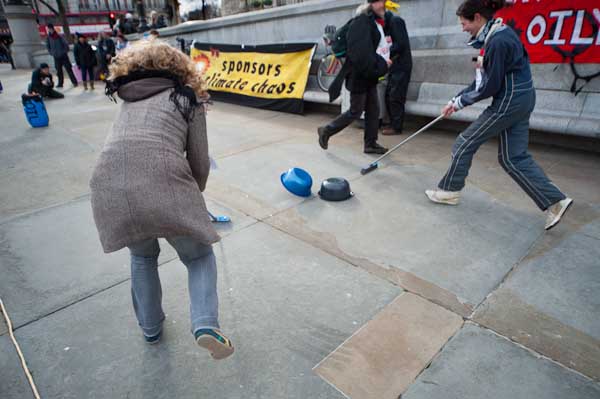
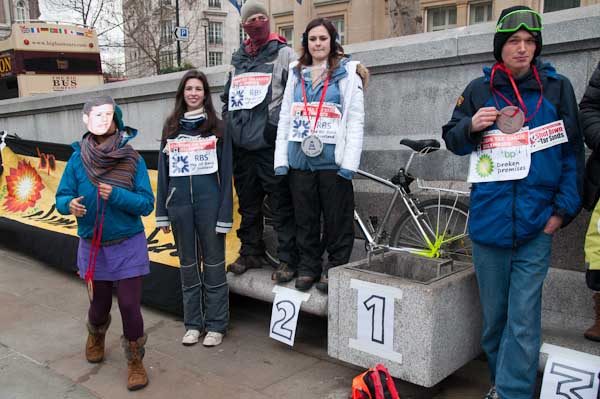
February 13th 2010 was the opening day of the Winter Olympics in Canada, and protesters took advantage of this to stage their own ‘Oily Olympics’, with teams representing BP, Shell and RBS, competing in a ‘Race For the Tar Sands’, complete with a medal ceremony next to Canada House in Trafalgar Square.
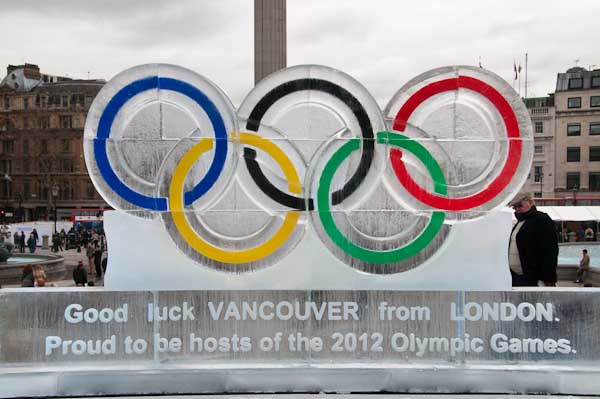
The square was in use for an event celebrating the official Olympics complete with giant screens showing ski jumping and an ice sculpture of the Olympic rings. But the protesters set up on the side closest to Canada House for their tug-of-war, a curling event and a relay race for oil.
Getting oil from the tar sands in what is oddly called ‘The Sunrise Project’ uses a process called Steam-Assisted Gravity Drainage which produces from 3-5 times the carbon dioxide of traditional oil extraction. Until recently BP considered it to be too economically and environmentally unpleasant, but high oil prices and new management had changed their mind.
As well as their huge carbon impact the UK Tar Sands Network say that extracting oil from the tar sands involves “mass deforestation, water pollution, risks to human health, a major threat to wildlife and the trampling of indigenous rights.”
The heritage wardens who patrol the square for the Mayor of London told the protesters they were not allowed to protest in the square, and called the police when they continued. Police came and talked to them but did not stop the event as it was obviously not causing any obstruction or public order problem. Some of the officers were clearly amused.
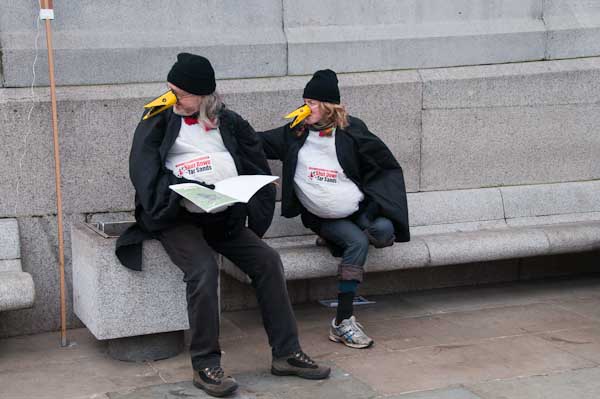
It was a fun event with a serious purpose, and most of those taking part were surprisingly competitive. I wrote: “It wasn’t at all clear on what basis the medals were awarded. For those that care about such things, BP got bronze, RBS the silver and Shell struck gold. And none of us were quite sure why there were two penguins present.”
Iran Opposition Rally in London – Parliament Square
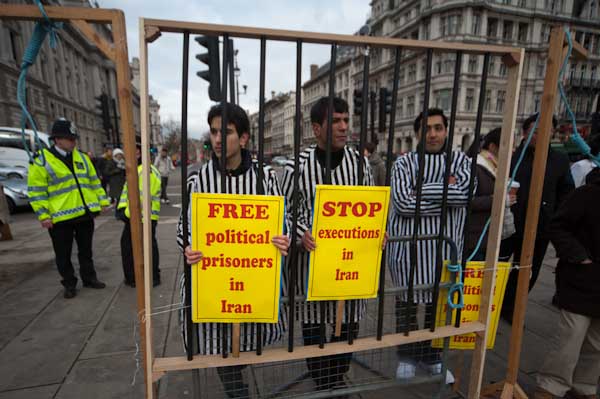
The previous Thursday had been the 31st anniversary of the 1979 Islamic revolution in Iran and had been marked there by both a large pro-government rally and also a ferocious clampdown on opposition groups by riot police, undercover security agents and hard-line militiamen.
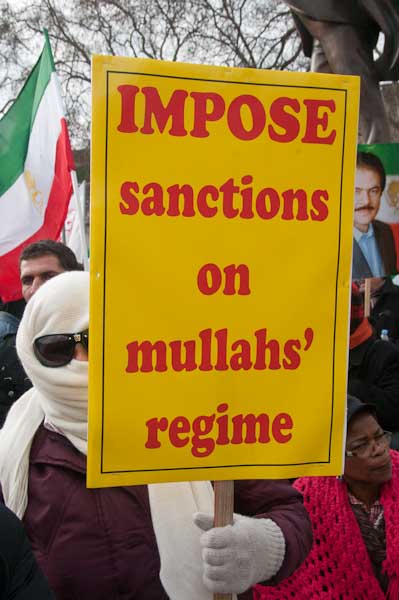
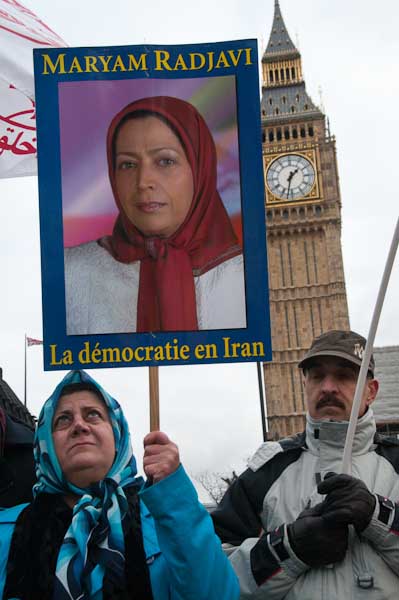
The protest in London was by supporters of the National Council of Resistance of Iran (NCRI) and the People’s Mojahedin Organisation of Iran (PMOI). The NCRI is a coalition of Iranian dissident groups but is dominated by the PMOI, which was proscribed in the UK at the request of the Iranian Mullahs in 2001; the ban was lifted against the UK government’s wishes after they lost an EU court appeal in 2009.
The PMOI were shabbily treated by the US after they signed a ceasefire agreement with them in 2003 for which they gave up most of their weapons and were confined to their camp in Iraq, leaving them at the doubtful mercy of the Iraq government when the US troops left.
In 1995 the NCRI announced their Charter of Fundamental Freedoms for Iran, which would uphold all international agreements on human rights such as “freedom of association, freedom of thought and expression, media, political parties, trade unions, councils, religions and denominations, freedom of profession, and prevention of any violation of individual and social rights and freedoms.”
They call for a republic based on popular vote, the abolition of the death penalty, gender equality, a modern legal system without cruel and degrading punishments, the recognition of private property, private investment and the market economy and a foreign policy of peaceful coexistence without nuclear weapons.
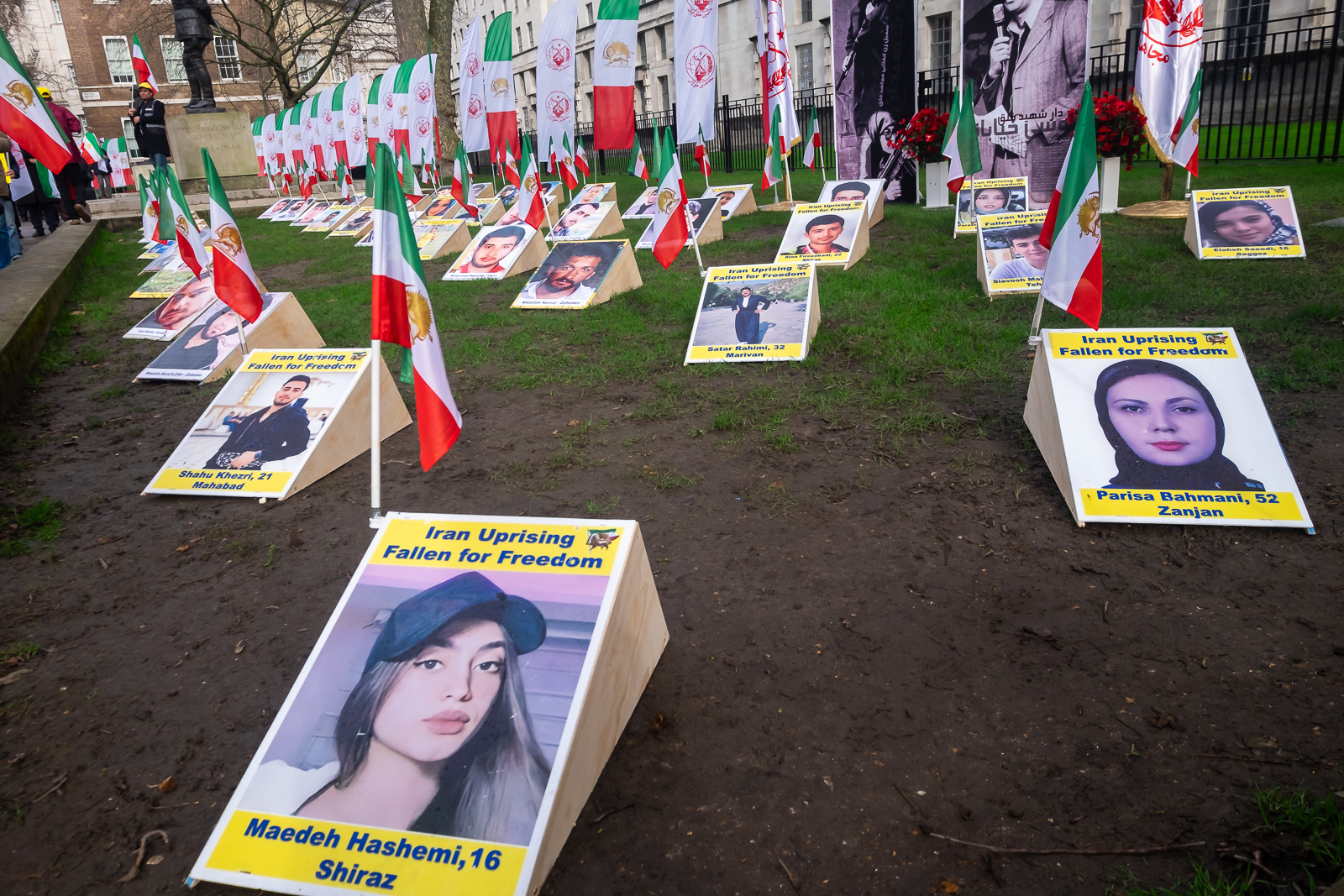
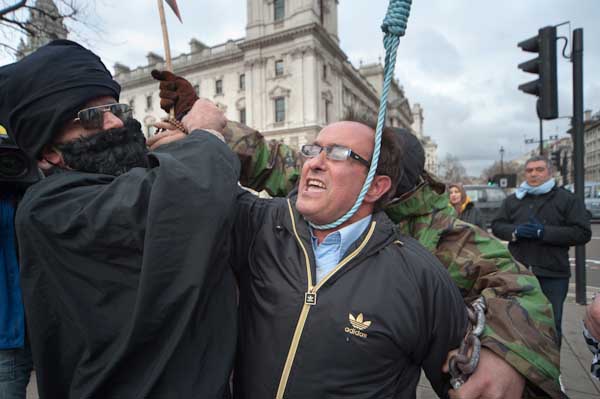
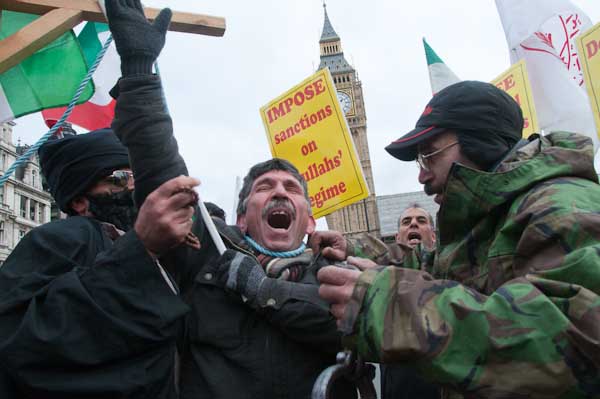
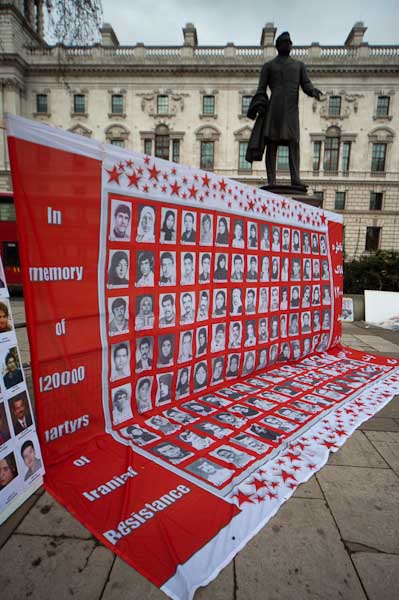
As well as many speeches the rally had a display of photograph of some of the 120,000 Iranians killed by the Iranian regime and pictures of people being attacked at demonstrations in Iraq, with a street theatre piece in which protesters were attacked by a bearded cleric and a militia man and dragged to a waiting hangman’s nooses.
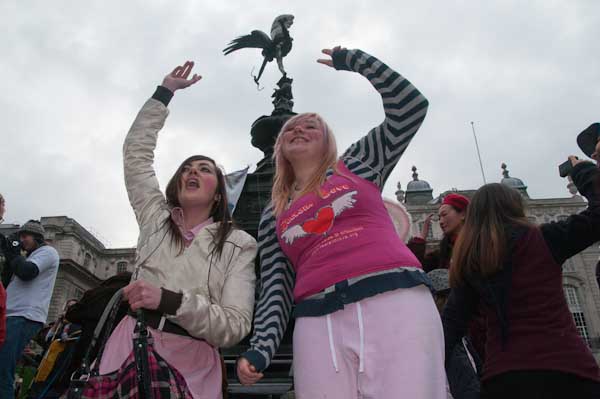
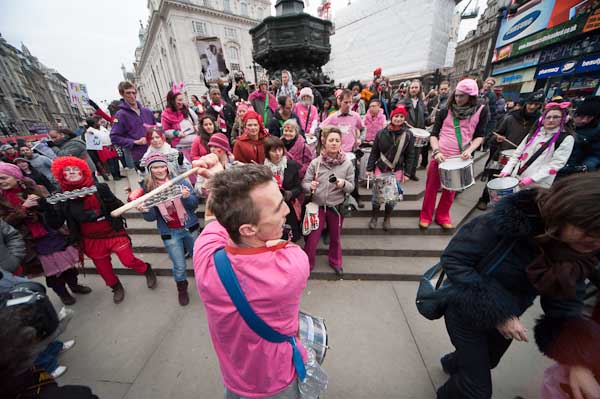
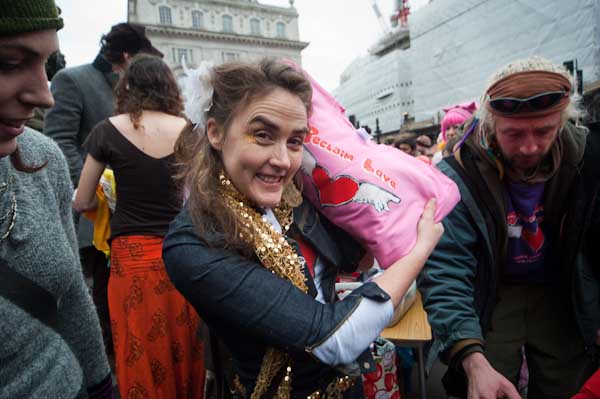
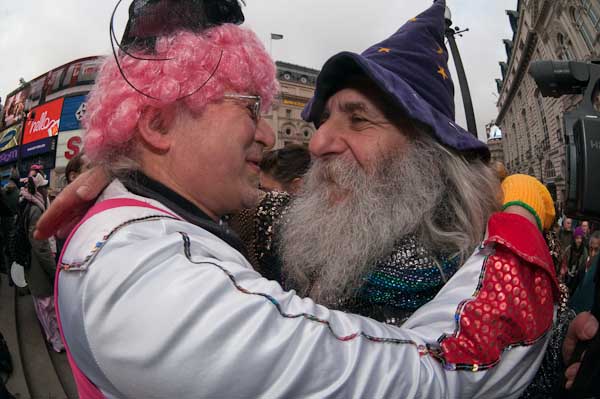
Reclaim Love’s free Valentine Party around the statue of Eros in Piccadilly Circus was started by Irish poet and love activist Venus CuMara to reclaim St Valentine’s day from commercialism and to try to harness the power of love to save the world.
The event in 2010 was one of the largest, with people coming together not just around Eros where the event had begun six years earlier but there were events on this day at a total of 40 locations around the world – elsewhere in England, in Ireland, Scotland, Wales, Pakistan, India, Spain, Italy, Germany, Austria, Iceland, France, Brazil, Argentina, New Zealand, the USA, Canada and Australia – including surfers who were celebrating in the ocean off Perth, Australia.
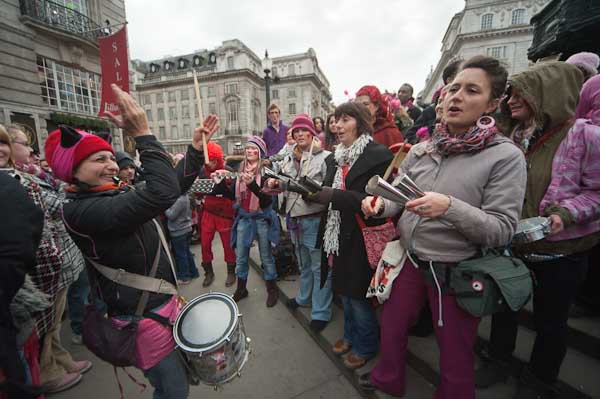
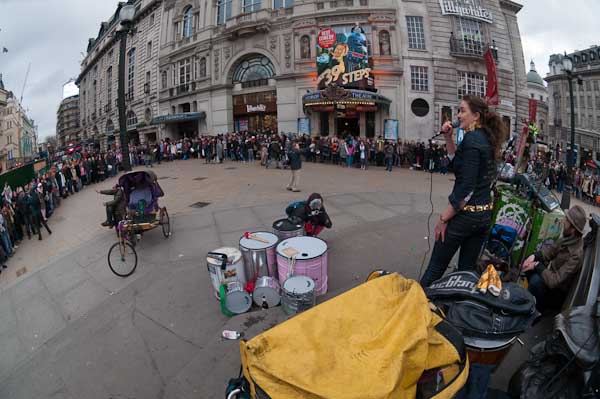
The party began with the powerful drumming of Rhythms of Resistance which attracted a great deal of attention, including many tourists in the area who stopped to watch and some danced and took part.
A large supply of free ‘Reclaim Love’ t-shirts were handed out by Venus as an expression of the “more fearless-generous-sharing-Love-centred way of thinking” behind the event and others handed out free cakes and sweets and offered free hugs.
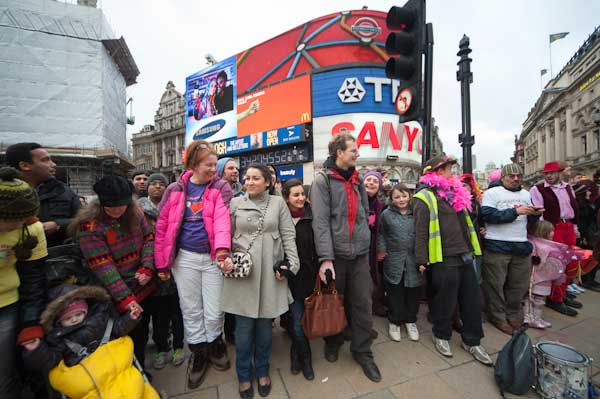
The climax of the event, celebrated around the world at 15.30 GMT was when people joined hands in a large circle around the area in an ‘Earth Healing Circle‘ and together repeated an ancient Indian prayer for peace in their own language. The English version “MAY ALL THE BEINGS IN ALL THE WORLDS BE HAPPY AND AT PEACE” people repeated here was also on the free t-shirts.
This year there were so many people at the event that in places around Piccadilly Circus the circle was two or three deep.
Venus hoped to keep building the ‘Reclaim Love’ movement and felt it would really have a tangible effect if there were 1.5 million or more people taking part, a number she hoped it would reach worldwide by 2015. Unfortunately for various reasons it never managed to reach that critical mass. The 16th ‘Reclaim Love’ free Valentine’s Day street party which took place in 2019 was I think the last, though I could be wrong. There is still a Facebook group, but this year there is only a single post on it, “Hi lovers are we doing anything this year on the 17th is it?” which has got no reply so far.
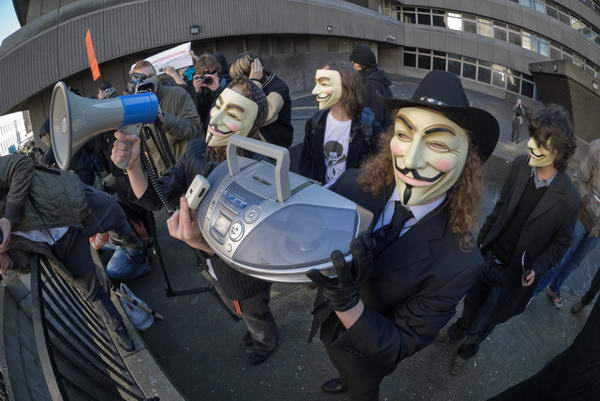
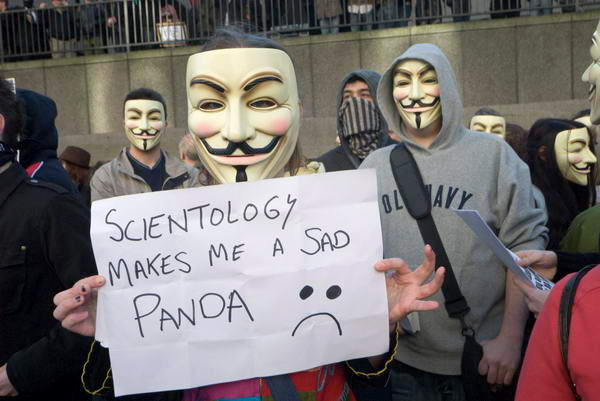
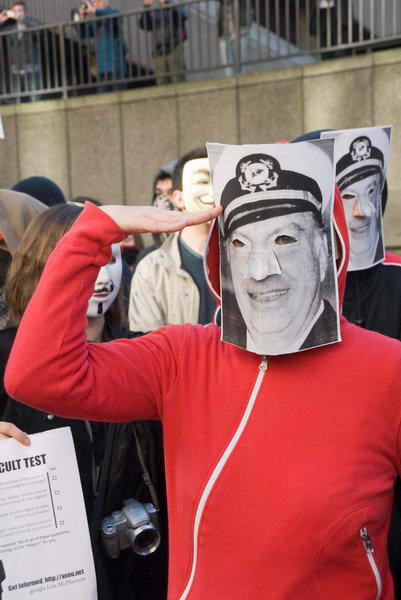
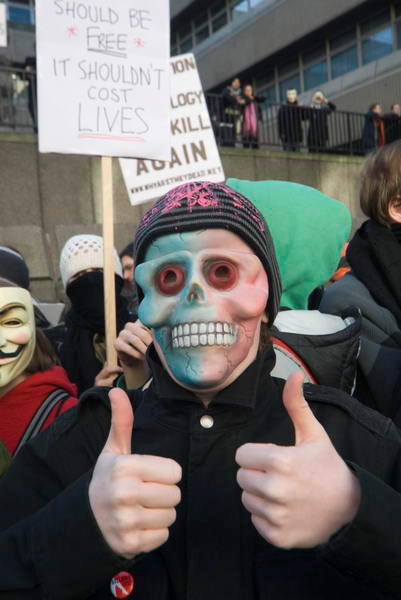
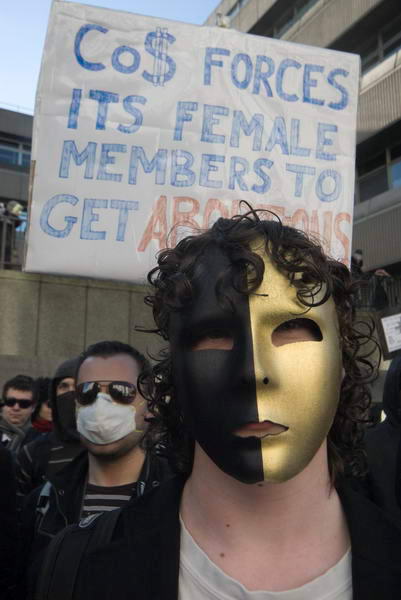
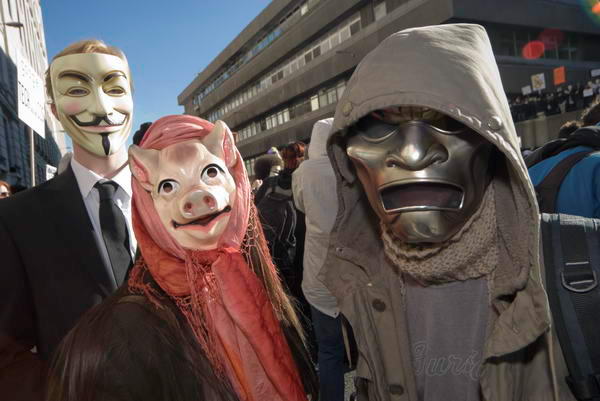
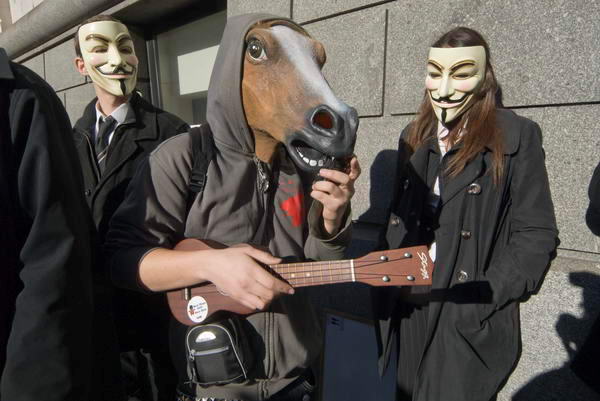
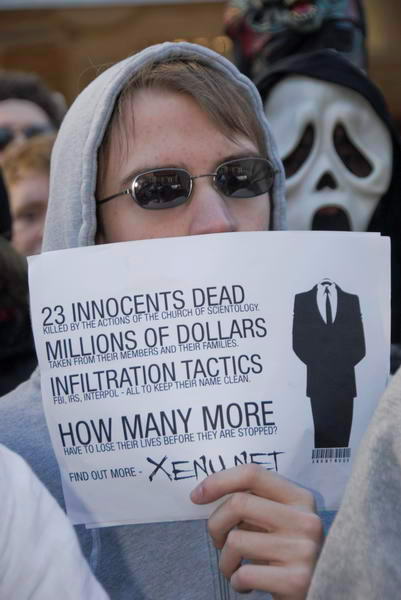
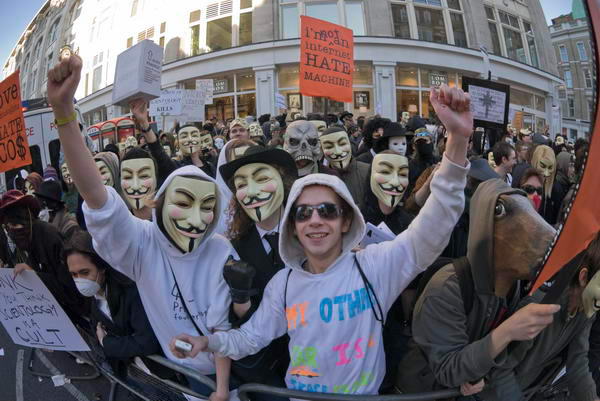
‘Anonymous’ Protest Church of Scientology – This protest on Sunday 10th February 2008 was I am fairly sure the first protest where I had come across people wearing the ‘Anonymous’ Guy Fawkes masks that later became popular and are still seen occasionally at protests. Some wore other masks, perhaps preferring not to contribute royalties to Warner Brothers and these made the protest more interesting visually.
The masks were based on the illustrations by David Lloyd for the 1980s graphic novel ‘V for Vendetta’ written by Alan Moore, but had become well-known in 2006 with the release of the film version where it was worn by the anarchist freedom fighter ‘V’.
The protest was also one of the earliest physical protests in the UK at least to be organised and carried out by an Internet-based organisation, Project Chanology, set up the previous month to oppose attempts by the Church of Scientology to remove one of their videos from the web.
Some wore L Ron Hubbard Masks
This video, part of the Scientology training material featured leading Hollywood actor Tom Cruise, then alleged to be the second in command of the organisation. Since then Cruise appears to have distanced himself at least to some extent from Scientology, which had been at the root of his two divorces from Nicole Kidman and Katie Holmes, and to have concentrated on his movie career.
There have been more and more revelations published about Scientology and allegations of the harm it has caused to those who either leave the organisation or publish material about it, who are regarded as ‘fair game’ for harassment campaigns.
As I wrote in 2008, it was because of this that Project Chanology called “themselves ‘Anonymous’ and the London demonstration was one of over 50 protests in cities around the world in which those taking part hide their identity behind masks.“
Various reports published over the years have comprehensively exposed some of the practices of the Church of Scientology and the number of its adherents is said to have dropped although the organisation has grown richer and acquired more real estate.
The London centre on Queen Victoria St was opened in 2006 and “20 City of London police officers between them accepted more than £11,000 in gifts and entertainment from the Church of Scientology” according to the London Evening Standard, perhaps why they arrested and charged a teenager in May 2008 for holding a placard “Scientology is not a religion, it is a dangerous cult.” The case was dropped after advice from the CPS.
So far as I was aware there were no arrests at the protest on 10th February at Queen Victoria Street or later when the protesters moved to the Dianetics & Scientology Life Improvement Centre in Tottenham Court Road.
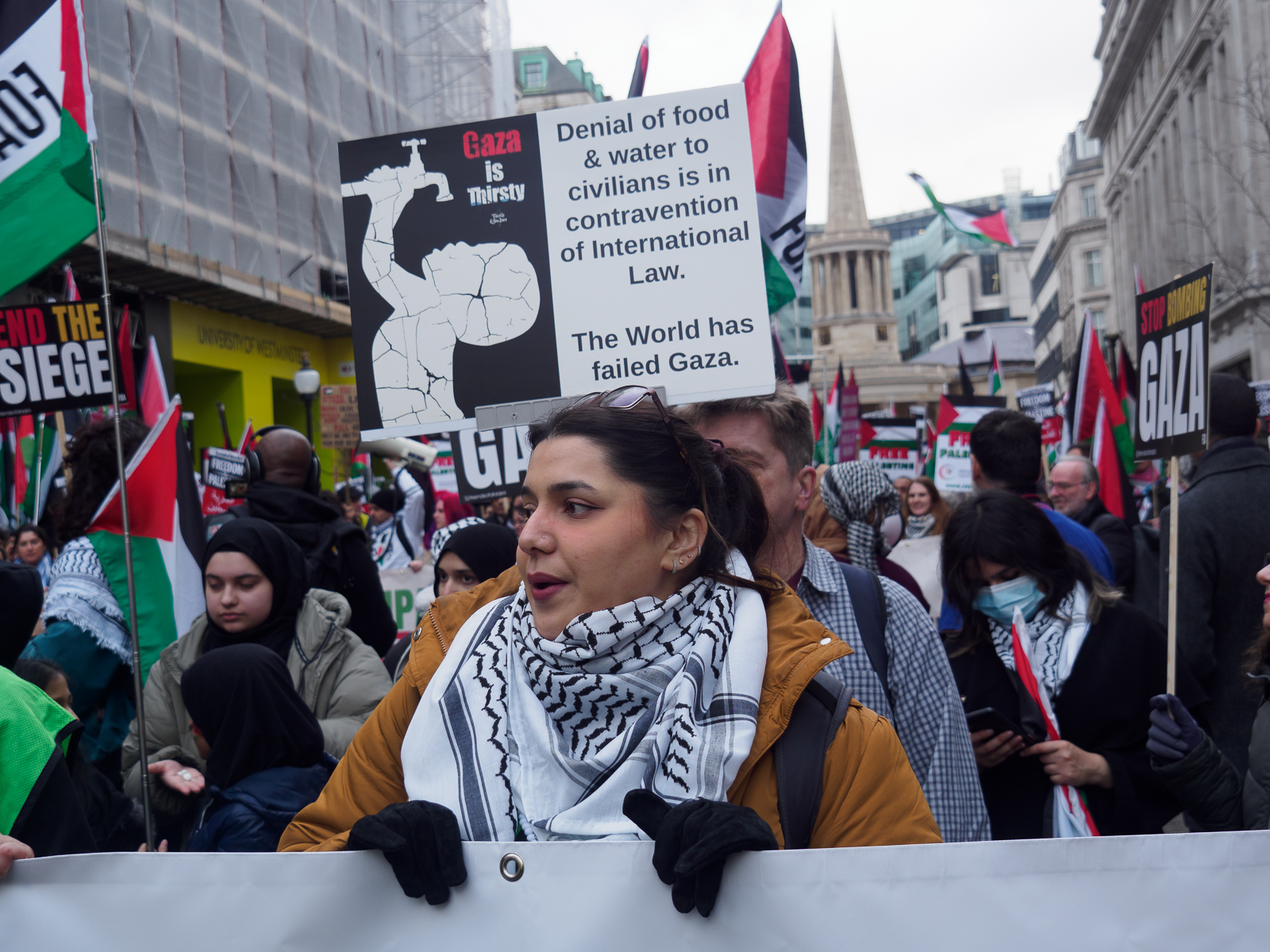
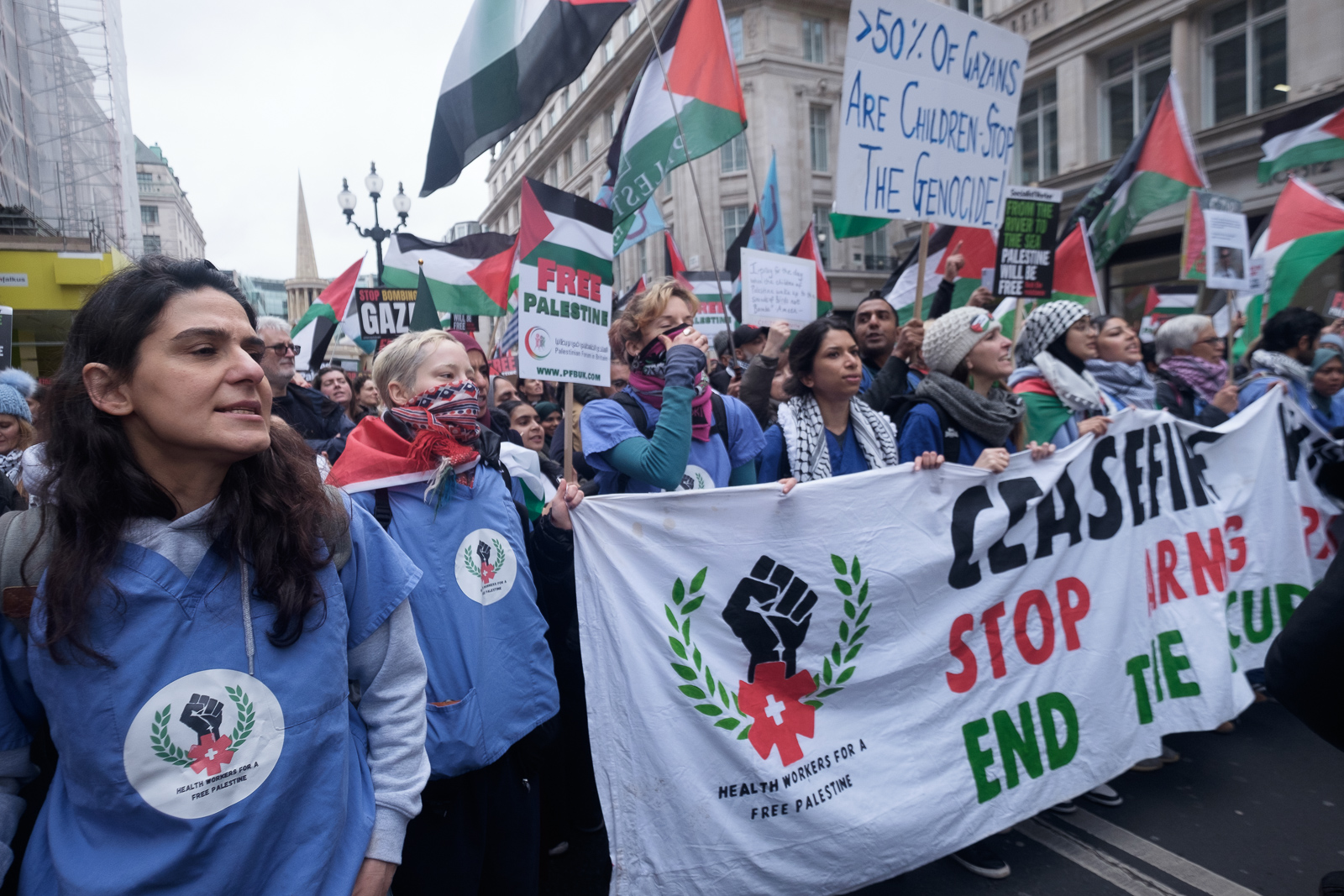
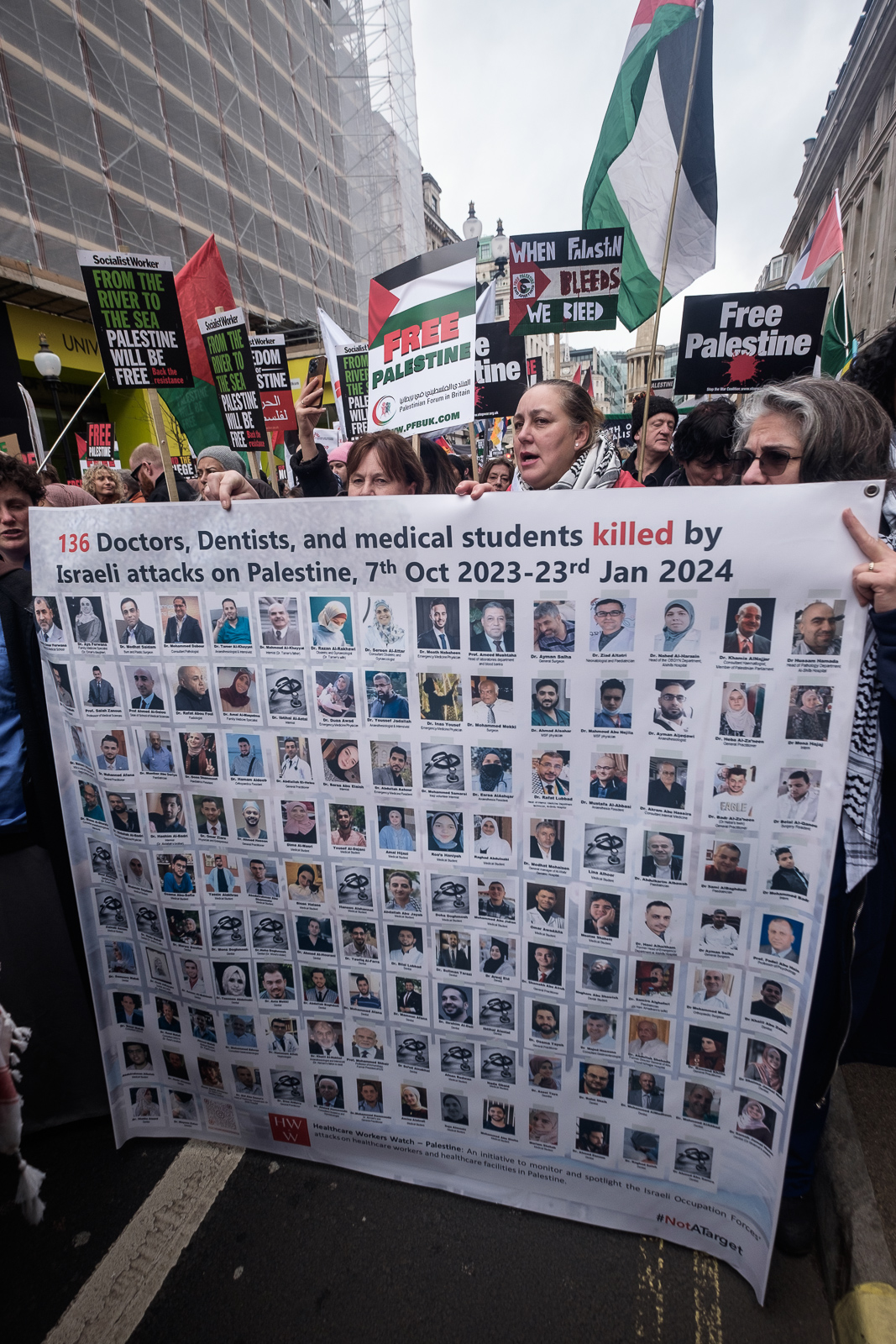
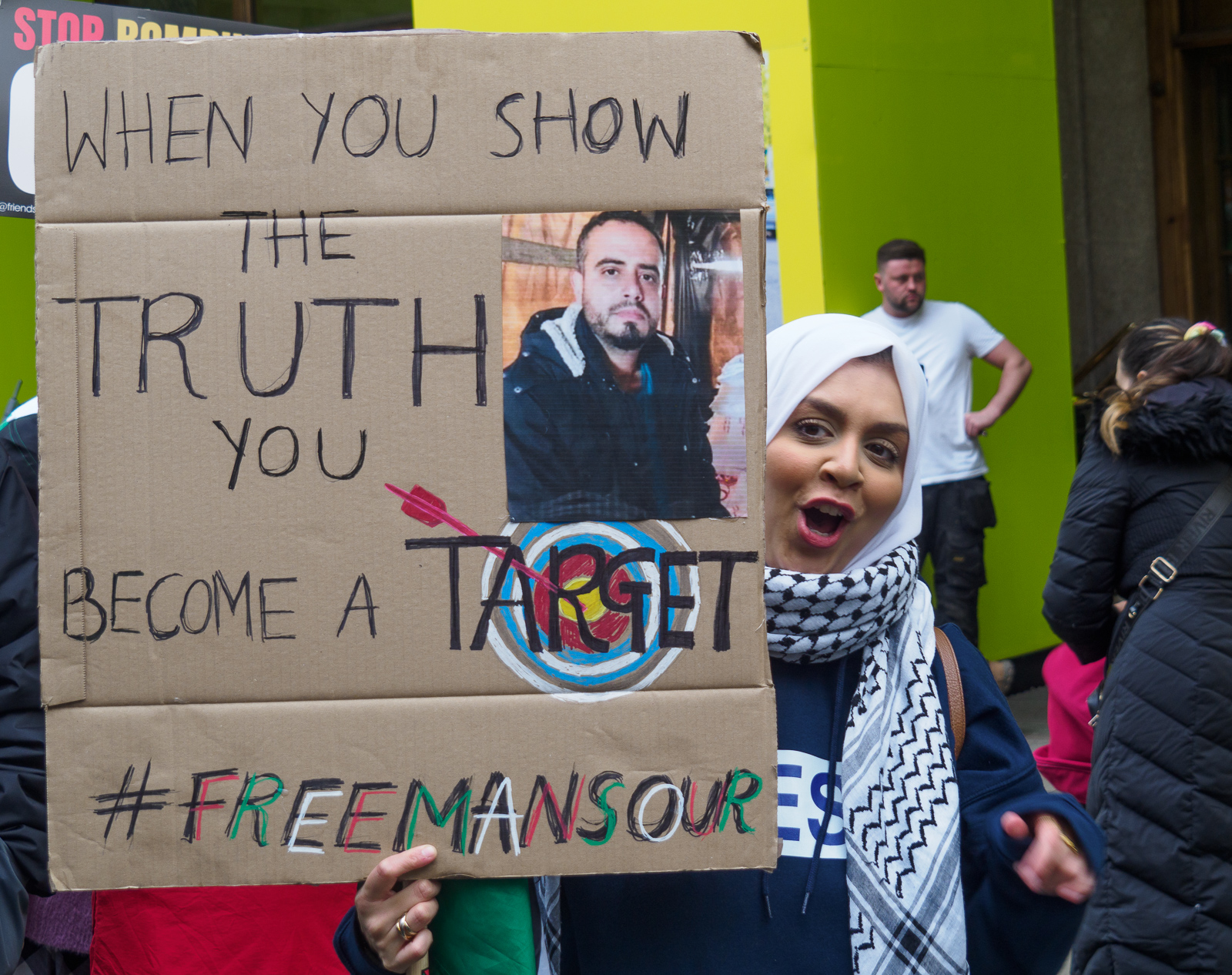
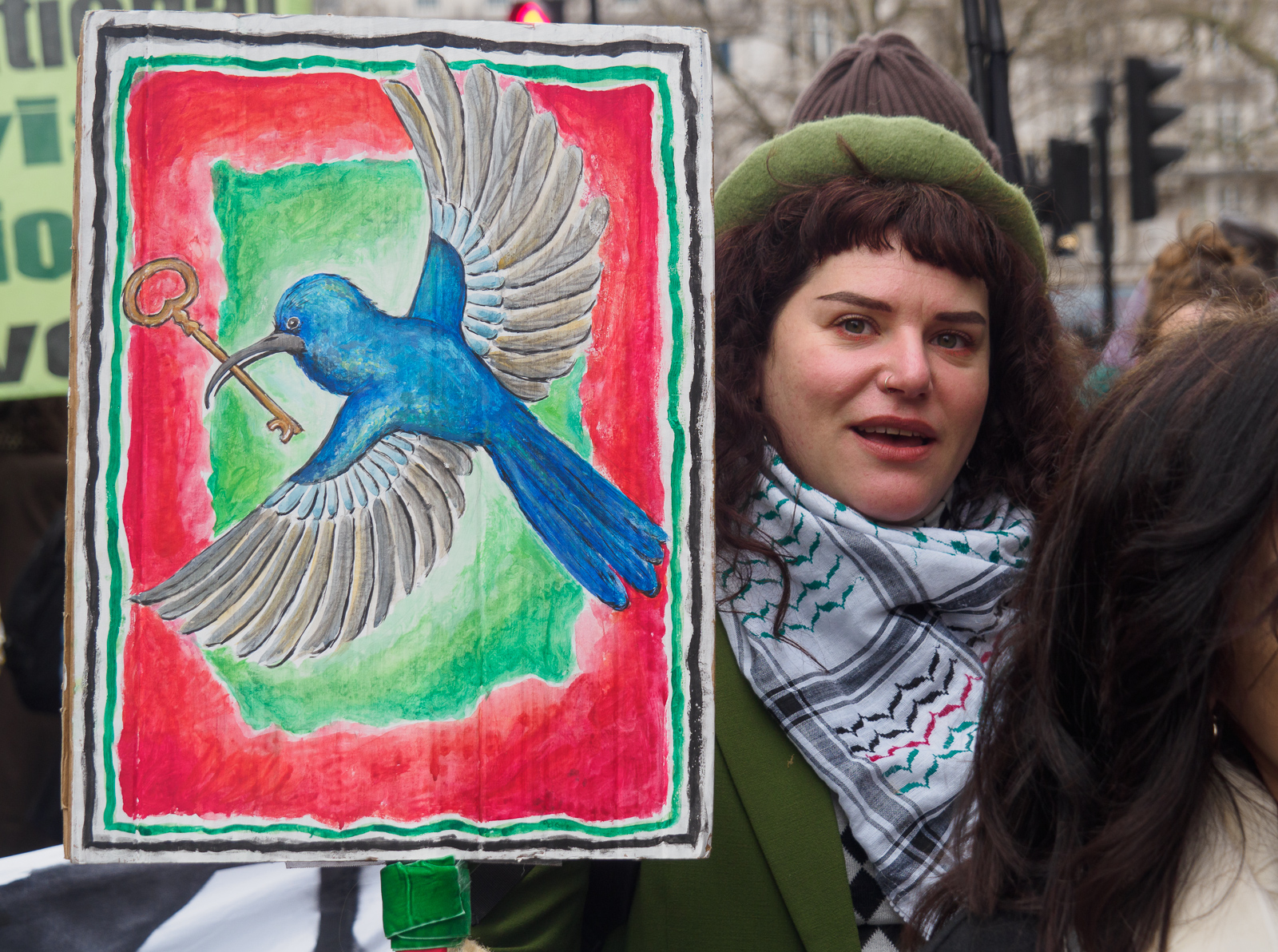
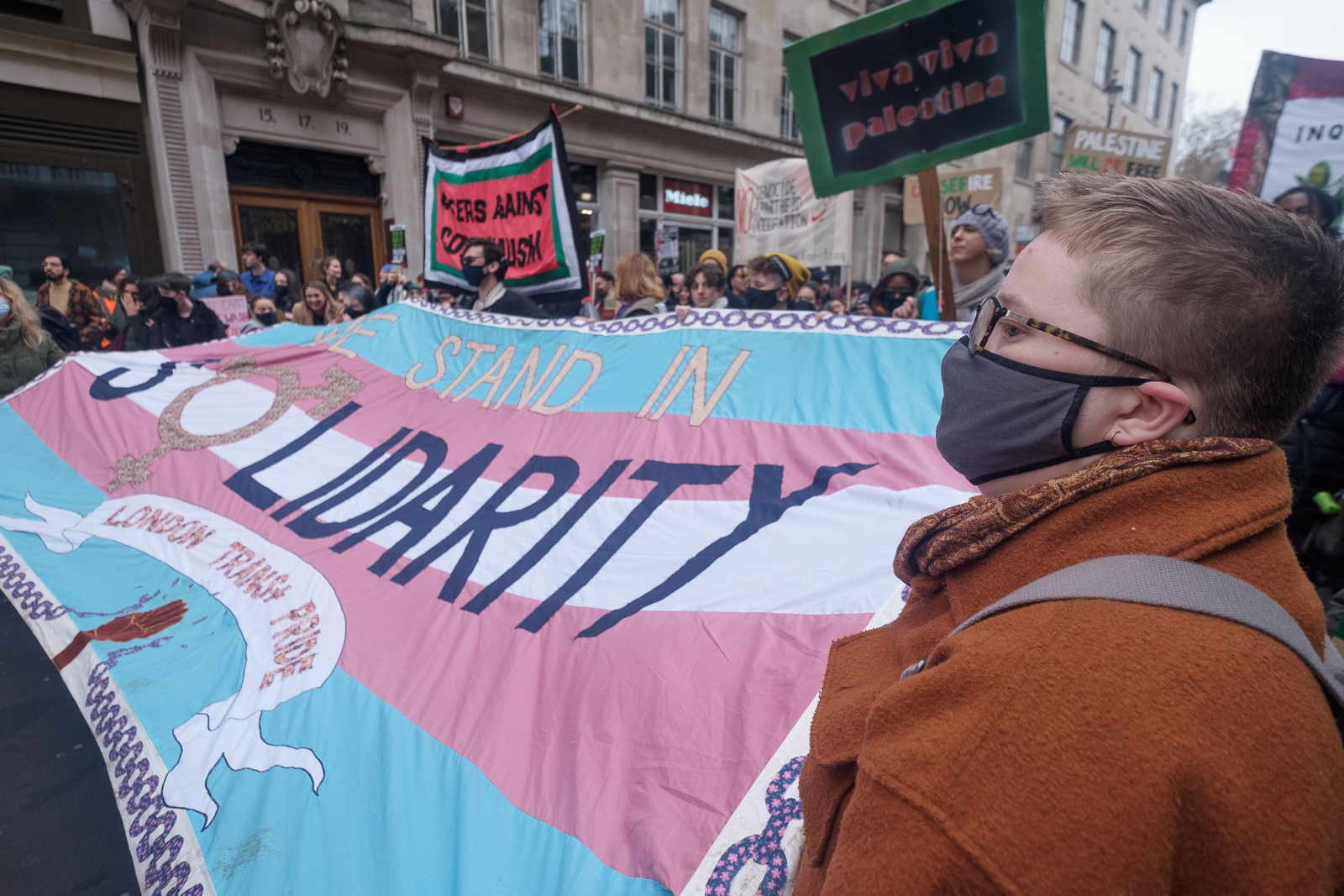
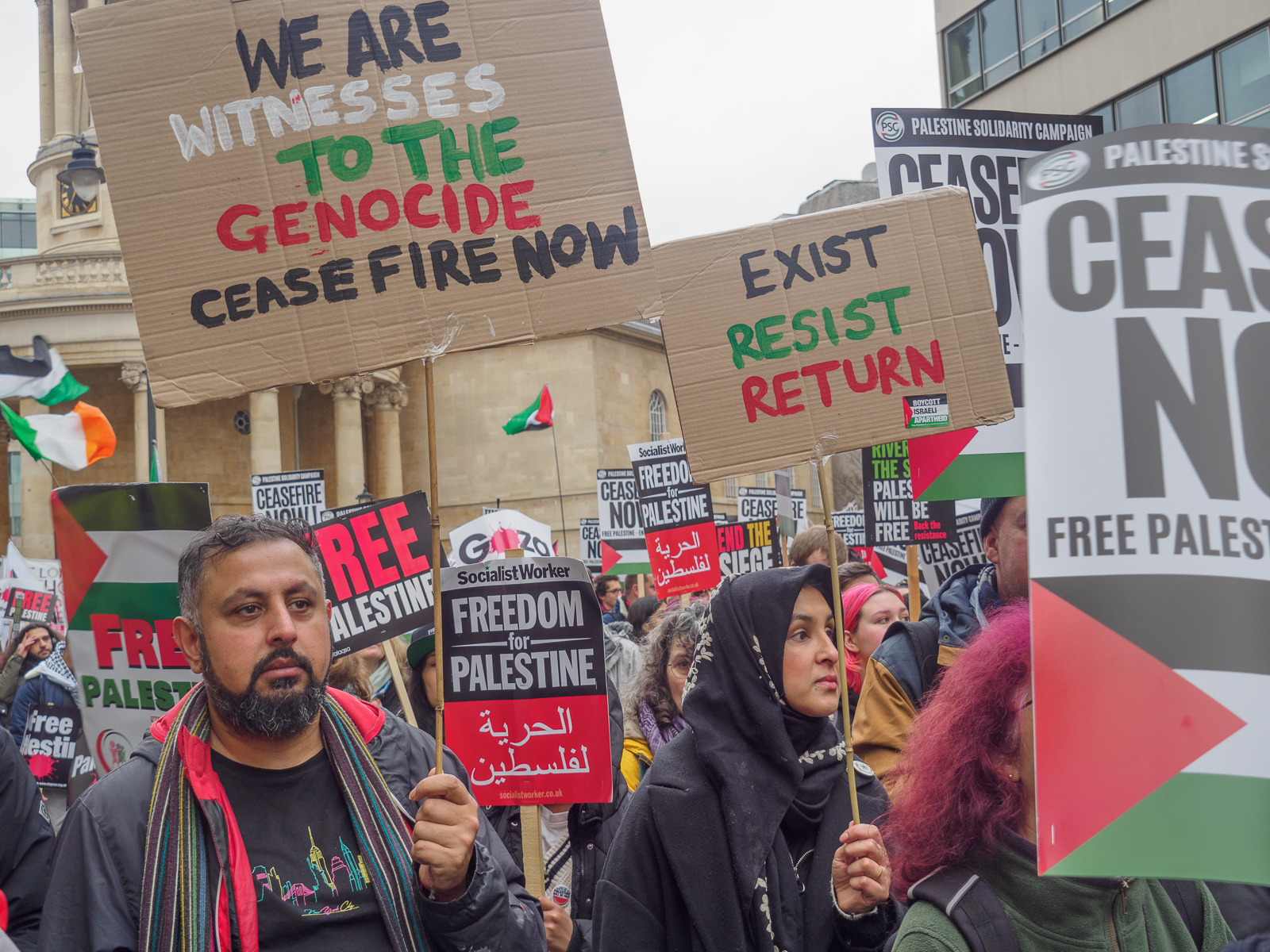
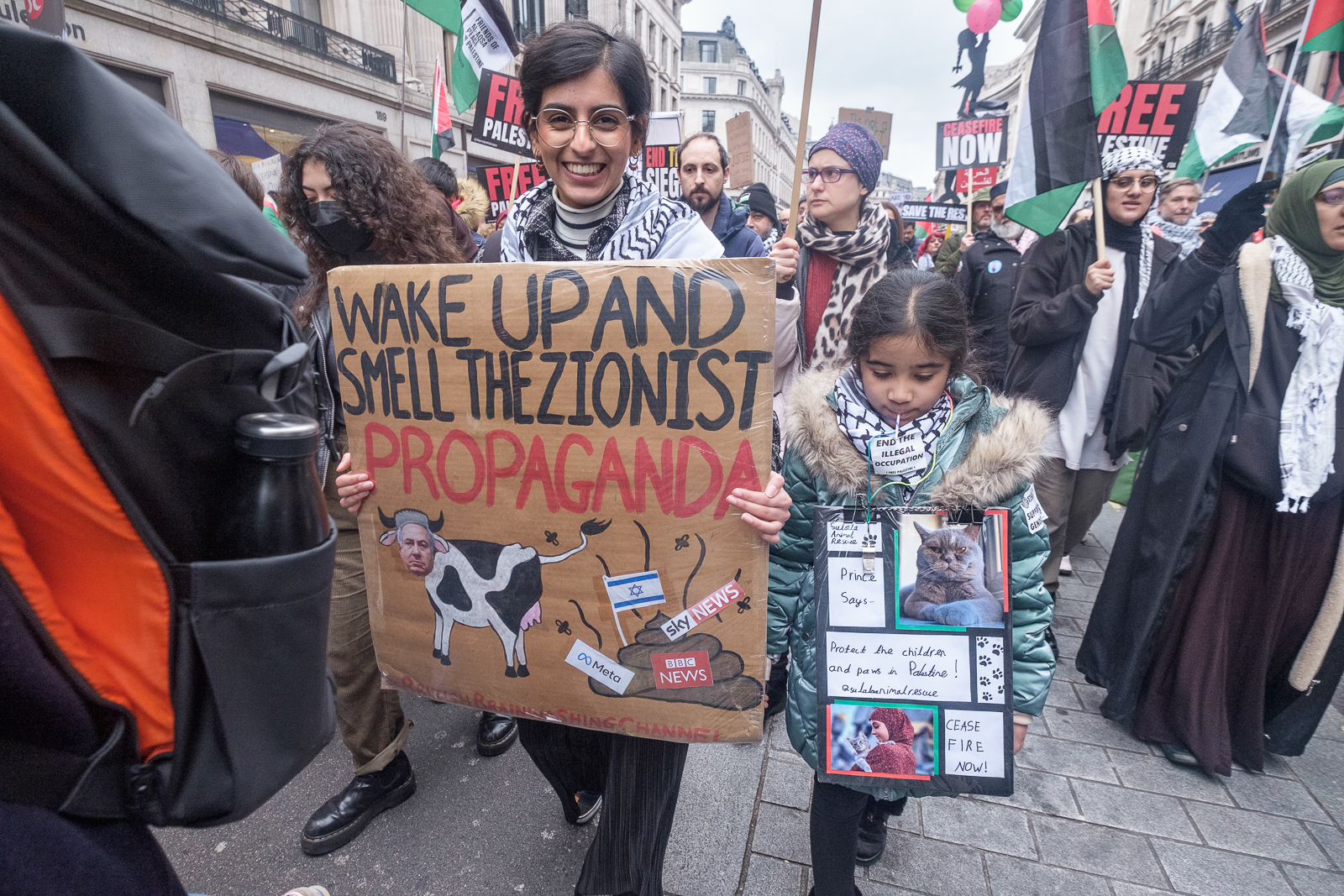
Gaza March in London – Another huge march through central London called for an immediate ceasefire and for an end to the Israeli genocide against Palestinians.
London, UK. 3 Feb 2024
I didn’t hear any news reports of the march, and over the past few days other events have largely pushed reporting over the continuing genocide to the edges of coverage.
London, UK. 3 Feb 2024.
If anything the deliberate targeting of civilians in Gaza appears to have increased since the ICJ ruling calling on Israel to do all it can to prevent genocide in the area.
London, UK. 3 Feb 2024.
Israel is still keeping international journalists out of Gaza and feeding the world’s press with misleading information. The BBC have some good reporters but they cannot work in Gaza. They have had interviews with some families and doctors in Gaza – some now killed. Papers such as The Guardian also carry reports from people in Gaza – such as Mondays Gaza diary part 44: ‘The angel of death is roaming the skies, nonstop’. But to get real information about what is actually happening on the ground you need to also go to alternative news sources.
London, UK. 3 Feb 2024.
One of those is Double Down News, who say “Far too many Journalists sit comfortably trapped in their own bubble of privilege and power, talking to each other and the so-called political class, rather than serving the people they’re meant to inform.” They aim to “prioritise people, ideas, evidence and community above all.” DDN carries no advertising but is supported by over fourteen thousand of subscribers who give what they can afford rather than being owned by governments or billionaires. And you can be one and become a part of the community equally with the others.
London, UK. 3 Feb 2024.
One of their latest videos is ‘Israel’s AI Killing Machine‘ by Palestinian-American lawyer and activist Lara Elborno which exposes by how Israel is using modern technology to target civilians across Gaza. Like other videos on the platform it provides a chilling insight missing in the mass media.
London, UK. 3 Feb 2024.
Before writing this a few days ago I read Al Jazeera’s Israel War on Gaza coverage, with its list of key events on day 123 published on Tuesday 6th February. Under the Humanitarian crisis in Gaza it begins its report with “At least 27,478 people have been killed and 66,835 wounded in Israeli attacks on Gaza since October 7.
London, UK. 3 Feb 2024.
It goes on to give other significant news on the humanitarian crisis, before news on Regional tensions and diplomacy and on what is happening in the Occupied West Bank. Al Jazeera was the first independent news channel in the Arab world and is funded by the Qatari state.
London, UK. 3 Feb 2024.
All pictures here are from the march in London on Saturday 3rd February 2024 which was I think uneventful. It was certainly large and several streets around the BBC were densely crowded before the start. I photographed the start and then slowly went down Regent Street with the marchers, stopping a number of times to photograph them as they walked past me.
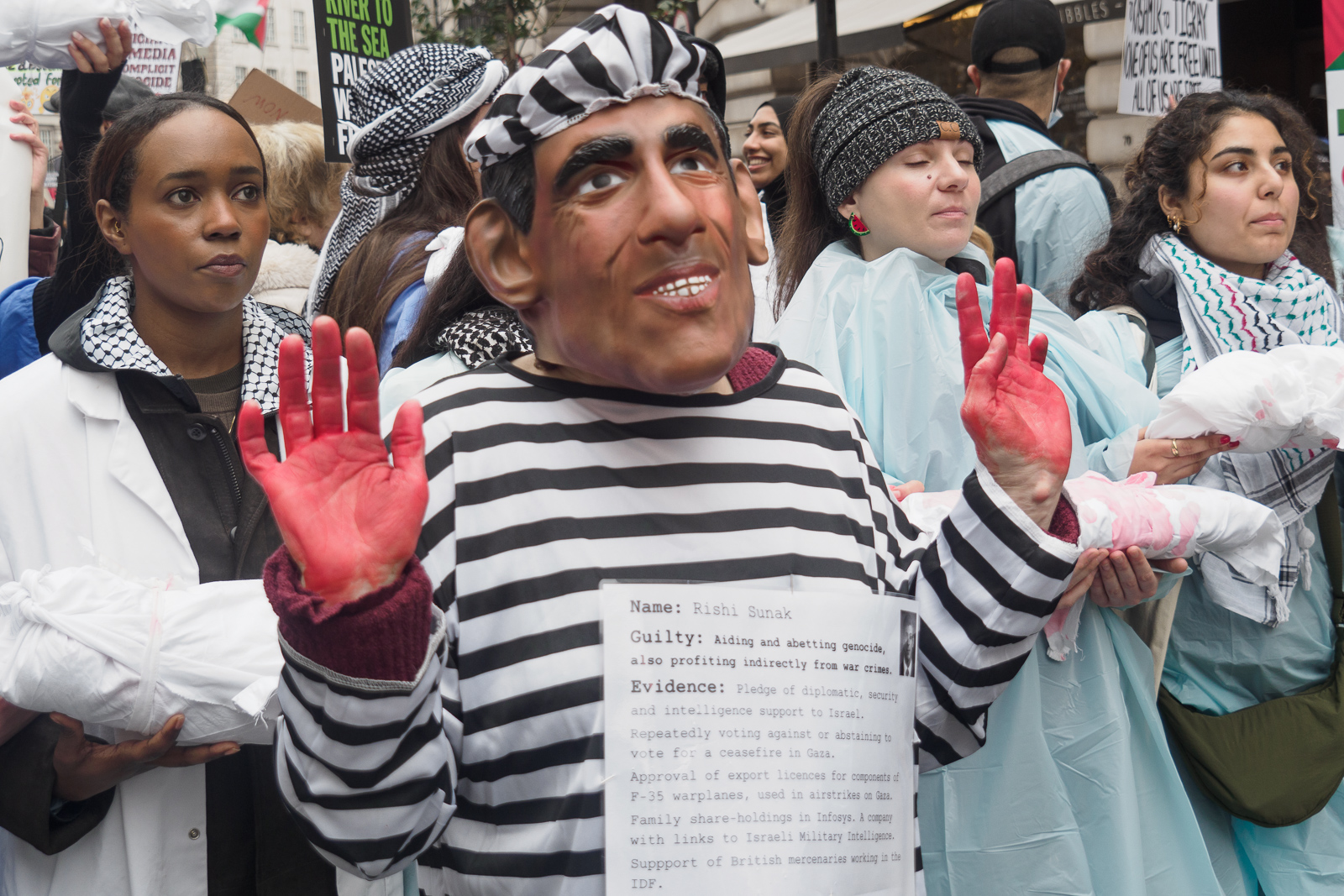
London, UK. 3 Feb 2024. ‘Sunak’ and dead babies.
At Piccadilly Circus I decide to wait until the end of the march arrived there, and it was a long wait. It was almost two hours after the start of the march before the end arrived, and most of that time the streets were crowded across both carriageways with slowly moving people.
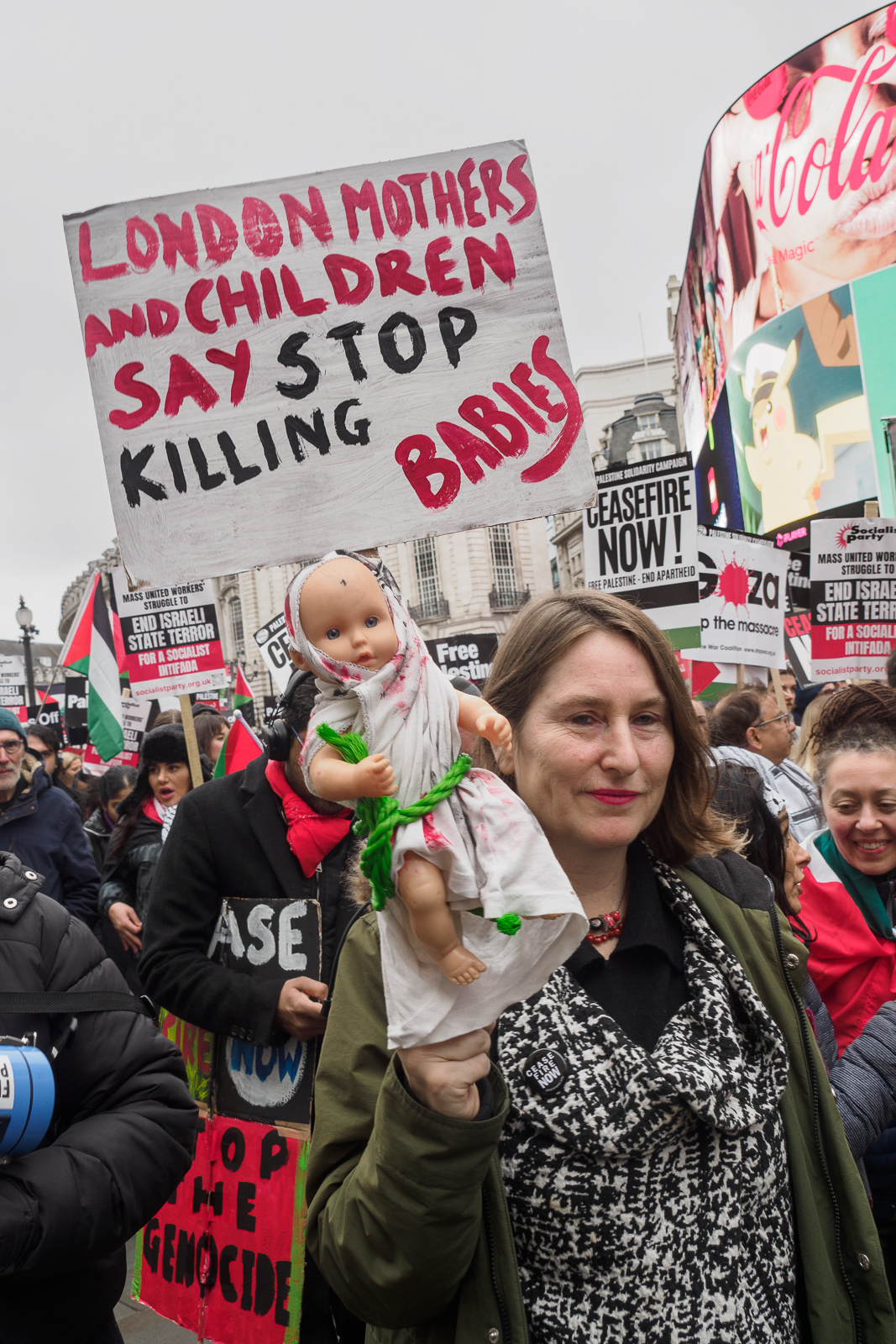
London, UK. 3 Feb 2024. London Mothers and Children Say Stop Killing Babies.
It was too late to be worth trying to get to the rally on Whitehall and so I began my journey home. I uploaded 35 images to Alamy but later put these and around 35 more into an online album Ceasefire Now – Stop The Genocide In Gaza.
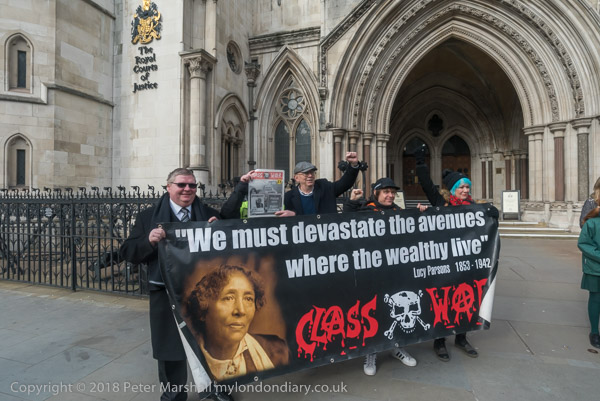
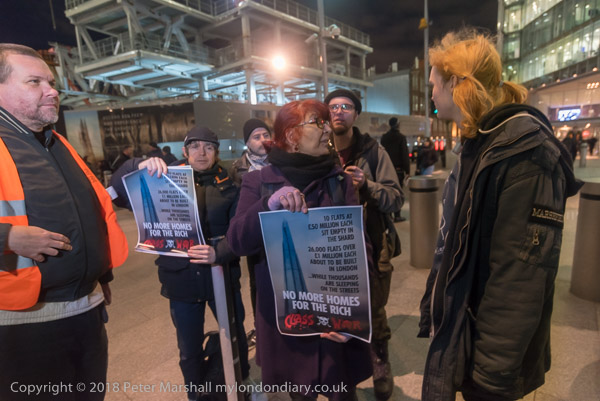
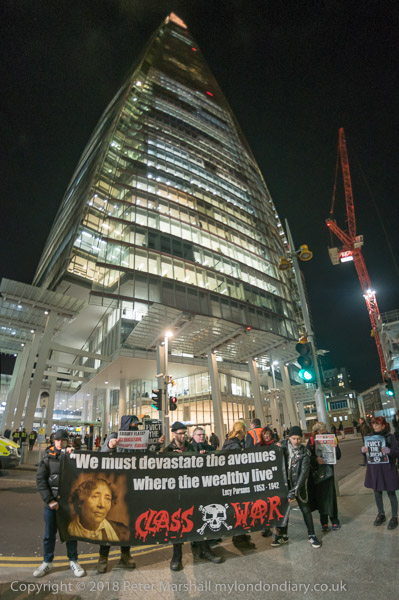
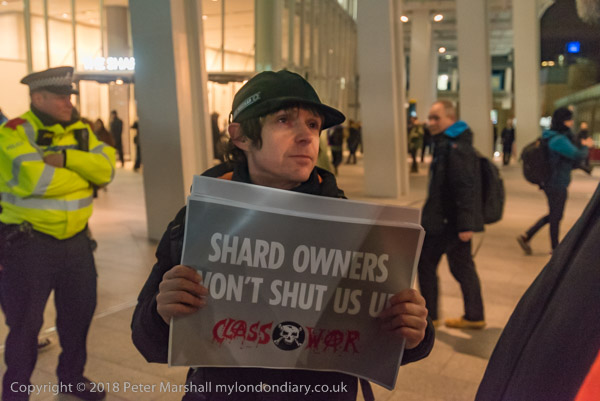
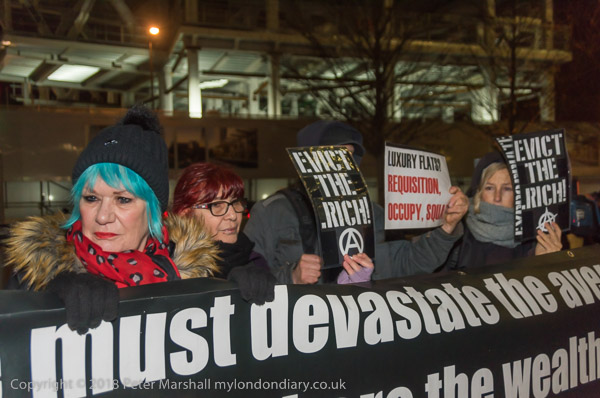
Class War Victory Over Qatari Royals – Thursday 8th February 2018 saw a remarkable victory for Class War against the one of the richest families in the world, the Qatari Royal Family with a $335 billion sovereign wealth fund who are now one of the biggest landowners in the United Kingdom.
In the morning I had gone to the Royal Courts of Justice on Strand where lawyers acting for the Qatari royal family were trying to prevent a Class War protest against the ten empty £50 million pound apartments in The Shard, the tallest building in the United Kingdom. The Qataris own 95% of the property with the remaining 5% retained by its original developers Sellar Property.
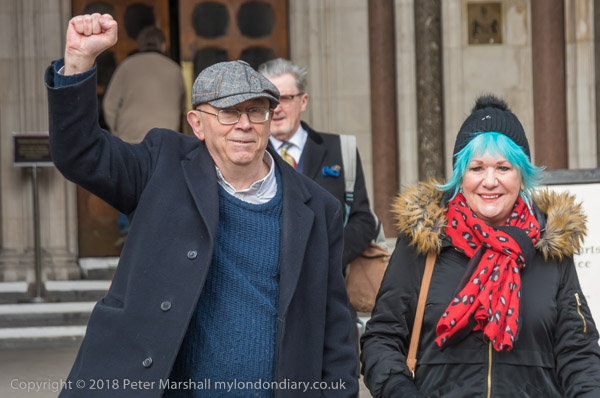
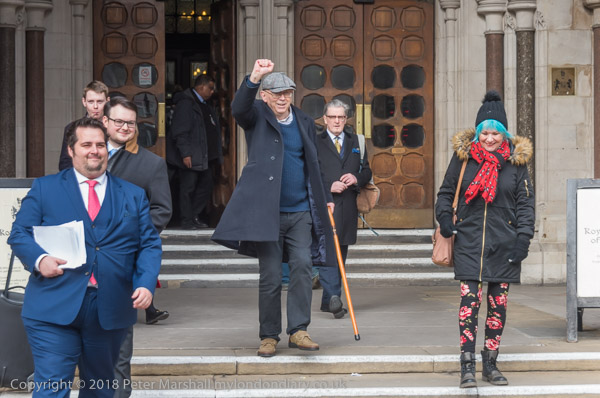
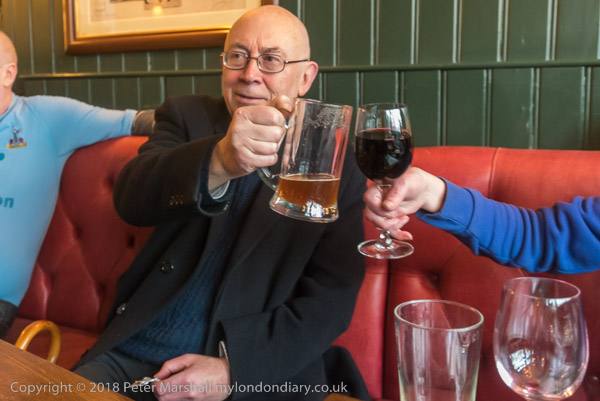
I hadn’t gone into the court but had waited outside, arriving in plenty of time to greet Ian Bone and his barrister Ian Brownhill as they emerged triumphant from the court.
Lawyers for the Qatari royals had tried to get an injunction against protests by Bone and “persons unknown” and to claim over £500 in legal costs from the 70 year-old south London pensioner for them doing so.
Brownhill had contacted Bone and offered to take up his case pro bono, and as soon as he contacted the Qataris’ lawyers they offered to drop the case if Class War ‘would stop attacking the Shard’. Class War would of course not agree to giving up their protest. The Qatari attempt to stifle protest led to articles in the national and international press and radio and TV coverage.
In the High Court the Qataris’ lawyers were forced to drop the attempt to ban protests and their demand for fees but Bone accepted a legal restriction on him going inside the Shard and its immediate vicinity.
Among documents supplied to the court for the Qataris were some clearly defamatory statments about another person connected with Class War but not named in the injunction and other information which had clearly been obtained from police sources. The Head of Security at the Shard got his job after retiring as a police commander.
Police have over the years carried out a number of clearly malicious arrests of people from Class War during protests, aimed at harassing people engaged in peaceful protest. The cases have either been dropped before coming to court or have been thrown out by the courts.
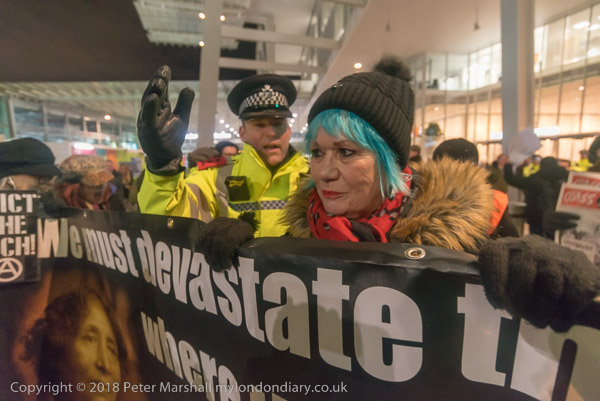
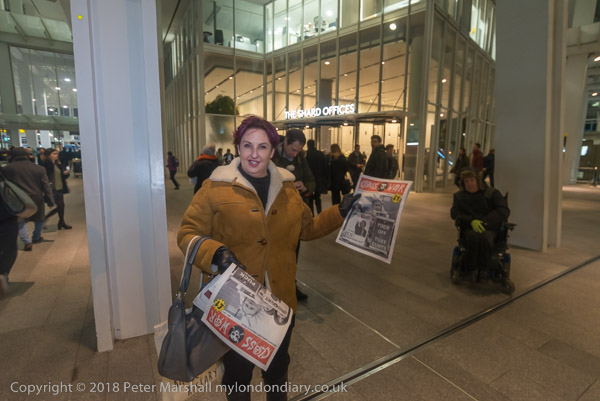
Class War’s protest went ahead as planned, pointing out that the ten £50 million pound apartments in the Shard have remained empty since the building was completed.
There appeared to be several times as many police as the protesters outside the Shard, as well as a large number of security men and plain clothes police, along with two men with search dogs when the protesters arrived. It seemed a huge overkill for what was always intended – and was – an entirely peaceful but noisy small protest.
Ian Bone’s health problems meant he would not in any case have attended the protest, and the other protesters were careful to remain outside the boundary of the Shard which is marked by a metal line in the pavement.
Despite this police still tried to move them away to the other side of the road, making the patently spurious claim that they were causing an obstruction to commuters attempting to enter London Bridge station. it was very clear that it was the police were obviously causing a rather larger obstruction than Class War.
The protesters pointed out that there are now a huge number of empty properties in London at the same time as a huge housing crisis – at the time including over 100 families from Grenfell who were in temporary accommodation.
There are large developments of high-prices flats taking place, totally unaffordable for those in housing need, many of which are bought simply as investments to take advantage of rising house prices and remain empty all or most of the year.
In 2018 there were plans to build 26,000 more flats costing over a million pounds each, including many on former council estates being redeveloped and replacing social housing – when thousands are sleeping on the streets and councils have huge housing lists. Currently in 2023 both Lambeth and Newham have over 35,000 waiting for housing and nine other boroughs have lists with over 10,000 names, with a total of over 323,000 over the whole of Greater London.
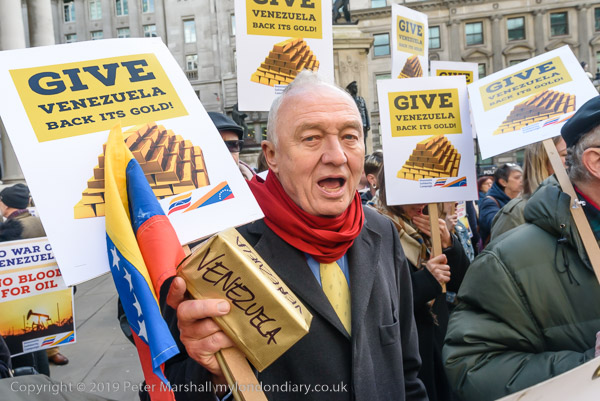
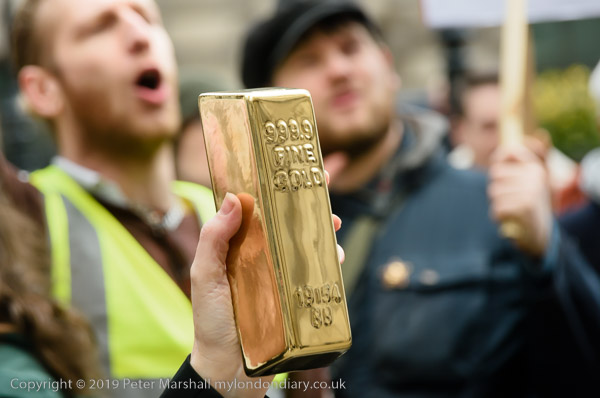
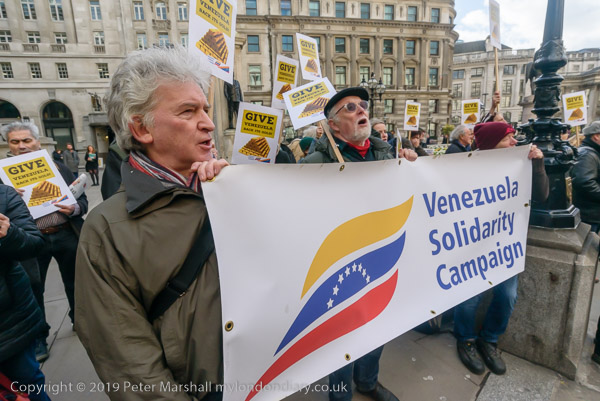
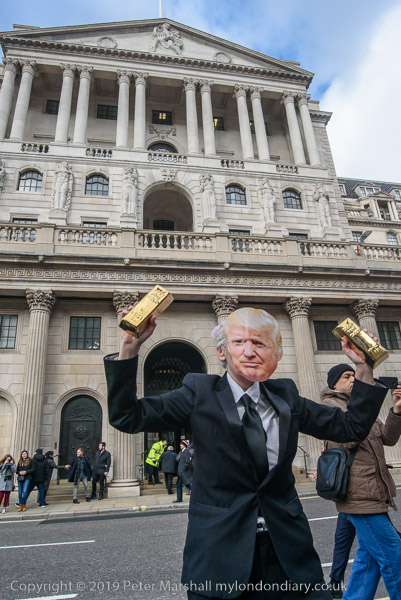
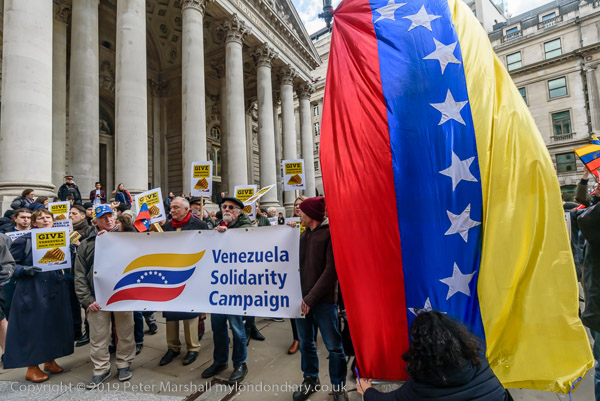
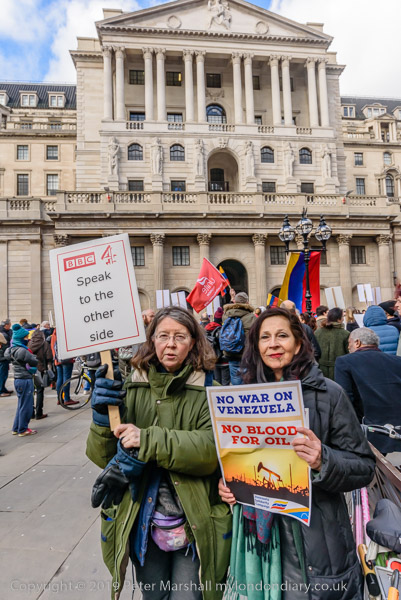
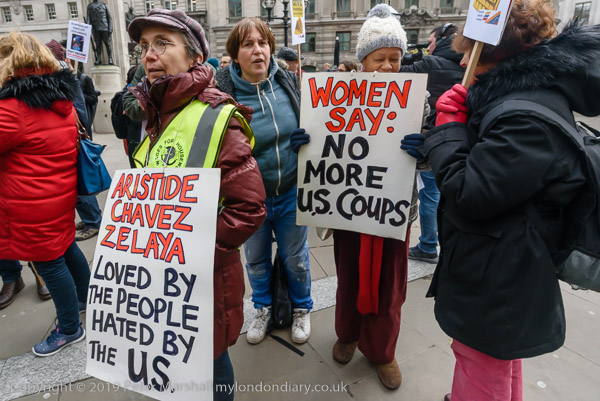
Bank of England Told Return Venezuela’s Gold: Back in 1980 the Central Bank of Venezuela (BCV) deposited almost a hundred tons of the Venezuelan government’s gold reserves in the Bank of England for safe keeping, and around 31 tons of that are still held in the Bank’s vaults.The value of gold goes up and down, but the around 2,500 standard gold bars would be worth around £1.3 billion.
Ken Livingstone
In 2019, shortly before this protest on Thursday 7th Feb 2019 organised by the Venezuela Solidarity Campaign, the BCV asked to have its gold back and the Bank of England refused to return it. It is still their in its vaults.
An actual gold bar weighs over 12kg – these were rather lighter
Venezuela had entered a crisis after the 2018 elections when the National Assembly declared the poll which had elected President Maduro invalid. There had been some irregularities in how the election had been run (and many unproven allegations) and some parties had boycotted the polls or not been allowed to stand. The turnout was low, with less than half of those registered voting, but even so the result seemed clear as Nicolás Maduro had gained two thirds of the votes cast, more than three times his closest rival.
Juan Guaidó and the National Assembly declared him to be the acting president of Venezuela in January 2019 and a long power struggle ensued. Many foreign governments, led by the US and including the UK, Canada and various Latin American and European countries recognised Guaidó as the head of the legitimate Venezuelan government, though after his interim government was dissolved in January 2021, many ended their recognition.
After a disputed period in 2019 to 2023 Maduro is now firmly back as President with Guaidó expelled from Venezuela in April 2023 and now living in exile in Florida. The UK had supported Guaidó but its position now seems deliberately unclear.
Both Maduro and Guaidó had set up their own governing boards for the Central Bank, and both claimed the gold in the Bank of England leading to a number of battles in the UK courts. But although Maduro has clearly emerged as the legitimate leader of Venezuela the Bank of England is still refusing the BCV request – and will probably continue to do so until the UK government makes its position clear.
Ken Livingstone when Mayor of London had negotiated a deal with the Venezuelan state oil company to provide cheap fuel for London buses in exchange for help with urban planning. Later he blamed an “establishment elite” for the problems that Maduro was having and accused the US of meddling in the country.
Media coverage of the struggle between Maduro and Guaidó in the UK by the BBC and newspapers was almost entirely one-sided, largely relying on the views of the Venezuelan middle and upper classes who see themselves as severely threatened by the policies of Hugo Chávez and his successor Maduro who have done much to increase literacy and improve conditions for the poorest in the country.
Ash Wednesday, Charcoal and Condi Rice – pictures from Ash Wednesday in London on 6th February 2008, with an Ash Wednesday Witness and prayer against War at the Ministry of Defence and a Downing Street protest against a visit by US warmonger and then US Secretary of State Condoleezza Rice. A week tomorrow, on Ash Wednesday Wednesday 14th February 2024, Pax Christi together with Christian CND and others will again be meeting at 3.30pm for a similar witness against war.
Ash Wednesday Liturgy of Repentance and Resistance – Ministry of Defence, Whitehall
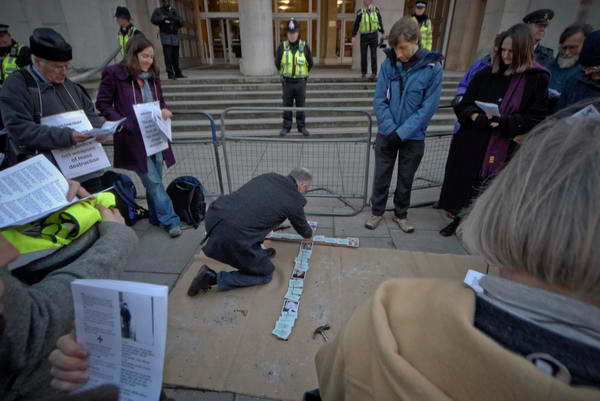
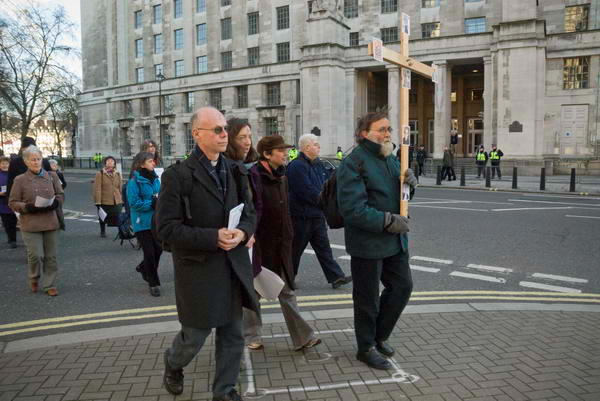
Pax Christi, Catholic Peace Action and Christian CND began their an annual liturgy of Repentance and Resistance around the Ministry of Defence in protest against the continued reliance on nuclear weapons on Ash Wednesday 1982, 42 years ago, and the 2008 event was their 26th.
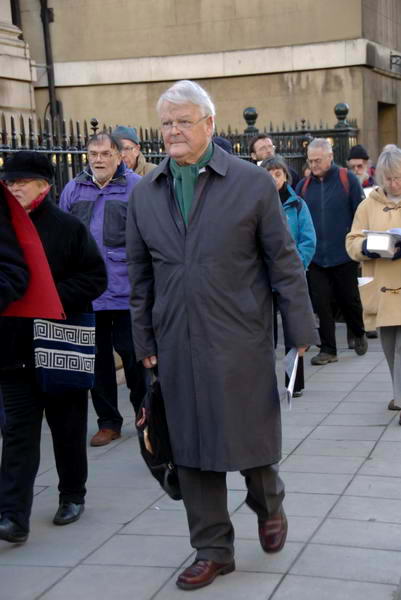
Looking back at the pictures I made in 2008 has a particular resonance for me, in that two of those in them are people that I knew who have died in the past couple of years. One was the well-known peace campaigner Bruce Kent who I’d photographed at various events since around 1990 if not earlier and though I didn’t know him well we often exchanged a few words when I took his photograph and had a little joke in recent years. Bruce died in June 2022 and in March 2023 I photographed Jeremy Corbyn planting a memorial tree to him in Finsbury Park.
The other was a family friend who died recently and we were disappointed other appointments meant we were not be able to go to his funeral last week. He also appears in a some of my photographs of this and other peace events, sometimes singing in the Raised Voices choir.
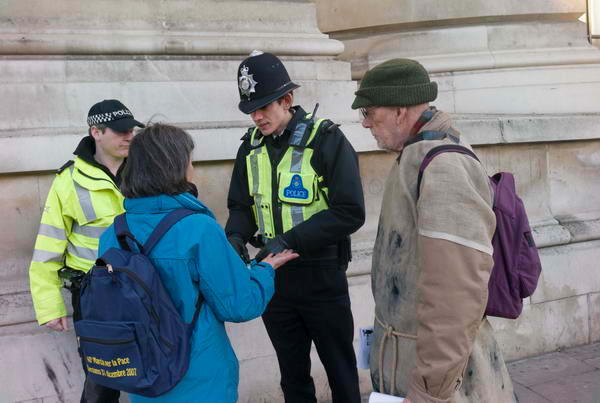
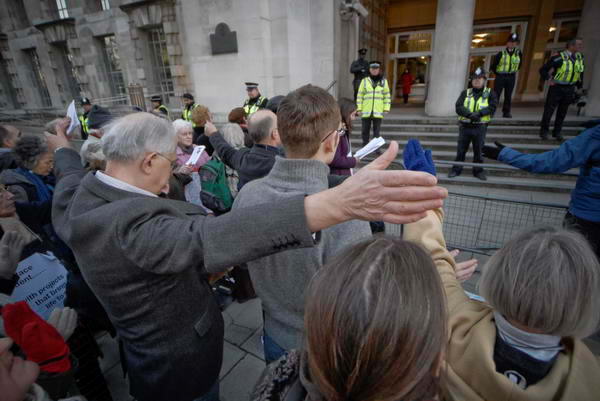
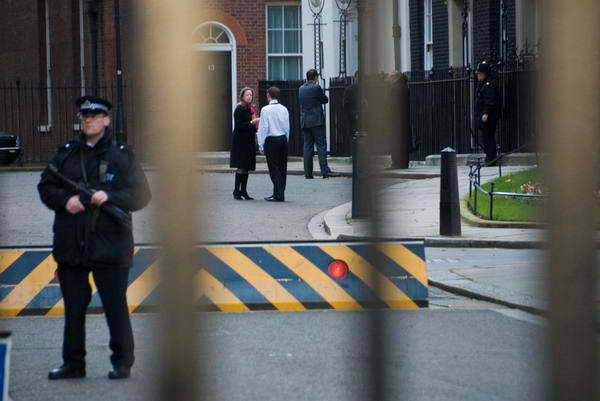
Although the ministry and nearby buildings such as the Old War Office were surrounded by police – rather as if they were expecting a massive attack, the police made no attempt to disperse what was undoubtedly an illegal unauthorised protest under the terms of SOCPA. They did hold a couple of people they caught writing on the walls of the Old War Office, and were at least threatening to charge one of them with causing damage to the building, but otherwise watched benignly, at least until I left to catch my train shortly before the liturgy had finished.
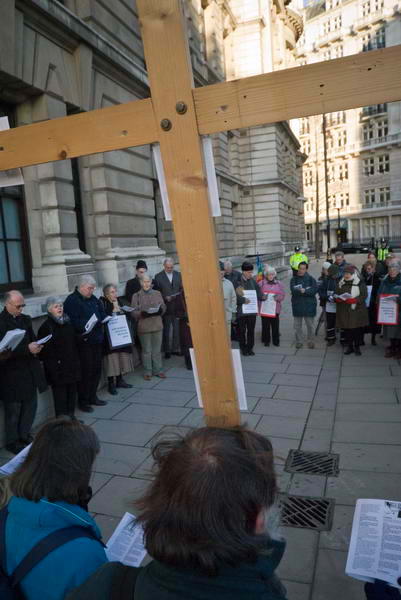
The most moving part of the liturgy was outside the Defence Ministry, where a wooden cross was laid on sackcloth. Ashes were sprinkled on it, and then while those present chanted a ‘litany of the martyrs’, including the names of Franz Jaegerstaetter, Dorothy Day, Martin Luther King, Oscar Romero and Mary Lampard, 21 ‘Theses for today’s church’ by Philip Berrigan were read and then nailed to the cross.
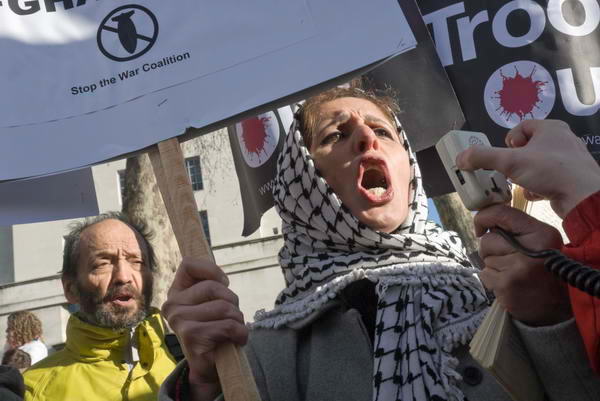
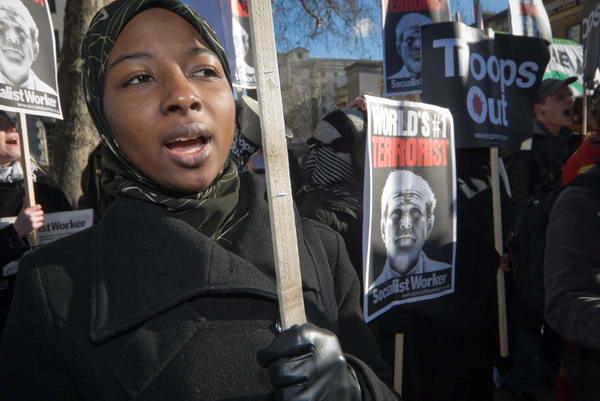
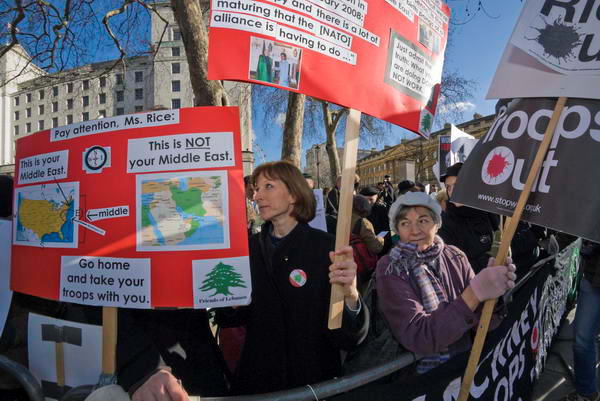
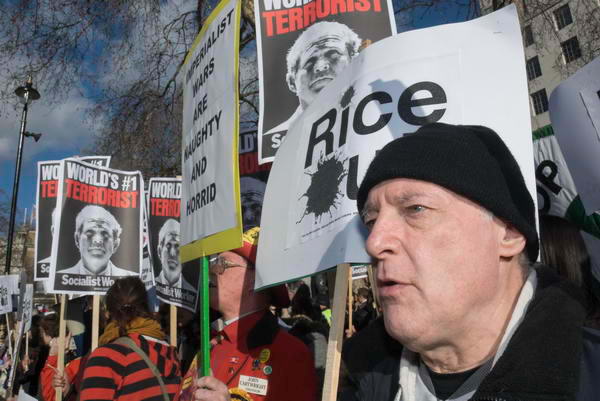
A couple of hundred ‘Stop the War’ demonstrators were on the pavement facing Downing Street. They had come with a clear message to give Condoleezza Rice, that it was time for the US to get out of other people’s affairs in other countries.
However there was no sign of Condi, who had obviously avoided using the front entrance to miss the protesters, either entering by the back entrance or through another Government building, possibly making use of the extensive network of tunnels underneath Whitehall.
A large crowd of press photographers were also waiting impatiently opposite the front door of Number 10, waiting for her to appear for a press call along with Gordon Brown, but I think they were waiting until after the protesters dispersed.
I could have joined them, but although the press likes to use pictures taken in front of the famous door I find the great majority of them supremely boring. And I don’t carry the long heavy lenses you really need for the situation to take the one in a million images that has some interest. It’s been years since I bothered to go through the security check and into Downing Street.