Peter Marshall’s Paris

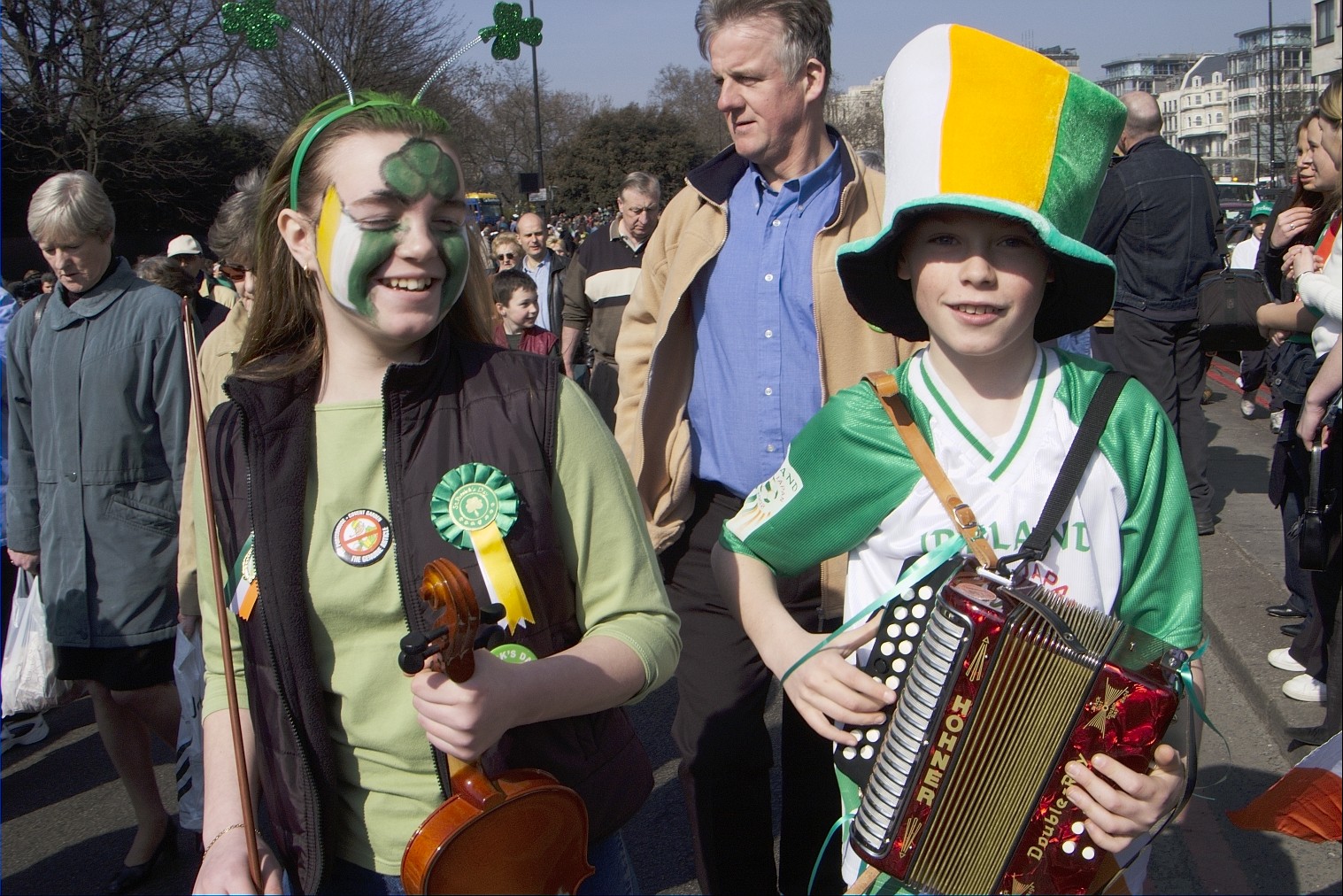
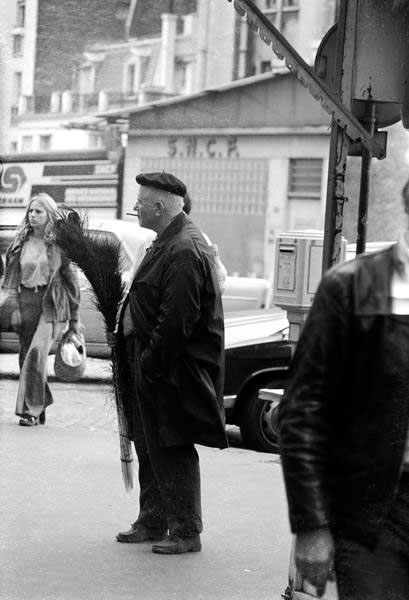
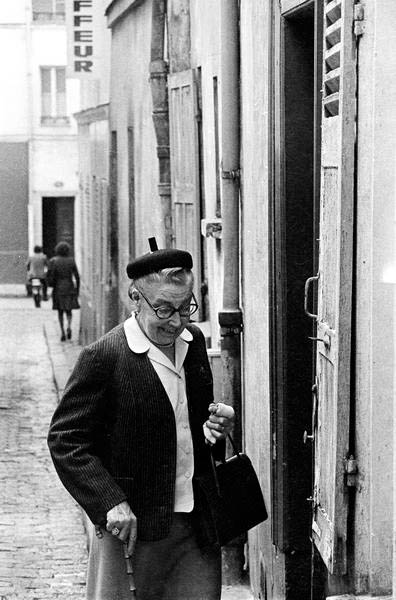
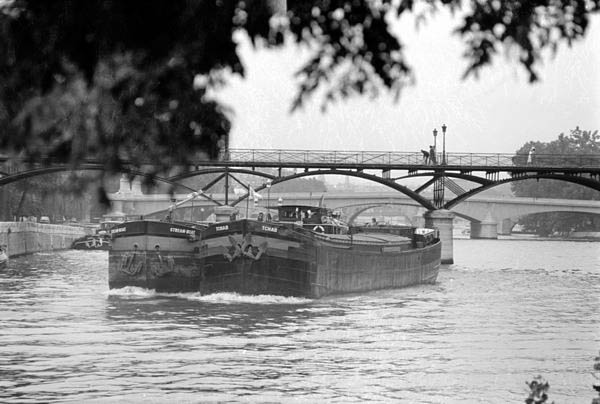
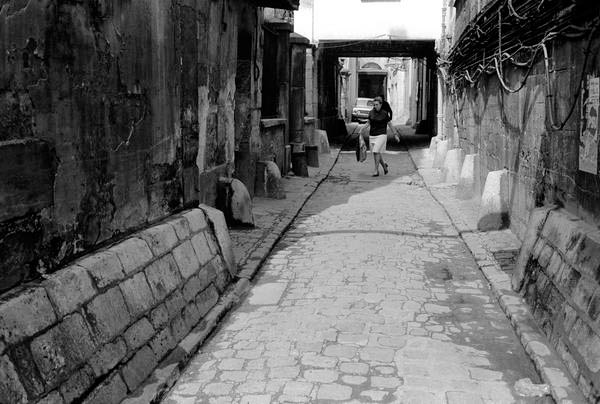
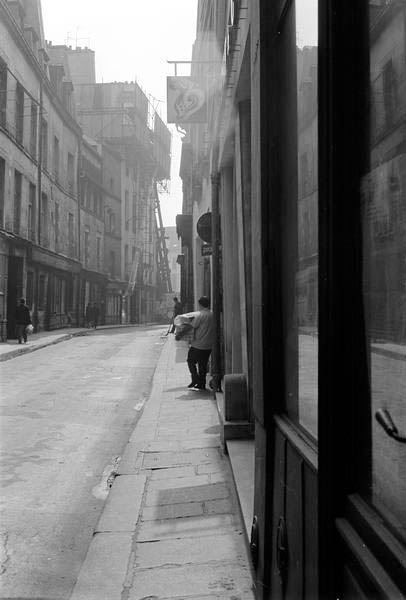
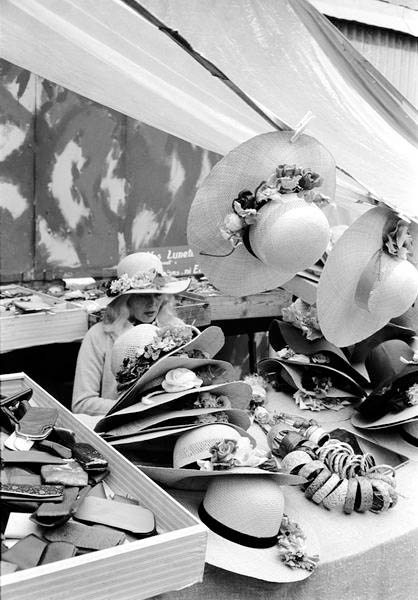
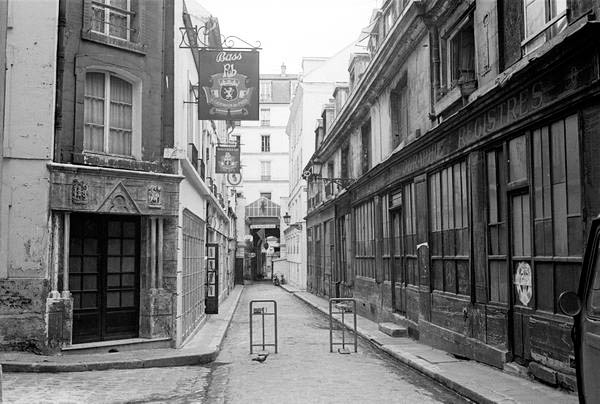
Peter Marshall’s Paris. Bastille Day seems a suitable time to write a little again about my photographs of Paris, a city in and around which I’ve spent some time over the years, though always as a visitor rather than a resident.

I first went there in 1966, going to spend a week in a student hostel with a young woman from Hull who I was madly in love with, so definitely seeing the city through rose-tinted lenses, though a little of the shine was taken off by dropping my camera in the lake where we went rowing at Versailles. The camera never really worked properly again, though I couldn’t afford to replace it for another six years.

I think that was probably the only time I’ve been in France for Bastille Day, and we spent the evening at the celebrations in a town square a few miles south of the city centre where our hostel was located. It was very definitely full accordion and dancing and entirely French, but although I remember taking a few pictures there, its probably fortunate that no trace of them remains. People like Doisneau did it so much better.

It was not until 1973 that I returned, with the same woman who was now my wife and with a couple of cheap Russian cameras, A Zenit (Zenith) B SLR, heavy and clunky and a smaller Russian rangefinder camera, I think a Zorki 4. This time we stayed at a student hostel in the Rue Jean-Jacques-Rousseau in the 1st Arrondisement, which had a grand staircase up to the first floor and a rather less grand one to our room on an upper story, up which we dragged ourselves after spending days walking around the city, often following the walking routes in the Michelin Green Guide.

Fortunately Linda was a fluent French speaker as the guide, then rather more encyclopedic than more recent editions was then only available in French and my O Level was often a little tested. And she could pass as French though often people she talked to took her as being rather simple-minded as she asked about things to which anyone French would know the answer. Most of my visits to Paris have been in her company, though many of the walks I made on later visits were on my own, especially when we had children with us who she took to parks and other children’s activities.

We were no longer students, though still fairly broke, and we still had valid student cards which let us stay in the hostel – in a room so poorly lit by a single bulb run on a lower voltage than it was made for that it was hardly possible to do anything but go to bed when we arrived back – and also to get free or much reduced admission to all the museums. On later visits I found my NUT card as a teacher also got me into many too.

I think I had three lenses for the Zenith B, the standard 58mm f2, along with a short telephoto and a 35mm wide angle. It was noisy in operation and sometimes required considerable force to wind on – and it was easy to rip the film when doing so. The viewfinder showed around 90% of the image. You had to focus at full aperture on the ground glass screen, then stop the lens down to the taking aperture.

The Zorki 4 was smaller and lighter and I’d bought it with the 50mm f2 which was a decent lens. The viewfinder had a split image area for focusing which seemed fairly accurate, but what you saw at the edges depended on where you put you eye to it. The film wound on smoothly and the shutter, having no mirror was considerably less intrusive if not quite to Leica standards.

Neither camera needed a battery. There was no exposure metering or autofocus and it was up to the user to set the appropriate aperture and shutter speed. On a thin cord around my neck I had a Weston Master V, and in my camera bag its Invercone which enabled it to measure incident rather than reflected light when possible. Again this was battery-free, using a large light cell which generated a current, though this limited its sensibility. Weston meters had an outstanding reputation among photographers and film-makers but in later years I replaced it by a more sensitive meter that could measure much lower light levels and even flash.

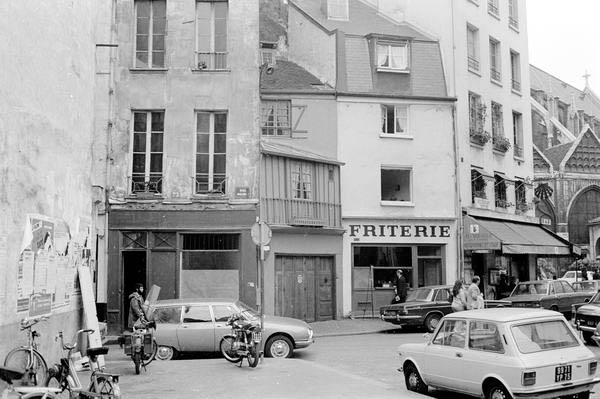
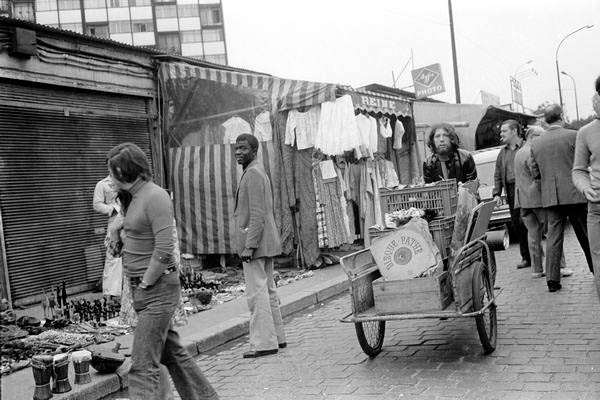
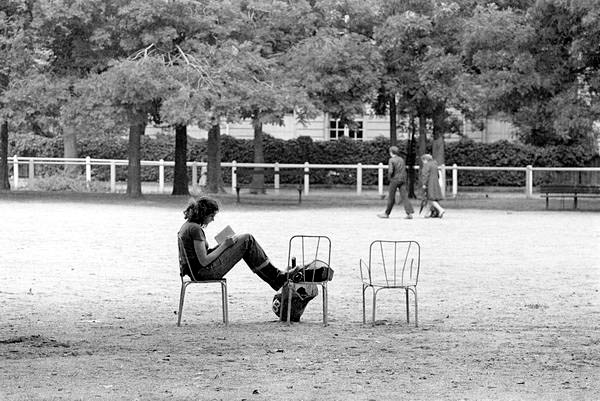
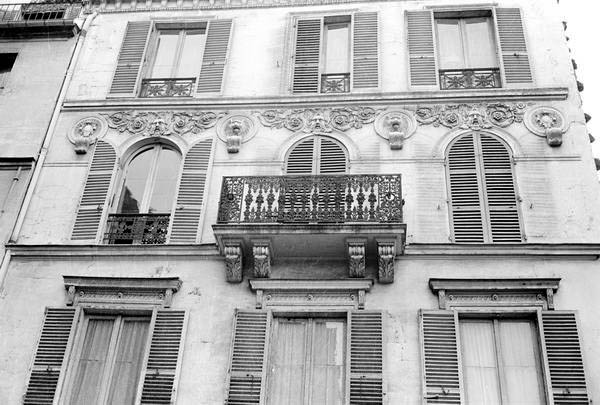
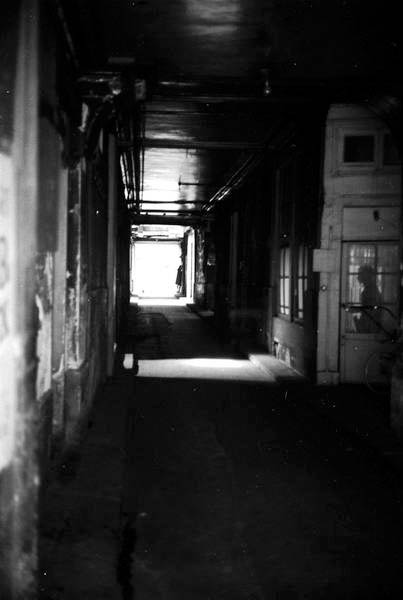
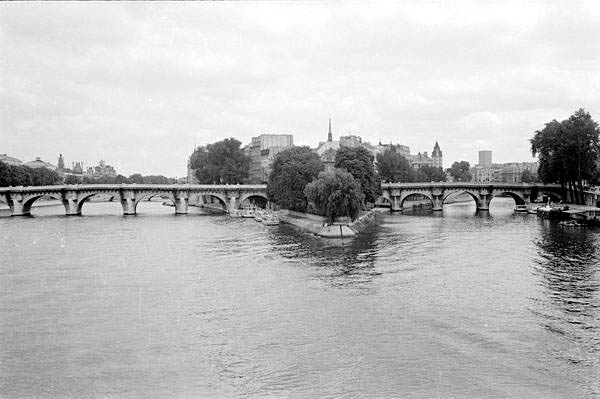
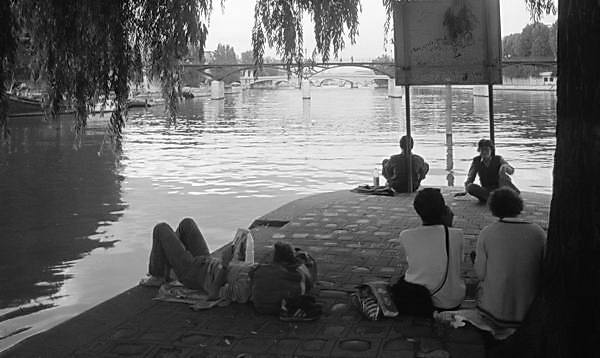
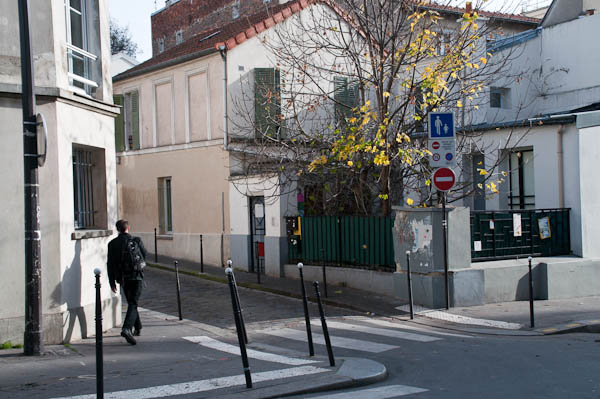
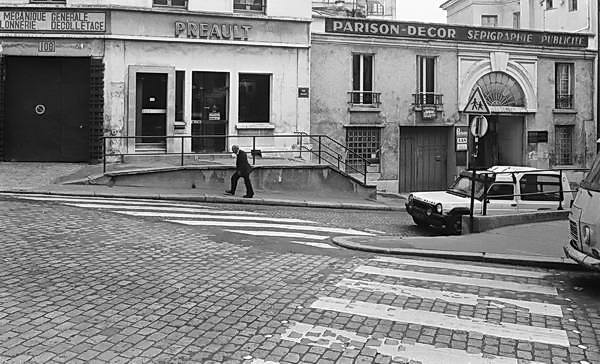
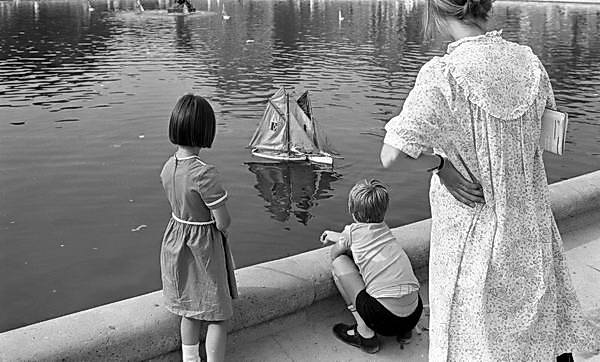
Despite the rather primitive equipment and my own lack of experience, the 1973 Paris work resulted in my first portfolio published in a photographic magazine the following year which included several of the pictures in this post, all of which come from that trip.

By the time I returned to Paris I had more modern equipment, mainly working with Olympus OM Cameras, at first the OM1, later the OM2 and OM4. On some trips I also took a Leica M2 a range-finder with a much better viewfinder than the Zorki. More recently I’ve photographed in Paris with various Nikon DSLRs and a Leica M8.

One of my earliest attempts at a book was made from the pictures I took in 1973, with the image above on the cover, but it only ever got as far as a single dummy, made by stitching together images printed on 8×10 resin coated paper.

In 1984 I took a couple of weeks working on the project ‘In Search of Atget‘, inspired by the pictures I’d first come across in Paris museums during that 1973 visit. I later showed this work and in 2012 self-published the book which is still available in softcover or as a PDF on Blurb. A second book, of colour pictures, ‘Photo Paris‘ taken in 1988 is also still available on Blurb.

My web site Paris Photos includes pictures from visits to Paris in 1973 and 1984 mentioned above, as well as several later visits. Albums on Flickr have larger versions of many of these pictures.
In Search of Atget – Paris 1984
1984 Paris Colour
Around Paris 1988
Around Noisy-le-Grand and Paris – 1990
Paris – November 2007

There are also some accounts of my visits to Paris mainly for Paris Photo since 2006 on My London Diary. It’s now been some years since our last visit, though every year we promise ourselves a visit and one day it may happen.


Notting Hill 1990 Colour

I’d forgotten when I wrote yesterday’s post that I had actually taken some colour pictures as well as the black and white of Notting Hill Carnival in 1990. I was then working in colour with colour negative film and I think the colour in some of these images is a little on the drab side. I think I found them less interesting than the black and white.

Notting Hill Carnival, Notting HIll, 1990 90c8-04-96-positive_2400
Notting Hill 1990
Notting Hill Carnival, Notting HIll, 1990 90c8-04-5-positive_2400
Notting Hill 1990
Notting Hill Carnival, Notting HIll, 1990 90c8-04-84-positive_2400
Notting Hill 1990
Notting Hill Carnival, Notting HIll, 1990 90c8-04-4-positive_2400
Notting Hill 1990
Notting Hill Carnival, Notting HIll, 1990 90c8-04-10-positive_2400
Notting Hill 1990
Notting Hill Carnival, Notting HIll, 1990 90c8-04-1-positive_2400
Notting Hill 1990
Notting Hill Carnival, Notting HIll, 1990 90c8-04-43-positive_2400
Notting Hill 1990
Notting Hill Carnival, Notting HIll, 1990 90c8-04-28-positive_2400
Notting Hill 1990

As usual, clicking on any of the images will take you to a larger version in the album, and you can also browse the other images in it. You can find colour from other years in the album as well, though in a rather strange order as I found them.

Swanscombe

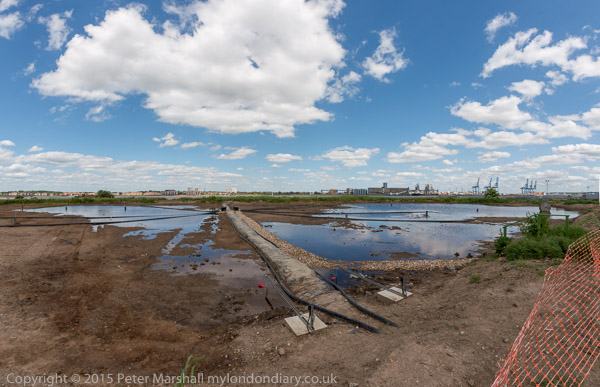
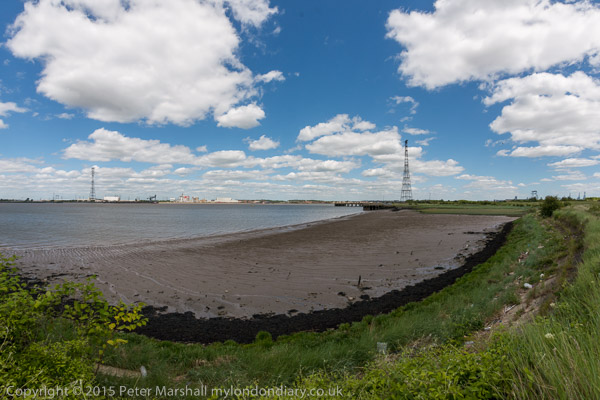
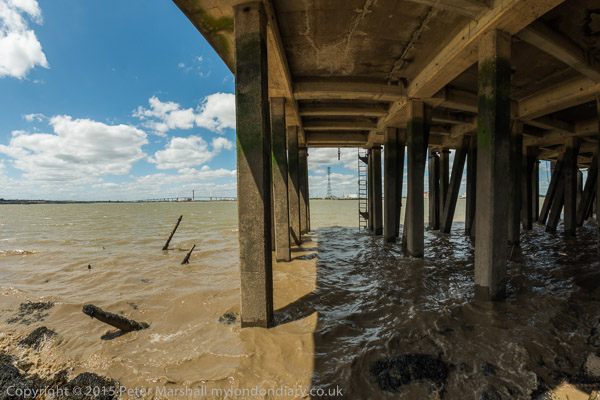
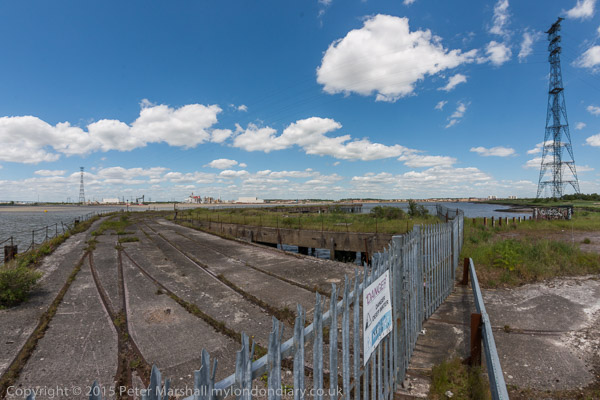
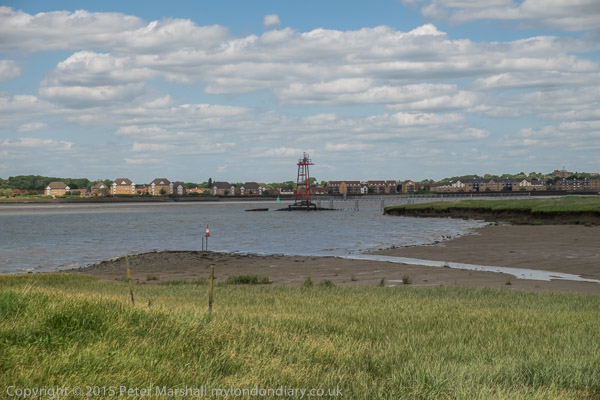
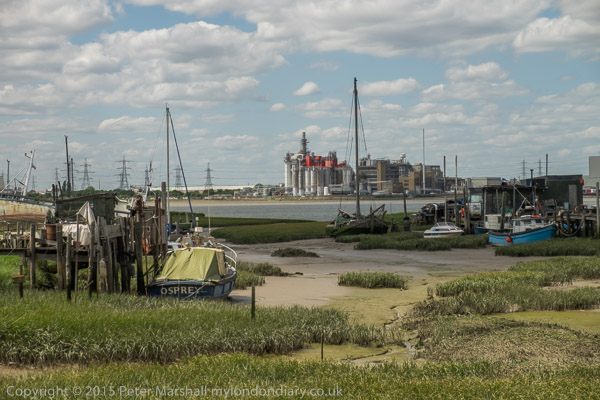
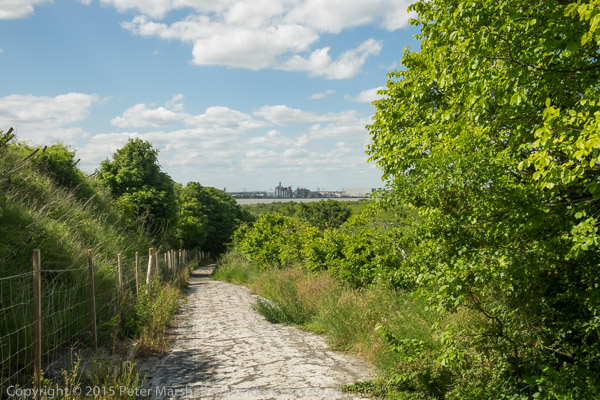
Swanscombe, Kent. Sat 6 Jun 2015

I first visited Swanscombe back in 1985, when I was photographing along the south bank of the River Thames and Lower Thameside. Until the 1840s this area of North Kent had been relatively remove and rural, with riverside marshes largely untouched and valuable agricultural land on the higher areas growing food for the capital.

Portland Cement was patented by by Joseph Aspdin in 1824 and the later developed by his sone William, but the modern version of it was developed at Swanscombe by Isaac Charles Johnson, then manager of John Bazeley White’s cement plant. Johnson soon after left J B Whites to set up his own cement plants, including those nearby at Geenhithe and Cliffe, and Frindsbury on the Medway. In 1911 C Johnson & Co became a part of the Blue Circle Group.

The building of London’s sewers led both to a large demand for cement and also led the Metropolitan Board of Works to provide a specification for their needs which became the standard for Portland Cement. Portland Cement is the cement used in almost all concrete, mortar, stucco and grouting.

From around 1900 virtually all cement has been made in large rotary kilns, with flames heating limestone or chalk with clay-containing minerals at around 1500-1600 degrees Celsius. Water and carbon dioxide are driven off as the minerals combine to give silicates (mainly (tricalcium silicate, dicalcium silicate, tricalcium aluminate and tetracalcium aluminoferrite). Around 10% of world CO2 production which fuels climate change is due to cement manufacture, and smaller amounts of other polluting materials are also released in the process – hence the high chimneys of cement works. The small lumps of ‘cement clinker’ that emerge at the lower end of the kiln are then ground to a fine powder, often with added gypsum (calcium sulphate) or limestone to give cement.

Cement can cause burns and it readily absorbs water, hardening to form solid hydrated material and firmly embedding the sand or aggregate it is mixed with for most uses. Over many thousands of years the River Thames in this area had cut its course up to the chalk of the North Downs, and since the 1840s much of that chalk has been quarried, leaving deep pits with often fairly narrow strips left for roads through the area and housing. One of those deep pits now holds the Bluewater shopping centre at Greenhithe and others are filled with various industrial properties or housing. The industry over around 150 years completely transformed the landscape. But by the time I first came to photograph it, this post-industrial landscape was rapidly being reclaimed by nature.

Down the centre of the Swanscombe peninsula is the footpath, Pilgrims Road, leading down towards where a ferry once brought pilgrims on their way to Canterbury from a ferry across the River Thames from close by St Clement’s Church, still there beside the detergent works at South Stifford. Later clay was brought across the river from Essex to wharves for making cement, as well as coal, probably coming by coaster from the north-east to fuel the kilns. Ropeways or conveyor belts will have linked the wharves to the cement plant.

In 2012 I heard of the plans to transform part at least of the area yet again, into the Paramount London theme park, a leisure attraction along the lines of Thorpe Park, which would destroy the area as I knew it. Although I decided to come and photograph the area again before that happened it took me three years to return and do it, cycling around the area on a Brompton, (though occasionally I had to leave it a explore on foot.) Five years on, the plans are still plans and I hope to go back again next month.

With a few exceptions, the pictures here are wide-angle panoramics, with a horizontal angle of view of around 145 degrees and a vertical angle of view of roughly 90 degrees which results in a ‘normal’ aspect ratio of 1.5 : 1 – I usually took these intending to crop to a 1.9:1 ration but have left them uncropped. A few are taken with more normal wide-angle lenses.

On My London Diary you can see more of these pictures, and also read more about the area and my day there in 2015. The images display a little larger on that site.


All photographs on this and my other sites, unless otherwise stated, are taken by and copyright of Peter Marshall, and are available for reproduction or can be bought as prints.


Missing Paris

1984

I’m missing Paris. My first visit there was in 1966, when I spent a week or two in a Protestant student hostel a few miles south of the centre with my future wife – though in separate double rooms, each with another of the same sex – and students from around the mainly Francophone world. After breakfast each day we took the train for the short journey to the Left Bank and spent the day as tourists in the city and nearby attractions, though mainly just walking around the city as we were both still penniless students.

Paris 2008

We lunched outdoors in parks and squares, buying baguettes and stuffing them with chocolate or pate as we couldn’t afford cafes or bars, eating cheap fruit for afters. We went out of Paris to Versailles, where I managed to drop my camera in the lake as we climbed into a boat to row around the lake. The boatman fished it out and handed it back to me as we got out of the boat, rather obviously expecting a reward, but all I could afford was my thanks. The camera never worked reliably after that, and it was five years before I could afford to replace it.

We returned to the hostel for an evening meal, which introduced me to some very strange dishes – and I think one evening as a special treat we were given a kind of horsemeat stew; it tasted fine, but I’ve never sought to repeat the experience. After dinner we crowded into a room with the rest of the inhabitants to watch the games of the World Cup, though I’d gone home before the final.

Quai de Jemappes / Rue Bichat, 10e, Paris, 1984

It was some years before we could afford another foreign holiday – we’d spent our honeymoon in Manchester with a day trip to the Lake District, a visit to Lyme Park and some walks around Glossop. But in 1973 we were back for a couple of weeks in Paris, this time at a hostel in the centre and sharing a room. We took with us the Michelin Guide (in French) and I think followed every walk in the book, which took us to places most tourists never reach – it was then much more thorough than the later English versions.

Monmartre, 1973

In 1973 I had two cameras with me. A large and clunky Russian Zenith B with its 58mm f/2 Helios lens and a short telephoto, probably the 85mm f2 Jupiter 9, but also the more advanced fixed lens rangefinder Olympus SP, with its superb 42mm f1.7 lens, a simple auto exposure system as well as full manual controls. I needed my Weston Master V exposure meter to work with the Zenith. You can see more of the photographs I took on my Paris Photos web site. Some of these pictures were in my first published magazine portfoliolater in 1973.

It was a while before we returned to Paris, though we went through it by train on our way to Aix-en-Provence and on bicycles from between stations on our way to the Loire Valley in the following couple of years. Then came two children, and it was 1984 before we returned to the city with them when I came to photograph my ‘Paris Revisited‘ a homage to one of the great photographers of Paris, Eugene Atget, which you can see in the Blurb Book and its preview as well as on my Paris Web site.

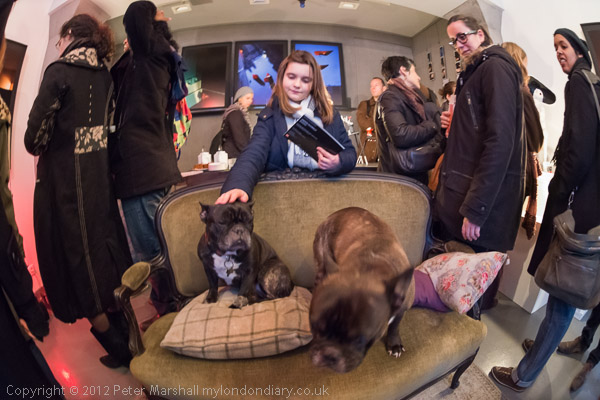
Placement libre-atelier galerie, Paris 2012

We returned to the city several times later in the 1980s and 1990s, and more regularly after 2000, when I went in several Novembers for a week, usually with my wife, to visit the large Paris Photo exhibition as well as many other shows which took place both as a part of the official event and its fringe. One week there I went to over 80 exhibitions, including quite a few openings.

La Villette, Canal St Martin, 19e, Paris 1984-paris285
1988

But the last time I was in Paris was in November 2012. Partly because Paris Photo changed and there seemed to be less happening around it in the wider city than in previous years. We’d planned to go in 2015 but were put off by Charlie Hebdo shooting and later the November terrorist attack. More attacks in 2018 also put us off visiting France, but we’d promised ourselves a visit to Paris in 2020 – and then came the virus.

88-8l-54-Edit_2400
1988

While I’ve been stuck at home since March, I have been visting France virtually, going back to my slides taken in 1974 in the South of France, of our ride up the Loire Valley in 1975 and of Paris in 1984, all of which are now on Flickr. Most recently I’ve returned to Paris in 1988, with over 300 black and white pictures from Paris and some of its suburbs.


All photographs on this and my other sites, unless otherwise stated, are taken by and copyright of Peter Marshall, and are available for reproduction or can be bought as prints.


Notting Hill in colour – 1997 Part 4

A final selection of my pictures from 1997 when I mainly worked with colour.

Notting Hill Carnival, 1997 97c8-nh-135_2400
Notting Hill Carnival, 1997 97c8-nh-145_2400
Notting Hill Carnival, 1997 97c8-nh-158_2400
Notting Hill Carnival, 1997 97c8-nh-163_2400
Notting Hill Carnival, 1997 97c8-nh-174_2400
Notting Hill Carnival, 1997 97c8-nh-182_2400
Notting Hill Carnival, 1997 97c8-nh-184_2400
Notting Hill Carnival, 1997 97c8-nh-191_2400
Notting Hill Carnival, 1997 97c8-nh-196_2400
Notting Hill Carnival, 1997 98c8-nh-221_2400

I hope you have enjoyed my pictures which I think show something of the spirit of carnival, something sadly missing at the moment.

You can see more of my pictures from carnival in Notting Hill Carnival – the 1990s on Flickr.


All photographs on this and my other sites, unless otherwise stated, are taken by and copyright of Peter Marshall, and are available for reproduction or can be bought as prints.


Notting Hill in colour – 1997 Part 2

Here are a few more from Ladbroke Grove in 1997, I think all from the first day of the event, the Children’s Day on the Sunday.

Notting Hill Carnival, 1997 97c8-nh-040_2400

I think all of these pictures were taken with a 28mm or 35mm lens, probably on a Minolta CLE (the improved successor to the Leica CL) using Fuji Super G 400 colour negative film.

Notting Hill Carnival, 1997 97c8-nh-047_2400
Notting Hill Carnival, 1997 97c8-nh-056_2400

I did take more photographs of the children, but while the costumes may be cute and sometimes very colourful (though not in this example) they generally lack the exhuberance of older revellers and I found them of less interest. There are more of the children in the album on Flickr.

Notting Hill Carnival, 1997 97c8-nh-058_2400
Notting Hill Carnival, 1997 97c8-nh-066_2400
Notting Hill Carnival, 1997 97c8-nh-072_2400

I took several pictures of this young woman holding a child as she danced beside one of the floats pumping out fairly deafening music, and this one I think shows her and the child both enjoying the moment.

Notting Hill Carnival, 1997 97c8-nh-073_2400

But the second frame puts her better into the whole siuation, part of the crowd moving down the street with the lorry.

All these pictures were taken within a few minutes of each other, and I made many more during the two days of carnival – and will post more another day. As usual you can see any of them larger in the album by clicking on them – and can then continue to view more if you wish.


All photographs on this and my other sites, unless otherwise stated, are taken by and copyright of Peter Marshall, and are available for reproduction or can be bought as prints.


Notting Hill in colour – 1997

Notting Hill Carnival, 1997 97c8-nh-003_2400

I find it hard to believe I took no colour pictures at Notting Hill Carnival in 1996, but if I did I cannot find the negatives, though it is possible that they are somewhere in my loft, still in the envelope with the prints as they came back from the processing lab. I did go to carnival, and made some black and white images, but probably I had come to a decision not to work in colour.

Notting Hill Carnival, 1997 97c8-nh-005_2400

The following year, 1997, I’ve found no very few black and white negatives, perhaps just when I was finishing off a couple of films still in the cameras, and nothing of any real interest, but a note on the contact sheet tells me that I worked in colour that year. So here are some of the results.

Notting Hill Carnival, 1997 97c8-nh-008_2400
Notting Hill Carnival, 1997 97c8-nh-015_2400
Notting Hill Carnival, 1997 97c8-nh-019_2400
Notting Hill Carnival, 1997 97c8-nh-024_2400
Notting Hill Carnival, 1997 97c8-nh-028_2400
Notting Hill Carnival, 1997 97c8-nh-030_2400

I’ll post another set from 1997 shortly, but you can see them all in my album Notting Hill Carnival – the 1990s which has around 80 more pictures from that year. As usual, clicking on the images in this post will take you to the image in the album – much larger for the landscape format images.


All photographs on this and my other sites, unless otherwise stated, are taken by and copyright of Peter Marshall, and are available for reproduction or can be bought as prints.


Notting Hill colour 1994

Notting Hill Carnival, 1994. Peter Marshall 94c8-nh-125-positive_2400

In 1994 I set out to photograph carnival both in black and white and in colour, and while my colour images concentrate on the people in the procession and their costumes, it was a little more varied than in previous years, with more overlap with the black and white work.

Notting Hill Carnival, 1994. Peter Marshall 94c8-nh-111-positive_2400

So I took some pictures of the people watching the carnival in colour and perhaps rather more than in previous years where the carnival was the background rather than the main subject.

Notting Hill Carnival, 1994. Peter Marshall 94c8-nh-108-positive_2400
Notting Hill Carnival, 1994. Peter Marshall 94c8-nh-104-positive_2400
Notting Hill Carnival, 1994. Peter Marshall 94c8-nh-097-positive_2400
Notting Hill Carnival, 1994. Peter Marshall 94c8-nh-094-positive_2400
Notting Hill Carnival, 1994. Peter Marshall 94c8-nh-078-positive_2400

I was working with colour negative film, and exposures were a little more critical than with black and white, which has greater latitude. There are some I could not get good prints from in the darkroom, and although digitising makes it a little easier there are still some where the colour is not as good as I would like.

Notting Hill Carnival, 1994. Peter Marshall 94c8-nh-048-positive_2400

But despite these problems I was encouraged by the results , and the following year for various reasons photographed Notting Hill almost entirely in colour.

Notting Hill Carnival, 1994. Peter Marshall 94c8-nh-018-positive_2400

There are around 60 colour pictures from 1994 beginning some way down page 6 of my Notting Hill in the 90s album and continuing onto the next page. Clicking on any of the pictures above will also take you to larger versions in this album.


All photographs on this and my other sites, unless otherwise stated, are taken by and copyright of Peter Marshall, and are available for reproduction or can be bought as prints.


Notting Hill Colour – 1993

Notting Hill Carnival, London, 1993 93c8-nh-007-positive_2400

Although almost all the pictures I took at Notting Hill Carnival in 1993 were in black and white, I did make a few colour images, and here are a small selection.

Notting Hill Carnival, London, 1993 93c8-nh-008-positive_2400

Almost all of them were of the procession, and I think taken in a fairly short period of time, mainly on Ladbroke Grove.

Notting Hill Carnival, London, 1993 93c8-nh-019-positive_2400

I tried to cut my equipment to a minimum for carnival, partly to make it easier to move through the crowds, but also because I was just a little worried about taking what looked like camera bags full of expensive equipment to the event. And I wanted to be able to dance as I took pictures.

Notting Hill Carnival, London, 1993 93c8-nh-022-positive_2400

Instead of a normal camera bag, I took a small khaki canvas ex-army shoulder bag which I still use today when I want to travel light, issued in 1942 possibly for a gas mask, large enough to take a camera, one or two spare lenses, a decent supply of film, notebook, water bottle and a few oddments, which back in those days would usually include a Mars Bar for when my energy lagged, and sometimes a sandwich or two.

Notting Hill Carnival, London, 1993 93c8-nh-027-positive_2400

Probably when I saw some particularly attractive and colourful costumes and had finished a black and white film I picked a colour one to reload the camera – probably my Minolta CLE, a rather superior second version of the Leica CL which for some obscure reason Leitz decided not to put their name on, ending their collaboration with Minolta. I then took pictures quickly to finish the film so I could get back to my real work using black and white. I think that happened a couple of times on Children’s Day, but on the Monday I concentrated on more serious black and white work.

Notting Hill Carnival, London, 1993 93c8-nh-034-positive_2400

In crowds I always made sure to put the shoulder strap over my head and on one shoulder and hold the bag on my stomach so as not to get caught up behind me. I always kept the camera on a strap around my neck too. But generally the crowds were good-natured and in high spirits and I had no trouble taking pictures.

Notting Hill Carnival, London, 1993 93c8-nh-031-positive_2400

Just once, in the centre of a heaving crowd of dancers in front of a sound system I suddenly realised that someone had put their hand into my left trouser pocket. I grabbed it and held it there protesting, and slowly pulled it out to reveal it holding a wallet. But it wasn’t mine (I’d left that at home) and of course it had no money in it. I’m not sure why he was planting it on me, but pushed it back into the hand I was still firmly holding and told the guy to eff off and he ran off pushing through the crowd. It didn’t seem the place to investigate further.

More pictures on page 6 of my Notting Hill Carnival – the 1990s on Flickr.


All photographs on this and my other sites, unless otherwise stated, are taken by and copyright of Peter Marshall, and are available for reproduction or can be bought as prints.


More Carnival 1990

A few more colour pictures from Notting Hill Carnival in 1990 – there are more on page 5 of the Flickr album.

Notting Hill Carnival, Notting HIll, 1990 90c8-04-31-positive_2400

This was the first year I went to Carnival, and set a pattern I followed in most years, taking the train from Hammersmith to Westbourne Park station, arriving around the middle of the day, before things really got going then walking along to All Saints Rd and photographing around there and Talbot Rd and the surrounding streets.

Notting Hill Carnival, Notting HIll, 1990  90c8-04-11-positive_2400

Later I’d walk up Portobello Rd and under the Westway and take pictures in the north of the area where the streets were less busy and I could still move around. I found the procession route in the south of the area very crowded and impossible for my kind of photography.

Notting Hill Carnival, Notting HIll, 1990 90c8-04-14-positive_2400
Notting Hill Carnival, Notting HIll, 1990 90c8-04-25-positive_2400
Notting Hill Carnival, Notting HIll, 1990 90c8-04-2-positive_2400

I think all these colour pictures were taken on the Sunday – Children’s Day, and that on Monday I worked only in black and white. Most of the pictures I made of the actual procession were on Ladbroke Grove.

Notting Hill Carnival, Notting HIll, 1990 90c8-04-3-positive_2400
Notting Hill Carnival, Notting HIll, 1990 90c8-04-5-positive_2400

If you want to look at more, and at those from later years you can go to page 5 of Notting Hill Carnival – the 1990s. Clicking on any of the pictures above will also take you to a larger version in this Flickr album.