3 Cosas at London University 2013

3 Cosas at London University 2013

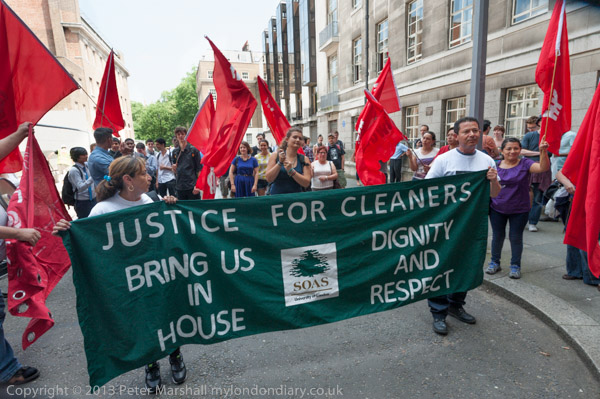
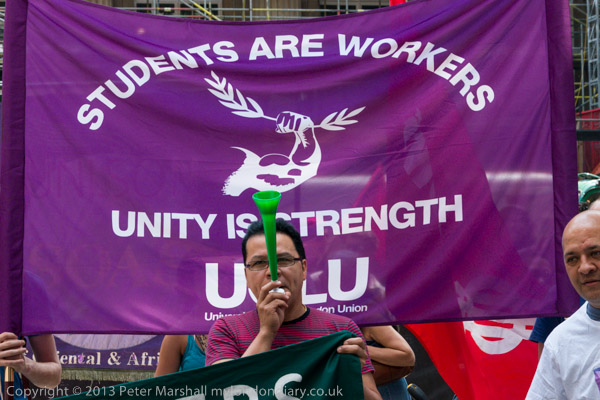
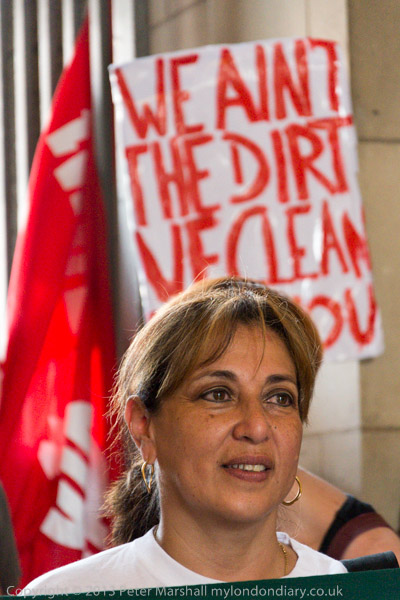
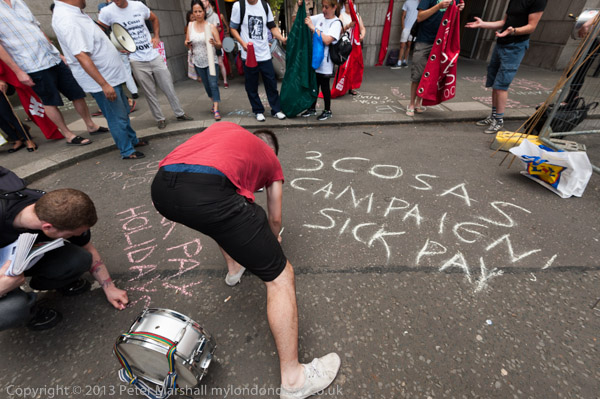
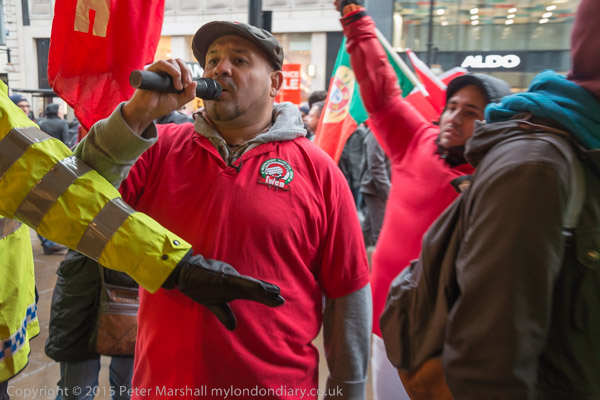
3 Cosas at London University 2013: The protest around the University of London Senate House on Wednesday 17th July 2013 was part of a long running campaign to get all workers at the university decent pay and conditions of service. At it’s root was the attempt by the university to dissociate itself from any responsibility for many lower-paid staff – cleaners, security, catering – whose work is essential to the running of the university by employing them indirectly through outsourcing companies.
These staff work alongside others directly employed by the university who get good contracts with decent provision of pensions, holiday entitlement and sickness pay, but are on rock-bottom contracts, receiving only the statutory minimum requirements. Things are usually made worse by bullying managers from the outsourcing companies who overload the workers and often fail to provide proper safety equipment for the jobs.

Some Unison branches, along with students from the University of London Union and some teaching staff and others from neighbouring London Universities had worked successfully together to improve wages and conditions of these lower paid staff, with protests in 2010-2011 getting the London Living Wage for the workers. They had now joined together to campaign for ‘3 Cosas’ – the three causes of sick pay, holiday pay and pensions, with the Spanish title reflecting the background of many of the university cleaners in London’s Latin-American community.

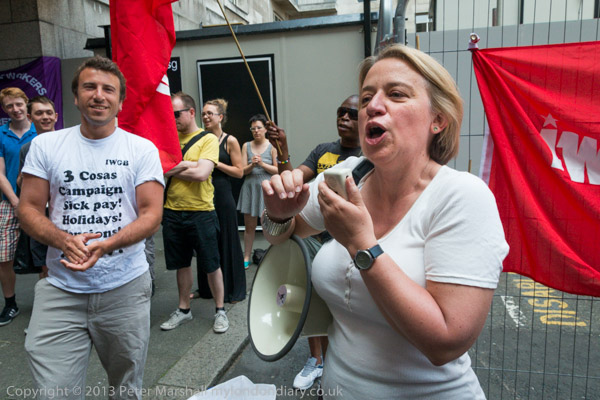
Green Party leader Natalie Bennett

Unison nationally had publicly dissociated itself from the protests by some local branches and had failed to support either for the successful Living Wage Campaign or the new 3 Cosas campaign. The Senate House Unison Branch had recently elected branch officers who supported the campaigns but the results of the election were annulled by the Unison union leadership.
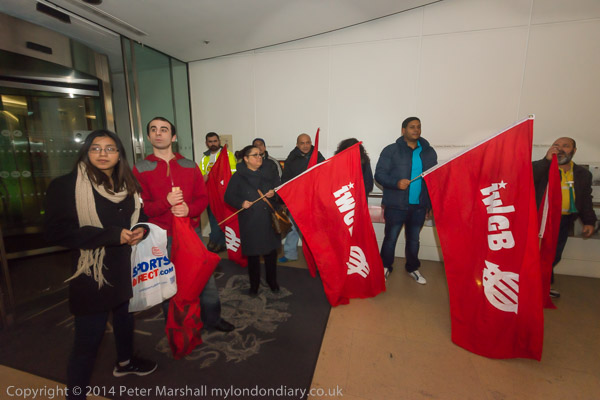
This led to almost all of the outsourced workers and some of those directly employed leaving Unison in protest, joining the grass roots IWGB which had been active in its support and now represented a majority of the outsourced workers. Despite this the university refused to engage with the IWGB, continuing to recognise the far more submissive Unison who seem not to care about the low paid workers.

The protest on this day was larger and angrier than usual, as the University had called in police the previous day to handle a student protest – and police had arrested a young woman who had chalked a slogan on a wall plaque, charging her with criminal damage. Chalk was used by the protesters as it causes no damage and is easily wiped off.

The 3 Cosas campaign has received support from branches and officials of other trade unions, including the RMT and UCU, the university and college teachers. And among those who came to give their support was Green Party Leader Natalie Bennett who spoke briefly before have to rush off to a BBC interview.

Outside Stewart House
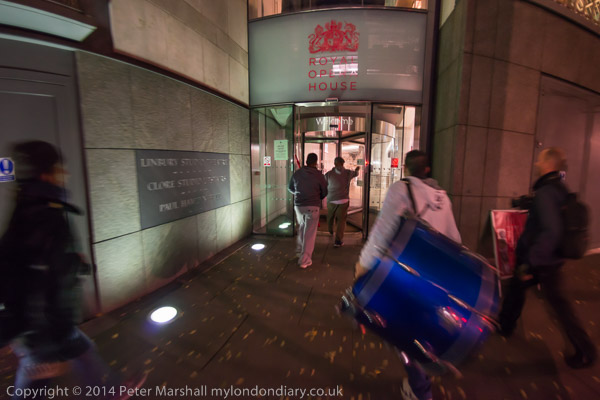
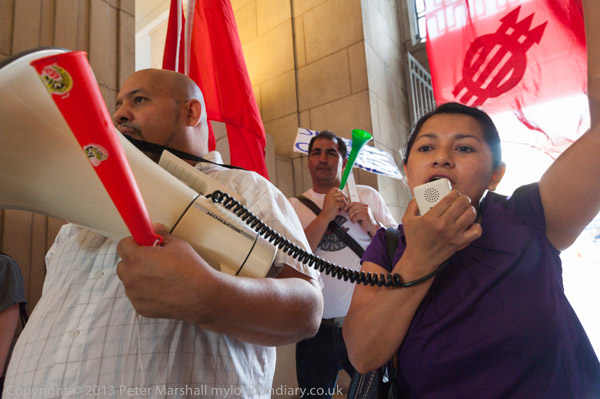
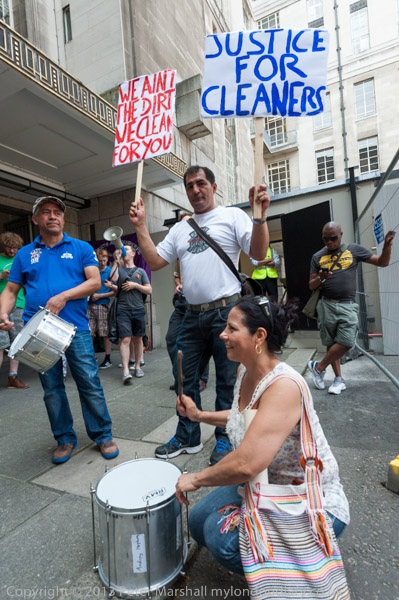
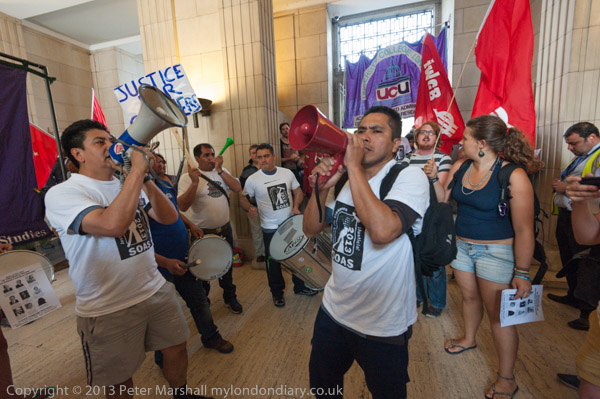
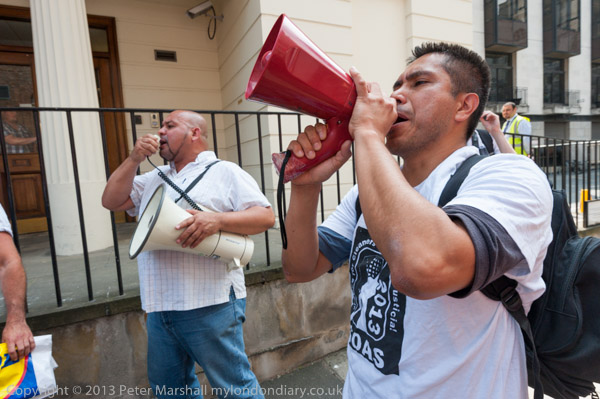
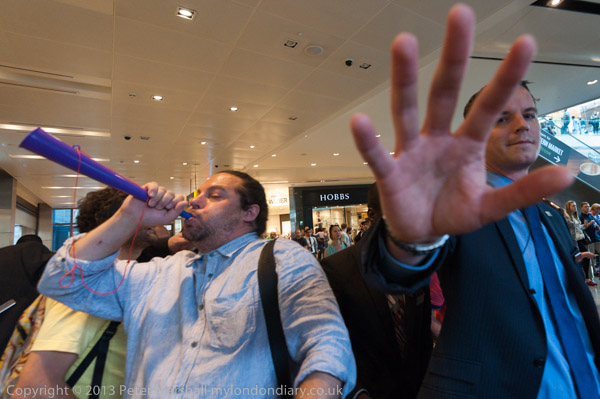
The protest began just outside the Senate House and as Bennett left the protesters moved into the open lobby area underneath the bottom of the building for a noisy few minutes chanting ‘Sick Pay, Holidays, Pensions, Now!’ and other slogans, blowing whistles and horns and using megaphone siren sounds to the accompaniment of some highly dynamic drumming from the SOAS samba band.
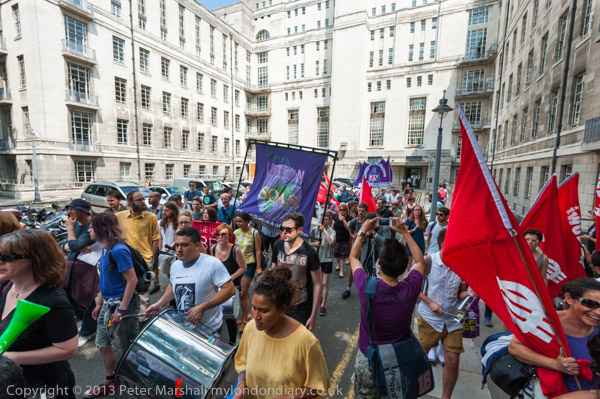
They then walked out from there and marched around the street to the south of the building opposite the British Museum North Entrance where there was a brief rally mainly to make those going into the museum aware of why they were protesting.
They walked back onto the university site for another noisy protest outside Stewart House, then back underneath Senate House where they stopped to listen to a speech from the ULU Vice-President. IWGB organiser Alberto Durango then invited everyone to go across the road and make their presence felt in front of the London School of Hygiene and Tropical Medicine, where the IWGB is just starting to fight for the cleaners there to get the London Living Wage.

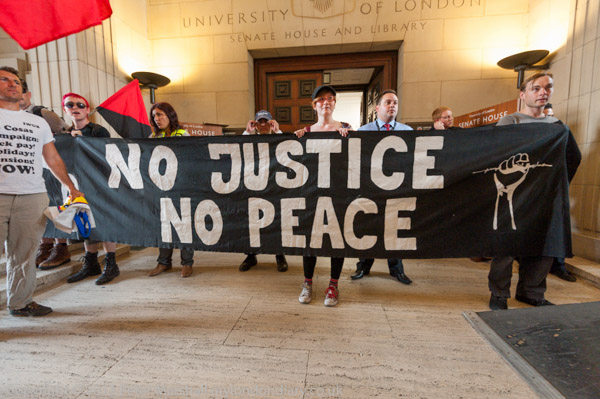
After a few minutes there they returned for a final session at the Senate House for some final speeches. The woman who had been arrested for chalking the previous day was one of those holding a No Justice No Peace’ banner in front of a line of security staff blocking the entrance, and there were calls urging the university to drop the charge of criminal damage, and some of those present chalked slogans on the tarmac in a show of solidarity.

Many more pictures at London University Cleaners Protest


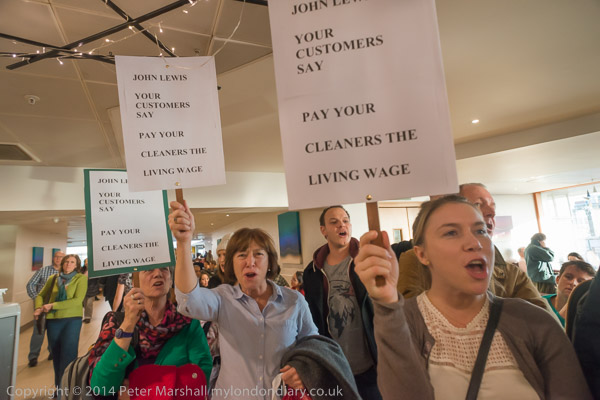
John Lewis Cleaners Protest

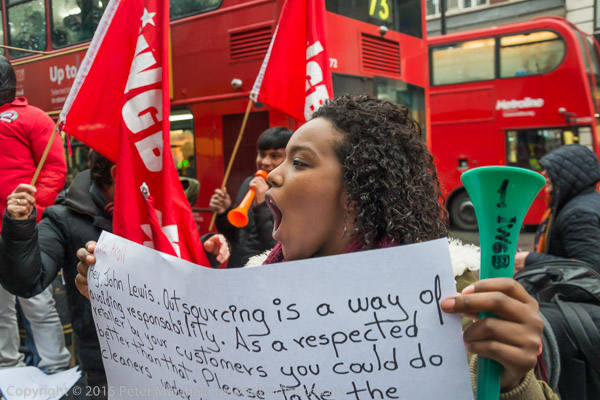
A protester holds a message from John Lewis customer Una Kroll: ‘Outsourcing is a way of avoiding responsibility’

John Lewis Cleaners Protest
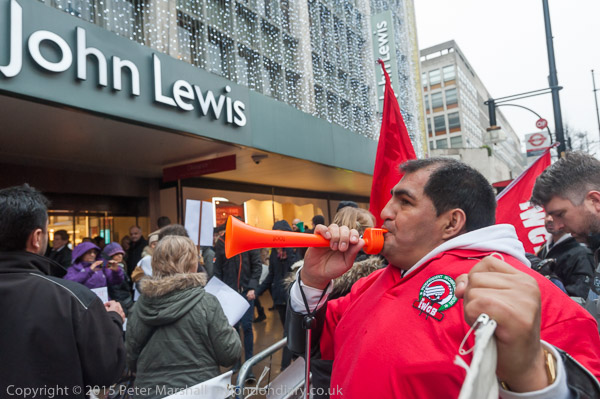
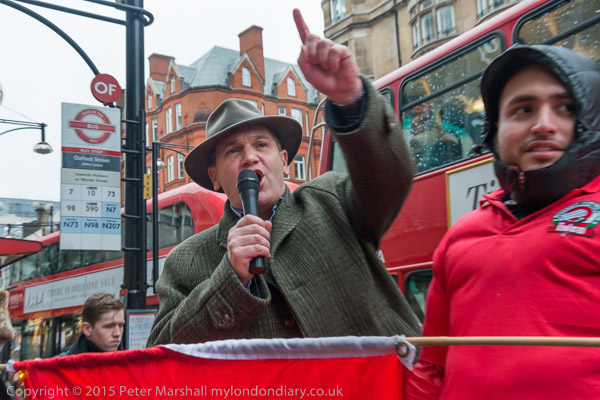
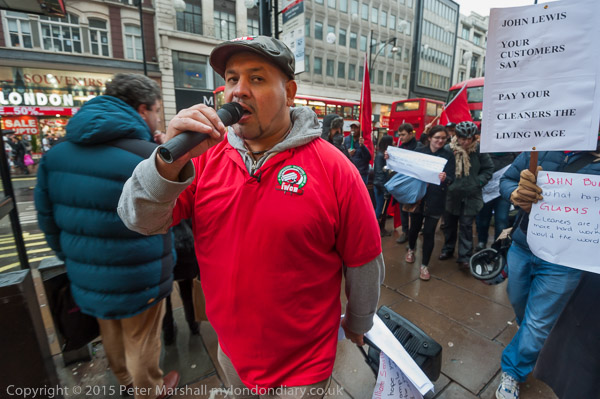
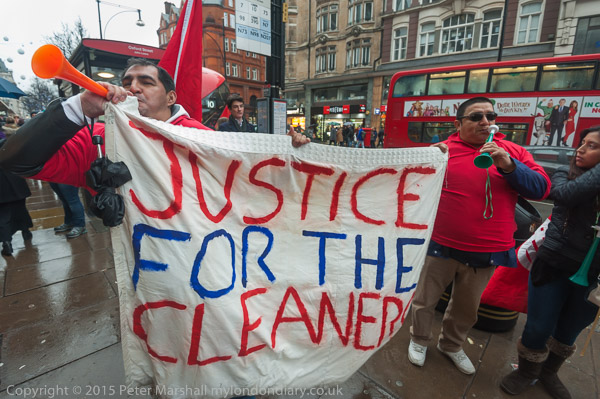
On Saturday 3rd January 2015 I met cleaners from the Cleaners And Facilities Branch of the IWGB (Independent Workers Union of Great Britain) outside John Lewis’s flagship Oxford Street store. They were there to hold a protest rally demanding the company lived up to its ethical reputation and paid the workers who keep the shop clean a living wage.

When John Spedan Lewis set up his small drapers shop on Oxford Street in 1864 he had the revolutionary idea of involving those who worked for him in the running and progress of the business, setting up a constitution that made all of them partners.

The ultimate purpose was expressed in Principle 1 of this consitution:

The happiness of all its members, through their worthwhile and satisfying employment in a successful business.
Because the Partnership is owned in trust for its members, they share the responsibilities of ownership as well as its rewards – profit, knowledge and power.

John Lewis Partnership

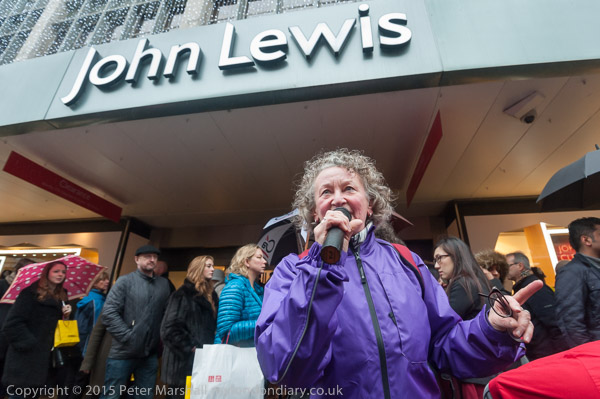
Green Party London Assembly member Jenny Jones, Baroness Jones of Moulsecoomb, speaking at the protest

But although staff on the counters and running other aspects of the business remain partners – and almost every year get an extra bonus payment as a share of the profits, the cleaners who work in the store who are not included in the scheme and say that in this and other respects they are being treated as second-class citizens.

Although the cleaners work in the store next to the John Lewis partners they are not employed by John Lewis. John Lewis pays a cleaning contractor to employ its cleaners, who get lower rates of pay and far inferior conditions of service than staff who are directly employed.

This lets John Lewis maintain the pretence of being an ethical employer while these people who work there get bullied, work under poor and often unsafe conditions, are paid less than a living wage and get only statutory minimum holidays and sick pay.

Mick Dooley of London TUSC

Neither John Lewis nor the cleaning contractor recognise the IWGB although a large majority of the cleaners belong to it, and neither had been willing to engage in talks about the dispute. John Lewis attempts to disclaim any responsibility for the cleaners, but the trade unionists and others who came to speak dismissed this as a a shallow attempt at deception. The work done by the cleaners takes place in the store and is essential to its running and should be properly recognised and paid.

In a protest before Christmas I had met with members of the IWGB in the restuarant at the top of the store and photographed an unannounced protest by them inside the store. This time was very different, with the protest being held on the wide pavement outside and given as much advance publicity as possible.

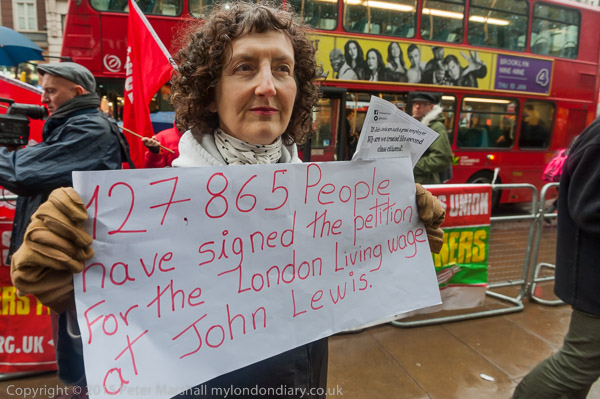
The union had received considerable support from John Lewis customers, with over 125,00 signing a petition calling on the company to live up to its ethical reputation and ensure that the cleaners are paid a living wage. Some of them came to protest with the union.

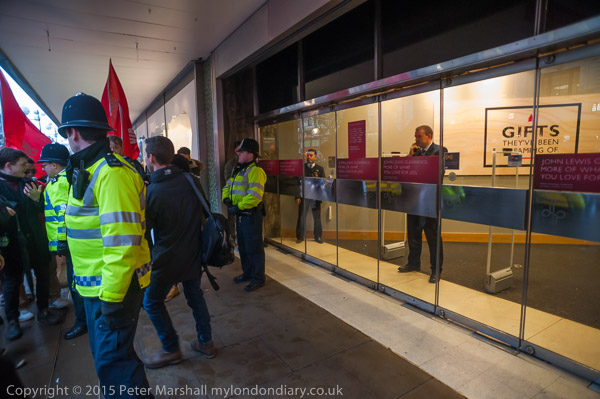
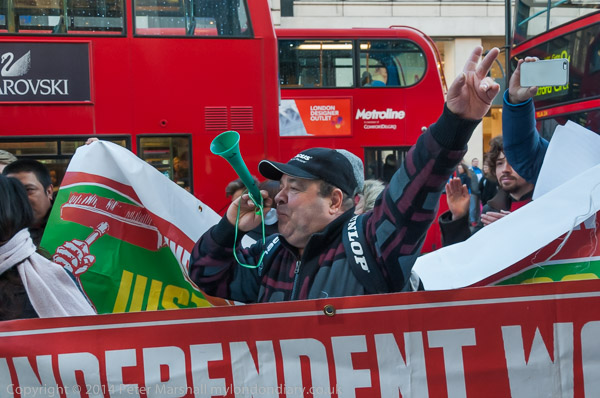
After speeches in front of the store on Oxford St, the protesters marched around the block containing the store which has entrances for shoppers on three sides. Although they arrived at some of these before the police and security they made no attempt to go inside, determined to avoid any trespass, though there were some arguments with police over a thin metal line in the pavement which marked the edge of the property.

Many shoppers on the street stopped briefly to find what the protest was about and most expressed support for the workers. The main doors to the store were closed by John Lewis security staff for much of the roughly an hour and a half protest.

Xmas Protests – Low Wages, Evictions, John Lewis – 2014

Three Xmas Protests – Low wages, Evictions, John Lewis – in Brixton, Mayfair and Oxford St on December 14th 2014.

‘Santa’s Naughty List’ Living Wage

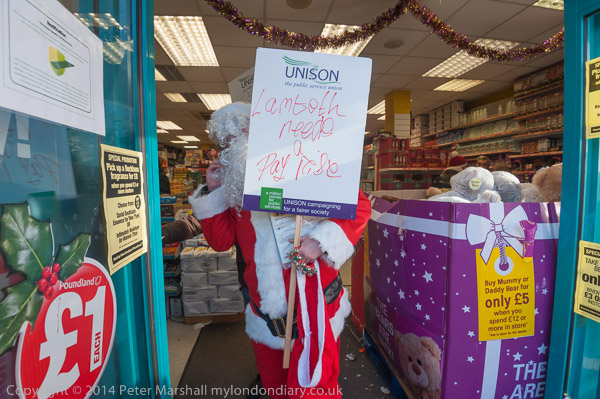
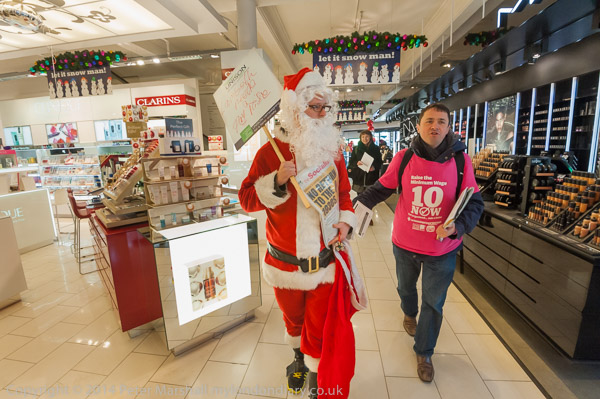
Lambeth Living Wage campaigners, led by an impressive Santa, protested in and outside shops in the centre of Brixton, handing out flyers calling for all workers to be paid a living wage. They urged shop workers to join a union and gave out forms.

While I was with them they visited department store Morleys, Subway and Poundland and they were going on to other stores in Brixton paying poverty wages. The protest was supported by Unite the Resistance, the Socialist Party, Unison (who provided the Santa costume), the Fast Food Rights Hungry for Justice campaign supported by the Bakers, Food & Allied Workers Union, BFWAWU, the National Shop Stewards Network and other groups.

‘Santa’s Naughty List’ Living Wage


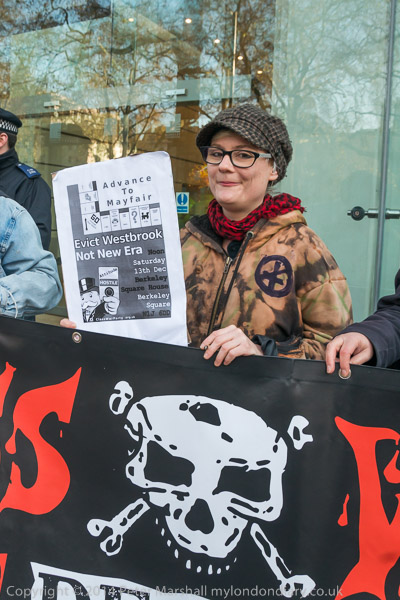
Class War: ‘Evict Westbrook, Not New Era’

Scrooge at Christmas 2014 was US property developers Westbrook Partners who were intending to evict the tenants of the Hackney New Era Estate by Christmas so they can refurbish these low rent social properties and re-let them at market rents at roughly four times the current rents. Class War and friends protested at their Mayfair offices of in solidarity with the tenants.

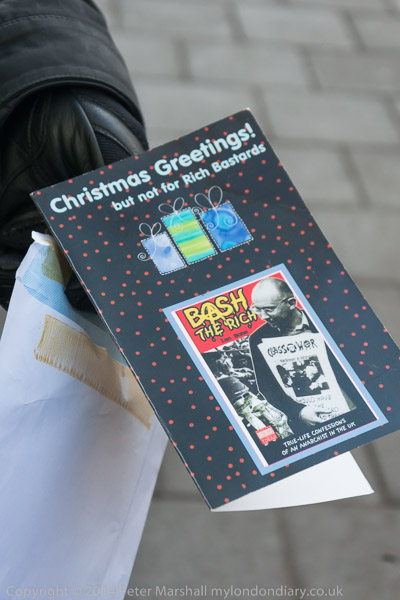
Class War came with banners and posters and a Christmas Card which they presented to Westbrook with the message ‘Christmas Greetings! – but not for Rich Bastards’ and a pictures of wrapped gifts and the cover image from Ian Bone’s autobiography ‘BASH THE RICH’. It’s an interesting read and might make a friend a good Christmas Present, available from Freedom Press at a special discount.

This was one of a number of protests by the residents, Class War and other housing activists, with a video by Russell Brand going viral and a petition with 350,000 signatures that led to Hackney Council entering into talks with Westbrook and resulted in the estate being sold to the affordable housing group Dolphin Living.

Class War: ‘Evict Westbrook, Not New Era’


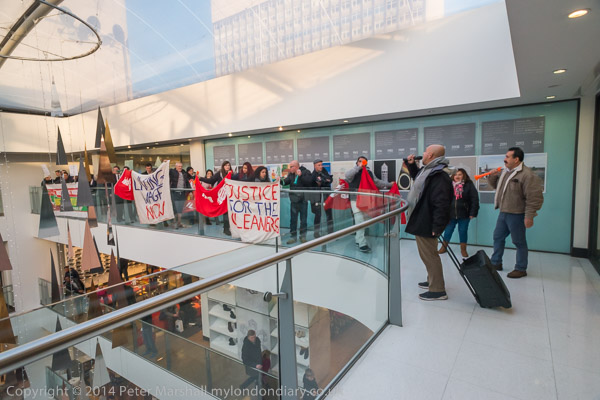
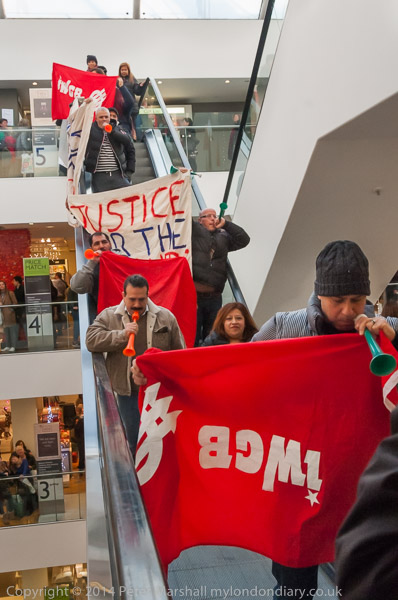
Cleaners Xmas Protest in John Lewis

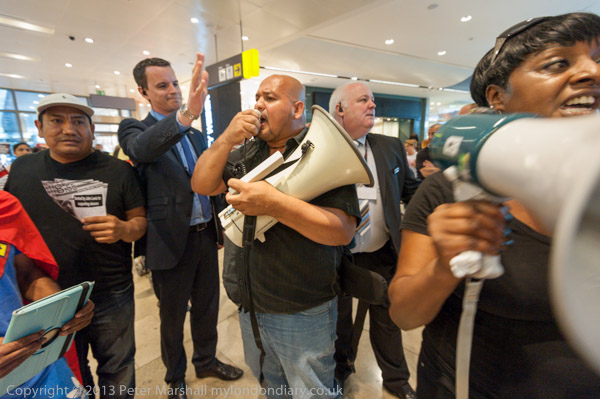
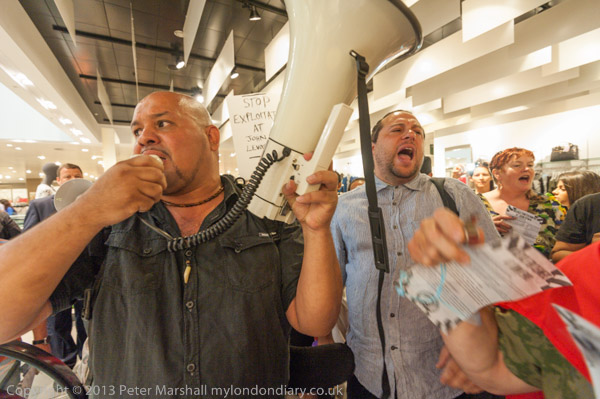
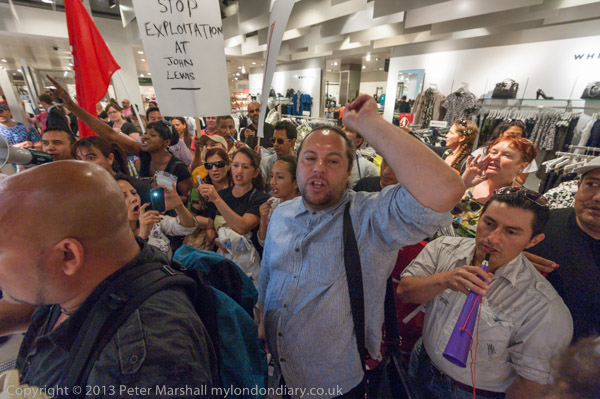
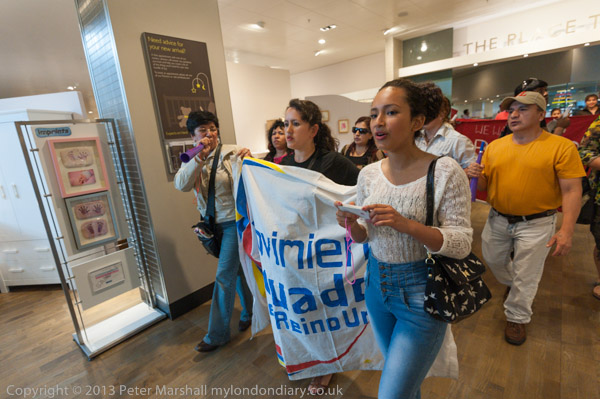
Many shoppers who can afford it go to John Lewis to buy Christmas presents, but members of te IWGB trade union and supporters including some John Lewis customers were there not to buy gifts but calling for the London Living Wage for cleaners there and an end to their treatment as second-class citizens. Many of the Christmas shoppers applauded their noisy protest.

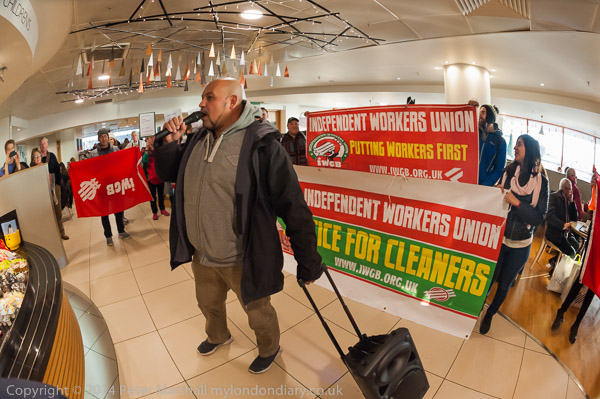
I met the cleaners on the top floor of the store where they had gathered in the restaurant before getting out banners and flags and a megaphone, with IWGB organiser Alberto Durango used to inform customers why they were holding the protest.

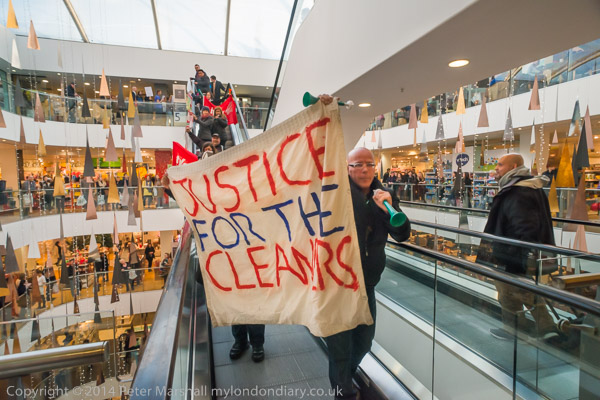
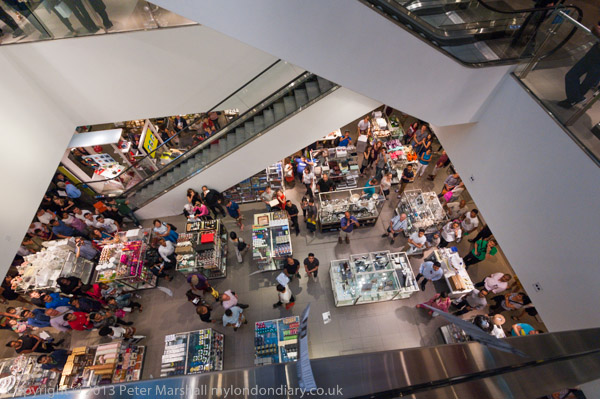
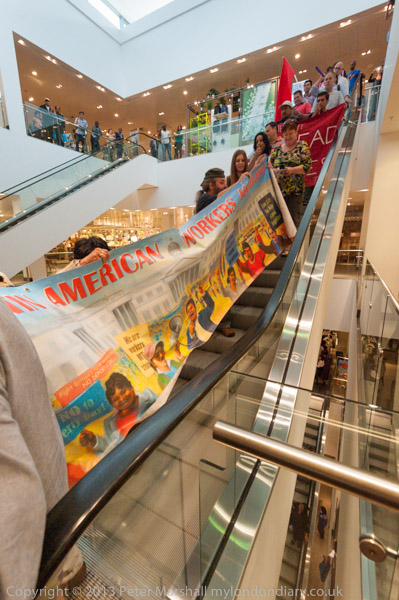
The together with a group of John Lewis customers they slowly and loudly made their way around the top floor to the escalator, moving carefully through the gangways to avoid any damage.

They made their way down floor by floor, pausing on the balconies to display their banners.

John Lewis security staff and managers met the protesters and asked them to stop protesting and leave the store. They continued their way protesting until they reached the ground floor, where police stopped them from leaving. Here the situation became confused, with a great deal of unnecessary pushing by the police which blurred many of the pictures I made. The protesters were trying to get out, store security was pushing them out and the police were pushing them back. Eventually most of the protesters managed to get past the police and the protest continued on the pavement outside. The protest inside the store had been totally non-violent for a little over a quarter of an hour and had the police not decided to push the protesters back they would simply have walked out.

A police officer made an attempt to seize the amplifier the protesters were using, but they held onto it and eventually he gave up. At least one person was arrested and carried out of the store by police, though I think charges were later dropped.

Cleaners Xmas Protest in John Lewis


Low Pay, Lousy Conditions. 3rd Aug 2013

IWGB are harassed by Westfield security after their protest in John Lewis

The two events I covered on Saturday 3rd August 2013 both concerned the fight to get decent wages and conditions for low paid workers in London, something which has largely been left to the left wing and grass roots unions to fight for rather than the big trade unions or the Labour Party.

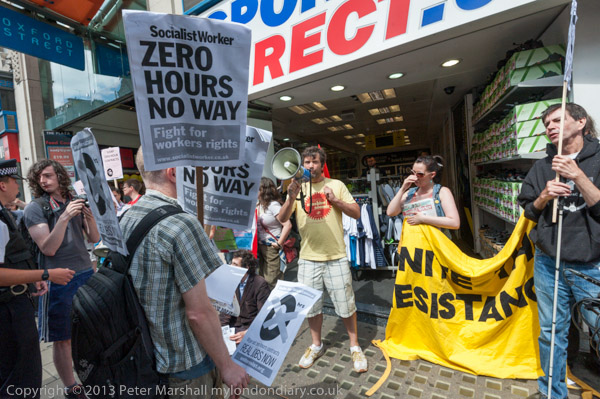
Outside Sports Direct in Oxford St

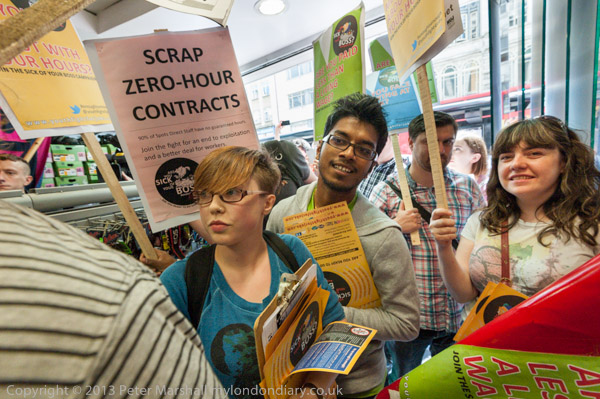
The two major ways that low paid workers are cruelly exploited in modern Britain are through zero-hours contracts and outsourcing, and these were at the heart of the two protests.

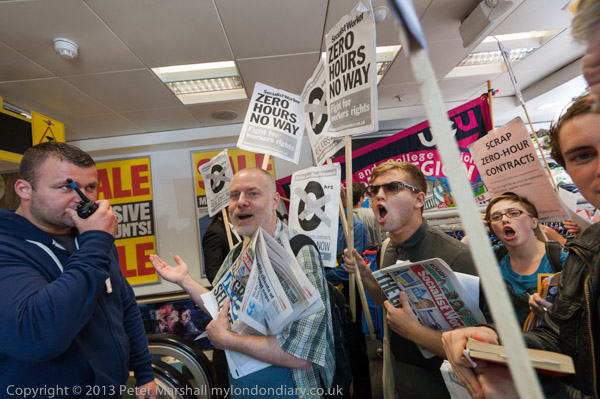
Security stop protesters from going down the escalator in Sports Direct

The first, at Sports Direct in Oxford St called on the company to abandon the use of zero-hour contracts which deprive all their 20,000 part-time workforce (over 85% of staff) sick pay, holiday pay and other employment rights.

The protest continues inside Sports Direct

Zero hours contracts, as I explained on My London Diary “are a peculiar legal casuistry that in essence denies the whole concept of a contract as normally understood, agreements without substance which gravely disadvantage workers … Although they give no guarantee of any income, they oblige the workers to be available for work at the employer’s whim, making it impossible for them to take on other work.”

IWGB get out flags, placards and banners on the top floor of John Lewis

All the advantages are for the employer who has a contract which imposes great constraints on workers while denying them the employment rights which are a part of normal employment and leaving them open to the whims of managers as to whether they work or not. A limited reform in 2015 prohibited terms in them which prevented people working for other employers, but if that leads to them being unable to work when the employer demands them to, they may still find their hours very much reduced in future or their contracts terminated.

And begin their protest in John Lewis in Stratford Westfield

The protest was a noisy one and after around 50 minutes handing out leaflets and speaking to shoppers on the street outside, they surged into the small street level area of the shop, where they made no attempt to push post security men who stopped them at the entry to the escalator leading down to the main store. They continued the protest inside the store being careful not to cause any damage. After around five minutes one of the police officers who were watching came to talk to one of the leading protesters and was told they would leave shortly, and after a few more minutes they did, ending the protest on the pavement a few minutes later.

They take the escalator to continue the protest on the floor below

I made my way to Stratford to join the IWGB union who were making a surprise visit to protest inside the John Lewis store in Stratford Westfield. The cleaners there are outsourced to sub-contractor ICM of the Compass Group, who had recently announced pre-tax profits for the year of £575 million. They pay the cleaners £6.72 per hour, considerably less than the London Living Wage of £8.55 an hour set by the GLA and backed by the London Mayor.

Everyone in John Lewis could hear the protest and stopped to look and listen

Outsourcing enables John Lewis to distance itself from the low pay and poor conditions of service of these workers who share the workplace with the much-lauded John Lewis ‘partners’, who as well as higher pay and better benefits, also get a share in the company’s profits, enabling John Lewis to claim it is a ‘different sort of company’ with a strong ethical basis, but still leave its cleaners – a vital part of its workforce – on poverty wages.

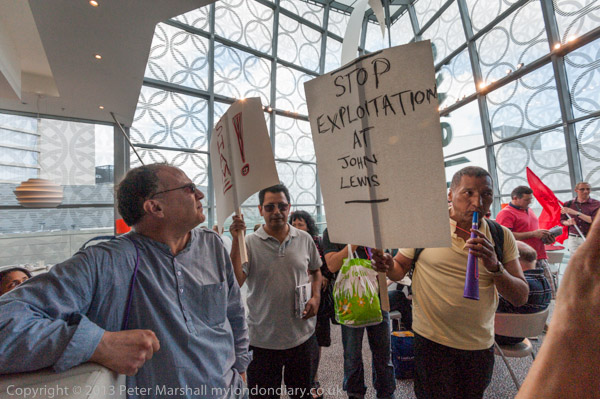
I met the cleaners outside Westfield and walked with them through the shopping centre to John Lewis at its far end, trying with them to look inconspicuous. In the store we went up to the cafe area on the top floor where they got out banners, placards and a large megaphone from their bags and then proceeded to walk around in a noisy protest.

They then took the escalator to the floor below and walked around that making the case for a fair deal for the cleaners to management and customers. Among those protesting (centre, above) was a man who had been a ‘partner’ in the Westfield store and was dismissed after he gave an interview to The Guardian supporting the cleaners’ case for equal treatment, and he was greeted by many of his former colleagues on the shop floor.

I get told I can’t take photographs

After protesting on each floor of the store, there were a numbber of final speeches, including one by the dismissed ‘partner’, on the ground floor before the group left, going out into the Westfield Centre in front of John Lewis. Here they were met by the centre manager and security staff who tried to stop the protest, with some pushing them (and me) around. Here I was told I was not allowed to take pictures, but took little notice. Very slowly we all made our way out of the centre by the nearest exit, still followed by Westfield security, and were met by two police officers who were told the protest was finishing.

Many more pictures at:

Cleaners in John Lewis Westfield
End Zero Hours Contracts – Sports Direct


All photographs on this and my other sites, unless otherwise stated, are taken by and copyright of Peter Marshall, and are available for reproduction or can be bought as prints.


WeWork doesn’t pay

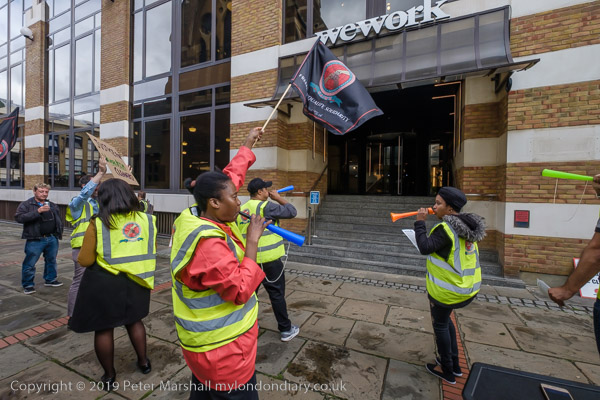
I’d never heard of WeWork before I received an Facebook post inviting me to photograph a protest outside one of their London premises in Shoreditch. The company began in 2010, has its HQ in New York and provides flexible working spaces for companies from 1 to 500 people, equipped, serviced and ready to move in. In London alone it has 49 locations providing shared facilities.

When we started WeWork in 2010, we wanted to build more than beautiful, shared office spaces. We wanted to build a community. A place you join as an individual, ‘me’, but where you become part of a greater ‘we’. A place where we’re redefining success measured by personal fulfillment, not just the bottom line. Community is our catalyst.

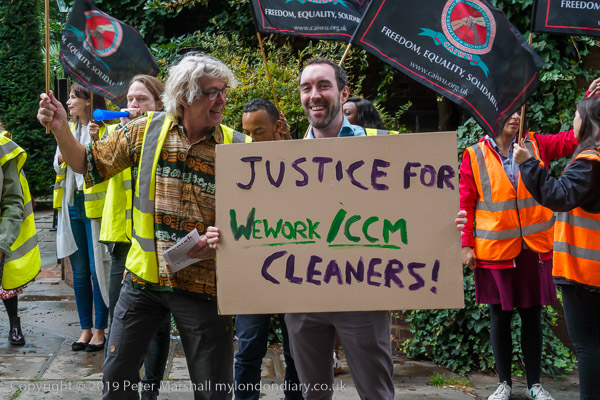
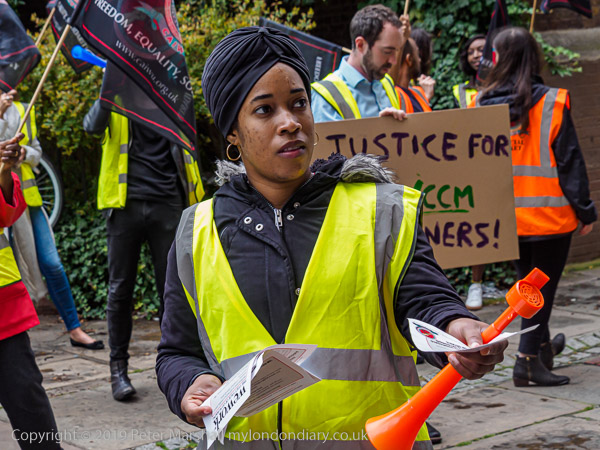
But community doesn’t extend to all that work there, and in particular not to the cleaners who keep these shared office and community spaces beautiful. WeWork outsource their cleaning to cleaning company CCM.

Outsourcing is always a bad deal for workers. The companies bid for contracts almost entirely on price, and they pare down prices by screwing the workers. Low pay, high workloads, the legal minimum terms and conditions and often a lack of equipment and concern over safety combined with bullying management enable outsourcing companies to keep costs to the bone and profits to the company owners.

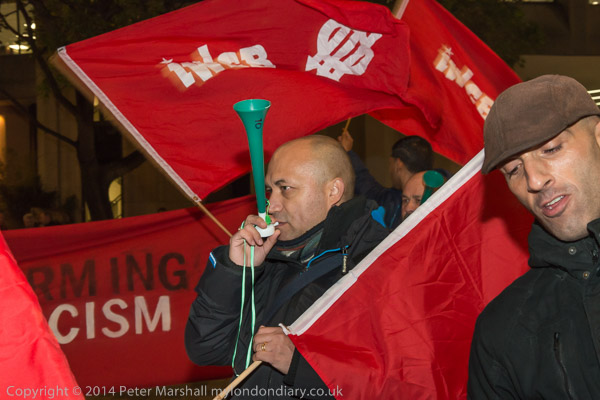
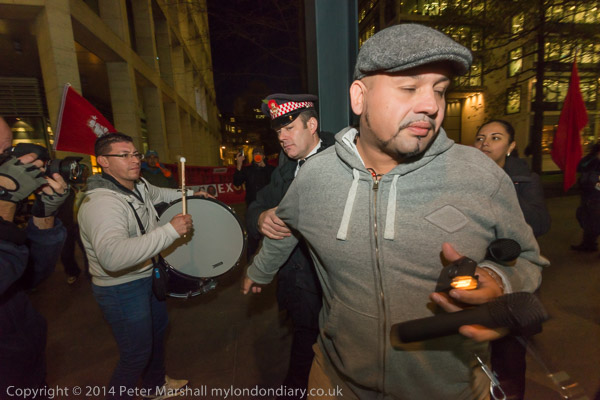
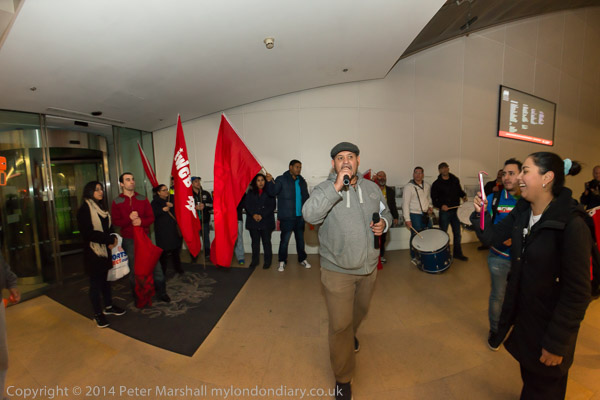
Trade unions are anathema to such companies, and also to many US based firms, and grass roots unions such as CAIWU who manage the difficult job of unionising marginal and often immigrant workers find it hard to get basic rights for their members. Workers who stand up for their rights get victimised, and CAIWU were protesting here as five CAIWU members have been dismissed here in the past few months, with Wework staff members involved in getting CCM to dismiss them.

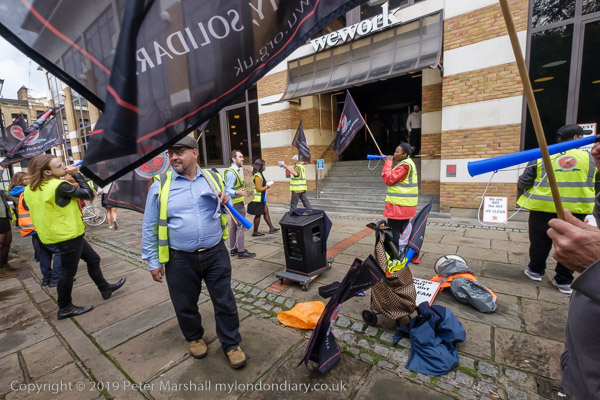
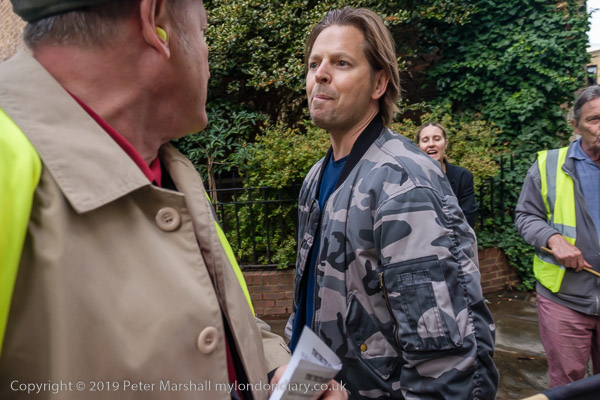
The loud protest outside the offices attracted a great deal of attention, with one local business owner coming to ask them to keep quiet and one man stopping to argue with the protesters, getting quite angry and pushing some of them. But these were the exceptions and many others read the fliers that the protesters were handing out and expressed support, including one team of workers who came out from the building and join the protest.

More at: Wework stop victimising cleaners


All photographs on this and my other sites, unless otherwise stated, are taken by and copyright of Peter Marshall, and are available for reproduction or can be bought as prints.