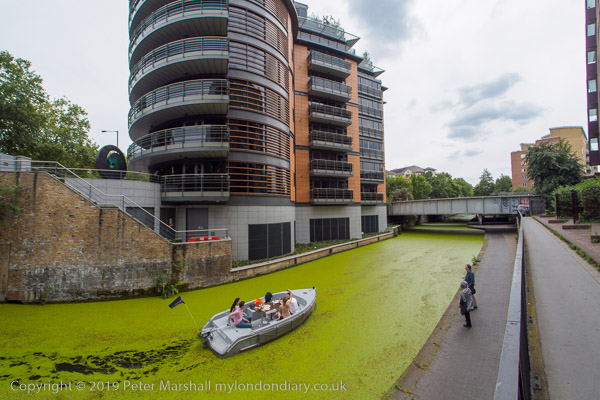
Regent’s Canal 200 coming up

The Regent’s Canal celebrates its 200th birthday next year (or rather it doesn’t but people do.) The Grand Junction Canal Paddington Arm had opened in 1801, and in 1802 Thomas Homer proposed building a canal to link this with the River Thames at Limehouse. In 1811 John Nash who was building Regent’s Park became one of the directors of the new canal company, and he persuaded his friend the Prince Regent (who later became King George IV) to allow his name also to be used for the canal.

The Act of Parliament needed to build the canal was passed in 1812, but construction took some time, not least because Homer ran away with some of the money. He was caught and sentenced to seven years in Australia but for unknown reasons never sent there.
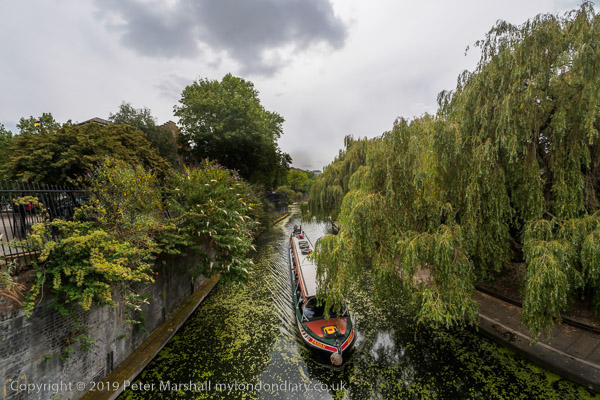
The canal was completed to Camden in 1816, and Islington tunnel in 1819 and the canal was finally opened on 1st August 1820, having cost by then twice the original estimate – some things never change.
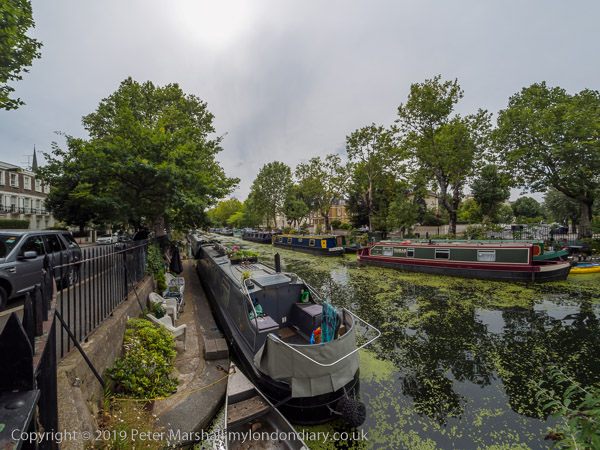
Another of the problems had been a novel lift design by the inventor Sir Willliam Congreve which would have raised and lifted boats without the loss of water in a normal lock, using two sealed chambers to contain thee boats which were arranged to counterbalance each other.

Although the idea was sound, it needed better waterproof seals than were possible at the time, and modifications to Congreve’s designs made by the canal company increased the problems. The lock which had been constructed at Camden market apparently worked when first constructed but the canal company were unable to keep it operating, and it was eventually removed and replaced by a conventional design.

The lock house just west of Camden High Street was retained and is now a branch of Starbucks, equally unsuccesful in making good coffee, but excelling in avoiding paying tax.
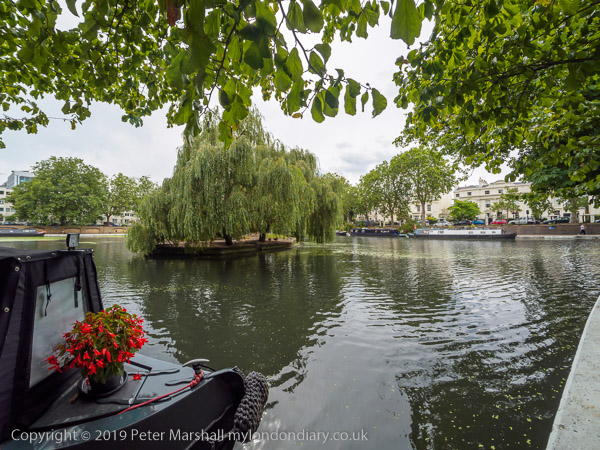
I’ve been working for around 18 months taking photographs along the canal, which I first photographed around 1980, intending to show a small exhibition of them for the anniversary (and rather more online.)

I’d gone up to London to meet friends but they were unable to get there because of a trackside rail fire which put Waterloo out of action, and I took the opportunity to walk the section of the canal from St John’s Wood to Little Venice and then to go on down the Paddington Arm.
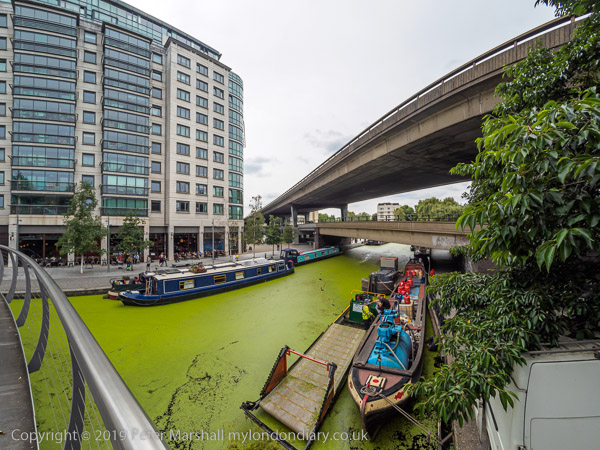
It wasn’t ideal weather for making these pictures and I might find time to go back and retake some of them under better conditions. There is rather a lot of vegetation in some too, and possibly some would be better in winter. Clearly some would benefit from cropping at the top (and possibly some at the bottom too) to give a more panoramic format.

St John’s Wood – Paddington Basin


All photographs on this and my other sites, unless otherwise stated, are taken by and copyright of Peter Marshall, and are available for reproduction or can be bought as prints.

There are no adverts on this site and it receives no sponsorship, and I like to keep it that way. But it does take a considerable amount of my time and thought, and if you enjoy reading it, please share on social media.
And small donations via Paypal – perhaps the cost of a beer – would be appreciated.
We need an Ecocide Law

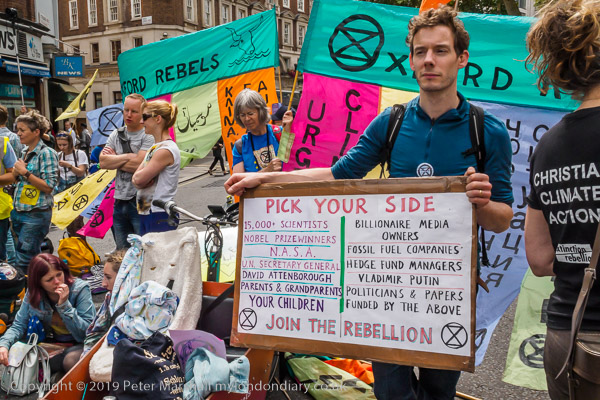
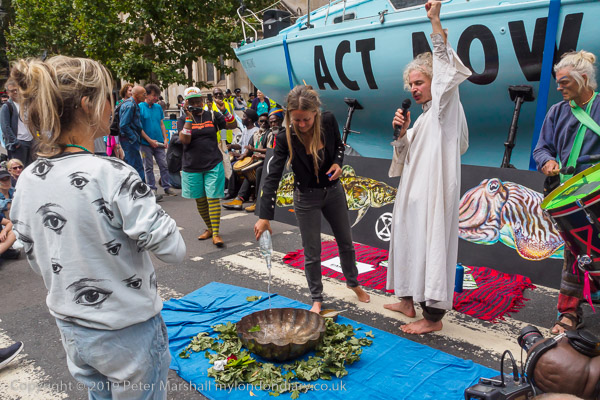
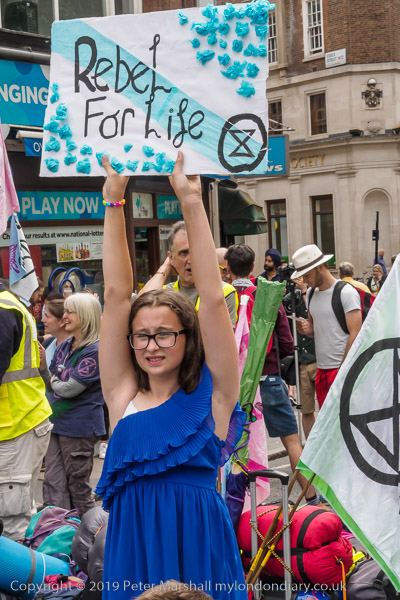
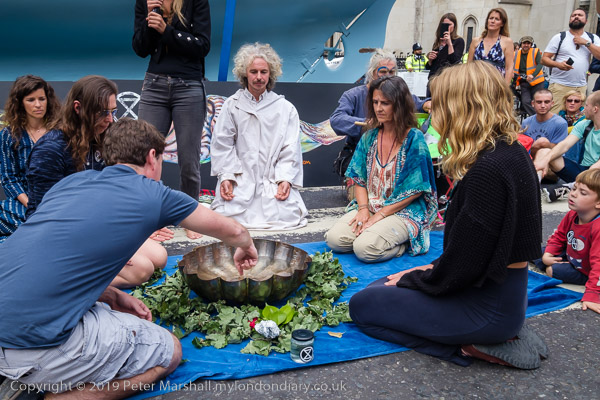
Though I fully support the aims of Extinction Rebellion I do have some issues about the way they go about things. I’ve mentioned before some of the odder ‘New Age’ baggage, and that was very much to the fore when I arrived at the Royal Courts of Justice with some kind of druid presiding over a ceremony with people bringing water from rivers around the country (and some overseas) to tip into a large cauldron.

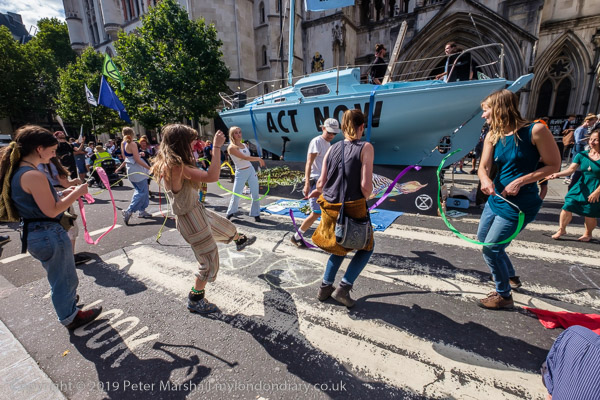
And then there’s the yachts. I just don’t inhabit the kind of milieu where people have yachts, though I did once own a canoe, or rather a kayak. I built it myself as a teenager in the pre-glass fibre era, a wooden framework over which some kind of rubberised canvas was fixed. It’s construction took several years,mainly because I had to save up the cash to buy every next step of the construction, first the plans, then the wood and ply and the canvas.

I was proud when I had it finished, built in my father’s large shed – where he and his father had made carts and other horse-drawn vehicles. But I’d run out of money and couldn’t afford a paddle and it was a long way to any water and I had no means to transport the canoe even to the nearest stream where it could be floated.

It was I think around 18 months later that a relative kindly strapped it to the roof of his car and we made our way the the Thames at Runnymede, along with single paddle handmade from a couple of pieces of wood (again from my father’s shed.) Although I’d been in rowing boats and possibly larger Canadian canoes as a Sea Scout, I’d never been in a kayak before, and it wasn’t longer before I wasn’t in it any more, but looking up at it through perhaps ten feet of murky Thames water from the bottom of the river. I think that was the end of my canoeing project, and after that I stayed on dry land and rode my bike.

So my relationship to water was not perhaps the most sympathetic as I watched those people coming towards the cauldron to add their half pint, and things got worse when people were invited to stir the water and make wishes and then to add flowers and other stuff before the cauldron was carried towards the court and then a token libation poured on the ground.

Of course there were other things going on, including speeches (some very sensible and to the point), music etc. But when a man came to speak about how uplifting his experience of being arrested had been and to encourage us all to do it, again I was rather turned off. Too many of my friends over the years have been harassed by police, fitted up and assaulted; arrest isn’t generally a very positive experience, particularly if you are poor and or from an ethnic minority. Like much about XR I think it is very much a class thing.

But of course we should have strong laws that protect the environment – including the Ecocide Law that Polly Higgins, after whom the pink yacht here was name, fought to get accepted for many years. More generally we need laws that get away from the idea of the land as private property and recognise it as a community resource with which we are entrusted rather than we own.

XR call for Ecocide Law


All photographs on this and my other sites, unless otherwise stated, are taken by and copyright of Peter Marshall, and are available for reproduction or can be bought as prints.

There are no adverts on this site and it receives no sponsorship, and I like to keep it that way. But it does take a considerable amount of my time and thought, and if you enjoy reading it, please share on social media.
And small donations via Paypal – perhaps the cost of a beer – would be appreciated.

Mayfair Mayhem

I don’t like going to Mayfair. Too much conspicuous consumption on display, too much affluence and waste. It isn’t envy – mostly I wouldn’t want those excessively expensive things you see in shops and through windows, nor the expensive menus etc. I’m largely a man of simple tastes, and happier to share expensive works of art in the National Gallery rather than hang them on my own private wall.

In part its the people. Though I’ve known and liked some who are wealthy there are too many who are obnoxious, who look on the people who work for them as dirt, or just couldn’t give a jot about others. Of course there are poor people who are obnoxious too, but generally in ways that are less obtrusive.

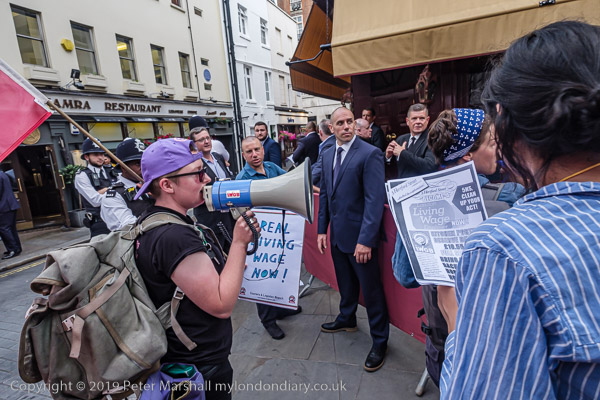
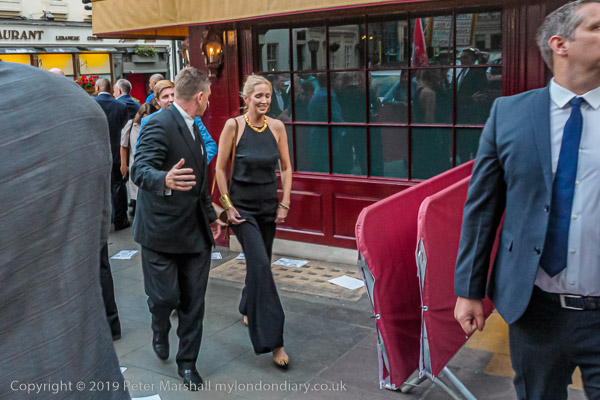
Clubs like LouLou’s with a ‘exclusive’ tag and a membership (in 2017) of £1,800 and described by a fawning article on the Observer website as “the place to be for royals, billionaires, A-list celebrities and socialites” seems to be a magnet for the uncaring and obnoxious, run by the son of Lady Annabel Goldsmith who has given more than £268,000 to Nigel Farage’s UKIP and donated £20,000 to Boris Johnson’s leadership campaign.

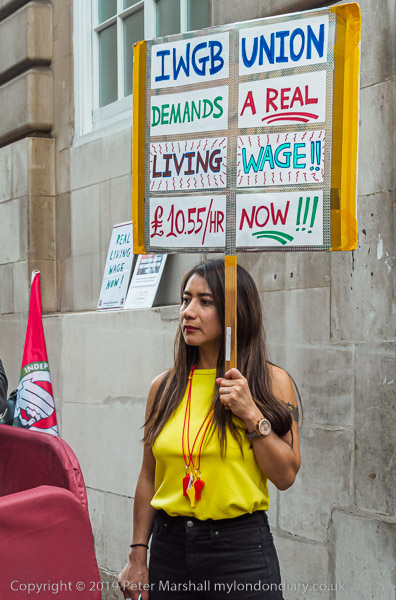
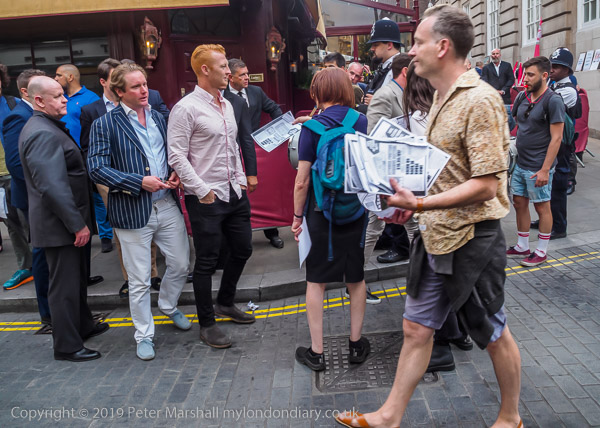
But despite this huge wealth, LouLou’s pays its kitchen porters a pittance, and the IWGB has been supporting their claim for the London Living Wage of £10.55 per hour and for decent terms and conditions of service such as sick pay. Currenly the porters who are mainly migrant workers get only £9 per hour. This was I think their second protest outside the club.

Henry Chango-Lopez, President of the IWGB, said:
“It is unfair that the porters who allow billionaires to wine and dine in luxury and secrecy are left hung out to dry. The porters can see straight through 5 Hertford Street’s bribes and know that outsourcing will only lead to further exploitation. The restaurant needs to give justice to its workers and put them all under the same banner.”

https://iwgb.org.uk/en/post/5cf8f67de9521/iwgb-demands-end-to-poverty

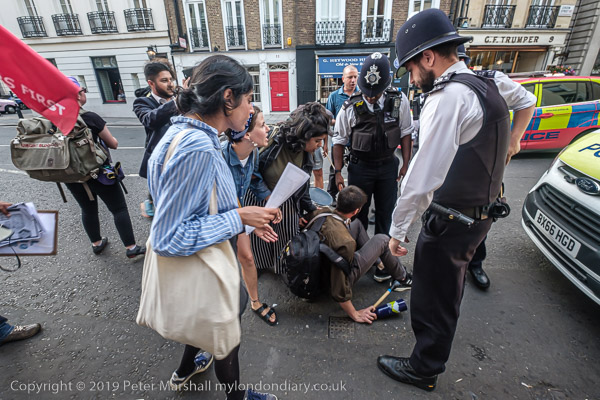
I think it was a genuine accident when police knocked one of the protesters to the ground, an officer walking backward into him. But the whole attitude of the police was deferential to the club owners, their security men and guests but hostile towards the protesters, two of whom were arrested.

More at IWGB demand living wage at LouLou’s .


All photographs on this and my other sites, unless otherwise stated, are taken by and copyright of Peter Marshall, and are available for reproduction or can be bought as prints.

There are no adverts on this site and it receives no sponsorship, and I like to keep it that way. But it does take a considerable amount of my time and thought, and if you enjoy reading it, please share on social media.
And small donations via Paypal – perhaps the cost of a beer – would be appreciated.

Robert Frank’s London

I’ve long been an admirer of Robert Frank’s pictures taken in London, and you can see a fine selection of these in the feature Extraordinary Black And White Photographs Of London In The Early 1950s.

There are at least two videos paging through the book London Wales on You Tube, and I recommend that by Алексей Гуменюк only because I think he is a better page-turner, though his commentary and the sound track perhaps add a certain charm – but you can turn the sound off if it annoys you. Of course if you have read my earlier thoughts on the book or otherwise bought it you can turn the pages yourself. It’s better.

Frank’s London is a city (and City) long lost, with men in bowler hats and men carrying sacks of coal, both enshrouded by the pea-soupers which the coal produced (and in the second part of the book, he goes to photograph the men who mined it.)

Thankfully those days of almost solid air in London are long gone, though I can just remember them. But appearances are deceptive and London’s air is still toxic, leading to huge amounts of miserable illness and an estimated almost 10,000 early deaths each year, with levels of pollutants typically well above the EU legal limits in many streets and schoolyards.

The City too has changed, though still equally toxic. We no longer have an Empire – it had already begun to disappear when Frank coughed his way through those streets, but neo-colonialism has replaced colonialism, and many of the world’s most toxic companies – for example in mining – are still London based, and the City is the money laundering capital of the world.

Kids march for more school

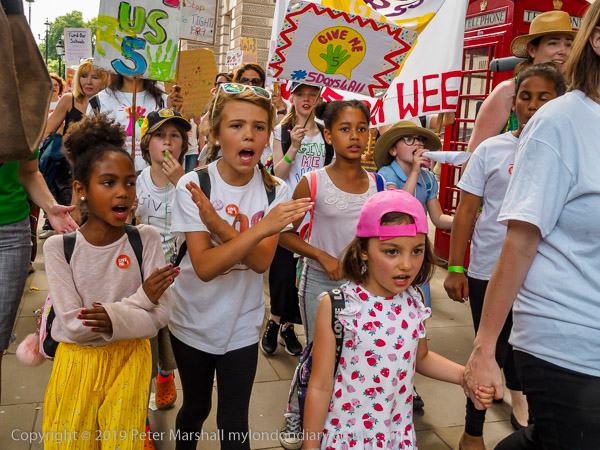
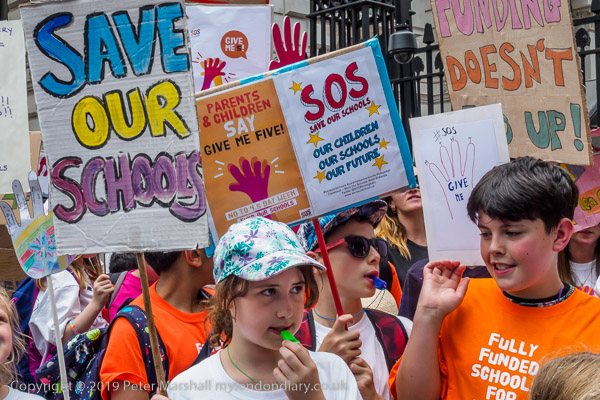
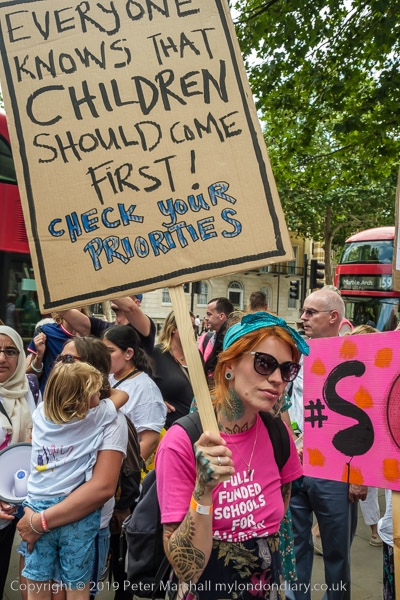
Whatever is wrong with modern children? I just cannot imagine myself at primary school protesting at getting an extra half-day off school. We would have cheered.

Of course parents are likely to be upset. Having to find some way to look after their offspring on a Friday afternoon when in most families both parents will be at work. It must be bad enough having to make arrangements for the school holidays without this extra burden,

While I was teaching we did get the occasional day where school closed and we were sent home early, and I think we were generally rather pleased, particularly if it was a day when we were down to teach 3G last period. Though I suppose we might have got a little concerned if it were happening on a regular basis, and particularly for some of the classes who were nearing their GCSE or A level exams – and I think there were some times when these exam classes remained for lessons when others left early.

But now of course we have exams at every level, the dreaded SATs, starting in the May of Year 2, when children are only 7. Some schools add to the training in terror by making them take ‘optional SATs’ at the end of every year there isn’t a real SAT test (the next one comes for 11 year olds in Year 6.)

And teachers, particularly head teachers, are of course concerned about the results, as they place their school in the league tables. So concerned that although they only take place for a short period the SATs have come to dominate the whole year’s work in most of our schools. Schools that want to be seen as successful have had to change their whole ethos to “teach for the tests.” It shouldn’t be so.

It was of course a fiction that children were not tested before the SATs. At secondary level children came to us with the results of properly standarised tests from the NFER, tests that were adminstered with none of the anguish and stress of the SATs, which were used to diagnose a pupil’s needs and not to judge schools and which were considerably more useful and reliable, and were not the tail wagging the dog of the school.

As parents, we sent our children to the local schools. The primary school they both went to was a happy school and well run. It tried to continue that way when the SATs came in (fortunately after our children had gone on to the local secondary) but the results of the first year were miserable compared to the other local schools that had drilled their children for the exams from the start, and they were forced to change.

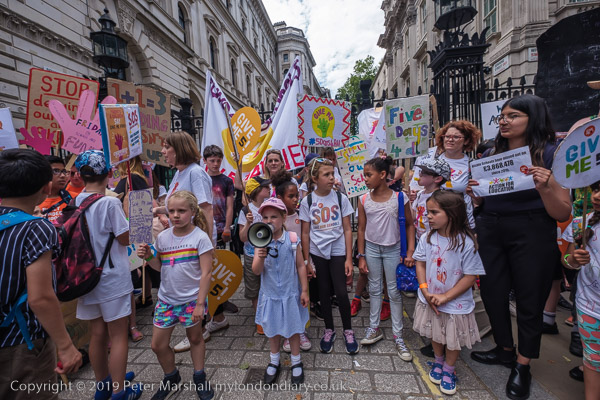
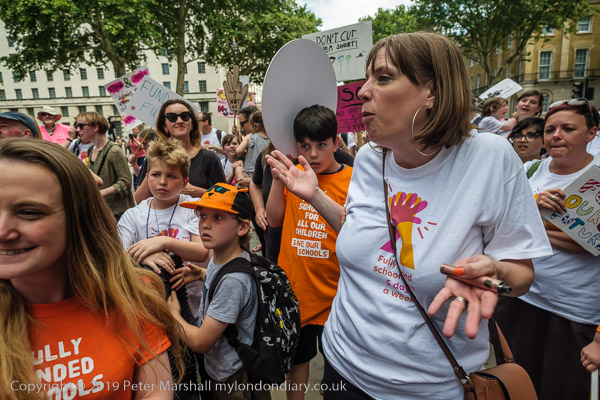
This protest, though I think driven by exam pressures, was not about getting rid of the exams but about funding. Schools have suffered under austerity, and those in the more difficult areas have suffered more than those with wealthier parents, though even those have problems. Parents associations which used to raise funds for extras are now having to do so for essentials, and parents in many schools are now asked for ‘voluntary contributions’ to our free education system. Though with various reforms by both New Labour and Tories we hardly have a system, more a mess.

This protest, like so many schools, was also funded by voluntary contributions, crowdfunding led by Labour MP Jess Phillips who also led the children along Whitehall to Downing St.

Give Me Five days


All photographs on this and my other sites, unless otherwise stated, are taken by and copyright of Peter Marshall, and are available for reproduction or can be bought as prints.

There are no adverts on this site and it receives no sponsorship, and I like to keep it that way. But it does take a considerable amount of my time and thought, and if you enjoy reading it, please share on social media.
And small donations via Paypal – perhaps the cost of a beer – would be appreciated.

Carnaby St show

A few years ago as I was walking down Regent Street, a German tourist stopped me and asked me the way to Carnaby St. I told him he needed a time machine to go back 40 years before more helpfully pointing out the right direction.

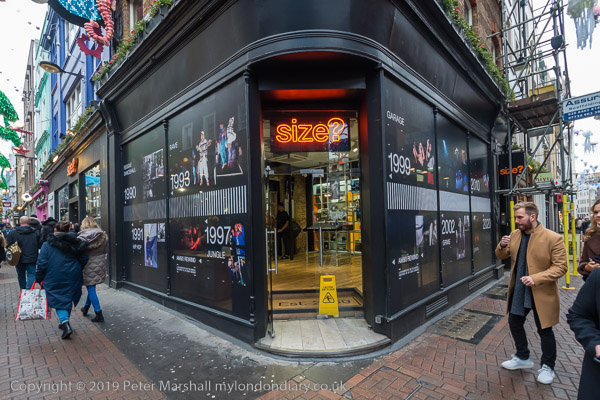
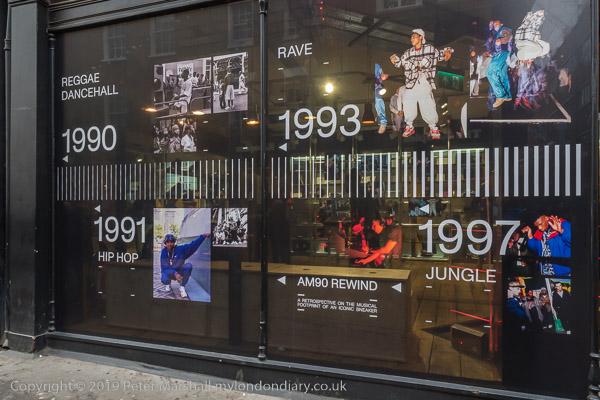
But last Saturday I went back there for a quick look at a celebration of an event only 30 years ago, on the windows of a shop called Size?

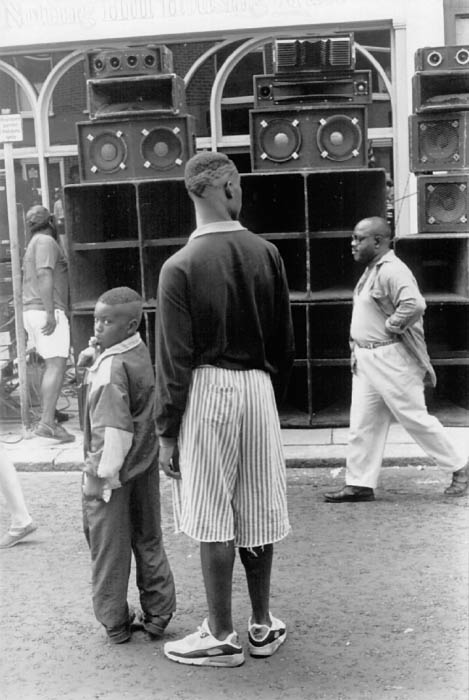
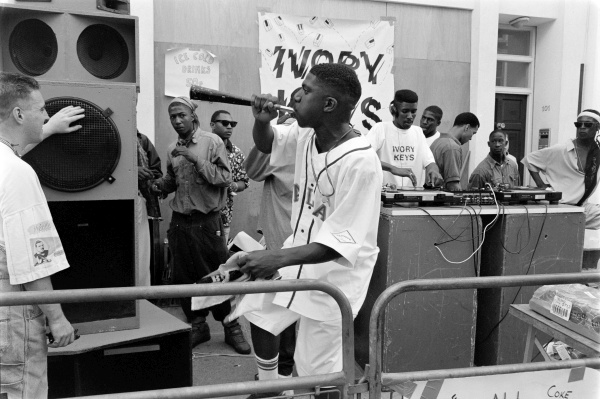
This is a temporary display, for one week only, tracing a little of the history of a trainer, the apparently iconic Nike Air Max 90 introduced in 1990 and since with many variations, and back in 1990 I made a picture in Notting Hill in which the trainer can be clearly seen.

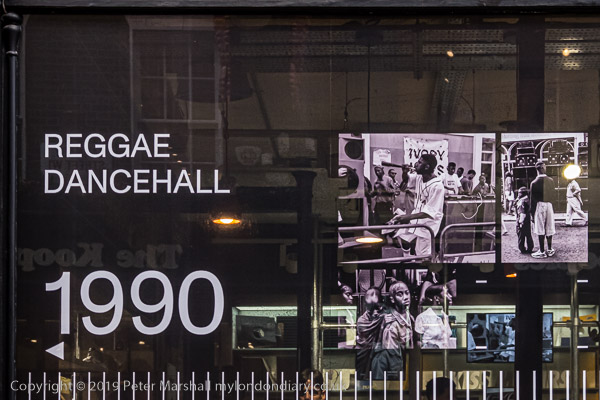
You can see that picture, along with two others from Notting Hill on the shop front, and also on a large screen inside the store.

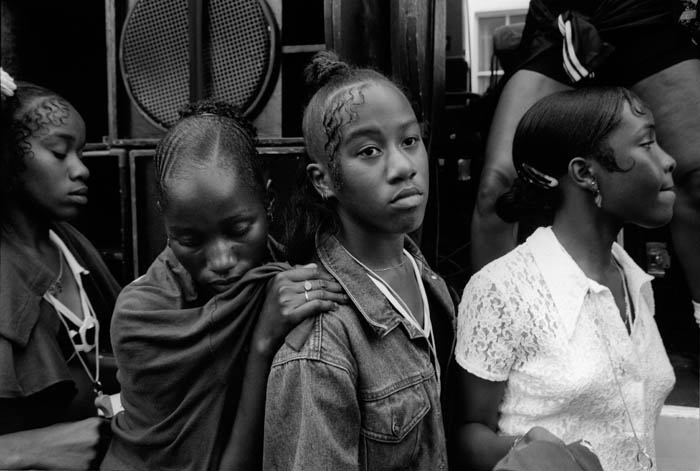
My favourite of the three images is this line of girls beside a sound system on a lorry going down Ladbroke Grove. You can see these two and others in my contribution to the 2008 show, English Carnival.

The third of my images – in the picture above both on the store front and rather blue on a screen inside – is one that didn’t feture either in the 2008 show or in my recent Café Royal Book on Notting Hill, and I think may not have been published before.

All three images I think embody something of the spirit of carnival, and I was pleased to see them being used – also in some online posts and a printed catalogue from Size?.

Readers of this post who have access to academic journals on line may like to read the article Notting Hill in Carnival which features 20 of my Notting Hill pictures with text by George Mentore them (including one of those here) as well as a more general article.


All photographs on this and my other sites, unless otherwise stated, are taken by and copyright of Peter Marshall, and are available for reproduction or can be bought as prints.

There are no adverts on this site and it receives no sponsorship, and I like to keep it that way. But it does take a considerable amount of my time and thought, and if you enjoy reading it, please share on social media.
And small donations via Paypal – perhaps the cost of a beer – would be appreciated.

Shock treatment

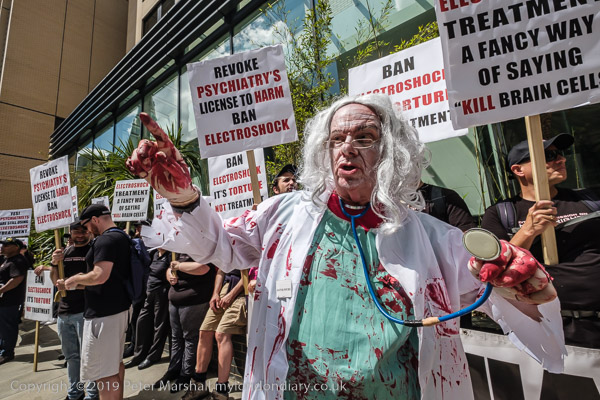
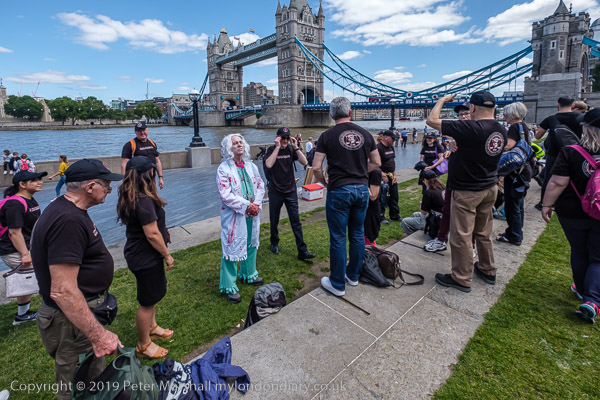
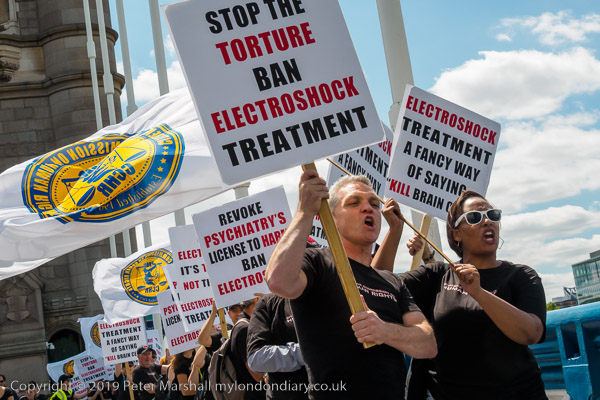
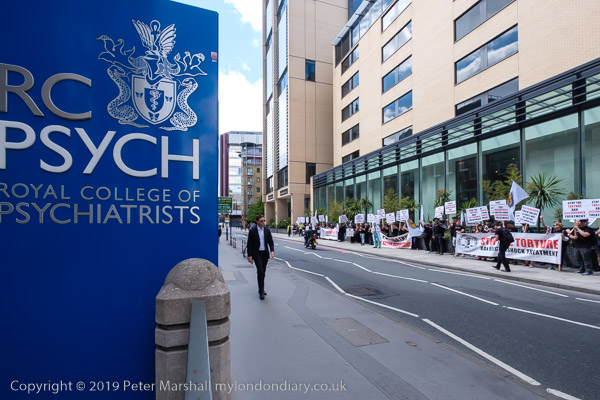
I hadn’t really realised what I was letting myself in for when I went to photograph a protest by the Citizens Commission on Human Rights against the use of Electroconvulsive Therapy (they call it ‘Electroshock treatment’.)

For once I hadn’t done my research, but had just seen the Facebook event page and thought that it might be interesting and the weather was good and I wanted to get out and away from the computer. Had I followed normal practice and done a few seconds of research on the CCHR I might have found something else to do on that Monday afternoon.

Although I’ve never had electrical shock treatment myself, it is something I’ve had some personal involvement with as family members have suffered from it – though now in the distant past, and they are long dead. But I’m convinced they were permanently harmed by it.

Back in the 1950s and 1960s it was carried out rather more crudely (and certainly more cruelly) than now, with larger currents and often if not usually without anaesthetic. I find it hard to understand why such random and often harmful practice was ever allowed to be used on patients with little or no understanding or real research and am convinced that though they survived the treatment it was a factor which led to early deaths of some of my family members.

Here’s something the BMJ wrote in an introduction to a debate in their pages earlier this year (the full article is only available to subscribers)

Electroconvulsive therapy (ECT) involves sending an electric current through the brain to trigger a seizure. The treatment is given under general anaesthetic with muscle relaxants, so the body does not convulse during the seizure.
No-one is entirely sure how it works, but it is thought to change the way brain cells interact in parts of the brain involved in depression. ECT use in the UK continues to fall, but remains controversial.

https://www.bmj.com/company/newsroom/should-we-stop-using-electroconvulsive-therapy/

What a few seconds of research after the event revealed is that the CCHR is a part of the Church of Scientology, an cult that engages in its own form of brainwashing and which I want nothing to do with. An article in The Atlantic describes the CCHR as “a subsidiary (of the Church of Scientology ) whose sole aim is to discredit and dismantle the field of psychiatry” and its author looks at the “classic propaganda techniques” it uses.

[You can read more about Scientology (if you need to) on Wikipedia and in the 1991 Time Magazine exposé, The Thriving Cult of Greed and Power. ]

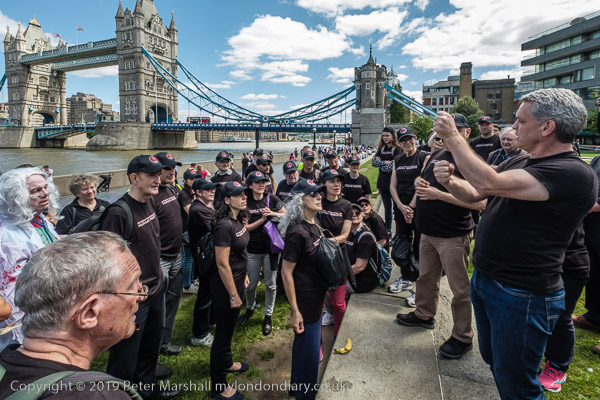
I had realised there was something rather odd about the event as I sat waiting for the protesters to gather and the protest to begin at Potter’s Fields next to Tower Bridge. And my doubts were reinforced as I listened to Brian Daniels, Executive Director of CCHR, giving out precise instructions for the protest. There was just something entirely corporate about the whole event, even in the firm handshake and confident gaze of Daniels as he welcomed me to the event. It just wasn’t like a normal protest.

Despite my doubts I decided to go ahead and photograph the event as I would any other protest and you can see more pictures at End Inhuman Electroshock treatment.

October 2019 complete

It’s taken me a lot of work to get all my pictures from October sorted out and on the web on My London Diary, and two trips away from home didn’t help. Apart from those visits to Unstone, Sheffield and Matlock it was also a busy month with more protests by Extinction Rebellion and around their actions, ending the month with 39 posts including over 1500 pictures.

October 2019

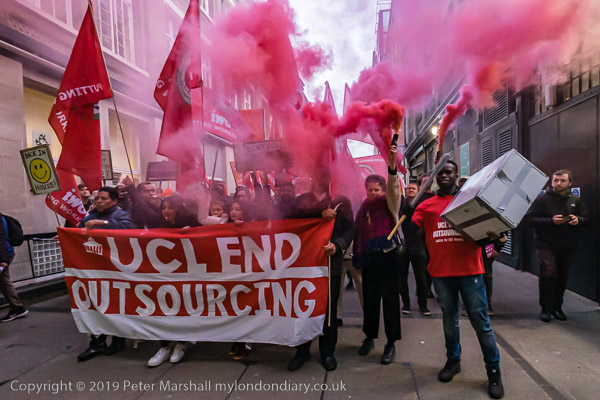
IWGB Protest UCL outsourcing

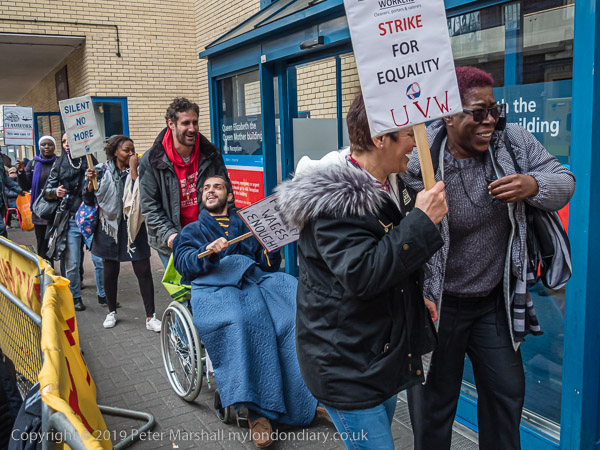
St Mary’s Hospital Strike For Equality
Support Chilean protesters
Algerians call for free elections
Assange – Tell the Truth BBC
Iraqi solidarity with Iraq protesters

UFFC 21st remembrance procession
End Family Courts aiding violent fathers
Against compulsory relationship education

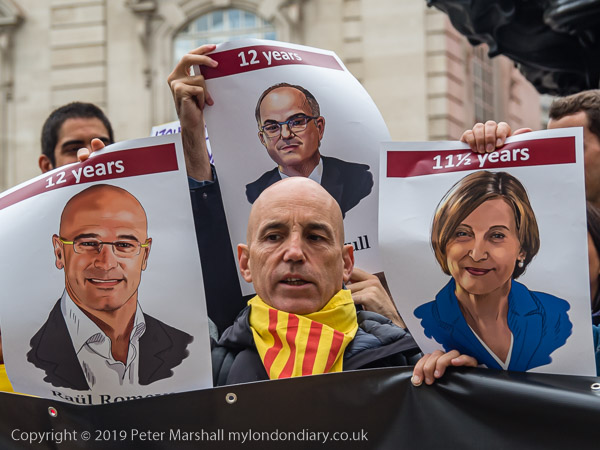
Catalans say release Political Prisoners
Lumsdale & Matlock
Matlock Town Walk
Cuba leads on climate say RCG
March for a People’s Vote
Windsor

XR demands Murdoch tell the truth
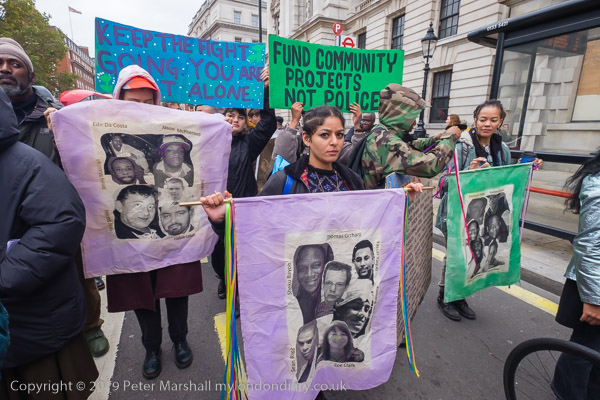
XR defies protest ban
Protest defends freedom of speech
XR No Food No Future protest
Rally supports Bolivia’s Evo Morales
Against Ecuadorian President Moreno
Solidarity with Rojava – Kurdish Syria

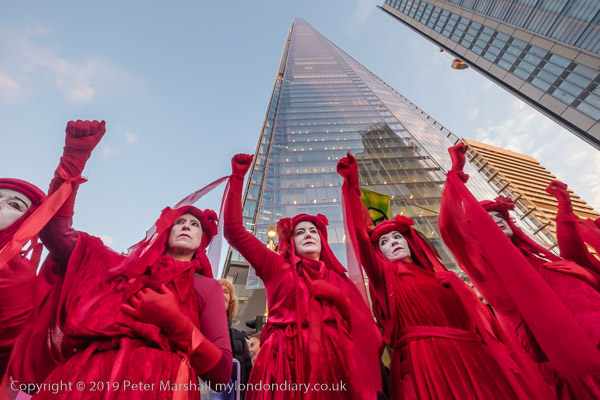
XR Strength in Grief Procession
Brexit unfair for EU citizens
Trade Unionists join the Rebellion
Brick Lane Night
Bangladeshi students protest campus violence
Extinction Rebellion Day 3
Biofuel Watch – Axe Drax at BEIS
All Rise For Climate Justice
Stirling Prize for Architecture
Extinction Rebellion continues

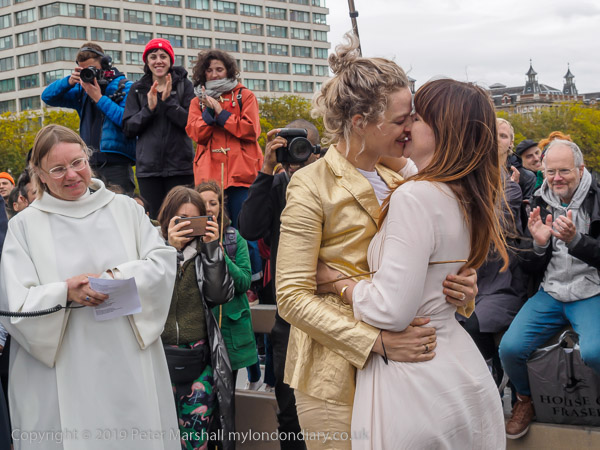
XR Rebels marry on Westminster Bridge
Extinction Rebellion occupy Westminster
Sheffield, Yorkshire
Unstone, Derbyshire
IWGB at Mayfair club Loulou’s
Saudis support killer Prince MBS
Justice For Jamal Khashoggi

London Images


Stonewall 50

At 1:20 a.m. on Saturday, June 28, 1969, police began a raid on the Stonewall Inn in Greenwich Village, New York, a Mafia owned pub according to Wikipedia known to be popular among the poorest and most marginalized people in the gay community: drag queens, transgender people, effeminate young men, butch lesbians, male prostitutes, and homeless youth.”

Police raids on gay locations were not uncommon, but usually the police who took money from bar owners and tipped them off in advance of the raids, but this hadn’t happened at Stonewall that night, probably because the police felt they weren’t getting enough payback.

In the raid, police separated all those dressed as women and as usual in such raids tried to get them to go into the toilet with a woman officer to be examined – and, if they had male genitals, arrested. But people refused, and men refused to show police their ID.

You can read a lengthy account of how the events developed in the Wikipedia article. The riots that arose from the raid, largely started by lesbians and transgender people who stood up to the police continued the following day and are generally accepted to have begun the gay liberation movement not just in the United States but elswhere across the world.

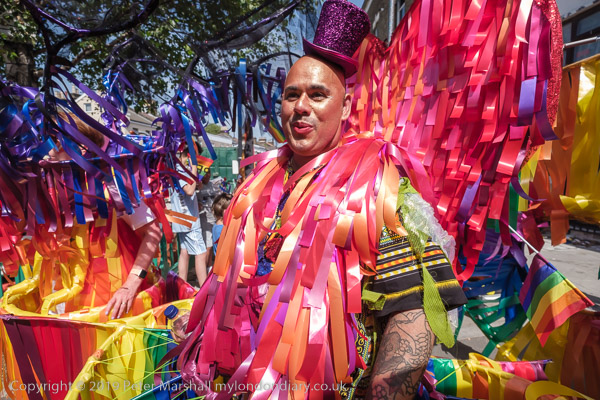
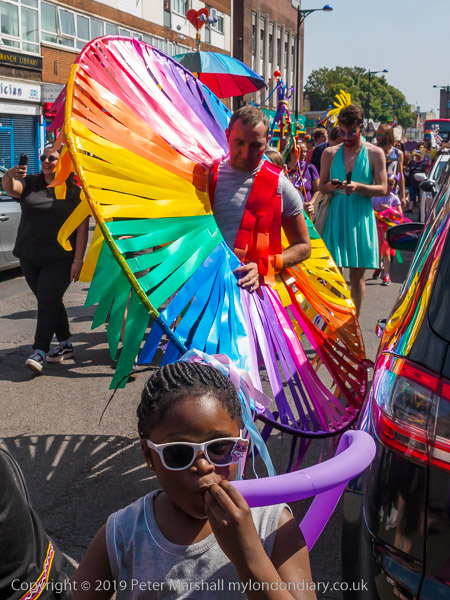
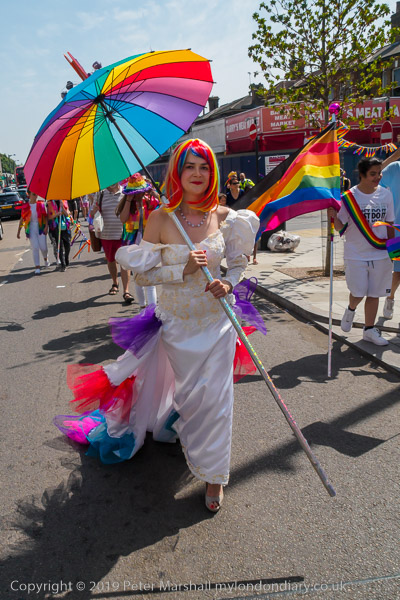
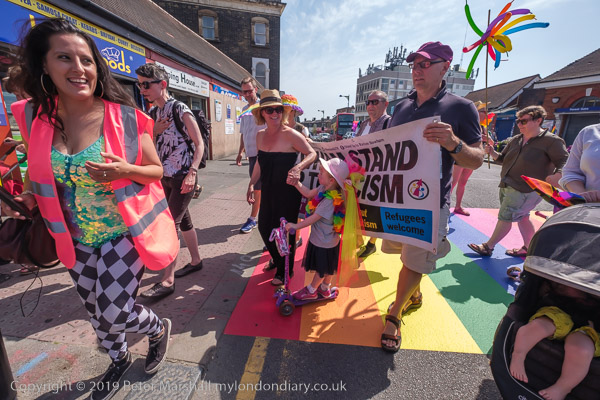
The annual Pride celebration in London is now largely a corporate event, a parade rather than a march, and although this year it was said to celebrate the 50th anniversary of Stonewall, to many it hardly seemed to do so in an appropriate fashion. But there are other Pride celebrations around London that now seem more authentic, and the Forest Gayte Pride festival had the advantage of taking place on the actual 50th anniversary of Stonewall, with events on the 28th and 29th June.

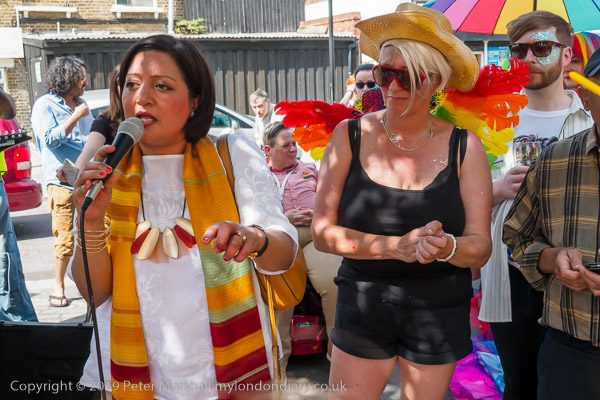
I arrived a few minutes late for the start of the Pride march in Forest Gate, which appeared to have started a little earlier than the time I had been given, but managed to photograph its final few hundred yards and the speeches in the Pride Market at its conclusion. Unlike the huge event in central London, this was very much a community event, and far more interesting for that.

Among those who took part in the march and spoke was the local mayor Rokhsana Fiaz. She replaced the former mayor of Newham, Robin Wales, who had been mayor since the post was established in 2002 but was deselected in 2018 after a challenge to questionable voting procedures by affiliates which would have kept him in power despite the votes of local party members.

More at Forest Gayte Pride celebrates Stonewall 50


All photographs on this and my other sites, unless otherwise stated, are taken by and copyright of Peter Marshall, and are available for reproduction or can be bought as prints.

There are no adverts on this site and it receives no sponsorship, and I like to keep it that way. But it does take a considerable amount of my time and thought, and if you enjoy reading it, please share on social media.
And small donations via Paypal – perhaps the cost of a beer – would be appreciated.

Underground Photography

Like many photographers who work in London I spend too much of my time underground, travelling around from place to place. Taking the Underground is usually the fastest way to get around London other than riding a bike as traffic congestion so often holds up buses and taxis (which are prohibitive unless you work in advertising or fashion.)

Taking my bike to London is possible, but adds complications like finding a safe place to lock it up (and nowhere in London is really safe from bicycle theives) and, particularly with marches where I may end up taking pictures a mile or more from where I started, having to walk back and find it. So usually I rely on buses when I’m not in any hurry or the tube when I am and the journey is too long to walk.

I decided to photograph on buses.

Back around 1990 I first saw the pictures taken on the Underground by Paul Baldesare, who became a friend and one I’ve shown work together with on numerous occasions. The first was a show at the Museum of London and as Paul already had some fine work on the tube, I decided to make a set of images for it of people on London’s buses. Paul’s early work was in black and white, but later he went on to photograph the tube in colour.

Another photographer who has photographed underground for a long period of time is Bob Mazzer, and you can find several features on his work on Spitalfields Life (there are links at the bottom of that page to the others.) His pictures are more varied than Baldesare’s and are the pictures of a regular daily traveller recording odd moments and unusual scenes.

Published now by Hoxton Mini Press. is a book of the work of photographer Mike Goldwater, London Underground 1970-1980, and you can see a fine selection of pictures on the BBC web site feature Candid moments on the London Underground.
And for a final mention, Stefan Rousseau, whose more recent pictures appeared in a Metro feature, Photographer secretly documents people’s sleepy commutes on London’s underground in April 2019.

Of course there are many other photographers who have photographed on the London Underground, including some well-known names, and several photographers I know whose projects I haven’t mentioned, along with the many thousands who have posted their phone images to Instagram and elsewhere. And of course there are other cities and underground networks. But the examples I’ve linked to are some that have particularly interested me and that I hope readers of this post will enjoy. Apologies to all those not mentioned!


All photographs on this and my other sites, unless otherwise stated, are taken by and copyright of Peter Marshall, and are available for reproduction or can be bought as prints.

There are no adverts on this site and it receives no sponsorship, and I like to keep it that way. But it does take a considerable amount of my time and thought, and if you enjoy reading it, please share on social media.
And small donations via Paypal – perhaps the cost of a beer – would be appreciated.