Jews, a Bishop and the Sally Army

Jews, a Bishop and the Sally Army: Continuing my walk in October 1988 around Clapton – the previous pos was Hats, Bags, Passports, Mansions, Biocrin & Hollywood.

Jewish Free School,  Lea Bridge Road, Clapton, Hackney, 1988 88-10b-41-Edit_2400
Jewish Free School, Lea Bridge Road, Clapton, Hackney, 1988 88-10b-41

The Jewish presence in Hackney dates back to the late 17th century and grew greatly in the late nineteenth and early twentieth century, and by the 1950s it was said to have the largest and densest Jewish population in the country. Many were supporters of the Labour party and local councillors and leaders, and among former Jewish Free School pupils is Labour life peer Maurice Glasman, Baron Glasman. Other well-known Jewish people who grew up in Clapton include Helen Shapiro, Harold Pinter, Lord Levy and Lord Sugar. Since the 1970s the area has been home to a fast growing ultra orthodox community.

The Clapton Jewish Day School was established next to the synagogue in Lea Bridge Road in 1956, though these splendid gates may be older. The school moved to Cazenove Road in 1973 as the voluntary aided Simon Marks Jewish Primary School and is the only remaining mixed Jewish school in inner London.

Clapton Federation Synagogue, Lea Bridge Road, Clapton, Hackney, 1988  88-10b-43-Edit_2400
Clapton Federation Synagogue, Lea Bridge Road, Clapton, Hackney, 1988 88-10b-43

Clapton Federation Synagogue or Sha’are Shomayim (Gates of Heaven) was founded in 1919 by Elias Ephraim Frumkin (1880-1958) whose family were well-known East End wine merchants Frumkin & Co. In 1932 the synagogue moved into this fine Art Deco new building by architect Marcus Kenneth Glass with a polychrome facade and mosaics at 47 Lea Bridge Rd. In 2005 the congregation moved out to hold its services in the Springfield Synagogue on Upper Clapton Road. Attempts to have the building listed unfortunately failed and it was demolished in 2006, replaced by a rather ugly large block of flats.

The Frumkin family had settled in Whitechapel around 1893, and opened a shop the following year selling Kosher wines on the corner of Commercial Road and Cannon Street Road. Elias, the son of the founder developed the Cherry Brandy for which the company became famous. The firm which supplied wine for many weddings and Bar Mitzvahs later opened branches in Edgware and the West End but finally closed in 1997.

Bishop Wood's Almshouses, Lower Clapton Rd, Lower Clapton, Hackney, 1988 88-10b-44-Edit_2400
Bishop Wood’s Almshouses, Lower Clapton Rd, Lower Clapton, Hackney, 1988 88-10b-44

This is said to be Hackney’s oldest building. These Grade II listed almshouses facing Clapton Pond were opened in 1665 by Dr Thomas Wood, who had been born in Hackney, to provide homes for 10 poor elderly widows over the age of 60 years. In 1671 Wood was made Bishop of Lichfield and Coventry, but he preferred to stay living at home in Hackney and was eventually suspended as Bishop in 1684.

A very small chapel, with just 10 seats for the widows was added in 1845, and the almhouses refurbished in 1888, then in 1930 converted by the trustees into five self-contained apartments with separate facilities. After being requisitioned in World War II they reopened in 1948, and were further refurbished in 1985. Around 2010 the trustees decided that they were too expensive to maintain and bring up to modern standards and moved the residents to refurbished almshouses nearby in 2013. The buildings were put up for sale.

Lower Clapton Rd, Lower Clapton, Hackney, 1988 88-10b-46-Edit_2400
Lower Clapton Rd, Lower Clapton, Hackney, 1988 88-10b-46

Pond House at 162 Lower Clapton Rd was clearly not in the best of condition when I photographed it in 1988, despite having been Grade II* listed back in 1951. It has this fine semicircular Doric porch and was built in a Greek Revivial style for City stockbroker Benjamin Walsh between 1802 and 1803. Walsh became an MP in 1808 to escape bankruptcy proceedings but had to sell the house in 1809. He was expelled from the Stock Exchange and convicted of felony after defrauding a fellow MP of £22,000 but was pardoned for dubious reasons.

In 1877 it changed from a family house to a Girl’s school which closed in 1904, and it then became a clothing factory. In 1939 it became a social club for volunteers in the Hackney Rifle Regiment, who made several alterations and repairs causing it to be placed on English Heritage’s At Risk register. The social club sold it for development in 2008.

After a two rejected planning applications it was finally redeveloped by One Housing Group with four homes in the main building and it looks in fine condition as pictures on the The Clapton Pond Neighbourhood Action Group web site show.

Former Salvation Army HQ, Congress Hall, Linscott Rd, Lower Clapton, Hackney, 198 88-10b-31-Edit_2400
Former Salvation Army HQ, Congress Hall, Linscott Rd, Lower Clapton, Hackney, 198 88-10b-31

You can still see the shell of the former London Orphan Asylum dating from around 1823 by William Southcote Inman. The orphanage moved to Watford in 1867. In 1882 it became the the Salvation Army’s Congress Hall with a meeting hall built in what had been an open courtyard that could seat 4,700. Until 1929 it also housed the Salvation Army’s training college with accomodation for 150 men and 150 women. Congress Hall closed in 1970 and the building was acquired by Hackney Council, who demolished most of the building in 1976 to build Clapton Girl’s School on the site, leaving only the west portico and its flanking colonnades standing.

Former Salvation Army HQ, Congress Hall, Linscott Rd, Lower Clapton, Hackney, 198 88-10b-34-Edit_2400
Former Salvation Army HQ, Congress Hall, Linscott Rd, Lower Clapton, Hackney, 198 88-10b-34

In 2003 permission was granted for a rear extension and use by The Learning Trust Hackney as the Portico City Learning Centre, with work costing £1.9m supported by a Heritage Lottery Grant which restored the deteriorating structure. You can read a recent detailed heritage statement on the Hackney Council web site.

Lower Clapton Rd, Lower Clapton, Hackney,  1988 88-10b-24-Edit_2400
Lower Clapton Rd, Lower Clapton, Hackney, 1988 88-10b-24

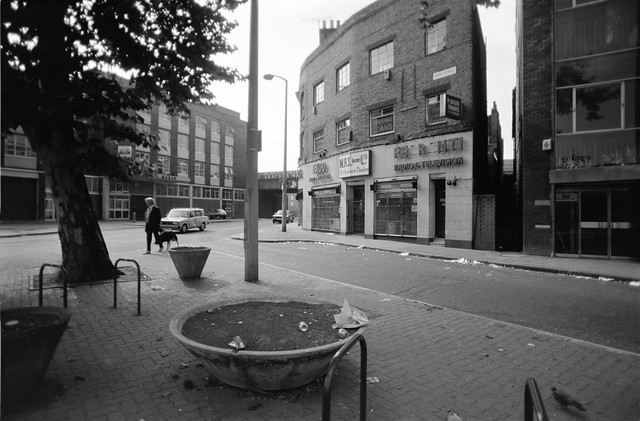
A showroom wall display of spraying equipment somewhere on the Lower Clapton Road, between Linscott Road and Clapton Passage. There seemed to me a certain surreal quality to the display of around seventeen near identical spray guns.

My walk will continue in a later post. You can click on any of the images to go to larger images in my album 1988 London Photos, from where you can browse the album. The images in this post, but not in album, are displayed in the order they were taken on my walk.
May Day – International Workers Day

May Day – International Workers Day – May 1st was chosen as the date for International Workers’ Day in 1889 by the Second International socialists and communists, and adopted by anarchists, labor activists, and leftists in general around the world, to commemorate the 1886 Chicago Haymarket affair and the struggle for an eight-hour working day. It continues to be celebrated in many countries around the world.

May Day - International Workers Day
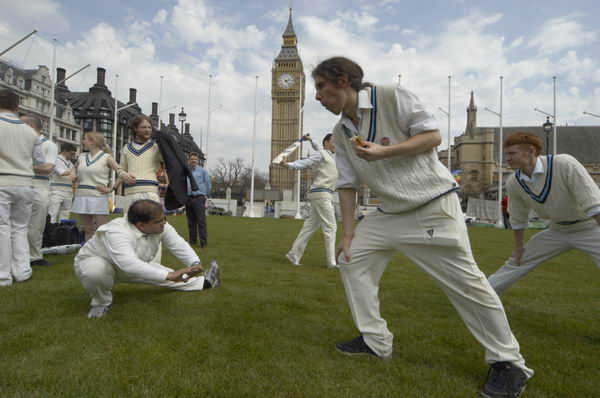
Space Hijackers Anarchist Cricket, Parliament Square, London, May 1, 2005

Although I tested negative for Covid on Wednesday I’m still short of breath and short of energy, with still a little of a cough and have been strongly advised to take things easy for the next week or two. So I’m not sure if I’ll be out celebrating May Day today, much as I yearn to be.

May Day - International Workers Day
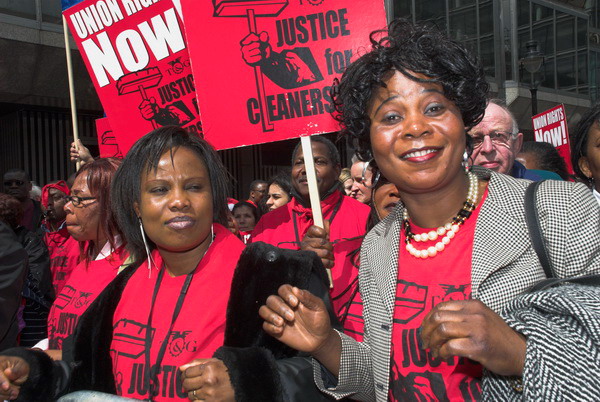
Justice for Cleaners, Westminster Cathedral, London, May 1, 2006

Before 2000 I was usually unable to celebrate May Day properly as May 1st was usually a normal working day and I went out around 8am and arrived home from work around 5.30pm, usually with more to do at home after an evening meal. Not much time to celebrate International Workers Day!

May Day - International Workers Day
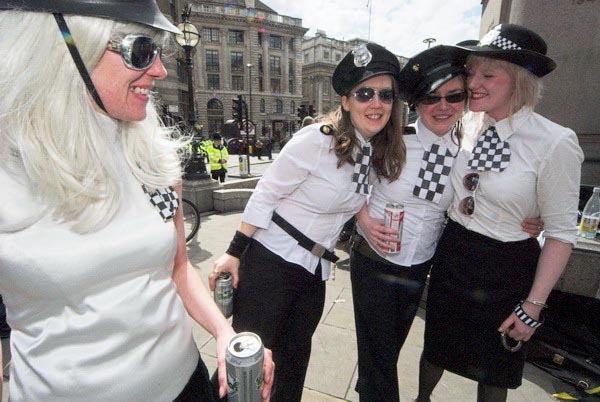
Space Hijackers Police Victory Party – Bank, May 1, 2006

Of course, May Day sometimes fell at the weekend, so I would have been free to take part in events that were taking place, but even in 1999 when it was a Saturday I think I had other things on.

May Day - International Workers Day
Space Hijackers Mayfair Mayfayre – May 1st 2008

There were of course May Day related events that I went to most years, but usually these were on the Saturday or Sunday before the early May bank holiday Monday which was introduced by a Labour government in 1978, when they lacked the nerve to make May Day itself a public holiday. We still have that bank holiday despite plans made by Conservative governments under both John Major and David Cameron to replace it by a Trafalgar Day holiday in late October.

May Day - International Workers Day
Rave Against The Machine – Leake St, Waterloo, London. Saturday 1 May 2010

By 2003 I was getting rather blasé about the London May Day march, writing “May Day Has perhaps settled into a rather predictable event now. The socialist left – and what is left seems to be a few unions and a number of ethnic communist party groups – march from Clerkenwell to Trafalgar square, while anti-capitalist protesters do not a lot around town“, but that didn’t stop me going again to photograph it that year or in 2004, 2005, 2006, and every year until 2019. Covid put an end to the sequence in 2020, but I came out of seclusion for May Day 2021, though perhaps I’ll miss it again today.

May Day - International Workers Day
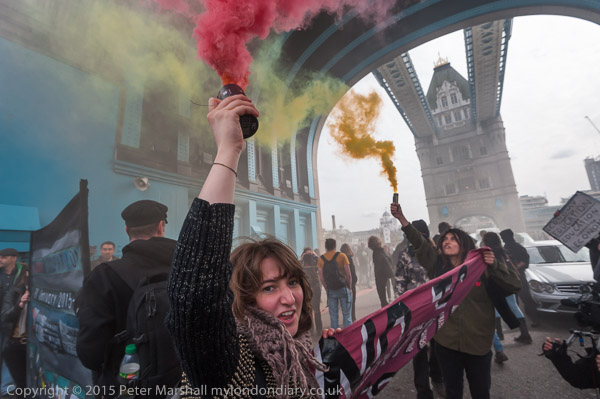
Anti-Capitalists block Tower Bridge – Tower Bridge, London. Fri 1 May 2015

And I will miss it. Miss the sense of solidarity on the streets. And most of my life I’ve been feeling a loss of what might have been had we ever had a socialist government since my first few years growing up in a welfare state. Tory governments largely did what was expected of them but the various Labour administrations largely failed the people. Perhaps the final straw came in 2017, when people inside Labour actively worked against a Labour election victory.

May Day - International Workers Day
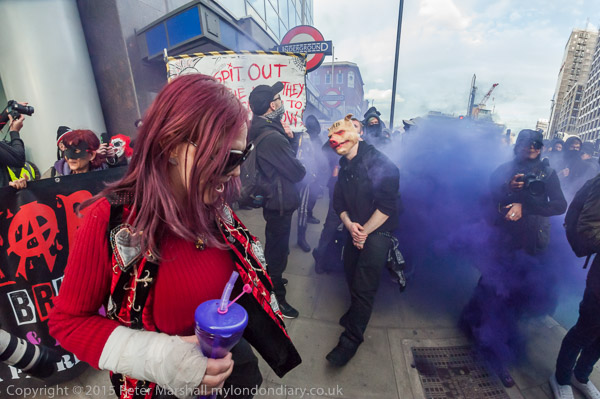
Anti-Capitalist May Day Street Party Starts – One Commercial St, Aldgate, London. Sun 1 May 2016

The pictures here come from some of the other May Day events I’ve photographed in the last 20 years or so. You can find other May Day pictures on My London Diary simply by choosing a year at the top of the page and then the month of May at the left of the year page.

May Day - International Workers Day
May Day F**k Parade – London. Mon 1 May 2017

Hats, Bags, Passports, Mansions, Biocrin & Hollywood

Hats, Bags, Passports, Mansions, Biocrin & Hollywood: This post continues my 1988 walk South Stokey & Hornsey Detached posted a few days ago.

Marmel & Grossmith, Hat Co Ltd, Boleyn Road, Dalston, Hackney, 1988 88-10a-24
Marmel & Grossmith, Hat Co Ltd, 1 & 2 Boleyn Road, Dalston, Hackney, 1988 88-10a-24

Back Road Kingsland dated from 1839 and was renamed Boleyn Rd in 1877, one of a number of local streets given names associated with Henry VIII who was alleged to have used a hunting lodge on nearby Newington Green. Until 1877 the road like many others in London was divided into a number of blocks or terraces each given its own name by the developers and many streets were renamed around then to end this confusion.

I’m not sure when Marmel & Grossmith set up their hat factory here, but in 1940 they had a hat factory at 159 Commercial St, Whitechapel. I don’t know when hat production ended in Boleyn Road, though the fly-posting suggests the works was no longer in use. The 33 flat Dalston Hat apartments into which the factory was transformed bear little resemblance to it but have an entrance marked by a giant top hat.

Cambay Ltd, Alpha House, Tyssen St, Dalston, Hackney, 1988 88-10a-25

Alpha House was on Tyssen St which runs north from Dalston Lane, just to the south of where it bends 90 degrees to the east until 2014, although around 2010 the signs for Cambay Bags Luggage & Travel Goods were replaced by those for Cyclone Design Lab. The new flats have solicitors offices on the ground floor.

I was attracted by the confusion of notices and also by the pictures of a large bag, and on the van, a man perhaps cleaning a car.

Dalston Lane, Dalston, Hackney, 1988 88-10a-12-Edit_2400
Dalston Lane, Dalston, Hackney, 1988 88-10a-12

Back on Dalston Lane there was a photographer’s shop window, something I always stop and have a look in. . The most interesting part to me was a framed selection of 16 passport pictures (with a label stating PASSPORTS in case we were not sure), which I thought gave a good representation of the local community.

Navarino Mansions, Dalston Lane, Hackney, 1988 88-10a-15-Edit_2400
Navarino Mansions, Dalston Lane, Hackney, 1988 88-10a-15

Walking towards Hackney I went past Navarino Mansions built in 1885 by the Four Percent Industrial Dwellings Society as 300 flats for Jewish workers from the East End. The architect, Nathan S.Joseph, set new standards for social housing in creating a building that was in finest style of the era as well as providing for the time high standards of provision.

Still owned in 1986-92 by the same organisation, then called simply the Industrial Dwellings Society [IDS] they were treated to a major refurbishment in 1986 to bring them up to modern standards, including the provision of lifts and new gardens in the courtyards and providing more spacious family accommodation.

House, St Mark's, Church, Colvestone Crescent, Dalston, Hackney, 1988 88-10b-61-Edit_2400
House, St Mark’s, Church, Colvestone Crescent, Dalston, Hackney, 1988 88-10b-61

I think I continued my walk back towards Dalston, probably going along Ridley Road – I liked going to the market there, though seldom took photographs – and turning up St Mark’s Rise with the intention of photographing St Mark’s Church which is a prominent local landmark – sometimes called the ‘Cathedral of the East End’, it is one of the largest parish churches in London and used once to have over 2,000 attending its Sunday services.

The church is Grade II* listed, with a nave by Chester Cheston Junior built in 1864-6 and its distinctive tower by Edward Lushington Blackburne added in 1877-80. The area around was developed in the 1860s as housing for the wealthier middle class who worked in the City.

Vine's Biocrin Ltd, Clarence Rd, Lower Clapton, Hackney, 1988 88-10b-52-Edit_2400

Vine’s Biocrin Ltd, 111, Clarence Rd, Lower Clapton, Hackney, 1988 88-10b-52

You can still buy a range of Vine’s Biocrin hand sanitiser, oils and creams although I think the original company, incorporated in 1937 for the “Manufacture of soap and detergents – Manufacture and wholesale of toilet preparations ” was dissolved around 2000.

The products, apparently still largely made for hairdressers, are now made elsewhere as this small factory has been replaced by flats, although the building part shown at the left is still there, now Capital Die-Stamping and The Hill Church at “Holy Anointing Christian Centre Where All Yoke Are Broken By The Anointing.” I don’t know if Vine’s make an anointing oil.

Kenninghall Rd, Hackney Downs, Hackney, 1988 88-10b-54-Edit_2400
Kenninghall Rd, Hackney Downs, Hackney, 1988 88-10b-54

I think this is De Vere Court at 63 Kenninghall Road, but if so the details on the impressive porch have been lost presumably in the conversion to 14 flats. Their are other impressive porches on the street but the brickwork around the first floor windows is unusual.

Hollywood Studios, Upper Clapton Rd, Clapton, Hackney, 1988 88-10b-56-Edit_2400
Hollywood Studios, Upper Clapton Rd, Clapton, Hackney, 1988 88-10b-56

The Lea Bridge Tramway Depot at 38-40 Upper Clapton Road was built in the Victorian era for horse-drawn trams, opening in 1873, and remains, its future under much doubt, as one of the few remaining examples of a Victorian horse-drawn tram depot in London.

The existence of the trams, taking people to work in the City and the West End until 1907 drove the development of a thriving suburb in Clapton. Until recently many of the buildings were in use by a range of businesses who were forced to quit after planning permission was given for this locally listed building to be demolished and the site redeveloped in 2011. Statutory listing was refused in 2005, probably because of English Heritage’s snobbish lack of interest in our industrial past. Hollywood Studios was a rehearsal room and recording studio used by groups including Iron Maiden occupied a part of the buildings for a few years from 1983.

My walk around Clapton in 1988 will continue in a later post.

We Need A New Party

We Need A New Party: If you spend any time thinking about politics in the UK you are likely now to be feeling pretty depressed. We don’t really just need a new party, we need a new system and particularly a new system of voting. First past the post is long past its use-by date.

We Need A New Party
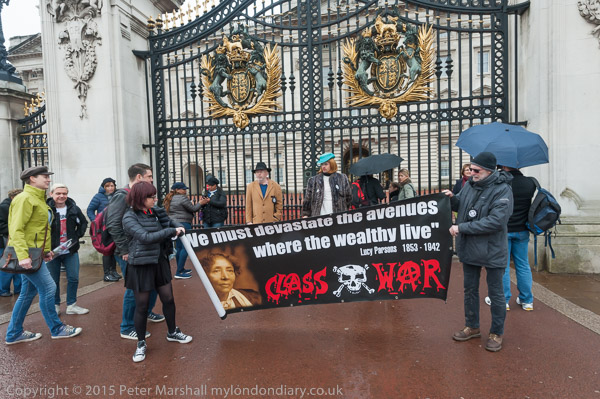
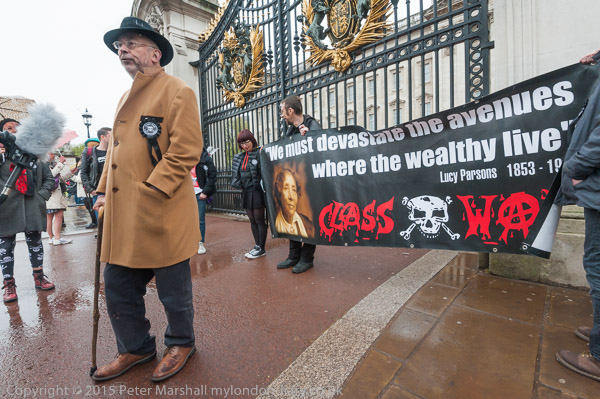
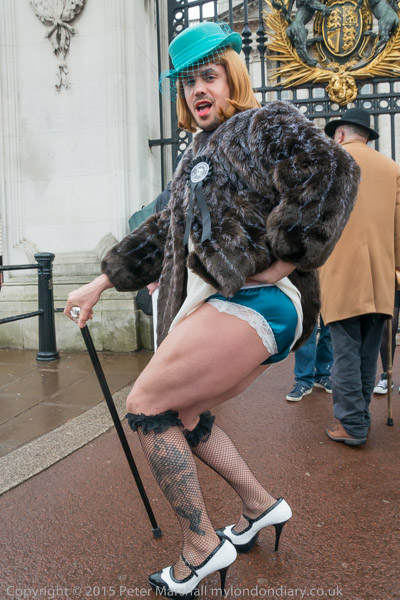
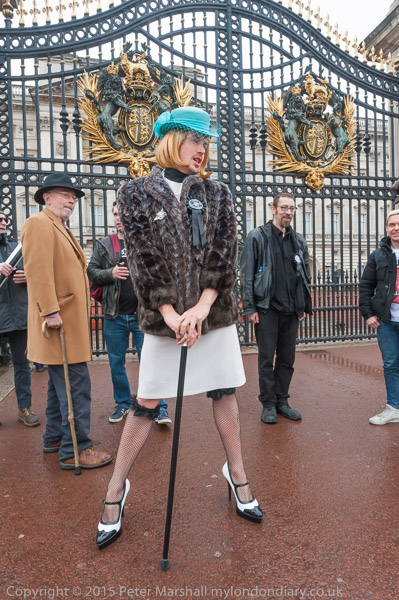
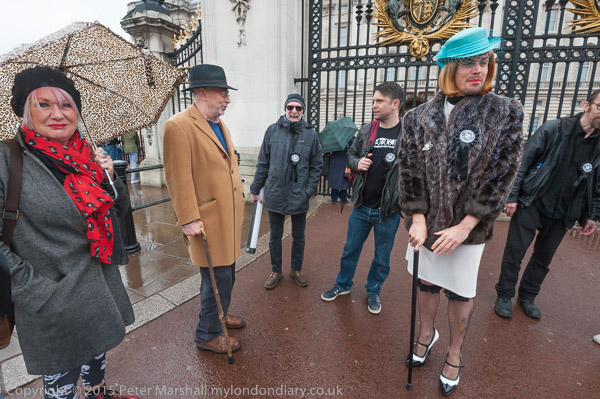
Class War arrive at Buckingham Palace for their 2015 manifesto launch

First past the post (FPTP) was designed to give stable government and also to provide a firm bond between the voters in their constituencies and parliament via their MP. But that is a bond which has in many areas been broken by the actions of the two main parties, particularly in the imposition of party candidates against local opinion. But FPTP has also led to the development of a political class whose experience, aims and interests are often very different to those of the people they supposedly represent.

We Need A New Party - Adam Clifford
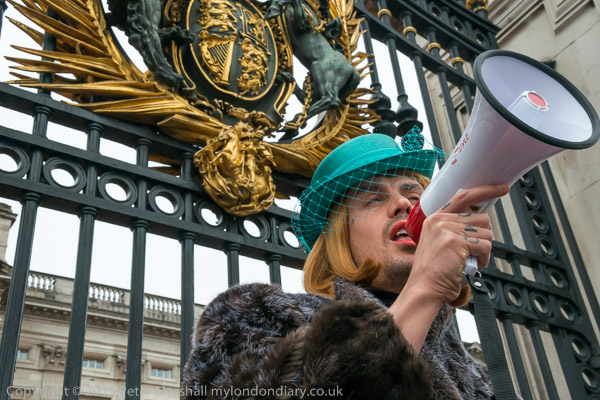
Westminster candidate Adam Clifford speaks in front of Buckingham Palace gates

Our geographical constituencies also lead to inequalities in the representation of voters, some simply a matter of the ways that populations have grown up around centres of employment, but also the party influences on the drawing of boundaries.

We’ve also seen, particularly since the 1970s, a central government that has increasingly hobbled the activities of local government, with some disastrous effects, particularly over the provision of social housing. The abolition of the GLC was perhaps the most public expression of Westminster’s disdain. Devolution in recent years has done something to reverse this, though not in the English regions, and the introduction of directly elected mayors has largely been ineffectual (and sometimes poisonous.)

We Need A New Party - Ian Bone
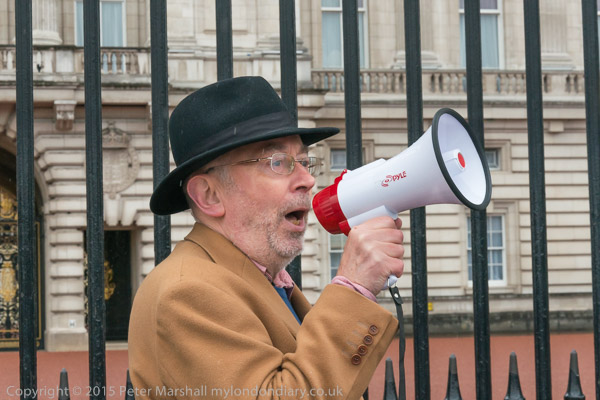
Ian Bone of Class War

Attempts to form new parties to challenge the rule of Conservative and Labour have been largely unsuccessful, as although the Green Party may have achieved 2.7% of the vote in the 2019 it only ended up with one MP, rather than the 17 an equal election system would have given. There have been many proposals for a better voting system and some which better retain the link between the the elected representative and a local area. But perhaps we need to go further, taking steps that remove the idea of a political class. We should get the continuity of government that we need from a professional and non-political civil service, not from representatives who feel they have a right to continue in office year after year until they become senile.

Labour did offer the electorate a choice in both 2017 and 2019 – and came close to winning in 2017, defeated largely by the actions of party officials and right-wing Labour MPs. Since then the party has lost much of its membership income and has moved towards being a party financed by wealthy individuals, losing much of its connections with the grass roots. It seems to be aiming at becoming a Tory clone in order to win back voters who deserted it over Brexit in 2019.

Perhaps a new party will emerge from those Labour grass roots and others on the left for our next election, and there are some areas where it could become popular, particularly if Labour put up candidates in opposition to currently serving left Labour MPs as seems likely. But it seems unlikely to gain the kind of support that would allow it to challenge the system.

Possibly if Labour continue on their current dysfunctional path they will create a new ‘Livingstone moment’ by de-selecting their former leader. It might just shake him out of his life-long dedication to the party enough to stand under a new label, and given his popularity and record as a constituency MP he would almost certainly win. It could be the spark which ignites a new politics nationwide.

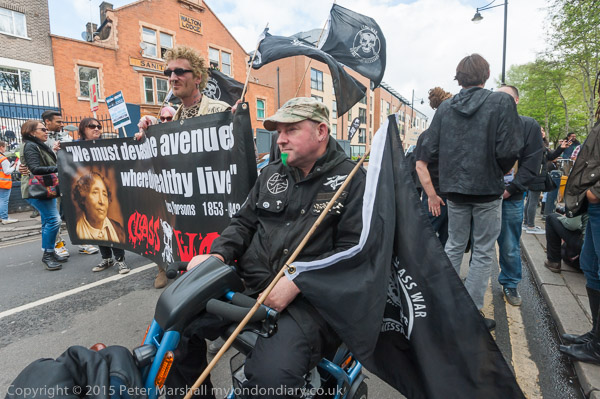
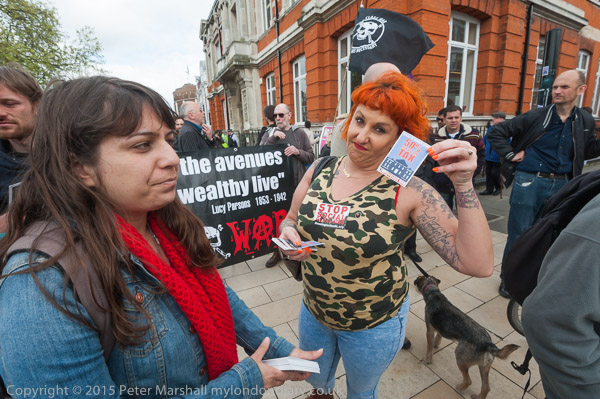
A new party won’t of course be Class War, who became a political party for the 2015 general election, standing in seven constituencies. As I wrote, “None expected to get many votes, but it was an opportunity to generate some interest in working class attitudes and issues. And Class War and its candidates and policies certainly attracted far more media attention than the various small left wing groups who stood candidates.”

Class War had a manifesto, with six simple points:

  • Double Dole,
  • Double Pension,
  • Double Other Benefits,
  • 50% Mansion Tax,
  • Abolish the Monarchy,
  • Abolish all Public Schools.

UK benefits are mean, and state pensions probably the lowest in Europe, so calling for massive rises makes a lot of sense. And if you want to tackle the class system in the UK then abolishing the monarchy and public schools is certainly a good start. The mansion tax may seem a little excessive, but what we really need is a land tax, though perhaps at a rather lower level. But somehow that didn’t come to mind when the manifesto was being written on the short walk from the pub to a Poor Doors protest.

Class War – and others including the Monster Raving Loony Party, Count Binface and Lord Buckethead – at least make our general elections more interesting, adding a little fun. And I sometimes think they would have made a better job – as Lord Buckethead claimed – at negotiating Brexit than Theresa May and particularly than Boris Johnson.

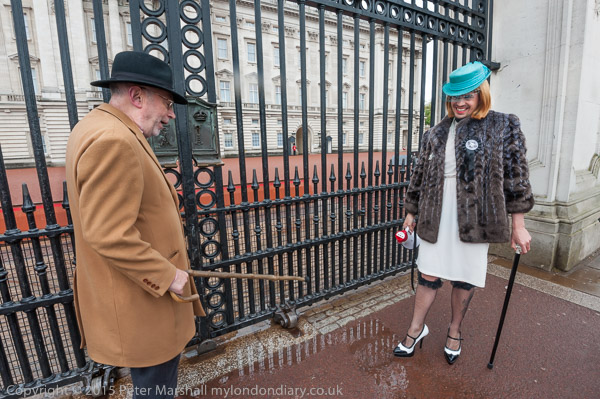
The manifesto launch took place at Buckingham Palace, where Westminster candidate Adam Clifford was refused entry to canvas the 31 voters registered there, and was filmed by a team from BBC News although I don’t know if any of it was ever broadcast. The event ended when police began to take rather too much interest in what was taking place.

More pictures at Buck Palace Class War Manifesto Launch.


International Workers’ Memorial Day (IWMD)

International Workers’ Memorial Day (IWMD). On the TUC web site it states:

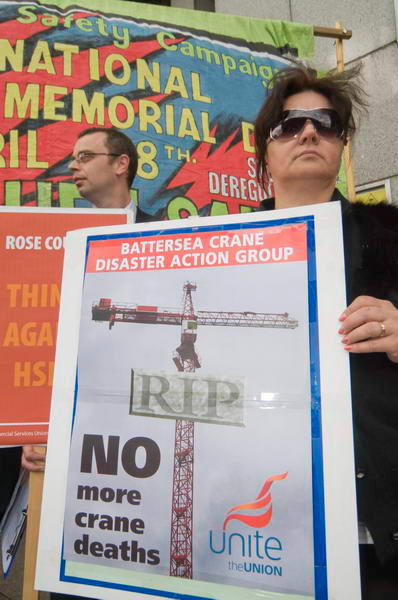
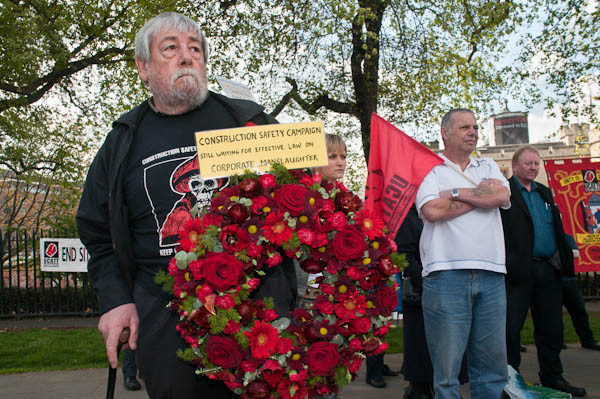
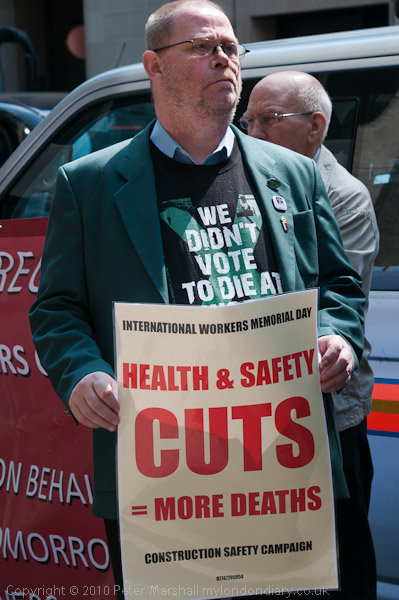
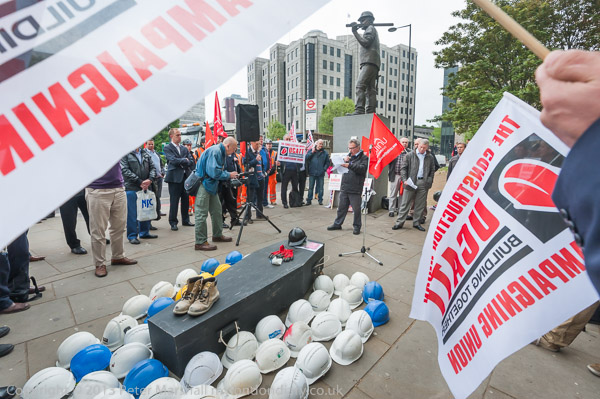
Every year more people are killed at work than in wars. Most don’t die of mystery ailments, or in tragic “accidents”. They die because an employer decided their safety just wasn’t that important a priority. International Workers’ Memorial Day (IWMD) 28 April commemorates those workers.

International Workers Memorial Day
International Workers’ Memorial Day (IWMD) 2006
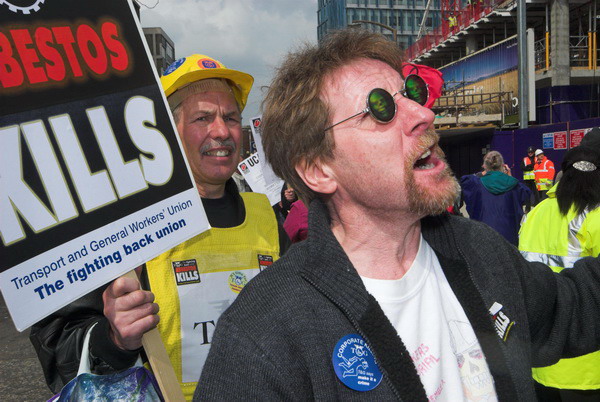
Asbestos Kills – April 2006

The TUC explains:

We remember those who have lost their lives at work, or from work-related injury and diseases. We renew our efforts to organise collectively to prevent more deaths, injuries and disease as a result of work.

International Workers Memorial Day is commemorated throughout the world and is officially recognised by the UK Government.

We remember those we have lost. We organise in their memory.

International Workers’ Memorial Day (IWMD) 2008
2008

Official statistics for workplace fatal injuries – 142 deaths in Great Britain in 2021 minimise the impact of work on worker’s health. These are the actual deaths on the job, at the workplace, mainly among workers in construction and agriculture. But many more die from longer-term consequences of their employment, such as handling hazardous materials without proper protection, perhaps leading to death 20 years after exposure.

International Workers’ Memorial Day (IWMD) 2009
2009

Both Labour and Conservative governments have attacked and removed necessary safety measures as ‘red tape’, cutting down safety inspections. It was an approach that made tragedies such as the terrible Grenfell fire inevitable and one that also endangers workers. Employers have lobbied for these changes to increase their profits. Few ‘accidents’ are accidental; most are predictable effects of failures to have or to observe proper safety measures.

International Workers’ Memorial Day (IWMD) 2010
Stratford 2010

Each year the International Trades Union Congress sets a theme for the day, and this year’s is ‘Make safe and healthy work a fundamental right’. In particular Covid-19 has exposed an occupational health crisis in workplaces worldwide, with many workers in this country and elsewhere being made to work in situations which have led to them becoming ill and some dying, particularly in healthcare where in this country and others around the world proper protective equipment was not available, but also in construction and manufacturing where social distancing at work was impossible.

International Workers’ Memorial Day (IWMD) 2011
2011

Many across the world have been unable to access the vaccines which have helped make Covid less life-threatening now here, though even with this in the UK government figures now show over 190,000 deaths with Covid-19 on the death certificate.

International Workers’ Memorial Day (IWMD) 2014
2014

Around London this year there are events in Barking and Waltham Forest as well as at the Covid Memorial Wall on the embankment opposite the Houses of Parliament where there will be an event starting at 1.30pm with a one-minute silence at 2pm.

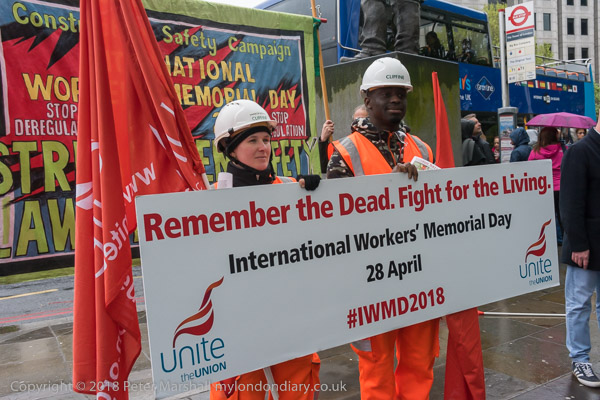
International Workers’ Memorial Day (IWMD) 2018
2018

The pictures are from a few of the #IWMD events I’ve attended over the past years. Although my current Covid infection has been relatively mild, I am still feeling too weak to be there today.

Remember the dead – fight like hell for the living!’


South Stokey & Hornsey Detached

Stoke Newington or ‘Stokey’ has a well-deserved reputation for non-conformity of all kinds. The area from the middle-ages attracted many religious dissenters, Quakers and other non-comformists. Among them have been Isaac Watts, Daniel Defoe, John Howard, Edgar Allan Poe and Joseph Conrad. More recent years have seen many squatters, artists and bohemians, as well as political radicals, including Angy Brigade and IRA bombers. You can see a long list on Wikipedia. Although its now become rather gentrified, at least in parts, there are still signs of its more anarchic past. Parts of the area I walked around in the south weren’t even in the area until 1900, but were ‘Hornsey Detached’ – and Hornsey is several miles to the northwest.

School, Smith & Sons, Wordsworth Rd, Hackney, 1988 88-10a-42-Edit_2400
School, Smith & Sons, Wordsworth Rd, Hackney, 1988 88-10a-42

St Matthais C of E Primary is still in use at the rear of Smith & Sons at 22-32 Matthias Rd, N16, Ironmongers & Builders Merchants. This writing has now gone, but the building was still there and in a similar use as one of the more Travis Perkins showrooms until around 2019.

New Coach & Horse, pub, Matthias Rd, Stoke Newington, Islington, 1988 88-10a-44-Edit_2400
New Coach & Horse, pub, 69, Matthias Rd, Stoke Newington, Islington, 1988 88-10a-44

The Coach and Horses was in business here at least since the 1850s and in one early record the street was called Coach and Horse Lane. I’m not sure when it got the New in its name, perhaps after it stopped being a Reid & Co pub and serving their ‘Entire’. The company was founded to take over a brewery in Clerkenwell in 1757 by Richard Meux and Mungo Murray and only picked up Andrew Reid as a partner in 1793, becoming Reid& Co in 1816. They stopped brewing in 1899 after becoming a part of Watney, Combe, Reid & Co. Ltd in the first big merger in the UK brewing industry, but Watney continued for years to use the brand name for some beers.

At a glance the pub appears open, but the two long brackets without pub signs are presumably a sign that it had closed. Shortly after it was converted into flats.

Milton Grove, Stoke Newington, Hackney, Islington, 1988 88-10a-32-Edit_2400
Milton Grove, Stoke Newington, Hackney, Islington, 1988 88-10a-32

I took a couple of pictures at Newington Green (not online) before being attracted up the narrow passage of Church Walk and through the footpath to Howard Road and then taking Milton Grove, home of five times world professional darts champion Steve Bristow who lived at 97.

I don’t know of any particular link with Milton and Stoke Newington but when these streets but when the National Freehold Land Society laid out the streets in the area in 1852 they created Milton Grove along with Shakespeare Walk and Spenser Grove. Much of the area was destroyed in the war and rebuilt as the Milton Gardens Estate. And behind me as I took this picture was an open space, once a bomb site but kept as Butterfield Green. Bombs came into Milton Groves story again some years later in 1975, when an IRA bomb factory was discovered in a top floor flat at no 99.

A little to the south is an alley, Town Hall Approach, but you will find no sign of a town hall should you walk down it. This was the site of the Italianate South Hornsey Town Hall built by E Fry in 1881 which became the town hall of the Metropolitan Borough of Stoke Newington when this was created in 1900. Stoke Newington was only half the required size for a London borough, but the authorities granted it borough status to avoid “intolerable and interminable feuds” had it been subsumed into Hackney – which it eventually became part of, apparently without a revolution in 1965. But the old town hall was too small and after 37 years the borough opened a new one designed by John Reginald Truelove on Church Street – now a listed building – but the ‘approach’ is still there.

I wondered why No 72 was built with this large window and imposing door – perhaps it was a former chapel long converted to residential use. A few doors down, just visible over the cab of this recovery vehicle is the only listed building in the street, No 66, described (in part) as “Mid C19 villa of 2 storeys and basement, 3 windows. Stock brick….” Certainly a pleasant enough house but nothing in the text seems to justify the listing or greatly differentiate it from others in the area.

Nevill Rd, Stoke Newington, Hackney, Islington, 1988 88-10a-33-Edit_2400
Nevill Rd, Stoke Newington, Hackney, Islington, 1988 88-10a-33

It was quite a long walk before I made my next exposure at 29 Neville Road, once home to G Howell Upholsterer, but in 1988 flyposted against the Poll Tax. Something about the doorway at right of this image screams “Pub!”, and this was then The Nevill or The Nevil Arms.

Once specialising in Smith, Garrett’s Special Mild Ale, it had a moment of fame in May 1915 when a bomb dropped in its back garden during London’s first Zeppelin raid. A large incendiary bomb, it failed to ignite and did no damage. It was thought at one time to have been the first bomb dropped on London, but that fell a short distance away in Alkham Road. The pub was on this site since the 1870s and latterly a Charrington’s pub. I think it closed shortly after I made this picture and was converted to residential use around 2000.

A photograph after the raid shows that No 21 on the other side of the shop was quite badly damaged, certainly its windows blown out, while the shop, then selling confectionary and advertising local Clarnico along with Rowntrees Chocolates and (I think) R Whites Ginger Beer appears undamaged with a woman looking out of the second floor window as the crowd gawping at the damage next door.

Stoke Newington Rd,  Hackney, 1988 88-10a-34-Edit_2400
Stoke Newington Rd, Hackney, 1988 88-10a-34

This and the picture below were from a window of the same shop, protected by a strong wire grill. And while I may have known more when I took them, they are now a mystery to me.

What is on sale here? Is it wigs? The strange prints are part of a collection and have reference numbers at the lower left, but what collection? The name appears to start BI or even BII and end IERTON but the wire prevents me seeing the letters between and I can find nothing which fits between to make sense to me.

Stoke Newington Rd,  Hackney, 1988 88-10a-35-Edit_2400
Stoke Newington Rd, Hackney, 1988 88-10a-35

The second picture simply adds more confusion. Are these wigs or examples of hair styles or some curious sculptural art? I was always attracted by representations of the human form or face and photographed the window of many hairdressers and some shops selling wigs, but these just don’t seem to fit the pattern.

Imperial Avenue, Stoke Newington Estate, Stoke Newington, Hackney, 1988 88-10a-21

The fine 1903 Stoke Newington Estate by the Four Per Cent Industrial Dwellings Company in Coronation Avenue and Imperial Avenue (and still run by the IDS) was the site of one of the greatest civilian tragedies of the London blitz, when on 13th October 1940 it received a direct hit from a high-explosive bomb, probably a parachute mine. The Coronation Avenue block of the estate collapsed into the large communal air-raid shelter in its basement; many were killed directly while others were unable to make their escape as the cellar flooded with water. At least 160 people are thought to have died.

Azizye Mosque, Stoke Newington High St, Stoke Newington, Hackney, 1988 88-10a-23

The Apollo Picture House opened in 1913, becoming the Ambassador Cinema in 1933 and in 1966 became a bingo hall but was reopened as the Astra Cinema in 1974. It was soon converted into a cinema club showing martial arts and softcore sex films until it closed in 1983. It was then converted into a Turkish mosque, with its interior features being gutted and its exterior covered in highly coloured mozaic. The cinema had already had a Moorish look with the two domes at each end of the facade.

To be continued in a later post.


Paragon, Fashion, Morning Lane & Nautilus 1988

Paragon, Fashion, Morning Lane & Nautilus 1988 is the third and final post on my walk in on a Sunday in late September 1988. The first post was South Hackney Walk 1988 and it continued with the equally unimaginative title More South Hackney 1988. So I could have called this ‘Yet More South Hackney’. But the end of the walk took me further north towards the centre of Hackney – and I felt readers deserved something more interesting for a change.

Paragon Rd, Hackney, 1988 88-9d-34-Edit_2400
79-83 Paragon Rd, Hackney, 1988 88-9d-34

At 69-83 Paragon Road are four linked pairs of early-mid C19 houses with a Greek key pattern above the ground floor windows. My picture shows the east end of the row. They are Grade II listed as 71-83. The Buildings of England London 4 North states they were built in 1809-13 and suggests as the land was owned by St Thomas’s Hospital the design, which they suggest was inspired by Blackheath’s Paragon, may have been by the hospital’s surveyor Samuel Robinson or its builder Robert Collins

Bestglare Ltd, Esme Ltd, Ram Place, Hackney, 1988 88-9d-21-Edit_2400
Bestglare Ltd, Esme Ltd, Ram Place, Hackney, 1988 88-9d-21

I’m not sure that these same industrial units are still in Ram Place or have been replaced. The block closed to Chatham Place became AquaScutum when the area on Morning Lane was funded as a fashion quarter following the 2011 riots. But a few years later most of the stores had closed down. Aquascutum was one of the last to go, selling off £750 macs in its final sale for £75 – still more than I’d want to pay.

Hackney has strong links with fashion – but not so much with the higher end as with street and sweatshop, and many doubted the project from the start.

Sawyer Sewing Machines, Morning Lane, Hackney, 1988 88-9d-26-Edit_2400
Sawyer Sewing Machines, Morning Lane, Hackney, 1988 88-9d-26

The sewing machine shop at 99 Morning Lane was still in business, though from what we can see mainly dealing in more industrial than domestic machines, though a sign in the window does state ‘DOMESTIC MACHINES SERVICED & REPAIRED’. But next door at 101 the High Class Shoe Repairs have closed and the windows above are bare of glass, looking blind.

By 2008 the Sewing Machine shop was selling car spares, but next door was even more derelict and for sale. It was being refurbished in 2011 and was part let as residential the following year. By 2012 the ground floor was coffee & tea and car spares had given way to Morning Bedzzzzz and then fashion took over with The Hackney Shop and brew for two. But fashion changed and moved from Hackney with 2021 seeing the corner shop be transformed into ‘Beauty by Saima’. Brew for two branched out to sell garden plants as well as being a café.

Mini Cab Office, Morning Lane, Hackney, 1988 88-9d-12-Edit_2400
Mini Cab Office, Morning Lane, Hackney, 1988 88-9d-12

The Mini Cab Office was on a short road leading north from Morning Lane, and along with another property I photographed, Doreen’s Pet Centre (not online) this land was bought by Tesco in 1997 and is now underneath their store and car park.

Security Centre, Mare St, Hackney, 1988 88-9d-14-Edit_2400
Security Centre, Mare St, Hackney, 1988 88-9d-14

H & S Security Centre at 232 Mare St claimed to be specialists in all forms of security and had some rather fancy wrought iron railings, though would weld in rather plainer forms of protection. They had left a rather wide open area for some misguided youth to chalk in the word Sex, though there was something desperate in that last letter as if the culprit had been caught in the act.

You can still see the railings on the steps leading up to the front door but there is no sign of any business operating from here, part of a Grade II listed early 19th century terrace.

Mare St, Hackney, 1988 88-10a-61-Edit_2400
Diver, Mare St, Hackney, 1988 88-10a-61

Inside a shop window on Mare St I found a diver, or a least a diving suit with a rather realistic hand and hanging up to the left a selection of Solent divers neoprene dry suits. This was Collins & Chambers Ltd at 197-199 Mare Street with a shop named Nautilus immediately south of Cyntra Place, demolished in 2012, listed as supplying Scientific Equipment, Divers Equipment Supplies, Diver Equipment. Mare St Star Night supermarket opened there around 2018 supplying all your pan-Asian grocery needs.

I turned around somewhere near here and walked back up towards Hackney Central Station and the end of my walk, pausing briefly to photograph the side of the Hackney Empire (not on line) on my way.


Reclaim Brixton – Arches, Markets & More

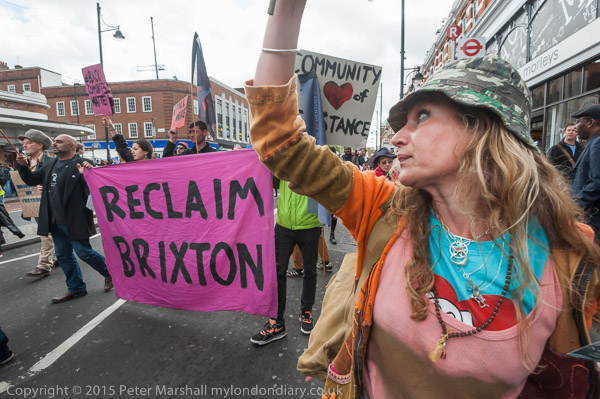
Reclaim Brixton – Arches, Markets & More – 25th April 2015

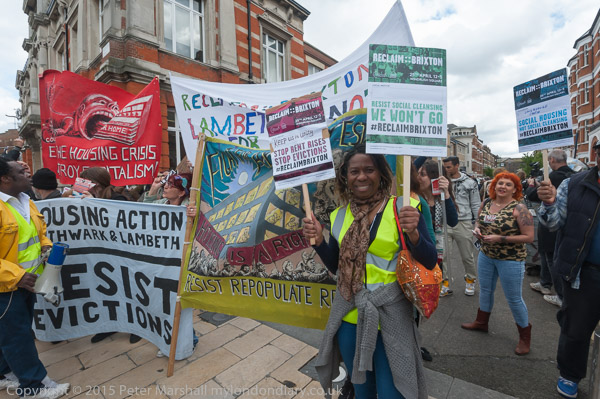
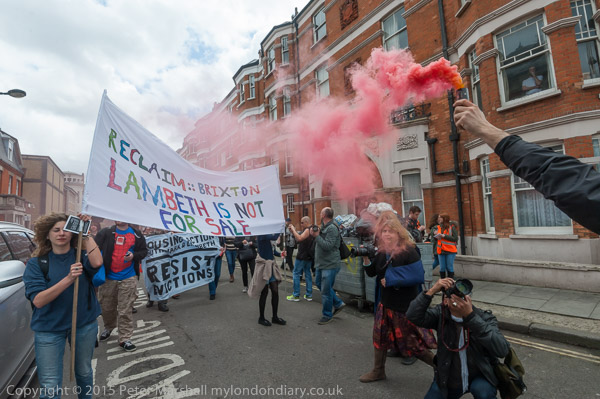
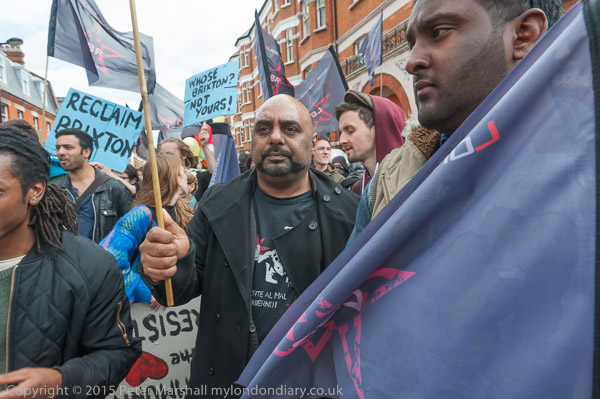
A day of events in central Brixton on Saturday 25th April 2015 celebrated its social & cultural diversity, increasingly under threat as increasing rents and property development are forcing out local businesses and residents.

Brixton boomed after the railways arrived here in the 1860s, the new transport links making it both a popular middle-class suburb and the major shopping centre of South London; it had the first purpose built department store in the UK, Bon Marché, opened in 1877 and continuing in business until 1975 and probably the first street market in the world to be lit by electricity in Electric Avenue. While the wealthier moved out in the first half of the twentieth century to leafier areas, the increasingly working-class population grew, as did the markets, cinemas, pubs and other facilities.

After the war Brixton became increasingly multiracial. Arrivals on the Windrush were given temporary housing in the Clapham South deep shelter, and found jobs from the nearby Brixton Labour Exchange and housing in rooms and flats in the area. Though many had intended to go back to the Caribbean, most remained here, bringing over family to joint them and over the years Brixton became a centre of the British African-Caribbean community. In 1981 locals rose up against heavy handed policing but the conclusions of the Scarman report were largely ignored and it was only after the death of Stephen Lawrence that the police were declared “institutionally racist.”

There was further unrest after the death of Wayne Douglas in police custody in 1995, and there was an increasing attempt by Lambeth Council to change the nature of the area seen by them as regeneration but by many in the area as gentrification.


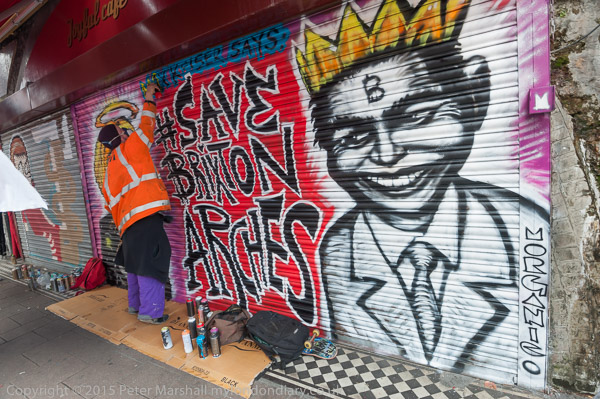
Brixton Arches tenants protest eviction

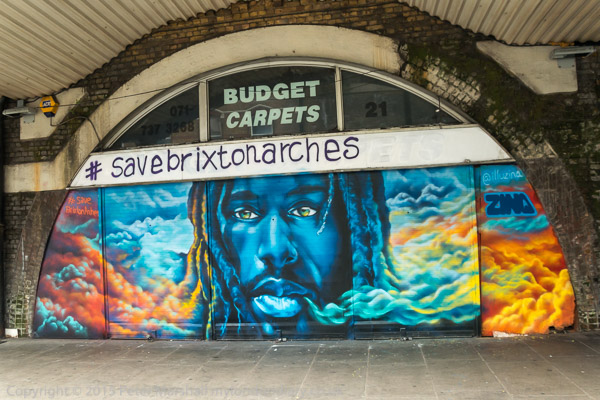
The railways run on viaducts through central Brixton, and the arches below them, particularly along Atlantic Road and Brixton Station Road have long provided low cost spaces for local businesses.

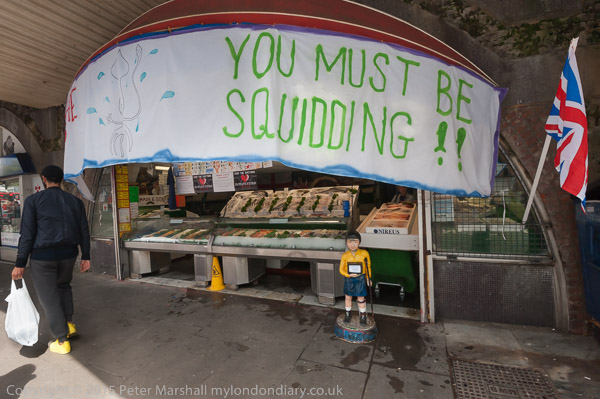
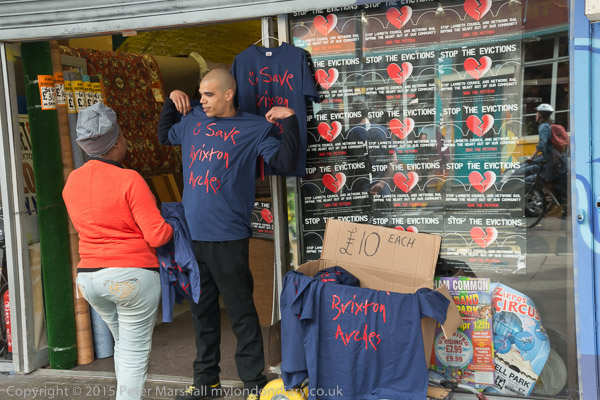
But Network Rail decided to increase the income from these spaces and the existing tenants were threatened with eviction and then a tripling of rent for the refurbished space. One of the businesses, fishmongers L S Mash & Sons, had been trading here since 1932 and others since shortly after the war.

The businesses closed for two hours on Saturday lunchtime, many hanging white sheets with messages across the frontage and others inviting graffiti artists to decorate the shutters. These businesses, the arcades and the market really are the heart of Brixton.

Brixton Arches tenants protest eviction


Take Back Brixton against gentrification

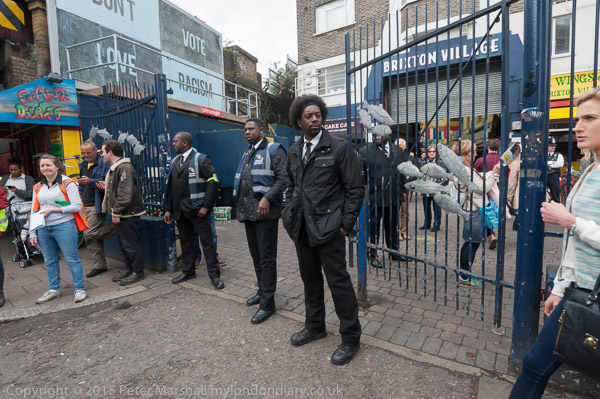
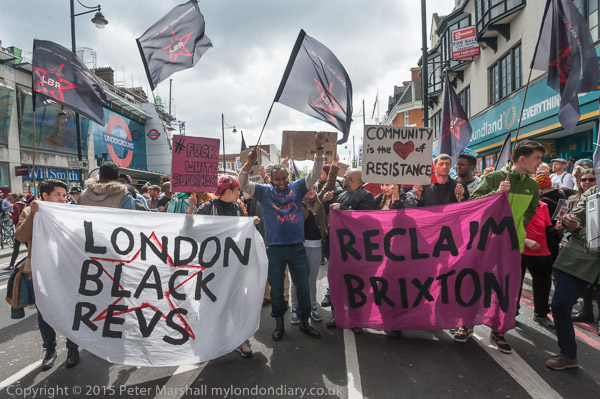
Brixton Black Revs (revolutionaries rather than reverends) had wanted to march peacefully through the gentrified ‘Brixton Village’, but police and security guards blocked their way into the arcade, and instead it became a very short march to take housing and other activists directly to the Reclaim Brixton gathering in Wind rush Square

Granville Arcade which links Coldharbour Lane, Atlantic Road and Popes Road was built in 1937 with over 100 shops in its covered avenues, and was named after its developer, P Granville-Grossman. The site had previously been the Lambeth Carlton Club, a large Georgian-style mansion buit in the 1870s and home to the Brixton Conservative Association.

It was renamed Brixton Village around 2005 and was saved from demolition by a powerful local campaign which resulted in it and Reliance Arcade, Market Row being given Grade II listing. The listing text makes much of the importance of the Afro-Caribbean nature of the markets, but although listing saved them from demolition it has not protected them from gentrification and the replacement of much of this character by trendy restaurants and boutiques.

Take Back Brixton against gentrification


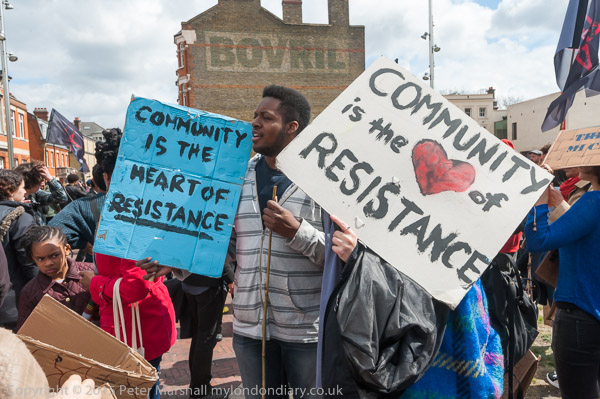
Reclaim Brixton celebrates Brixton

The area in front of the Tate Library and Brixton Ritzy was renamed Windrush Square in 1998. It had long been a popular meeting place for locals and local events, but Lambeth Council with offices in the town hall opposite clearly saw that as something of a threat, and spent a large amount on turning it into a desolate, bleak and unwelcoming windswept area to discourage the informal gatherings that took place there.

Although today the area was reasonably crowded, there seemed to be nothing very organised happening. Unite Community had a microphone at one side and there were a speeches, but few seemed to be taking any notice of them. When I walked around there was a group playing classical music, another of African drummers, and the Revolutionary Communist Group had its own megaphone and speakers, while people were having a light-hearted limbo competition to a musical accompaniment from the Unite ‘stage’. And some of my friends had disappeared to a nearby pub.

Reclaim Brixton celebrates Brixton


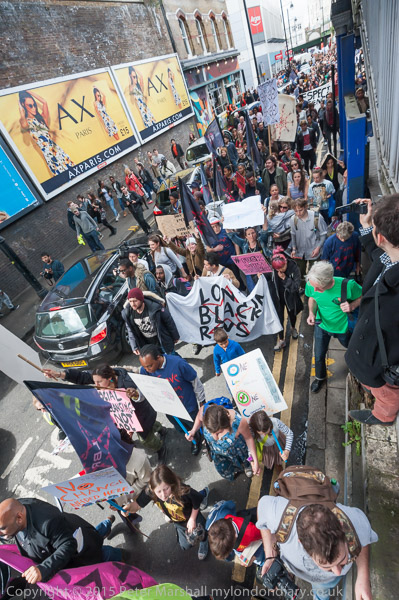
London Black Revs ‘Reclaim Brixton’ march

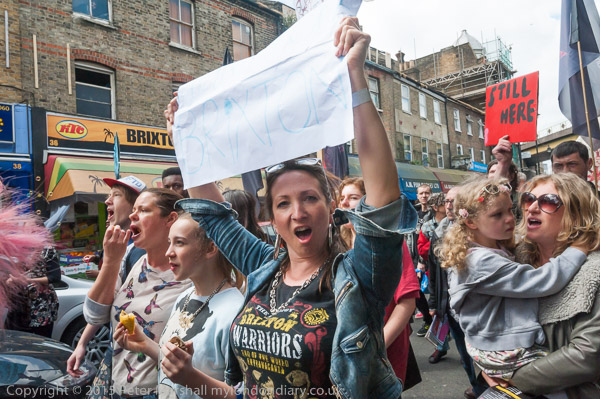
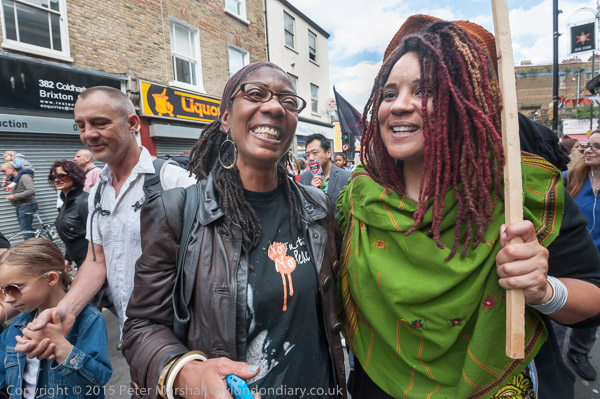
After an hour or two hanging around in Windrush Square, activists again took to the street for a lively march around Brixton.

Rather to my surprise, the march simply returned to Windrush Square. I hung around for a bit but everything seemed very peaceful and I mistakenly thought that perhaps nothing more would happen and decided to take a bus to begin my journey home.

Shortly after I left some people stormed and briefly occupied Lambeth Town Hall and a large window at Foxton’s estate agents was broken, and a few activists went into Brixton Village with banners.

Marcia Rigg whose brother Sean Rigg was killed in Brixton Police Station in 2008

London Black Revs ‘Reclaim Brixton ‘march


Things in Brixton have got worse since 2015. In 2018 Hondo Enterprises owned by Texan property developer and part-time DJ Taylor McWilliams bought Brixton Market which includes the arcades and the following year announced plans for a 20 storey office block, which were approved by Lambeth Council in November 2020. Hondo now brand the whole market area as Brixton Village.

More from the protests:
London Black Revs ‘Reclaim Brixton ‘march
Reclaim Brixton celebrates Brixton
Take Back Brixton against gentrification
Brixton Arches tenants protest eviction


More South Hackney 1988

More South Hackney 1988

Bucknell House, Victoria Park Rd, Hackney, 1988 88-9c-13-Edit_2400
Bucknell House, Victoria Park Rd, Hackney, 1988 88-9c-13

After eating my lunch in Victoria Park where I finished my previous post on this walk I went back to Victoria Park Rd and photographed No 78, Bucknell House, which seemed to be the site of a great deal of building activity, though I suspect not by Barry Bucknell who had been the great DIY expert on TV in the 50s and 60s with “Do it Yourself” and then “Bucknell’s House”.

Back then TV was broadcast live, and the programmes often ended in disaster, much to the viewers amusement. The street was built after Victoria Park, bought by the Crown, opened in 1845, stimulating development in the area which had before been slow.

Warneford St, Hackney, 1988 88-9d-64-Edit_2400
Warneford St, Hackney, 1988 88-9d-64

Much of the land in the area belonged to St. Thomas’s hospital and the trustees of the Sir John Cass Foundation (hence the name Cassland Rd.) I think these houses in Warneforde Street probably date from around the 1880s.

Victoria Park Rd, Hackney, 1988 88-9d-52-Edit_2400
Victoria Park Rd, Hackney, 1988 88-9d-52

These are some of a row of six very similar detached houses on the north side of Victoria Park Road just to the west of Clermont Road, numbers 69-81, I think these are probably 73 to 69. No house numbers are visible in the picture as is often the case, with properties either not having a number or these being too small to be visible. There were seldom bins visible back in 1988 with large house numbers on them, though now we all have wheelie-bins these are often the easiest way to find house numbers.

The Triangle, Mare St, Hackney, 1988 88-9d-53-Edit_2400
The Triangle, Mare St, Hackney, 1988 88-9d-53

I’d walked past The Triangle where Mare St and Westgate Street meet earlier and had taken one picture (not online), but coming back later I made three more, another similar to this one and a third from a few yards further back including a large three-legged notice board telling me the is as the London borough of Hackney and a couple of modern telephone booths. But my main interest was in the building housing M.R.S.[Hackney]Ltd., T.V.s & Appliance Dealers and above them Baker Finance offering Personal Loans.

Just a few yards away I found more large graffiti, urging ‘Don’t mug me. MUG A YUPPIE!!!MUG A YUPPIE!!!’ but so far I’ve not scanned that frame.

Fashions, Mare St, Hackney, 1988 88-9d-43-Edit_2400
Fashions, Mare St, Hackney, 1988 88-9d-43

I walked further up Mare St, past the Cordwainer’s College, now part of the London College of Fashion but originally built in 1877 as Lady Hollis’s School for Girls, which moved to Hampton as Lady Eleanor Hollis in 1936 and it later turned down my sister for having working class parents (picture not online.) I then photographed this entrance, I think on the west side of Mare St, to Le Duman – Fashions of London – Ladies Fashions Factory Shop. It claimed to be ‘Now Open To The Public’ but that was only Monday-Friday, and it was Sunday.

Darnley Rd, Hackney, 1988 88-9d-46-Edit_2400
Darnley Rd, Hackney, 1988 88-9d-46

Further on up Mare St I photographed another block with an interesting corner on Darnley Rd and then this rather narrow alley leading to some industrial premises which I think was between two more interesting buildings on Darnley Road I failed to photograph!

Darnley Rd, Hackney, 1988 88-9d-31-Edit_2400
Darnley Rd, Hackney, 1988 88-9d-31

In Darnley Road I came across these houses which although they seemed to be in poor condition were still lived in. I wondered at their wide double doors. They are still there, though I think most have now been extensively refurbished into expensive flats. Darnley Road dates from 1853 and was one of the areas in which the well-to-do late Victorians lived.

Darnley House, Darnley Rd, Hackney, 1988 88-9d-33-Edit_2400
Darnley House, Darnley Rd, Hackney, 1988 88-9d-33

And also in Darnley Rd, No 57, the last house before the corner with Brenthouse Road was certainly very much in the middle of its complete refurbishment, and I was unsure if it was to be demolished. It looks very smart now, except that its gateposts do not quite match. That on the left has a low pyramidal cap with the word DARNLEY on its front edge, while at the right of the entrance is much flatter and wordless – and the brickwork below is not quite the same. The wall and posts are separately Grade II listed to house, and the listing of the posts mentions the inscribed word HOUSE – which isn’t there. My picture only shows a side of the left post. In 1927 this was the home of Dinshaw Phiroze, physician & surgeon, about whom I can tell you nothing more.

More pictures from this walk in South Hackney to follow in a later post, Paragon, Fashion, Morning Lane & Nautilus 1988.


St George’s Day 2016

April 23rd 303 was not a good day for George from Cappadocia. Diocletian, then the senior Roman Emperor had previously purged the Roman Army of Christians but had not really otherwise bothered too much about them, but he was persuaded by fellow emperor Galerius to take a harder line, and after consulting the oracle of Apollo began a general persecution across the empire on February 23, 303, which continued for the next 10 years or so.

For some reason George had escaped the previous army purge was was still serving as a member of Emperor Diocletian’s personal bodyguards. Tradition has it that he refused to recant his faith and was sentenced to death, being beheaded at Nicomedia on 23rd April. Rather different versions of his life (and death) grew up in the Greek and Latin churches. But certainly many Christians were killed by the Romans and George certainly represents one of many brave men who died rather than recant, most probably in the earlier years of Diocletian’s reign.

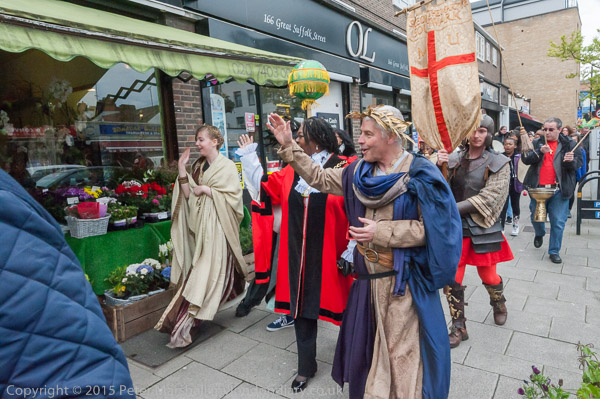
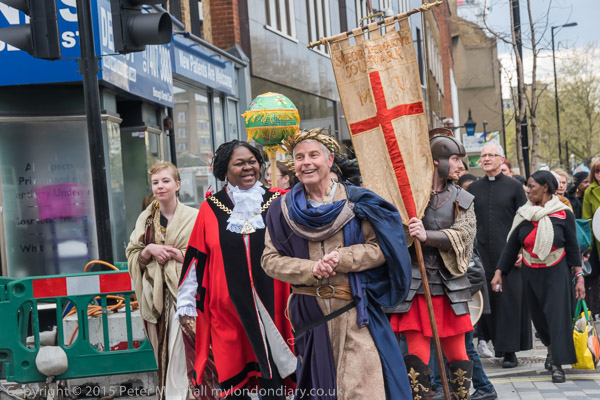
St George, Emperor Diocletian, the priestess or haruspex and the emperor’s daughter

Legends built up around him, few of which like that of the dragon (an 11th century addition) will have been true. It’s unlikely that he was subjected to more than twenty separate tortures over the course of seven years or that his martyrdom led to “40,900 pagans were converted to Christianity, including the empress Alexandra.” You can read more about him on Wikipedia.

His martydom began to be celebrated in Lydda in Palestine where he was thought to have died, and pilgrims came there and later to Cappadocia where he is thought to have come from. He was made a saint by Pope Gelasius I in 494, who said his was one of those “whose names are justly reverenced among men, but whose actions are known only to God“.

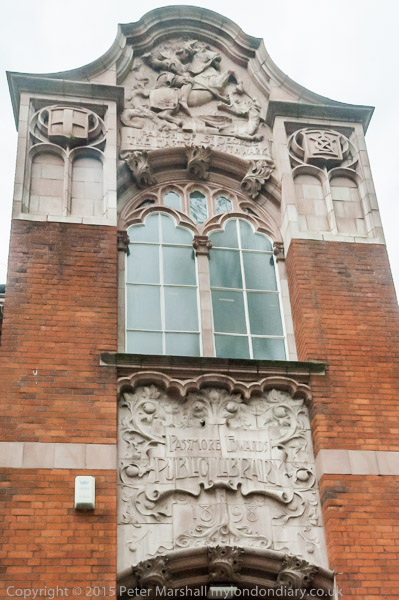
St George fights the dragon on the Passmore Edwards Public Library, long closed

His fame spread across Christendom, though it was only in the ninth century that the first church was dedicated to him in England – and not until 1152 that he displaced Edward the Confessor as the patron saint of England, although he had become a part of some English battle cries in the Hundred Years War (1337-1453) and among the Crusaders, when many went from England to fight against the Muslims in Palestine between 1095 and 1291.

St Georges Day was made a major feast here in 1415 and 1421, a holiday where church attendance was compulsory and other festivities took place. Later its celebration declined, particularly after the union with Scotland, and had more or less died out by the 20th century.

In recent years there has been something of a revival, spurred on in part by the increasing festivals of other communities, sometimes supported by local councils. There has been an increasing emphasis too on our national teams, particularly the English Football and Rugby teams, with minor fixtures being promoted through the mass media in a way that in earlier years was reserved for the major sporting events – the Grand National, the FA Cup FInal and the Boat Race.

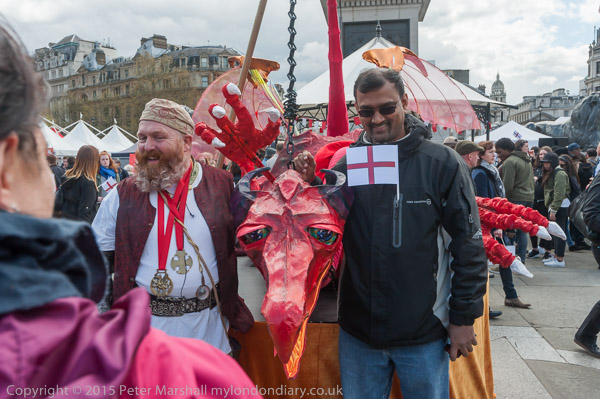
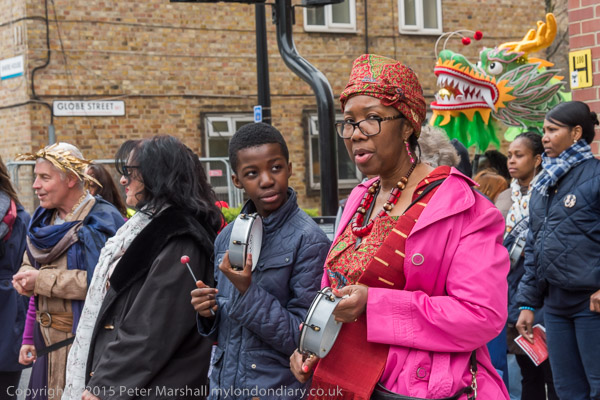
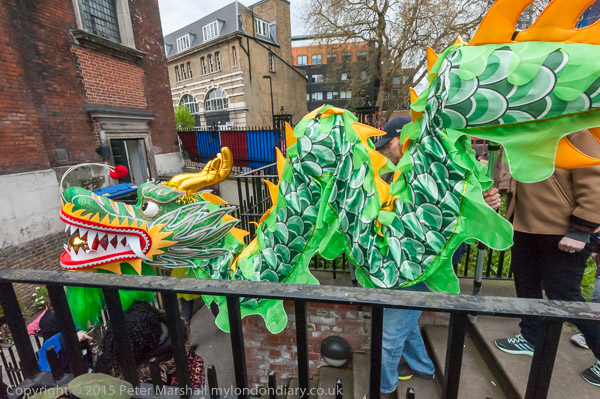
London’s dragons are mainly Chinese

The St George’s Flag had become something seldom seen outside football matches, except in the hands of small racist right-wing groups who called themselves patriots. Unfortunately recent years have seen a growth in these, and some have organised celebrations of St George’s Day, but there has also been a growth in less political events, with even English Heritage encouraging celebrations. Radio 3 has celebrated it, and both Conservatives and the Labour Party have campaigned for it – with Labour calling for it to become a public in both 2017 and 2019 manifestos.

The pictures here are from 23rd April 2016, I started the day photographing a couple of protests over the sale of illegal ‘blood diamonds’ from Sierra Leone at Selfridges in Oxford Street and Tiffany in Sloane Square before going on take pictures about St George’s Day, beginning around lunchtime in Trafalgar Square, where despite the support of mayor Boris Johnson little was happening. I went to the Roman Catholic St George’s Cathedral in Southwark, calling in briefly at the peace garden in the Imperial War Museum across the road as I waited for people to arrive for the St George in Southwark Procession.

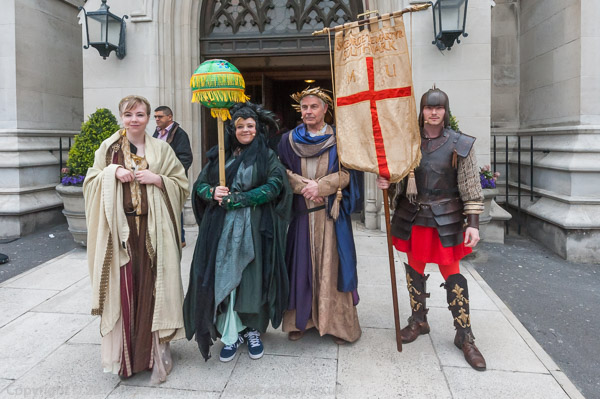
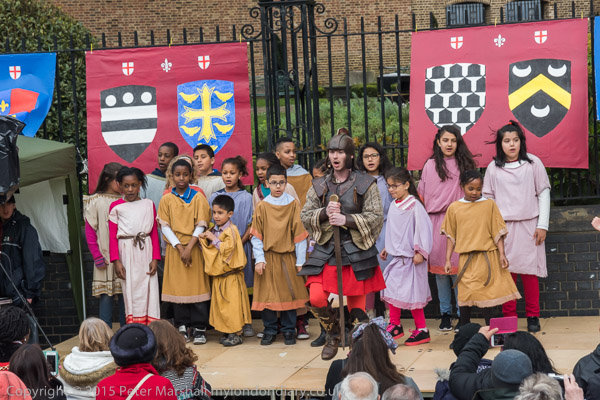
This, led by led by St George, a Roman Emperor, the Mayor of Southwark and others and with a dragon at its rear made its way from the St George’s RC Cathedral to the Church of England St George the Martyr in Borough High Street.

I’d not been inside this before and went in with those taking part for a short address before we came out and the procession formed up. It wound its way through the back streets of Southwark and I was pleased as we went past the Priory on Webber Street to be able to tell the mayor something about Bert Hardy who had recently got a blue plaque there. I’d only met Hardy a couple of times, but one of my friends had worked at Grove Hardy as a printer.

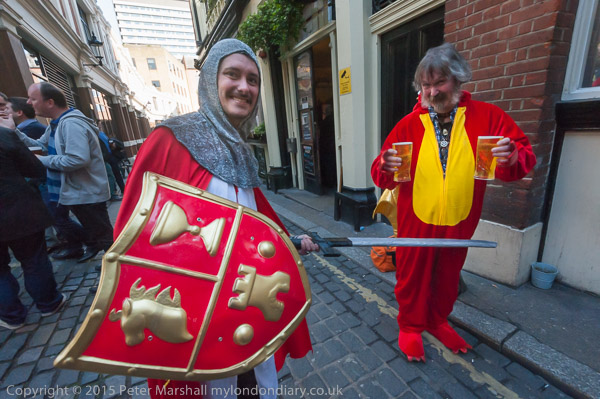
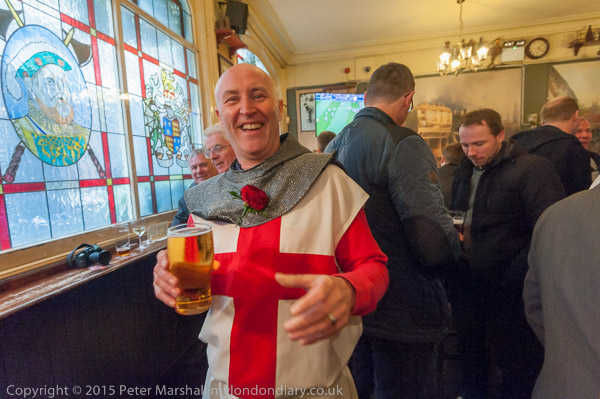
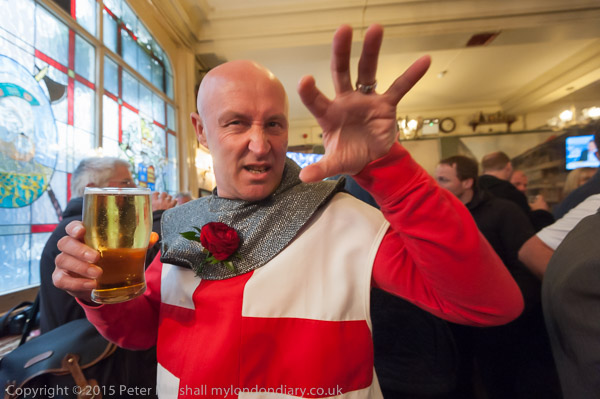
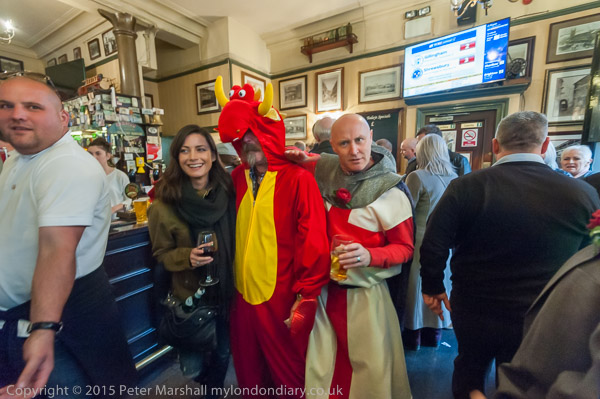
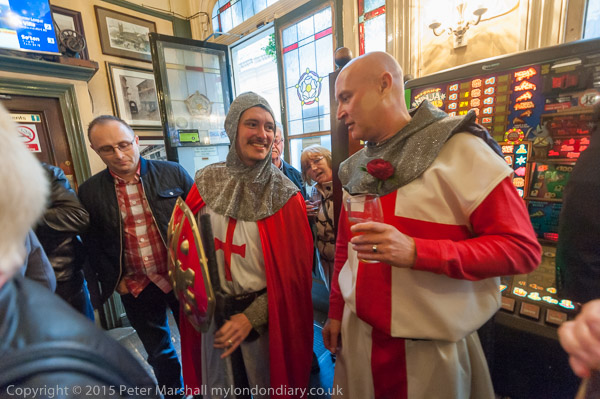
The procession ended with a play in the yard beside St George the Martyr, but I left before it finished. Earlier I’d agreed to meet a couple of photographer friends at the start of the procession, but I think they had got lost on the way there, but I’d now arranged to find them on London Bridge. There seemed to be little going on at the George Inn on Borough High St, but at the King’s Head we walked into the bar and were seated by the window when St George walked in with a few mates. It obviously wasn’t the first pub they had visited. After he had got a pint I went and asked if I could take a few pictures, and he began posing, though moving rather too much in the low light.

After I had taken his picture a rather friendly dragon came up to the bar, followed by a second St George, and I photographed the two St Georges together. And as we left the bar, there in the street was the second of them with his dragon friend – and I took a few more frames.

More on most of these events and the other two protests I photographed that day:
St George in Southwark Procession
Peace Garden at War Museum
St Georges Day in London
Sierra Leone Blood Diamonds at Tiffany
Sierra Leone Blood Diamonds at Selfridges