World Health, Syria & a Pillow Fight: Saturday 7th April 2012 was World Health Day and health campaigners protester against the increasing privatisation of the NHS. It was also International Pillow Fight Day which was celebrated by hundreds in Trafalgar Square. Between these I photographed Free Syria supporters calling for the UK government to do more over the atrocities by the Assad regime against their relatives still in Syria.
World Health Day: Lansley’s Bill
Dept of Health, Whitehall
The Health and Social Care Act 2012 was now law, having gained royal assent on March 27th 2012. Secretary of State for Health, Andrew Lansley had pushed through the most extensive reorganisation of the structure of the NHS despite the united opposition of the Royal College of Nursing, the Royal College of Midwives, the British Medical Association and the Royal College of General Practitioners and many campaigning groups.
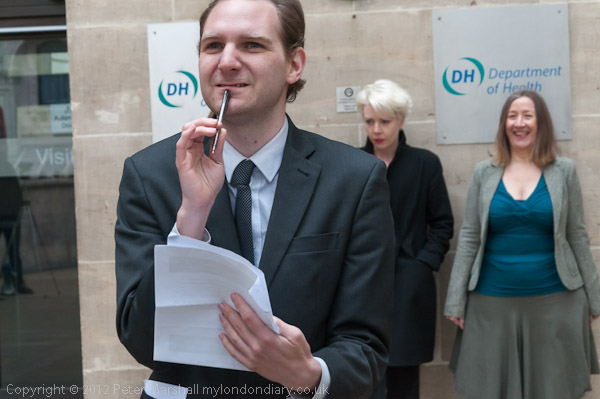
The Act led to a greater marketisation of the NHS with an greatly increased role for private companies who mainly ‘cherry picked’ the simpler and so more readily profitable areas of service, and its structural reforms were damaging, with new complex systems of governance and accountability, while removing the system leadership needed to cope with major changes. And it didn’t give any more choice to the public – unless they went private.
Lansley’s Act failed, largely because it tried to introduce a system based on competition into a an NHS where care and cooperation was the bedrock, but it did succeed in diverting much needed funds to the private sector. By 2019 the policy of competition was effectively abandoned. Labour in 2024 commissioned a report led by Lord Darzi which called it a “broken system” and conclude it “was a calamity without international precedent – it proved disastrous. The result of the disruption was a permanent loss of capability from the NHS“.
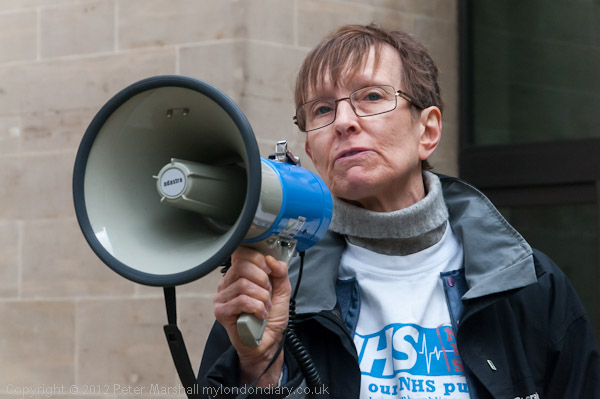
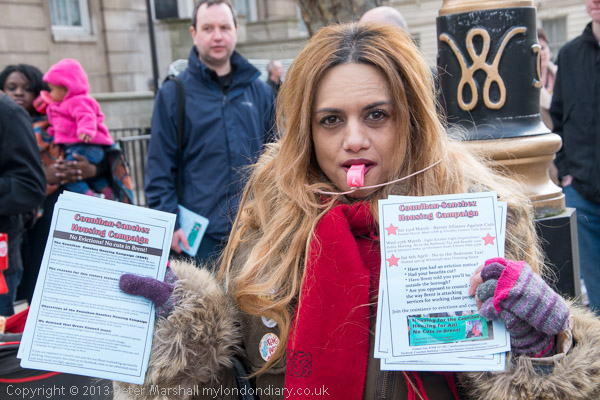
Nurse Gail Lee began the protest by explaining that the Act was designed to lead eventually to the NHS being converted to an insurance-based healthcare system that will provide high-cost medical services for those who can afford it while retaining only a basic provision for others. So far this has not happened but there are still politicians – Labour as well as Conservatives – who are urging this.
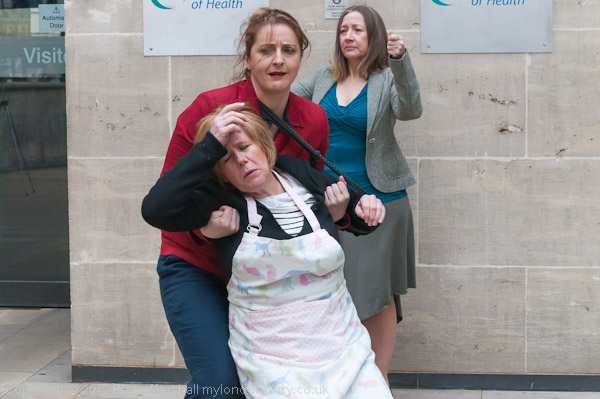
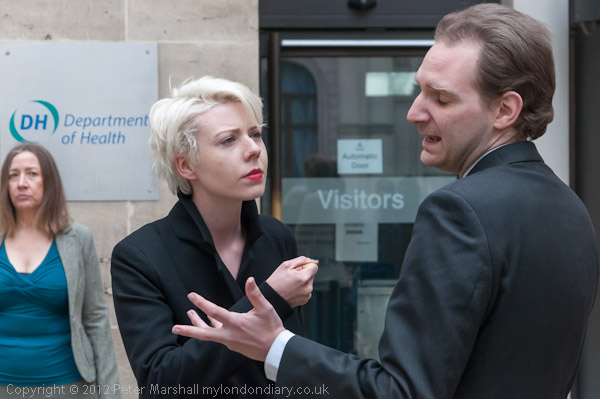
After her short talk there was a performance of the play ‘Lansley’s Bill’ by Mike Hart, based on the facts of the planning by McKinzey Consulting and the Tories which led to the Lansley Bill, a bundle of Tory lies which opens up healthcare to the market under the misleading mantras of ‘choice’ and ‘efficiency’.
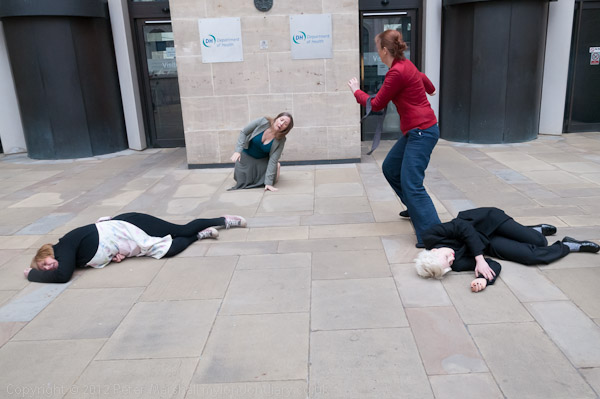
Based around the problems of a cleaner who needs the help of the new version of the NHS but is told to wait, and wait – until she dies, it makes the point that “you have a choice. You can fight for the NHS, become rich, or you can make sure you are never ill. The least worst case is to get out there and fight.”
World Health Day: Lansley’s Bill
Syrians Continue Protest Against Assad
Downing St
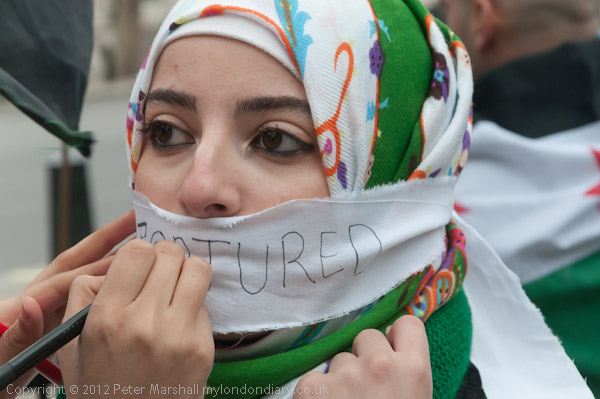
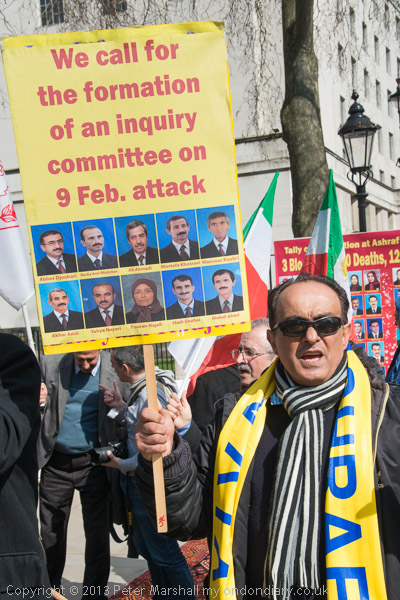
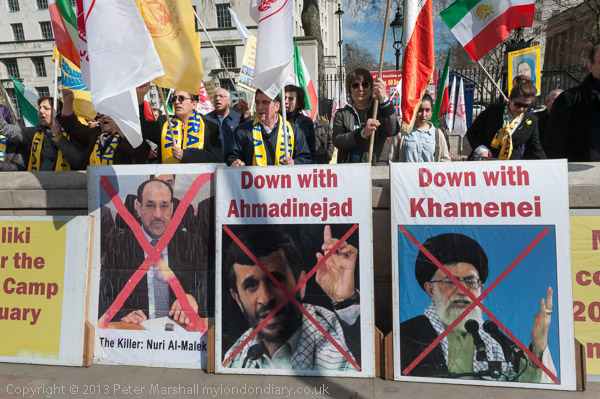
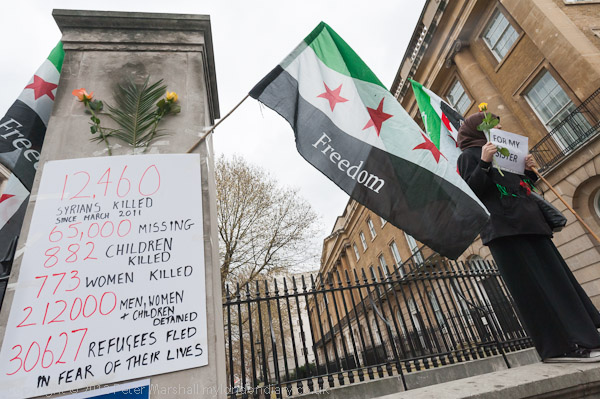
Free Syria Supporters protested aaginst the continuing killing, torture, imprisonment and abductions of their relatives by the Assad regime, calling on the UK government to take greater action
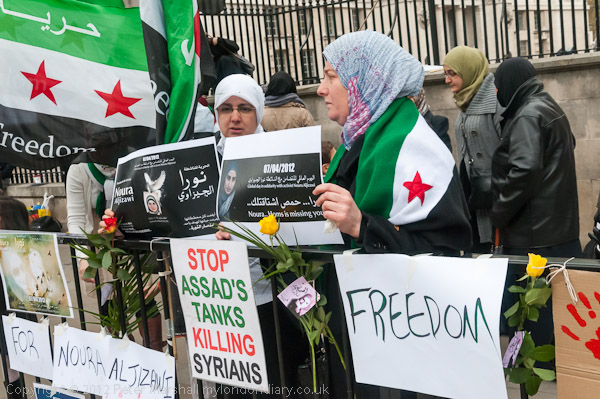
Some held up placards ‘For My Sister’, ‘For My Mum’ and for some at least of those wearing gags with the words ‘Freedom’ or ‘Tortured’ it was there own family who was tortured or missing or held in jail. Their protest over human rights violation was personal.
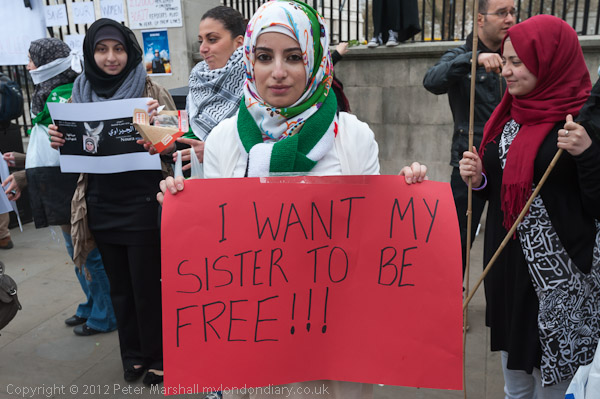
Some held family snapshots, blown up to A4, and others were taped to the railings along with lists of names, and roses dedicated to the missing and dead.
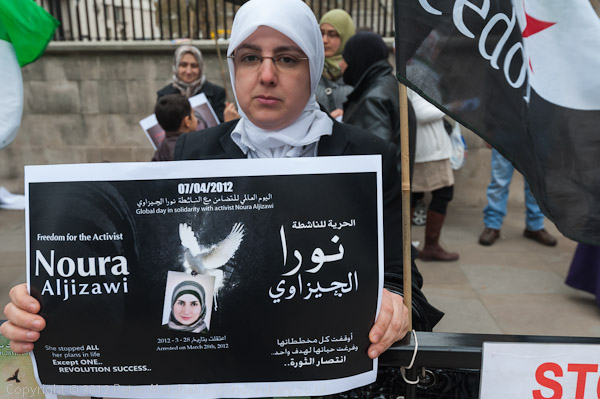
Many also called for the release of human rights activist Noura Aljizawi, who had led protests against the Asad regime, worked in hospitals to support women and children and written for the Syrian underground newspaper Hurriyat. Arrested on 28th March she was tortured and denied access to family and lawyer; an international campaign led by Reporters without Borders eventually led to her release and she fled to Turkey, continuing her campaign against the Assad government, finally relocating to Canada.
My final paragraph on the protest on My London Diary:
“On a pillar behind and on the leaflets handed out were the grim statistics. 12,460 Syrians killed since March 2011; 65,000 innocent Syrians are missing; 882 children and babies murdered, 773 women slaughtered; 212,000 men women and children are detained; 30,627 refugees fled in fear of their lives. And the numbers are still rising.”
Many more pictures at Syrians Continue Protest Against Assad.
International Pillow Fight Day
Trafalgar Square
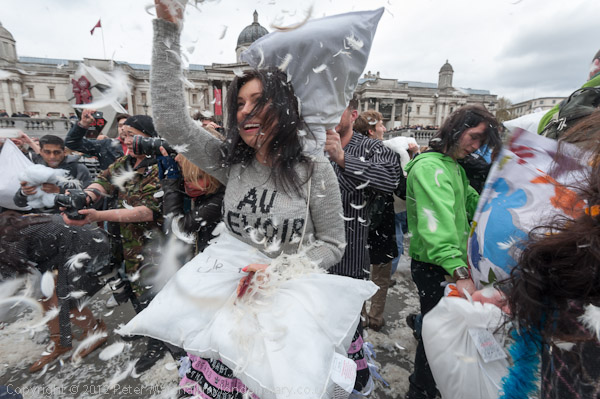
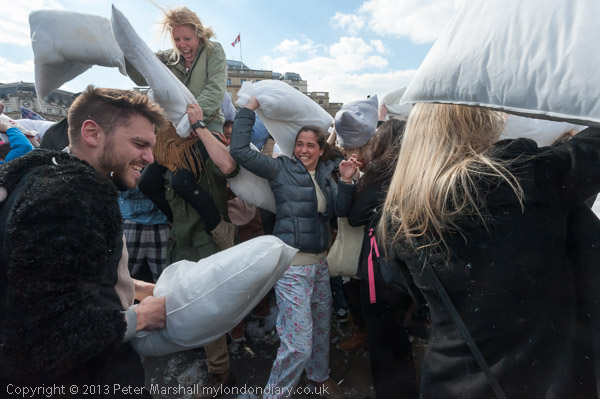
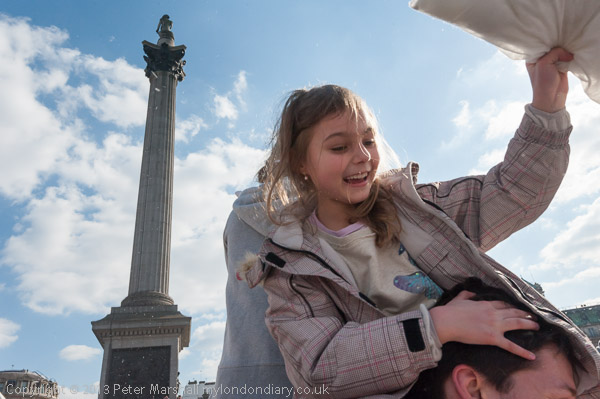
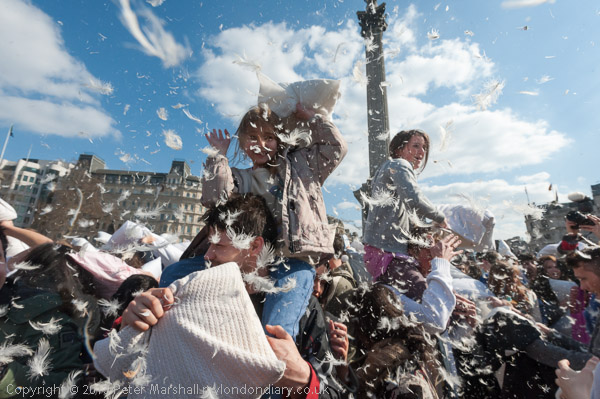
It was International Pillow Fight Day with fights arranged in 111 cities around the world in an event promoted by the urban playground movement.

As well as London there were fights in cities from Amsterdam to Zürich, with the majority being in the USA, but they were also in virtually every European country, as well as in Canada, Greenland, Turkey, Bahrain, South America, Cape Town, Australia, Hong Kong and China.

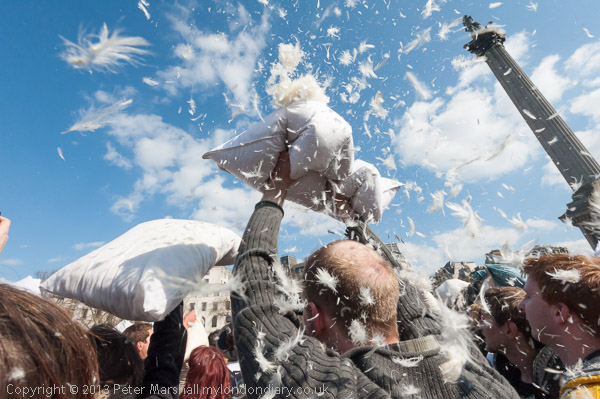
The organisers had set out a list of nine rules, some of which were adhered too, but others were clearly ignored – such as “6) NO FEATHERS, let’s not make a mess”.
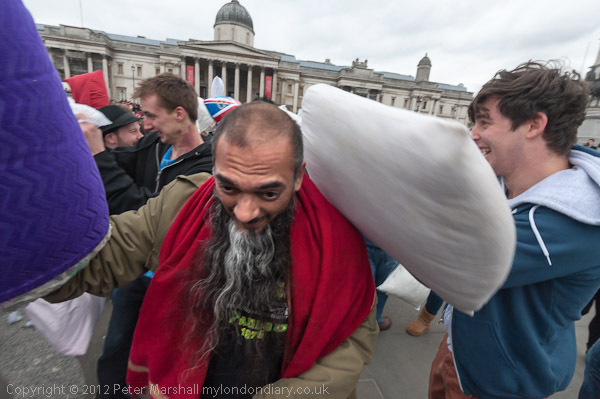
Another that was often ignored was “4) Do not swing at anyone without a pillow or holding a camera”, though some did apologise after hitting me.
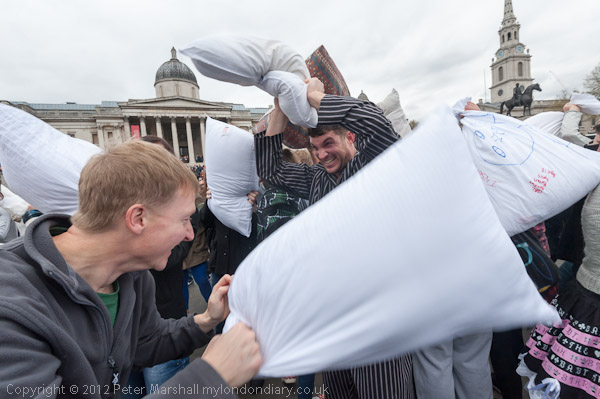
As I commented, it “was half an hour of glorious chaos as people of all ages – though mainly in their teens and twenties – rushed around attacking anyone with a pillow.”
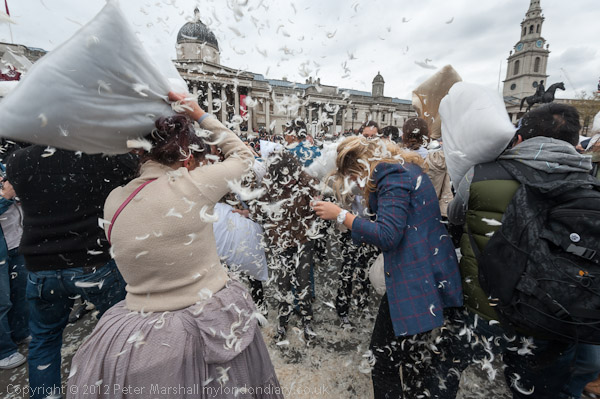
Generally the attacks were random, but there were occasional cries to “attack the panda, or the guy in stripes or spiderman or one of the others in identifiable costumes”.
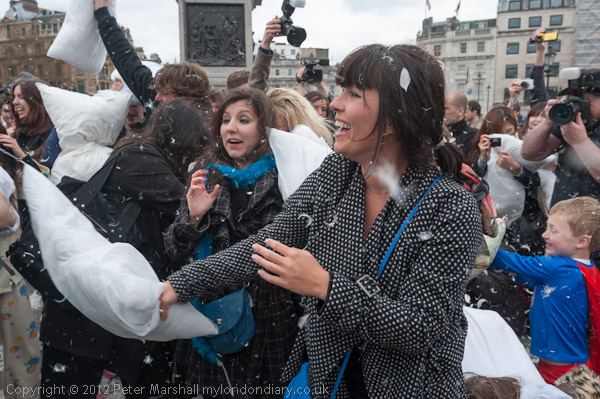
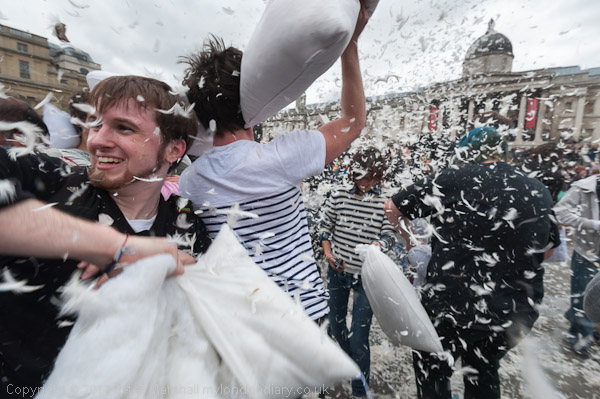
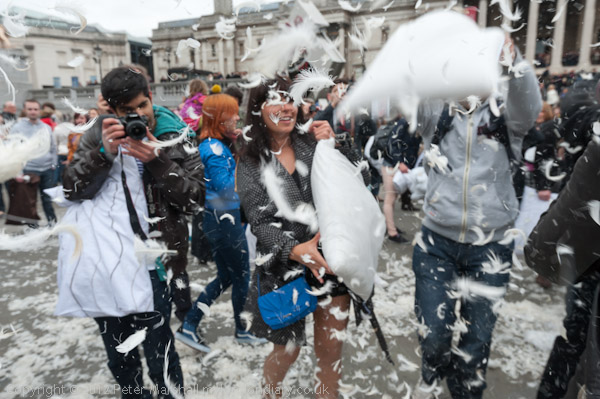
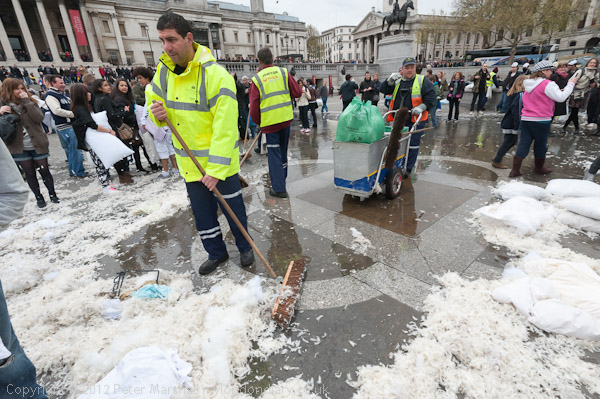
After around 20 minutes when the air (and my lungs) was full of dust and feathers the council cleaners began to pour buckets of water and sweep the dampened feathers away, but the fighting continued until a whistle blew to end the fight at the end of 30 minutes – with just a few continuing to fight.
Many more pictures at International Pillow Fight Day.
Flickr – Facebook – My London Diary – Hull Photos – Lea Valley – Paris
London’s Industrial Heritage – London Photos
All photographs on this page are copyright © Peter Marshall.
Contact me to buy prints or licence to reproduce.