Manchester – May 2017: On Friday 5th May and Sunday 7th May 2017 we stopped in Manchester for a couple of short walks around the centre of the city on our way to and from an event in Rochdale. I had lived in Manchester from 1963-70 but hadn’t really looked at the city since I left.
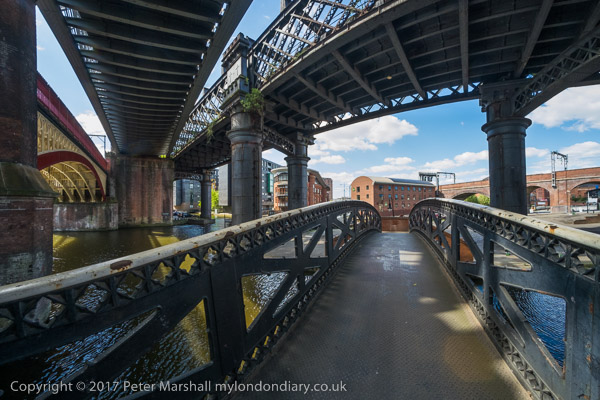
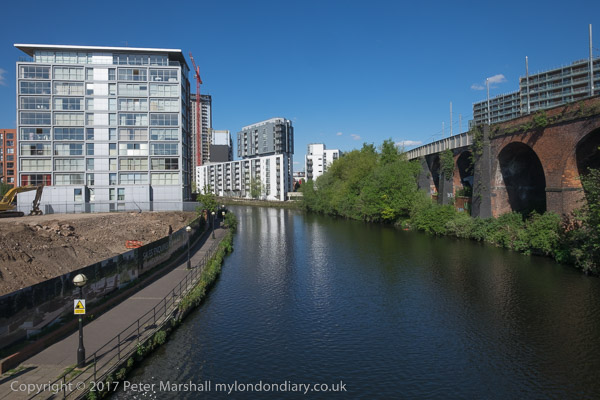
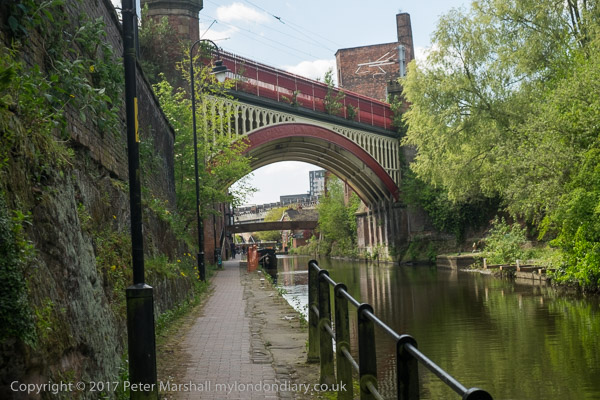
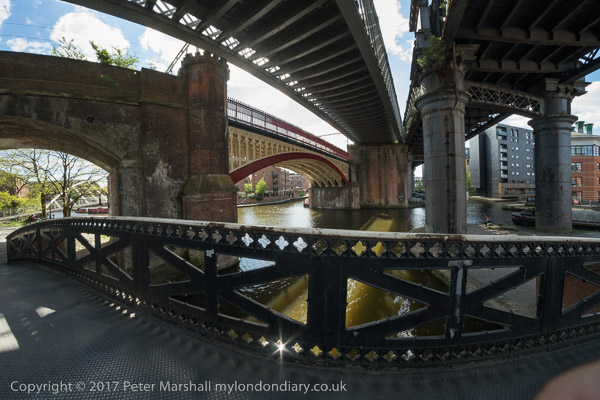
Two canals (Bridgewater and Rochdale) and four railways make this site exemplify Manchester’s contribution to the industrial revolution
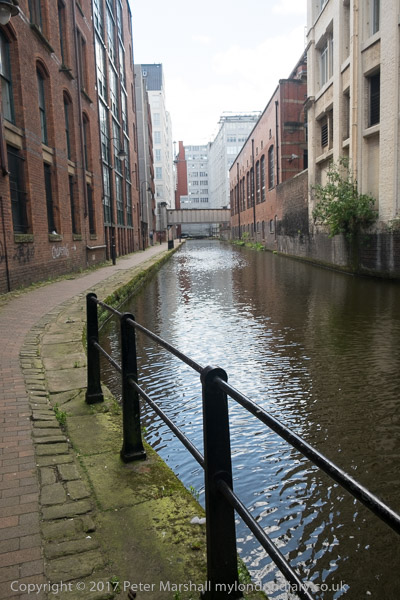
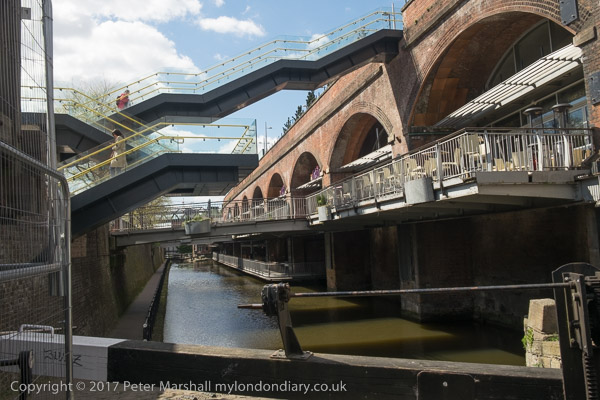
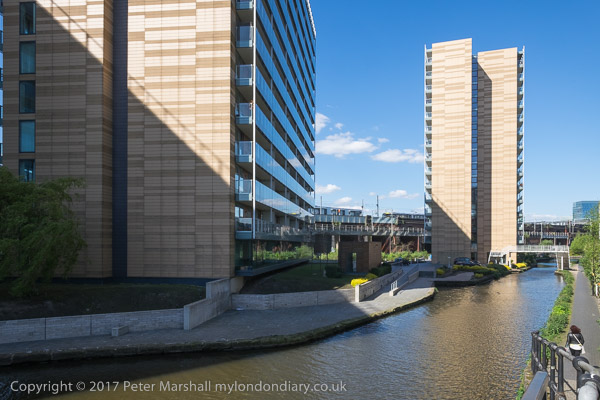
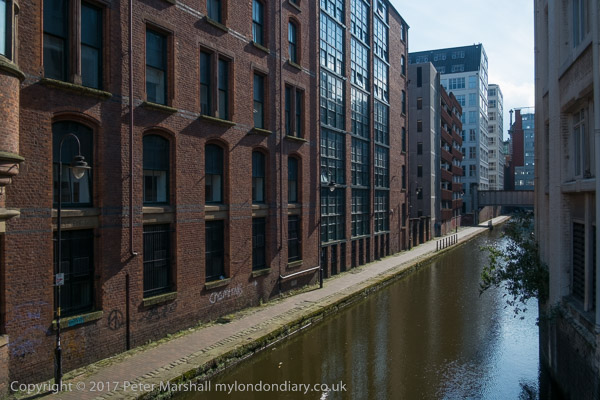
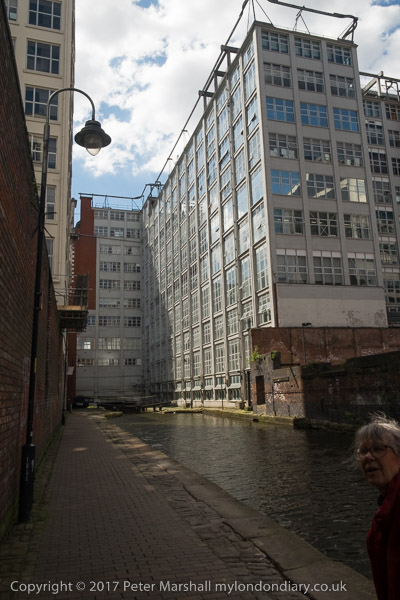
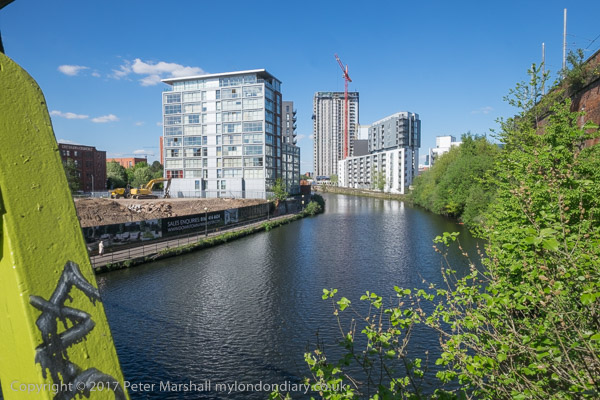
One major change since the 1970s had been the opening up of the canals, including those which run through the centre of the city. These had played a large part in the industrial revolution which had really established the city and on the Friday we went for a walk along the Rochdale Canal from close to Piccadilly Station where our train had left us and along to the Bridgewater Canal – the first canal in Britain which did not follow the path of an existing river, and the second ‘modern’ canal in our industrial revolution. It opened on 17th July 1761 to bring coal from the Duke of Bridgewater’s mines at Worley to the then rapidly expanding cotton town of Manchester.
On My London Diary you can read more about our walk and our return to the centre of Manchester which we had hoped to make beside the River Irwell, but had to detour where paths were closed.
St Georges Island and Bridgewater CanalRiver Irwell
It was perhaps this walk which decided us to return the following year to stay in Manchester for a few days and see more of the city.
We had less time on our way home on Sunday and spent an hour at the highly recommended People’s History Museum but I did take a few more pictures as we walked to the station.
Two canals (Bridgewater and Rochdale) and four railways exemplify Manchester’s contribution to the industrial revolution
Pictures here are from walks in Manchester on Friday 5th May 2017 and the following Sunday while passing through the city. It was a short visit to a city I had hardly returned to for around 45 years.
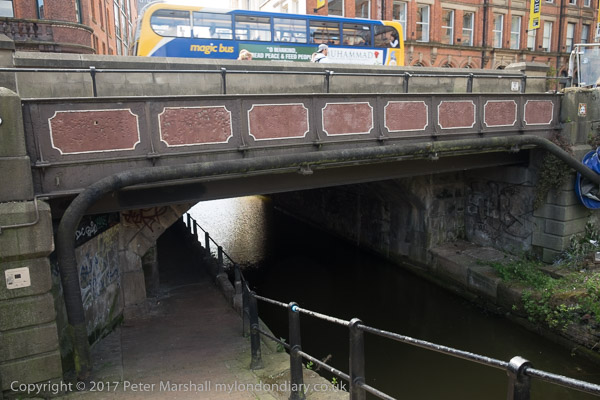
A magic bus crosses the canal
Although I grew up on the western edge of London, I spent most of the years between when I was eighteen and twenty-five in Manchester, at first studying for a degree at Manchester University and later after a short break returning to work for my doctorate at the Institute of Science and Technology.
My school had recommended Manchester for my university course, and I made my first visit there as a day trip for interviews – a very long day as the journey each way took over five hours. I didn’t see a great deal of the city that day, but I was made two unconditional offers of places and my headmaster when told advised me to stop preparing for Oxbridge entrance exams and accept Manchester, which I did. It was a decision that changed my life in various ways.
Castlefield
My course was disappointing – long hours in the lab and largely tedious lectures by staff with no training and little idea of how to teach, keen to get back to their researches. Sitting at a bench with a small plaque informing me that ‘Rutherford first split the atom here’ in 1917 was little compensation for a physics lecturer who seemed unable to explain even the simplest of concepts, though fortunately I’d studied enough of the subject at school to get a decent grade – and the same was true of my other subsidiary, Maths where I passed a rather curious end-of-year exam with 108%.
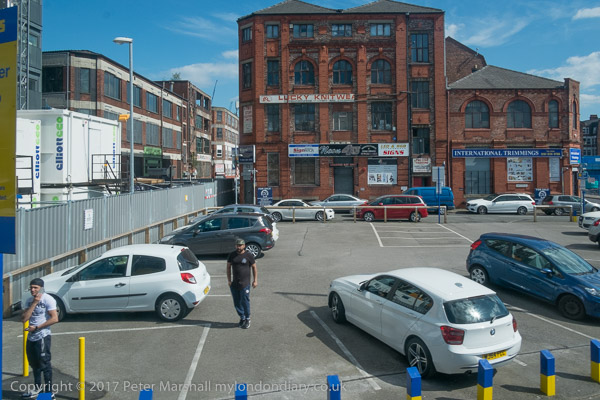
Knott Mill
But my real study was in the University Union and in the city itself, though I did enough work in my final year to get a decent grade – and to turn down offers of employment from big pharma who I found far too interested in profit rather than human good and also from the government’s explosives research lab from where I got a very long handwritten letter from one of the scientists working there about the exciting research they were doing – but I decided I really didn’t want to spend my life making better bombs.
The old canal dock area became a conservation area in 1980 and an Urban Heritage Park in 1982
I did get turned down for one job I would really have liked, working in the labs at Kodak in Harrow. I was really not sufficiently middle-class for them – and not interested enough in photography – I’d had an interest but never really been able to afford to pursue it, and dropping my camera in a lake in 1966 hadn’t helped – it never really worked properly again. I ended up getting a job in a lab ten minutes walk from my old home, but it disappointed in almost every way but the salary – at least 50% more than my father had ever earned. It didn’t last, and six months later I was back in Manchester.
River Irwell
Two years later I got married, not in Manchester but in Hull. We were both students still and had little or no money and spent our honeymoon in Manchester, with a day out on the Derbyshire hills and a day coach trip to the Lake District. We lived for the next two years on the two first-floor rooms of a small terraced house in Rusholme, close to Manchester CIty’s Maine Road ground.
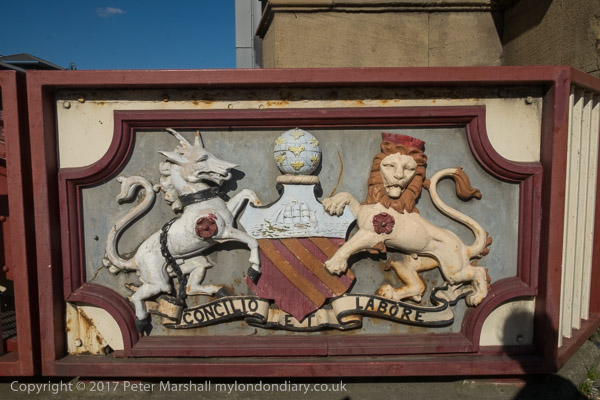
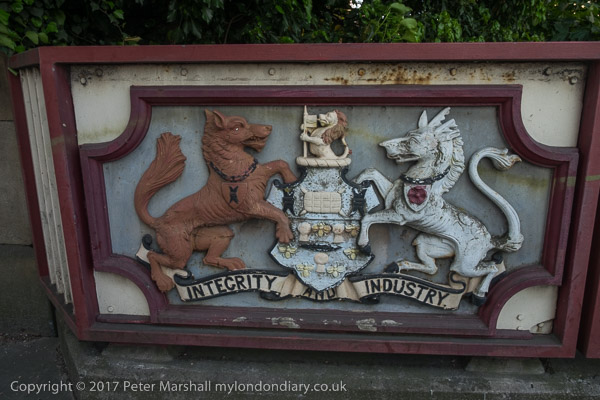
New Quay St Bridge – Salford coat of arms
We moved away for me to do a course in Leicester. I’d taught for a couple of terms before just to the north of Manchester, and tried at the end of the year to get another teaching job in Manchester, but failed, ending up moving to Bracknell, where I was offered housing in a new flat on one of the new estates.
After we moved away from Manchester I think I went back once for a conference there and a weekend in Didsbury in the 1990s but not really again until 2017. We were on our way to a weekend conference a few miles to the north, and took an early train to have a few hours to look around the city. Our train came into Piccadilly, and we took a walk along the Rochdale canal and the Bridgewater canal before walking back close to the River Irwell to the city centre to catch our bus.
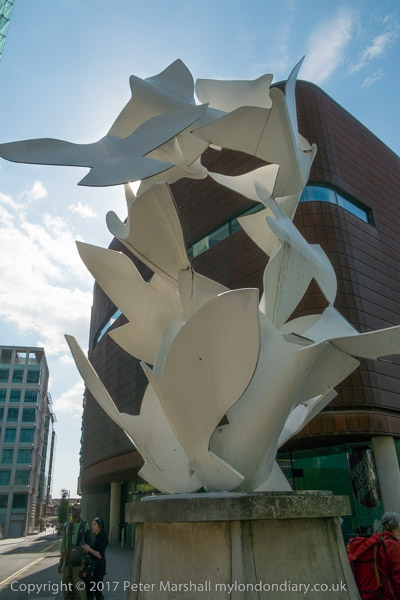
Doves of Peace sculpture by Michael Lyons, Manchester Civil Justice Centre
Back in 1970, the canals were still largely working areas, or mainly disused but still largely closed to the public; you could walk along some towpaths, but they were rather lonely and forbidding places. Now things are very different.
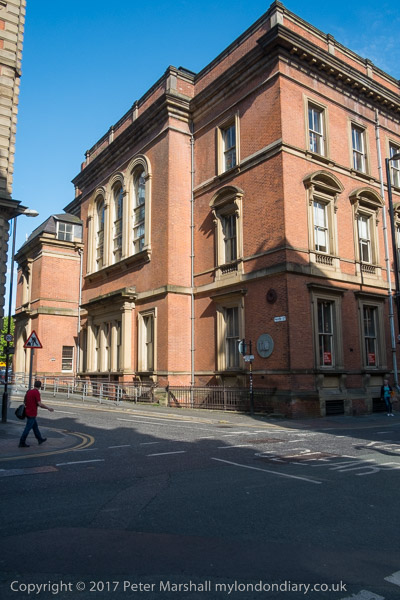
Mechanics Institute – where the TUC, CIS and UMIST began
We had time for a shorter walk on our way home, but mainly spent that in the People’s History Museum. The following year, 2018 we made a similar journey, but with less time for a walk, and then came back to stay for several days at the start of August as a part of a couple of weeks in various places celebrating our 50th wedding anniversary – including a celebration with family and friends in Hull.