Central Hill and more

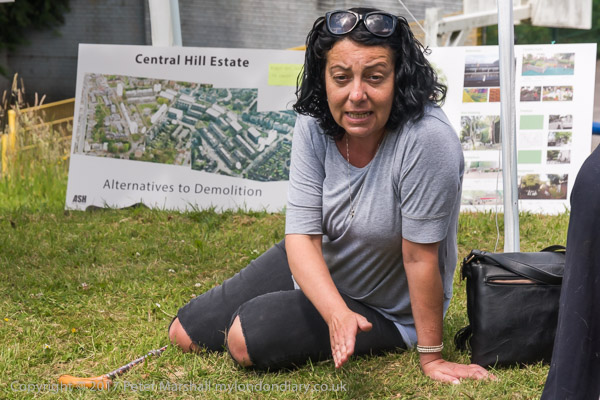
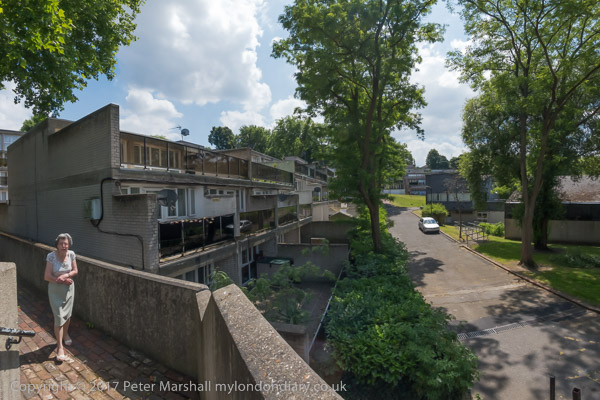
One of the original tenants comes to talk with me She tells me she dreads having to move

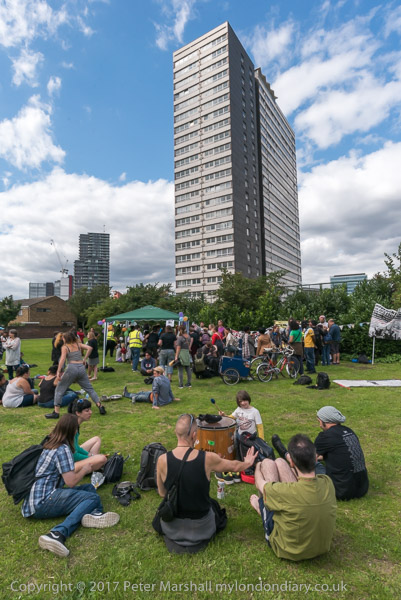
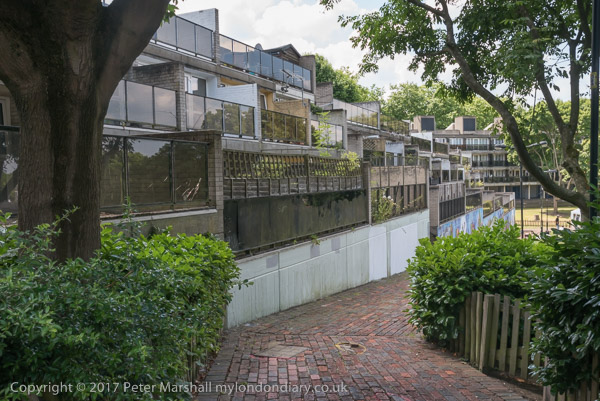
I began work on Sunday 18th June 2017 on the Central Hill Estate at the south-east tip of Lambeth, built on a hill with splendid views towards central London. Across the road (also Central Hill) at the top is Norwood in LB Croydon, a few yards down from the estate takes you in to the LB of Southwark, while 5 minutes walk east brings you to Crystal Palace in the LB of Bromley.

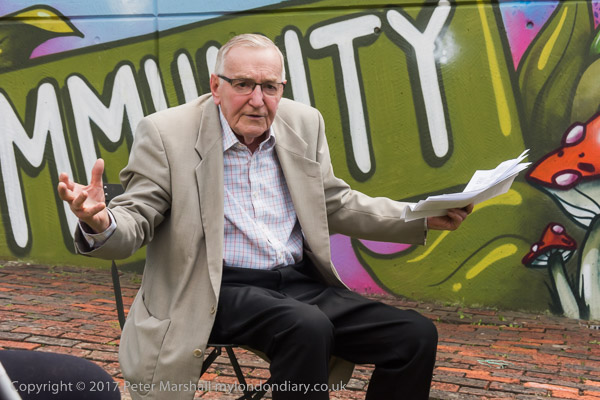
As Ted Knight, the leader of Lambeth Council from 1978 until disqualified for refusing to cap rates in 1985 and demonised by the press as ‘Red Ted’, told us later in the morning when he came to express his support, the estate was designed and built in 1967-74 when Labour believed that “nothing was too good for the working people” and the estate was built to high specifications and is still in sound condition. Borough Architect Ted Hollamby had earlier brought in Rosemary Stjernstedt from the LCC where she was their first senior woman architect, and she was the team leader, working with structural engineer Ted Happold from Arup & Partners and architect Roger Westman.

The scheme was seen from the start as a living community, and included a burses’s hostel, a day card centre and a doctor’s surgery as well as a small row of shops, a club centre and community hall. It also had a district heating system, though this is no longer in use. The plans made great use of the sloping site and the estate is certainly one of the finest of that era. It has remained a popular estate, with relatively low crime rates, and quite a few of the original residents still live there and wish to stay.

It’s an estate that clearly should be listed, but Historic England decided not to do so in 2016, probably under pressure from politicians, particularly because of the scale of the site and the very attractive possibilities it presents for developers. The Twentieth Century Society were dismayed that their application was dismissed – and you can read their application on-line.

In 2017 Lambeth decided to completely demolish the estate and develop it with an extra 400 homes, roughly doubling the size, most of which will be for private sale. Many residents objected and Architects for Social Housing have developed alternative plans showing how the extra capacity could be achieved at lower cost retaining the existing housing and the main features of the estate.

Nicola Curtis, one of the elected representatives the council refuses to talk with

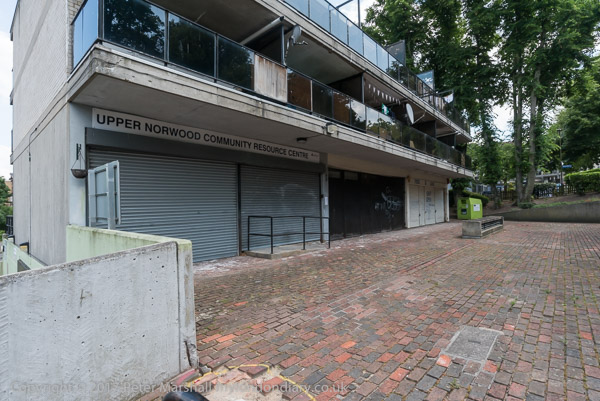
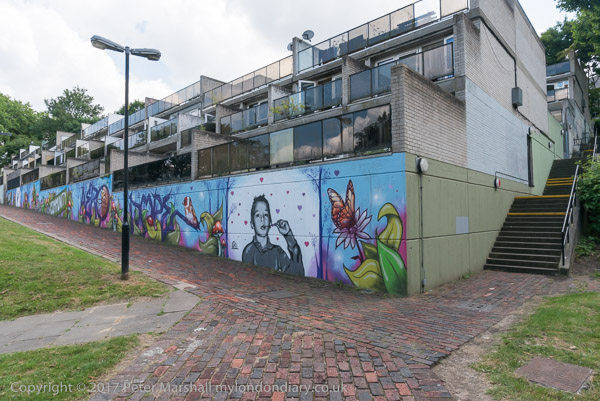
The council seem to have little concern for the current residents of the estate or their wishes. They have been banned from using the community resource centre on the estate, which was locked. A large mural was painted with council agreement on one of the walls in the estate – but the council then insisted that they remove the name ‘Central Hill’ from it. The council refused to talk with the two representatives of the residents elected to the Resident Engagement Panel. Normal maintenance of the paths and other aspects of the estate appears to have been stopped, and I found examples of very shoddy work by the council on the estate.


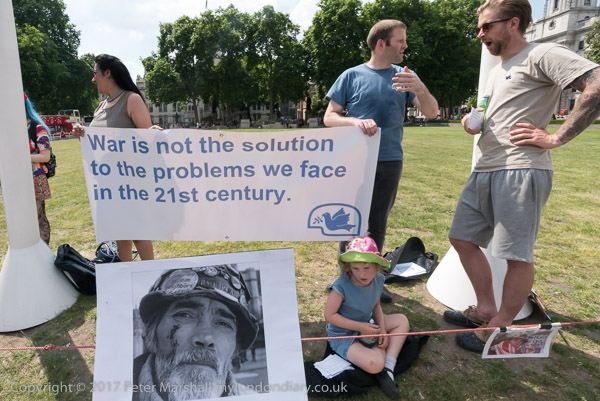
I took the train back into central London and to Parliament Square, wherre Veterans for Peace had organised a remembrace of Brian Haw on the 6th anniversary of his death. They held a small banner with the message ‘War is is not the solution to the problems we face in the 21st century’

Brian Haw began his camp here on 2 June 2001, and remained in place despite many attempts, legal and otherwise to remove him for almost 10 years, leaving only when arrested, for court appearances and to speak at protests at Trafalgar Square and Downing St until 1 January 2011 when he left England to receive treatment for his lung cancer in Berlin. He died in Germany in the early hours of 18 June 2011.

His ten years of protest and the frequent and repeated harassment undoubtedly hastened his decline and death. His protest in Parliament square was continued by Barbara Tucker who had joined him in 2005 and had been imprisoned twice for her role in the protest and arrested 48 times. The level of harassment increased and she went on hunger strike on 31st December 2012. Late in January 2013 she was taken into hospital close to death, and was treated for frostbite and exposure. Her protests continued on-line.

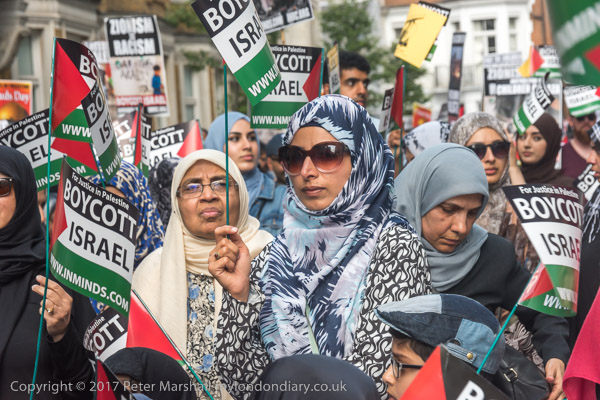
It was also the day of the annual Al Quds (Jerusalem) Day march in London, attended by several thousand from all over the country. Led by Imams and Neturei Karta anti-Zionist Jews, it called for ‘Freedom for Palestine’, and for all oppressed people’s across the world, and for a boycott of Israel.

As usual the march met with opposition from a small group of Zionists with Israeli flags and they were better organised than in previous years, with around 20 of them managing to block the route for around a quarter of an hour before police managed to move them on and allow the march to continue, though rather more slowly than usual.

Al Quds Day was inaugurated by Ayatollah Khomeini and some of the groups which support it may still receive support from the Iranian regime. Some of the protesters carried a small flag with both the Palestinian flag and that of Hezbollah and the message ‘Boycott Israel’. Hezbollah, a Lebanese Shia Islamist political party and militant group uses the same flag for both, and the militant wing is a proscribed group in the UK. The flag carried by some on the protest made clear in the small print it was in support of the political party.

Al Quds march
Zionists protest Al Quds Day March
Brian Haw remembered
Ted Knight speaks for Central Hill


All photographs on this and my other sites, unless otherwise stated, are taken by and copyright of Peter Marshall, and are available for reproduction or can be bought as prints.
Boris’s Biggest Blunder?

Earl’s Court

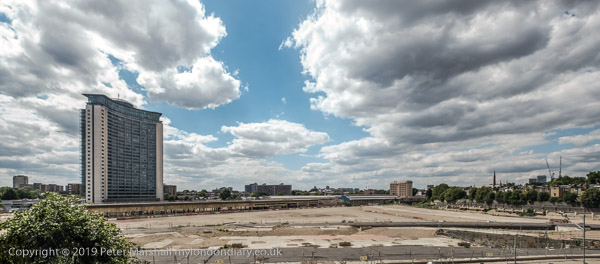
Probably the largest desert in London – thanks to Boris!

Boris Johnson’s time as Mayor was in many ways a disaster for London, but while the media obsess about his sexual peccadilloes and to a lesser extent his racist comments, little is said about his more important failures, which may have enriched some of his city friends but whose consequences will remain to impoverish Londoners for many years after he has left office. One of these, and probably the biggest, is the stalled £12 billion Earls Court redevelopment, which makes even the £53 million Garden Bridge Fiasco fade into insignificance.

The vacant site where one of London’s iconic 1930s building once stood

It’s wrong of course to call it a blunder. It was a deliberate scheme for the enrichment of a few, undoubtedly including friends and financial supporters of the Conservative Party at the expense of London and Londoners, aiming to provide a huge high-rise development of investment properties largely for sale to foreign investors, a huge empty triangle in what was once a thriving part of London, contributing greatly to the local area and more widely, housing several thousand people who would lose their homes and removing jobs from the area.

Along with Boris, and Transport for London, then a part of his fiefdom, the villains in this £12 billion scheme are developers CAPCO, (Capital & Counties Properties) whose development proposals bear no relation to the considerable history, needs of the area and its locality and the contribution it would pay to the local economy, simply wiping the whole area clean and imposing a solution based on maximising profit to the developers. As soon as they acquired the site in 2008 they applied to English Heritage for a Certificate of Immunity from Listing for the 1930s Earls Court Exhibition Centre, granted despite its iconic status – and the fact that some aspects of it were apparently already listed.

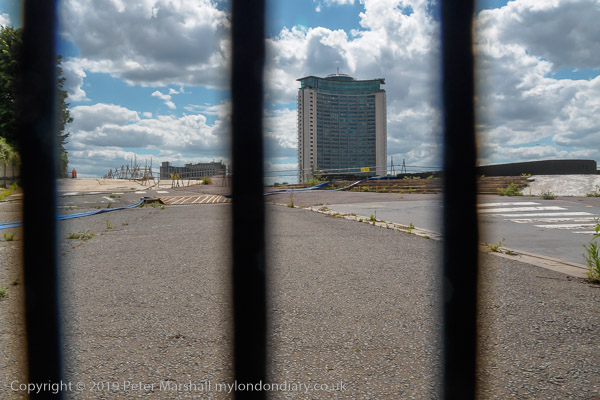
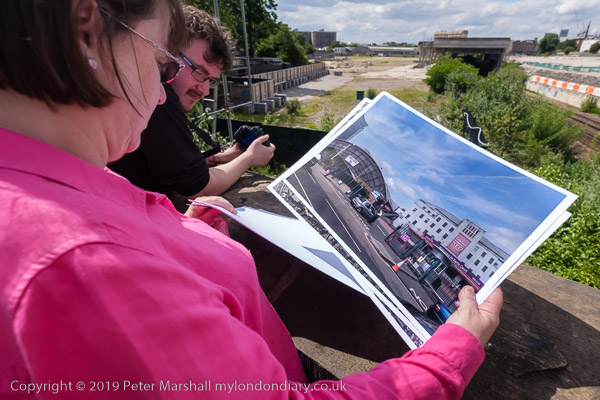
We look at the site of Earls Court 2, with a photograph before demolition

The site falls into two London Boroughs, Kensington and Chelsea and Hammersmith and Fulham, both when the project began under Conservative control. Hammersmith and Fulham council agreed to sell off the two council estates which cover a large part of the area to Capco in 2012. Since Labour took over in H & F in 2014 they have set up an inquiry into the decision to sell and have called for Capco to return the two housing estates. In February 2019 the Mayor of London, Sadiq Khan, stated that he wanted the two estates to be transferred back to the council by Capco unconditionally after they demanded unacceptable planning permission in return for their release.

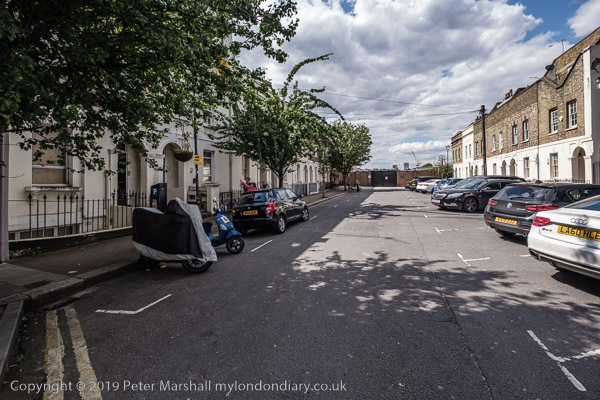
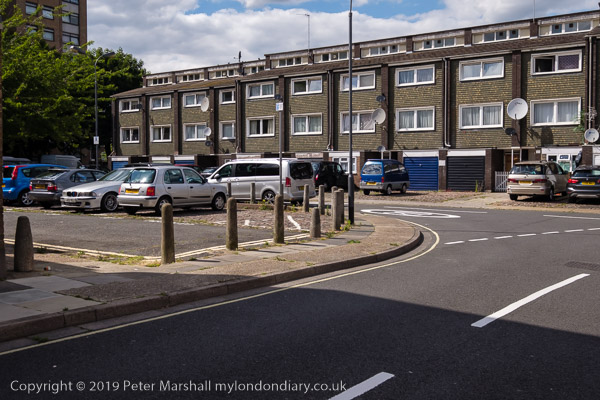
Empress Place would make a fine entrance to a new estate – but Capco will knock it down

There are two large office blocks on the site, both visible in the top picture. The tower at left has already been sold and is now occupied by the Metropolitan Police. The smaller block, at right, belongs to TfL and is a part of their site which also includes extensive workshops; it seems that they have so far failed to find suitable alternative sites for these essential facilities.

Thanks to determined opposition from local people the scheme has so far failed to materialise, and the West Kensington and Gibbs Green estates are still there, along with the TfL workshops, but the demolition of the two exhibition centres has created the largest desert in London. The cleared area, left as dusty bare cleared rubble is a local eyesore and pollution source, with wind carrying dust into local homes and businesses, creating thick and possibly dangerous grime.

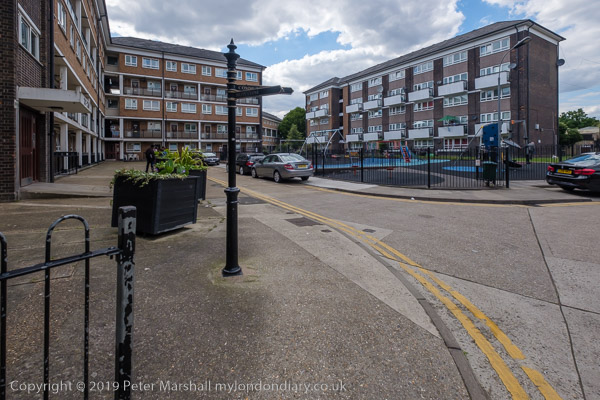
West Kensington, a well built and much loved estate that Capco would demolish

Opposition to the demolition of the exhibition centres is led by the Earl’s Court Area Action Group, one of whose members took me and other journalists on a tour of the area last week. They now demand the demolished area be developed with a replacement venue for the demolished iconic Earls Court Exhibition Centre as a large green space for exhibitions, sports and cultural events, along with “low rise, high density, exemplary green housing with a wide range of housing options including social housing, green space, community and social infrastructure, reflecting the demographic and unique characteristics of Earl’s Court.”

The residents of West Ken & Gibbs Green estates have been campaigning against the demolition of their homes since 2009, and as a part of their campaign for ‘The People’s Estates’ commissioned Architects for Social Housing (ASH) who in 2016 produced ‘the People’s Plan’ for improvements and new homes on the estates without demolition. They want the estates to be transferred to community ownership.

Gibbs Green estate also well built, loved and in good conditions and under threat of demolition by Capco

Earl’s Court Area Action Group
WKGGCH – West Ken & Gibbs Green Community Homes
ASH – Architects for Social Housing


There are no adverts on this site and it receives no sponsorship, and I like to keep it that way. But it does take a considerable amount of my time and thought, and if you enjoy reading it, please share on social media.
And small donations via Paypal – perhaps the cost of a beer – would be appreciated.

All photographs on this and my other sites, unless otherwise stated, are taken by and copyright of Peter Marshall, and are available for reproduction or can be bought as prints.
To order prints or reproduce images