Jubilee Celebrations and Kurdish Protest: Celebrations were taking place on Sunday 2nd June 2002 for the Queen’s Golden Jubilee (and they continued the following day which was the Golden Jubilee Bank Holiday, with the Tuesday also being the Spring Bank Holiday – moved into Summer for more celebrations.) My main reason for going into London was to photograph a protest by Kurds but I also tried to photograph some of the celebrations. Quotes below are from what I wrote on My London Diary back in 2002 with some of the pictures and I took.
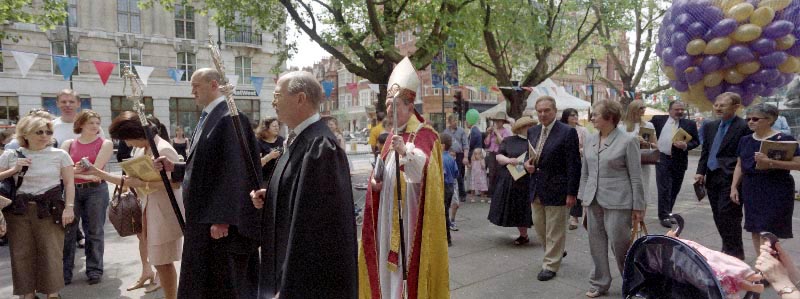
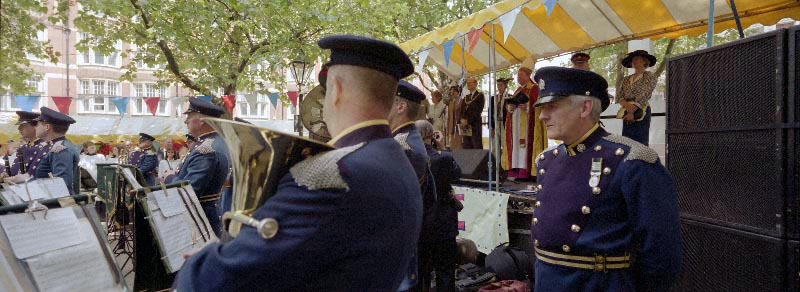
Sloane Square
Chelsea
“As a convinced republican I wasn’t too excited, but thought I’d go along and have a little look at how others were celebrating. Sloane Square seemed a good place to see how Chelsea was taking it as they were having a fair on Sunday 2nd June.”
At least while I was there the celebrations in Sloane Square were an extremely formal event and rather boring.
Kurds Call For Human Rights in Turkey
Westminster
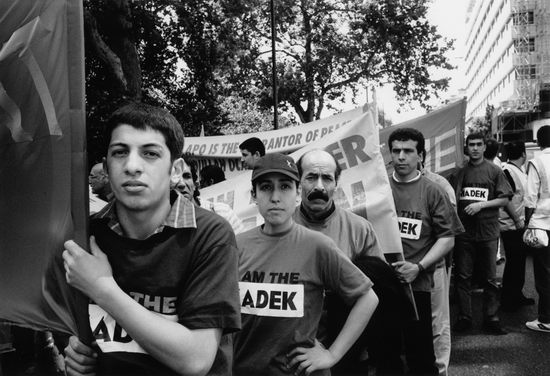
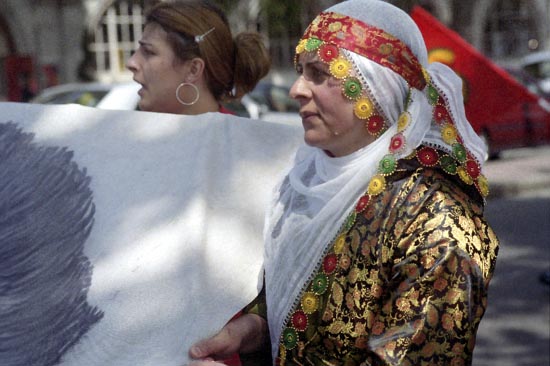
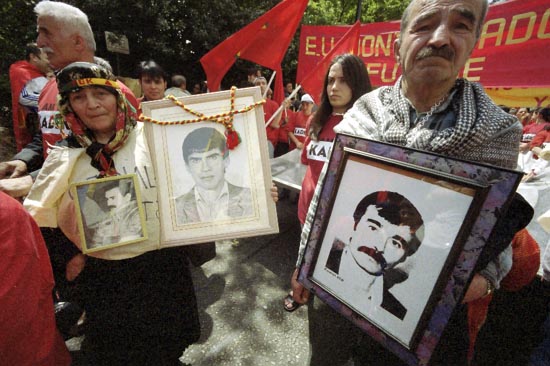
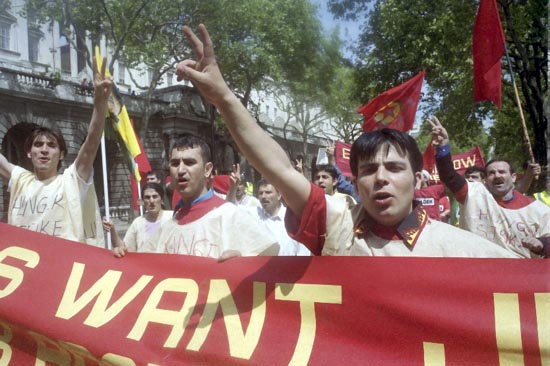
I am the Kadek – Kurds protest
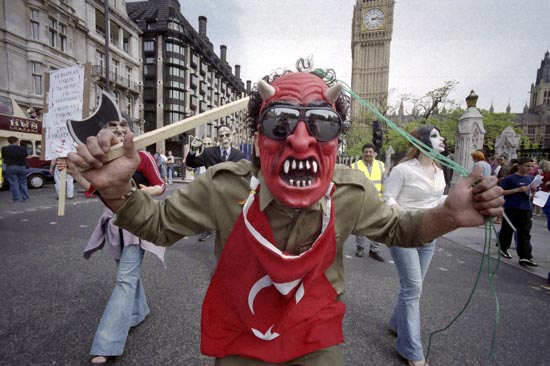
“I was glad to leave and join the Kurds in their demonstration for human rights. Britain has a lot to answer for, having betrayed them at the Lausanne Treaty in 1923 which divided their country, giving most to Turkey which has since behaved with complete disregard for their human rights.”
The Devil TurkeyKurds protest against banning of their organisations Free Ocalan, Free Kurdistan
“More recently – again to keep the Turks onside – the US put the Kurdistan Workers’ Party (PKK) on their terrorist list, despite it having abandoned terrorism to try and obtain justice. ” KADEK was the name the PKK changed to in 2002 when it said it was committed to non-violent activities and it was added to the PKK proscription in 2006.
“Turkey has continued a policy of brutal repression – as the European Court of Human Rights has confirmed.”
“Cynical support of US policy by Britain and other countries resulted in the PKK also being listed [in the UK] as a banned terrorist organisation last month. It’s the kind of politics that makes me ashamed to be British and loses our Labour government any respect.”
“After the demo I went on to see how Southwark were celebrating. “
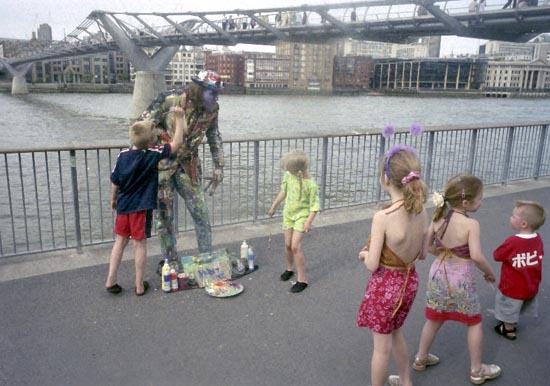
“The answer turned out to be very low key, though as usual there were some interesting food and drink stalls at Borough Market, and a steady stream of people walking along by the river.”
State Opening of Parliament: I wasn’t of course attending the Queen’s Opening of Parliament on Wednesday 27 May 2015, but it was a day for protests in Westminster. Class War had come to protest against the monarchy and the political system and were hounded by police, Compassion in Care protested in support of whistle-blowers, students in the National Campaign against Fees and Cuts had organised a rally and march and others including Disco Boy and Ahwazi protesters came to join in. The day ended with a People’s Assembly rally at Downing Street but I was too tired to cover this properly and went home. I wrote about all these in My London Dairy and uploaded quite a few pictures – you can read and view more by following the links in the brief introductions below.
Class War protest Queen’s speech
Parliament Square
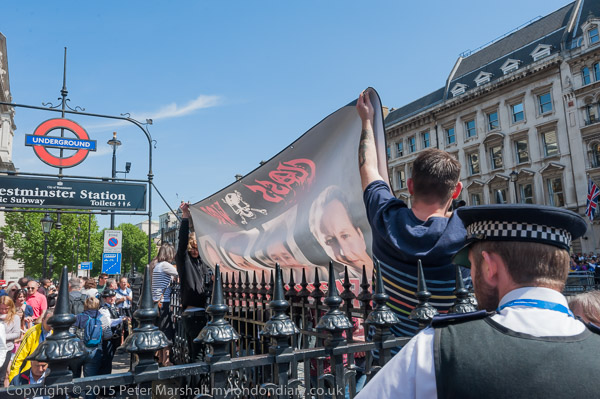
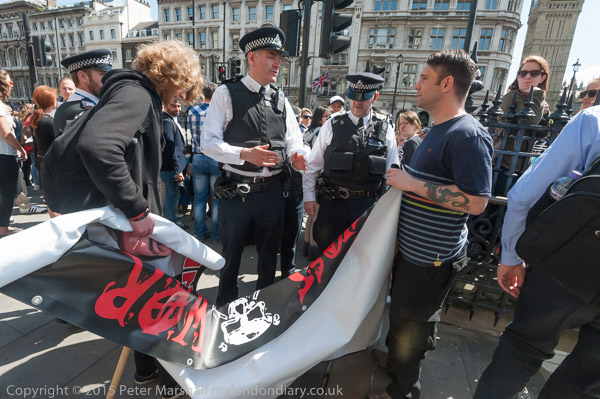
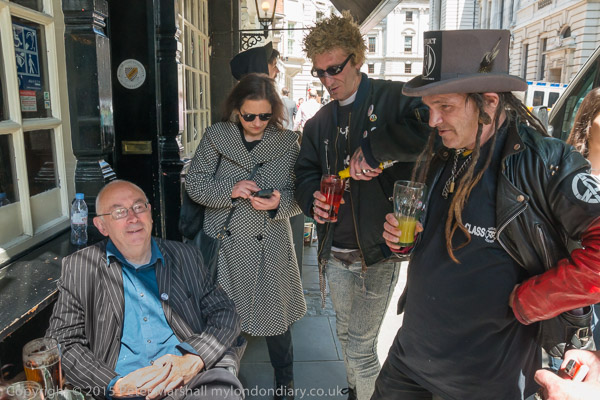
Class War only managed to display their ‘political leaders’ banner on the corner of Parliament briefly before police forced them to put it away. Around 50 officers then followed most of them as they went to a nearby pub and continued to watch them from the opposite side of the street for several hours.
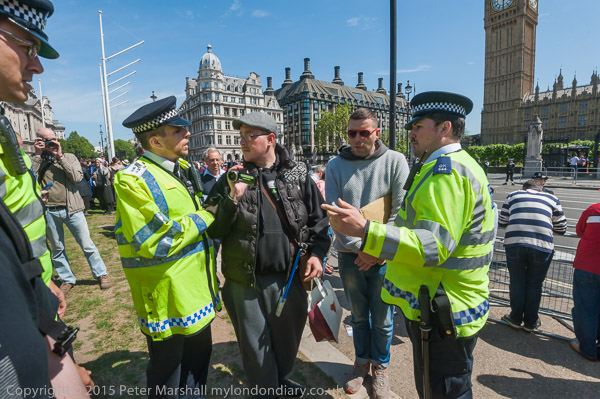
Police arrested two other men for simply standing in the square, one holding a video camera and the other a rolled up poster. They were released without chanrge some hours later.
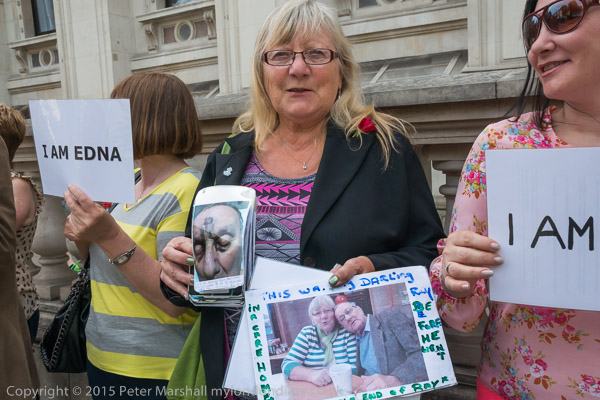
A woman holds a photograph of her husband who died because of his mistreatment in a care home
A line of people held up posters and shouted ‘I am Edna’ at Downing St calling for a law which would make it an offence not to act on the genuine concerns of a whistleblower and to protect those revealing scandals in social care and other sectors.
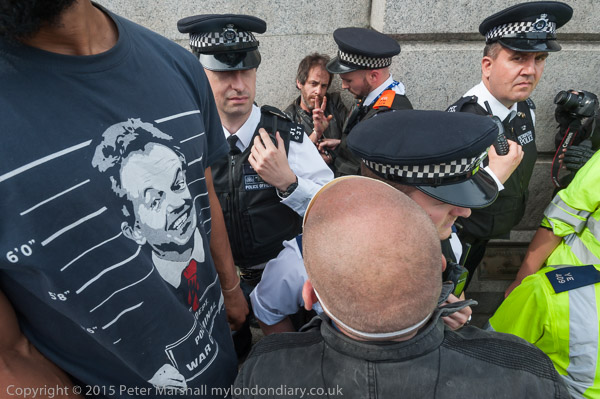
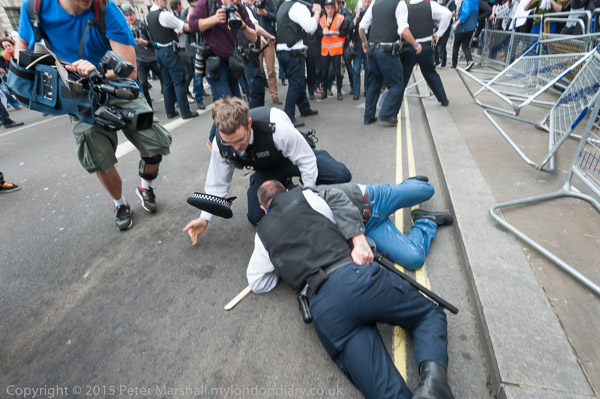
As people gathered for the National Campaign against Fees and Cuts a police squad rushed in and arrested a man. They were surrounded by a crowd who grew angry when police refused to give them any explanation for the arrest and pushed some away roughly
Police pushed a young man standing on the pavement near the police van roughly out of their way, and when he complained, he was assaulted by an officer then arrested for assault.
Later police announced that the arrest in the square was in no way related to the gathering protest but to an earlier offence. Had they made that clear to the crowd when they made the arrest the problems could have been avoided.
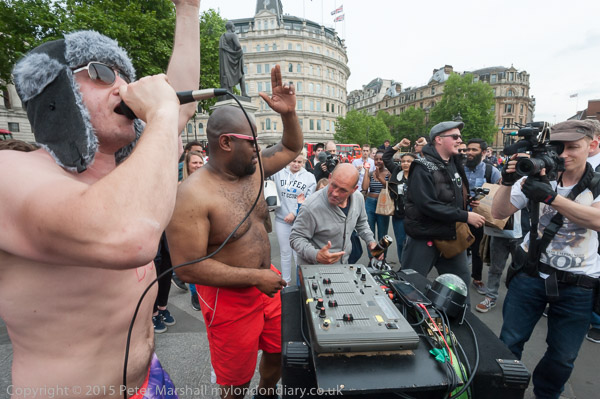
Disco Boy at the mike with his mobile rig and crew in Trafalgar Square
Disco Boy’ Lee Marshall from Kent who runs discos at local events and carries out stunts to be videod and posted on social media brought a mobile rig to Trafalgar Square before the NCAFC protest there and had people dancing around the square before going on to perform elsewhere, including outside Downing St.
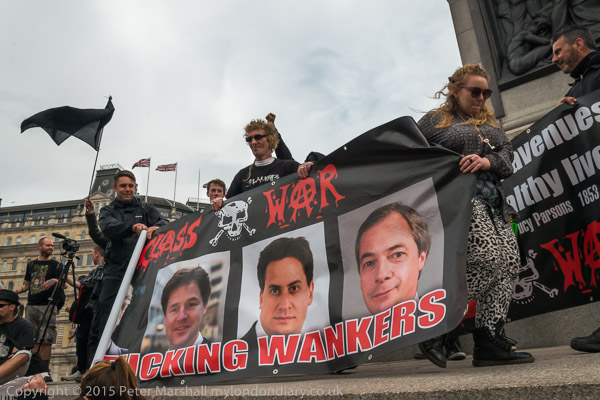
Class War’s controvesial banner got loud cheers from the crowd
Students and other supporters of the National Campaign against Fees and Cuts met in Trafalgar Square, and there were a few short speeches before they set off on a march.
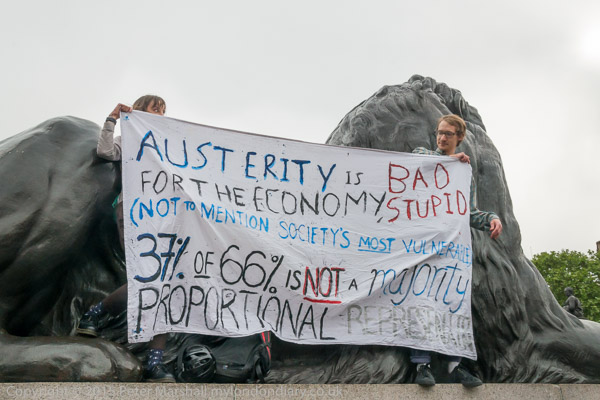
A banner points out that less than a quarter of the population had voted for the Tory government and called for proportional representation.
Protesting with them were Class War, with several banners including a replacement for their ‘Political Leaders’ banner’ which had been taken by Bethnal Green Police the previous month (and police ‘lost’ it) and also the Hashem Shabani group of Ahwazi Arabs, who later held their own protest
The National Campaign Against Fees & Cuts set off down Whitehall with police making ineffectual attempts to stop them, arresting several forcefully.
The rest of the protesters remained peaceful and simply walked through the huge gaps in the police line, made larger as they made the few arrests. There seemed to be no reason for the police attempting to stop them.
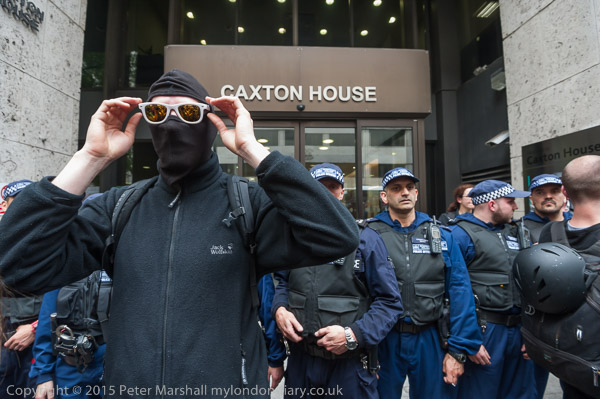
The protesters complained to police about the violent attacks and arrests. They went to protest outside the DWP and then marched past the now heavily protected Tory Party HQ back to a People’s Assembly rally opposite Downing Street. Some stayed there, others marched on and I went home. It had been a long day.
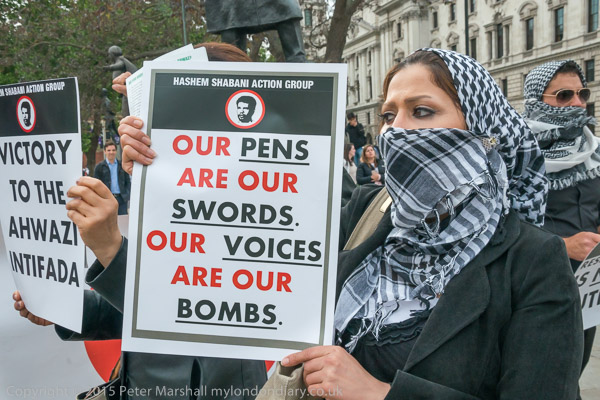
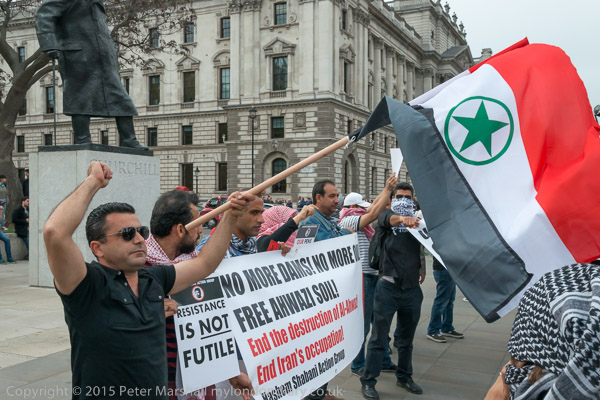
Ahwazi protesters joined the mainly student anti-austerity National Campaign Against Fees & Cuts protesters in London to call for an end to the Iranian attacks on their heritage and identity. Their homeland, which includes most of Iran’s oil, was occupied by Iran in 1925
I photographed them in Trafalgar Square with the NCAFC and later when they left the march as it went through Parliament Square to hold a separate protest there.
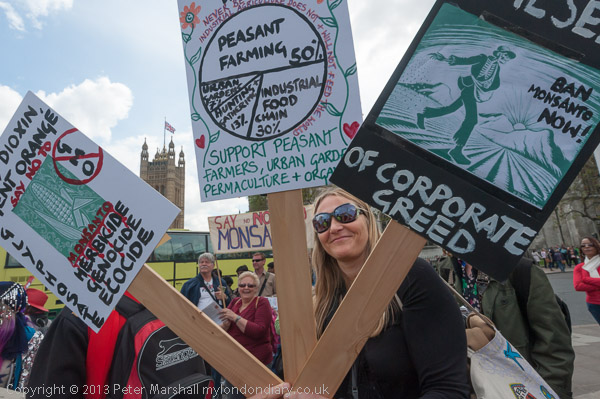
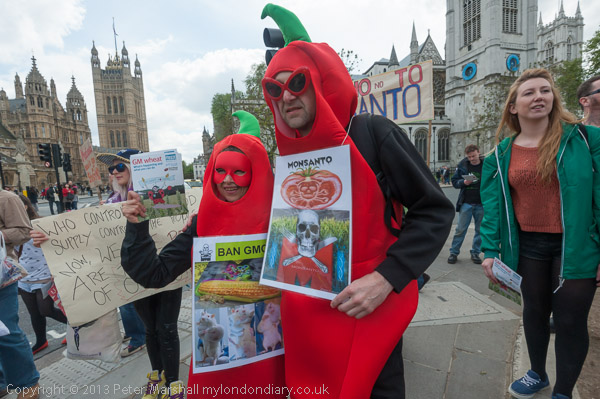
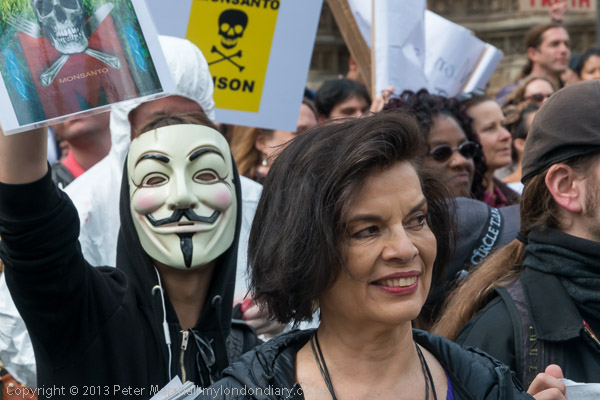
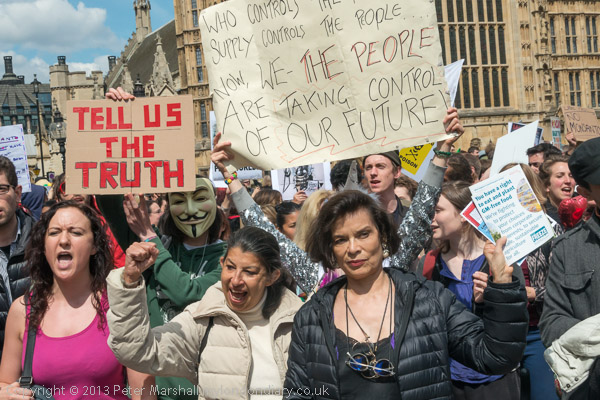
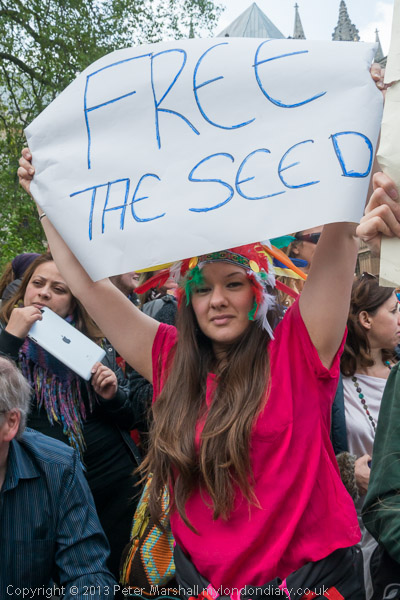
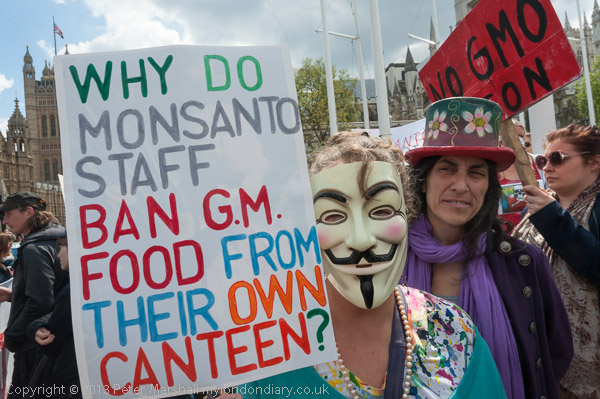
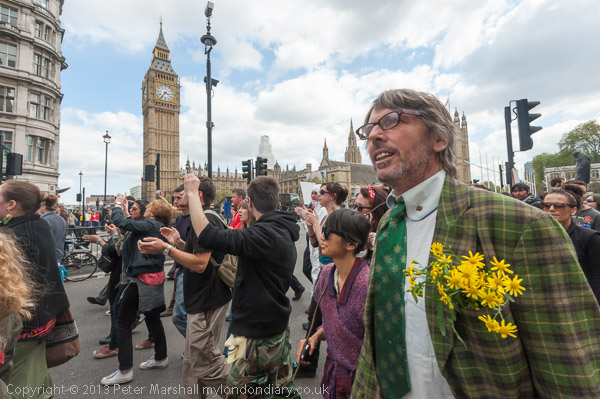
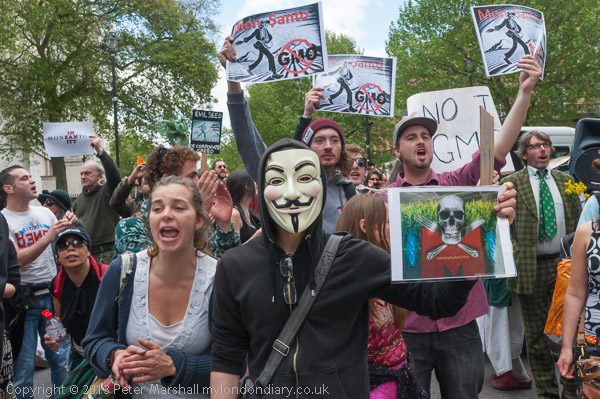
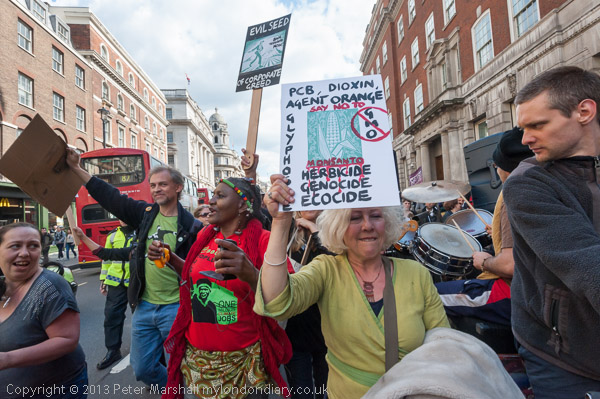
The March Against Monsanto on Saturday 25 May 2013 attracted rather more attention than in some years partly because Bianca Jagger was to speak.
It had been intended to hold a static rally on the pavement in front of Parliament Square which is controlled by Westminster Council, but there were more people than could fit on this.
One of many pictaures of Bianca Jagger
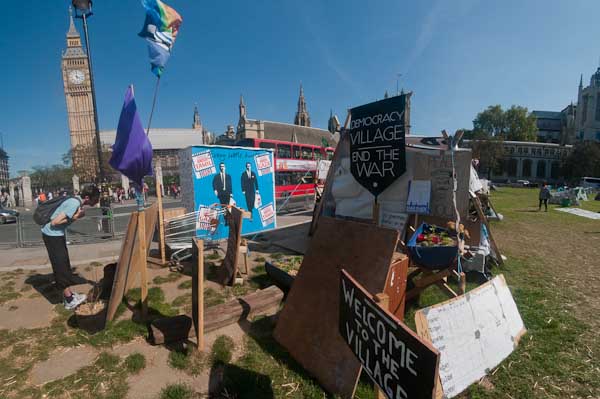
The protest began to spill over on to the grass of the square where the authorities are particularly sensitive about protests after it was occupied by the Democracy Village peace camp in 2010.
Police suggested to the organisers that they move to Old Palace Yard, where there is more space for the rally, and they did so.
The London rally was one of many taking place around the world as an annual global ‘March Against Monsanto’.
Bianca Jagger has a long history of working for human rights and environmental causes – receiving for the latter the Green Globe Award from the Rainbow Alliance in 1997, and the United Nations Earth Day Award in 1994. Among over events I photographed her at several protests against mining company Vedanta.
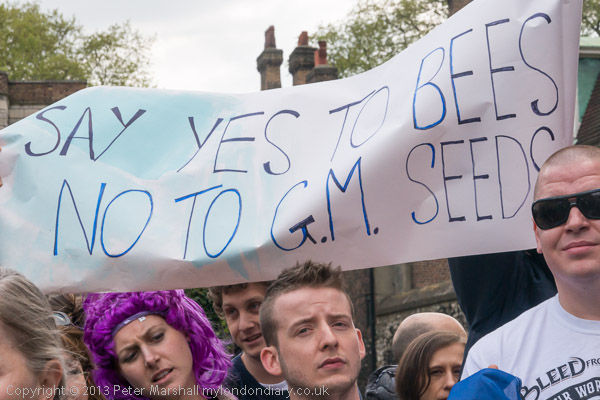
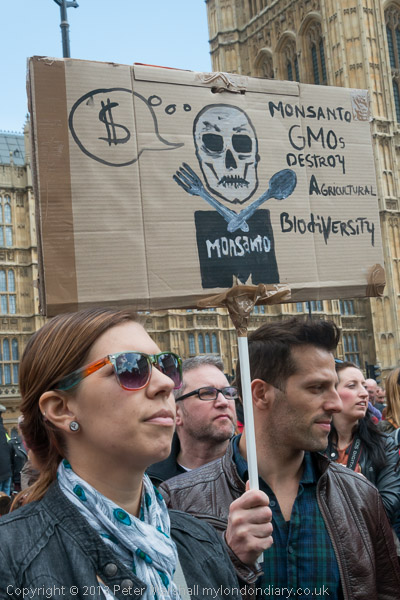
Say Yes to BeesMonsanto GMOs Destroy Agricultural Diversity
She was followed by a number of other speakers stressing the danger of GM foods and biofuels and calling for some more organised action against them.
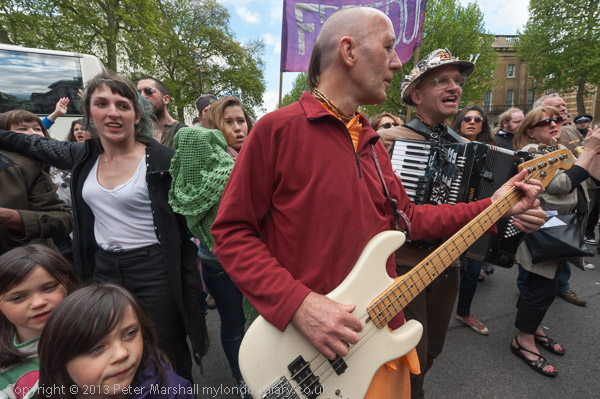
Hare Krishna had come and were providing free food for all who wanted it – but as usual I had brought my own sandwiches – always safer for a long-term diabetic. At the end of the rally their bike-hauled band with drum kit, amps and speakers arrived.
The event had been planned as a static rally, but soon the band was leading most of those present in a march around Parliament Square and up Whitehall where they stopped for a brief protest at the gates of Downing Street.
The march continued up Whitehall to Trafalgar Square where I left them – the band was returning to its base in Soho.
On My London Diary there is a very brief account of the problems of GMO foods and the particular dangers posed by Monsanto and their relationship with the US Food and Drugs Administration, as well as many more pictures: March Against Monsanto.
Youth Strike for Climate: London, Friday 24 May 2019
As we are expecting record May temperatures in the next few days and a summer with more deaths than ever from excessive heat, it is abundantly clear that the response of governments and politicians around the world to the climate crisis has for many years been woefully inadequate – and continues to be so.
Of course many of us have been pointing this out for many years, stressing the need for drastic changes to move away from the use of fossil fuels. As well as a huge shift to renewable energy this would also have needed dramatic changes in lifestyle in the industrialised countries and a move away from the politics and economics of greed and inequality.
Back in 2019 many young people saw we were heading towards catastrophe and failing globally to take effective steps to ameliorate the unavoidable crisis. They face a future world where temperatures will be generally several – perhaps five – degrees higher and our current global weather systems will be replaced by more extremes, with even more common fires and floods.
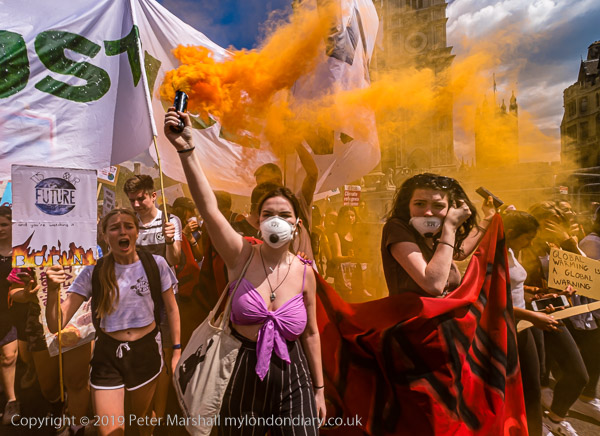
The younger you are now, the worse the problems will get in your lifetime, so it is hardly surprising that the young are more concented, and that many thousands around the world took part in a global climate strike against the lack of action by governments worldwide to combat the climate crisis in London in May 2019.
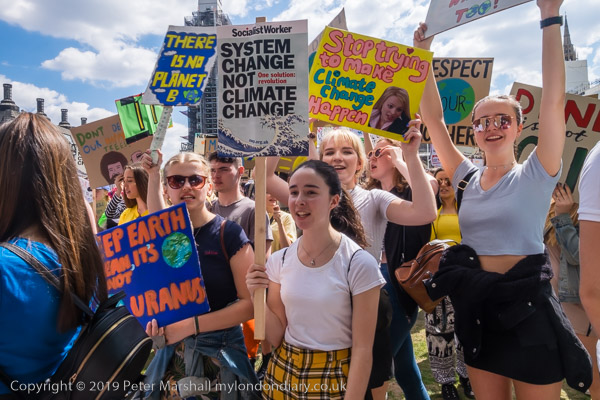
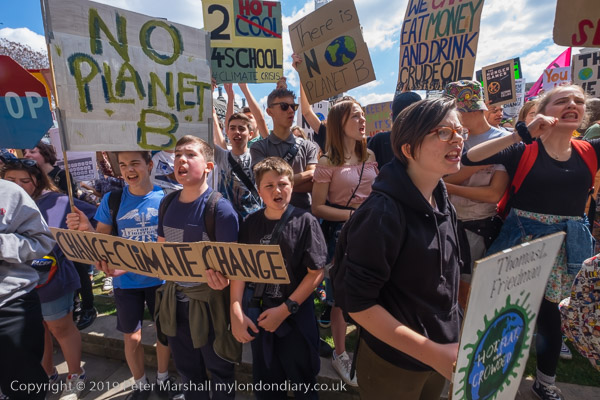
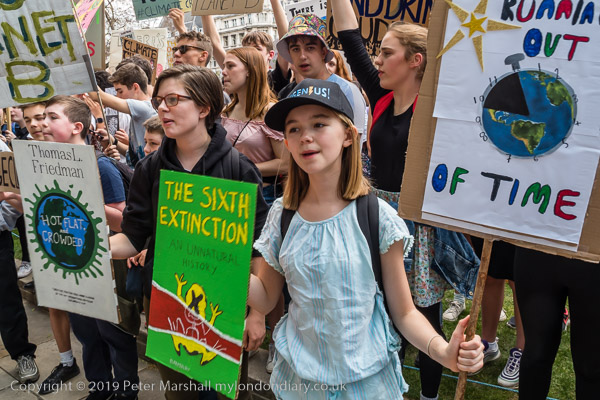
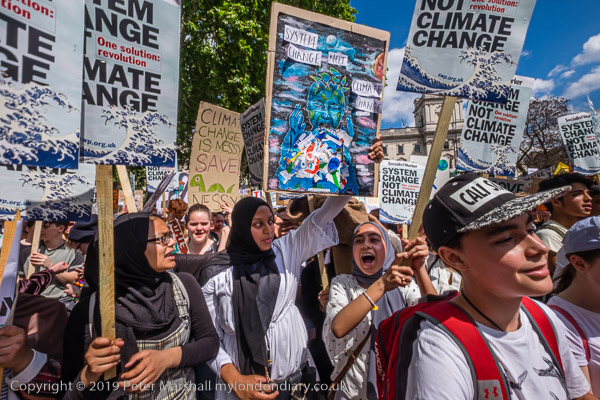
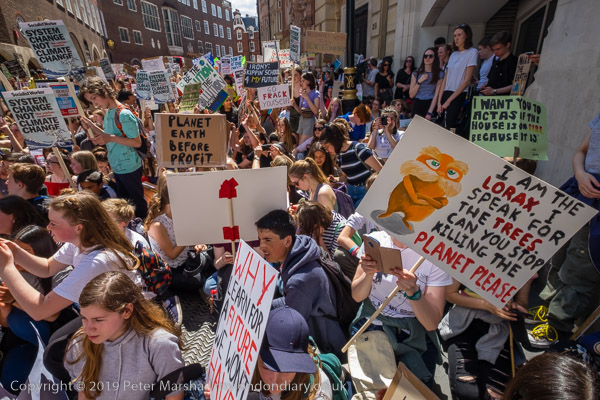
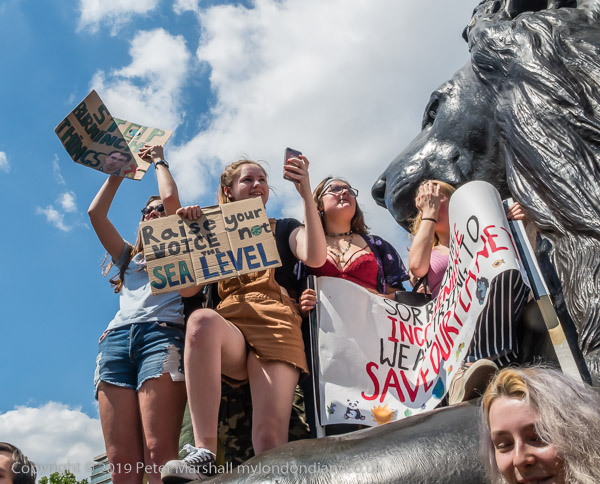
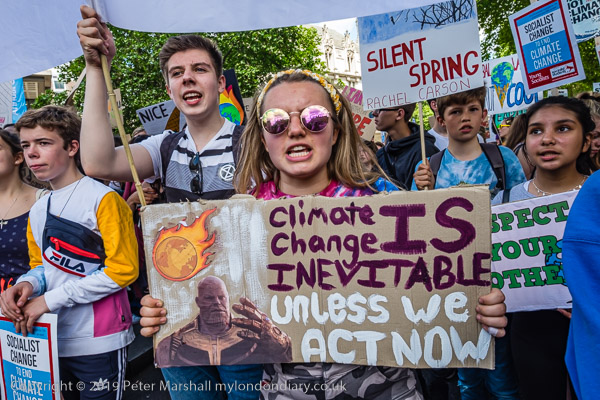
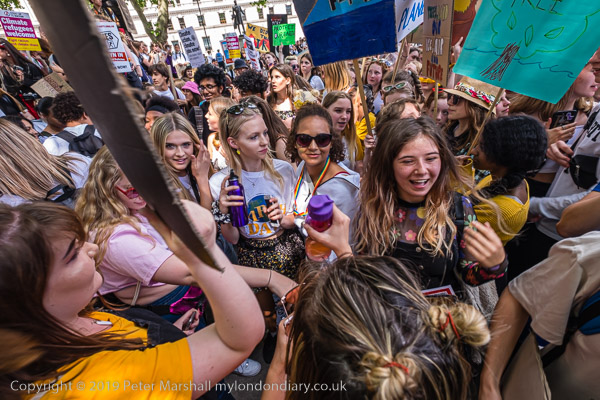
It was a protest with a great deal of energy, with a large crowd of mainly school students meeting in Parliament Square before marching past several ministries and staging a sit-down outside the Ministry of Education demanding that climate change becomes a vital aspect of the curriculum.
A crowded sit-down on the street at the Education Ministry
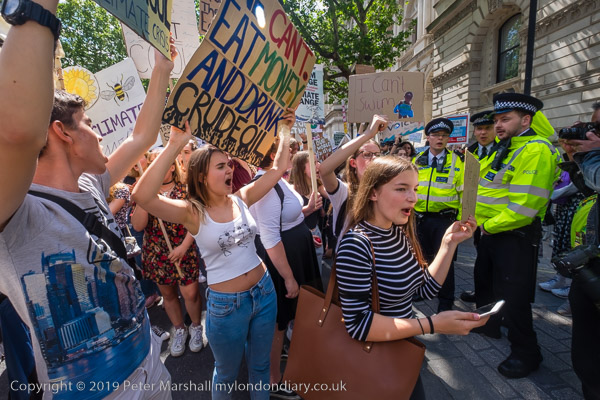
Clearly many school art departments were already getting involved, with protesters carrying an unusually numerous wide range of placards, for once hugely outnumbering those mass-produced by the Socialist Workers Party.
A brief protest at Downing St
From there they marched back up Whitehall past Downing Street to hold a rally in front of Nelson’s Column, then returning to protest at the Department for Business, Energy & Industrial Strategy and finally going back to Parliament Square.
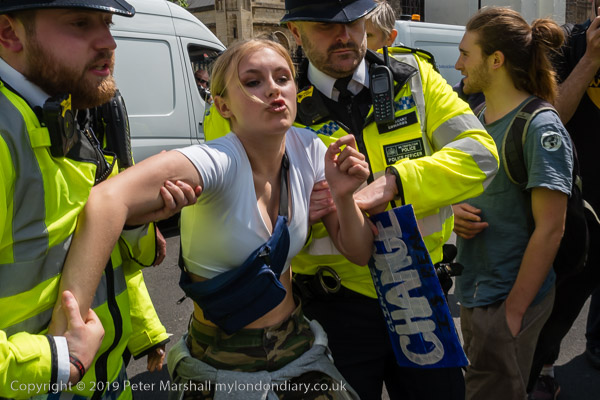
By then I think some police tempers were getting a little frayed and some students were manhandled rather aggressively off the road – and at least one minor was arrested.
I’d got tired with some often rather fast marching and the protest was still continuing when I decided it was time to go home.
Waiters Day, Monsanto, White Pride & The Line: Saturday 23rd May 2015 was a busy day, beginning with Unite Hotel Worker, moving on to the global March Against Monsanto, then an extreme right White Pride protest and finally going to the opening of the world-class sculpture walk roughly along the Greenwich Meridian, The Line.
Waiters Day call for fair contracts and union rights
Grosvenor House Hotel, Park Lane
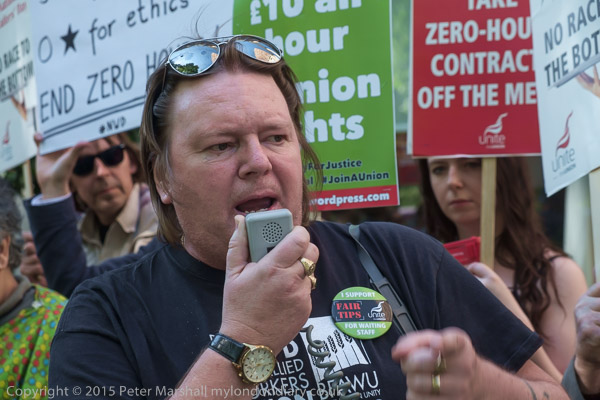
Bakers Food and Allied Workers Union President Ian Hodson
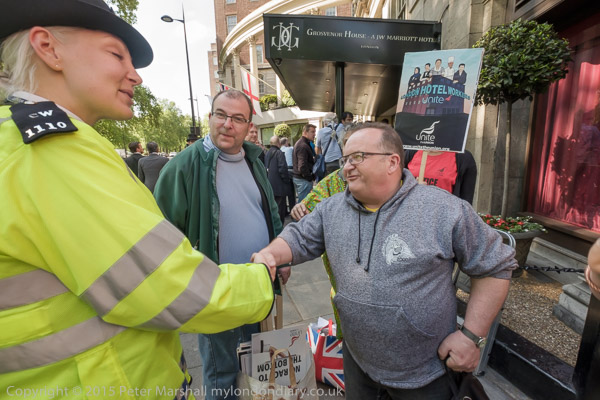
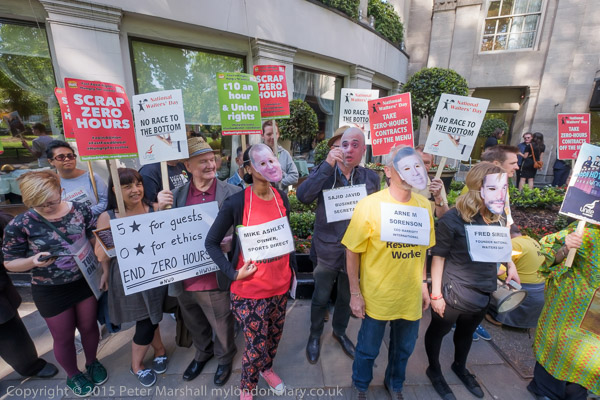
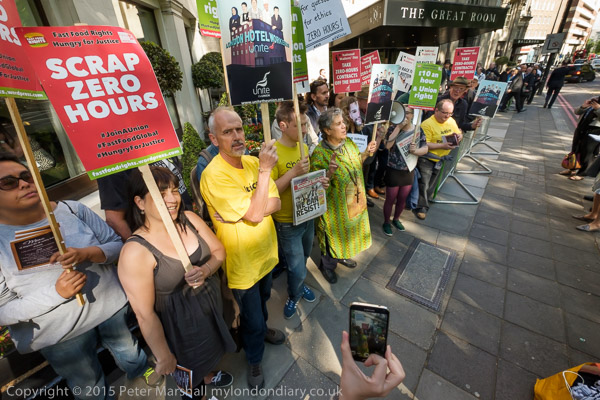
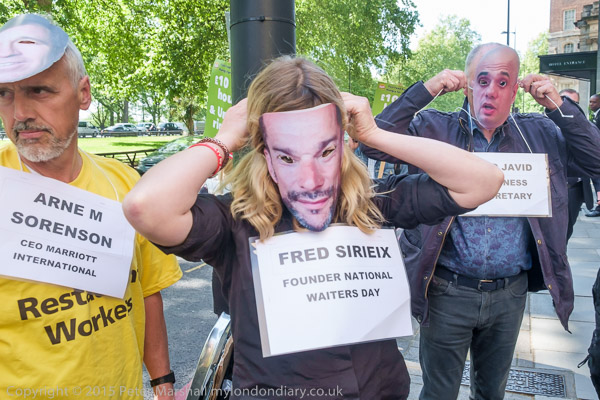
The Hotel Workers branch of Unite protested outside the Grosvenor House Hotel in Park Lane, the birthplace of Zero Hours Contracts, on National Waiters Day, calling for an end to poor conditions, poverty wages, zero hours contracts and management stealing of tips.
Some of the protesters wore masks and placards with names of leading company bosses using zero hours contracts and exploiting workers and took part in a short ‘waiters race’ along the pavement in front of the hotel. The race was of course fixed
Back in 1979 waiters at the Grosvenor House Hotel in Park Lane were sacked when they tried to organise a trade union branch there. The case eventually went to court where it was decided their sacking was legal. It was this case, O’Kelly v Trusthouse Forte plc, that opened to door to Zero Hours Contracts in the UK. Previously employment law had been based on “mutuality of obligation” with employers obliged to offer hours of work, and employees to work those hours.
Until 2012 less than 1% of employees were on zero hours contracts, but their use then rocketed, and by 2015 had increased to 2.5%. By 2021, roughly half of the organisations in hospitality and entertainment were using them.
National Waiters Day seems to have been invented in the USA in the early years of this century and is generally observed on May 21st. A UK Waiters Day was begun by restaurant manager Fred Sirieix in 2013 and is on October 20th.
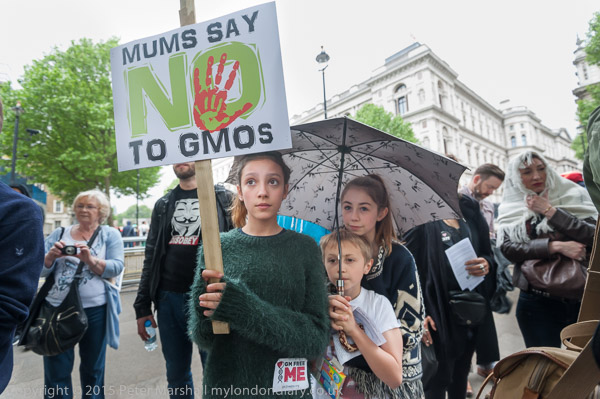
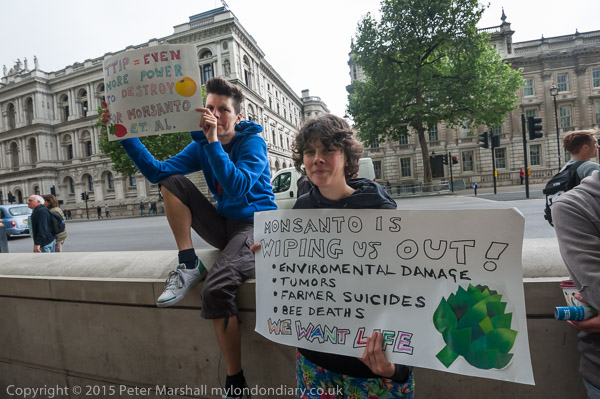
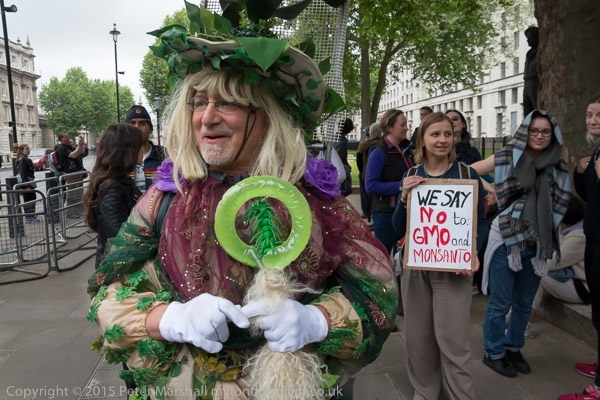
In London the annual Global March Against Monsanto by over 3.5 million people across 600 cities was marked by a small static protest opposite Downing St.
Monsanto and other companies which profit from GMOs claim they are playing an important part in feeding the world, but are actually attempting to monopolise food production for their own profit, patenting existing species, trying to prevent farmers from saving and using their own seed, encouraging the use of highly toxic chemicals and practices that degrade the soil.
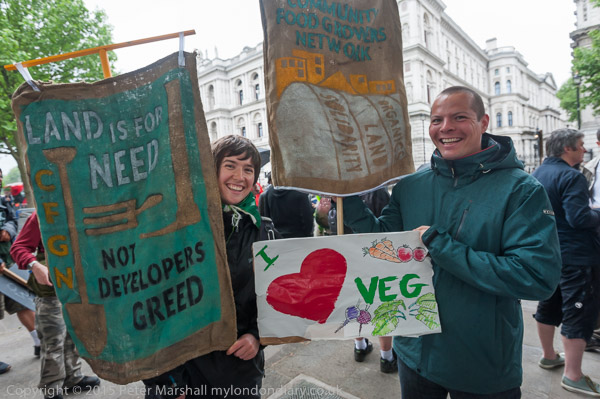
As the protesters say, we need to plant our own seed, to grow local and to eat sustainable food, and to do so in our own ways in countries across the world.
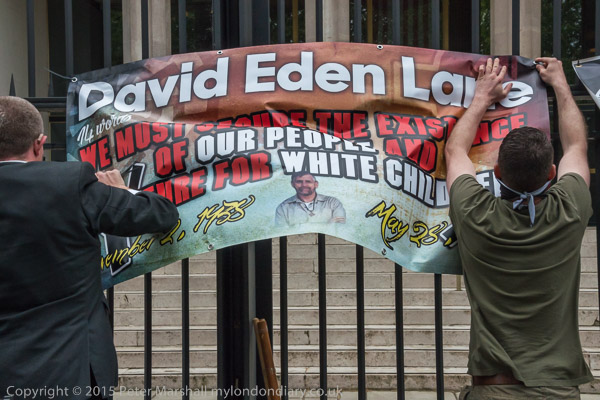
The end of the banner reading Töten für Wotan (Kill for Wotan) was rolled up as I moved to photograph it
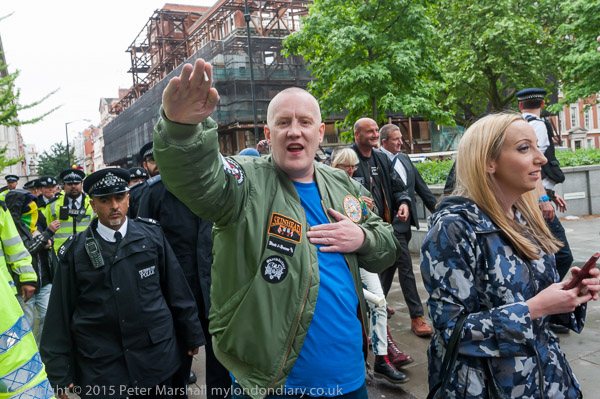
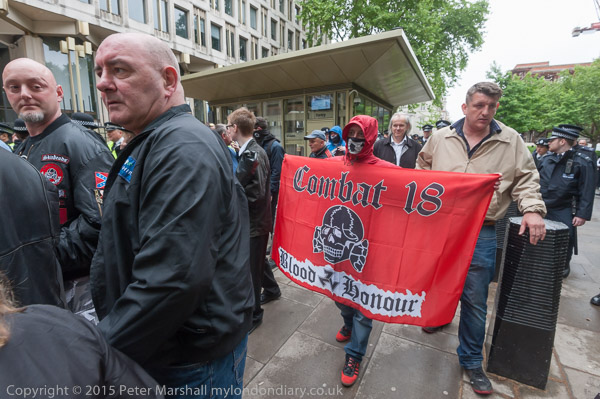
A group of around 30 ultra-right neo-Nazi protesters at the US Embassy remembered David Eden Lane, a convicted criminal and author of the ‘14 words’ statement used by extreme right groups about securing a future for white children. A small group of anti-fascists had come to oppose them.
One of the right-wing protesters makes a Nazi salute for my camera
Lane was a co-foounder of ‘The Order‘ a rabidly antisemitic group which bombed theatres and synagogues and he was convicted as the getaway driver after they murdered liberal Jewish Denver radio talk show host Alan Berg in 1984 when he was the second on their long death list. The group also carried out violent robberies to finance their activities. He died in prison in 2007.
His 14 words, a close quotation from Mein Kampf, is often referred to in extreme right circles as ’14/88′, where 88 stands for the repeated 8th letter of the alphabet, HH, shorthand for ‘Heil Hitler’.
Peter Rushton of the England First Party waits to speak
Inside jail, Lane, a former Ku Klux Klan and the ‘White Christian Separatist’ group ‘Aryan Nation’ member, was one of the founders of a new pagan religion, ‘Wotanism‘, named after the Germanic god Odin, also know as Wotan, which serves as an acronym for ‘Will Of The Aryan Nation’.
It was good to get away to something much more pleasant, the official opening of the world-class sculpture walk, ‘The Line‘ with works by distinguished sculptors going north from Greenwich across the Thames and on to the Olympic Park.
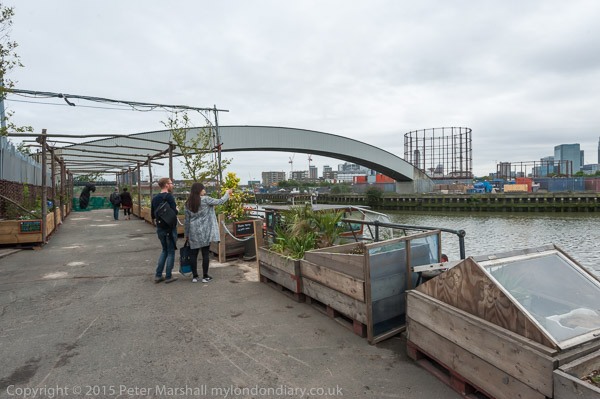
I’d visited the festivities at Cody Dock in the morning when few people were around to photograph the site and walk a short stretch of the trail.
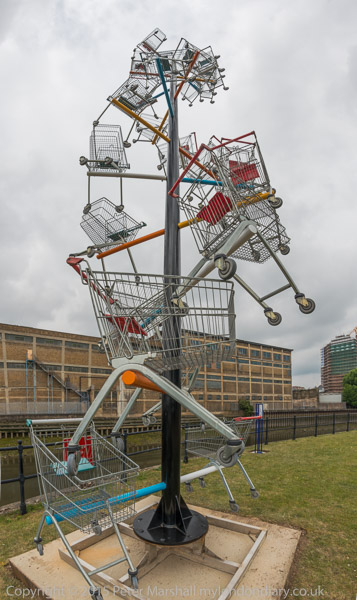
One piece I found particularly interesting was DNA SL90 (2003) made by Abigail Fallis from 22 shopping trolleys for a supermarket chain to mark the 50th anniversary of Crick & Watson’s discovery of the double-helix structure of DNA. It’s location on the edge of Bow Creek next to a major distribution centre, seemed particularly appropriate, and it is an impressive piece.
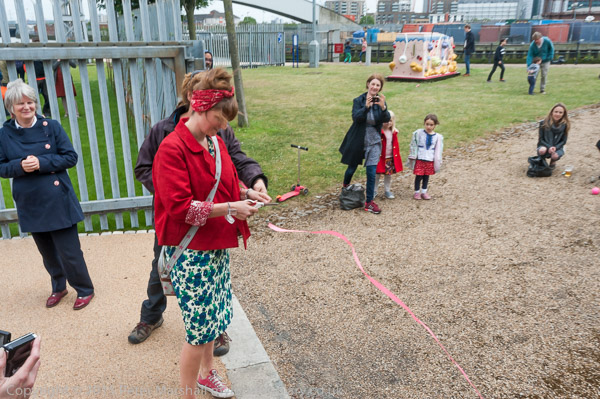
A Cody Dock volunteer snips the ribbon and ‘The Line’ is open
I returned from central London just in time for the opening ceremony when a fair sized crowd had gathered.
Since 2015 new stairs down from the bridge at have removed the awkward detour alongside the busy Blackwall Tunnel Approach, but I think we are still waiting for the opening of the riverside path along Bow Creek south of Cody Dock.
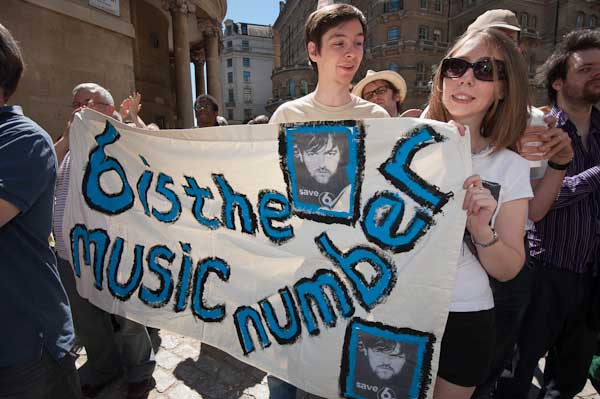
6 Music, EDL & Democracy: On Saturday 22 May 2010 I began work outside the BBC with people protesting over the threatened closure of two popular radio networks, 6 Music and the Asian Network. I then covered a march through London by the far-right English Defence League. During the day I walked several times through Parliament Square and took a few pictures of the ‘Democracy Camp’ still there along with the longstanding Peace Camp.
Save BBC 6Music & Asian Network
Broadcasting House
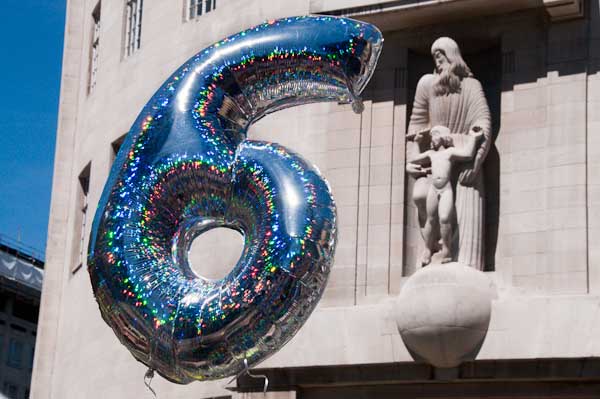
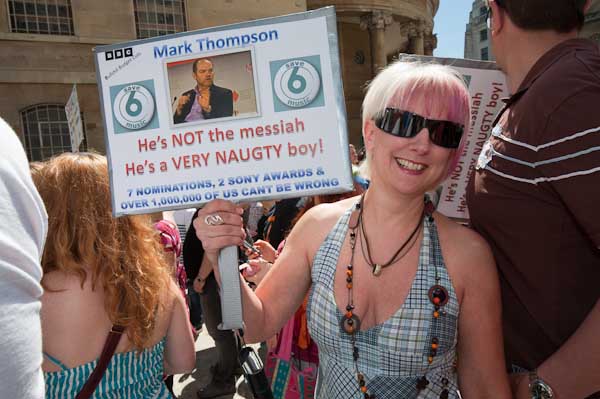
Newspaper reports that the BBC might be planning to axe the digital music channel 6 Music stirred a huge campaign by supporters to save the radio station with #SaveBBC6Music trending on Twitter and a Facebook Group with nearly 180,000 members.
Radio 6 had been launched by the BBC in 2002 as a digital alternative music station and played a wide range of music including many genres largely marginalised by the more mainstream Radio 1 and Radio 2 – Wikipedia lists its output “pop, rock, dance, electronic, indie, hip-hop, R&B, punk, funk, grime, metal, soul, ska, house, reggae, jazz, blues, world, techno, experimental and many others“.
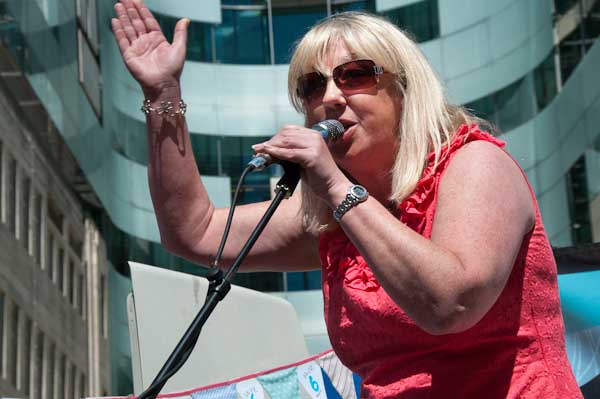
Liz Kershaw
Around five months later “the BBC Trust announced that it was not convinced by the BBC Executive’s plans and that the station would not be closed.”
Radio 6 fairy buns
The very public campaign to save the station led to a significant growth in listeners and this continued, and by 2014 it was attracting more listeners than Radio 3.
The Asian Network which had begun on BBC local radio beofre being launched in 1989, and had later gone nationwide were also under threat. The BBC Trust also rejected plans to close the network but did cut its budget by 50%.
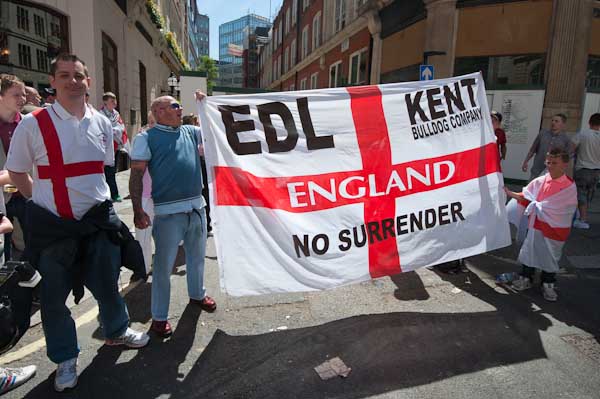
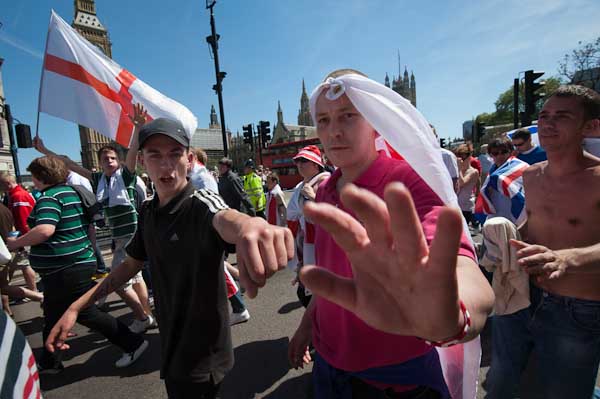
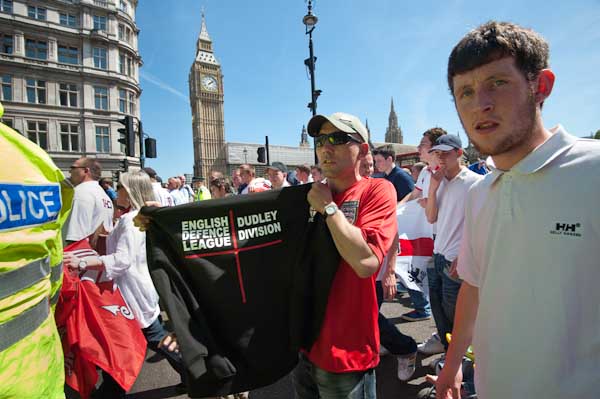
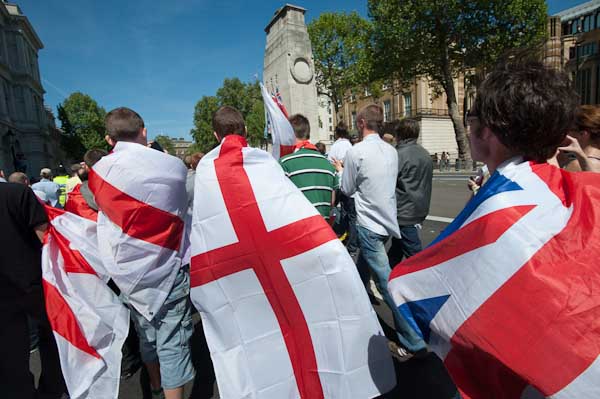
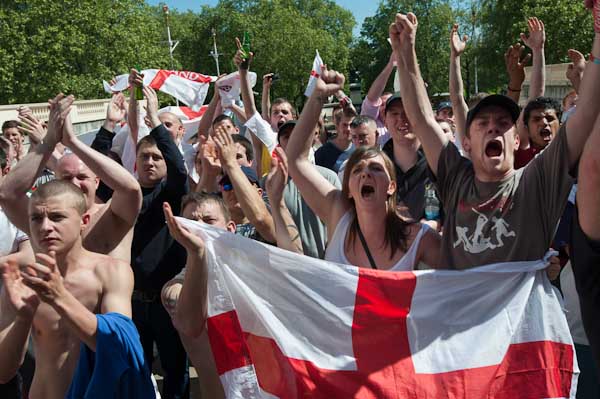
The march through London to pay respect to the war dead at the Cenotaph and then hold a short rally at the Duke of York Steps was officially organised by ‘British Citizens Against Muslim Extremists’, but was largely if not entirely attended by those who had taken part in previous EDL marches, with many carrying EDL banners.
Unlike previous EDL marchers this was a peaceful march and there were few if any counter-demonstrations. The few hundred marchers included quite a few families and many carried St George flags.
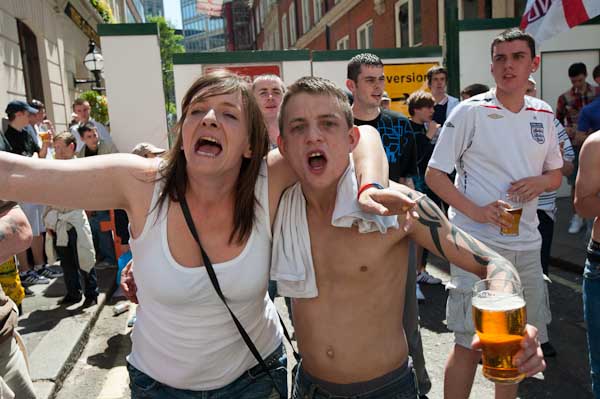
Most here happy to be photographed when I met them outside a pub at the start of the march, many playing up for the cameras. And stewards quickly led away one man who seemed about to attack a press photographer.
Stewards also quickly dealt with a man who began an offensive chant about Allah, telling him the EDL was against such racist sentiments and also that the police had told them they would stop the march taking place if there were such racist chants.
There were loud chants against Sharia Law but also against ‘Muslim bombers’ a phrase that stigmatises all Muslims for the actions of a a few extremists which are not supported by the mass of the Muslim community.
The march set off noisily, but as it turned into Whitehall and approached the Cenotaph it became a silent tribute to British troops, which was followed by applause, with the chanting resuming as they came past Downing St, marching on through Trafalgar Square to Waterloo Place for the rally.
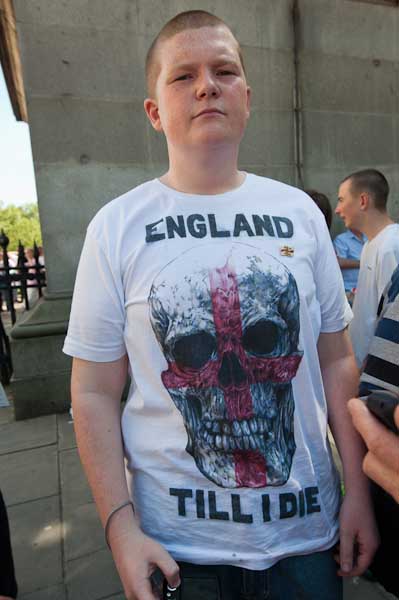
This man had been cautioned by police for wearing this ‘England Till I Die’ t-shirt on the street
On My London Diary I write more about the march and about some of the marchers I photographed who told me about police harassment and being refused entry to pubs for wearing England shirts. Most who spoke to me were also insistent that they were not racists and they were happy for Muslims to live here so long as they respected British traditions and fitted in with our way of life.
At the rally I was threatened by a few of the protesters who decided to try to prevent press photographers from working. I complained to a couple of the stewards, and one of them accompanied me as I took a few more pictures before leaving.
I walked through Parliament Square several times over the day and took a few pictures.
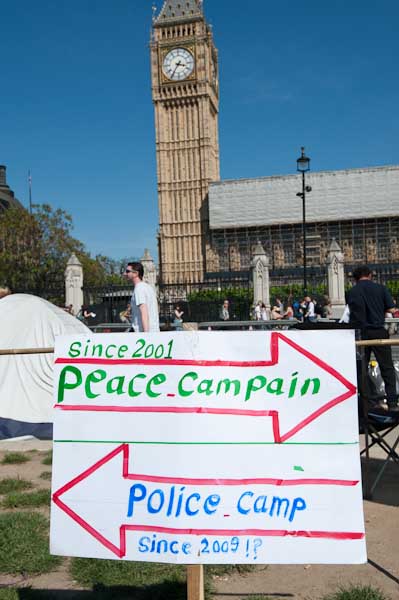
There wasn’t a great deal happening, but the Democracy Camp which had set up there on May Day was still there three weeks later, despite the huffing and puffing from Boris Johnson and others.
Although they claimed their action was supporting the long-term protest by Brian Haw and supporters who were under constant threat by the police and others, the Parliament Square Peace Campaign suspected the Democracy Camp of being promoted by the police.
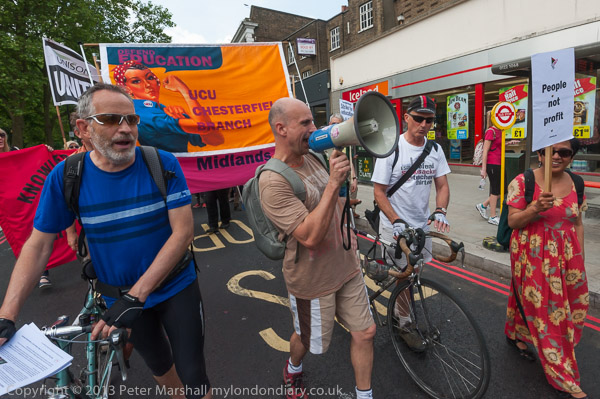
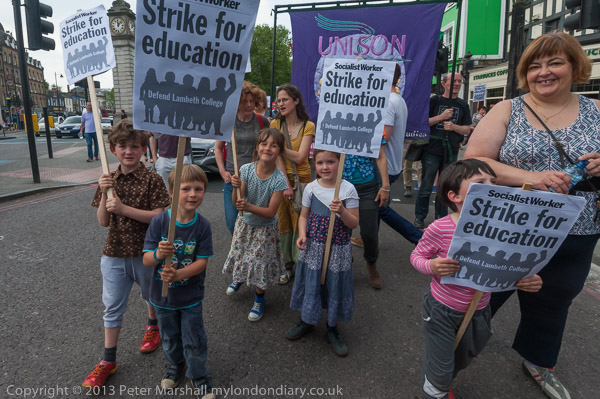
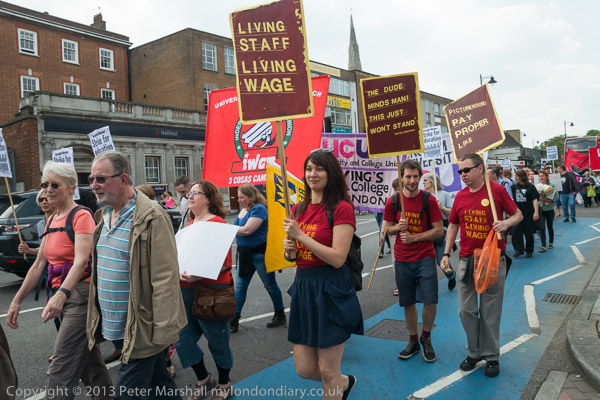
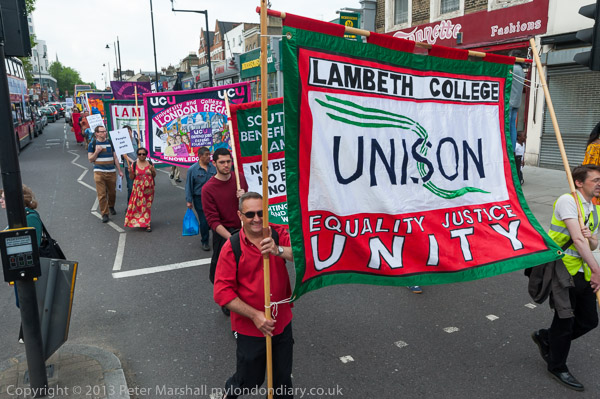
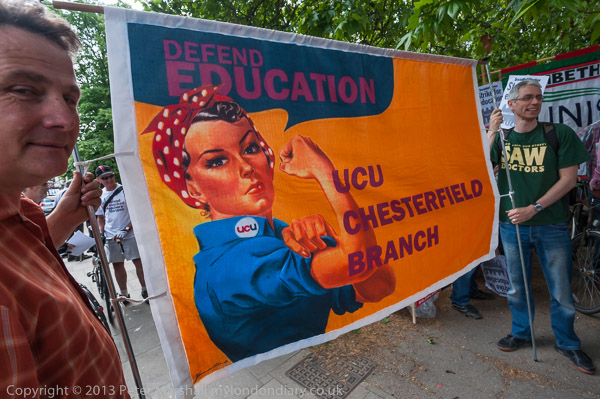
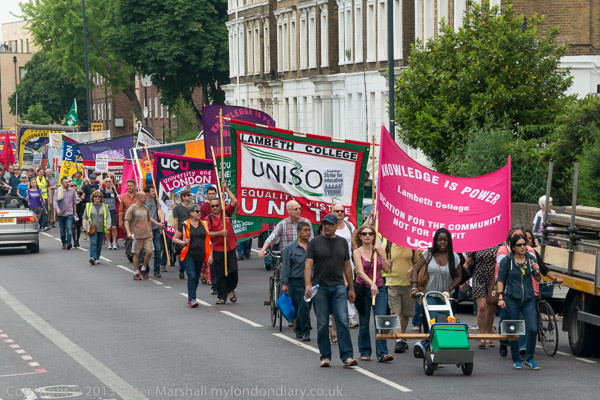
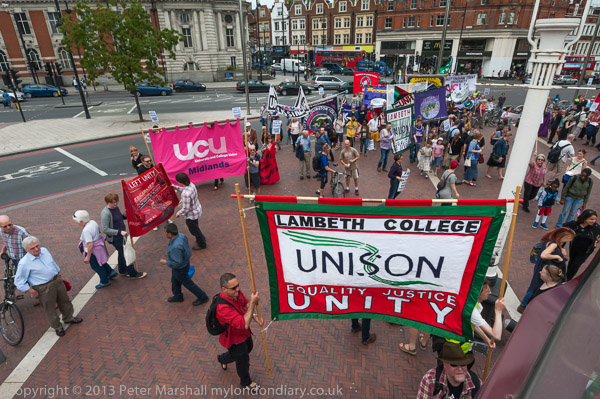
Lambeth College March for Further Education: Lambeth college workers and supporters from around the country marched to a rally in Brixton on Saturday 17th May 2014 against plans to ‘restructure’ the college, selling off most of it Brixton campus to allow a so-called ‘free school’ to be set off, and attacking the pay and conditions of the academic and service staff.
People came from FE colleges across the country to join the Lambeth college marchers
As well as cutting the pay to staff, increasing their working hours and cutting holiday and sickness benefits, the management were also setting out to break the power of both the lecturers union UCU and Unison which represents service workers at the college.
Lambeth College management had recently spent tens of thousands of pounds to get an injunction against the UCU after a 95% vote for a strike in a ballot with a 70% turnout. A re-ballot was expected to result in even greater support for a strike.
Brixton Ritzy Cinema strikers support the march
Unison appeared to be slightly less supportive of its members who had called unanimously for an indefinite strike at meetings, forcing them to have a time-wasting and bureaucratic ballot about whether they wanted a ballot, rather than an immediate strike ballot.
The planned Trinity free school was not needed in Brixton which according to the council already had a variety of good schools with space and although the proposal was for a “non-selective school with a Catholic ethos“, was not supported by the Catholic diocese who feel it would have a negative impact on existing Catholic secondaries in the area. It appeared to be aiming to promote right-wing and anti-science views on evolution.
The UCU recognised that the dispute at Lambeth was not just a local issue but one of national significance; if Lambeth could get away with doing this, other colleges would follow their lead. Representatives from colleges across London and the Midlands and further had come with banners to support the protest.
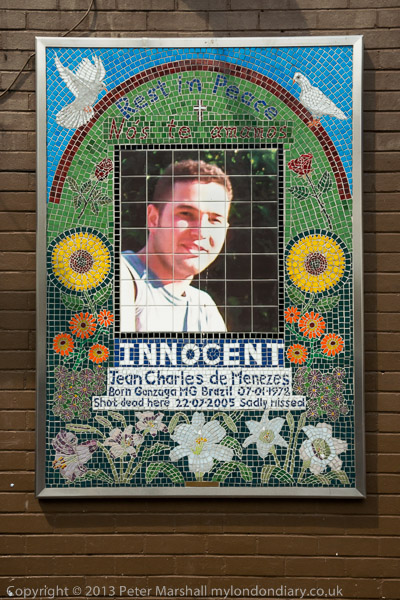
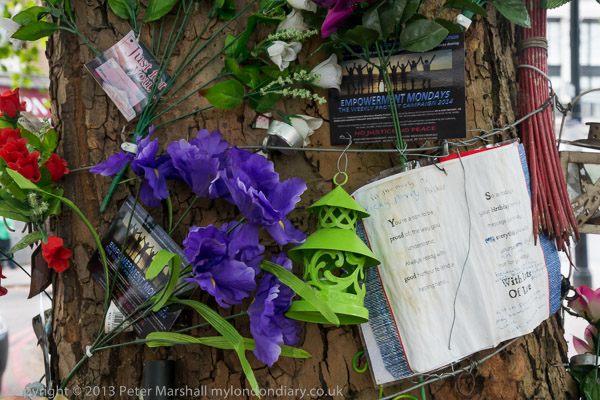
The march went past Stockwell station where Jean Charles de Menezes was murdered by policw in 2005And past the tree of remembrance at Brixton Police Station for Ricky Bishop, Sean Rigg and others killed there
It was also widely seen as an attack on trade unions, and among speakers at the rally in Brixton were Ian Hodson, the general secretary of the Baker’s union BFAWU and Labour MP John McDonnell.
Lambeth College became a part of the London South Bank University Group on 31 January 2019 as part of South Bank Colleges established by LSBU to operate further education provision (16-19 yrs) in the area.
Wikipedia comments: “While the dispute was not fully resolved, it prompted a dialogue about staff concerns and led to investments in the college’s facilities, including a redevelopment of the Brixton campus, the construction of the new Nine Elms campus, and, now, a re-build of the Clapham campus (planning permission granted in February 2024).”
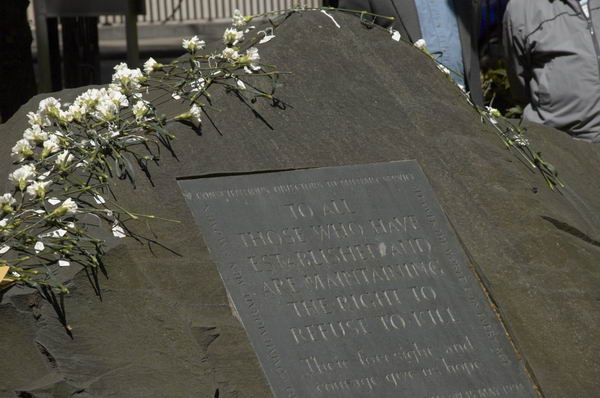
Conscientious Objectors, Cannabis Education & Bengali New Year: Three unrelated events on 15th May 2005 in London. May 15th has been observed in Europe as Conscientious Objectors’ Day since 1982 and became International in 1985 when it was adopted by War Resisters’ International. A ceremony is held every year on the day in Tavistock Square at the site of the massive slate Conscientious Objectors’ Commemorative Stone which has the inscriptions:
TO COMMEMORATE MEN & WOMEN
CONSCIENTIOUS OBJECTORS TO MILITARY SERVICE
ALL OVER THE WORLD & IN EVERY AGE

TO ALL THOSE WHO HAVE
ESTABLISHED AND
ARE MAINTAINING
THE RIGHT TO
REFUSE TO KILL

Their foresight and
courage give us hope

THIS STONE WAS DEDICATED ON 15 MAY 1994
INTERNATIONAL CONSCIENTIOUS OBJECTORS' DAY
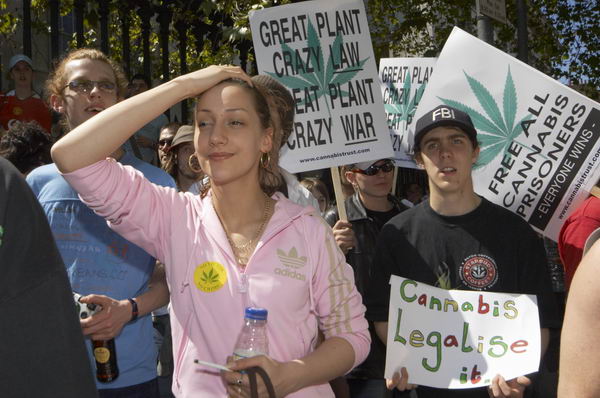
I left before the end of the ceremony and hurried to Russell Square for the start of the annual march calling for the legalisation of cannabis, walking with this to Trafalgar Square and then taking the tube to go to Brick Lane for the Bengali New Year Festival. Below is what I wrote in 2005.
The Right to Refuse to Kill – International Conscientious Objectors Day
Tavistock Square
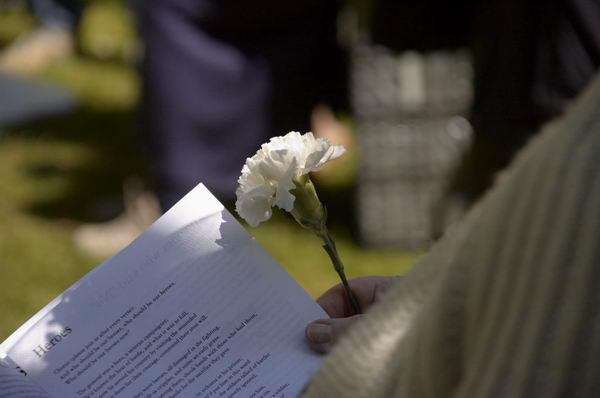
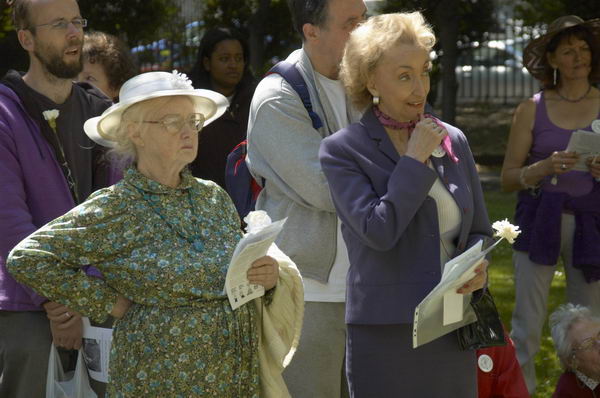
May 15th was International Conscientious Objectors’ Day, and the ‘right to refuse to kill’ group of people from the Peace Pledge Union, Conscience, The Unitarian Peace Fellowship, Christian CND, The Anglican Pacifist Fellowship, Pax Christi, The Women’s International League For Peace And Freedom And Dances Of Universal Peace had organised a ceremony at the Commemorative stone in Tavistock Square. After a brief introduction by Tony Kempster of the Anglican Pacifist Fellowship, Sue Gilmurray sang her song ‘Heroes’ and then Angela Sinclair who was a conscientious objector in the Second World War told her story and spoke about the right not to take part in war.
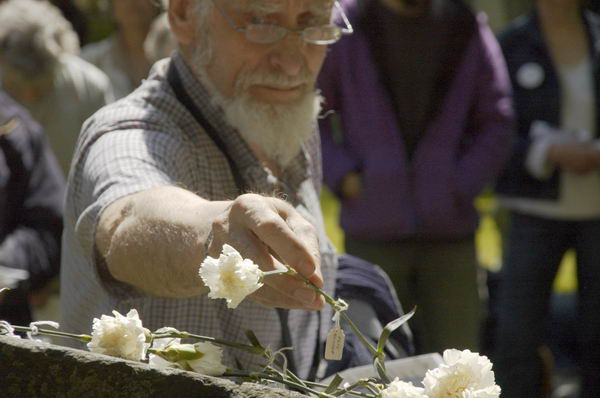
After a speaker from Amnesty and another from Conscience, the names of almost seventy conscientious objectors, many of who had died for their beliefs, were read out. The organisers had given out white flowers labelled with their names, and as each name was read, the person holding their flower came and placed it on the stone. After a one minute silence the commemoration continued with another song and then dancing, but I had to leave at this point.
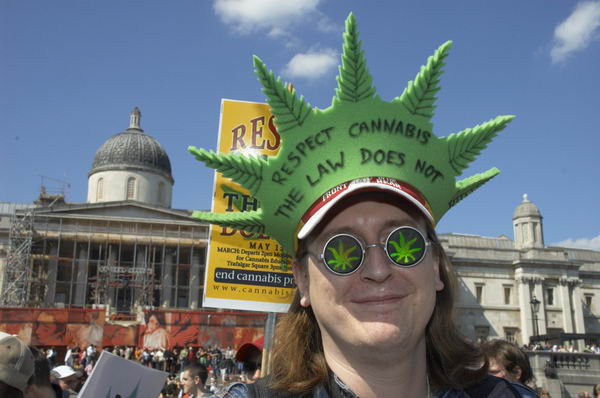
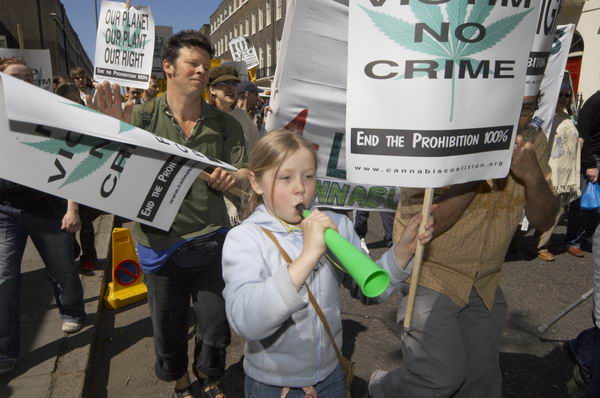
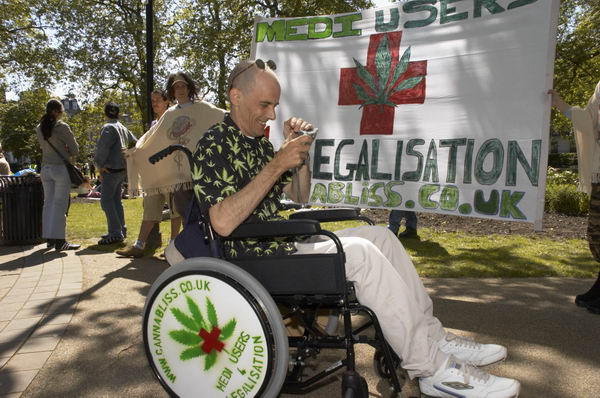
The annual march to demand the legalisation of cannabis had to be postponed and moved to a central London location after Lambeth council had refused to allow it to use Brockwell Park. Probably for this reason, the numbers seemed well down on previous years.
The last year had seen both an increasing recognition of the value of cannabis in relieving pain for some conditions, and also in revealing the mental health problems it causes some users. Despite these, the existing anti-drugs policies are more and more discredited, leading to increasing crime and addiction, and also greatly increasing the probability of cannabis users moving on to more dangerous and addictive drugs.
Cannabis needs to be taken out of the hands of drug dealers, and into some form of legalised supply chain which would cut out the drug dealers, allow better supervision of the product and create a total separation between cannabis and other more dangerous substances.
It would also allow the creation of a tax revenue, some of which could be spent on the rehabilitation of drug users.
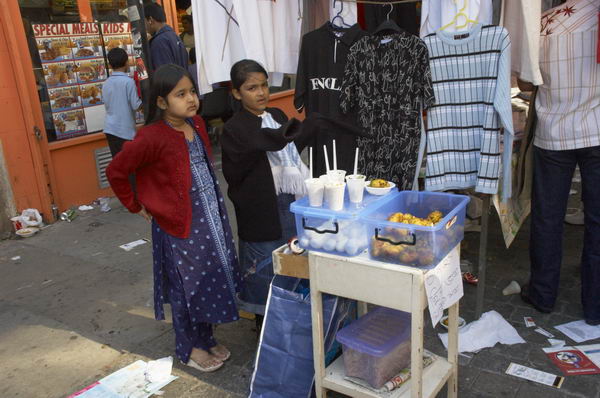
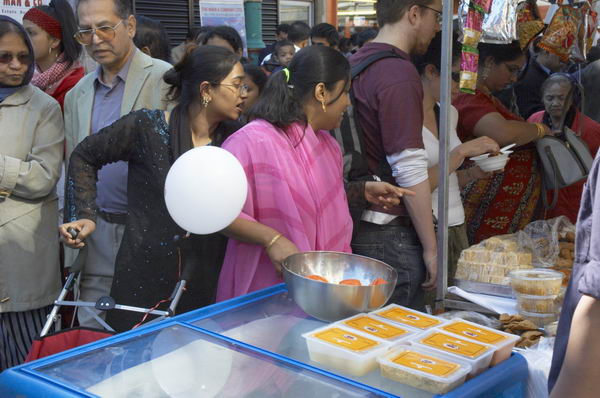
I went with the march to Trafalgar Square and stayed to listen to a couple of the speakers, but soon lost interest and got on the District Line to go up to Brick Lane for the Bengali New Year Festival.
When I got there it was just too crowded; after walking around for a few minutes I gave up and came home.
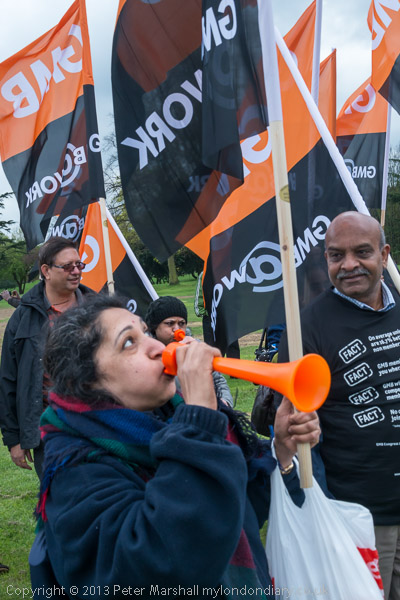
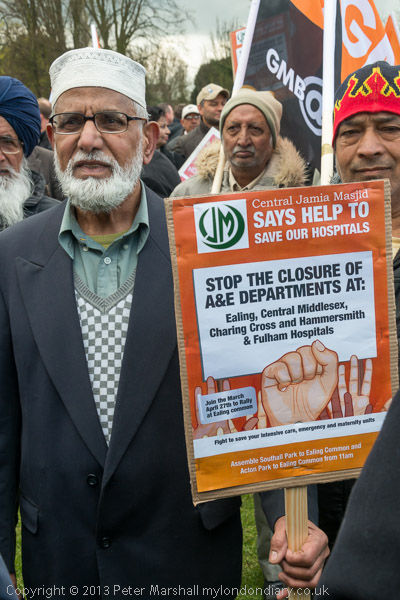
Ealing Hospital, Free Shawki Omar, Hizb ut-Tahrir: On Saturday 27th April 2013 I made my way to Southall Park for the rally at the start of a march to save A&E departments at hospitals in West London, then went into central London. Outside the US Embassy in Grosvenor Square I met and photographed the wife and daughter of Shawki Ahmed Omar, arrested in Iraq in 2004 and still held and tortured there. Finally I attended a rally and march up Brick Lane by the now banned Islamic political party Hizb ut-Tahrir calling for he replacement of the Awami League government of Bangladesh by an Islamic caliphate.
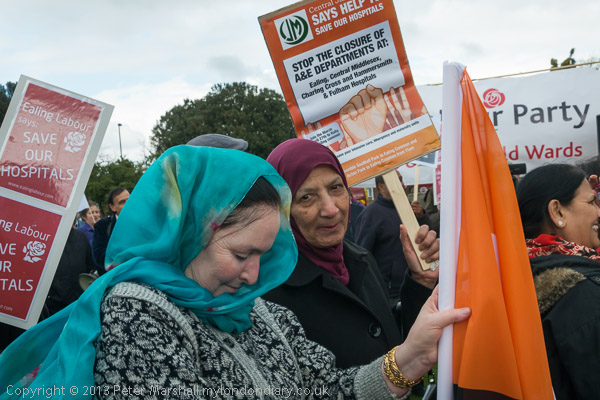
Save Ealing Hospital & the NHS
Southall Park, Southall
A&E departments at Charing Cross, Hammersmith, Central Middlesex and Ealing Hospitals were under threat of closure in a move that would greatly reduce cover for around two million people in West London, leaving three large London Boroughs without a major hospital.
Local councils were firmly opposed to the closures along with the whole community. Public transport in the area is relatively poor (as I found getting to Southall) and roads are often extremely congested so the closures would lead to dangerous delays for those needing urgent treatment.
Among speakers at the rally were Councillor Julian Bell, the Leader of Ealing Council, other local councillors who have led the opposition to the cuts and the two local MPs, John McDonnell from Hillingdon and Virendra Sharma, MP for Ealing Southall, as well as representatives from some of the many faith groups in the area.
The proposals were widely seen as part of a move towards increased privatisation of the NHS as well as wanting to sell off much hospital owned land for housing and other development.
Largely as a result of the huge local opposition, the closure plans were reduced, but Central Middlesex Hospital and Hammersmith Hospital both closed in September 2014.
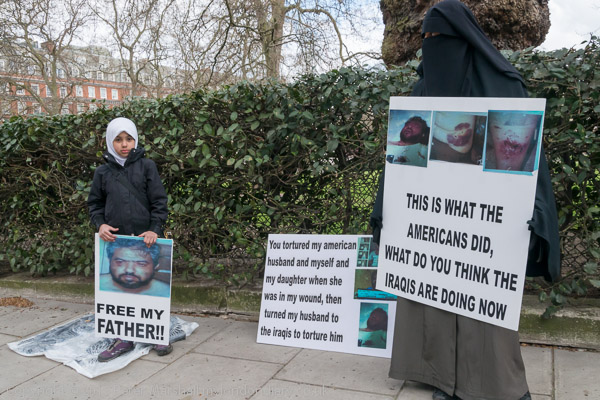
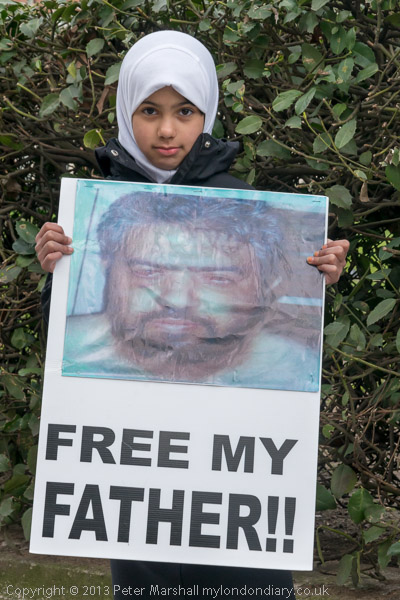
I called in briefly at the US Embassy to talk with Narmeen Saleh Al Rubaye, wife of Shawki Ahmed Omar, and their 7 year old daughter who were on one of their repeated protests calling for his release.
They stood quietly in front of the embassy with posters showing his injuries from US torture in Iraq after his arrest in 2004. Omar, born in Kuwait has dual Jordanian/US nationality. Despite legal attempts in the USA to free him, when the USA left Iraq they handed him over to the Iraq authorities.
Omar began a hunger strike in Al Karkh prison on February 4th 2013, protesting the ill treatment and torture of himself and fellow detainees. You can read more about him in my post on My London Diary.
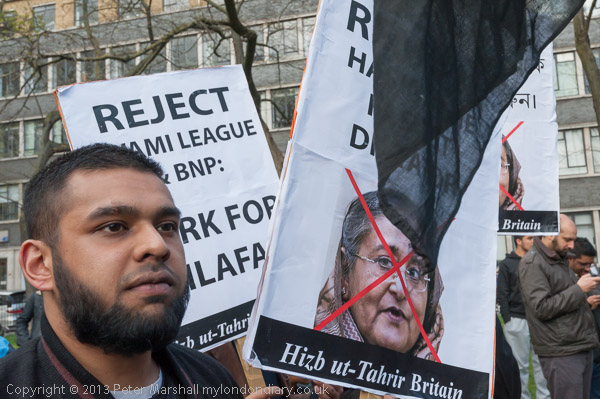
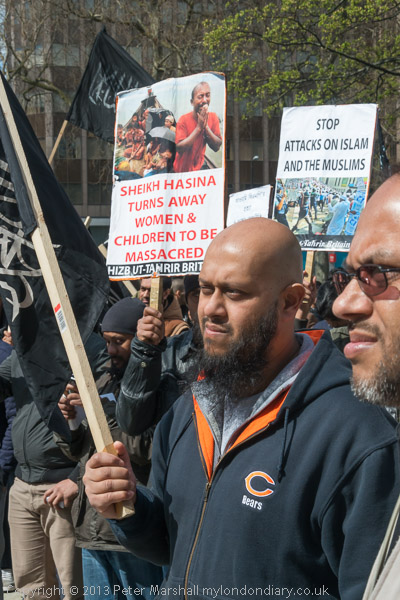
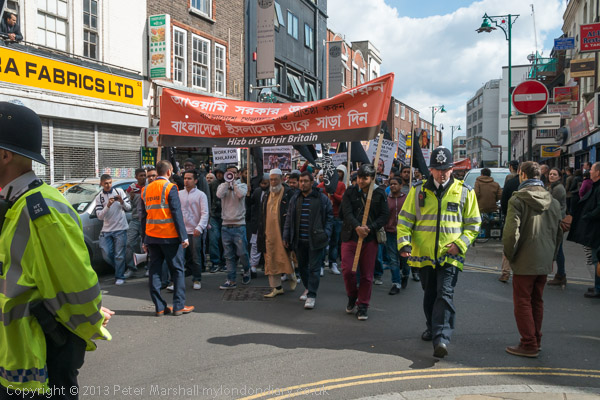
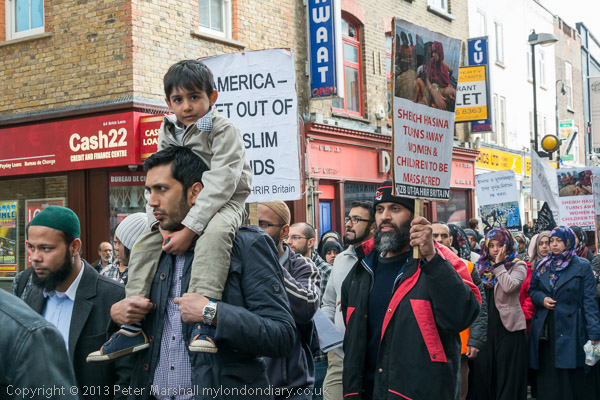
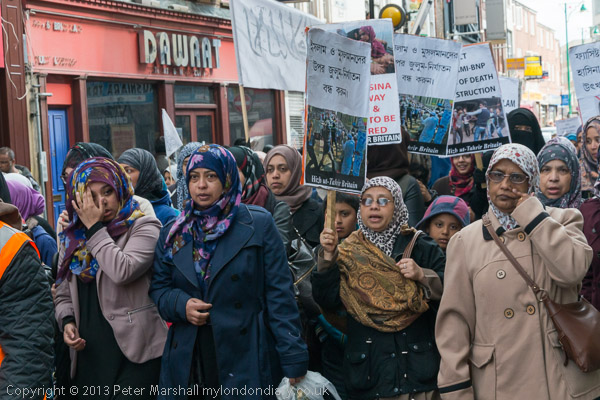
Islamic political party Hizb ut-Tahrir (banned in the UK in 2024) held a rally and march in Whitechapel, an area of London with a large Bangladeshi community against the government led by Sheik Hassina in Bangladesh.
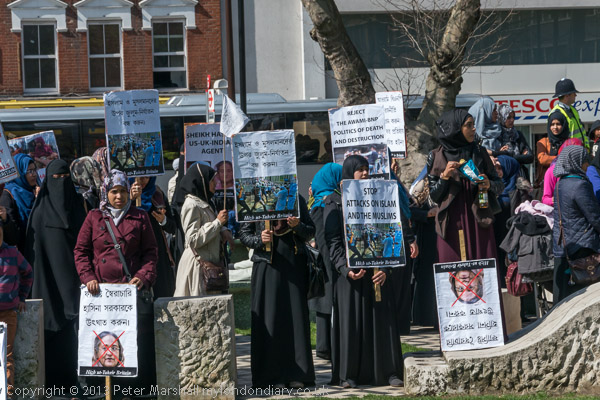
The reject all current governments of Muslim nations and call for their replacement by an but were also protesting against anti-Muslim measures Sheik Hasina has introduced in Bangladesh and the return of Rohinga Muslim refugees to Burma where they are discriminated against and persecuted.
They also protested against the corruption in Bangladesh which was responsibel for the deaths and injury of workers when the Rana Plaza factory building collapsed three days earlier. The search for survivors was continuing when this protest was held, only ending on 13th May, when the confirmed death toll was 1,134 and around 2,500 injured had been rescued.
There were around a hundred Muslim men at the protest, and around half that number of women in a separate group a few yards away. Only men spoke at the rally, though some of the women did hold placards. After the rally the protesters marched up Osborne Street and Brick Lane past the mosque where I left them.
Hizb ut-Tahrir had been banned in Bangladesh in 2011, alleged to have been involved in a failed coup attempt. When New Labour were in power, Tory leader David Cameron urged them to ban the UK group, but a review then and in the early days of his coalition government concluded that they were a non-violent group with insufficient evidence to justify a ban, and that “a ban may do more harm than good and could have serious implications for freedom of speech and assembly in the UK.”
Nothing had really changed when they were banned in January 2024 following a protest against Egypt and Israel following Israel’s attack on Gaza, except for a failing Tory government venting hate on anyone seeming to support the Palestinian cause. Something that was continued by Labour in banning Palestine action.
St George, Armenian Genocide & Congo: On St George’s Day, 23 April 2011 I found little celebration taking place in Lcndon but mad3e a few pictures before photographing an Armenian march calling on our government to officially recognise the Armenian Genocide, then a protest over human rights violations in the Congo.
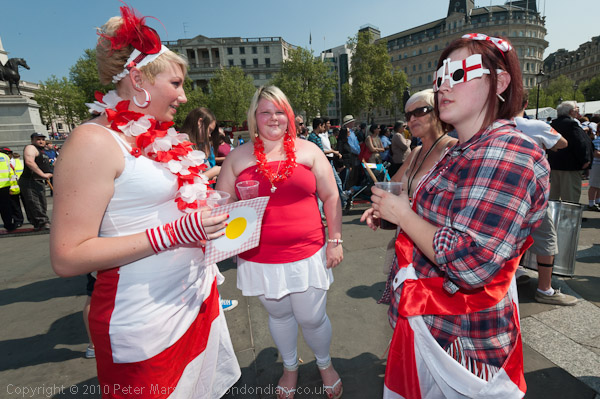
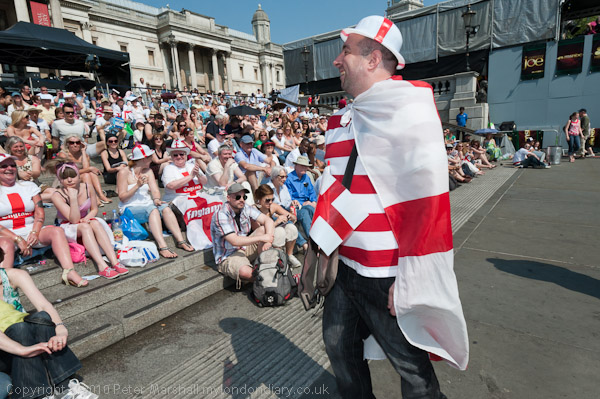
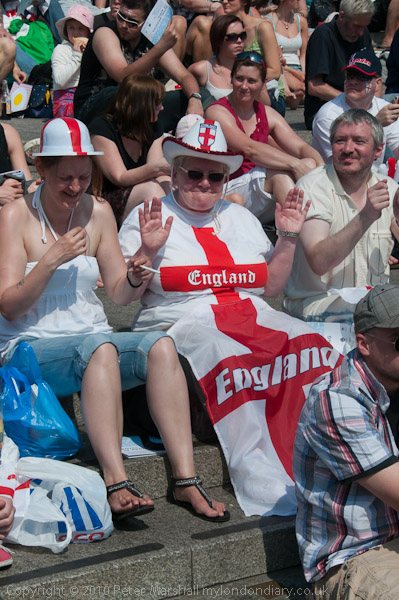
St George’s Day in London
Westminster
I found it hard to find much celebration of St George’s Day in London in 2011. He had become the patron saint of England in the Tudor era, but had been almost forgotten by the Royal Society of St. George was founded in 1894 to try and revive the tradition.
But it was not until the 1990s that we saw much revival, with the English football team and right wing political groups widely adopting the St George’s flag, preciously mainly the preserve of miniscule nationalist political groups. The Royal Society of St George was joined by English Heritage in promoting the idea.
I photographed the Royal Society of St George event at Covent Garden in 2005, but it was only in 2010 that London Mayor Boris Johnson hosted the first celebration in Trafalgar Square. Before these there had of course been celebrations in various pubs around London, soemtimes rather right-wing events. In 2016 I photographed two rival St Georges in the same pub in Southwark.
But it was the then Labour leader Jeremy Corbyn who was the first major leader to make a promise in his party manifesto. Had his 2017 election campaign not been sabotaged by the right wing in his party, today would now be a Bank Holiday.
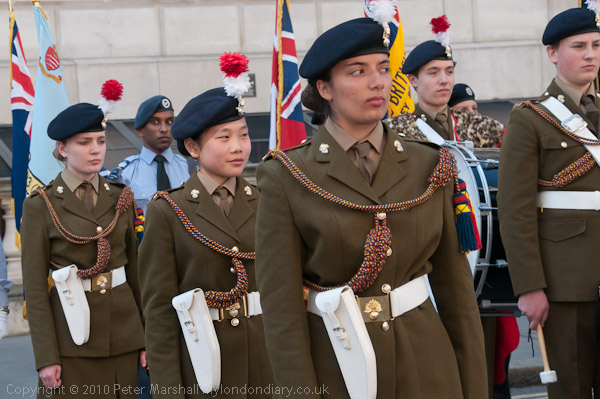
The 2011 celebrations in London seemed very limited. There was a parade marking the 150th anniversary of our military cadet units (though as I note in My London Diary this was rather premature for the air cadets.) And later I went to Trafalgar Square for the Mayor’s official celebrations and was very unimpressed.
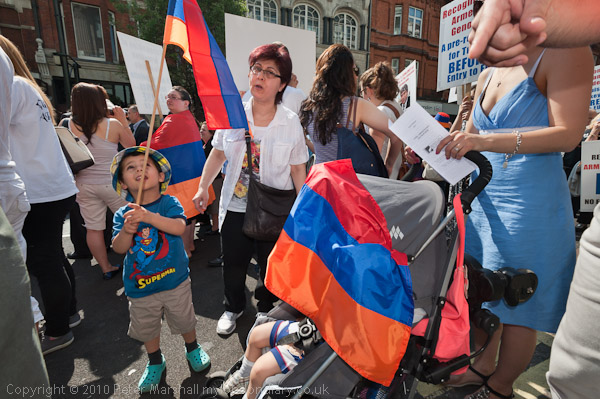
Between 1915 and 1923 the Turkish authorities killed around 1.5 million Armenians, around 70% of Turkey’s Armenian population in a deliberate attempt to rid Turkey of people who did not fit in with their desire to create a homogeneous Turkish nation. Armenians have a strong national identity, centred around their Christian heritage which did not fit well into a largely Muslim Turkey.
The genocide began on 24 April 1915 when Turkish authorities arrested and murdered around a thousand leading members of the Armenian community in Constantinople. They then killed the roughly 300,000 Armenian conscripts in the Turkish Army.
This was followed by “mass killings, deportations and death marches of women, children and elderly men into the Syrian Desert. During those marches, many of the weak or exhausted were killed or died. Women were raped. The deportees were deprived of food and water. Starvation and dehydration became commonplace.”
Turkey still refuses to admit to the genocide, and insists that the deaths were the result of a civil war. But it was a ‘war’ against a people who had no weapons and no organisations to fight and were simply slaughtered because they were Armenian.
The term ‘genocide’ did not exist at the time and was coined by Raphael Lemkin who described it as “The sort of thing Hitler did to the Jews and the Turks did to the Armenians.” One of the first resolutions proposed by him and passed by the UN was ‘The Prevention and Punishment of the Crime of Genocide’.
The annual march in London calls on the UK Government to officially recognise the Armenian genocide – as the UN Commission on Human Rights and many countries around the world have done, including France, Germany, Italy and others of our European neighbours. It’s hard to understand why we have not done so, though successive UK governments have taken the line it is a matter for international courts to decide, not governments. But others think that trade issues are the real reason.
More about the march and the reasons behind it and about “Hrant Dink (1954-2007) ‘The 1,500,001st Victim of The Armenian Genocide'” on My London Diary.
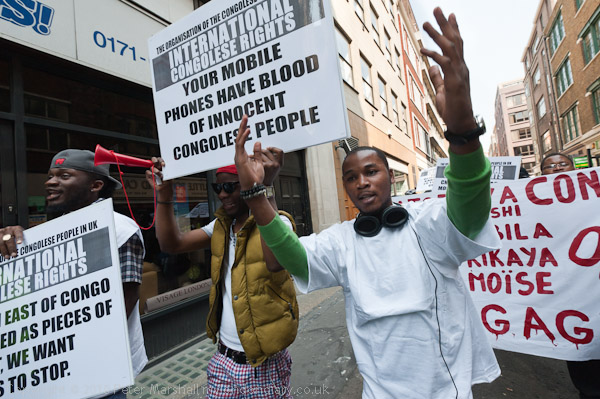
The International Congolese Rights organisation (ICR) were marching from the Congolese Embassy in Great Portland Street to Downing St calling attention to human rights violation in the Democratic Republic of Congo (DRC) and asking the UK Government to put pressure on President Kabila to hold elections or resign.
Formed in 2004 to defend the defend the rights of Congolese citizens living in the UK the ICR as held a number of demonstrations aimed at exposing the systematic violation of human rights in the DRC aimed at getting the UK and the international community to take action.
Ever since the end of colonial rule in the former Belgian Congo there has been fighting in the Congo. The DRC has vast mineral resources, probably “the richest of any country in the world, including 80% of the world’s cobalt reserves, and between 65-80% of coltan, the mineral from which tantalum capacitors, vital for mobile phones, games consoles, computers and other electronic devices.” It also has large amounts of copper and is the world’s second largest diamond producer. A large proportion of its trade is now with China.
Despite these resources, the DRC remains the second poorest country in the world, with almost three quarters of its 124 million people in extreme poverty as a result of its underdevelopment in the colonial era and the war and political turmoil since independence.
The main banner of the protest stated ‘David Cameron – Why Are So Quiet On 8 Million Deaths in D. R. Congo?‘ and people carried placards about the suffering in the country including the killings and the widespread use of rape as a military and political tactic.
They called for elections and for DRC President Joseph Kabila to step down and to face trial at the International Criminal Court.