Global Marijuana March: According to Wikipedia, the “Global Marijuana March (GMM), also referred to as the Million Marijuana March (MMM), is an annual rally held at different locations around the world on the first Saturday in May.”
The Wikipedia article goes on to say it was first held in 1999, then tella me that “Since then, hundreds of thousands of people have participated in over 1034 different cities in 85 nations and subnational areas.”
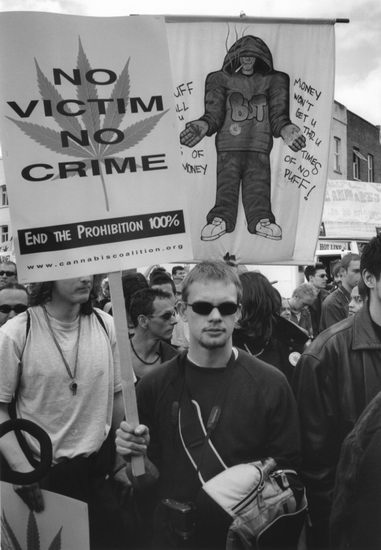
Legalise Cannabis March, Kennington to Brixton
The first march was in New York City, but although London was one of those 1034 cities it doesn’t get a mention. There have been various events in London over the years calling for legalisation of cannabis, but in more recent years these have mainly taken place on ‘420’, April 20th.
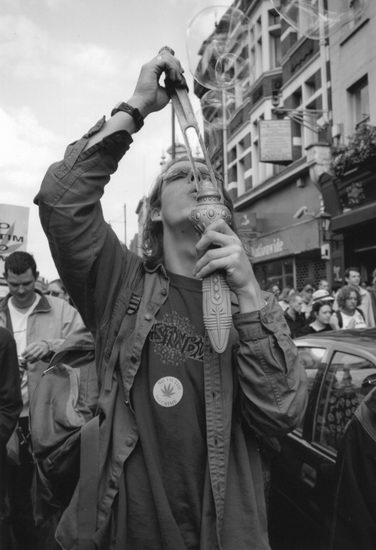
Supplies of something were on offer
The name ‘420’ came from a group of friends in San Rafael, California, who called themselves the Waldos. They had agreed to meet after school one day at 4.20pm to search for an abandoned cannabis farm, using the term ‘420’ as shorthand for their (unsuccessful) quest. After this they carried on using ‘420’ as a coded way to talk about marijuana particularly when teachers and parents were around.
The Waldos were fans of The Grateful Dead, very much a part of the counterculture and associated with cannabis use, and the term spread to other fans of this Californian rock group and on worldwide.
I only wrote a short paragraph on the event in 2002:
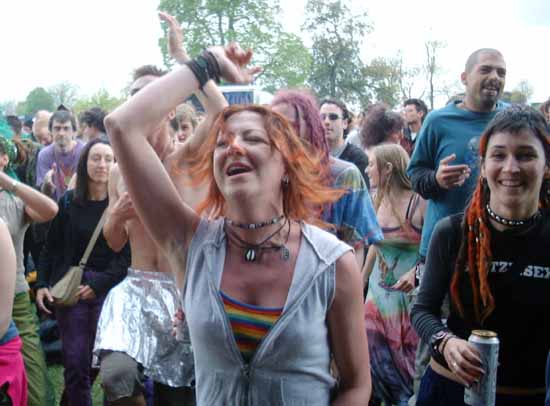
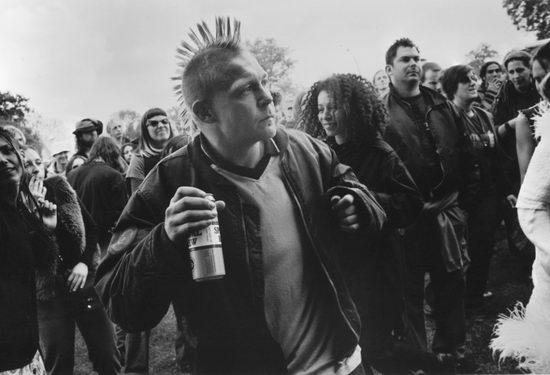
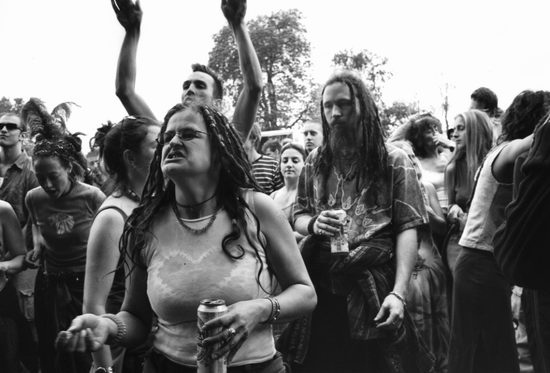
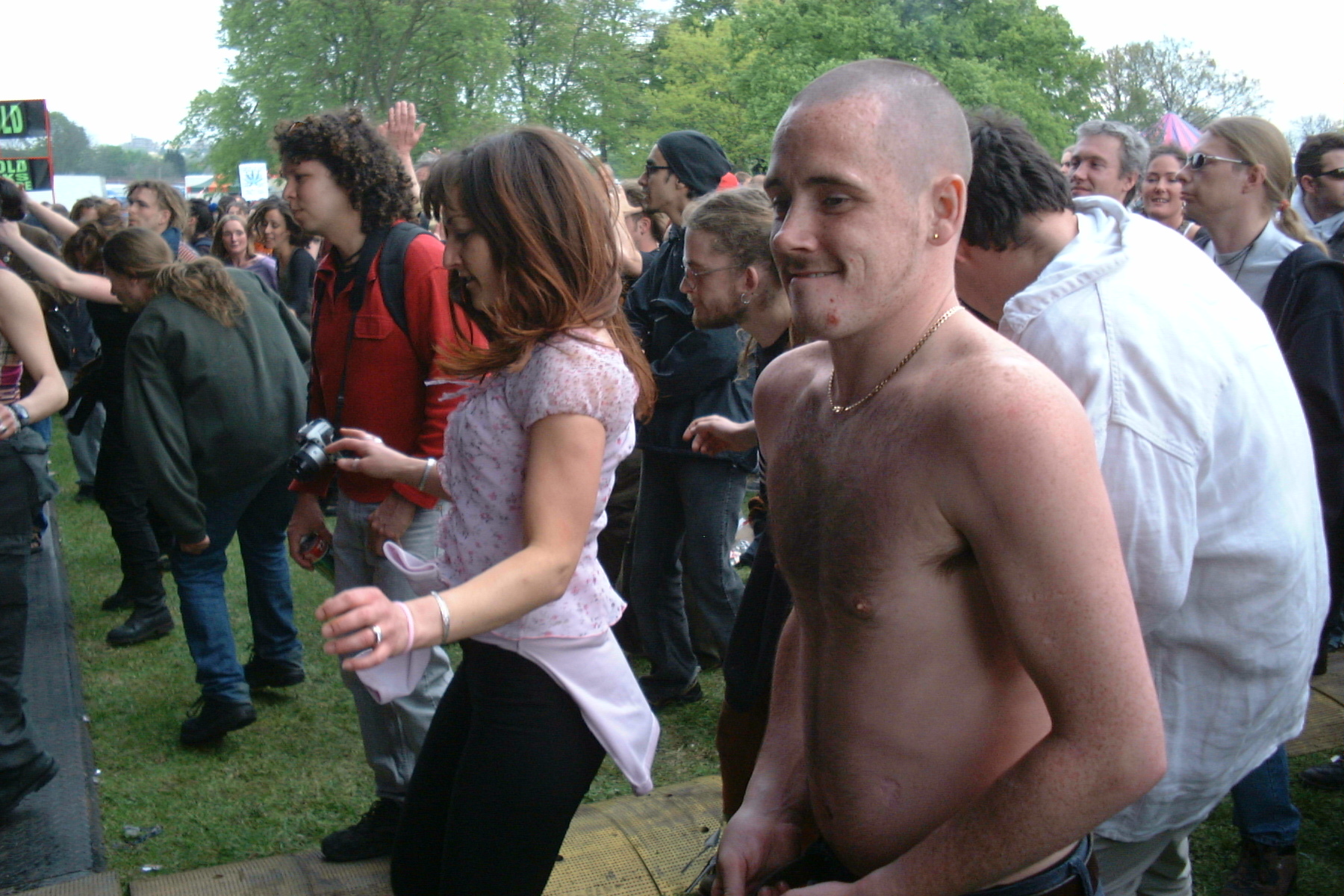
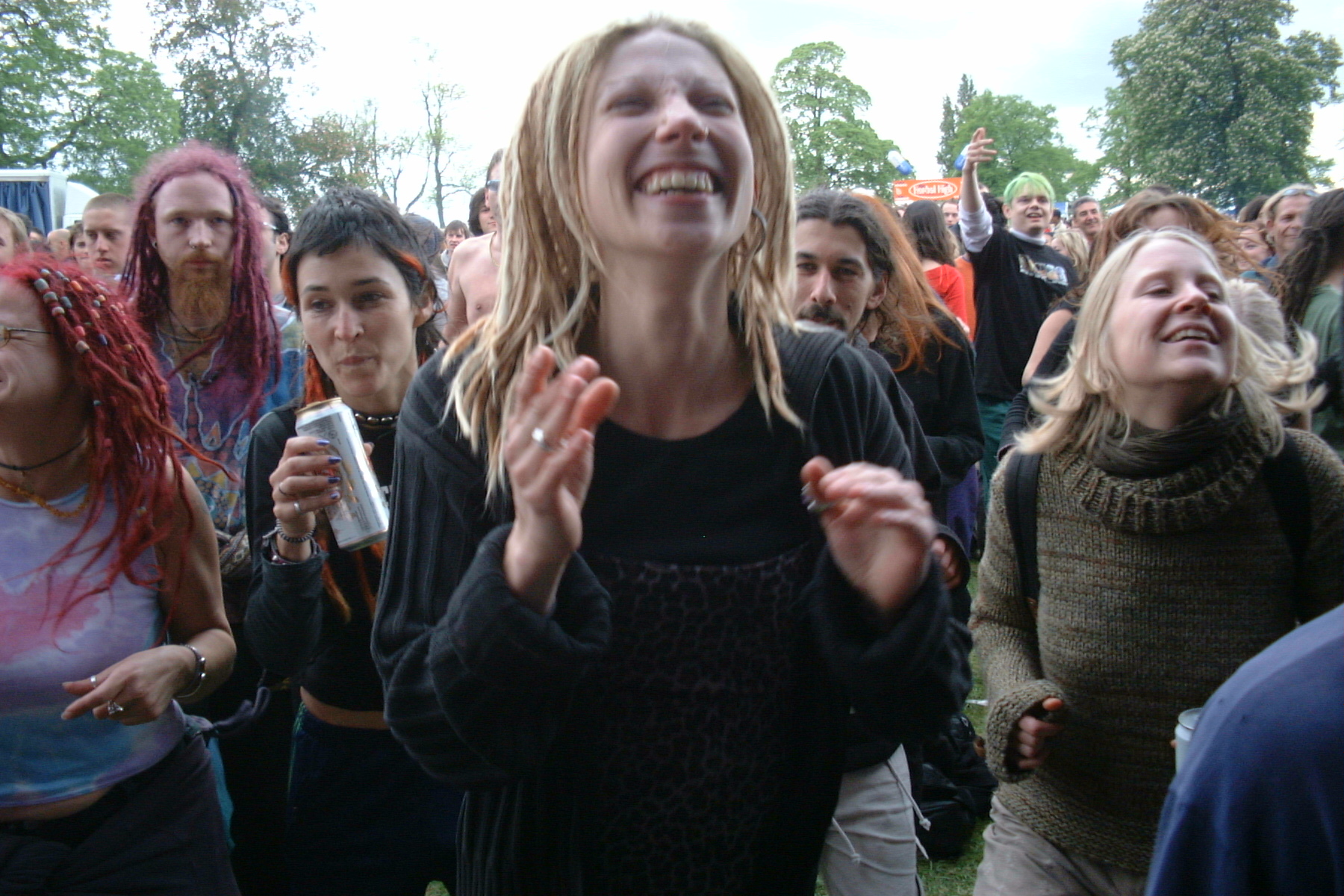
“Saturday 4 May was some kind of World Cannabis Day, and those who could still stand made it down to Kennington and marched down through Stockwell & Brixton to Brockwell Park, were we we danced, ate, drank and did all the kind of things people do at festies.“
Legalise Cannabis Festival, Brockwell Park, Herne Hill
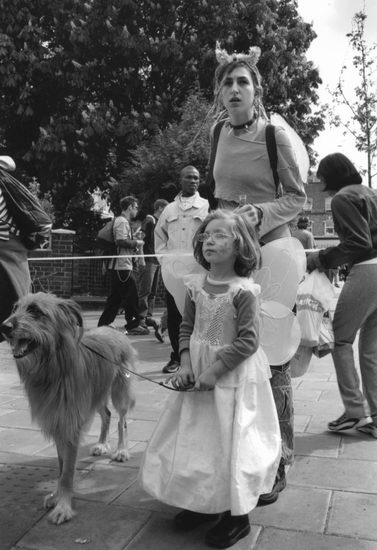
My experience of cannabis remained only through from thick secondhand smoke as I wandered through the event taking black and white and colour pictures. There are a few more black and whites on My London Diary.
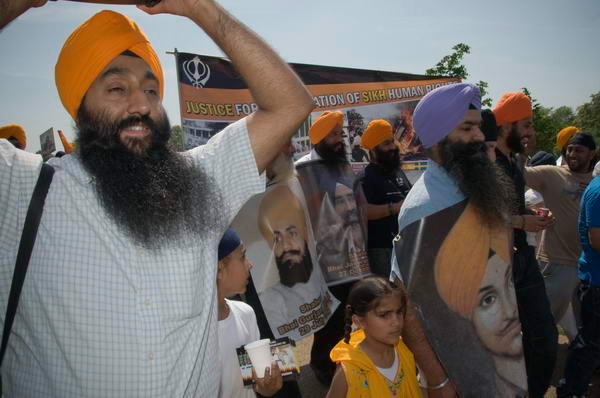
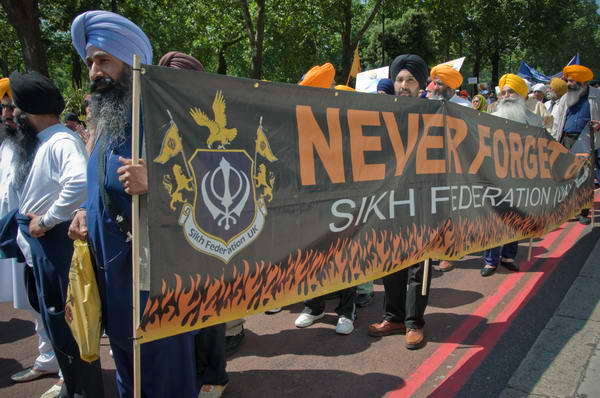
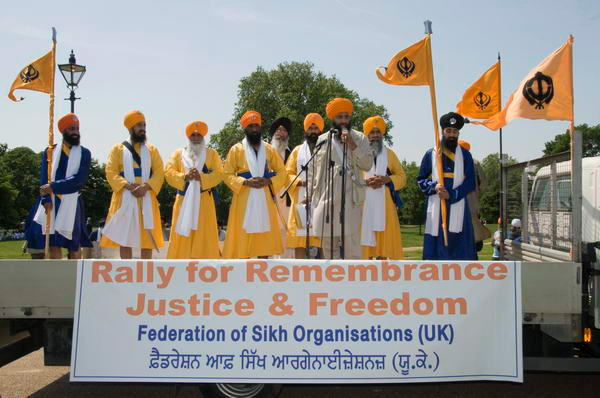
Lord Maruga, Portugal Day & Khalistan: My day on Sunday 8th June 2008 very much reflected the multicultural nature of London, beginning with a Hindu Festival in Thornton Heath, moving on to a Catholic Mass celebrating Portugal Day in Kennington and finally a march by Sikhs remembering the 1984 massacre and calling for an independent Sikh state, Khalistan.
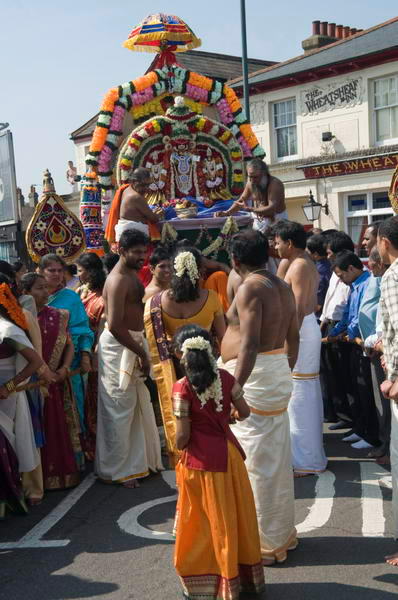
Lord Muruga in Thornton Heath
Hindu God Lord Muruga is particularly popular with the Tamils of southeast India (Tamil Nadu), Sri Lanka and Malaysia, and several hundred from the Sivaskanthagiri Murugan Temple in Thornton Heath celebrated him by pulling a chariot carrying his representation through the local streets.
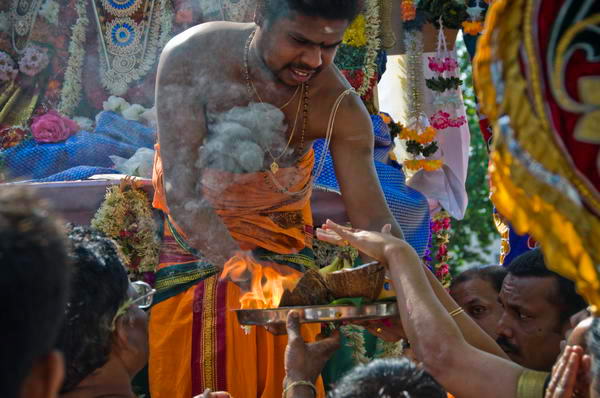
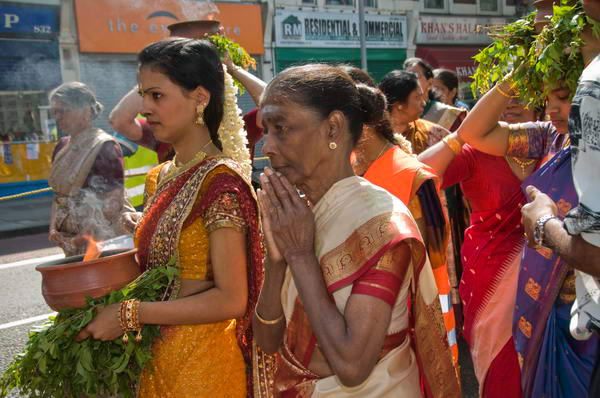
The procession was led by musicians, and by women carrying pots of burning embers on their heads and in their arms. As the chariot made its way along the street, people brought offerings of good to be blessed, and these were returned to them flaming.
Lord Muruga is the son of Agni, the fire god. He also carries a spear and a staff with a picture of a cockerel, and rides on a peacock. He is noted for the help that he gives for devotees who are in distress and the procession in particular visits those who cannot come to the temple because of their poor health or other disabilities
The flames are from camphor, widely used in Indian rituals and thought to eliminate negative energies. This waxy white solid burns with a relatively cool flame and emit little smoke.
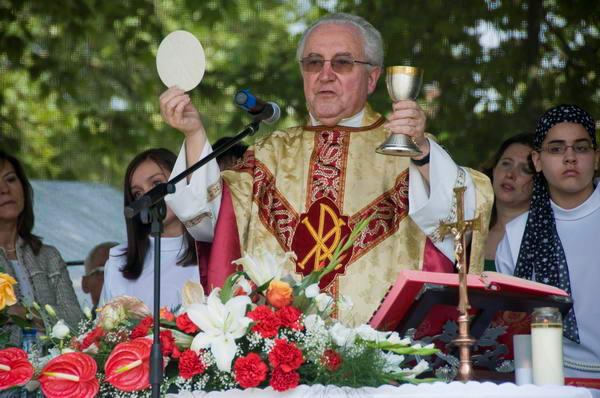
Also known as Camões Day, Portugal’s National Day marks the anniversary of the death of its greatest poet and writer, Luís de Camões, on 10 June, 1580. He died in the year that Portugal became part of Spain, and the date of his death (the day of his birth around 1624 is not recorded) was celebrated as a national day after Portugal regained independence in 1640.
His great epic poem ‘The Lusaids’ centres on Vasco da Gama’s voyage to discover a sea route to India which was the foundation of the colonial explorations that brought the country great wealth and it made him a symbol of the nation.
Fascist dictator Salazar who ruled Portugal from 1932 to 1968 made the day a celebration of a fictional Portuguese ‘race’, but it is now simply a day for celebration by Portuguese communities around the world – and London has the largest Portuguese community outside Portugal, centred in Stockwell close to Kennington Park. The celebrations in the park includes entertainments and considerable eating and drinking after the initial open-air Catholic Mass I photographed.
Sikhs remember the massacres at Amritsar by the Indian Army and the mob killings encouraged by the Indian government following the assassination of Indira Ghandi by her Sikh bodyguards in 1984.
Sikh interests were ignored by an ignorant and incompetent British administration led by the Viceroy and Governor-General of India Lord Mountbatten who were responsible for the partition of India in 1947.
This annual rally and march in London calls for the establishment of an independent Sikh homeland, Khalistan in the Punjab and possibly incorporating some nearby areas of India and Pakistan.
Some Sikhs had been calling for an independent state since the 1930s and the movement continued to grow after partition with various militant Sikh groups including Babbar Khalsa, proscribed in the UK. Violent repression by Indian police led to a decline in the 1990s, but repression continues against Sikhs and in particular against those campaigning for separation and has increased in recent years. This makes it very difficult to determine how much popular support there is for the Khalistan movement in the area.
Data in the UK suggests that only a small fraction of British Sikhs support the establishment of Khalistan. In 2018, India asked UK to ban Sikh Federation (UK) who organise these events for its anti-India, pro-Khalistan activities, including proscribing the organisation but this has not happened.