Remember Gaza – 2012

Remember Gaza - 2012

On 27th December 2008 the Israeli military began ‘Operation Cast Lead’ after 6 months of planning, striking 100 targets in Gaza in less than four minutes. This initial attack was followed by other air attacks and on January 3rd by an invasion on the ground. Israeli Defense Forces ended their attacks on 18th January 2009 by which time around 1400 Palestinians had been killed, with only 13 Israeli deaths, four killed by their own forces. You can read more on Wikipedia.

Remember Gaza - 2012

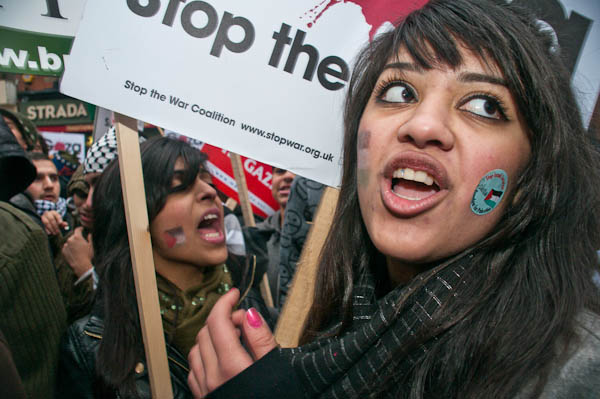
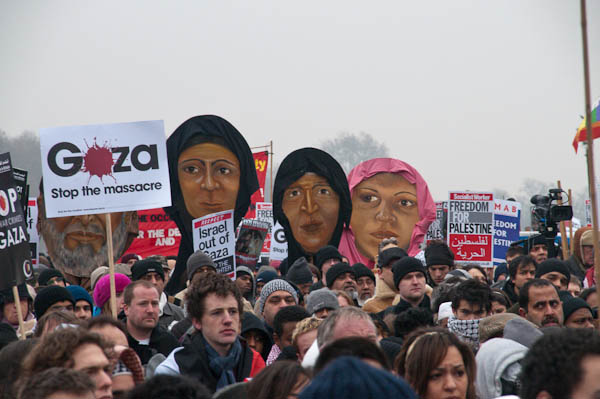
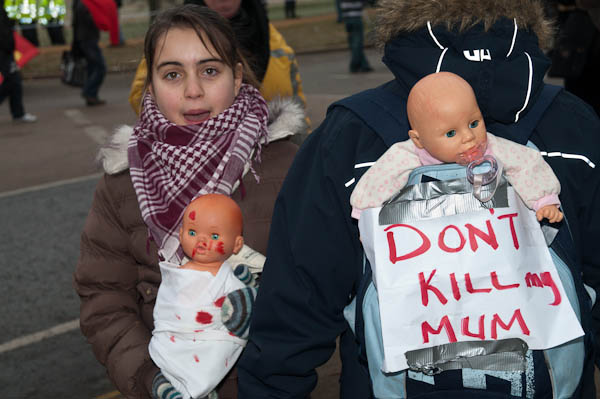
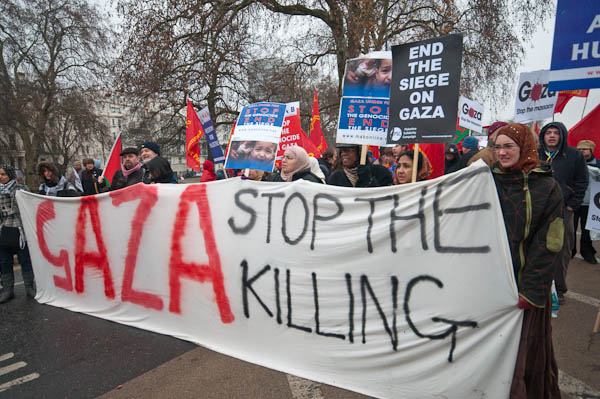
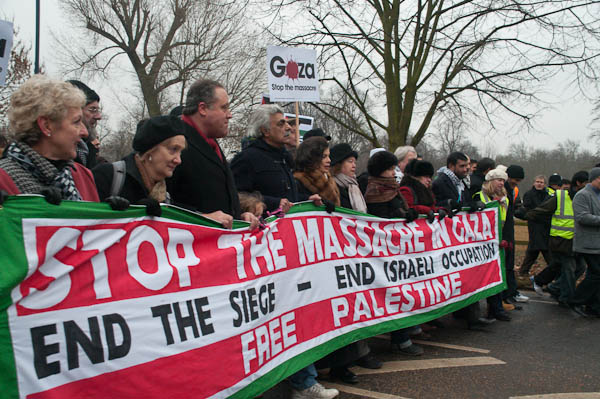
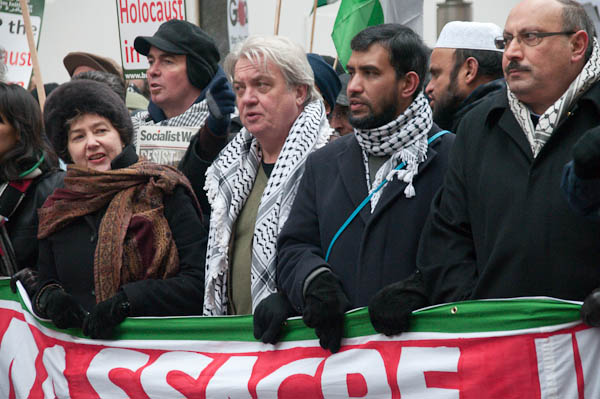
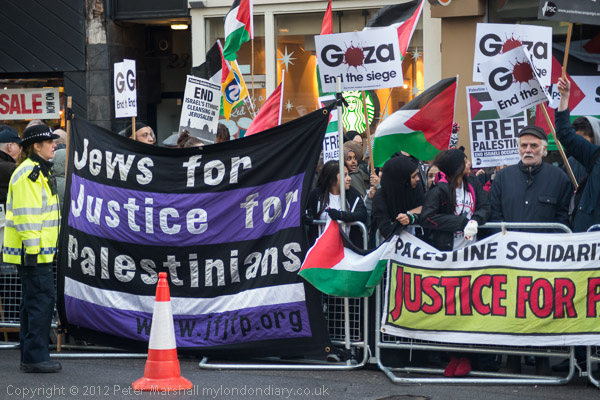
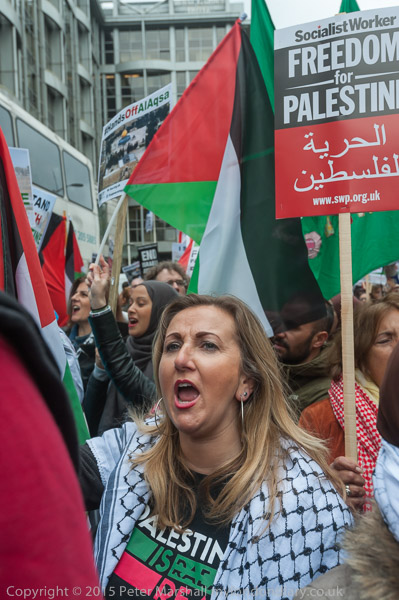
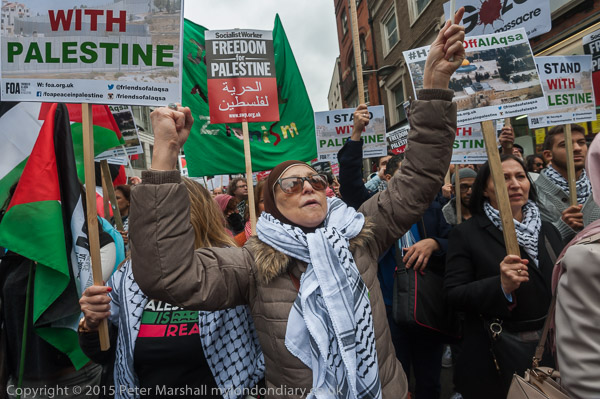
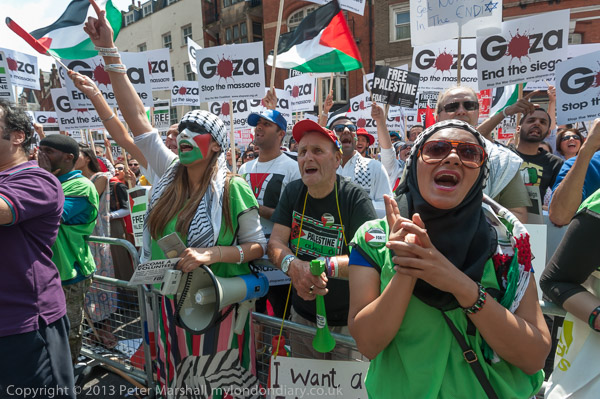
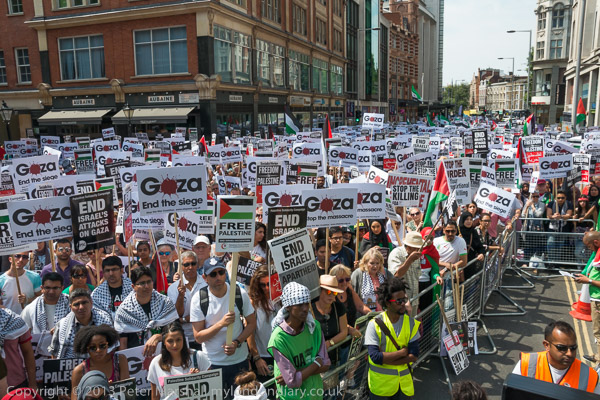
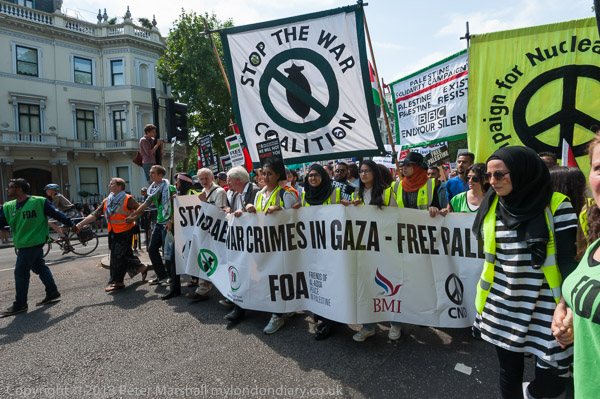
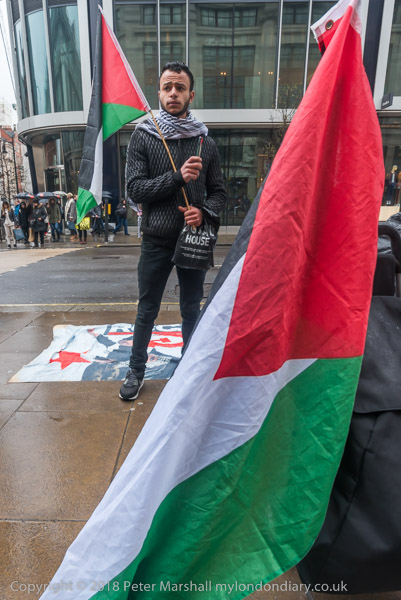
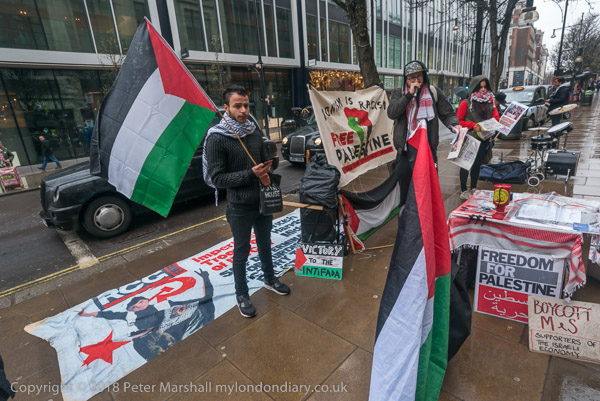
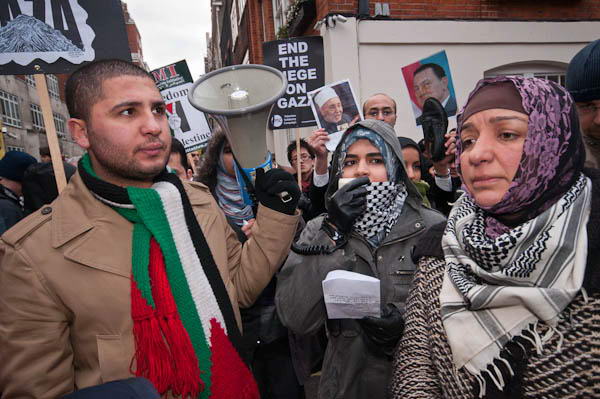
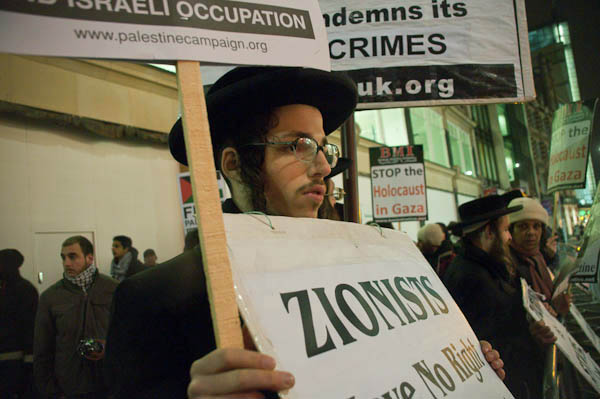
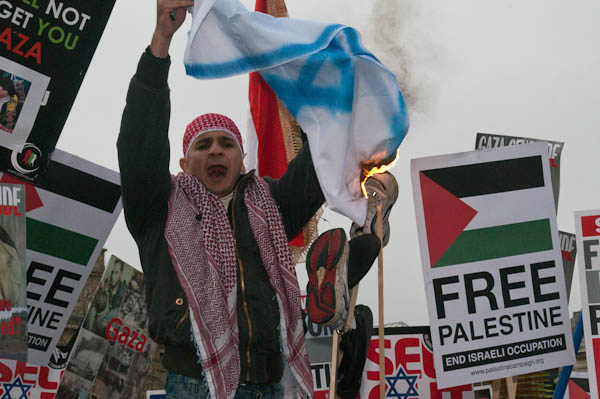
Every year for the next four years there were large protests close to the Israeli Embassy in London on December 27th against calling for an end to attacks on Gaza and an end to the siege of Gaza which prevents the imports of building materials and other vital goods needed for health and reconstruction. But the 2008-9 attacks on Gaza have been followed by others in 2014 and 2018 and more air strikes in 2021 and 2022.

Remember Gaza - 2012

Things now seem likely to get even worse with a new Israeli government under Benjamin Netanyahu including anti-Arab ultra-nationalists in key posts including the finance minister, a defence ministry post and national security minister as well as in the education ministry.

Among promises made to form the coalition are the legalisation of illegal Israeli settlements in the Palestinian West Bank, lifting of restrictions on Jewish prayer at the Al-Aqsa Mosque and a loosening of the restrictions on using live fire against Palestinian protesters. The new government also intends to end any independence of the judicial system in Israel, making the Supreme Court subservient to government.

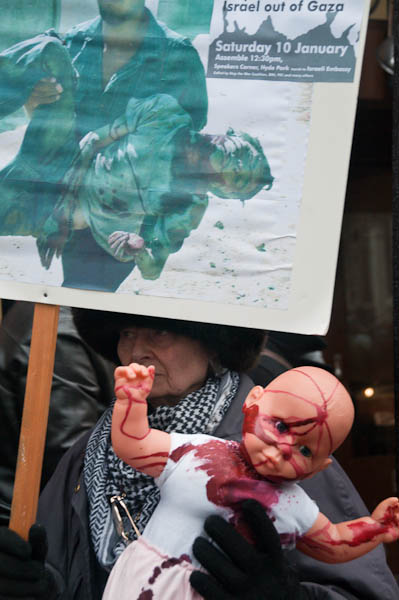
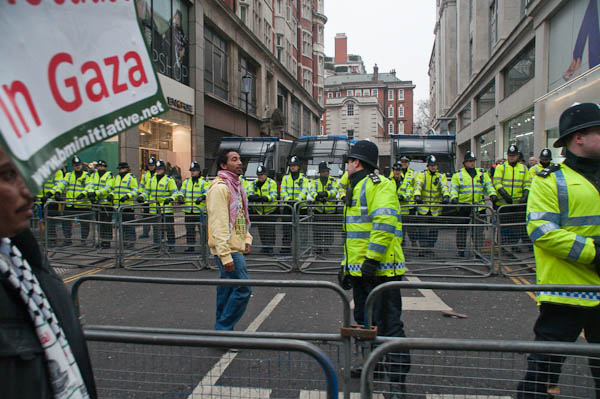
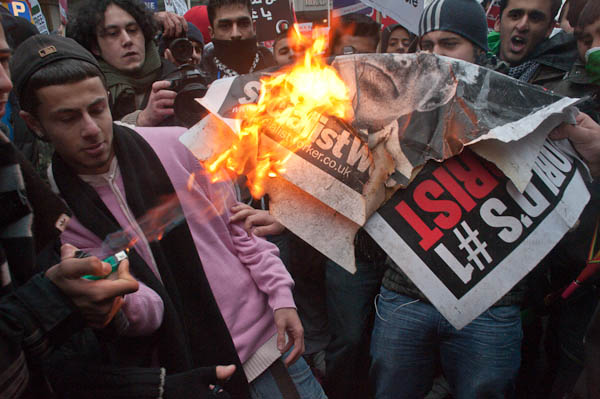
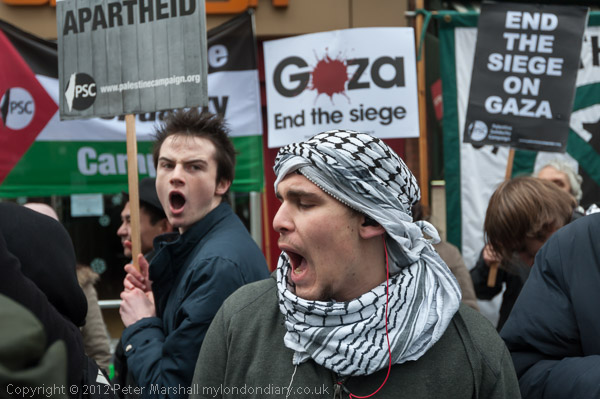
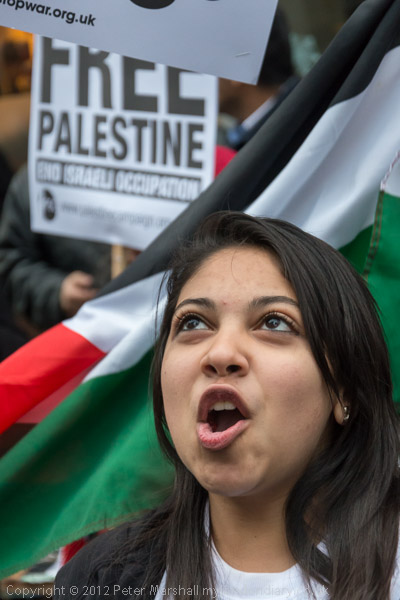
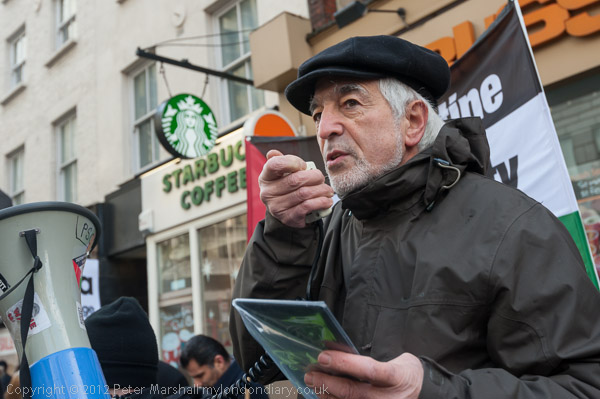
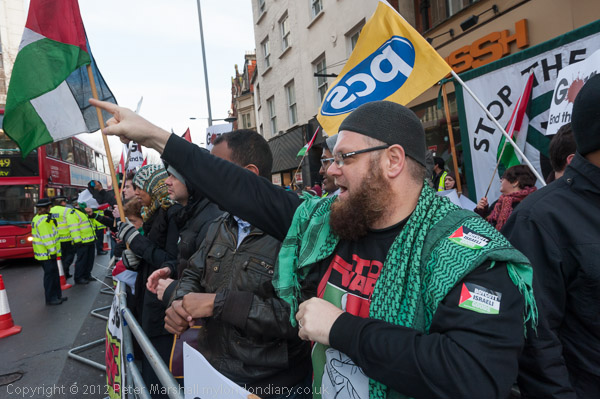
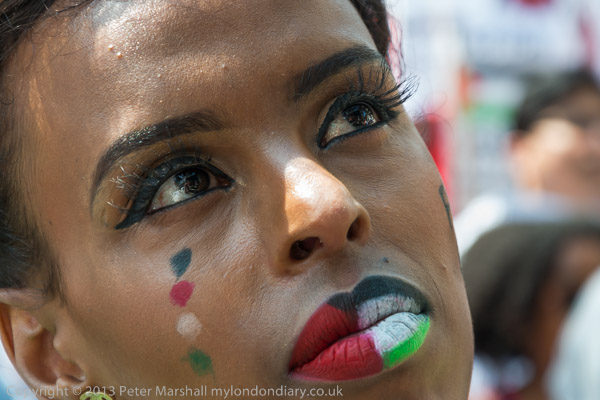
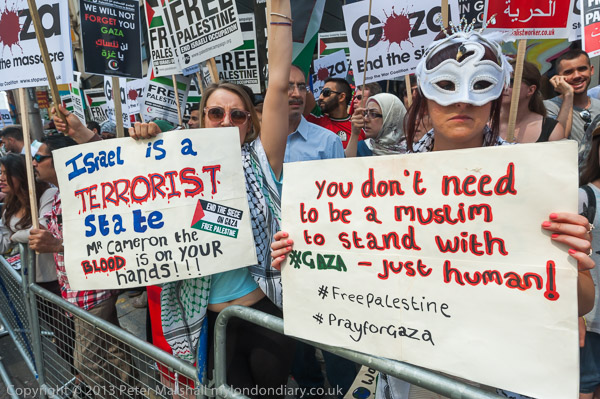
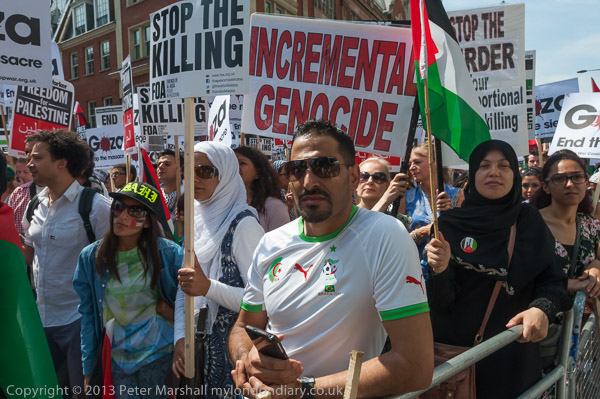
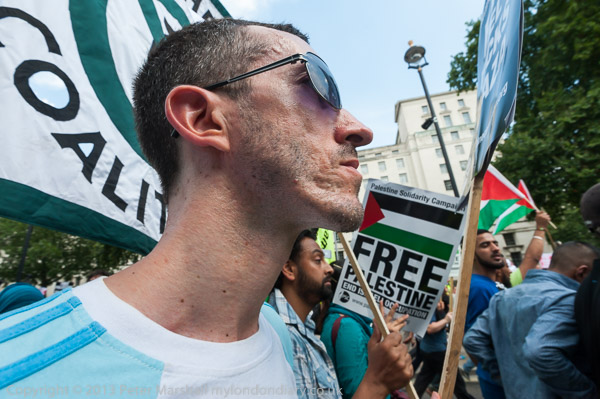
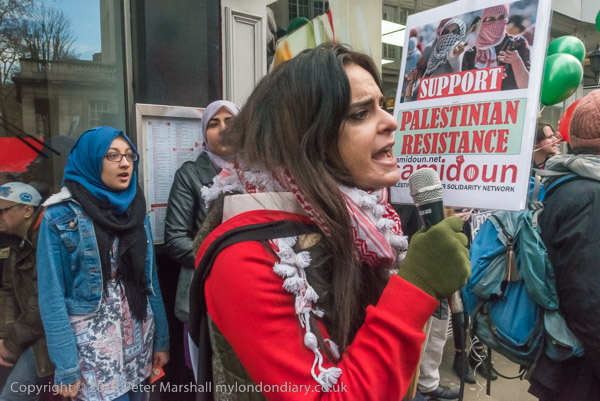
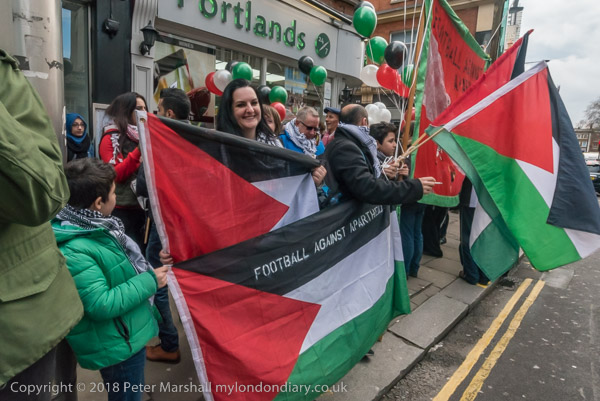
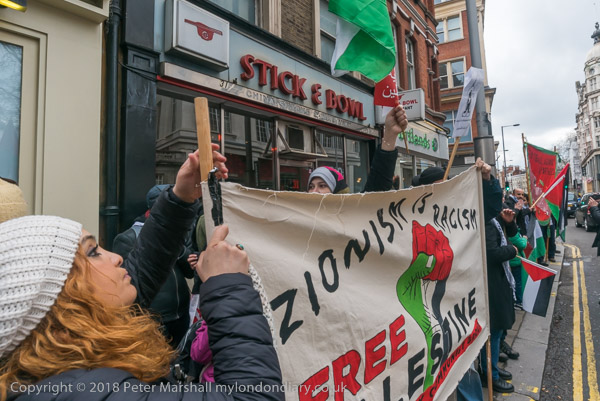
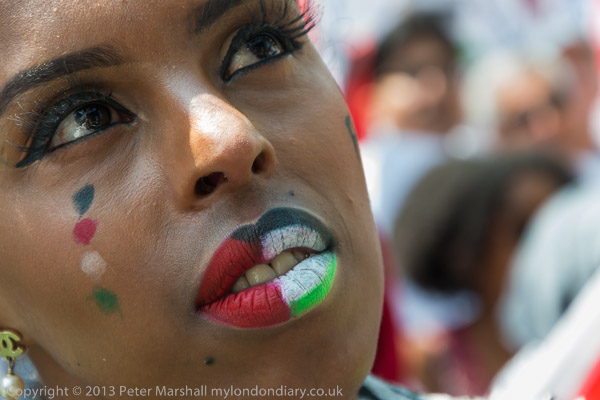
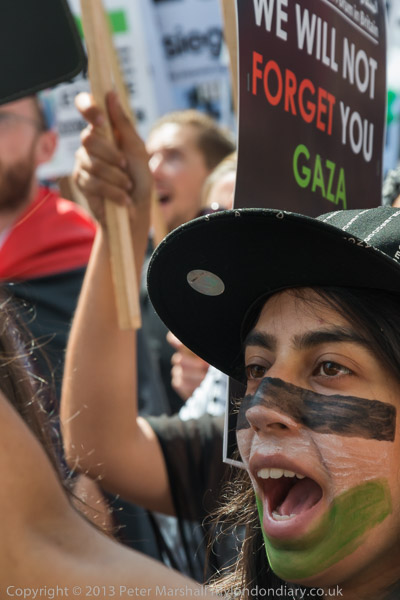
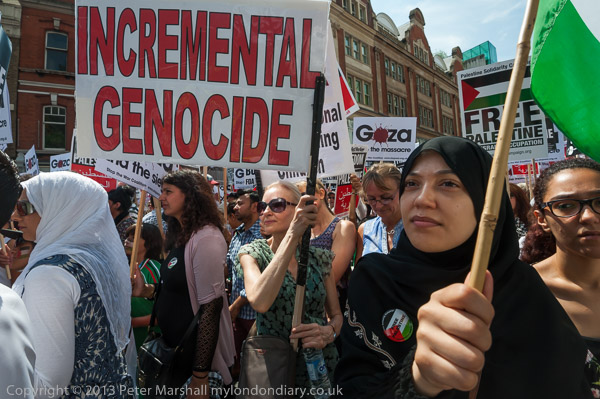
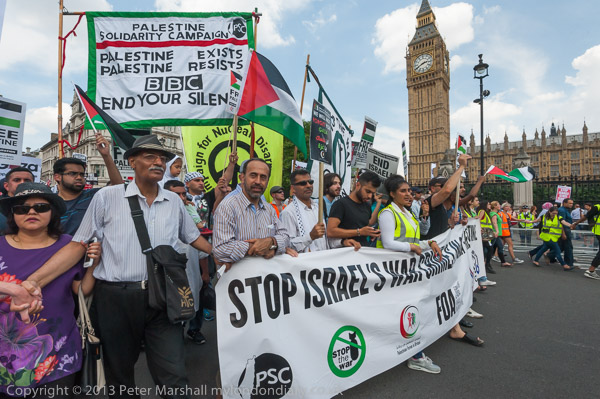
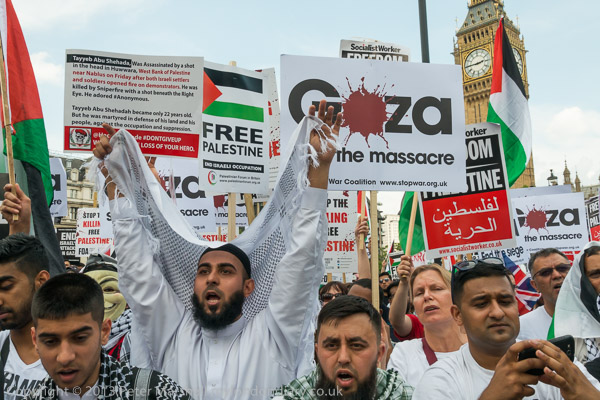
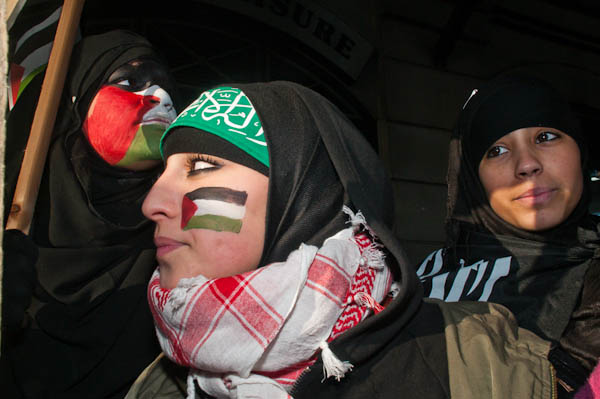
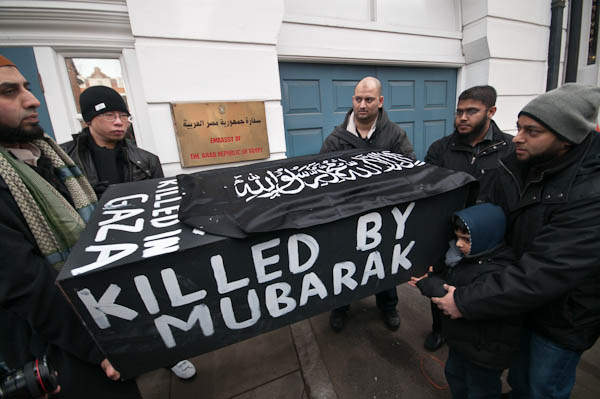
So far as I am aware there will be no particular protest in London today, and the last I attended on December 27th was in 2012, four years after the start of the 2008 massacres – and the pictures here come from that day. The Israeli embassy is on a private road where a ban on protest is rigorously enforced, with police and barriers preventing access, and protests take place on Kensington High Street, opposite the private street.

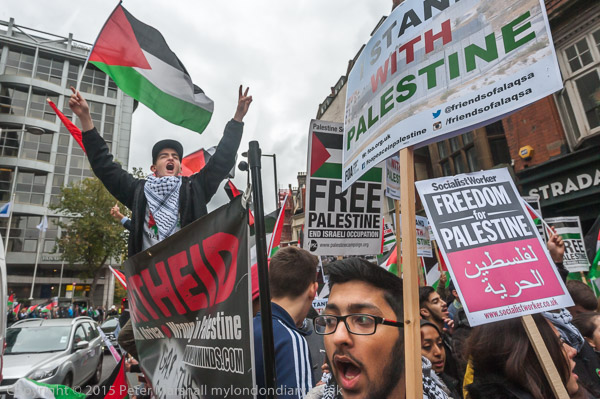
There are still large protests in London calling for an end to Israeli Apartheid and for freedom for Palestine – such as that on 14th May 2022 marking 74 years after the Nakba as well as many smaller actions calling for a boycott of Israeli goods and services and divestment from Israel, with the BDS movement gaining strength world-wide. Attempts by Israel to categorise any support for Palestine as anti-Semitism have largely failed because of increasing repression and increased reporting of repression by the Israeli government, Israeli forces and attacks on Palestinians by some Jewish settlers. Many of those taking part in the protests supporting Palestine are Jewish, standing alongside others from Palestine.

This year I’m pleased to feel able to have another day of relative rest after Christmas, particularly as train services are disrupted as the UK government tries to prop up our dysfunctional rail system at the expense of rail workers – while continuing the handouts to the private companies – including several European state railway companies. As in gas, electricity, water and more privatisation has proved an entirely predictable economic disaster, selling off the family silver for short-term gain.

More at Gaza – End the Siege.


Palestine, NHS & Cleaners in the Barbican

I photographed three quite different protests in London on Saturday 17th October 2015


End the killing in Palestine – Israeli Embassy

Palestine, NHS & Cleaners in the Barbican

October 2015 saw the start of a wave of uncoordinated knife attacks on Jews in Jerusalem, mainly be individuals acting alone, probably enraged by increasing restrictions on Palestinian access to the holy area called by Muslims al-Haram al-Sharif and by Jews the Temple Mount, while at the same time Jewish activists were given greater access.

An Israeli intelligence service report blamed the Palestinian “feelings of national, economic and personal deprivation” while others suggested that Palestinians were responding to what seemed to them and human rights organisations as summary executions being carried out by Israeli forces against Palestinians involved in incidents.

According to Wikipedia, in October 2015 Israeli security forces killed 51 Palestinians in the West Bank and 18 in the Gaza strip. While the killing of Israelis makes the BBC news headlines, the deaths of Palestinians at the hand of Israeli security forces, illegal settlers and other Jewish extremists is seldom mentioned.

More pictures at End the killing in Palestine


Junior Doctors protest to save the NHS – Waterloo Place & Whitehall

Palestine, NHS & Cleaners in the Barbican

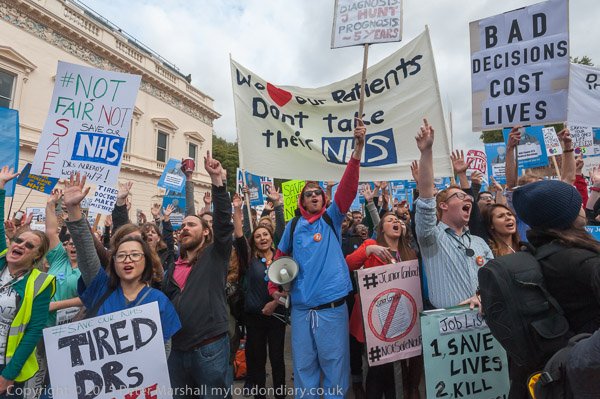
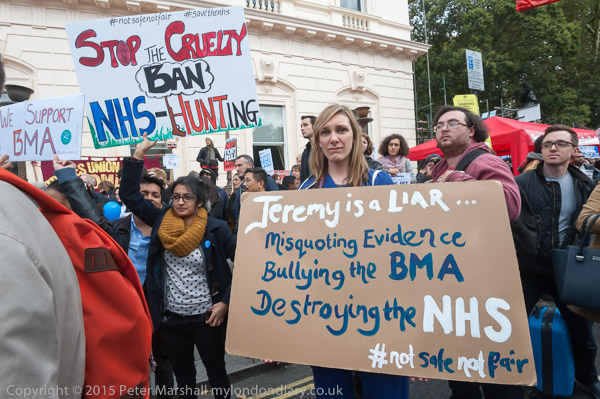
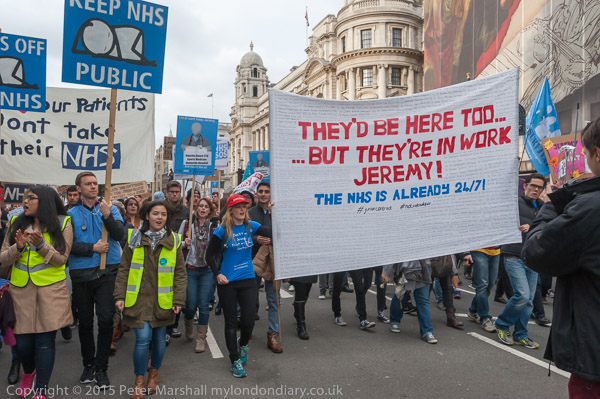
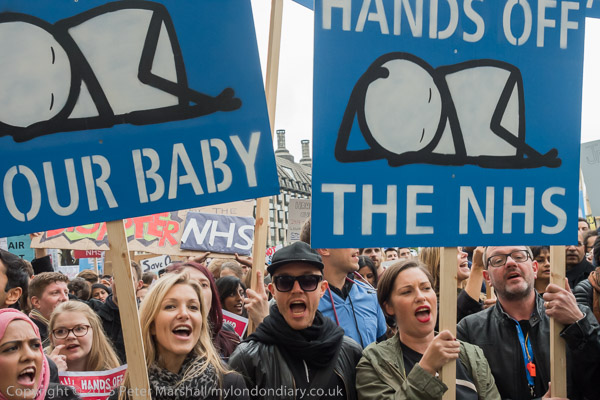
Junior doctors met for a rally in Waterloo Place to protest the changes to NHS contracts that will mean working more unsocial hours at standard rates, remove safeguards that stop hospitals overworking doctors, and penalise those volunteer for charities, have families or carry out research.
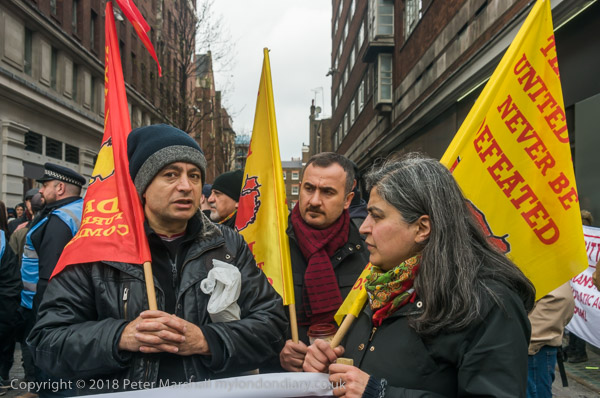
The new contracts are aimed at making the NHS more profitable for private companies to take over NHS activities and many mainly Tory MPs have interests in private healtcare companies. But overwhelming doctors who work in the NHS want to see it kept as a serrvice dedicated to the public good rather than working to make profits for shareholders at the expense of both healthcare workers and the treatment given to patients.
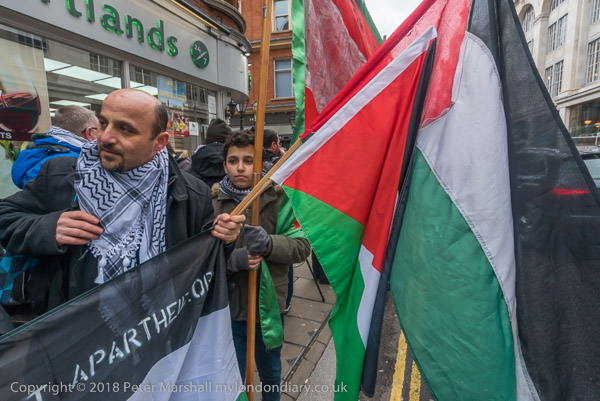
A banner covered in names of doctors who were on duty so couldn’t attend


After a number of speeches in Waterloo Place, thousands of junior doctors and their supporters marched to sit down briefly outside Downing St before continuing to a final rally in Parliament Square.

Graffiti artist Stik (Centre) stands under two of the placards he designed against privatisation of the NHS

More pictures at Junior Doctors protest to save the NHS.


Cleaners protest in Barbican – Barbican Centre

Palestine, NHS & Cleaners in the Barbican

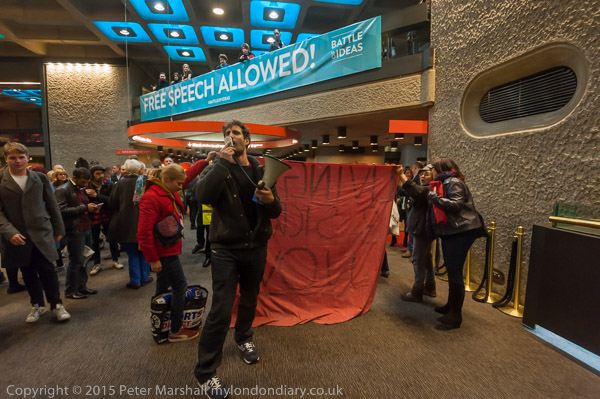
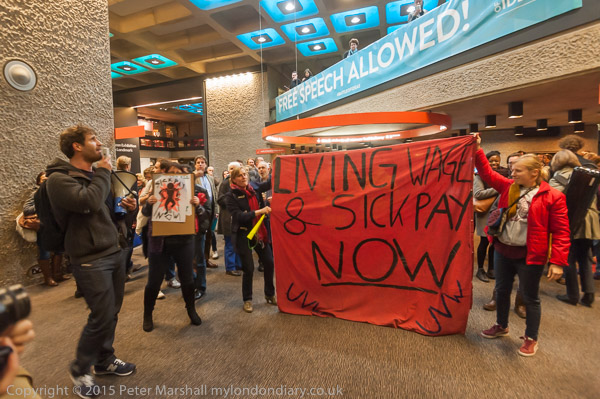
I met the cleaners outside the main entrance to the Barbican in Silk Street, where thee United Voices of the World held a noisy rally with a few speeches. They were here after the Barbican management had ignored requests to talk with the UVW union over failing to pay the living wage until 6 months late, contractual sick pay, and cleaners were being victimised for their for trade union activities. They were also protesting the use of unpaid ‘Workfare’ in the centre.

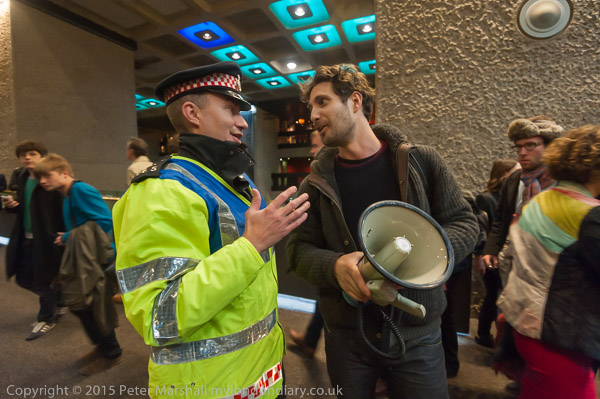
After a while a small group from the UVW , led by UVW General Secretary Petros Elia, ran inside past security staff and made their way to the middle of the arts centre to protest there. The Barbican was holding an event called ‘Battle of Ideas’ which had a large banner ‘Free Speech Allowed’ but Barbican security were not happy with free speech from Petros, despite which he was able to finish the protest, receiving a round of applause from Barbican customers.

Soon police arrived and there was a fairly friendly discuss in which the UVW agreed to leave the building in a few minutes without any trouble. They did so, and continued the protest outside the entrance in Silk Street. I took a few photographs and then left for home as it had been a long day and I wanted to get back and have my dinner.

Cleaners protest in Barbican


End The Israeli Invasion Of Gaza – 2014

End The Israeli Invasion Of Gaza – 2014 On 8th July 2014, Israel had begun Operation Protective Edge with air strikes and artillery bombardment on the narrow Gaza strip of Palestinian territory.

The previous month 3 Israel teenagers had been kidnapped close to an Israeli settlement on the West Bank; several weeks later their bodies were found – they appeared to have been shot shortly after capture and Israeli Prime Minister Benjamin Netanyahu vowed that Israel would have a tough response.

After the kidnapping the Israel Defence Forces had immediately arrested 350 Hamas members in the West Bank, and in response Hamas fired rockets into Israel from the Gaza strip. Israel’s bombardment failed to stop the rocket attacks and after 10 days on 17th July they began a full-scale ground invasion, attempting to destroy the military tunnels which Hamas had created in Gaza.

Israel ended the ground invasion on 5th of August and a cease-fire was announced on 26th August. During the war between 2,125 and 2,310 Gazans were killed and over 10,000 badly injured, many of them permanently disabled. The homes of over 10,000 families were destroyed and more severely damaged. The huge military imbalance meant that deaths on the Israeli side were 72, five of them civilians.

The protest in London on Saturday 26th July called for an end to Israeli attacks on Gaza which had already killed over a thousand Palestinians, mainly civilians.

It began with a rally on the main road close to the Israeli embassy a short distance down a private road which was heavily defended by barriers and police. The police tried to keep the protesters on the pavements and traffic flowing, but there were soon far too many protesters for this to be possible and it spilt out to block the road.

The rally here was fairly short, with speakers including Owen Jones and Labour veteran Walter Wolfgang. It was hard to estimate the number of protesters, but the wide street was packed with people for around 300 yards, many too far away to hear the speeched. I photographed the front of the march as it moved off and stayed with it for around half a mile before walking slowly back against the flow of the march taking more pictures of the protesters. There were still people coming out of the tube station for the march as I took a train to photograph another protest at Westminster.

After covering another event briefly I met up with the front of the march at Trafalgar Square as it turned into the top of Whitehall and was able to photograph it going down. It stopped briefly opposite Downing St, then continued to Parliament Square for the main rally.

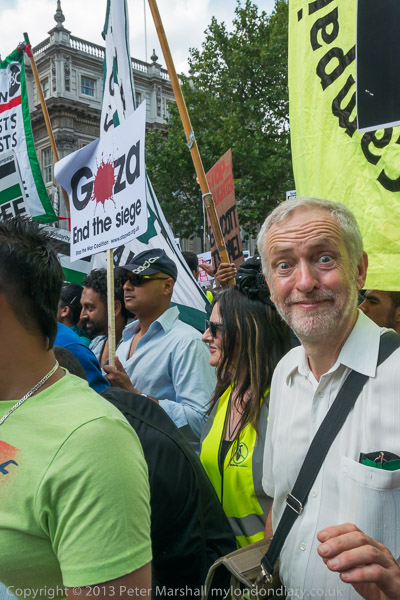
Jeremy Corbyn sees me taking his picture

Parliament Square is almost square with its large central area, mainly grassed about 205×230 feet, and for this protest was mainly fairly crowded, with people spilling out onto the roadways around its edge in places. Though quite a few protesters had felt they had done their bit by marching on a hot day and were making their way to the station or elsewhere.

I stayed for some time, photographing the marchers and speakers but after listening to around 17 of them (you can see my pictures of them on My London Diary) I began to feel rather faint. It was a hot day, and although there is some shade, to take photographs I had needed to stand in the sun. The rally was still continuing as I left for home.

Stop the Massacre in Gaza Rally
End Gaza Invasion March to Parliament
Israeli Embassy rally – End Gaza Invasion


Palestine Land Day, Bunny Hop, and Afrin

Palestine Land Day, Bunny Hop, and Afrin. Saturday 31st March 2018 was Holy Saturday, the day between Good Friday and Easter Day which most people now call Easter Saturday, though more correctly this comes a week later. But only one of the four events I photographed that day was connected to Easter.

Palestine Land Day, Bunny Hop, and Afrin

Land Day protest against supporters of Israeli state – Oxford St

Palestine Land Day, Bunny Hop, and Afrin

Palestine Land Day, observed annually by Arab citizens of Israel and Palestinians across the world, remembers the day in 1976, March 30th when a general strike and protests were called in Arab towns in Israel against plans by Israel to expropriate around 8 square miles of land in Galilee for Jewish settlements, about 2.5 square miles of which was Arab owned. The Israeli government tried to suppress the protests using police and the army as well as threatening strikers with dismissal. Six unarmed Palestinians were shot and killed and there were many injuries.

The annual Land Day celebrations since then in Israel have often been marked by violent attacks on protesters, with injuries and deaths. On 30th March 2018 Israel Defence Force snipers were placed in position on the separation wall in Gaza and opened fire on unarmed protesters several hundred yards away using live ammunition. 17 Civilians were killed and over 750 seriously injured by live fire, others injured by rubber bullets and tear gas.

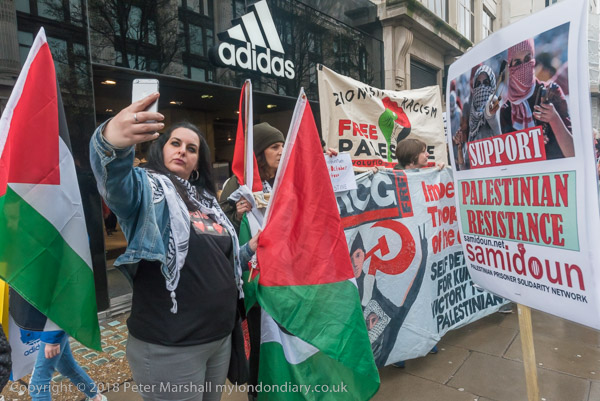
This protest was led by a group which have been protesting regularly outside the Oxford Street main store of Marks & Spencers for many years against their support for Israel. They had planned a large rolling protest for the day following Land Day, going along Oxford Street stopping for short speeches outside stores with business links with Apartheid Israel, calling for shoppers to boycott them for selling Israeli goods. While I was with them as well as Marks & Spencers they also protested outside Selfridges, which sells Israeli wines, Adidas which supports the Israel football team, Boots which sells cosmetics made in Israel and Carphone Warehouse.

Land Day protest against Israeli state


BMXLife Charity Bunny Hop – Oxford St

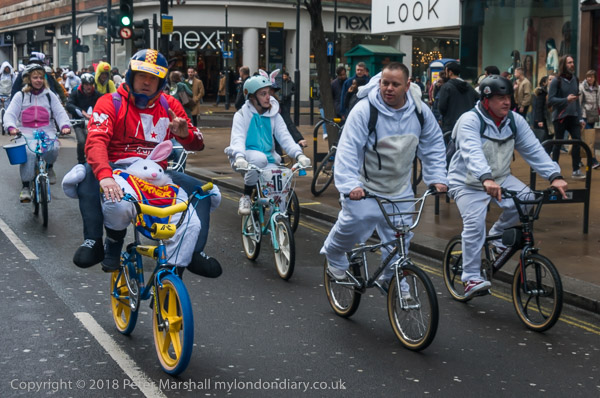
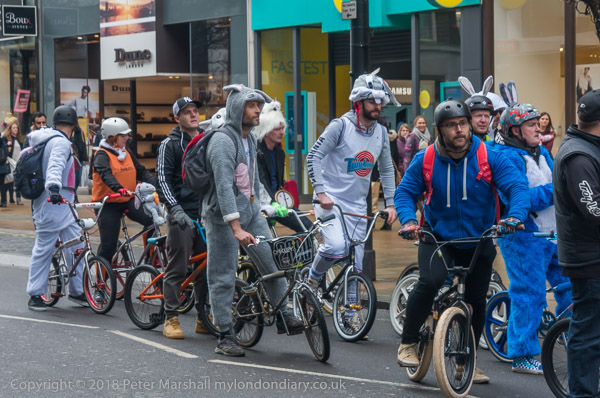
BMX Life is a group of BMX bike riders started after young Tommy Wright suffered a near fatal heart attack, and his family wanted to give something back after the support they had received at Evelina London Children’s Hospital. They have since raised over £60,000 for the register charity Evelina Children’s Heart Organisation ECHO.

The riders dressed as Easter Bunnies for what was their 4th Bunny Hop ride-out in London. Previously I’d met them riding at Christmas dressed as Santas and reindeer.

BMXLife Charity Bunny Hop


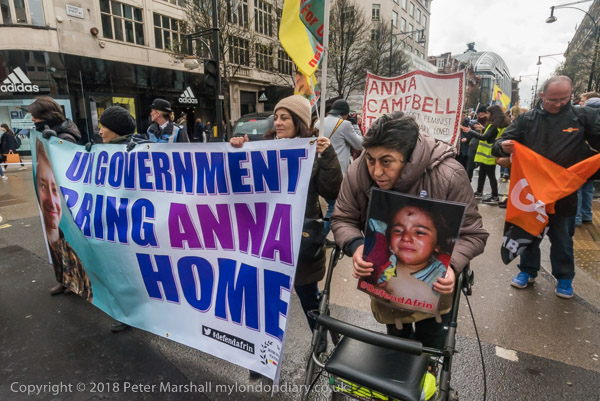
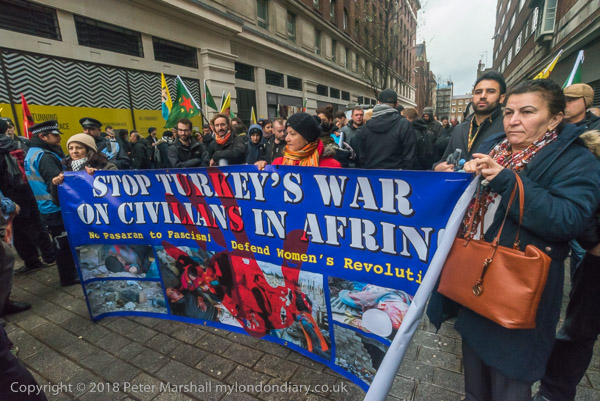
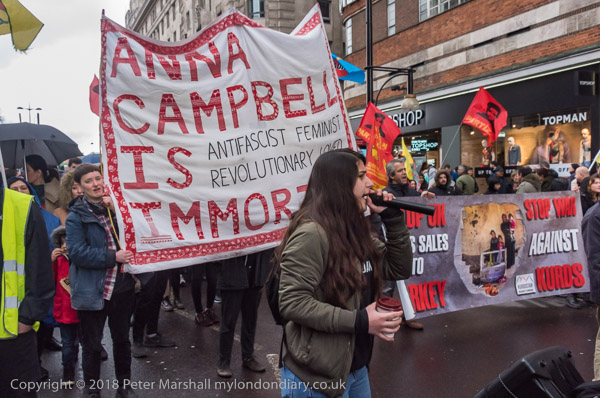
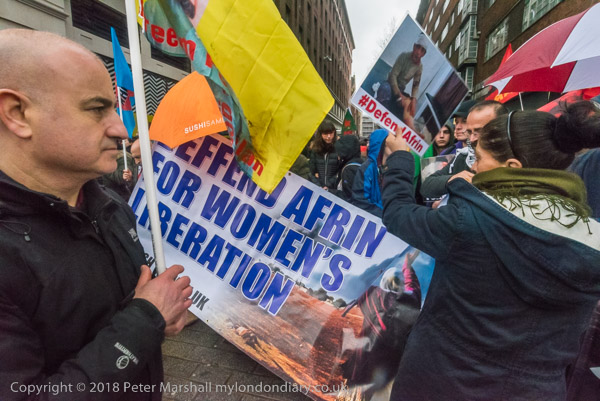
Defend Afrin – Bring Anna Home – Oxford St

Kurds and supporters marched from close to Marble Arch to a rally in Parliament Square demanding an end to the invasion of Afrin in north-west Syria by Turkish forces and al Qaeda-affiliated militias in clear violation of international law, and its air strikes have deliberately targeted civilian areas.

The Turkish aim is to destroy a peaceful state and eliminate its majority Kurdish population, with President Erdogan announcing Turkey’s intention to invade all the Kurdish areas of Syria and “cleanse” the area of its Kurdish people.

Turkey is a member of NATO, with the organisation’s second largest army, supplied with weapons mainly from European countries including the UK who had recently signed a major arms deal. The British government has disgracefully expressed support for Turkey’s attacks, claiming it has a right to defend its borders, despite the fighting being outside them and the announced intention to push on to even more distant areas in Syria. The Kurdish peoples protection units YPG and YPJ fighting the attacks are only lightly armed but were putting up a determined resistance, but without further support were unable to defeat Turkey.

The protest called for an end to the invasion of Syria with an immediate ceasefire to enable the body of YPJ volunteer Anna Campbell to be returned to her family in Sussex, an end to all arms sales, to Turkey and other anti-human regimes in the Middle East, for humanitarian relief for Afrin and other areas of Syria and for an investigation into human rights abuses and war crimes in Afrin.

Eventually, after Afrin was captured, pressure from the US and the Council of the European Union condemning Turkey’s military action brought Turkish advances to an end, until President Trump withdrew US forces from the area, betraying the Kurds who had defeated ISIS with US air support. Further Turkish attacks then took place but were internationally condemned.

Defend Afrin – Bring Anna Home


Against Israeli Land Day massacre – Israeli Embassy, Kensington

News of the cold-blooded massacre of Palestinian Land Day protesters with videos that shocked the world on March 30th led to an emergency protest being called close to the Israeli embassy on Kensington High Street (the embassy is a few yards away on the private Kensington Palace Gardens where no protests are allowed.)

I wrote “It is hard to see how anyone with the slightest streak of humanity or decency can fail to condemn the cold-blooded shooting of unarmed civilians carrying out a peaceful protest, but the coverage of the event in the UK media has been surprisingly muted, with the BBC giving considerable air-time to Israeli state speakers who have shamefully claimed the massacre was reasonable and fully justified.”

The UN called for an independent investigation, which Israel refused. But it was perhaps not coincidental that this is the only protest I can recall at the embassy where there has not been a usually small group of counter-protesters waving Israeli flags in support of the regime and its actions. But more likely it was because it was Passover.

Against Israeli Land Day massacre


End Gaza Invasion: 2014

Israel ‘disengaged’ from Gaza in 2005, but retained many controls in what international bodies still consider a form of occupation. It has maintained a blockade, controlling access by sea and air to the area which has a closed border with Egypt and strict border controls to Israel. With 1.85m Palestinians on under 140 square miles it is the third most densely populated area in the world. (See Wikipedia for most of the figures in this post.)

The Israeli and US-led economic blockade of Gaza, imposed after Hamas gained a majority in the area in the 2006 elections and too over from Fatah in 2007 has stopped the import and export of many goods, and together with damage caused by Israel air raids and invasions has led to severe shortages of water, medicine and power.

The protest in London on July 26th 2014 came during the Israeli ‘Operation Protective Edge’, which had begun on July 8th with bombing and artillery fire and escalated to a ground invasion on July 17th, with the aim of killing as many Palestinian militants as possible. It was sparked by the murder of three Israeli teenagers by Hamas members but the Israeli response was quite disproportionate.

Estimates of deaths and damage vary slightly, but agree that over two thousand Palestinians were killed, with the UN suggesting that 1,462 of these were civilians. 67 Israeli soldiers were killed and 6 civilians were killed by Palestinian rockets.

The damage to properties was similarly disproportioate. While around 18,000 homes were destroyed or seriously damaged in Gaza, Palestinian rockets only destroyed one in Israel. Gaza also lost over 200 places of worship, and almost three hundred primary schools and 73 medical facilities were badly damaged or destroyed. The attacks are said to have produced around 2.5 million tons of rubble in Gaza.

Jeremy Corbyn on the march in Whitehall

This is of course not the only year in which there were attacks by Israel on Gaza. “008-9 saw ‘Operation Cast Lead’ which also produced incredible devastation and over a thousand Palestinian Deaths and 13 of Israelis. In 2018 there were border protests in which over 13,000 Palestinians were seriously wounded by Israeli snipers and many killed. A UN Human Rights Council’s independent commission examined 489 cases of Palestinian deaths or injuries and found that only two were possibly justified as responses to danger and the rest were illegal. And most recently in May 2021 there were ten days of attacks by Israeli forces resulting in more destruction and deaths.

The protest on July 26th began on the main road close to the Israeli Embassy, tucked away in a private street in Kensington. Soon themain road was packed with people many too far away to hear the speeches despite the amplification. Finally it moved off on its way to Parliament Square.

There was a long list of speakers at the rally, including a number of well-known musicians and other public figures, but I began to feel rather tired, having been on my feet too long covering this and another protest, and I left before the end. But you can see pictures of many of the speakers as well as the crowd in My London Diary.

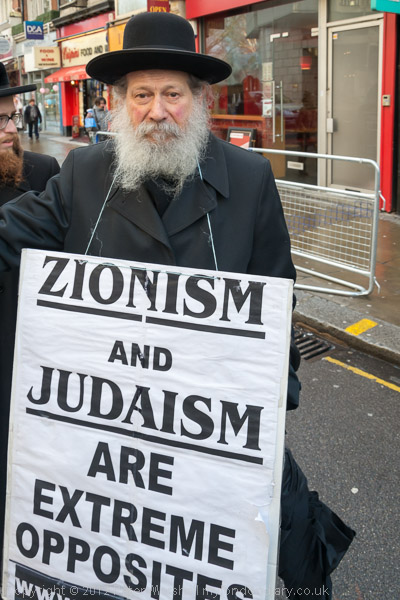
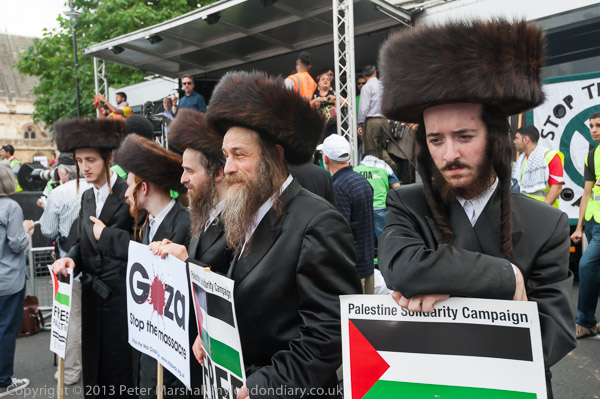
As usual there were many Jewish supporters of Palestine on the march, and a small group of the ultra-orthodox Neturei Karta anti-Zionist Jews who had walked from north London to join the rally.

Stop the Massacre in Gaza Rally
End Gaza Invasion March to Parliament
Israeli Embassy rally – End Gaza Invasion

Protests over Gaza massacre

3 Jan 2009

January 10th 2009 saw what was probably the largest protest ever in London against the Israeli attacks on Gaza, with a crowd of around 100,000 gathering in Hyde Park for a march past the Israeli embassy.

2 Jan 2009

The Israeli attacks on Gaza, known by Israel as Operation Cast Lead and called by others the Gaza Massacre had begun on 27th December 2008 with an air assault on Gaza’s densely populated cities, striking 160 targets, some linked to Hamas but also including police stations and some other civilian buildings. This first day of air strikes killed around 230 Palestinians and injured more than 700. Air attacks continued in the following weeks, with around a quarter of those killed being civilians.

Ultra-orthodox Jews protest against the Israeli attacks, 7 Jan 2009

Israeli ground forces had blockaded the Gaza strip since the start of the attacks and on the evening of January 3rd launched an attack. Fighting continued with many buildings being destroyed by bulldozers in case they contained booby traps. On January 15th the United Nations Relief and Works agency was shelled, destroying tons of food and fuel destined for refugees and Gaza’s second largest hospital also was hit. Many Hamas fighters were killed but others continued to fight in Gaza and to send sporadic rocket fire into Israel, though casualties from these were low, with a total of 3 civilians and one soldier killed and 182 wounded. A further nine Israel soldiers were killed in Gaza, four by Israeli fire. Around 1400 Palestinians were killed, around 2-300 of them Hamas fighters.

9 Jan 2009

Protests took place daily in London throughout this period, and, according to Wikipedia, there was Israel faced significant international pressure for a ceasefire, the establishment of a humanitarian corridor, access to the population of Gaza and the lifting of the blockade. From January 7th there were periods of ceasefire most days by both sides to allow humanitarian aid to be shipped in, violated on occasions by both sides. On the 17th January Israel declared a unilateral ceasefire, and the following day Hamas also announced a ceasefire.

Hizb ut-Tahrir Britain protest at Egyptian Embassy, 11 Jan 2009

I covered seven protests over the attack on Gaza in January 2009 and had a few problems at a couple of them when things became rather physical. On Saturday January 3rd, things got a little hectic in the road in front of the closed private street leading to the Israeli embassy, and I had to retreat a little to avoid objects being thrown at the police preventing protesters from reaching the barriers. The whole area became a little chaotic and I found myself in the middle of something like a huge rugby scrum as protesters tried to push past police. Although the protesters weren’t hostile to the press, there was a lot of pushing and grabbing at others for support and in the melee my trousers got a little torn and I lost a filled Compact Flash card which had been in one pocket with many of my pictures from earlier in the day.

Trafalgar Square, 17 Jan 2009

On the 10th, not far from the same place I was pushed and punched by Stop the War stewards as I tried to take photographs – some of them seem to have problems with the press. Other stewards who saw the assault came up to me and apologised for what had happened. And as usual at many protests I was often pushed and threatened with arrest by police on a number of occasions and prevented from getting on with my job. At times police do need to clear areas, but some officers seem to regard photographers simply as a nuisance, despite the agreements the press have with them which recognise the need for them to allow us to work.

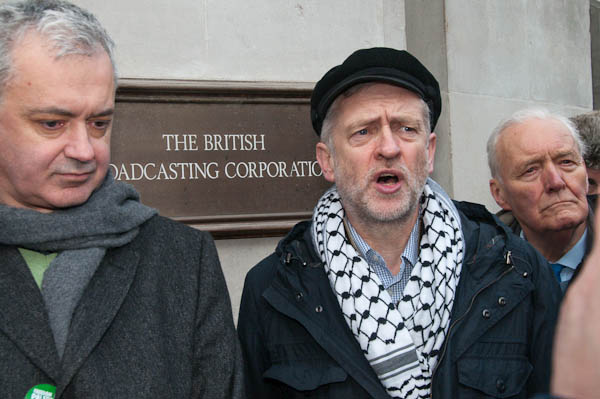
Andrew Murray, Jeremy Corbyn, & Tony Benn at the BBC, 24 Jan 2009

Much more about the Jan 2009 Gaza protests:

Open the Gaza Border – Egyptian Embassy
Hands Off Gaza: Free Palestine
Daily Gaza protest at Israeli Embassy
Gaza Massacre – National March
Hizb ut-Tahrir Britain Gaza march
Gaza: 1000 Dead and Nothing Said
Gaza: Protest March from the BBC